A French twist can make a simple neckline feel dressed for dinner, clear your hair away for the day or give an evening outfit a beautifully composed finish. Its personality comes from more than the roll at the back: a smooth front feels different from loose curls, and a compact fold wears differently from a tall sculpted shape. Start with the version you would enjoy wearing, then choose the support that works with your actual hair.
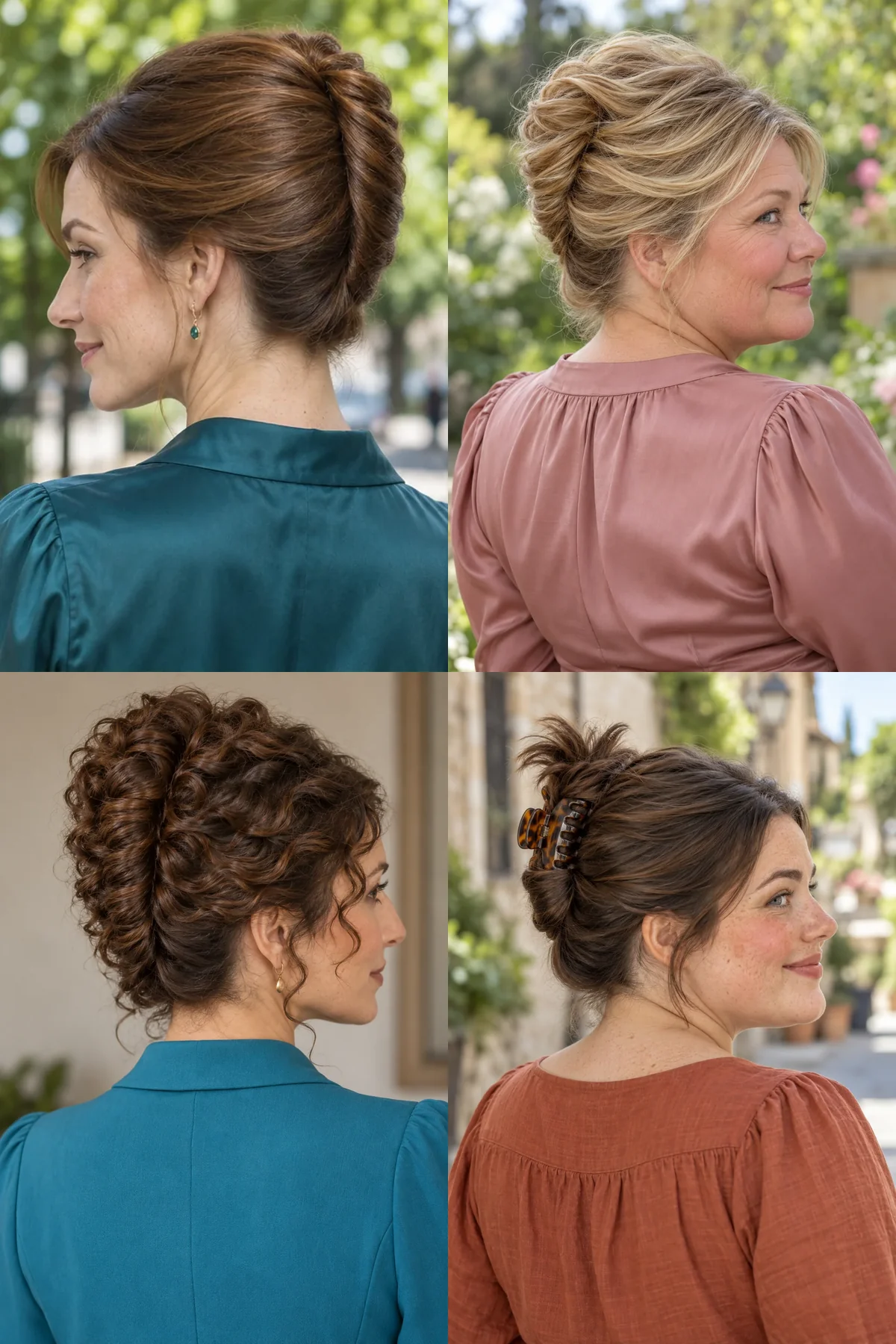
A French twist, also called a French roll, is an updo with the lengths swept inward and folded upward into a vertical roll or pleat at the back of the head. Its signature is the upright folded seam, with the ends usually tucked inside; a modern clip-held version may leave a small fan at the top. A chignon gathers into a rounded knot, a French braid interlaces sections, and a rope twist wraps strands around each other: none automatically creates that folded back shape. These are styling choices rather than haircuts, and the photos show finished arrangements, not guaranteed results on every length or texture.
Find the one that feels like you: Start with the first look and let the photographs lead. Each style explains how the shape affects your features, the mood it creates and the exact words to take to your stylist.
Quick Facts
- The upright folded seam distinguishes a French twist from a bun.
- Enough length to fold and secure matters more than a universal minimum length.
- Fine, thick, curly and layered hair may need different preparation and supports.
- A comfortable twist should stay in place without painful pulling.
1. The Classic Smooth Roll With a Tucked Top
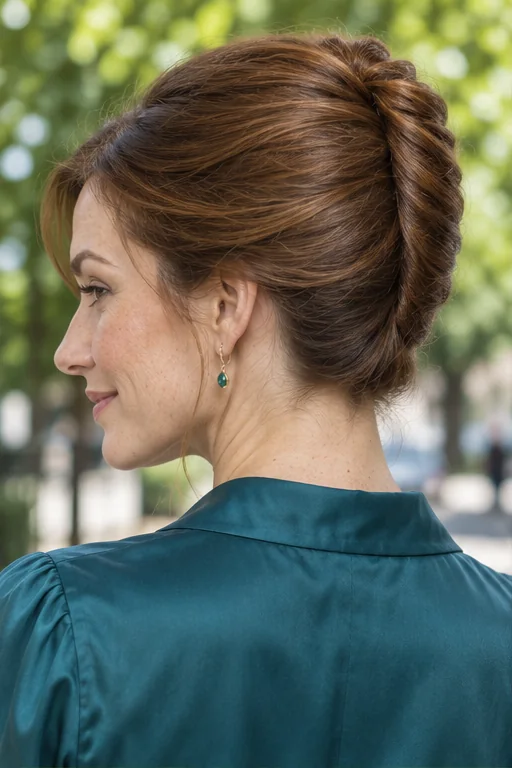
Chestnut hair sweeps into one smooth upright roll, with the top neatly tucked and the folded seam visible from the side. The uninterrupted surface lets the shape do the work, opening the neckline and giving a simple blouse or evening dress a poised, quietly confident finish. Choose it when you enjoy a polished outline and can allow time for careful smoothing, especially if shorter layers tend to escape. Have the stylist distribute the hidden supports along the seam, then check the twist with a gentle head turn; a tidy surface should not require an uncomfortably tight hairline.
Ask your stylist for: A smooth upright French roll with a clear folded seam, tucked ends and a softly brushed-back front.
2. A Compact Roll That Stays Low at the Back
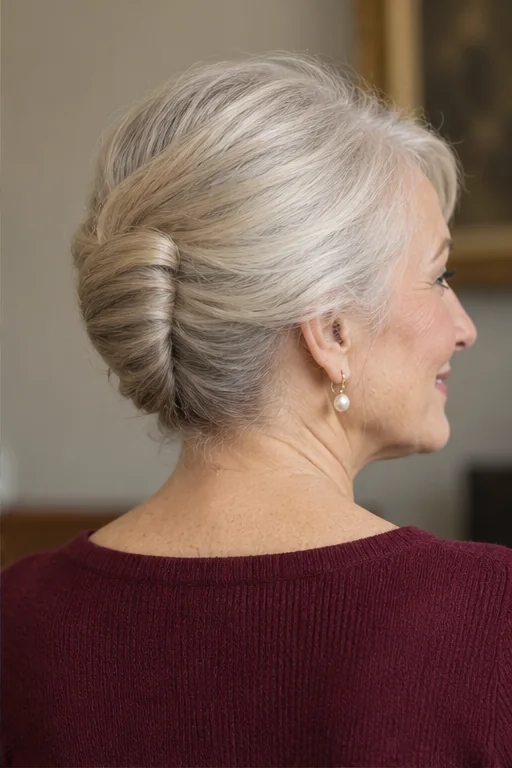
This silver-blonde roll stays close to the lower back of the head, with a short upright pleat and very little height at the crown. Keeping the shape contained makes the hairstyle feel calm and understated, a lovely option when you want a neat neckline without an elaborate evening silhouette. It suits someone who prefers a small updo, provided there is enough length to fold inward and secure the ends. Check how the bottom sits against your collar before finishing, and ask for discreet support within the fold so the shape remains a French roll rather than collapsing into a small knot.
Ask your stylist for: A compact low French roll above the nape, with an upright pleat rather than a rounded bun.
3. A Diagonal Pleat for a Softer Side View
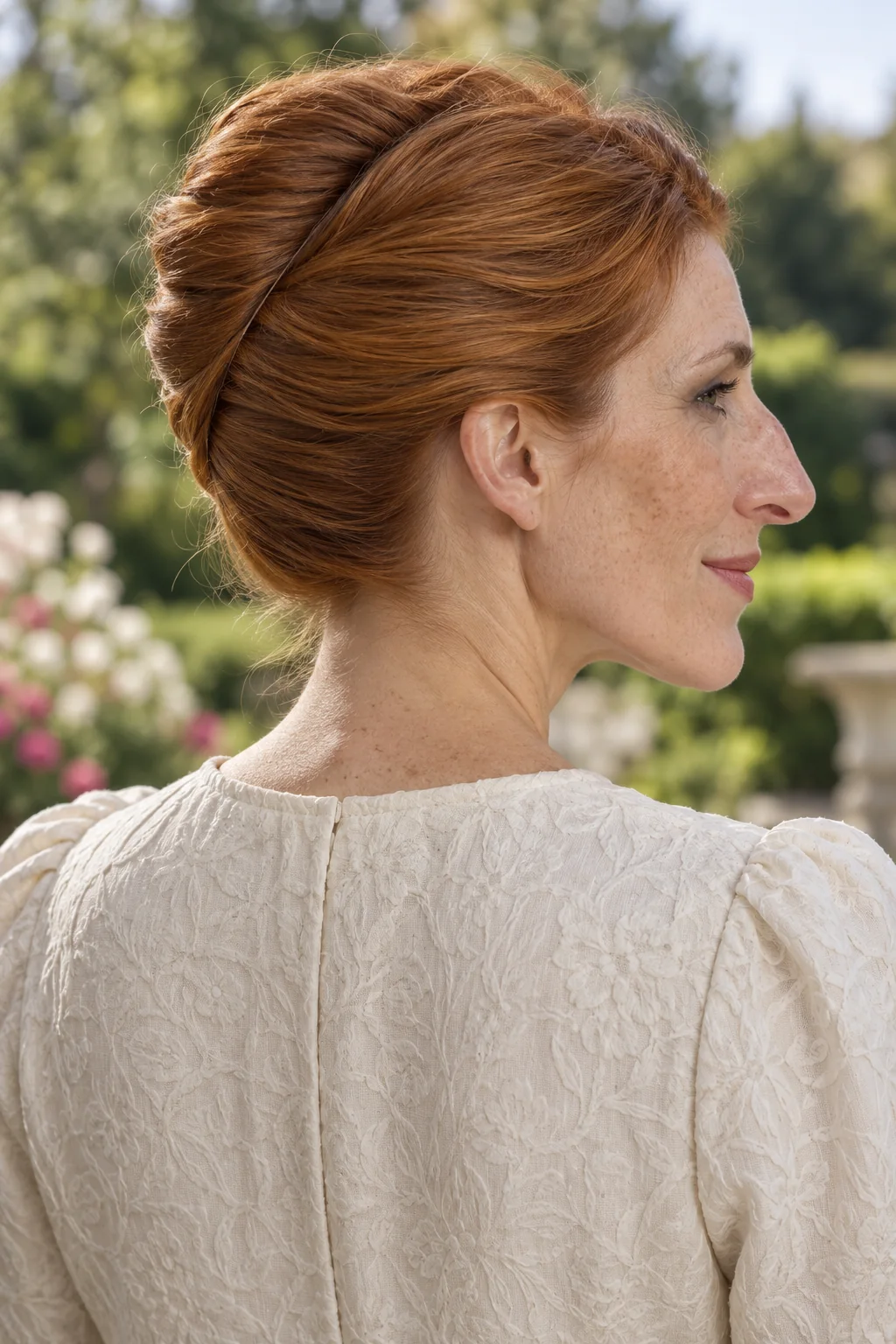
The copper fold rises on a gentle diagonal instead of standing perfectly straight, making the back look softer and a little less formal. That angled line brings movement to an otherwise smooth updo and creates an easy, self-assured mood for dinner or a dressed-up daytime occasion. It works well if you like asymmetry but want all the lengths contained, with no loose tail competing with the pleat. Show the stylist the direction you prefer and ask them to balance the support along the fold; tilting the roll should change its shape, not leave its heavier end hanging loosely.
Ask your stylist for: A French pleat with the folded seam tilted gently across the back, keeping the ends tucked and the surface connected.
4. A Wide, Flat Pleat With a Clean Fold
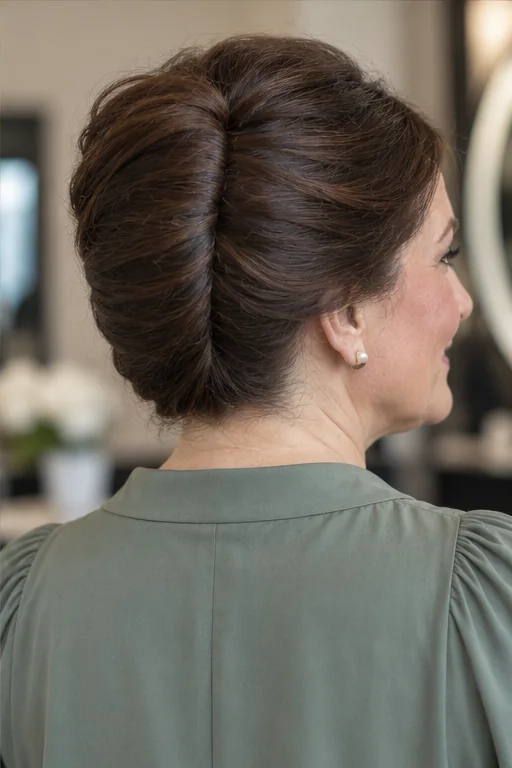
Dark hair spreads into a broad, flatter pleat, with a clean folded edge defining the back instead of a highly rounded cylinder. The close shape keeps the profile streamlined and feels architectural and composed, especially beside a crisp neckline or simple earrings. Consider it if you want a substantial-looking updo without much projection behind your head, although thick or very long hair may need a carefully divided interior. Ask the stylist to show the side profile as well as the back, and check that the hidden fold feels balanced; flattening the outline should not mean pressing every support against the scalp.
Ask your stylist for: A broad, flatter French pleat with one clean folded edge and tucked ends, avoiding a round projecting cylinder.
Pause and notice: Compare the side profiles as well as the backs. Do you want a slim line, a low fold or a shape with more projection?
5. A Loose Twist With Air Between the Sections
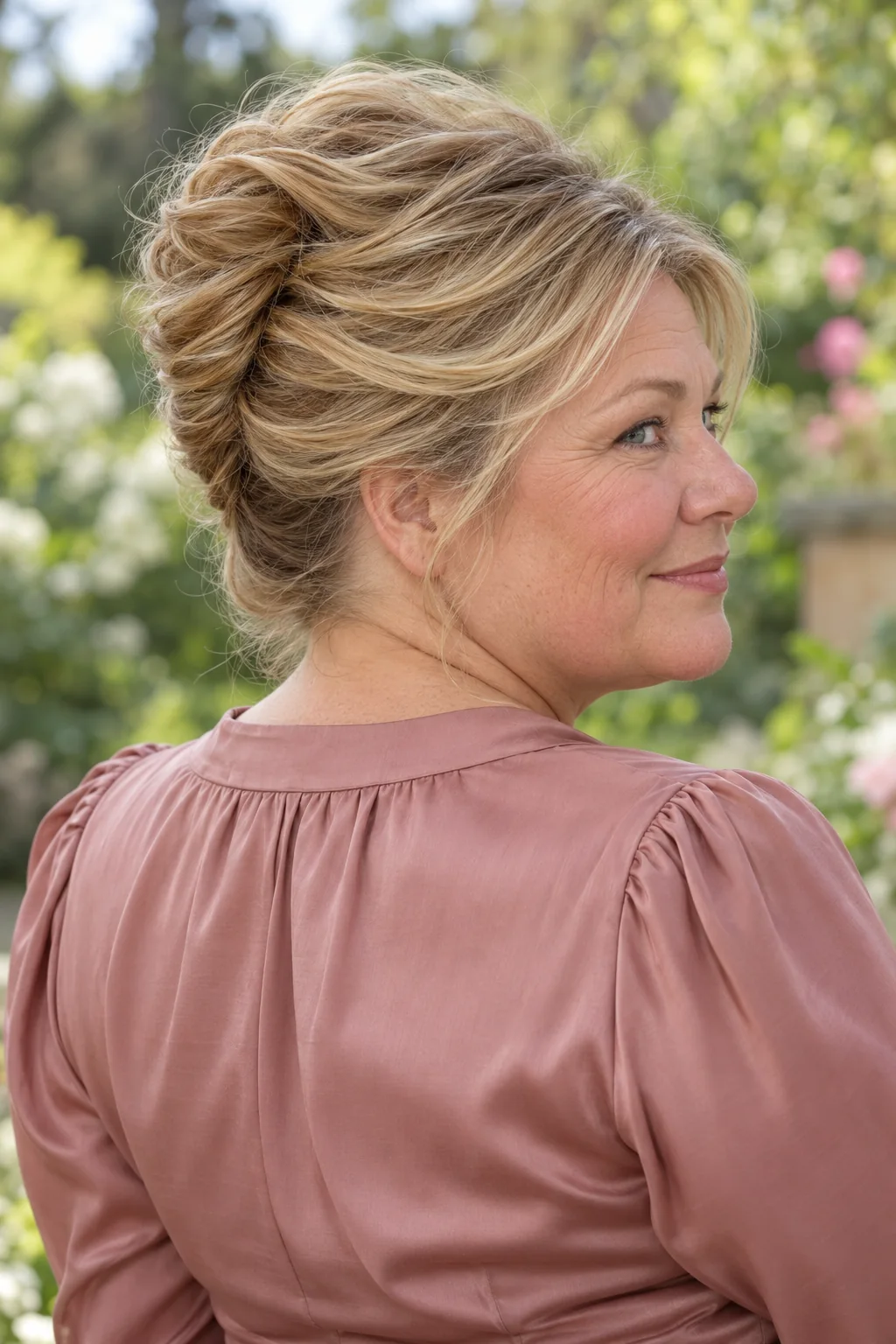
Softly separated blonde sections sweep into an airy roll, while a few temple pieces stop the front from looking too carefully arranged. You still see the folded back shape, but the lighter surface gives it a relaxed, romantic mood that feels comfortable with a less formal outfit. It suits someone who likes movement and accepts a little visible softness rather than chasing a perfectly smooth finish. Secure the interior first and loosen only small surface sections afterward; pulling at the entire roll can undo the support. At your appointment, distinguish an airy French fold from a loose bun so the defining seam stays visible.
Ask your stylist for: An airy French roll with gently separated surface sections, soft temple pieces and a securely tucked interior.
6. Defined Curls Swept Into a Vertical Fold
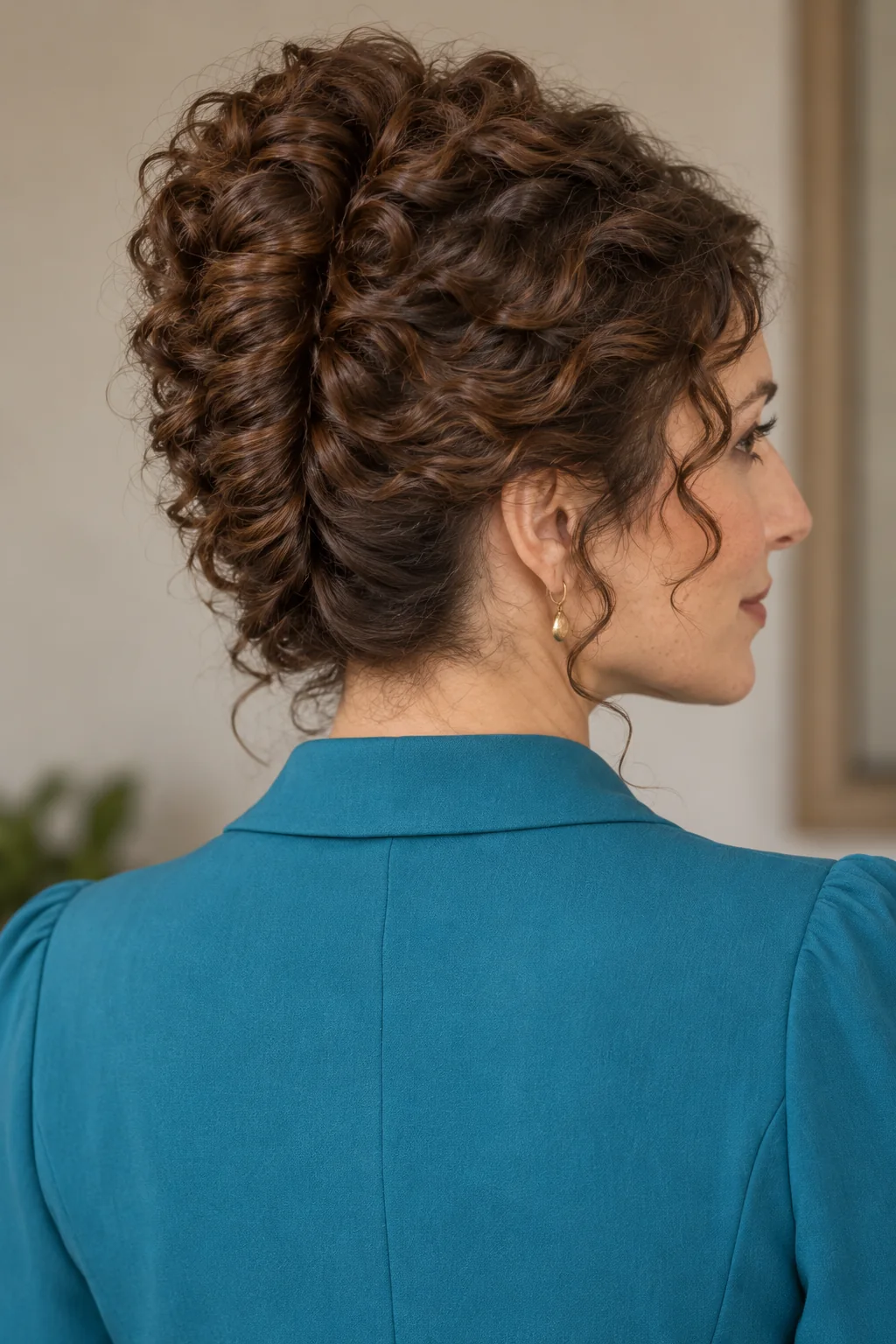
Defined brown curls gather into an upright fold, leaving their rounded groups visible across the sides and along the roll. Keeping that texture gives the updo life and makes the finished style feel expressive and celebratory, while still clearing the neck and securing the lengths. It is a useful reference if you want an occasion hairstyle that resembles your everyday curls rather than a completely smoothed version of them. Work with your usual dry curl pattern and place supports between groups where possible; repeated brushing changes the effect. Show your stylist the visible fold as well as the curls so the result reads as a French twist.
Ask your stylist for: A vertical French fold that keeps my curl groups visible, with support tucked within the roll instead of brushing the surface smooth.
7. A Sculpted Front Wave Above a Smooth Roll
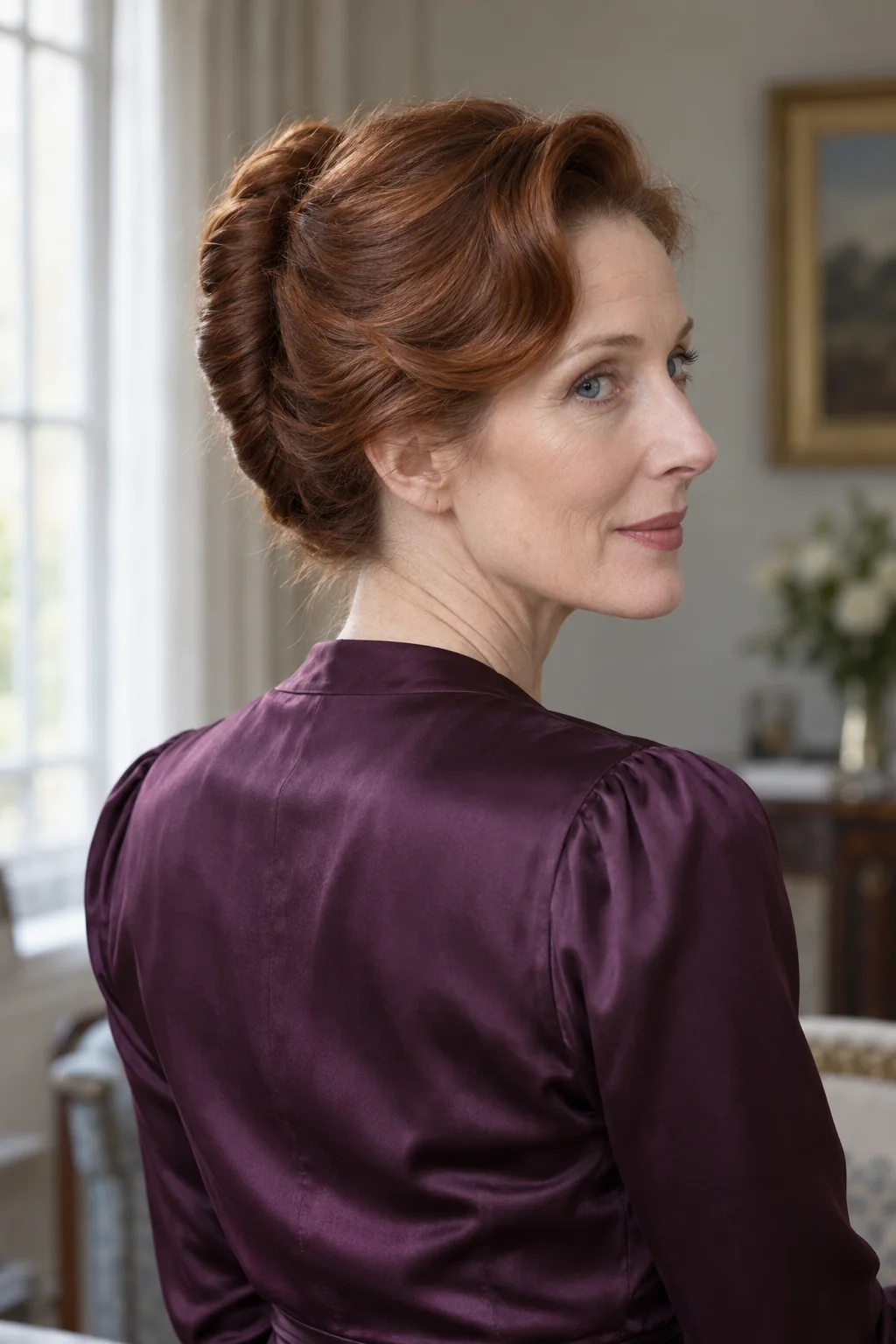
A broad auburn wave curves across the front before the lengths disappear into a smooth roll behind the ear. That visible curve softens an exposed hairline and brings attention toward the eyes, giving the updo an elegant, glamorous feeling without a large accessory. Try it for an evening when you are happy to spend more time setting the front; this shape is a styled finish rather than a promise of natural movement. Let the wave settle before the final supports go in, and check that it stays clear of your eye when you look down. Keep the back simple so the front remains the focal point.
Ask your stylist for: One broad side wave at the front leading into a smooth French roll, with the wave lifted clear of the eye.
8. A Rounded Crown With a Slim Upright Roll
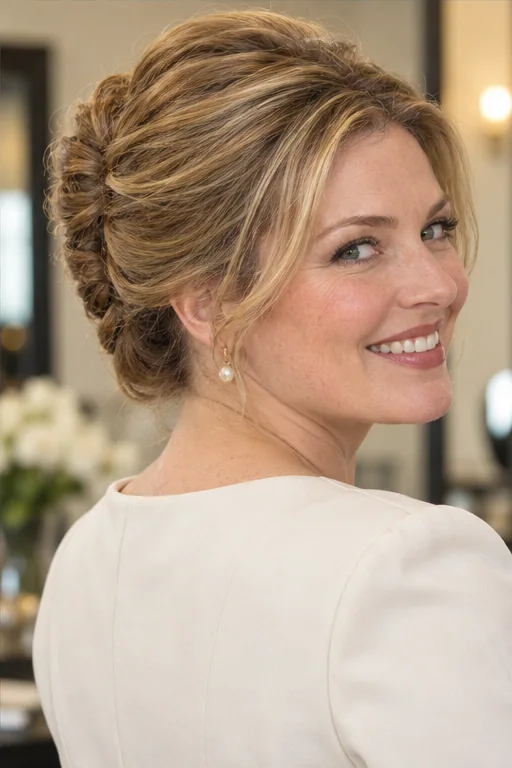
A gently rounded crown rises above a slim dark-blonde roll, adding height without widening the whole back of the hairstyle. That upward emphasis can make the outline feel longer and the occasion a little more special, with a confident, dressed-up mood that still looks soft from the side. It suits someone who likes controlled lift and is willing to prepare the crown separately instead of relying on the roll to push everything upward. Keep the height modest if you prefer a quieter result, and ask the stylist to check the front and profile together. Hidden crown support should feel light, not like a hard ridge.
Ask your stylist for: A softly rounded crown above a slim upright French roll, with modest lift rather than a sharply raised quiff.
Pause and notice: Choose the surface you enjoy wearing: polished, gently separated or visibly curly. A secure interior can support all three.
9. A Center Part With Two Long Face-Framing Pieces
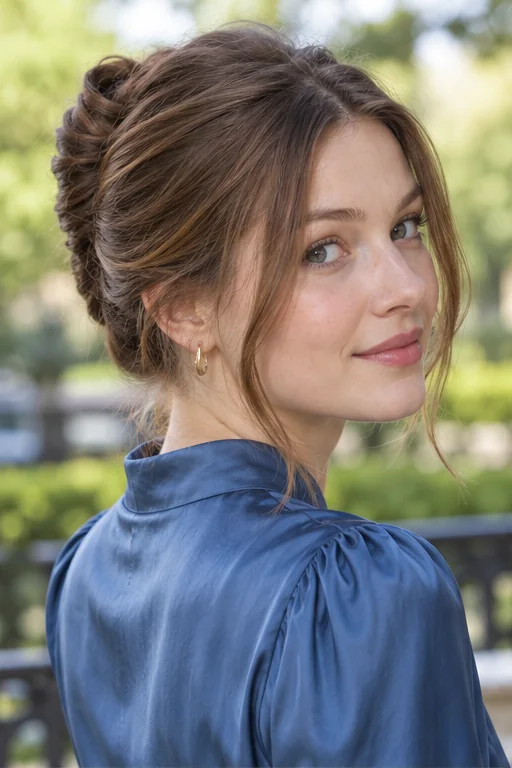
A clear center part and two long brown face-framing pieces soften the front of this otherwise contained twist. Leaving a narrow section on each side brings movement beside the cheeks and helps an updo feel familiar if you usually wear your hair down, creating a romantic, approachable impression. It works best when those pieces already exist at a comfortable length; you do not need a new fringe to try the styling idea. Decide which strands to leave out before gathering the roll, and avoid releasing large sections afterward. For a long event, check whether you enjoy those pieces moving near your face or would rather pin one back.
Ask your stylist for: A tucked French twist with a clear center part and two narrow face-framing pieces left down, without adding new short fringe.
10. A Full Fringe Against a Neat French Roll
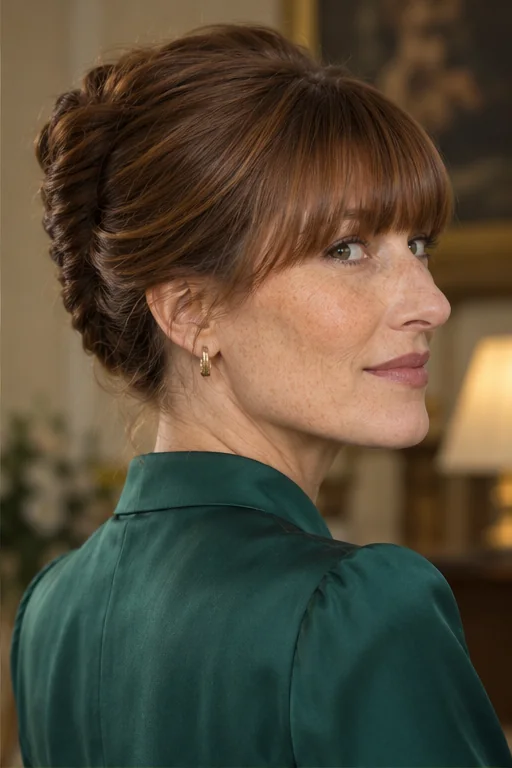
A full chestnut fringe stays forward while the rest of the hair sweeps back into a neat upright roll. The contrast keeps the eyes framed and the neckline clear, making the updo feel polished and personal rather than like a completely different version of your usual haircut. Choose it if you already enjoy wearing a full fringe and want a composed style for work or an evening out. Arrange the fringe in its normal dry position before securing the sides, because pulling those nearby roots can change how it falls. A little front-only resetting may be useful later even when the roll itself remains tidy.
Ask your stylist for: A neat French roll behind my existing full fringe, keeping the fringe's normal dry shape and avoiding a tight pull at its roots.
11. A Small French Fold for a Collar-Length Bob
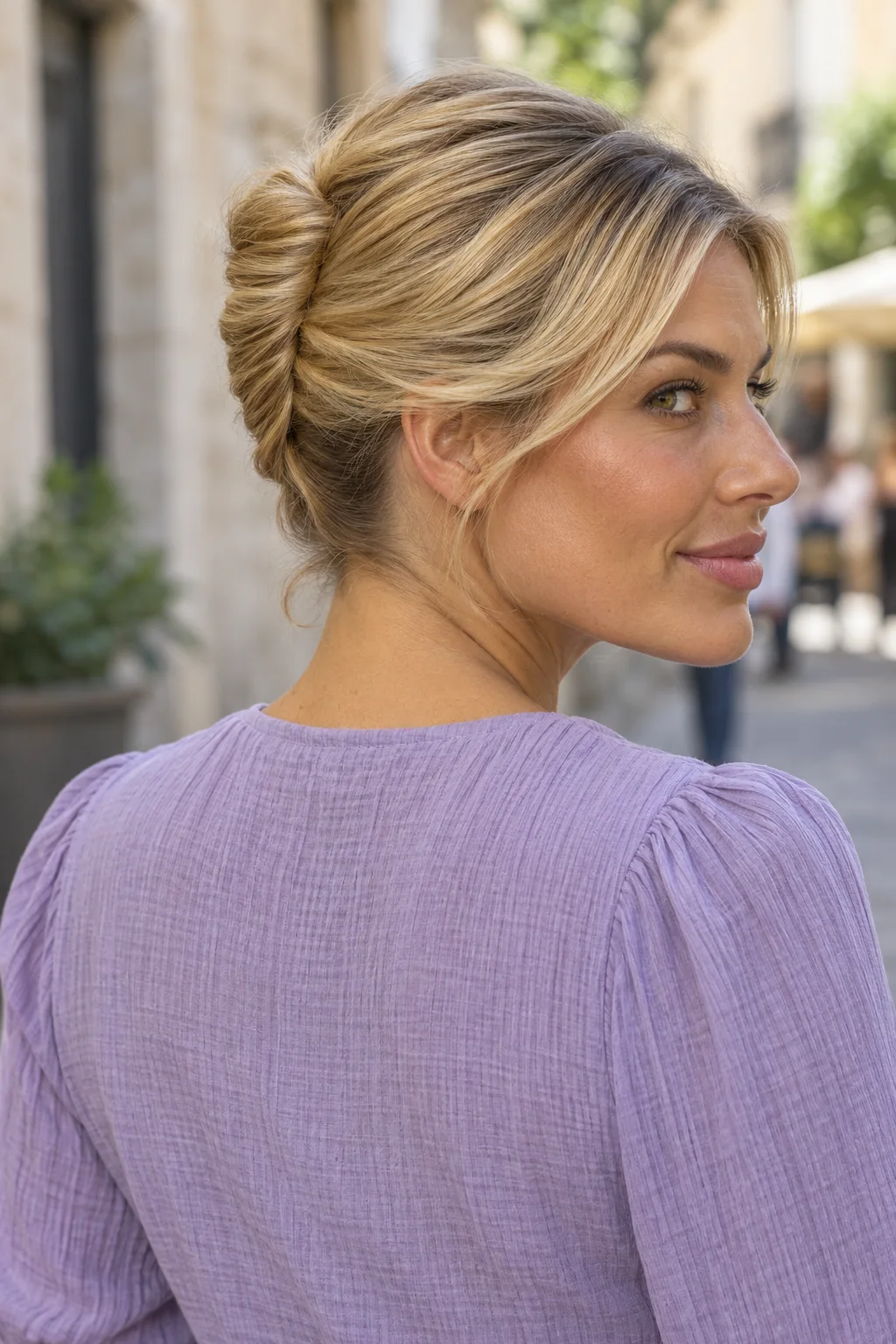
A collar-length blonde bob forms a small upright fold, with a few short nape wisps revealing the limits of the available length. The compact shape opens the neck and makes a familiar bob feel ready for an occasion, with a fresh, resourceful mood rather than the expectation of a large formal roll. This is a reference for hair that can actually reach and fold at the back; a much shorter cut may need a different arrangement. Ask your stylist to test the shortest sections first and show any supporting pins. Accepting a modest fold is more useful than pulling every escaping strand tightly into an oversized shape.
Ask your stylist for: A small French fold using my collar-length bob, with discreet support for the shorter nape pieces and no added length implied.
12. A Broad Roll With Long Ends Folded Inside
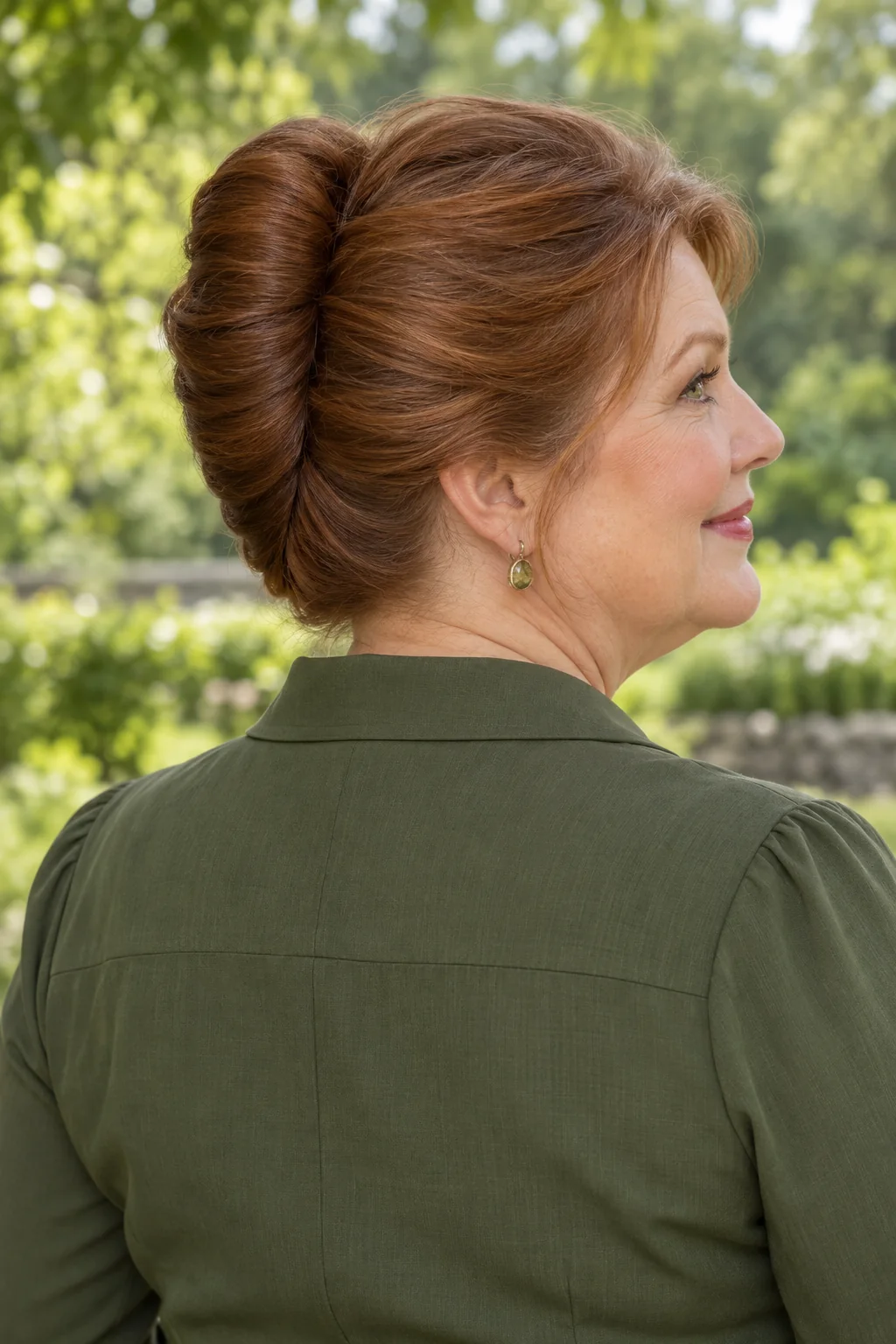
Long copper-brown lengths are contained within a broad, substantial roll, with the ends folded inside instead of trailing from the top. The generous shape lets long hair look deliberately arranged and keeps it away from a detailed neckline, creating a stately, confident impression for an event. It suits someone who wants all their length up and is comfortable asking for help with the internal arrangement, which matters more as the bundle becomes heavier. Have the stylist distribute the support rather than relying on one pin or clip, and test the balance while looking down. A beautiful outer fold should still feel stable through ordinary movement.
Ask your stylist for: A substantial French roll with my long ends arranged inside, support spread through the interior and no heavy hanging tail.
Pause and notice: Bring a photo of your hair worn down too. It helps the stylist judge the real length, layers and amount of hair inside the roll.
13. A Narrow Pleat for Fine Hair
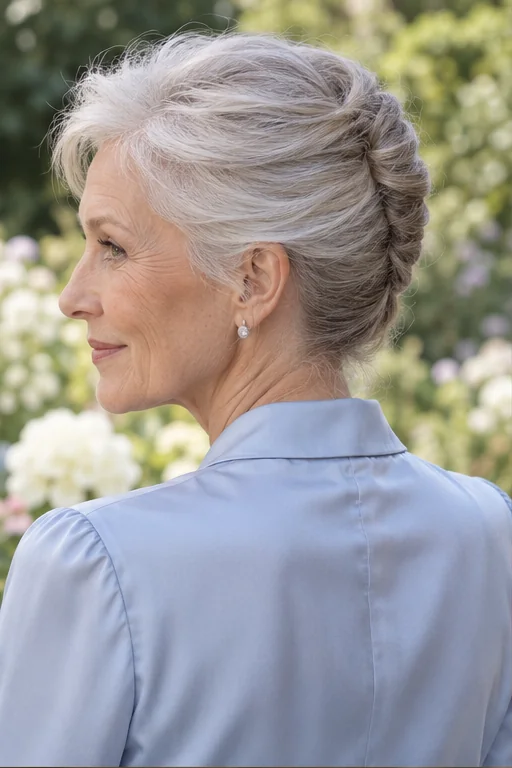
Fine silver hair forms a narrow pleat close to the head, with softly brushed-back roots and a small tucked top. Matching the roll to the amount of hair keeps the outline intentional, so it feels graceful and quietly assured without pretending every twist needs dramatic fullness. Choose this reference if large accessories overwhelm your hair or you prefer an understated updo for a meal or meeting. Keep preparation light and test the support before adding more product; slippery strands may need a little grip, while heavy cream can flatten the surface. Ask your stylist to work with the available density rather than promising a much larger roll.
Ask your stylist for: A narrow French pleat matched to my fine hair, with light preparation, a small tucked top and minimal visible bulk from supports.
14. A Claw Clip Holding a Casual Vertical Twist
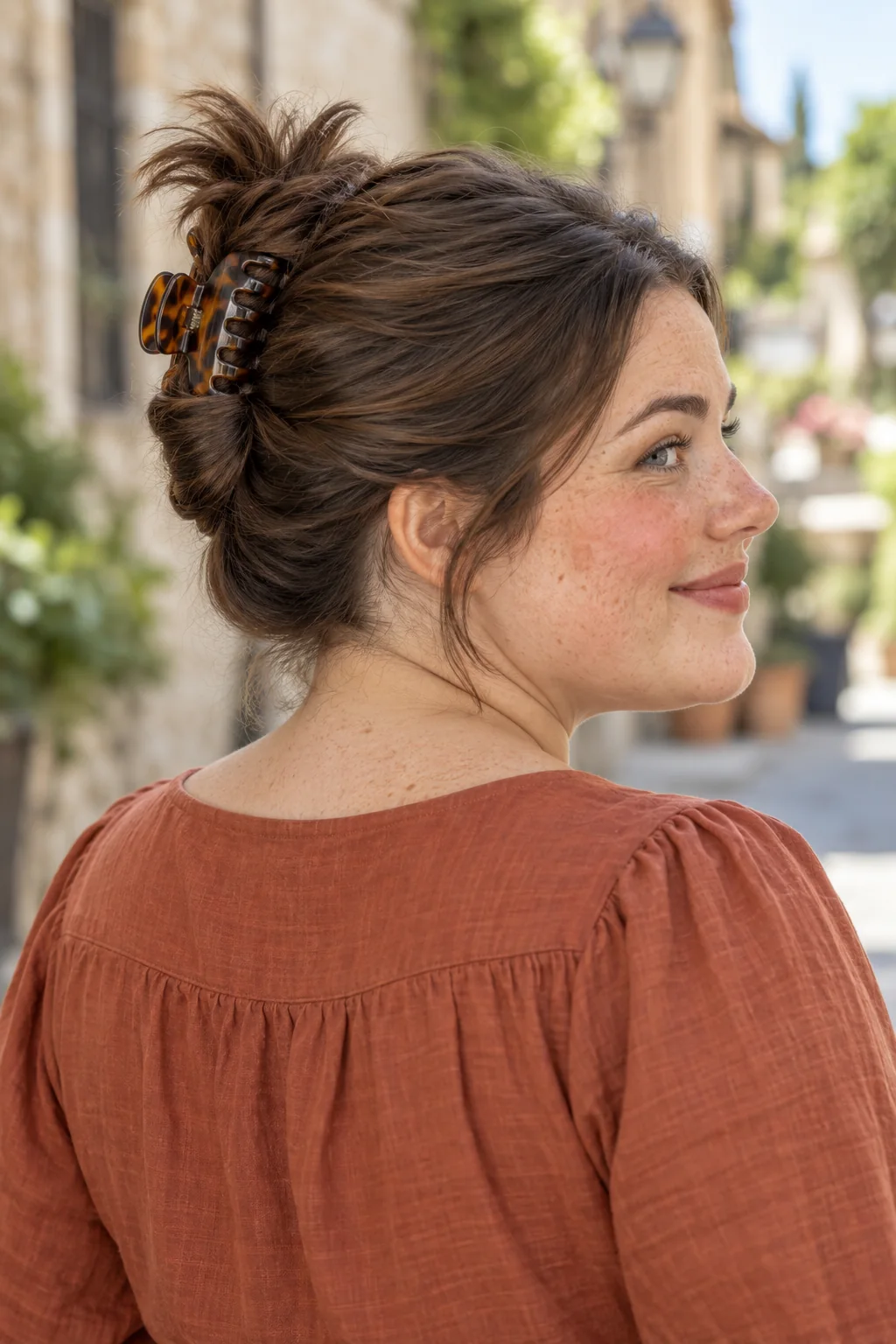
A tortoiseshell claw clip holds the dark lengths against an upward fold, with a small fan of ends visible above the jaws. The exposed support gives the twist an easy, everyday personality and clears the neck without the formality of a completely hidden pin arrangement. It is a practical choice when you like rearranging your hair during the day, provided the clip can close securely around your actual density. Position the jaws to capture the folded hair and test the hold gently; a clip that barely closes is not the right size. Keep the fan short enough that the upright roll remains the main shape.
Ask your stylist for: A casual upward French fold held by a correctly sized claw clip, leaving a small top fan rather than a long loose ponytail.
15. A French Pin Across a Soft Fold
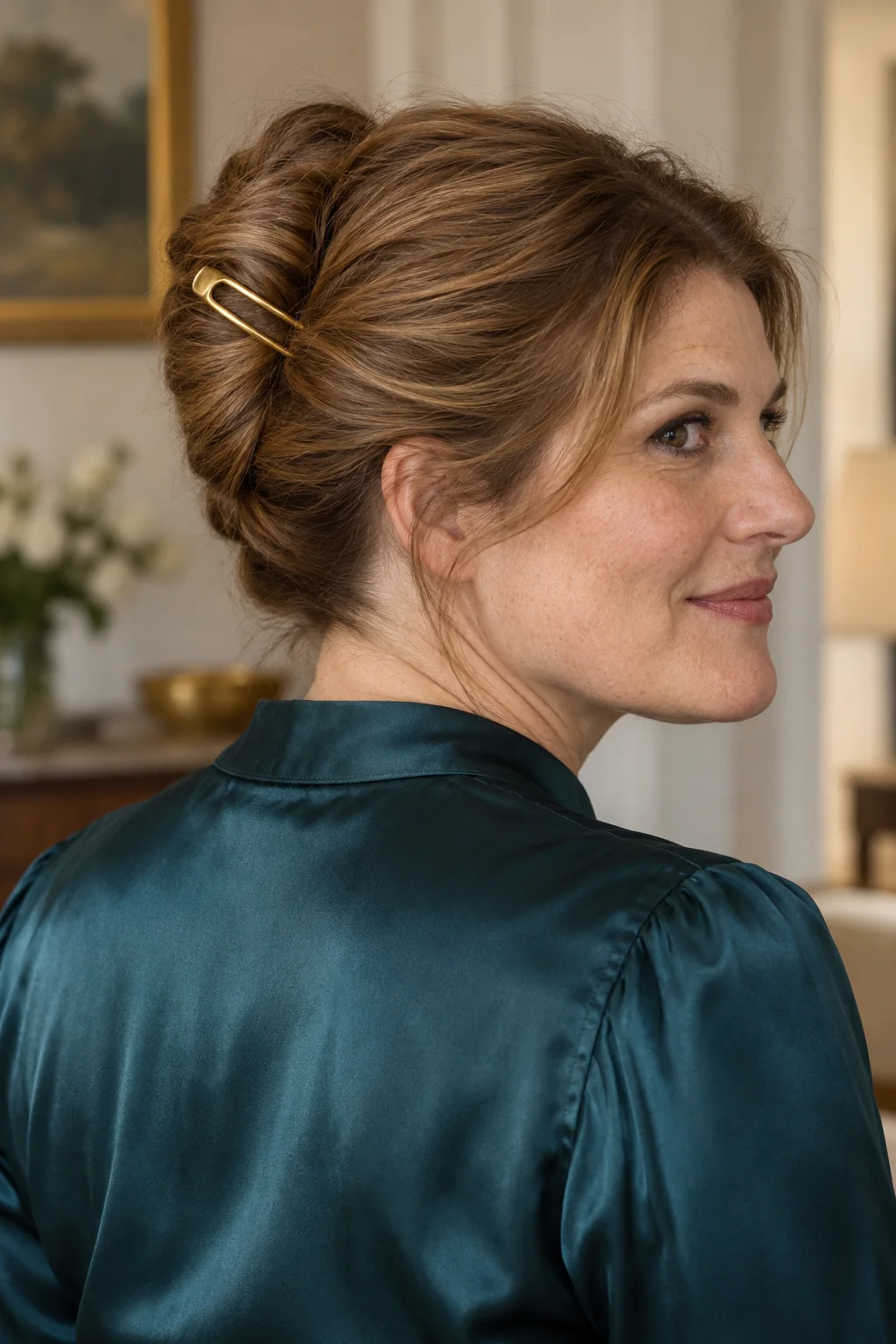
A simple gold two-prong pin crosses the seam of this soft honey-brown fold, making the securing method part of the finished look. The restrained accessory adds a small glint beside a relaxed surface, so the twist feels thoughtful and quietly modern rather than heavily decorated. Try it if you enjoy practicing a compact updo and want an accessory that can be moved easily, although one pin will not hold every hair type equally well. Ask for a demonstration using your own density and pin, with extra hidden support if needed. The pin should engage the base securely instead of resting only in the outer fold.
Ask your stylist for: A soft French fold with a simple two-prong pin that anchors into the base, plus discreet extra support if one pin is not enough.
16. A Braided Side Panel With a Pearl Comb
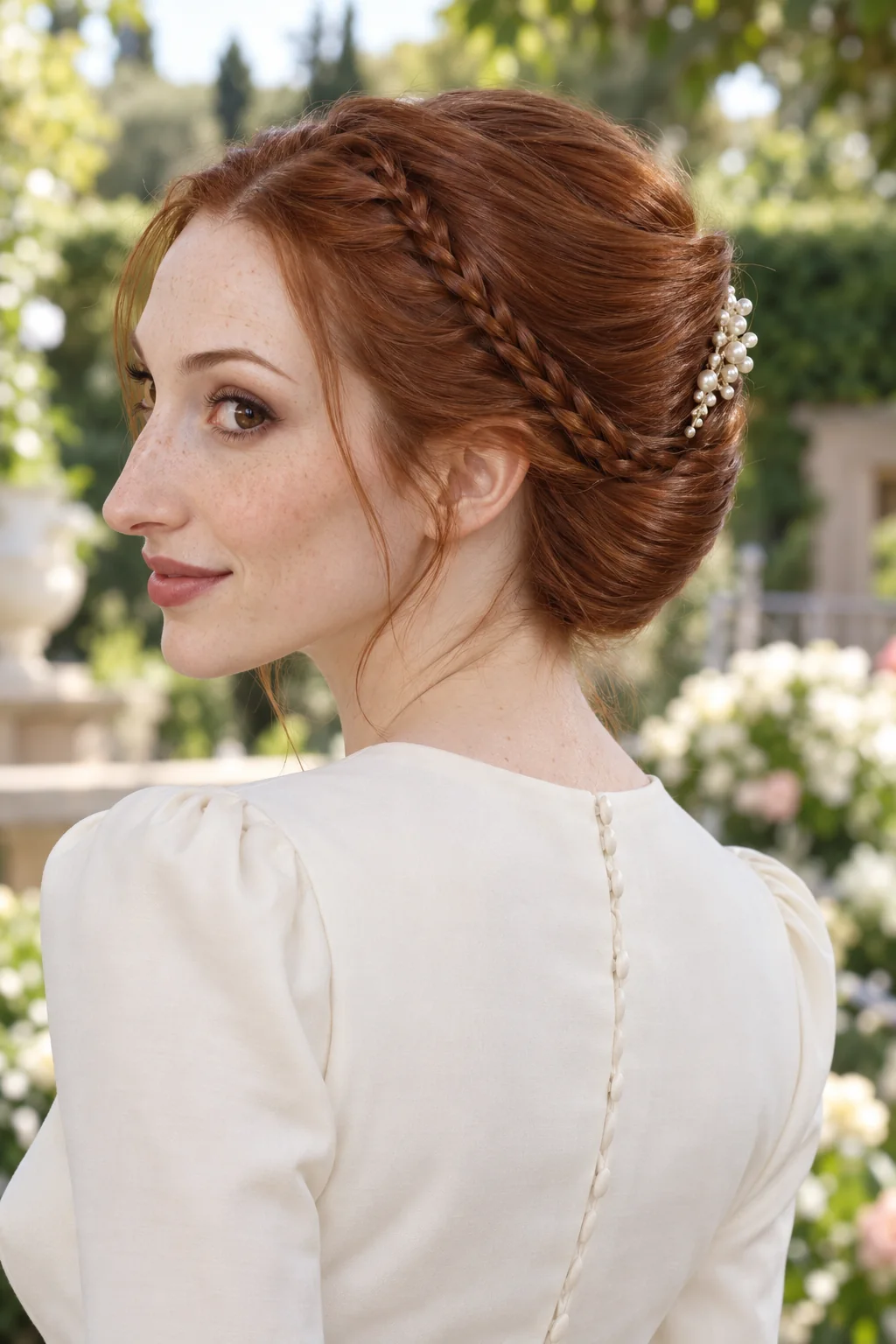
A narrow braid travels along one side before joining the smooth auburn roll, and a small pearl comb rests beside its folded seam. The braid adds a clear line of detail without hiding the twist, creating a romantic, celebratory mood for a wedding guest or another special occasion. It suits someone who wants decoration with a deliberate structure, rather than simply covering the whole roll with accessories. Plan the braid before gathering the back and secure the comb separately so its weight does not loosen the fold. Bring the actual accessory to your appointment, and explain whether the braid should be visible from the front or mainly in profile.
Ask your stylist for: One narrow braided side panel feeding into a smooth French roll, with a small pearl comb placed beside the seam and separately supported.
Before You Book the Appointment
A successful salon visit begins with the overall shape, construction and upkeep—not only the finished length. Use this quick reality check before choosing your final reference photograph.
- Length: Shoulder-length hair often offers useful folding room; a shorter bob may need extra pins, while very long lengths need careful internal arrangement.
- Texture: Keep waves and curls visible if you like their movement; a glossy surface takes deliberate smoothing.
- Density: Match the size of the roll and accessory to the amount of hair, rather than forcing a heavy bundle into a small clip.
- Front shape: Choose an open forehead, side sweep, fringe or loose pieces around your own hairline and preferred face framing.
- Occasion: Tell your stylist how long you will wear it, whether you will dance, and whether a veil or other accessory needs support.
Check your length and layers before choosing the roll
There is no single minimum length that works for every French twist. The shortest sections need to reach the fold or accept separate support, while the longer lengths need room to tuck without creating a heavy lump. A shoulder-length cut often gives useful folding room, but layers and density change the plan. On a shorter bob, test a small pleat and accept a few intentional wisps. On very long hair, ask how the excess length will be arranged inside. A photo of a large roll does not prove that your hair needs extensions or a haircut.
Choose a front you will enjoy looking at
The back establishes the French twist, but you see the front whenever you look in a mirror. Decide whether you like your forehead open, a side wave, your usual fringe or narrow loose pieces. Look at the hairstyle with glasses and your planned neckline if those are part of the occasion. A little height draws attention upward; loose sides create a softer boundary around the face. These are visual choices rather than fixed rules for face-shape categories. Show the front and back references together so one is not sacrificed to achieve the other.
A simple starting method for the folded shape
Begin with dry hair prepared for the finish you want. Sweep the lengths toward one side, guide them inward and upward to form a folded roll, then tuck the ends and hold the shape while you add support. The precise hand position and supports vary with length and density, so practice a small version before an important event. Keep the roll visible instead of winding everything into a round knot. For a step-by-step demonstration, use a reliable tutorial or ask your stylist to show the motion on your own hair; the photographs here show finished looks.
Match pins, clips and combs to your hair
Hidden pins, a two-prong pin and a claw clip offer different ways to hold the same folded idea. A clip needs room to close around the bundle; a pin needs to anchor into the base rather than sit loosely in the outer shell. More supports are not automatically better if they press or pull. Decorative combs may need their own discreet anchor, particularly for a long event. Ask the stylist to show which support you can adjust and which holds the main structure. If something feels uncomfortable, reset the arrangement instead of tolerating it.
How to keep waves and curls in the finish
A French twist does not have to look glossy or uniformly smooth. Start from your usual dry texture when you want recognizable waves or curls, and avoid repeatedly brushing out the groups you hope to keep. Arrange the interior securely before gently refining the surface. If you choose a sculpted front wave, allow extra preparation time and use heat protection whenever heat is involved. The goal is a coherent fold with a surface you like, not a guarantee that every stray piece will stay identical through weather and movement.
What to say at the salon
Name the upright French roll and show the folded seam in your reference. Then specify the roll's height and width, the amount of surface texture, your preferred front shape and whether the ends should be tucked or form a small top fan. Tell the stylist about short layers, slipping pins, scalp comfort and the time you will spend wearing it. Bring your clip, comb or veil if you plan to use one. Ask for a final check from the front, side and back, followed by a gentle movement test before the finish is set.
Refreshing the twist and taking it down
For a small refresh, check the support first, then smooth or release only the surface pieces that need attention. Repeatedly tightening the whole roll can make it uncomfortable. For an event, pack a few matching spare supports if your stylist recommends them. When taking the updo down, locate and remove every pin, clip and comb before separating the folded hair gently. This is temporary styling, so there is no haircut grow-out stage: return to your usual care routine, and adjust future versions as your layers become longer or your cut changes.
Can a French twist be casual?
Yes. A compact fold, a claw clip or a gently textured surface can make the same upright shape feel appropriate for everyday clothes. Casual does not have to mean insecure, and sleek does not have to mean painfully tight. Start with a version that matches your available time and your hair's behavior. If you can only achieve the photographed shape with more preparation than you enjoy, choose a smaller roll or a different support rather than treating the elaborate finish as a daily requirement.
The Takeaway
Save the twist whose roll and front both feel like you, then compare it with your own length and texture. A clear folded seam, comfortable support and a surface you enjoy are better starting points than a promise of one universal technique. Whether you choose a smooth pleat for an evening or a clip-held fold for the day, let the hairstyle fit the occasion and the way you actually like to wear your hair.
More Hair Inspiration
- Hairstyles for long hair — Compare other ways to arrange longer lengths.
- Easy hairstyles for medium hair — Explore more everyday styling choices.
- Modern French twist tutorial from L’Oréal Paris — See a beauty-brand demonstration of messy, doubled and braid-accented variations.