Short hair can feel wonderfully freeing while still leaving something soft to move around your face. A curtain crop offers that balance: a compact back, a longer parted front, and enough movement to make the cut feel lived-in rather than rigid.
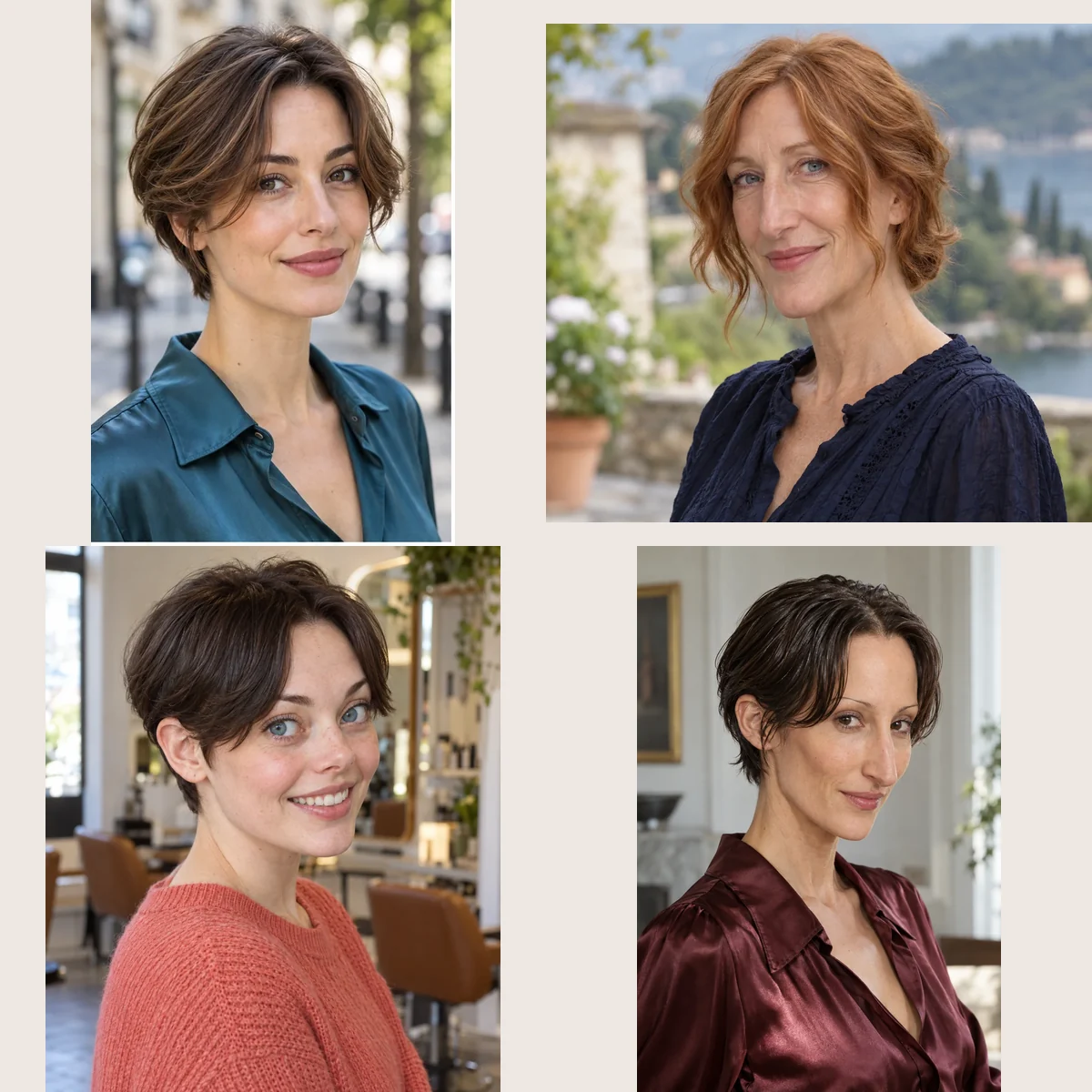
Curtain crop is a flexible salon name for a grown-out, softly layered crop with a floppy middle opening or curtain-shaped front. Longer front pieces open around the eyes while the back stays noticeably shorter. It overlaps a long pixie or compact bixie; the parted front is the defining emphasis, not an entirely separate haircutting category. Unlike a classic French crop, it does not depend on a closed forward fringe. These examples also keep a cropped back instead of an ordinary bob's continuous lower perimeter. Bring front and side references, because names alone cannot settle the proportions.
Find the one that feels like you: Start with the first look and let the photographs lead. Each style explains how the shape affects your features, the mood it creates and the exact words to take to your stylist.
Quick Facts
- Choose the opening and ear coverage together.
- Keep enough front length for the part to fall comfortably.
- Assess waves, curls and cowlicks when dry.
- A cropped back still needs reshaping.
1. The Classic Floppy Curtain Crop

A loose center split lets the front fall toward the temples while the layered back stays compact, creating the recognizable floppy curtain-crop outline. The open middle keeps the eyes visible, and softer sides make a short cut feel relaxed and expressive rather than severe during an ordinary workday. It suits straight hair with a gentle natural bend and someone happy to reset the front briefly when its part wanders. Ask for a softly layered crop, a compact nape and temple-length curtains, then dry the roots in their natural direction before separating the ends with a trace of light cream.
Ask your stylist for: A softly layered crop with a compact nape and loose temple-length center curtains.
2. A Dense, Smooth Front for Fine Hair
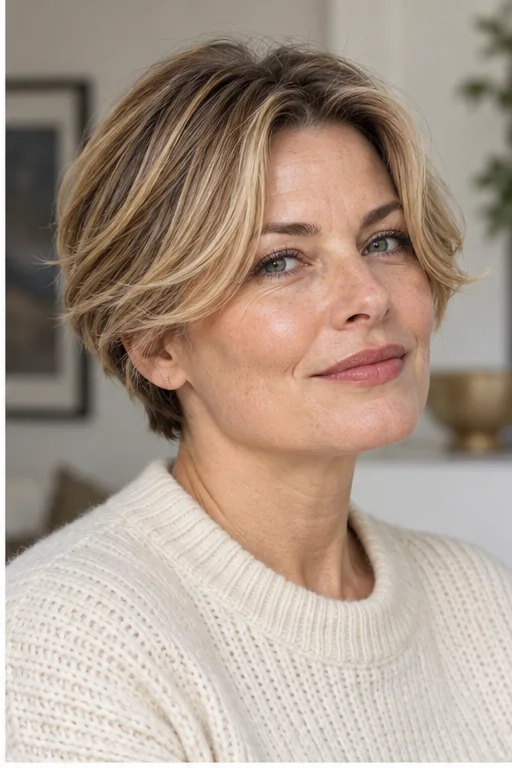
Smooth upper-cheek curtains retain a clear edge while the softly layered back sits close to the head, giving fine strands definition without scattering them into wisps. That preserved front weight makes the small cut look more substantial, which can feel quietly reassuring if highly feathered hair usually appears sparse by lunchtime. Choose this when your hairline has enough coverage for an opening; taking a deep section or thinning every end can undermine the effect. Request preserved front density, a close layered back and upper-cheek curtains, then keep heavy oils away from the roots so the opening stays light.
Ask your stylist for: Preserve front density, with smooth upper-cheek curtains and a close softly layered back.
3. A Rounded Crown With Slim Temple Curtains
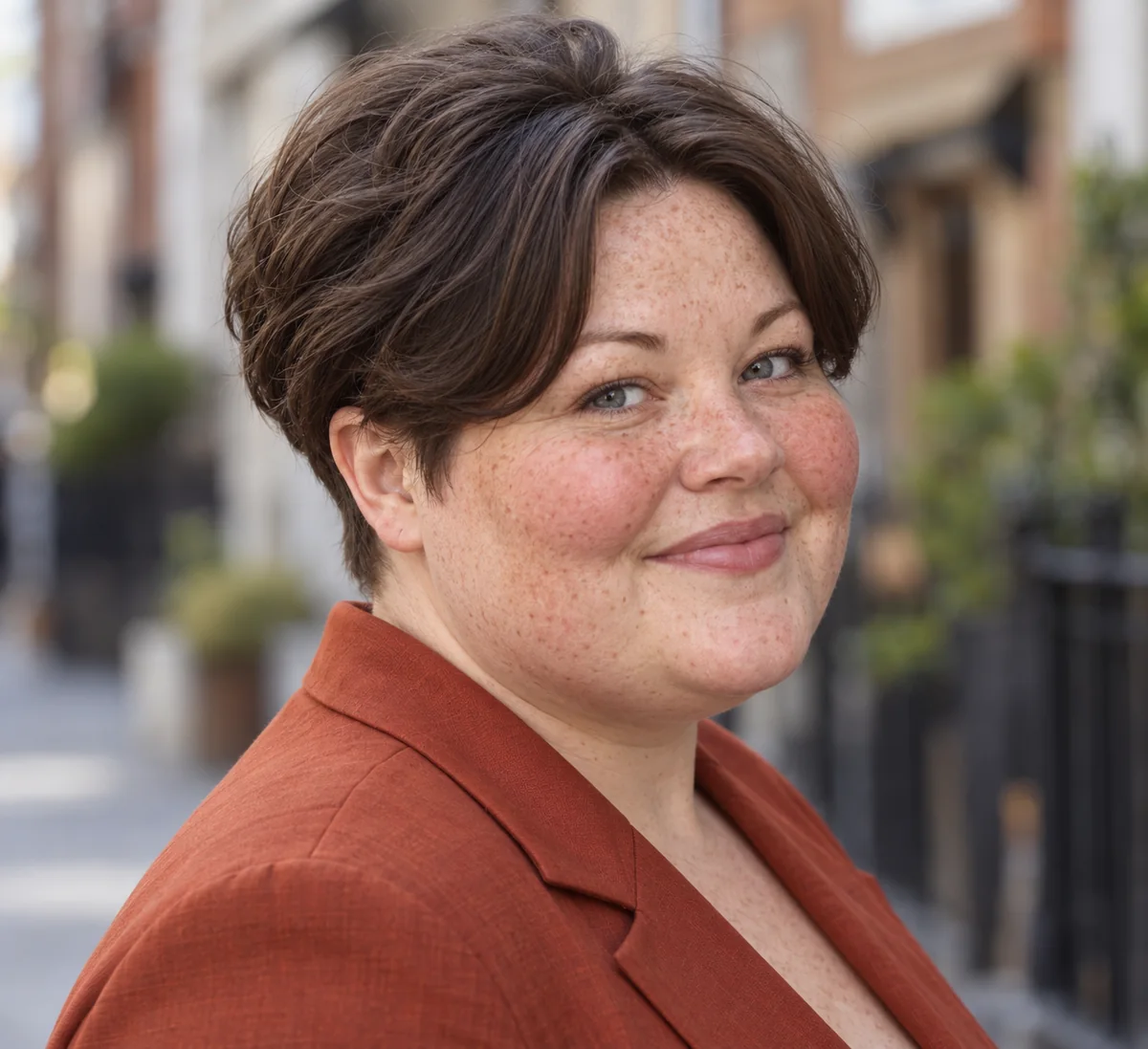
A rounded layered crown carries the fullness of thick hair, while slimmer connected curtains prevent the temples from becoming a wide shelf beside the face. Keeping volume higher can give a rounder face a little visual length, and controlled sides make abundant hair feel composed and confidently wearable. This suits someone who likes a shaped silhouette and accepts periodic weight checks, rather than expecting thick hair to stay compact indefinitely. Ask for a rounded crown, selectively controlled temple bulk and slim connected curtains over a tapered nape; have the stylist check the outline dry before removing additional weight.
Ask your stylist for: A rounded layered crown, controlled temple bulk and slim connected curtains over a tapered nape.
4. An Air-Dried Curtain Crop With Loose Waves

Loose S waves travel from the center opening into ear-grazing sides, with a softly cropped back that lets the texture move without becoming a little bob. The bends soften the outline beside an angular jaw and can make everyday short hair feel unhurried and pleasantly playful. It suits an existing cooperative wave; the air-dried finish will still change with humidity, and a straight hairline may need a small front reset. Ask for the opening and sides to follow the dry wave, leaving the nape compact, then scrunch a light styling product through damp lengths and avoid brushing once the bends form.
Ask your stylist for: Follow the dry wave with a loose center opening, ear-grazing sides and softly cropped back.
Pause and notice: Compare the back as carefully as the bangs. A long curtain front can belong to several cuts; the cropped outline keeps this guide focused.
5. Short Curls With a Visible Curtain Opening

Separated front curls reveal a small opening above the eyes, while connected temple curls lead into a short rounded back instead of a long fringe curtain. The curl frame brings attention to the eyes and makes the cropped shape feel lively and personal, especially if slick short styles never feel like you. It suits curls whose front direction supports a split, with enough dry length to avoid springing unexpectedly above the intended frame. Request a dry-assessed opening and connected temple curls over a rounded back, then refresh individual curls with water and flexible product rather than combing the whole front apart.
Ask your stylist for: A dry-assessed curly crop with a visible opening, connected temple curls and short rounded back.
6. A Shifted Split for a Cooperative Cowlick

A slightly shifted opening creates two softly unequal curtains, leaving the hairline's preferred direction visible instead of forcing a perfectly symmetrical middle. The subtle diagonal adds movement near the eyes and can make short hair feel easy and self-assured when a rigid center part usually becomes a daily struggle. This is useful for a mild cowlick, though a strong upward growth pattern may still need more front length or another fringe altogether. Ask for the split to follow your hairline, with connected unequal sides and a compact back; dry the roots gently in that direction before refining the ends.
Ask your stylist for: A shifted curtain opening following the hairline, with connected unequal sides and compact back.
7. Ear-Covering Curtains With a Narrow Nape
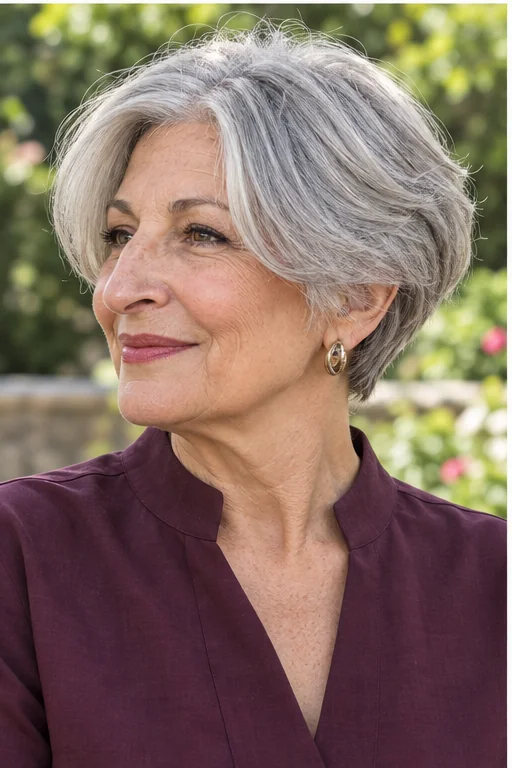
Ear-covering side panels give the parted front more presence, while a narrow cropped nape keeps the outline light behind the head. That contrast offers familiar coverage beside the cheeks and a cooler neckline, making the transition from longer hair feel comfortable without losing the freshness of a crop. It suits someone who likes hair near the ears but does not need every section to tuck securely; side panels may need regular smoothing around glasses. Request connected ear-covering curtains, a soft opening and a narrow nape, avoiding a continuous bob perimeter, then check the side fit while wearing your usual frames.
Ask your stylist for: Ear-covering connected curtains, a soft opening and narrow cropped nape without a bob perimeter.
8. Exposed Ears With Longer Front Curtains
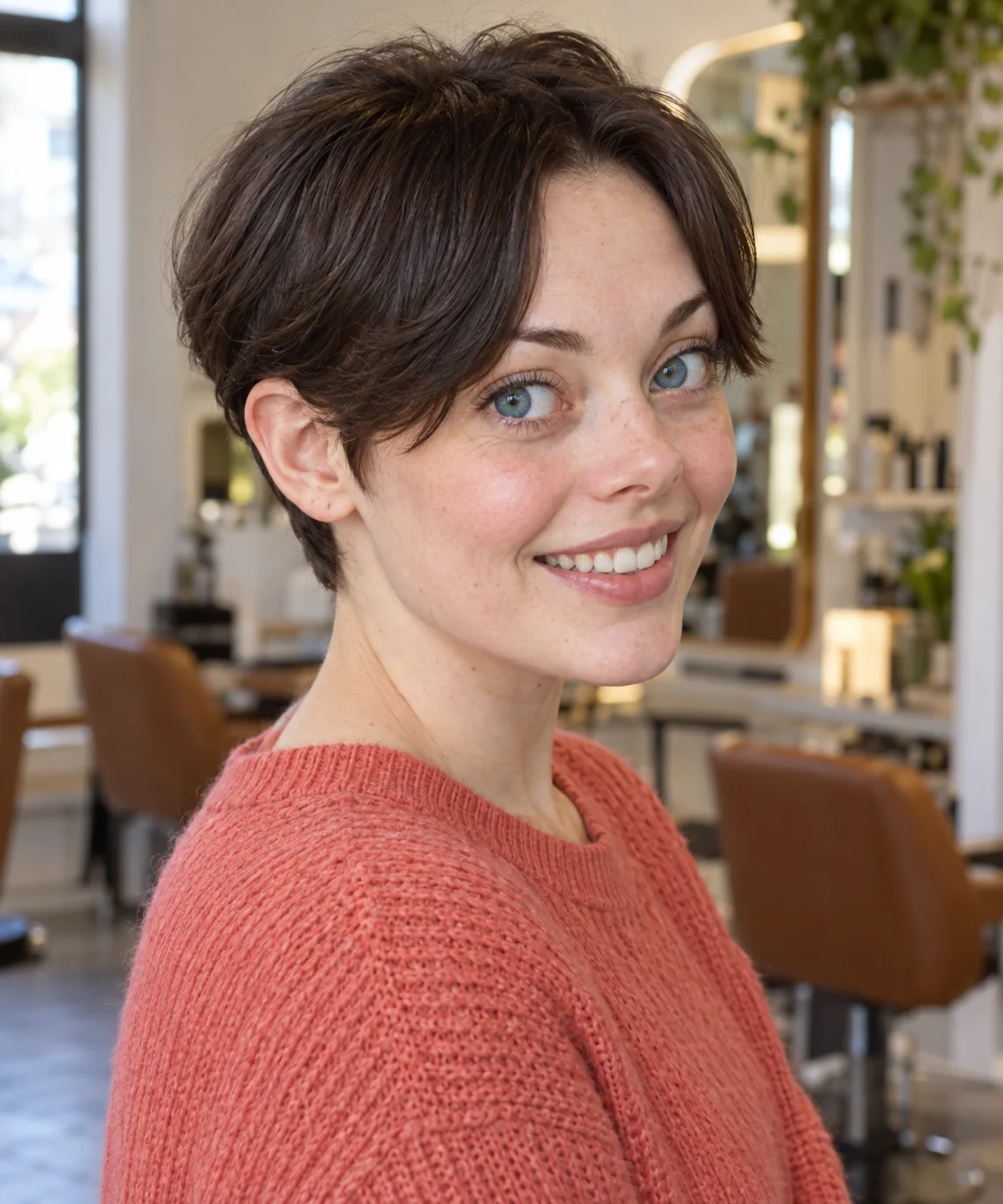
Softly shortened sides expose the ears while longer front curtains fall toward the upper cheeks, producing a clearer contrast between the opening and cropped outline. The visible ear and cheekbone area gives the cut a crisp, confident mood, and removing side bulk can feel refreshing beneath collars or scarves. Choose it if you enjoy an exposed side profile and can keep the front shaped; shorter sides do not offer the same tucking options as an ear-covering version. Ask for exposed ears, connected curtains and a close soft nape without a skin fade, then direct only the front with a small brush.
Ask your stylist for: Softly shortened sides exposing the ears, longer connected curtains and close nape without a skin fade.
Pause and notice: A finish changes the mood, but it cannot change a growth pattern. Choose a cut that settles comfortably before choosing a product-heavy reference.
9. A Piecey Curtain Crop With Choppy Ends
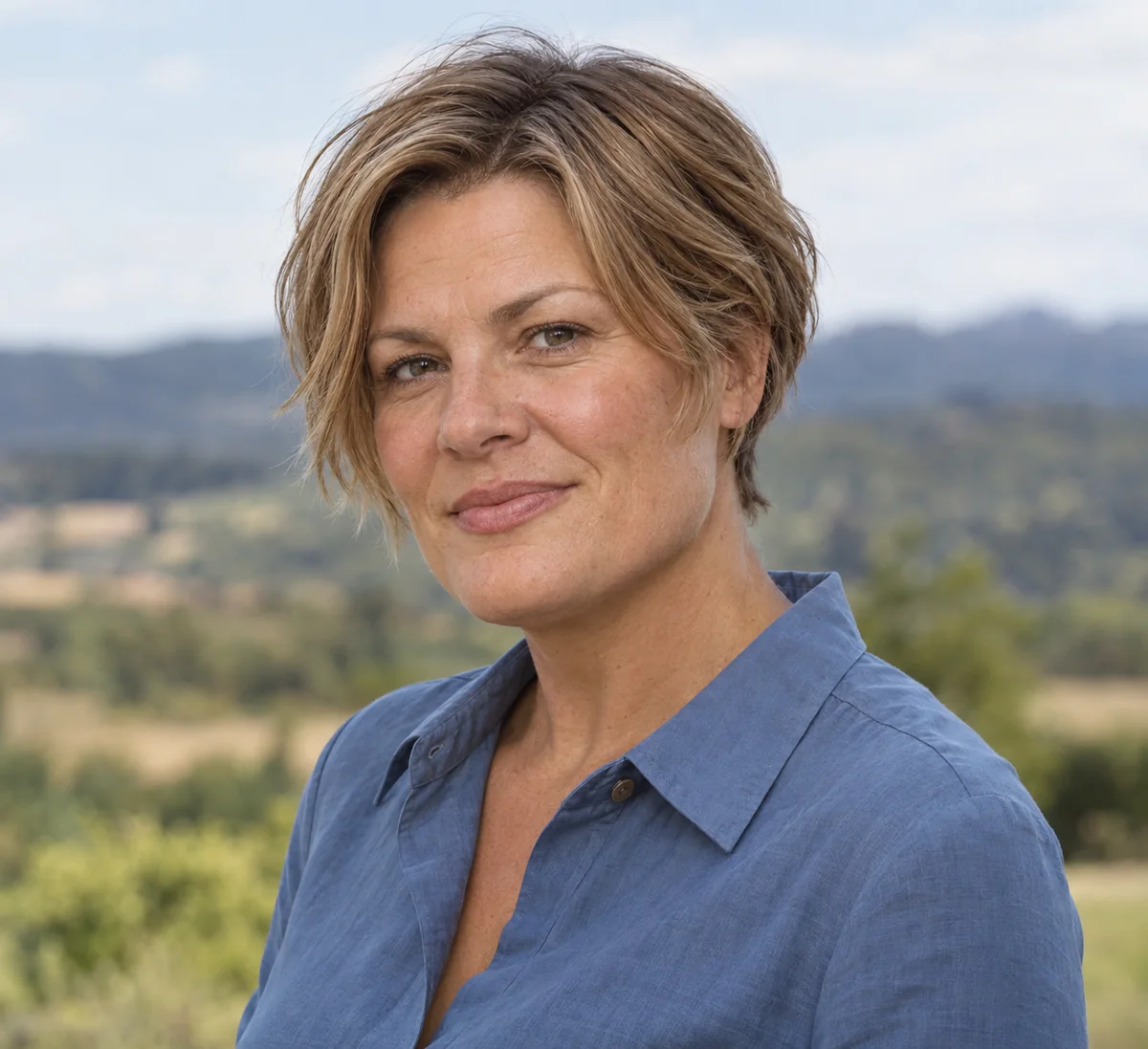
Small separations through the parted front and crown make the ends look deliberately piecey, while the compact back keeps the texture from spreading into a shag. Those little irregular edges break up a smooth outline and can make a familiar short cut feel playful, relaxed and more expressive. It suits medium density that supports selective texturizing; fine or fragile ends may lose too much substance if the same treatment is used everywhere. Ask for connected curtains with selectively choppy ends and a softly tapered back, then rub a tiny amount of paste between your hands before pinching a few visible tips.
Ask your stylist for: Connected parted curtains with selectively choppy ends and compact softly tapered back.
10. A Wet-Look Finish With Flat Curtain Roots
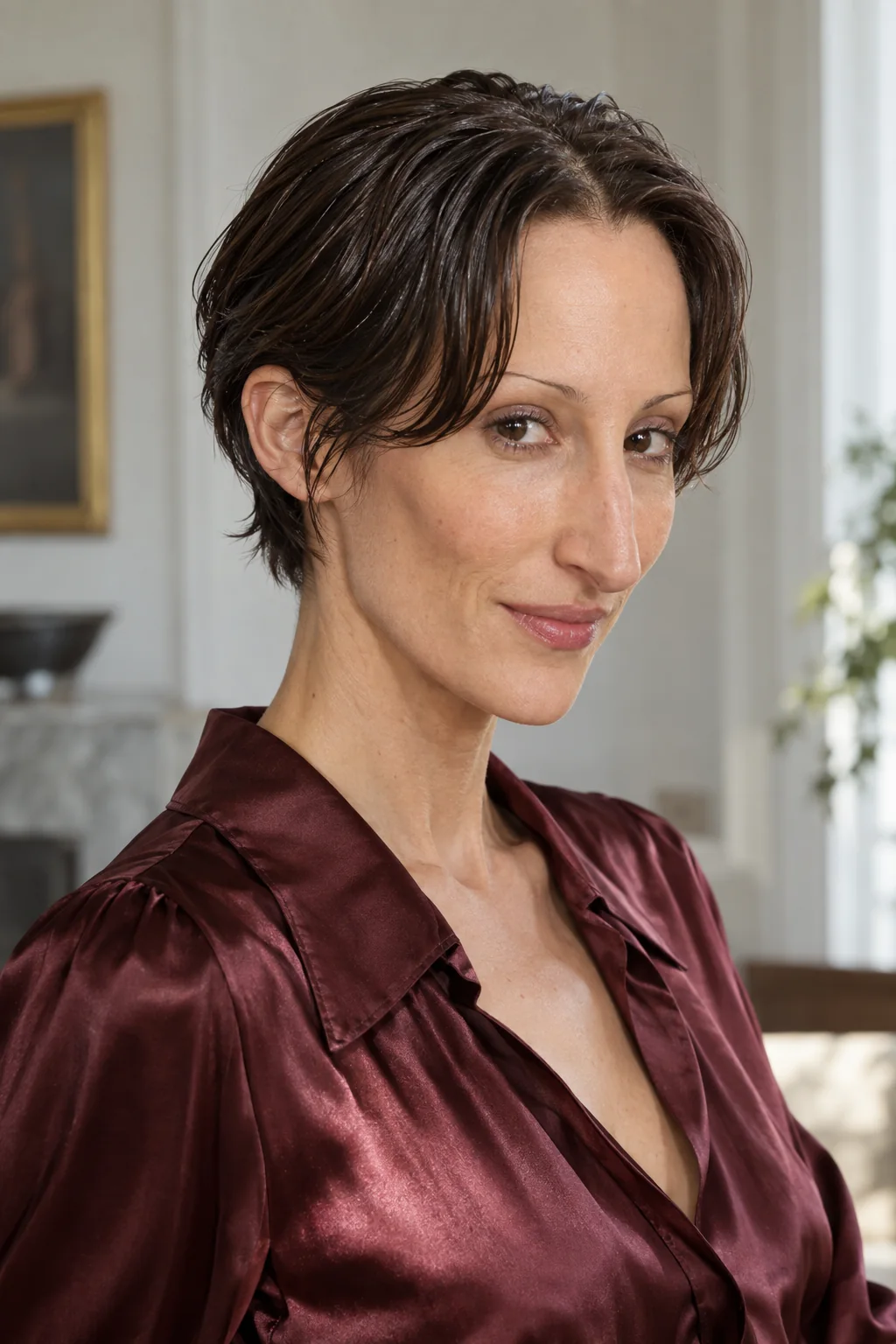
Flat parted roots and glossy separated curtains turn the softly cropped shape into a deliberate evening finish, with the short back staying neat and visible. The clean opening shows the brow and cheekbones clearly, creating a polished, quietly bold mood when you want a small cut to feel dressed for dinner. It suits someone comfortable with visible product and a wash afterward; fine strands can flatten quickly if too much gel reaches the roots. Ask for a clear opening and connected front length over a compact back, then start with a tiny amount of gel through damp hair and add only what the finish needs.
Ask your stylist for: A compact crop with clear center opening and connected front length for a glossy flat-root finish.
11. Lifted Curtains for a Soft Blow-Dried Shape

Modest lift at the front roots lets the curtains bend outward before settling beside the temples, while the close layered nape preserves the cropped proportions. The extra opening above the eyes gives a small cut a softer dressy presence, which can feel pleasantly put-together for a meeting or celebration without building a large bouffant. It suits hair that holds a bend and a routine with a few minutes for drying; the lift usually relaxes between washes. Request connected curtains with room for modest root lift and a close nape, then shape the front with a small brush and let it cool before touching it.
Ask your stylist for: Connected curtains with room for modest root lift, outward-bent ends and close layered nape.
12. Longer Curtains During Pixie Grow-Out

Upper-cheek curtains and slightly longer soft sides create a relaxed growing-out crop, while a tidied neckline prevents the back from looking like an accidental tail. Keeping front length gives you more room to part or sweep the hair, making the in-between stage feel intentional and reassuring if you are unsure whether to keep growing. It suits someone willing to reshape selectively rather than return to a short pixie at every appointment; the sides eventually move into bixie territory. Ask to preserve the growing curtains and sides while tidying only the neckline, then reassess the outline before deciding on the next full cut.
Ask your stylist for: Preserve growing curtains and side length while tidying the neckline without resetting the whole pixie.
Before You Book the Appointment
A successful salon visit begins with the overall shape, construction and upkeep—not only the finished length. Use this quick reality check before choosing your final reference photograph.
- Fine hair: Preserve front density rather than thinning every end.
- Thick hair: Control bulk selectively while keeping a connected outline.
- Wavy hair: Let the opening follow the natural bend.
- Curly hair: Allow for shrinkage and assess the opening dry.
- Cowlicks: A shifted split may behave better than a forced center part.
Curtain crop, long pixie or bixie?
The names overlap because these cuts share short layered structure. Curtain crop emphasizes the floppy parted front; long pixie describes longer top and front sections over cropped sides and back, while bixie often keeps more bob-like side length. A photo matters more than a promise of a completely separate category. Compare our broader long-pixie and bixie galleries when deciding how much side coverage and fringe variety you want.
Match the opening to your natural texture
Fine strands need enough preserved weight to form two visible curtains. Thick hair may need selective bulk control near the temples and back. Waves and curls need a dry assessment because shrinkage changes the front's resting length. A strong cowlick can move the opening or lift it; ask whether a shifted split or longer front will be more comfortable. These are adaptations, not guarantees that every reference will work on every head.
What to ask for at the salon
Bring front, side and back references showing the same cut. Describe where the shortest front pieces should land, how much ear coverage you want and how compact the nape should be. Ask the stylist to preserve the connection from curtains into sides and check the outline dry. Explain whether your routine is air drying, a brief blow-dry or a deliberate glossy finish; that affects how much movement and weight you should keep.
A small styling routine
Set the part while the roots are damp, following the direction your hairline accepts. For waves, encourage the bend with your fingers; for a smooth finish, direct the front with a small brush without building unnecessary side volume. Start with less product than you think you need, especially on fine strands. Use heat protection and moderate heat with hot tools. No cut eliminates humidity, sleep or a stubborn cowlick.
Maintenance and the next shape
Book reshaping when the nape or temple bulk obscures the outline rather than following one universal timetable. A stylist may suggest roughly four to eight weeks, adjusted to your growth and tolerance for change. During grow-out, preserve the front and sides while tidying the neckline selectively; repeated full pixie trims reset your progress. Longer sides can become a compact bixie, then a small bob, with the opening reshaped at each stage.
Is it the same as curtain bangs on a bob?
They can look similar from the front. These crops keep a visibly cropped back; a bob retains a more continuous lower perimeter. Check a side reference.
Can fine hair wear it?
Often, with enough front density and preserved weight. A shallow connected opening may be more useful than extensive thinning. Ask for a hairline assessment.
Can I air-dry it?
If the cut follows a cooperative natural bend, air drying can work well. You may still need to dampen and reset the front after sleeping.
The Takeaway
Choose the opening, ear coverage and back shape before choosing a color or finish. Save front and side references showing the same proportions, then tell your stylist how you actually get ready. The most satisfying curtain crop feels comfortable in your ordinary routine.
More Hair Inspiration
- Long Pixie Cuts With Bangs — Compare other fringe shapes on a cropped outline.
- Bixie Haircuts — Explore the broader bob and pixie hybrid.