A little coverage over the brows and a softer opening beside the cheeks can change the whole mood of your hair. Bottleneck bangs combine those two effects: a relatively narrow, short center widens into a curved fringe with longer corners, like the expanding outline of a bottle. The finished shape should look connected, rather than like short bangs with unrelated long pieces attached.

Unlike a mostly forward Birkin fringe, bottleneck bangs emphasize a curved transition toward the cheekbones. Unlike a long, widely opened curtain fringe, they retain a recognizable shorter middle. Names overlap in salons, so use a front-facing photo and describe the dry landing points. These 12 examples explore the choices that actually change the cut: center density, length, curve, hairline, texture and the outline behind it.
Find the one that feels like you: Start with the first look and let the photographs lead. Each style explains how the shape affects your features, the mood it creates and the exact words to take to your stylist.
Quick Facts
- Signature: a narrow short center widening into curved longer corners.
- Best reference: a front view on hair with a similar natural texture.
- Styling: reset damp roots, then encourage the longer corners outward.
- Maintenance: trim when the center obstructs the eyes or the connection loses shape.
1. The Classic Brow-to-Cheekbone Curve

A narrow brow-length middle flows through a continuous concave arc into cheekbone corners, with long smooth hair keeping the fringe's outline easy to see. That transition softens the edges of the forehead and draws attention toward the eyes, giving a familiar long cut a quietly polished, more intentional mood. It suits someone who likes some forehead coverage but wants movement beside the face; the shortest pieces still need resetting after sleep or exercise. Ask for a narrow brow-length middle widening continuously to cheekbone corners, then dry the center forward before easing the longer sides outward with your fingers.
Ask your stylist for: A narrow brow-length middle widening in a continuous concave arc to cheekbone corners.
2. A Shallow, Airy Center for Fine Strands

A shallow section leaves the short center visibly airy, with slim curved corners connecting it to straight collarbone lengths without forming a heavy shelf. Borrowing less hair for the fringe helps the rest retain its substance, while the delicate eye frame can make a simple weekday cut feel fresh and gently expressive. Choose it when fine strands have enough hairline density to create an intentional fringe; excessive thinning can turn lightness into uneven gaps. Request a shallow narrow section, preserved root weight and slim curved corners, then use a small amount of lightweight product and reset damp roots before they separate.
Ask your stylist for: A shallow narrow fringe section with preserved root weight and slim curved cheekbone corners.
3. A Fuller Middle With Controlled Temple Weight
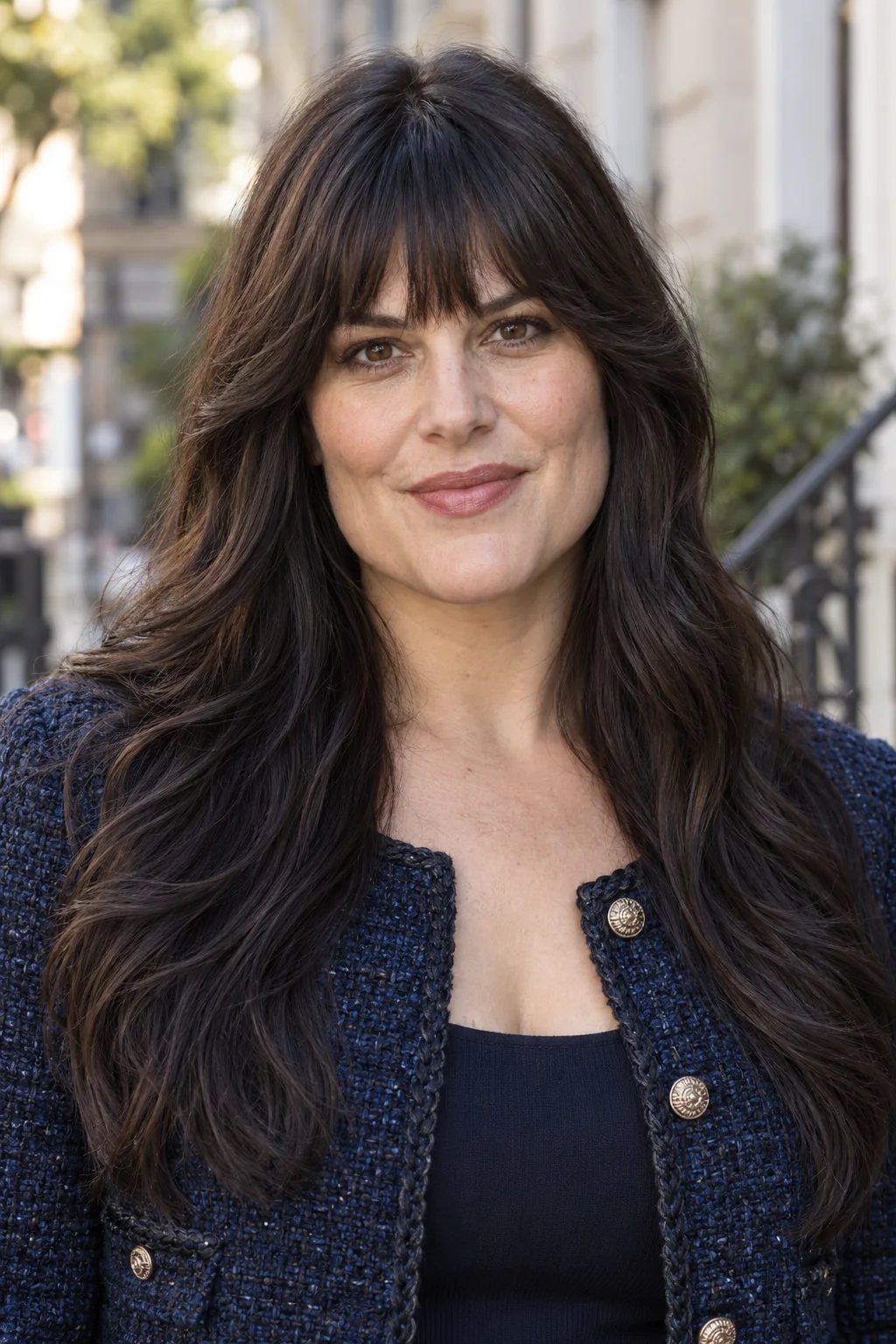
A fuller short middle gives thick dark lengths a substantial eye frame, while selective interior weight control allows the longer temple pieces to curve instead of bunching. The balance can make abundant hair feel more deliberate and sophisticated, especially when a very wispy fringe disappears beside dense lengths. This version suits someone comfortable with visible forehead coverage and a few minutes of drying; removing too much bulk near the corners can break the connection. Ask for a fuller central fringe, selective interior control and connected concave corners, keeping the surface smooth rather than shredding the entire edge with a razor.
Ask your stylist for: A fuller short central fringe with selective interior bulk control and connected concave corners.
4. A Higher Center That Leaves the Brows Clear

The shortest pieces sit just above the brows, then lengthen noticeably through the sides into cheekbone corners against shoulder-length copper hair. Exposing the brows makes the expression easier to read and gives the curved outline a playful, confident edge, without turning the whole fringe into a blunt micro line. It suits someone who enjoys a more visible haircut detail and accepts that small amounts of growth change its proportions quickly. Request a conservatively cut above-brow center with gradual connected corners, have the final length checked dry, and avoid aggressively rounding the center under when styling.
Ask your stylist for: A conservatively cut above-brow center widening gradually into connected cheekbone corners.
Pause and notice: Pause at the center: how much forehead coverage feels comfortable? Choose the dry landing point before asking for more texture.
5. An Eye-Skimming Center for a Softer Opening

An eye-skimming middle stays shorter than the extended cheekbone corners, creating a relaxed curved opening over medium chestnut lengths rather than a sharply exposed brow. The extra softness can make the cut feel romantic and reassuring if you are nervous about a very short fringe, while the longer sides offer more sweeping options. This is useful when you enjoy styling the front, but hair resting near the lashes may feel irritating during work or windy weather. Ask for an eye-skimming middle and unbroken curved transition, then agree on a comfortable dry length before treating a photograph as an exact measurement.
Ask your stylist for: An eye-skimming short middle relative to longer cheekbone corners, with an unbroken curved transition.
6. A Slightly Shifted Curve for Your Hairline

Moving the shortest center slightly away from the exact middle creates softly unequal corners, with an ash-brown lob providing a clean background for the subtle diagonal. Following a cooperative hairline can reduce the daily battle over a perfectly symmetrical opening and make the fringe feel comfortable and self-assured. It suits a mild directional growth pattern; a strong cowlick may still lift the center or require more length, so this is an adaptation rather than a guarantee. Request a shifted short center following your hairline with connected curved corners, and let the stylist assess the roots dry before committing to the shortest point.
Ask your stylist for: A slightly shifted short center following the hairline with unequal but connected curved corners.
7. A Curved Fringe Against a Rounded Chin Bob

A rounded chin-length bob gives the narrow short center a compact setting, with longer cheekbone corners blending into the sides rather than ending in a separate fringe shelf. The soft front contrasts with the tidy lower perimeter, bringing attention toward the eyes and making silver hair feel modern and composed. It suits someone who likes a defined jaw-level outline and regular reshaping; the fringe adds a separate maintenance task even when the bob itself behaves easily. Ask for a rounded chin bob and connected concave fringe, checking the corners with your glasses on if the frame arms change how those pieces sit.
Ask your stylist for: A rounded chin bob with a narrow short center connected through a concave fringe to cheekbone corners.
8. Bottleneck Shape on a Compact Ear-Length Crop
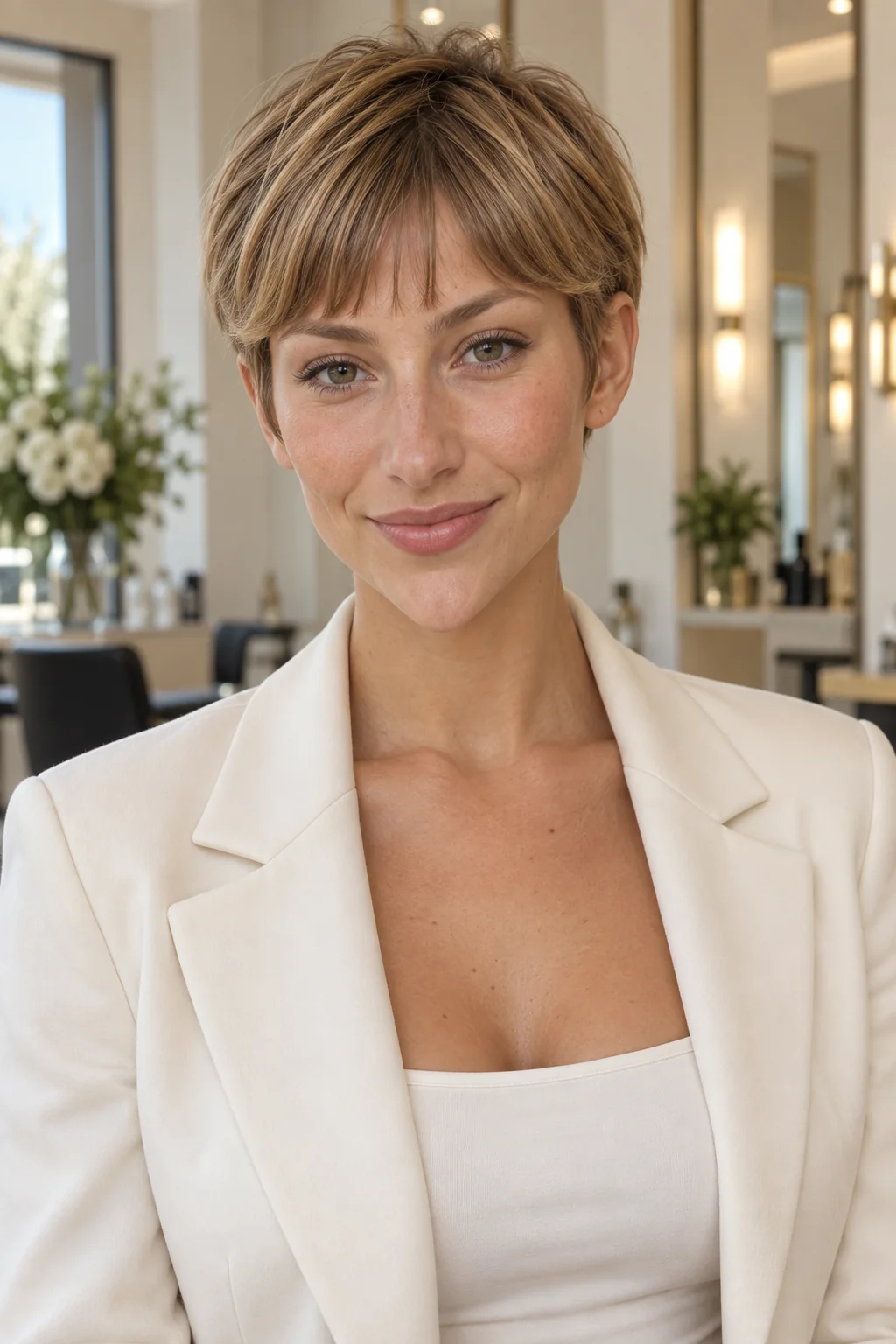
An ear-length crop and compact nape make the curved front the main detail, with a narrow short center expanding into longer temple corners rather than two long floppy curtains. Keeping the back small can feel cooler around collars, while the visible eye frame makes the crop look expressive and quietly assured. Choose it if you like short proportions but want softness near the forehead; the side pieces offer less dependable tucking room than a bob. Request a compact ear-length outline, short nape and connected bottleneck curve, then style only the front instead of building unnecessary volume through every cropped section.
Ask your stylist for: A compact ear-length crop and short nape with a narrow short center curving into longer temple corners.
Pause and notice: Bring your usual glasses and explain whether you need the sides to tuck. Those ordinary details often matter more than the name of the fringe.
9. Long Face Layers That Continue the Curve
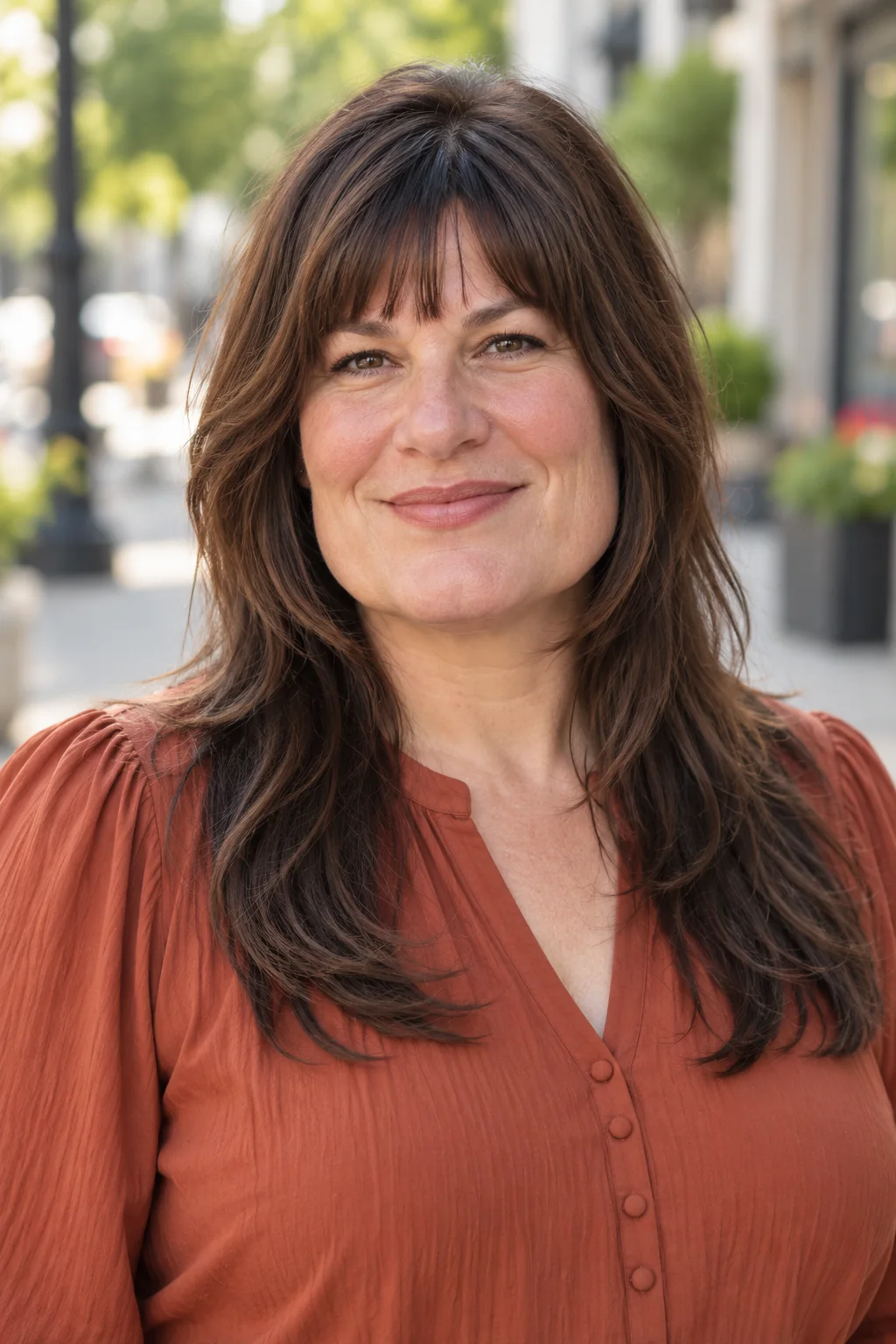
Cheekbone corners continue into jaw-length face layers against long brunette hair, extending the bottleneck curve down the face without turning the short center into a fully open curtain. That connection gives straight lengths visible movement and a softly dressed-up mood, especially when you want a salon change while keeping most of your length. It suits hair with enough front density for the transition; deeply thinning every step can leave fine ends looking weak instead of flowing. Ask for a narrow short center, curved cheekbone corners and connected jaw layers, then shape the front gently away from the face and let the bends cool.
Ask your stylist for: A narrow short center, curved cheekbone corners and connected jaw-length face layers without deep thinning.
10. A Defined Curve Within a Layered Shag
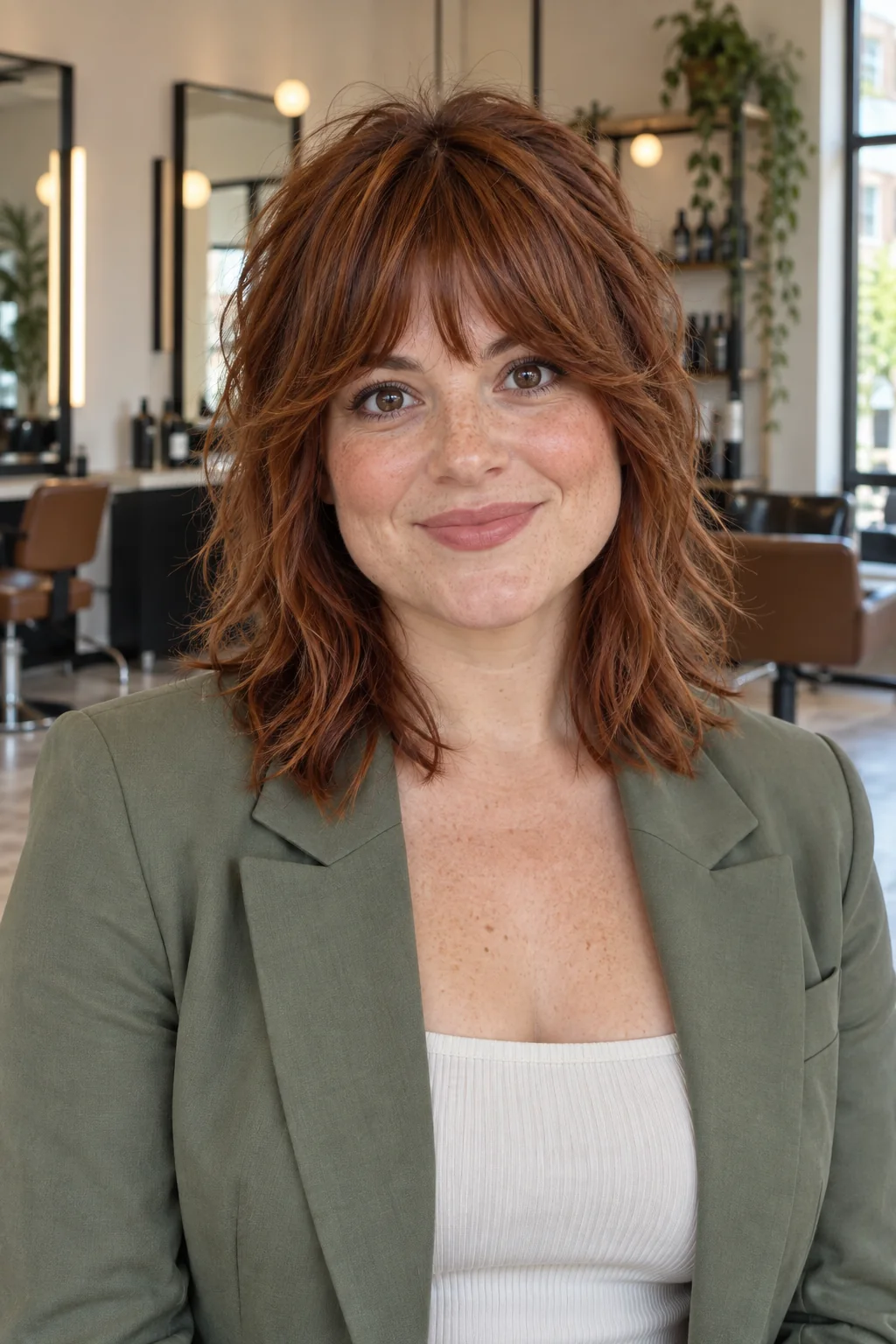
A clearly mapped short center and curved cheekbone corners provide an organized frame within an auburn shag's irregular crown and shoulder layers. The contrast lets the overall cut feel playful and lived-in while keeping the eyes visible, which is useful if a uniformly choppy fringe usually looks too busy on you. It suits a natural bend and a routine comfortable with texture; the shag's short layers may not gather neatly into a ponytail. Request a layered shag with a recognizable central curve rather than random fringe chopping, then encourage the lengths with lightweight mousse and leave the front connection intact.
Ask your stylist for: A layered shag with a clearly mapped short central fringe and connected concave cheekbone corners.
11. Natural Waves With a Relaxed Curved Edge

Short central bends open around the brows while longer corner waves continue toward the cheeks, giving shoulder-length brown hair a relaxed bottleneck outline without a perfectly smooth edge. Working with the natural bend can make the frame feel easy and personal, with softer movement beside the face than a rigid straightened fringe. It suits a reasonably cooperative front wave, though air drying may still leave one section needing a damp reset after sleeping. Ask for a wave-aware short middle and longer connected corners, checked at their dry resting length, then gently encourage the bends instead of stretching every piece flat.
Ask your stylist for: A wave-aware short middle widening into longer corners, checked at its natural dry resting length.
12. Defined Curls With a Carefully Placed Short Center
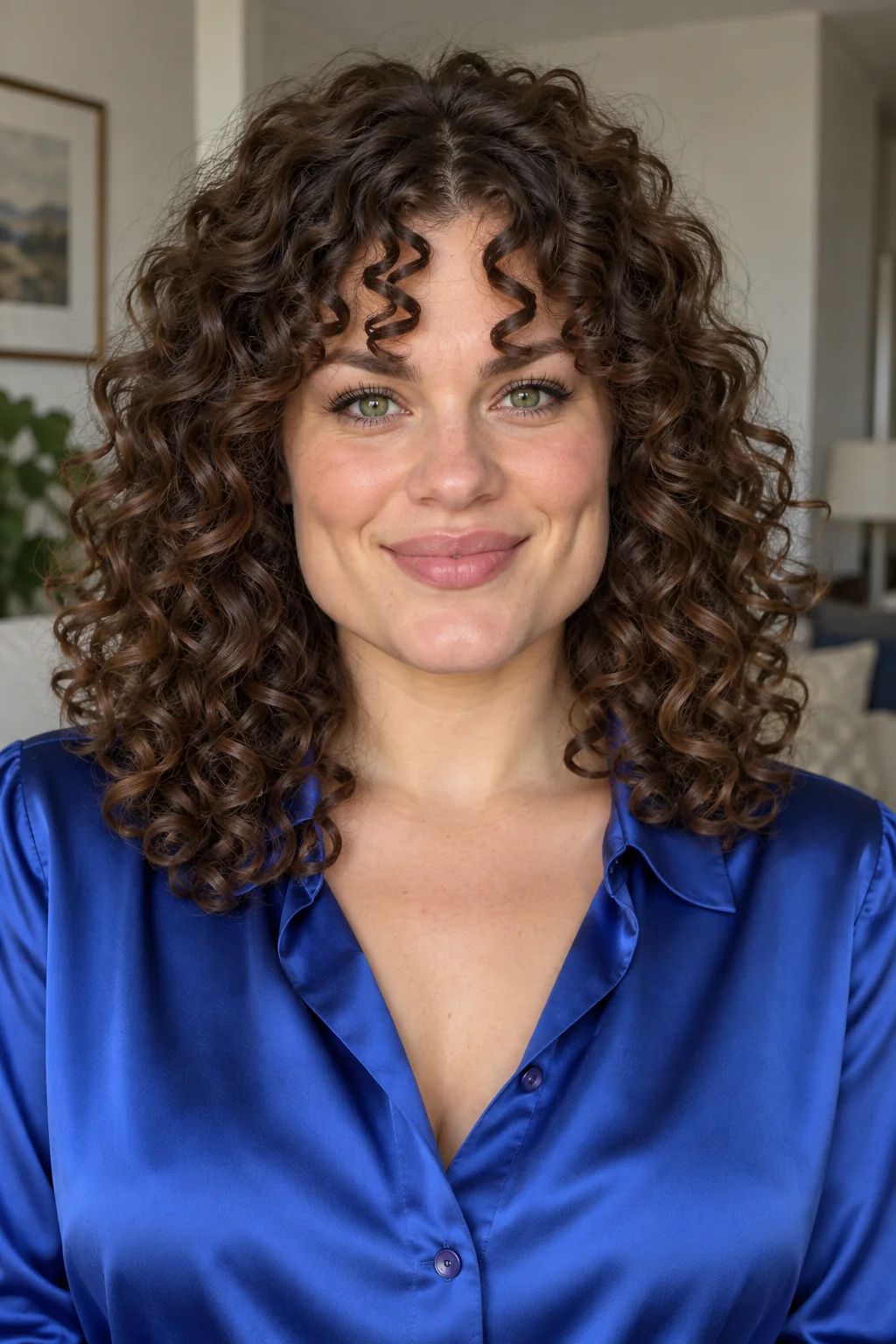
Short central curl groups widen into longer cheek curls, creating the curved bottle-like transition through defined texture rather than imitating a straight fringe strand for strand. The lively eye frame can make curls feel intentionally shaped and confident, especially when you want front detail without straightening the rest of your hair. It suits a stylist who understands your shrinkage and curl grouping; pulling wet curls straight before cutting risks an unexpectedly high middle. Request dry-assessed central groups and longer connected cheek curls, then refresh only the disturbed curls with water and a little flexible product instead of combing the opening apart.
Ask your stylist for: Dry-assessed short central curl groups widening into longer cheek curls with the connection preserved.
Pause and notice: Save one reference with texture similar to yours and one showing the curve you love. Ask your stylist how those two choices can work together.
Before You Book the Appointment
A successful salon visit begins with the overall shape, construction and upkeep—not only the finished length. Use this quick reality check before choosing your final reference photograph.
- Hairline and glasses: Discuss cowlicks and check corner placement while wearing your usual frames.
- Front density: Enough density for an intentional center without borrowing too much from the lengths.
- Routine: A few minutes to reset the front may be needed even with an easy overall cut.
- Texture: Dry-assess waves and curls; allow for shrinkage and natural direction.
Bottleneck, curtain or Birkin bangs?
Bottleneck describes the narrow short center widening into curved longer corners. Curtain describes an opening and sideward sweep, often with more front length; Birkin usually describes a mostly forward brow fringe with softly irregular ends. These are overlapping salon terms. Judge the photograph's center length and transition, then describe those features rather than insisting the name guarantees a unique cut.
Match density and texture before face shape
Fine strands need preserved root weight; thick fronts may need selective internal control. Waves and curls require a dry length assessment because shrinkage changes the outline. A stronger cowlick may need a shifted opening or more central length. The curve can soften a horizontal forehead line and emphasize the eyes, but your hairline, comfort and styling habits matter more than rigid face-shape rules.
What to ask your stylist
Bring a front-facing photograph and a side reference. Point to the shortest central pieces, the width of that section and where the corners should land. Discuss how much density the lengths can spare, whether you wear glasses and how often you tie your hair back. Ask for a dry check before final refinement. Search interest in cutting your own fringe does not make a first bottleneck cut a good home project: restoring removed length and width takes time.
A realistic styling routine
Style the front while damp. Direct the roots gently from side to side if that suits your growth pattern, settle the middle forward, then encourage the longer corners outward. Avoid rolling the entire fringe into a rounded tube, which hides the widening curve. Use heat protection and moderate heat with a dryer or tool, and start with less product than on the lengths. Waves and curls need their own natural grouping rather than a forced straight finish.
Trims and growing it out
Book a fringe adjustment when the short center obstructs your eyes or the corners lose their connection. A stylist may suggest roughly four to six weeks, adjusted to growth and your preferred landing length. For grow-out, preserve the middle's length and blend the corners selectively toward a longer curtain shape. Cutting the center short at every appointment resets that progress. Glasses, humidity and sleep can still change the way a freshly shaped fringe sits.
Can bottleneck bangs work on short hair?
Yes, if the crop or bob leaves enough front length for a short center and connected longer corners. Keep the back reference visible so the hairstyle's proportions remain clear.
Can I wear them with glasses?
Often, but check where the corners meet the frame and arms. Bring your usual glasses to the consultation and assess the fringe dry rather than guessing from a photo.
Do they need daily styling?
Not everyone needs a full blow-dry. Many people need only a damp root reset; stubborn growth patterns or a smooth reference finish can require more time. Choose a version that fits your ordinary morning.
The Takeaway
Choose the center's length, density and curve before choosing a color or a glamorous finish. Save a reference with similar texture, show the corners you like, and tell your stylist how you usually get ready. A comfortable bottleneck fringe should give your hair an intentional frame that still feels like you.
More Hair Inspiration
- Curtain Bangs Haircuts — Compare longer, more open fringe shapes.
- Birkin Bangs — Compare a mostly forward brow-skimming fringe.
- Butterfly Bangs — Explore longer sweeping wings.