Shoulder-length hair is the rare sweet spot that can still swing, tie back and hold a real shape. Add the right bangs and it suddenly feels intentional again—not merely stuck between short and long.
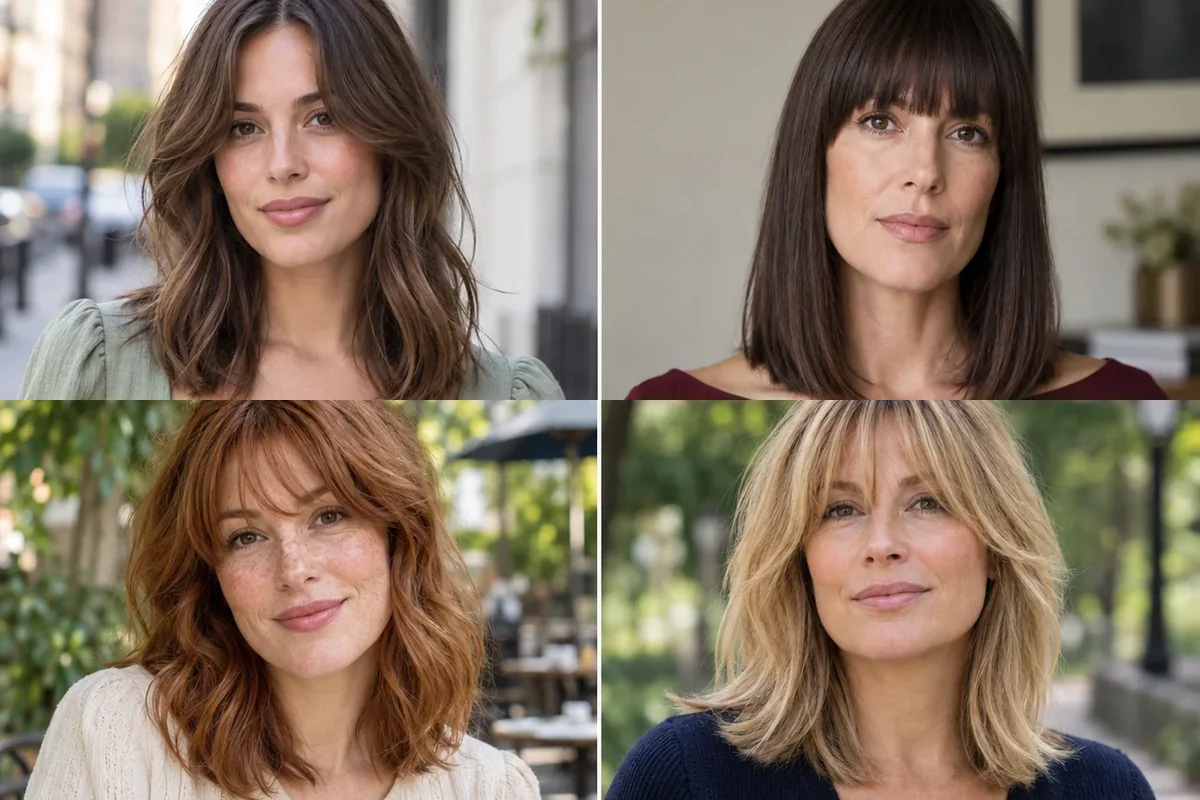
Shoulder-length hair with bangs ends at or brushes the shoulders while a deliberately cut fringe shapes the forehead and face. It is longer than a classic chin bob and more specific than generic medium-length hair: the perimeter, layers and bangs work as one silhouette. The most flattering version depends less on a rigid face-shape rule than on density, natural texture, cowlicks and realistic styling time. Choose the movement and maintenance you genuinely want, then take the exact salon wording with your reference photos.
Find the one that feels like you: Start with the first look and let the photographs lead. Each style explains how the shape affects your features, the mood it creates and the exact words to take to your stylist.
Quick Facts
- Judge the length and fringe on dry hair, especially with waves or curls.
- Curtain and side bangs grow out more quietly than a short blunt fringe.
- Fine hair often benefits from a stronger perimeter and fewer internal layers.
- Plan trims every three to six weeks for a precise eye or brow line.
1. Soft Layers With Curtain Bangs
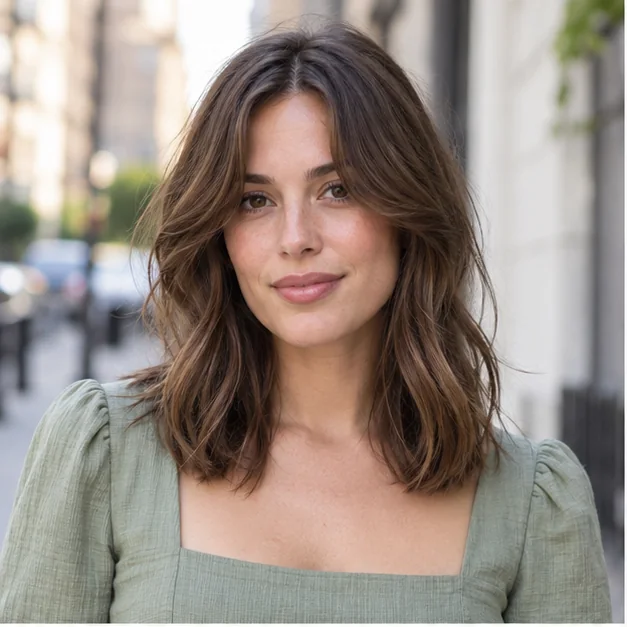
Long, airy layers begin below the cheekbones and fall to a shoulder-brushing perimeter, while curtain bangs part around the eyes and blend into the sides. The open center keeps the fringe from feeling heavy and gives straight or softly wavy hair movement without sacrificing fullness at the ends. It can make your look feel relaxed, current and easy to adjust because the longer pieces tuck away on busy mornings. Ask for curtain bangs shortest near the brows, connected to cheekbone framing, with long layers that preserve the baseline.
Ask your stylist for: Keep a full shoulder line, add long airy layers and cut curtain bangs from brow to cheekbone.
2. Blunt Shoulder Cut With Full Bangs
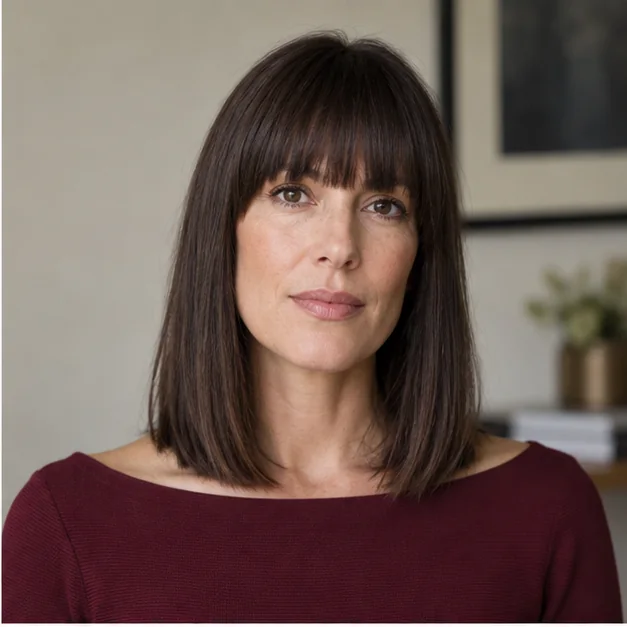
A dense, one-length edge sits directly on the shoulders beneath a smooth brow-skimming fringe. That strong horizontal outline can make fine-to-medium hair look more substantial, while the full bangs bring attention to the eyes and create a polished frame. The result feels confident and deliberately styled, though it rewards anyone happy to reset the fringe after sleep or humidity. Ask for minimal elevation through the perimeter, a softly beveled—not razor-thin—bang edge and enough width at the temples to connect the fringe cleanly.
Ask your stylist for: Cut a strong one-length shoulder perimeter with dense brow-skimming bangs and softly beveled edges.
3. Wavy Hair With Wispy Bangs
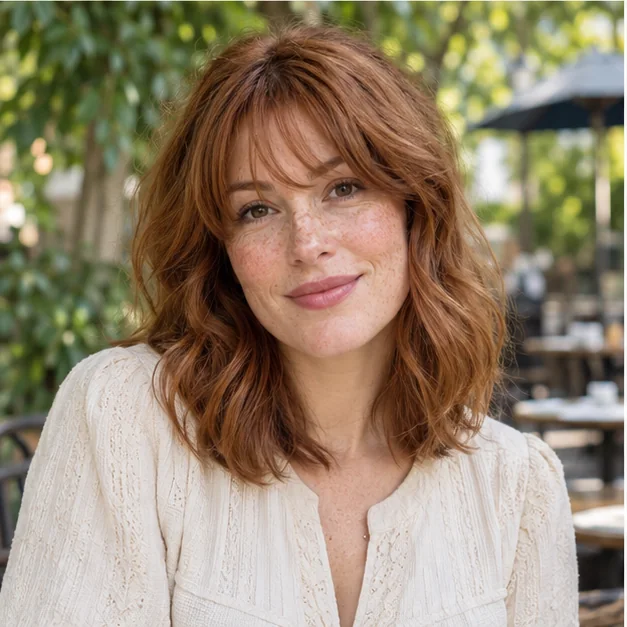
Loose waves break up a shoulder-length shape while fine, separated bangs reveal small glimpses of forehead. The lighter fringe avoids competing with natural movement and can soften a wider forehead without creating a solid line across the face. This combination feels breezy and approachable, especially if you prefer touchable texture to a perfect blowout. Ask for a dry-cut wispy fringe with slightly longer corners and subtle internal shaping through the waves; direct the bangs forward first, then separate them with a trace of light cream.
Ask your stylist for: Dry-cut a light wispy fringe with longer corners and softly debulk my shoulder-length waves.
4. Rounded Layers With Bottleneck Bangs

Rounded layers create a bouncy outline through the shoulders, and bottleneck bangs narrow near the brow before widening toward the cheekbones. That curved transition draws focus toward the center of the face and gives thicker hair a sculpted shape rather than a triangular finish. It can feel glamorous without looking rigid, provided you enjoy using a round brush or large rollers. Ask for the fringe to pinch inward above the eyes, flare into cheek-length corners and echo rounded layers through the midlengths while leaving weight at the bottom.
Ask your stylist for: Shape bottleneck bangs narrow at the brows and wider at the cheeks, with rounded shoulder layers.
5. Sleek Hair With Long Side-Swept Bangs
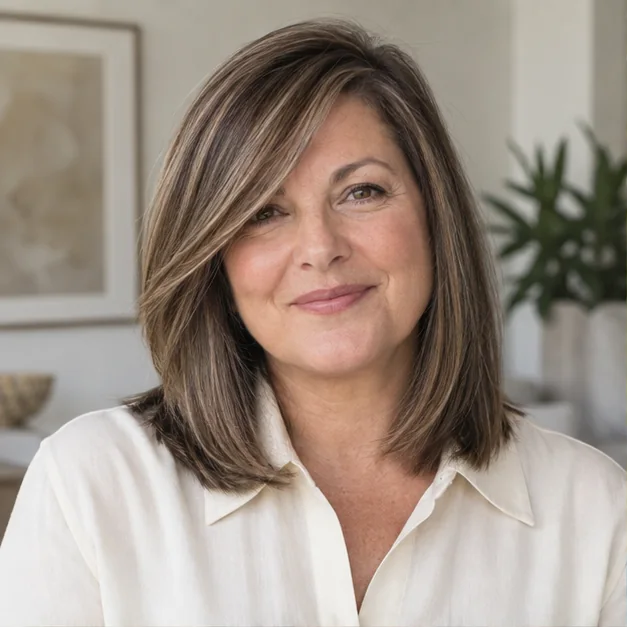
Smooth shoulder-length hair falls in a clean line while a long diagonal fringe sweeps from a deep side part toward one cheek. The asymmetry opens one side of the face and can visually lengthen a rounder outline without excessive crown volume. It feels sophisticated and flexible because the bang can be tucked behind the ear as it grows. Ask for a side fringe beginning around the outer brow and tapering past the cheekbone, with the shoulder edge kept blunt; direct it across the forehead while drying, then cool it in place.
Ask your stylist for: Keep the shoulder edge blunt and cut a long side fringe from outer brow to below the cheekbone.
Pause and notice: Choose your bang by routine before choosing it by photograph. A long side or curtain fringe can move away; a short, blunt or lash-skimming fringe becomes part of every morning.
6. Curly Shoulder Cut With Curly Bangs
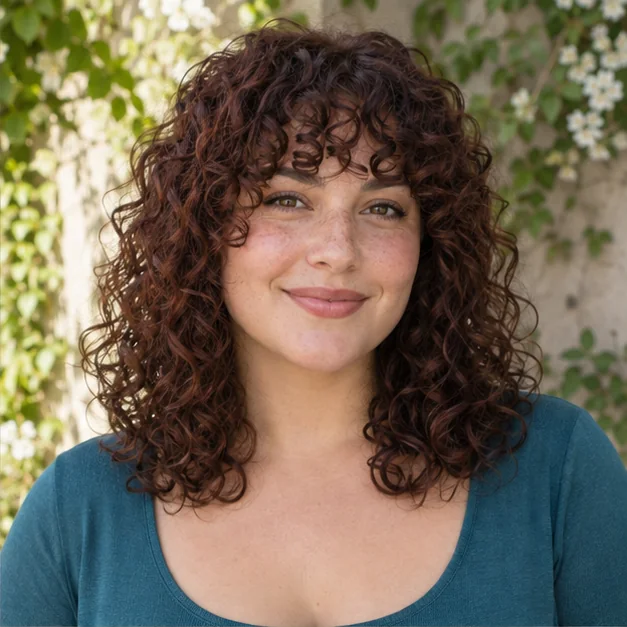
Defined curls form a rounded shoulder-level silhouette, with a springy fringe sitting above the brows when completely dry. Cutting the bangs as part of the curl pattern makes the shape cohesive and lifts attention toward the eyes without forcing curls into a straight fringe. The finished look can feel joyful, expressive and easier than fighting natural texture each morning. Ask for a curl-by-curl dry cut, a softly rounded perimeter and bangs judged at full shrinkage; refresh fringe curls with water and a small amount of your usual curl product.
Ask your stylist for: Cut my shoulder shape and fringe curl by curl when dry, allowing fully for shrinkage.
7. Fine Hair With Airy Curtain Fringe

A nearly one-length shoulder cut protects density through the ends, while a narrow triangle of airy curtain fringe adds movement only around the forehead. Limiting the amount committed to bangs prevents fine strands from looking sparse across both the front and perimeter. This version feels light and modern without creating a complicated routine or sacrificing a fuller-looking baseline. Ask for very shallow curtain bangs, softly point-cut ends and only delicate face framing; use a small round brush at the roots, then avoid heavy oils that separate the fringe too dramatically.
Ask your stylist for: Preserve a dense shoulder baseline and take a shallow section for airy curtain bangs only.
8. Thick Hair With Textured Bangs
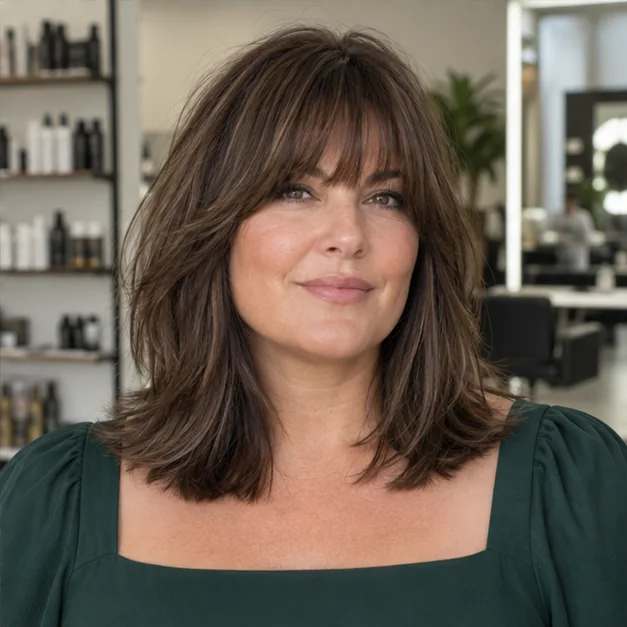
Hidden internal layers remove weight from thick shoulder-length hair, while a substantial fringe is broken into soft textured pieces instead of one solid block. Controlled removal lets the perimeter swing and keeps the bangs from overwhelming strong density or a smaller forehead. It feels effortless and slightly undone, even though the interior balance is carefully planned. Ask your stylist to preserve the visible outer line, debulk selectively beneath it and point-cut the fringe with longer temple pieces; avoid aggressive thinning at the ends, which can create a frayed halo as it grows.
Ask your stylist for: Remove hidden internal weight, keep the outer line strong and texture full bangs with longer temple pieces.
9. Shoulder-Length Shag With Choppy Bangs
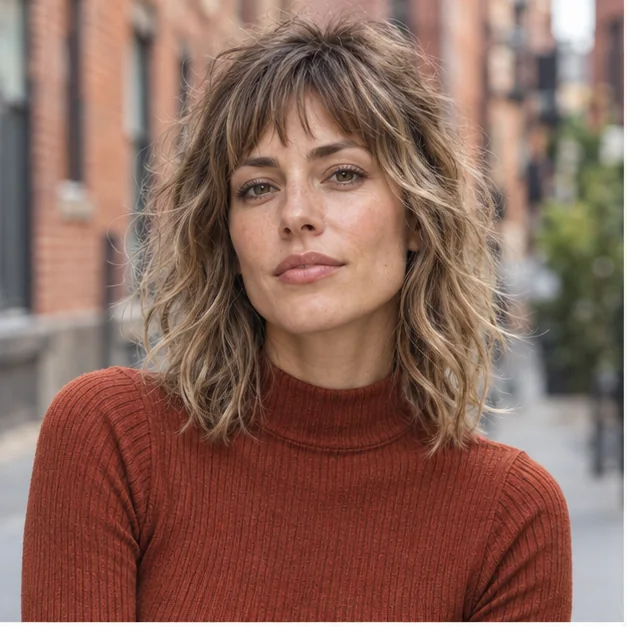
Short crown layers and broken midlengths give this shoulder shag a deliberately tousled outline, finished with choppy bangs that vary slightly around the brow. The uneven movement brings lift to the top and can make natural wave feel energetic instead of bulky at the bottom. It has a playful, confident mood and works best if you enjoy visible texture rather than a smooth surface. Ask for disconnected crown lift, soft weight removal around the shoulders and a piecey fringe with no harsh horizontal line; air-dry with mousse or diffuse for separation.
Ask your stylist for: Create a shoulder shag with disconnected crown lift, broken ends and uneven piecey brow bangs.
10. Polished Lob With Rounded Bangs
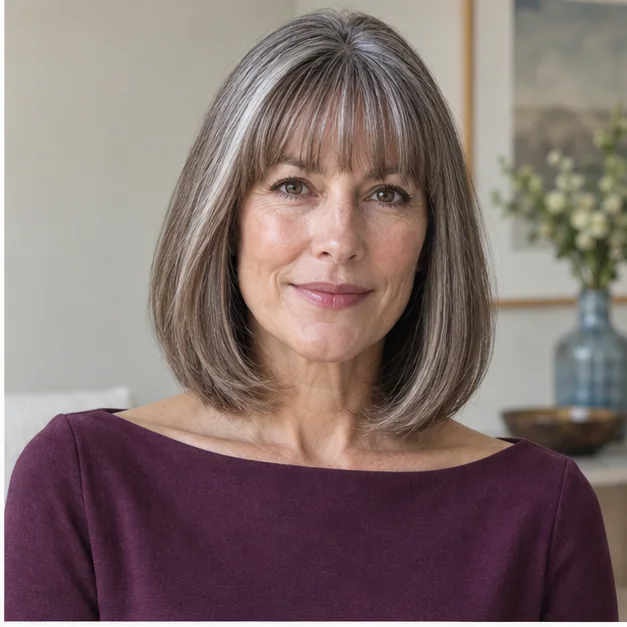
A smooth long bob sits just above the shoulders with gently curved ends and a rounded fringe that follows the brow rather than lying ruler-straight. The soft bend makes a precise cut feel less severe and can balance a longer face by adding width near the eyes and jaw. It feels neat, elegant and office-ready, though the glossy shape benefits from controlled blow-drying. Ask for a compact lob perimeter, a slightly arched brow fringe and subtle beveling at the ends; wrap the fringe from side to side while drying so it settles without a pronounced part.
Ask your stylist for: Cut a compact shoulder-skimming lob with a softly arched brow fringe and inward-beveled ends.
Pause and notice: Density changes the plan. Fine hair often needs a shallow fringe and strong ends, while thick hair may need hidden weight removal that leaves the visible perimeter intact.
11. Beachy Waves With Grown-Out Bangs
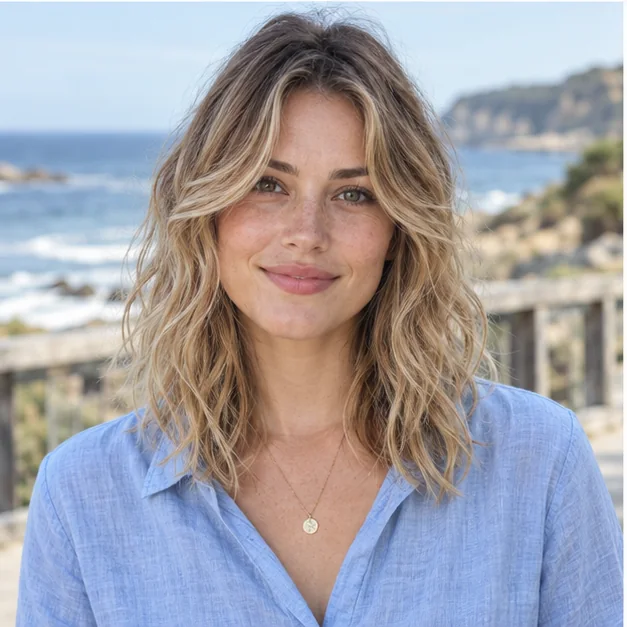
Loose, irregular waves sit at the shoulders while grown-out bangs separate near the center and finish around the cheekbones. Those longer front pieces blend into the wave pattern, making this an attractive transition for anyone who no longer wants frequent fringe trims. The shape feels relaxed and forgiving, and it can still be pinned or tucked on open-face days. Ask for old bangs softened into cheekbone layers without taking extra width from the front; alternate wave direction and leave the final inch straighter for an unfussy finish.
Ask your stylist for: Blend my grown-out bangs into cheekbone layers and keep loose shoulder waves with straighter ends.
12. Straight Layers With See-Through Bangs
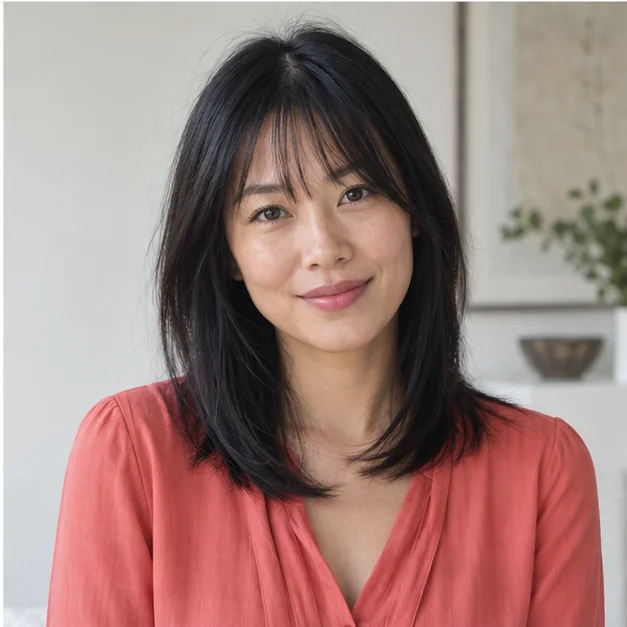
Straight shoulder-length layers move cleanly around the collarbones beneath a fine, translucent fringe. The see-through spaces keep a petite face or lower hair density visible instead of enclosing it behind a heavy curtain, while longer side pieces connect gently to the cut. This feels delicate and polished, but the light fringe shows oil quickly and may need a brief morning wash. Ask for a small triangular bang section, separated brow-length pieces and long face-framing layers; keep dry shampoo at the roots rather than dusting the visible ends.
Ask your stylist for: Take a small triangle for separated see-through bangs and connect it to long collarbone layers.
13. Flipped Ends With Side Bangs

The last inch of a shoulder-length cut turns outward, while a smooth side bang arcs across the forehead and joins the temple. That outward flick gives the perimeter buoyancy and brings a subtle retro note without requiring short layers throughout. It feels cheerful, polished and especially good with a simple neckline that leaves the moving ends visible. Ask for a mostly one-length foundation, light graduation near the face and a side bang landing around the cheekbone; set the ends away from the neck and let them cool fully before brushing.
Ask your stylist for: Keep a mostly one-length shoulder cut, flip the last inch outward and shape a cheekbone side bang.
14. Natural Gray Waves With Feathered Bangs

Soft gray waves skim the shoulders as feathered bangs sweep lightly away from the center of the forehead. The airy direction lifts the eye area and keeps natural silver variation visible, avoiding the dense cap effect that can happen when thick bangs meet rounded waves. It feels bright, graceful and modern without pretending texture or color should look younger. Ask for softly graduated fringe pieces that can split or sweep, plus restrained layers placed where the waves already bend; use light heat protectant and avoid heavy waxes that mute silver shine.
Ask your stylist for: Follow my natural wave with restrained layers and feathered bangs that can split or sweep aside.
15. Layered Curls With Side-Swept Fringe
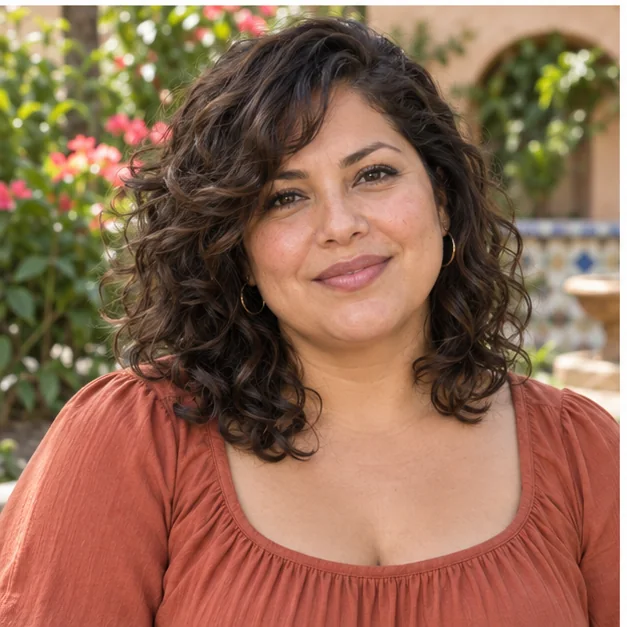
Graduated curly layers build a balanced shoulder shape, while a longer curl fringe travels diagonally across the forehead. The angled front adds softness without demanding a short curly bang and can distribute volume away from the widest part of the cheeks. This version feels romantic and adaptable because the fringe can join the rest of the curls as it grows. Ask for the silhouette assessed dry, with the shortest side-fringe curl near the outer brow and ends staggered through the cheek; diffuse with the part already in place.
Ask your stylist for: Shape balanced shoulder curls dry and cut a diagonal curl fringe beginning near my outer brow.
Pause and notice: Bring references showing both the bangs and the shoulder line. One without the other can lead to the right fringe on the wrong silhouette.
16. One-Length Hair With Micro Bangs
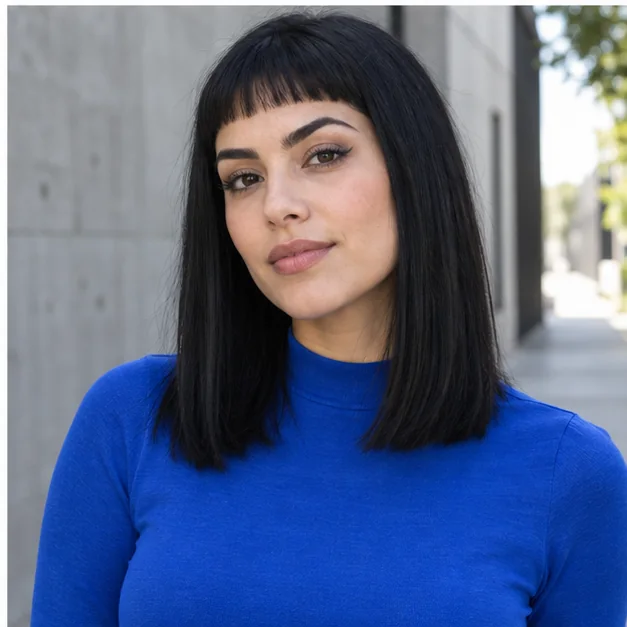
A clean, weighty shoulder line contrasts with short micro bangs positioned well above the brows. The deliberate difference between tiny fringe and longer perimeter exposes the forehead, emphasizes brows and gives simple straight hair an editorial edge. It can feel bold and individual, but it is a visible commitment that does not hide easily during early grow-out. Ask for a straight, narrow micro fringe with softened corners and no unnecessary layers through the length; confirm the dry height carefully, especially if a cowlick lifts the center.
Ask your stylist for: Keep my shoulder length one-length and cut a narrow micro fringe with soft corners on dry hair.
17. Butterfly Layers With Curtain Fringe
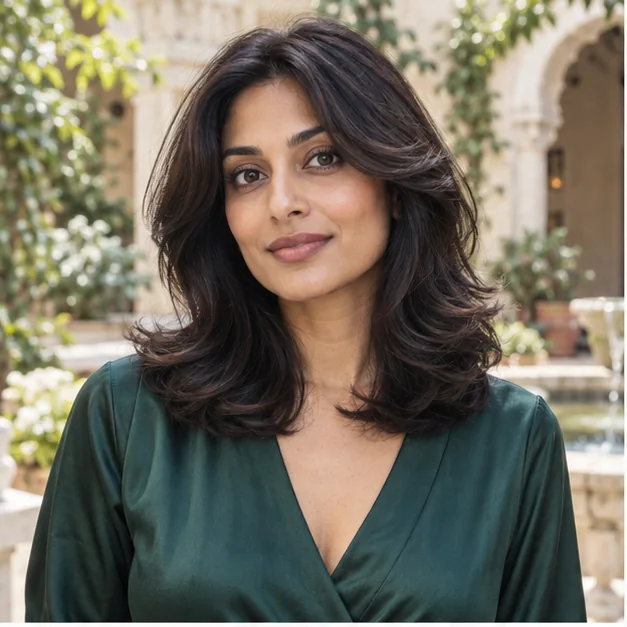
Shorter face-framing sections sweep back from the cheekbones into fuller shoulder-length layers, with curtain fringe completing the lifted butterfly shape. The backward movement opens the face and adds bounce around the crown, helping medium-to-thick hair feel lighter while keeping a glamorous outline. It can make an everyday blowout feel buoyant and confident, though the shape is most visible after heat styling. Ask for connected face frames from brow to cheek to jaw, rounded upper layers and a full shoulder perimeter; set sections away from the face with a round brush.
Ask your stylist for: Build connected butterfly framing from curtain fringe through cheek and jaw, keeping the shoulder edge full.
18. Tousled Hair With Long Split Bangs
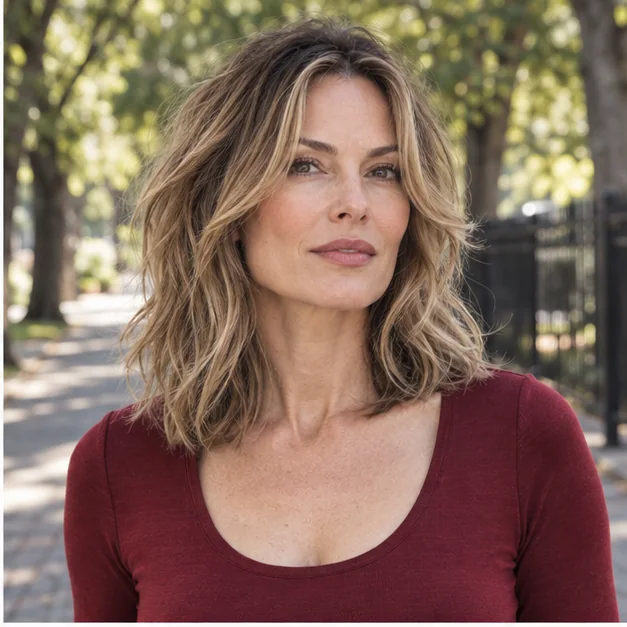
A lightly tousled shoulder cut has subtle bends through the midlengths and long split bangs that end near the jaw. The extended fringe creates face framing with almost no forehead coverage, making it useful for cowlicks or anyone wanting the suggestion of bangs without constant trimming. The effect feels casual, soft and easy to change between a center and off-center part. Ask for jaw-length front pieces that remain distinct from the main perimeter and barely-there internal layers; twist the front away from the face while damp and release it when dry.
Ask your stylist for: Cut distinct jaw-length split bangs with subtle internal layers and a full shoulder perimeter.
19. Soft Wolf Cut With Piecey Bangs
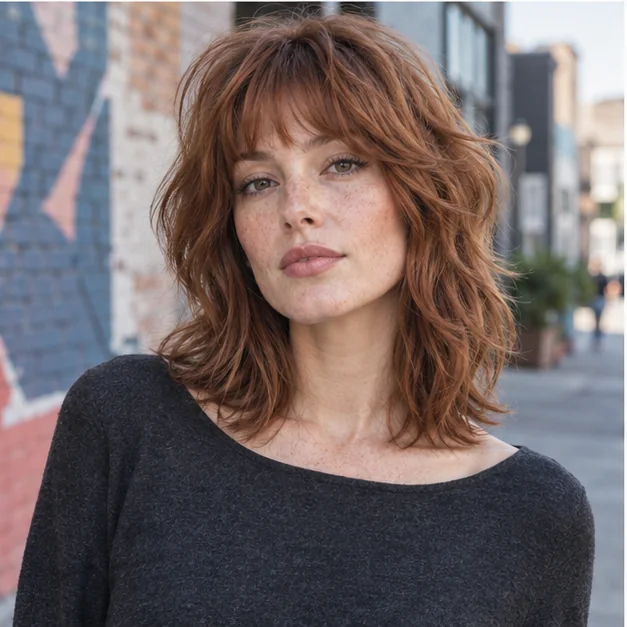
A softened wolf cut concentrates lift around the crown and face while leaving enough length and density to brush the shoulders. Piecey bangs echo the separated layers, so the fringe reads as part of the haircut rather than an extra strip across the forehead. It feels creative and energetic without the extreme disconnection of a very short mullet shape. Ask for rounded crown layers, controlled removal through the sides and brow-length bangs with visible gaps; scrunch in foam and direct the ends with your fingers instead of smoothing away texture.
Ask your stylist for: Make a soft shoulder wolf cut with rounded crown layers and separated brow-length bangs.
20. Smooth Layers With Birkin-Style Bangs
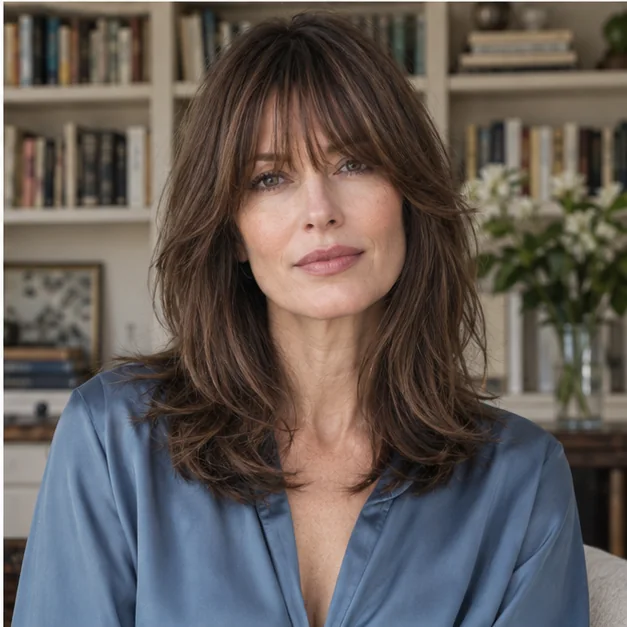
Smooth, restrained layers fall to the shoulders beneath long, softly uneven bangs that skim the lashes and separate naturally at the center. The relaxed fringe brings attention to the eyes and gives a simple cut French-inspired softness without the bulk of a perfectly blunt bang. It feels quietly stylish and personal, although lash length means you notice growth quickly. Ask for narrow, point-cut bangs with a few slightly shorter center pieces and longer corners, plus subtle movement below the chin; style with airflow directed down and only a gentle bend.
Ask your stylist for: Cut long softly uneven lash-skimming bangs with shorter center pieces and longer corners.
Pause and notice: Before leaving the salon, learn how to reset only the fringe. A two-minute bang refresh is more realistic than restyling every shoulder-length section each day.
Before You Book the Appointment
A successful salon visit begins with the overall shape, construction and upkeep—not only the finished length. Use this quick reality check before choosing your final reference photograph.
- Best for: Anyone who wants a visible shape without giving up a ponytail or soft face framing.
- Choose by: Texture, density, cowlicks, face-framing preference and morning styling time.
- Everyday effort: Long or parted bangs can be low effort; blunt and short fringes usually need daily resetting.
- Salon rule: Agree on the dry shoulder line, shortest bang point and how the fringe connects into the sides.
How to Choose Bangs for Your Texture and Routine
Start with how hair behaves at the forehead. Cowlicks, curl shrinkage, fine density and humidity matter more than a rigid face-shape chart. Curtain, split and side bangs offer flexibility; full, micro and lash-skimming bangs make a stronger statement but need more attention. Ask what the fringe will do when air-dried as well as freshly styled.
What to Ask for at the Salon
Describe the finished dry perimeter as shoulder-brushing, not simply medium. Agree on the shortest bang point, width of the fringe section and how its corners connect into the sides. Show front, side and texture references, and account for spring, cowlicks and your normal part. If unsure, begin longer; a fringe can always be refined after it settles.
Daily Styling Without Restyling Everything
Dampen only the bangs, direct their roots first and let them cool before separating. Use a small round brush for lift, a wrap-dry motion for a flatter fringe, and fingers or a diffuser for curls. Keep rich oils away from fine bangs and use heat protectant whenever you reset them. The lengths can follow their normal routine while the fringe gets focused attention.
Maintenance, Trims and Growing Bangs Out
A precise short or full fringe may need a trim every three to four weeks; curtain and long side bangs often stretch to six or eight. Do not trim curly bangs wet unless shrinkage is predictable. During grow-out, shift the part, soften corners and blend the fringe into cheekbone then jaw-length layers. Clips and tucks make the transition practical without forcing a whole new haircut.
Find the Version You Will Enjoy Wearing
The best shoulder-length cut works on an ordinary Tuesday, not only after a salon blowout. Decide whether you want eye emphasis, cheekbone framing, crown lift or a stronger perimeter, then choose the bang that creates that effect with a routine you can maintain. Save two or three realistic views and discuss the tradeoffs before the first snip.
More Hair Inspiration
- 20 Haircuts With Bangs — Compare bangs across shorter and longer haircut lengths.
- 20 Face-Framing Layers — Explore framing options if you want movement without a full fringe.