A ponytail can feel crisp enough for a meeting, soft enough for dinner or playful enough to change the mood of an ordinary afternoon. The difference often starts with a small choice: where you gather it, how the front falls and whether the tail stays smooth, wavy or full of curls. These 20 ideas help you choose a shape you would enjoy wearing, then make the hold work with the hair you actually have.
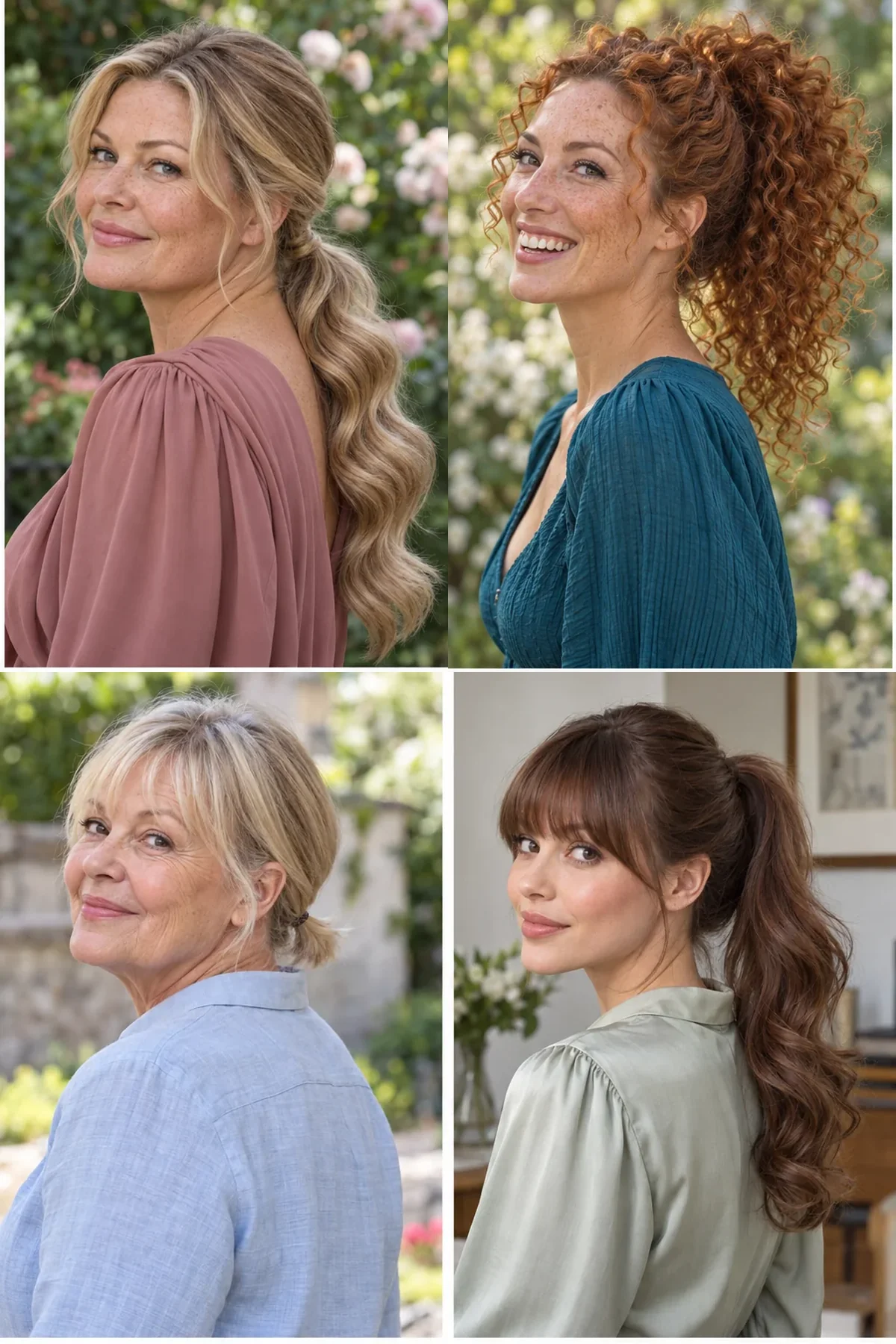
A ponytail gathers the hair into one secured base while leaving a free tail hanging from it. Its defining feature is that loose length beyond the fastening: a bun folds the ends into a knot, a half-up style leaves a separate lower section down, and pigtails divide the hair into two tails. A braid or bubbles can decorate a ponytail without changing its gathered base. These are styling references rather than haircuts; the same finish will look different as length, layers, density and curl pattern change.
Find the one that feels like you: Start with the first look and let the photographs lead. Each style explains how the shape affects your features, the mood it creates and the exact words to take to your stylist.
Quick Facts
- A higher base changes the silhouette; it does not require a tighter hairline.
- Your shortest layers determine which gathering position is realistic.
- Keep curls visible if you want the finished style to feel like your usual texture.
- Extensions can add length, but they are a separate styling choice rather than a promised result.
1. The Smooth Low Ponytail With a Center Part
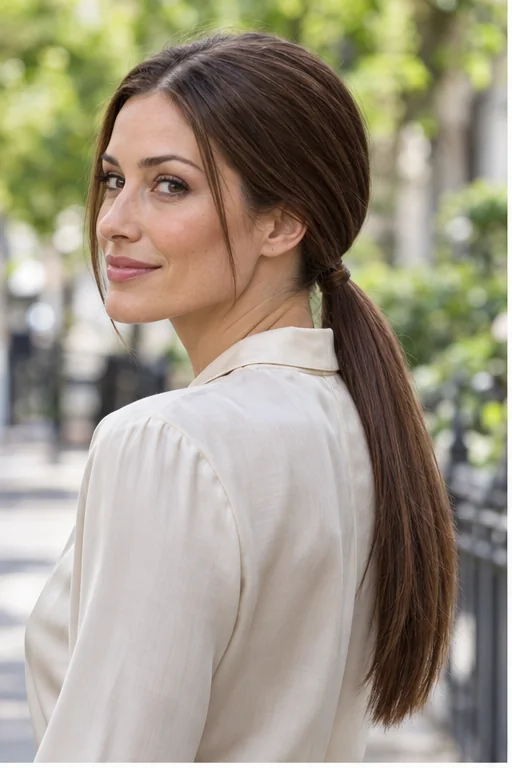
A clean center part leads into a smooth chestnut ponytail gathered right at the nape, leaving the tail to fall in one straight line. That quiet outline clears the cheeks and neckline, giving a collared shirt or simple dress a composed finish that can make a busy day feel more under control. It suits someone who likes a tidy shape and has enough length for the sides to reach without strain. Smooth the surface in small sections before fastening, then turn your head both ways to check comfort; ask your stylist for a low, sleek finish with movement at the roots rather than an aggressively pulled hairline.
Ask your stylist for: A center-parted low ponytail at the nape, with a smooth surface and a straight loose tail, keeping the hairline comfortable.
2. Low S Waves With Soft Pieces at the Temples
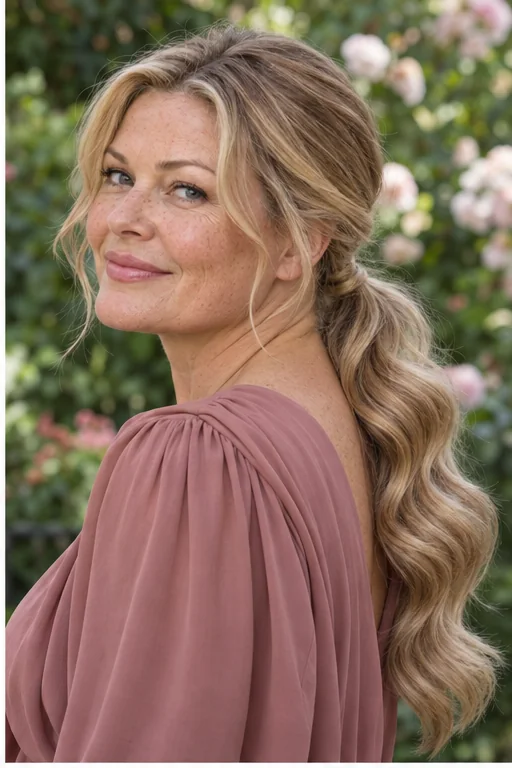
Broad blonde S waves flow from a low fastening, while two narrow temple pieces soften the front without hiding the face. The curved tail adds fullness behind the shoulders and brings a romantic, dressed-for-dinner feeling to a familiar everyday shape. Consider it when you have time to set the lengths and want the back of your hairstyle to look as considered as the front, particularly with an open neckline. Let any heat-styled waves cool before brushing them together, using preparation suited to your hair; at the appointment, request broad connected bends rather than separate tight ringlets and check the side view before the final spray.
Ask your stylist for: A low ponytail with broad brushed S waves, a wrapped fastening and two narrow soft pieces at the temples.
3. A Mid-Height Ponytail With a Straight Tail
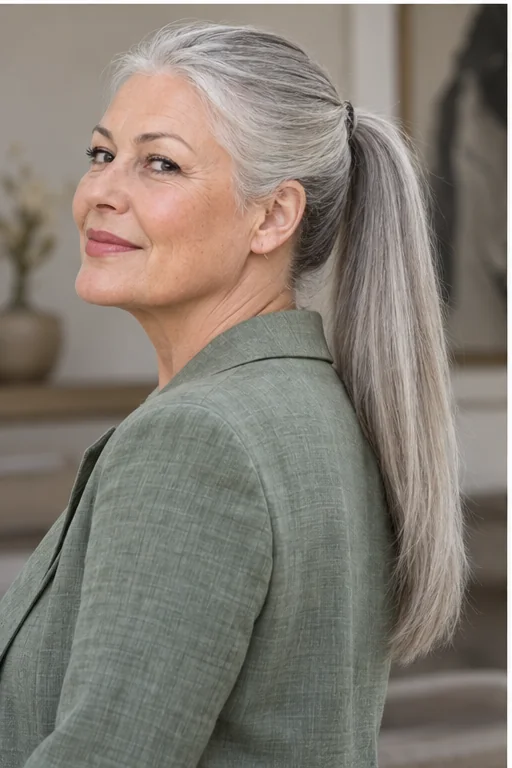
This silver ponytail sits midway up the back of the head, with brushed-back roots and straight lengths that swing clear of the collar. The middle position opens the face without the dramatic upward pull of a crown-high shape, making the result feel practical, assured and easy to wear to work. It is a useful choice if you want your hair contained but dislike a tail resting directly against your neck. Gather while keeping your head in a neutral position, then check that the nape feels comfortable when you look down; show your stylist the exact base height rather than simply asking for a high or low ponytail.
Ask your stylist for: A ponytail midway between nape and crown, with softly brushed-back roots, a visible simple fastening and straight free lengths.
4. The High Ponytail With a Flipped End
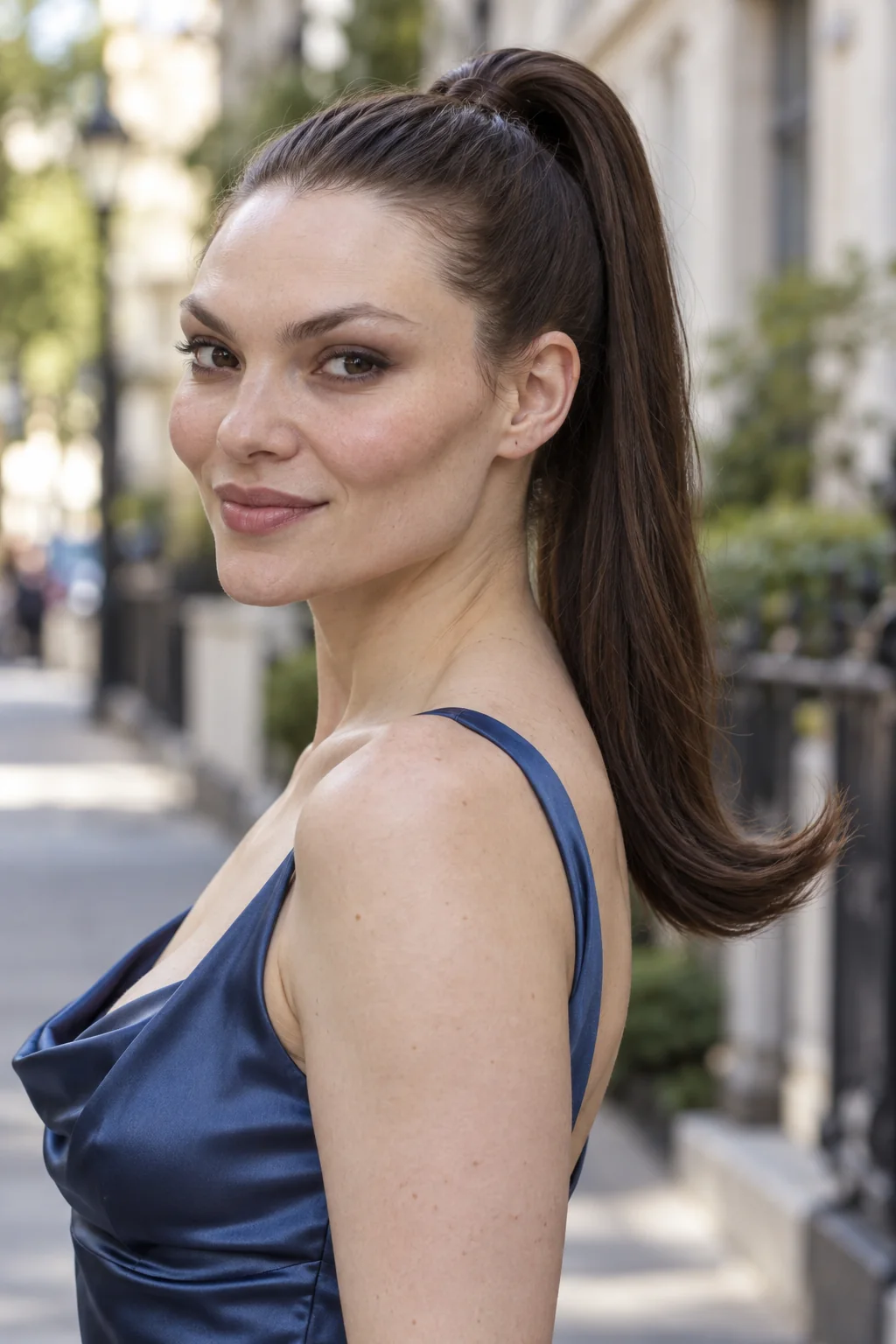
A smooth dark ponytail rises high at the back, then finishes with one broad outward flip instead of falling completely straight. That turned-up tip puts a little bounce into the silhouette, giving the style a lively, playful feeling without needing a large accessory or a heavily teased crown. Try it if your ends have enough length to form a visible bend and you enjoy a more deliberate finish for an evening out. Shape only the final section after securing the base, allowing it to settle before adding more product; ask for one broad flip so the tail does not turn into a row of separate curls.
Ask your stylist for: A high ponytail with a smooth free tail and one broad outward flip at the ends, without a large teased crown.
5. High Curls With Their Rounded Shape Intact
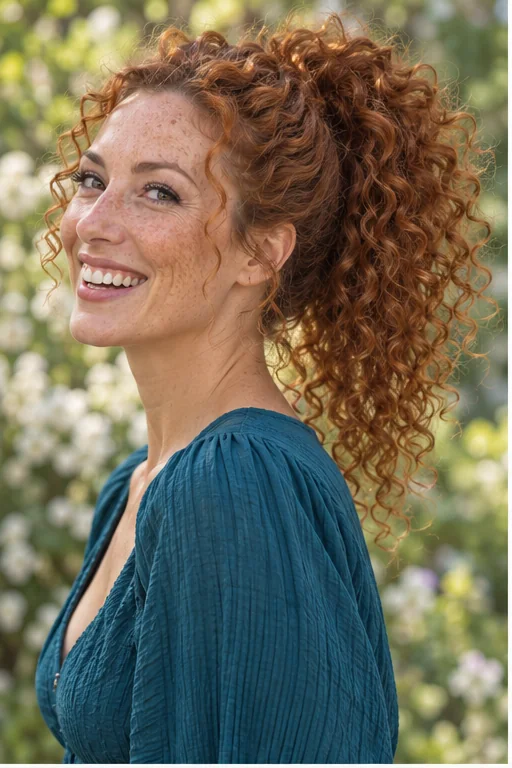
Copper curl groups spill from a high base, making the tail look rounded and buoyant rather than long and narrow. Keeping those curves intact celebrates the texture and adds height behind the face, creating an expressive, upbeat mood for someone who wants their usual curls to feel a little more dressed up. It works best when you can gather the roots gently without repeatedly combing through the dry lengths. Arrange the tail with your fingers after fastening and leave its natural expansion room; tell your stylist that visible curl definition matters more than a perfectly flat surface, and choose a lower base if the weight feels distracting.
Ask your stylist for: A high single ponytail that keeps my defined curl groups intact, with a comfortable base and no brushed-out tail.
Pause and notice: Look at the base height first. If you love a tail's texture but dislike its position, show both preferences to your stylist rather than copying the whole photograph.
6. A Low Curly Tail With a Soft Side Part
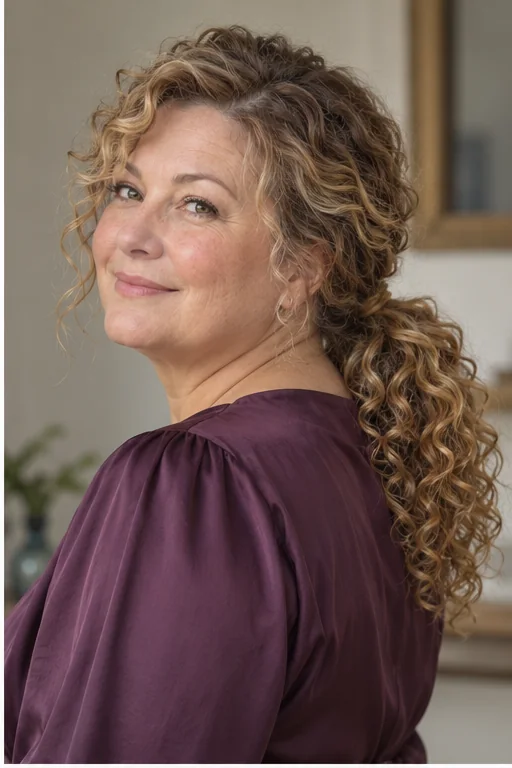
A soft side part leads into a low dark-blonde tail, with defined curls still visible along the sides and through the lengths. The lower position lets the texture sit close to the shoulders, balancing a neat neckline with a relaxed, approachable feeling that works for lunch or a less formal office. Choose it if you prefer a modest silhouette and want to arrange your curls without resetting the whole head. Separate only the sections needed to make the part, then gather with your hands; ask your stylist to preserve the curved surface rather than slicking it flat and adding unrelated curls only at the ends.
Ask your stylist for: A low curly ponytail with a relaxed side part, keeping the curl pattern visible at the sides and through the tail.
7. A Loose Crown Above a Gently Gathered Tail
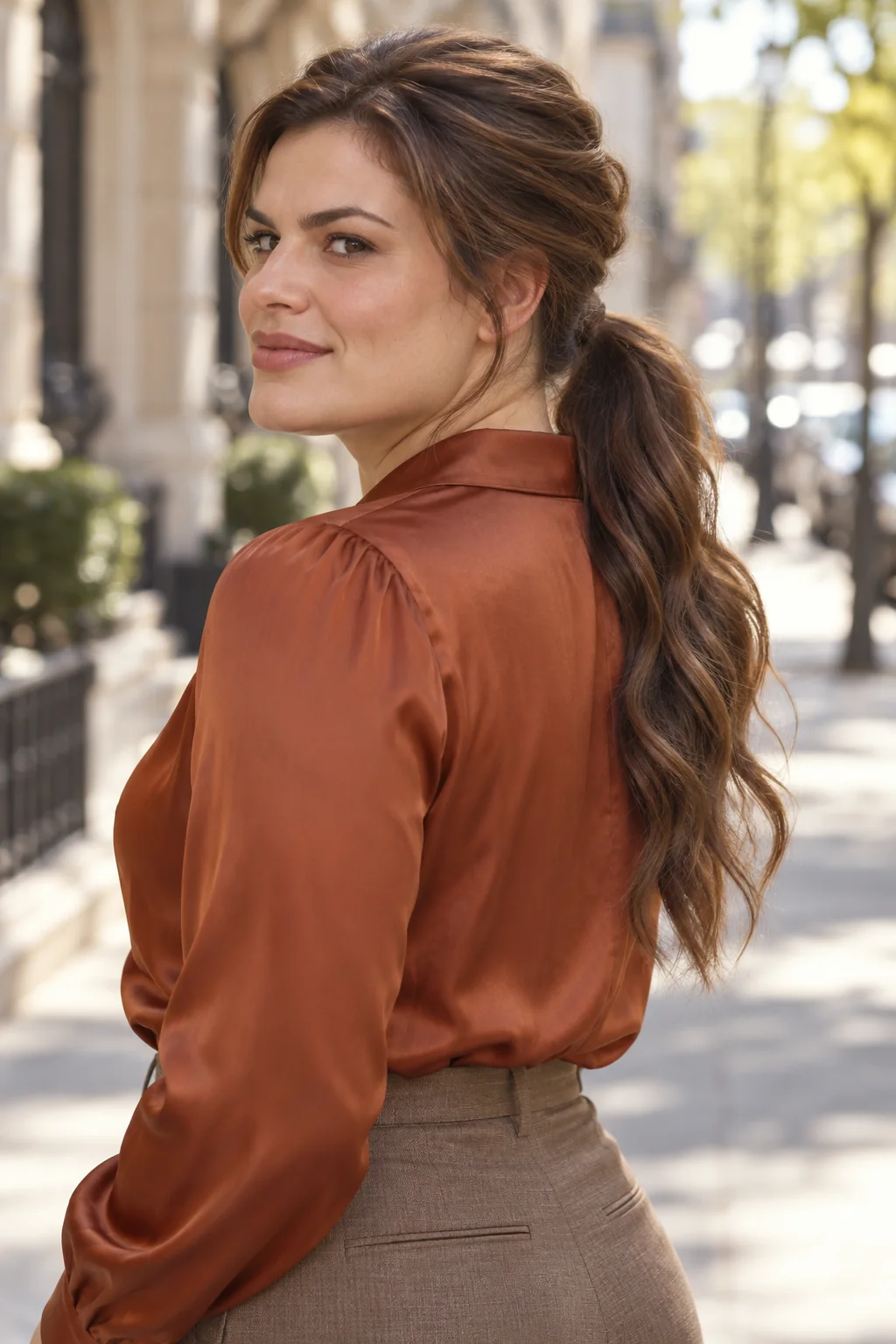
The softly loosened crown gives this brown ponytail a rounded upper outline, while an irregular wavy tail keeps the finish casual. A little space at the roots can soften a severe pulled-back impression and make tied-up hair feel relaxed and quietly confident, especially if you normally wear it down. It suits someone who enjoys visible texture and accepts a few natural flyaways rather than spending the morning chasing a flawless surface. Fasten the interior first, then ease out tiny surface sections with your fingertips; ask for gentle crown volume rather than strong teasing, since a large raised cushion changes the balance and takes more work to undo.
Ask your stylist for: A mid-low ponytail with a softly rounded, lightly loosened crown and an irregular wavy tail, keeping the interior secure.
8. A Side Ponytail With One Broad Front Sweep
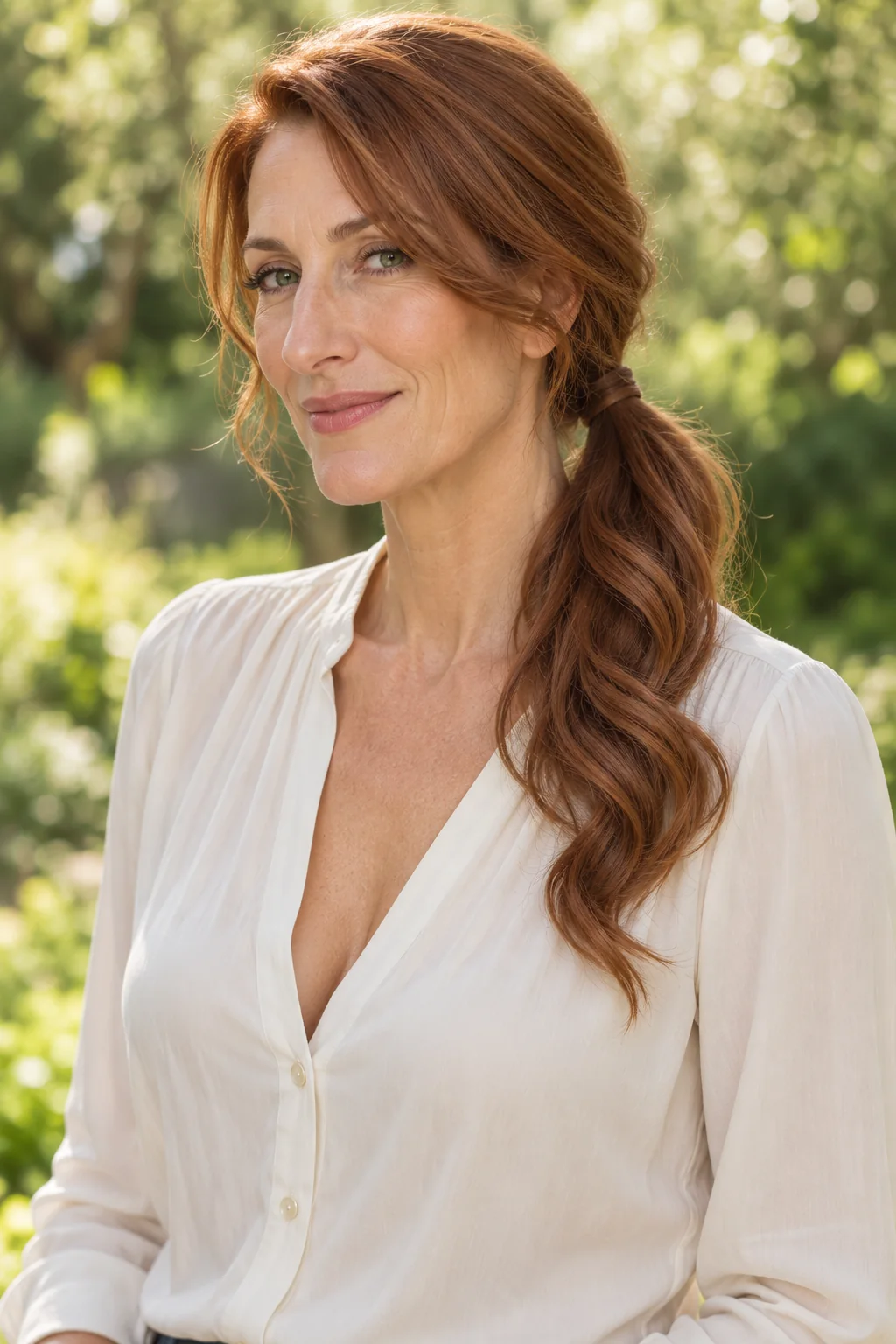
Auburn lengths gather behind one ear and fall over the shoulder, echoing the broad sweep across the front. Bringing the tail into view lets you enjoy the movement from the front as well as the back, creating a soft, slightly glamorous feeling beside a simple neckline. It is a lovely option for dinner or a photograph when you want an asymmetric shape, provided the opposite side reaches the base comfortably. Test the style while turning toward each shoulder, and keep the front sweep clear of your eye; explain to your stylist which side you want visible before they set the waves or position the fastening.
Ask your stylist for: A low side ponytail behind one ear, with a broad front sweep and loose waves falling over the same shoulder.
9. The Short Bob Ponytail With Honest Nape Wisps
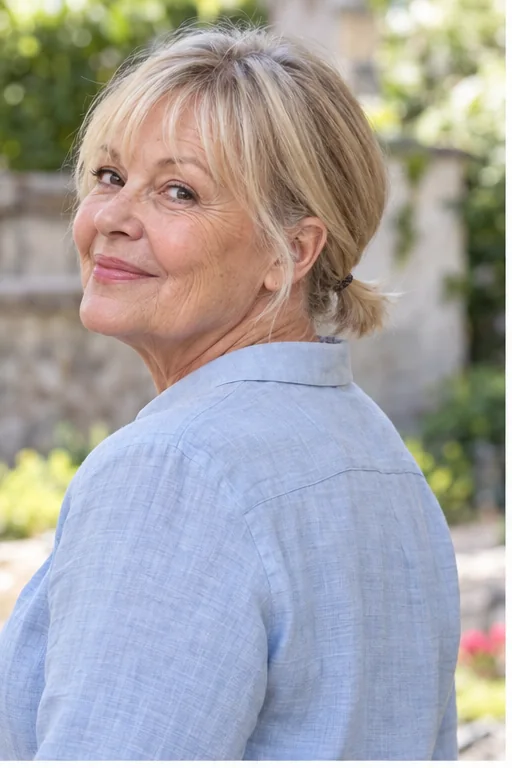
A collar-length blonde bob gathers into a small low ponytail, with a short free tail and a few nape wisps left outside the fastening. Its compact shape clears the face and makes a familiar bob feel fresh and resourceful, without pretending short hair can produce a long flowing tail. Try it when the sides can meet at the back and you are happy for the shortest layers to stay visible. Use a proportionate small fastening and decide whether any loose pieces need discreet pins; ask your stylist to test the actual reach first, since pulling the base higher can release more hair instead of making the tail fuller.
Ask your stylist for: A small low ponytail using my collar-length bob, allowing the shortest nape pieces to remain softly loose rather than adding length.
10. A Full Fringe With a Bouncy Mid-Height Tail
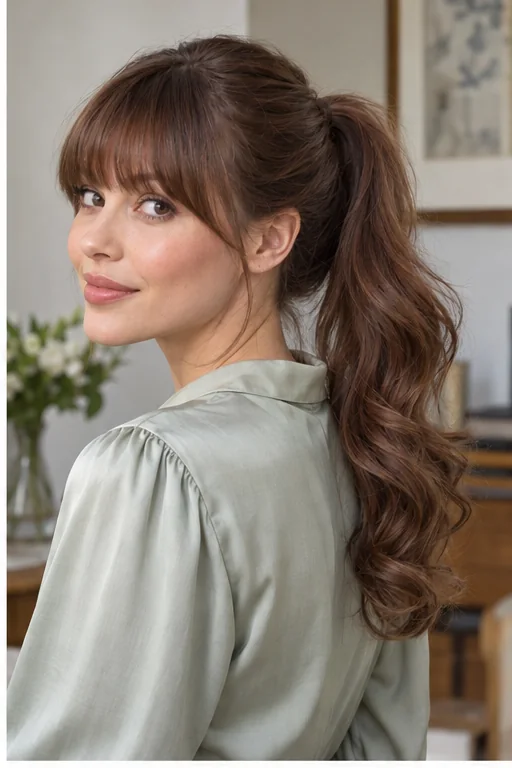
A full brow-level fringe stays forward while a mid-height chestnut tail curves softly at the ends behind it. Keeping the fringe familiar frames the eyes and gives the ponytail a polished, personable feeling, so wearing your hair up need not feel like exposing a completely different face. It suits someone who already likes a full fringe and wants a little bounce for a day out or an evening plan. Set the fringe in its usual dry position before gathering nearby sections, then check that the side tension has not lifted its corners; request soft tail ends rather than curls that compete with the front.
Ask your stylist for: A mid-height ponytail with softly curled ends behind my existing full fringe, preserving its normal dry shape and comfortable roots.
Pause and notice: A small ponytail can be a complete look. Match the fastening to your available length instead of measuring success against a much longer tail.
11. Curtain Fringe Around a Loose Low Ponytail
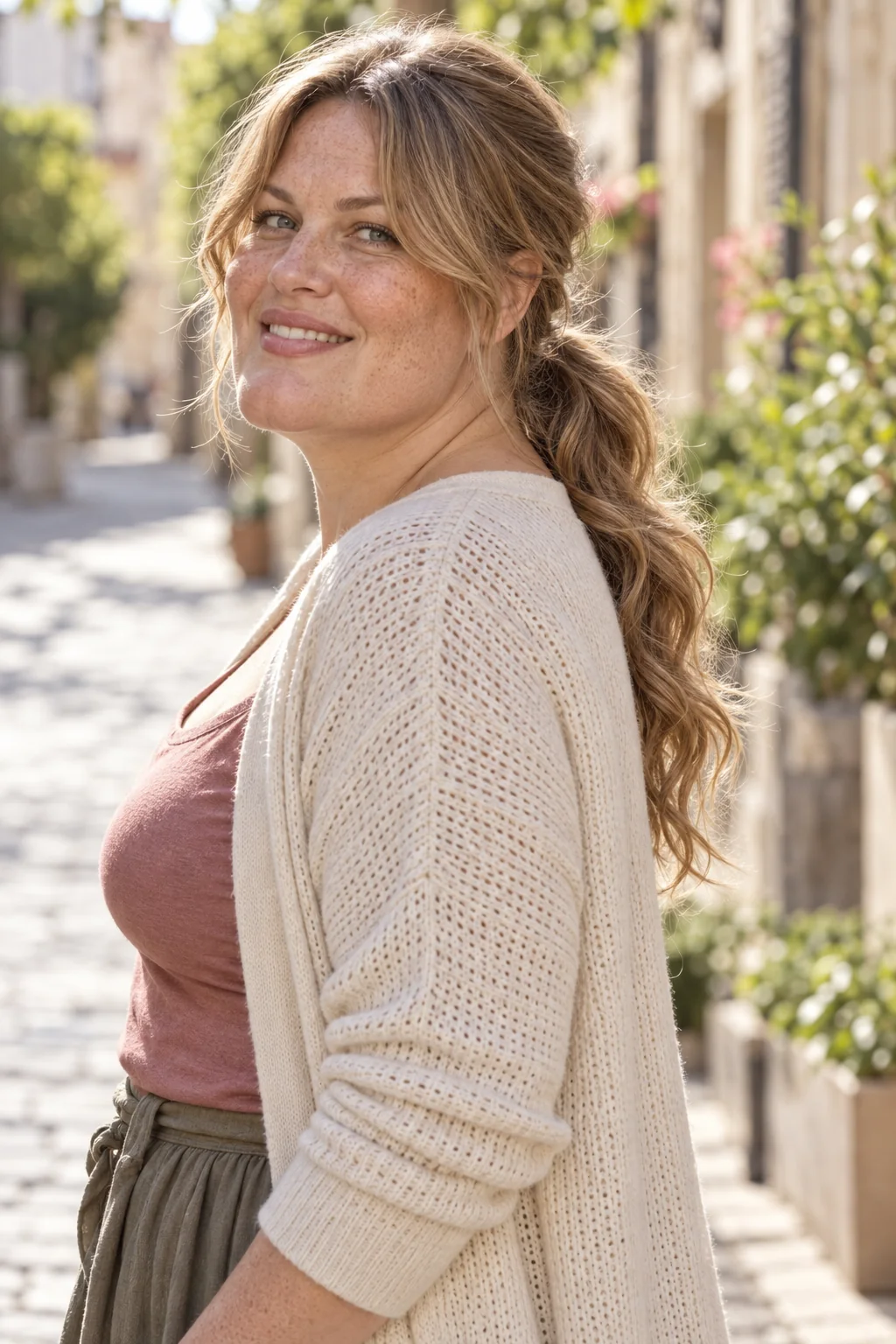
Center-opening curtain fringe curves beside the cheeks while the dark-blonde lengths gather into a loose low tail. That open frame brings softness around the eyes and makes the tied-back shape feel romantic and familiar, especially if you usually rely on front layers for movement. Choose it when those shorter pieces already exist; this styling reference does not require cutting a new fringe just to wear a ponytail. Arrange the front before you fasten the back and leave enough freedom at the temples for the curves to fall naturally; ask your stylist to keep the fringe separate from the gathered sides instead of pulling its longer edges away.
Ask your stylist for: A loose low ponytail behind my existing curtain fringe, with the center opening visible and the longer fringe edges curving toward the cheeks.
12. A Deep Side Sweep With a Straight Low Tail
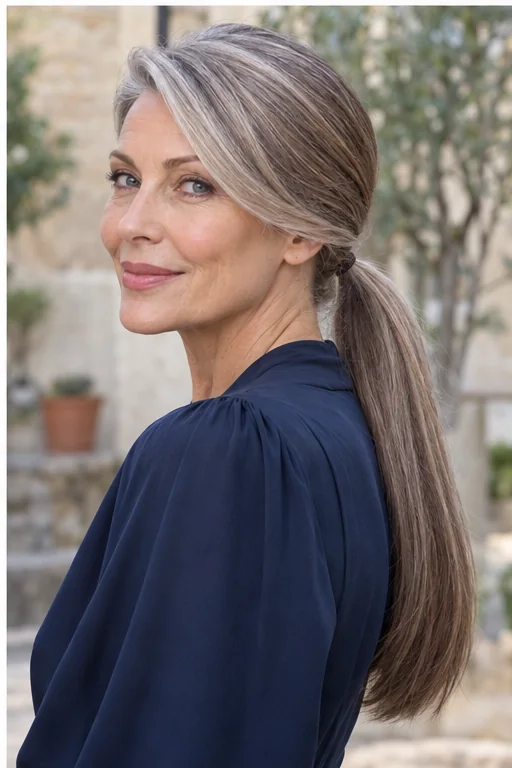
A deep part sends a smooth silver-brown sweep diagonally across the forehead before it joins a straight low tail. That diagonal line changes the face framing without adding a new haircut, creating a composed, slightly dramatic mood that feels at home with a tailored jacket or evening neckline. It suits someone whose front sections are long enough to join the base, particularly if a center part feels too symmetrical for their taste. Place the sweep before smoothing the rest, and check it while looking down; tell your stylist you want a broad diagonal section that stays clear of the eye rather than a loose strand falling across it.
Ask your stylist for: A straight low ponytail with a deep side part and one smooth diagonal front sweep, leaving the eye unobstructed.
13. The Glossy Wet-Look Ponytail With a Narrow Tail
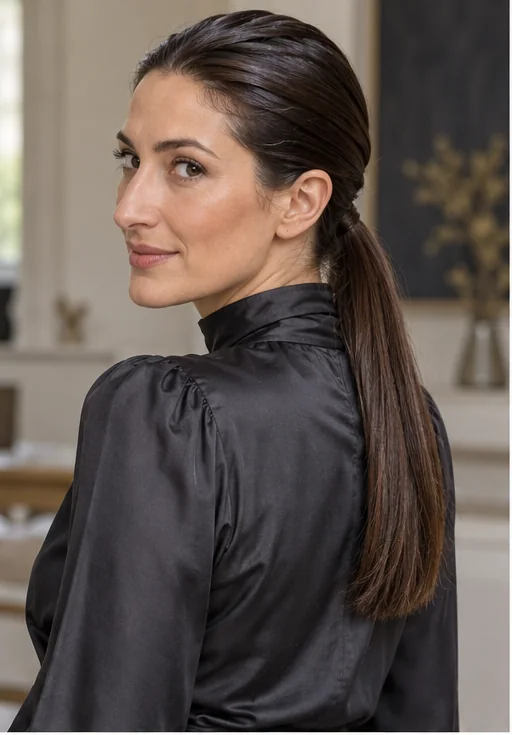
Glossy combed-back roots lead into a narrow dark tail, letting the surface shine become the main detail. The close silhouette puts attention on the face and earrings, giving a simple outfit a bold, deliberate finish that can feel especially confident for a night out. Consider it if you enjoy a product-defined look and are willing to wash out the finish afterward rather than expecting an airy next-day result. Build the shine gradually on prepared hair instead of soaking the roots, and check comfort before the product sets; ask your stylist for a wet-look surface with a normal relaxed fastening, because gloss does not depend on painful tension.
Ask your stylist for: A mid-low ponytail with glossy combed-back roots and a narrow straight tail, using a wet-look finish without pulling the hairline tightly.
14. A Bubble Ponytail With Soft Rounded Sections
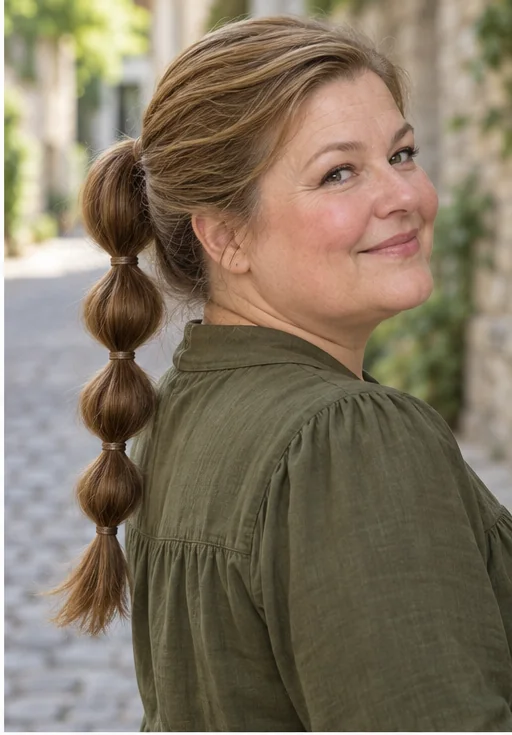
Small matching bands divide this honey-brown tail into four softly rounded bubbles, with a short free tip below the last one. The repeating shape adds visible fullness along the length and brings a playful, upbeat mood to a ponytail that might otherwise feel very ordinary. It suits enough usable length to leave space between the bands; a shorter tail can use fewer sections rather than squeezing in tiny crowded bubbles. Ease each section outward a little after banding, keeping the base stable, and undo the lower bands gently at the end of the day; ask for soft rounded bubbles rather than hard pinched knots.
Ask your stylist for: A mid-height ponytail divided into four gently rounded bubbles with matching small bands, leaving a short free tip and no added length.
15. A Smooth Base With One Long Braided Tail
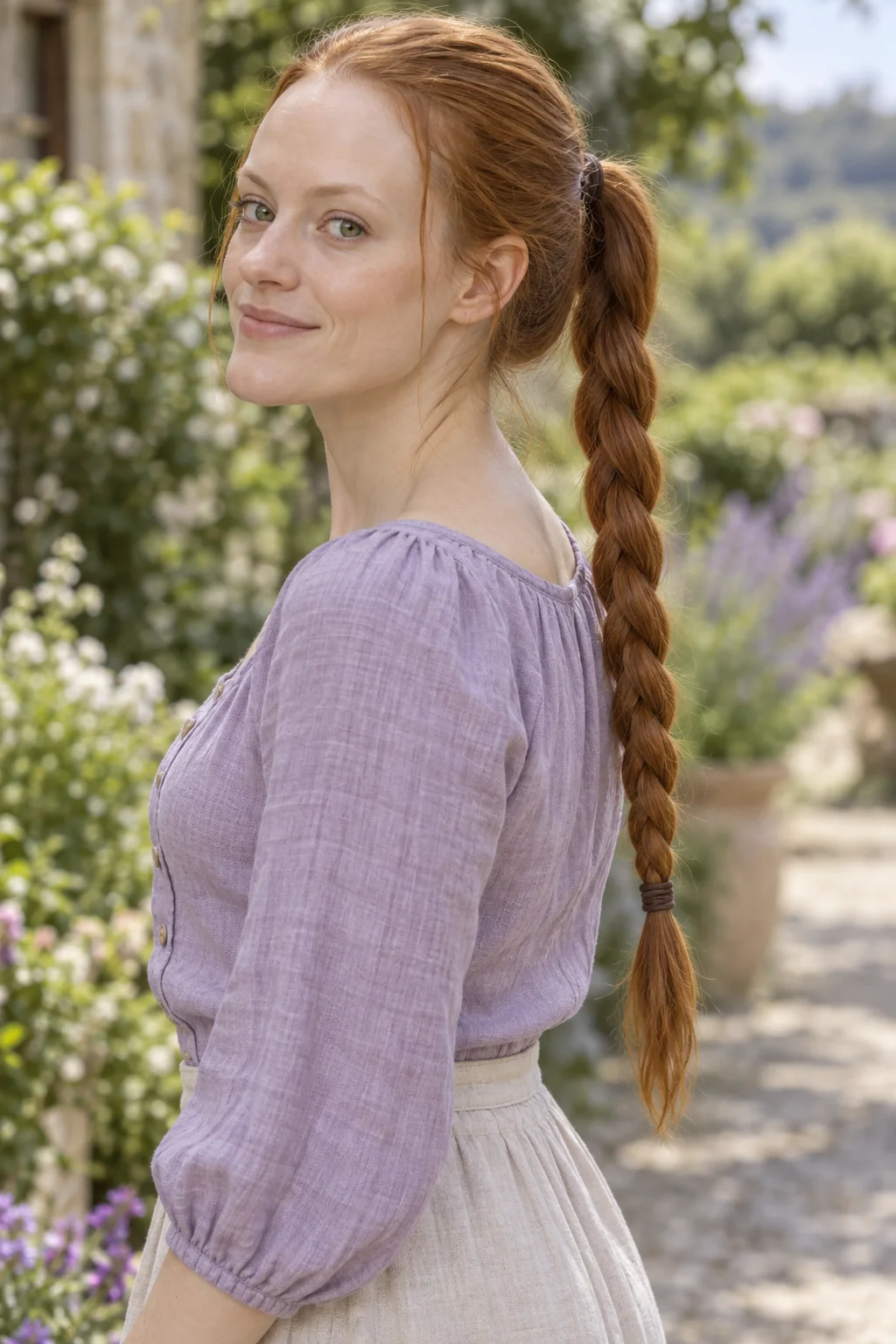
The copper hair first gathers into a clear mid-height ponytail base, then continues as one ordinary three-strand braid. That contained tail keeps loose lengths from swinging into your face and gives the shape an orderly, self-assured feeling, useful when a completely loose ponytail gets in the way. It works for someone who likes a tidy finish and has enough length beyond the first fastening to braid without tugging short layers into place. Keep the braid flexible and leave a small unbraided tip, using a second gentle band at the end; explain the two-stage construction to your stylist so the braid begins after the ponytail base rather than at the scalp.
Ask your stylist for: A smooth mid-height ponytail with a clear fastening at its base, then one ordinary three-strand braid through the free length.
Pause and notice: Decoration should sit on a secure, comfortable foundation. Braids, bubbles and ribbons add detail; they should not compensate for a base that keeps slipping.
16. One Side Braid Feeding Into a Wavy Ponytail
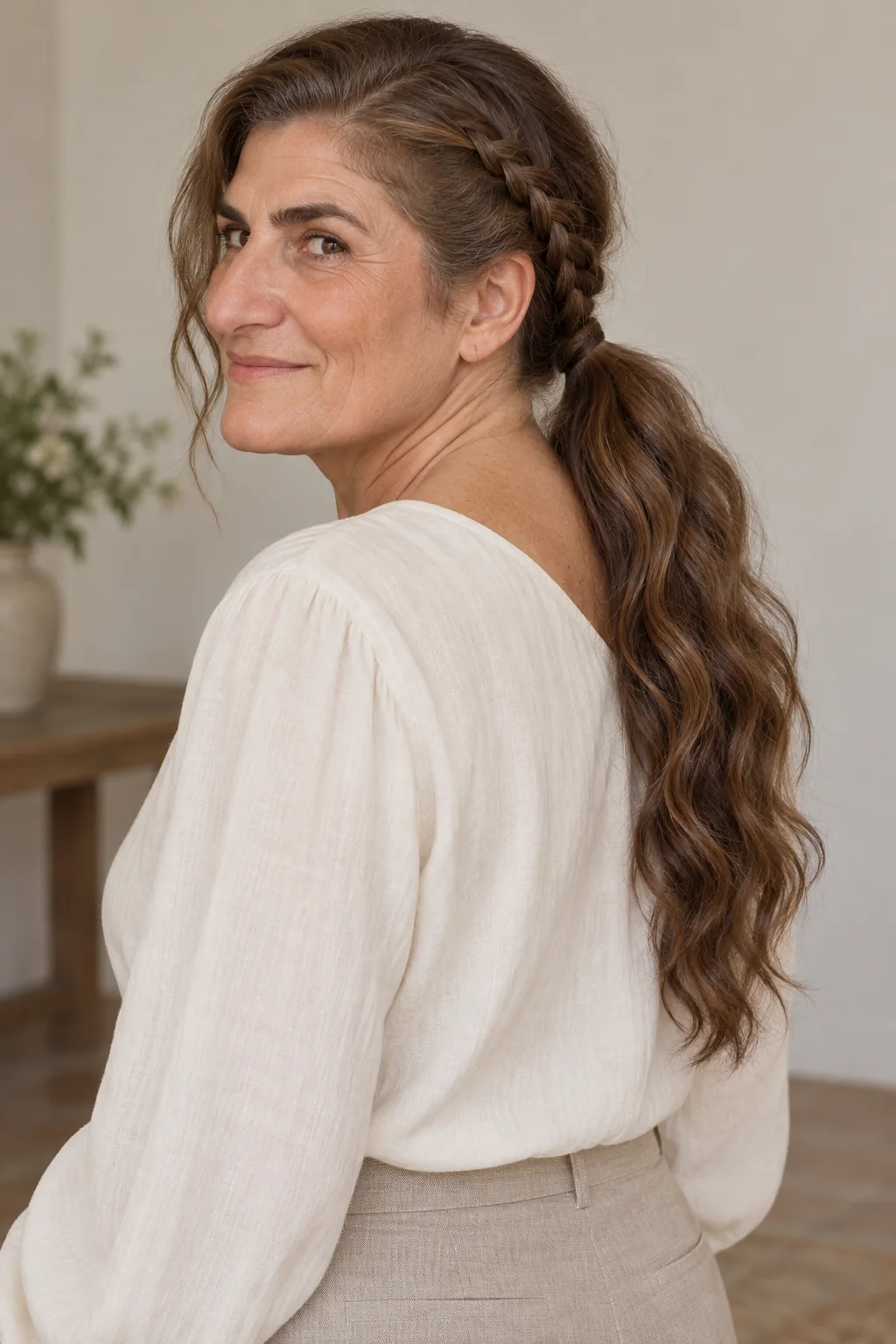
A modest braid travels above one ear and joins a low brown ponytail, leaving the rest of the tail loose and wavy. That single textured line gives the side view a focal point and keeps a front section contained, creating a quietly decorative, confident finish without covering the whole head in braids. Try it for an occasion when you want detail visible from one side and have front layers long enough to stay inside the braid. Keep the braid relaxed near the temple and secure it within the ponytail fastening; ask your stylist to leave the opposite side plain so the asymmetry remains clear and intentional.
Ask your stylist for: One modest braid along a single side above the ear, feeding into a low ponytail with loose wavy lengths and no matching braid on the other side.
17. Two Side Braids Joining One Low Tail
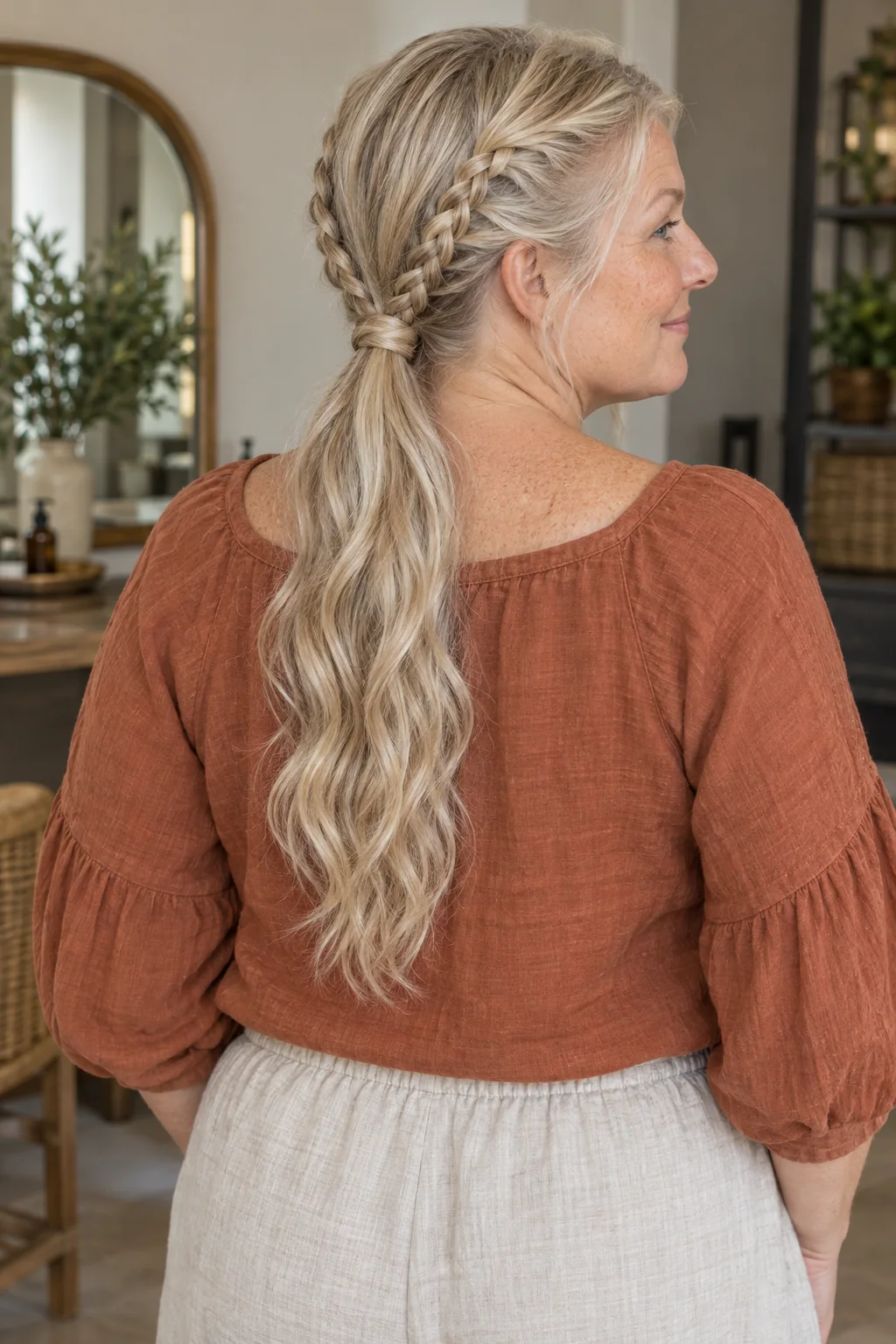
Two silver-blonde side braids meet at the back and disappear into a single low ponytail with loose ends. Their balanced lines keep both front sections organized and give the hairstyle a gentle, considered charm, a reassuring option when you like symmetry and want decoration without a large clip. It suits a slightly longer getting-ready routine and enough side length to braid comfortably toward the same base. Compare the tension on both sides before fastening the tail, then soften only the outer braid edges if desired; tell your stylist that the braids should join one ponytail rather than continue downward as two separate plaits.
Ask your stylist for: Two modest side braids, one above each ear, joining one low ponytail at the back with the remaining tail left loose.
18. Twisted Sides With a Softly Gathered Back
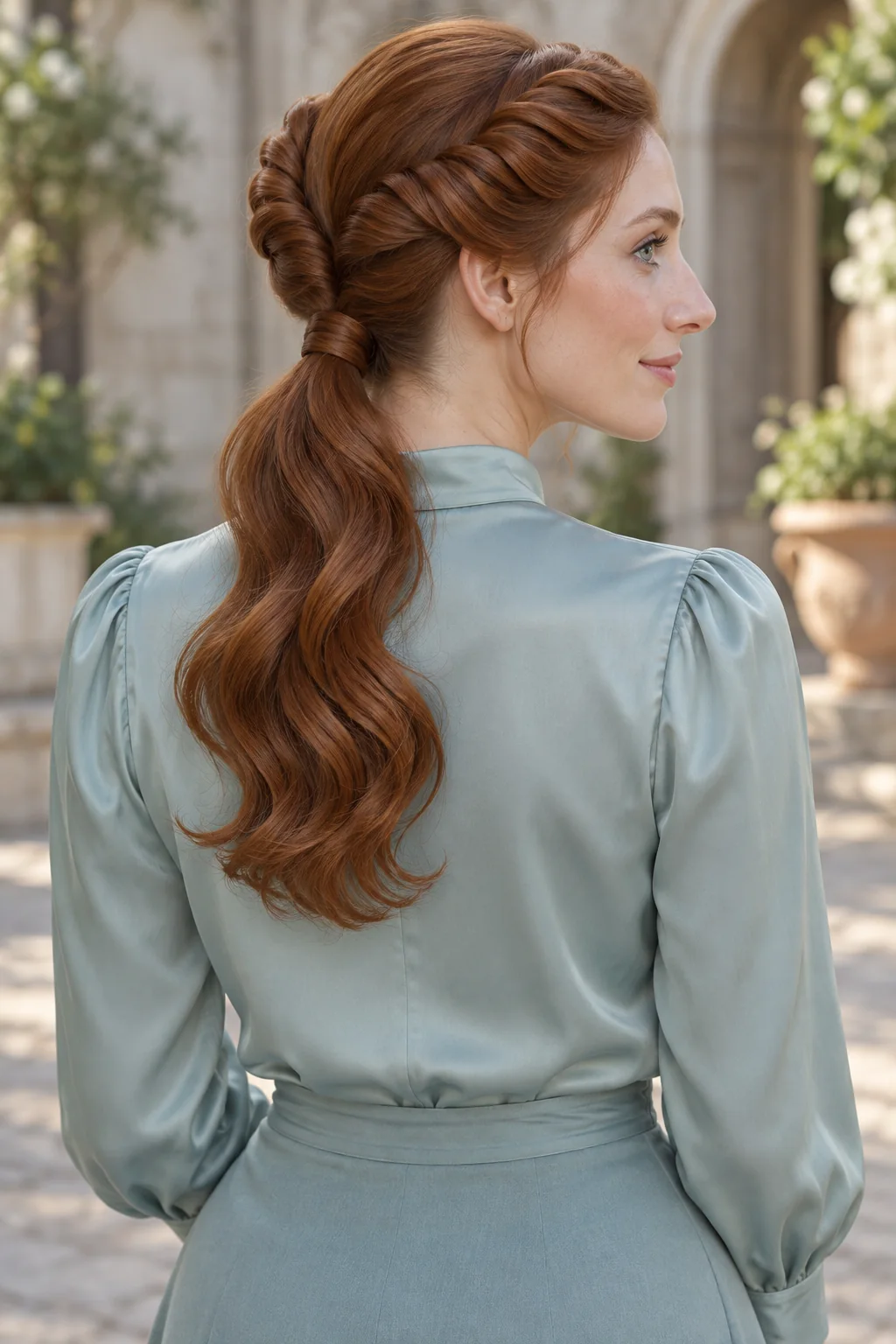
Loose inward twists roll along both sides of this auburn hairstyle before meeting a softly waved low tail. The rolled edges create gentle depth around the head and bring a romantic, quietly dressed-up feeling, making the front look considered without a rigid smooth surface. Choose it if you like soft detail but would rather twist two sections than work a more intricate braid, allowing time to secure their ends properly. Hold each twist in its intended direction until it is anchored at the base, and check that it has not tightened around the ear; ask your stylist to keep the rolls visible instead of brushing them into the surface.
Ask your stylist for: A loose inward twist from each temple toward one low ponytail, keeping the twists visible above the ears and the tail softly waved.
19. A Crimped Tail Behind a Smooth Crown
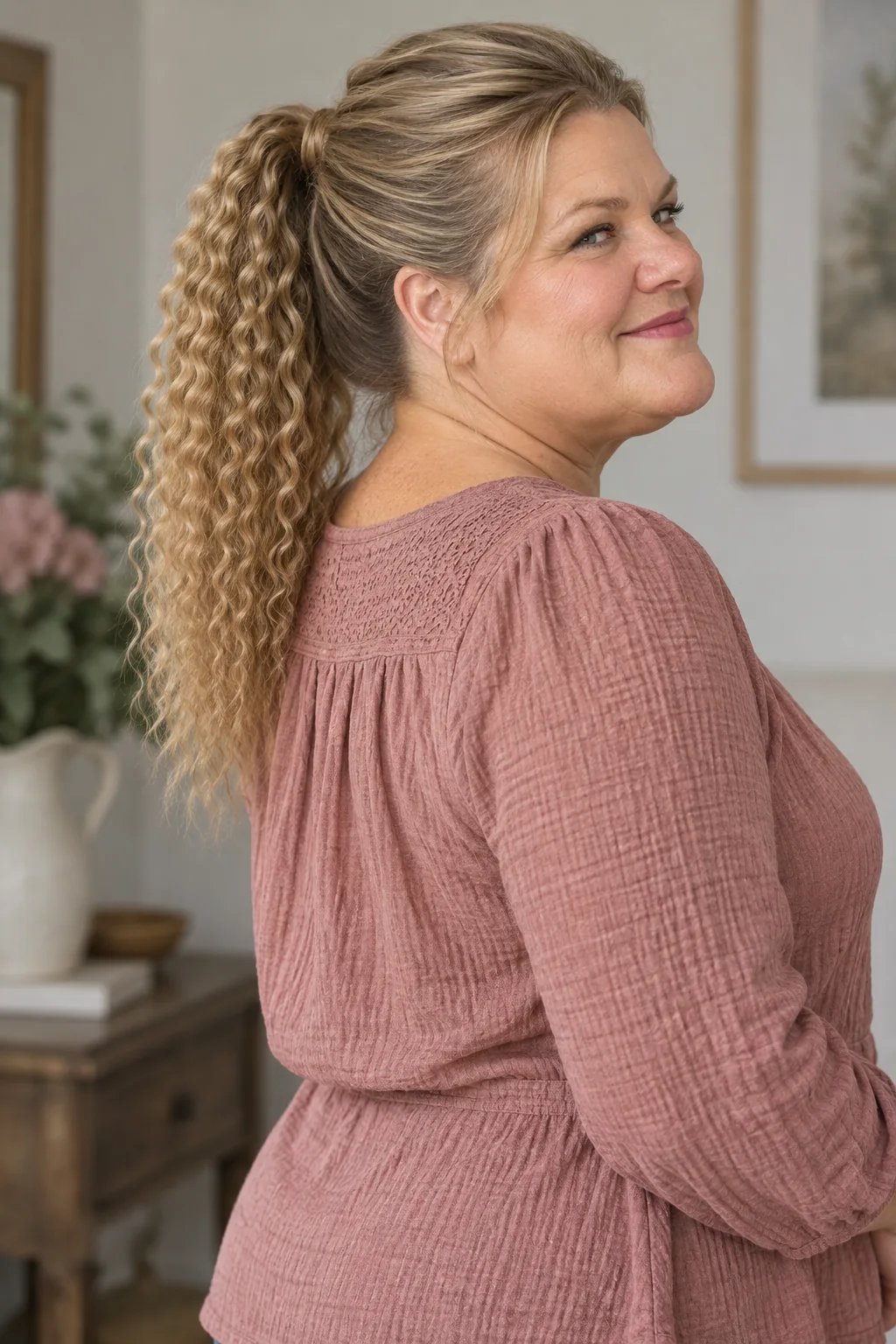
Fine repeated crimped bends give the dark-blonde tail a softly expanded outline, while the crown stays smooth and simple. The change in texture makes the lengths feel fuller and more expressive, adding a playful edge that can lift the mood of an otherwise restrained outfit. It suits someone who enjoys a deliberately styled finish and has time to prepare the tail, rather than anyone seeking a completely effortless everyday result. If using heat, work with dry prepared sections and the tool's guidance instead of repeatedly pressing the same area; ask your stylist to confine the texture to the free tail so the contrast stays crisp.
Ask your stylist for: A mid-height ponytail with a smooth crown and fine repeated crimped texture confined to the loose tail, keeping a natural-looking amount of hair.
20. A Ribbon-Laced Ponytail With a Loose Tip
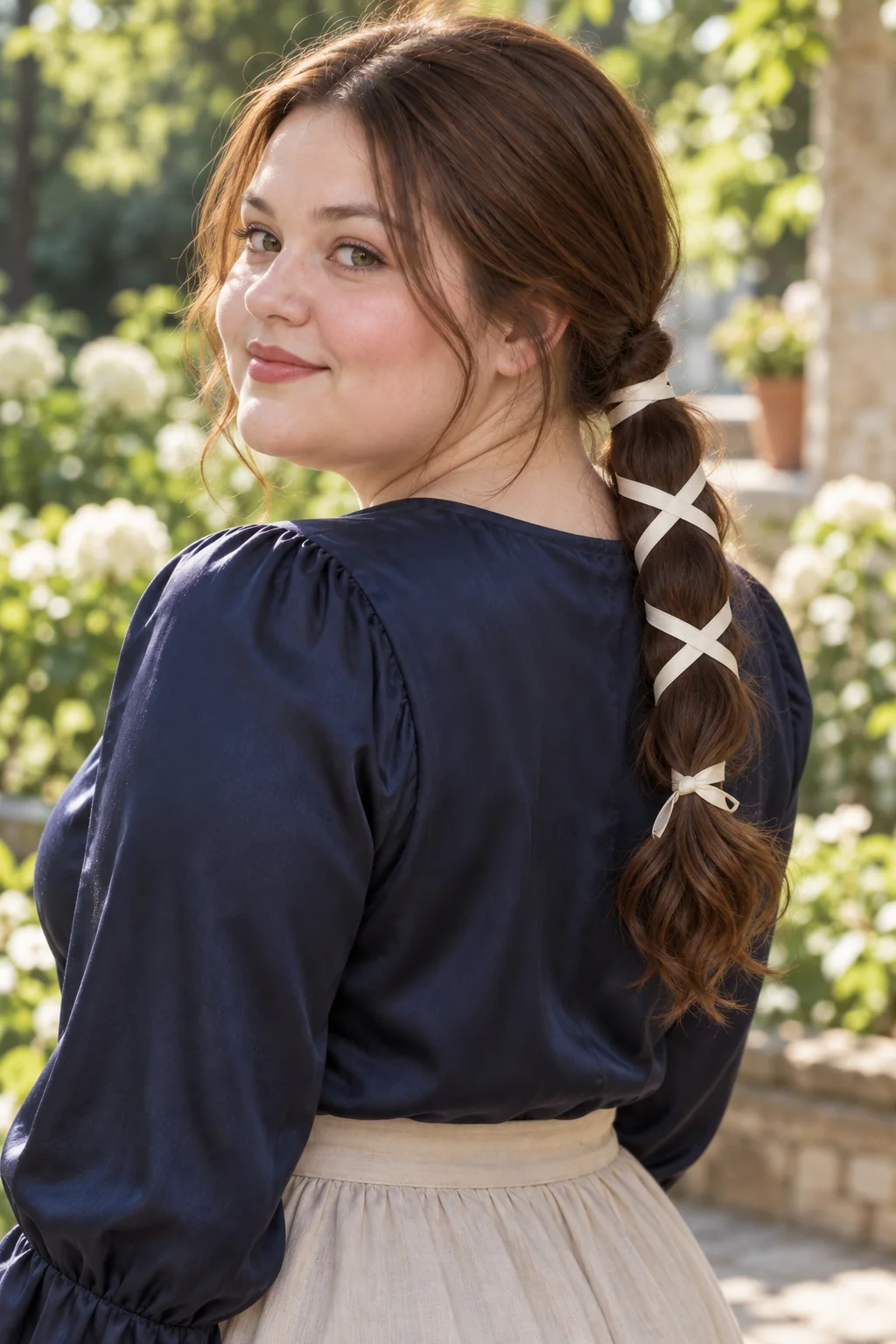
A narrow cream ribbon crosses around the outside of a chestnut ponytail, leaving a generous wavy tip free beneath the last crossing. The spaced detail draws attention along the tail and gives it a sweet, celebratory feeling, an appealing choice when you want a small accessory to make a simple shape feel special. Try it for a meal or daytime event when you can take a moment to arrange the ribbon and keep its ends out of the way. Fasten the ponytail independently before adding the decoration, so the ribbon is not carrying its weight; show your stylist the open X pattern and request loose spacing rather than tightly binding the hair.
Ask your stylist for: A low ponytail with a narrow cream ribbon crossed around the outside of the tail in spaced X shapes, leaving a generous loose wavy tip.
Before You Book the Appointment
A successful salon visit begins with the overall shape, construction and upkeep—not only the finished length. Use this quick reality check before choosing your final reference photograph.
- Length: Check which sections reach the proposed base without pulling; a low ponytail often accommodates shorter nape layers more easily.
- Texture: Straight, wavy, curly and coily hair create different tail shapes. Match preparation to the finish you want rather than assuming every surface needs smoothing.
- Density: A small tail can look deliberate; a heavy one may feel better at a lower position with a suitable fastening.
- Front shape: Try your preferred part, existing fringe or a few loose pieces before gathering the lengths.
- Routine: Choose a simple gathered shape for quick mornings and allow extra setting time for sculpted waves, braids or ribbon work.
Choose the Base Before You Choose the Finish
Try gathering your hair at the nape, midway up and higher at the back before committing to a photograph. Look at the profile as well as the front: a lower base lets the tail rest near the neck, while a higher one changes its direction and exposes more of the hairline. None should require pulling the shortest sections painfully into place. A good styling reference shows both the base and enough of the free tail to explain the shape.
Make the Hold Suit Your Texture and Density
Use a fastening suited to the amount of hair, and prepare for the finish you actually want. Light smoothing may suit a straight tail; curls often benefit from less brushing and more finger arrangement. Very long or dense tails can feel heavy at a high base, so test a lower position before adding more supports. A style that aches, pulls at the temples or feels unstable needs adjusting rather than another round of tightening.
What to Say at a Styling Appointment
Bring a front or side reference as well as a view of the tail. Describe the base height, your part or existing fringe, the texture you want to keep and how long you plan to wear it. Ask whether the pictured fullness is realistic with your length and density, and whether added hair would be needed to match it. Discuss that choice separately; a photo of a long ponytail is not a promise that every bob can produce the same result.
Which Ponytail Is Easiest for an Ordinary Morning?
Start with the simplest gathering position your shortest sections can reach, leaving the tail in its usual texture. A small low ponytail or uncomplicated mid-height tail often needs less resetting than sculpted waves, a high flip or ribbon work. Leave out only the front pieces you enjoy wearing; strands that need constant attention may be better tucked back. Choose the version you can comfortably repeat, then add one decorative detail when you have extra time.
Let Growing Layers Change the Options
As shorter layers grow, check whether they can reach a new base position before changing your haircut for a styling idea. A fringe can remain separate, soften into face-framing pieces or eventually join the sides. Keep trims aligned with the cut you want when your hair is down, rather than removing useful length just to neaten one ponytail. At the end of the day, remove accessories and lower bands first, support the base while undoing it and gently separate the hair before detangling.
The Takeaway
Choose the base that feels comfortable, the front shape that feels like you and the tail texture you would enjoy seeing in the mirror. Take those three details to your stylist, or begin with the simplest version at home. A ponytail feels most successful when its shape suits your day and you can forget about the fastening once you leave the house.
More Hair Inspiration
- More Hairstyles for Long Hair — Compare ponytails with braids, buns and half-up alternatives when you want a different way to use your length.