A fringe can feel more like you when every strand is not sitting in formation. A little bend, a loose gap or an uneven edge can bring a favorite haircut a more relaxed mood. These 12 bedhead bangs ideas help you decide which kind of undone texture you would actually enjoy wearing, including the small styling jobs that keep it looking intentional.

Bedhead bangs describes a finish rather than one standardized haircut: fringe with deliberately irregular direction, loose bends or separated curl groups instead of a perfectly smooth line. The underlying cut still needs a considered shape. Wispy describes light density and visible spaces, so wispy bangs can also look bedhead, but the terms are not interchangeable. Curtain bangs describe a divided, outward-moving shape; shag and wolf cuts describe more of the haircut. You can borrow a tousled fringe without choosing any of those complete cuts, and an undone photograph does not guarantee wash-and-go results.
Find the one that feels like you: Start with the first look and let the photographs lead. Each style explains how the shape affects your features, the mood it creates and the exact words to take to your stylist.
Quick Facts
- Bedhead is a textured finish, not one fixed salon cutting method.
- Dry length and natural root direction matter more than a trend label.
- Light density, curl and a divided fringe can all be styled with an undone finish.
- A damp reset may be quicker than adding more product to a flattened fringe.
1. A Broken Brow Edge With Easy Movement

Small bends interrupt this brow-skimming fringe, so the edge looks softly broken rather than like a straight ruler line. The movement brings attention to the eyes without the formality of a perfectly pressed front, giving everyday shoulder-length hair a relaxed, quietly confident mood. It suits someone who likes coverage but can spare a minute to reset a few stubborn pieces before leaving home. Ask for a brow-skimming fringe with a softly broken edge, keeping enough weight that the ends do not disappear. Settle the roots while damp, then nudge only a few ends in different directions instead of repeatedly roughing up the whole section.
Ask your stylist for: A brow-skimming fringe with a softly broken edge and small irregular bends, retaining weight through the ends.
2. Airy Tufts That Leave the Forehead Open
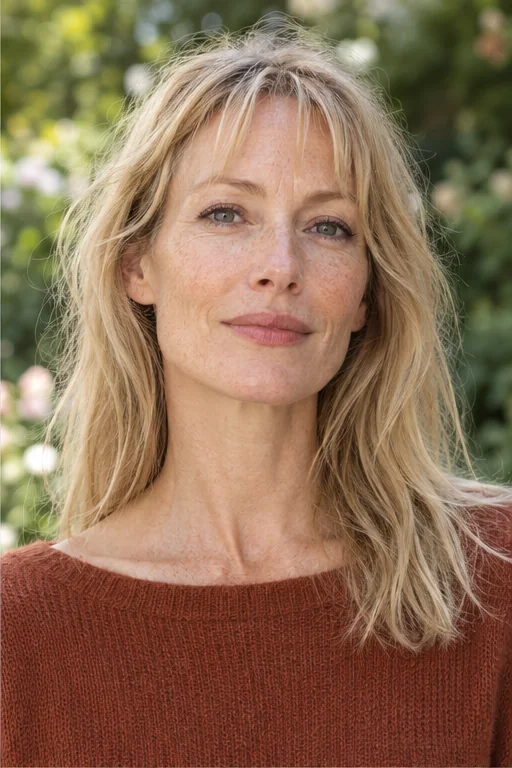
A shallow section falls in a few fine, bent tufts with generous spaces between them, leaving much of the forehead visible. That openness makes the change feel light and playful, especially if a full curtain of hair would feel distracting during a busy day. The finish may suit finer hair when there is enough front density, but making the section ever thinner can leave it difficult to arrange. Show your stylist the sparse spread and ask for a shallow fringe with irregularly bent tips and long temples. Start with clean fingers and almost no finishing product; heavy paste can turn these airy pieces into a few greasy-looking strands.
Ask your stylist for: A shallow fringe with open spaces and a few irregularly bent tufts, without widening the section into the temples.
3. A Soft S-Wave Across the Forehead

Instead of pointing every tip downward, this fringe follows a loose S-shaped wave across the forehead above a wavy bob. The sideways movement softens a strong horizontal line and gives the cut a thoughtful, artistic feeling without needing a dramatic change in overall length. It is especially useful if your front naturally bends and you would rather work with that movement than straighten it every morning. Ask your stylist to preserve enough fringe length for the wave, checking that its lowest dry curve clears your eyes. Scrunch the damp section lightly and leave it alone as it dries; repeated brushing can stretch away the very bend you wanted.
Ask your stylist for: A fringe long enough to follow my soft S-wave across the forehead, with the dry curve clearing my eyes.
4. Loose Ringlets With Space Between Them

Several loose ringlets sit across the forehead with clear gaps between the curl groups, rather than forming one dense rounded shelf. Those openings keep the eyes visible and let the fringe feel lively and romantic, particularly when you want your front texture to match the rest of your curls. Bring a reference with a similar curl size and ask for a fringe shaped in loose groups, with the shortest point assessed after drying. Avoid stretching a wet curl to decide its finished length, since its spring can change the result considerably. Refresh individual clusters with damp fingers and your usual light curl product rather than combing the entire fringe into fluff.
Ask your stylist for: A curl-aware fringe in loose ringlet groups, leaving spaces and checking the shortest point after it dries.
Pause and notice: Decide what you like about the fringe itself: the bend, the gaps or the direction. A different hair color or bob length does not change that underlying choice.
5. A Fuller Shag Fringe With Uneven Tips

This fuller fringe holds a substantial band of hair across the brows, then breaks into irregular tips that connect with a medium shag. The extra coverage gives the front presence, while the imperfect edge makes it feel spirited rather than severe; it is a satisfying choice if sparse fringe tends to look lost against your hair. Ask for a fuller brow-level section with a soft, irregular edge and a comfortable connection into the sides, discussing weight before extra hair is brought forward. Dry the roots in their intended direction and separate a few tips afterward. The heavier section can need washing or resetting sooner than the surrounding lengths, even when the finish looks casual.
Ask your stylist for: A fuller brow-level fringe with an irregular soft edge and textured movement, keeping the side connection comfortable.
6. An Off-Center Split That Stays Relaxed

An opening just off center divides this silver fringe into unequal sections, with small bends keeping both sides from looking too arranged. The uneven balance exposes part of the forehead and gives a long bob a relaxed, assured feeling, making it useful when a symmetrical middle split fights your usual part. A divided fringe can also be curtain-shaped, but here the attraction is the irregular opening rather than matching swept wings. Tell your stylist you want an off-center gap with unequal, softly textured sides, and show where your roots naturally separate. Encourage that opening while damp instead of forcing the hair across it; otherwise the split may return in a less comfortable place.
Ask your stylist for: A textured fringe with an off-center opening and unequal soft sides, without a symmetrical curtain swoop.
7. A Diagonal Sweep With Piecey Ends

The fringe travels diagonally across the forehead, finishing in separated pieces rather than a solid, polished side-swept curtain. That diagonal draws the eye upward and sideways, bringing a little energy to shoulder-length hair and a confident, informal feeling to workday clothes. It suits someone who likes some forehead coverage but prefers most of the movement traveling toward one side. Ask for a soft angled fringe with enough length to sweep comfortably and a broken end line that stays clear of your eye. Guide the roots sideways while drying, then loosen the ends; if the shortest side constantly springs back, discuss a different angle instead of adding more hairspray.
Ask your stylist for: A soft diagonal fringe with separated ends and enough length to move sideways without covering my eye.
8. Lifted Roots Above a Roughened Edge

A small lift at the roots lets this forward fringe sit away from the forehead before its roughened ends settle near the brows. The extra space gives a compact bob more air at the front and can feel refreshingly light when a flat fringe tends to cling during the day. It suits a short styling routine with a little directed drying, although the lift will soften as the hair settles. Request gentle root lift with forward-facing, softly roughened ends rather than a large rolled-under curve. Lift the damp roots briefly with your fingers or a suitable brush, then let them cool before breaking up the edge; piling powder onto the scalp is not a substitute for the initial shape.
Ask your stylist for: A forward fringe with gentle root lift and softly roughened brow-length ends, avoiding a round rolled-under finish.
Pause and notice: Ask to see the front after it has cooled and settled. Comfortable dry length matters more than a fringe held in place for one photograph.
9. A Short Jagged Fringe With Soft Bends

Several softly bent points finish above the brows, giving this short fringe a deliberately jagged outline against a neat pixie. The open space around the eyes makes the texture easy to see, creating a playful, self-assured feeling without requiring a tall or heavily spiked top. This is also a micro-length fringe, so choose it because you enjoy that exposed forehead rather than expecting the bedhead label to make the commitment smaller. Ask for irregular soft points and a dry length check before anything is shortened further. Warm a trace of finishing cream between your fingertips and touch only the ends; very short pieces offer less room for correcting an unwanted bend.
Ask your stylist for: An above-brow fringe with softly irregular points and small bends, checking its position dry before shortening further.
10. A Long Fringe With an Eyelash-Skimming Bend
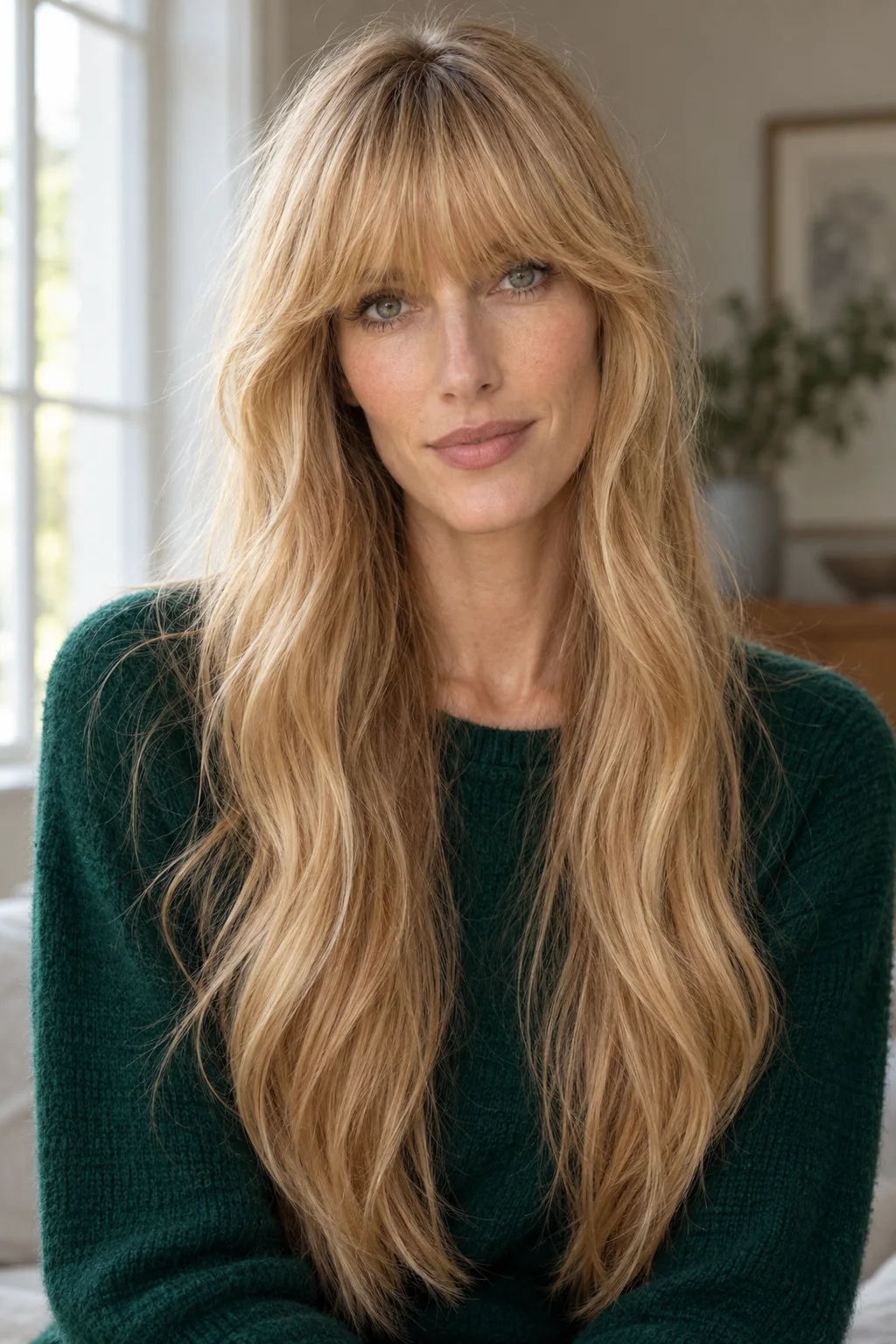
Long pieces approach the lashes, then bend lightly away so the eyes remain visible beneath an irregular, feather-soft edge. That close frame brings a dreamy, slightly dramatic mood to long hair, making the style appealing when you enjoy a fringe that moves as you turn your head. It needs more frequent attention than its casual finish suggests, especially if the bend drops and the tips start brushing your eyes. Ask for a long textured fringe with a gentle eye-clearing bend, and check comfort after the styling has relaxed. Refresh the front selectively, keeping tools away from your eyes; if the hair becomes irritating, arrange a trim rather than tolerating it for the photograph's effect.
Ask your stylist for: A long textured fringe with a soft bend away from the eyes, checking that it stays comfortable as the styling relaxes.
11. One Wavy Opening, With the Rest Worn Forward

Most of this wavy fringe stays forward, while one bent section opens a small window above the outer brow. The asymmetry lets a favorite brow or eye become a subtle focal point and gives a chin-length bob an easygoing, individual feeling, without moving the entire fringe sideways. Consider it if one section naturally curls away while the rest sits happily over your forehead. Explain that you want a mostly forward fringe with one small opening, and let your stylist see the natural bend before refining its dry edge. Twist that section lightly with damp fingers and release it; forcing every other strand to match would lose the appealing irregularity.
Ask your stylist for: A mostly forward wavy fringe with one small opening above the outer brow, preserving the natural bend rather than creating a full side sweep.
12. A Rounded Fringe of Small Springy Curls

Small springy curl groups build a softly rounded fringe, with slightly different landing points keeping the outline from looking stamped into place. The shape brings fullness toward the forehead and a buoyant, joyful feeling to a short curly cut, especially when you want your fringe to share the texture of the rest of your hair. Ask for a rounded front that follows your own curl pattern, leaving room for shrinkage and checking comfort once completely dry. A reference with much looser curls will not give a reliable guide to length or coverage. Use your normal curl-setting method and separate only where needed after drying, since constant handling can erase the groups you wanted to show.
Ask your stylist for: A softly rounded fringe following my small natural curls, with individual groups and room for dry shrinkage above the eyes.
Before You Book the Appointment
A successful salon visit begins with the overall shape, construction and upkeep—not only the finished length. Use this quick reality check before choosing your final reference photograph.
- Straight hair: Soft irregularity may need a little deliberate bending; do not assume a textured cut will create waves on its own.
- Wavy hair: Let the stylist see the fringe dry so the bend is placed around your eyes rather than cut against it.
- Curly or coily hair: Discuss shrinkage, curl grouping and your usual drying method before setting the shortest point.
- Fine or low-density hair: Keep enough weight to make the fringe comfortable to wear. Excessive thinning can leave the ends difficult to organize.
- Dense hair: Ask about controlled weight and movement without automatically agreeing to a deeper fringe section.
- Cowlicks and routines: Show your natural part and explain whether you can dampen and restyle the front most mornings.
What to Ask for at the Salon
Bring two references: one showing the fringe you want and another showing a finish you find too polished, too sparse or too full. Point to the dry landing point, section width, natural opening and amount of bend. Say whether you want to keep your current haircut and explain how you normally dry the front. Ask the stylist to show how the fringe settles without tension before deciding on its final length. Texturizing is not a single prescription: the amount and technique should suit your density, texture and existing ends. You do not need aggressive thinning just because a picture looks undone.
A Simple Reset for Flattened Bedhead Bangs
Start by checking whether the problem is the roots or just the ends. If the front has dried in an awkward direction, lightly dampen that section and guide it into place using fingers or a suitable brush; adding more dry product may only make it heavier. Preserve natural waves and curl groups if those are the shape you chose. For heat styling, follow your tool and heat-protectant directions, work gently and keep hot surfaces away from your skin and eyes. Let the front cool or dry before separating a few pieces. Finish with less product than you think you need, adding a little only if the shape calls for it.
Can Straight Hair Have Bedhead Bangs?
Yes, but straight hair may need a deliberately created bend to look like the references with natural movement. A broken cut edge and a tousled finish are separate decisions: removing weight will not necessarily make a straight fringe wave. Ask for a demonstration using tools you are comfortable handling, then compare the time involved with your actual mornings. If you prefer no heat, discuss the shape your front can hold with a damp set and gentle finger placement. Choose a smaller amount of irregularity if that is the version you can enjoy repeating.
Are Bedhead Bangs the Same as Shag Bangs?
They can overlap, but the names describe different things. Shag fringe usually belongs to a layered haircut with a particular connection around the sides; bedhead describes the deliberately undone finish. A fuller shag fringe, a light wispy section or a loose curtain opening can all be worn with textured movement. Tell your stylist whether you want the surrounding layers changed, and compare the front itself instead of relying on the label. These are reference variations, not twelve official salon categories or a promise that one cutting method suits every head of hair.
Keep the Texture Comfortable as It Grows
Arrange a fringe trim when the dry tips begin bothering your eyes or the section no longer settles comfortably. There is no single trim interval for every length and curl pattern. Between washes, refresh only the front if it needs attention, avoiding repeated layers of heavy product. During grow-out, a small off-center opening or a softer side direction may help the extra length sit; ask your stylist how that would work with your roots before shortening the sides again. If a fringe is much shorter than you wanted, give it time and choose gentle styling or a comfortable accessory rather than repeatedly cutting in search of a quick fix.
The Takeaway
Choose the bit of irregularity that feels natural to you: a soft wave, a loose opening or a few broken tips. Then agree on comfortable dry length and a reset you can actually repeat. The most enjoyable bedhead fringe leaves room for movement while still feeling like a considered part of your haircut.
More Hair Inspiration
- Wispy Bangs With Light, Airy Coverage — Compare fringe density and edge shape separately from an undone finish.
- Wolf Cuts With Lifted Crowns and Tapered Layers — Explore the surrounding layered haircut when you want more than a fringe change.