A little height, a bold side ponytail or a scrunchie can change the whole mood of your hair. The appeal of 80s hairstyles is that they give you permission to play: make your curls bigger, move your ponytail off-center or bring back a texture you have not worn in years. You can turn that energy up for a themed party or keep one unmistakable detail for an ordinary day.
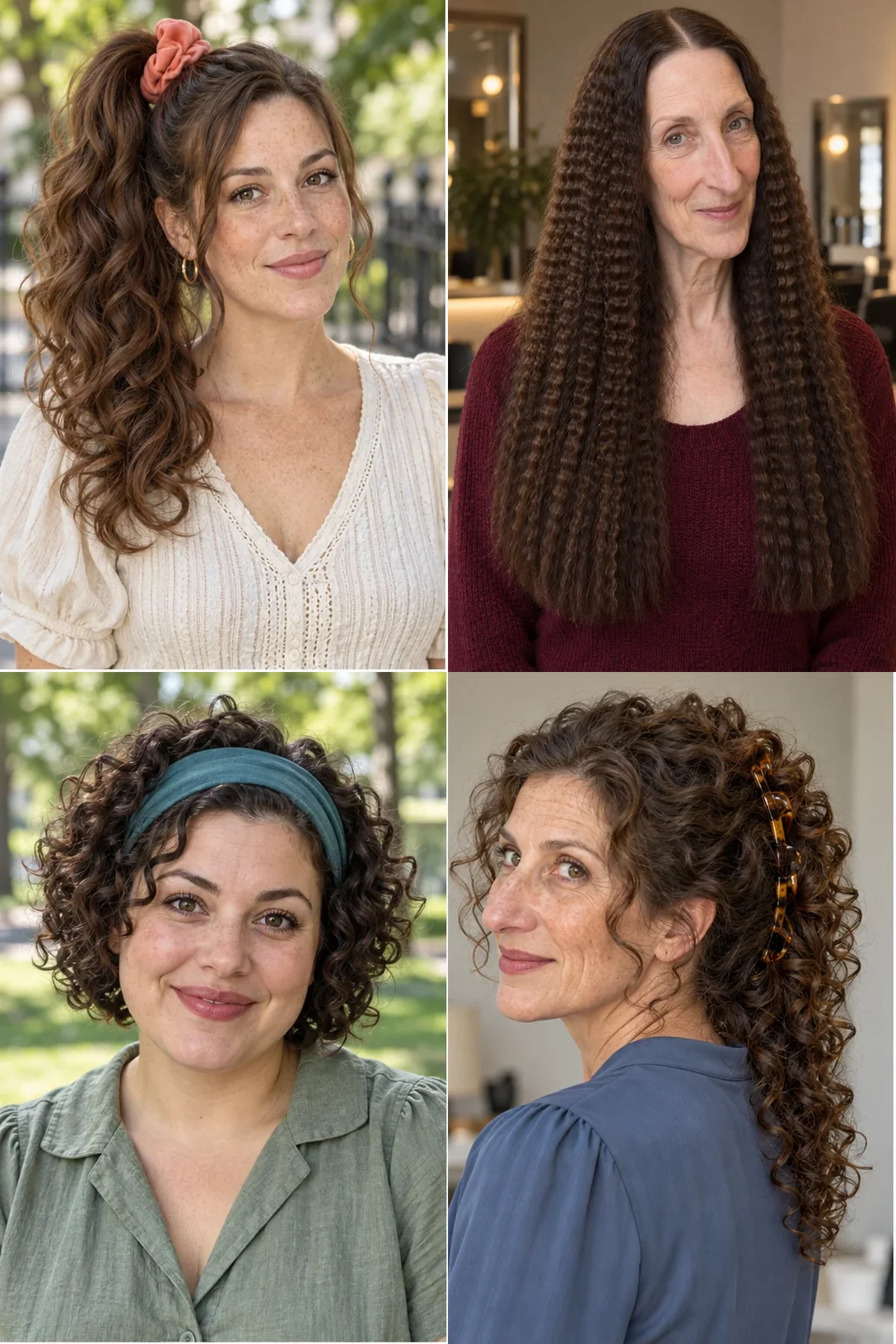
80s hairstyles are a family of looks associated with the 1980s rather than one haircut: lifted roots, generous curl volume, crimped zigzags, feathered sides and prominently placed accessories are recurring features. This guide shows modern interpretations, not claims that every detail was invented in that decade. Compared with a smooth, rounded 90s blowout, these looks often emphasize height, textured surfaces, asymmetric placement or accessories. A mullet or shag describes a cut; a side ponytail or crimped finish describes styling, and many of these ideas need no new haircut at all.
Find the one that feels like you: Start with the first look and let the photographs lead. Each style explains how the shape affects your features, the mood it creates and the exact words to take to your stylist.
Quick Facts
- Most looks are temporary styling choices; a haircut or perm is not required.
- Party-level height takes more setting and hold than a softer everyday version.
- Choose texture and accessories around your existing length, density and comfort.
- The photographs show finished styling, not guaranteed air-drying results.
1. A High Side Ponytail With a Plush Scrunchie
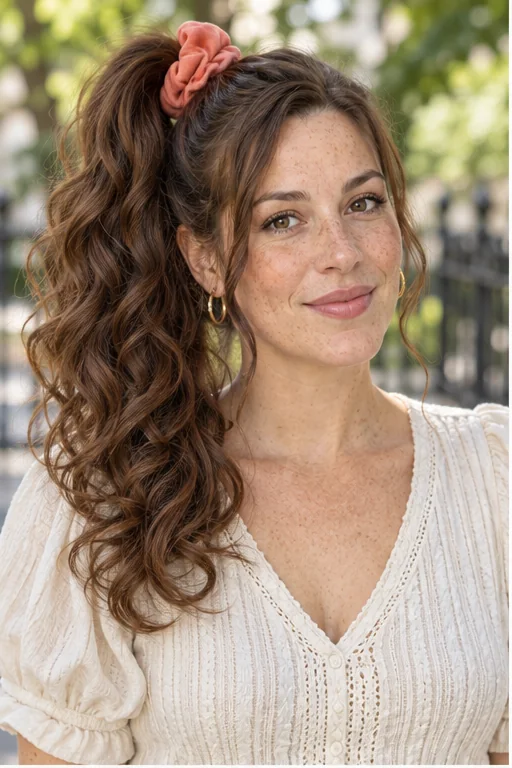
The ponytail sits high beside the crown, with chestnut curls falling over one shoulder and a plush scrunchie marking the base. That sideways placement makes a familiar tied-back style feel buoyant and playful, while the soft front keeps the face open without a severely slick finish. It is a good first choice for an 80s party if your hair already reaches a comfortable ponytail, although a heavy tail may need a discreet supporting elastic under the fabric. Ask for a high off-center ponytail with a full curled tail and gentle root lift, then test the balance before leaving so the base does not pull when you turn your head.
Ask your stylist for: A high off-center ponytail with a full curled tail, soft front and a visible scrunchie, secured without tight pulling.
2. A Crown Ponytail With Straight, Fanned Ends
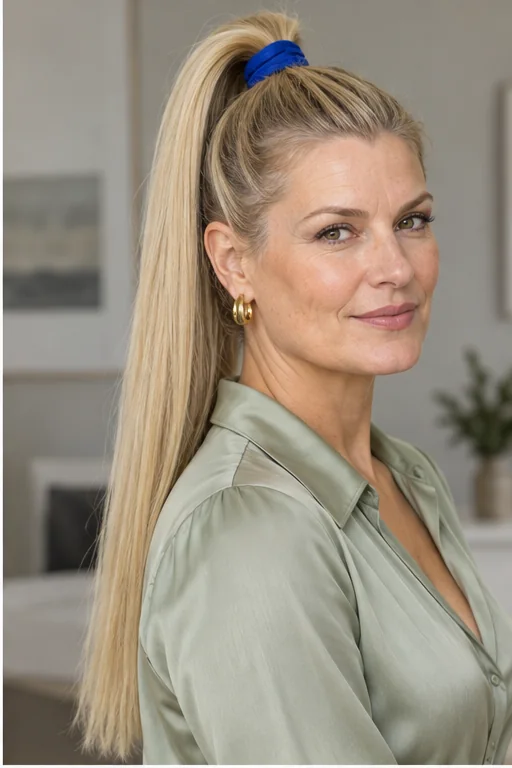
Straight blonde lengths rise from a centered crown base before fanning outward and dropping behind the shoulders. The crisp tail contrasts with the height at its base, creating a sporty, energetic impression without adding curls or changing your cut. Try it when you want the neck and face clear for a casual outing, provided your layers are long enough to gather securely. A small covered elastic beneath the scrunchie can help support the shape; avoid stacking the ponytail so high that it feels unstable. Tell your stylist you want a centered crown ponytail with a lifted fountain base and straight ends, rather than a curled side ponytail.
Ask your stylist for: A centered crown ponytail with a lifted, fanned base and straight ends; keep the hairline comfortable rather than tightly stretched.
3. A Crimped Half-Up With a Small Top Knot
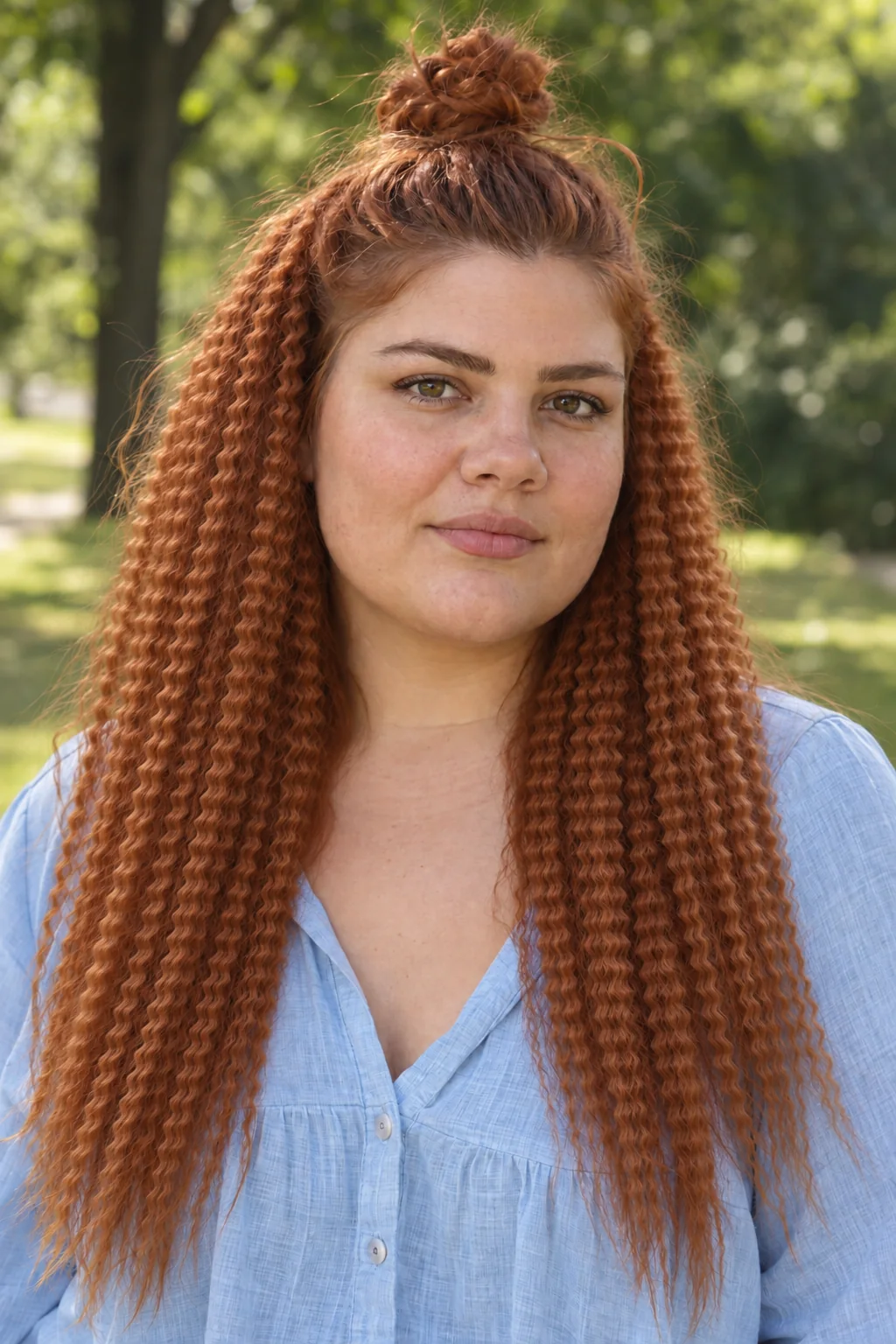
A small knot gathers the upper section while narrow crimped zigzags remain visible through the loose auburn lengths. Keeping most of the hair down lets the texture carry the retro reference, and the lifted top keeps the front from feeling heavy around your eyes. This version feels creative and lively for an evening with friends, especially if you enjoy texture but dislike a full updo. Make the knot from a modest section so it does not consume the volume below; use heat protection and the tool settings recommended for your hair if you crimp. Ask for crimped lengths with a small high half-up knot and softly released temples.
Ask your stylist for: Crimped lengths with a small high half-up knot, leaving most of the textured hair down and the temples softly released.
4. Long Crimped Hair With a Clear Center Part
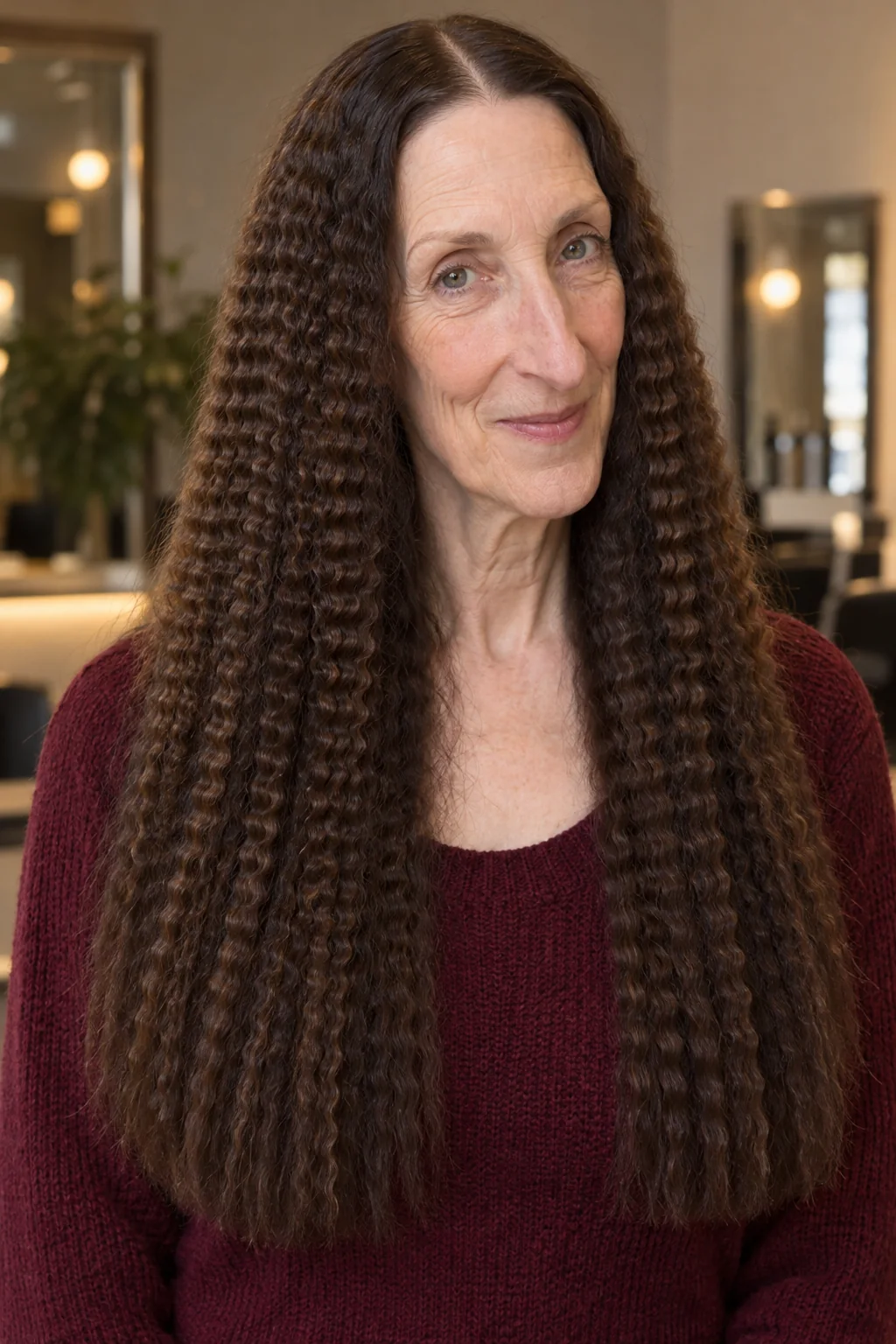
Fine zigzag ridges give these long dark lengths a broad, airy outline while the center part stays clear and controlled. The contrast makes the texture easy to appreciate and adds visible fullness through the lower hair, with a bold, nostalgic mood that works well for a themed event. It suits someone who wants their existing long cut to look dramatically different for one evening, rather than committing to permanent texture. Keep the roots relatively smooth and work in manageable sections; repeated hot passes are not the route to an even result. At the salon, request a clean center part with fine crimping through the lengths and explain how much width you want around your face.
Ask your stylist for: A clean center part with fine, even crimping through the lengths and a smooth root area; preserve the ends rather than cutting new layers for texture.
Pause and notice: Which detail attracts you first: the ponytail placement or the textured surface? Choose one before adding another retro feature.
5. A Deep Side Swoop With Lift at the Front
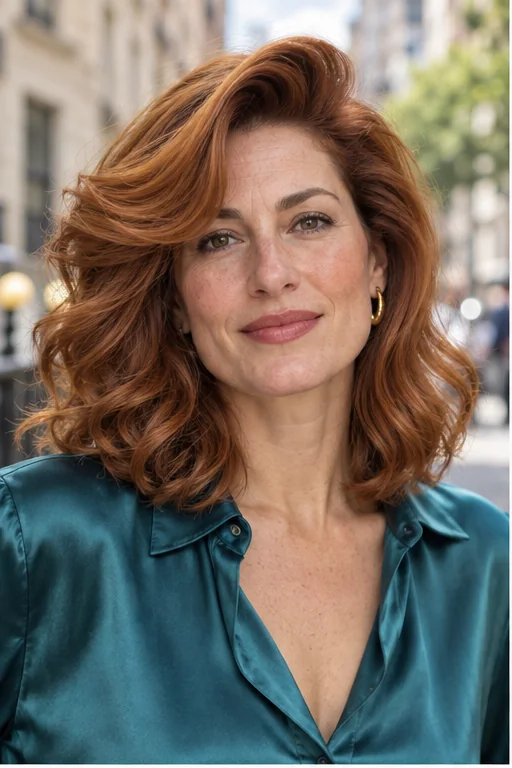
A deep side part sends the copper front section up and across in one broad curve, above softly waved shoulder-length ends. That strong diagonal directs attention toward the eyes and cheekbones, giving the whole style a confident, dressed-up presence without relying on a large accessory. It is a useful choice for a dinner or party when you want drama concentrated at the front, though the swoop needs deliberate drying or setting to hold its curve. Let the shaped section cool before loosening it, and use hold sparingly so the surface stays touchable. Ask for a lifted front swoop from a deep side part, with softer movement through the rest of the hair.
Ask your stylist for: A deep side part with a lifted front swoop curving away from the forehead, keeping the rest of the shoulder-length hair softly waved.
6. A Rounded Halo of Defined Curls
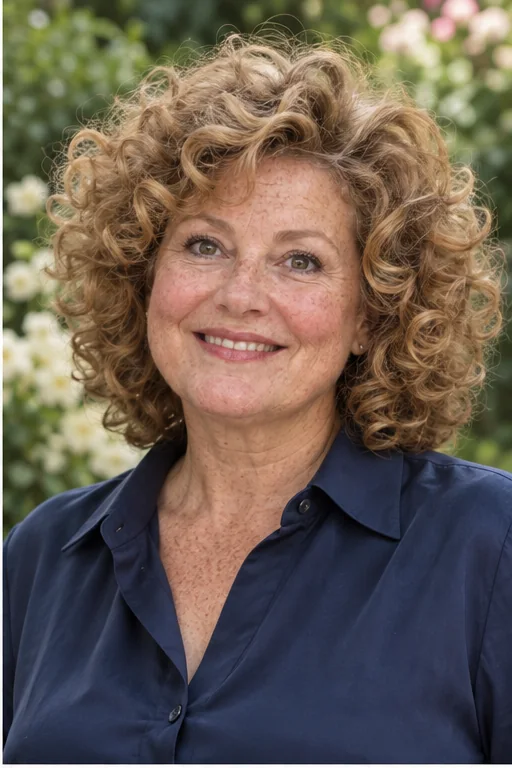
Defined dark-blonde curls build a rounded silhouette from the upper sides through the shoulders, with enough root lift to keep the top connected to the fullness below. The result feels exuberant and expressive, bringing your natural texture into the foreground instead of treating it as something to smooth away. It works especially well when you already have a curly shape that can support this outline, although extra width may feel more occasion-ready than everyday. Use your familiar curl routine and lift roots gently as they dry; vigorous brushing can change the definition completely. Ask for a rounded dry curl silhouette with root lift and intact curl groups, showing the stylist where you want the widest point.
Ask your stylist for: A rounded curly silhouette with lift at the roots and defined groups, assessed in my normal dry pattern; avoid flattening the top or widening only the ends.
7. Shoulder-Length Feathered Wings
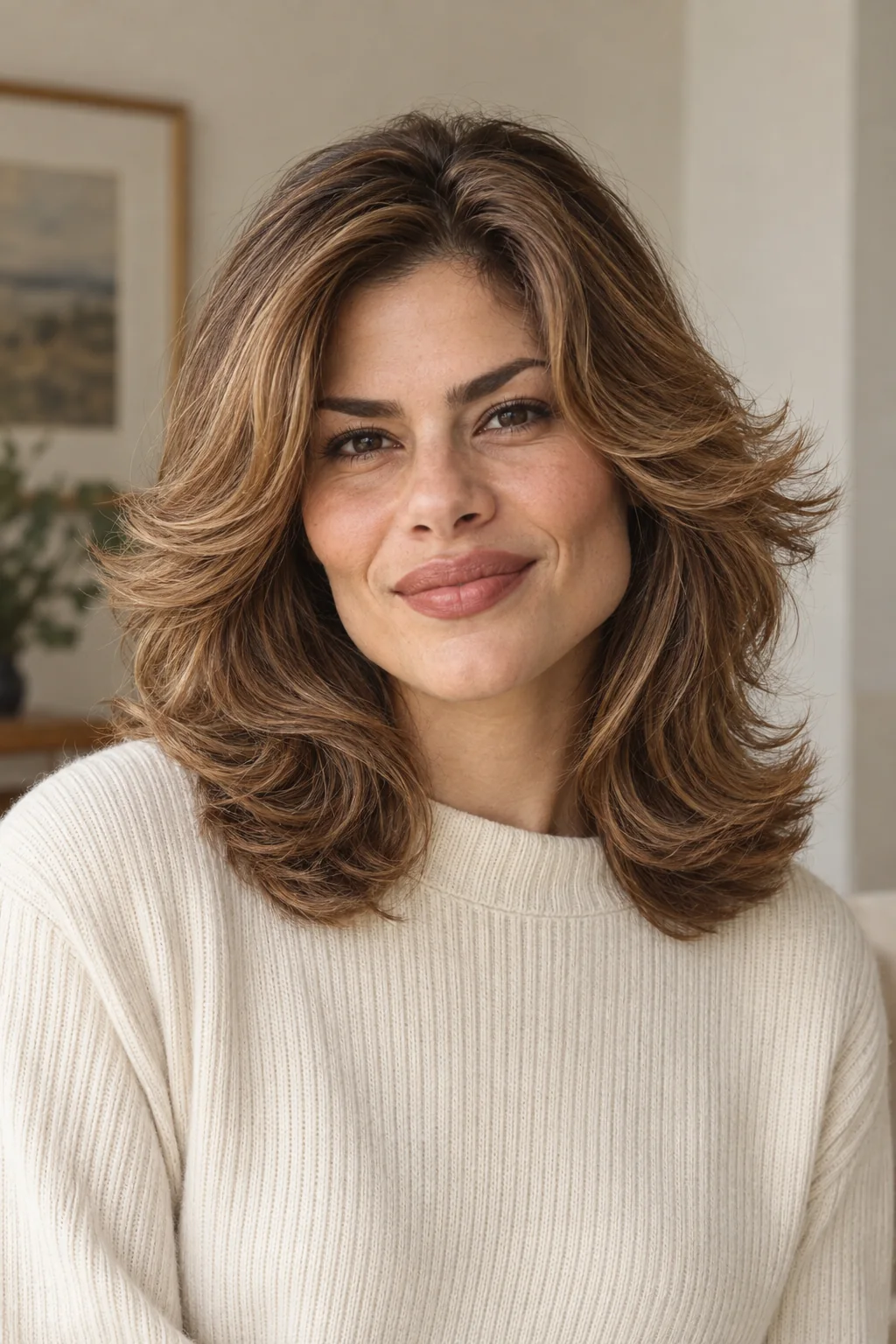
The front and sides sweep outward in feathered wings, leaving a honey-brown shoulder-length perimeter that still looks connected. The moving sides open the face and create a breezy, cheerful impression, making this a softer way to borrow retro energy for daytime. It is most practical if your existing layers can bend away from the cheeks; a blunt one-length cut may need a gentler version or a consultation about minimal face framing. Shape the front with directional drying and allow it to cool before separating the ends. Say you want outward feathered wings at cheek level with a connected shoulder-length perimeter, and distinguish that finish from the heavy crown layering of a shag.
Ask your stylist for: Shoulder-length layers styled into outward feathered wings at the cheeks, with a connected perimeter and no very short crown layers.
8. A Short Brushed-Back Quiff
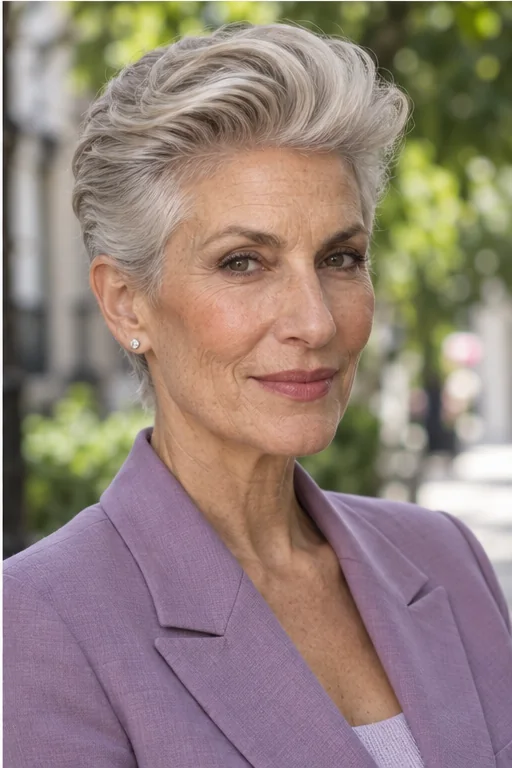
Silver hair rises in a smooth quiff above neat tapered sides, keeping the most noticeable height directly over the forehead. That concentrated lift draws the eye upward and gives a short cut a bold, self-assured mood without requiring volume everywhere. Choose it if your top is already long enough to curve backward and you like spending a little time shaping the front before an outing. Direct damp roots upward, then back, and finish with a light product that suits your density; too much can collapse fine hair. Request a brushed-back front quiff with tidy sides and enough top length to form a curve, rather than a uniform spiky finish.
Ask your stylist for: A short brushed-back quiff with height concentrated at the front and neat tapered sides; leave enough top length to form a smooth curve.
Pause and notice: Think about the widest point of the hairstyle. Crown height, cheek-level wings and all-around curls create very different proportions.
9. A Curly Bob Behind a Wide Headband
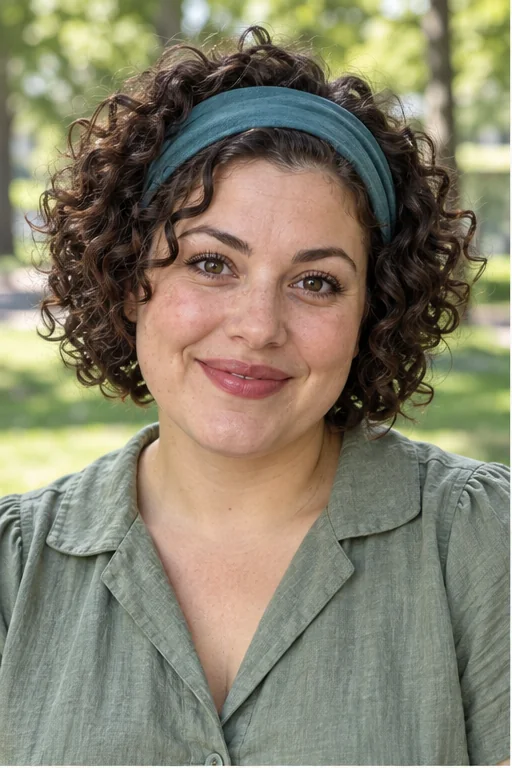
A wide teal headband holds the front of this dark curly bob back, while rounded curls remain visible above the band and around the jaw. The accessory clears the eyes and gives the small silhouette a sporty, upbeat character, so a familiar bob feels ready for a retro gathering with very little rearranging. It is useful for hair that is too short for a comfortable ponytail, as long as the band sits securely without pressure. Place it gently and release trapped curls rather than dragging it repeatedly through dry hair. Ask for a rounded curly bob with lift above a wide headband, leaving the sides full instead of flattening the whole outline.
Ask your stylist for: A rounded curly bob styled behind a wide headband, with lift above the band and full side curls; choose a band that does not press painfully.
10. A Top-Tied Bandana on Short Textured Hair
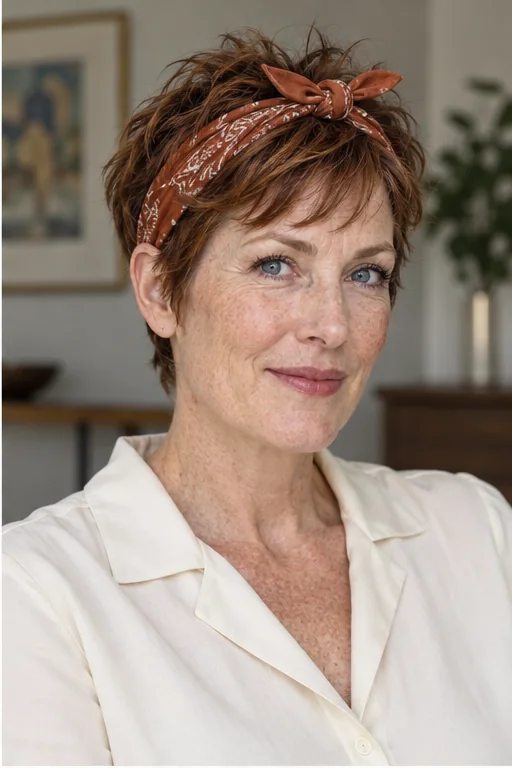
A folded rust bandana wraps behind the ears and ties above the crown, leaving a loose fringe and short chestnut texture visible. Because the fabric frames rather than covers the haircut, the look feels playful and practical while preserving the personality of your existing short shape. Wear it for a casual themed day when you want a clear retro cue without heat styling the whole head. Fold the fabric to a comfortable width and position the knot where it will not press when you sit back; pins can help if the material slips. Tell your stylist to leave the fringe and top texture exposed inside a narrow, top-tied bandana.
Ask your stylist for: A narrow folded bandana tied above the crown on short textured hair, leaving the fringe and some top movement visible rather than covering the whole cut.
11. Two High Ponytails With Crimped Tails
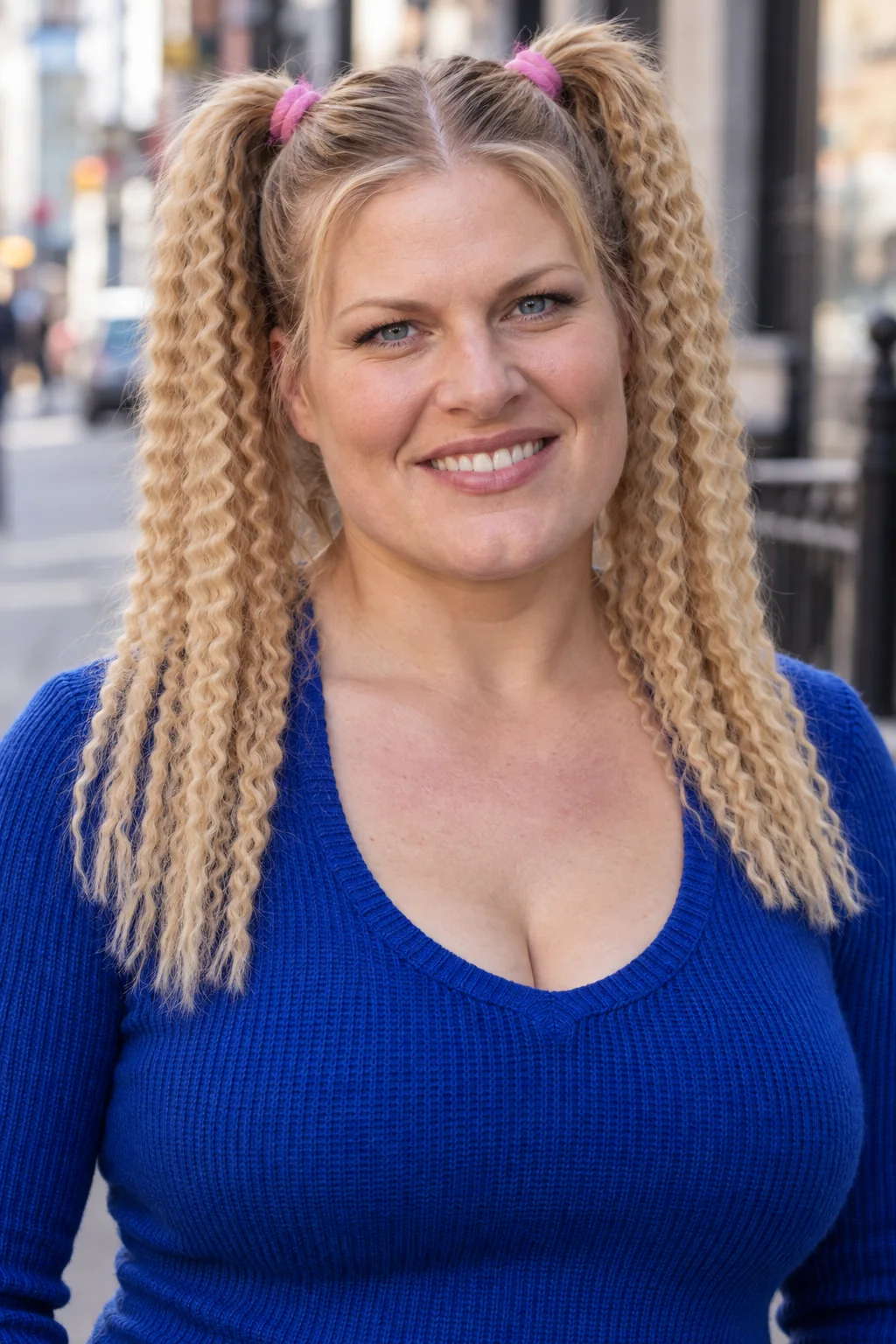
Two high ponytails sit on either side of a clear center division, with crimped blonde tails adding width and a pair of small fabric ties finishing the bases. The balanced placement makes this deliberately playful and costume-ready, ideal when you want to enjoy the theme rather than make only a subtle reference. It suits medium or long hair that gathers evenly, but short front layers may need a few discreet pins instead of extra pulling. Keep the two bases at a similar height and test them with ordinary head movement before finishing. Ask for two high side ponytails with a clear center separation and crimped tails, using comfortable tension throughout.
Ask your stylist for: Two high side ponytails with clear center separation and crimped tails, using small fabric ties and comfortable tension.
12. Big Side-Swept Curls With One Temple Pinned
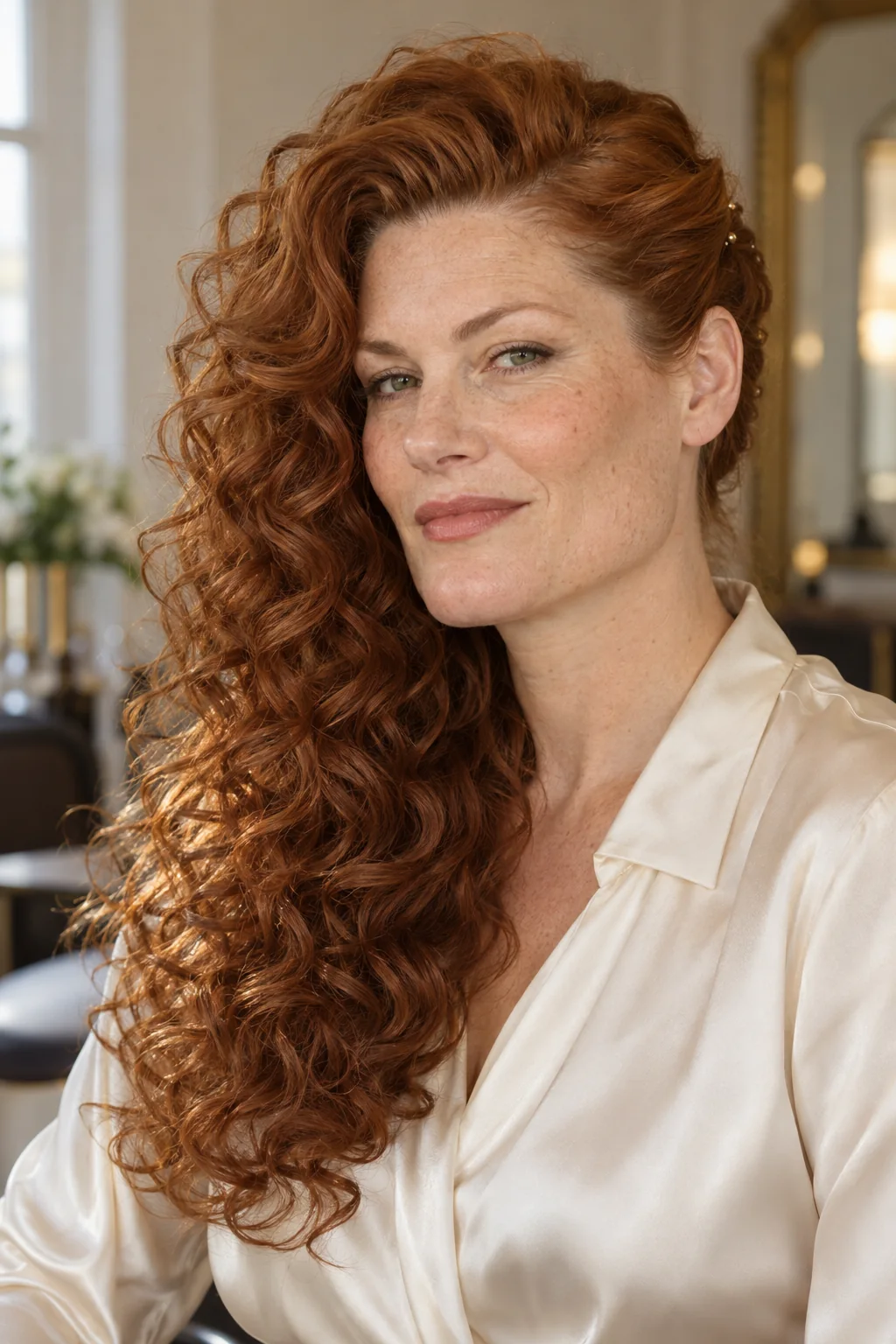
Long auburn curls gather over one shoulder while the opposite temple is pinned smoothly back, making the asymmetry easy to see. One open side reveals the cheek and earrings, and the generous curls on the other create a glamorous, celebratory mood that suits an evening outfit. Try it when your lengths already hold a curl and you want a dressier alternative to a scrunchie ponytail, allowing time for setting if your hair is naturally straight. Secure the smooth side with discreet pins and keep the curl groups intact as you arrange them. Ask for large side-swept curls with one temple pinned back, explaining which side you prefer to keep open.
Ask your stylist for: Generous side-swept curls with one temple pinned back and fullness on the opposite side; keep the curl groups visible rather than brushing them into a uniform wave.
Pause and notice: Try your accessory before the event. A secure fit should still let you move your head comfortably.
13. A Crimped Bob With a Blunt Outline
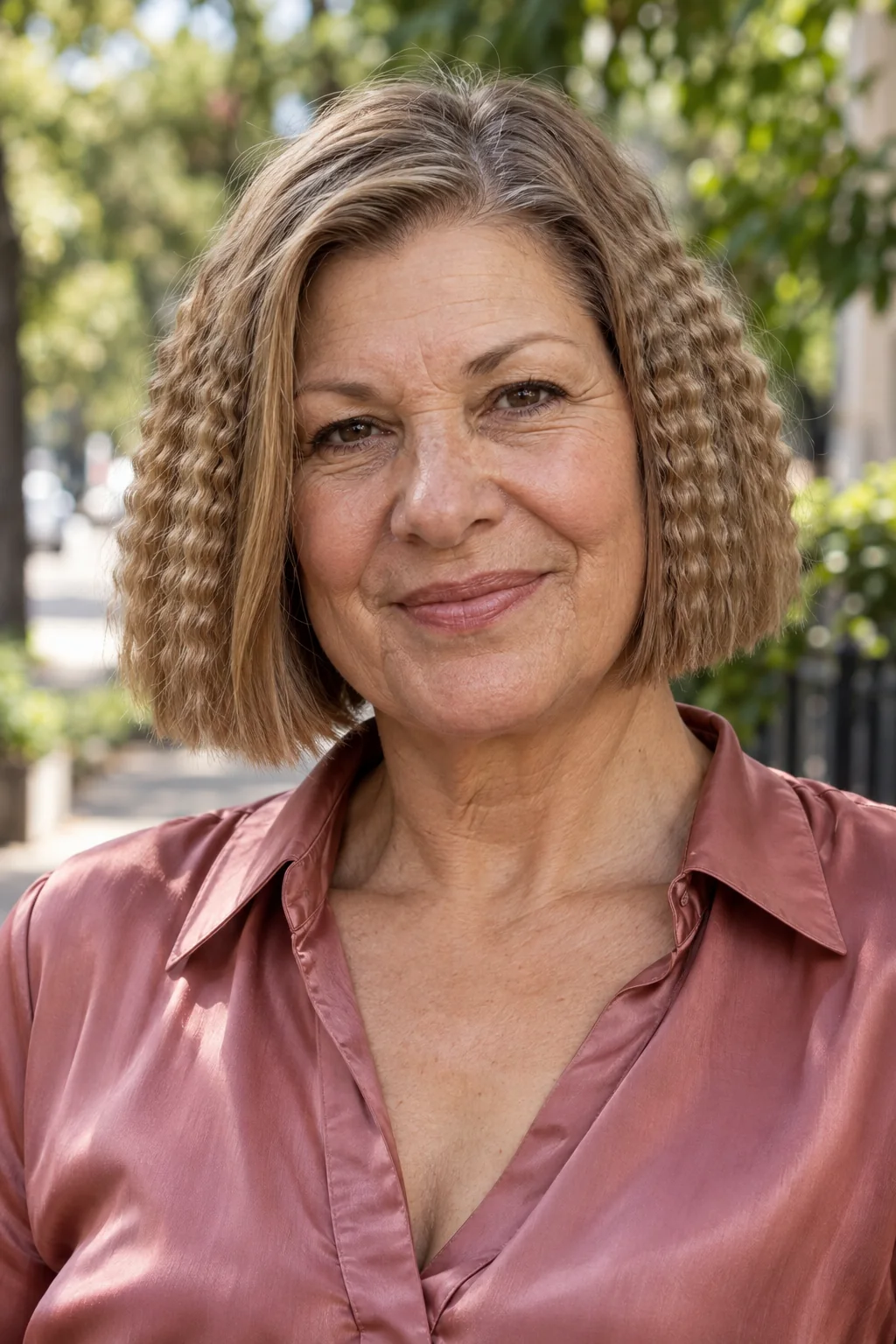
Fine crimping expands this chin-length dark-blonde bob, but its lower outline remains visibly blunt rather than feathered or heavily layered. That combination gives a compact cut a graphic, spirited quality and adds width through the sides for anyone who likes a fuller-looking short silhouette. It is an occasion option for an existing bob, with the useful reminder that texture can change the apparent length and volume without scissors. Keep the root area more controlled and assess the first crimped section before doing the rest, particularly near the face. Request fine crimping on your existing bob with the blunt perimeter preserved, and make clear that you want temporary styling rather than a new layered cut.
Ask your stylist for: Fine crimping on my existing chin-length bob, keeping the lower outline blunt and the roots relatively smooth; no new short layers for this temporary finish.
14. A French Twist With a High, Rounded Crown
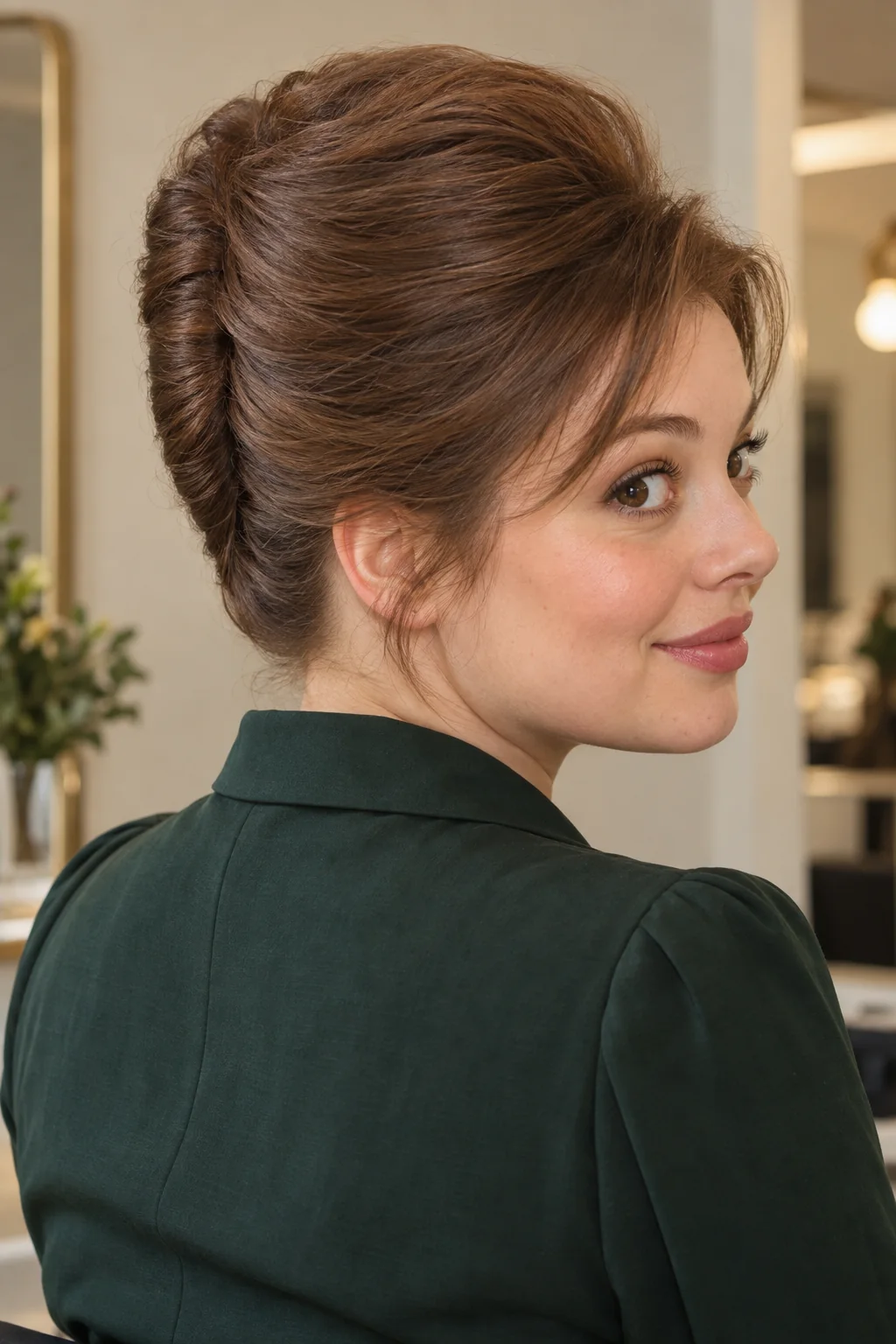
A tidy vertical roll gathers the back, while a rounded, lifted crown gives this brown French twist its more dramatic retro proportion. The clean outline makes the face and neckline feel open, creating a poised, formal mood that is useful for a party when you prefer your hair fully secured. It needs enough length to roll and pin, though very long or thick hair may require a different internal arrangement to keep the shape comfortable. Ask the stylist to distribute support through the back rather than relying on one tight anchor. Your reference phrase is a French twist with a high rounded crown, a tidy vertical roll and a smooth, softly lifted front.
Ask your stylist for: A French twist with a high rounded crown and tidy rolled back, leaving the front smooth but softly lifted rather than flat.
15. A Banana-Clip Cascade of Curls
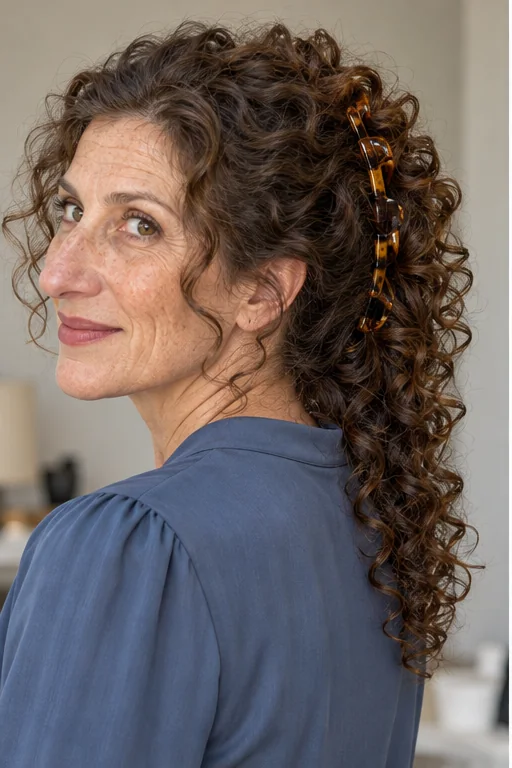
A vertical banana clip gathers the dark curls along the back, letting them spill from the crown toward the nape in a tall cascade. The spread-out attachment creates a fuller-looking shape than one narrow ponytail base, with a charming retro feel that keeps much of the hair off your neck. It works when your curl length and density fit the clip comfortably; an undersized accessory can pinch or pop open rather than improve the result. Open the clip fully, gather gently and release any caught strands before fastening. Ask for a vertical banana-clip cascade with curls distributed along its length, and bring your own clip so the stylist can check the fit.
Ask your stylist for: A vertical banana-clip cascade with curls released along the clip from crown to nape, not gathered into a single small ponytail.
16. A Curly Half-Up Fountain With a Velvet Tie
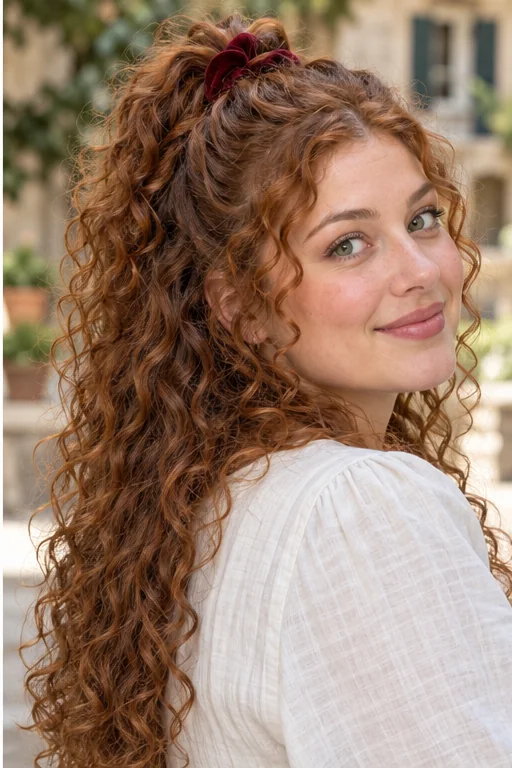
A small upper ponytail lifts copper curls into a fountain above the base, while the remaining lengths fall freely over the shoulders. The extra height gives the face a more open frame and makes an ordinary half-up feel joyful and party-ready without sacrificing the look of long hair. Choose it if your curls have enough spring to sit above the tie; looser waves may form a softer drape instead of the photographed fountain. Gather only the upper section and support it gently, then arrange the curls with your fingers rather than tightening the base repeatedly. Request a high curly half-up ponytail with a small fanned crown and most lengths left down.
Ask your stylist for: A small curly half-up ponytail placed high so its curls fan above the base, with most lengths left down and a velvet tie visible.
Pause and notice: Look at the back as well as the front. A clip cascade, twist and half-up fountain need different support even when all three create height.
17. A Loose Side Braid With a Ribbon and Crown Lift
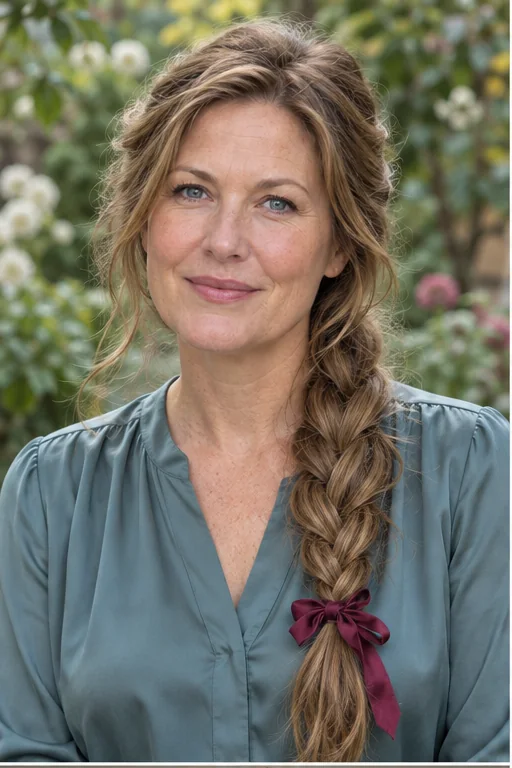
A loose three-strand braid rests over one shoulder, with a burgundy ribbon at the end and gentle lift above the forehead. The braid itself is timeless; the lifted front and noticeable ribbon provide the retro styling cue, creating a sweet, relaxed mood rather than a dramatic costume silhouette. It suits long hair when you want the lengths contained for a casual event and would rather avoid extensive heat styling. Leave enough slack for comfortable movement and choose a ribbon that stays tied without snagging the ends. Ask for a loose side braid with soft crown lift and a ribbon finish, emphasizing that you want a supple braid instead of a tightly slicked front.
Ask your stylist for: A loose three-strand side braid with gentle crown lift and a ribbon at the end, keeping the front soft rather than creating a tightly slicked braid.
18. A Rounded Blowout With the Sides Tucked Back
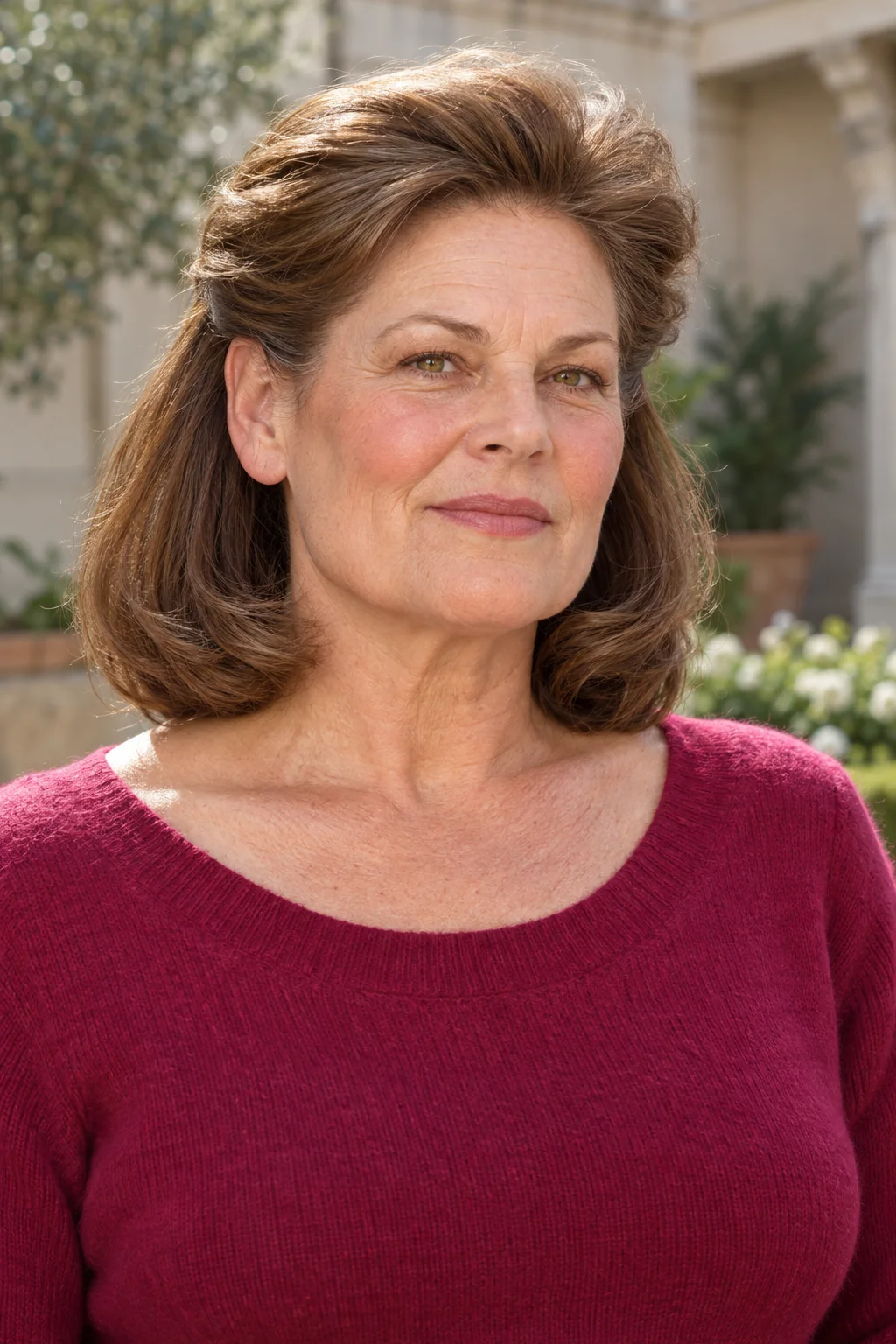
Rounded collarbone lengths keep their volume below the ears while both temple sections are tucked and pinned back, leaving the face clearly exposed. The open sides emphasize the lifted crown and produce a polished, confident impression, offering a restrained everyday interpretation of big-hair proportions. It works when you enjoy a smooth finish but do not want the full width of a loose blowout around your cheeks. Let the rounded sections cool before pinning the temples, and avoid compressing the lower hair with the fasteners. Ask for a rounded blowout with crown lift and both temples pinned behind the ears, keeping fullness below rather than making the entire shape flat.
Ask your stylist for: A rounded collarbone blowout with crown lift, then pin both temple sections behind the ears so the sides stay open and the lower hair remains full.
19. A High Curly Bun Framed by a Scrunchie
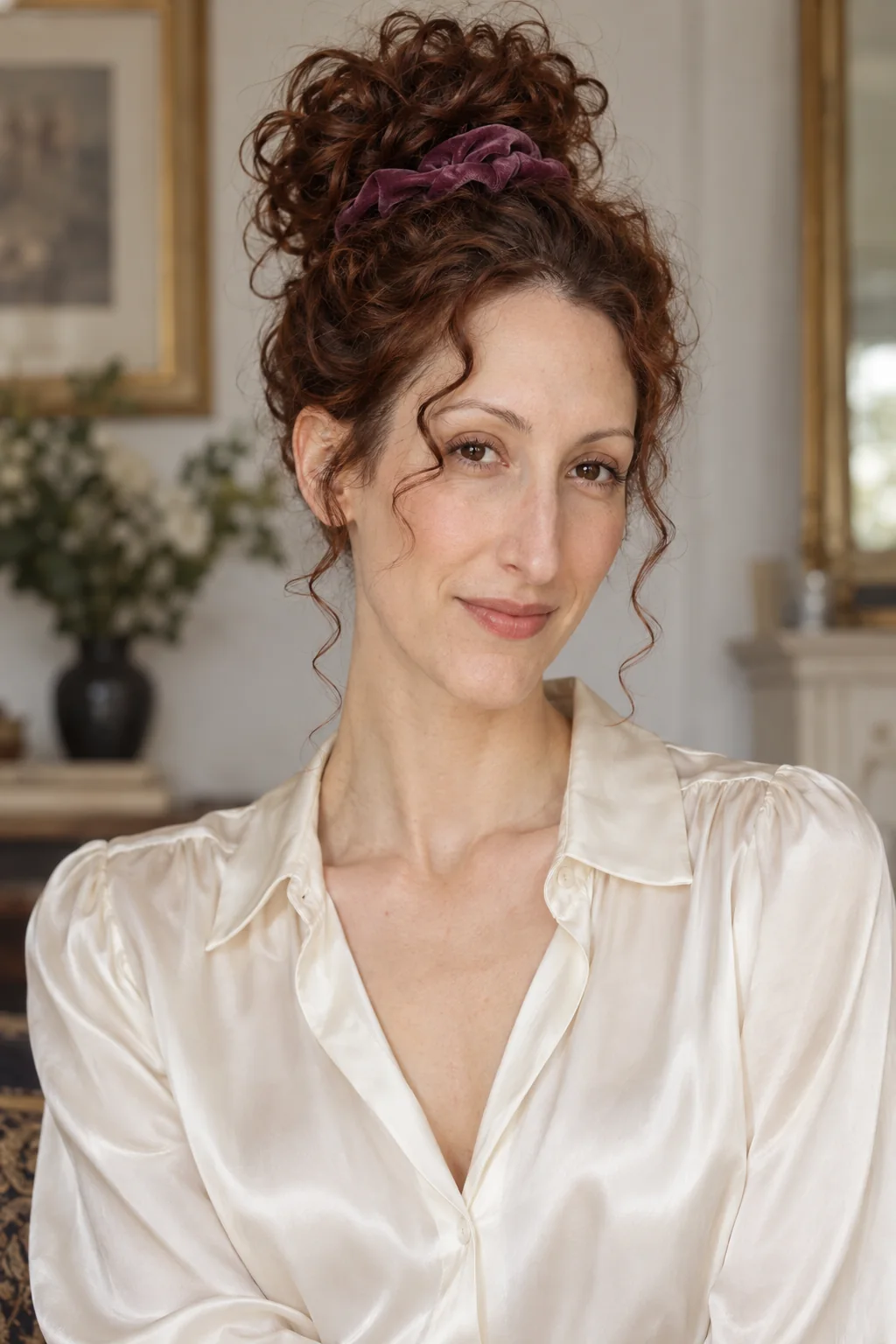
Dark-auburn curls form a loose high bun, with a plum scrunchie framing the base and two soft curls left near the temples. The height clears the neck while the visible curl texture keeps the finish warm and informal, giving a casual party outfit an easygoing, cheerful mood. It is useful when you want your curls contained, although longer or heavier hair may need several hidden pins to support the bun. Place the support before the scrunchie and release only a few intentional curls so the result stays readable. Ask for a high loose curly bun with a visible fabric base and soft temple pieces, preserving texture rather than slicking it away.
Ask your stylist for: A high loose curly bun with a visible scrunchie around the base and a few deliberate temple curls; preserve curl texture instead of slicking everything flat.
20. A Rolled Front Above a Low Ponytail
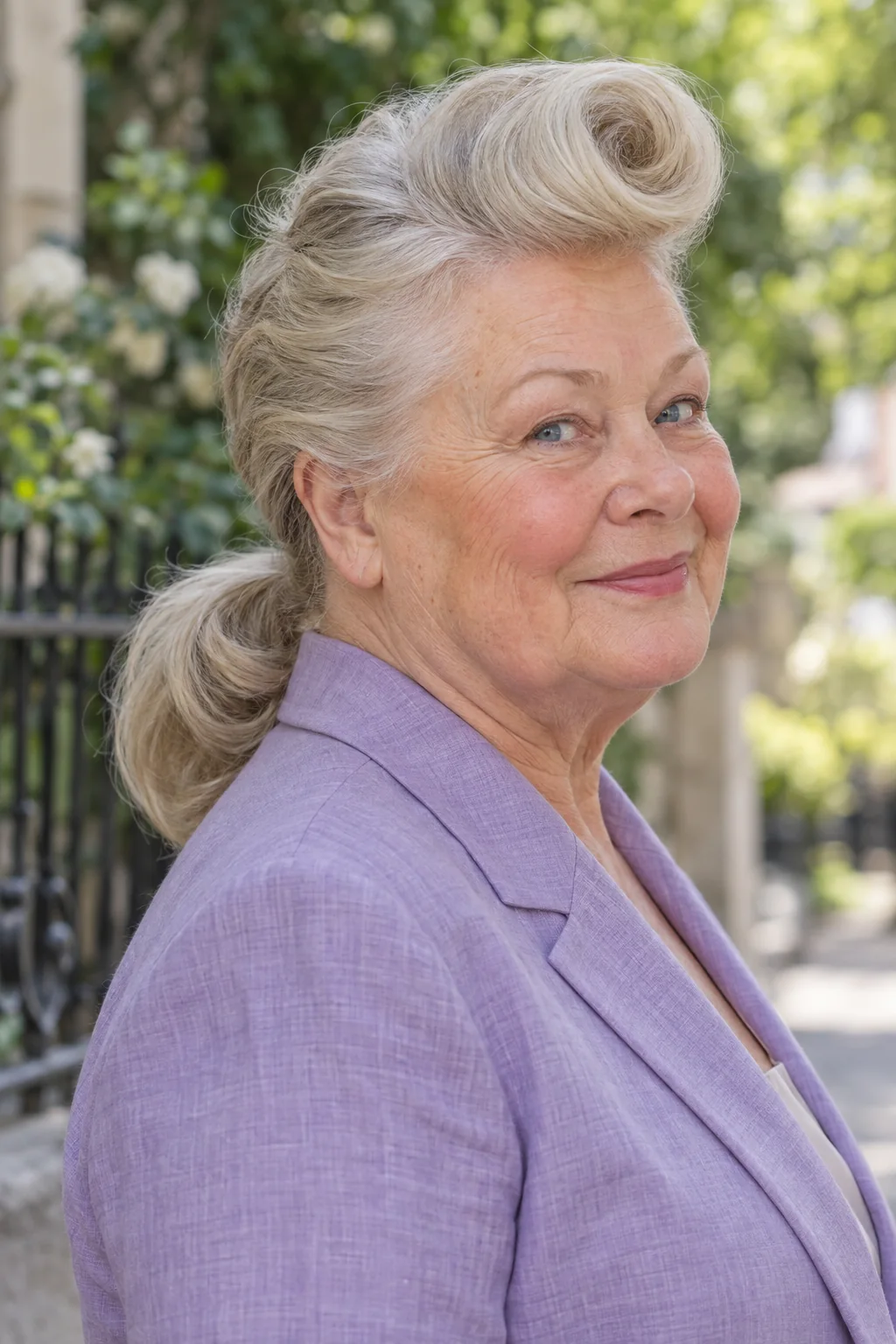
A rolled front section rises above the forehead while silver-blonde lengths gather into a smooth ponytail at the nape. The contrast between an expressive front and a quiet back feels assured and slightly theatrical, useful when you want a strong retro silhouette without a large tail at the crown. It suits longer front sections that can roll securely; a short fringe will produce a different effect and should not be forced into this shape. Set the front separately and hide the supporting pins inside the roll before gathering the low ponytail. Ask for a rolled front pompadour with a smooth low ponytail, specifying that all the height belongs at the front.
Ask your stylist for: A rolled front pompadour above a smooth low ponytail, with height limited to the front section and discreet pin support inside the roll.
Before You Book the Appointment
A successful salon visit begins with the overall shape, construction and upkeep—not only the finished length. Use this quick reality check before choosing your final reference photograph.
- Length: Longer hair offers more ponytail and updo options; short hair can use root lift, headbands and pinned sides.
- Texture: Work with natural curls where possible; straight hair needs deliberate setting for rounded curl silhouettes.
- Density: Use modest sections and a secure accessory on fine hair; thick hair may need a larger clip or several discreet supports.
- Salon plan: Ask for a temporary styled finish first if unsure about a fringe, shorter layers or a permanent texture change.
- Comfort: A ponytail, clip or headband should feel secure without painful pulling. Reduce tension or change the placement if it does not.
Start with one unmistakable retro detail
For everyday wear, choose one feature: a scrunchie, a lifted front, crimped lengths or a headband. For a themed party, combine two or three if that feels fun. The useful distinction is intensity, not authenticity points. You do not need distressed hair, painful tension or a new haircut to make the decade reference clear.
Match the styling method to your texture
Natural curls can provide generous volume without being straightened first. Fine straight hair may suit smaller lifted sections and lighter products, while dense hair often needs a larger accessory and more distributed pin support. Discuss what your hair does when it dries, how much setting you will do and where you want the widest part of the silhouette. Photographed fullness depends on density, texture and styling; accessories do not guarantee extra hair volume.
How to ask for an 80s hairstyle at the salon
Bring a front and side or back reference, then describe the placement, texture and intensity. Say whether you want a temporary styled finish or a cut that supports it. Useful phrases include fine crimping with smooth roots, a high off-center curled ponytail, a rounded crown above a vertical twist, or outward feathered sides with a connected perimeter. A decade name alone leaves too much room for interpretation. If considering a perm, arrange a separate consultation about hair condition, upkeep and the result on your own texture.
Set volume without making detangling a struggle
Give shaped sections time to cool before loosening them, and use a product appropriate to your texture and desired hold. If you use heat, follow your tool instructions, apply heat protection and avoid repeatedly reheating the same section to chase more height. Backcombing is optional; if you use it, keep it localized and plan a gentle detangling routine afterward. Do not pull a comb straight through a compacted section. Remove pins and accessories carefully and work patiently from the ends upward.
Care, refreshes and returning to your usual style
These temporary styles generally return to your normal shape after accessories are removed and the hair is gently detangled and washed as needed. A textured surface may need more patient detangling than a simple ponytail. If you have cut a new fringe or shorter layers, the styling will wash out but the cut will still need time to grow; discuss that distinction before booking. For repeat wear, alternate placement and keep tension comfortable rather than fastening every ponytail tightly at the same point.
What is the easiest 80s hairstyle to try first?
A scrunchie ponytail or headband often makes the clearest first experiment because the accessory supplies much of the reference. Choose a height and placement your current hair can reach comfortably. A high fountain, even crimping or a formal twist may take more preparation and skill. Easy depends on your texture, length and familiar routine, so try the look once before relying on it for an event.
The Takeaway
Save the look with the placement and texture you would enjoy wearing, then decide how far you want to turn up the volume. One comfortable accessory or a single lifted section may be all you need. The best retro choice is the one that lets you enjoy the mood of the decade and still feel like yourself.
More Hair Inspiration
- 90s blowout hairstyles — Compare smoother rounded volume and bouncy ends.
- Brushed-out curls — Explore softer curl surfaces and fuller outlines.
- Hairstyles for short hair — Find more ways to rearrange a compact cut.