Few hairstyles create that just-stepped-onto-a-magazine-set feeling as quickly as a 90s blowout. The lifted crown, sweeping movement and buoyant ends make ordinary layers look glamorous, yet the best versions still feel touchable enough for dinner, work or a very good hair day at home.
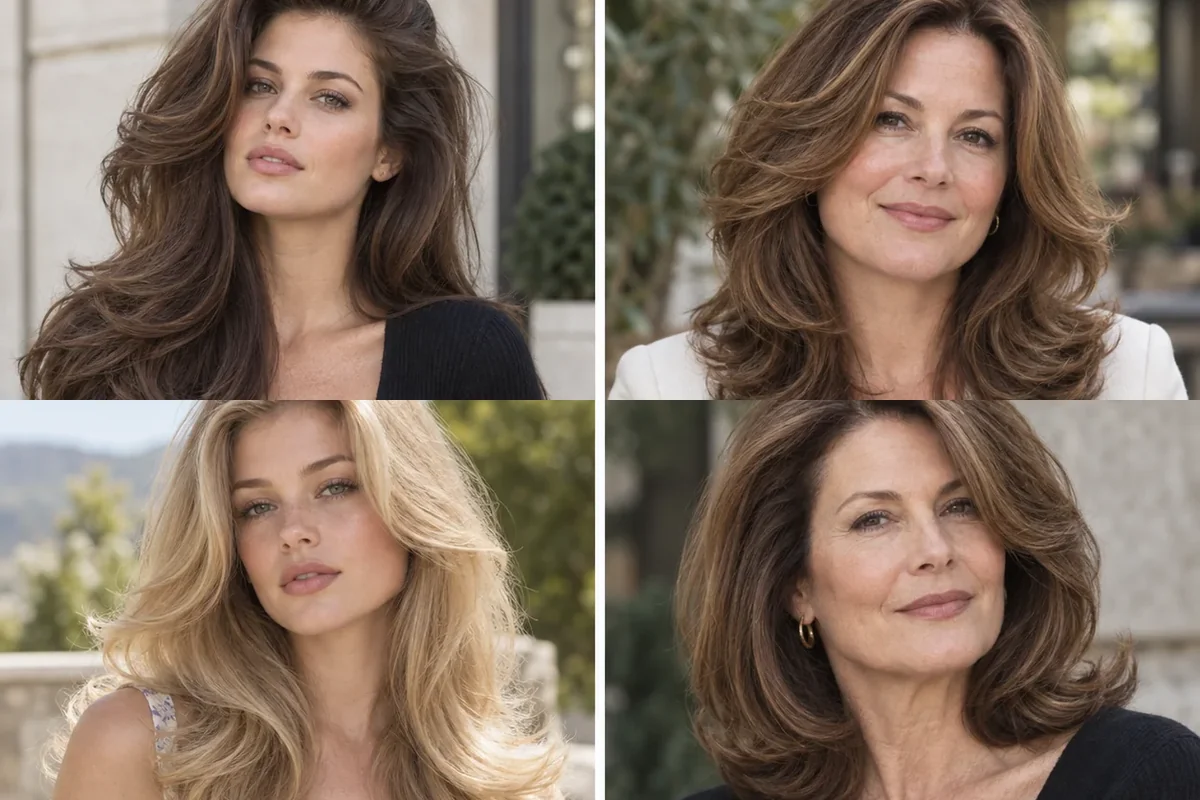
A 90s blowout is a smooth, high-volume finish built with lifted roots, rounded body and broad bends or flipped ends. Unlike brushed-out curls, which begin as a curl set, this silhouette comes from directing warm air through large sections and letting each section cool around a brush or roller. It is rounder and more polished than a 70s feathered blowout, whose face-framing ends kick away in sharper wings. The cut supplies the architecture, but section direction, root elevation and cooling create the recognizable bounce.
Find the one that feels like you: Start with the first look and let the photographs lead. Each style explains how the shape affects your features, the mood it creates and the exact words to take to your stylist.
1. Classic Supermodel Blowout
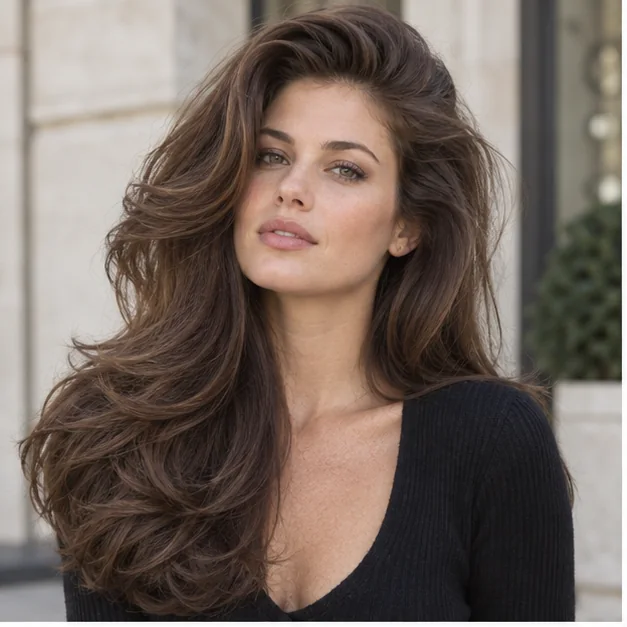
Long, softly layered hair rises at the crown and falls in wide S-shaped bends, with the ends turning under and away in alternating sections. That balanced fullness opens the face, softens a strong jaw and creates polished runway confidence without looking stiff. It suits medium-to-dense hair and occasions when extra styling time feels worthwhile. Ask for long connected layers, cheekbone framing and a rounded blow-dry with maximum root elevation; set each warm section in a large roller until completely cool, then brush once and mist lightly.
Ask your stylist for: Long connected layers with cheekbone framing and a rounded blow-dry set for maximum root elevation.
2. Face-Framing Layer Blowout
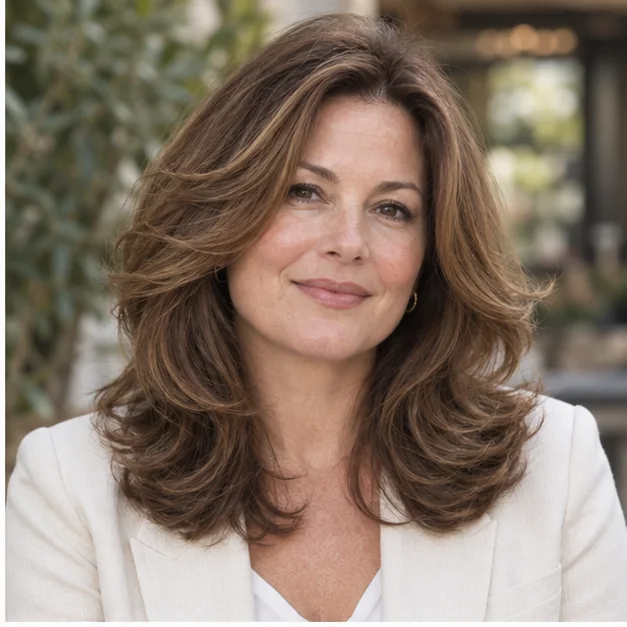
Graduated pieces begin near the cheekbones and sweep back into longer layers, creating a soft halo instead of one heavy curtain. The movement emphasizes the eyes, gives a round face vertical lift and feels glamorous while remaining easy to tuck away. This shape works especially well on medium or thick hair that falls forward. Request connected face-framing layers from cheekbone to collarbone, then direct those sections back with a large round brush and cool them away from the face before loosening gently with your fingers.
Ask your stylist for: Connected cheekbone-to-collarbone face framing designed to sweep back in a large round-brush blowout.
3. Long Blowout With Flipped Ends
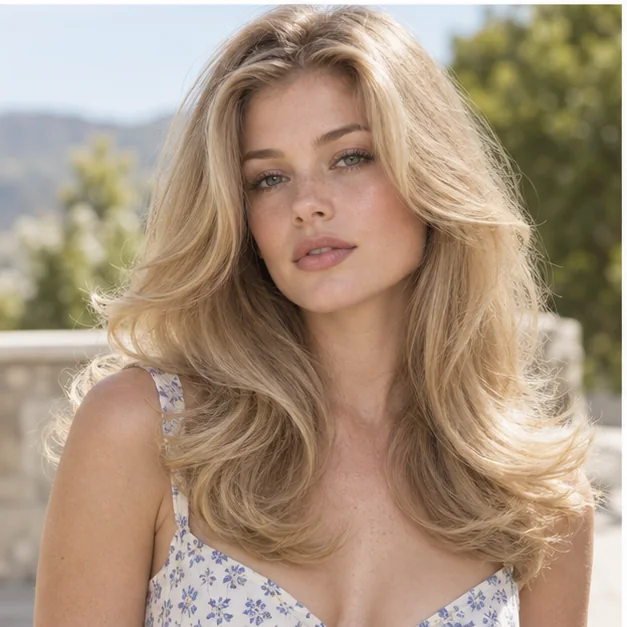
The upper lengths stay glossy and rounded while the final inches flip outward in a broad, controlled curve. That airy edge prevents very long hair from looking heavy, widens a narrow shoulder line and gives the finish an upbeat, playful mood. It is ideal when you want movement without shortening the perimeter. Ask for long layers with enough graduation for the ends to release, not a razor-thinned baseline; rotate the brush outward only at the bottom, clip each section in its curve and avoid heavy oil that pulls the flip flat.
Ask your stylist for: Long released layers with a full perimeter and broad outward movement through only the final inches.
4. Shoulder-Length Bouncy Blowout
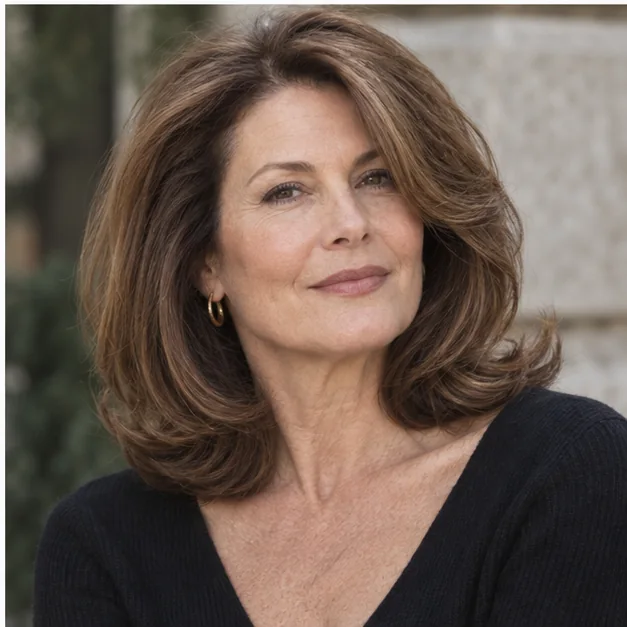
Collarbone layers curve into full, springy ends while the roots remain smooth and lifted, creating a compact version of supermodel bounce. The outline adds fullness around a narrow jaw and feels cheerful, polished and easier to manage than a waist-length set. Because the ends meet clothing, they need a firm cool set to prevent random flicks. Ask for a collarbone cut with rounded internal layers and a strong edge; dry the ends in medium sections, pin them under and release only when the hair feels cool throughout.
Ask your stylist for: A collarbone cut with rounded internal layers, a strong edge and ends shaped for an under-curved cool set.
5. Rounded 90s Blowout Bob
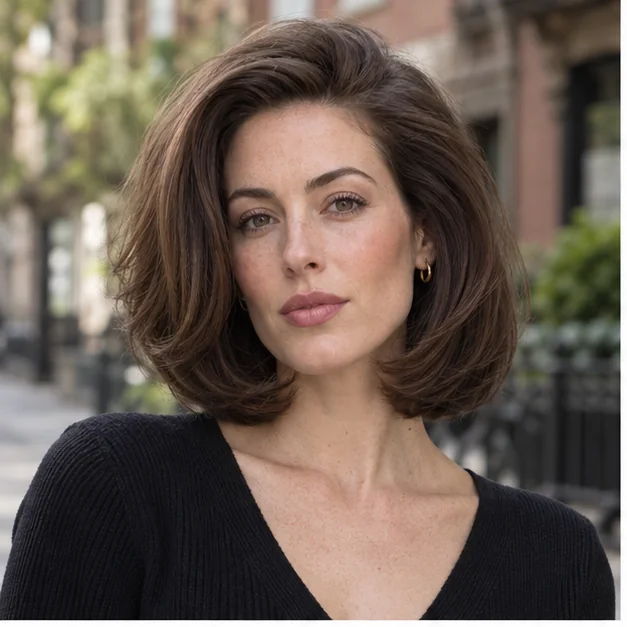
A chin-to-neck bob lifts through the crown and rounds under at the perimeter, giving short hair plush body without forming a rigid helmet. The curved outline highlights the mouth and cheekbones, balances a longer face and feels chic with a playful retro wink. Fine hair benefits from concentrated fullness, although too many layers can weaken the edge. Request a softly graduated bob with a solid baseline and crown lift; use a medium brush, overdirect the top forward while drying and let it cool back into place.
Ask your stylist for: A softly graduated chin-to-neck bob with a solid baseline and enough crown length for rounded lift.
Pause and notice: Notice where the volume sits. Crown height lengthens, cheek-level bends soften and rounded ends add fullness lower in the silhouette.
6. Blowout With Curtain Bangs
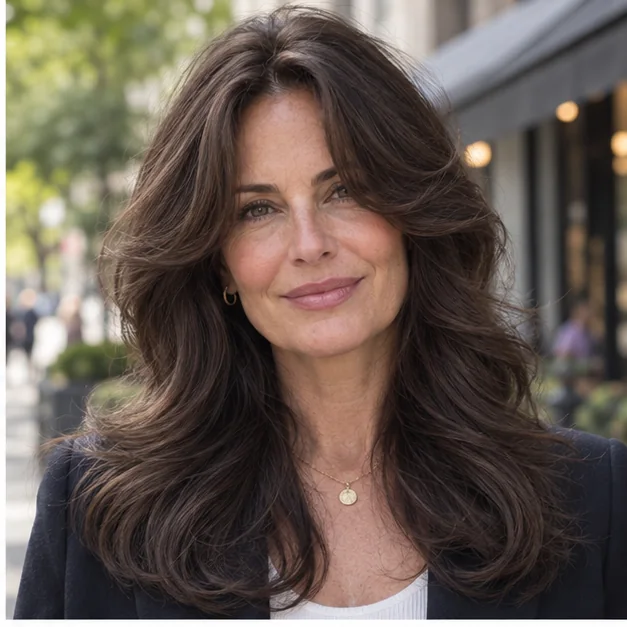
Long curtain bangs rise from the center and arc toward the cheekbones before blending into buoyant side layers. The opening lengthens a round face, softens a broad forehead and gives the style relaxed, camera-ready confidence. This version is forgiving as bangs grow, but the front must cool in the right direction. Ask for center-opening fringe landing between cheekbone and jaw with seamless side connections; roll it forward first, let it cool, then divide and sweep it back with minimal product.
Ask your stylist for: Center-opening cheekbone-length curtain bangs connected seamlessly into bouncy side layers.
7. Deep Side-Part Blowout
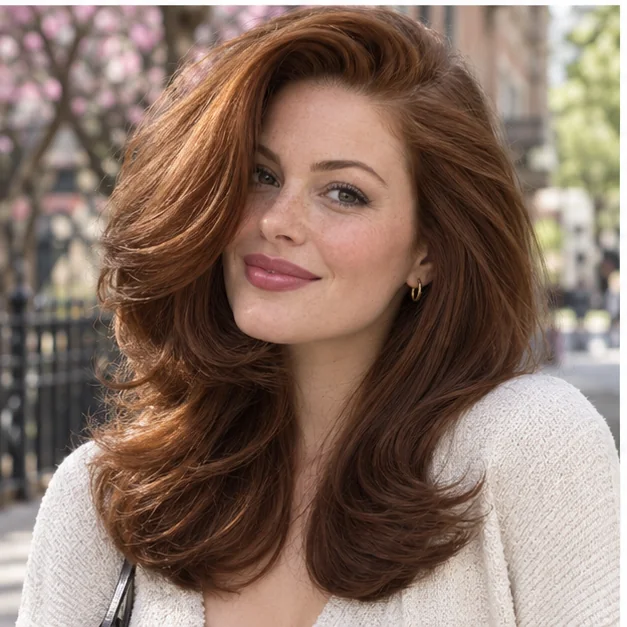
A deep side part sends a glossy wave across the forehead and builds dramatic height over one temple, while the opposite side stays tucked. The asymmetry can lengthen fuller cheeks, emphasize the eyes and make a simple outfit feel sophisticated. It suits hair with enough density to hold the sweep without exposing a wide part. Ask for long front layers that travel across the forehead and blend near the jaw; dry against the natural part for lift, flip it over after cooling and secure with flexible spray.
Ask your stylist for: Long front layers built for a deep side sweep, blending near the jaw without a short disconnected fringe.
8. Middle-Part Soft Blowout
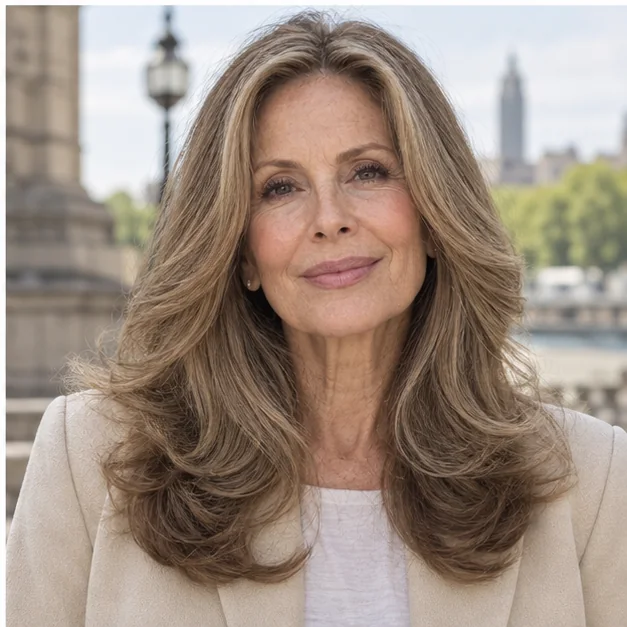
A clean center part anchors symmetrical volume, with smooth bends opening gently from both sides of the face. The balance flatters oval and heart-shaped faces, makes fine features feel composed and creates calm, expensive-looking glamour. It is less dramatic at the crown than a side part, so deliberate root direction matters. Request balanced long layers and soft jawline framing; lift each top section straight upward, cool it on an oversized roller and brush the lengths outward only after the center fully sets.
Ask your stylist for: Balanced long layers with matching jawline framing and crown length that supports a centered root set.
9. 90s Blowout for Fine Hair
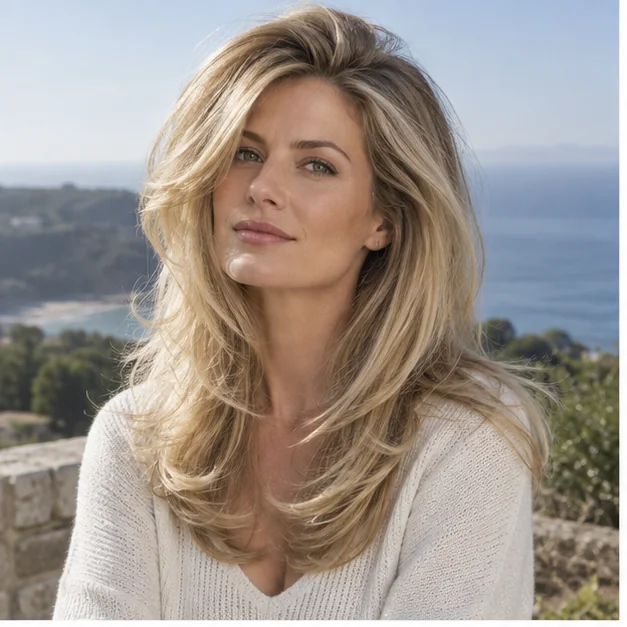
A compact layer pattern preserves a dense-looking baseline while short crown sections lift away from the scalp in generous curves. The height makes fine hair appear fuller, brightens the upper face and creates welcome polish without teasing every inch. Too much conditioner or oil will undo the effect, so lightweight preparation is essential. Ask for minimal long layering, subtle crown support and no aggressive thinning; apply volumizing mousse at the roots, dry smaller sections for tension and cool them in Velcro rollers before using dry texture spray.
Ask your stylist for: Minimal long layering with subtle crown support, a dense perimeter and no thinning through the ends.
10. 90s Blowout for Thick Hair
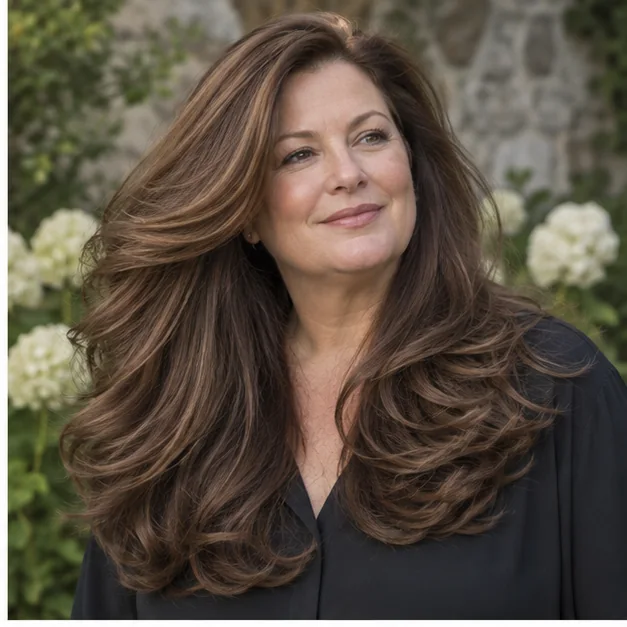
Long internal layers release dense hair into broad waves while a substantial perimeter keeps the blowout rich rather than over-thinned. The shape distributes weight, prevents a triangular outline and gives thick hair a confident sweep that remains touchable. Larger sections save time, but the roots must be thoroughly dry or volume sinks under its own weight. Ask for connected internal layering with surface length preserved and controlled face framing; pre-dry to about 80 percent, work methodically with a large vented brush and cool every section.
Ask your stylist for: Connected internal layers that release bulk while preserving surface length, a strong perimeter and controlled face framing.
Pause and notice: The best version respects density. Fine hair needs a strong edge; thick hair needs internal movement; both need fully cooled roots.
11. Wavy-Hair 90s Blowout
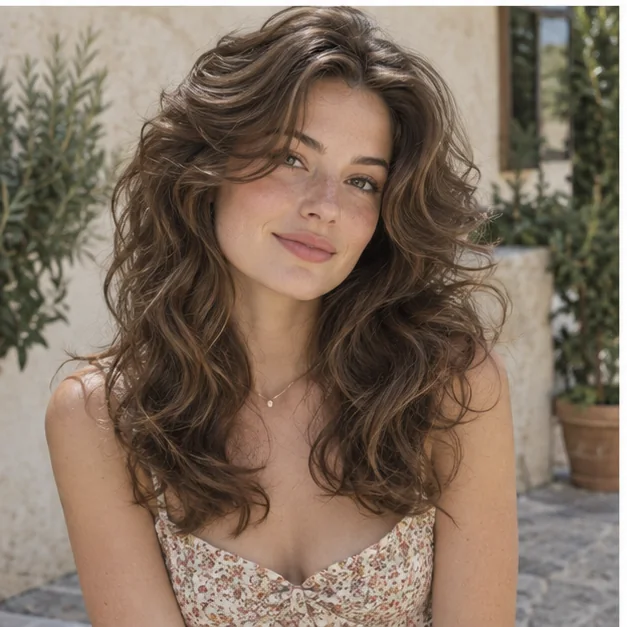
Natural wave remains visible through the mid-lengths while the roots and ends are shaped into a smoother, rounder silhouette. Keeping texture gives the style modern softness, reduces the time spent chasing a glassy finish and feels relaxed yet intentionally put together. Humidity can bring the original pattern back, so flexibility is more realistic than pin-straight perfection. Ask for long layers that follow the wave and a soft face frame; use smoothing cream sparingly, stretch only the roots and ends, then finish with humidity-resistant flexible hold.
Ask your stylist for: Long layers that follow the natural wave, with soft face framing and no requirement for a flat-ironed finish.
12. Curly-Hair Stretch Blowout
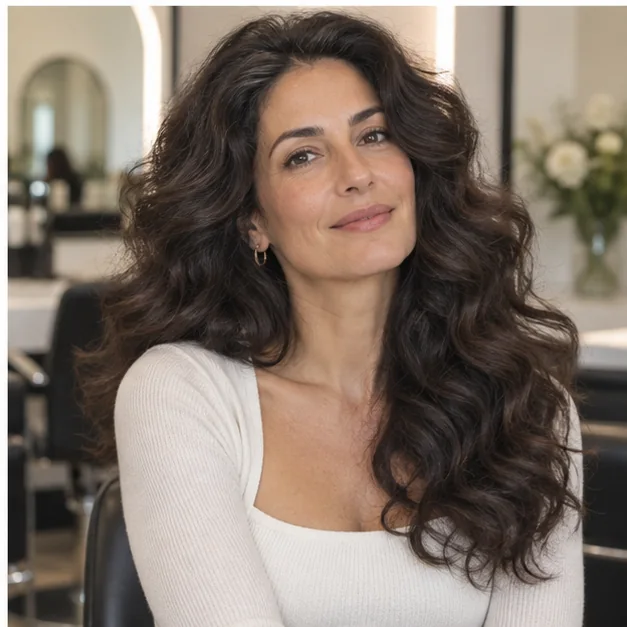
Curls are gently stretched into pillowy bends while natural density keeps the outline lush from crown to ends. The finish offers length and movement without demanding a poker-straight result, softens angular features and feels wonderfully glamorous while honoring texture. Careful heat and moderate brush tension matter more than maximum smoothness. Ask for rounded layers planned for the curl pattern and enough perimeter weight to prevent wispy ends; work on detangled sections with heat protectant, use controlled warmth and stop before repeated passes dry the hair out.
Ask your stylist for: Rounded curl-aware layers with perimeter weight, styled as a gentle stretch blowout rather than a flat-ironed press.
13. Coily-Hair 90s Blowout
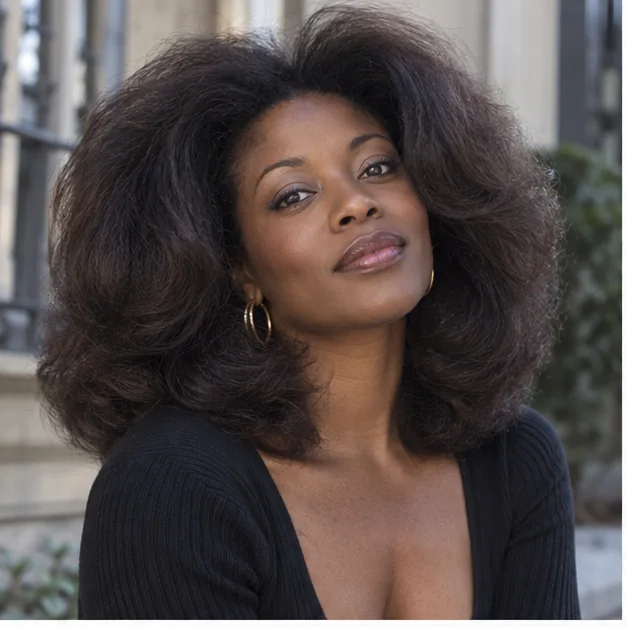
Stretched coily hair forms a full cloud of soft bends with substantial root height and a rounded perimeter. Natural volume creates bold supermodel scale, balances prominent features and feels celebratory without requiring every strand to lie perfectly smooth. This can be a special-occasion finish because moisture, heat limits and reversion deserve respect. Ask for a tension-controlled blowout on conditioned hair with trimmed rounded layers; use low-to-moderate heat, avoid repeated smoothing passes and wrap or loosely band the hair at night.
Ask your stylist for: A tension-controlled stretch blowout on rounded layers, preserving coily fullness with moderate heat and no flat iron.
14. Blowout With Wispy Bangs
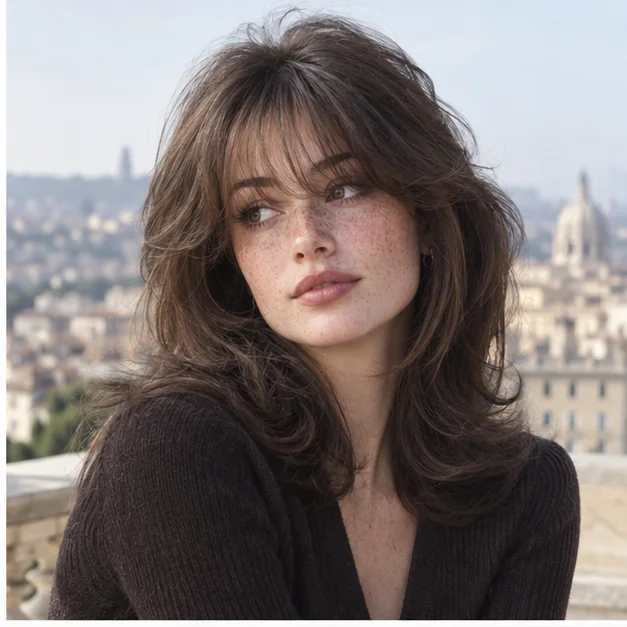
Airy bangs skim the brows in separated pieces while the rest of the hair expands into smooth crown volume and rounded ends. The light fringe softens a high forehead without closing the face, emphasizes the eyes and gives the polished finish a sweet, approachable mood. It works best when the bangs are intentionally sparse. Request a narrow triangular fringe with soft brow-grazing ends and longer temple pieces; dry it immediately from side to side, then roll it forward briefly so it settles with lift instead of a hard curl.
Ask your stylist for: A narrow, airy brow-length fringe with longer temple pieces that connects softly into the side layers.
15. Butterfly-Layer Blowout
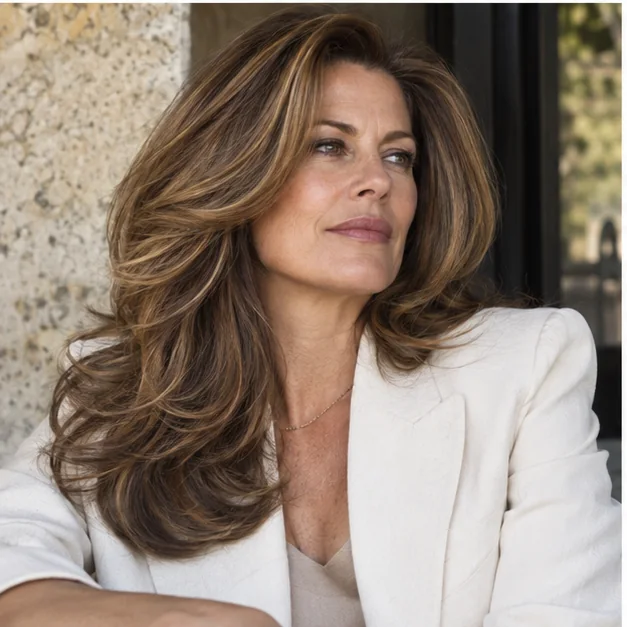
Shorter face-framing tiers sweep back like wings while long lower layers maintain length and a full baseline. The contrast creates height around the cheekbones, visually narrows a broad lower face and delivers dramatic movement that feels glamorous rather than costume-like. Because the cut already carries strong layering, use broad bends instead of tight curls. Ask for connected butterfly layers beginning near the cheekbones with density below the shoulders; overdirect the front upward and back, then cool it in large rollers before blending.
Ask your stylist for: Connected butterfly layers from the cheekbones with long lower density and enough front length for broad backward bends.
Pause and notice: Save a side view as well as the front. It reveals whether the crown is genuinely rounded or only the ends are curled.
16. 90s Blowout Lob

A collarbone lob combines a strong lower edge with invisible layers that let the surface swell into one smooth, buoyant curve. The length frames the neck, adds width around a narrow chin and feels polished for work while retaining evening-ready bounce. It is also long enough for a low ponytail once softened. Ask for a collarbone perimeter, discreet internal movement and long front pieces rather than a choppy stack; bevel the ends with a large brush, clip them under to cool and refresh with two crown rollers.
Ask your stylist for: A collarbone lob with a strong perimeter, discreet internal movement and long front pieces for a rounded blowout.
17. Short Layered 90s Blowout
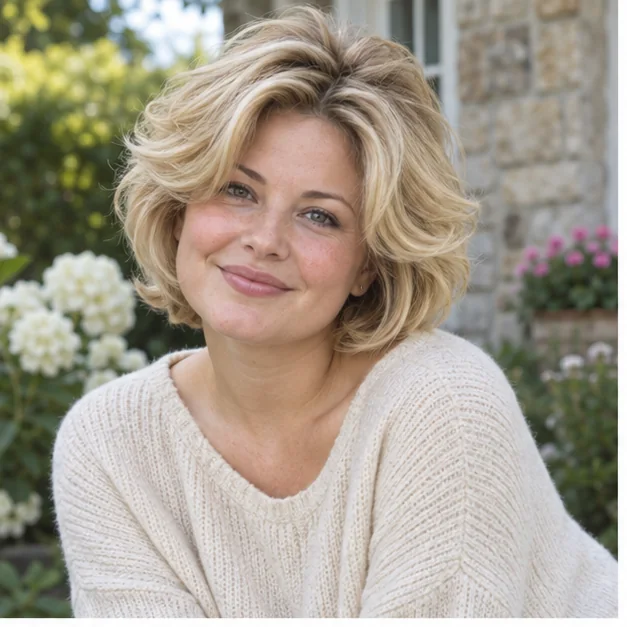
Short layers build height through the crown while longer pieces curve around the ears and sweep away from the cheekbones. The lifted top lengthens a round face, reveals the neck and makes short hair feel energetic, confident and versatile. The tradeoff is that this compact shape loses architecture sooner than long layers. Ask for a neck-length layered cut with soft crown graduation and enough side length to wrap around a medium brush; dry upward from the roots, alternate the end direction and reshape every six to eight weeks.
Ask your stylist for: A neck-length layered cut with soft crown graduation and brushable side length around the ears.
18. Highlighted 90s Blowout
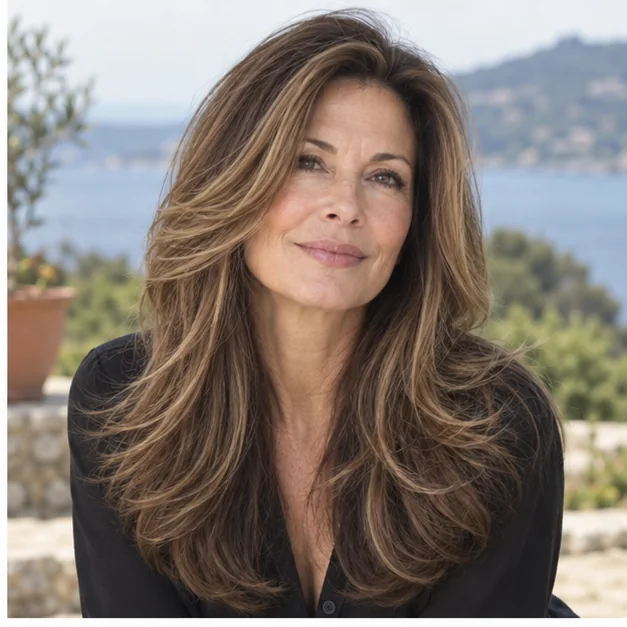
Fine highlights follow the curved surface, making every layer change and broad bend easier to see. The dimension can make medium-density hair look fuller, brighten the complexion and give the style glossy, special-occasion energy. Placement matters because chunky horizontal stripes interrupt the flow. Ask for blended face-brightening ribbons and low-contrast dimension aligned with the layer pattern; use shine spray on the mid-lengths only, since oily roots flatten the lift that makes the color sparkle.
Ask your stylist for: Blended face-brightening ribbons and low-contrast dimension placed to follow long, rounded layers.
19. Heatless Roller 90s Blowout
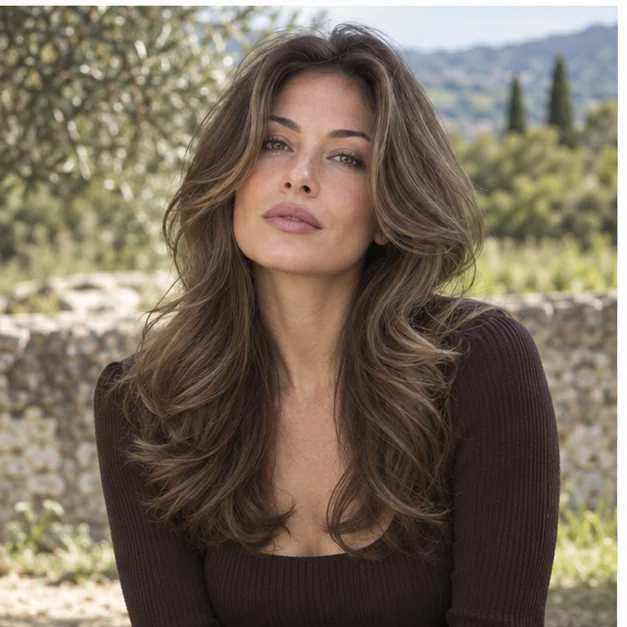
Large overnight rollers create soft crown height and rounded ends with a looser finish than a brush blow-dry. The gentler method suits dry or color-treated hair, adds comfortable everyday fullness and feels polished without making every wash day a hot-tool session. Results depend on hair being almost dry and smooth before rolling. Ask for long layers that wrap fully around a large roller; apply light mousse, roll away from the face with even tension and leave ample time for the roots to dry completely.
Ask your stylist for: Long smooth layers with a substantial perimeter that can wrap cleanly around oversized heatless rollers.
20. Soft Second-Day Blowout
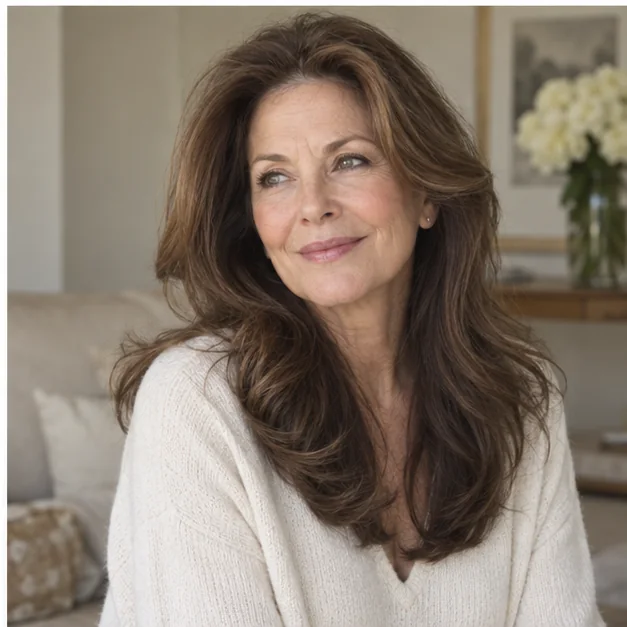
On day two, the original curves relax into airy movement while the crown keeps enough lift to retain the recognizable shape. The softer texture looks effortless, is easier to gather into a ponytail and may feel more natural for daytime than a freshly sculpted finish. Avoid repeated brushing, which separates the bend and spreads scalp oil. Preserve the first night with a loose high wrap or two jumbo rollers, then refresh only the front and crown with cool air, dry shampoo and a brief roller set.
Ask your stylist for: A flexible, touchable rounded blowout with light product so the bends relax gracefully rather than becoming stiff.
Pause and notice: Pick the look whose maintenance matches your week. Sustainable softness often beats a dramatic finish you cannot comfortably repeat.
Before You Book the Appointment
A successful salon visit begins with the overall shape, construction and upkeep—not only the finished length. Use this quick reality check before choosing your final reference photograph.
- Best for: Shoulder-length to long hair, plus layered bobs, across straight, wavy, curly and stretched coily textures
- Styling effort: Moderate; allow time for sectioning, drying and cooling
- Typical maintenance: Two to four days with nighttime protection and a light root refresh
- Main benefit: Polished fullness, face-framing lift and flexible movement without tight curls
How to Ask for the Right Cut
Bring one reference for the layer pattern and another for the finished volume. Ask where the shortest face frame should land and how much crown layering your density can carry. Say you want rounded root lift and large movement, not tight curls or sharp 70s wings.
Choose a Method for Your Hair
A round brush offers control, a hot-air brush simplifies coordination and large rollers build longevity after drying. Fine hair needs lightweight mousse; thick hair benefits from thorough pre-drying; textured hair needs respectful heat and tension. Full cooling matters more than repeated smoothing.
Make the Volume Last
Keep oils below the ears, cool every section and protect the crown overnight with jumbo rollers or a loose high wrap. Refresh only the roots and front on day two. In humidity, choose flexible movement over rigid perfection.
Find Your Version
Choose the silhouette that solves your real problem: crown lift for flat roots, a strong edge for fine ends, internal layers for heavy density or rollers for a heat-conscious routine. Save front and side views, then decide how polished or relaxed you want it to feel.