Sometimes it is the line at the bottom of a haircut that makes the whole style feel right. A blunt bob gives the ends a deliberate presence, whether they rest beside your jaw, brush your neck or move in loose waves. These 16 ideas help you compare that outline with the front shape and texture you would actually enjoy wearing.
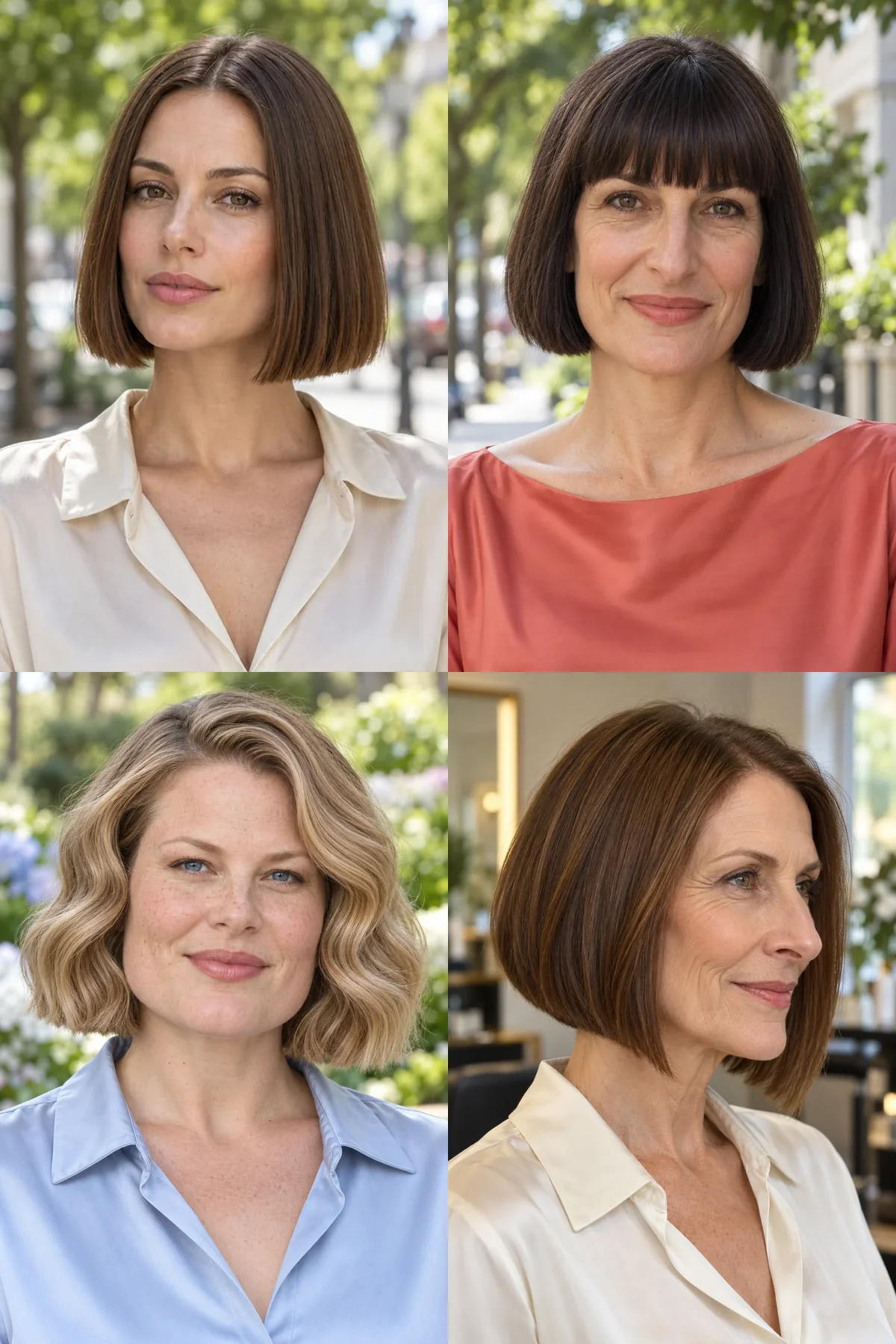
A blunt bob has a substantial, connected perimeter instead of ends that dissolve into a visibly feathered edge. It is usually cut around a strong length line, although that line can slope gently or sit at different heights on either side. Blunt describes the ends, not a requirement to wear every strand perfectly straight. A stacked bob builds visible graduation at the back, a shag relies on obvious layers, and a butterfly bob separates shorter layers from the lower length; those are different construction choices. Small internal adjustments can reduce bulk while preserving a solid outline, but ask what will be removed before agreeing to them.
Find the one that feels like you: Start with the first look and let the photographs lead. Each style explains how the shape affects your features, the mood it creates and the exact words to take to your stylist.
Quick Facts
- Blunt describes a substantial edge; it does not automatically mean flat-ironed hair.
- Choose the dry landing point with your head in its usual position.
- Fringe changes the face frame without requiring layers through the bob.
- A shoulder-skimming line may flick where it meets clothing or the shoulders.
1. A Jaw-Length Line With a Clean Center Part
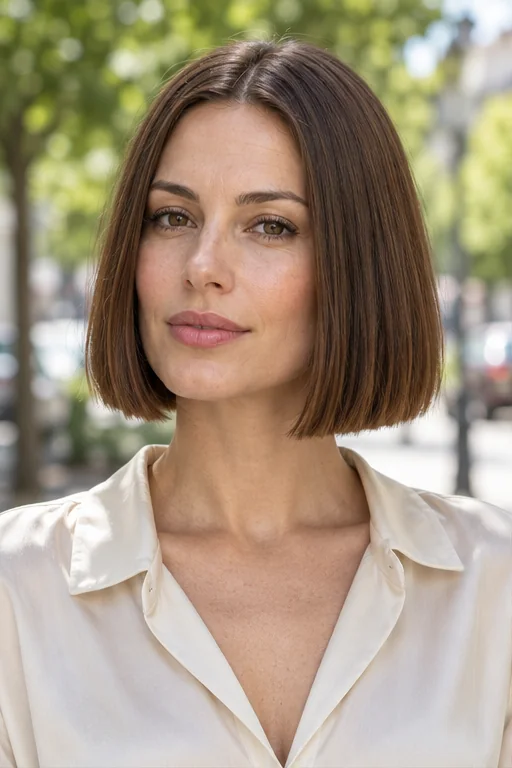
A straight chestnut perimeter sits level with the jaw, while a clean center part leaves both sides equally visible. The compact outline draws attention to the jaw and neckline, giving the cut a composed, quietly confident feeling that works well with simple clothes and an uncluttered morning routine. It suits someone who likes a clear silhouette and is comfortable showing the shape of the lower face. Ask for a jaw-length horizontal edge with no visible graduation or short face-framing layers, then have the line checked with your head relaxed. Smooth the roots in their intended direction before refining the ends; forcing a new part after drying can disturb the balance.
Ask your stylist for: A jaw-length bob with a connected horizontal edge, a center part and no visible graduation or face-framing layers.
2. A Neck-Length Bob With a Soft Side Part
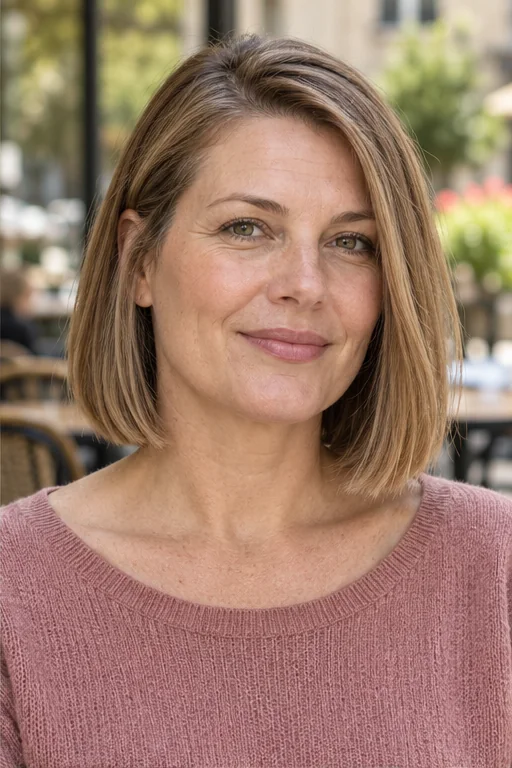
This dark-blonde bob falls below the jaw onto the neck, with a soft side part placing a little more hair across one temple. That small shift makes the strong lower line feel less symmetrical and can bring an easy, approachable polish to a workday look. Choose it if a jaw-level cut feels too exposed but you still want the ends clear of the shoulders. Keep the front long rather than asking for a short sweeping layer, and describe the nape as unstacked with a substantial neck-length perimeter. Dry the part where you intend to wear it, checking the heavier side for a stray bend before adding more product.
Ask your stylist for: A neck-length blunt perimeter with a natural side part, keeping the front long and the nape unstacked.
3. A Straight Edge That Just Skims the Shoulders
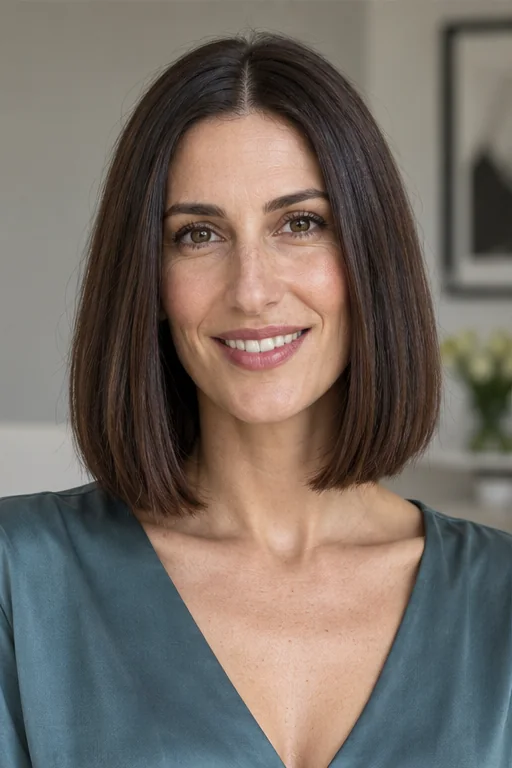
Deep-brown lengths fall in a smooth sheet to a shoulder-skimming edge, giving this longer bob more swing than a compact jaw cut. The extra length can feel reassuring when you are making a gradual change, while the dense-looking lower line keeps the result purposeful and polished. It suits someone who wants a bob silhouette with a little more styling flexibility, although a small ponytail depends on the actual length and hairline. Show your stylist the intended shoulder contact and request a level, substantial edge with an open front. Expect occasional outward bends where the hair meets your shoulders; either soften them deliberately or choose a slightly shorter landing point.
Ask your stylist for: A shoulder-skimming blunt bob with a level substantial edge and long open front, allowing for how the ends sit on my shoulders.
4. A Cheekbone-Short Bob With an Open Forehead
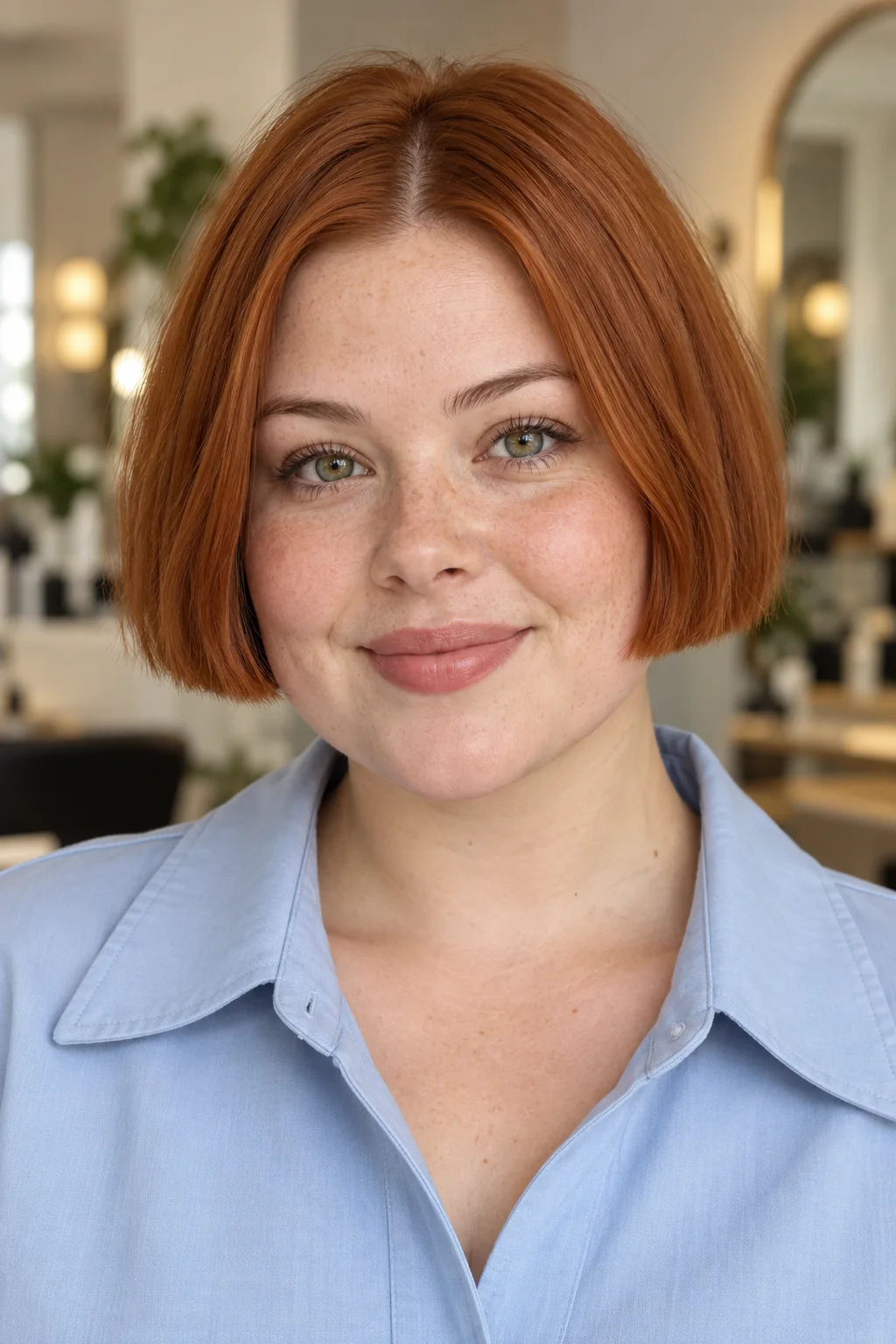
A copper edge lands between the cheekbones and jaw, leaving a clear space above the neckline and keeping the forehead open. That unusually compact length brings attention upward toward the eyes and cheeks, creating a spirited, self-assured impression without relying on a fringe. Consider it if you enjoy a visible haircut and do not need to gather the sides back. Ask your stylist to test the dry landing point carefully, retain the front corners and avoid building a stacked back. Short hair can reveal growth patterns around the ears and nape, so check those areas in the mirror before deciding how closely the outline should sit.
Ask your stylist for: A very short blunt bob between cheekbone and jaw, with an open forehead, long front corners and no stacked back.
Pause and notice: Choose the landing point before the finish. A beautiful jaw-length reference may feel quite different from the same substantial edge resting on your neck.
5. A Full Brow Fringe Above a Strong Jaw Line
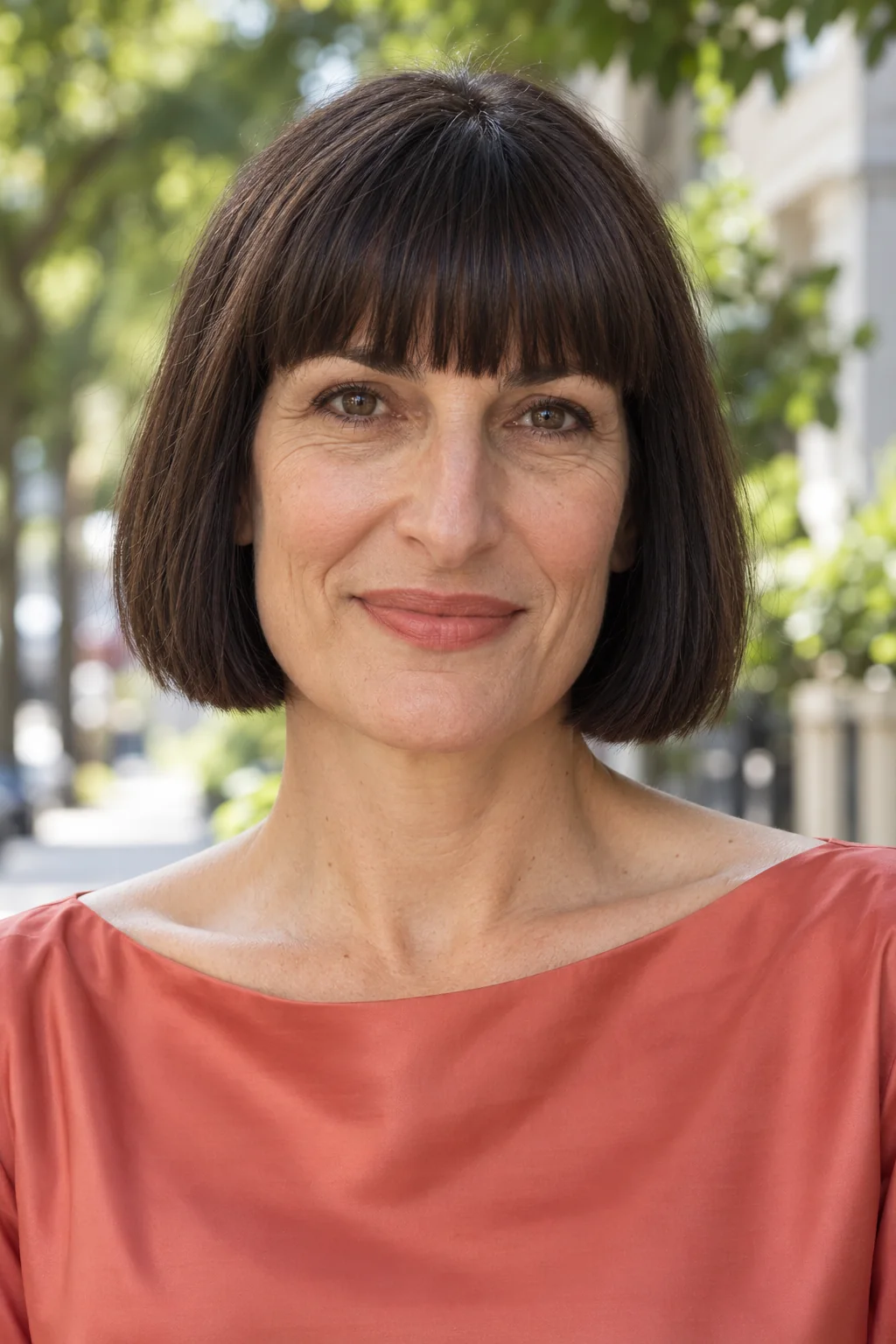
A full dark fringe rests at the brows above a strong jaw-length perimeter, creating two clear lines around the face. The enclosed frame brings the eyes forward and gives the haircut a deliberate, expressive character that can make a plain outfit feel instantly considered. It suits someone who enjoys wearing hair across the forehead and has time for a quick fringe reset, rather than someone who constantly pushes the front away. Discuss the amount of front hair available before requesting a full brow fringe with connected bob sides. Dry the fringe first and check its resting length without stretching it; keeping that front line comfortable matters as much as keeping the lower edge sharp.
Ask your stylist for: A jaw-length blunt bob with a full brow-level fringe and connected sides, checking fringe density before cutting.
6. Curtain Fringe With a Solid Neck-Length Edge
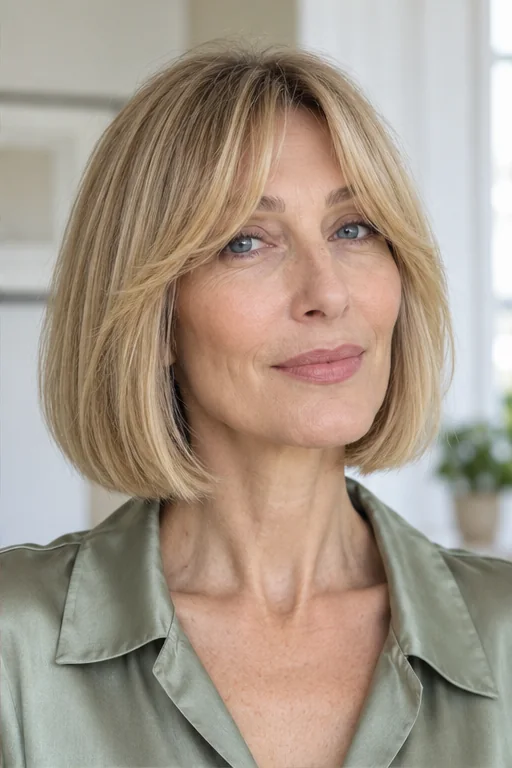
Honey-blonde curtain pieces open at the center and curve beside the eyes, while the main bob keeps a solid neck-length edge. The softer front gives the face a gentle frame and a welcoming, romantic feeling without making the lower outline look wispy. Try it if you like movement near the cheeks but want the rest of your cut to remain simple and substantial. Tell your stylist you want a separate curtain fringe, not layers carried through the whole bob, and agree on where its longest pieces will join the sides. Guide the damp fringe away from the center, then let it settle; the front may need attention even when the back behaves easily.
Ask your stylist for: A solid neck-length bob with a separate center-opening curtain fringe, leaving the main sides substantial rather than layering the whole cut.
7. A Short Fringe That Leaves the Brows Visible
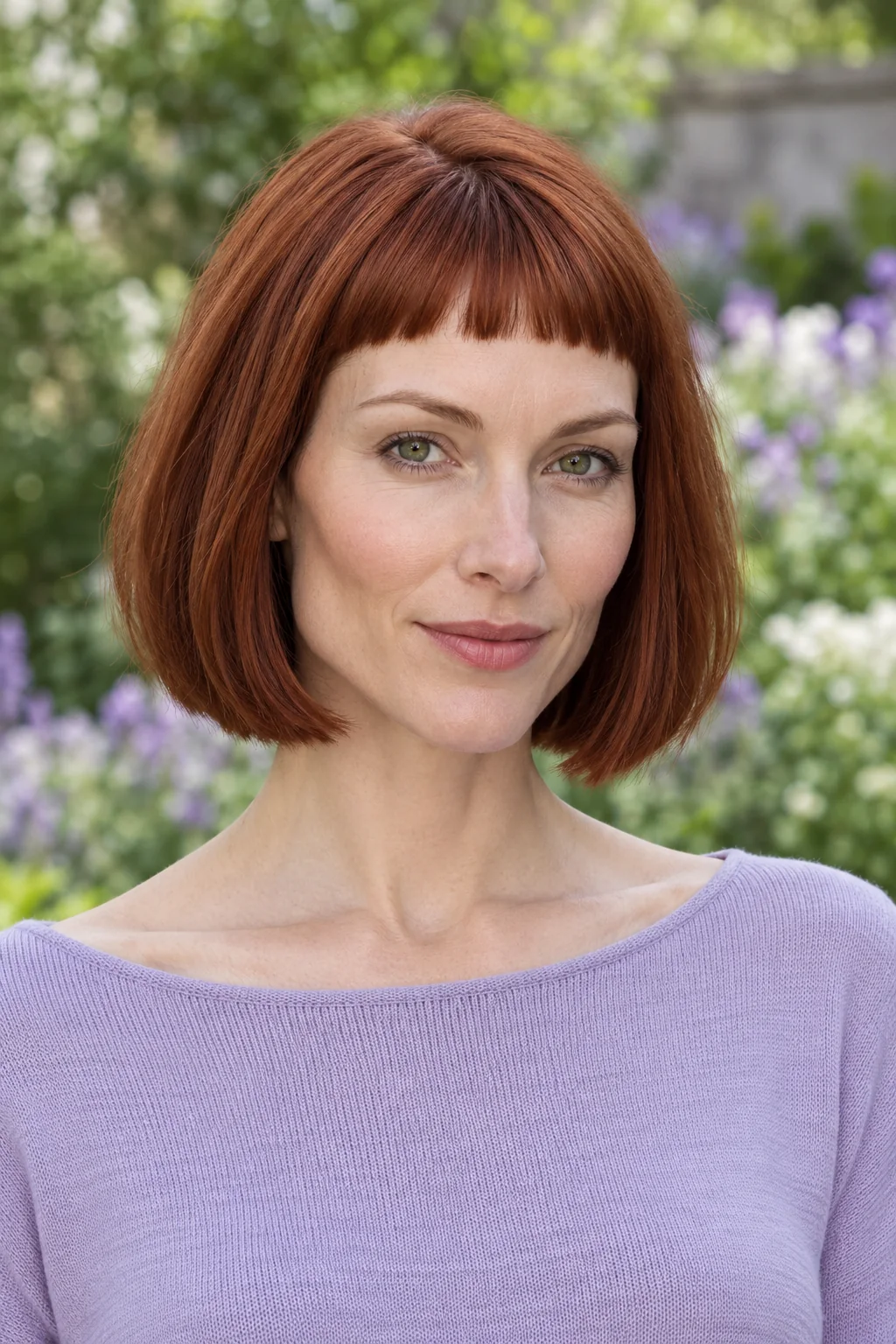
The auburn fringe stops visibly above the brows, leaving a band of open forehead above a solid neck-length bob. That extra space makes the brows part of the look and gives the precise outline an alert, playful character, especially if you enjoy a strong shape with understated clothing. It suits someone who is comfortable with a short front that cannot be swept aside immediately. Bring a reference showing the gap above the brows and ask to keep the fringe separate from the substantial sides. Have the stylist assess growth patterns before cutting, because a short fringe that springs upward can land quite differently from a damp, combed-down section.
Ask your stylist for: A neck-length blunt bob with a short straight fringe above the brows, keeping the fringe separate from the solid sides.
8. A Long Sweeping Fringe Across One Brow
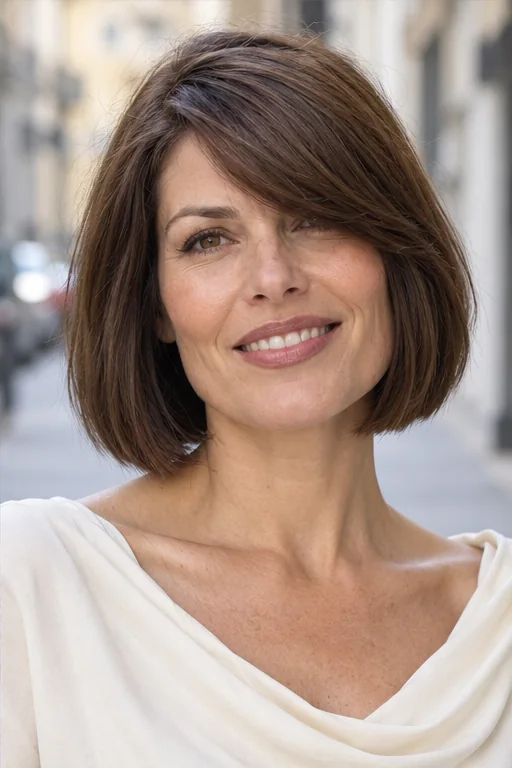
A long brown side fringe crosses one brow before joining a compact bob between the jaw and neck. Its diagonal movement interrupts the strong lower line, giving the face frame a softer, slightly dramatic quality that can feel elegant for dinner without requiring a different haircut. Choose it if you enjoy a visible sweep and do not mind directing the front after washing. Specify an actual long side fringe rather than simply moving a center part, and ask the stylist to check how it clears your eye. Dry from the fringe roots in the desired direction, keeping the lower bob edge substantial instead of thinning the corners to make the sweep blend.
Ask your stylist for: A jaw-to-neck blunt bob with a distinct long side fringe across one brow, preserving the connected lower edge and checking eye clearance.
Pause and notice: A fringe is a separate decision. Show the stylist the front you like and the lower outline you want to preserve, even if they come from two photographs.
9. Broad S Waves Over a Substantial Perimeter
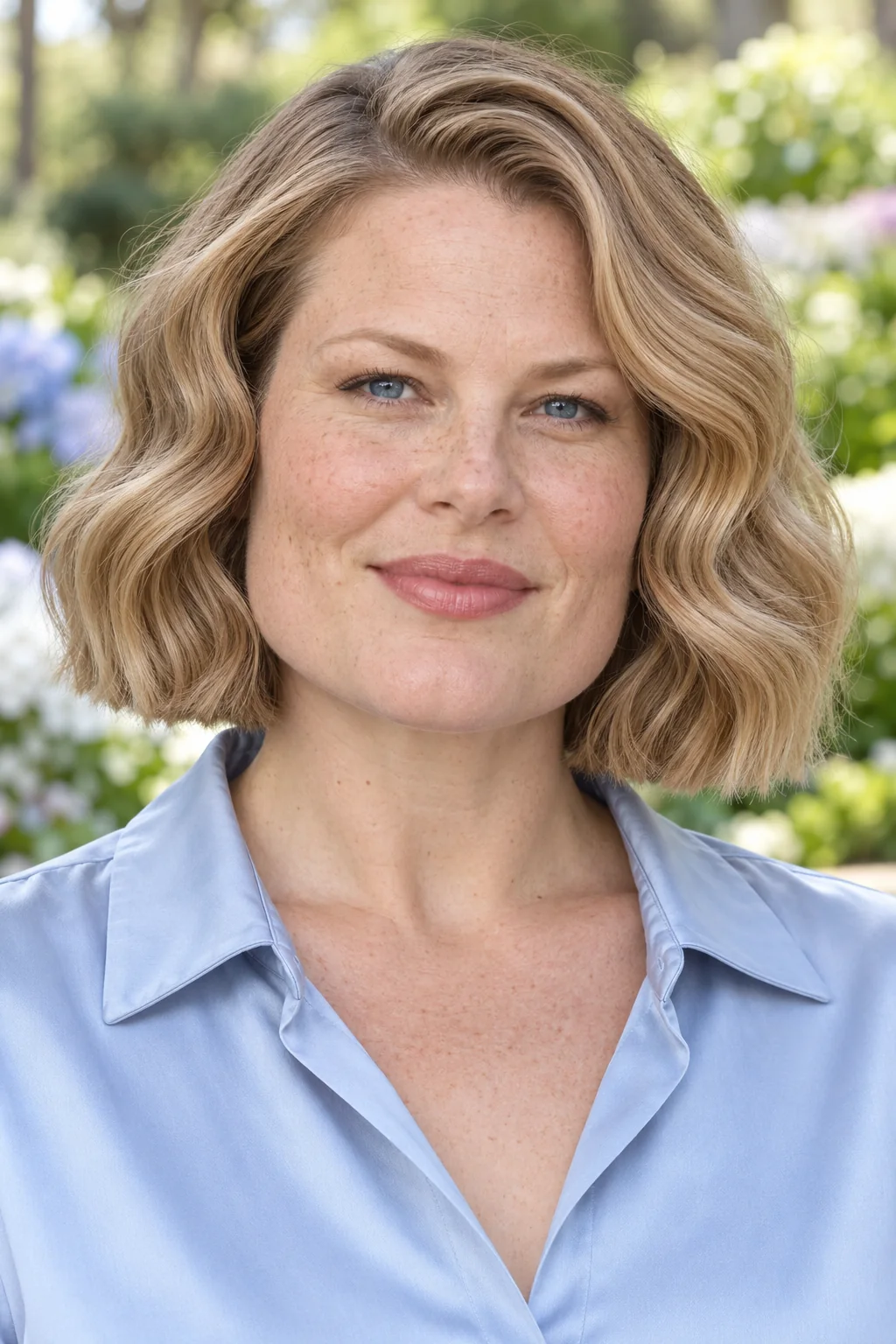
Broad S waves travel through this dark-blonde neck-length bob, but the ends still gather into a substantial lower outline. The generous bends add width and reflected light through the sides, creating a softly glamorous feeling while keeping the haircut more grounded than a heavily layered wave. It suits someone who likes an occasional set finish and has time to shape a few larger sections. Show your stylist both the wave pattern and the dense-looking edge, explaining that you do not want feathering added just to create movement. If you use heat, follow the tool guidance and let each bend cool before loosening it, rather than repeatedly working the same section.
Ask your stylist for: A neck-length blunt bob styled with broad S waves, keeping substantial ends instead of heavily feathering the perimeter.
10. Natural Bends With a Quietly Blunt Finish
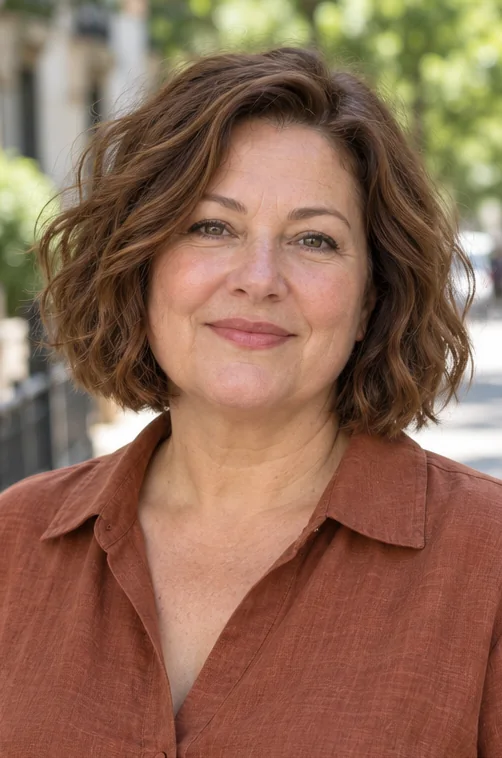
Loose chestnut bends fall at slightly different angles, giving this jaw-to-neck bob a relaxed surface above its substantial ends. The imperfect movement makes the cut feel approachable and comfortably lived in, a useful choice if a perfectly smooth reference would turn every morning into a styling project. It suits hair that already dries with a little bend; very straight hair may need deliberate shaping to produce the same effect. Ask for the outline to be checked in your natural texture, with minimal internal adjustment and no shag layers. Use a light hand while it dries, then judge whether a stray corner needs a small reset rather than brushing the whole shape smooth.
Ask your stylist for: A jaw-to-neck blunt outline checked in my natural loose bends, with minimal internal adjustment and no shag layers.
11. Defined Curls With a Full Lower Outline
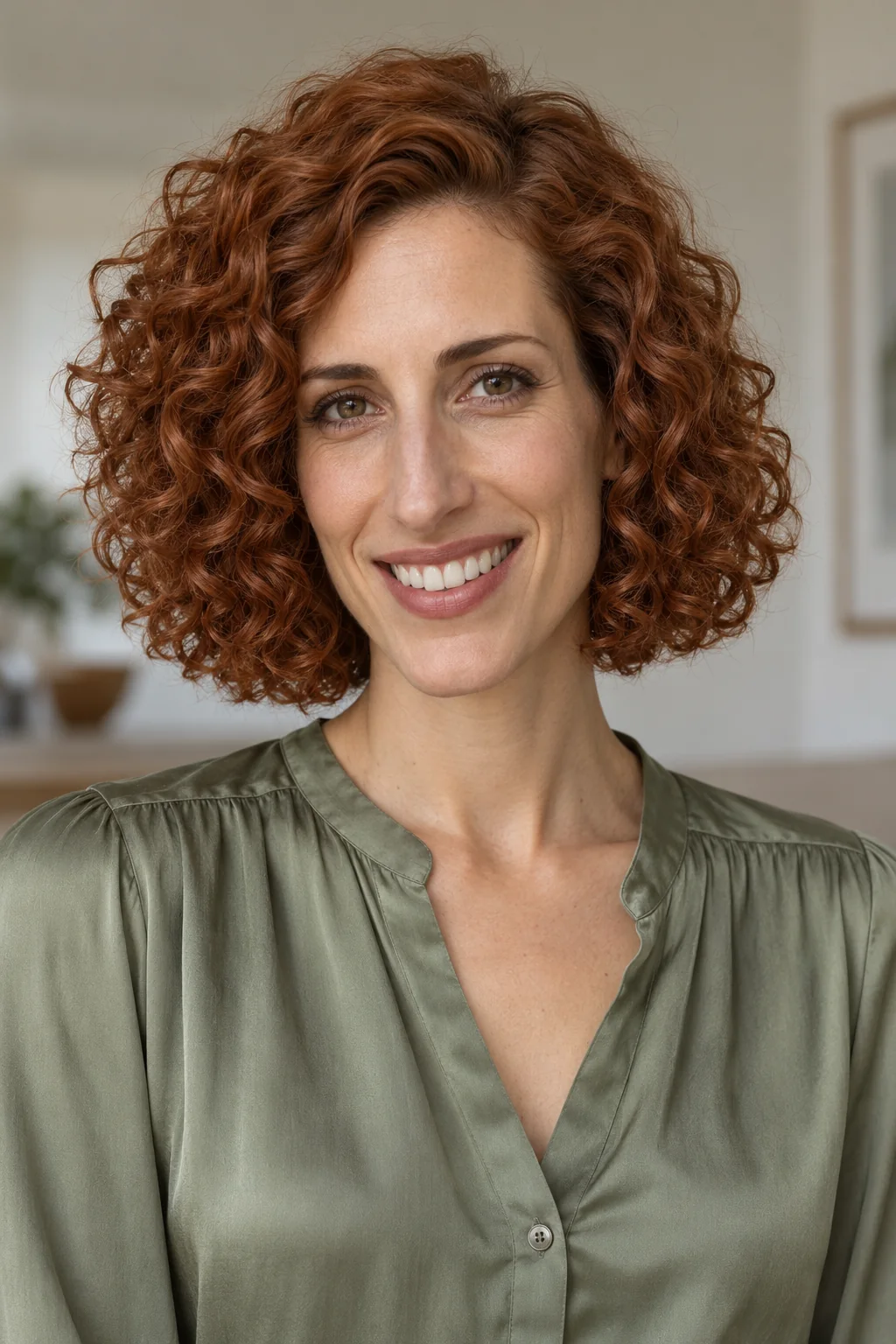
Defined copper curl groups form a full lower outline near the neck instead of tapering into long, sparse points. The gathered weight gives the curls a confident presence and a buoyant, expressive mood, while the open front lets the curl pattern remain the main feature. Choose it if you enjoy definition and are willing to let the shape dry fully before deciding whether it needs adjustment. Ask a curl-aware stylist to preserve the lower fullness and assess unequal spring in the dry perimeter; a perfectly straight wet cutting line does not guarantee a balanced dry shape. Refresh only the curl groups that need it, avoiding repeated brushing that would change the photographed finish.
Ask your stylist for: A curly bob with a full lower outline near the neck, preserving curl groups and checking the perimeter dry for unequal spring.
12. A Curly Fringe Above a Compact Bob
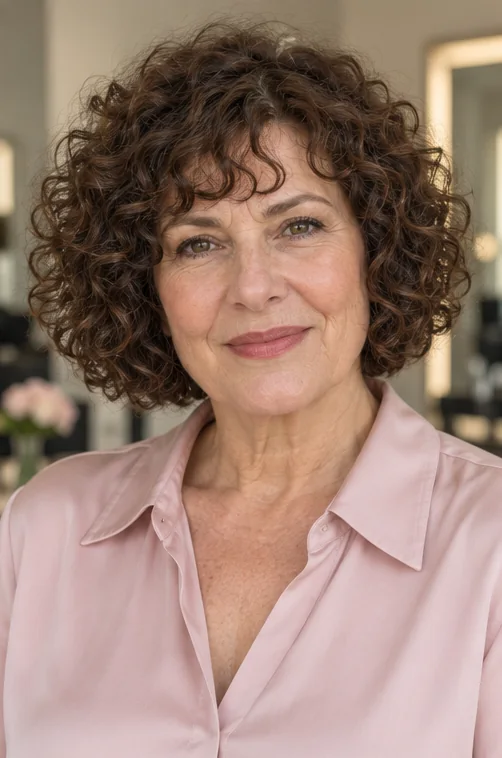
Loose brown curls sit across the forehead above a compact jaw-to-neck outline, bringing the texture into the face frame as well as the sides. The fringe draws attention toward the eyes and makes the bob feel friendly and lively, a lovely option when you want your curls to shape the whole look. It suits someone who likes a little hair on the forehead and can refresh that smaller section when it loses definition. Request a loose curly fringe with generous dry-length allowance, keeping the lower bob full rather than turning the entire cut into short layers. Check the fringe after drying and moving your head normally, since individual curls may spring to different heights.
Ask your stylist for: A compact curly bob with a substantial jaw-to-neck outline and a loose curly fringe, leaving generous allowance for dry shrinkage.
Pause and notice: Blunt ends can move. Judge waves and curls by their dry outline, rather than expecting every texture to fall like a straight, freshly brushed bob.
13. A Subtle A-Line Without a Stacked Back
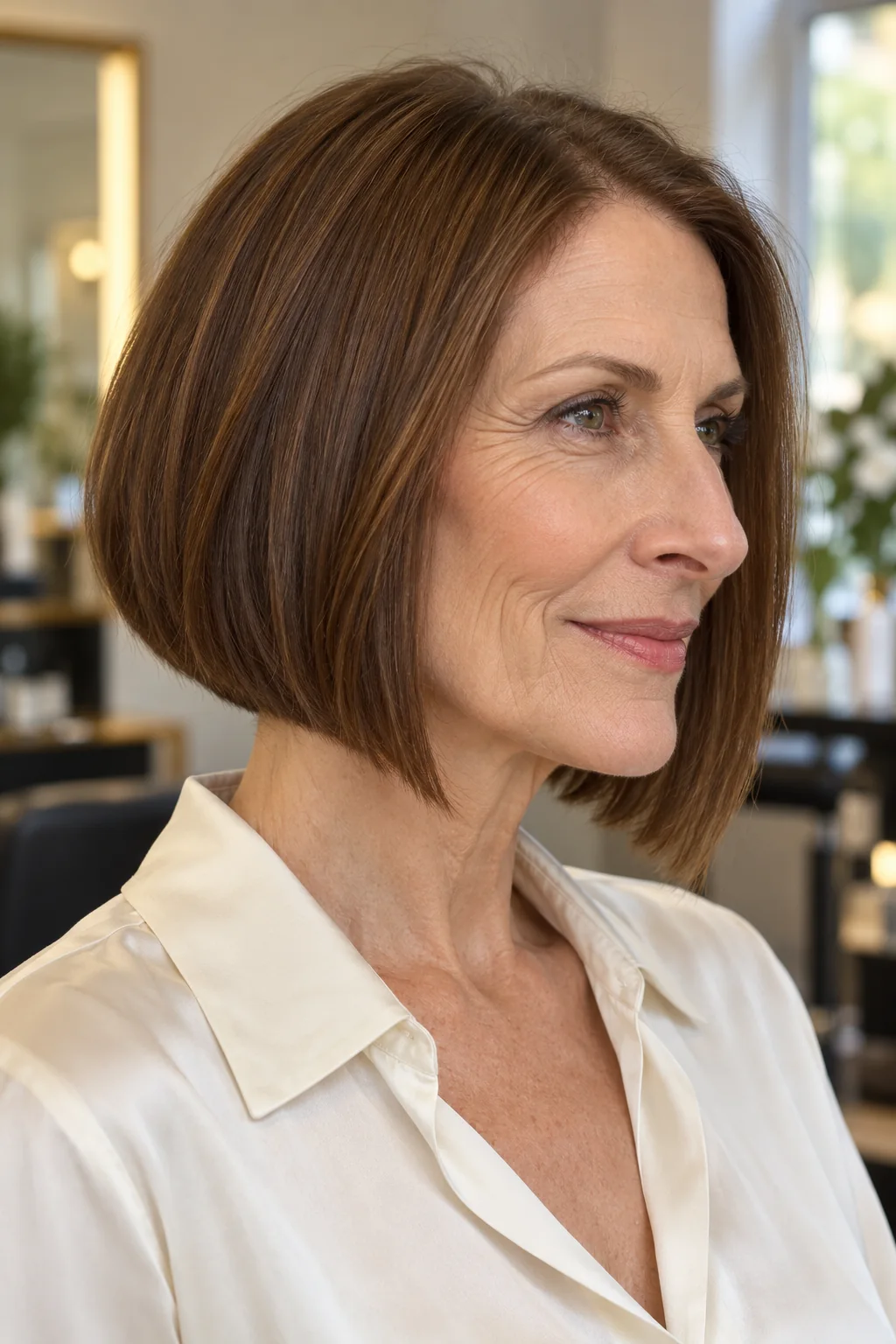
The chestnut perimeter slopes gently from a slightly shorter nape toward longer front corners, keeping the back smooth rather than stacked. That subtle forward direction follows the jaw and gives the profile a purposeful, quietly modern feeling without the pronounced wedge of a graduated bob. Consider it if you want the neck to feel a little clearer while retaining some reassuring length beside the face. Ask for a gentle A-line perimeter with no visible stacking, and inspect a side view before the final refinement. Keep your head level during the check; tilting forward can make a carefully planned line appear different once you return to your usual posture.
Ask your stylist for: A gently sloping blunt A-line perimeter, slightly shorter at the nape and longer in front, without a stacked or visibly graduated back.
14. An Asymmetrical Edge With Deliberate Balance
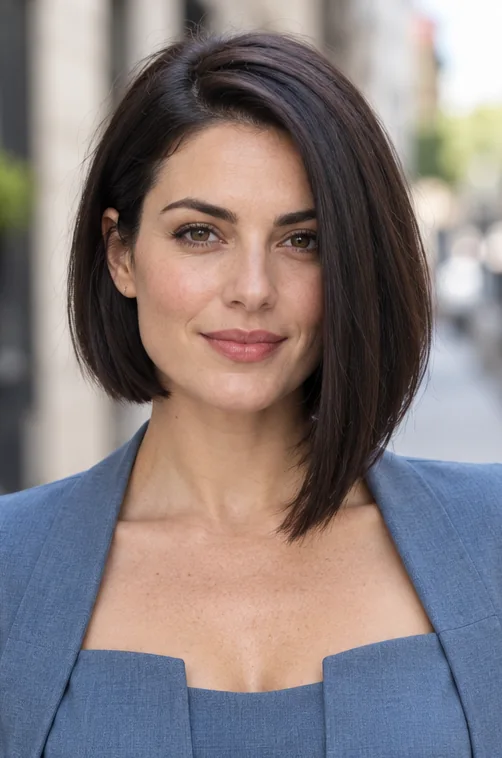
One dark side stops at the jaw while the other reaches visibly lower toward the neck, making the length difference a deliberate feature. The imbalance adds energy to an otherwise restrained outline and can feel bold and individual without needing elaborate daily texture. It suits someone who likes wearing a consistent part, since changing the direction of the front may alter how the two sides relate. Agree on the shorter and longer landing points with your stylist, then ask to keep both edges substantial rather than tapering the longer side into a thin point. Check the cut facing forward and in profile, and expect maintenance to preserve the intended difference as it grows.
Ask your stylist for: An asymmetrical blunt bob with one side at the jaw and the other visibly longer near the neck, retaining substantial ends and a fixed wearing part.
15. A Rounded Inward Bevel at the Ends
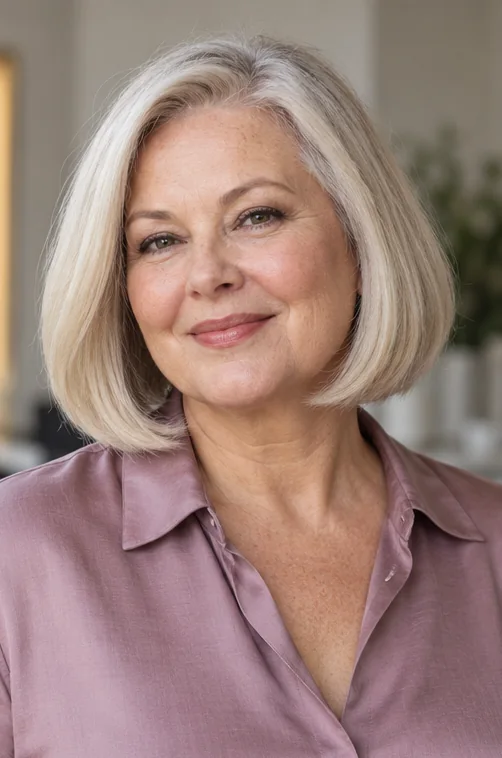
Silver-blonde ends turn gently inward beneath a smooth neck-length bob, creating a rounded boundary instead of a flat hanging edge. That small curve makes the lower shape feel neat and softly tailored, giving an ordinary workday a composed finish without adding a fringe or decorative detail. It suits someone who enjoys a brush-shaped finish and is happy to spend a little time directing the ends. Describe a gentle inward bevel on a substantial perimeter, making clear that you are asking for the styling effect rather than a stacked back. Use modest tension while drying and release the brush cleanly; a strong curl under every section can make the bob look more rolled than intended.
Ask your stylist for: A neck-length blunt bob with a substantial edge styled into a gentle inward bevel, without visible stacked graduation.
16. An Outward Flick on a Longer Blunt Edge
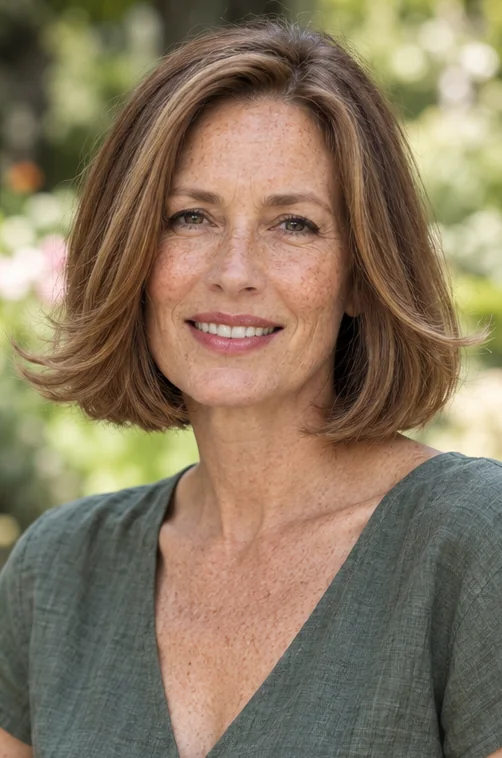
The honey-brown bob falls just above the shoulders before its substantial ends flick outward in a clear, controlled turn. That lifted boundary makes the longer shape feel spirited and a little dressed up, especially if your hair already bends outward near the neckline. Try it if you would enjoy working with that movement instead of smoothing it away every day. Ask for a connected longer perimeter and an outward styling finish, not feathered layers cut through the sides. Show where your shoulders meet the hair and test the shape with your usual neckline; clothing can encourage a different bend, so the photographed flick may still need a brief reset.
Ask your stylist for: A longer blunt bob just above the shoulders with a connected perimeter, styled into a controlled outward flick rather than feathered layers.
Before You Book the Appointment
A successful salon visit begins with the overall shape, construction and upkeep—not only the finished length. Use this quick reality check before choosing your final reference photograph.
- Fine or low-density hair: Keeping a connected edge can make the ends look more substantial, but it cannot create extra strands. Discuss a conservative section for any fringe.
- Dense hair: Ask whether small internal weight adjustments can help the fall while leaving the visible perimeter intact; extensive thinning may change the look you want.
- Waves and curls: Judge the shape dry, allowing for spring and unequal curl shrinkage. A blunt visual outline may require thoughtful curl-by-curl refinement.
- Face and neckline: Compare the line beside your own jaw, neck and shoulders. Length and front shape change the balance more than the name of the cut.
- Routine: A smooth reference may need brushing or heat. Choose a natural-texture example if that is how you want to wear the cut most days.
What to Ask Before the First Cut
Bring a front view and a profile that show the actual perimeter. Point to where you want the dry ends to land, describe your usual part and explain how you normally dry your hair. Ask whether the pictured smoothness comes from styling, what internal weight adjustment is proposed and how it would affect the visible edge. Say plainly if you want to avoid stacking, obvious layers or thin front corners. The most useful salon conversation separates the cut's outline from the finish used for the photograph.
Can a Blunt Bob Have Layers?
A substantial perimeter and a small amount of internal adjustment can coexist, but the result depends on where hair is removed. Ask your stylist to explain the plan rather than using blunt with layers as a complete instruction. Visible short layers, a graduated back or heavily feathered ends can change the silhouette into a different kind of bob. If preserving the full edge is your priority, say so before thinning or texturizing begins. For a wider comparison of constructions, explore the short bob guide below.
Match the Finish to Your Ordinary Morning
Pick a reference close to the texture you plan to wear most often. Straight hair may show the perimeter easily but reveal individual bends; waves and curls can make it look softer without erasing its substance. Settle the roots and part first, then refine only the ends or sections that need attention. Use products in small amounts so the edge stays mobile rather than coated. A polished photograph may involve a professional blow-dry, so ask what the same cut will look like with your usual tools and time.
Keep the Edge Comfortable as It Grows
Book trims according to how quickly the outline stops sitting where you like it, rather than treating one interval as right for everyone. Shorter nape sections and precise fringes may need attention before a longer open bob does. As the ends reach the shoulders, they can begin to turn outward or sit differently against a collar. You can embrace that bend, refresh the shorter line or discuss a longer shape. Growing out a blunt bob does not automatically require layers; decide whether your next priority is retained weight, movement or the ability to gather the hair.
The Takeaway
Start with the dry length, then choose the front and the amount of movement you want to see. A blunt bob feels most convincing when its substantial edge suits your texture and the finish fits an ordinary day. Take those decisions to your stylist, ask what will preserve the perimeter, and choose the shape you would be pleased to wear between appointments.
More Hair Inspiration
- Compare More Short Bob Haircuts — Explore layered, stacked and other short-bob constructions when you want a different outline.
- Bob Haircuts for Thin Hair — Compare density-focused choices and ways to keep the ends looking substantial.