When thin hair falls flat or turns see-through at the ends, a well-cut bob can feel like an immediate reset. Bob haircuts that make thin hair look thicker sit between the jaw and shoulders and concentrate visual density through a deliberate perimeter, controlled graduation or carefully limited layers. Thin hair means lower overall density, while fine hair describes strand diameter; you can have either or both, and that distinction changes how much layering your hair can support. Unlike a generic layered bob, every choice here protects fullness first, so the finished shape looks intentional, touchable and believable in everyday life.
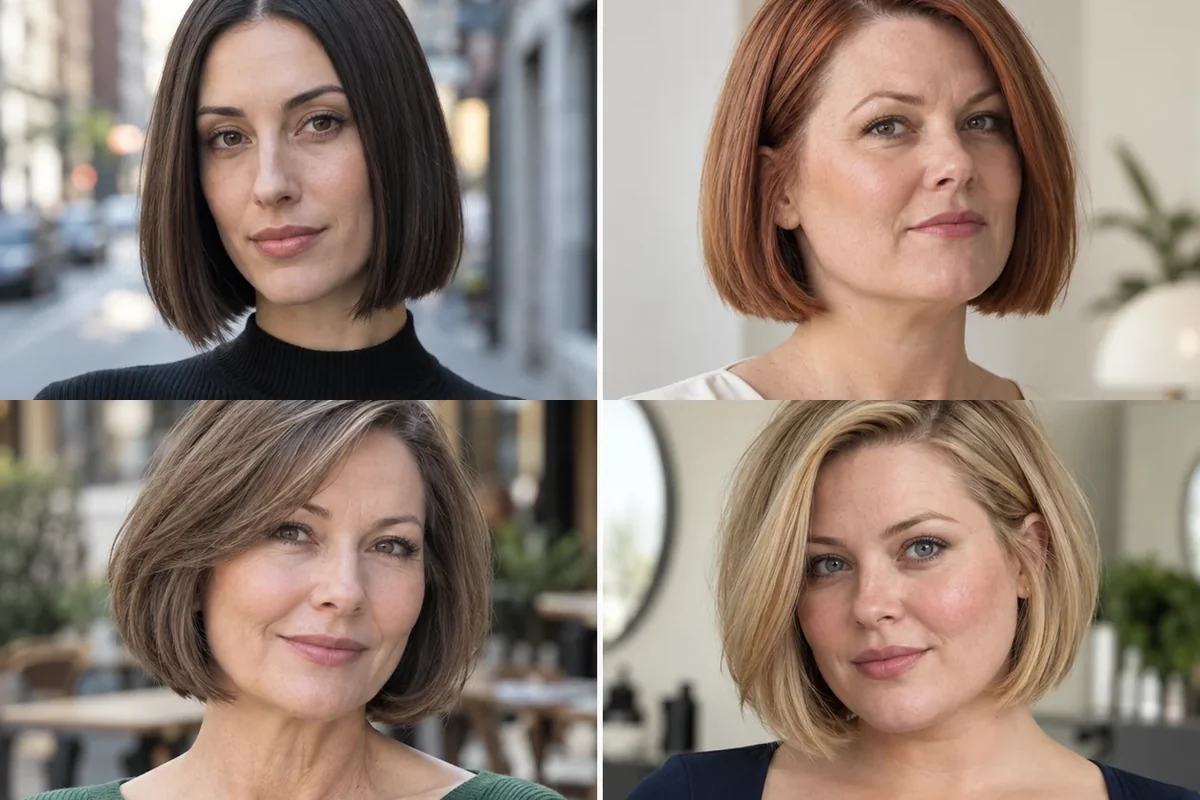
Find the one that feels like you: Start with the first look and let the photographs lead. Each style explains how the shape affects your features, the mood it creates and the exact words to take to your stylist.
1. Chin-Length Blunt Bob
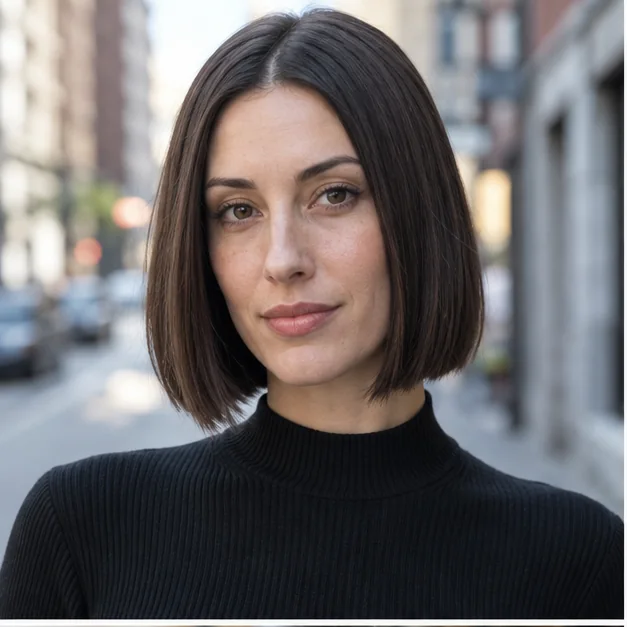
A chin-length blunt bob gathers every strand into one crisp baseline, making the ends appear denser instead of tapered or feathery. The compact shape lifts visual weight toward the cheekbones, sharpens a soft jawline and can make straight thin hair feel polished and reassuringly substantial. It is simple to air-dry, although the line needs a trim about every six to eight weeks to stay convincing. Ask for a true one-length bob at the chin with no thinning shears and only the faintest bevel underneath; smooth the ends with a round brush rather than flattening the roots.
Ask your stylist for: A true one-length chin bob with a dense perimeter, no thinning shears and a subtle under-bevel.
2. Jaw-Length Box Bob
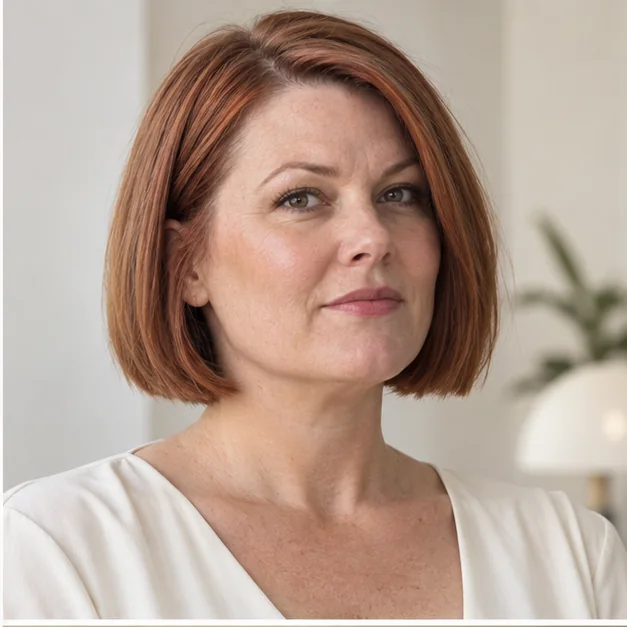
The box bob sits squarely at the jaw with firm corners and almost no rounding, creating a graphic frame that makes sparse ends look deliberately solid. Its horizontal edge widens a narrow lower face and gives fine, straight hair a cool fashion-editor confidence without requiring waves or teasing. The strength comes from restraint, so texturizing the outline would undo the effect. Request a jaw-length square bob with zero elevation, full front corners and no point-cutting through the baseline; tuck one side or add a small root bend when you want softness.
Ask your stylist for: A square jaw-length box bob with zero elevation, intact corners and an untexturized baseline.
3. Softly Beveled Bob
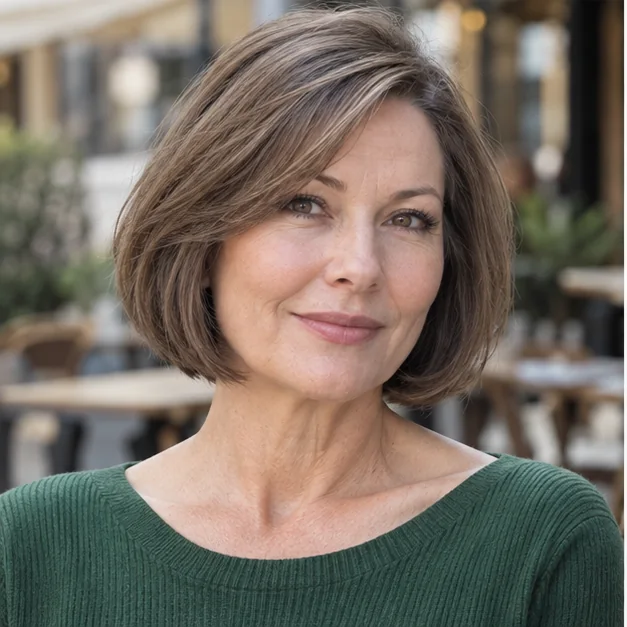
A softly beveled bob keeps a full one-length surface while a discreet undercut encourages the ends to curve inward. That hidden support prevents the perimeter from separating, adds a rounded impression of thickness and gently hugs angular jawlines for an elegant, composed finish. It works especially well for straight hair that tends to flick out, although a quick blow-dry helps the curve settle. Ask for a chin-to-neck bob with minimal hidden graduation underneath and no visible surface layers; roll the bottom section under, cool it fully and loosen it with your fingers.
Ask your stylist for: A chin-to-neck bob with hidden under-graduation, a full surface and no visible layers.
4. Side-Parted Volume Bob
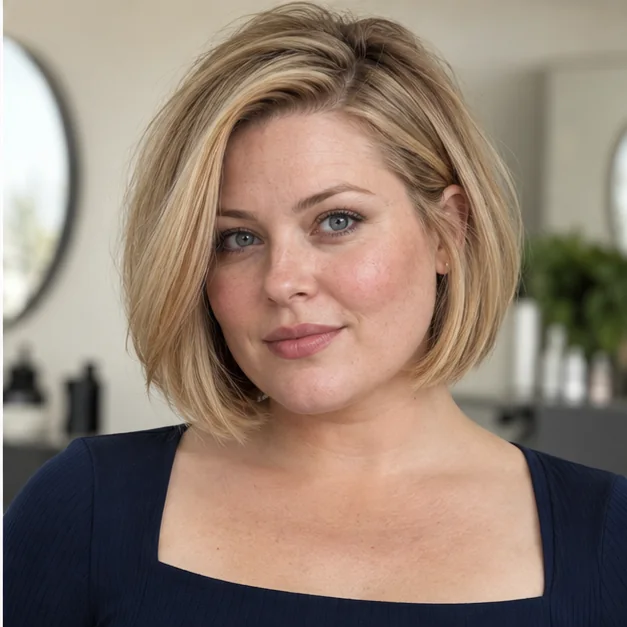
Moving a full bob into a deep side part creates instant lift on the heavier side and a flattering diagonal sweep across the forehead. The asymmetry disguises a sparse central part, draws attention toward the eyes and feels glamorous without changing the haircut itself. This is an easy experiment for straight or softly wavy thin hair, but alternating the part helps prevent a stubborn flat track. Keep the cut blunt at the chin or jaw, ask for only a short hidden support layer at the crown, and dry the roots briefly in the opposite direction before flipping them back.
Ask your stylist for: A blunt chin bob with minimal hidden crown support and enough front length for a deep side part.
5. Low-Stacked Bob
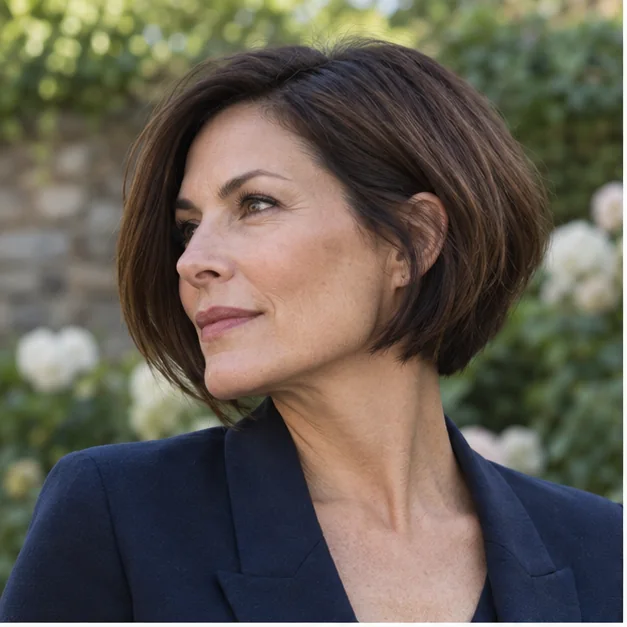
This low-stacked bob builds gentle support below the occipital bone and lengthens cleanly toward the jaw, avoiding the exaggerated wedge that can expose thin sections. The subtle graduation improves the side profile, gives a flat crown believable roundness and creates a capable, polished mood. It is useful for hair that collapses at the back, though the architecture needs reshaping every six to eight weeks. Ask for low graduation confined to the nape, a weight line below the occipital bone and solid jaw-length corners with no razor work; use a small round brush only at the roots.
Ask your stylist for: Low nape graduation below the occipital bone with a preserved weight line and solid front corners.
6. Subtle Graduated Bob
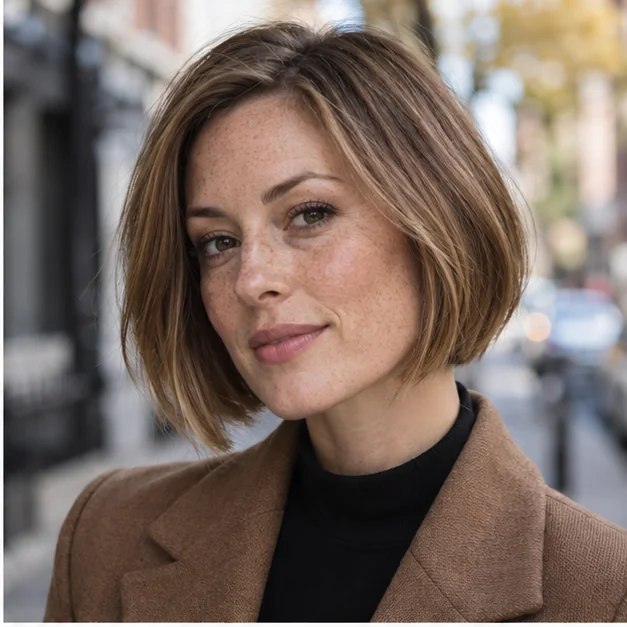
A subtle graduated bob rises only slightly at the back, then glides into a longer front edge that remains thick and uninterrupted. That quiet angle creates lift behind the crown, visually lengthens a round face and feels modern rather than overtly stacked. Fine hair gains structure, while low-density hair keeps enough weight to avoid gaps along the sides. Tell your stylist you want low seamless graduation with no visible steps and front corners landing just below the jaw; blow-dry with a vent brush and avoid heavy oils that collapse the supported shape.
Ask your stylist for: Seamless low graduation with below-jaw front corners and no visible stacked steps.
7. Short Stacked Bob With Full Sides
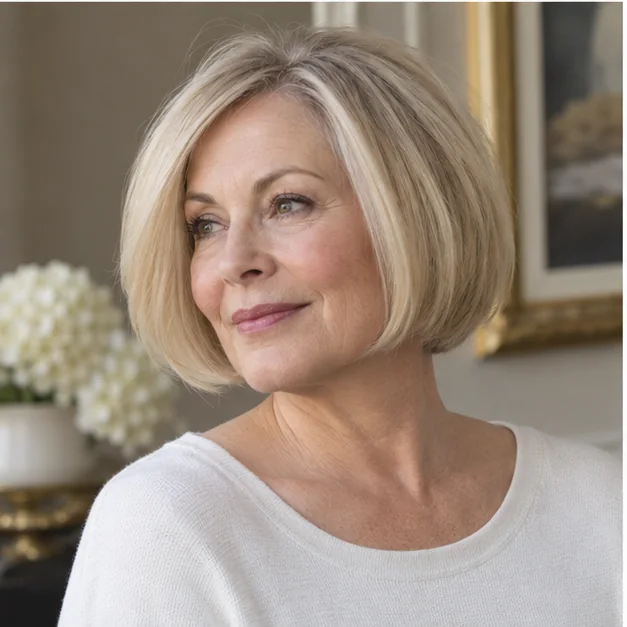
A short stacked bob can suit thin hair when the graduation is compact at the nape and the side panels stay weighty rather than feathered. The rounded back supplies visible lift, while full cheekbone-to-jaw sections prevent the cut from looking narrow or scalp-revealing. It feels energetic and tidy for someone who prefers a short morning routine, but it is the highest-maintenance shape in this group. Ask for controlled nape stacking, an unlayered side perimeter and no thinning above the ears; refresh the back every five to seven weeks and lift with mousse rather than backcombing.
Ask your stylist for: Compact nape stacking with full unlayered sides and no thinning above the ears.
8. Rounded Bubble Bob
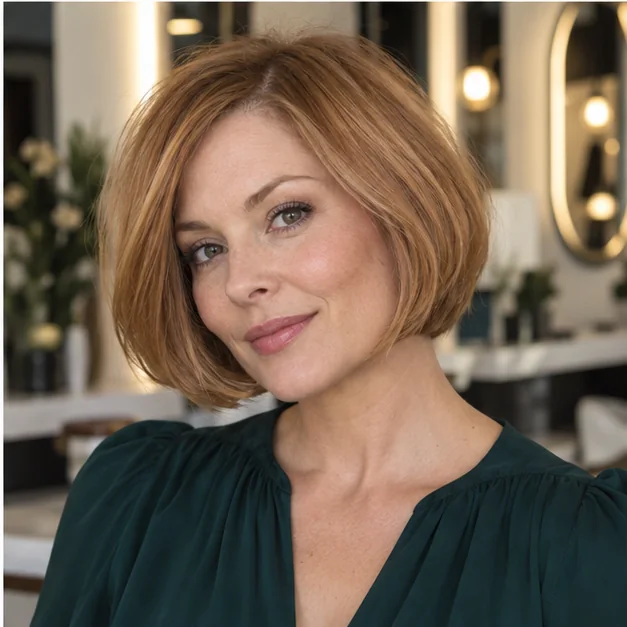
The bubble bob uses a softly rounded outline, tucked-under ends and discreet interior support to create an airy, inflated silhouette. Its curve adds width beside a long face, makes fine strands seem plush and brings playful confidence without relying on obvious layers. The effect is partly styling-led, so naturally pin-straight hair will need a roller or round brush after washing. Ask for a jaw-length rounded bob with a dense baseline, minimal internal graduation and no wispy pieces; set large sections away from the scalp and brush them together only after they cool.
Ask your stylist for: A jaw-length rounded bob with a dense baseline and minimal invisible internal graduation.
9. French Bob With Airy Bangs

A lip-to-jaw French bob concentrates length high on the face and pairs it with an airy fringe that reveals some forehead rather than consuming too much density. The compact edge makes the sides look stronger, highlights the eyes and creates an artistic, self-assured mood. It is best when the fringe can be cut from a modest section; a deep heavy bang may steal too much hair from the perimeter. Request a softly blunt jaw bob and a shallow brow-skimming fringe with temple blending, then dry the bangs side to side before touching the ends.
Ask your stylist for: A softly blunt lip-to-jaw French bob with a shallow airy fringe and blended temples.
10. Bob With Side-Swept Bangs
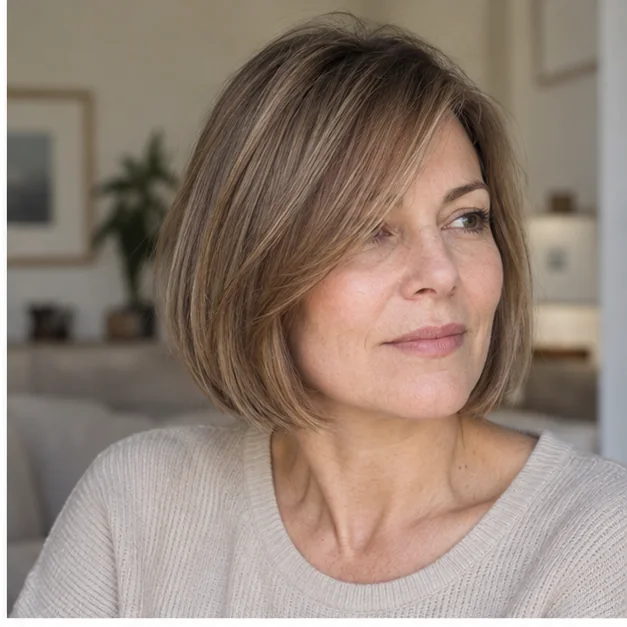
Long side-swept bangs travel diagonally from a deeper part and blend into a blunt jaw-length bob. Their movement softens a broad forehead, covers a sparse hairline more naturally than a full fringe and gives the wearer a polished, approachable feeling. Because the bang section stays long, it remains flexible and grows out without an awkward ledge. Ask for a shallow side fringe ending near the cheekbone, connected only at the front, with the rest of the perimeter left solid; use one Velcro roller at the fringe while the roots cool.
Ask your stylist for: A shallow cheekbone side fringe blended at the front over an otherwise solid jaw bob.
11. Collarbone Lob With Blunt Ends
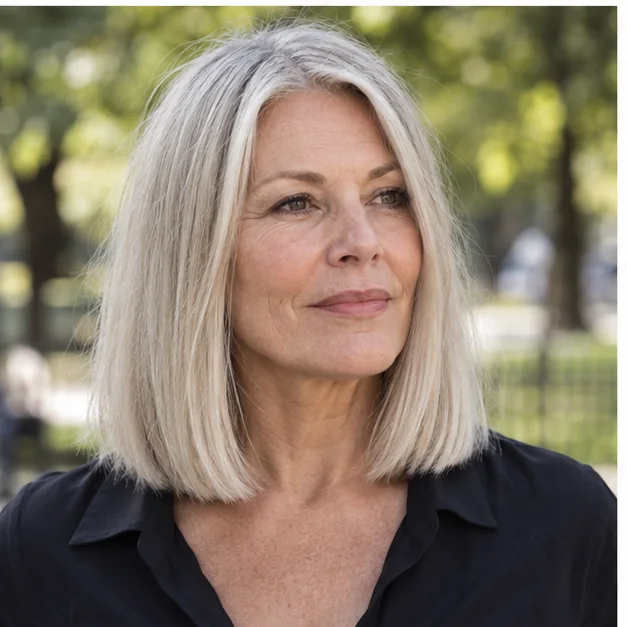
A collarbone lob offers reassuring length while trimming away the translucent ends that often make thin hair look sparser. The blunt baseline forms one continuous edge, balances a round or heart-shaped face and feels versatile enough for work, weekends and a small ponytail. It will not create the same crown lift as a jaw bob, but it is a gentle transition for anyone nervous about going short. Request a collarbone perimeter with zero elevation, no thinning and only tiny face-framing pieces that still reach a ponytail; dry with a paddle brush and lift the roots by hand.
Ask your stylist for: A zero-elevation collarbone lob with a dense baseline and minimal ponytail-friendly framing.
12. A-Line Lob

The A-line lob sits shorter at the nape and extends toward the collarbones, creating movement through angle rather than layers. Its forward line keeps the front looking dense, lengthens a softer jaw and gives thin hair sleek, intentional energy even when worn straight. The difference between back and front should remain modest; an extreme angle can make the rear look unnecessarily sparse. Ask for a shoulder-skimming front, a nape one to two inches shorter and a solid continuous perimeter with no stacking; flat-wrap the roots, then turn only the tips inward.
Ask your stylist for: A modest A-line lob with shoulder-skimming fronts, a slightly shorter nape and no stacking.
13. Clavicle Bob With Face Frame
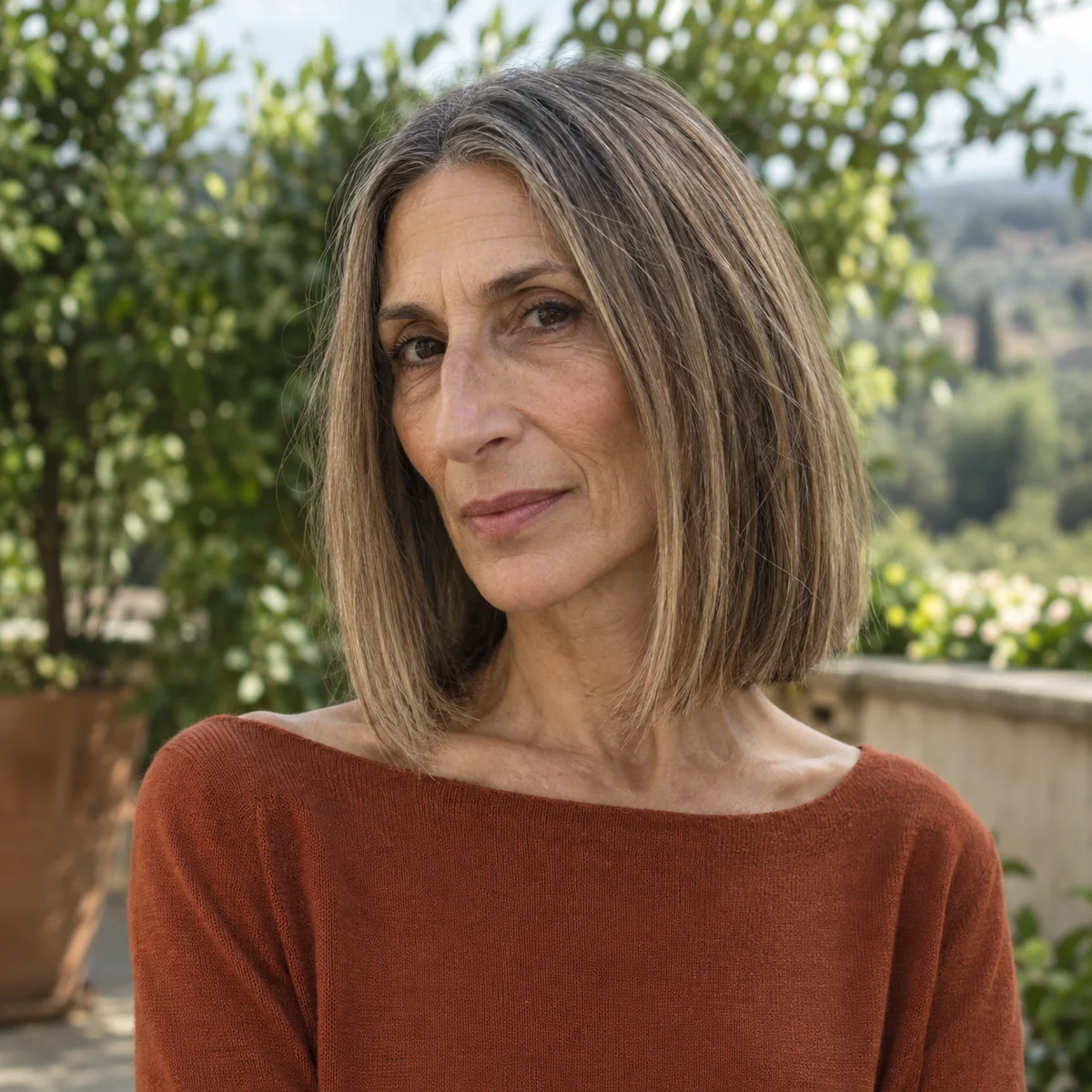
This clavicle bob keeps the back and sides blunt while two broad front pieces begin around the chin and melt into the baseline. The limited frame opens the face, softens a square jaw and adds interest without spreading layers through hair that cannot spare the weight. It feels graceful and adaptable, and every piece can still tuck or tie back on busy mornings. Request a full clavicle perimeter with chin-to-collarbone framing only in the front two sections and no crown layers; curve those pieces away with a large brush and leave the remaining ends quiet.
Ask your stylist for: A full clavicle perimeter with chin-down framing restricted to the front two sections.
14. Wavy Blunt Bob
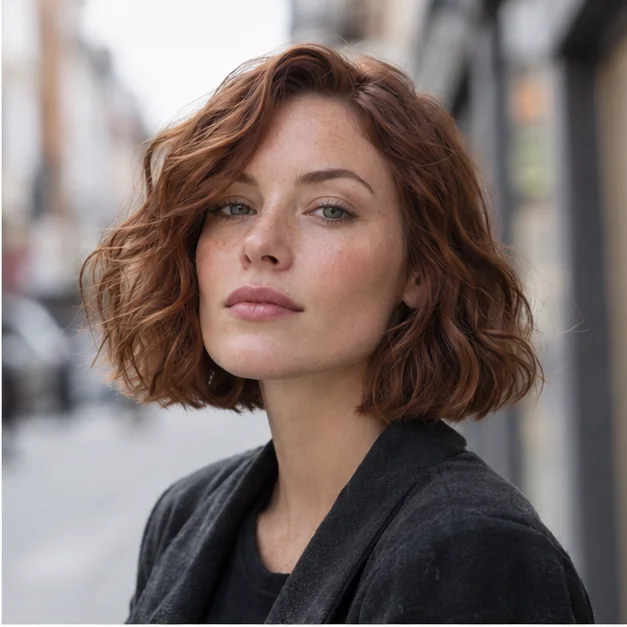
A wavy blunt bob combines a strong jaw-to-neck perimeter with loose bends through the midlengths, so the outline stays dense while the surface gains dimension. Alternating curves create space and shadow that make fine strands look more numerous, soften angular features and bring a relaxed, romantic ease. Natural waves need little encouragement; straight hair can copy the effect with two or three broad bends instead of many skinny curls. Ask for a blunt neck-length bob with no surface layers, then scrunch in airy mousse or use a wide iron and leave the ends mostly straight.
Ask your stylist for: A blunt neck-length bob with no surface layers, designed for broad irregular bends.
15. Fine Curly Rounded Bob

A rounded curly bob preserves a softly full perimeter while a few long internal layers prevent fine curls from collapsing into a triangle. Concentrated curl groups add volume around the cheeks, lift the expression and can feel joyful and naturally abundant without disguising texture. Cutting too many short layers would separate the ends, so shrinkage and density must be assessed curl by curl. Ask for dry shaping at jaw-to-neck length, a rounded outline and only enough interior release for movement; apply lightweight foam to soaking-wet hair and diffuse without breaking the curl clumps.
Ask your stylist for: Dry curl-by-curl shaping at jaw-to-neck length with a full rounded perimeter and minimal internal release.
16. Soft Textured Bob
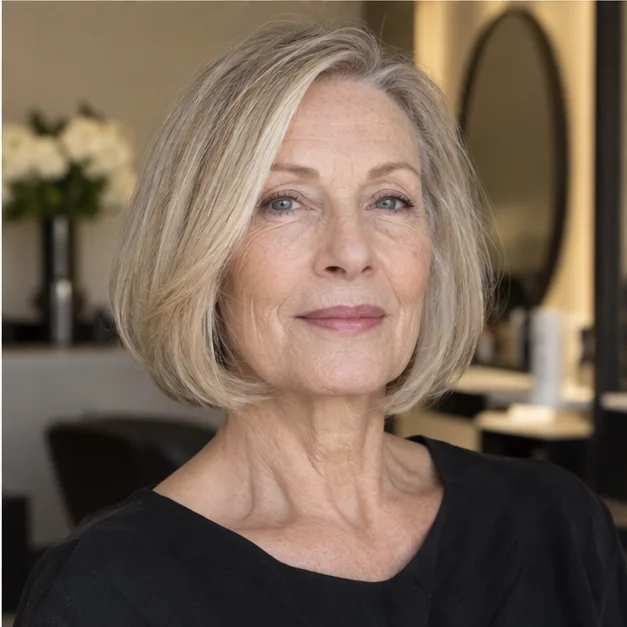
A soft textured bob uses sparse strategic notching inside the shape rather than shredding the visible ends. That measured separation encourages a slight bend, prevents a rigid helmet effect and gives thin hair an effortless, contemporary mood while the perimeter still reads as full. It suits fine hair with medium density better than very low-density hair, which may need a completely blunt finish. Ask for a solid neck-length baseline with light internal point-cutting below the cheekbones and no razor; work a small amount of dry texture spray through the roots, not the tips.
Ask your stylist for: A solid neck-length baseline with sparse internal point-cutting below the cheekbones and no razor.
17. Asymmetrical Blunt Bob
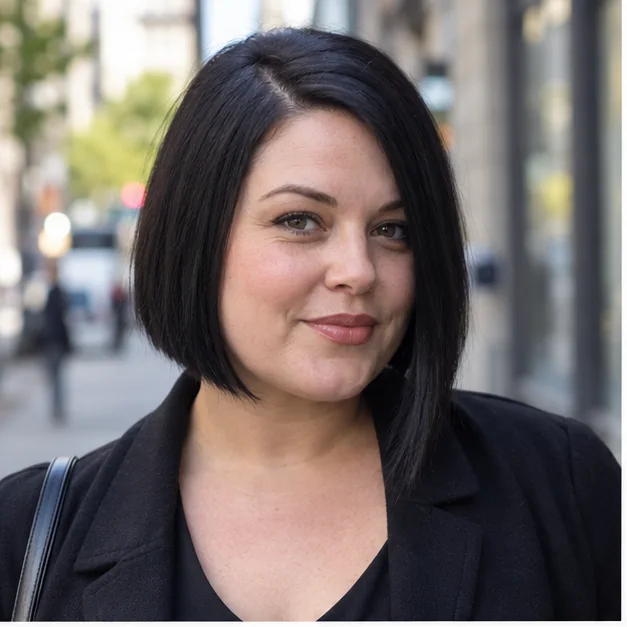
An asymmetrical bob keeps both sides blunt but lets one front corner fall slightly longer, creating drama through line instead of weight-removing layers. The diagonal draws the eye downward, lengthens a round face and gives even very straight thin hair a confident, architectural identity. A difference of one to two inches is enough; a larger gap can feel dated and complicate grow-out. Ask for a jaw-length blunt bob with one side subtly longer, balanced behind the ears and cut with no thinning, then emphasize the shape with a clean off-center part and lightweight shine mist.
Ask your stylist for: A blunt jaw bob with one front corner one to two inches longer and no thinning.
18. Tucked Bob With Lifted Crown
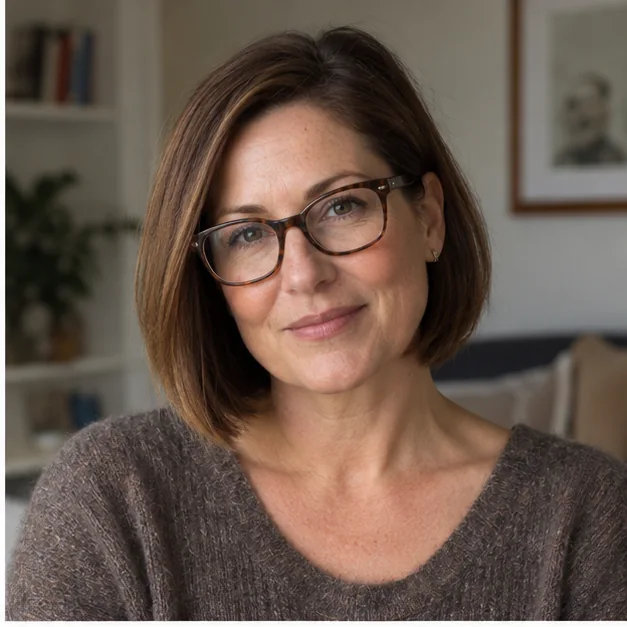
A clean chin bob gains instant shape when one side tucks behind the ear and the crown is lifted just enough to counter a flat profile. The open side highlights the cheekbone, the fuller side creates softness and the contrast feels sophisticated rather than over-styled. It works well with glasses and for anyone who wants flexibility from a simple cut, though overly short side layers can spring out of the tuck. Request a blunt chin baseline, tuckable temple length and minimal invisible crown support; clip the roots upward while they cool and finish with flexible spray.
Ask your stylist for: A blunt chin bob with tuckable temples and minimal invisible crown support.
19. Gray Blunt Bob for Thinning Hair

A silver or salt-and-pepper blunt bob uses a clean jaw-to-neck line to make thinning hair appear deliberate, bright and substantial. Reflective gray strands can reveal separation, so the uninterrupted perimeter and smooth surface create more visual continuity while drawing attention to the eyes and cheekbones. The result feels fresh and self-possessed rather than like an attempt to hide age, and it suits a low-fuss routine. Ask for a one-length bob with no razoring, no thinning shears and a slightly beveled nape; use violet care only when needed and keep styling products light and glossy.
Ask your stylist for: A one-length jaw-to-neck silver bob with a softly beveled nape and no razoring or thinning.
20. Low-Maintenance Air-Dried Bob

The air-dried bob lands between the jaw and neck with a nearly blunt edge and just enough hidden shaping to follow the natural head curve. Its simple outline lets slight bends and cowlicks look intentional, protects density and creates relaxed confidence that does not depend on a perfect blowout. It is ideal for a wash-and-go routine, provided the stylist studies how the hair dries before cutting. Ask for your natural air-dried pattern to be checked before a solid perimeter is refined, with no short crown layers; blot gently, add foam at the roots and leave the ends alone.
Ask your stylist for: An air-dry-aware jaw-to-neck bob with a solid perimeter and no short crown layers.
Before You Book the Appointment
A successful salon visit begins with the overall shape, construction and upkeep—not only the finished length. Use this quick reality check before choosing your final reference photograph.
- Best for: Thin or fine hair that looks fuller with a stronger perimeter and less length pulling it flat.
- Choose blunt: When end density matters most and the hair is straight or softly wavy.
- Choose low graduation: When the back of the head needs support without sacrificing full sides.
- Be cautious with: Deep thinning, razor-cut ends and short disconnected layers that expose low density.
Fine Hair and Thin Hair Are Not the Same
Fine describes strand diameter; thin describes how many strands grow across the scalp. Fine hair with moderate density may support soft internal texture, while low-density hair usually looks fuller with fewer layers and a stronger perimeter.
Which Bob Builds the Most Fullness?
Choose a blunt chin or jaw bob for the strongest end density, low graduation for a flat back of the head, broad waves for dimension, or a collarbone lob when tying the hair back matters. Lift should come from purposeful support, not removing every bit of weight.
What to Ask for at the Salon
Bring front, side and back references taken on hair close to your density. Ask where the weight line will sit, how much elevation is planned and whether thinning shears are truly necessary. Mention scalp visibility, cowlicks, glasses, your usual part and whether you air-dry.
Styling, Maintenance and Grow-Out
Light mousse, root spray and wide rollers create support without coating the lengths. Keep conditioner below the ears, use dry shampoo before roots become oily and trim compact bobs every six to eight weeks. Blunt lobs grow out more quietly; stacked shapes need earlier reshaping.
Choose Your Fuller-Looking Bob
The best fuller-looking bob is not automatically the shortest or most layered one. It is the shape that keeps enough hair in the perimeter, places support exactly where your density needs it and still fits an ordinary morning. Start with the longest version that delivers a clean edge, decide how much salon maintenance feels realistic and show your stylist the view from every angle. When the construction is honest, thin hair can look light, polished and beautifully intentional without being teased into something it is not.