Some mornings, clearing your neckline is enough to make the whole outfit feel considered. A minimalist bun gives your hair a definite shape without asking it to become the busiest part of your look. These 16 references help you choose the placement, finish and fastening you would actually enjoy wearing.
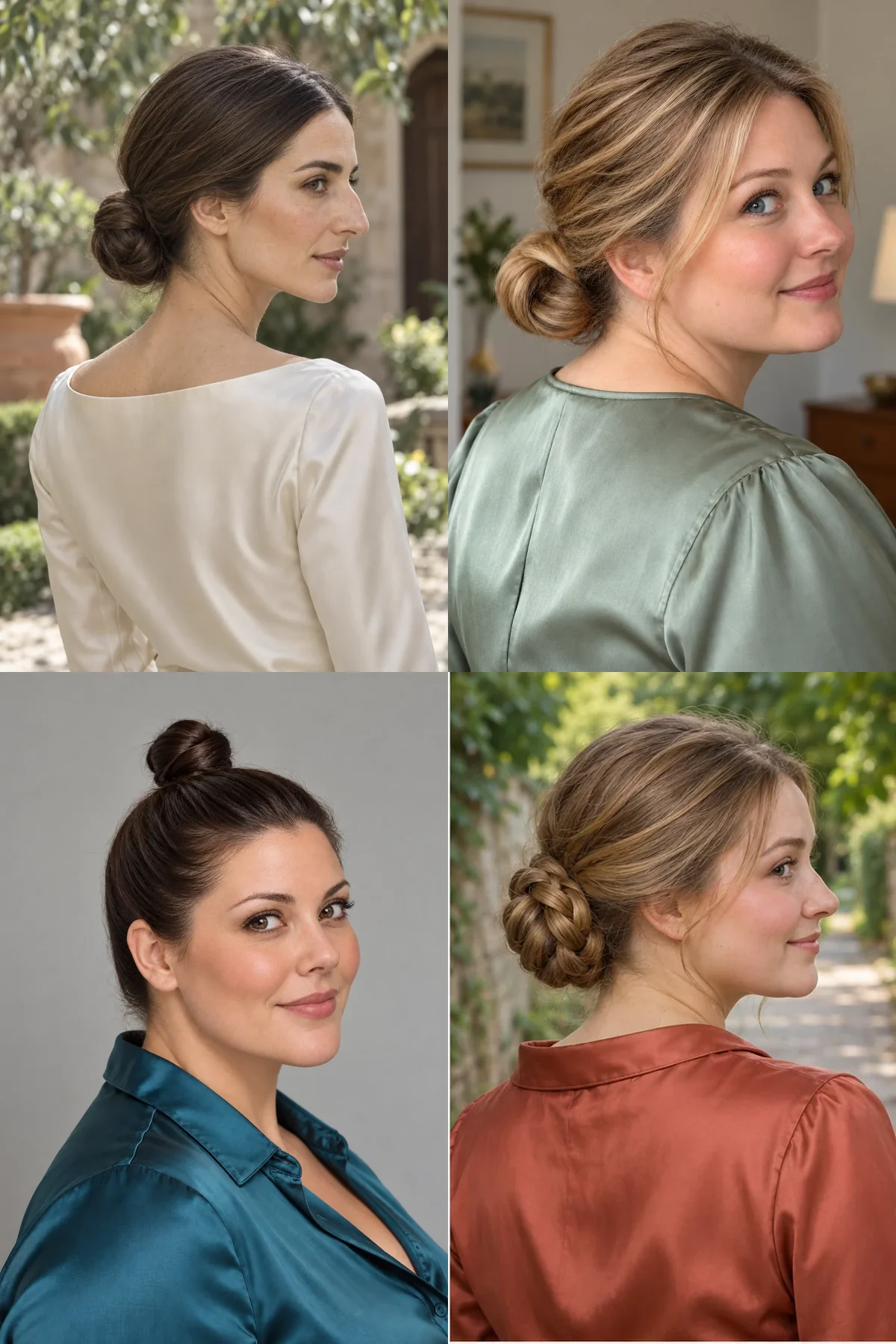
A minimalist bun gathers the hair into one restrained coil, loop, fold or knot, with a compact outline and little decoration. Minimalist describes the visual result, not a standardized salon technique or a guarantee of effortless styling. A sleek bun has a smooth surface; a minimalist bun can also keep soft waves or curls. A chignon is usually worn low, while a topknot sits high, and a French twist forms a longer vertical roll rather than a compact bun. These references vary construction, placement and texture so you can compare useful differences without treating every tiny change as a new hairstyle.
Find the one that feels like you: Start with the first look and let the photographs lead. Each style explains how the shape affects your features, the mood it creates and the exact words to take to your stylist.
Quick Facts
- A compact shape can be smooth or softly textured; minimal does not have to mean tightly pulled.
- Length and density determine how much hair can fold or wrap around the base.
- Aim for secure pins and comfortable tension rather than a perfectly rigid hairline.
- Bring side and back references when asking a stylist to recreate a bun.
1. The Clean Center-Part Nape Coil
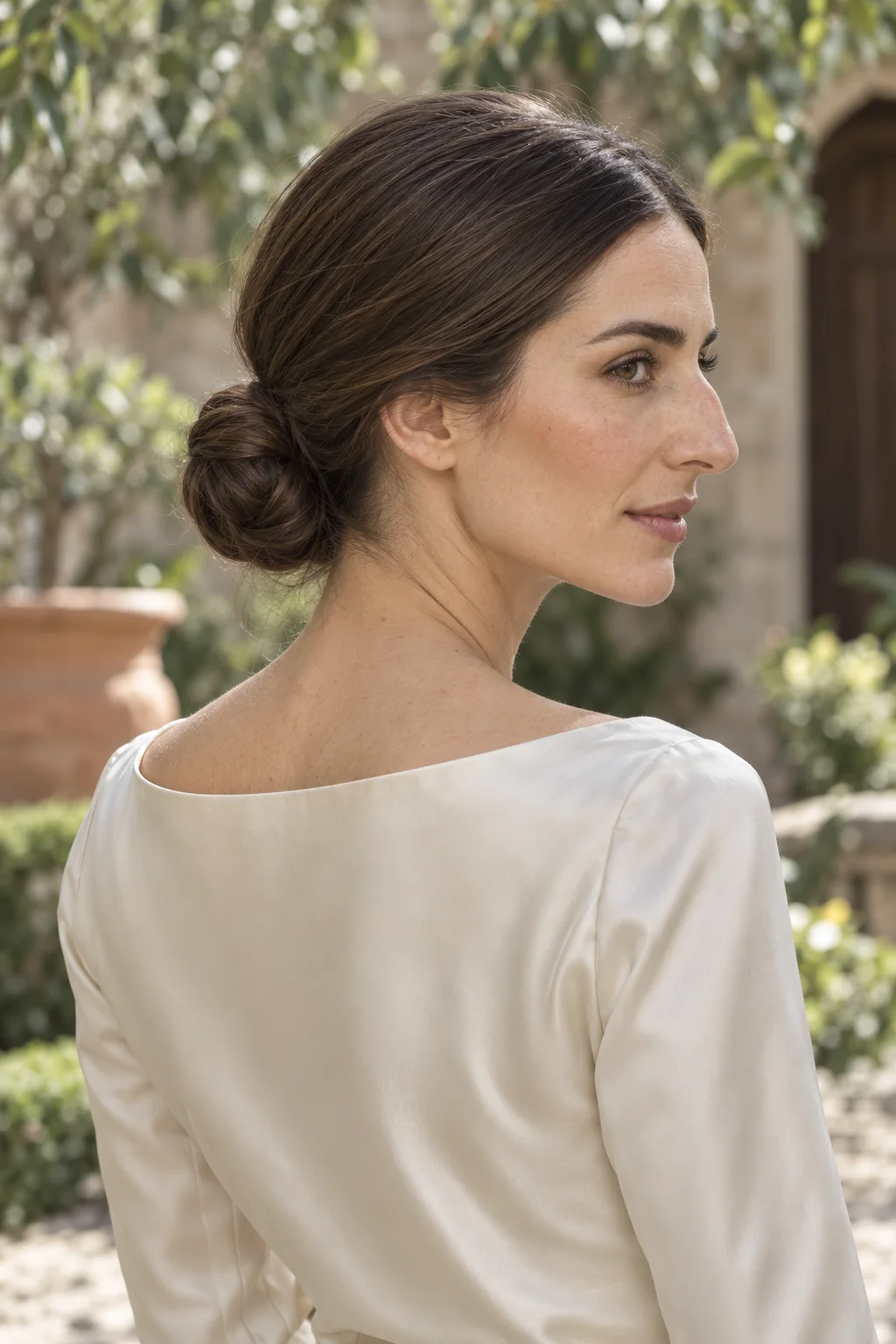
A clean center part leads into a small round coil resting just above the collar, leaving the sides smooth and the neckline open. That quiet symmetry gives a busy blouse or strong earrings room to breathe, and it can make an ordinary workday feel a little more composed. On hair long enough to wrap, form a comfortable low ponytail, coil the length around its base and secure the outline at several points instead of pulling the front tighter. Ask for ‘a compact nape coil, a clean center part and comfortable sides with the pins hidden.’ If the coil loosens, adjust its pins before assuming you need more product.
Ask your stylist for: A compact nape coil, a clean center part and comfortable sides with the pins hidden.
2. A Soft Folded Loop
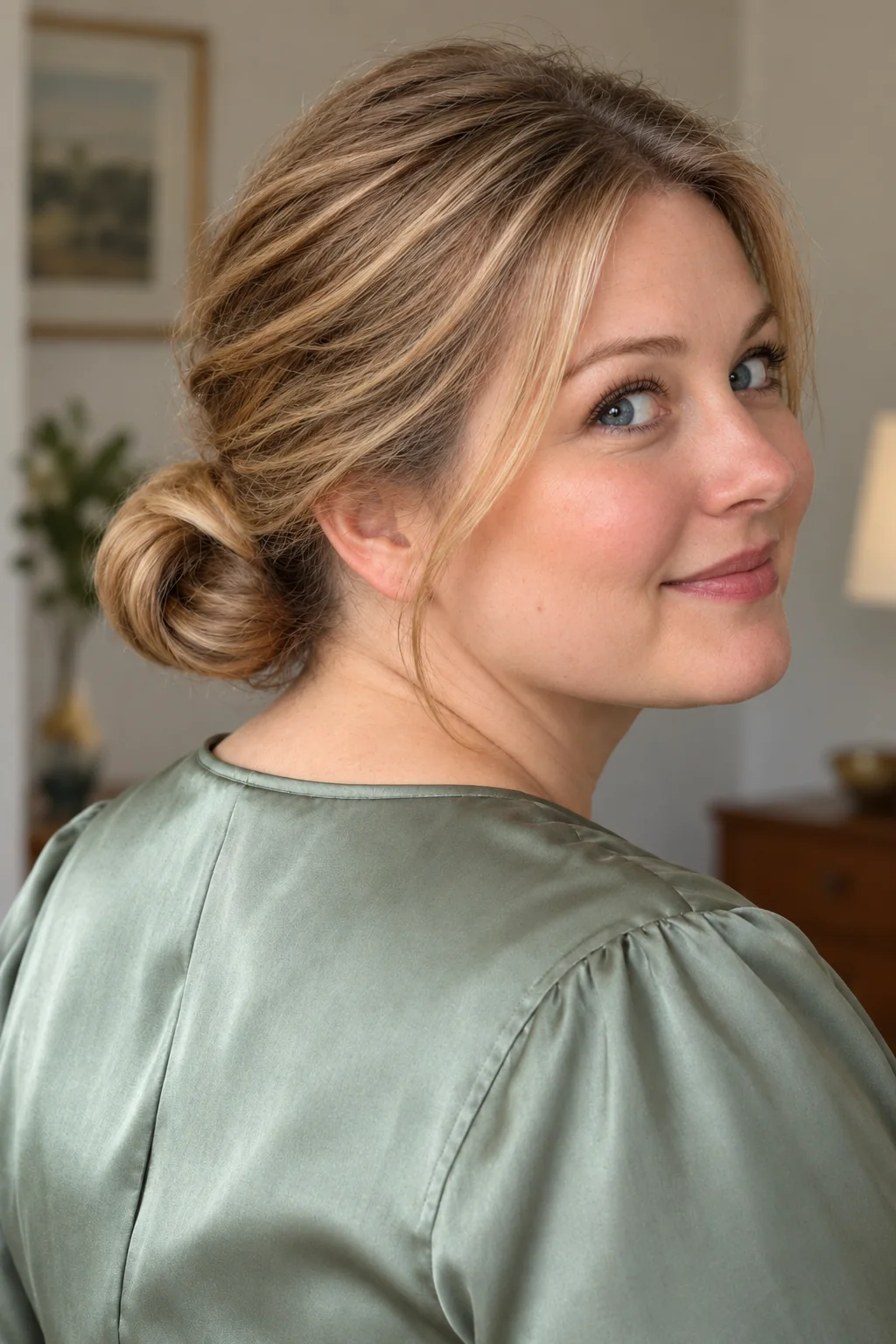
Instead of circling the base repeatedly, this bun folds the ponytail into one rounded horizontal loop with the remaining ends tucked underneath. The softer edge feels friendly and relaxed, making it a useful reference when a polished coil seems too formal for your everyday clothes. It works best when you have enough length to fold without creating a very large pouch, so test the loop size before hiding the ends. Tell your stylist, ‘One low folded loop, tucked ends and soft sides rather than a tightly wound coil.’ A pin through the folded section and its foundation can steady the shape without flattening all its gentle volume.
Ask your stylist for: One low folded loop, tucked ends and soft sides rather than a tightly wound coil.
3. The Flat Nape Disc
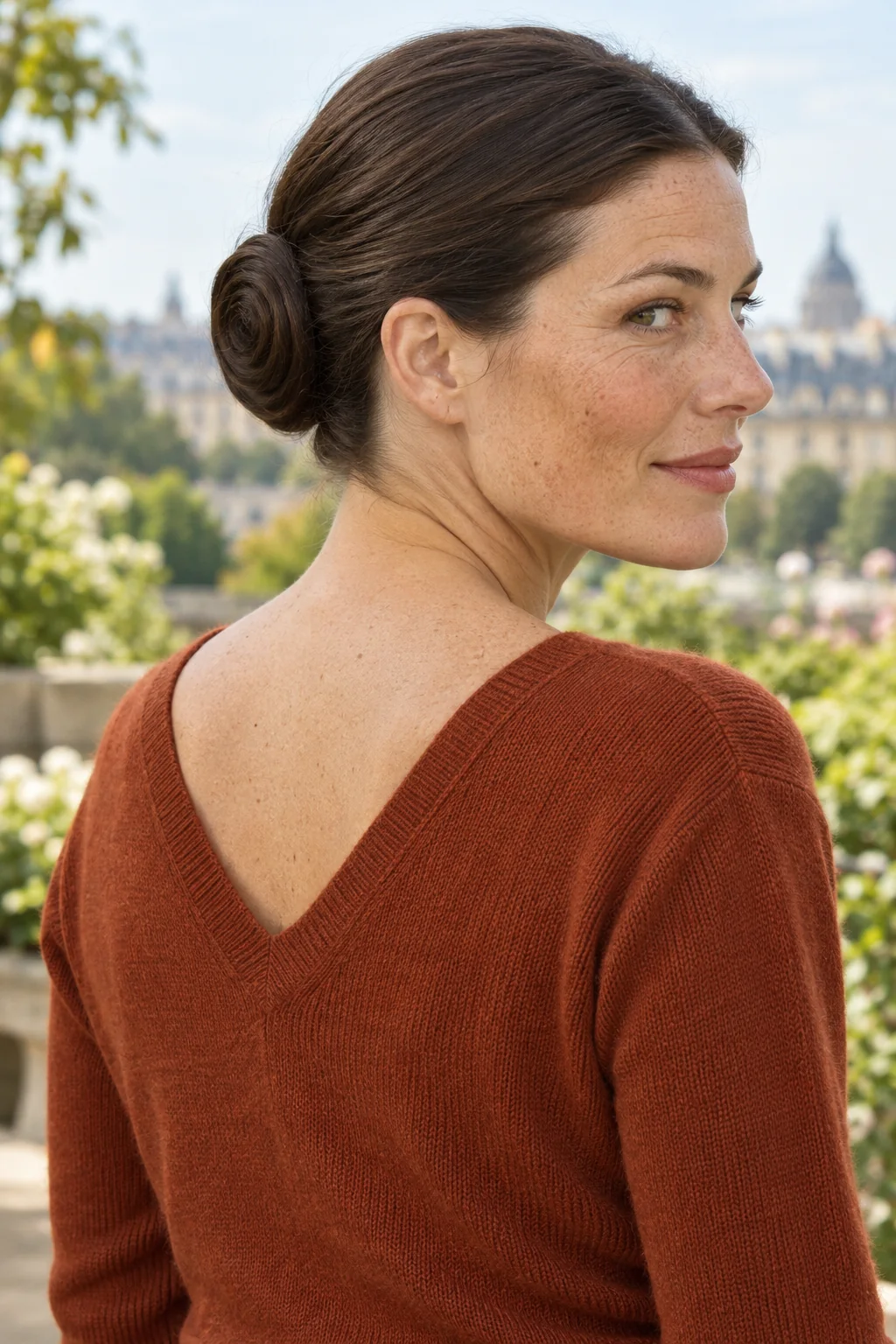
Here the wrapped length spreads into a shallow disc against the nape rather than projecting outward as a round ball. The close silhouette can feel sleek and practical under a roomy hood, and it keeps a profile looking tidy without adding much bulk behind the head. Use smaller wraps and several discreet pins to distribute the hair, remembering that very dense lengths may still create a substantial shape. For an appointment, request ‘a shallow, flat nape bun with a visible circular wrap and very little outward projection.’ Check comfort while turning your head, because a beautifully flat bun is less useful if a pin presses against your scalp.
Ask your stylist for: A shallow, flat nape bun with a visible circular wrap and very little outward projection.
4. A Low Bun Shifted to One Side
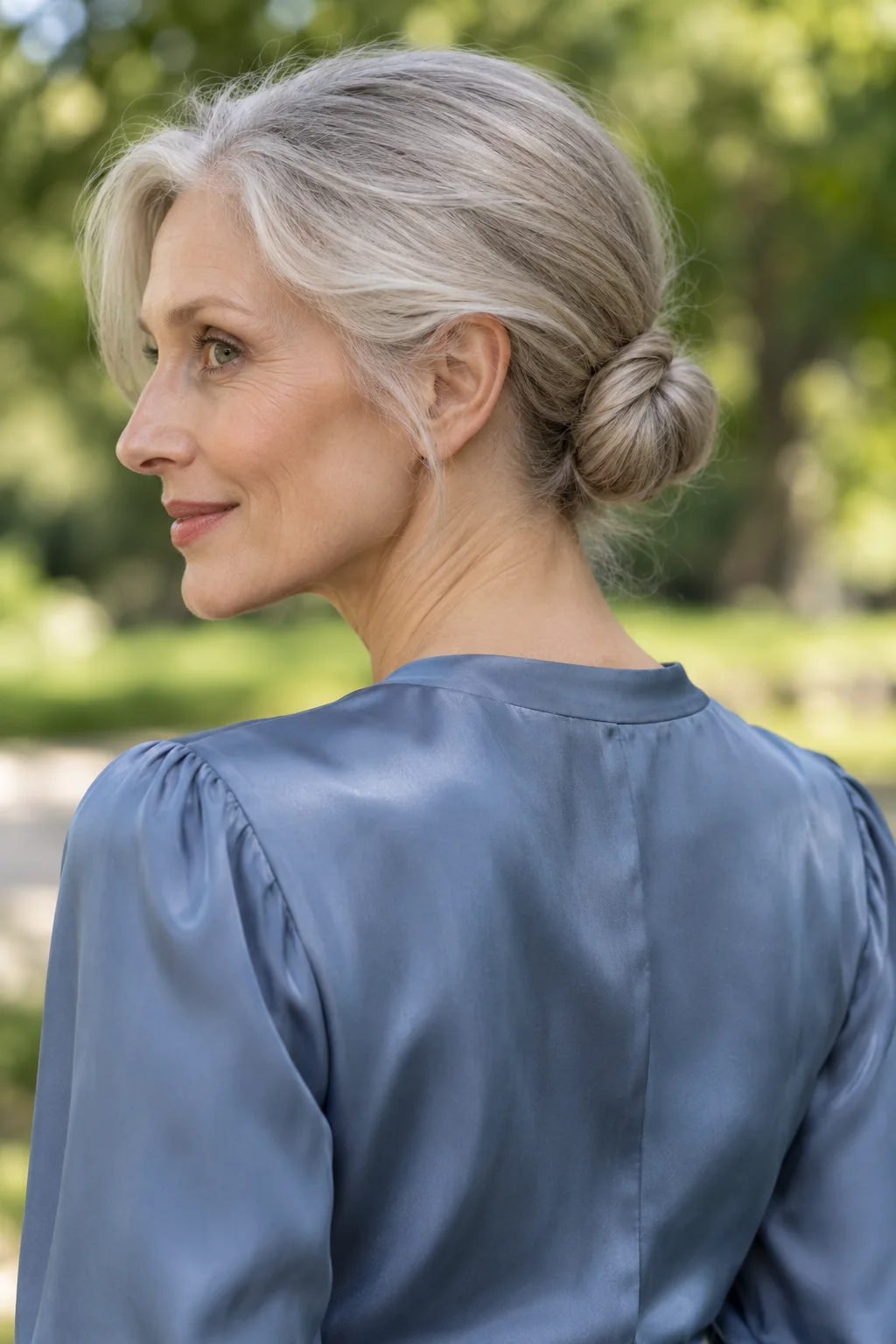
Moving a compact coil just behind one ear gives the bun a visibly different balance while keeping the overall styling restrained. A gentle sweep across the front can soften a strong forehead and bring a quietly romantic mood to dinner clothes without needing flowers or decorative clips. Place the base far enough back that the bun feels supported, particularly if you have heavy lengths that could pull toward one side. Ask for ‘a small low bun just behind one ear, with a gentle side sweep and no large crown lift.’ Check both profiles in a mirror before finishing, since the offset is the feature you want to choose deliberately.
Ask your stylist for: A small low bun just behind one ear, with a gentle side sweep and no large crown lift.
Pause and notice: Compare the bun from the side as well as the back. The amount it projects can matter as much as where you place it.
5. The Mid-Head Knot
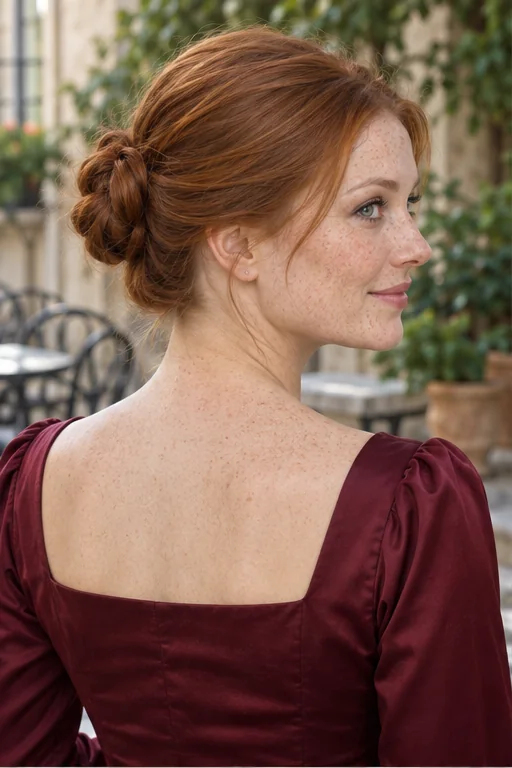
Sitting halfway between crown and nape, this small knot clears a high collar without becoming a towering topknot. The lifted placement gives the profile a brisk, purposeful line, which can feel especially satisfying when you want to look ready for a busy day. Gather the hair at the intended height first and check how the shorter pieces behave before winding the ends into a compact shape. Your salon wording is ‘a compact mid-height knot, smooth sides and no added height at the front.’ Dense hair may need the length divided into two sections before wrapping, so the finished bun feels supported rather than suspended from one tight elastic.
Ask your stylist for: A compact mid-height knot, smooth sides and no added height at the front.
6. A Small Crown Topknot
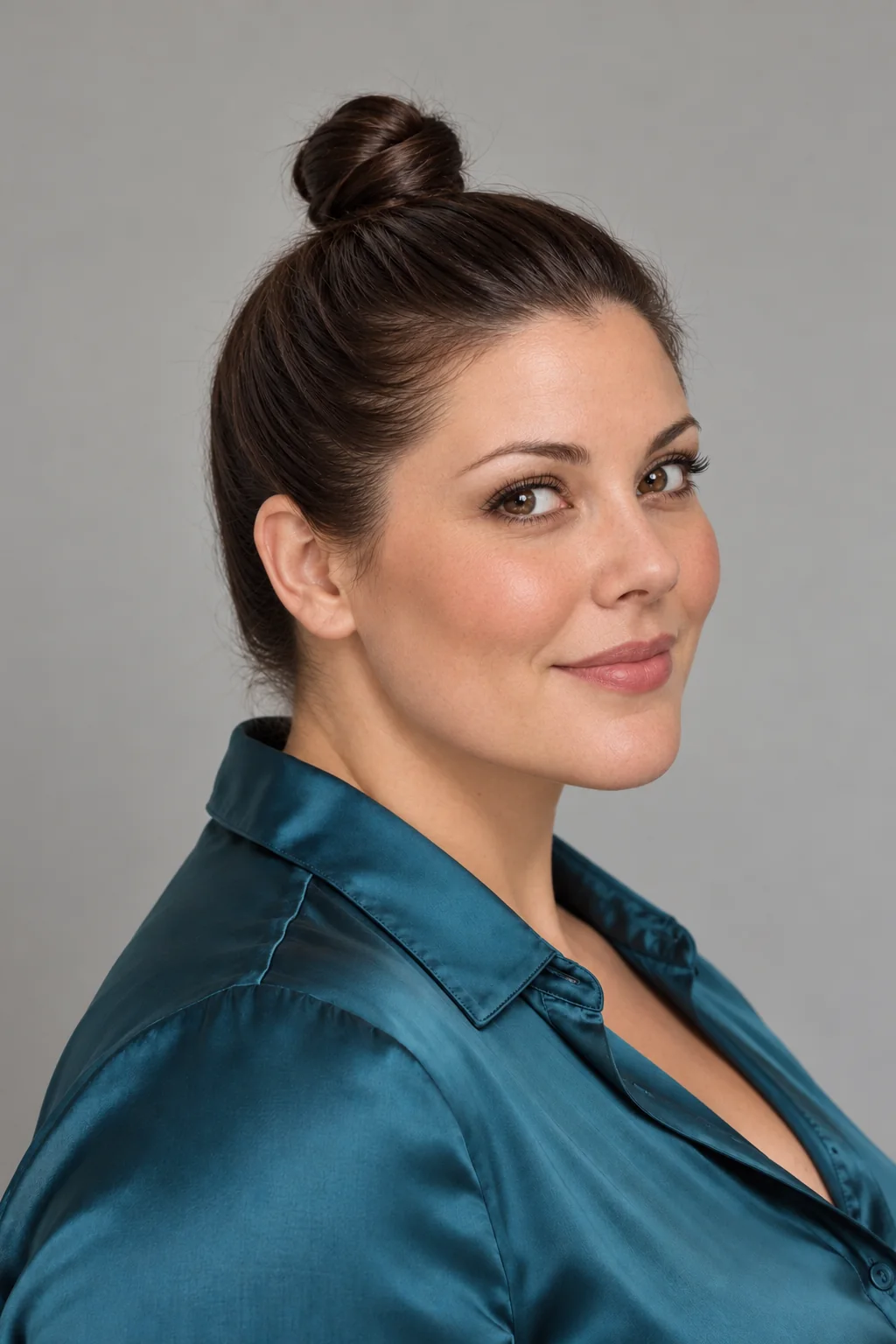
A small knot at the crown adds a vertical accent while keeping the sides and forehead beautifully clear. That little point of height can make a rounder facial outline appear longer, and the exposed neckline brings a confident, energetic feeling to a simple outfit. Choose this version when your hair reaches the crown comfortably; forcing short nape layers upward can turn a quick style into constant repinning. Ask for ‘a small crown topknot with a neat wrapped base and a comfortable hairline.’ Secure the knot itself with pins, then loosen any area that feels pulled rather than using extra tension as a substitute for a stable foundation.
Ask your stylist for: A small crown topknot with a neat wrapped base and a comfortable hairline.
7. The Upright Fold
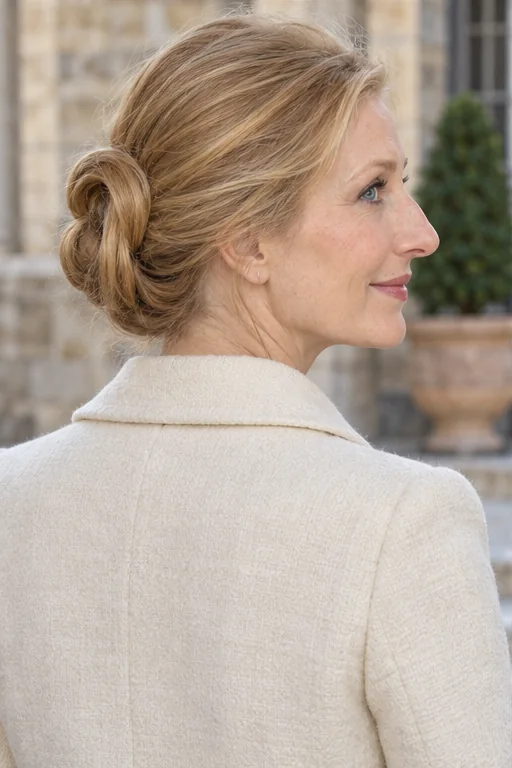
This single folded section stands vertically, creating a small oval rather than the sideways loop of a conventional folded bun. Its clean upright line gives medium lengths a little architectural interest, so you can feel deliberately styled while keeping the rest of your look simple. Fold only as much hair as the shape needs and tuck the remaining tail close to the base; very slippery hair may need a little texture to stop the loop opening. Request ‘a compact upright loop at the lower back of the head, with the tail tucked beneath its base.’ Keep the fold short enough to read as a bun rather than a long vertical French twist.
Ask your stylist for: A compact upright loop at the lower back of the head, with the tail tucked beneath its base.
8. A Horizontal Figure-Eight Knot
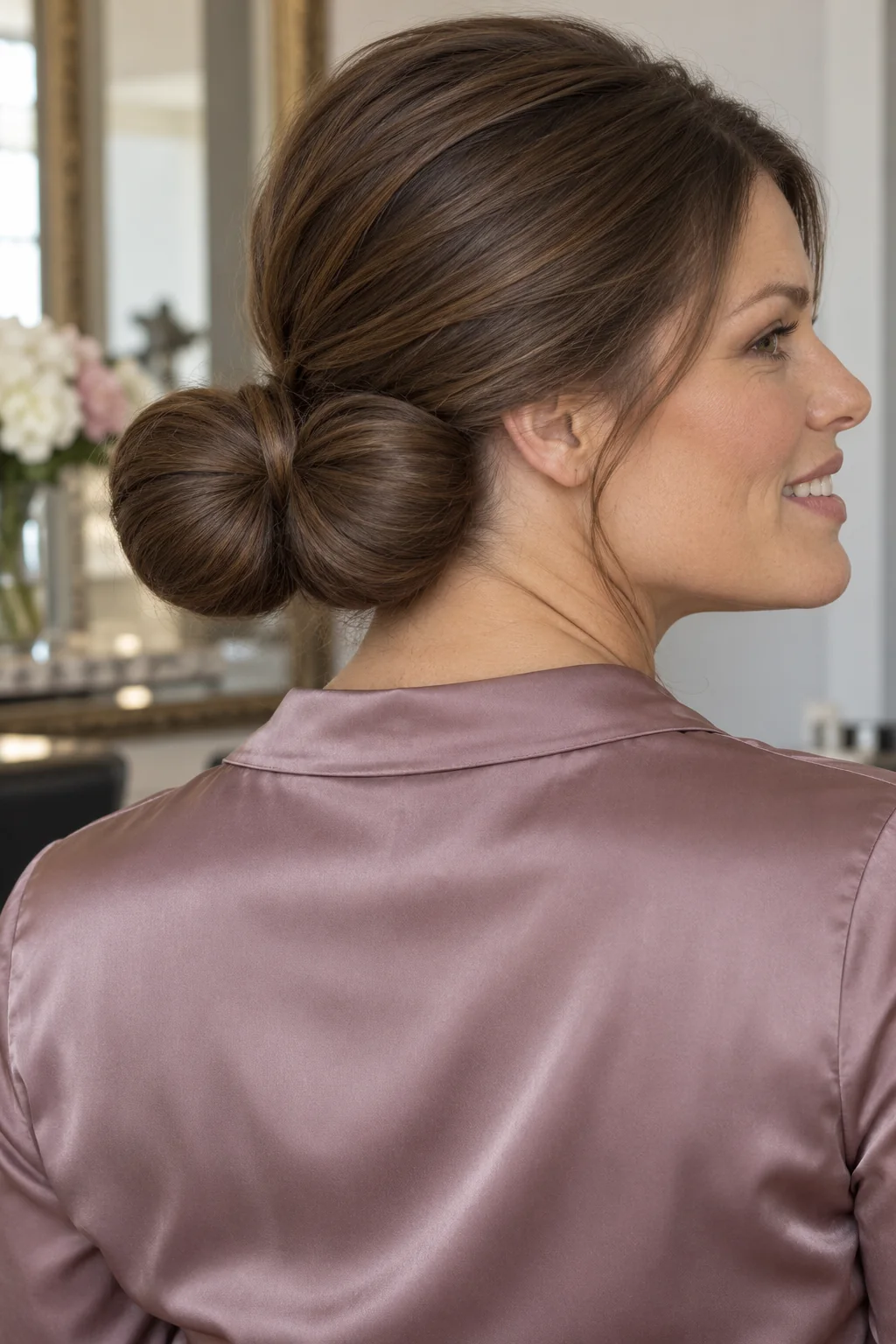
Two connected rounded lobes create a shallow horizontal figure eight across the nape, giving the hair more structure than a simple coil. The wider shape balances a narrow profile and feels quietly distinctive when you want something more considered for an occasion, without adding an accessory. This version needs enough length to form both sides, and a stylist can pin the lobes separately so the center does not carry all the weight. Ask for ‘a compact horizontal figure-eight bun with two clear connected lobes and all ends concealed.’ Keep the crown understated to let that small change in construction be the interesting part of the hairstyle.
Ask your stylist for: A compact horizontal figure-eight bun with two clear connected lobes and all ends concealed.
Pause and notice: Secure does not have to mean tight. If the style feels pulled, rethink the anchor points before adding more tension.
9. The Rope-Twist Coil
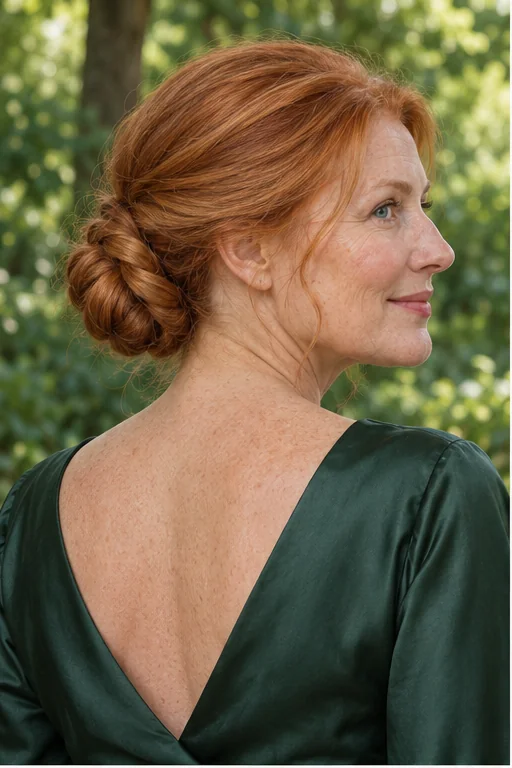
A two-strand rope winds around the base, putting a defined spiral inside an otherwise small, uncomplicated bun. That raised texture gives straight hair visual interest without needing a teased crown, and it can make a familiar low style feel more playful for an evening out. Twist the two sections individually in the same direction, then wrap them around each other in the opposite direction before coiling the rope and pinning it. Tell your stylist, ‘A low rope-twist coil with the two-strand pattern visible and a quiet, smooth crown.’ Short layers can escape the rope, so smooth or pin those ends individually instead of twisting the whole length harder.
Ask your stylist for: A low rope-twist coil with the two-strand pattern visible and a quiet, smooth crown.
10. A Single-Braid Bun
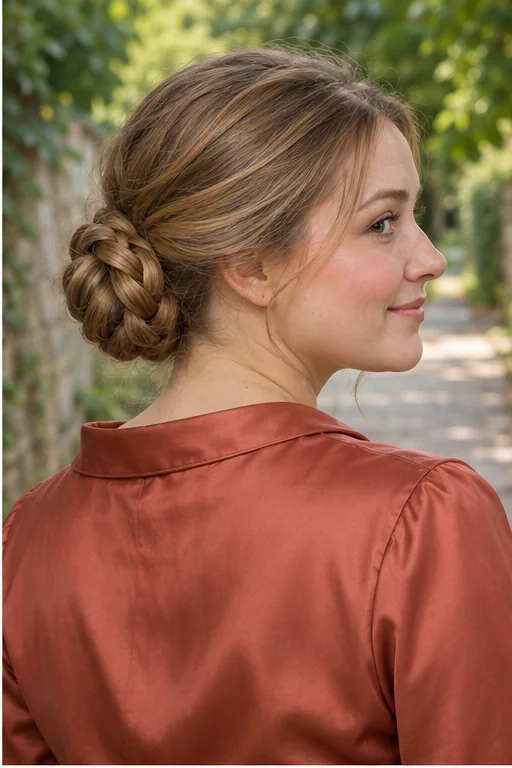
One ordinary three-strand braid becomes the entire bun, with its woven surface visible as it circles a low base. The braid helps organize longer ends into one manageable length and gives the finished shape a quietly romantic mood without turning it into an elaborate braided updo. Keep the plait reasonably compact rather than pulling its edges wide, then tuck its secured tip underneath the coil. For a stylist, ask for ‘one low three-strand braid coiled into a compact bun, with no extra braids across the head.’ Very thick hair will make a larger coil, so agree on the finished size before adding any extensions or extra fullness.
Ask your stylist for: One low three-strand braid coiled into a compact bun, with no extra braids across the head.
11. The Crossed-Wrap Bun
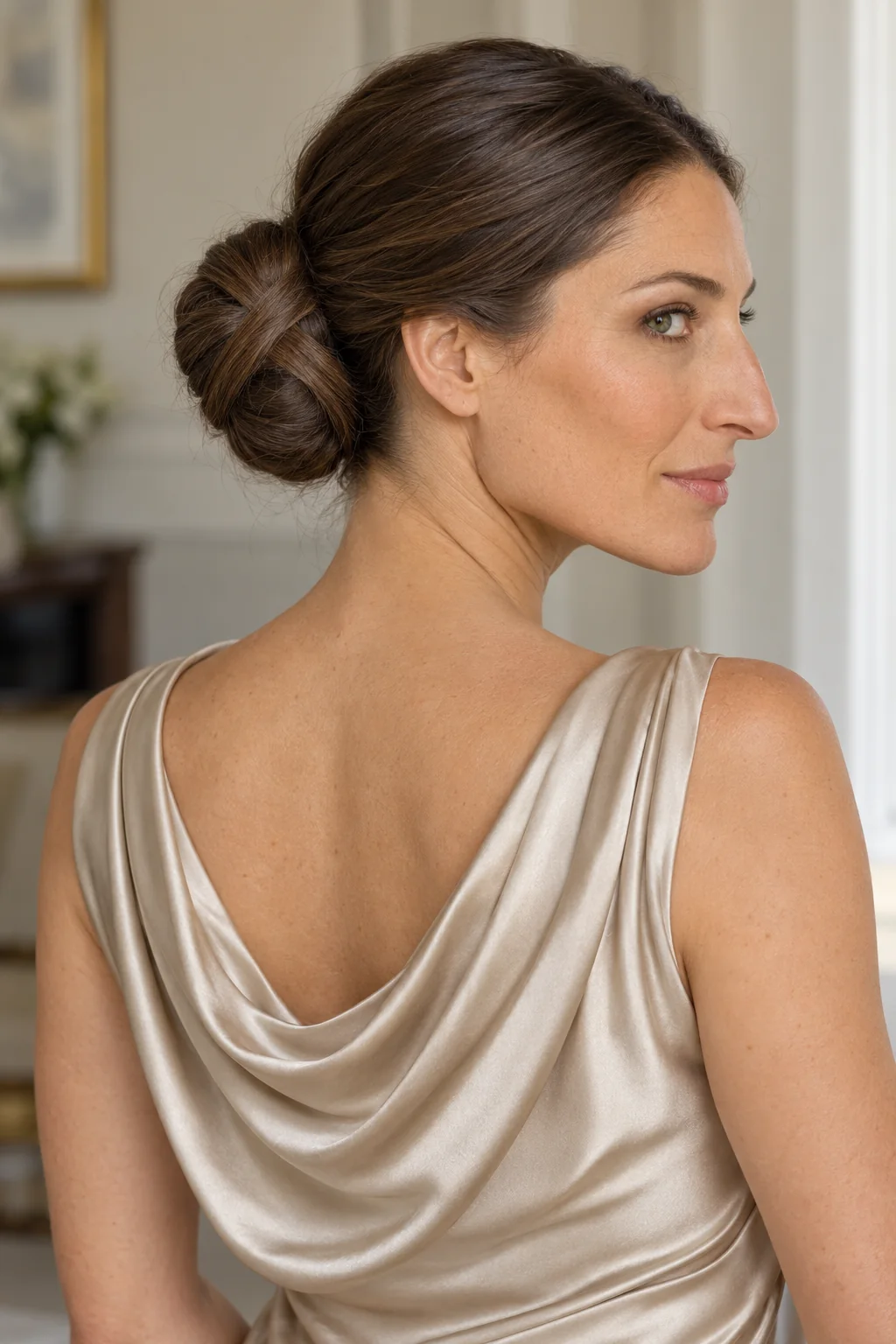
Two broad, smooth sections cross over the surface of a small low bun, creating a restrained diagonal detail rather than a visible braid. That overlapping finish looks sculpted and composed, making it a lovely option when you want occasion hair that still feels like your own understated style. The sections need enough length to pass across the bun and anchor underneath, so this is easier to plan with a stylist than to improvise on short layers. Request ‘a small low bun with two broad sections crossing over its surface and tucked out of sight.’ Use the shape as the focal point and keep decorative pins concealed.
Ask your stylist for: A small low bun with two broad sections crossing over its surface and tucked out of sight.
12. A French-Pin Oval
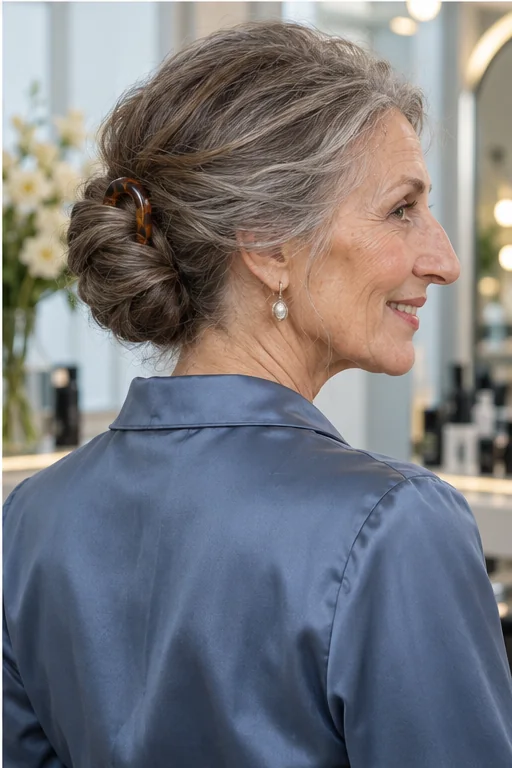
A compact oval twist sits close to the nape, with one simple French pin providing a visible, practical finishing detail. The shape feels relaxed and capable rather than ceremonial, especially if you like an accessory that earns its place by helping hold the hair. Choose a pin suited to your density and follow its instructions; the goal is to catch part of the bun and a stable section beneath without scraping the scalp. Ask a stylist for ‘a compact oval bun supported by a simple French pin, with no long vertical roll.’ If the style slips during normal movement, adjust the foundation or choose another fastening instead of forcing the pin deeper.
Ask your stylist for: A compact oval bun supported by a simple French pin, with no long vertical roll.
Pause and notice: Use the reference to choose a shape, then let your own length and texture set its realistic size.
13. The Short-Hair Micro Tuck
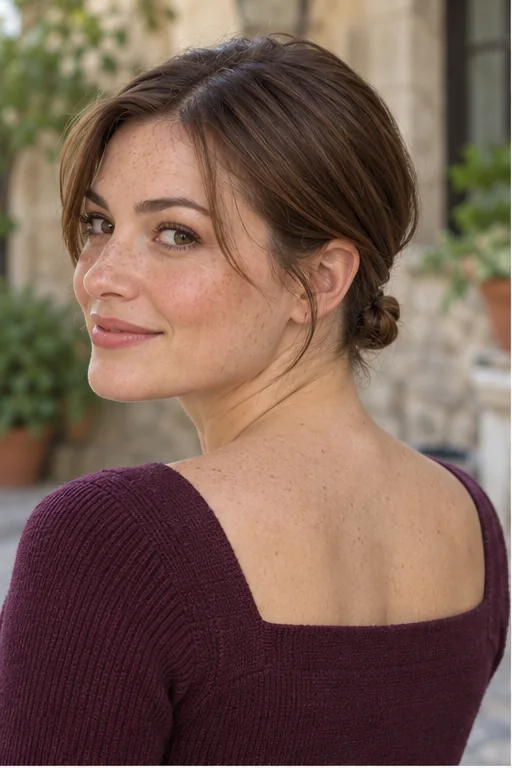
When a collarbone cut only just reaches a low ponytail, a tiny folded tuck can be a more honest goal than a full wrapped coil. Its small scale clears the neck and makes the haircut feel versatile, giving you that satisfying change of mood without pretending your hair is longer than it is. Fold the available ends once, secure the little shape and pin shorter side pieces separately rather than dragging every strand toward one tight point. Say, ‘A tiny low folded tuck using my own length, with shorter pieces pinned separately and no added bulk.’ If pieces cannot reach comfortably, leave them softly framing the face or choose a different style.
Ask your stylist for: A tiny low folded tuck using my own length, with shorter pieces pinned separately and no added bulk.
14. A Compact Bun That Keeps the Curls
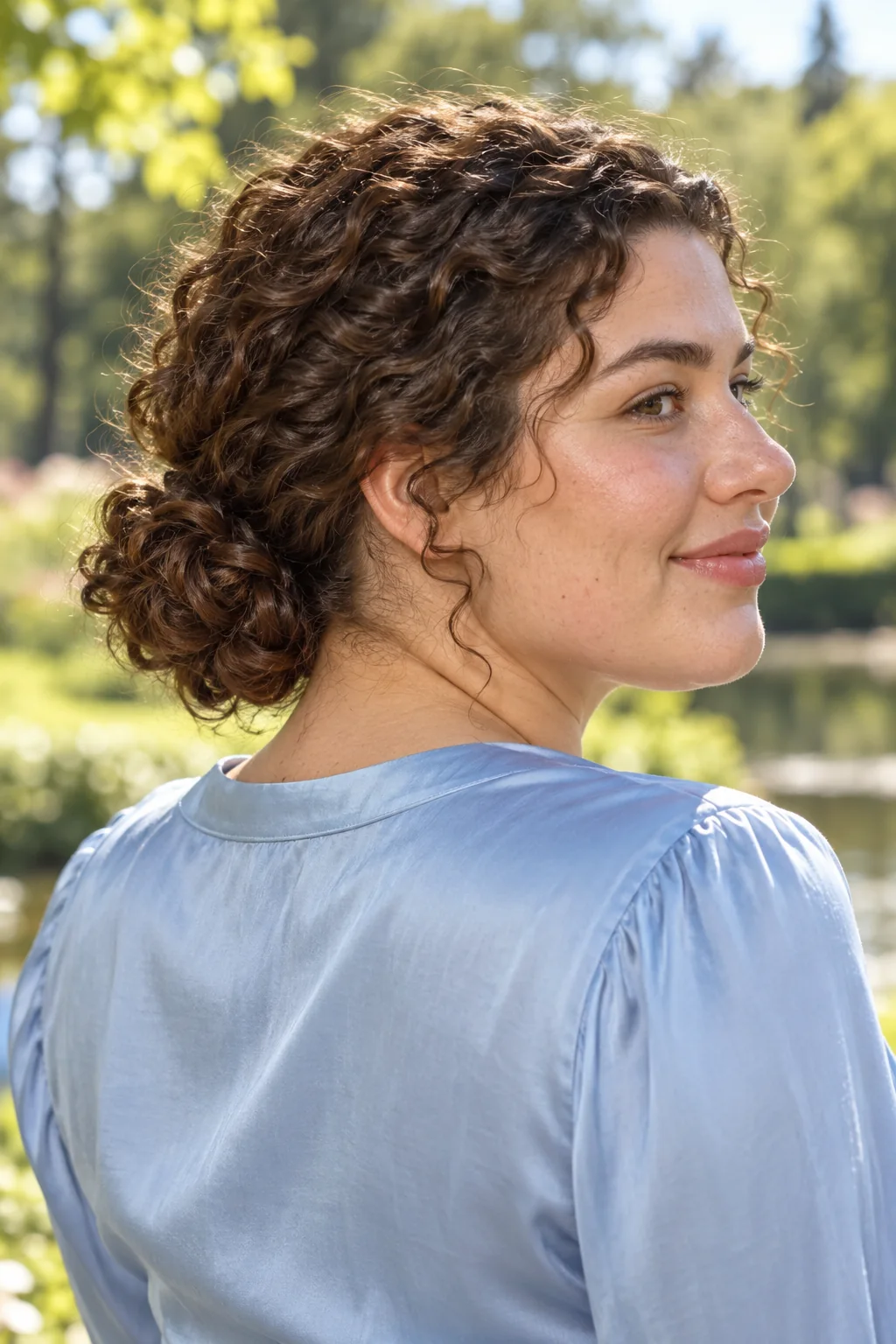
Defined ringlets gather into a small low bun while the crown keeps its natural movement instead of being brushed completely smooth. The contrast proves that a minimalist outline can still feel soft and expressive, which is especially welcome when you want occasion hair that resembles your everyday texture. Gather the curls gently, fold or pin the ends into a compact shape and refresh only the sections that need definition using your usual routine. Ask for ‘a compact low curly bun with my curl pattern visible and the hairline left comfortable.’ The finished size depends on curl density and shrinkage, so compare references with hair that behaves similarly to yours.
Ask your stylist for: A compact low curly bun with my curl pattern visible and the hairline left comfortable.
15. A Sleek Bun With an Airy Fringe
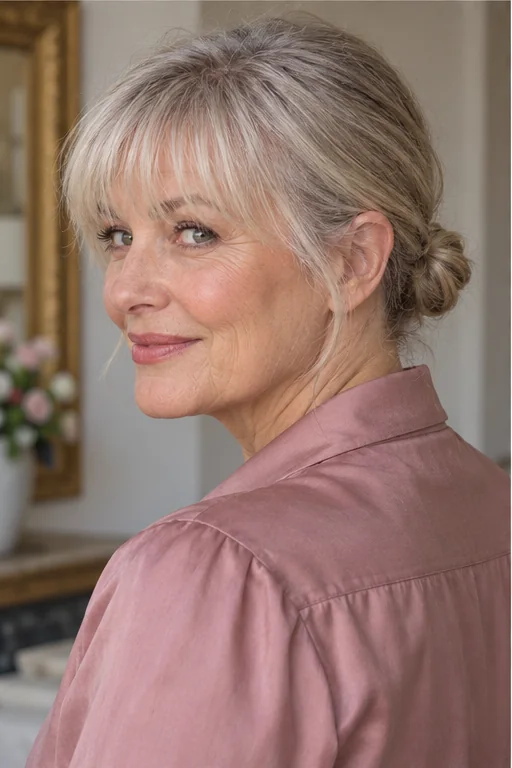
A small smooth nape bun leaves the outline clean, while a light fringe gives the front a noticeably softer finish. That separation can make an updo feel more familiar if you usually wear bangs, letting you enjoy an open neckline without feeling that your whole face has suddenly been exposed. Style the fringe on its own before gathering the rest, keeping any smoothing product intended for the bun away from those airy ends. Ask for ‘a small smooth nape bun, with my existing fringe left light and separate across the forehead.’ Bring a front reference as well as a back view, since the fringe is central to the mood of this version.
Ask your stylist for: A small smooth nape bun, with my existing fringe left light and separate across the forehead.
16. The Restrained Spiky Knot
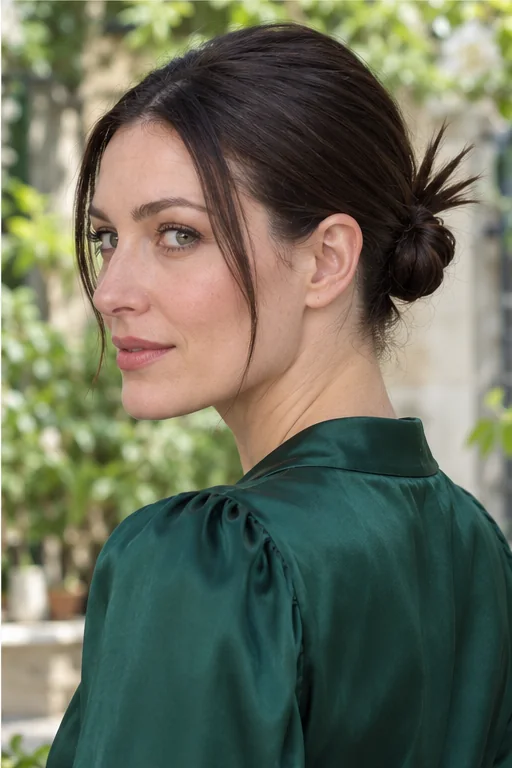
A compact mid-low knot lets a short fan of straight ends point upward, giving the smooth base a little deliberate contrast. That crisp detail feels playful and quietly bold, ideal when an entirely tucked bun seems more formal than your personal style. Leave only enough length outside the knot to create a controlled fan, and arrange the tips without turning the whole bun into a large messy shape. Your salon request is ‘a compact mid-low knot with a short controlled fan of straight tips, rather than a large messy bun.’ Hair that naturally curls may need additional styling to hold those straight tips, so choose the finish with your routine in mind.
Ask your stylist for: A compact mid-low knot with a short controlled fan of straight tips, rather than a large messy bun.
Before You Book the Appointment
A successful salon visit begins with the overall shape, construction and upkeep—not only the finished length. Use this quick reality check before choosing your final reference photograph.
- Length: Many shapes need a comfortable ponytail plus enough remaining length to fold or wrap. Shorter layers may need separate pins.
- Density: Small loops can suit fine lengths; dense hair may need divided sections and several discreet anchor points.
- Texture: Choose a reference close to your natural movement if you want less smoothing. A glossy finish usually takes additional preparation.
- Routine: Start with a low shape you can secure without pulling. Save a more elaborate finish for days when you want to practice.
Choose the Placement Before the Finish
Start with the neckline of your clothes, your usual part and the position your hair can reach comfortably. A low bun needs enough length for a low base; a topknot also needs the nape sections to travel upward. Dense hair may feel steadier when the weight is distributed across several pins. Fine hair can look beautifully intentional in a smaller fold without padding it into a large bun. Look at the profile in a mirror and turn your head before deciding the placement is right.
A Simple Foundation to Practice
Begin with gently detangled hair and choose a texture you can manage with your ordinary routine. Gather the base comfortably, then fold, coil or wrap the lengths into your chosen outline. Add pins that connect the bun to a stable foundation, checking their position instead of pushing them hard against the scalp. A little suitable styling product may help flyaways, but a perfectly rigid surface is optional. Practice the basic shape before adding a rope twist, braid or crossed wrap. If a style hurts or repeatedly slips, take it down and reassess the size, placement or fastening.
What to Ask for at the Salon
Bring a side view, a back view and a front view that agree on the same hairstyle. Point out the placement, finished size, shape of the wrap and how smooth or textured the crown should look. Explain whether you want to keep your bangs, how many face-framing pieces you like and whether visible pins are welcome. Ask the stylist to show the fastening and how to remove it afterward. For an occasion, discuss whether the reference uses extensions or padding so the plan matches your own hair and expectations.
Can Short or Layered Hair Make a Bun?
Sometimes, but the exact shape depends on which sections reach the base and how much length remains afterward. A micro tuck can work when a long wrapped coil cannot. Pin shorter pieces separately, or leave a few around the face, rather than repeatedly tightening the ponytail. As layers grow out, you may be able to move the base or make a fuller fold without changing the haircut. Keep styling experiments separate from cutting decisions: you do not need to remove a favorite fringe simply to copy one smooth-front photograph.
Keep the Style Comfortable Through the Day
Check that pins do not press when you move, and adjust any section that feels pulled. Smooth the surface locally when needed instead of repeatedly tightening the whole base. Your hair may soften and move during the day; that does not mean a simple bun has failed. Remove pins carefully, support the shape as you release it and detangle gently afterward. Choose a looser arrangement when that feels better, and avoid assuming a sleek photograph requires you to wear constant tension.
The Takeaway
Pick the reference that fits an ordinary day in your own hair: a comfortable base, a realistic amount of length and a shape you like from every angle. Once those details work, a single coil or fold can feel just as considered as a more elaborate updo. Let the small shape do its job, then get on with enjoying what you wore it for.
More Hair Inspiration
- French Twist Hairstyles — Compare a longer vertical roll when a compact bun is not the shape you want.
- Easy Hairstyles for Medium Hair — Explore other ways to arrange a medium length.