Some haircuts look lovely from the front, then surprise you with an even better profile. A stacked angled bob belongs in that conversation: the back has its own rounded shape, while the longer front gives the cut direction. The trick is choosing how much lift and slope you actually want to wear on an ordinary morning.
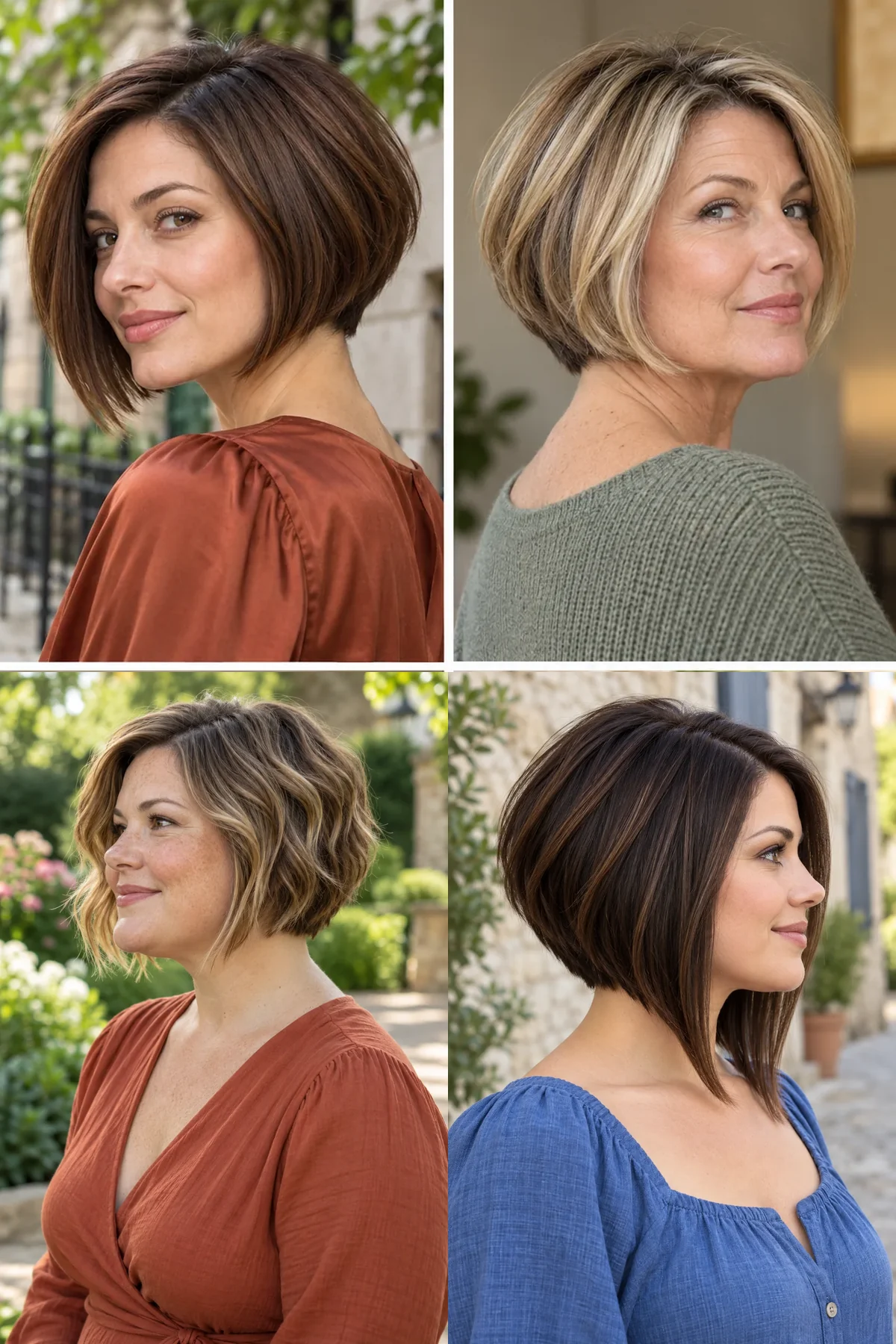
A stacked angled bob combines two features: graduated, progressively shorter layers through the back that build a curved outline, and a perimeter that descends toward longer front corners. An angled or A-line bob can have that forward slope without a visible stack; a layered bob can have movement throughout without the same supported back shape. Inverted bob is often used for a similar cut, but salon labels vary. Compare photographs of the back and side, then describe the shortest nape point, the fullness above it and where the front should land. These twelve references change the construction or finish rather than simply changing the hair color.
Find the one that feels like you: Start with the first look and let the photographs lead. Each style explains how the shape affects your features, the mood it creates and the exact words to take to your stylist.
Quick Facts
- Stacking describes the graduated back; angling describes the longer front perimeter.
- More graduation does not automatically mean a better cut for fine or thin hair.
- Waves, curls and cowlicks change how the line sits when dry.
- A clean nape and rounded back usually need regular reshaping.
1. The Quiet, Low-Stacked Jawline Bob
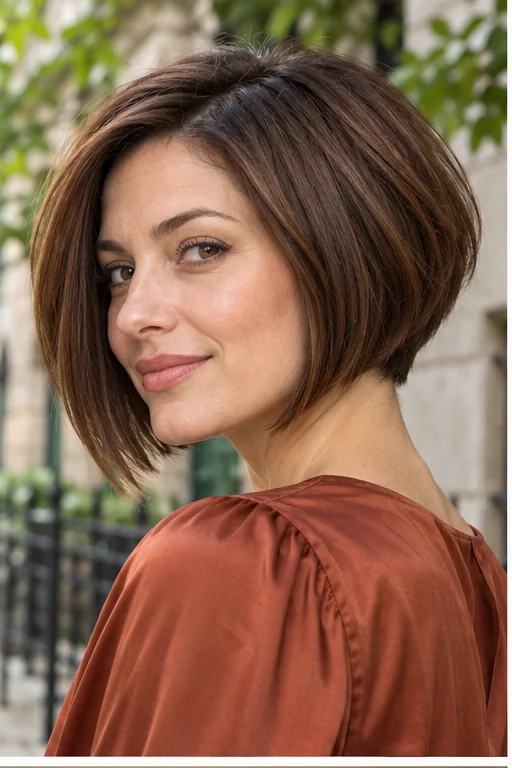
Start here if you love a tidy profile but do not want a large cushion of hair behind your head. The graduation stays low near the nape, with a gentle curve above it and solid front corners reaching the jaw, so the outline feels composed rather than dramatic. That compact back opens the neckline while the longer sides retain a familiar face frame, which can make a shorter cut feel reassuringly wearable. It suits someone willing to smooth the nape after washing, especially if a cowlick pushes one side outward. Ask for low nape graduation, restrained back fullness and jaw-length corners, with enough weight left through the sides.
Ask your stylist for: Low nape graduation, a restrained rounded back and solid jaw-length front corners.
2. A Rounded Back With Soft Front Corners
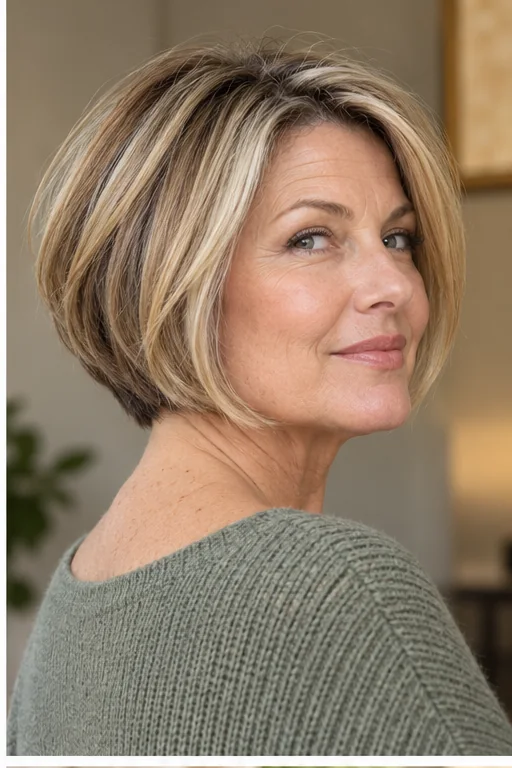
The curve is the lovely part here: a rounded middle stack fills out the back of the head before the line travels toward softly beveled front corners. Compared with a low stack, it has a more visible sculpted silhouette, bringing a tailored, quietly confident feeling to a simple shirt or knit. It can suit a flatter back-of-head shape when the hair has enough density to support the curve, though very fine sides still need protection. Direct the back with a brush while drying rather than trying to create all the lift with finishing spray. Tell your stylist you want a rounded mid-stack below the crown and gently beveled front corners just beneath the jaw.
Ask your stylist for: A rounded mid-stack below the crown, a clean nape and softly beveled below-jaw front corners.
3. The Compact High Stack
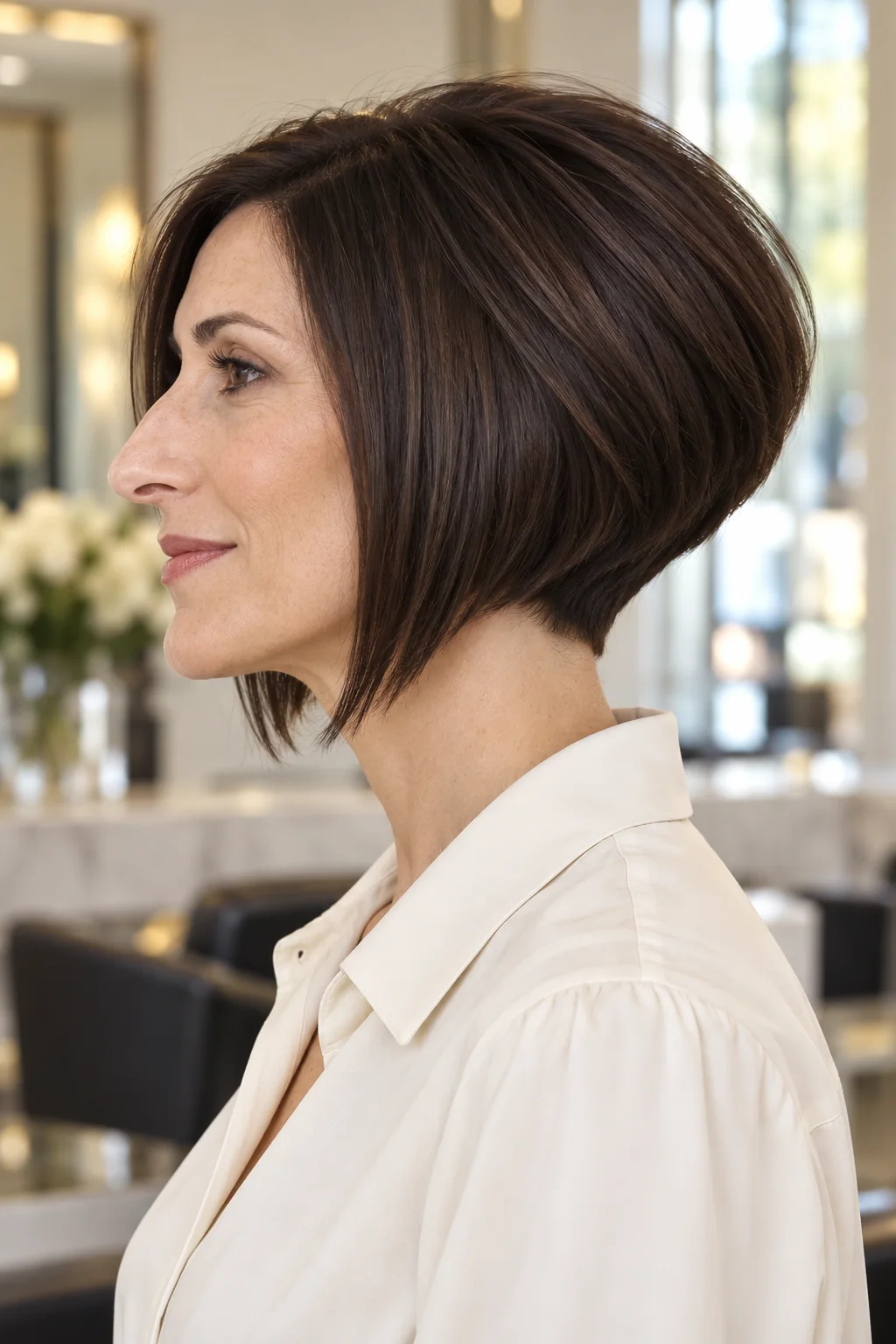
A higher stack moves the fullest curve upward, leaving a close nape beneath it and a decisive slope toward chin-length front pieces. The result shows off the neck and gives the profile a more assertive, dressed-for-the-day presence, even when the rest of your outfit stays simple. Choose it because you enjoy that architecture, not because you expect graduation to solve every flat-hair problem; sparse areas and strong growth patterns need an individual assessment. The short back loses its crispness sooner than a softer bob, so plan regular reshaping. Request a compact high stack, a close but comfortable nape and controlled crown width, keeping the front recognizably bob-length.
Ask your stylist for: A compact high stack with a close nape, controlled crown width and chin-length front corners.
Pause and notice: Look at where the fullest curve sits. A higher stack changes the entire profile, even when the front length barely changes.
4. Long Front Pieces, a Steeper Angle
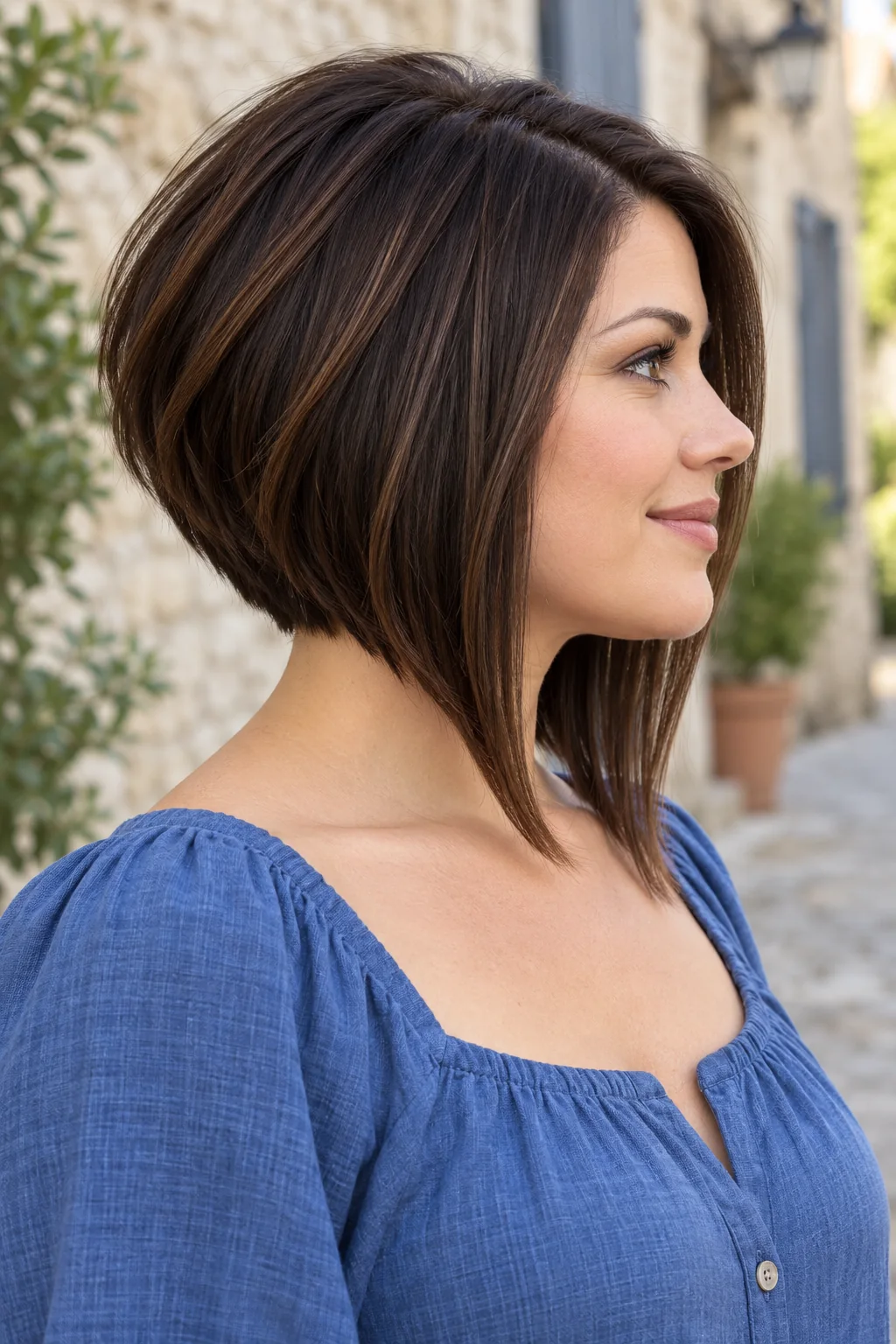
Keeping the front near the collarbone while lifting the back creates a much stronger diagonal than a classic jaw-length bob. Those longer panels draw the eye downward and retain face-framing length, giving the cut an expressive, slightly dramatic confidence without requiring a fringe. It suits someone who likes a short neckline but still wants hair beside the cheeks; remember that the back may no longer reach a ponytail even when the front does. Dry the front in its intended direction so the tips do not kink where they rest against clothing. Ask for a clearly graduated back and a continuous steep line toward long front corners, checking the balance in your normal part.
Ask your stylist for: A clearly graduated back with a steep continuous angle to front corners near the collarbone.
5. Loose Waves Over a Soft Stack
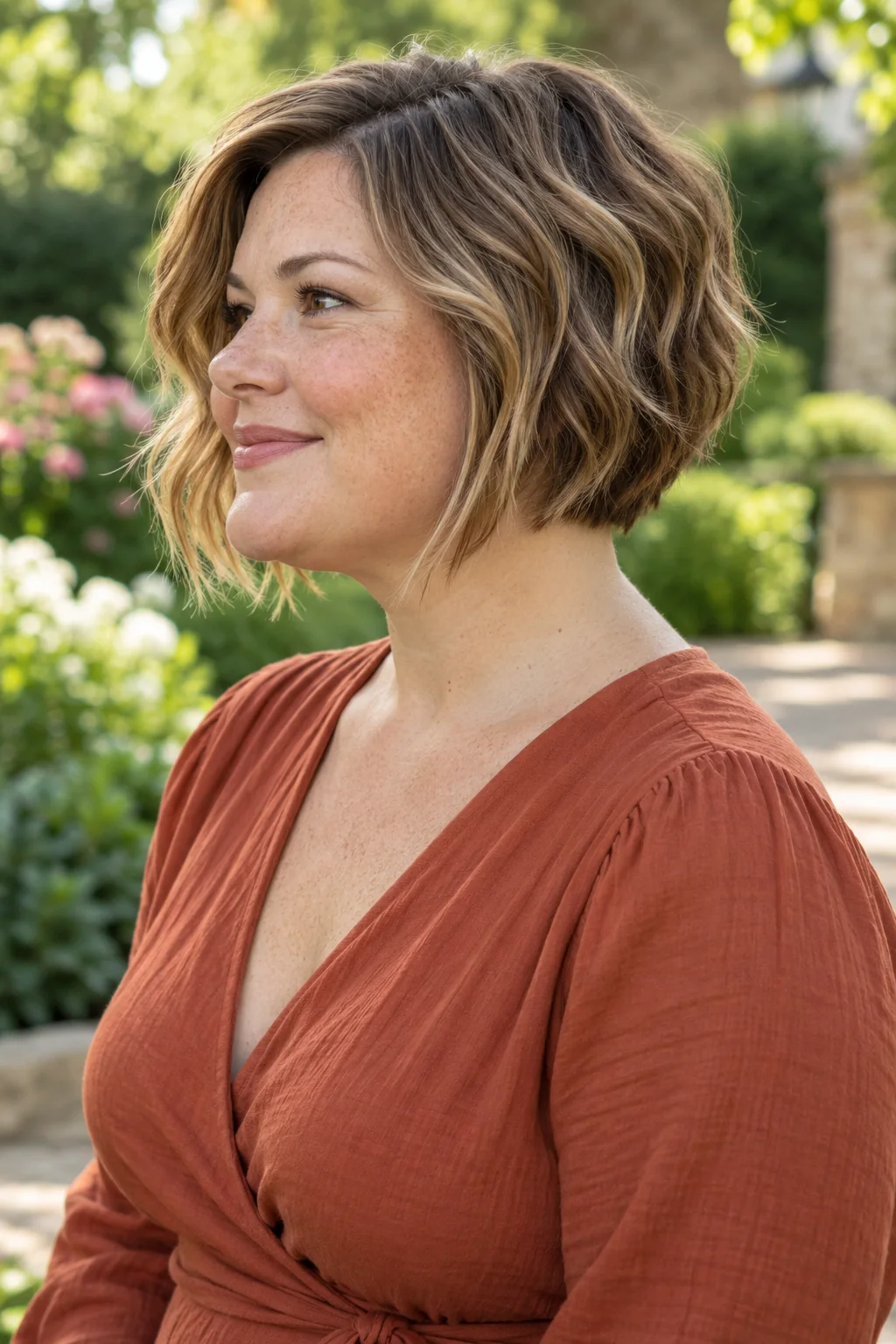
Loose waves turn the stacked outline into something more relaxed, with a soft bend through the sides and a rounded back still visible beneath the movement. The less rigid surface softens a sharply defined jaw and can make a structured haircut feel easygoing enough for weekends as well as work. This version is most convincing when your hair already bends, although a smooth-haired version will need deliberate wave styling rather than an effortless promise. Use a light product suited to your texture and avoid separating every wave until the outline becomes fluffy. Ask for low-to-medium graduation that supports your natural bends, with longer front corners checked dry so the angle remains clear.
Ask your stylist for: Low-to-medium back graduation and longer front corners shaped to keep my natural loose waves.
6. Defined Curls With a Graduated Nape
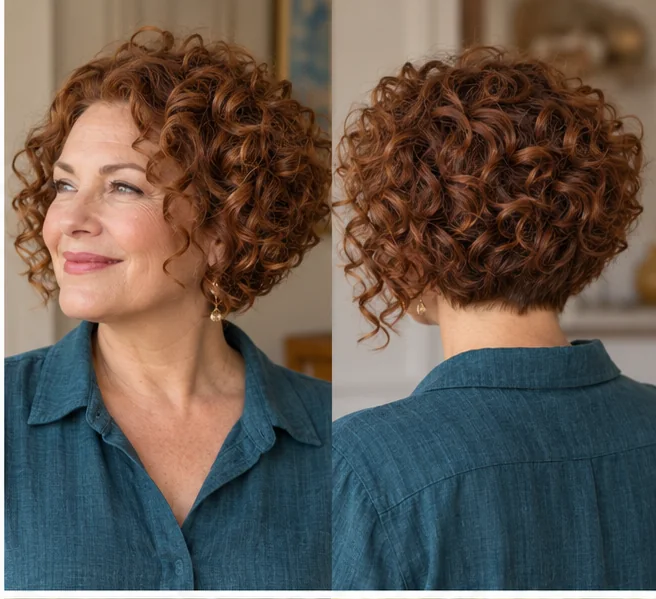
Defined curl groups give this bob a springy, rounded back while the front curls sit lower beside the jaw. The shape feels buoyant and expressive, opening the neckline without losing the softness that curls bring around the face. It suits someone who likes wearing their natural pattern visibly, provided the stylist plans the graduation around shrinkage rather than copying a straight-hair cutting diagram. Style in the curl groups you normally wear and let them dry before judging whether one corner needs adjustment. Explain that you want a curl-aware graduated back and longer front curl groups, with the entire angle checked dry and no assumption that each curl shrinks equally.
Ask your stylist for: A curl-aware graduated back and longer front curl groups, with the complete angle checked dry.
Pause and notice: Choose a reference in a texture close to your own. The same cutting plan can look very different once waves or curls dry.
7. A Full Fringe and a Clean Diagonal
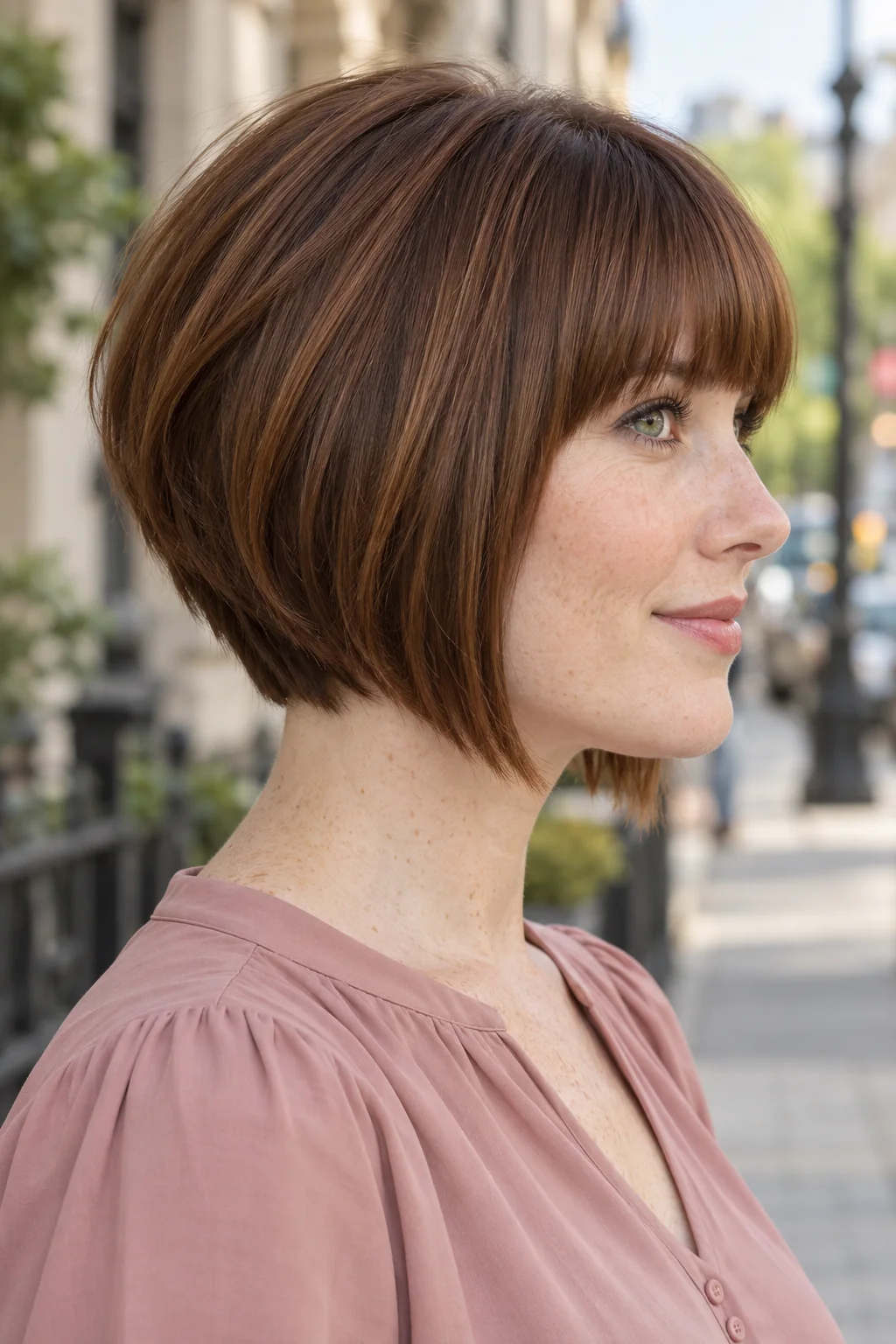
A full, brow-skimming fringe changes the balance of a stacked angled bob by adding a clear horizontal line above the sloping sides. That forehead frame can make a longer face feel more balanced, while the clean back and substantial ends give the whole cut a deliberate, fashion-minded mood. It works best when you enjoy wearing a fringe most days and have a growth pattern that lets it settle without a constant fight. Dry the fringe first, using gentle side-to-side direction before it sets into an unwanted split. Ask for a full fringe, medium rounded back graduation and solid below-jaw corners, discussing fringe density separately from the amount of stacking.
Ask your stylist for: A brow-skimming full fringe, a medium rounded stack and solid angled sides ending below the jaw.
8. The Sweeping Side-Fringe Version
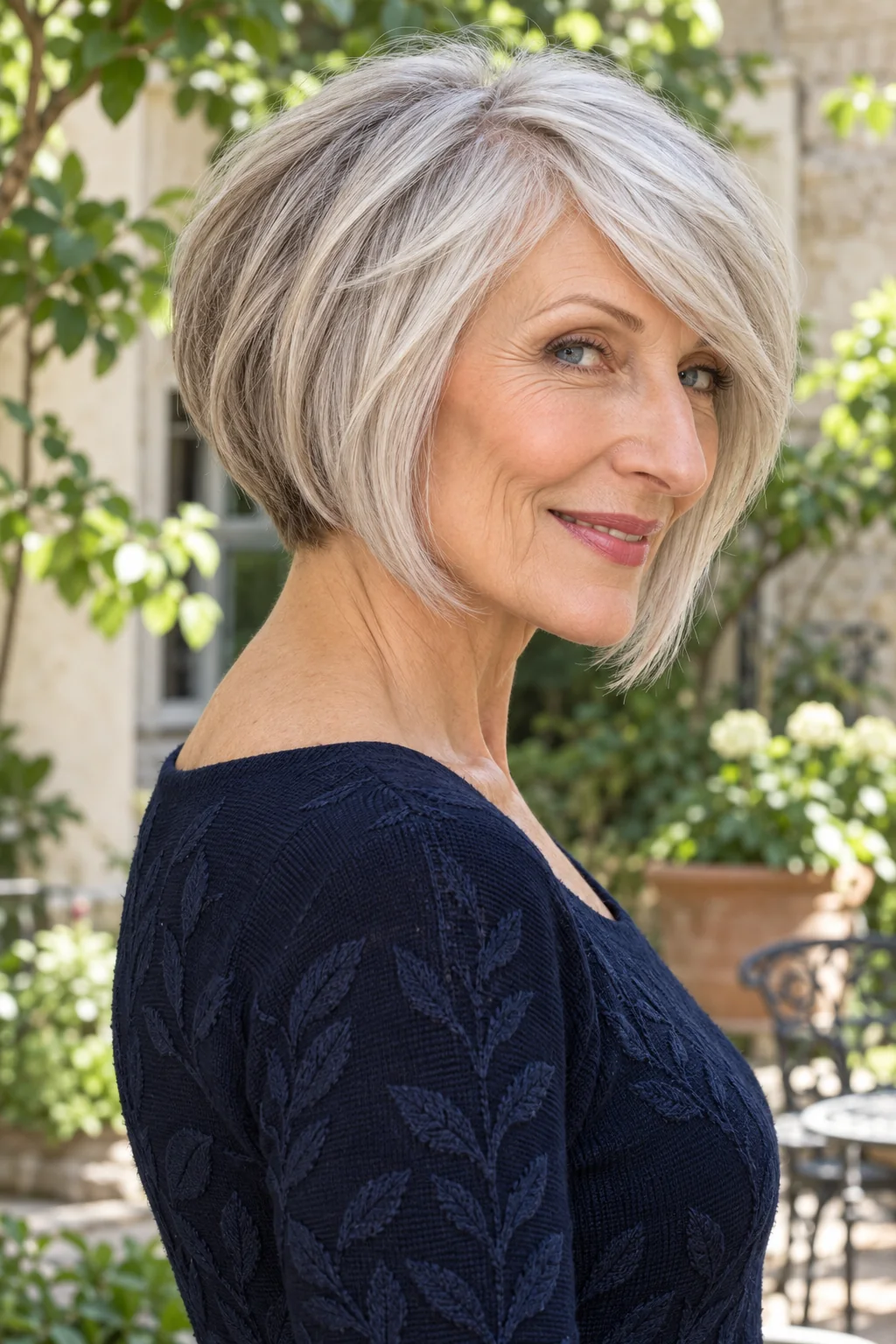
A sweeping side fringe carries the diagonal around the face, linking a soft forehead section to the longer front of the bob. The moving line can soften a square outline and lets one eye and cheek feel more open, creating an elegant, approachable impression rather than a rigidly symmetrical frame. Choose it if you naturally favor a side part and do not mind redirecting the front after sleep. Keep the fringe long enough to sweep comfortably without becoming a curtain over your eye, and check it while wearing your usual glasses if relevant. At the salon, request a long diagonal fringe blended into the front, with low rounded graduation behind it.
Ask your stylist for: A long diagonal side fringe blended into the longer front, with low rounded graduation behind.
9. An Asymmetric Front With a Rounded Stack
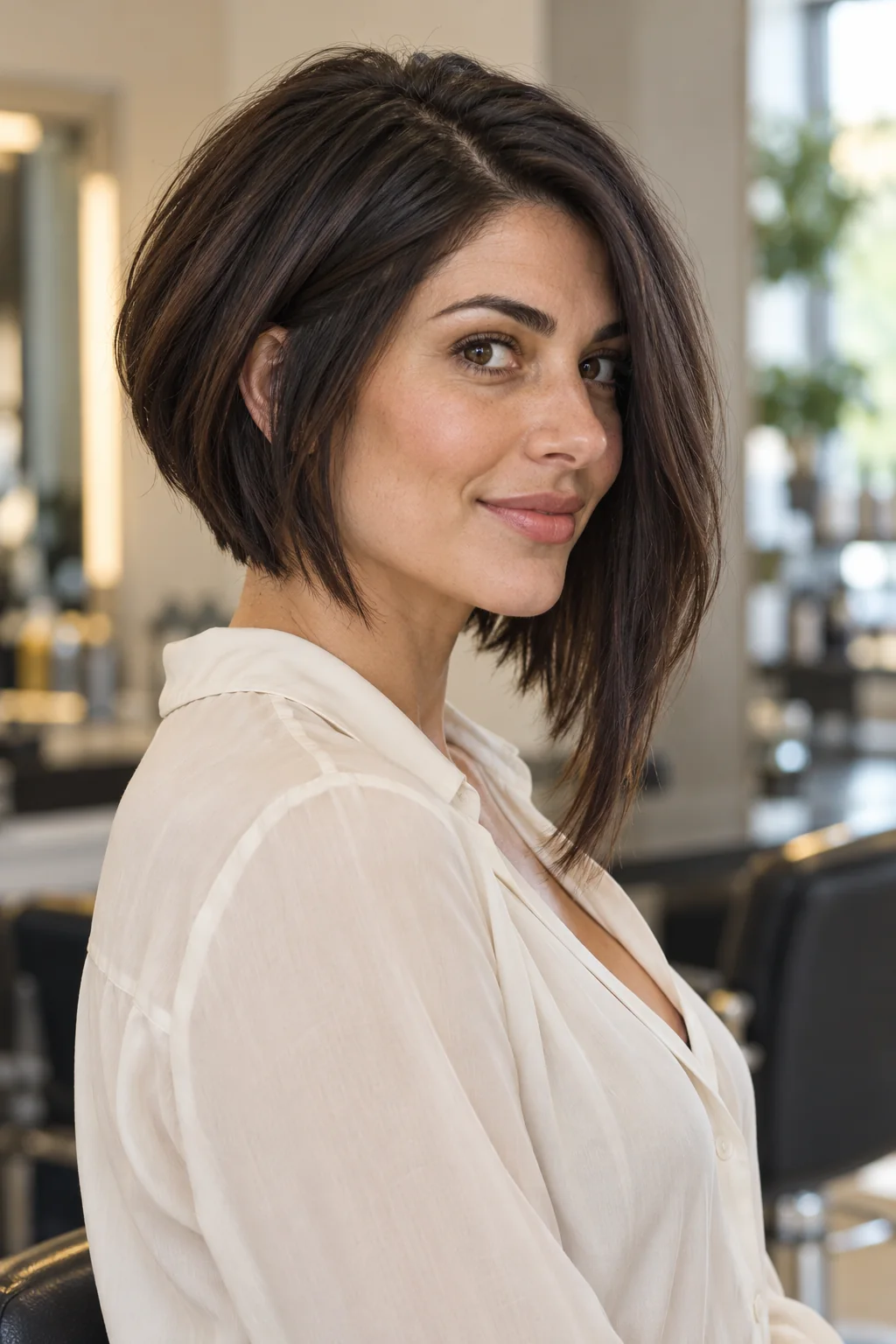
One front side finishes at the jaw while the other falls distinctly lower, adding asymmetry to the already angled profile. That unequal frame draws attention to the cheek you choose to show and gives a familiar bob a creative, self-assured energy without needing shaved sections or elaborate styling. It suits someone who likes a consistent part, because moving the part around can change the apparent balance of the two sides. Check the cut facing forward as well as in profile so the longer panel looks intentional rather than accidentally uneven. Ask for a balanced rounded stack with deliberately unequal front lengths, and agree on each dry endpoint before any cutting begins.
Ask your stylist for: A balanced rounded stack with deliberately unequal front lengths, one at the jaw and one below it.
Pause and notice: Agree on three points before the cut: the shortest nape length, the fullest part of the back and the final front corner.
10. Airy Surface Layers, a Solid Angled Edge
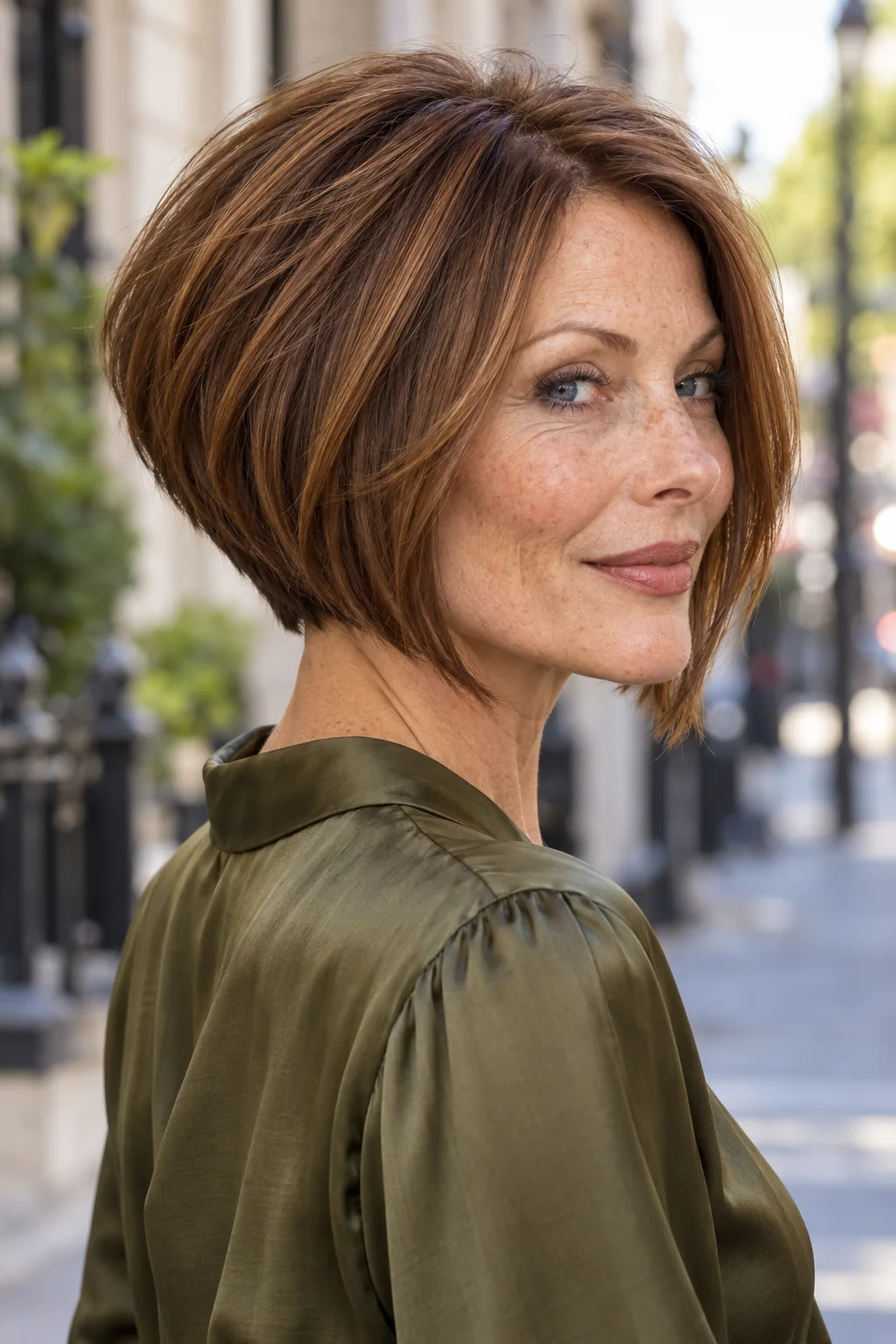
A few soft surface layers break up the smooth cap of a stacked bob while the angled perimeter stays substantial. The little separations add movement around the cheekbones and make the shape feel more casual and lively, especially if a completely polished finish feels too formal for your day. This option needs enough density to spare; on lower-density hair, too many layers can make the sides transparent rather than airy. Use your fingers to loosen the dry surface instead of thinning the ends into wisps. Request a graduated back, limited soft surface layers and a solid angled edge, asking the stylist to show where weight will be removed before committing.
Ask your stylist for: A graduated back, limited soft surface layers and a substantial angled perimeter without wispy ends.
11. One Side Tucked to Reveal the Shape
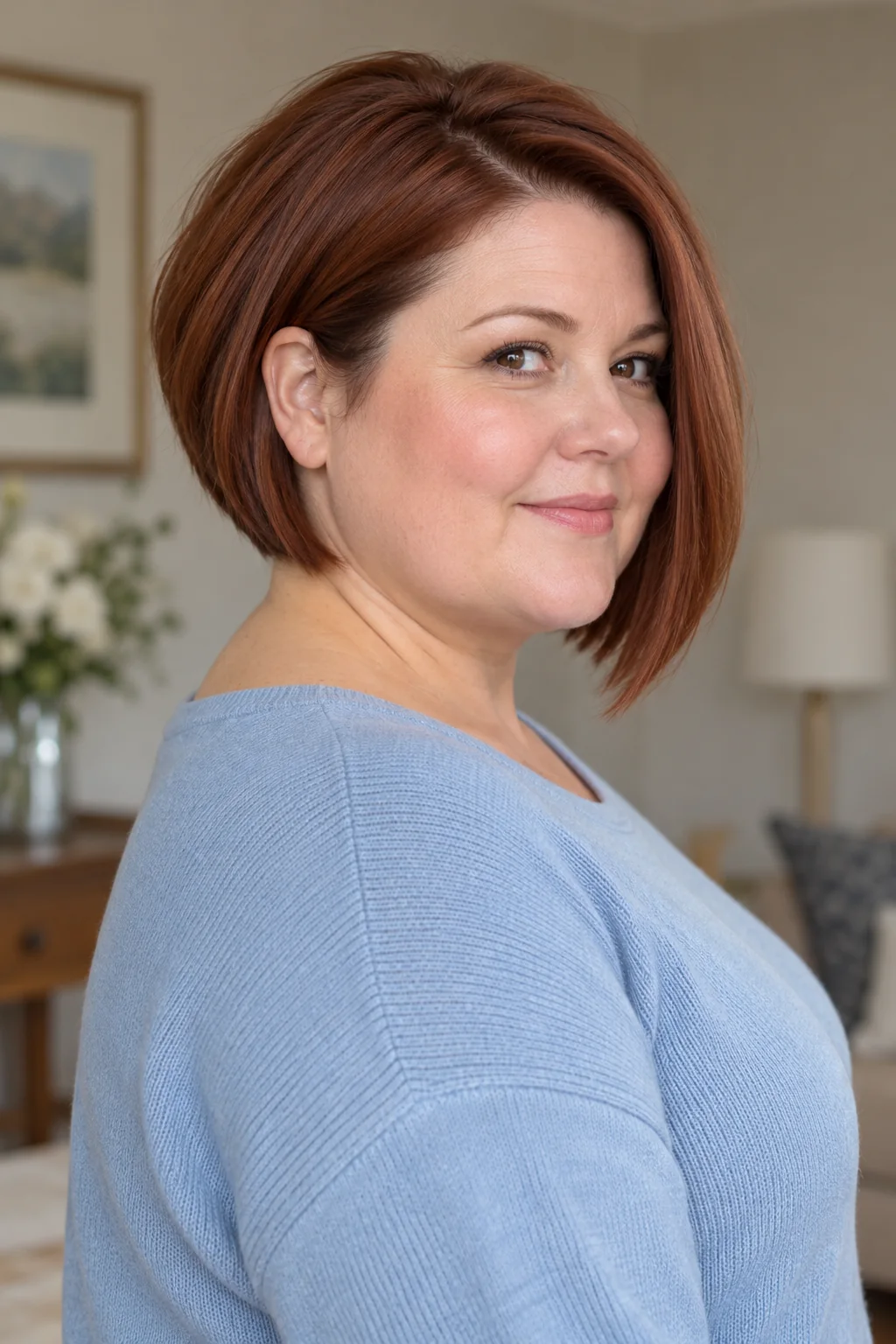
Tucking one side behind the ear reveals the transition from a close nape to a rounded back, while the opposite front corner stays loose beside the face. The open cheek and visible neckline give the cut a neat, quietly professional feeling, making this a useful styling option when you want a change without another haircut. It works only if that side actually reaches behind your ear comfortably; a photograph cannot tell you whether your own shorter sections will cooperate. Dry the side in the direction of the tuck and release it occasionally if the bend becomes too pronounced. Ask for a smooth medium stack with tuckable sides and intact longer front corners.
Ask your stylist for: A smooth medium stack with enough side length to tuck comfortably, preserving the longer front corners.
12. A Longer, Neck-Length Stack
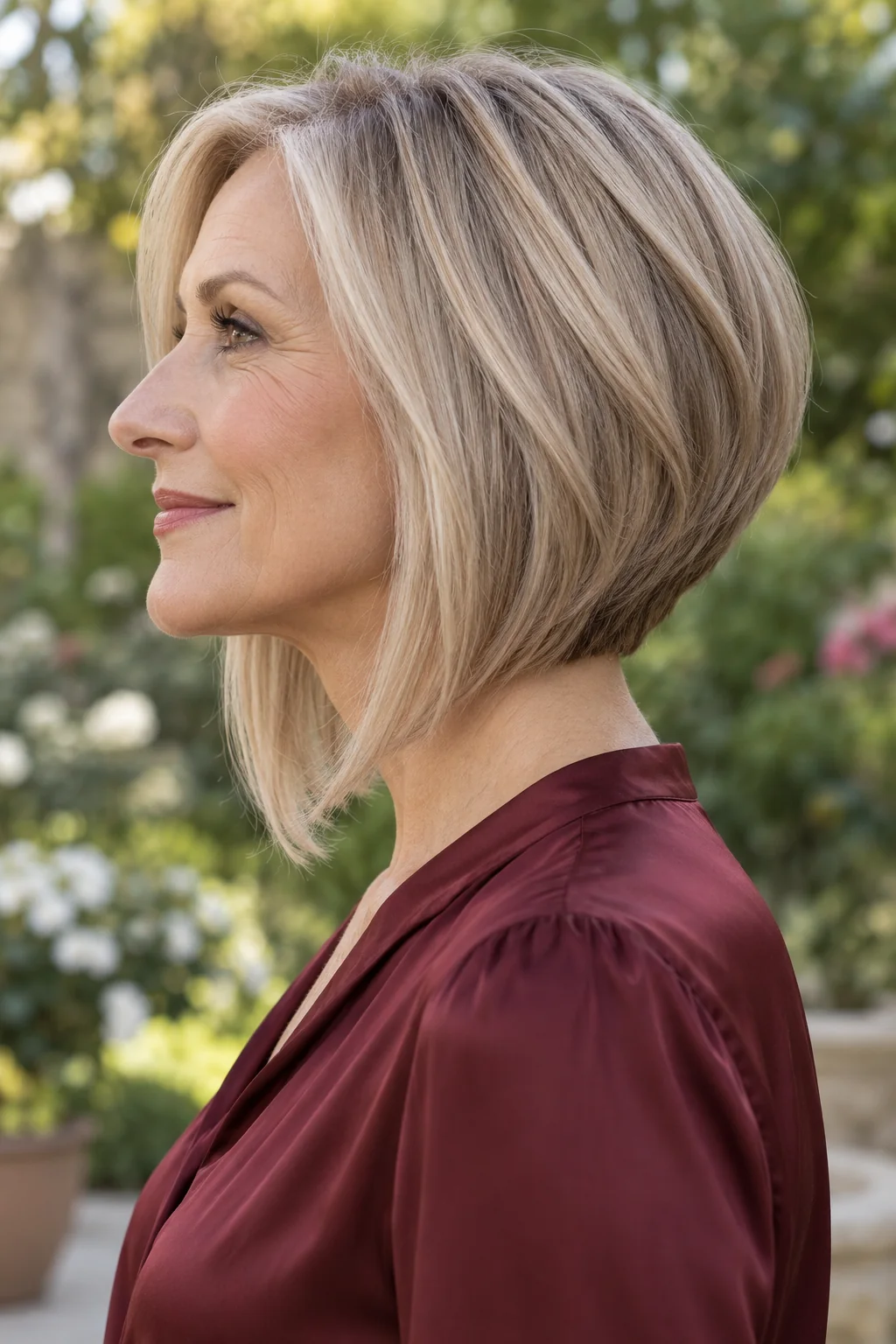
A longer nape keeps some coverage at the neck, with a shallow stack curving into front pieces comfortably below the jaw. The softer transition feels less exposed than a close cropped back and offers a reassuring middle ground when you like structure but are hesitant about a dramatic short cut. It can suit someone moving from a longer bob, though a longer back still needs shaping and may flick against collars. Check how the perimeter rests with the necklines you wear most often, then choose a finish you can reproduce. Tell your stylist you want a neck-length graduated back, a shallow continuous forward angle and enough weight for a soft rather than sharply wedged outline.
Ask your stylist for: A neck-length graduated back with a shallow forward angle and front corners comfortably below the jaw.
Before You Book the Appointment
A successful salon visit begins with the overall shape, construction and upkeep—not only the finished length. Use this quick reality check before choosing your final reference photograph.
- Straight hair: Makes the graduation and perimeter easy to see; small irregularities or nape cowlicks can also show clearly.
- Wavy or curly hair: Choose the dry silhouette with your stylist. Shrinkage can raise the back and shorten the front more than expected.
- Fine strands or lower density: Protect enough side and perimeter weight. A dramatic stack can expose sparse sections rather than make them fuller.
- Dense hair: Discuss controlled weight removal beneath the surface, so the back does not become wider than you want.
- Daily routine: Choose a stack height you can maintain with your usual tools. A polished photograph may represent more brushwork than an air-dried finish.
Stacked, Angled, Inverted or Layered?
Stacked describes graduation through the back that builds a rounded silhouette. Angled describes a perimeter that becomes longer toward the front. A cut can be angled without much stacking, or stacked with only a small forward slope. Inverted often describes a similar back-to-front shape, but stylists do not all use these labels identically. Layering is a broader term: layers can create movement without producing a compact graduated back. Show the profile you want and point to the visible construction instead of relying on a name alone.
Choose the Back Before Choosing the Fringe
Start with your growth patterns, density and the shape you want behind your head. A low stack looks compact; a higher stack places more visible fullness above the nape. Fine strands do not automatically need a high stack, and lower density may need more preserved perimeter weight. Thick hair can require careful internal weight removal to keep the back from becoming bulky. Then choose the front length and fringe around your usual part, glasses and preferred amount of face coverage. Bring photographs of the back as well as the front.
What to Say at the Salon
Try: I want graduation through the back and a clear forward angle, with the shortest point here and the front ending here. Point to the actual locations on a photograph or yourself. Explain whether you air-dry, use a brush or regularly straighten, and ask what the cut will look like in that routine. Discuss nape cowlicks before agreeing to a very short back. If your hair curls, agree on the dry endpoints and shrinkage allowance. Ask whether the chosen reference needs more daily styling than you want to do.
Style the Shape You Have
For a smooth finish, guide the nape and back into their intended direction as you dry, then work through the longer front. Use heat protection according to the product instructions and avoid repeatedly chasing an identical curve with hotter tools. Waves and curls may look best when their natural groups remain intact. Choose products for your own texture and density; heavy finishing products can collapse a light stack. Let the hair cool or dry fully before loosening it, then check the side profile rather than judging only the mirror-facing front.
Trims and Growing It Out
A sharply stacked nape usually reveals growth sooner than a softer, longer version. Many wearers discuss a roughly four-to-eight-week reshaping rhythm with their stylist, adjusting for growth, budget and how crisp they want the outline. To grow it out, ask which back sections need to catch up and whether small front adjustments will make the transition easier. Avoid repeatedly shortening the entire nape if your goal is a longer perimeter. Expect the rounded stack to soften as it grows; that changing silhouette can be part of the plan rather than a styling failure.
The Takeaway
Choose the profile first: a quiet low curve, a rounded middle stack or a bolder high shape. Then decide how much front length, fringe and texture belong in your everyday routine. A photograph is a useful starting point, but the most satisfying version is the one whose back and front both feel like you.
More Hair Inspiration
- Short Bob Haircuts — Compare other short-bob silhouettes before choosing graduation.
- Blunt Bob Haircuts — See how a substantial unstacked edge creates a different outline.