Sometimes the finishing touch is the whole reason a hairstyle feels like you. A pearl beside the temple, a glint along a braid or a beautiful clasp above a ponytail can make familiar hair feel ready for something special. The trick is choosing an ornament your hairstyle can comfortably support.
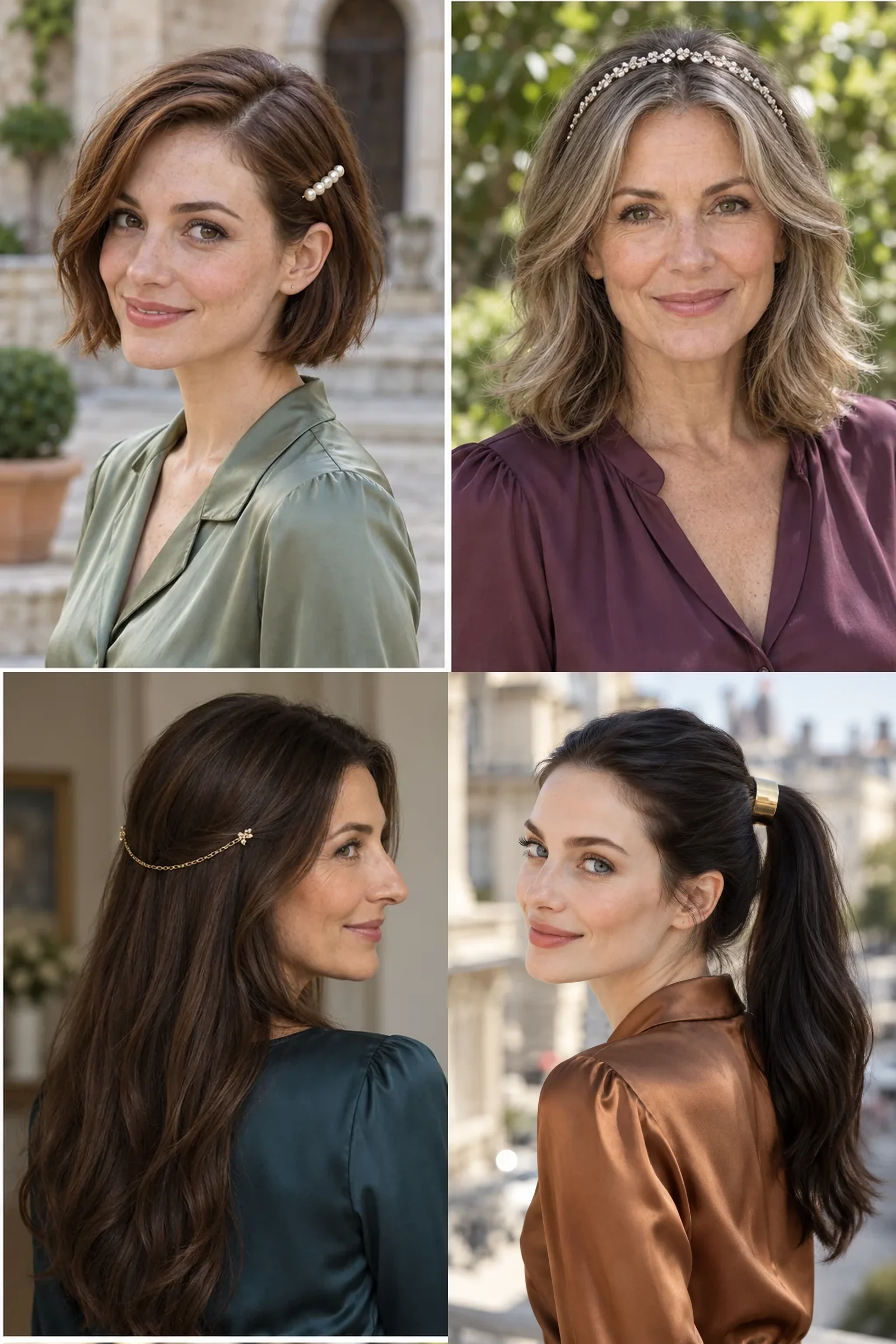
Hair jewelry styles are hairstyles arranged around decorative pieces such as pearl barrettes, crystal pins, metal cuffs and draped chains. Their defining feature is the placement of the ornament: along a part, across a gathered section or around a bun. Unlike a plain elastic or everyday claw clip, the accessory is meant to be noticed, although its decoration does not guarantee a strong fastening. These twelve ideas compare different formats rather than twelve versions of the same updo. The portraits illustrate finished placement, not insertion steps; ask your stylist to show the hidden foundation when a piece needs extra support.
Find the one that feels like you: Start with the first look and let the photographs lead. Each style explains how the shape affects your features, the mood it creates and the exact words to take to your stylist.
Quick Facts
- Secure the hairstyle before adding an ornament that cannot bear its weight.
- Match the clasp or opening to the actual section, not simply to your overall hair length.
- Keep points and edges away from the scalp; reset anything that pulls.
- Remove every ornament and support before brushing or taking the hairstyle apart.
1. A Pearl Barrette Beside a Tucked Bob
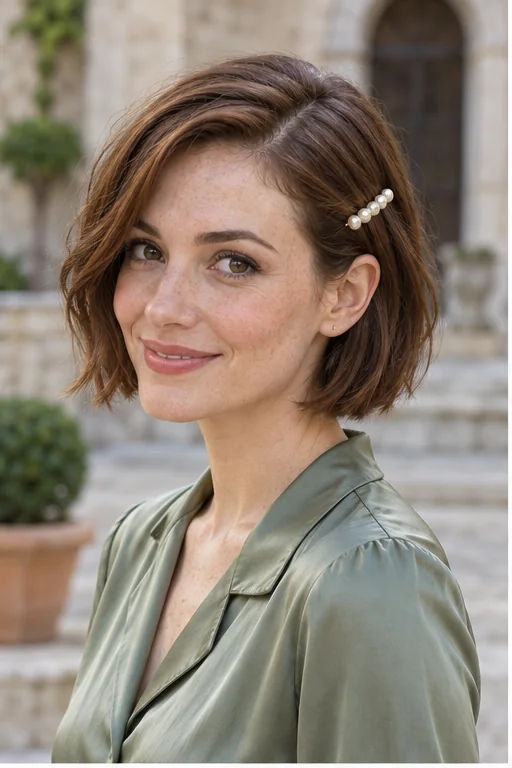
A line of pearls turns a simple side tuck into a deliberate detail, drawing attention toward the eyes while leaving the bob's clean edge visible. The small placement feels quietly dressed up for dinner or a work event, especially if you like wearing your hair down and want to keep most of your usual routine. Choose a lightweight clasp that closes on the section without sliding; a large ornamental face can hide a much smaller fastening underneath. Tell your stylist, “Keep my bob loose, tuck one side and secure a pearl barrette just above the ear,” then test the tuck while turning your head.
Ask your stylist for: A loose bob with one side tucked and a lightweight pearl barrette just above the ear.
2. Tiny Stars Across a Sleek Side
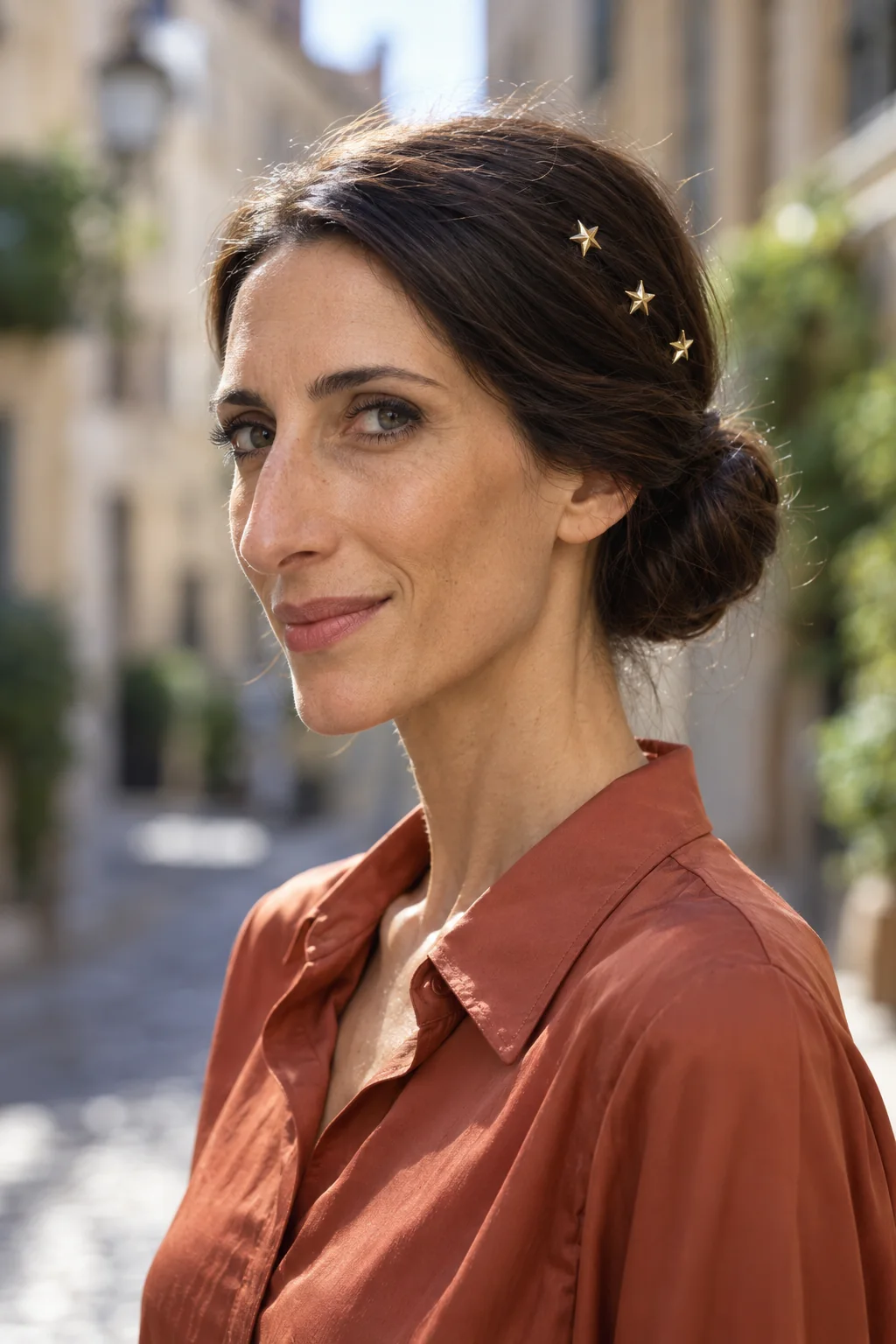
Three tiny stars create a little constellation across one sleek side, with enough space between them to keep the arrangement airy. Their diagonal line lifts the eye toward the temple and makes a restrained low updo feel playful, a lovely choice when a large headpiece would feel unlike you. This works best when the hair beneath each ornament is controlled, because tiny decorative pins can rotate or disappear into a loose surface. Ask for a smooth low updo with three separately secured star pins in a rising diagonal above one ear, and have the stylist show you where each support sits before you take it down.
Ask your stylist for: A smooth low updo with three separately secured gold star pins rising diagonally above one ear.
3. A Decorative Comb Above a Half-Up Twist
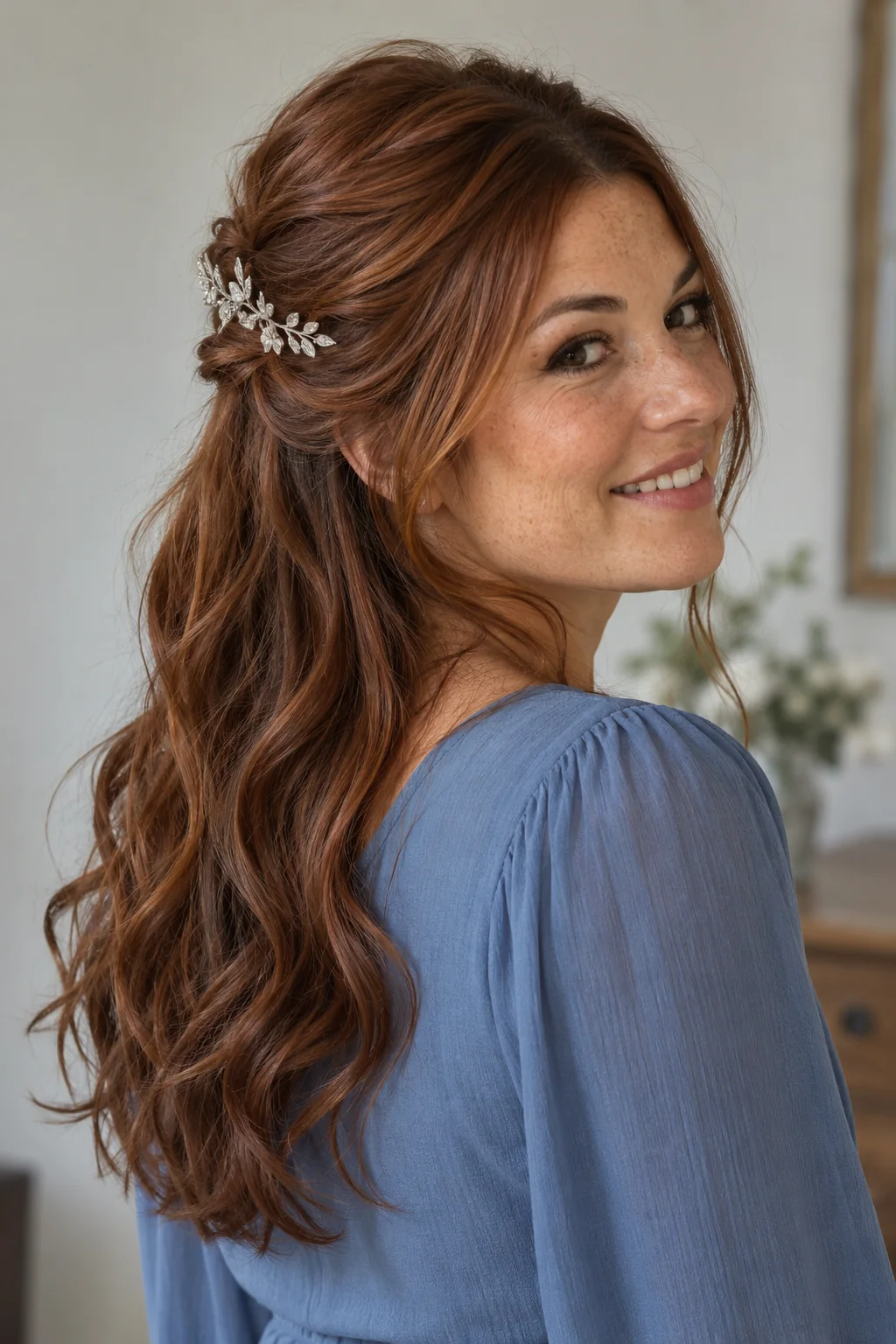
A silver leaf comb sits above a small half-up twist while the rest of the auburn waves falls freely. The broad ornament gives the gathered section a clear focal point without covering the loose lengths, so the result feels romantic while still letting you enjoy the movement of wearing your hair down. A comb needs a foundation that its teeth can engage; smooth loose hair alone may not hold its position, particularly when the ornament is heavy. Describe a softly twisted half-up section secured independently, with the leaf comb inserted into that foundation, and ask your stylist to demonstrate gentle removal without dragging the teeth through your waves.
Ask your stylist for: A small, independently secured half-up twist with a silver leaf comb across its foundation and loose waves beneath.
Pause and notice: Choose the foundation before the sparkle. A decorative piece can sit beautifully over a hairstyle that is already secure.
4. A Slim Jeweled Headband With Loose Hair
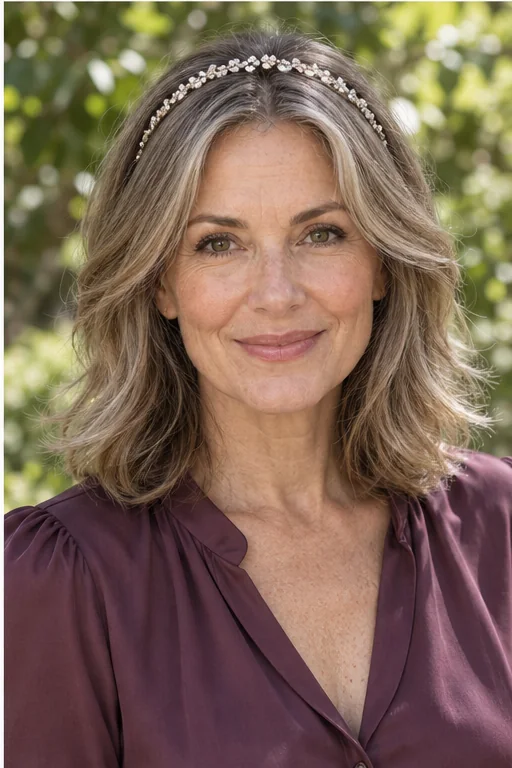
You do not need an updo to make a jeweled piece feel intentional: a slim crystal band creates a bright arc over loose shoulder-length hair. Leaving the front softly parted keeps the face open without sweeping every strand tightly backward, giving the look a graceful, celebratory feeling that suits a meal out as well as a ceremony. The practical test is pressure rather than grip, so try the band for a while before committing to a long event. Ask your stylist to leave a soft center part and settle a narrow jeweled band behind the front sections, checking its ends against your glasses and ears.
Ask your stylist for: A soft center part with a slim jeweled headband behind the front sections, comfortable beside my glasses.
5. Gold Cuffs Along Two Accent Braids
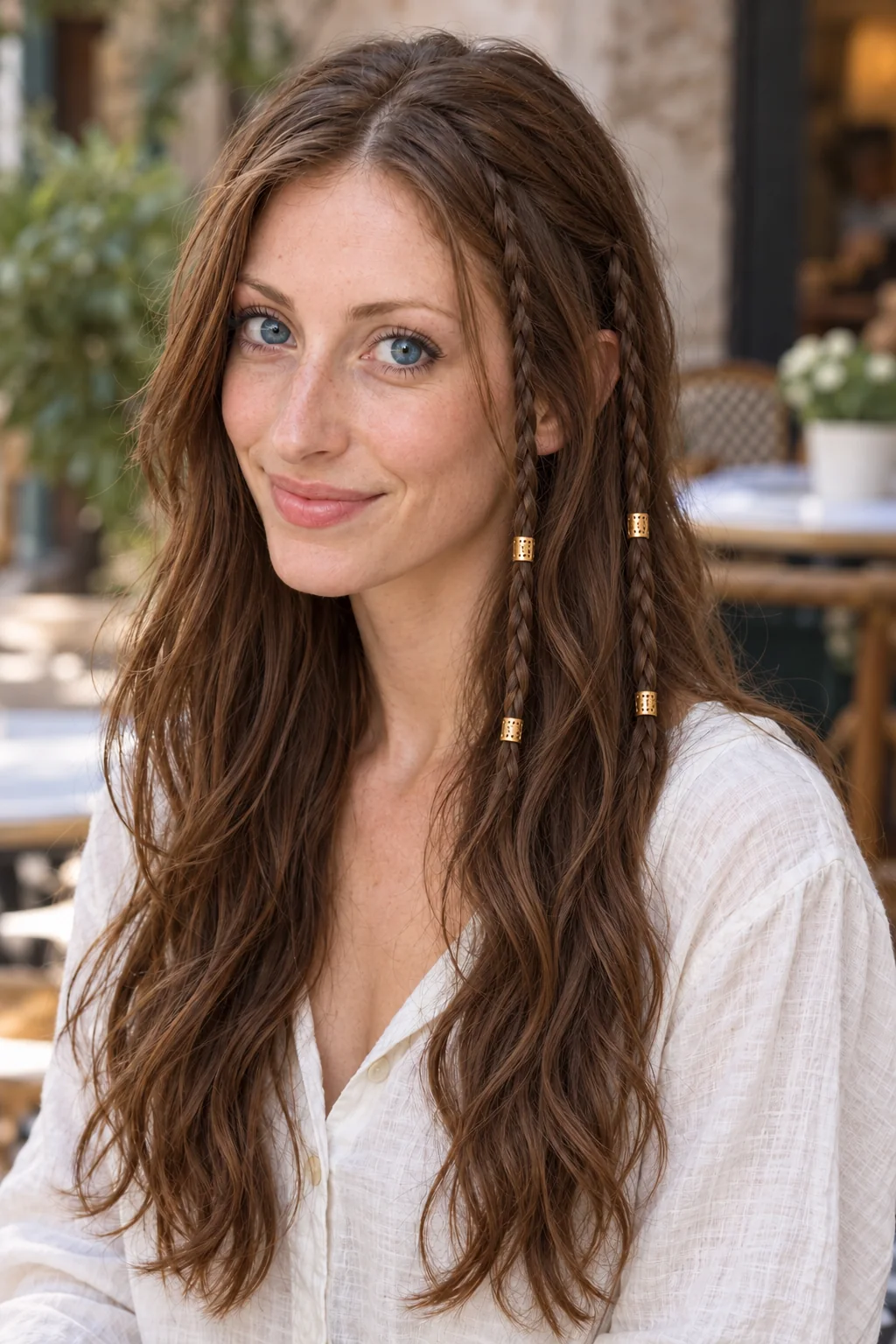
Two slim braids beside loose hair give small gold cuffs a defined place to sit, so the metal becomes a measured accent rather than scattered sparkle. Keeping the rest of the hair down preserves softness around the face and makes the detail feel relaxed and expressive, useful when you want a little interest without an elaborate updo. Choose cuffs sized to the braid and follow their closure instructions; squeezing a rigid piece too tightly can make removal awkward. Tell your stylist you want two narrow accent braids with two spaced cuffs on each, and ask them to show how the pieces open before you unbraid anything.
Ask your stylist for: Two narrow accent braids, each with two spaced gold cuffs, leaving the rest of my hair loose.
6. A Draped Chain Over Smooth Loose Lengths
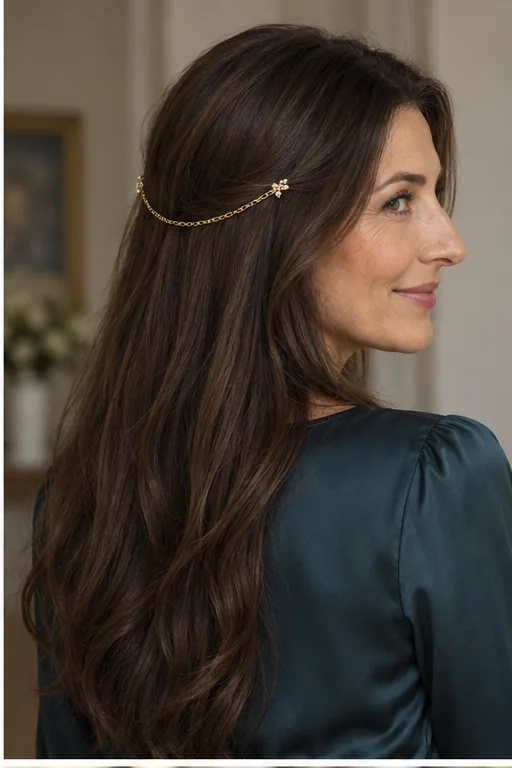
A fine chain draped across the back makes smooth loose hair feel almost like part of an evening outfit. Its shallow curve creates a beautiful horizontal detail without hiding the length, bringing a composed, glamorous mood to a simple silhouette. The chain should hang from secure attachments rather than catch randomly in the hair, and a light piece is easier to test than a heavy collection of dangling strands. Ask for two discreet side foundations connected by one fine decorative chain across the back, then check your movement and collar; if it catches when you turn, change the placement before you leave.
Ask your stylist for: Two discreet side foundations supporting one fine gold chain draped across the back of my loose hair.
Pause and notice: Light enough to forget about is a useful starting point. Try the ornament with your collar and normal head movement.
7. A Crystal Vine Around a Low Bun
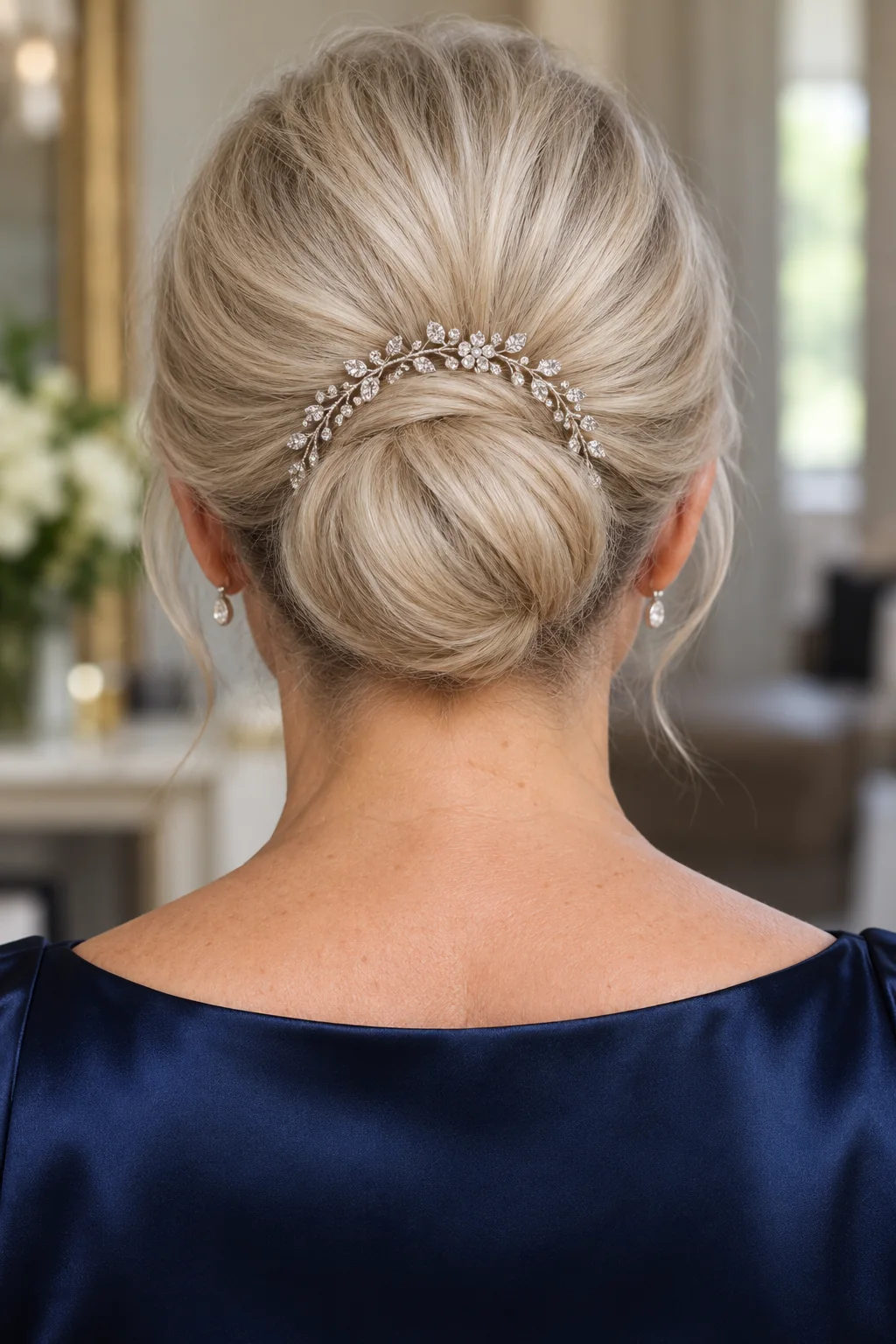
A flexible crystal vine follows the upper curve of this low bun, echoing its rounded outline instead of competing with it. Keeping the sparkle close to the bun leaves the crown uncluttered and creates an elegant, settled feeling, especially with an open neckline or a softly tailored outfit. The bun needs its own secure structure before the vine is arranged, because decoration should not be asked to carry the whole hairstyle. Show your stylist a compact low bun with a fine silver vine tracing only its upper edge, and ask which extra pins secure the ornament so you can remove those first at the end of the evening.
Ask your stylist for: A secure compact low bun with a narrow crystal vine tracing its upper curve.
8. A Sculptural Cuff Above a Ponytail
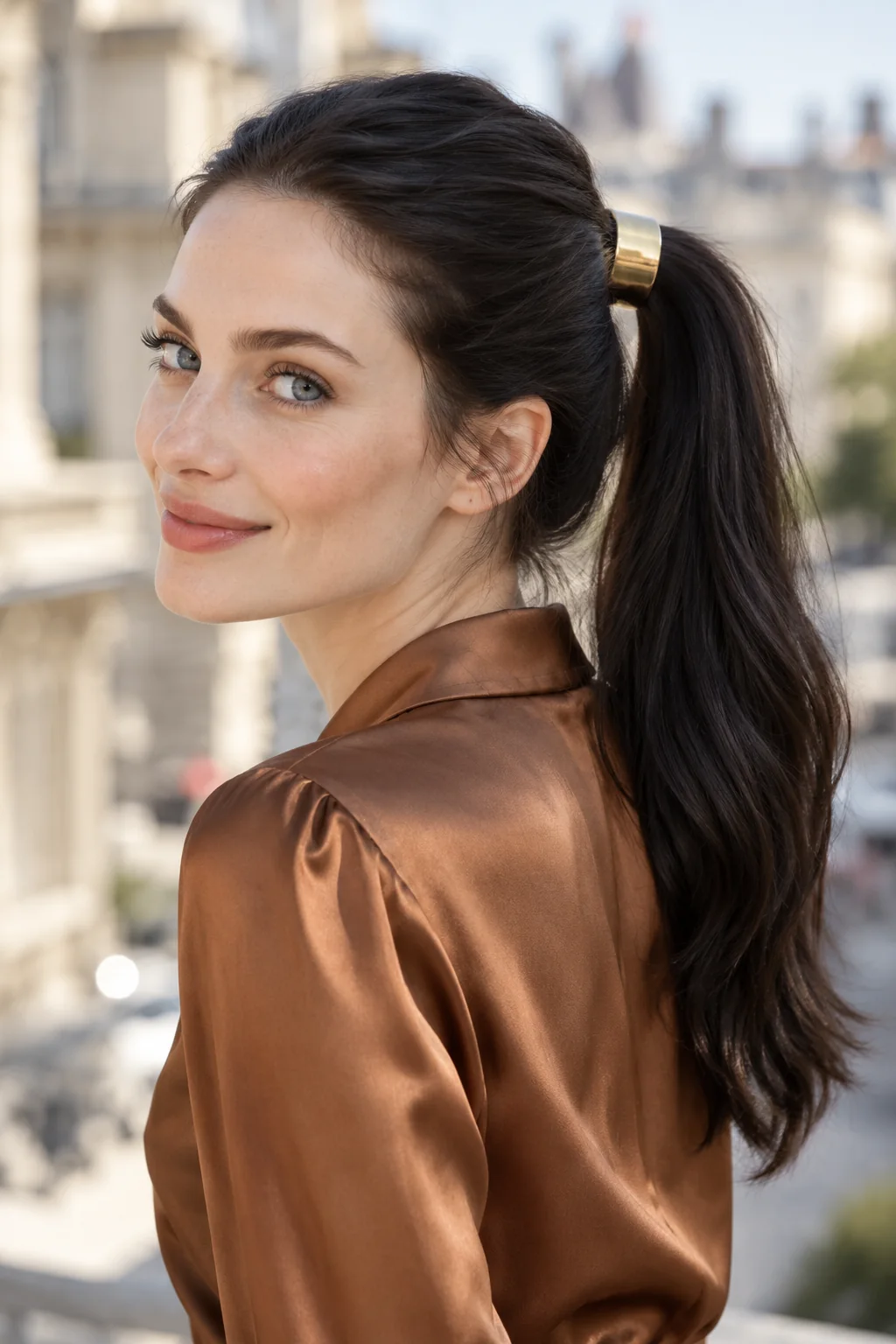
A polished gold cuff gives a mid-height ponytail a strong, sculptural starting point while the tail itself stays simple and loose. The contrast between the broad metal curve and moving hair feels confident and modern, making an ordinary tied-back routine look considered without a complicated finish. Secure the ponytail with a suitable elastic first, then choose a decorative cover designed for that bundle size rather than forcing a tight cuff around it. Ask for a smooth mid-height ponytail with a gold cuff concealing the elastic, and check that its hinge or closure cannot catch the hairs underneath when you turn your head.
Ask your stylist for: A smooth mid-height ponytail secured with an elastic and a gold decorative cuff covering its base.
9. A Crystal Slide Nestled Beside Curls
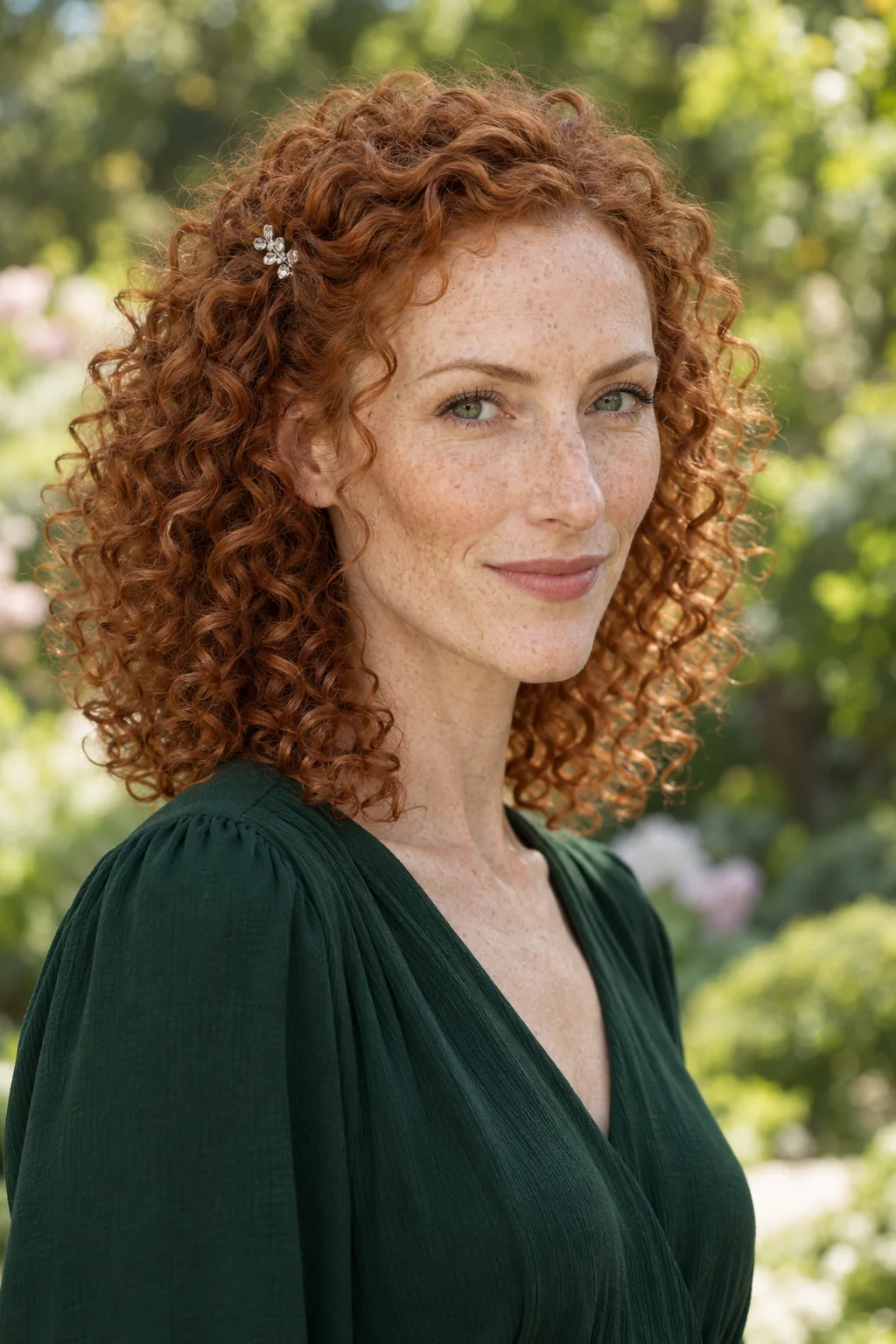
Nestling a crystal slide beside the temple opens one side of a rounded curly style while keeping the rest of its shape generous. That small asymmetry brings attention toward the cheekbone and earrings, giving familiar curls a festive feeling without flattening the whole head into a sleek finish. Position the slide in a deliberately separated section, keeping the clasp clear of surrounding curl groups so it can close and come out cleanly. Ask your stylist to preserve your curl pattern, gather only a small side section and anchor a lightweight crystal slide near the temple, then show you how to release it without pulling through loose curls.
Ask your stylist for: Intact curls with one small side section held by a lightweight crystal slide near the temple.
Pause and notice: The most useful demonstration may be taking it out. Know where every clasp, ring and hidden support sits before you leave the salon.
10. A Jeweled Bow at the Half-Up Join
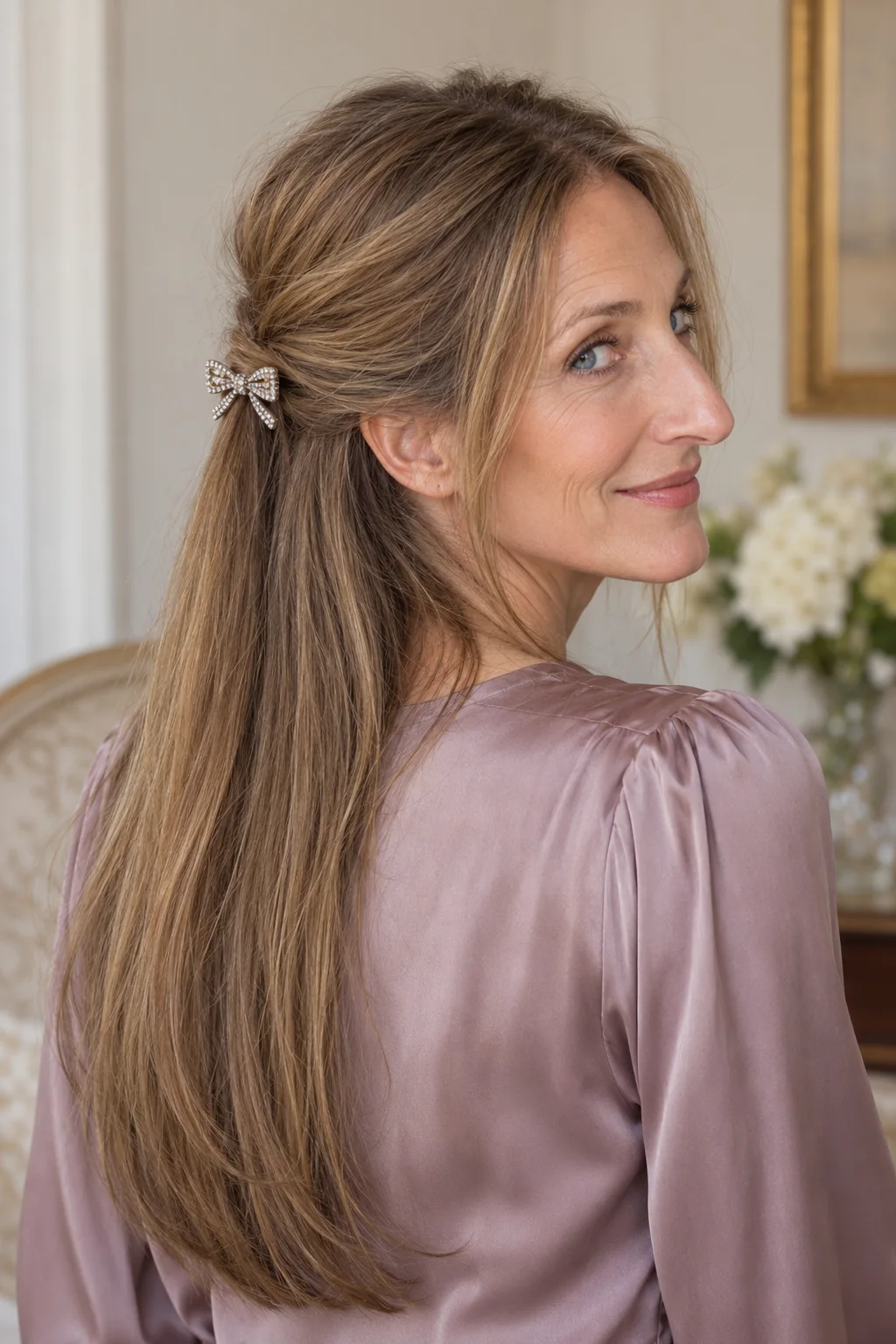
A small crystal bow makes a neat half-up section feel charming without requiring a large ribbon or a full formal updo. Its balanced loops sit across the join while straight lengths fall underneath, creating a sweet, polished detail that can make an everyday outfit feel ready for a celebration. The bow shape may be purely decorative, so inspect the actual clasp and use a separate support when the gathered section is too substantial for it. Tell your stylist you want a small jeweled bow centered over a secured half-up join, with relaxed sides, and test whether its lower edge catches against the loose hair.
Ask your stylist for: A relaxed half-up section with a small jeweled bow centered across its independently secured join.
11. Tiny Rings Along One Accent Braid
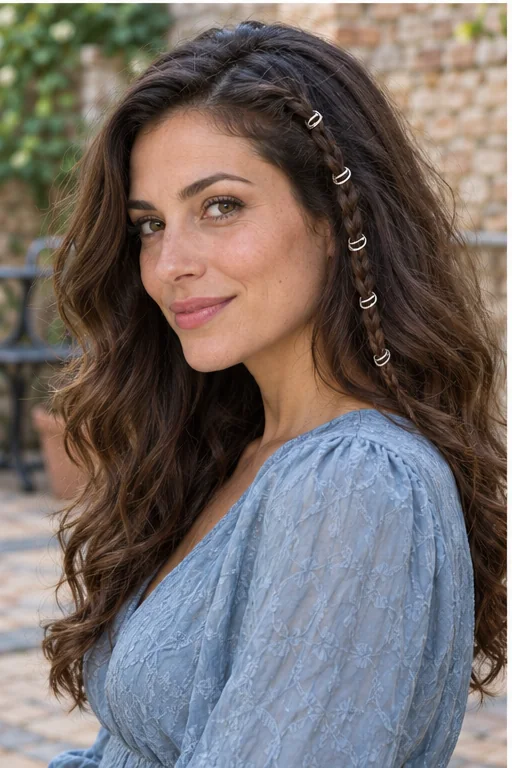
One narrow accent braid becomes a line of tiny silver rings against loose dark waves, a more graphic finish than scattered pins. The repeated circles draw a clean path from temple toward the shoulder, letting the rest of the hairstyle stay soft; it feels expressive and slightly bold without committing you to a different haircut. Use hair ornaments with a suitable opening and smooth closure, rather than improvising with rough hardware, and keep each ring light enough for the small braid. Ask your stylist for one side accent braid with five spaced silver hair rings, and learn the opening sequence before taking the braid apart.
Ask your stylist for: One narrow side accent braid with five spaced silver hair rings, plus a removal demonstration.
12. Pearl-Ended Spirals Scattered Over a Twist
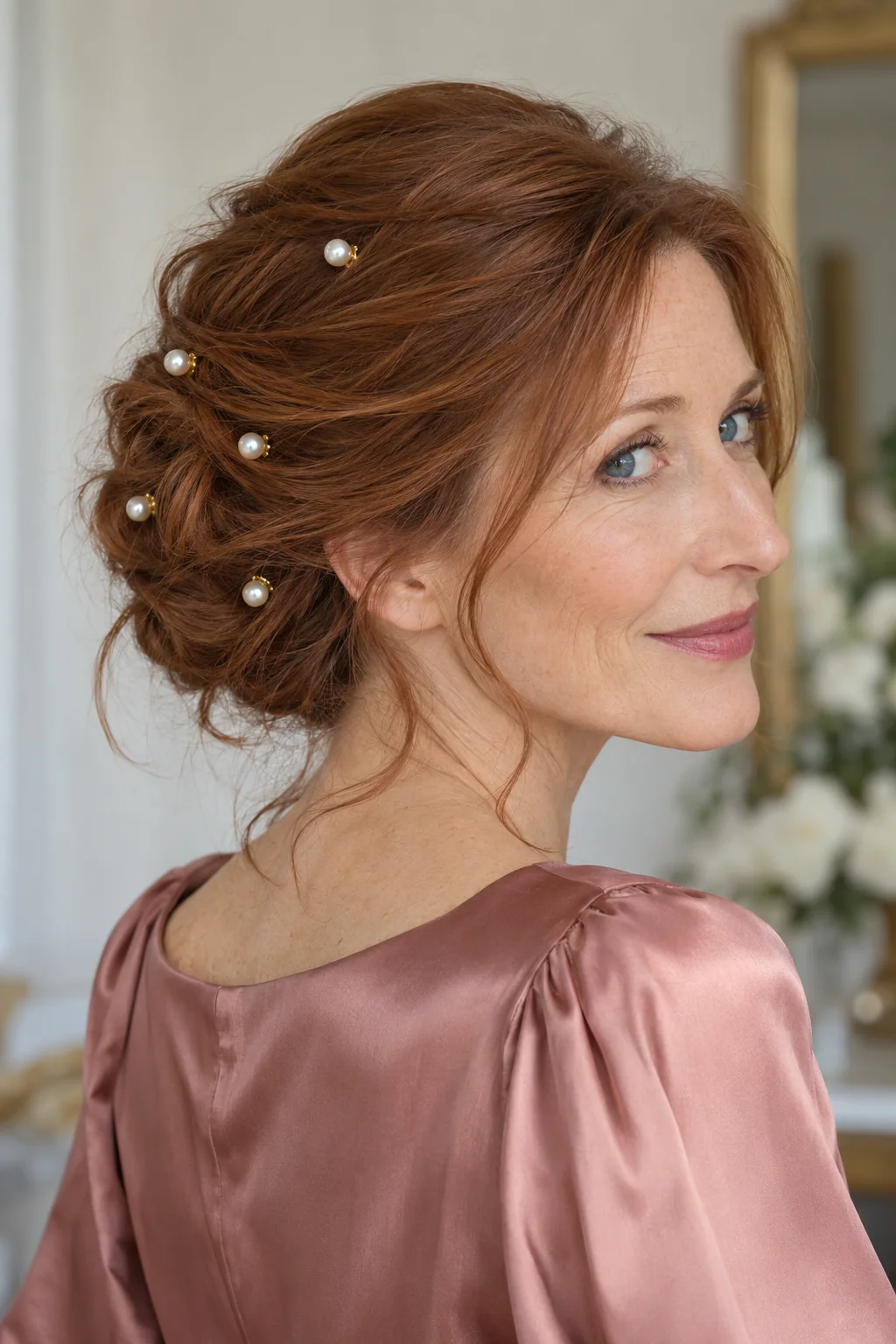
Five pearl-ended spirals dot the surface of a softly folded updo, creating a scattered finish instead of the continuous line of a barrette. The separate points of light emphasize the folds and make the shape feel delicate and personal, a lovely choice when you want decoration that follows your hairstyle rather than sitting on top as one large piece. Choose ornaments designed for hair and follow their insertion and removal directions; the decorative spirals do not replace the supports inside the updo. Ask for a secure folded updo with five pearl-ended spirals spaced over the surface, and have your stylist demonstrate removing each one without tugging.
Ask your stylist for: A secure softly folded low updo with five pearl-ended hair spirals spaced over the surface.
Before You Book the Appointment
A successful salon visit begins with the overall shape, construction and upkeep—not only the finished length. Use this quick reality check before choosing your final reference photograph.
- Fine strands or lower density: Choose a light piece and a clasp that closes securely on a smaller section. Fine strands and low density are different concerns; heavy ornaments can overwhelm either.
- Thick hair: A decorative barrette may only suit a half-up section. Check its usable opening rather than forcing all your hair into it.
- Curls and coils: Place pieces around curl groups or a prepared foundation. Avoid dragging teeth or exposed hinges through loose texture.
- Short hair: A small side slide or headband can work without enough length for a bun; the section must still give a clip something to grip.
- Daily comfort: Try the piece with your collar, glasses and intended activity. Take down an arrangement that presses or pulls.
Match the Fastening to Your Hair
Look behind the decoration before deciding a piece will work. A barrette needs enough room to close on your section; a comb needs a foundation for its teeth; a headband needs comfortable pressure at its ends. A decorative ponytail cuff may cover an elastic rather than replace it. Bring the actual accessory to a styling appointment, since a photograph rarely reveals the usable opening, weight or hinge. Choose smaller gathered sections when a piece cannot accommodate all your hair, and never force a clasp shut.
Short Hair, Fine Strands and Loose Texture
Short hair can carry a small side slide or a headband even when it cannot reach a bun. Fine strands may suit a light ornament, but consider density separately: a narrow section offers less hair for a clasp to engage. With curls or coils, deliberately separate the section that will hold the ornament and preserve the surrounding groups. Braids can provide defined places for cuffs and rings, but the fit still matters. No accessory is automatically comfortable for every texture, and a different fastening can be more useful than adding more product.
A Useful Salon Request
Describe three things: where you want the ornament, how much hair you want left loose and which parts of your routine matter. For example: a light pearl barrette above one ear, the bob left down and enough space for glasses. Bring the accessory and explain if clips often slide or headbands press. Ask which supports are structural and which are decorative, then have the stylist show fastening and removal slowly. These temporary styles do not require a new haircut; as layers grow, revisit the section size rather than assuming the same clasp must hold more hair.
Comfort, Movement and Removal
Before relying on a new piece for an event, wear it long enough to notice pressure and turn your head gently against your intended neckline. Reset anything that pulls, presses or catches. Remove ornaments individually before brushing or loosening the foundation, opening clasps fully and following the maker's directions for spiral or ring pieces. Do not pull a closed ornament down a braid. Keep a count of small pieces so you know they are all out, and avoid sleeping in decorative accessories.
Keep the Jewelry and the Hairstyle in Balance
A single prominent ornament usually gives the eye a clear place to land. Several smaller pieces can work just as well when their spacing follows a braid, fold or side section. Try the arrangement with your earrings and neckline: a chain at the back may catch a raised collar, while a side barrette can sit too close to glasses. There is no rule that every metal must match. Start with the shape you enjoy, then remove anything that competes with it or makes the arrangement uncomfortable.
The Takeaway
Start with the hairstyle you already enjoy wearing, then choose one detail that makes it feel special: a quiet line of pearls, a little constellation or a sculptural cuff. When the fastening suits your hair and you know how to remove it comfortably, the jewelry becomes the finishing touch you can relax and enjoy.
More Hair Inspiration
- French Hair Pin Hairstyles — Compare U-shaped pins that help anchor folds and coils.
- Ponytail Hairstyles — Choose a ponytail foundation before adding a decorative cuff.
- Minimalist Bun Hairstyles — Find a restrained bun shape for a comb or vine.