A collarbone lob gives you a very specific stopping point to show your stylist. The ends can draw a clean line across your collarbones, brush them in soft waves or reach them only after your curls have settled. Start with the shape you want to see on an ordinary day, in the way you actually wear your hair.
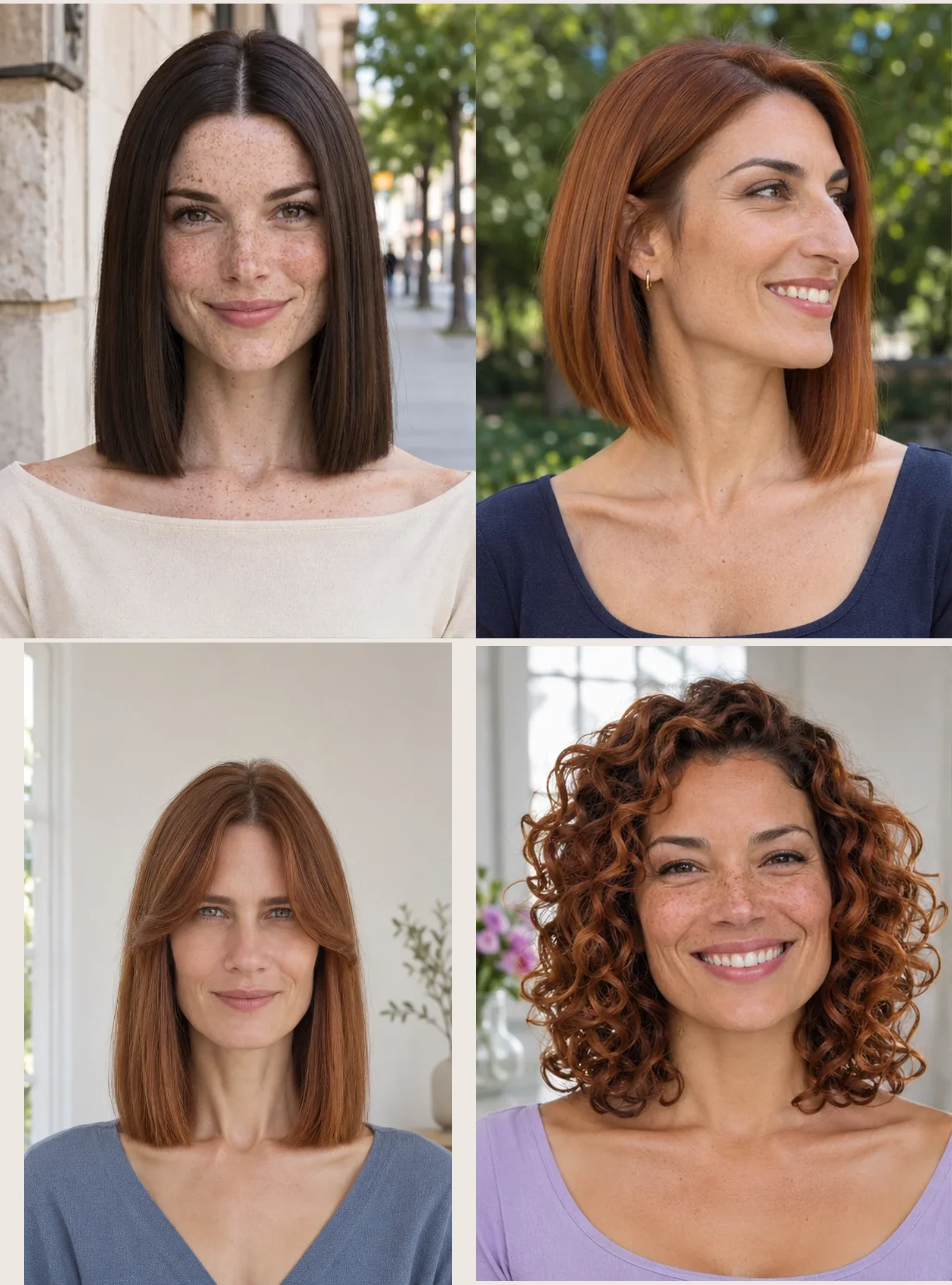
A collarbone lob is a long bob whose longest dry ends sit at or graze the collarbones. The defining feature is a clear bob perimeter around that length. A jaw-length bob ends well above it, while a general shoulder-length layered haircut may spread its ends across the shoulders and upper chest without a single clear hem. A collarbone lob can have fringe, layers or an angled front. Decide where you want the longest hair to land first, then choose the detail that suits your texture and styling time.
Find the one that feels like you: Start with the first look and let the photographs lead. Each style explains how the shape affects your features, the mood it creates and the exact words to take to your stylist.
Quick Facts
- Check the hem at the collarbone with hair dry and your head level.
- Keep more weight at the bottom for a fuller-looking line.
- Account for wave and curl shrinkage in your usual finish.
- Test a low ponytail in the chair if tying your hair back matters.
1. The One-Length Blunt Lob
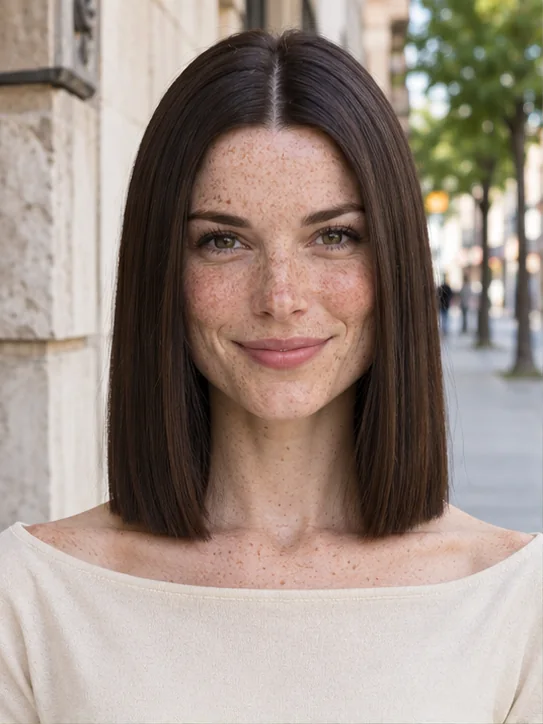
There is a satisfying weight to a dark lob that stops in one clean line across the collarbones. Keeping the perimeter intact makes fine ends look more substantial, and the clean outline can feel pulled together on days when all you have time for is a quick brush. If your hair naturally kicks at the shoulder, dry the last inch straight while it is still damp or enjoy that small flip as part of the shape. At the salon, ask for a solid one-length perimeter at the collarbones when dry and have the stylist show you the line with your head level.
Ask your stylist for: Cut a solid, one-length perimeter at my collarbones when dry, with no visible layering.
2. The Softly Beveled Lob
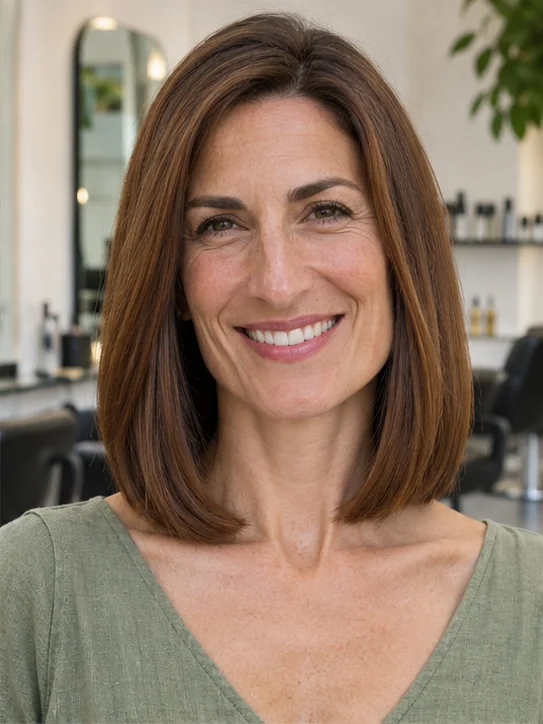
A shallow bevel lets the ends curve inward like the edge of a silk ribbon while the rest of the lob stays smooth. That small curve takes the severity out of a dense hem and gives straight, medium-density hair a neat finish that feels gentle around the jaw. Turn a round brush only through the tips while drying, since rolling from higher up can make the lob look shorter and rounder than you wanted. Ask your stylist for a full collarbone perimeter with a shallow bevel concentrated at the bottom, and show them how much bend you are willing to style.
Ask your stylist for: Keep a full collarbone hem and build a shallow inward bevel at the bottom edge.
3. The Subtle A-Line Lob
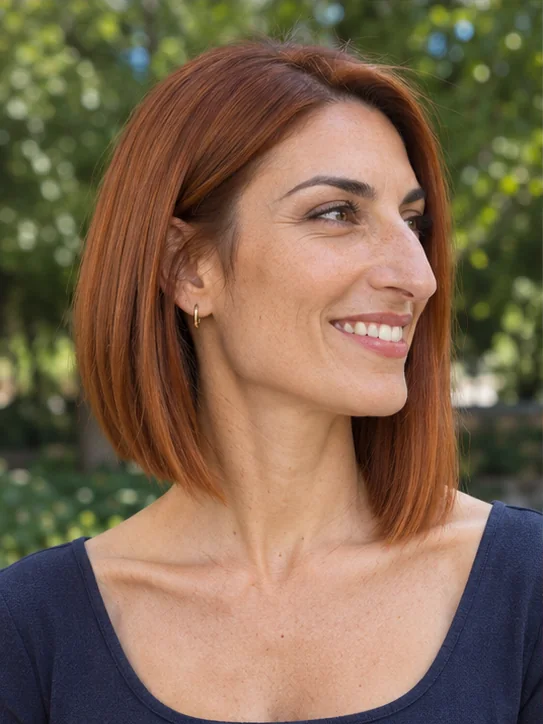
Seen from the side, this copper lob makes a quiet diagonal from the top of the shoulder to the collarbone. The front still gives you a long line beside the cheeks, while the slightly shorter back clears a jacket collar and can feel smart when your clothes already have plenty of detail. Dry the front forward before checking the angle, because sweeping it behind the ears hides much of the effect. Tell your stylist to leave the front at the collarbones, raise the back only slightly and keep the nape free of stacking so the slope remains gentle.
Ask your stylist for: Leave the front at the collarbone and lift the back slightly without stacking the nape.
4. The Asymmetric Collarbone Lob
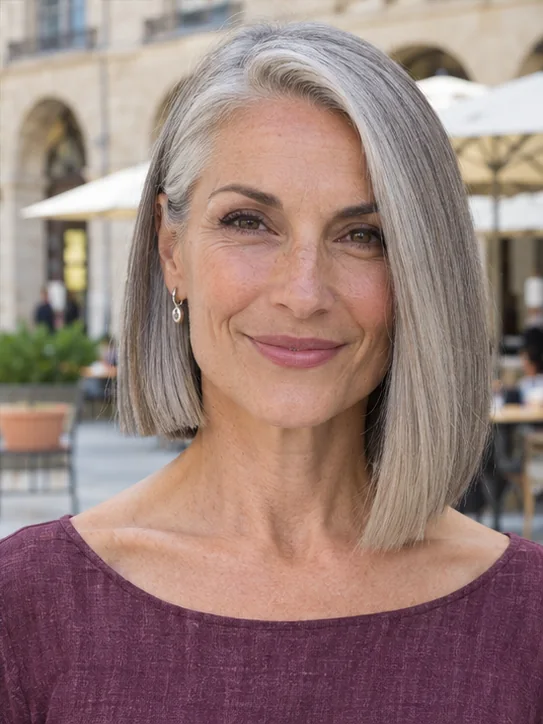
The longer side touches one collarbone while the opposite side stops a little higher, giving an otherwise smooth lob a deliberate slant. It brings attention to one cheekbone and can feel a little daring without taking away the comfort of hair you can still sweep back. This version suits someone who parts their hair in the same place most days, because changing the part can make the imbalance read differently. Bring a photo of the difference you want and ask your stylist to cut the asymmetry into the perimeter, with the long side checked at the collarbone after drying.
Ask your stylist for: Cut a small permanent side-to-side difference, with my longer side ending at the collarbone.
Pause and notice: Check the perimeter from the side before choosing a version. A longer front and a genuinely longer side are two different salon requests.
5. The Full-Hem Lob With Hidden Layers
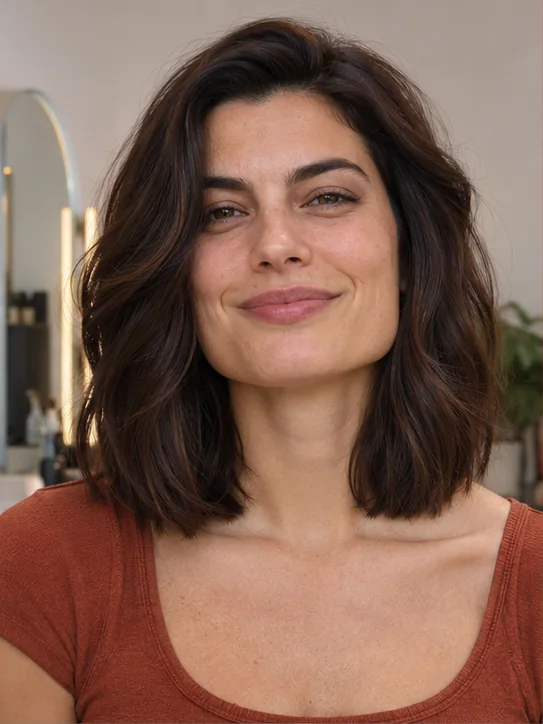
Dense hair can collect in a wide shelf just above the shoulders, especially when the ends land against a collar. This version keeps the dark outline intact while removing weight selectively underneath, so the lob swings more freely and can feel easier to live in without losing the satisfying look of a full hem. Blow-dry the underside first, where moisture can keep the whole shape heavy long after the top looks dry. Ask your stylist to point out where the hair bunches before removing any interior weight and to leave enough density around the bottom for the line to stay solid.
Ask your stylist for: Preserve the full hem and take weight out only where my hair bunches underneath.
6. The Piecey Collarbone Lob
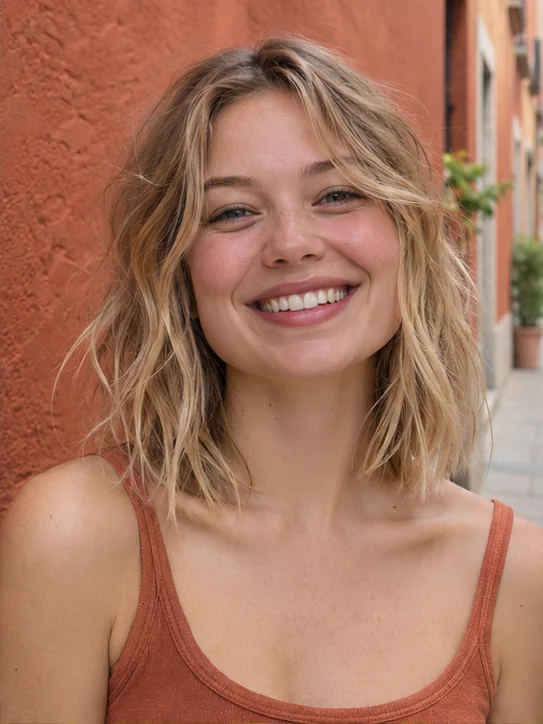
Small points break up the bottom of this sandy lob so the ends separate when you turn your head. It looks relaxed with a plain T-shirt and makes naturally textured, medium-density hair feel a little more playful, especially if you enjoy a cut that can air-dry with movement. Rub a trace of styling paste between your fingertips and pinch only a few dry ends so the whole hem stays light. Ask for shallow point cutting at the very tips and a collarbone-length outline, and have your stylist leave the finer sections near your temples alone if they already look sparse.
Ask your stylist for: Use shallow point cutting at the tips and keep the overall perimeter at my collarbones.
7. The Collarbone Lob With Curtain Bangs
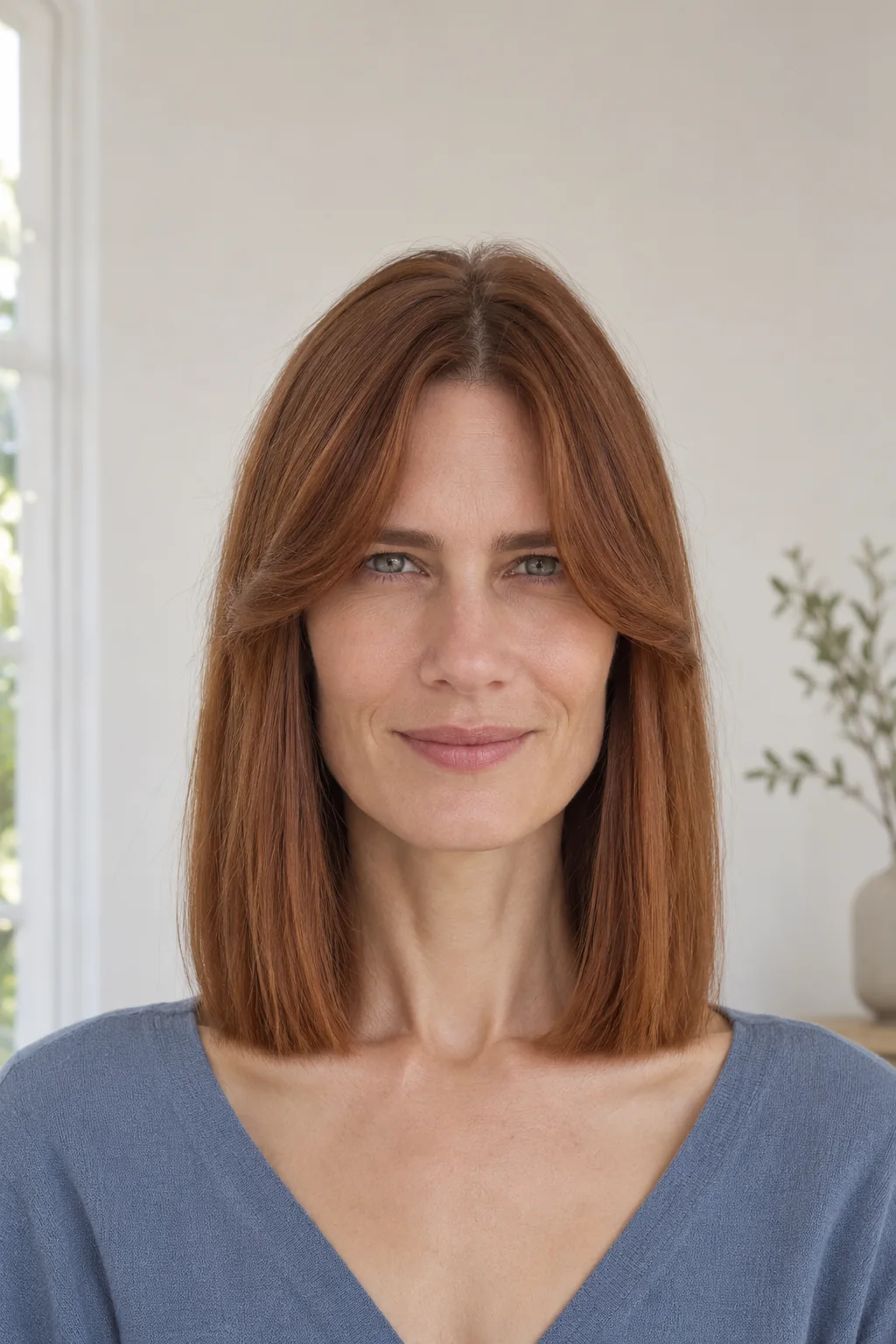
The auburn hem stays substantial at the collarbones while a parted fringe sweeps away from the center of the face. Those shorter pieces bring the eye to the cheekbones and make a basic lob feel a little more dressed up, even on the days you pin the rest of your hair back. Dry the fringe first, moving it gently from side to side before rolling each half away from your face. Ask for an opening that sits comfortably above your eyes and lengthens toward the cheekbones, with a full collarbone hem and room to adjust for a cowlick.
Ask your stylist for: Keep the hem full at my collarbones and cut a center-opening fringe that lengthens toward my cheekbones.
8. The Collarbone Lob With Full Bangs
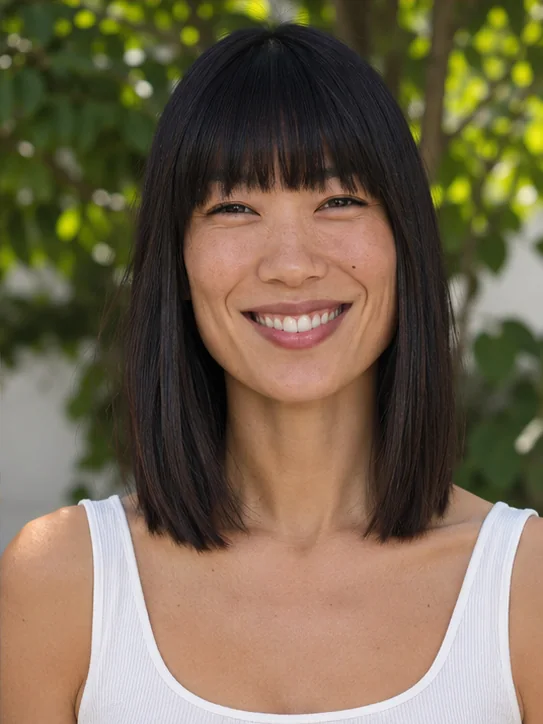
A dark, brow-skimming fringe gives this collarbone lob two clear lines, one across the eyes and the other at the ends. The combination can make a long face feel more balanced and gives everyday clothes a slightly graphic, intentional finish. Full bangs tend to show oil and bends first, so plan on a quick fringe refresh even when the lengths can wait another day. Ask your stylist to check where the bangs settle dry before refining the edge, and choose the depth of the section together so the fringe leaves enough hair to keep the lob full.
Ask your stylist for: Keep the base at the collarbones and cut a full fringe that skims my brows dry.
Pause and notice: If you wear glasses, bring them to the appointment and check where a fringe falls when you look down.
9. The Collarbone Lob With Side-Swept Bangs

The silver-blond fringe follows a diagonal from a deep part toward one cheekbone, softening the line beside the eyes while the lob keeps its length below. It is an easy shape to feel at home in if you like a side part and want some movement around the face without managing short bangs across your whole forehead. Dry the fringe in its natural direction and use a light clip briefly while it cools if it tends to fall forward. Ask for a long side-swept fringe following your usual part, with the rest of the perimeter left at the collarbone.
Ask your stylist for: Keep the collarbone perimeter and cut a long diagonal fringe following my natural part.
10. The Lob With Loose S-Waves
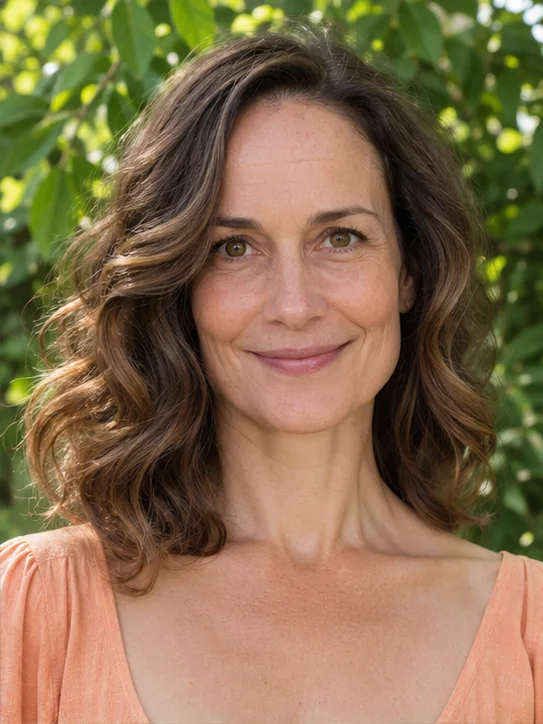
Loose S-waves make this brown lob widen and narrow as it falls, with the last bend resting around the collarbones. That visible movement can make a simple length feel carefree, and it suits hair that already makes a shallow wave when left to dry. Scrunch in a little foam on damp hair, then leave the wave groups alone until dry so they have time to set. Tell your stylist how you actually dry your hair and ask them to judge the hem in that state, keeping layering minimal if too much removal makes your ends go wispy.
Ask your stylist for: Allow for my natural waves so the dry ends land at my collarbones, with minimal layering.
11. The Rounded Curly Collarbone Lob
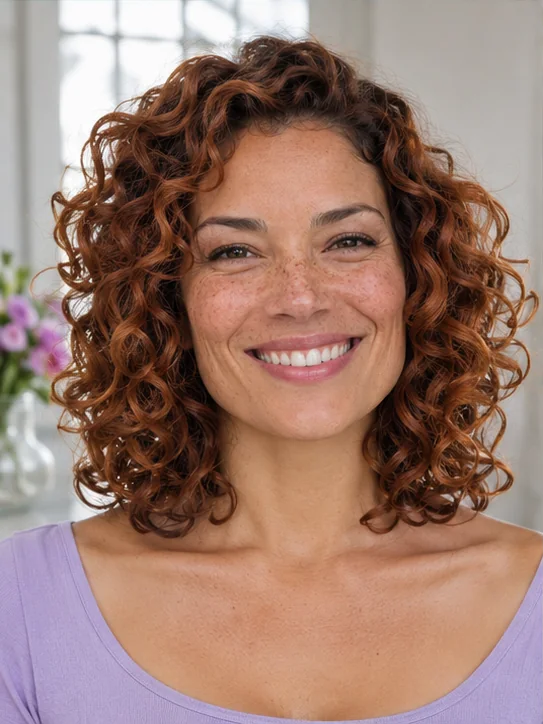
Defined ringlets make a rounded lob that has lift at the sides and a few longer curls grazing the collarbones. The curved shape gives the curls space to spring and can feel buoyant on days when you want to wear your texture down without having to coax every strand into place. Bring your usual wash-day curls to the salon so the stylist can see where the tighter and looser groups land. Ask them to keep the longest dry curls at the collarbones and to build a rounded outline with selective shaping through the sides, leaving the bottom dense enough to hold its shape.
Ask your stylist for: Shape my ringlets dry to keep a rounded silhouette and the longest curls at my collarbones.
12. The Coily Lob Cut for Dry Length
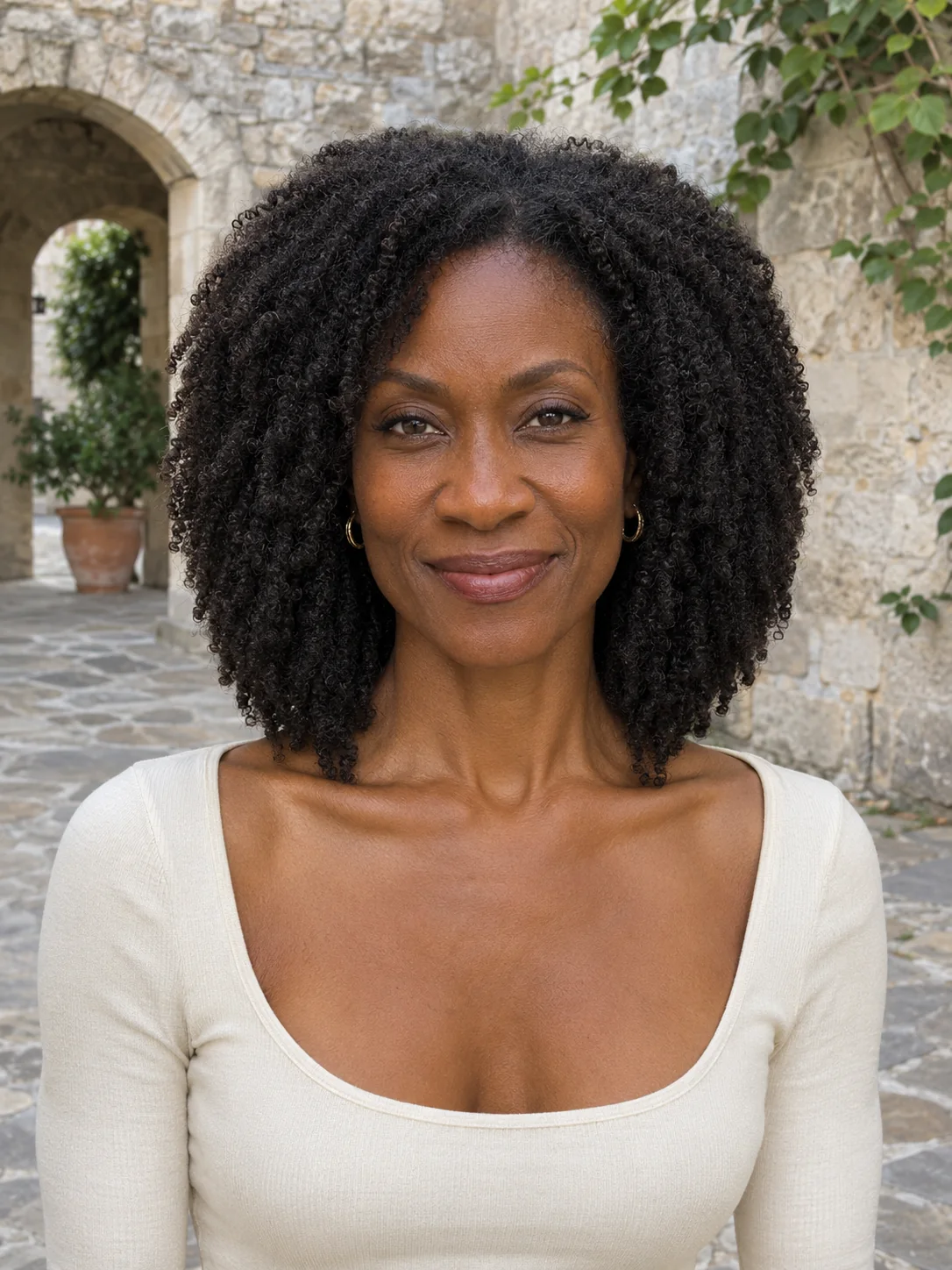
A softly squared coily lob holds a little width through the sides before the longest coils settle near the collarbones. The outline gives dense texture a clear shape while leaving enough fullness to enjoy the spring, which can feel striking even when you keep the rest of your look simple. Wear your usual dry finish to the appointment, since a stretched measurement can sit well above the collarbone once the coils recoil. Ask your stylist to check the longest pieces against your collarbones in your normal finish and to make room through the sides with careful shaping that preserves the bottom.
Ask your stylist for: Keep the longest dry coils at the collarbones and shape a softly squared outline in my usual finish.
Before You Book the Appointment
A successful salon visit begins with the overall shape, construction and upkeep—not only the finished length. Use this quick reality check before choosing your final reference photograph.
- Fine hair: Start with a full hem and discuss how much hair you can spare for bangs.
- Dense straight hair: Look for weight collecting just above the ends and ask about small, selective interior adjustments.
- Waves: Decide whether you like the natural shoulder flip before asking the stylist to cut it away.
- Curls and coils: Judge the length in your usual dry finish. Different curl groups can retract by different amounts.
How to Ask for a Collarbone Lob
Point to your collarbone while standing with your head level, then show your stylist where you want the front and back to end. Bring a reference that shows both sides of the cut, ideally on hair that behaves like yours. Say how often you use heat, where you part your hair and whether you tuck it behind your ears. A quick look at your usual dry hair is especially valuable if it springs up or kicks against your shoulders.
How to Style the Ends
For a straighter edge, direct airflow down the hair and keep the brush moving through the last inch. To make a shallow wave, keep the bend in the middle and let the tip fall naturally. If your own waves already do that, a little foam and a hands-off dry may give you the shape with less effort. Check the effect with the neckline you wear most often, since contact with a high collar can change the direction of the ends.
Will a Collarbone Lob Go Into a Ponytail?
Many one-length versions reach a low elastic, but the shortest front pieces, nape length and curl shrinkage determine what actually stays in. Try gathering your hair at your usual height before the final trim. If you need all the front pieces out of your eyes for work or exercise, tell your stylist before adding short face framing.
Trims and Growing It Out
Book a trim when the edge starts to lose the shape you chose, or when the fringe begins interfering with your usual part or sightline. A sharp line makes uneven ends easy to see, while a softer wavy finish can disguise small changes for longer. To grow the cut out, tell your stylist you want to keep the added length and only refine the tips. As the hair moves past the shoulders, check the fit against collars again because the flip may change.
The Takeaway
Pick one reference for the length and one for the way you want the ends to move. Then ask your stylist to show you where that line will land in your ordinary dry finish. Getting that small detail right makes a collarbone lob much easier to recognize when you leave the salon and easier to enjoy when you style it yourself.
More Hair Inspiration
- Shoulder-Length Layered Haircuts — Explore cuts where the layers carry the shape.
- Blunt Bob Haircuts — Compare shorter cuts with a firm edge.