A fluffy press gives natural hair the kind of movement that makes you want to turn your head just to feel it swing. The finish is smooth but intentionally airy, with visible body through the roots and lengths instead of the glass-flat result associated with a classic silk press. Think of it as the polished middle ground between a round-brush blowout and a sleek flat-iron finish: stretched, soft and full, with enough texture and bend to look alive. These ideas show how length, parting, layers, curls and styling details can change the mood while keeping heat choices, humidity and real-life upkeep honest.
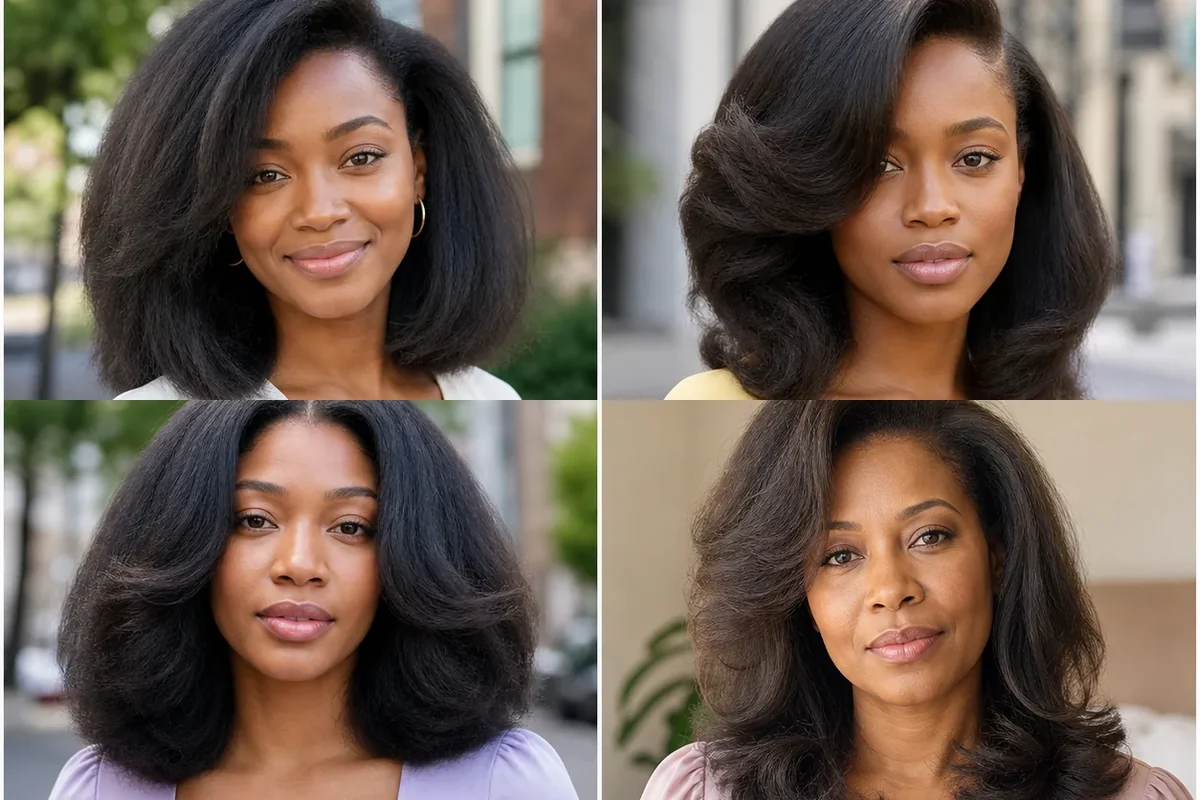
Find the one that feels like you: Start with the first look and let the photographs lead. Each style explains how the shape affects your features, the mood it creates and the exact words to take to your stylist.
1. Classic Full Fluffy Press
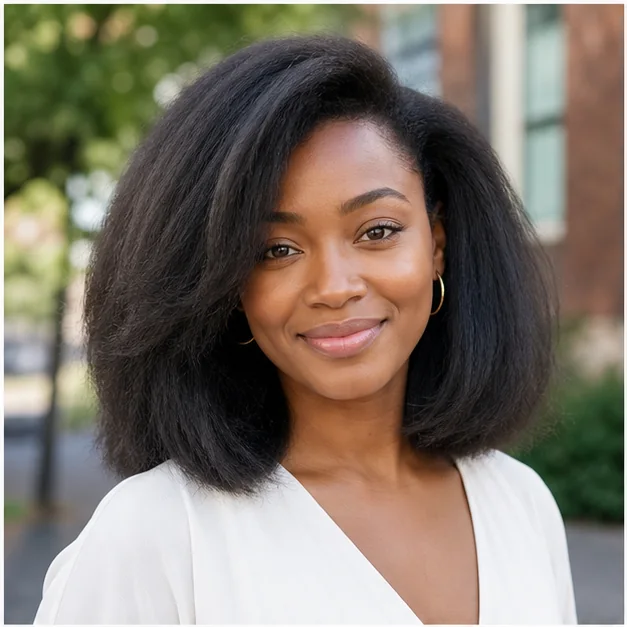
The classic fluffy press is smooth from root to end but never ironed into a flat sheet; a rounded silhouette and airy root lift keep the hair buoyant. That fullness softens angular features, makes medium-density hair look abundant and creates a polished, confident mood that still feels relaxed. It suits anyone who wants movement without a tightly curled set, though humidity can quickly return natural texture. Ask for a heat-conscious fluffy press with root lift, one or two light flat-iron passes and a rounded finish, then wrap loosely at night so the body is not crushed.
Ask your stylist for: A heat-conscious fluffy press with airy roots, smooth movable lengths and a rounded full silhouette.
2. Deep Side-Part Fluffy Press
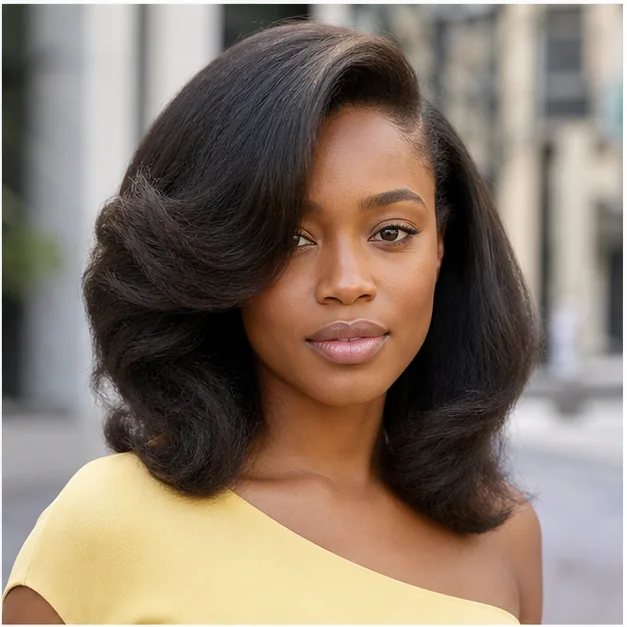
A low side part sends a generous sweep of fluffy, straightened hair across the forehead before the lengths open around the shoulders. The diagonal line can visually lengthen a round face, highlight the eyes and make everyday volume feel sophisticated enough for dinner or an important meeting. This shape works best when the heavier side keeps lift at the root rather than collapsing into the face. Ask for a deep but comfortable side part, a soft bend through the front and balanced fullness at the back; pin the sweep loosely before bed instead of wrapping it painfully tight.
Ask your stylist for: A deep side part with a lifted front sweep, balanced back volume and soft movement through the ends.
3. Center-Part Cloud Press
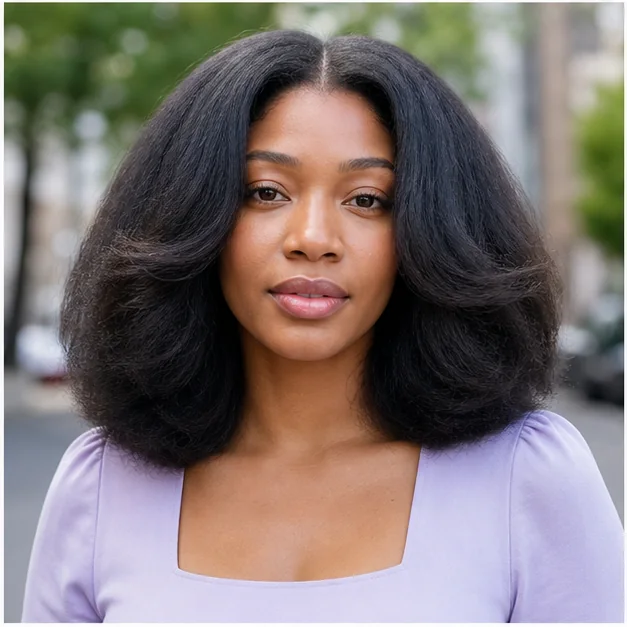
A precise center part divides the hair into two buoyant panels with soft, brushed volume from cheek level downward. The symmetry brings attention to the eyes and lips, while the cloudlike width can balance a longer face and make fine strands appear more substantial. It feels calm, modern and quietly glamorous rather than overly styled. Ask for a centered part with equal root lift, feather-light movement and ends that turn away from the face; use two large rollers at the front overnight to preserve the bend without flattening the crown.
Ask your stylist for: A balanced center part with cloudlike side volume, face-opening bends and lightweight ends.
4. 90s Layered Fluffy Press
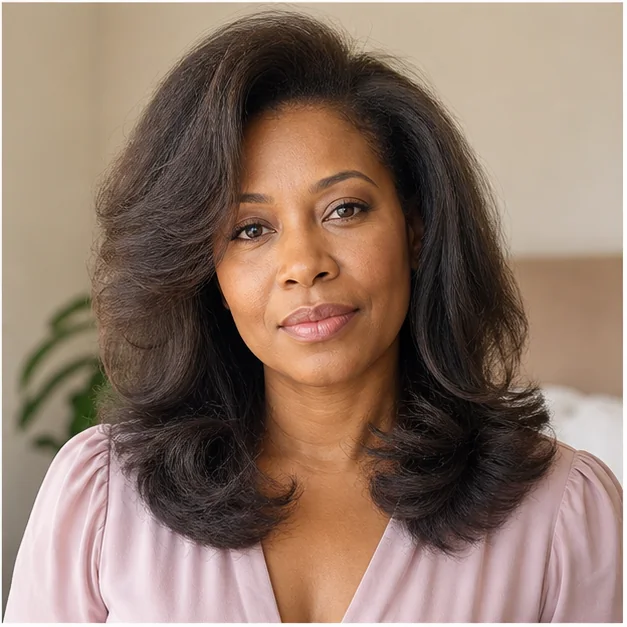
Long face-framing layers sweep away from the cheeks while shorter crown pieces build the rounded, buoyant shape associated with a 1990s blowout. The movement lifts the face, adds structure around soft features and makes thick hair feel styled without sacrificing its generous presence. It can feel playful, glamorous and wonderfully nostalgic, but layered ends need careful heat protection because they are easy to overwork. Ask for a fluffy press finished with large rollers or a round brush, visible crown lift and feathered layers that stay blended rather than flicking in every direction.
Ask your stylist for: A 90s-inspired fluffy press with blended face-framing layers, crown lift and large soft bends.
5. Shoulder-Length Rounded Press
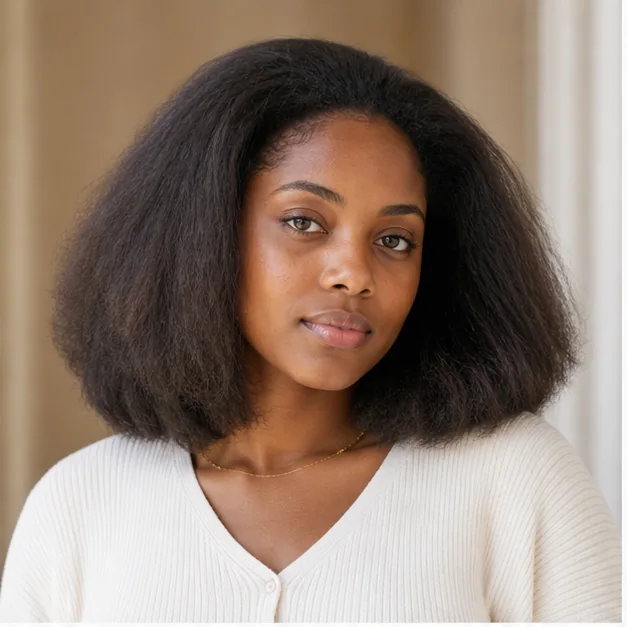
This shoulder-length version follows a softly rounded perimeter, with the ends curved under just enough to create density without looking like a rigid pageboy. The compact fullness frames the jaw, can make a narrow face look more balanced and offers a professional shape that still moves easily. It is practical for someone who wants a press that can be wrapped quickly and worn down without constant restyling. Ask for an airy shoulder-grazing finish with root volume, a gentle under-curve and no razor-thin ends; a few large flexi rods can restore the shape overnight.
Ask your stylist for: A shoulder-grazing fluffy press with a full rounded perimeter, airy roots and softly curved ends.
6. Fluffy Press With Curtain Bangs
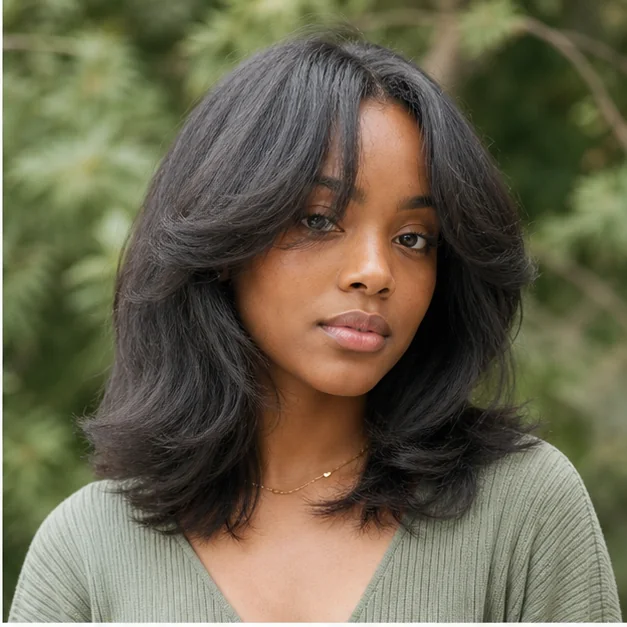
Long curtain bangs open at the center and melt into a fluffy press that expands gently through the cheekbones and shoulders. Their curved edges soften a broad forehead, bring attention toward the eyes and create a romantic, approachable mood without committing to a short blunt fringe. The bangs will react first to moisture and need a light daily reset, so they suit someone comfortable with a roller or round brush. Ask for cheekbone-length curtain pieces, a soft center opening and enough root lift to keep them from separating into thin strings.
Ask your stylist for: Cheekbone-length curtain bangs blended into an airy press with a soft center opening and lifted roots.
Pause and notice: A fluffy press should not be judged by how pin-straight every strand becomes. Its beauty comes from controlled smoothness plus air, bend and movement, so conservative heat and thoughtful shaping matter more than repeated passes.
7. Fluffy Press With Wispy Bangs
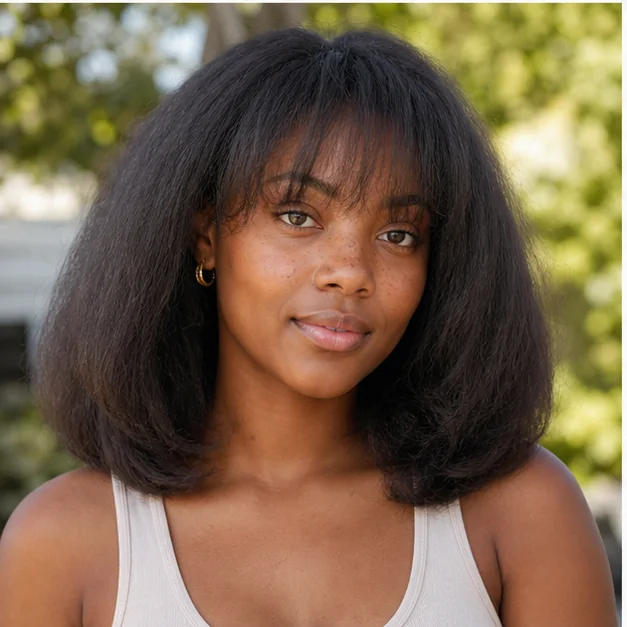
A fine veil of wispy bangs skims the brows while the rest of the press stays full, smooth and softly rounded. The fringe draws focus to the eyes, can shorten the appearance of a high forehead and gives the style a youthful, playful feeling without adding a heavy horizontal line. Because the pieces are delicate, too much serum or edge product will make them separate and greasy. Ask for sparse brow-skimming bangs cut to work with your shrinkage and a fluffy, low-product finish; wrap the lengths but roll the fringe separately at night.
Ask your stylist for: Light brow-skimming wispy bangs with a low-product fluffy press and softly rounded body.
8. Long Fluffy Press With Bent Ends
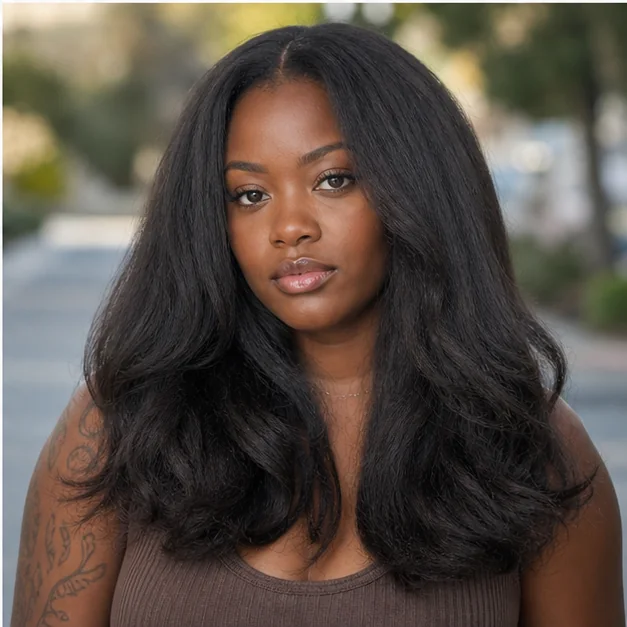
Long smooth lengths fall past the shoulders, then finish in broad bends that turn in several natural directions instead of forming uniform curls. The gentle shape keeps the hair from looking limp, brings movement around the collarbone and can make the wearer feel elegant without appearing overly formal. Long natural hair needs thorough detangling and even tension so the stylist does not compensate with repeated heat. Ask for a low-pass fluffy press with body through the midlengths and loose bent ends, then use jumbo rollers or a loose wrap to protect the movement.
Ask your stylist for: A long low-pass fluffy press with midlength body and broad, irregular bends at the ends.
9. Short Bob Fluffy Press
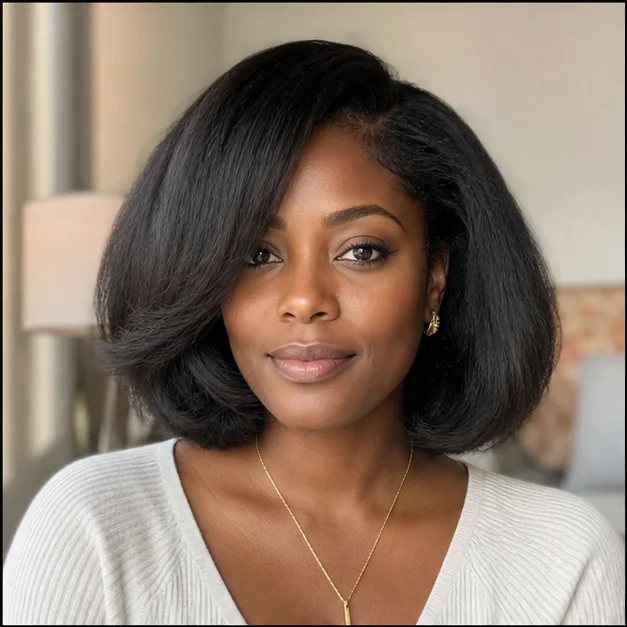
A chin-length bob gains a softer personality when the press leaves lift at the roots and a plump curve through the perimeter. The width around the jaw can balance a heart-shaped face, make fine hair look denser and feel crisp enough for work while remaining touchable. Unlike a glassy blunt bob, this version should show subtle texture and movement rather than a perfectly sealed surface. Ask for a fluffy bob press with an even baseline, interior air and softly beveled ends; wrapping in alternating directions helps prevent one side from becoming permanently flatter.
Ask your stylist for: A chin-length fluffy bob with an even baseline, interior air and softly beveled movable ends.
10. Fluffy Press With Soft Curls

Large curls begin below the cheekbones and loosen into soft, separated ribbons over a full pressed base. They add width where a long face may welcome it, soften a strong jaw and create a romantic, dressed-up feeling without the stiffness of a formal roller set. The curls should be formed after the hair is smooth, using minimal additional heat or a cool set whenever possible. Ask for an airy fluffy press followed by jumbo curls brushed only enough to merge them; pin-curl large sections overnight and avoid heavy oil that pulls the shape down.
Ask your stylist for: An airy pressed base with jumbo soft curls beginning below the cheekbones and a light brushed finish.
11. Fluffy Press With Flicked Ends

Smooth, full lengths end in controlled outward flicks around the shoulders, creating a lively outline that moves with every turn. The lifted ends draw the eye away from the jaw, make medium-length hair feel lighter and bring a cheerful retro energy to an otherwise polished press. This look is easiest on a layered or shoulder-grazing cut; very blunt heavy ends may resist the flip. Ask for a fluffy press with consistent root body and outward bends only through the last few inches, then reset the tips with large rollers instead of reheating them daily.
Ask your stylist for: A full shoulder-length press with controlled outward flicks through only the last few inches.
12. Honey-Brown Fluffy Press
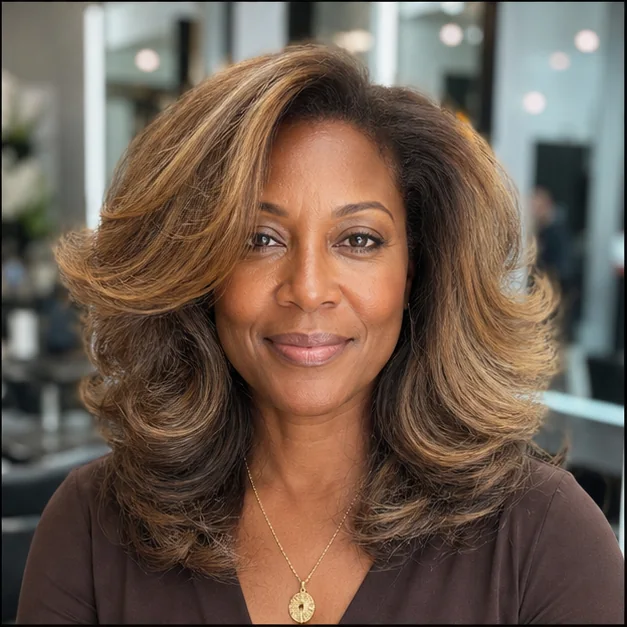
Honey-brown ribbons travel through a deep brunette base, making the rounded layers and airy movement easier to see without turning the style stripey. Warm color can brighten the complexion, add visual depth to fine hair and make the press feel luminous and luxurious in daylight. Previously lightened strands are more vulnerable to dryness, so conservative temperature and fewer passes matter more than maximum sleekness. Ask for dimensional honey warmth with protected darker roots and a low-heat fluffy finish; alternate color and heat-heavy services when possible and keep the ends conditioned.
Ask your stylist for: Dimensional honey-brown ribbons over a deeper base with a low-heat fluffy press and conditioned ends.
13. Copper Fluffy Press
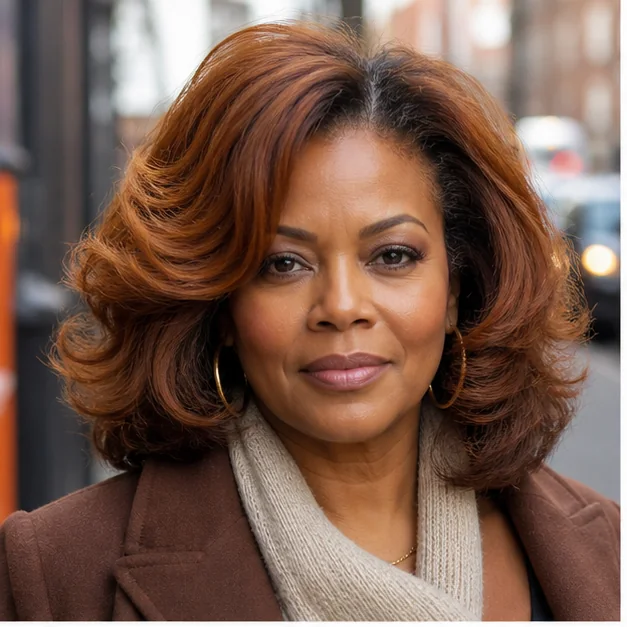
A rich copper tone turns the press's broad bends into ribbons of warm light, especially when the roots remain slightly deeper. The color brings energy to the face, makes thick hair look multidimensional and creates a bold, confident impression while the soft silhouette keeps it sophisticated. Copper fades quickly and colored natural hair can be porous, so a flawless press should never require aggressive temperature. Ask for a dimensional copper with root depth, airy movement and a heat ceiling agreed before styling; preserve the color with gentle cleansing and UV protection.
Ask your stylist for: Dimensional copper with deeper roots, an agreed heat ceiling and broad airy bends through the press.
Pause and notice: Color and heat both affect the hair's moisture balance. If your hair is lightened, agree on a temperature ceiling, ask for a strand assessment and consider separating major color work from a full thermal styling appointment.
14. Silver Fluffy Press

Natural silver and charcoal strands expand into a softly rounded press that celebrates their contrast rather than tinting it away. The varied tones make every layer visible, brighten the face and can feel powerfully elegant and modern on mature hair. Gray strands may have mixed porosity and resistance, so the goal is consistent softness rather than forcing every fiber to identical sleekness. Ask for a hydrated fluffy press that preserves natural silver dimension, uses moderate tension and keeps the ends substantial; a silk wrap and light moisturizing mist help the shape stay supple.
Ask your stylist for: A hydrated, moderate-tension fluffy press that showcases natural silver variation and keeps the ends full.
15. Fine-Hair Root-Lift Press

Fine natural hair is pressed smooth with deliberate elevation at the crown and light bends through the ends, avoiding the flatness that can expose the scalp. The lifted center visually lengthens a round face, creates the impression of greater density and can make styling feel easier because the look does not depend on perfect glassy strands. Heavy oils, repeated passes and tight wrapping work against the goal. Ask for low-tension blow-drying, minimal flat-iron contact and roller-set root lift, then preserve the crown with a loose pineapple-style wrap or oversized rollers.
Ask your stylist for: Low-tension smoothing with minimal iron contact, strategic crown lift and lightweight bent ends for fine hair.
16. Thick-Hair Sculpted Fluffy Press
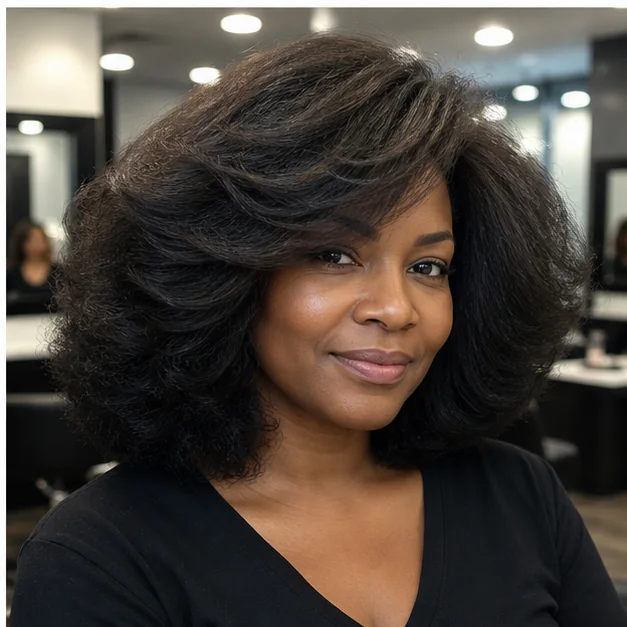
Dense hair is shaped into a defined rounded silhouette with controlled fullness at the sides and enough internal movement to prevent a heavy triangular outline. The sculpting honors natural abundance, balances a narrow chin and creates a striking, self-assured look without pretending thickness needs to disappear. Thorough sectioning and drying are essential; rushing often leads to repeated heat over damp inner layers. Ask for small blow-dry sections, conservative flat-iron passes and a sculpted perimeter that retains volume while removing only strategic bulk, then use several large wrap sections at night.
Ask your stylist for: Small-section drying, conservative iron passes and a sculpted rounded perimeter that retains thick-hair volume.
17. Fluffy Press Half-Up Style
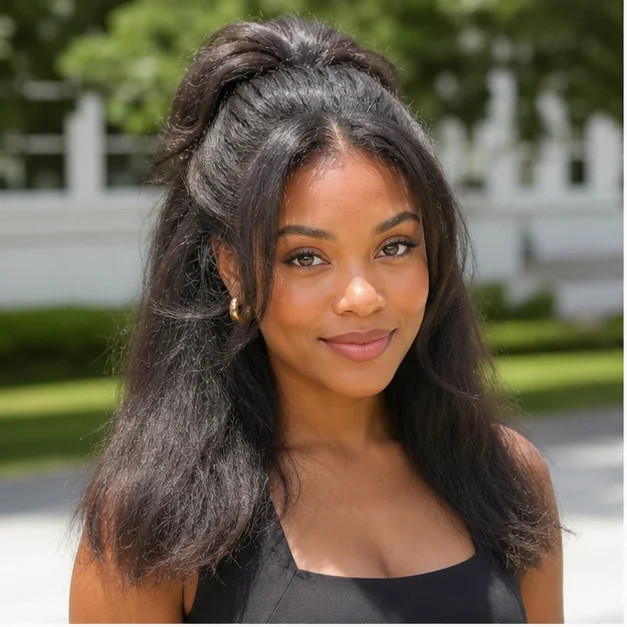
The crown is gathered into a soft half-up lift while the lower lengths remain loose, smooth and buoyant around the shoulders. Opening the face highlights cheekbones, adds height for rounder proportions and creates a playful, capable mood that works from brunch to a busy workday. The gathered section should remain loose enough to avoid dents, edge tension or a flattened crown when released. Ask for a fluffy press with flexible root movement and a softly secured half-up section, using a fabric tie or hidden pins rather than a tight elastic.
Ask your stylist for: A flexible fluffy press arranged half-up with soft crown height, loose edges and no visible elastic dents.
18. Low Ponytail Fluffy Press
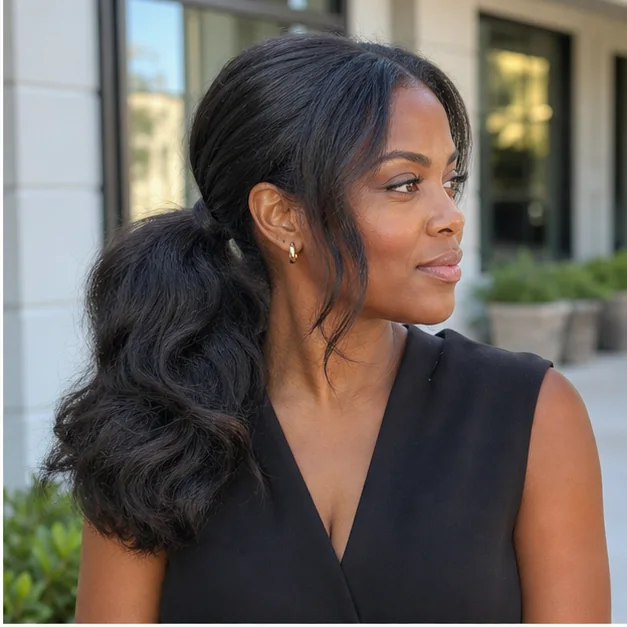
A gentle side part flows into a low ponytail that remains broad and airy instead of being pulled into a narrow polished rope. The smooth front creates a professional outline, while the full tail balances strong shoulders and makes the style feel elegant without fuss. It is useful late in the press cycle, when roots have softened but the lengths still move beautifully. Ask for a low-tension ponytail with cushioned volume, softly laid—not pasted—edges and a wrapped base; change the tie position and release it at night to protect the hairline.
Ask your stylist for: A low-tension, broad fluffy ponytail with a softly polished front, wrapped base and relaxed edges.
19. Fluffy Press Updo With Loose Ends
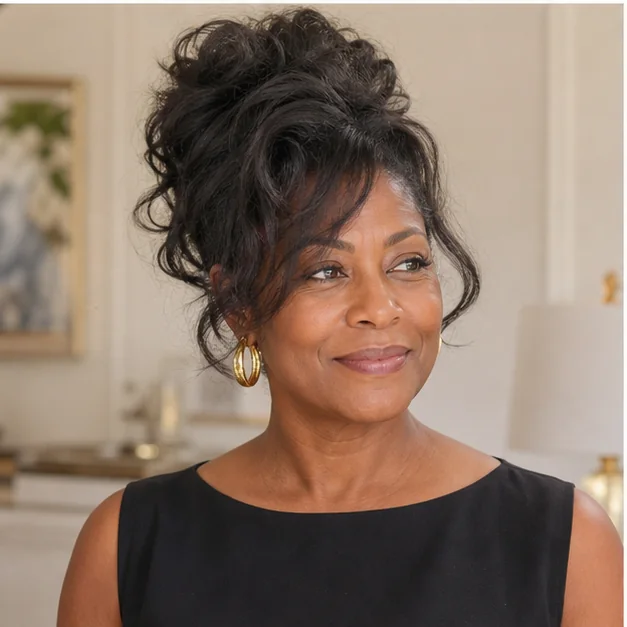
Pressed lengths are swept into a relaxed high twist while several broad, softly bent ends remain visible around the crown and temples. The vertical shape lengthens the face, shows off the neck and can feel glamorous and secure without the severe tension of a slick bun. This is an excellent option when humidity has added texture at the roots, because the finish becomes part of the design. Ask for a softly anchored updo with no edge pulling, visible airy ends and balanced height; use pins rather than repeated tight elastics.
Ask your stylist for: A softly pinned high twist with balanced height, airy visible ends and absolutely no edge tension.
20. Day-Three Lived-In Fluffy Press
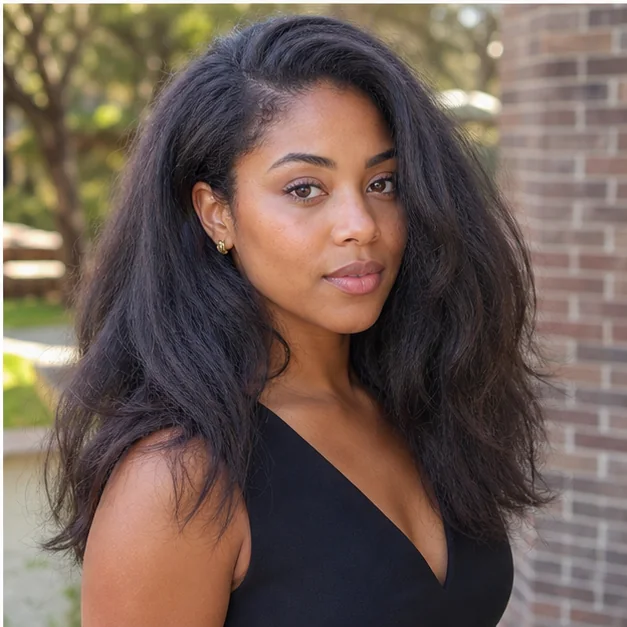
By day three, a little natural texture has returned at the roots while the lengths keep their broad movement and softened bends. That lived-in finish disguises minor humidity changes, feels relaxed and touchable, and can make thick hair look especially lush without another round of heat. It suits anyone willing to enjoy evolution rather than chasing first-day perfection, though sweat or dampness should never be trapped beneath heavy product. Ask for a flexible press designed to soften gracefully, then refresh with large rollers, a light wrap and no automatic flat-iron touch-ups.
Ask your stylist for: A flexible, low-product fluffy press designed to soften gracefully and refresh with rollers rather than more heat.
Pause and notice: Choose the version that fits your actual week. Loose bends and half-up styles forgive humidity, while precise bangs and a symmetrical center part need more frequent attention.
Before You Book the Appointment
A successful salon visit begins with the overall shape, construction and upkeep—not only the finished length. Use this quick reality check before choosing your final reference photograph.
- Best for: Natural hair that can be safely stretched and whose wearer wants smoothness with visible body; technique should follow density, porosity, condition and heat history.
- Signature finish: Airy roots, smooth movable lengths and a rounded or softly bent silhouette rather than a glass-flat surface.
- Closest alternatives: A silk press prioritizes maximum sleekness and shine; a blowout may stop after brush or tension drying; a roller set creates its shape primarily through setting rather than flat-ironing.
- Maintenance: Avoid moisture, wrap or roll loosely at night, use minimal oil, skip routine heat touch-ups and cleanse when the scalp or hair needs it rather than forcing a longer wear time.
What Is a Fluffy Press?
A fluffy press is a natural-hair straightening and shaping service that smooths the strands while deliberately preserving body, softness and movement. The signature silhouette is rounded and airy, often with bent ends or large curls, rather than the very sleek, reflective surface of a traditional silk press. It differs from a basic blowout because a stylist may use limited flat-iron work for extra smoothness and longevity, but the exact tool sequence can vary. The result should feel light and movable, not stiff, oily or scorched into submission.
Who Is It Best For?
The style can work across coil patterns, lengths and densities when the technique respects the hair's condition. Fine hair benefits from lightweight products and strategic crown lift; thick hair needs thorough small-section drying so inner layers are not reheated repeatedly. Porous, lightened or fragile hair may need a lower temperature, fewer passes or a no-flat-iron blowout instead. Humid weather, workouts and a love of frequent washing shorten wear, so decide whether the temporary smooth finish genuinely suits your routine before booking.
How to Ask for a Fluffy Press at the Salon
Bring two or three references showing a similar length and density, then say that you want a fluffy press with airy roots, visible body and minimal flat-iron passes—not a glass-flat silk press. Discuss your color history, recent heat use, breakage and any areas that respond differently. Ask what temperature range the stylist expects to use, whether the hair will be completely dry before ironing and how they will create the final volume. A careful stylist should prioritize clean, conditioned hair, controlled tension and a finish that moves without needing heavy serum.
Maintenance, Humidity and Returning to Your Curls
Wrap the hair loosely or use jumbo rollers at night, choosing the method that protects volume rather than crushing it. Keep showers steamy only with the hair covered, avoid layering dry shampoo and oils indefinitely, and use an updo or ponytail when the roots begin to expand. Do not chase humidity with daily flat-iron touch-ups; returning texture is normal and can be styled into the look. When you are ready to wear your curls again, cleanse thoroughly, condition generously and assess the pattern after the hair is fully hydrated rather than while it is still coated with pressing products.
More Hair Inspiration
- 20 Short Natural Hairstyles That Celebrate Your Texture — Compare the press with shape-focused natural styles that use little or no straightening.
- 20 Brushed-Out Curls That Look Soft, Full and Effortlessly Glamorous — Explore another soft, expanded finish with plenty of movement.
- 20 Finger Waves for Natural Hair That Look Sculpted, Soft and Beautiful — See a more sculpted natural-hair finish for shorter lengths.