Finger waves have a rare kind of glamour: smooth, deliberate S-curves catch the light and make even a very short cut feel beautifully considered. On natural hair, those curves can be molded wet with gel or foam, shaped as softer dry waves, or combined with curls where extra length needs movement. The defining feature is the connected ridge-and-trough pattern—not loose waves, separate finger coils or simply a curled pixie. These ideas show how parting, ridge size, finish and placement change the mood while keeping texture, comfort and everyday upkeep in view.
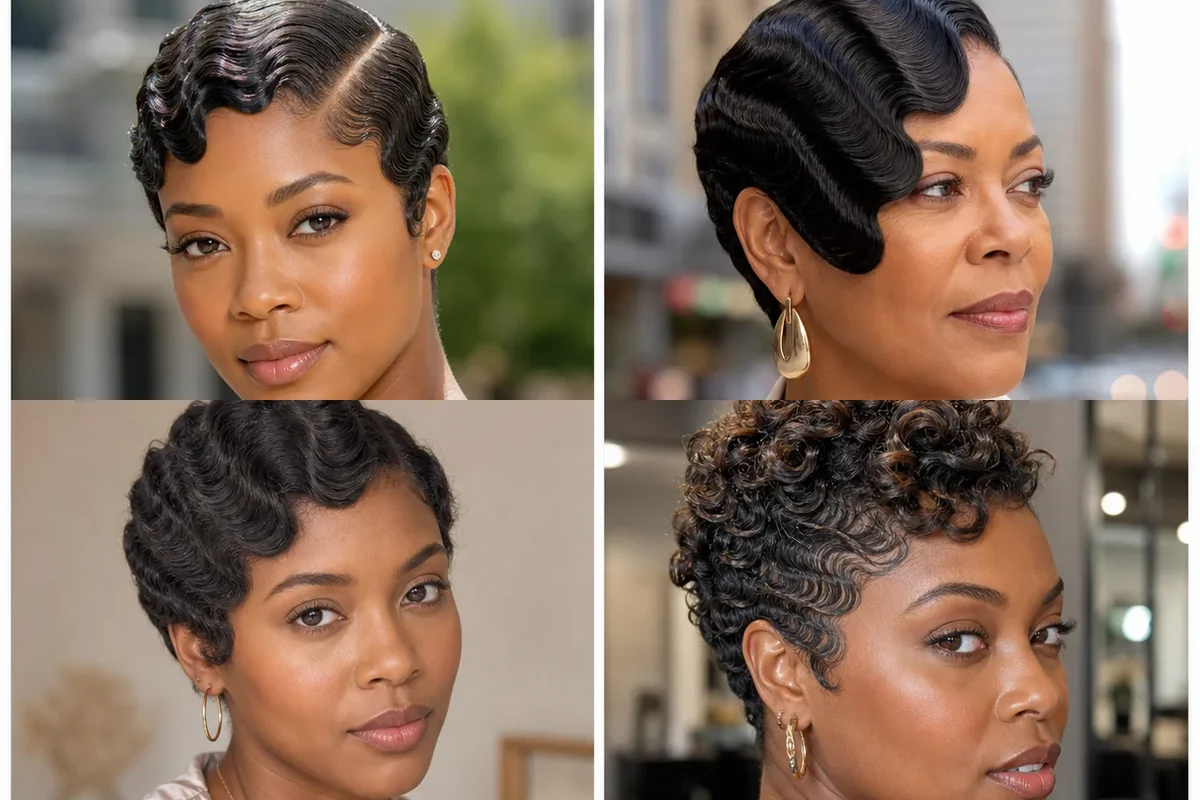
Find the one that feels like you: Start with the first look and let the photographs lead. Each style explains how the shape affects your features, the mood it creates and the exact words to take to your stylist.
1. Classic Glossy Finger Waves
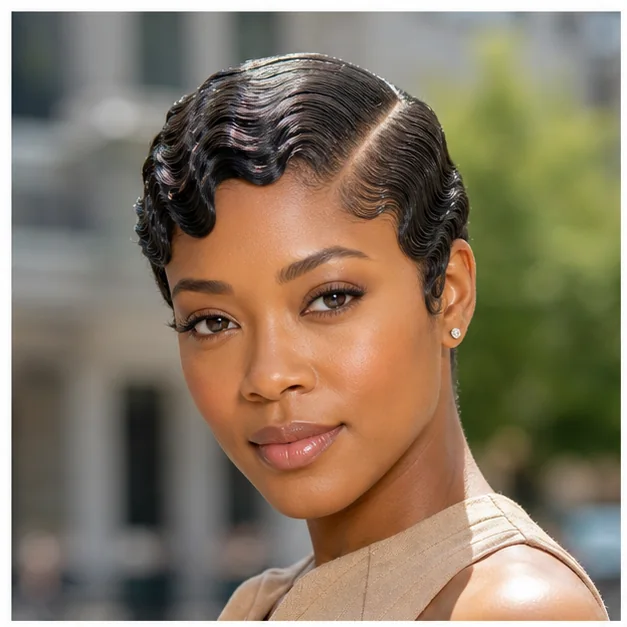
Classic finger waves sit close to the head in connected, glossy S-curves that travel from a neat side part toward the nape. The uninterrupted pattern highlights cheekbones and earrings, making a cropped shape feel polished, confident and occasion-ready without adding height. It suits short hair that can be smoothed comfortably, though dense coils may need smaller sections and patient molding rather than excessive product. Ask for crisp but touchable ridges, a clean perimeter and full hood-dryer setting; at home, protect the shape with a smooth scarf and avoid brushing the set apart.
Ask your stylist for: Close-set connected S-waves with a clean side part, touchable hold and fully dried finish.
2. Deep Side-Part Finger Waves
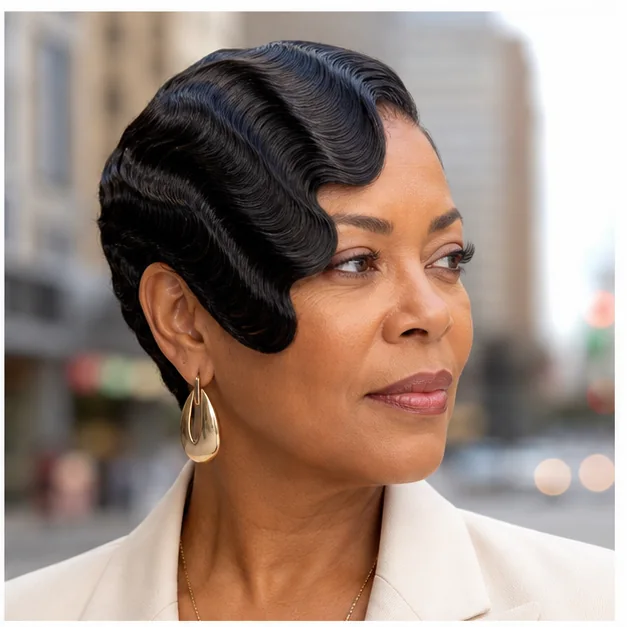
A deep side part sends the first broad ridge diagonally across the forehead before the pattern settles into tighter curves at the sides. That sweep adds visual length to a round face, draws attention toward the eyes and feels glamorous in a way that still works with a tailored jacket or evening dress. The heavier side needs balanced product so it stays smooth without becoming stiff or flaky. Ask for a low, deliberate part and one prominent face-framing wave, then wrap the hair flat at night to preserve the direction instead of rebuilding it each morning.
Ask your stylist for: A deep low side part with one broad face-framing ridge and balanced close-set waves.
3. Soft Matte Finger Waves
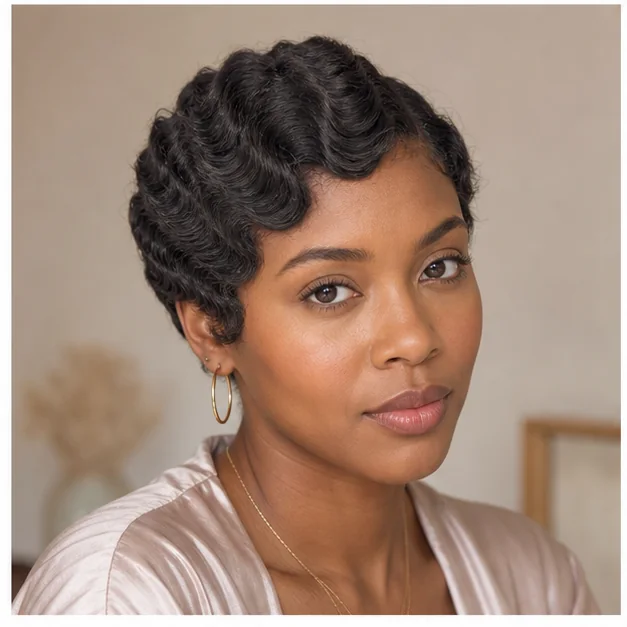
Soft matte finger waves keep the recognizable S-pattern but trade mirror shine for a gently diffused, velvety surface. The quieter finish softens strong features, looks beautifully modern in daylight and can feel relaxed enough for everyday wear rather than reserved for a formal event. It is especially appealing if you dislike a wet-look result, although the ridges still need enough flexible hold to resist humidity. Ask for foam-led molding with minimal heavy gel, softly defined edges and no lacquered crust; refresh only flyaways so the natural texture remains visible.
Ask your stylist for: Soft connected waves with a matte, foam-led finish, flexible hold and naturally diffused texture.
4. Finger Waves With a Curled Crown
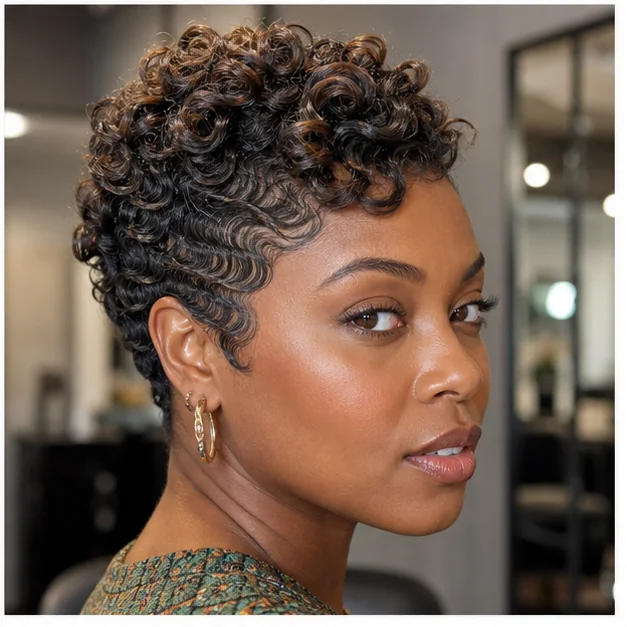
The sides follow sleek finger-wave ridges while the longer crown opens into defined, springy curls. This contrast builds height through the center, can visually lengthen a round face and gives a short natural style a playful, confident energy without flattening every coil. It works well on tapered cuts with enough crown length to curl separately, but the transition must look intentional rather than unfinished. Ask for molded sides, a softly blended boundary and individually defined crown curls; preserve the curls loosely at night while wrapping only the waved sections.
Ask your stylist for: Molded finger-wave sides blended into defined crown curls with height and no hard dividing line.
5. Center-Part Finger Waves
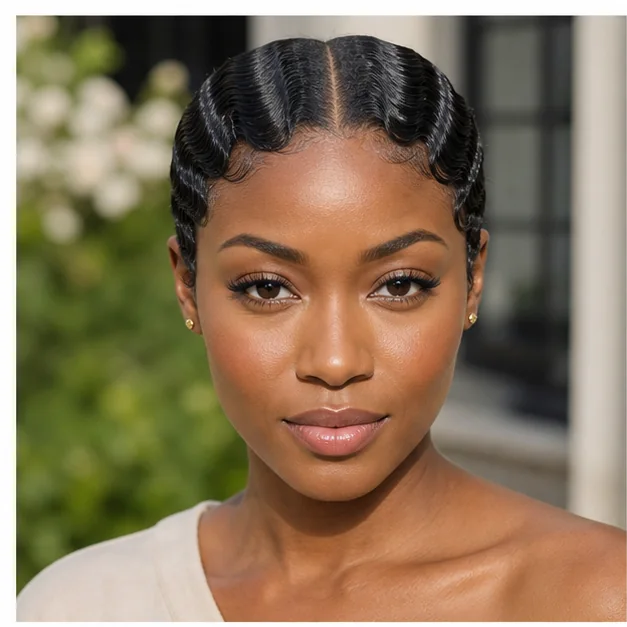
A narrow center part divides the hair into mirrored waves that curve evenly toward both temples. The symmetry makes the eyes the focal point, brings graphic balance to an oval or heart-shaped face and feels composed, artistic and quietly striking. Because every ridge has a partner, uneven density or growth direction is more visible, so a stylist may need to adjust the curves rather than force perfect duplication. Ask for balanced—not rigidly identical—S-waves, a slim straight part and softly finished edges; sleep with two smooth wrap sections to keep the center crisp.
Ask your stylist for: A narrow center part with balanced mirrored S-waves and softly finished edges.
6. Sculpted 4C Finger Waves
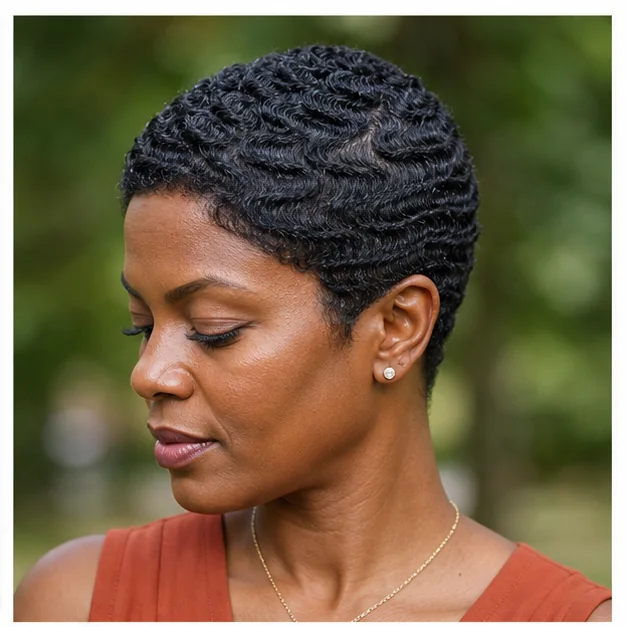
On short 4C hair, smaller closely spaced ridges follow the density instead of stretching the texture into oversized curves. The compact pattern creates beautiful movement, emphasizes the head shape and can feel wonderfully precise while keeping the natural body of the hair present. Successful molding depends on hydration, section control and complete drying, not harsh brushing or a relaxer. Ask for texture-aware finger waves using compatible gel and foam, gentle tension and narrow sections; clarify that you want your coil pattern respected and no chemical straightening added.
Ask your stylist for: Small texture-aware S-ridges on hydrated 4C hair with gentle tension and no chemical straightening.
Pause and notice: Natural hair does not need to be relaxed to hold finger waves. The right section size, compatible product, patient molding and complete drying matter far more than forcing every texture into the same oversized ridge.
7. Dry Finger Waves With Soft Volume
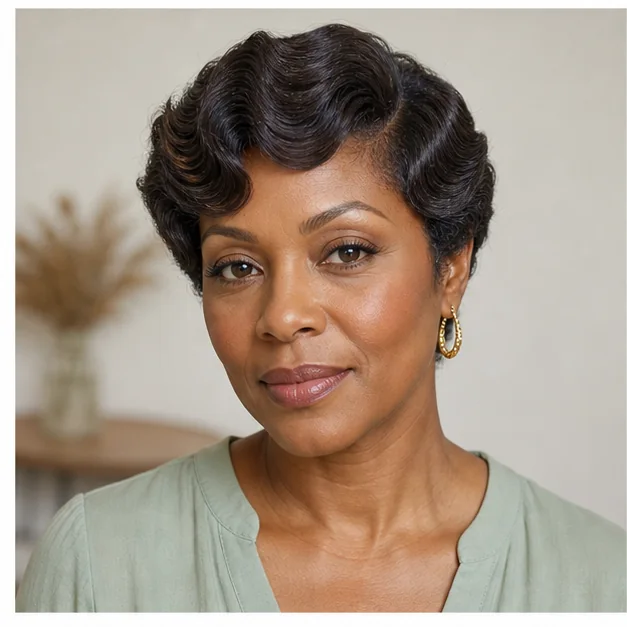
Dry finger waves create airy S-shaped bends with a comb, iron or controlled setting technique rather than molding the hair flat while wet. The lifted finish makes fine or longer short hair look fuller, softens an angular jaw and feels romantic and touchable instead of sharply sculpted. Heat is optional depending on the method, but any thermal approach needs careful temperature control and protection. Ask for soft brushed ridges with visible root lift and flexible movement; explain whether you prefer a heat-free set or low-heat finish, and avoid heavy oils that collapse the volume.
Ask your stylist for: Touchable dry-set S-waves with root lift, flexible movement and a heat-conscious finish.
8. Finger Waves With a Tapered Nape
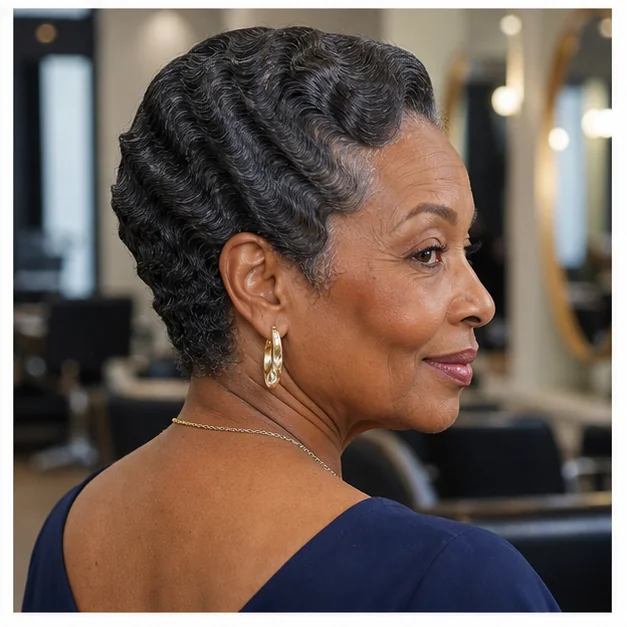
Smooth waves sweep across the top and sides before meeting a softly tapered nape that follows the natural neckline. Removing bulk at the back makes the profile look crisp, lengthens the neck and gives the style a fresh, self-assured finish that is easy to pair with high collars. The taper needs regular cleanup, while the waved top can be reset independently as it grows. Ask for a low natural taper rather than a severe fade, with wave ridges flowing into the shorter area; schedule perimeter trims according to how polished you want the outline.
Ask your stylist for: Flowing finger waves with a low natural nape taper and a soft, feminine perimeter.
9. Large Hollywood Finger Waves
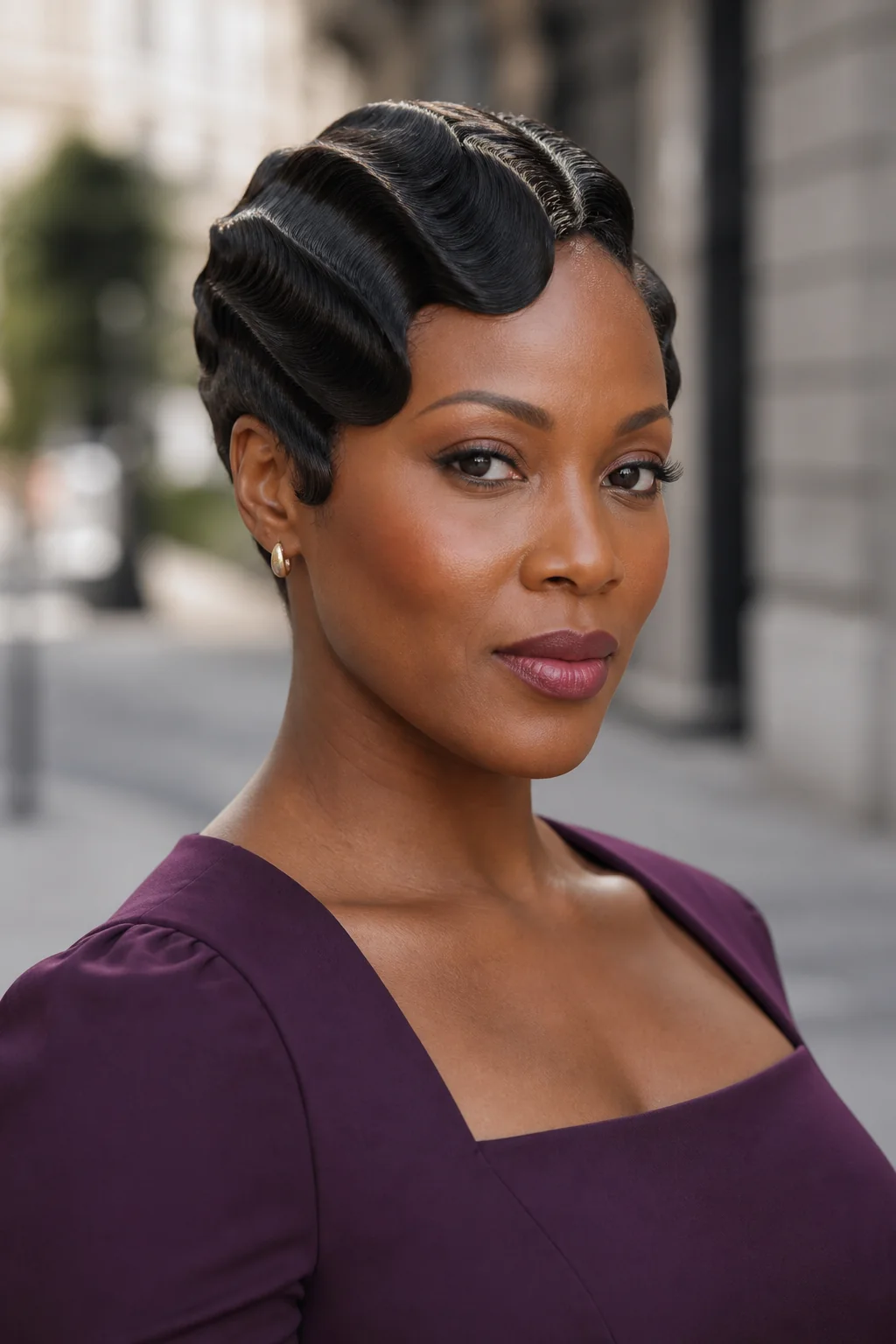
Broad, luminous waves curve in a slower rhythm than traditional close-set ridges, creating a Hollywood-inspired sweep across the head. The larger pattern visually expands fine hair, softens prominent cheekbones and feels elegant, dramatic and camera-ready without requiring long lengths. It needs enough surface length for each curve to read clearly, so very cropped areas may use smaller companion waves. Ask for oversized polished S-curves, a seamless side sweep and flexible shine; keep hands away while the set cools or dries so the ridges do not separate.
Ask your stylist for: Oversized polished S-curves with a seamless side sweep, flexible shine and clean ridge continuity.
10. Mini Finger Waves on a TWA
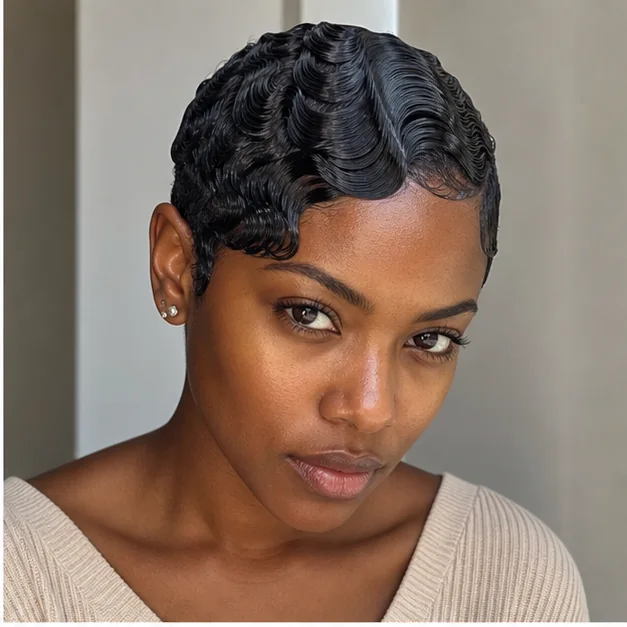
Tiny finger waves trace a teeny weeny afro in short, intricate curves that sit close to the scalp. Their compact scale makes very short growth look deliberate, showcases the forehead and eyes and can create a bold, newly transformed feeling after a big chop. The hair must be long enough for a comb to form a ridge, and forcing shorter patches can irritate the scalp or create uneven buildup. Ask for micro-scale waves that follow natural growth direction, a soft edge and lightweight hold; cleanse thoroughly after wear rather than layering more gel onto the set.
Ask your stylist for: Micro finger waves following the natural growth pattern with lightweight hold and no forced short sections.
11. Finger Waves With Soft Baby Hairs
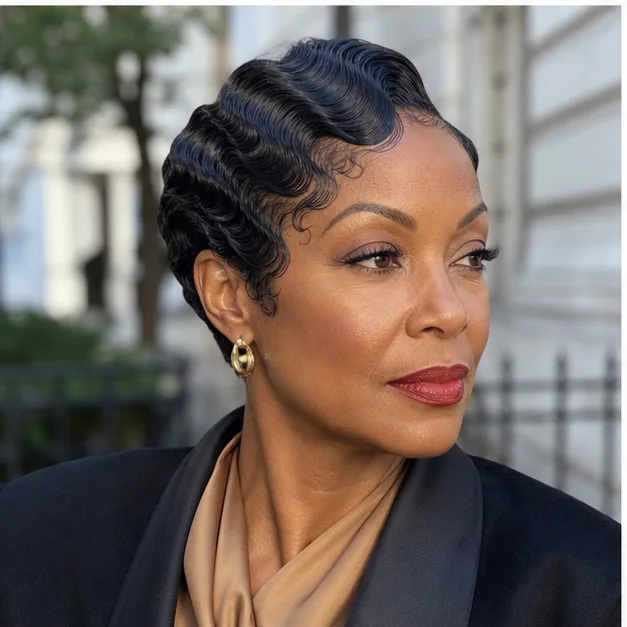
The main waves remain clean and sculpted while a few fine hairs at the temples form restrained, delicate curves. Echoing the larger pattern at the perimeter frames the eyes, softens a broad forehead and creates a refined, feminine finish without making the hairline the entire focus. Fragile edges should never be pulled from farther back or coated repeatedly with hard-setting product. Ask for minimal baby-hair detailing using only naturally short perimeter strands and a soft brush; release the edges gently with water or cleanser instead of scraping away dried gel.
Ask your stylist for: Classic finger waves with minimal soft baby-hair curves using only naturally short perimeter strands.
12. Copper Finger Waves
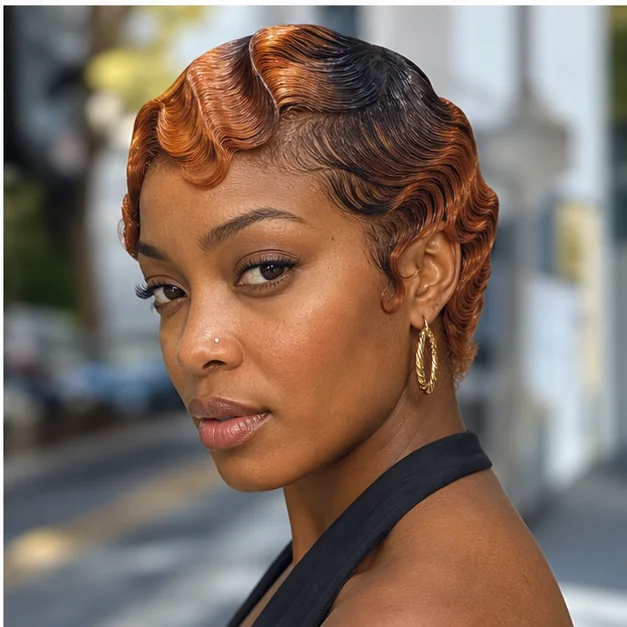
Warm copper color moves from deeper roots into luminous finger-wave ridges, making every crest and hollow catch the light. The tonal warmth brightens deep complexions, adds visual depth to a close-set style and can feel adventurous yet sophisticated because the silhouette remains so controlled. Lightened natural hair may be more porous, so strong gel, frequent wet resetting and heat require extra care. Ask for multidimensional copper that preserves root depth, followed by flexible waves and a conditioning finish; plan color maintenance separately from styling appointments to avoid overhandling.
Ask your stylist for: Dimensional copper with deeper roots, glossy flexible waves and a conditioning, low-stress finish.
13. Silver Finger Waves
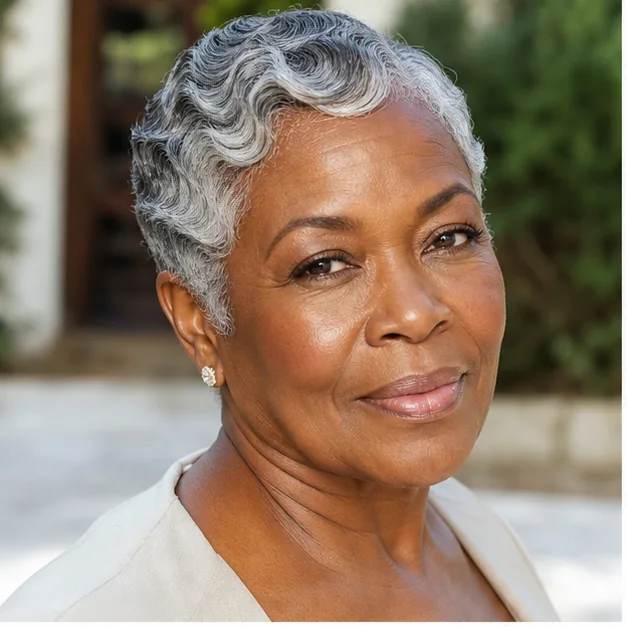
Naturally silver and salt-and-pepper strands flow through neat S-waves, giving the sculpted surface luminous dimension without added color. The contrast brightens the face, makes every ridge easier to see and can feel elegant, modern and completely assured at any age. Gray hair may be drier or more resistant in places, so the set should accommodate different textures rather than relying on increasingly firm hold. Ask for hydrated, touchable finger waves that preserve natural silver variation; use a satin wrap and lightweight moisture between sets to keep the finish supple.
Ask your stylist for: Hydrated touchable waves that showcase natural silver variation without stiff or drying product.
Pause and notice: A harder cast is not automatically a longer-lasting set. Flaking, scalp tightness or repeated heavy layering are signs to cleanse and reset, not to add another coat of gel.
14. Finger Waves With Pearl Pins
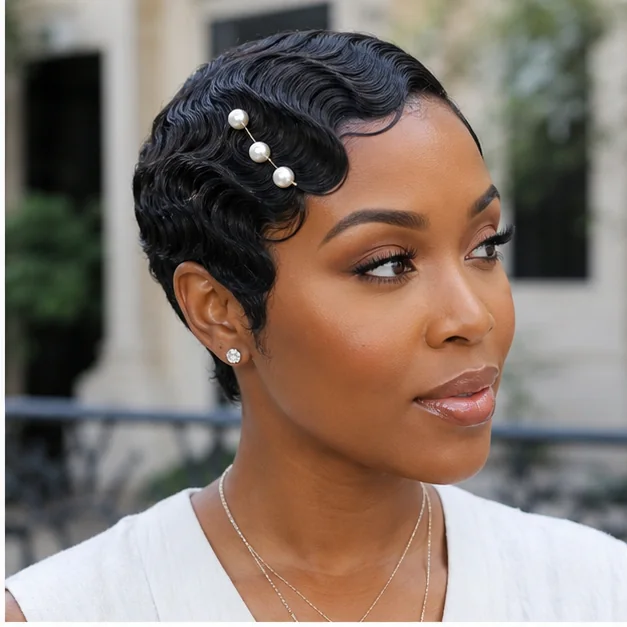
Two or three small pearl pins sit along one wave valley, following the curve rather than interrupting it. The restrained sparkle draws attention to the eyes and cheekbones, gives short natural hair an elegant bridal or celebration mood and avoids the weight of a larger headpiece. Pins must anchor securely without scratching the scalp or crushing a ridge, especially once product has dried. Ask for a polished side-part set with lightweight pearls placed on the stronger side; test the accessories before the event and remove them gently before wrapping the hair.
Ask your stylist for: Polished side-part waves with two or three lightweight pearl pins following one wave valley.
15. Asymmetrical Finger Waves
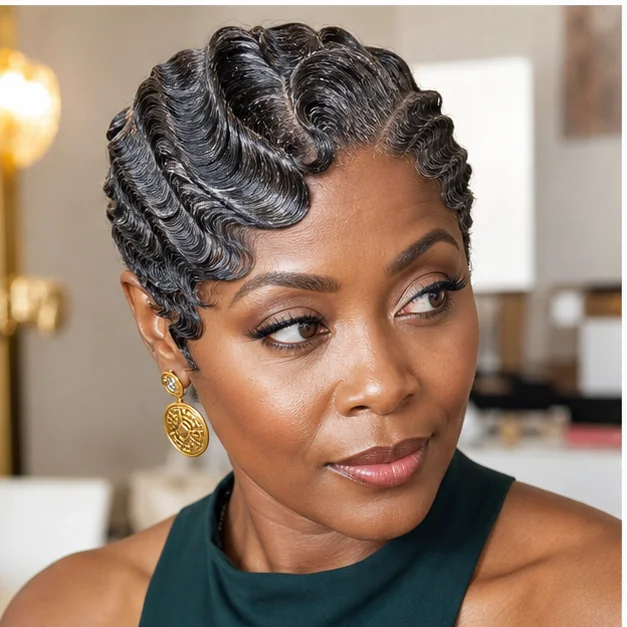
One side carries broad sweeping ridges while the other uses tighter waves tucked close around the temple. The unequal scale creates movement, can balance facial asymmetry and feels creative and fashion-forward without depending on extreme color or accessories. It is particularly effective when natural growth patterns differ from side to side, because the design turns that behavior into intention. Ask for an asymmetrical wave map with a broad statement side and compact supporting side, while keeping the perimeter comfortable; photograph the finished layout so future resets can follow the same pattern.
Ask your stylist for: An asymmetrical wave map with broad statement ridges on one side and compact curves on the other.
16. Finger Waves With a Coiled Fringe
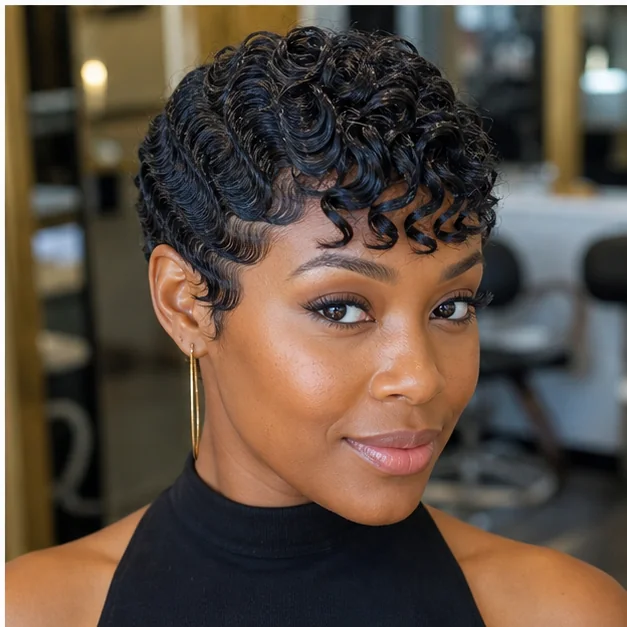
The sides and back remain molded into smooth waves while a short front section breaks into separate, softly defined coils. The fringe adds movement over the forehead, can soften a longer face and makes the overall style feel playful and approachable rather than strictly vintage. The two textures need a clean transition and different product amounts so neither section looks accidental or overloaded. Ask for close-set waves around the sides with a light coiled fringe released at the front; refresh the coils with damp fingertips while leaving the molded base undisturbed.
Ask your stylist for: Close-set side waves blended into a light, separate coiled fringe with a soft transition.
17. Low-Sheen Everyday Finger Waves
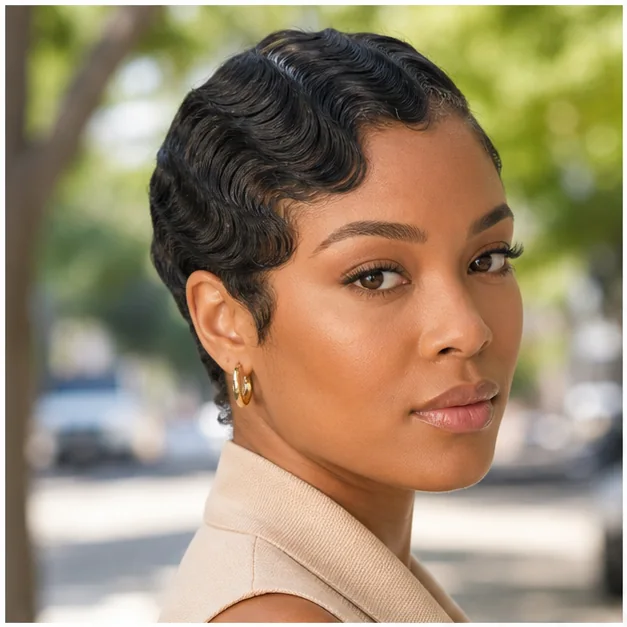
Low-sheen finger waves use medium definition and a flexible finish, allowing a little natural texture to show between the ridges. The effect is polished enough for work while feeling easygoing for errands or weekends, and the softer surface makes minor day-two changes less obvious. This version is useful if you want the shape without the upkeep of a glassy editorial set, although rain and workouts will shorten its life. Ask for wearable flexible waves with restrained edge control and no hard cast; use a breathable satin scarf and accept a softer evolution between wash days.
Ask your stylist for: Wearable medium-definition waves with low sheen, flexible hold and restrained edge control.
18. Finger Waves With a Sculpted Swirl
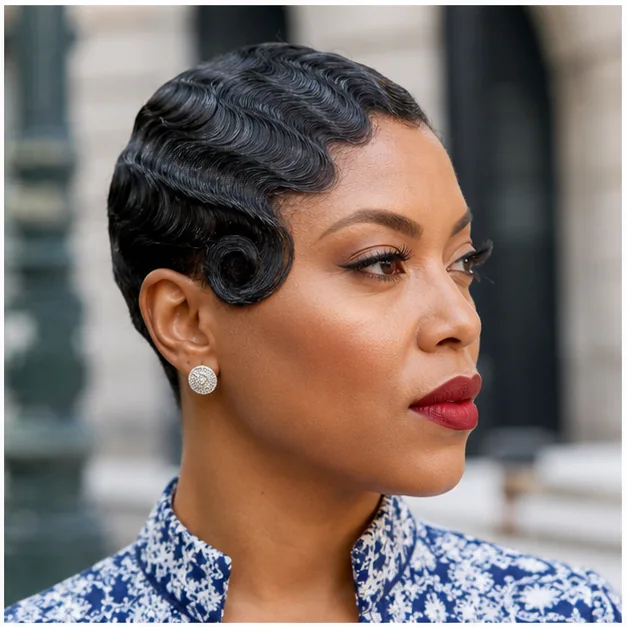
A sequence of traditional ridges finishes in one controlled circular swirl near the temple, creating a clear artistic focal point. The curve brings attention upward toward the eyes, adds personality to a minimalist outfit and can feel expressive while the rest of the style stays refined. The swirl needs adequate length and should sit where the hair naturally bends, otherwise it may lift or require too much product. Ask for one smooth temple spiral integrated into the surrounding S-waves, with a soft center and clean outer line; protect it beneath a roomy wrap.
Ask your stylist for: Classic connected waves finishing in one smooth temple spiral placed with the natural growth direction.
19. Finger Waves With a Side Curl
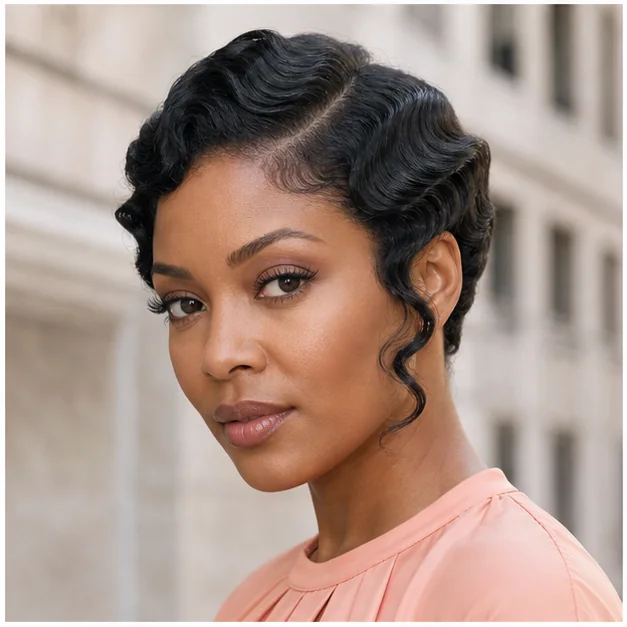
Sculpted waves frame most of the head while one longer side section releases into a soft curl beside the cheek. The loose piece interrupts the precision just enough to soften a strong jaw, creates romantic movement in photographs and can make the wearer feel dressed up without a complicated updo. Its weight should not pull the neighboring ridge flat, so placement and product balance matter. Ask for a polished wave set with one deliberately released side curl, blended at the root and fully dried; pin the curl loosely at night rather than crushing it beneath the wrap.
Ask your stylist for: A polished finger-wave base with one deliberately released, softly blended side curl.
20. Brushed-Out Finger Waves
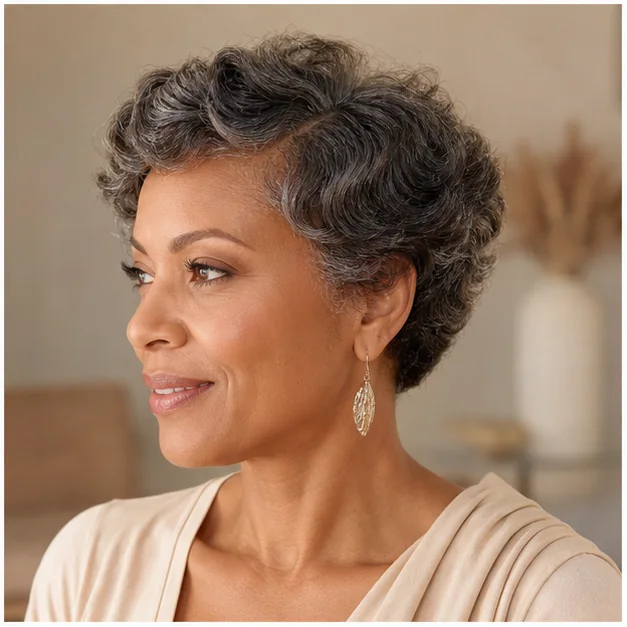
Brushed-out finger waves retain a visible S rhythm but blur the hard ridge lines into soft, airy movement. The expanded texture makes short hair appear fuller, cushions angular features and feels glamorous in an effortless, lived-in way that transitions beautifully from a formal set to the next day. Brushing works only after the hair is completely dry and the set is secure; doing it too early creates frizz instead of softness. Ask for a firm underlying wave set designed to be gently dressed out, with controlled volume and a smooth perimeter; use a wide soft brush sparingly.
Ask your stylist for: A fully dried wave set gently dressed out for soft volume, visible S movement and a smooth perimeter.
Pause and notice: Choose the finish that suits your week: crisp wet-set waves for maximum sculpture, dry waves for softness, or a wave-and-curl combination when you want movement and easier grow-out.
Before You Book the Appointment
A successful salon visit begins with the overall shape, construction and upkeep—not only the finished length. Use this quick reality check before choosing your final reference photograph.
- Best for: Short natural hair with enough length to form a ridge; exact section size and technique should follow density, coil pattern, cut and growth direction.
- Signature finish: Connected S-shaped ridges and valleys molded close to the head or softly dressed out while retaining a deliberate wave map.
- Closest alternatives: Finger coils are separate spirals; loose waves lack connected ridges; Marcel waves are usually heat-shaped; a waved pixie describes the cut as well as the styling.
- Maintenance: Dry completely, wrap smoothly at night, avoid repeated product layering, protect from moisture and cleanse when the set flakes, itches or loses flexibility.
What Are Finger Waves on Natural Hair?
Finger waves are connected S-shaped ridges formed by guiding damp or prepared hair back and forth with fingers and a comb, then setting that map in place. On natural hair, the pattern may sit sleek and glossy, remain softly textured or blend into curls where the hair is longer. Unlike finger coils, which create individual spirals, finger waves read as one continuous sculpted surface. They also differ from loose curling-iron waves because the ridge direction is deliberately linked across each section.
Wet-Set, Dry or Wave-and-Curl?
A wet molded set gives the crispest close-to-the-head finish and usually relies on gel, foam and thorough hood drying. Dry finger waves feel softer and fuller; they may come from a heat-free set or carefully controlled thermal shaping. Wave-and-curl styles mold the shorter sides while allowing longer crown or fringe sections to keep their coil definition. Choose by hair length, desired hold, weather, workout routine and tolerance for a firm product cast—not by the idea that one method is universally better.
How to Ask a Stylist for Natural-Hair Finger Waves
Bring a reference with a similar cut, density and texture, then describe the part, ridge size, shine level and whether any crown or fringe should remain curly. Say clearly that you do not want chemical straightening if that matters to you. Ask which product combination suits your porosity, how the style will be dried and how long the appointment includes for setting. A good finish should look controlled without a painfully tight scalp, brittle edges or thick visible residue.
Maintenance, Humidity and Growing the Style Out
Let the set dry completely before leaving the salon or touching the ridges, because trapped dampness weakens the pattern and can leave product tacky. At night, use a smooth scarf that follows the wave direction without pressing a curled crown flat. Humidity, exercise and rain shorten wear, so plan the style around real life rather than expecting permanent sculpture. As hair grows, broad waves, dry sets and wave-and-curl combinations become easier; very long sections may need pin curls or another supporting technique.
More Hair Inspiration
- 20 Short Natural Hairstyles That Celebrate Your Texture — Compare finger waves with other flattering short natural styles.
- 20 Finger Coils That Make Natural Hair Look Beautifully Defined — See the difference between connected waves and individual coils.
- 20 Soft Pixie Cuts for Round Faces That Feel Fresh and Flattering — Explore short cuts that can provide a foundation for waved styling.