A protective style should feel like relief, not a test of how much pulling your scalp can tolerate. Low-tension protective hairstyles for natural hair reduce daily handling and shelter vulnerable ends without depending on painful roots, heavy extensions or a hairline pulled unnaturally smooth. That makes them different from any style that is merely long-lasting: true protection combines gentle installation, manageable weight, moisture access and comfortable wear. These 20 ideas make it easier to compare shape, commitment and everyday care before you reach for an elastic or book a braider.
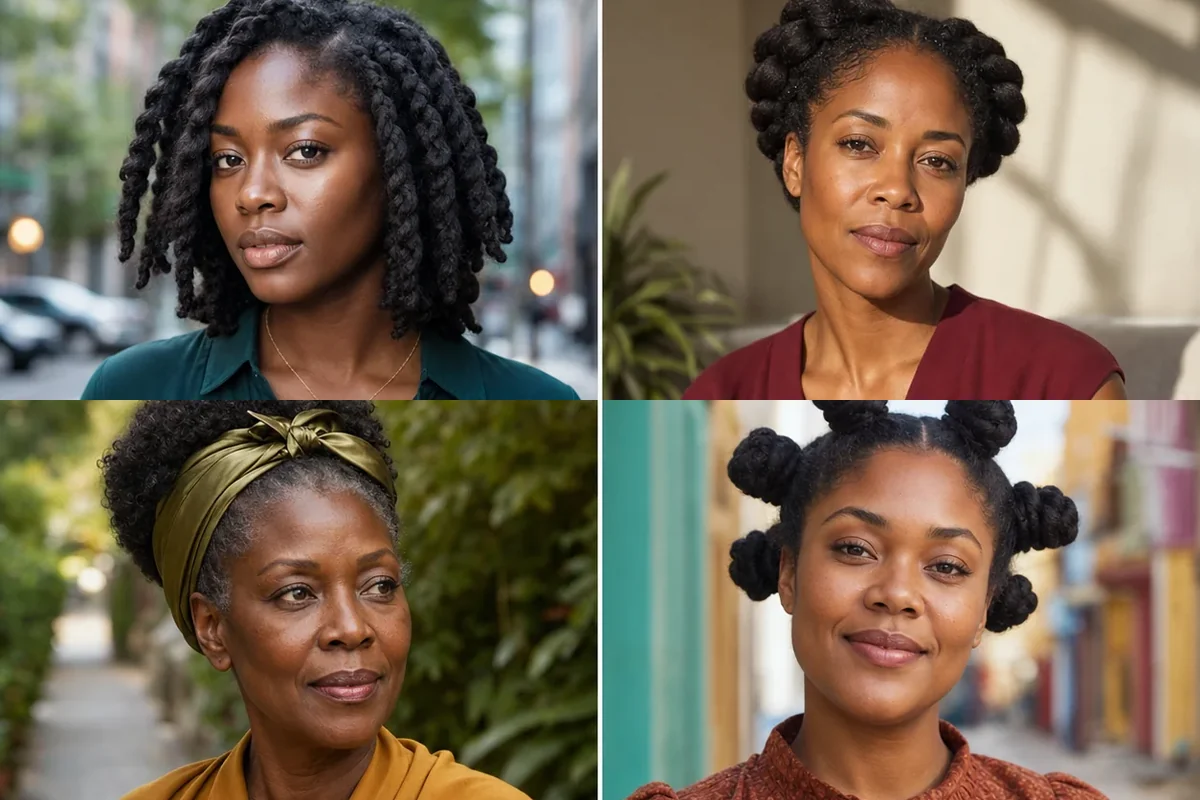
Find the one that feels like you: Start with the first look and let the photographs lead. Each style explains how the shape affects your features, the mood it creates and the exact words to take to your stylist.
1. Chunky Two-Strand Twists
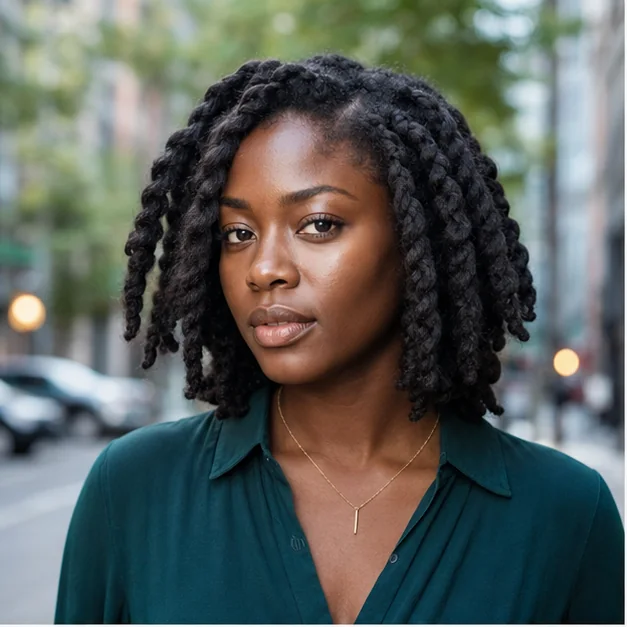
Chunky two-strand twists divide moisturized natural hair into generous rope-like sections, so every root carries less tension than it would with tiny twists. The soft volume frames the face, makes dense coils feel organized without looking severe and can bring an easy, quietly confident mood to a busy week. They suit medium-to-long hair and are simple to refresh, although exposed ends should be sealed and tucked at night. Ask for medium-large sections, a loose first turn at the scalp and no rubber bands or added hair at the root.
Ask your stylist for: Create medium-large two-strand twists with loose roots, sealed ends and no rubber bands.
2. Loose Flat-Twist Crown
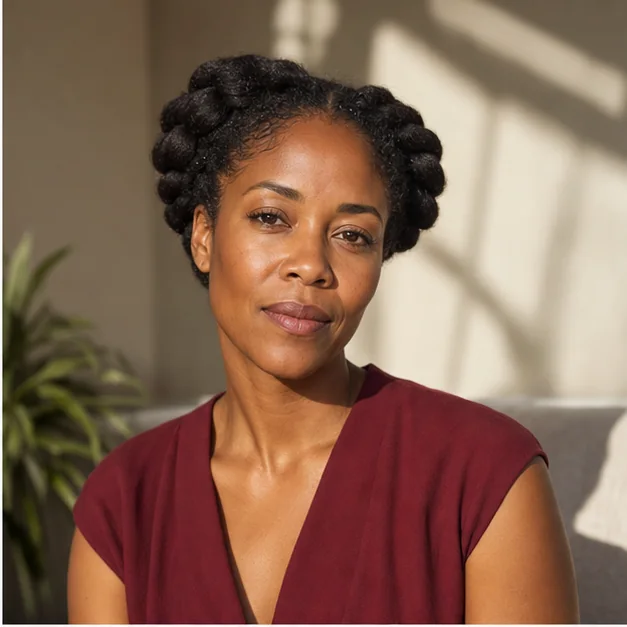
Two broad flat twists travel around the head and meet in a softly pinned crown, leaving the hairline relaxed rather than lacquered flat. The rounded shape opens the face, highlights the eyes and feels romantic enough for an event while remaining practical for work. It is especially useful for medium hair that needs tucked ends without extensions, but pins must sit comfortably rather than scrape the scalp. Request wide sections, gentle feed-in tension, visible softness at the temples and ends secured with coated pins beneath the crown.
Ask your stylist for: Form two broad flat twists with relaxed temples and hide the ends using coated pins.
3. Low Puff With a Satin Tie
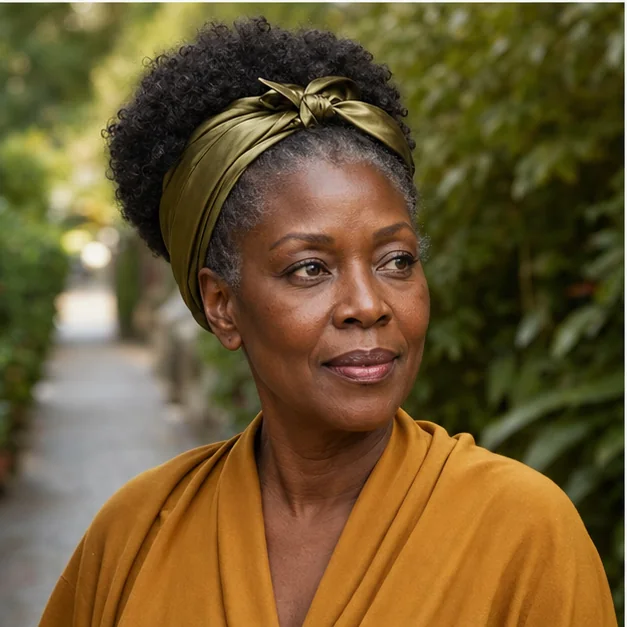
A low puff gathers stretched or shrunken coils near the nape with a wide satin tie, allowing the texture to bloom instead of forcing every strand smooth. Its low placement softens a long face, keeps the crown relaxed and creates an approachable, polished look in minutes. This is a useful short-to-medium-length option for day-three hair, though repeating the tie in exactly the same spot can cause friction. Keep the front softly finger-shaped, use no hard brush and wrap the tie only as firmly as comfort allows.
Ask your stylist for: Gather a low puff with a wide satin tie, soft crown texture and untouched baby hairs.
4. Oversized Bantu Knots
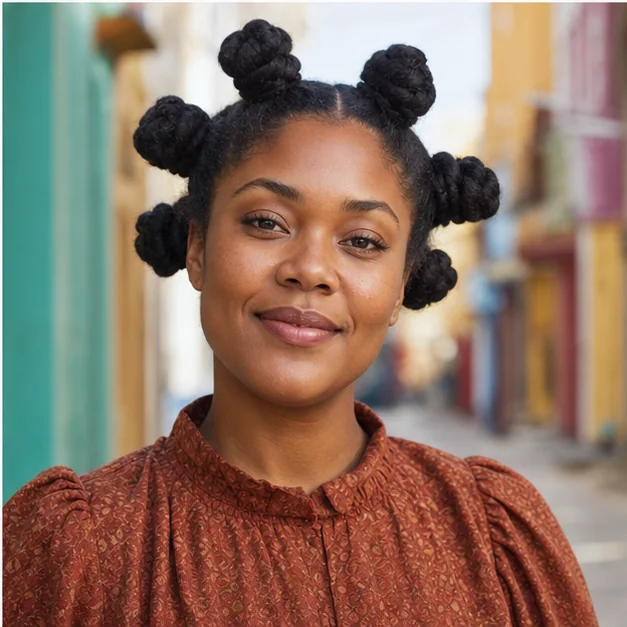
Six to eight oversized Bantu knots create a clean sculptural pattern while using far fewer root anchors than a head full of tiny knots. Their height draws attention upward, showcases cheekbones and can make an ordinary outfit feel joyful and artful. The style works on medium or long natural hair and doubles as a stretched knot-out, but each base should rotate easily without pinching. Ask for large moisturized sections, minimal twisting at the root and tucked ends held by their own coil or a smooth pin.
Ask your stylist for: Make six to eight large Bantu knots with loose bases and smoothly tucked ends.
5. Claw-Clip French Twist
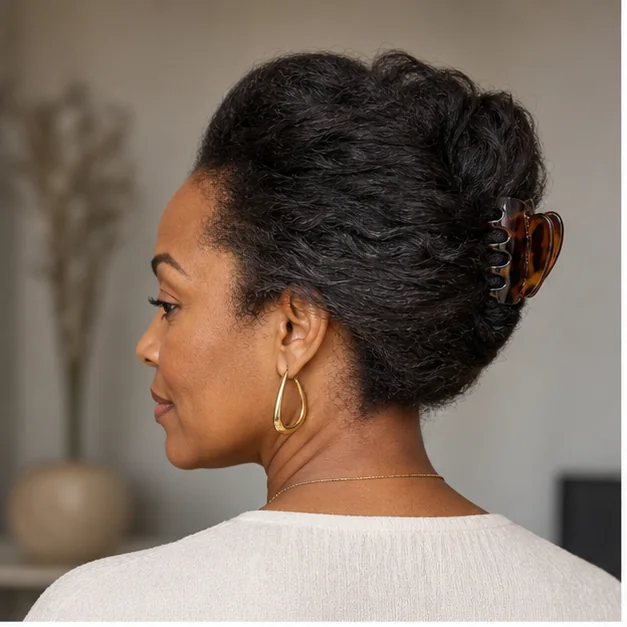
Natural hair folds upward into a relaxed French twist and is held through the center with a broad, smooth-edged claw clip. The vertical line lengthens the neck, keeps ends away from collars and feels sophisticated without the stiffness of a tightly brushed updo. It suits stretched medium-to-long hair and releases quickly at the end of the day, although the clip should never feel heavy or press against the head. Twist only enough to contain the ends, leave soft volume at the crown and choose a clip with polished seams.
Ask your stylist for: Fold a loose vertical twist with crown volume and secure it using one smooth lightweight claw clip.
Pause and notice: Comfort is useful information. A style that hurts, throbs or requires painkillers is not becoming protective with time; loosen or remove it.
6. Halo Twist With Loose Edges
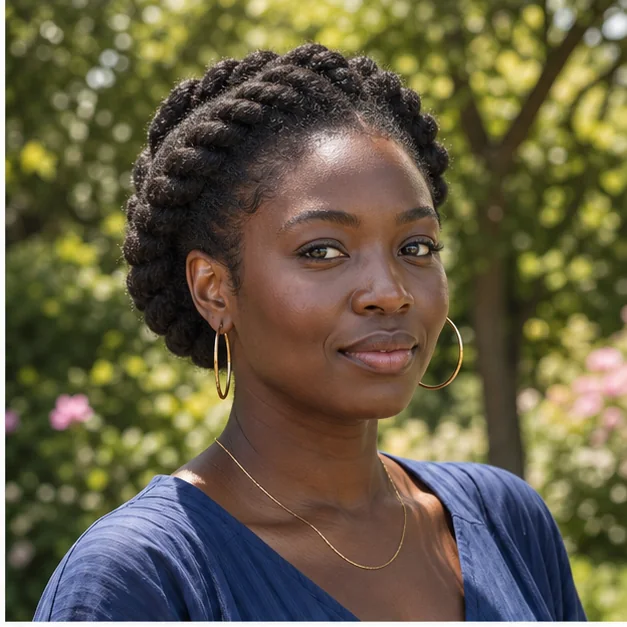
A thick two-strand twist circles the head like a halo, with a little natural texture left visible at the temples and nape. The curved placement balances angular features, brightens the face and creates a graceful, self-possessed feeling for weddings, dinners or ordinary errands. It protects medium-to-long ends and can last several days, but a halo braided too close to the scalp defeats the low-tension goal. Request a loose rope twist positioned just behind the hairline, lightweight pinning and no edge control or extension weight.
Ask your stylist for: Place a loose halo twist behind the hairline with light pins and naturally relaxed edges.
7. Pinned Flat-Twist Updo
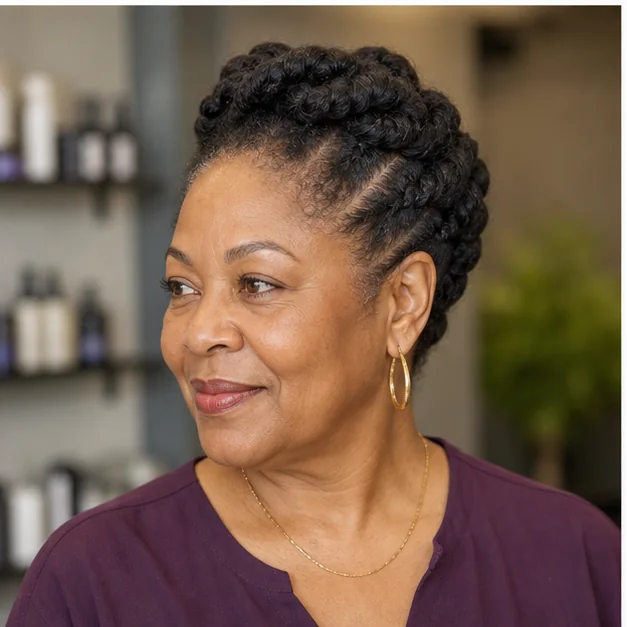
Four broad flat twists rise toward the crown, where their ends overlap in a cushioned, softly pinned cluster. The upward lines add height to rounder features, keep hair clear of the neck and look composed enough for a professional setting without sacrificing comfort. Broad sections spread the workload across more hair, although the style should be removed if any row feels sore or raised. Ask for gently anchored twists, no gripping of fine perimeter hairs and a crown secured with several small coated pins rather than one tight elastic.
Ask your stylist for: Use four broad low-tension flat twists and distribute the crown support with coated pins.
8. Loose Braided Low Bun
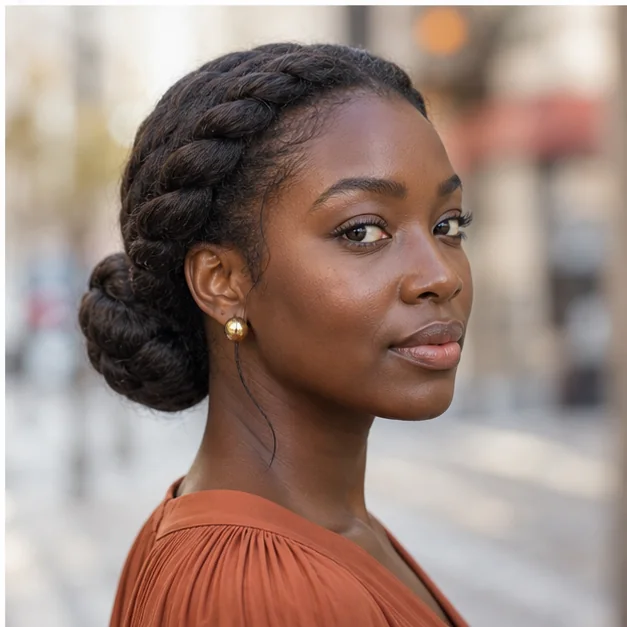
A single loose braid coils into a wide bun at the nape, creating a smooth protective finish without dragging the hair upward. The broad shape balances a longer face, looks understated and elegant, and keeps ends safely away from dry clothing. It is ideal for stretched medium-to-long hair and can be redone in minutes, but slicking products and tight elastics are unnecessary. Ask for a soft low gathering with a fabric-covered tie, a loosely woven braid and pins placed through the outer braid rather than against the scalp.
Ask your stylist for: Create a loosely woven braid at the nape and pin it into a broad bun without slicking.
9. Headwrap With a Tucked Base
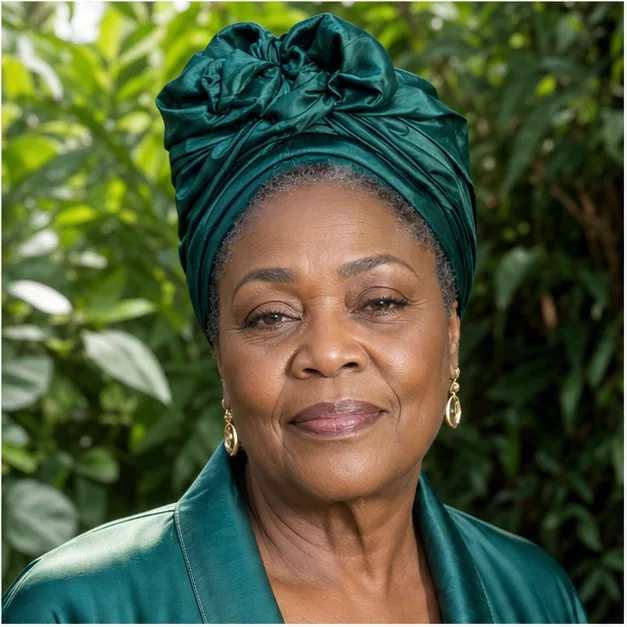
Hair is moisturized, loosely twisted and tucked beneath a breathable satin-lined headwrap, with the knot placed away from the fragile hairline. The fabric adds color near the face, creates instant polish and can make a low-energy hair day feel intentional and bright. It works for almost any length and offers protection from weather, though a wrap that slides, compresses the edges or traps damp hair needs adjustment. Keep the base flat but loose, cover every end and tie the wrap securely enough to stay—not to squeeze.
Ask your stylist for: Prepare a loose tucked base and position a breathable satin-lined wrap away from the hairline.
10. Glueless Wig Over Loose Cornrows
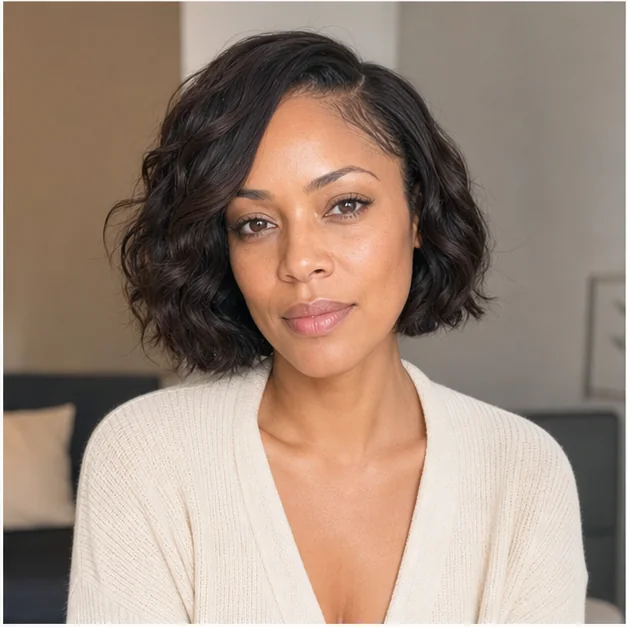
A lightweight glueless wig sits over six to eight roomy cornrows that follow the head without pinching, with an adjustable band rather than adhesive holding the unit. The finished bob can deliver sleek, confident variety while the natural hair stays tucked and accessible for care. This option suits someone wanting a temporary texture or color change, but an overly tight wig band can still irritate the hairline. Ask for large, comfortable foundation braids set back from the edges, flat thread-secured ends and a breathable cap adjusted without pressure points.
Ask your stylist for: Build six to eight loose cornrows set back from the edges and fit a lightweight glueless unit.
Pause and notice: Protection is a system, not just a finished look. Moisturized hair, gentle installation, scalp access and careful takedown all matter.
11. Large Knotless Braids
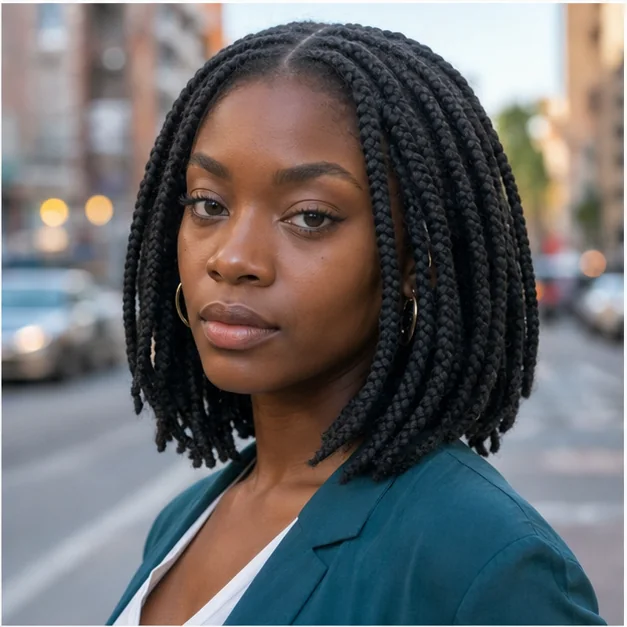
Large knotless braids begin with natural hair and add small amounts of lightweight extension gradually, avoiding a bulky knot at each root. The clean length frames the face, offers flexible styling and can feel calm and put-together for several weeks. Larger sections mean fewer anchors, but the braids are only gentle when the hairline is left free and the total weight stays modest. Tell the braider you want large parts, minimal feed-in hair, no gripping of baby hairs and enough root movement to place a fingertip comfortably beneath each braid.
Ask your stylist for: Use large parts, minimal lightweight feed-in hair and leave the entire hairline free of gripping.
12. Shoulder-Length Passion Twists
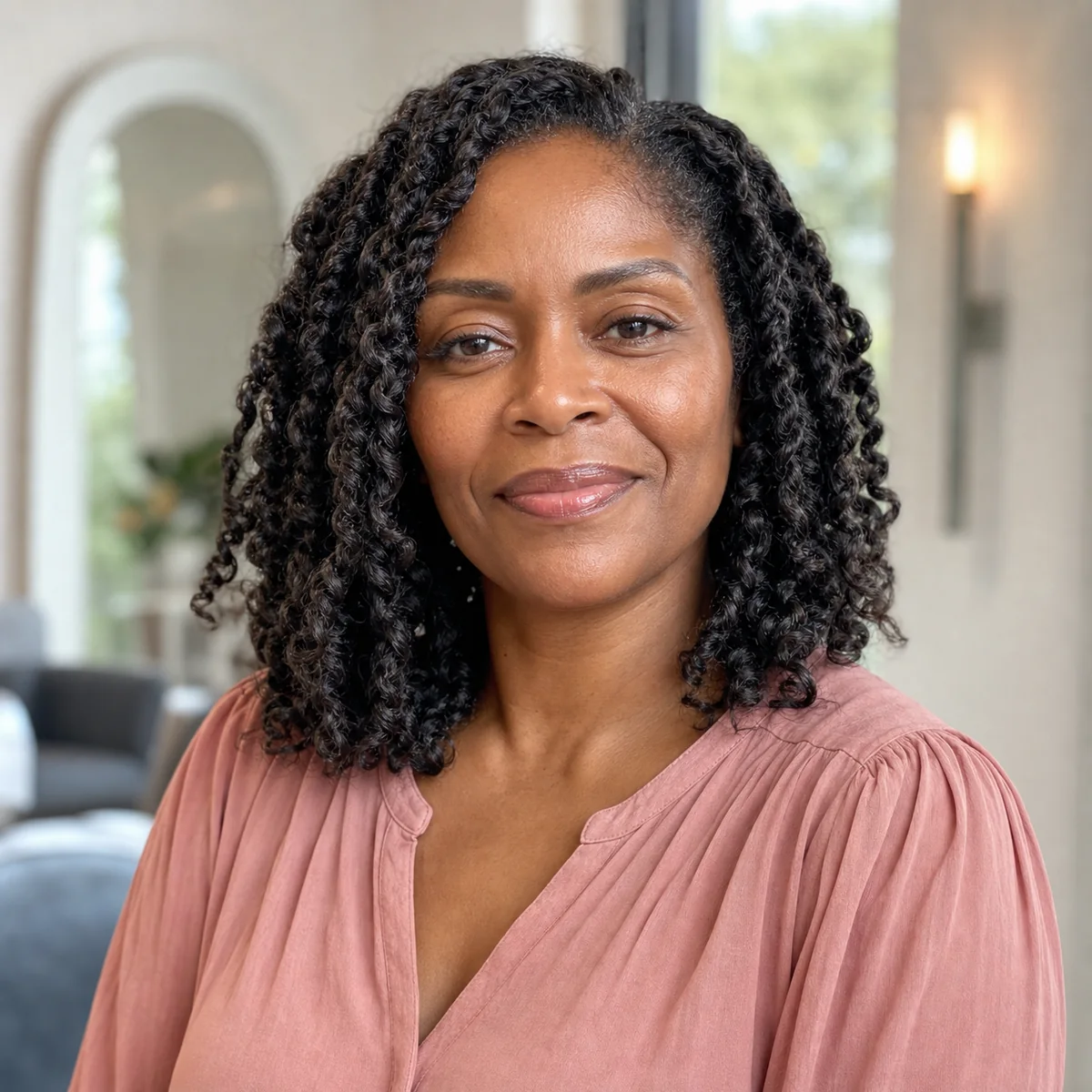
Shoulder-length passion twists combine loose rope texture with a deliberately shorter, lighter finish than dramatic waist-length versions. The airy ends soften strong features, add playful movement and create a romantic mood without placing as much leverage on the roots. They work well for medium natural hair and offer easy access between parts, although fuzzy extension hair can become heavy if too much is installed. Request medium-large sections, a gentle crochet or knotless attachment, lightweight strands and a finished length that clears the shoulders.
Ask your stylist for: Install medium-large passion twists with lightweight hair, loose roots and shoulder-clearing length.
13. Crochet Curls on a Roomy Base
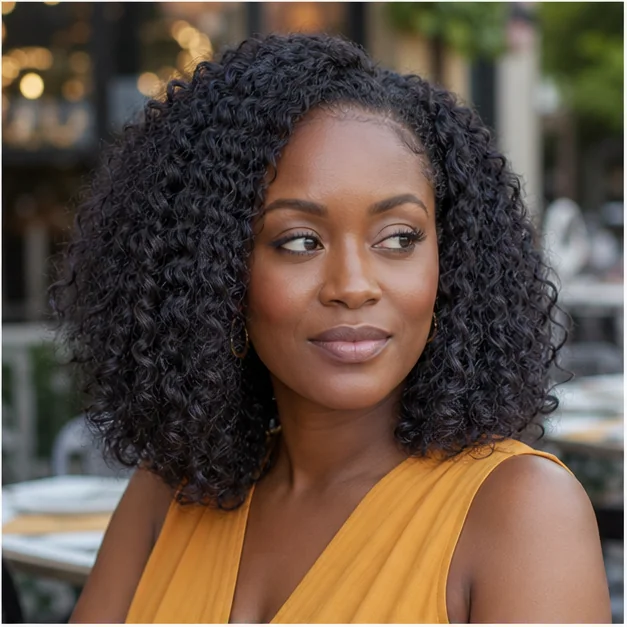
Soft crochet curls attach sparingly to a roomy cornrow base, leaving believable space between loops instead of packing the scalp with hair. The rounded volume can balance a long face, deliver cheerful wash-and-go energy and shorten the daily routine while natural ends remain covered. Crochet is not automatically low tension: tight foundation braids and excessive bundles create strain. Ask for six to ten loose cornrows, a perimeter left out of the base, lightweight curl fiber and deliberately sparse installation near the temples and nape.
Ask your stylist for: Use a loose six-to-ten-row base and sparse lightweight crochet placement away from the perimeter.
14. Soft Marley Twist Bob
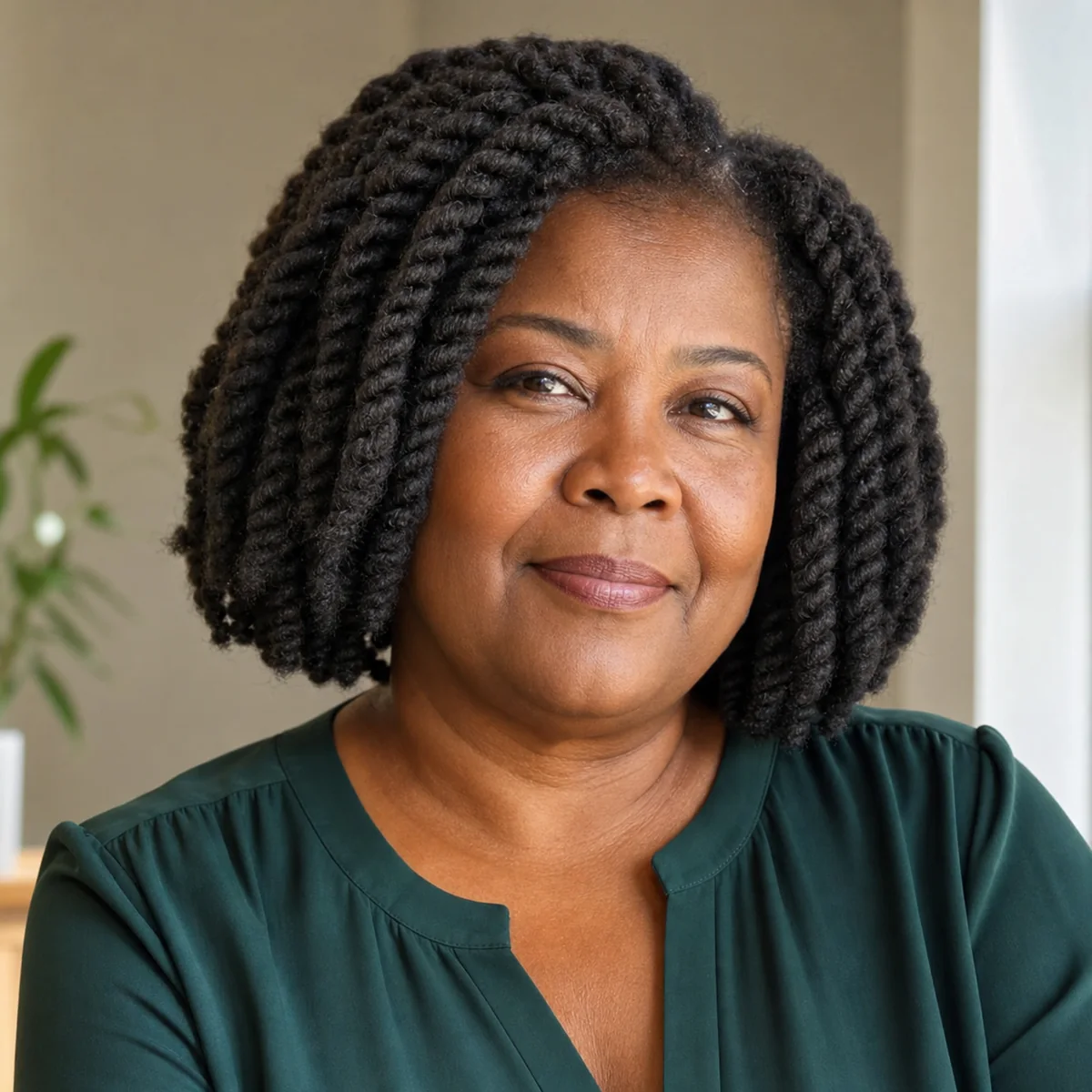
Marley twists stop around the chin and shoulder in a full bob, echoing natural coily texture without the pull of extra-long extensions. The compact outline emphasizes the jaw, makes the face feel open and creates a modern, capable mood with plenty of movement. The shorter length is easier to sleep in and style, although chunky fiber can still become heavy when packed densely. Request medium-large sections, lightweight pre-separated hair, a knotless or gentle twist-in start and a bob perimeter shaped without burning the ends.
Ask your stylist for: Create medium-large lightweight Marley twists with gentle starts and a chin-to-shoulder bob shape.
15. Loose Cornrow Ponytail
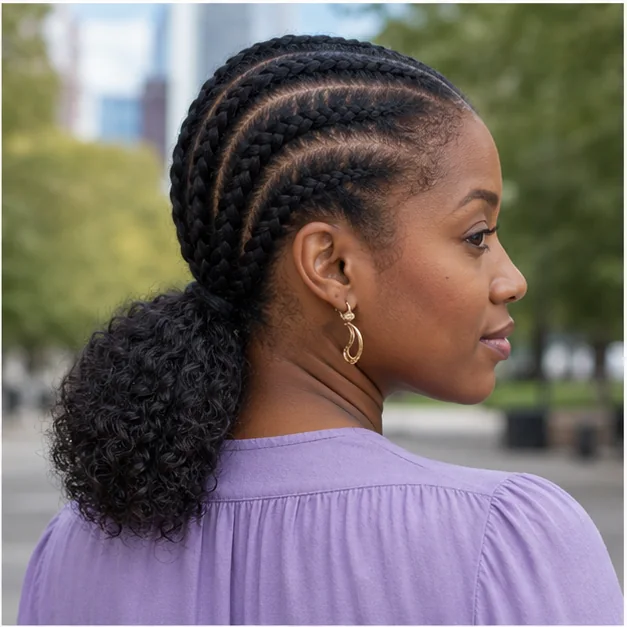
Five or six broad cornrows travel toward a low ponytail, keeping both the braid direction and the finished weight close to the natural fall of the hair. The clean lines highlight cheekbones and feel sporty, assured and practical for travel or active days. It can protect medium-to-long hair for a short wear period, but soreness, shiny scalp or tiny bumps mean the braids are too tight. Ask for large rows, an unbraided perimeter, no extension hair in the base and a soft lightweight ponytail attached below the occipital bone.
Ask your stylist for: Braid five or six broad loose rows into a lightweight low ponytail and leave the perimeter free.
Pause and notice: Extension length changes leverage at the root. Choosing a shorter finish or less hair can preserve the mood while making the style noticeably kinder.
16. Tucked Roll on Short Natural Hair
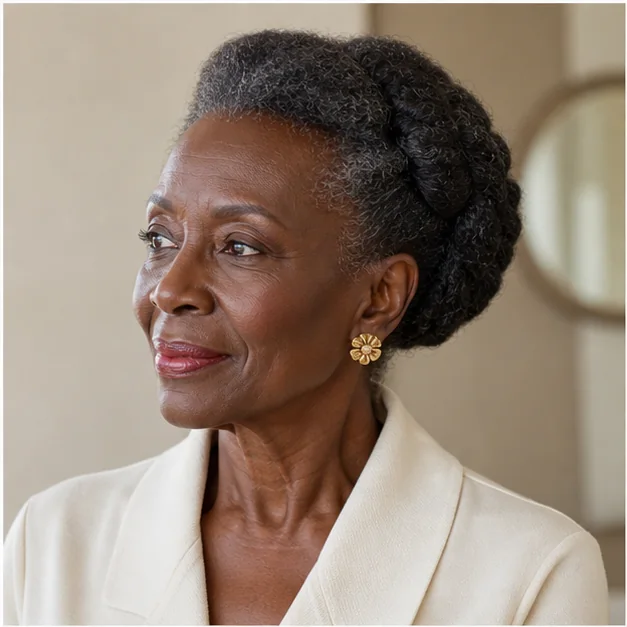
Short natural hair rolls inward along the sides and nape, with the ends tucked beneath a softly textured ridge through the center. The curved lines lift the face, make compact length feel elegant and offer a reassuring special-occasion option without added hair. It works best on lightly stretched coils with enough slip to fold, though forcing very short sections into pins can create breakage. Ask for a moisturizer-first set, gentle finger rolling, minimal brushing and small coated pins placed only where the hair reaches naturally.
Ask your stylist for: Finger-roll lightly stretched short hair and pin only sections that reach comfortably without pulling.
17. Bandana-Tucked Curly Updo
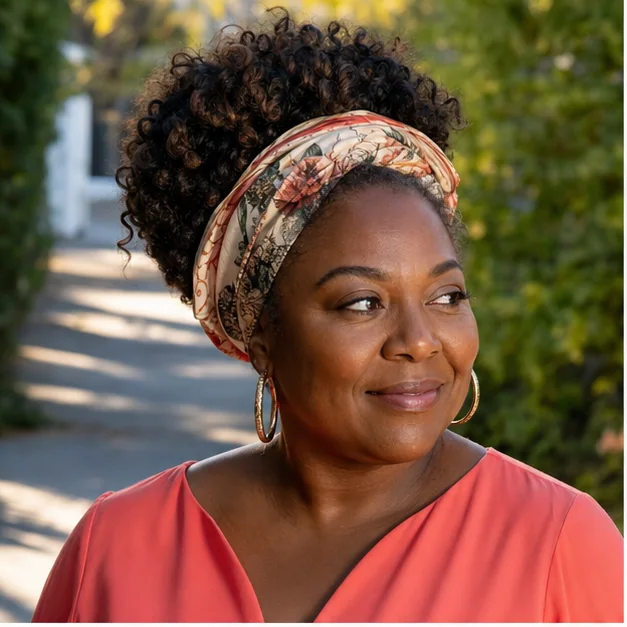
Defined curls gather loosely at the crown while a soft satin bandana cradles the back and helps tuck the ends. The upward volume lengthens fuller cheeks, keeps the neck cool and gives weekend clothes a playful, relaxed finish. This is useful for a mature wash-and-go or vacation day because it needs no tight ponytail underneath, but the bandana must not rub the temples. Fold a wide smooth band, cross it without knotting over fragile edges and let the curls rest rather than stretch at the base.
Ask your stylist for: Support a loose curly crown with a wide satin bandana and keep the temples pressure-free.
18. Four Jumbo Braids
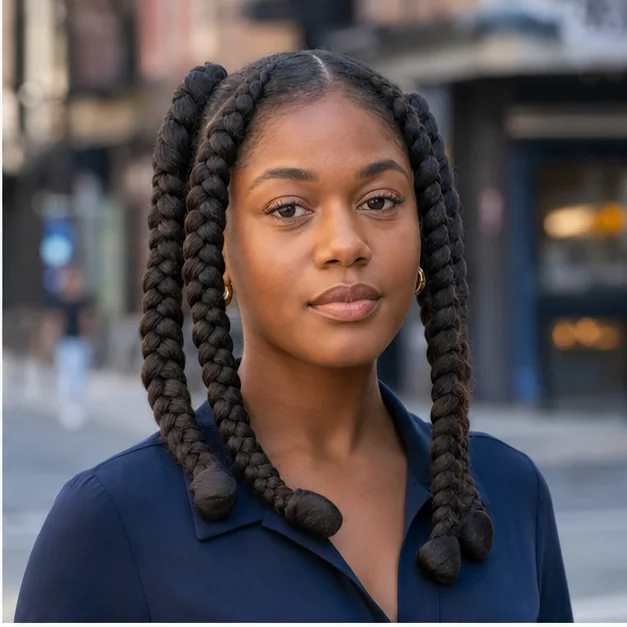
Four oversized braids run from broad, clean sections and finish with the natural ends folded safely under. The graphic pattern looks intentional, shows the face clearly and can make a quick wash-day style feel strong and stylish rather than makeshift. Because there are only four anchors, installation and takedown are fast, although each braid still needs a relaxed beginning and even sectioning. Ask for finger-detangled sections, no rubber bands, comfortable braid starts and ends tucked with thread or a smooth pin instead of pulled tight.
Ask your stylist for: Create four broad braids with loose starts, no rubber bands and gently folded natural ends.
19. Loose Mini-Puff Mohawk
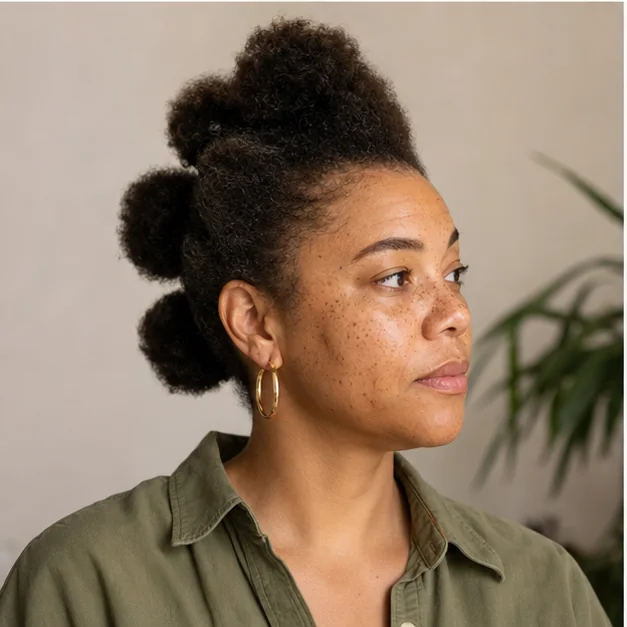
Three or four loose mini puffs line up from forehead to nape, creating a textured mohawk without cornrowing the sides tightly. The centered height visually lengthens a round face, celebrates shrinkage and brings lively, creative confidence to short or medium natural hair. Fabric ties make it quick to redo and reposition, but tiny elastics or repeated tension at the same points can snap strands. Use broad sections, satin-covered ties looped only as needed and softly pinned sides that preserve their natural texture.
Ask your stylist for: Arrange three or four broad loose puffs with satin ties and softly pinned, unslicked sides.
20. Satin-Scarf Pineapple
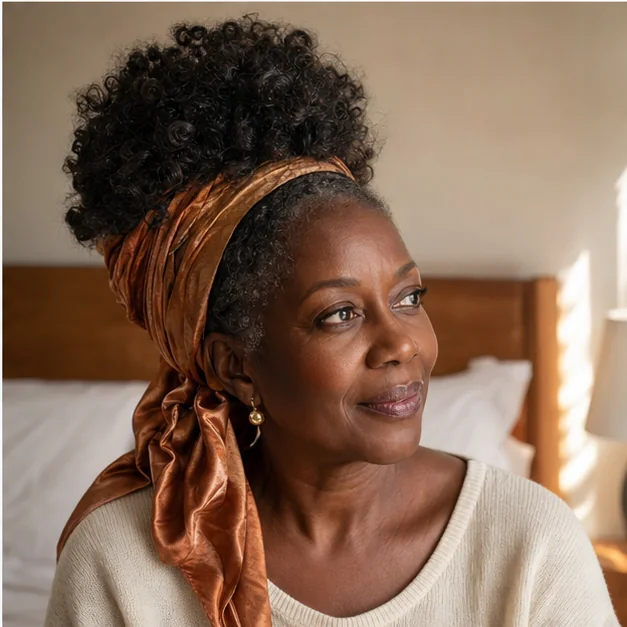
A wide satin scarf lifts curls loosely toward the forehead, allowing the ends to rest above the head instead of being crushed during sleep. The buoyant shape can also look playful for a relaxed morning, while the routine protects definition and reduces friction without adding another styled install. It suits medium-to-long curls, but a narrow scarf tied hard at the temples can leave pressure marks and edge stress. Gather from beneath rather than pulling, make one soft tie at the back and pair it with a satin pillowcase if the scarf slips.
Ask your stylist for: Lift curls loosely with a wide satin scarf, one soft rear tie and no temple pressure.
Pause and notice: The best option is one your scalp can forget about and your routine can realistically maintain.
Before You Book the Appointment
A successful salon visit begins with the overall shape, construction and upkeep—not only the finished length. Use this quick reality check before choosing your final reference photograph.
- Best for: Natural hair that benefits from reduced handling, protected ends and relief from tight or heavy styling.
- Signature construction: Ends are tucked or sheltered while roots remain mobile, the hairline stays relaxed and any added weight is distributed lightly.
- Closest alternatives: Low-manipulation styles reduce restyling but may leave ends exposed; a long-lasting braid or wig is not low tension if its base pulls or feels heavy.
- Maintenance: Keep the scalp comfortable and clean, moisturize accessibly, protect against friction and remove the style gently before buildup or matting develops.
What Low Tension Actually Means
Low tension means the root can move without pain, pinching or a shiny stretched scalp. A protective style also reduces handling and limits friction on the ends. Those goals can overlap, but they are not identical: a tight six-week install may hide the ends while stressing follicles, and a loose wash-and-go may feel gentle while leaving ends exposed. The most useful choice protects both comfort and hair condition.
Choose by Hair, Scalp and Routine
Fine strands, thinning edges, recent shedding or a sensitive scalp call for fewer anchors, no gripping of baby hairs and little or no extension weight. Dense 4C hair may enjoy chunky twists, flat twists and broad braids that work with shrinkage. Short hair can use rolls, puffs and wraps instead of forced braiding. Consider whether you need gym access, quick drying, easy moisturizing or a style that can be removed without help.
What to Tell a Braider or Stylist
Say clearly that comfort and hairline protection matter more than an ultra-neat finish. Useful requests include large sections, loose starts, minimal feed-in hair, no rubber bands at the root, no baby-hair gripping and the first anchor set behind the natural hairline. Ask to check the weight before the style is complete. If one section pinches, request an immediate redo rather than hoping it will loosen.
Warning Signs to Take Seriously
Pain, headache, scalp bumps, stinging, redness, shiny stretched skin or tiny broken hairs around an anchor are not normal signs of a fresh style. Loosen or remove the responsible section promptly. Persistent tenderness, thinning or a receding hairline deserves advice from a dermatologist or qualified hair-loss professional. Protective styling should support hair goals without requiring discomfort or disguising damage.
Moisture, Sleep and Wear Time
Start with clean, conditioned and fully detangled hair. Choose a style that leaves enough access for light scalp cleansing and targeted moisture without soaking extension fiber repeatedly. At night, reduce friction with satin and avoid tight bonnets that pull backward. Wear time depends on the style and scalp, not a fixed promise; remove it when buildup, matting, odor, slipping anchors or dryness makes gentle maintenance difficult.
Gentle Takedown and the Next Style
Set aside enough time to remove every pin, thread and extension without rushing. Add slip, unravel from the ends, separate shed hair with fingers and detangle in small sections before washing. A protective style does not eliminate normal shedding, so the amount released can look surprising. Give the scalp and hairline a comfortable break before another installation, especially if any area felt tender or looked thinner.
How to Pick Your Favorite
Start with the ordinary day you need the style to serve. Choose chunky twists or a scarf pineapple for flexibility, a flat-twist crown or tucked roll for elegant natural-hair-only protection, and lightweight braids or crochet when longer wear matters. Then compare root movement, total weight, moisture access, takedown effort and the feeling you want. Save two front views plus a side or back view and bring the low-tension request—not only the photograph—to your appointment.
More Hair Inspiration
- 20 Short Natural Hairstyles That Celebrate Your Texture — Compare more ideas designed around shorter natural texture.
- 20 Mini Twists Hairstyles That Look Beautiful and Feel Easy to Wear — Explore a detailed mini-twist guide before choosing section size.
- 20 Feed-In Braids That Look Sleek, Creative and Beautiful — See feed-in patterns and discuss how to keep the installation comfortable.