There is something wonderfully freeing about a haircut that lets natural texture take up space while giving it a shape you can recognize from every angle. A tapered Afro keeps curls or coils fuller through the top and crown, then gradually shortens the sides and nape to create a clean, sculpted outline. Unlike a uniform TWA, it preserves an intentional length contrast; unlike a pixie, its identity comes from Afro texture rather than layered straight-hair construction; and unlike an all-around fade, it retains visible softness and volume beyond the top panel. These 20 versions show how taper height, curl definition, color and silhouette can change the mood, maintenance and face-framing effect of the same beautifully versatile cut.
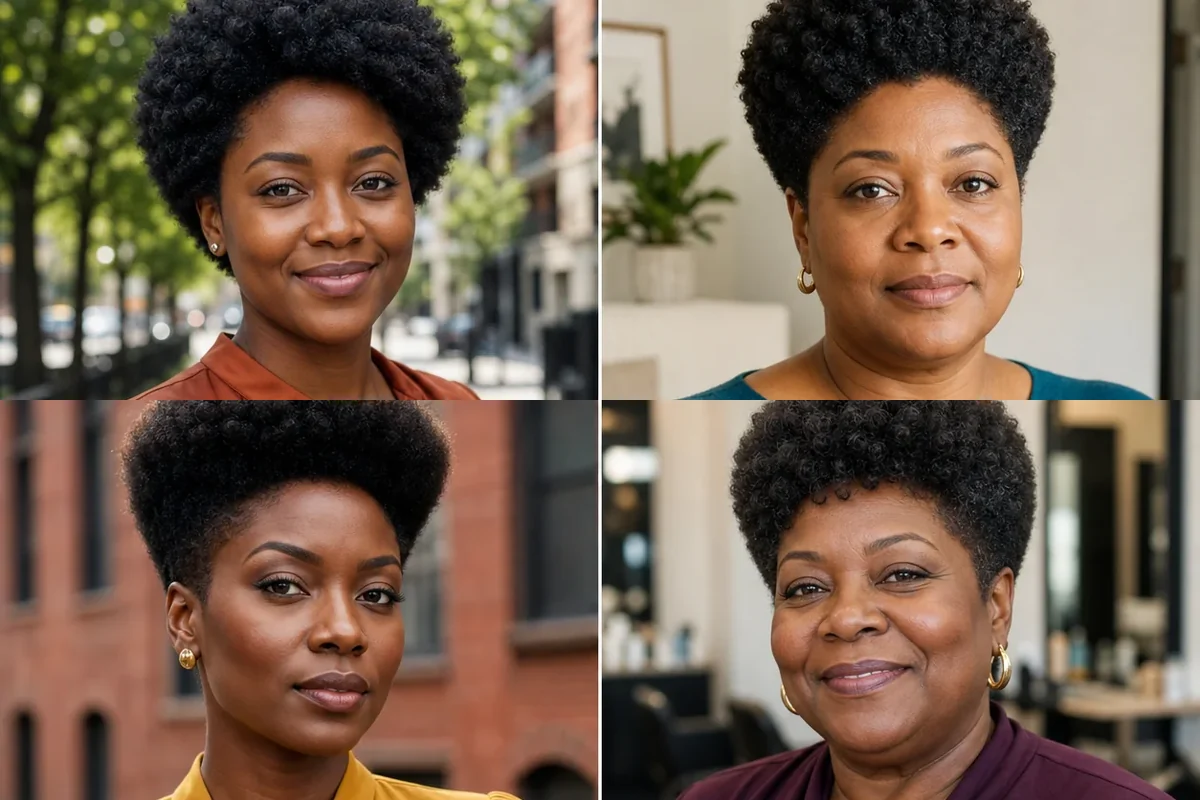
Find the one that feels like you: Start with the first look and let the photographs lead. Each style explains how the shape affects your features, the mood it creates and the exact words to take to your stylist.
1. Classic Rounded Tapered Afro
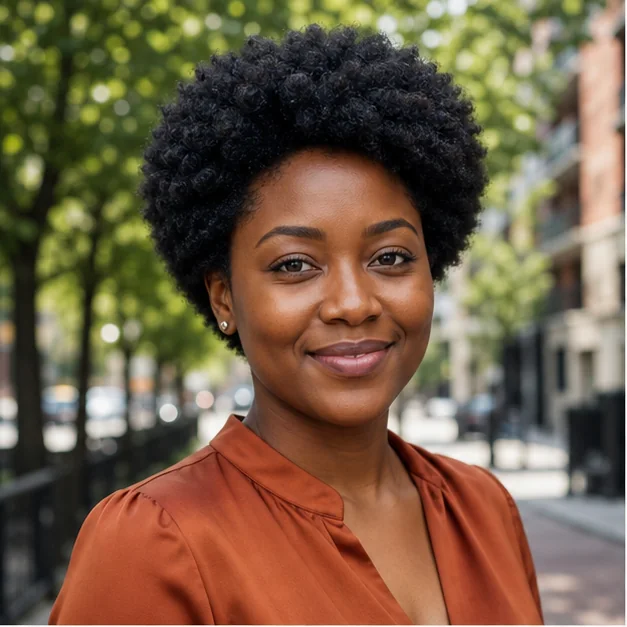
The classic version follows a smooth rounded arc from a full coily crown into neatly shortened temples and nape. That balanced outline softens angular features, gives dense hair a deliberate silhouette and feels confident without looking overly sharp. It is a practical starting point if you enjoy picking out your texture and can visit for an outline cleanup every three to five weeks. Ask for a rounded Afro shape with two to three inches at the crown, a low scissor-and-clipper taper at the sides and nape, and no skin fade or hard line around the forehead.
Ask your stylist for: Keep two to three inches in a rounded crown with a low soft taper and no skin fade.
2. Low Temple Taper With Full Crown
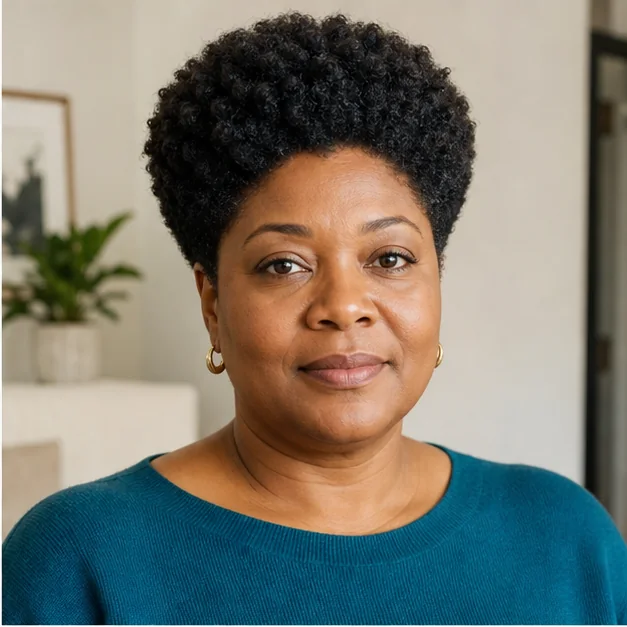
Here, the shortest area stays close to the temples and just above the ears while the crown and upper sides remain lush. The subtle contrast keeps the face softly framed, makes fine or lower-density coils appear fuller and creates an easy, quietly polished mood. Because less hair is removed, the cut grows out gently and can stretch longer between appointments than a high taper. Tell your barber to taper only the temple points and lower nape, preserve weight above the ears, keep the crown rounded, and use a natural edge rather than pushing the hairline backward.
Ask your stylist for: Taper only the temple points and low nape while preserving fullness above the ears.
3. High Taper With Sculpted Height
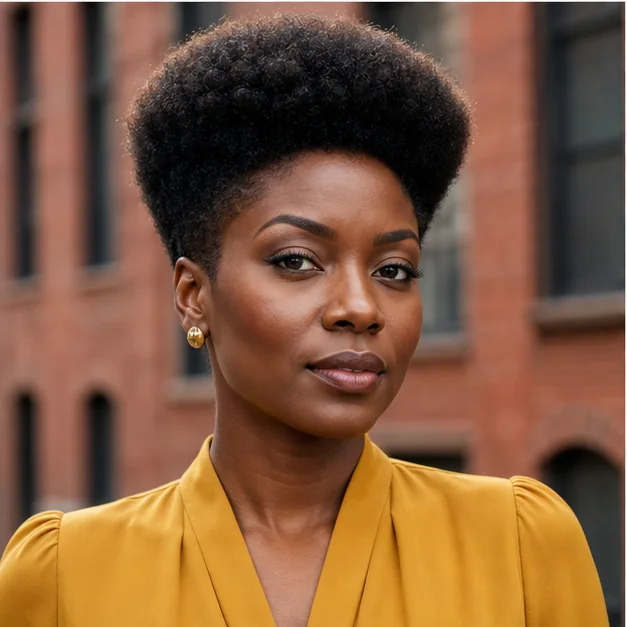
A higher taper removes more bulk through the upper sides, leaving a tall, carefully sculpted column of coils through the center. The vertical line can lengthen a round face, emphasize cheekbones and make the wearer feel striking and fashion-forward even in simple clothes. It suits dense hair that holds height, though the exposed side shape needs more frequent barber visits to stay crisp. Request a high but softly blended taper below the parietal ridge, four to five inches of rounded crown height and enough temple softness to avoid a severe mohawk effect.
Ask your stylist for: Blend a high taper below the parietal ridge into a rounded four-to-five-inch crown.
4. Soft 4C Tapered Cut
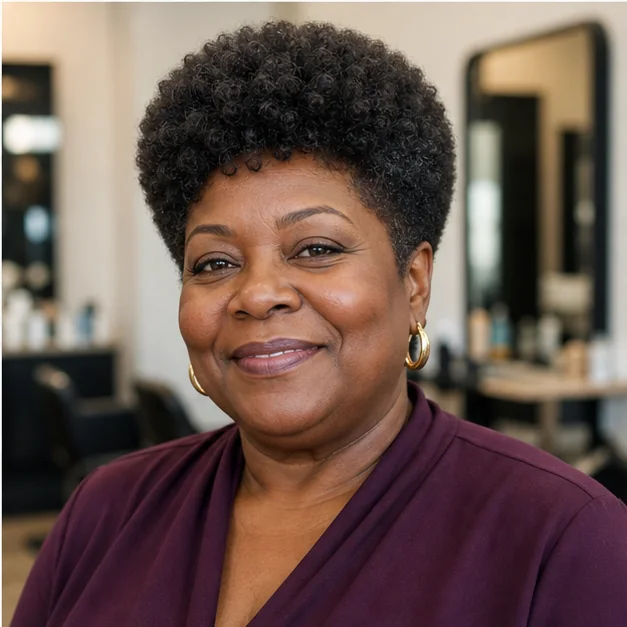
Compact 4C coils form a plush cloud at the crown, with the sides shortened gradually rather than clipped dramatically close. The retained softness celebrates shrinkage, creates lovely visual fullness and feels warm, modern and unmistakably natural. This version works especially well if you prefer low-manipulation styling: moisturize in sections, separate gently and lift only the roots with an Afro pick. Ask for the shape to be assessed in its dry, shrunken state, a scissor-shaped rounded top, a low taper at the ears and nape, and no aggressive thinning that would make the perimeter look transparent.
Ask your stylist for: Shape dry 4C coils into a plush crown with a low taper and no thinning shears.
5. Defined Finger-Coil Taper
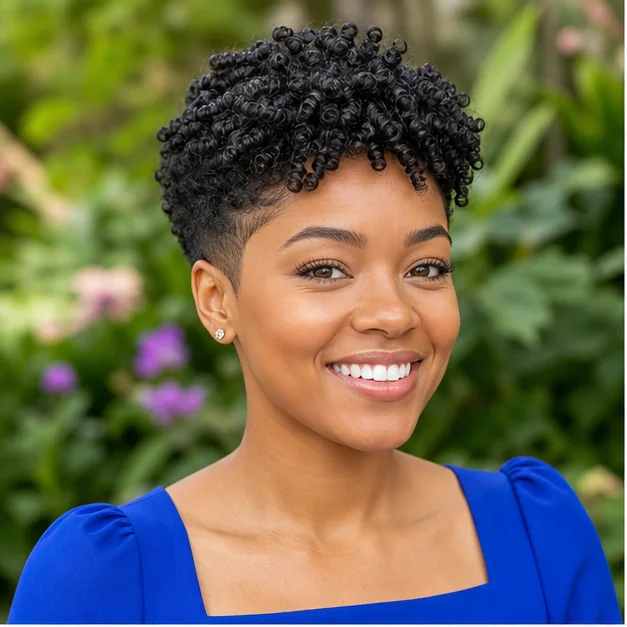
Individual finger coils sit across the longer top while the sides and back melt into a neat low taper. The definition makes the haircut look glossy and precise, draws attention to the eyes and can bring a wonderfully put-together feeling to an ordinary week. It suits someone happy to spend extra time setting damp hair, then preserve the coils with a satin scarf and light morning fluffing. Ask for enough top length to coil around a finger, softly blended sides, a tapered nape and a shape that still looks rounded when the set expands after several days.
Ask your stylist for: Leave coilable length on top and blend it into a soft taper that remains rounded as it expands.
Pause and notice: Taper height changes more than the side view. A lower taper feels softer and grows out quietly; a higher taper gives stronger vertical drama but asks for more frequent shape maintenance.
6. Copper Tapered Afro
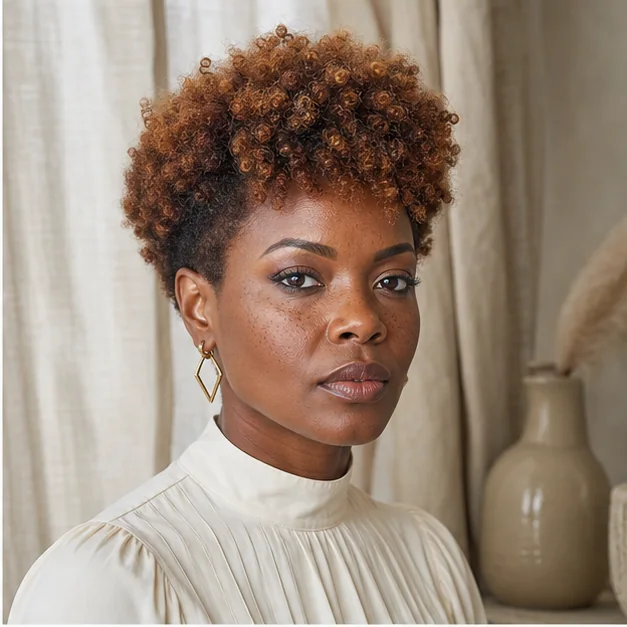
Warm copper color travels through the full crown and softly tapered sides, making the curl pattern and graduated silhouette glow in natural light. The warmth can brighten deep complexions, bring liveliness around the face and make a familiar short cut feel adventurous without changing its practical shape. Color-treated coils need generous conditioning and less heat, while the shortest areas may reveal regrowth quickly. Request a rounded low taper first, then a dimensional copper suited to your undertone, with slightly deeper roots and a bond-supporting color plan rather than one flat, overly bright shade.
Ask your stylist for: Create a rounded low taper, then add dimensional copper with deeper roots and protected coils.
7. Silver-Gray Tapered Afro

Natural silver and charcoal coils create luminous dimension across a softly rounded crown, while the close nape keeps the shape fresh. The contrast catches light beautifully, opens the face and can make going gray feel elegant, intentional and confidently modern. Silver hair may feel drier or more wiry, so a creamy leave-in and gentle stretching help the silhouette stay soft without flattening it. Ask for a low taper that preserves silver density at the temples, a rounded crown shaped in the natural growth pattern and a clean neckline without dark color added to disguise the gray.
Ask your stylist for: Preserve silver temple density, shape a rounded crown and taper the neckline without added dark color.
8. Side-Parted Tapered Afro
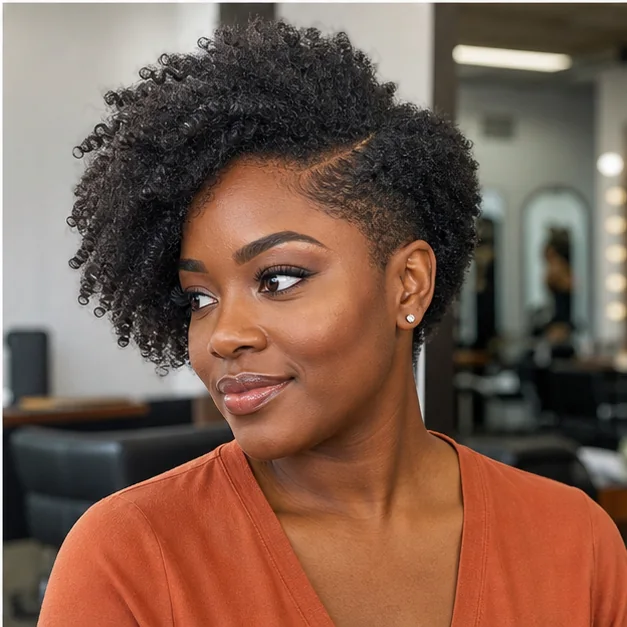
A soft side part shifts the longer curls across the forehead while the opposite temple shows the taper more clearly. That asymmetry breaks up facial roundness, highlights one brow and gives the haircut a sophisticated, dressed-up mood without requiring a dramatic cut. It works best with enough top length to move and a part created by separation rather than a shaved line; refresh with a little water and curl cream. Ask for a low taper, three to four inches through the front and crown, and an off-center styling part that can disappear when you want to wear the Afro evenly.
Ask your stylist for: Keep three to four inches in front with a flexible side part and a softly exposed temple taper.
9. Curly Fringe Tapered Afro
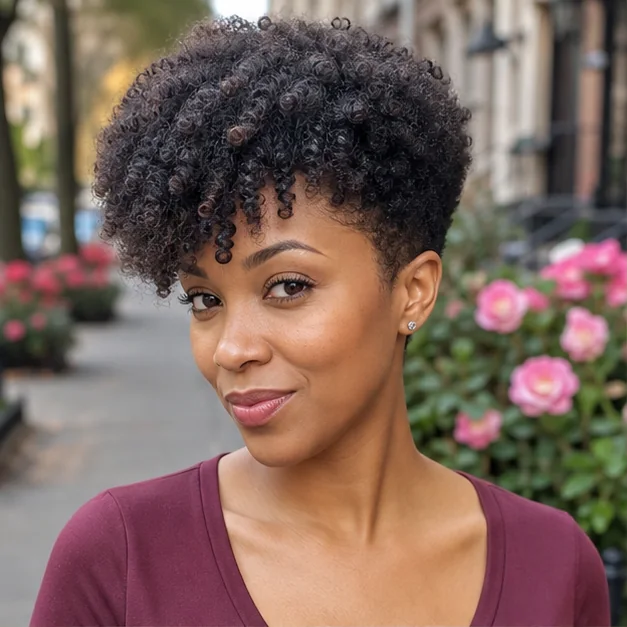
Longer curls fall forward in a light, separated fringe as the sides tuck inward through a neat taper. The forehead softness can balance a longer face, bring attention to the eyes and create a playful, approachable feeling that is less formal than a fully picked crown. The front needs enough length to account for shrinkage, and heavy gels can turn the fringe into a stiff shelf. Tell your stylist to leave the front one to two inches longer than the crown, cut it curl by curl in its dry position and blend the temples without squaring them too sharply.
Ask your stylist for: Leave the front one to two inches longer, dry-cut the fringe curl by curl and soften the temples.
10. Asymmetrical Tapered Afro

One side of the crown remains visibly longer and sweeps diagonally, while the opposite temple is cropped close enough to reveal the contrast. The slanted silhouette can soften a square jaw, add movement to dense coils and make the wearer feel creative and self-assured. It requires intentional daily placement and regular balancing so the longer side does not simply look overgrown. Ask for a low taper on both sides, a graduated top that is longest over one brow, no disconnected undercut, and a dry finish that shows exactly where the asymmetry should fall.
Ask your stylist for: Graduate the top toward one brow, keep both sides softly tapered and avoid a disconnected undercut.
Pause and notice: Bring front, side and back references to the appointment. The profile often reveals the crown-to-nape transition more clearly than the hero angle.
11. Tapered Afro With Nape Design
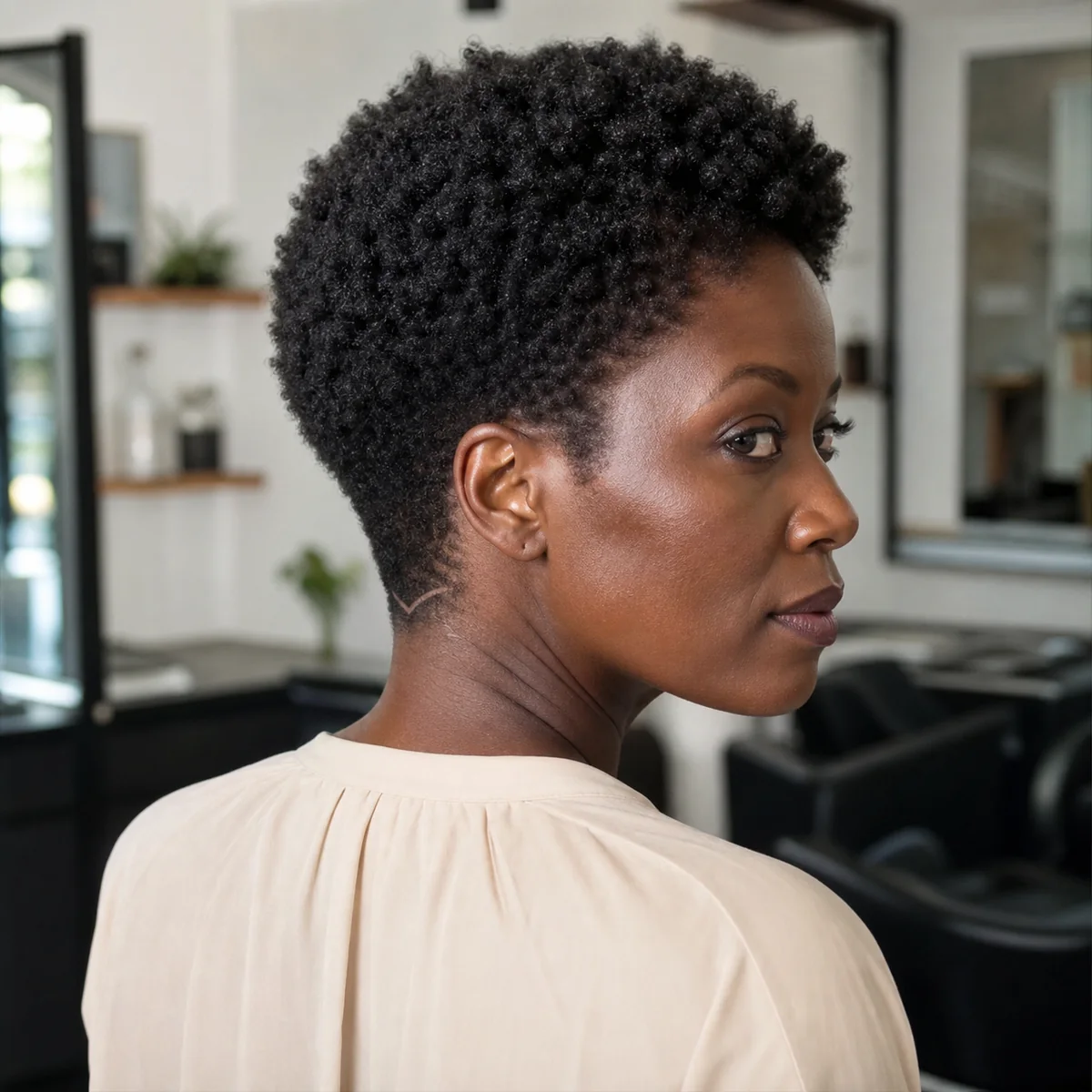
The front remains a classic softly rounded Afro, but a simple curved or chevron line is etched into the closely tapered nape. It keeps the face-framing effect timeless while adding an unexpected detail that can feel playful, personal and especially good with open collars. Designs blur quickly as hair grows, so expect a two-to-three-week refresh or let the line disappear naturally without chasing it. Request a low nape taper, one clean minimal line placed below the fullest occipital area and enough surrounding hair to preserve a graceful transition from crown to neckline.
Ask your stylist for: Add one minimal line within a low nape taper while preserving a soft transition above it.
12. Blonde-Tipped Tapered Afro
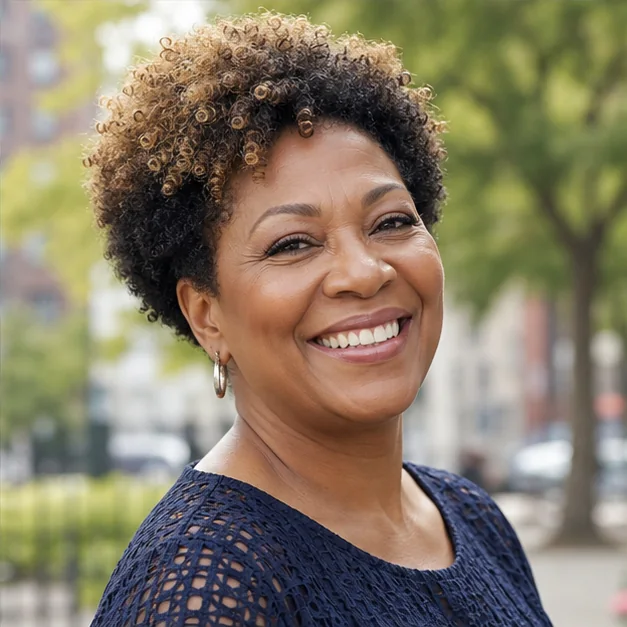
Honey-blonde tips scatter across the longer crown while natural dark roots and tapered sides keep the look dimensional. The lighter ends make every coil more visible, add brightness around the face and can deliver a fun change without committing the entire haircut to bleach. Because the oldest ends are also the lightened area, weekly conditioning and cautious detangling are essential. Ask for a softly rounded taper with healthy crown length, hand-painted warm tips kept away from the scalp and enough dark root depth to maintain contrast as the haircut grows.
Ask your stylist for: Hand-paint warm blonde tips over a rounded taper while keeping deep roots and healthy ends.
13. Elongated Twist-Out Taper

A stretched twist-out creates elongated S-shaped texture through the crown, then narrows into shorter sides and a clean nape. The extra vertical movement can lengthen a round face, show off the haircut's layers and feel soft, glamorous and touchably full. This is a good choice if you enjoy setting hair overnight, though repeated high heat is unnecessary; banding or chunky twists can provide gentle stretch. Ask for a crown long enough to twist, graduated side length rather than a sudden clipper step and a dry shape check after the texture has been stretched.
Ask your stylist for: Preserve twist-out length on top, graduate the sides softly and shape-check the cut in its stretched state.
14. Wash-and-Go Curly Taper

Glossy natural curl clumps settle into a rounded top with shorter, softly defined sides, so the wash-and-go pattern becomes the haircut's visible surface. The springy finish brings freshness around the face and can make daily styling feel liberating once the product routine is familiar. It suits 3C to 4B patterns that clump readily, but the cut should also look balanced on a less-defined day. Ask for a curl-by-curl dry shape, a low blended taper and enough weight at the crown to prevent the top from collapsing when the hair is fully hydrated.
Ask your stylist for: Dry-shape the natural curl clumps, retain crown weight and blend them into a low taper.
15. Tapered Frohawk
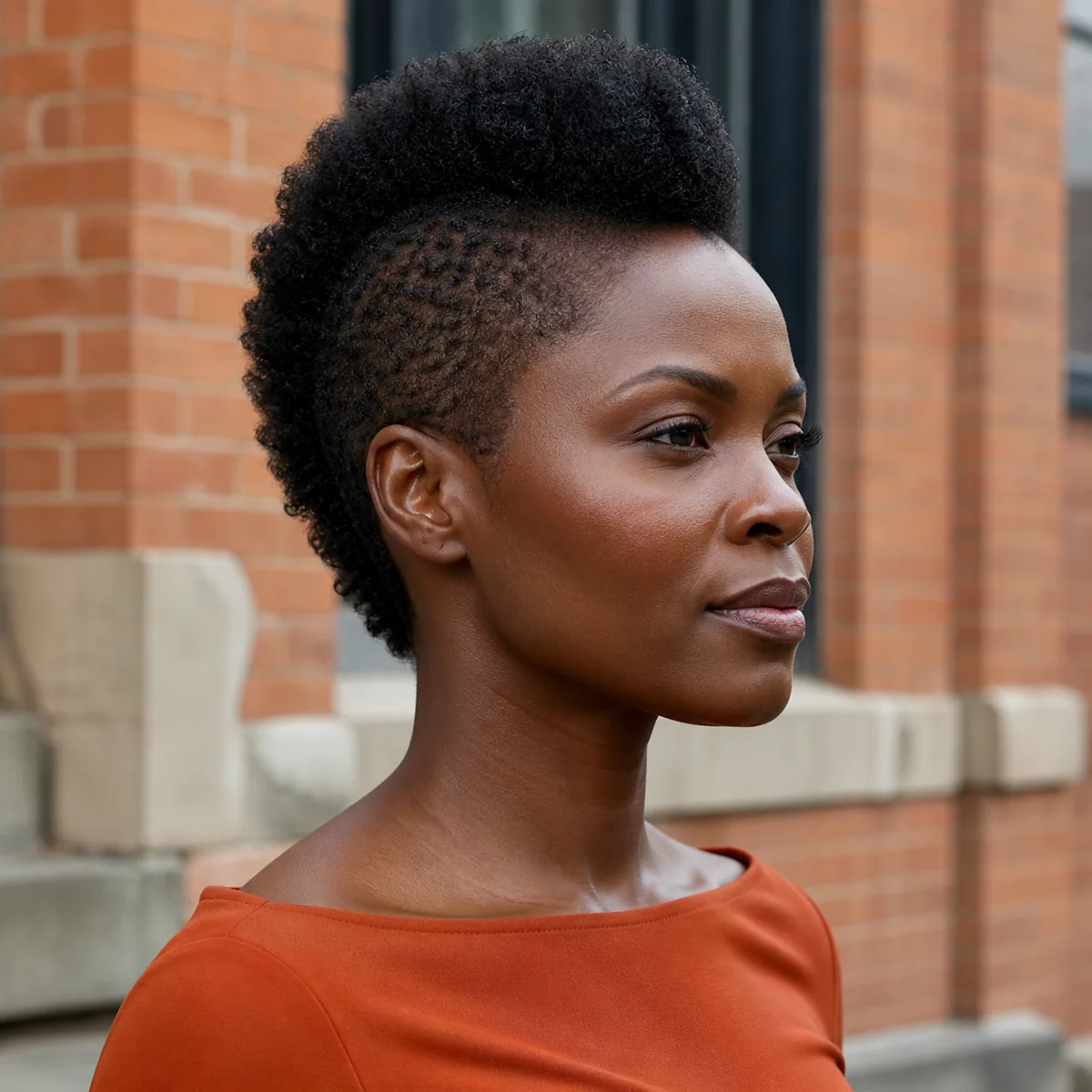
The fullest coils form a broad ridge from forehead to crown while the sides taper upward without becoming fully shaved. This centered height can visually elongate fuller cheeks, showcase a graceful head shape and create a bold, energized feeling for nights out or creative workplaces. Keeping some texture at the sides makes it softer and easier to grow out than a disconnected mohawk. Tell your barber you want a wide frohawk silhouette, a gradual side taper with no skin exposure, rounded crown height and enough side length to wear the cut as a conventional Afro between styling days.
Ask your stylist for: Shape a wide rounded frohawk with softly tapered—not shaved—sides and flexible styling length.
Pause and notice: A clean edge should follow your natural hairline, not redraw it farther back. Ask for restrained detailing if preserving temple density matters to you.
16. Heart-Shaped Tapered Afro

The widest volume sits just above the ears, then curves inward toward a tapered nape and rises gently at the crown, forming a soft heart-like silhouette. That placement can balance a long face, soften a prominent chin and make the wearer feel romantic and beautifully composed. Dense coils hold the sculptural perimeter best, but the outline needs careful picking rather than random all-over fluffing. Ask for width through the upper sides, a softly lifted crown, a narrow nape and a dry freehand shape that remains recognizably heart-shaped after normal shrinkage.
Ask your stylist for: Build width above the ears, lift the crown softly and narrow the shape into a tapered nape.
17. Flat-Top Tapered Afro
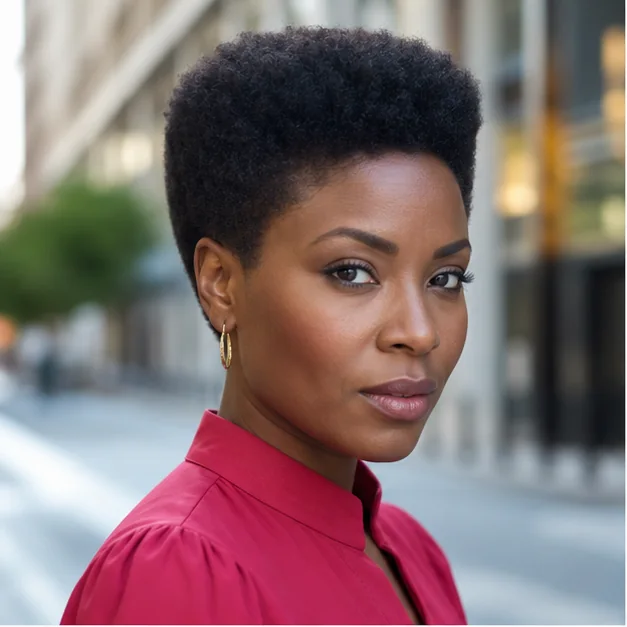
The crown is shaped into a softly squared plane with rounded corners, then blends into closely tapered sides and back. Its clean geometry can complement an oval face, emphasize bone structure and create a cool, assured mood that feels both retro and current. Dense 4B or 4C hair provides the strongest structure, and gentle root lifting helps maintain the top without drying the ends. Request a level but not razor-sharp crown, softly rounded front corners, even side graduation and a low taper that supports the flat-top silhouette rather than turning it into a high skin fade.
Ask your stylist for: Shape a level crown with soft corners and support it with graduated sides and a low taper.
18. Mini-Twist Tapered Afro

Short mini twists follow the haircut's longer crown and abbreviated sides, creating a textured tapered silhouette without requiring daily coil definition. The twists show movement, make shrinkage easier to manage and can give a relaxed yet polished feeling through workdays and travel. They should hang freely at the roots rather than being installed tightly, and the perimeter will need re-twisting sooner as the taper grows. Ask for the haircut first, then medium-small two-strand twists with loose bases, slightly longer placement through the crown and no added hair or rubber bands.
Ask your stylist for: Cut the taper first, then add loose natural mini twists that follow the longer crown shape.
19. Long-Crown Tapered Afro
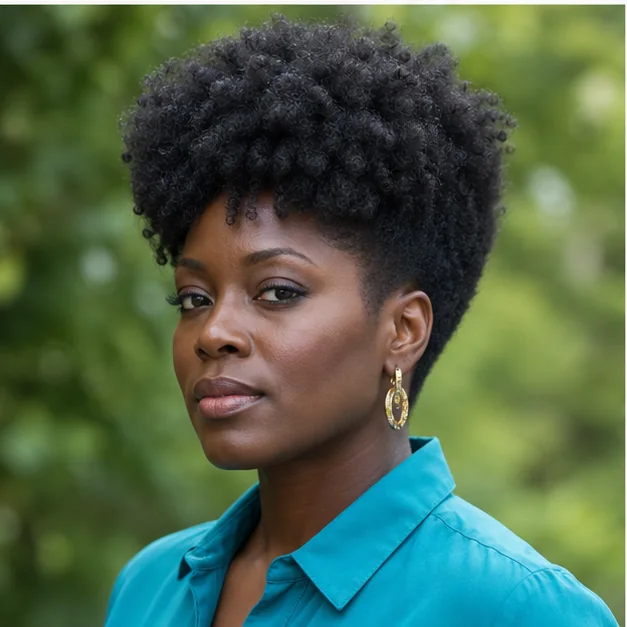
Five or more inches of coily length rise and fall through the crown while the lower sides and nape remain distinctly shorter. The generous top offers twist-outs, puffs and swept styling, adds vertical balance to a round face and can feel expressive without giving up a clean neckline. More length means more detangling and the crown may need internal shaping so it does not become top-heavy. Ask to retain maximum healthy length through the center, remove bulk selectively rather than thinning the ends and connect the long crown to a low taper with a gradual, visible transition.
Ask your stylist for: Retain five-plus inches through the crown and connect it gradually to a low perimeter taper.
20. Grown-Out Tapered Afro
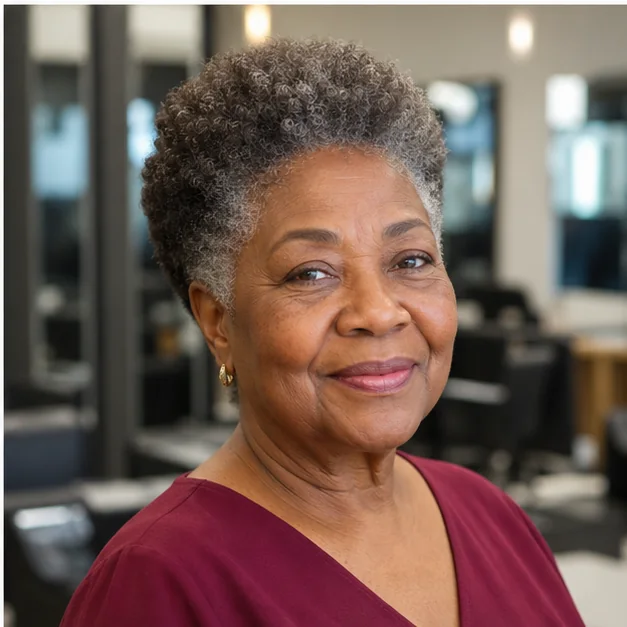
In the grown-out stage, the sides have regained softness while the crown still holds enough extra length to preserve a gentle tapered outline. The less precise finish feels relaxed and approachable, gives the scalp a break from frequent clipping and proves the haircut can age gracefully between appointments. Use twist-outs or strategic picking to blend uneven zones, then decide whether to restore the taper or continue toward a rounded Afro. Ask for a shape-maintenance trim that removes only protruding corners, preserves side growth and lightly balances the crown without resetting the nape to skin.
Ask your stylist for: Balance the grown-out silhouette, preserve side length and avoid resetting the nape too close.
Pause and notice: Choose the version you will enjoy on an ordinary wash day—not only the one that looks exciting immediately after the barber chair.
Before You Book the Appointment
A successful salon visit begins with the overall shape, construction and upkeep—not only the finished length. Use this quick reality check before choosing your final reference photograph.
- Best for: Natural curls and coils that hold visible crown volume and benefit from a shaped, shorter perimeter.
- Signature construction: Fuller Afro-textured length through the top and crown graduates into shorter sides, temples and nape.
- Closest alternatives: A TWA is more uniform in length, a tapered pixie relies on layered short-cut construction, a frohawk concentrates height centrally and an all-around fade exposes more scalp around the sides.
- Maintenance: Refresh moisture and definition at home, protect the shape at night and plan outline or taper cleanups about every three to five weeks depending on how crisp you prefer it.
What Makes a Tapered Afro Different
The signature is contrast with connection: the crown stays visibly fuller, but the sides and nape shorten gradually rather than dropping into a disconnected undercut. A TWA usually follows a more even compact length all around. A pixie may taper at the neck, but it is built from short layers rather than an Afro crown. A fade removes more side length and may expose scalp; a tapered Afro can remain soft, rounded and unmistakably textured.
Choose the Shape for Your Face
A tall crown and higher taper can add vertical balance to a round face, while soft side fullness or a heart-shaped outline can give a longer face more width. A curly fringe brings focus to the eyes and shortens a high forehead visually. Rounded crowns soften square jaws; asymmetrical shapes create diagonal movement. These are possibilities rather than rules. The best version also works with your density, growth pattern and preferred amount of daily shaping.
What to Tell Your Barber or Stylist
Name the silhouette, not only the trend: explain how many inches you want at the crown, where the shortest taper should begin and whether you want skin visible. Ask for the cut to be checked in the texture you wear most—shrunken, defined or stretched. Say that you want the natural hairline preserved and show front, profile and back references. For a soft finish, request graduated sides and scissor shaping; for greater contrast, specify a higher clipper taper without assuming that means a skin fade.
Styling by Curl Pattern and Density
Compact 4C coils create beautiful sculptural volume with moisture, gentle separation and root lifting. Looser 3C and 4A curls may need curl-by-curl shaping and a gel or foam with enough hold to keep the crown from collapsing. Fine hair often looks fullest with a lower taper that preserves side weight, while dense hair can support a high taper, flat top or long crown. Avoid automatic thinning: removing too much density can make a strong silhouette look sparse.
Maintenance Without Overworking the Hair
Refresh dry areas with water and leave-in conditioner, then reshape with fingers or lift only at the roots using an Afro pick. A satin scarf or pillowcase reduces friction overnight. Most crisp tapers need a cleanup every three to five weeks, while soft low tapers can go longer. Watch repeated edge-ups around the temples; a neat outline should not require the natural hairline to move backward. Cleanse and condition often enough for your scalp rather than preserving definition at any cost.
How a Tapered Afro Grows Out
The nape and temples usually lose precision first, while the crown continues gaining height. During this stage, twist-outs, finger coils and strategic picking can blend the length difference. A light shape-maintenance trim removes protruding corners without resetting all your progress. To grow toward a rounded Afro, preserve the sides and trim the crown only enough to keep proportion. To restore the original taper, ask the barber to clean the perimeter while leaving healthy crown length intact.
How to Pick Your Favorite
Start with taper height and maintenance commitment, then choose the texture finish that feels most like you. A low taper with a rounded or 4C crown is forgiving and quietly polished; a high taper, flat top or frohawk makes a stronger graphic statement. Finger coils and wash-and-go curls emphasize definition, while a picked or twist-out crown emphasizes volume. Save one everyday look plus a bolder option, and ask which can be created without fighting your density, cowlicks or shrinkage.
More Hair Inspiration
- 20 Short Natural Hairstyles That Celebrate Your Texture — Explore more shape and styling ideas for shorter natural hair.
- 20 Finger Coils That Make Natural Hair Look Beautifully Defined — Learn how finger-coil definition can change a short natural silhouette.
- 20 Low-Tension Protective Hairstyles for Natural Hair That Feel Gentle and Beautiful — Compare gentle options when you want to reduce daily styling and protect the ends.