Keeping your length does not mean keeping every strand the same length. The right layers can release movement, shape the outline and make long hair feel lighter without taking away its swish or versatility.
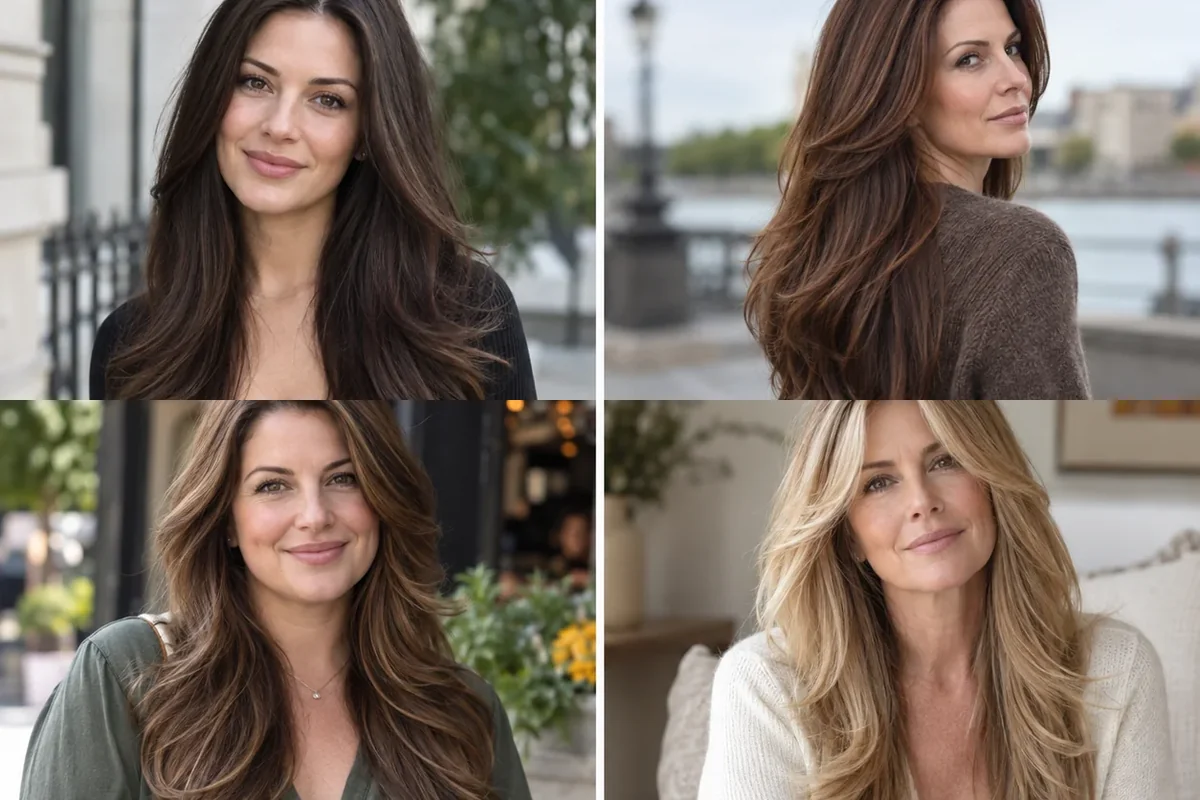
A long layers haircut keeps the main perimeter below the shoulders while cutting graduated or disconnected lengths through the interior and around the face. Its signature is visible movement over a clearly long baseline. Short layers begin higher and create more lift; long layers begin lower and preserve weight. A butterfly cut uses dramatic face-framing wings, a long shag relies on a shorter crown and broken texture, and a lob changes the overall length. Your best version depends on density, natural texture, heat-styling habits and whether you want fullness, weight removal or softer framing.
Find the one that feels like you: Start with the first look and let the photographs lead. Each style explains how the shape affects your features, the mood it creates and the exact words to take to your stylist.
1. Classic U-Shaped Long Layers
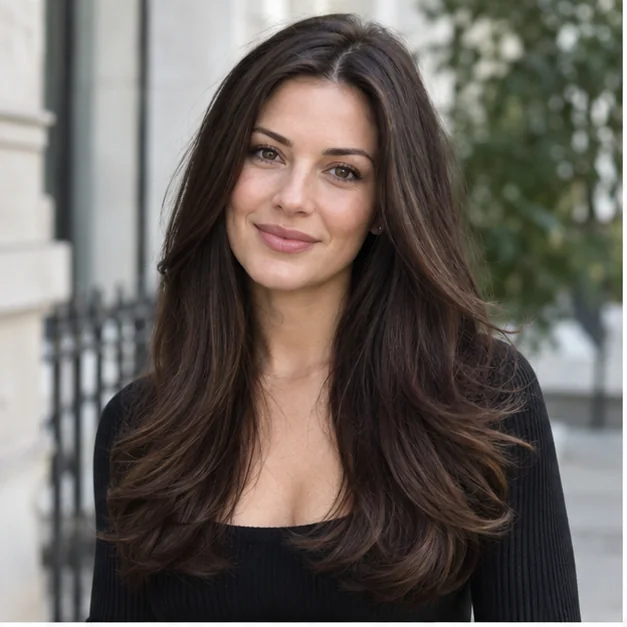
A U-shaped perimeter curves gently from shorter front sections into the longest point at the center back, while broad layers follow that rounded outline. The shape keeps the ends generous, softens angular features and gives straight or wavy hair an elegant swing that feels polished without looking severe. It behaves well in ponytails and grows out smoothly, though the curve needs a clear back-view reference. Ask for a below-shoulder U perimeter with connected layers beginning around the chest and cheekbone framing; style with a large round brush or loose bends through the ends.
Ask your stylist for: A below-shoulder U-shaped perimeter with connected layers from the chest and cheekbone-level face framing.
2. V-Shaped Cascading Layers
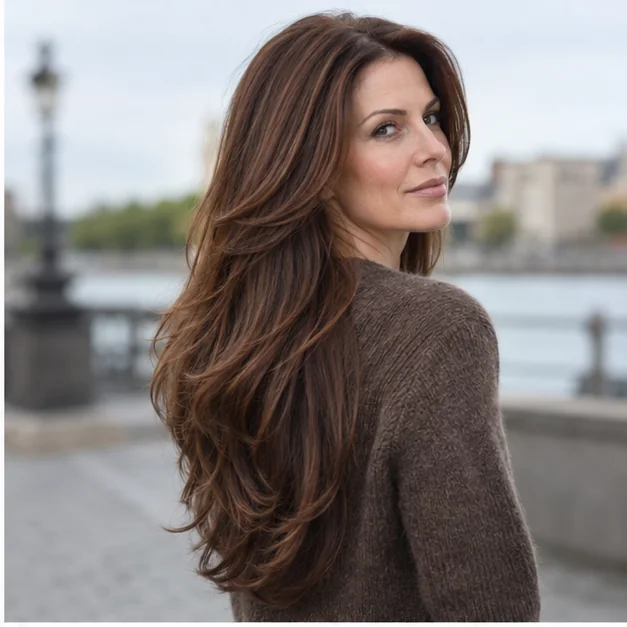
These layers fall toward a distinct V at the center back, creating a tapered cascade rather than a broad hemline. The narrowing outline makes dense hair feel less bulky and visually lengthens the silhouette, bringing a dramatic, confident quality to hair worn loose. Fine ends can look sparse in a deep V, so this suits medium to thick density and benefits from regular end protection. Request a soft V perimeter with graduated lengths connected into the point and enough weight at the sides; smooth serum over the last few inches before blow-drying.
Ask your stylist for: A soft V-shaped perimeter with connected cascading layers and protected density through both side sections.
3. Cheekbone Face-Framing Layers
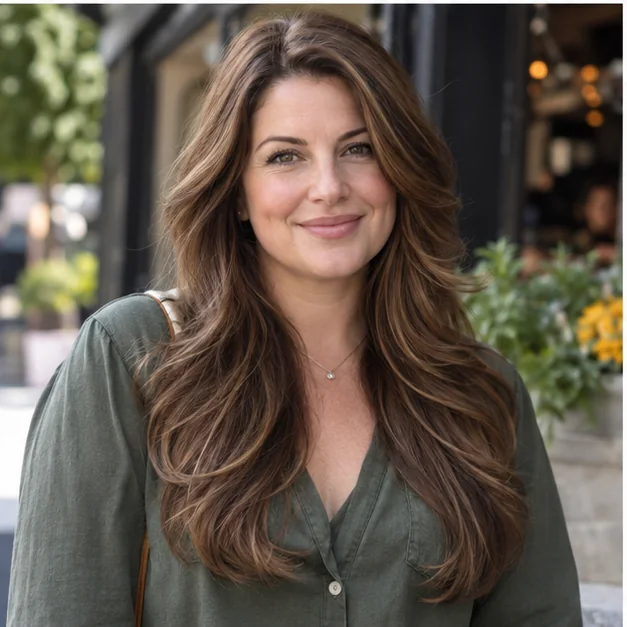
The shortest pieces begin at the cheekbones, sweep past the jaw and blend into restrained layers through the long back. That placement highlights the eyes, softens fuller cheeks and gives the front a fresh, expressive lift while the rear stays substantial. It works beautifully for hair worn down or in a low ponytail, but the front pieces may escape a high bun. Ask for cheekbone-to-jaw framing cut with forward overdirection and a seamless connection into long interior layers; dry the front away from the face with a medium round brush.
Ask your stylist for: Cheekbone-to-jaw framing with forward overdirection, blended seamlessly into layers below the shoulders.
4. Long Layers With Curtain Bangs
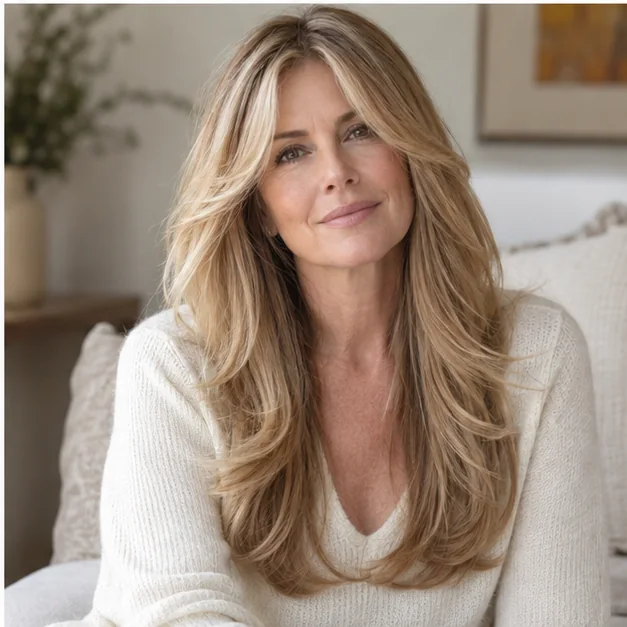
Curtain bangs split near the center, open around the eyes and flow into layered lengths beginning near the jaw. The curved fringe can balance a longer face or soften a broad forehead, while connected sides make the whole cut feel romantic rather than like separate bangs. It creates a glamorous frame after a blowout, although the fringe needs a quick reset more often than the lengths. Ask for brow-to-cheekbone curtain bangs with no hard temple shelf and long rounded layers beneath; dry the fringe forward first, then sweep it back as it cools.
Ask your stylist for: Brow-to-cheekbone curtain bangs connected through the temples into rounded long layers with no shelf.
5. Soft Layers for Fine Long Hair
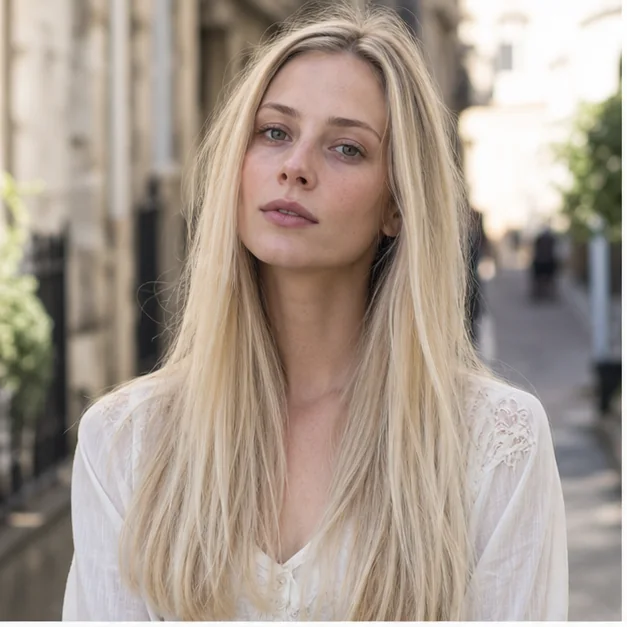
Fine long hair looks fuller when the perimeter stays dense and only a few nearly invisible layers release movement above it. This restrained shape prevents transparent ends, adds gentle lift around the face and creates a quietly refined finish without a complicated routine. Too much elevation or thinning weakens the baseline, so fewer sections are an advantage. Ask for a blunt below-shoulder perimeter, minimal low-elevation layers and face framing no shorter than the chin; use lightweight root spray and bend only the ends with a large brush.
Ask your stylist for: A dense blunt perimeter with minimal low-elevation layers, no thinning shears and chin-length framing.
6. Weight-Releasing Layers for Thick Hair
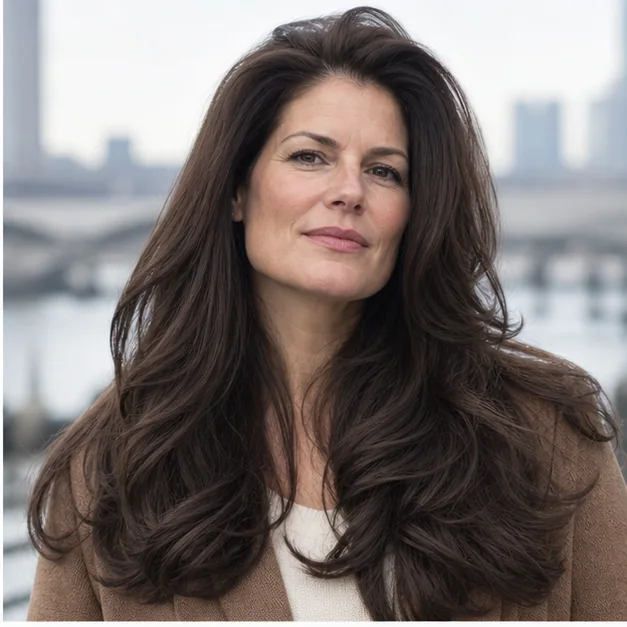
Long internal layers remove bulk beneath the surface while a strong outer perimeter keeps thick hair healthy and deliberate. The hidden weight release helps hair fall closer to the body, reduces the triangle effect and makes washing and drying easier, creating a calm, capable finish. Aggressive surface thinning can cause frizz, so debulking should follow density rather than a formula. Request long internal graduation, selective slide cutting through heavy areas and a protected outer layer; divide the hair into fewer sections and dry the roots thoroughly before smoothing the lengths.
Ask your stylist for: Long internal graduation with selective weight removal under the surface and a strong outer perimeter.
7. Air-Dried Wavy Long Layers
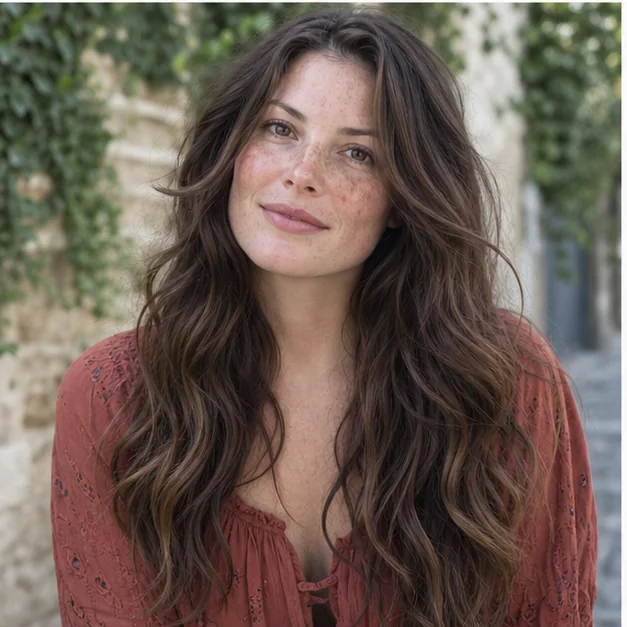
Broad layers begin where the natural wave bends, letting each section form a loose S instead of stretching flat under its own weight. The result gives wavy hair buoyancy, softens angular features and feels relaxed and naturally confident on ordinary days. It can air-dry beautifully, but the cut should be checked dry because wet tension disguises spring and uneven patterns. Ask for dry-refined connected layers that preserve wave clumps and a rounded perimeter; scrunch leave-in and foam into soaking-wet hair, set the part and avoid brushing after it dries.
Ask your stylist for: Connected wave-aware layers beginning at natural bend points, dry-refined with a rounded perimeter.
8. Curl-by-Curl Long Layers
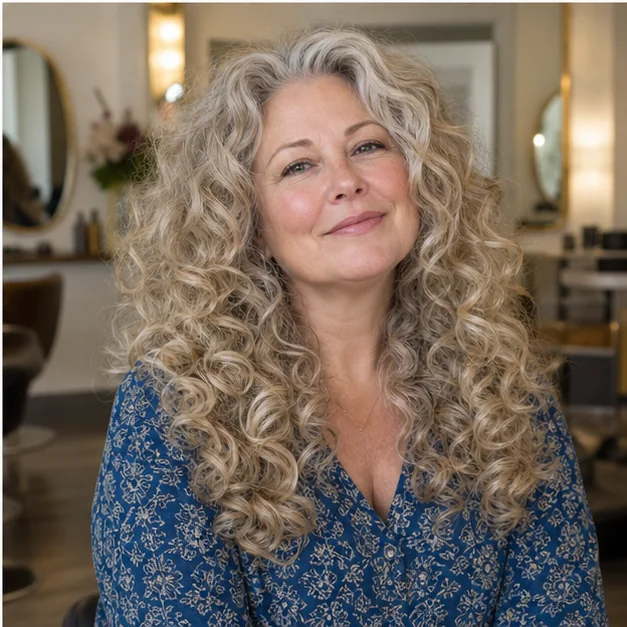
A curl-by-curl approach shapes individual ringlets into a long rounded silhouette, with shorter pieces only where lift or balance is needed. The tailored distribution prevents a heavy bottom, opens the face and lets long curls feel joyful and expansive without becoming triangular. Every curl family springs differently, so cutting in the usual dry state gives the most honest result. Ask for a below-shoulder rounded shape, dry curl-by-curl layering and no blanket thinning; apply leave-in and gel in sections, diffuse gently and protect the shape overnight with a loose pineapple.
Ask your stylist for: A dry curl-by-curl cut with a below-shoulder rounded outline, strategic crown lift and no blanket thinning.
9. Sleek Layers for Straight Hair
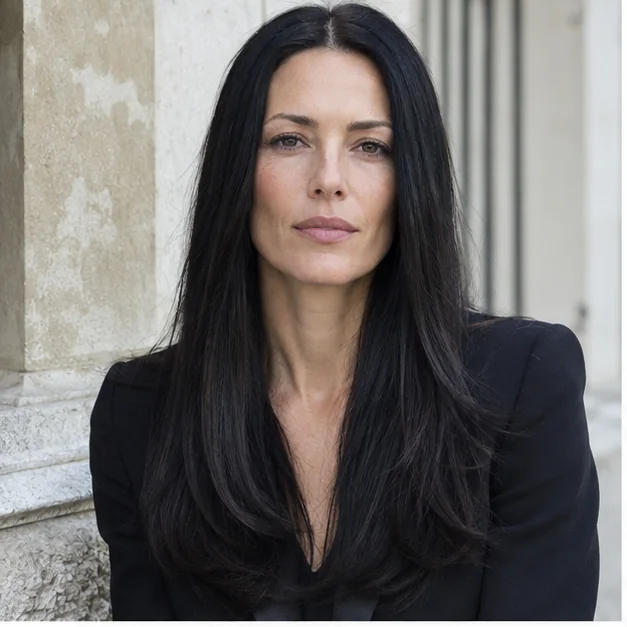
On straight hair, precise long layers show as clean overlapping lines, with the shortest lengths beginning below the collarbone. The subtle separation adds polish and motion while preserving a smooth substantial edge, so the haircut feels modern and expensive rather than busy. Uneven connection is visible on this texture, making careful sectioning and a dry check essential. Ask for low-elevation layers, a clean U perimeter and fine point cutting only at the ends; use heat protectant, direct the dryer downward and finish with one controlled flat-iron pass if needed.
Ask your stylist for: Low-elevation connected layers below the collarbone, a clean U perimeter and a dry precision check.
10. Rounded 90s Long Layers
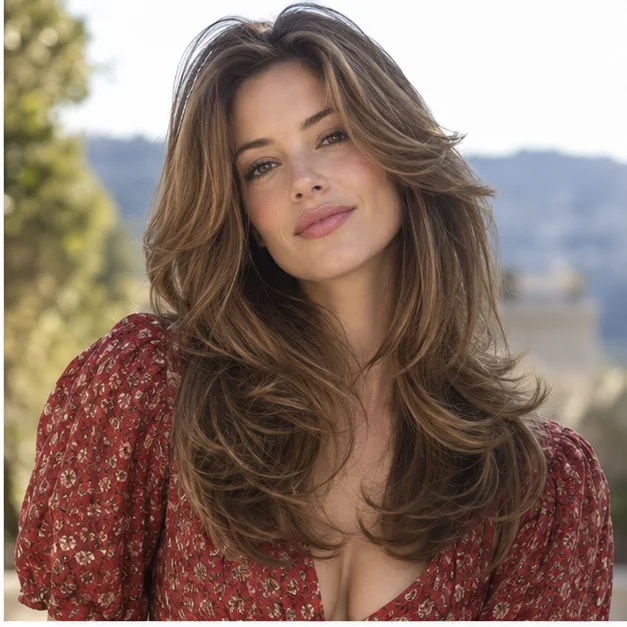
Rounded 90s layers build lift through the upper lengths, then curve outward and back in plush overlapping sections. The airy shape adds fullness around the cheekbones and crown, balances a narrow face and creates a confident supermodel mood that makes a simple outfit feel considered. The cut can be air-dried softly, but its signature bounce appears with heat styling. Ask for rounded layers with overdirection, cheekbone face framing and enough baseline weight; use large rollers or a round brush, then let every section cool before shaking it loose.
Ask your stylist for: Rounded overdirected long layers with cheekbone framing, crown lift and a substantial baseline.
11. Shaggy Layers With Wispy Fringe
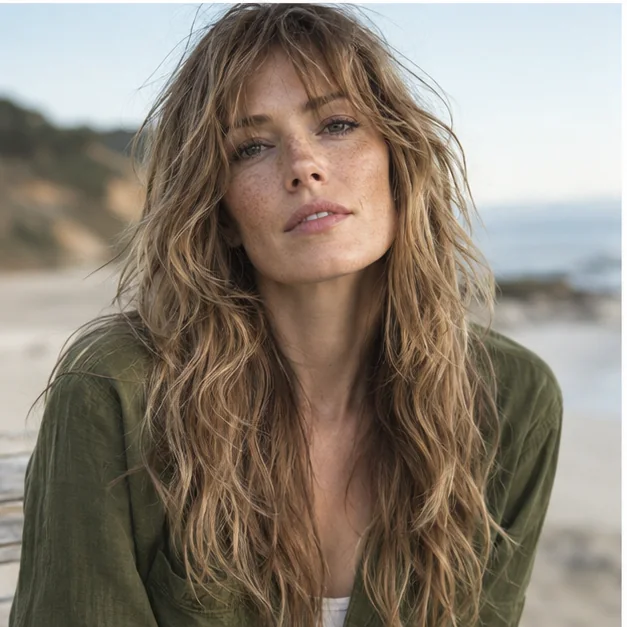
This softer cousin of a long shag uses irregular layers through the crown and sides but keeps a fuller perimeter, finished with a light wispy fringe. The broken texture encourages movement, disguises uneven waves and gives the face a playful creative frame without a heavily mulleted shape. It suits medium to thick hair; very fine ends need a gentler version to avoid depletion. Ask for connected shaggy layers, a low-density brow fringe and no severe crown disconnection; scrunch with mousse, diffuse briefly and separate a few ends with flexible paste.
Ask your stylist for: Connected shaggy long layers with a low-density brow fringe, retained baseline weight and no crown shelf.
12. Invisible Ghost Layers
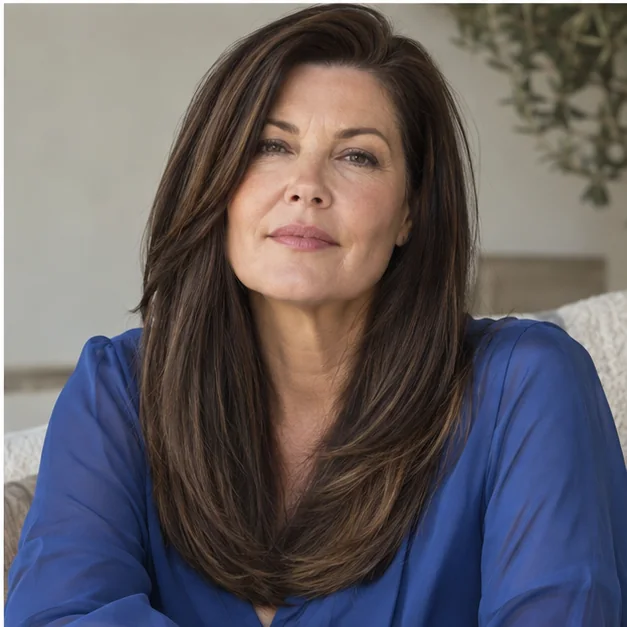
Ghost layers hide within the interior, removing selected weight and creating lift without obvious steps on the surface. They make dense straight or wavy hair settle easily, preserve a sleek outline and produce quiet modern movement that looks almost effortless. The effect depends on disciplined placement; random thinning creates short flyaways rather than invisible support. Ask for hidden internal layers tailored to the densest areas, with the top veil and perimeter left long and intact; style as usual, using a light cream to reveal movement without separating the surface too much.
Ask your stylist for: Hidden internal ghost layers through dense areas, preserving a long surface veil and intact perimeter.
13. Disconnected Statement Layers
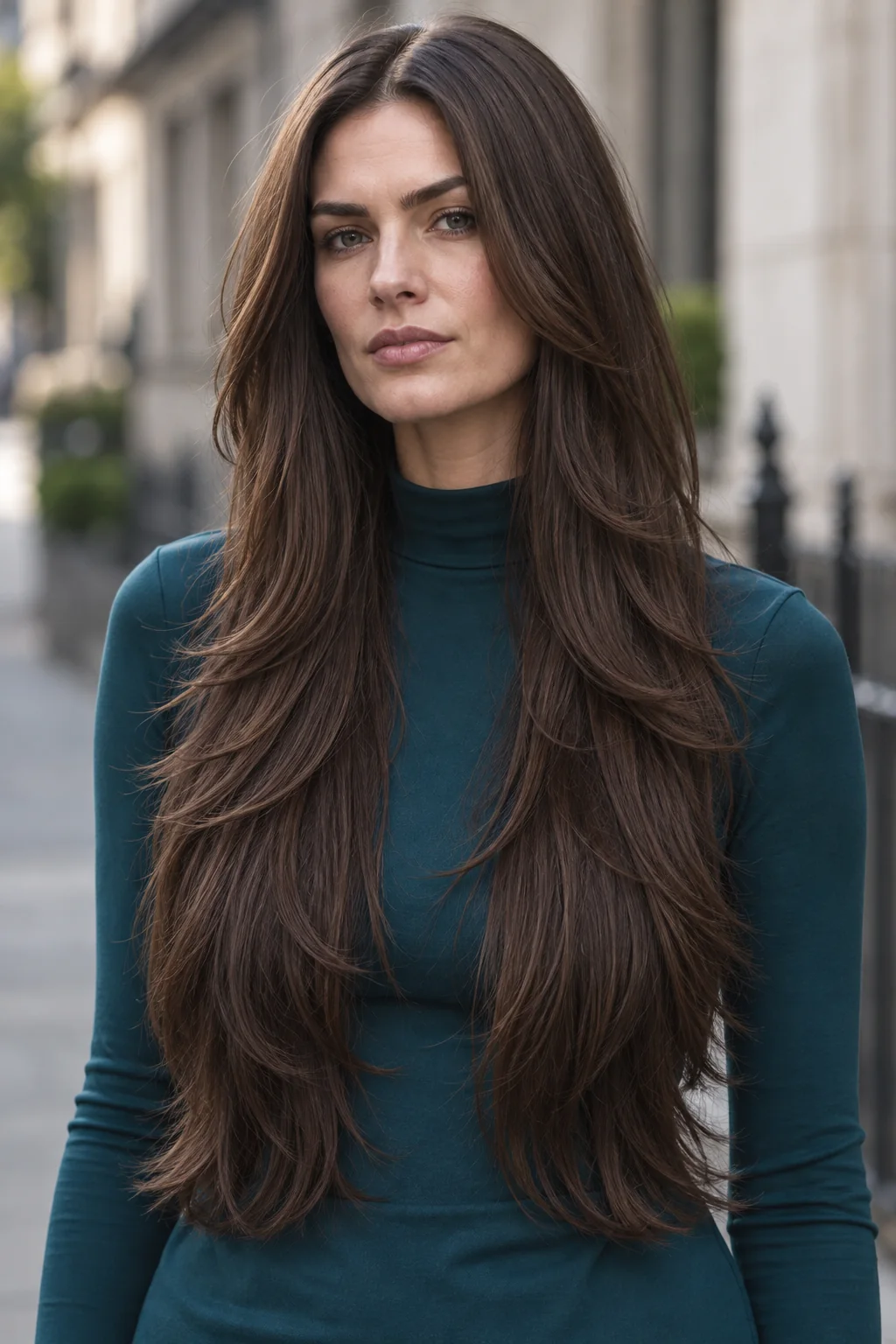
Disconnected layers create an intentional jump between shorter upper sections and the long baseline instead of blending every length. That contrast adds strong movement, lifts heavy hair around the face and gives the haircut a bold editorial energy that feels expressive with minimal styling. It is less forgiving in braids and sleek ponytails because short pieces escape, so it suits someone happy to wear texture openly. Ask for a controlled disconnection beginning below the chin, with the perimeter protected and shortest layer agreed in advance; emphasize separation with loose bends and dry texture spray.
Ask your stylist for: A controlled below-chin disconnection between statement upper layers and a protected long perimeter.
14. Blunt Ends With Internal Layers
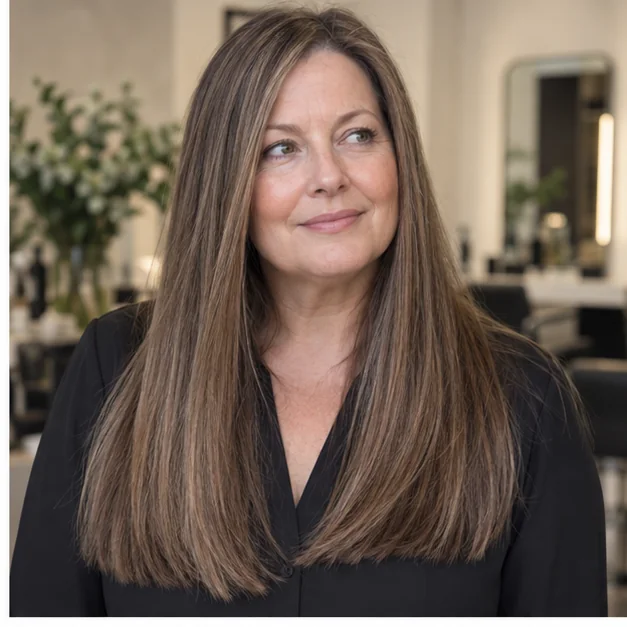
A crisp blunt baseline gives the ends a dense horizontal finish, while long internal layers stop the upper lengths from lying flat. The combination makes fine-to-medium hair appear thicker, keeps the silhouette graphic and creates a composed professional mood with enough movement to avoid stiffness. It ties back neatly, although the blunt line shows split ends sooner than a feathered perimeter. Ask for a one-length visual edge with low internal graduation and no visible thinning at the hem; smooth the baseline with a paddle brush and bend the upper layers lightly.
Ask your stylist for: A dense blunt below-shoulder baseline with low internal graduation and no thinning through the edge.
15. Razor-Cut Feathered Layers
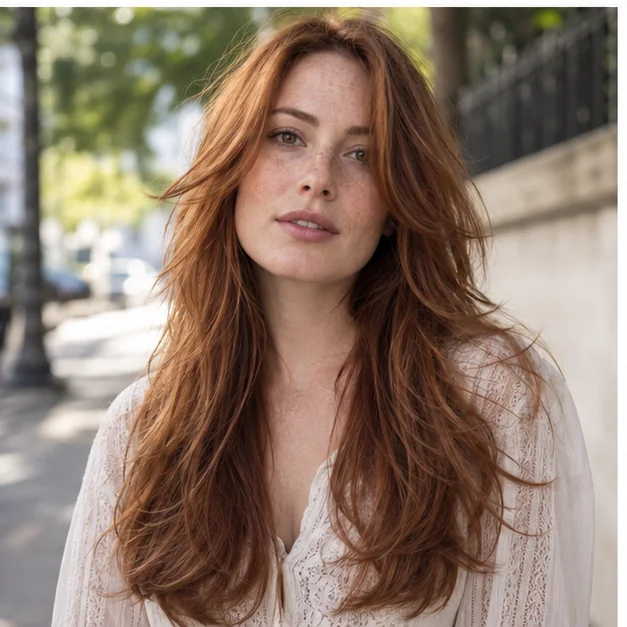
Razor-cut layers taper into light feathery ends that sweep away from the face and flow through the long outline. On straight to softly wavy medium-density hair, the airy finish removes heaviness, brightens the cheekbones and feels free-spirited rather than rigid. A razor can roughen fragile, porous or very curly strands, so the tool should match the hair's condition. Ask for long razor-carved layers on damp healthy hair with a fuller perimeter and face-focused feathering; apply smoothing cream before a directional blow-dry to keep the ends glossy.
Ask your stylist for: Long razor-carved layers on suitable healthy hair, with face-focused feathering and a substantial perimeter.
16. Choppy Long Layers With Texture
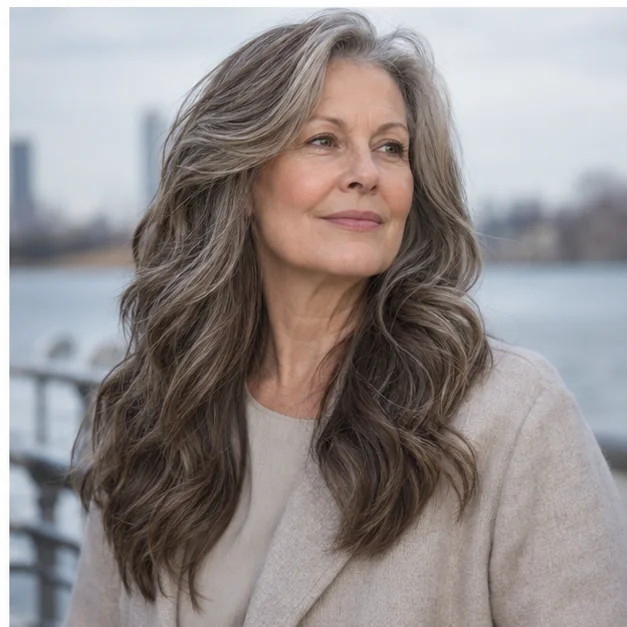
Choppy layers use varied lengths and point-cut ends to create visible texture from the midlengths downward, while the hair remains unmistakably long. The irregular rhythm adds body to soft waves, reduces the formality of dense hair and feels energetic and modern without a perfect blowout. It needs enough density to support separation; sparse ends look thinner when broken up aggressively. Request chunky but connected layers from below the jaw, deep point cutting rather than blanket thinning and a solid lower edge; style with texture spray and alternating loose bends.
Ask your stylist for: Chunky connected layers from below the jaw, deep point-cut texture and a solid long perimeter.
17. Layers With Side-Swept Bangs
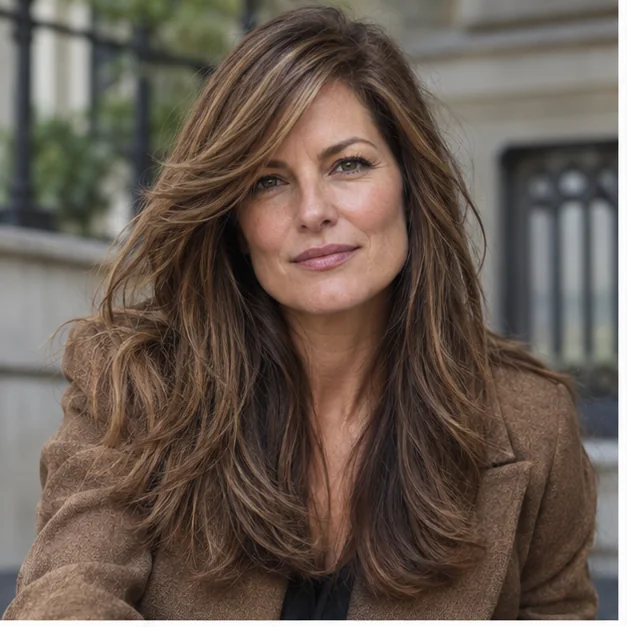
A long diagonal fringe crosses the forehead and joins the first face-framing layer near the cheekbone, then continues into sweeping lengths. The asymmetry softens a square jaw, balances a high forehead and lends an elegant self-assured mood that works beautifully in professional settings. It is more forgiving than a blunt bang, though a strong cowlick may dictate the part and shortest point. Ask for cheekbone-directed side bangs connected into long framing, with the back layers kept low; dry the fringe against its final direction first, then sweep it over.
Ask your stylist for: Cheekbone-directed side-swept bangs connected into long framing, with low back layers and a cowlick-aware part.
18. Layers With Bottleneck Fringe
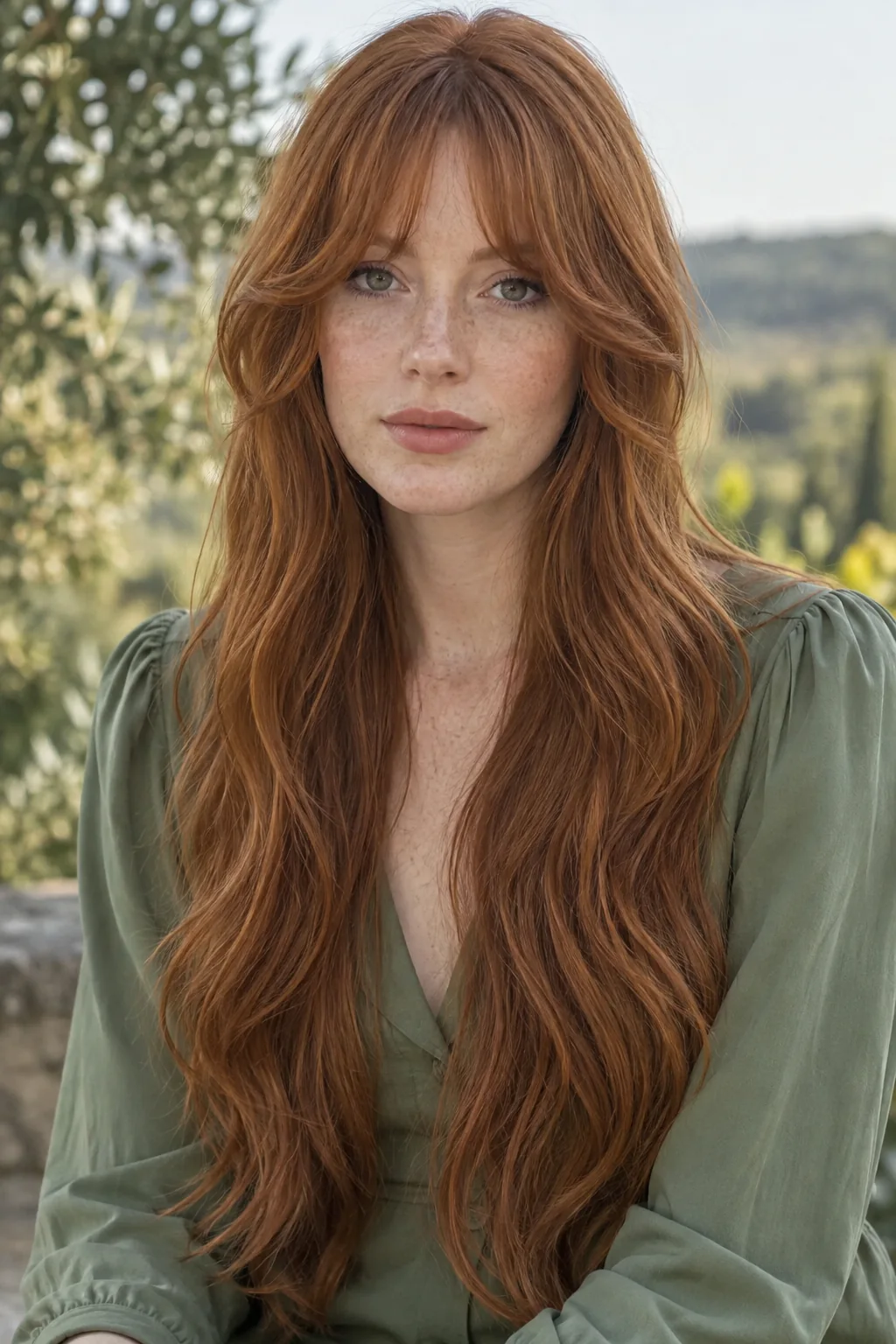
Bottleneck fringe sits shorter through the center, then lengthens around the temples before melting into long layers. That curved opening draws attention to the eyes, narrows a broad forehead and gives a chic, playful frame with more softness than a straight-across bang. The center needs frequent trims and quick morning styling, while the longer sides grow out gracefully. Ask for a light bottleneck fringe that opens above the brows and connects at the cheekbones, plus low flowing layers; dry the fringe immediately with a small round brush.
Ask your stylist for: A light bottleneck fringe, shorter through the center and cheekbone-length at the sides, connected into low layers.
19. Low-Maintenance Subtle Layers
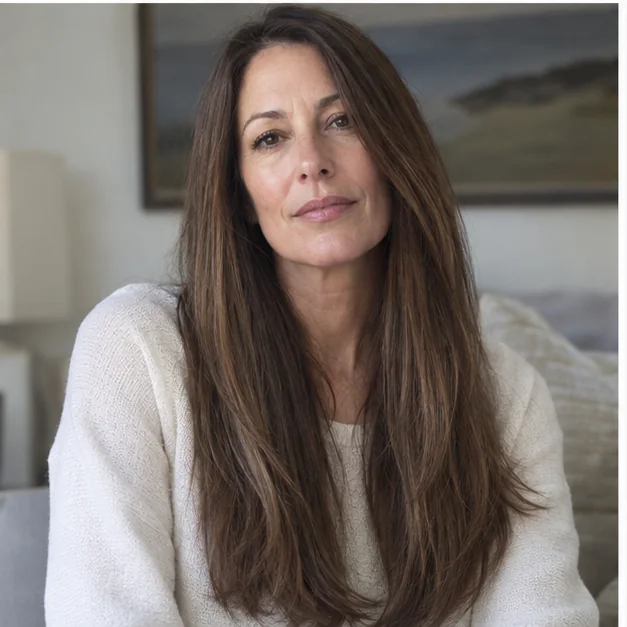
Subtle layers begin well below the shoulders and differ only slightly from the baseline, creating movement without changing how the hair behaves in braids, buns or ponytails. The restrained shape keeps ends healthy, adds a little swing and feels calm and dependable for anyone who values versatility over drama. It grows out almost invisibly and can stretch trims to twelve weeks when the ends remain healthy. Ask for low seamless layers with less than three inches between the shortest back layer and perimeter, plus minimal framing; air-dry or smooth once with a paddle brush.
Ask your stylist for: Low seamless layers with less than three inches of variation, minimal framing and a strong long perimeter.
20. Layers With Soft Rounded Ends
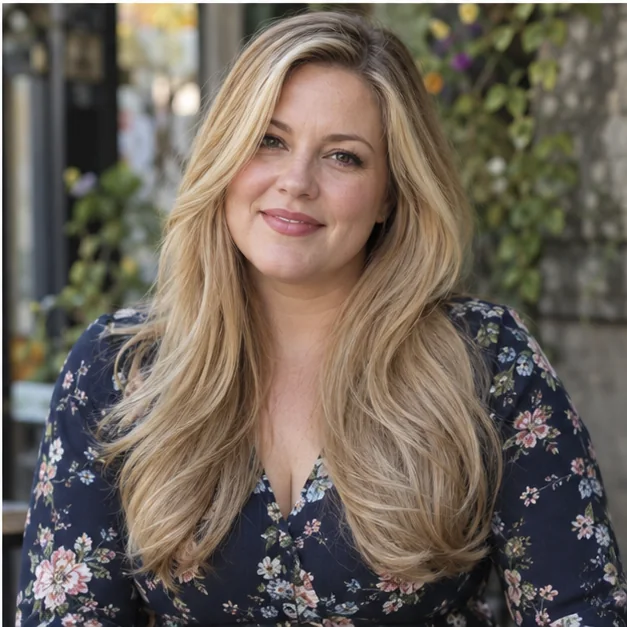
The layers are long and smoothly connected, then styled into rounded ends that turn under and away in alternating sections. This finish makes the perimeter plush, gives fine-to-medium hair graceful fullness and creates an approachable polished mood that moves from work to evening. The haircut remains wearable without heat, but the rounded effect needs a brush, rollers or a large-barrel tool. Ask for broad connected layers, a softly curved perimeter and enough end weight to hold a bevel; use heat protectant, roll the ends while warm and release only after they cool.
Ask your stylist for: Broad connected long layers with a curved perimeter and enough end weight for a rounded blow-dry.
Before You Book the Appointment
A successful salon visit begins with the overall shape, construction and upkeep—not only the finished length. Use this quick reality check before choosing your final reference photograph.
- Best for: Below-shoulder hair that needs movement, shape, framing or weight removal
- Styling effort: Five to fifteen minutes for an everyday finish
- Typical maintenance: Eight to twelve weeks; fringe sooner
- Main benefit: A lighter, intentional silhouette that preserves long-hair versatility
How to Choose Your Layer Placement
Start with the result you want. Cheekbone layers create visible framing, while layers below the collarbone preserve density and tie-back ease. Fine hair usually benefits from fewer lower layers and a strong perimeter. Thick hair may need internal graduation beneath an intact surface. Waves and curls should be assessed dry so the shortest pieces do not spring higher than expected. Bring two reference photos: one showing the front and one showing the back.
What to Ask for at the Salon
Describe your non-negotiable finished length first, then name the perimeter: blunt, U-shaped, V-shaped or rounded. Show where the shortest layer should land and explain how often you wear ponytails, braids or buns. Ask what elevation, overdirection, slide cutting, a razor or thinning shears will do on your texture. Request a dry check after styling so the connection and natural fall can be refined.
Styling, Maintenance and Grow-Out
Long layers usually need reshaping every eight to twelve weeks, although bangs and short framing need attention sooner. Use heat protectant, condition the oldest ends and avoid repeatedly thinning a perimeter that already feels light. Connected layers grow out quietly; choppy or disconnected versions show their age sooner. To return to one length, keep trimming the baseline while the shorter sections catch up.
Long Layers, Short Layers or No Layers?
Long layers preserve weight and tie back easily. Short layers create stronger crown lift but demand more styling and release shorter pieces from updos. A one-length cut gives fine ends maximum density, although thick or wavy hair may feel heavy. Choose the option that improves your daily relationship with your hair, not simply the most dramatic blowout photo.