Natural hair gives you an extraordinary range of shapes to work with, from cloud-soft afros and springy wash-and-go curls to sleek puffs, twists and sculptural updos. Natural hairstyles for Black women are styles that work with coily, curly or tightly textured hair in its unstraightened state, using definition, stretching, braiding, twisting or strategic pinning to shape the finished silhouette. That makes this category broader than protective styling: some looks leave the hair loose, while others tuck the ends away, and the right choice depends as much on your week as on your curl pattern. The ideas below focus on visible variety, realistic upkeep and language you can actually use with a natural-hair stylist.
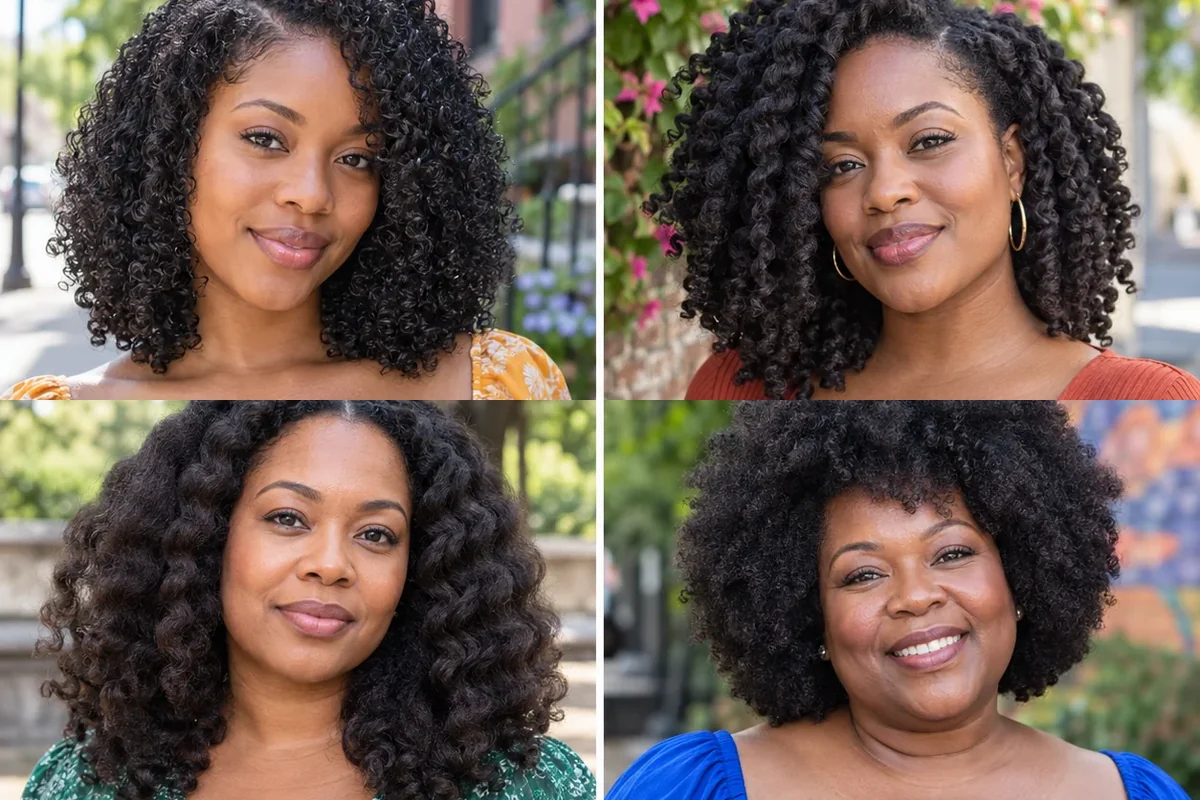
Find the one that feels like you: Start with the first look and let the photographs lead. Each style explains how the shape affects your features, the mood it creates and the exact words to take to your stylist.
1. Glossy Wash-and-Go Curls
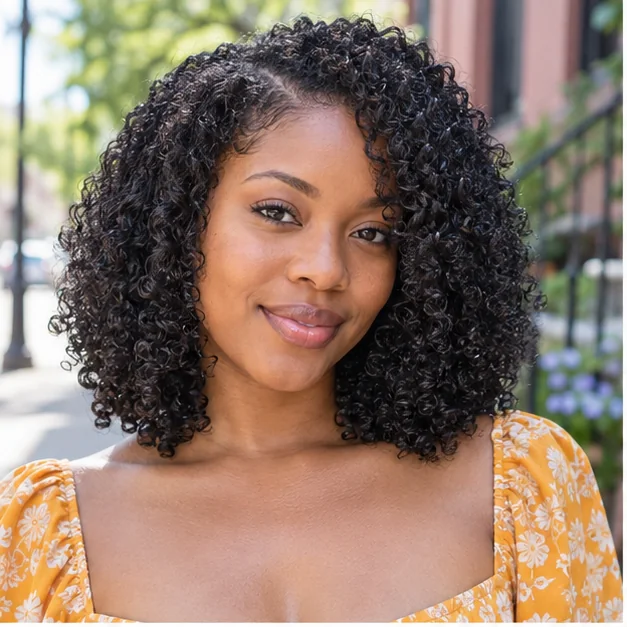
A glossy wash-and-go lets the natural curl pattern form the silhouette, with clumped coils through the lengths and softly controlled volume around the face. The open texture brings light to the eyes and cheekbones, and it can feel wonderfully free when you want your hair to look expressive without changing its basic pattern. It suits anyone comfortable with shrinkage and a longer drying window; fine-density hair usually needs lighter gel than very dense coils. Ask for a shape that works in its shrunken state, then apply leave-in and gel in small wet sections and dry fully before fluffing the roots.
Ask your stylist for: Shape my curls in their shrunken state, keeping face-framing volume and a balanced rounded perimeter.
2. Full Twist-Out With a Side Part
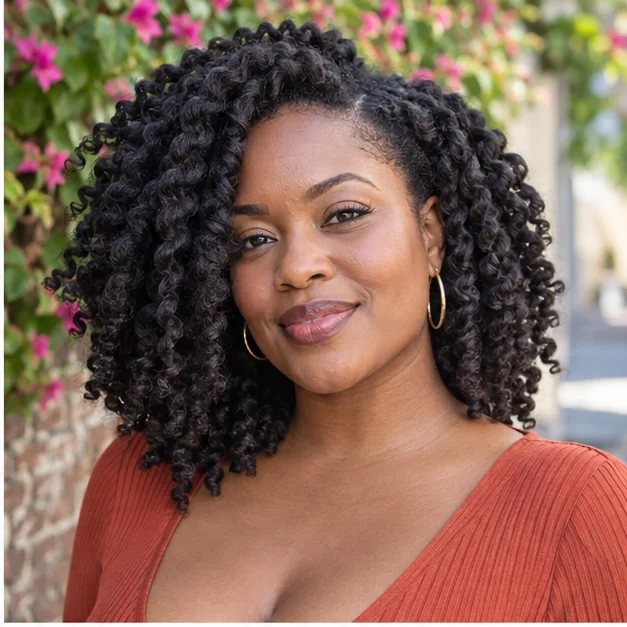
A side-parted twist-out combines elongated S-shaped definition with airy fullness, so the hair looks polished without becoming rigid. The diagonal part lifts one side and opens the opposite cheek, which can balance a round or square face and create an easy, confident glamour. Medium and dense hair hold the expansive shape especially well, while finer hair benefits from fewer, larger twists and minimal separating. Ask for long layers that preserve the perimeter, set damp hair in medium two-strand twists, and unravel only when completely dry with a little oil on your fingertips.
Ask your stylist for: Keep a full perimeter with long internal layers and enough front length for a deep side-parted twist-out.
3. Stretched Braid-Out With Soft Ends
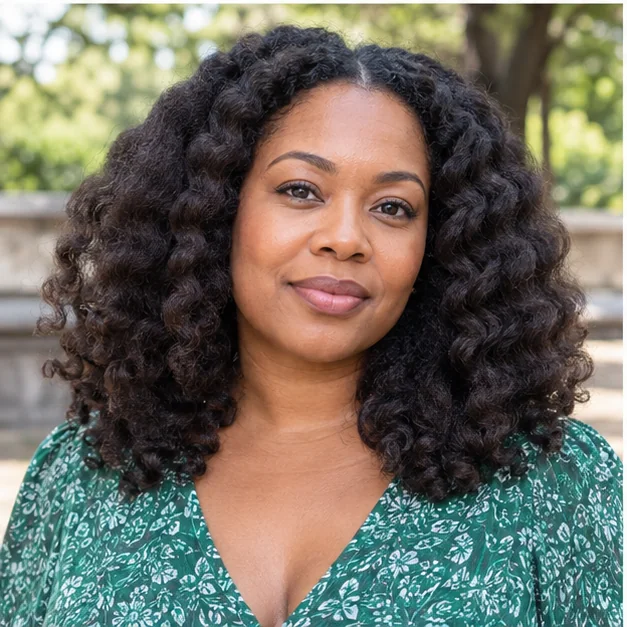
A stretched braid-out creates broad waves and a little more visible length than a tightly set twist-out, with softly curled ends preventing the finish from looking blunt. The elongated pattern can visually narrow a full face and makes medium-to-long natural hair feel romantic, relaxed and easy to sweep into a second-day updo. It works best when the sections are consistent and the roots dry completely. Request subtle shaping rather than short layers, braid damp hair with moderate tension, and wrap the final inch around perm rods so every wave finishes smoothly.
Ask your stylist for: Preserve length with subtle shaping and lightly dust the ends so a stretched braid-out falls evenly.
4. Rounded Afro With Picked Volume
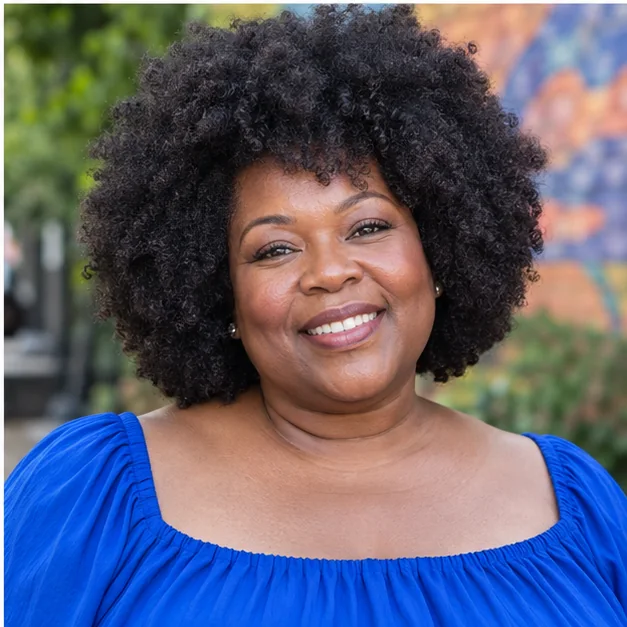
A rounded afro builds even, cloudlike volume around the head while a carefully shaped perimeter keeps the outline intentional. The balanced width celebrates dense texture and can make the wearer feel striking and self-assured, especially when the shape is tailored to reveal the brows and jaw rather than hiding them. Coily hair with strong shrinkage creates this silhouette naturally, although regular hydration helps the ends stay plush. Ask for a dry, curl-aware rounded shape with no hollow sides, then lift only at the roots with a wide-tooth pick and pat the surface into symmetry.
Ask your stylist for: Cut a balanced rounded afro on dry natural hair, preserving fullness at the sides and softness around the face.
5. High Puff With Soft Face-Framing Coils
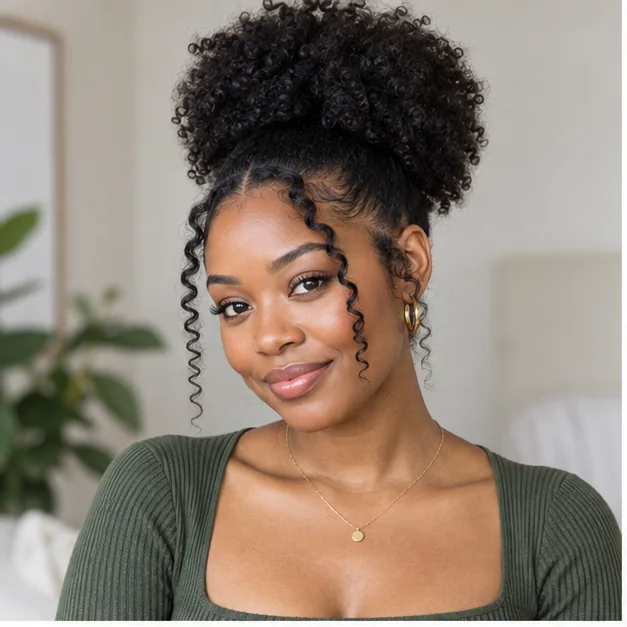
A high puff gathers the hair toward the crown while a few deliberate coils soften the temples and forehead. The lifted placement lengthens the neck, spotlights the cheekbones and feels upbeat and pulled together even when the wash day is several days old. It is quick on medium or long natural hair, but the base should feel secure rather than tight; a stretchy band gives more control than a small elastic. Smooth the perimeter with water and flexible gel, leave two fine tendrils free, and ask a stylist to preserve enough front length for comfortable gathering.
Ask your stylist for: Keep enough length around the perimeter for a tension-free high puff and shape two soft face-framing pieces.
6. Low Puff With a Sculpted Side Part
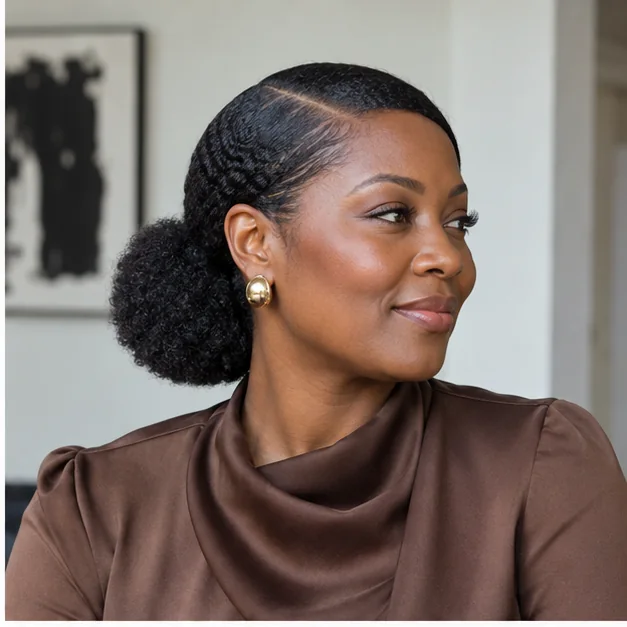
A low puff keeps the crown sleek and directs the hair into a full textured bundle at the nape, with a crisp side part adding structure. The contrast between smooth roots and soft volume looks professional and elegant, and it can make a busy morning feel instantly more composed. This option suits medium-to-long hair and stretches beautifully from a braid-out, though repeated firm brushing can stress fragile edges. Ask for a perimeter that gathers without short pieces escaping, use a soft boar-bristle brush sparingly, and secure the puff with a covered elastic that does not pinch.
Ask your stylist for: Preserve a gatherable perimeter and a clean side-part line while removing only damaged ends.
7. Half-Up Curls With Crown Lift
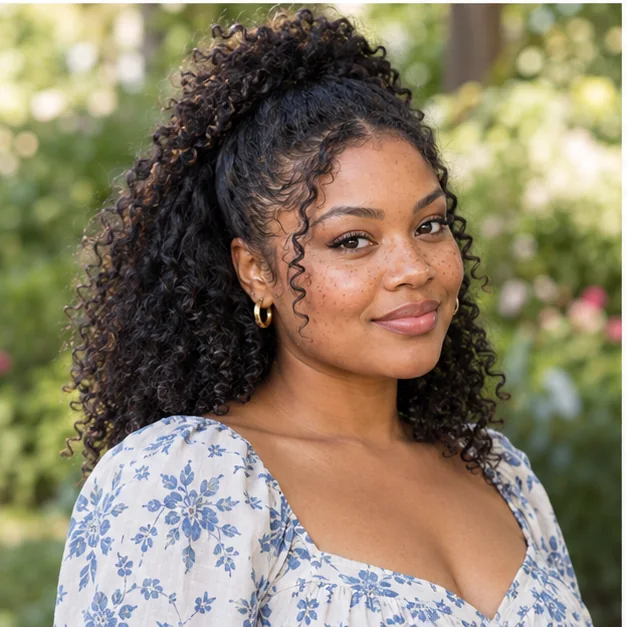
This half-up style lifts the front and crown into a compact ponytail while leaving defined curls loose through the back. The raised top adds height, keeps hair away from the eyes and preserves enough movement to feel playful rather than overly formal. It is a useful compromise for long wash-and-go curls that need control on day three, although the ponytail section should remain loose enough to protect the hairline. Ask for face-framing layers that still reach the half-up section, then refresh the exposed curls with mist and mousse instead of soaking the whole style again.
Ask your stylist for: Add long face-framing layers that remain long enough to gather into a loose half-up crown ponytail.
8. Two-Puff Natural Hairstyle
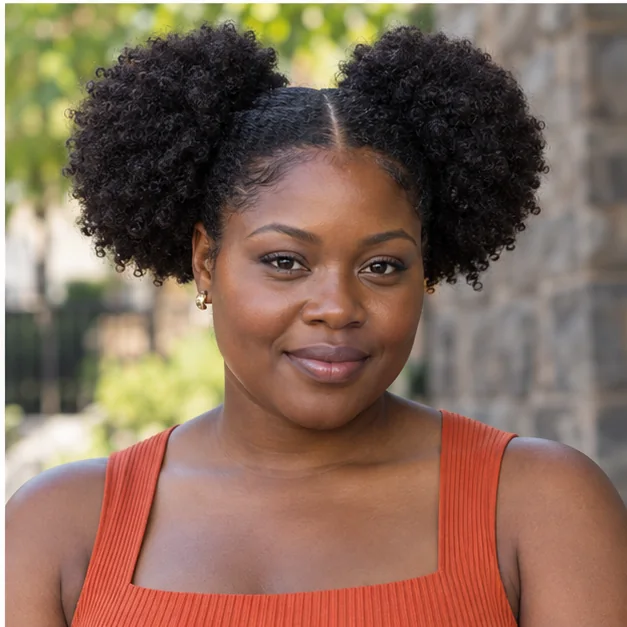
Two rounded puffs sit high and slightly wide, with a neat center part and softly laid—not pasted—edges. The symmetrical placement brings energy to the face and can feel joyful and youthful while still looking intentional on an adult when the puffs are full and the clothing is polished. It works on medium-length coily hair and makes good use of an older twist-out; very short sections can be gently pinned rather than pulled. Ask your stylist to keep both sides balanced, then use two fabric-covered ties and separate the puff texture with your fingers.
Ask your stylist for: Maintain balanced length on both sides so the hair forms two even, full puffs without excessive tension.
9. Elegant Flat-Twist Crown
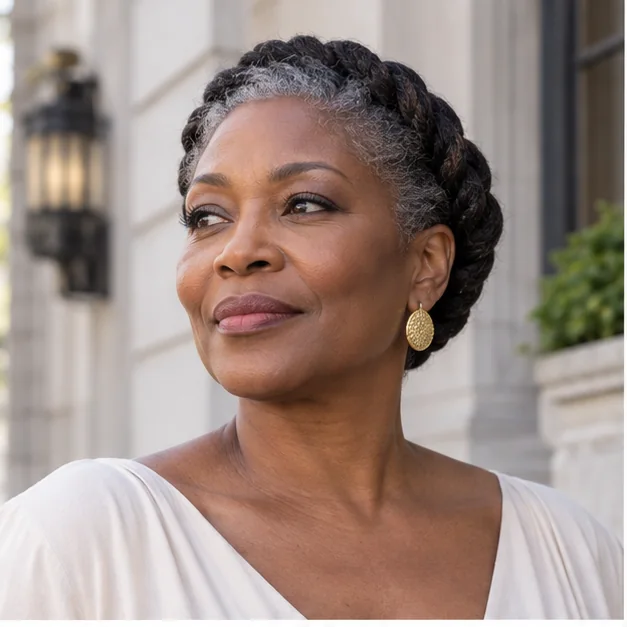
A flat-twist crown follows the hairline in a broad halo before tucking the ends discreetly at the back. The continuous curve frames the face, highlights the neck and earrings, and creates a serene, regal mood that works for weddings as easily as a polished workday. It protects the ends for several days, but the sections should not tug at the temples or feel sore overnight. Ask for two loose flat twists joined into a crown with soft fullness over the top, and preserve the style with a satin scarf rather than repeatedly brushing the perimeter.
Ask your stylist for: Create two low-tension flat twists that meet in a full crown, with softly controlled edges and hidden ends.
10. Chunky Two-Strand Twist Updo
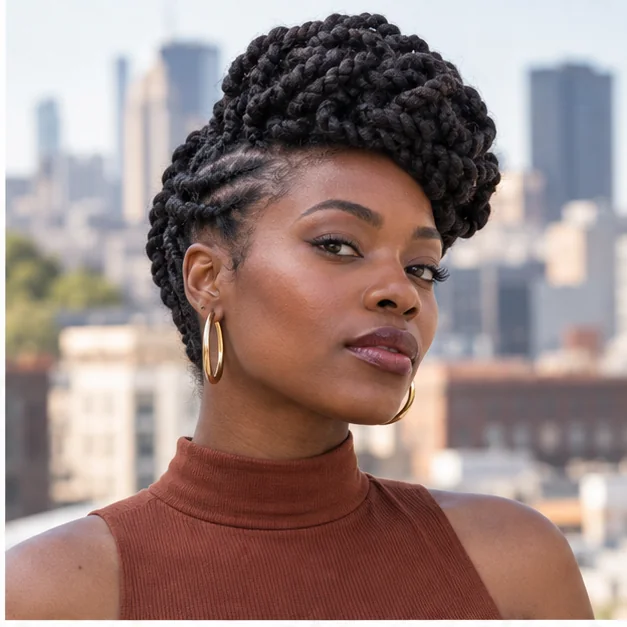
Large two-strand twists sweep upward and pin into a textured roll, leaving the twist pattern visible instead of hiding every section. That vertical movement lengthens a round face and gives the wearer an artful, confident finish without the installation time of tiny twists. The style is most secure on medium or long hair with enough density to build the roll, and chunky sections also make takedown quicker. Ask for broad, softly tensioned twists directed toward the crown, then pin them with the ends tucked inside and moisturize lightly rather than adding heavy cream each day.
Ask your stylist for: Use broad two-strand twists directed upward into a secure textured roll, keeping the hairline comfortable.
11. Bantu Knots With Clean Parts
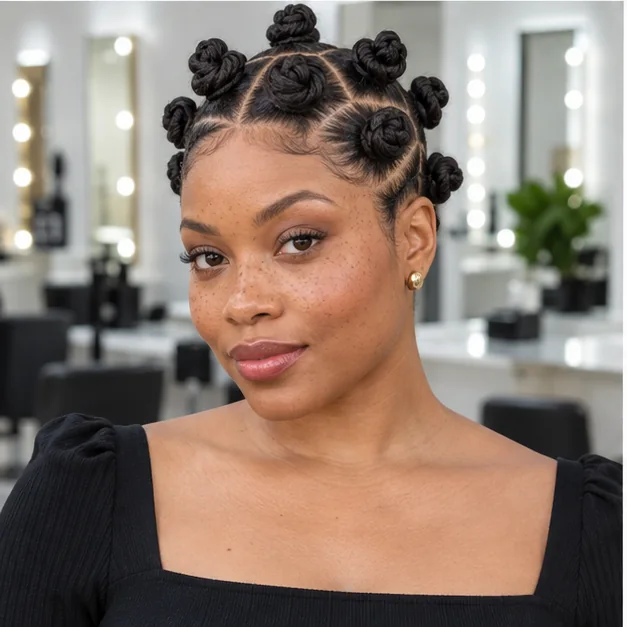
Polished Bantu knots form a deliberate grid across the head, with each section wrapped into a compact sculptural coil. The open silhouette reveals the face and bone structure, creating a bold, celebratory look that can make simple makeup and clothing feel instantly editorial. Medium-density hair creates neat knots without excessive bulk, while very long hair may need fewer, larger sections for comfort. Ask for clean geometric parts, moisturized sections and knots that sit securely without twisting the roots too tightly; cover them with a large satin bonnet so the shape is not crushed overnight.
Ask your stylist for: Create evenly spaced Bantu knots with clean geometric parts and comfortable root tension throughout.
12. Soft Bantu Knot-Out
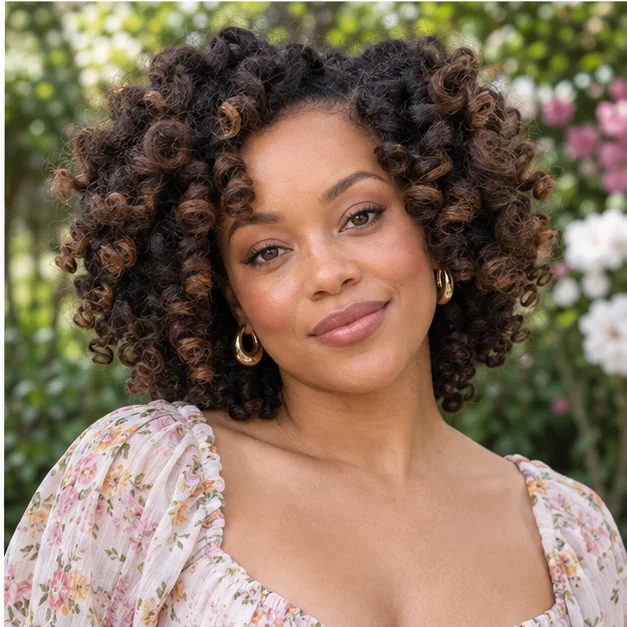
A Bantu knot-out produces rounded spirals with substantial root volume and a softer, more irregular finish than a curling-wand set. The buoyant pattern adds width to long or narrow faces and feels romantic, touchable and glamorous without disguising the hair's natural density. The result depends on fully dry sections; unraveling early creates frizz and uneven curl formation. Request a shape with enough internal layering for the curls to stack, set eight to twelve moisturized knots, and separate each spiral only a few times before lifting the roots with your fingers.
Ask your stylist for: Add long internal layers that let a Bantu knot-out stack softly while preserving a full outer perimeter.
13. Textured Frohawk With Pinned Sides
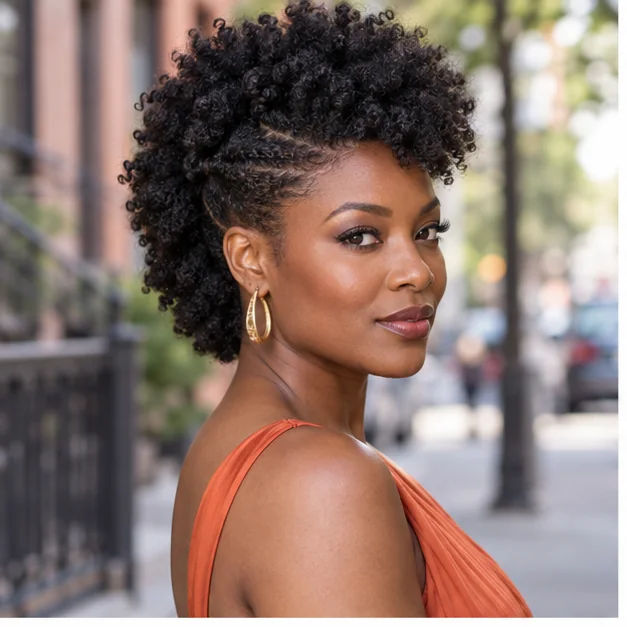
A frohawk pins the sides upward while leaving a continuous ridge of coils from the forehead to the nape. The narrow vertical line can lengthen a round face, emphasize the eyes and make the wearer feel fearless without requiring shaved sides or a permanent cut. It adapts well to a twist-out or wash-and-go on medium-length hair, although the pins must anchor into sturdy sections rather than scrape the scalp. Ask for enough central length to form connected volume, then cross-pin the sides in small sections and leave the top texture soft rather than shellacked.
Ask your stylist for: Preserve a full center panel and enough side length to pin into a soft, continuous frohawk without shaving.
14. Side-Swept Natural Curls
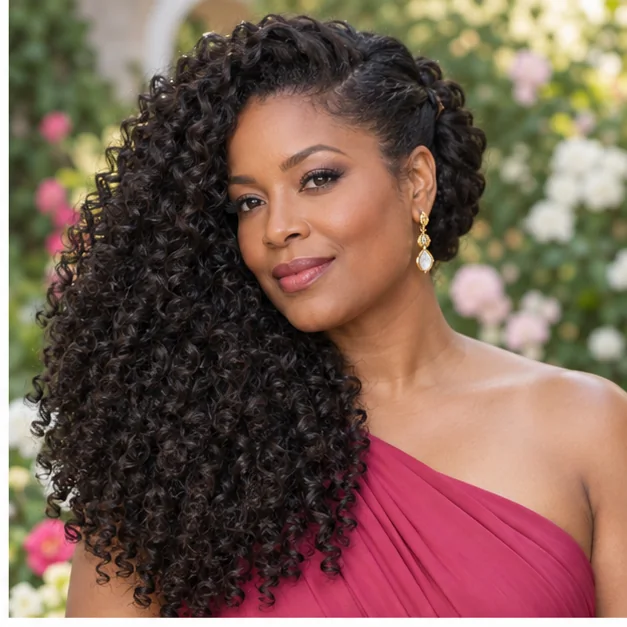
Side-swept curls gather most of the volume over one shoulder while discreet pins keep the opposite side close to the head. The asymmetry reveals one cheekbone and creates a glamorous diagonal line, making it especially effective for dinners, photographs and natural wedding styling. Long or stretched curls hold the sweep most easily, but shorter hair can achieve the same impression with a few hidden flat twists. Ask for a deep part and secure side control without tight edge work, then use flexible pins and a light humidity shield so the visible curls remain soft and dimensional.
Ask your stylist for: Create a deep side sweep with hidden pinning or loose flat twists, keeping the visible curls full and touchable.
15. Natural Halo Braid
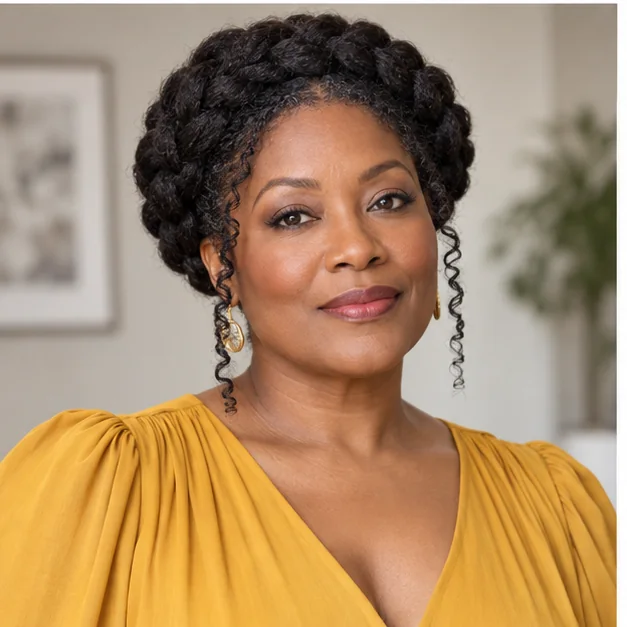
A natural halo braid wraps around the head in one broad raised plait, with the ends tucked so the line looks continuous. Its circular shape frames the face evenly and feels graceful, secure and quietly romantic, especially when a few fine coils are left near the ears. Stretched medium-to-long hair gives the braid enough reach; shorter hair may need a two-braid construction rather than added extension hair. Ask for a loose, full halo using only your natural length where possible, and protect the braid with a scarf while adding a small amount of mousse if surface fuzz appears.
Ask your stylist for: Form a full low-tension halo braid from stretched natural hair, tuck the ends invisibly and leave two soft ear coils.
16. Curly Ponytail With Wrapped Base
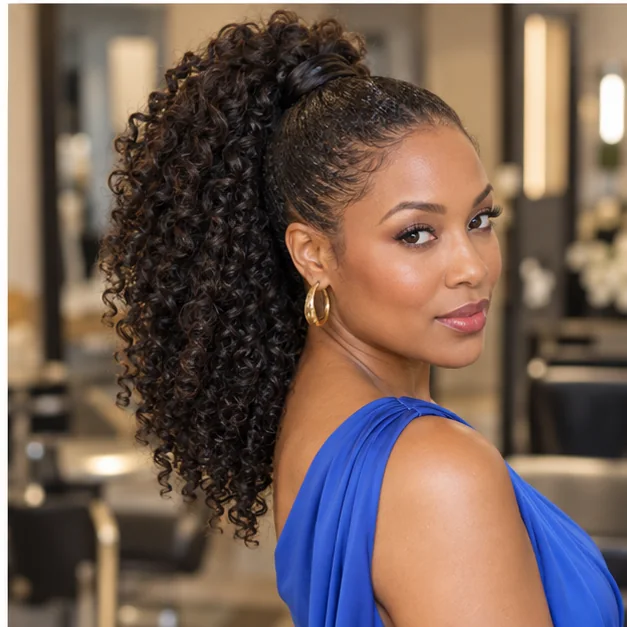
A mid-height ponytail keeps the roots smooth while a full cascade of natural curls falls behind the head, finished with one wrapped section concealing the tie. The placement lifts the facial outline without pulling the eyes upward too sharply, so it feels polished, energetic and practical for work or an evening out. Long natural hair or a stretched set provides the fullest tail, and fine-density hair should use a softer base rather than repeated teasing. Ask for a comfortable gathered shape with no edge strain, refresh the tail separately, and wrap only a small section around a snag-free elastic.
Ask your stylist for: Preserve a gatherable perimeter and create a comfortable mid-height curly ponytail with a natural wrapped base.
17. Twisted Low Chignon
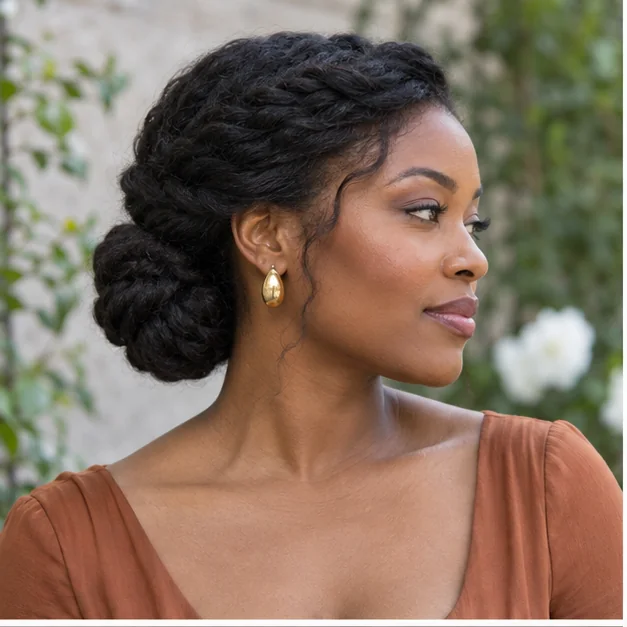
A twisted low chignon rolls stretched natural hair into a broad textured knot at the nape, with the crown kept smooth but not flattened. The gentle volume above the knot balances strong cheekbones and creates an elegant, assured finish that works beautifully for formal events or conservative offices. It suits medium and long hair, while fine-density strands can be loosely folded to preserve fullness instead of compressed tightly. Ask for a low-tension roll with hidden ends and soft crown lift, then secure it with U-shaped pins and sleep in a scarf that supports rather than crushes the knot.
Ask your stylist for: Build a broad low twisted chignon with hidden ends, comfortable tension and soft volume through the crown.
18. Fine-Density Natural Curls With Layered Lift
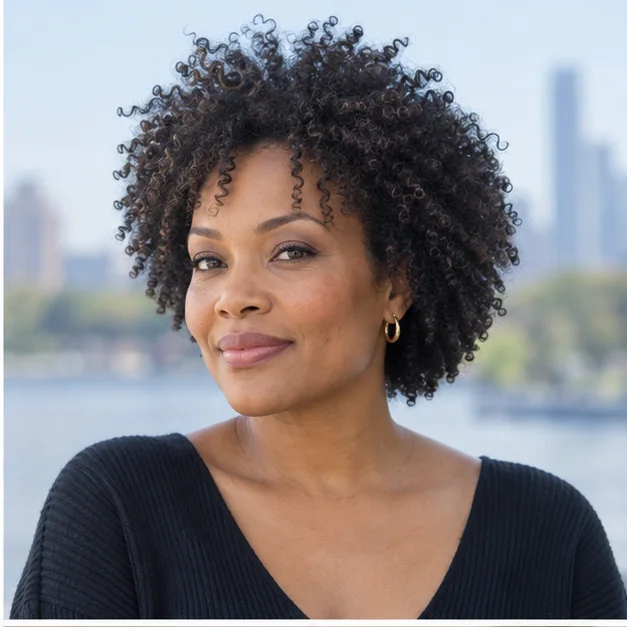
This shape uses light, strategic layers to lift fine-density natural curls at the crown while keeping the outer edge visibly full. Shorter pieces around the temples stop the style from collapsing, which can make the hair look more buoyant and help the wearer feel confident without relying on heavy extensions. Too many layers would expose the scalp, so the cut should prioritize placement over maximum movement. Ask for minimal curl-by-curl layering, a strong perimeter and crown lift, then use lightweight foam or botanical gel and diffuse at low speed with the head tilted for root support.
Ask your stylist for: Use minimal curl-by-curl layers for crown lift while protecting density and keeping a strong outer perimeter.
19. Silver Natural Curls With a Soft Shape
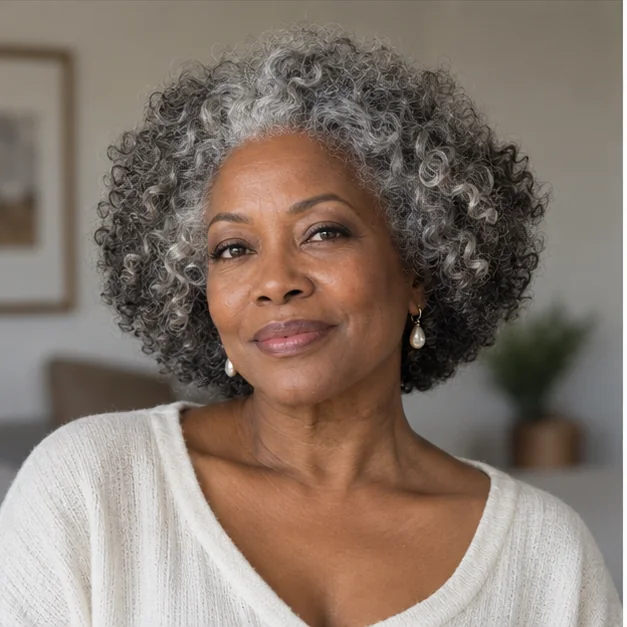
Silver and salt-and-pepper curls are shaped into a softly rounded, collar-skimming silhouette with an open forehead and gentle temple volume. The bright texture reflects light beautifully, softens facial lines and can feel modern and self-possessed rather than overly styled. Gray hair may be drier or more delicate, so definition should come from moisture and flexible hold instead of frequent manipulation. Ask for a curl-aware shape that removes see-through ends while preserving width, use a hydrating leave-in beneath light gel, and clarify occasionally to keep silver tones luminous rather than dull.
Ask your stylist for: Shape my silver curls into a soft rounded outline, remove transparent ends and preserve gentle temple fullness.
20. Day-Five Pineapple Updo
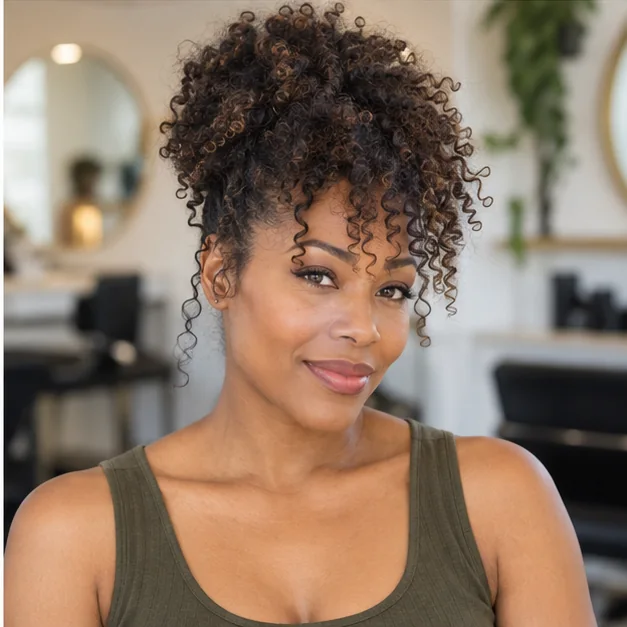
A pineapple updo gathers an older curl set loosely at the front of the crown, allowing the ends to spill forward like a textured fringe. The placement revives stretched roots, opens the neck and turns imperfect day-five definition into a relaxed, stylish silhouette that feels spontaneous rather than unfinished. It works best on medium or long curls and should be loose enough to avoid a headache or stretched edges. Mist only the exposed ends, secure the base with a satin scrunchie, and ask your stylist to retain enough front and crown length for the curls to fall forward naturally.
Ask your stylist for: Keep generous front and crown length so older curl sets can gather into a loose pineapple with a soft forward fall.
Before You Book the Appointment
A successful salon visit begins with the overall shape, construction and upkeep—not only the finished length. Use this quick reality check before choosing your final reference photograph.
- Best for: Black women who want texture-led inspiration across loose curls, stretched sets, puffs, twists, braids and natural updos.
- Choose by: Density, shrinkage, strand strength, drying time and the number of days you want the style to last—not curl pattern alone.
- Everyday effort: Ranges from a quick older-set puff to a fully dried wash-and-go or twist set; several looks can evolve into second- and third-day updos.
- Comfort rule: Secure should never mean painful; loosen any style that causes tenderness, bumps, headaches or visibly strained edges.
What Counts as a Natural Hairstyle?
A natural hairstyle works with coily, curly or tightly textured hair without chemically or thermally straightening it into a different pattern. It may be loose, stretched, twisted, braided or pinned, and it is not automatically protective: a wash-and-go leaves the ends exposed, while a flat-twist crown tucks them away. The useful question is not whether a look fits one rigid label, but whether its construction respects your texture, scalp and routine.
Choose for Density, Shrinkage and Time
Curl labels offer a starting point, but density, strand width, shrinkage and drying time usually determine whether a style feels easy. Fine-density hair benefits from strong perimeters and lightweight stylers; very dense hair may need deliberate sectioning and longer drying. If weekday time is limited, choose a set that can become a puff, ponytail or updo later rather than a look that must be rebuilt every morning.
What to Ask a Natural-Hair Stylist
Bring references showing both the finished style and its shrunken state. Tell your stylist whether you normally wear wash-and-go curls, stretched sets or updos, because the same layers behave differently in each routine. Agree on tension, edge treatment, part size, the amount of retained length and how the shape should look between salon visits; if a style relies on pain to appear neat, it is not the right installation.
Keep Definition Without Product Buildup
Start with thoroughly cleansed, conditioned hair and combine only products that dry well together. Use enough water for even distribution, dry sets completely before unraveling and refresh isolated fuzzy sections rather than recoating the whole head. A satin scarf, bonnet or pillowcase protects the result, while occasional clarifying removes the film that can make curls feel coated and look dull.
Protect Your Edges and Scalp
Rotate the placement of puffs and ponytails, choose covered ties, and keep brushes gentle around the hairline. Tenderness, bumps, a shiny stretched scalp or a headache are signals to loosen the style immediately. Protective styling should reduce daily handling, not exchange it for constant tension; comfortable roots and accessible cleansing matter as much as tucked ends.