A modern mullet can look far softer—and far more sophisticated—than its rebellious reputation suggests. A modern mullet for women keeps a deliberate short-to-long profile, with shorter fringe, crown or side sections and visibly longer hair at the nape, then blends that contrast through contemporary layers and texture. Unlike a shag, which graduates more evenly, or a wolf cut, which centers fluffy crown volume, a true mullet makes the rear length part of the silhouette. The best version can sharpen cheekbones, release heavy texture and make everyday styling feel expressive without looking like a costume.
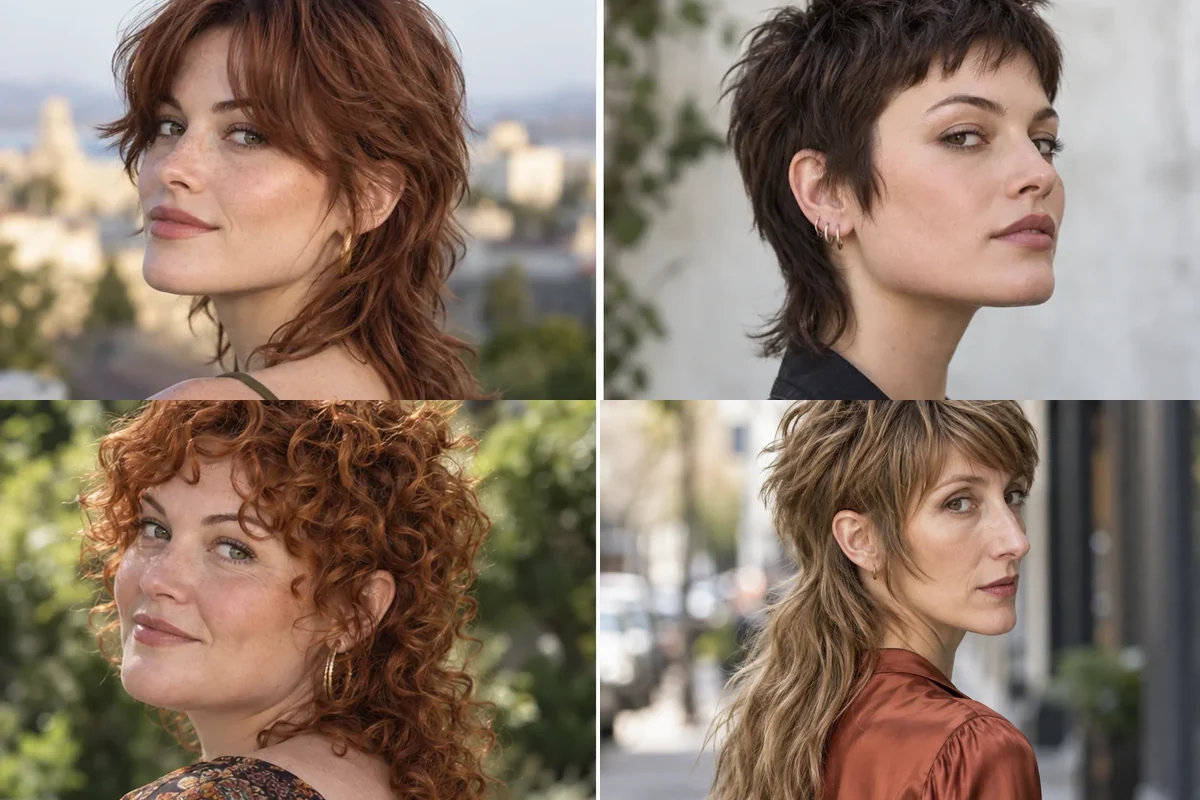
Find the one that feels like you: Start with the first look and let the photographs lead. Each style explains how the shape affects your features, the mood it creates and the exact words to take to your stylist.
1. Soft Modern Mullet With Curtain Fringe

A soft modern mullet eases into the shape with cheekbone-length curtain fringe, airy crown layers and a nape that falls only a little longer than the sides. The gentle transition opens the face, adds height above the cheekbones and feels cool without demanding a dramatic identity shift. It suits straight-to-wavy hair and a professional routine, although the fringe benefits from a quick round-brush bend. Ask for a blended mullet with soft disconnection, curtain pieces at the cheekbones and a collar-skimming nape, keeping enough weight over the ears for an understated finish.
Ask your stylist for: A softly blended mullet with cheekbone curtain fringe, airy crown layers and a collar-skimming nape.
2. Short Baby Mullet
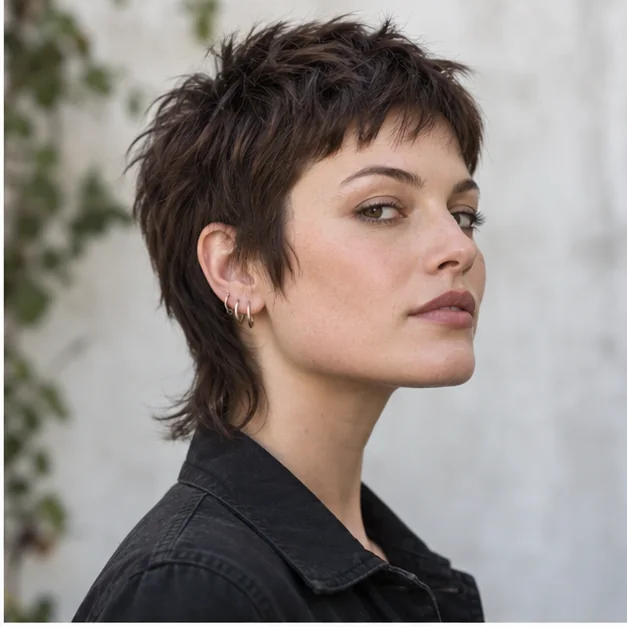
The baby mullet keeps the top and sides pixie-short while leaving a neat, tapered extension at the nape. That small rear flick lengthens the neck, draws focus to the eyes and cheekbones, and creates a playful confidence without the commitment of a long tail. Fine or straight hair shows its graphic shape especially well, but the compact outline needs a trim about every five to seven weeks. Request a cropped textured crown, softly exposed ears and a narrow nape section left one to two inches longer, with point-cut edges rather than a harsh shelf.
Ask your stylist for: A cropped textured crown with exposed ears and a narrow, softly point-cut nape extension.
3. Curly Modern Mullet
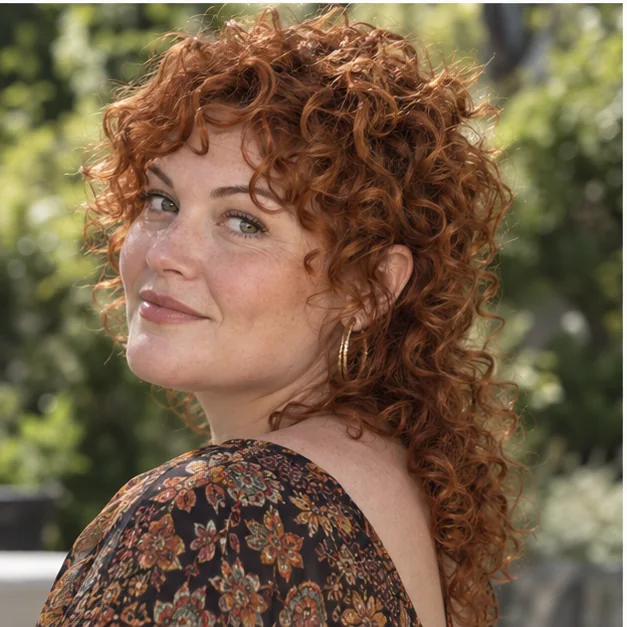
A curly modern mullet stacks springy volume through the crown and temples while longer ringlets stretch toward the shoulders at the back. The height can visually lengthen a round face, the face-framing coils soften stronger angles, and the whole shape feels joyful and unapologetic. Curl shrinkage makes dry shaping important, and heavy thinning can turn the sides patchy. Ask for curl-by-curl cutting, a rounded crown, connected temple layers and clearly retained nape length; style with light gel over leave-in and diffuse from underneath to protect definition.
Ask your stylist for: Dry curl-by-curl shaping with a rounded crown, connected temple layers and retained shoulderward nape length.
4. Long Modern Mullet
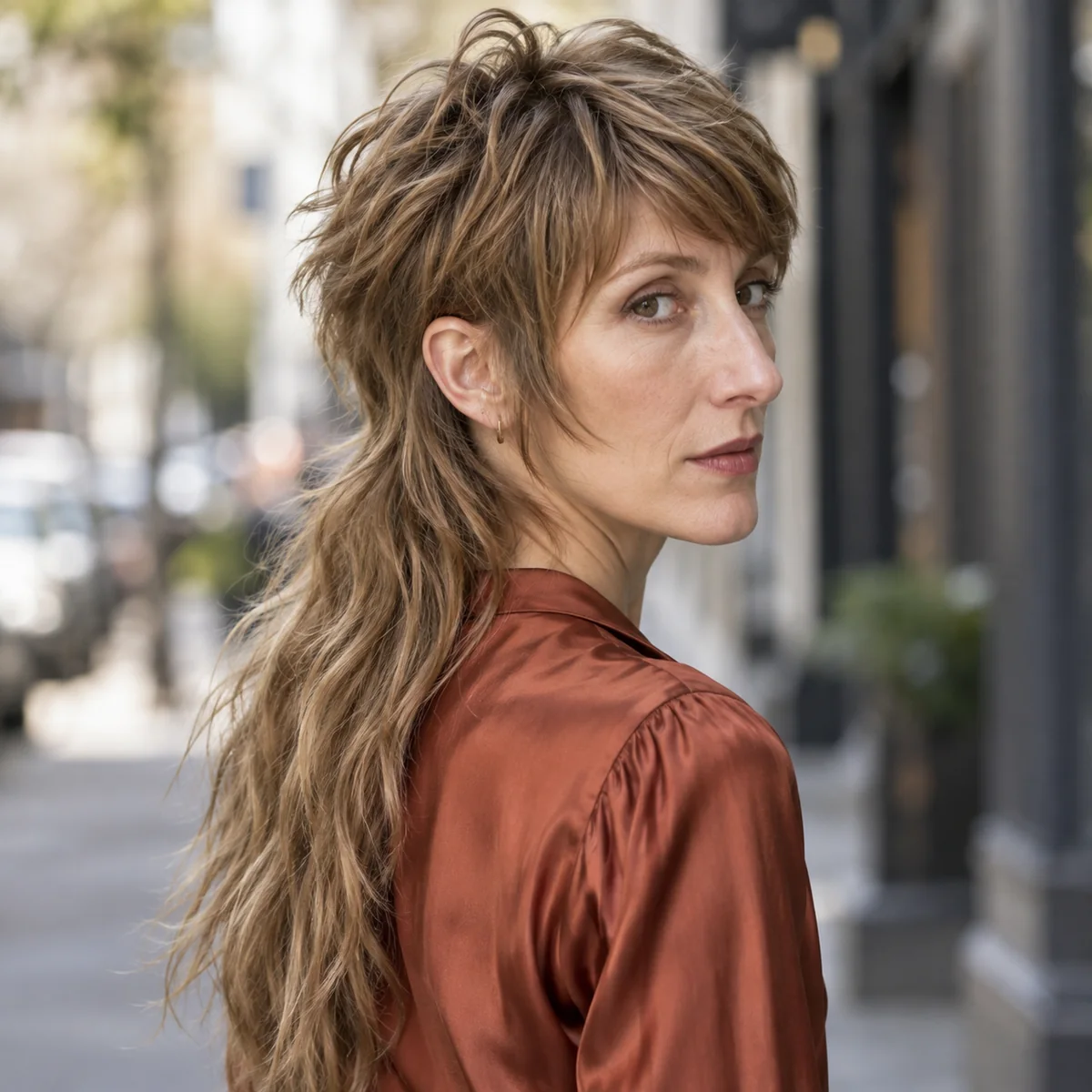
The long modern mullet preserves length below the shoulders while carving shorter, movable layers around the crown, cheeks and sides. It offers the attitude of a directional cut without giving up ponytail options, and the cascading profile can make dense hair feel lighter and more fluid. The contrast disappears if the front layers grow too long, so occasional reshaping matters even when the back is left untouched. Ask for cheek-to-chin face layers, a lifted crown and a visible jump into the long back panel, with the perimeter kept strong rather than wispy.
Ask your stylist for: Cheek-to-chin front layers, a lifted crown and a visible transition into a strong below-shoulder back panel.
5. Shaggy Mullet With Wispy Bangs
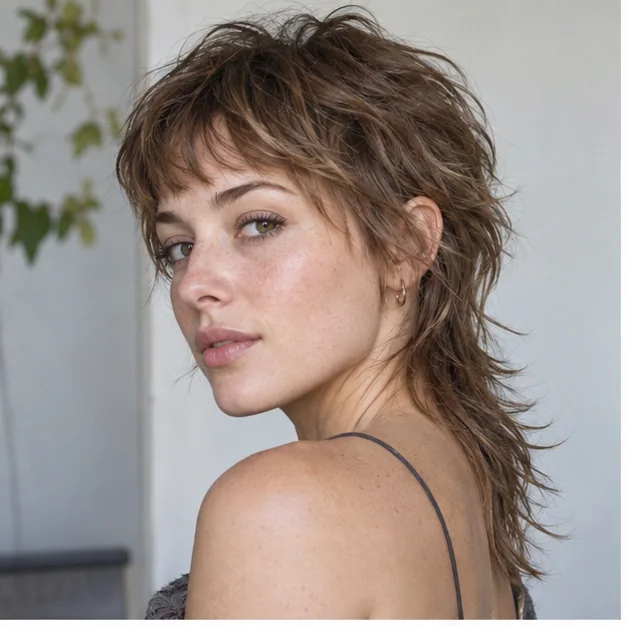
This shaggy mullet combines a translucent brow-skimming fringe with feathered cheek layers and a noticeably longer, textured nape. The broken edges soften a broad forehead, add movement to straight or wavy hair and create a relaxed, artistic mood that looks best slightly undone. Fine hair needs restrained texturizing so the outline does not become stringy, while thick hair can support deeper removal. Request wispy bangs from a shallow section, shag-like crown layers and a preserved mullet tail; work dry paste through selected ends instead of coating the entire cut.
Ask your stylist for: A shallow wispy fringe, shaggy crown layers and a clearly longer nape with selectively piecey ends.
6. Polished Office-Friendly Mullet
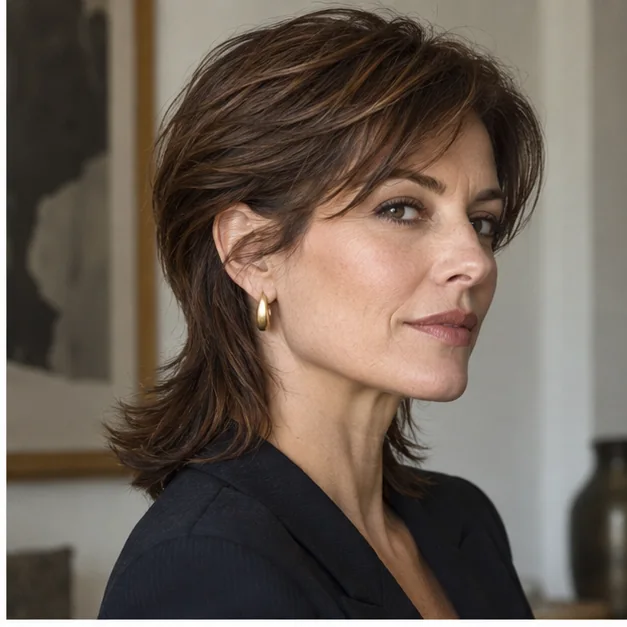
An office-friendly mullet keeps the crown smooth, the side layers long enough to tuck and the nape extension broad rather than tail-like. Its controlled outline gives straight or softly wavy hair movement and cheekbone definition while still reading as an intentional salon cut in conservative settings. The polish comes from shape, not flat-ironing every strand, so a light blowout is usually enough. Ask for low-contrast graduation through the sides, tuckable temple length and a collarbone back section; keep the finish smooth with a flexible brush and a small amount of cream.
Ask your stylist for: A low-contrast mullet with tuckable temples, smooth crown layers and a broad collarbone back section.
7. Modern Mullet With Micro Bangs
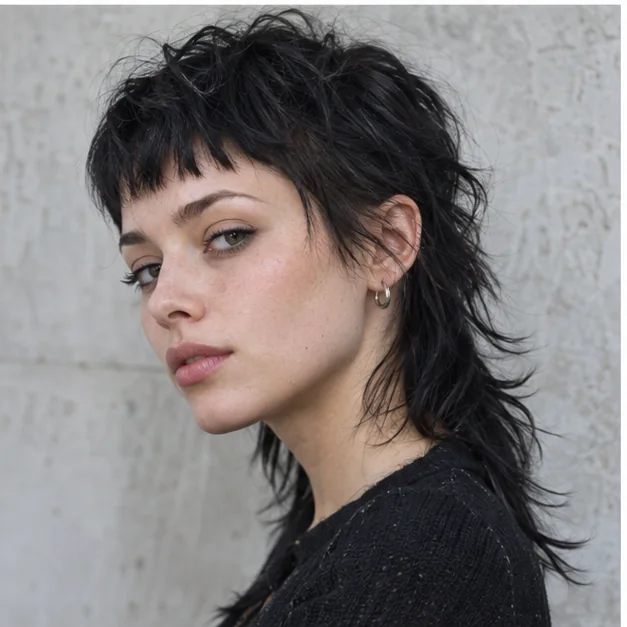
A short micro fringe exposes the brows while choppy temple pieces and a longer nape create a crisp, fashion-forward profile. The open forehead can lengthen a petite face and place attention firmly on the eyes, giving the wearer an assured, editorial energy. It works best when cowlicks are discussed before cutting, because a tiny fringe leaves little room for correction. Request a softly irregular fringe well above the brows, cropped side texture and a connected but clearly longer back; use fingertip paste on the fringe rather than forcing it perfectly straight.
Ask your stylist for: An irregular above-brow fringe with cropped side texture and a connected, visibly longer nape.
8. Wavy Air-Dried Mullet
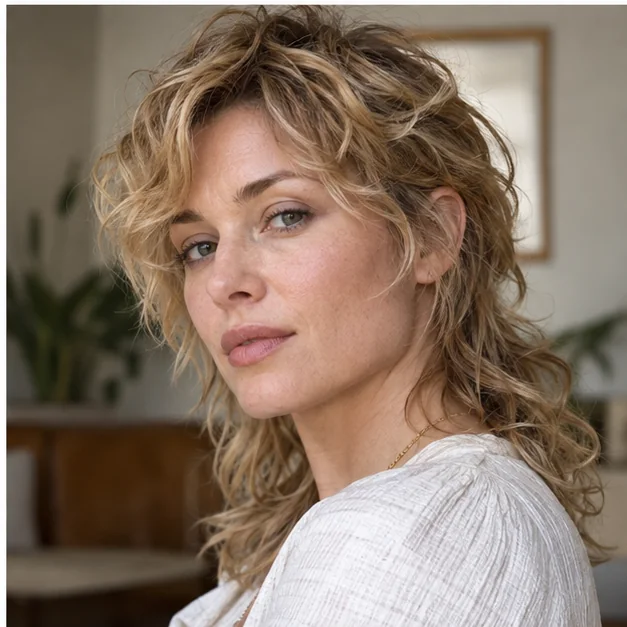
A wavy air-dried mullet follows natural bends through a light crown, cheek-length sides and a loose collar-skimming back. The irregular movement disguises imperfect growth patterns, releases bulk and gives everyday hair a confident, carefree shape without a hot-tool routine. It is especially useful for waves that flatten under one-length cuts, though the stylist should avoid cutting every bend to the same height. Ask for wave-aware dry refinement, internal crown lift and a longer nape with soft ends; scrunch in mousse, twist a few face pieces and leave them alone while drying.
Ask your stylist for: Wave-aware layers with internal crown lift, cheek-length sides and a softly finished collar-skimming nape.
9. Straight Graphic Mullet
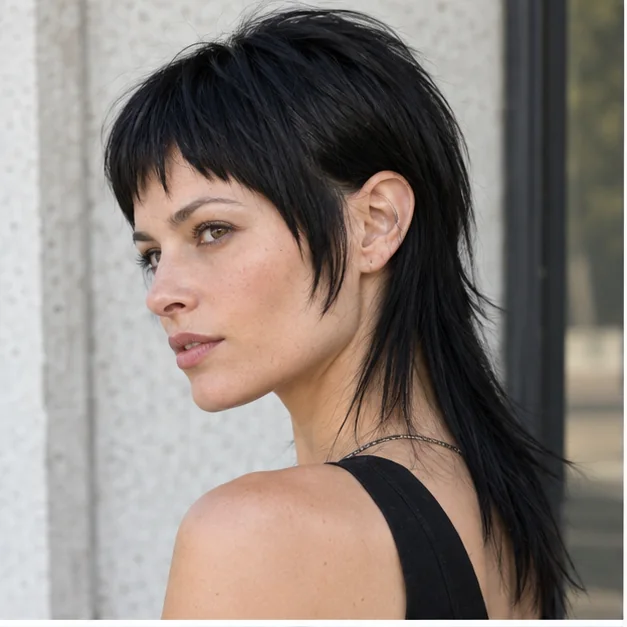
The straight graphic mullet uses a compact crown, clean side panels and a deliberate longer back to make the architecture easy to see. Its sharp vertical lines can slim a wider face and create a sleek, self-possessed impression even without volume or curls. Because straight hair exposes every imbalance, this version needs careful sectioning and regular refinement at the sides. Ask for a precise short-to-long outline with bluntish side edges, controlled internal layers and a solid nape panel; smooth with a paddle brush and let the silhouette provide the drama.
Ask your stylist for: A precise short-to-long silhouette with clean side panels, controlled internal layers and a solid nape panel.
10. Modern Mullet for Fine Hair
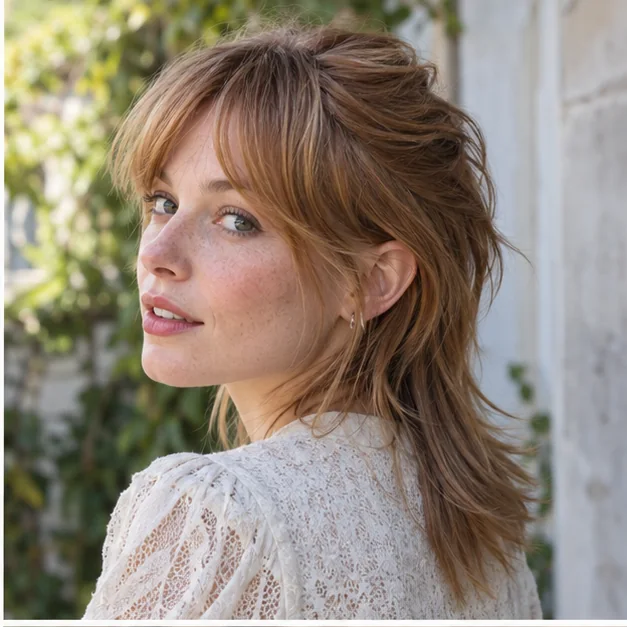
A fine-hair mullet keeps the crown layers strategic, the sides softly connected and the back perimeter substantial enough to avoid a feathery tail. Shorter top pieces spring away from the scalp, making the profile look fuller and helping a flat crown feel light and animated. Too much razor work removes the density this cut needs, so restraint is the difference between airy and sparse. Ask for point-cut crown lift, cheekbone framing and a blunt-soft nape line with no thinning shears; dry the roots upward with mousse and leave the ends lightly separated.
Ask your stylist for: Point-cut crown lift, cheekbone framing and a blunt-soft nape perimeter with no thinning shears.
11. Modern Mullet for Thick Hair
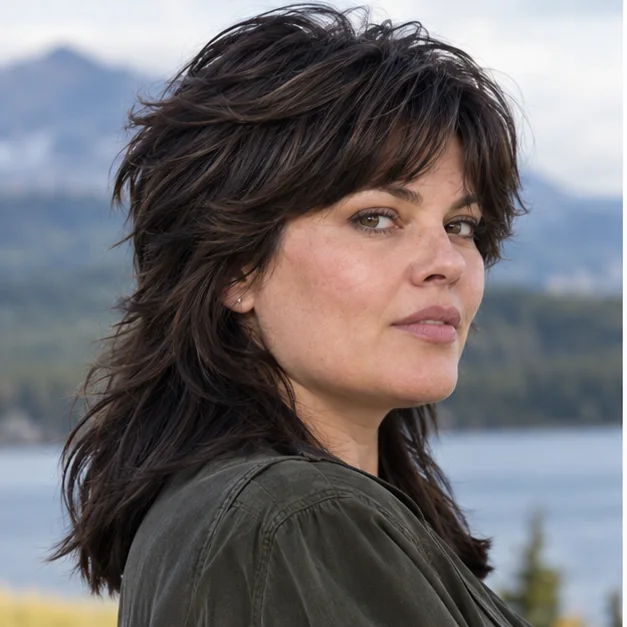
For thick hair, a modern mullet removes concentrated weight through the crown and sides while allowing the back to keep a generous, swinging length. That redistribution can stop dense hair from forming a heavy triangle, reveal the jawline and make wash days feel more manageable and expressive. Interior removal should follow the fall of the hair rather than create visible holes, especially above the ears. Ask for deep internal layering, reduced side bulk and a broad longer nape with an intact outer surface; use cream on the midlengths and let the cut create volume naturally.
Ask your stylist for: Deep internal weight removal through crown and sides with an intact surface and broad longer nape.
12. Soft Mullet for Women Over 50
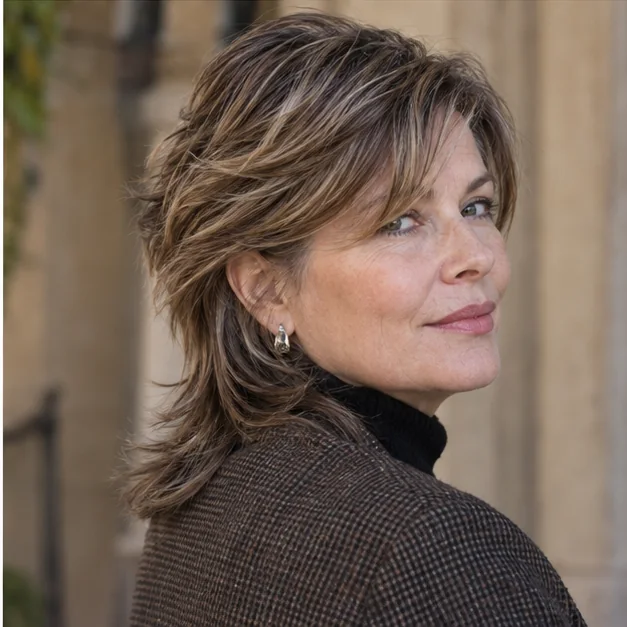
This soft mullet uses a side-swept fringe, lifted crown and a tidy nape that brushes the collar, offering shape without exaggerated punk contrast. The height can brighten the face, the diagonal fringe softens forehead lines and the retained back length feels contemporary rather than overly cropped. It suits gray, highlighted or naturally textured hair and can be styled with a simple blow-dry, though the crown needs reshaping as it grows. Request a blended collar-length mullet with a shallow side fringe and airy crown support, keeping the temples soft and tuckable.
Ask your stylist for: A blended collar-length mullet with side-swept fringe, airy crown support and soft tuckable temples.
13. Silver Modern Mullet
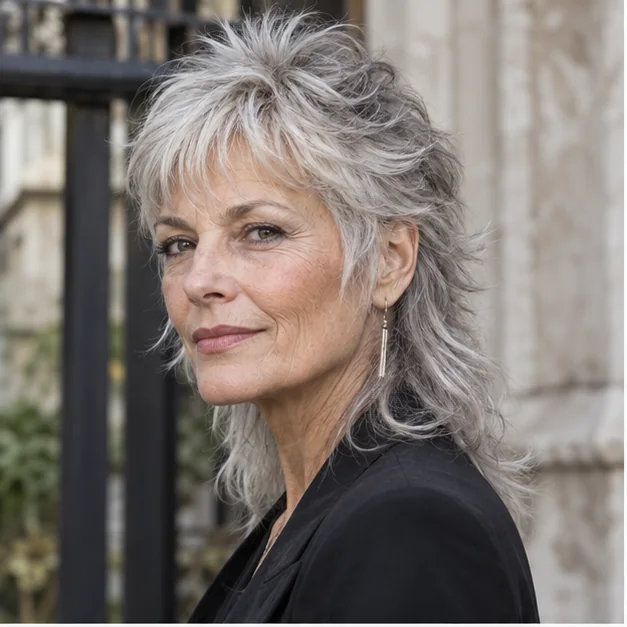
A silver modern mullet pairs bright natural gray with feathered crown layers, clean temple pieces and a longer metallic sweep at the back. The directional shape makes silver hair feel intentionally fashion-led, lifts the profile and can bring striking focus to dark brows and eyes. Gray strands may be wiry or delicate, so the finish should follow their real texture instead of relying on aggressive thinning. Ask for a softly disconnected crown, cheekbone pieces and a full collar-length nape; use lightweight smoothing lotion and occasional violet care without dulling the shine.
Ask your stylist for: A softly disconnected crown with cheekbone pieces and a full collar-length nape shaped around natural silver texture.
14. Mullet With Shaved Temples
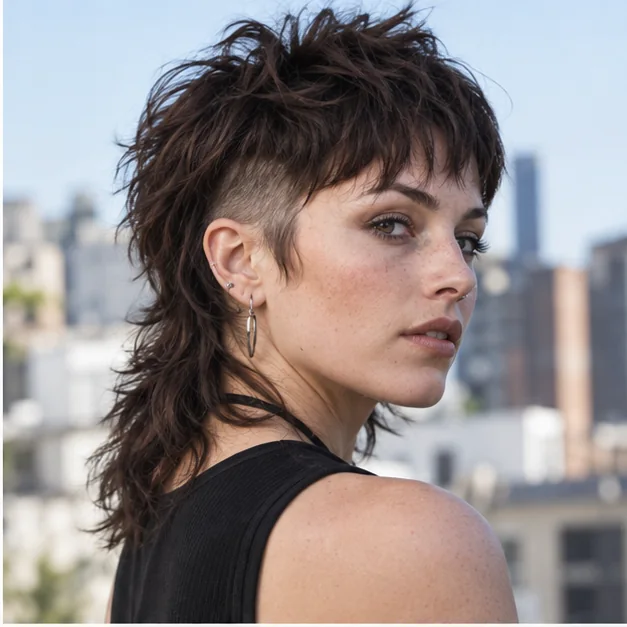
Shaved temple panels create a bold break beneath a longer textured crown and a substantial nape section. The exposed sides emphasize cheekbones, reduce bulk around the ears and give the wearer a fearless, clean-lined feeling that works especially well with dense hair. This is a high-commitment option: the shaved areas need frequent cleanup and are visible during grow-out. Ask for narrow temple undercuts rather than removing the whole side, with enough top length to fall forward or back and a broad nape panel; maintain the clippered sections every three to five weeks.
Ask your stylist for: Narrow temple undercuts beneath a versatile textured top, paired with a broad retained nape panel.
15. Razor-Textured Punk Mullet
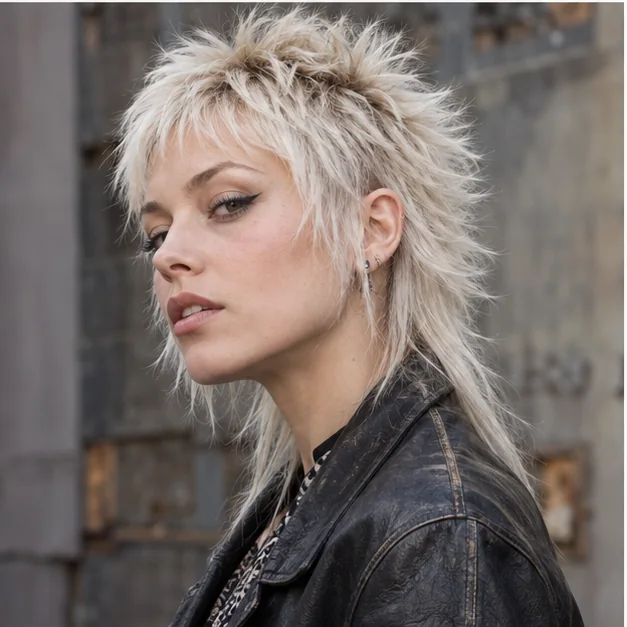
A punk mullet exaggerates spiky crown texture, broken side pieces and a narrow, deliberately ragged nape. The strong vertical lift can elongate the face and creates an energetic, rebellious mood that looks expressive even with simple clothing. Healthy medium-to-thick hair supports the razor texture best; fragile or very fine ends may look depleted instead of intentional. Ask for a highly disconnected crown, irregular temple pieces and a narrow tail with visible separation, then use dry texture paste at the roots and selected tips rather than stiffly coating every strand.
Ask your stylist for: A highly disconnected, razor-textured crown with irregular temple pieces and a narrow separated nape.
16. Rounded Mullet for an Oval Face
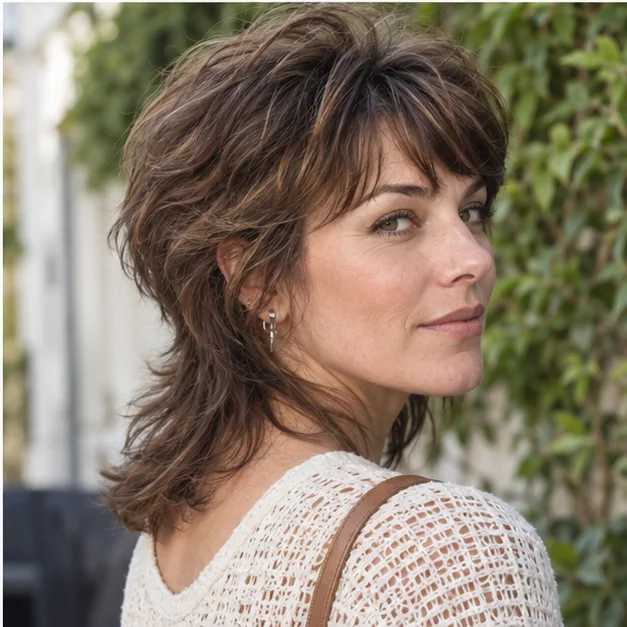
A rounded mullet builds soft width at the temples and crown before narrowing into a collar-length back, creating a balanced hourglass profile. On an oval face, the fullness avoids unnecessary lengthening and brings attention outward toward the eyes while the rear section keeps the cut modern and spirited. It works beautifully on loose waves, but over-rounding can make thick hair feel bulky. Ask for curved temple layers, a softly domed crown and a tapered transition into the longer nape; style with a diffuser or large brush and keep the ends touchable.
Ask your stylist for: Curved temple layers, a softly domed crown and a tapered transition into a collar-length nape.
17. Side-Swept Mullet for a Round Face
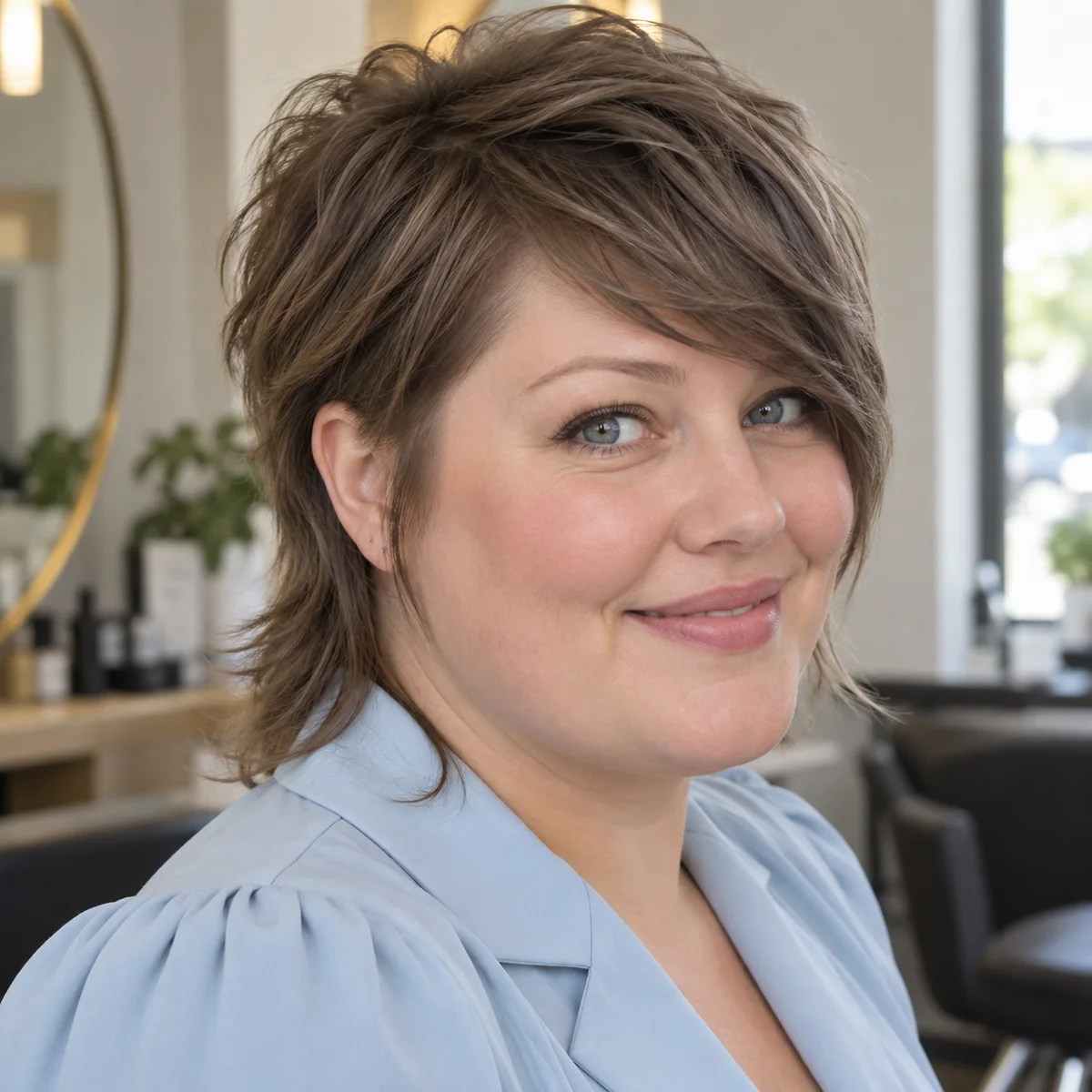
A deep side sweep creates diagonal movement across the forehead while lifted crown layers and slimmer sides lead into a longer nape. Those vertical and diagonal lines can visually lengthen a round face, reveal one cheekbone and give the cut an elegant rather than overly cute impression. The side fringe should stay light enough to move, and excessive width beside the cheeks works against the effect. Ask for an off-center fringe ending near the cheekbone, crown height, close-but-not-shaved sides and a collar-length back; flip the roots opposite the part while drying.
Ask your stylist for: A cheekbone side fringe with lifted crown, streamlined sides and a collar-length back panel.
18. Mullet With Bottleneck Bangs
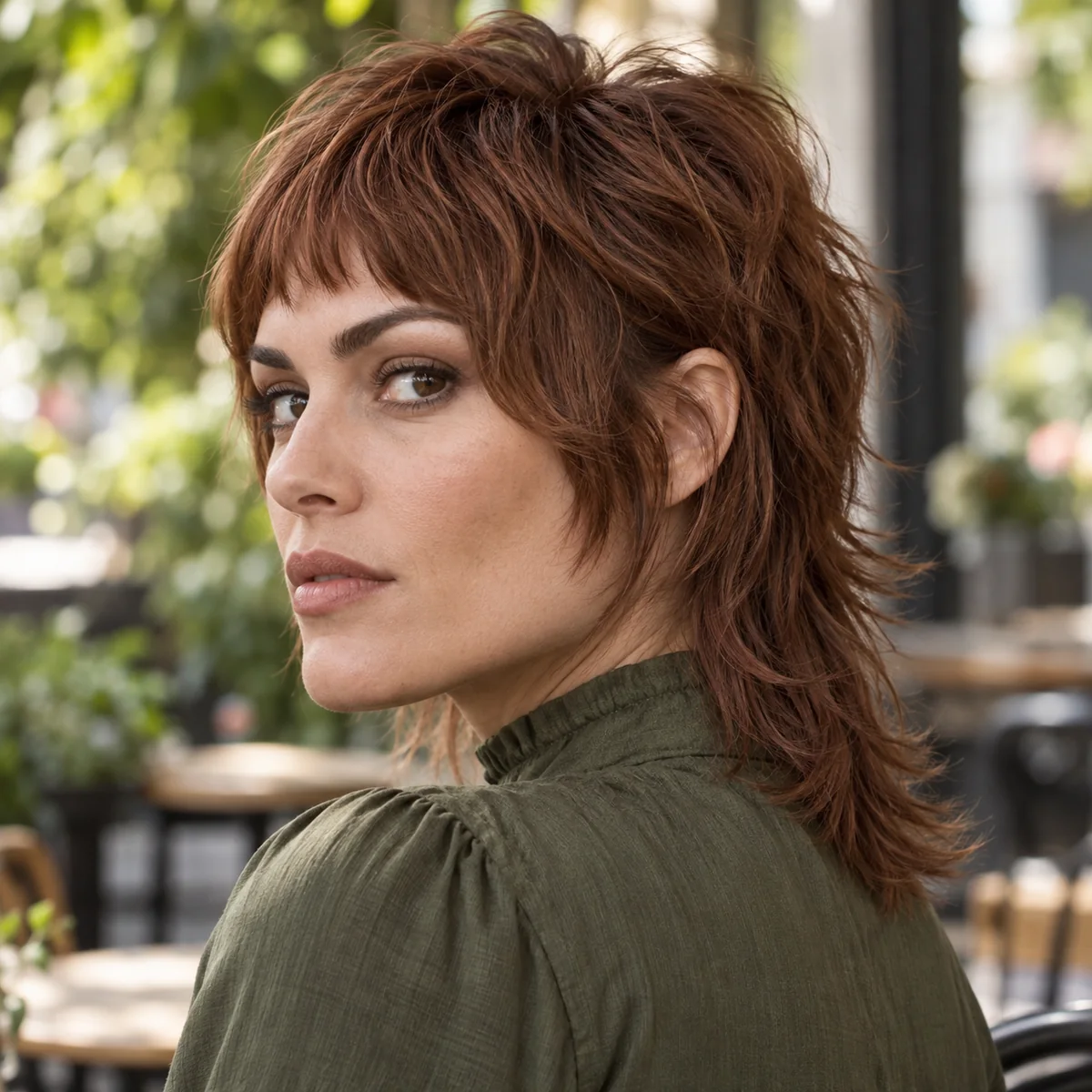
Bottleneck bangs sit shorter through the center and curve longer beside the eyes, flowing naturally into textured mullet sides and a longer back. The fringe narrows the forehead, spotlights the eyes and makes a bold silhouette feel romantic and approachable. It is forgiving as it grows, although the center pieces still need regular dusting to stay open. Request a shallow bottleneck fringe, cheek-hugging outer pieces, an airy crown and a clearly retained nape; dry the bangs forward first, then split and curve them away with a medium brush.
Ask your stylist for: A shallow bottleneck fringe with cheek-hugging outer pieces, airy crown layers and a retained nape.
19. Sleek Wet-Look Mullet
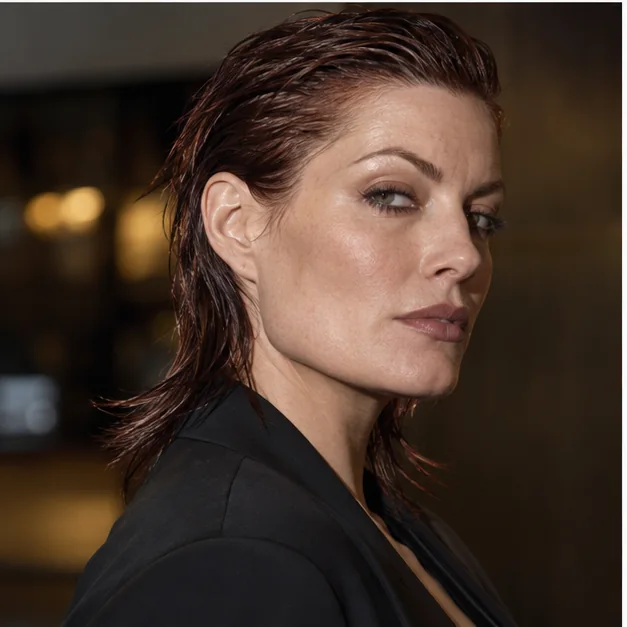
The wet-look mullet combs shorter side and crown layers close to the head while the longer back remains separated and glossy. Removing surface fluff reveals the cheekbones, ears and exact profile, creating a dramatic evening finish that can make even a softly cut mullet feel runway-ready. This is a styling option rather than a separate cut, and too much gel can look stiff or greasy in daylight. Start with a blended modern mullet, then rake a flexible wet-finish cream from roots through midlengths while leaving controlled movement at the nape.
Ask your stylist for: A blended modern mullet with enough side length to slick close and a defined longer nape for separation.
20. Growing-Out Modern Mullet

A growing-out mullet keeps the nape near the shoulders while the sides reach the jaw and the former crown layers settle into a soft shag-like shape. Strategic connection prevents a hollow step, so the transition feels relaxed and intentional instead of like an abandoned haircut. This stage offers tuckability and fewer trims, which can feel reassuring when you are ready for change without losing the cut's personality. Ask your stylist to preserve back length, dust only damaged ends and connect the side corners gradually; use broad bends to blend the different lengths between appointments.
Ask your stylist for: Preserve shoulderward back length, dust the ends and gradually connect jaw-length sides without shortening the nape.
Before You Book the Appointment
A successful salon visit begins with the overall shape, construction and upkeep—not only the finished length. Use this quick reality check before choosing your final reference photograph.
- Best for: Anyone who wants crown lift, face-framing texture and a distinctive profile without losing all their length.
- Choose softer: For conservative workplaces, first-time mullets or an easy transition from a shag or layered bob.
- Choose bolder: For strong cheekbone emphasis, punk energy or a deliberately graphic short-front, long-back contrast.
- Be cautious with: Unplanned thinning at the sides, an overly narrow tail or layers that ignore your natural texture and growth patterns.
Modern Mullet, Wolf Cut or Shag?
A modern mullet emphasizes a shorter front and sides against a visibly longer nape. A wolf cut spreads choppy volume through the crown and usually keeps a fuller overall outline, while a shag graduates layers more evenly from fringe to perimeter. If the side profile does not show intentional rear length, the cut is probably closer to a shag or wolf cut.
Who Does a Modern Mullet Suit?
The shape is unusually adaptable because fringe, side width and nape length can be adjusted independently. Crown height and diagonal fringe can lengthen a round face; soft temple fullness can balance an oval or long face; curly and thick textures benefit from weight release; and fine hair needs fewer, better-placed layers with a stronger back perimeter.
What to Ask for at the Salon
Bring front, side and back references and name how bold you want the disconnection to look. Agree on the shortest crown point, whether the ears should show, the longest nape point and how much width to keep at the temples. Ask your stylist to explain how the plan differs from a wolf cut or shag on your own texture before cutting.
Styling, Maintenance and Grow-Out
Light mousse, sea-salt mist and flexible paste support texture without freezing it. Compact or shaved versions need reshaping every five to seven weeks; softer long mullets can stretch to eight or ten. During grow-out, preserve the back, connect the sides gradually and let the crown settle toward a shag rather than cutting everything blunt at once.
Choose Your Level of Contrast
Start with a soft blended mullet if you want movement and a new profile without a dramatic reveal. Choose a baby or office-friendly version for compact control, a curly or long mullet for expressive movement, or shaved and razor-textured options when bold contrast is the point. The right cut should feel like an extension of your routine and personality, not a dare you must style around every morning.