A pixie does not have to feel sharp or exposing. The loveliest versions for a round face use one small, reassuring trick—height at the crown, a diagonal fringe, a little extra length at the cheeks, or a soft texture that keeps the outline moving. The aim is not to hide your face; it is to give it a beautifully intentional frame.
These 20 ideas make it easier to choose the detail that feels most like you. Save the cuts you love, then use the stylist notes to explain the shape—not just the length—you are after.
Best for: fine to medium hair, straight through curly textures Styling effort: low to moderate Maintenance: reshape every five to eight weeks Main benefit: a soft, lifted silhouette with face-framing movement
1. Soft Pixie With a Side-Swept Fringe
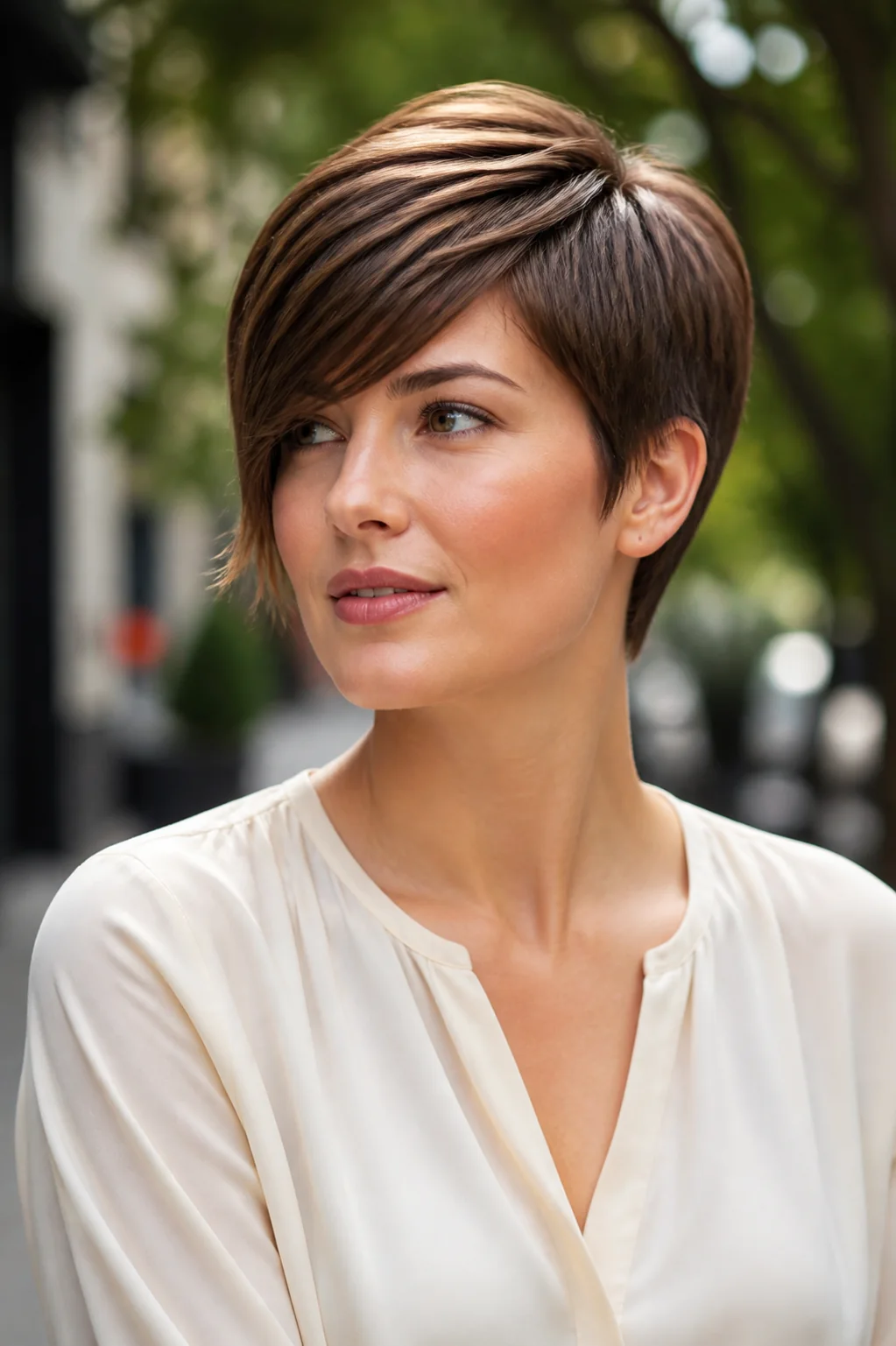
A long, diagonal fringe breaks up the width through the forehead and brings attention toward the eyes. Ask for a soft sweep rather than a stiff wave; it should look touchable when it falls slightly imperfectly. Best for anyone who wants the security of a little face coverage. Ask for a deep side part and enough fringe weight to avoid wispy gaps.
2. Airy Crown Pixie
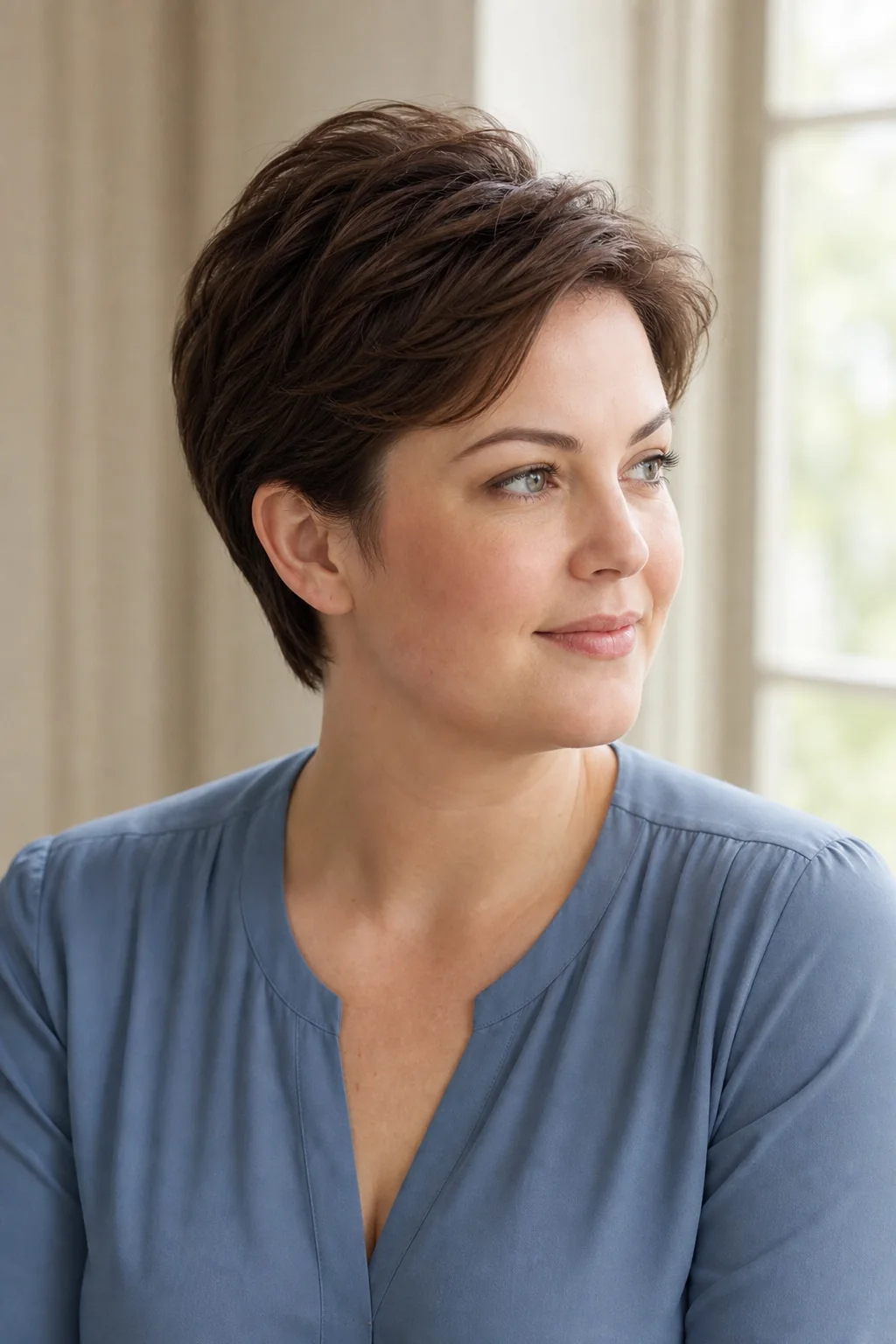
This cut uses gentle lift at the crown to create a longer visual line without making the hair look over-styled. Keep the sides soft and close, not tightly clipped. A quick root lift and fingertip drying are usually all it needs. Ask your stylist to preserve connected layers through the top so the volume looks like hair, not a helmet.
3. Longer-Front Soft Pixie
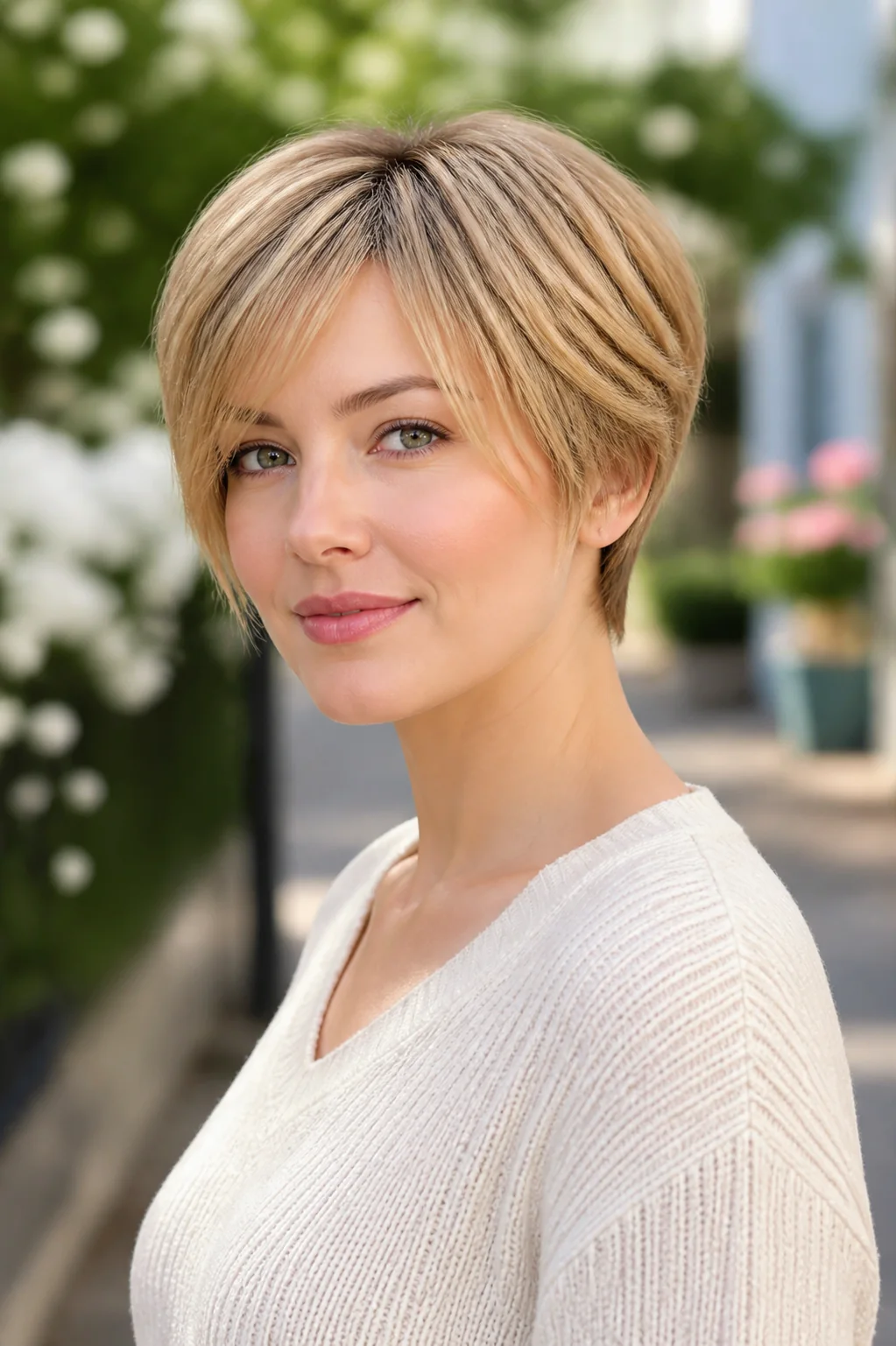
Longer pieces at the front skim the cheekbones and make a short cut feel wonderfully forgiving. The back stays neatly pixie-short, while the front gives you something to tuck, sweep or soften around the face. It is a graceful choice if you are moving from a bob and do not want an abrupt change.
4. Feathered Pixie With Wispy Bangs
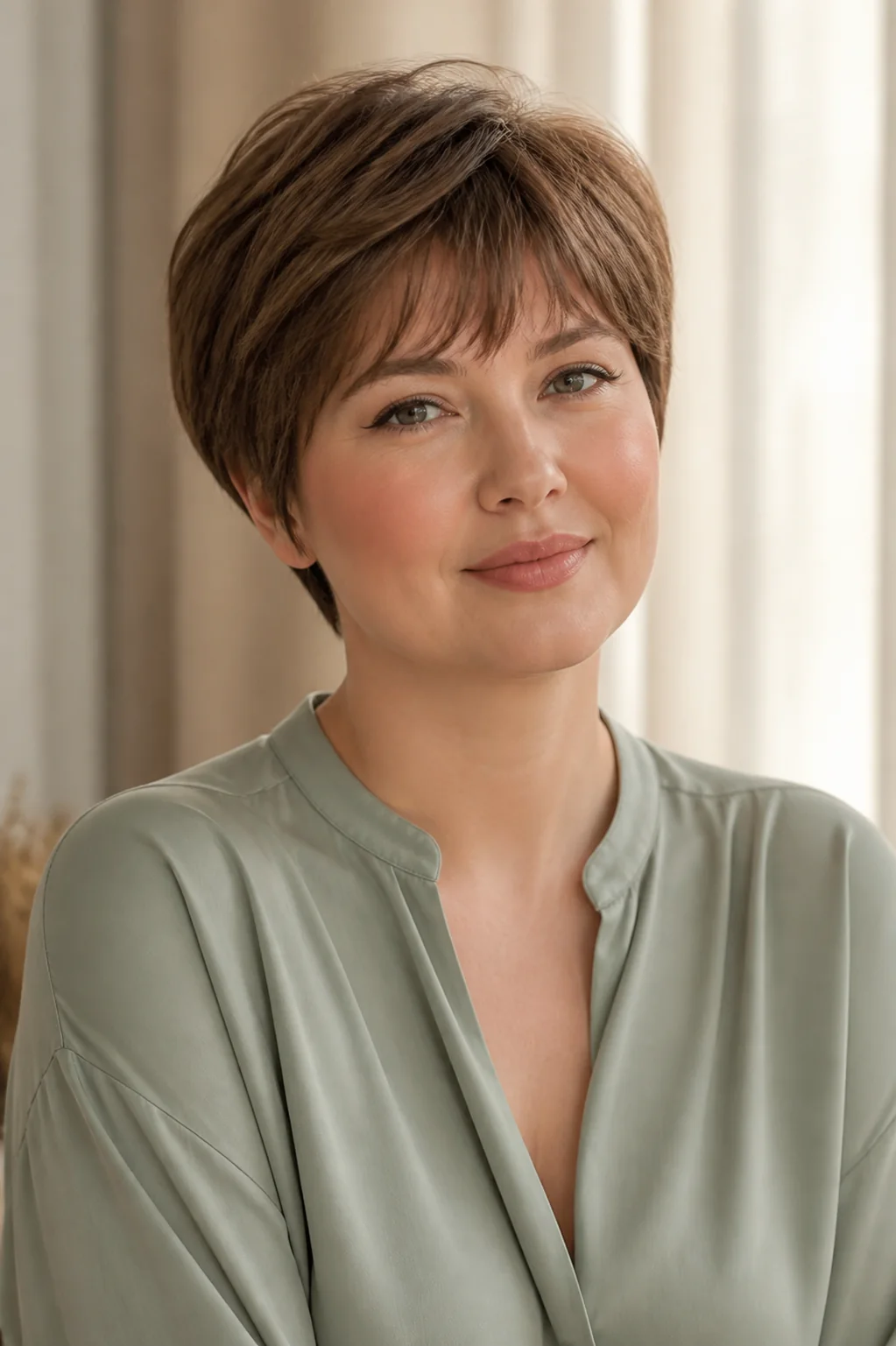
Feathered tips soften the forehead without laying down a heavy horizontal line. The secret is density behind the fringe: wispy should describe the ends, not the amount of hair. This style feels light, romantic and especially pretty when you prefer a little movement around the eyes.
5. Deep Side-Part Pixie
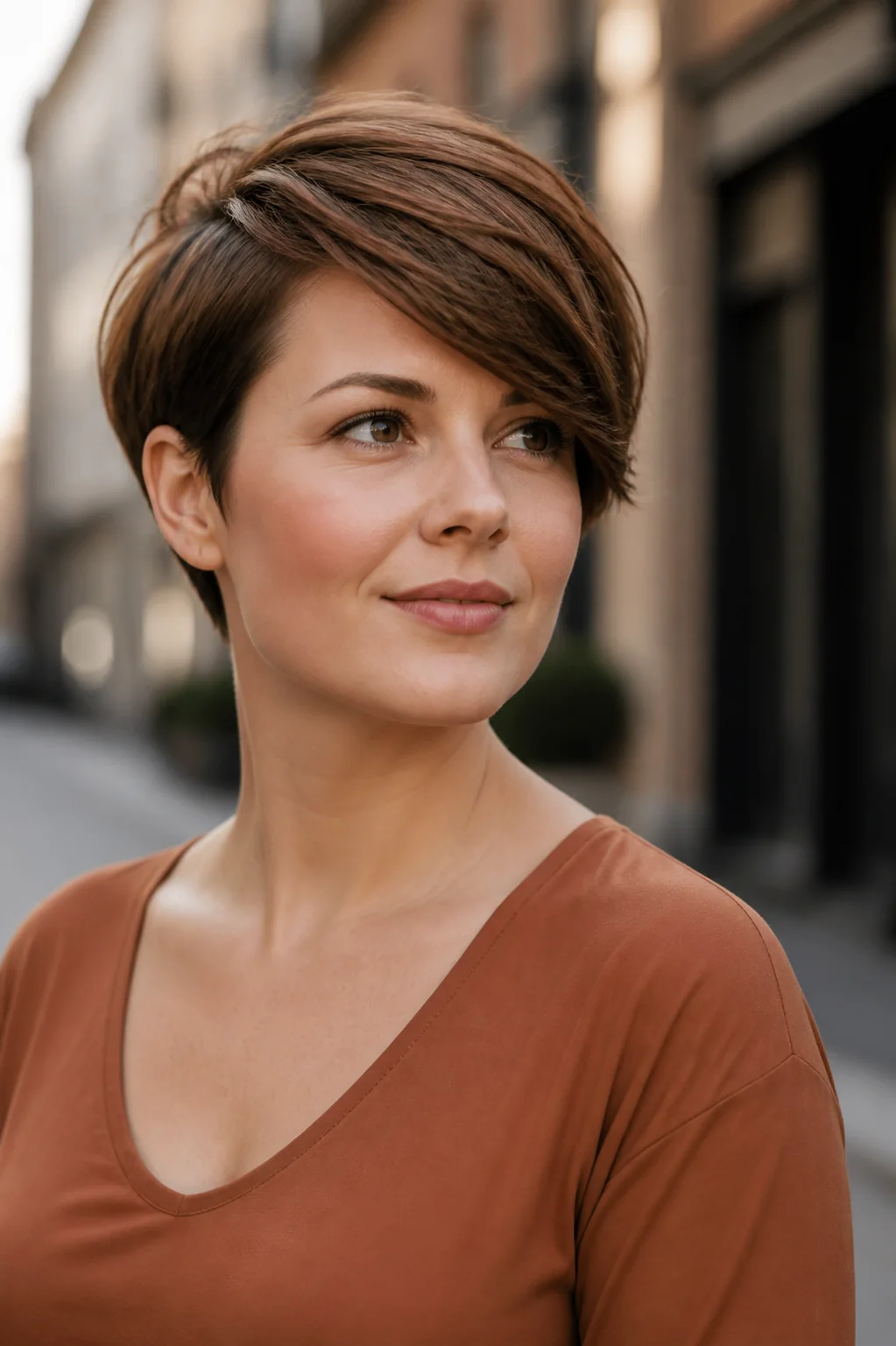
A deep part instantly adds asymmetry, which is often more flattering than trying to create width everywhere. Let one side sweep across while the other follows the head closely. It is polished enough for work, but loosens up beautifully with a small amount of flexible cream.
6. Textured Crown Pixie
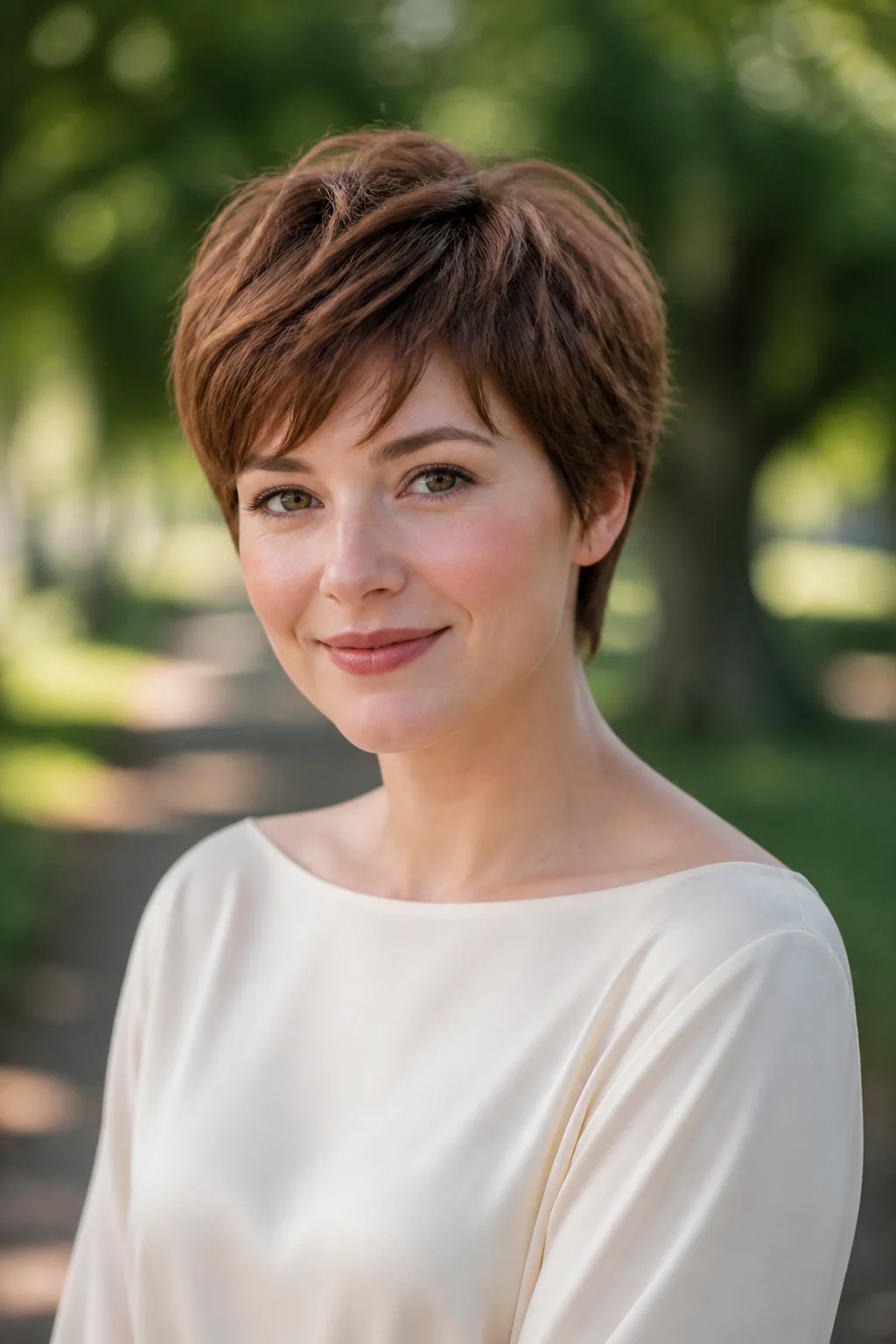
Piecey crown texture creates lively dimension while a soft perimeter keeps the cut approachable. This is a good option for hair that falls flat when it is cut too smoothly. Use a pea-sized amount of matte paste only at the ends; too much product can make fine hair separate.
7. Ear-Skimming Soft Pixie
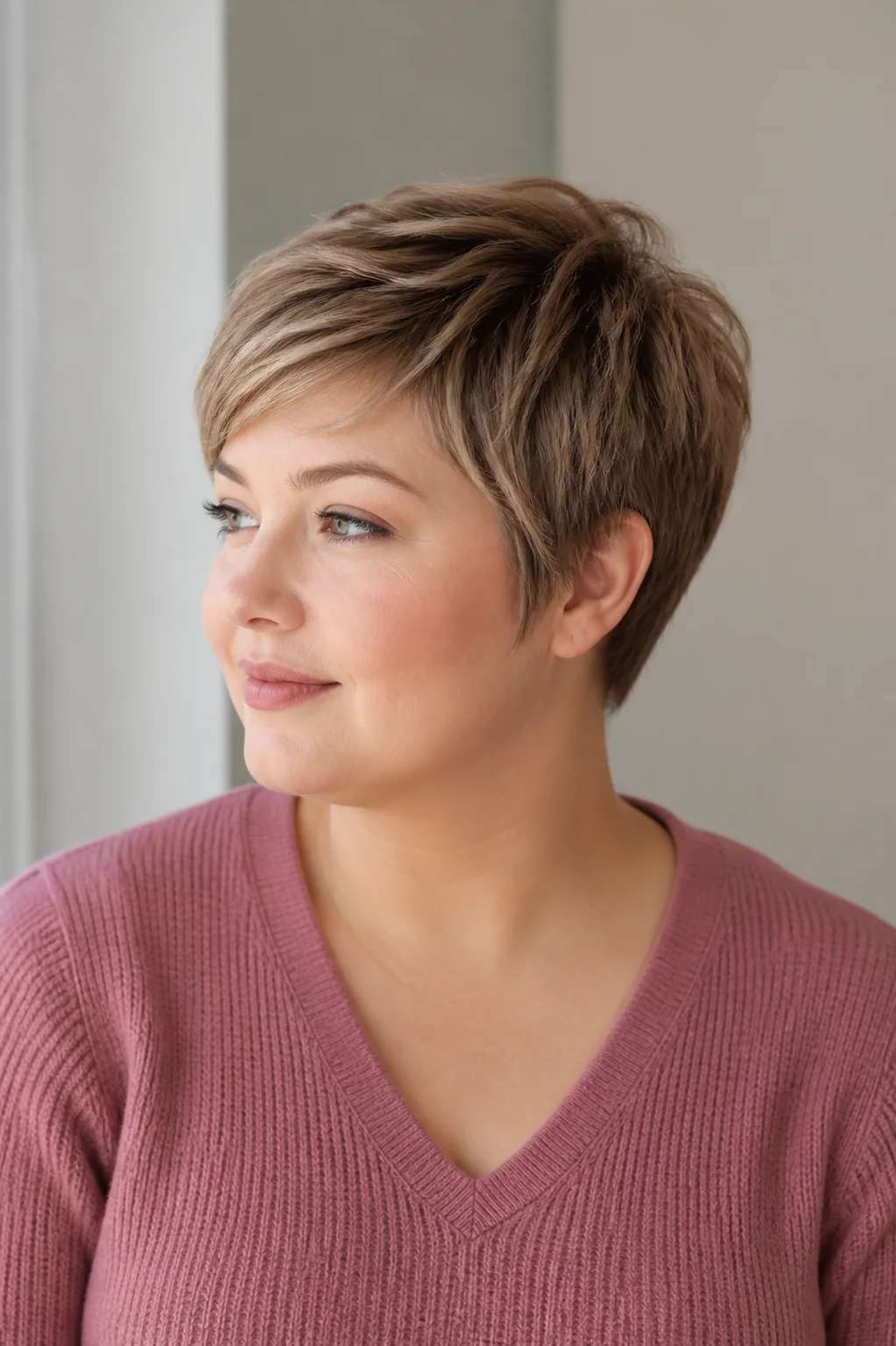
Leaving a little length around the ears softens the jaw and makes the transition into short hair feel less exposed. The longer sides must connect to the crown, otherwise they can look stringy. It is one of the most wearable options for a first pixie.
8. Wavy-Top Pixie
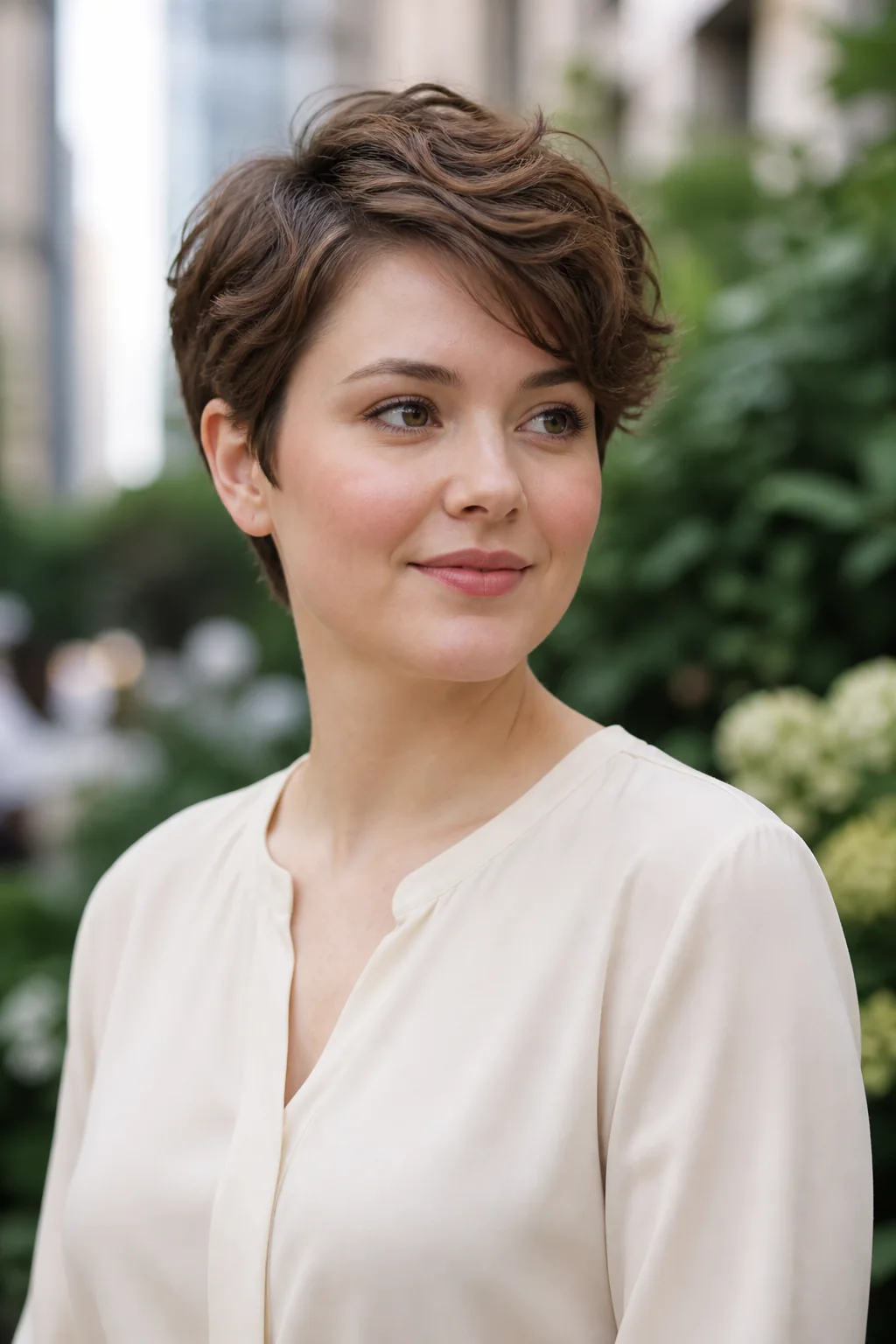
Natural bends through the top lend softness that a perfectly straight pixie cannot fake. Keep enough length for the wave to form, then diffuse gently and avoid brushing it smooth. This cut feels relaxed, creative and flattering without demanding a precise finish every morning.
9. Rounded Soft Pixie
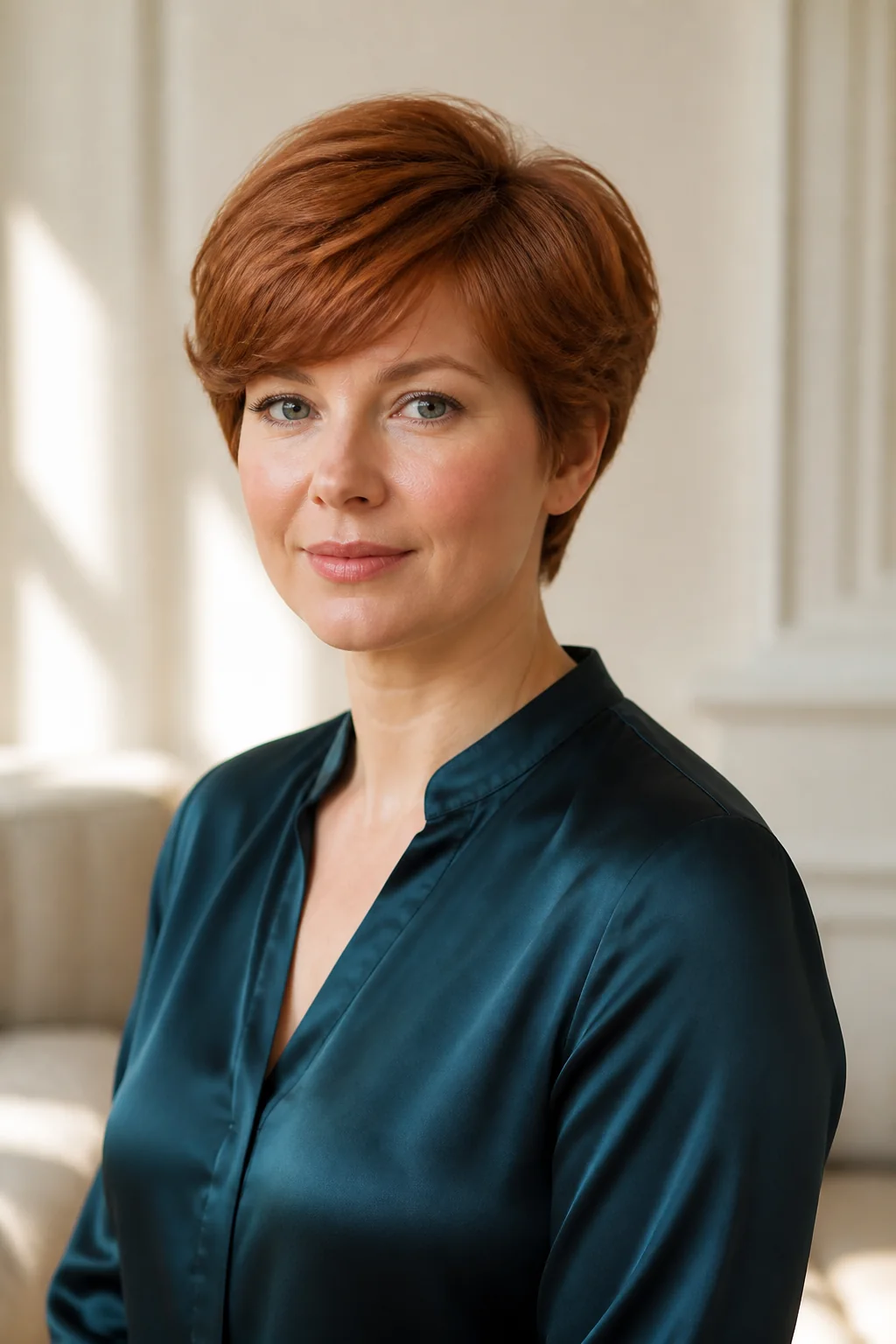
A rounded silhouette creates a calm, elegant frame around the head. Connected layers give the shape visual substance, while soft curves keep it from feeling severe. Choose this if you love a classic, quietly polished finish more than deliberately messy texture.
10. Asymmetrical Swept Pixie
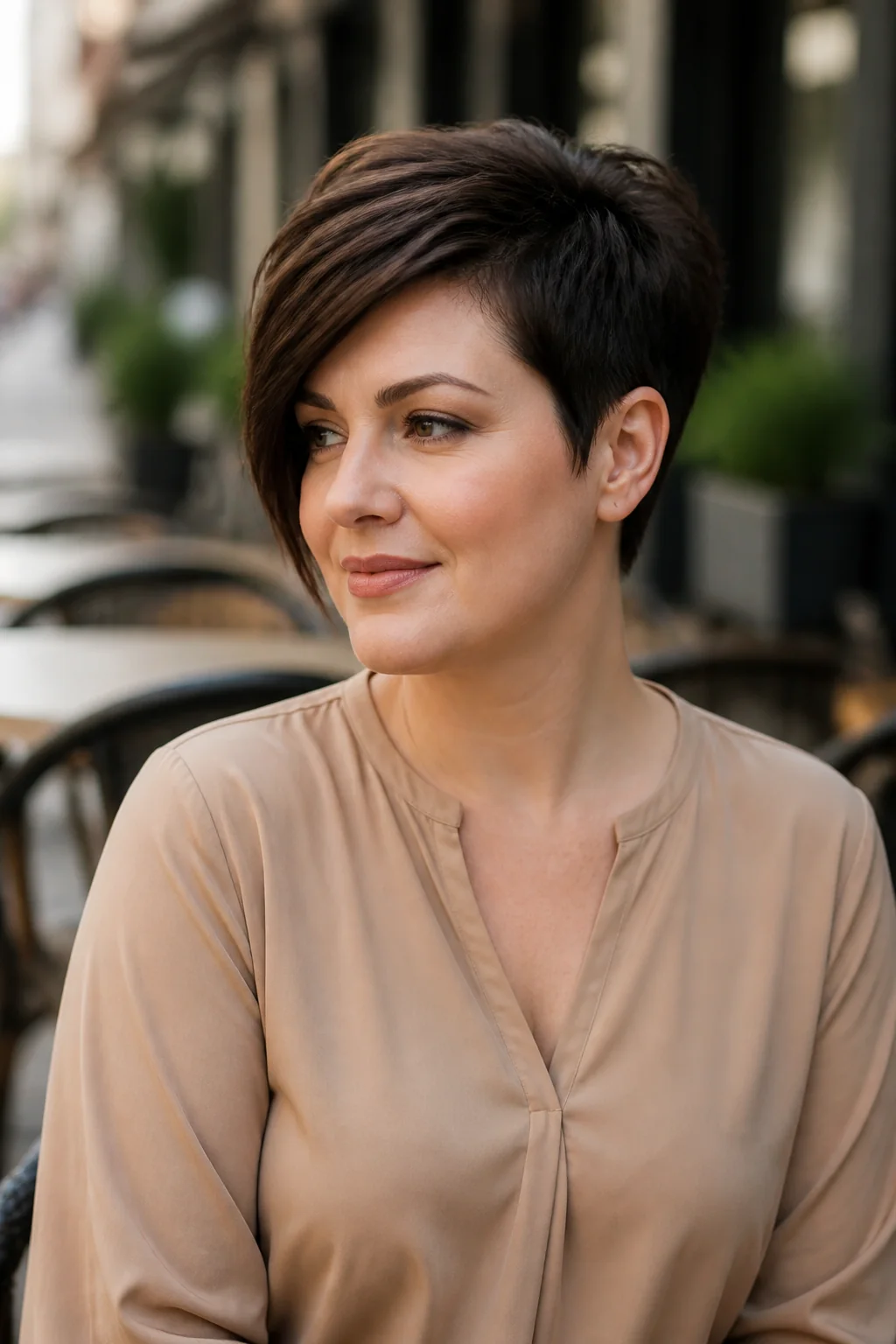
One longer front panel creates a confident diagonal across the face. It gives the eye a strong line to follow and can make a fuller face feel more sculpted without sacrificing softness. Ask for a connected long front, rather than an undercut that makes the contrast too harsh.
11. Curly Pixie With a Soft Fringe
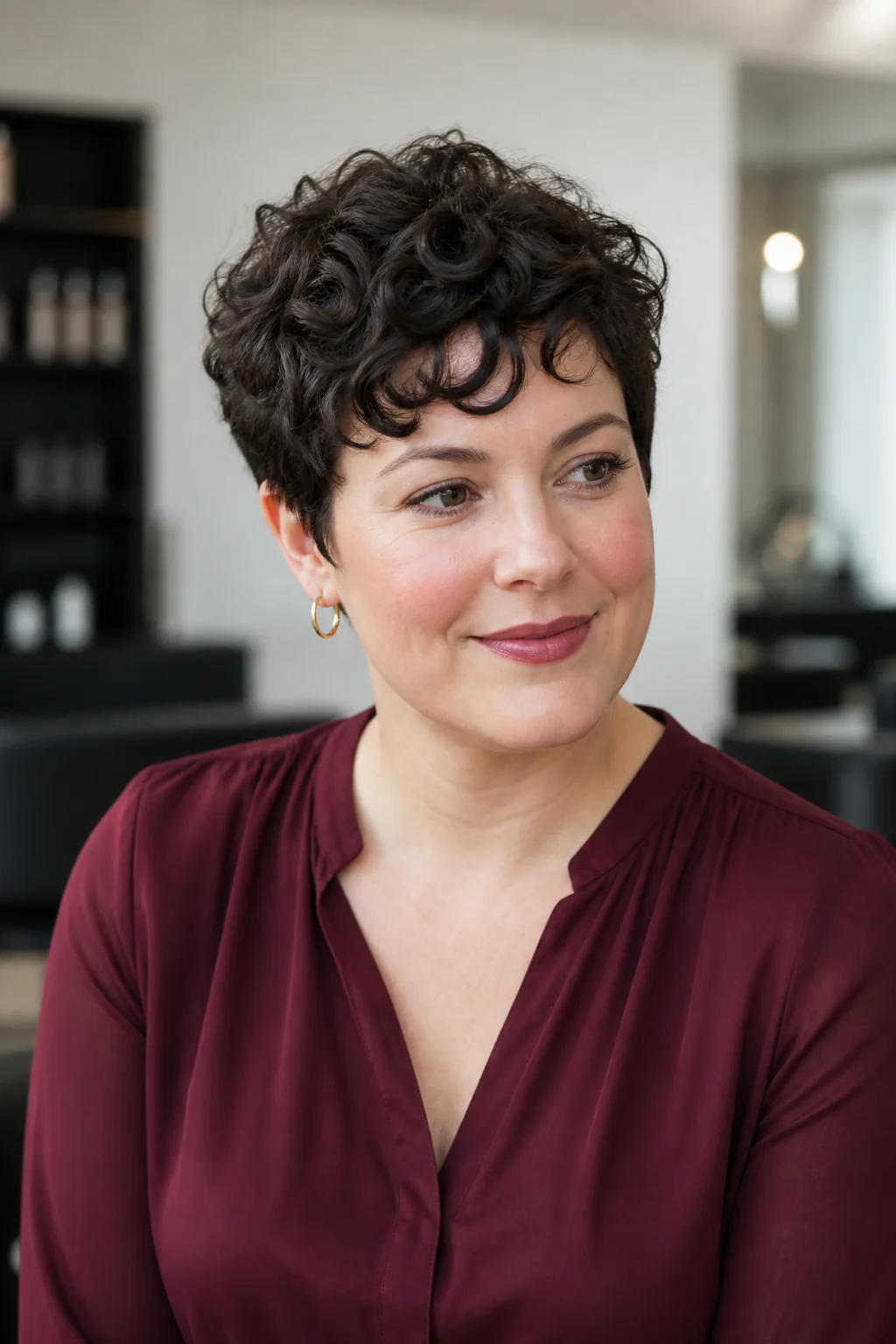
Curly hair can make a pixie feel wonderfully plush. A light curl-forward fringe and gentle height at the crown keep the outline balanced. Ask your stylist to cut with your curl pattern in mind and leave enough length for spring-back; a too-short fringe is difficult to soften.
12. Soft Silver Layered Pixie
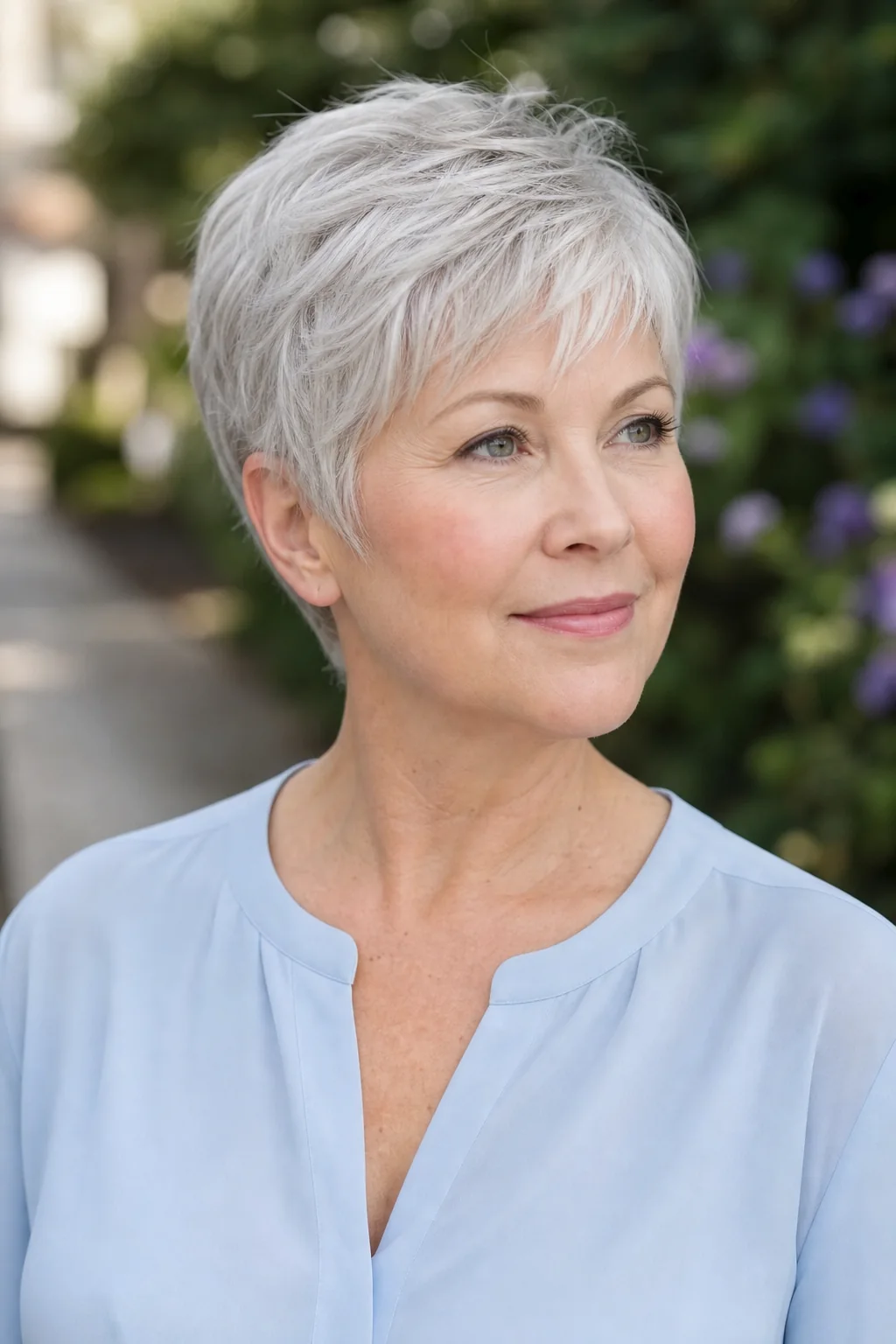
Silver and gray hair naturally reveal layers, so a softly textured pixie can look dimensional with very little product. Keep the sides scissor-soft and let the crown lift subtly. This is modern, bright and expressive—never merely practical.
13. Pixie With Piecey Sideburns
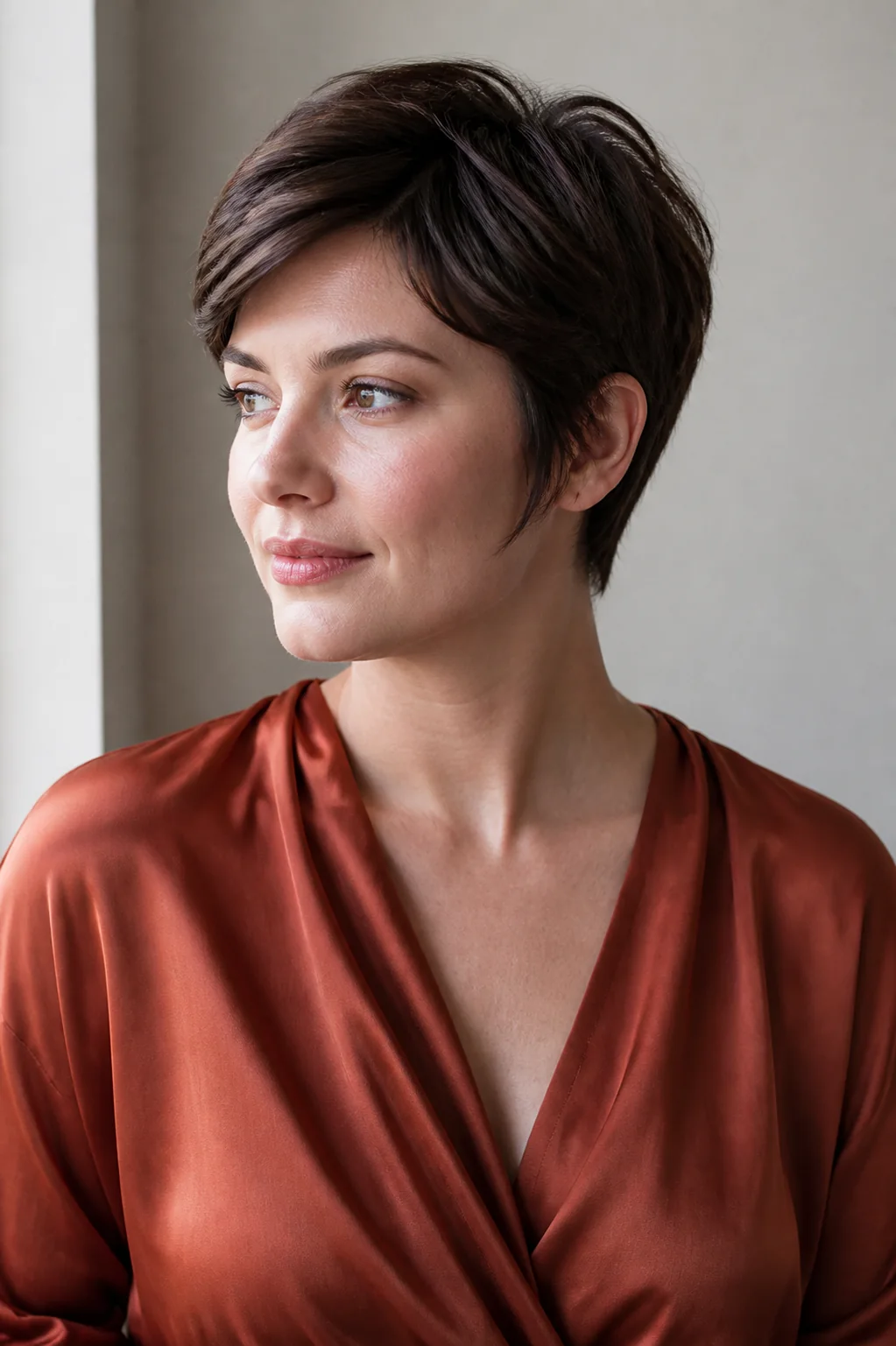
Delicate sideburn pieces add a small but useful frame beside the cheeks. They work especially well with a soft side part and can make a cropped cut feel gentler around the face. Keep them intentional and tapered, not thin, disconnected wisps.
14. Soft Voluminous Quiff
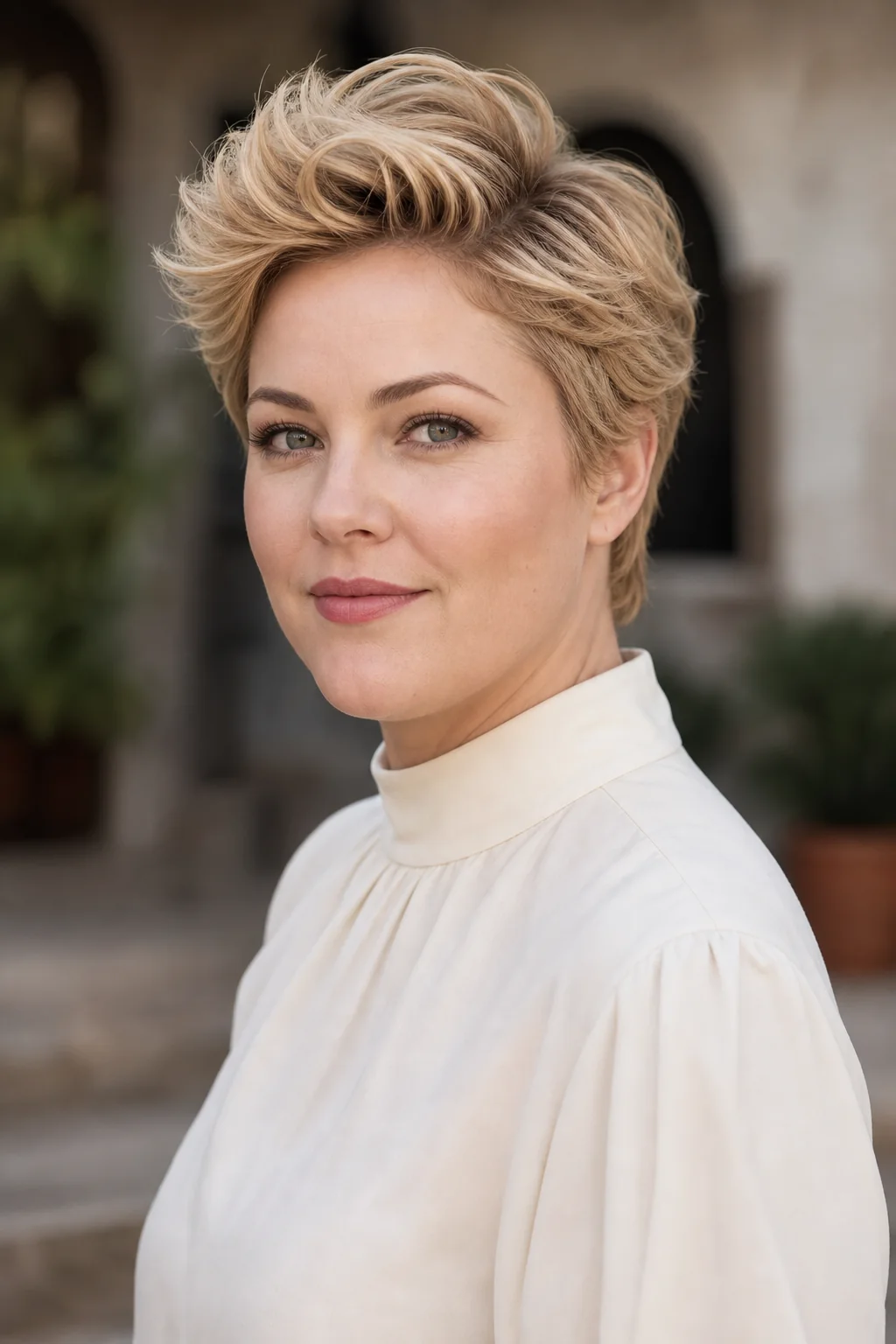
For a little more drama, direct the top upward and back into a loose quiff. The height elongates the silhouette, while soft sides stop it feeling too rockabilly. It is a lovely occasional change for a pixie you normally wear casually.
15. Tapered-Nape Pixie
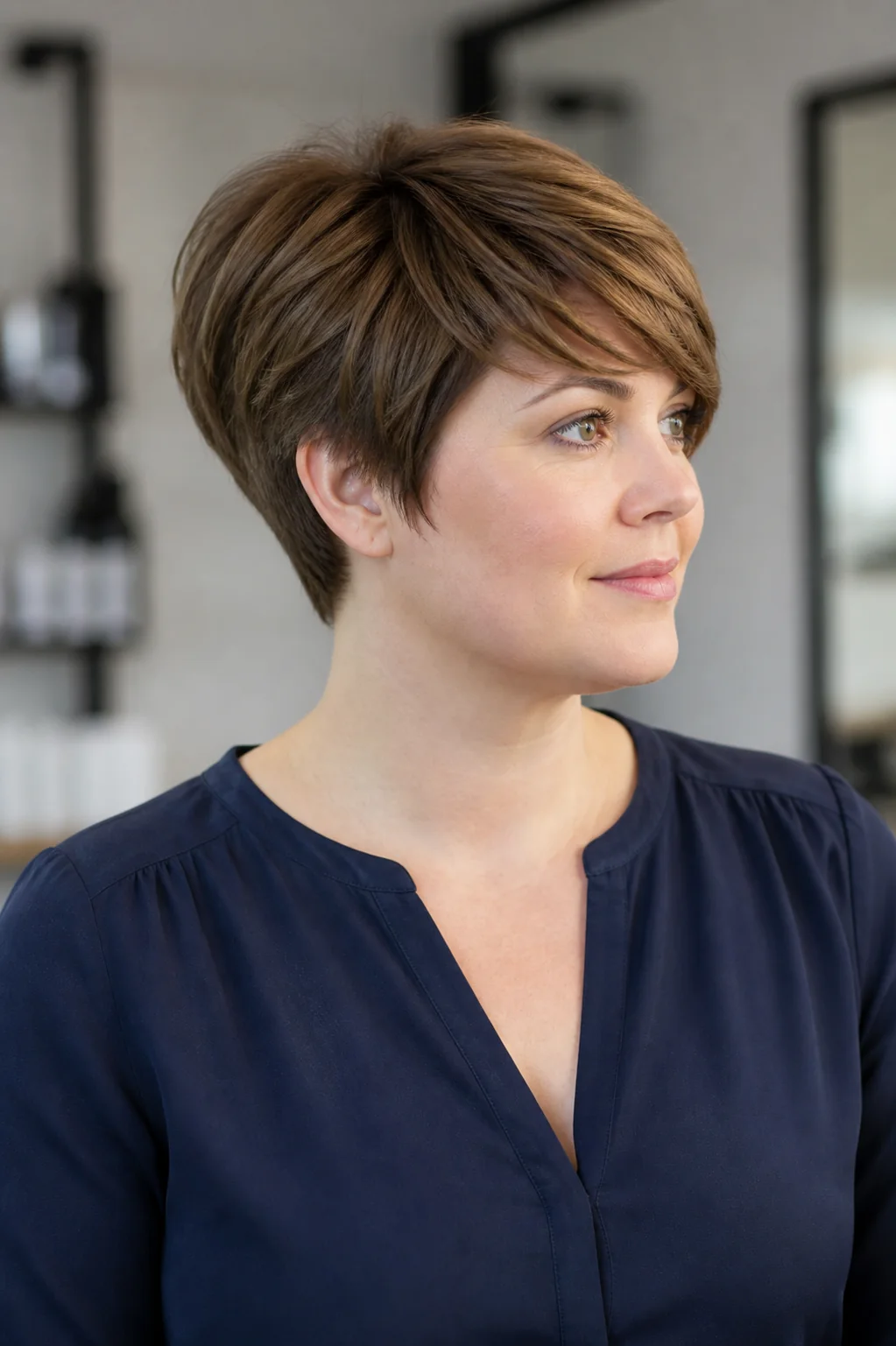
A softly tapered nape keeps the back tidy while allowing the top and fringe to stay feminine. The contrast should be gentle: think tailored rather than buzzed. This is ideal when you want easy everyday upkeep but still enjoy movement around the front.
16. Pixie With a Curtain Fringe
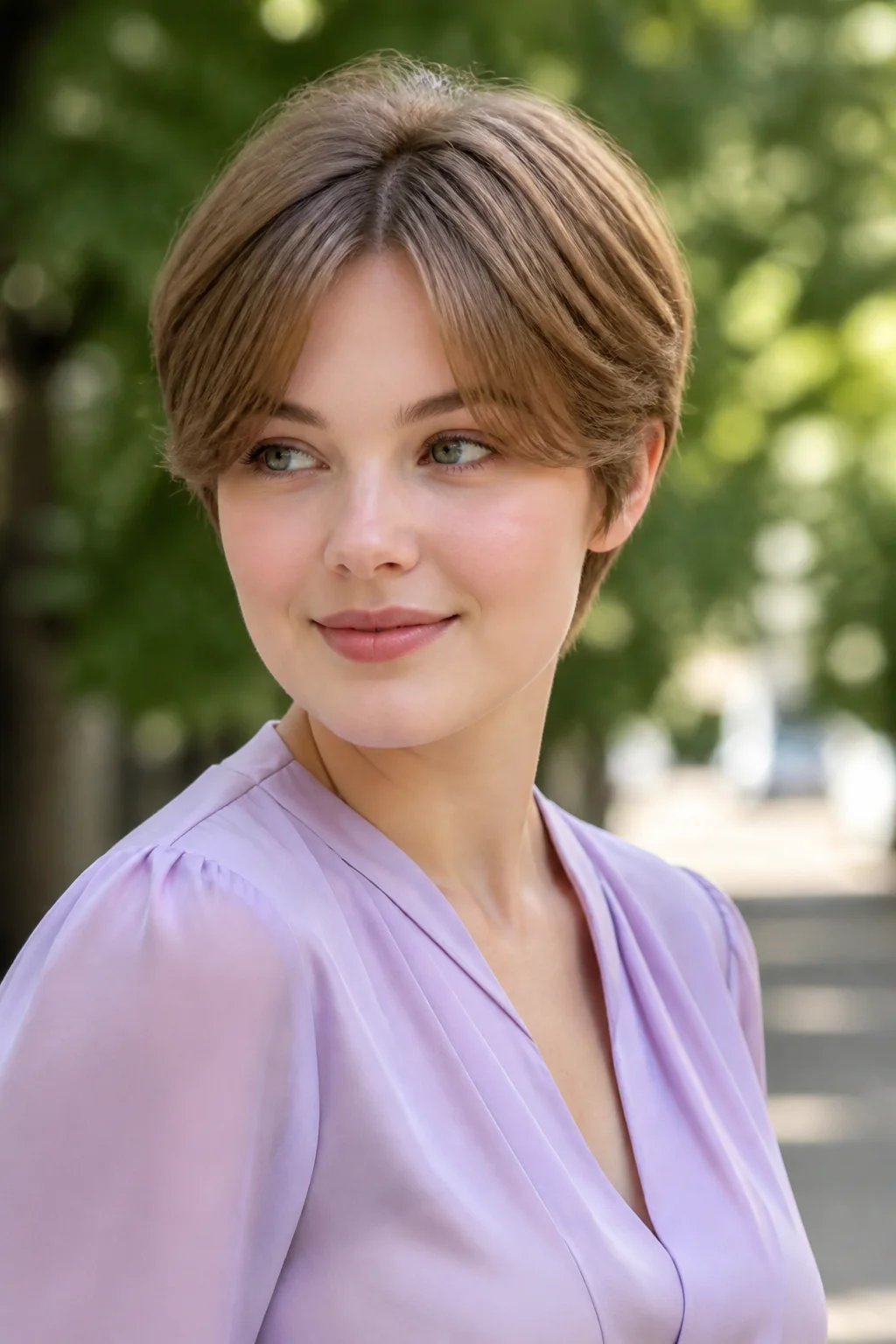
A tiny, parted curtain fringe opens the center of the face while curving softly toward the cheekbones. It offers a lighter alternative to a full bang and works beautifully with a slightly longer, airy crown. Ask for a fringe that can part naturally rather than being forced into a fixed center line.
17. Soft Undercut Pixie
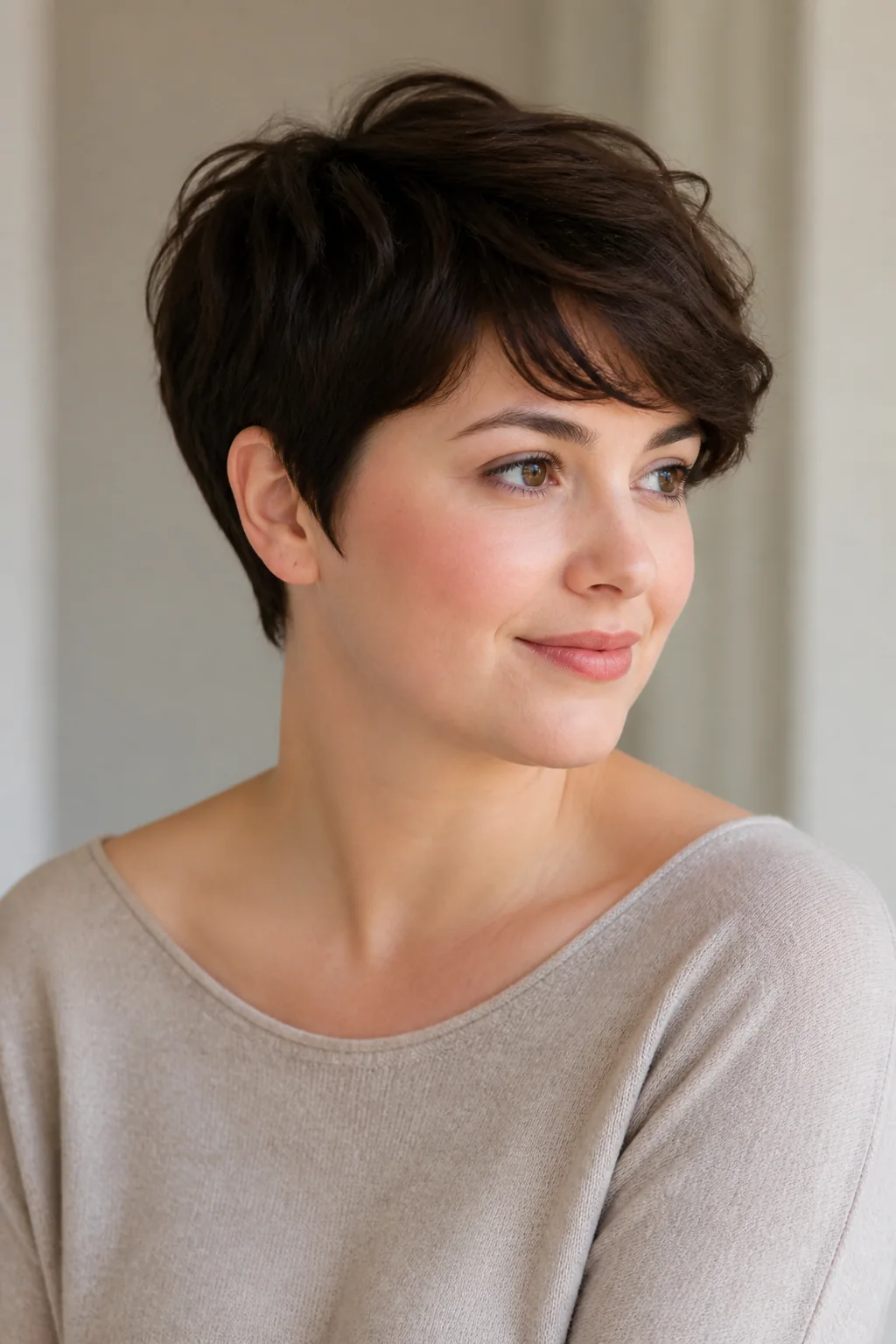
An undercut can still be soft when it is hidden beneath longer, touchable top layers. It removes bulk at the nape while leaving a flattering sweep over the upper face. This is best for thick hair or anyone who likes a cleaner, cooler feel at the back.
18. Choppy-Top Soft Pixie

Short, broken-up top layers bring a playful lift to a simple pixie. Keep the outer edge softer than the crown so the cut does not become boxy. A little dry texture spray is enough to show off the movement without making the hair crunchy.
19. Sleek Side-Sweep Pixie
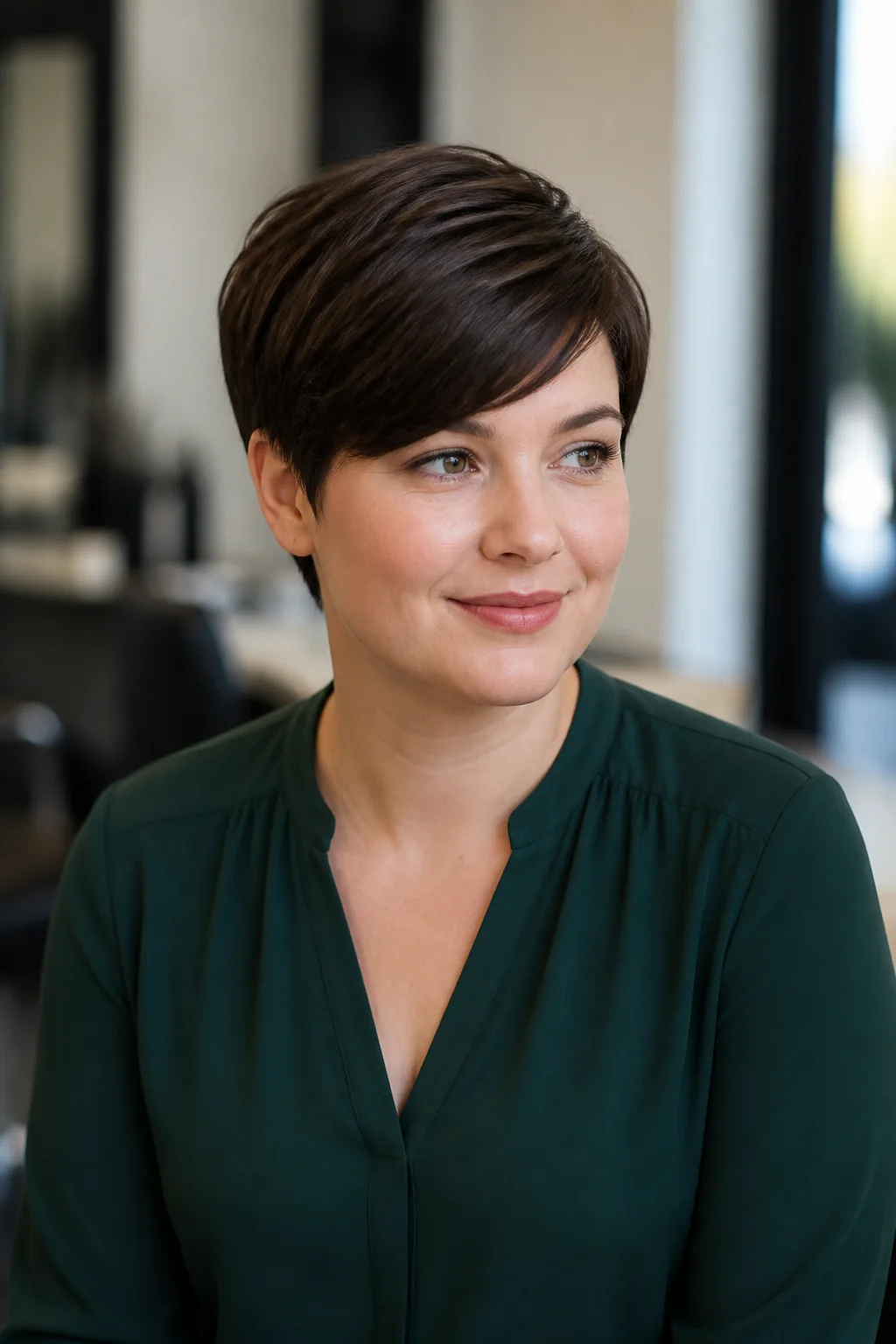
If you prefer polish, smooth the longer top diagonally across the forehead and keep the sides neat. The angle supplies the flattering effect; you do not need exaggerated volume. Blow-dry the fringe in the opposite direction first, then guide it back for natural root lift.
20. Soft Grown-Out Bixie
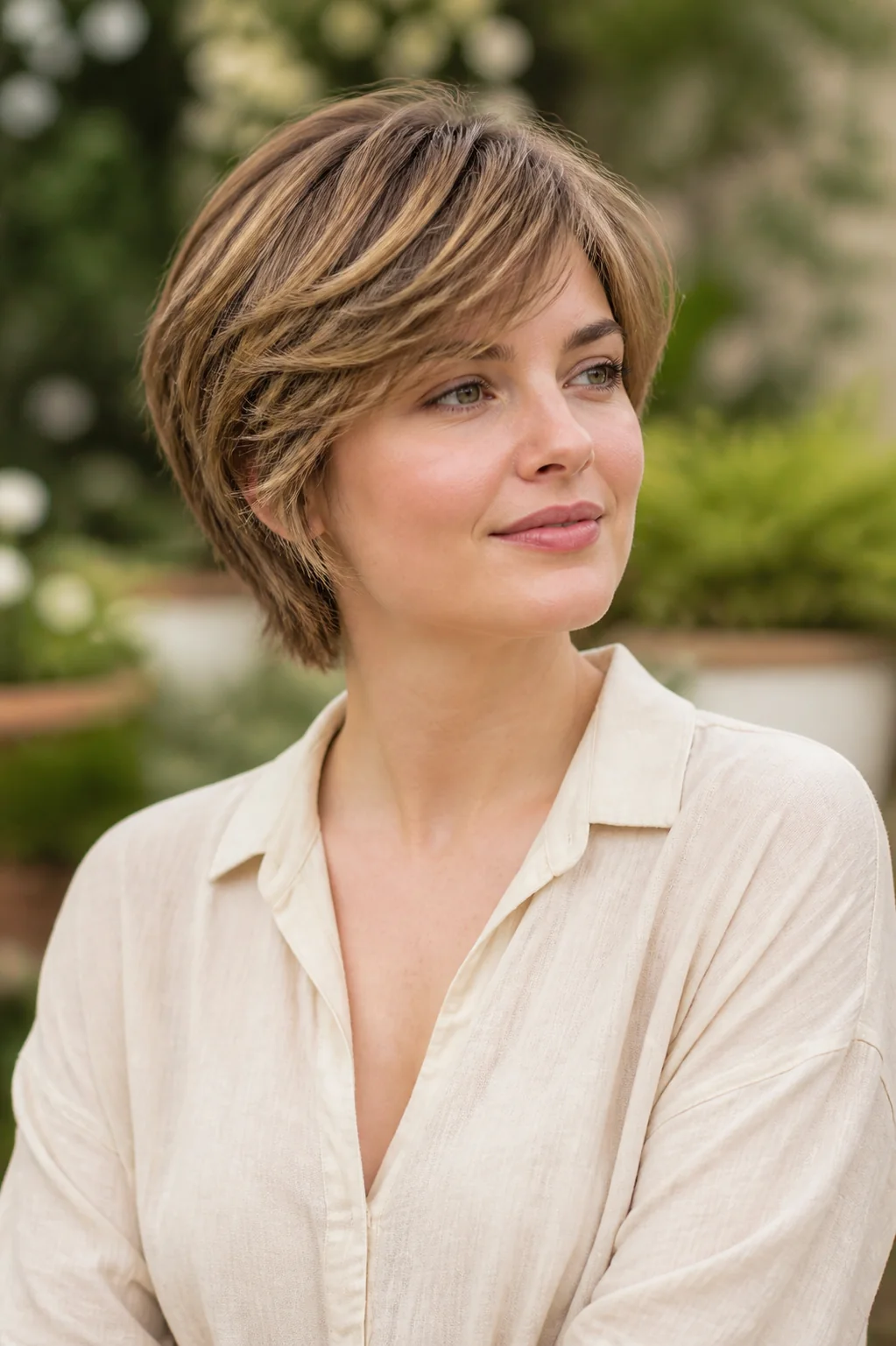
This pixie-bob hybrid leaves extra softness at the ears and nape, with enough crown layering to stop it collapsing. It is an excellent choice if you value a forgiving grow-out or want to test short hair gradually. The result feels effortless, feminine and easy to personalize.
What to Ask Your Stylist For
Bring images that show the front, side and back of your favorite shape. Say whether you want more height, a diagonal fringe, cheekbone-skimming length or a softer grow-out. Your stylist can then adapt the same idea to your density, curl pattern and hairline.
How to Style a Soft Pixie
Start with damp hair, use a light root product only where you want lift, and dry with your fingers in the direction you want the shape to sit. Let the hair cool before separating a few ends with a flexible cream or paste. Soft pixies look best when some pieces stay connected.
Choose the Shape You Will Enjoy Wearing
The most flattering pixie is one you will actually style and love. If you keep returning to the side-swept looks, choose movement. If you love the airy crowns, ask for lift. Save the photograph that makes you feel more like yourself—not less—and let that be the deciding factor.