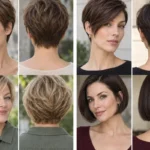
If you love the fresh feeling of a short cut but wonder where the ends should land, chin length gives you a useful reference point. A chin-length haircut ends around the jaw or chin when dry; on a long or oblong face, its side shape and fringe can bring attention across the cheekbones rather than only up and down. This is not a rule that your face needs fixing. It is a way to choose the silhouette you enjoy: a bob has a more continuous outer edge, while a short shag breaks that edge into obvious layers and a lob falls below the chin. These twenty options show how one length can feel sleek, soft, playful or relaxed without promising every version suits every texture or routine.
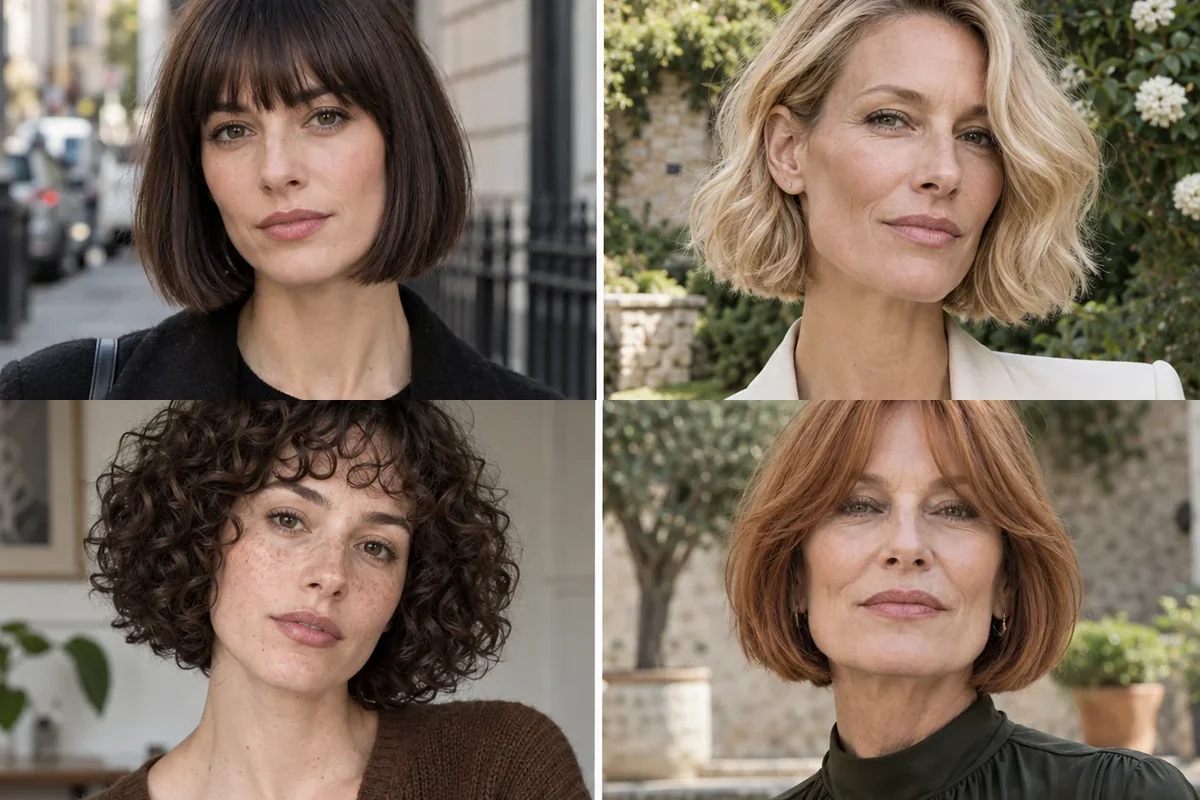
Find the one that feels like you: Start with the first look and let the photographs lead. Each style explains how the shape affects your features, the mood it creates and the exact words to take to your stylist.
Quick Facts
- Judge finished length when dry, especially if waves or curls spring above the chin.
- For a wider visual frame, place movement near the cheeks or jaw rather than only at the crown.
- A fringe can change the impression quickly, but discuss daily styling and grow-out first.
- Save a reference with texture and density similar to yours and agree on the shortest acceptable front piece.
1. Blunt Chin Bob With Brow Bangs

A solid bob line lands at the chin while soft, brow-skimming bangs make a second horizontal frame above the eyes. Together those edges draw attention to the eyes and jaw and can give a long face a deliberate, balanced impression without hiding its character. It feels polished enough for work but gently expressive when the fringe has a little separation. Ask for a level chin perimeter and bangs cut to skim the brows when dry, with softness at the tips rather than a rigid block. Blow-dry the fringe first with a small brush; expect to trim it more often than the bob.
Ask your stylist for: Keep a strong dry chin-length perimeter and soft brow-skimming bangs, with no high stack.
2. Side-Parted Bob With Cheek-Level Waves
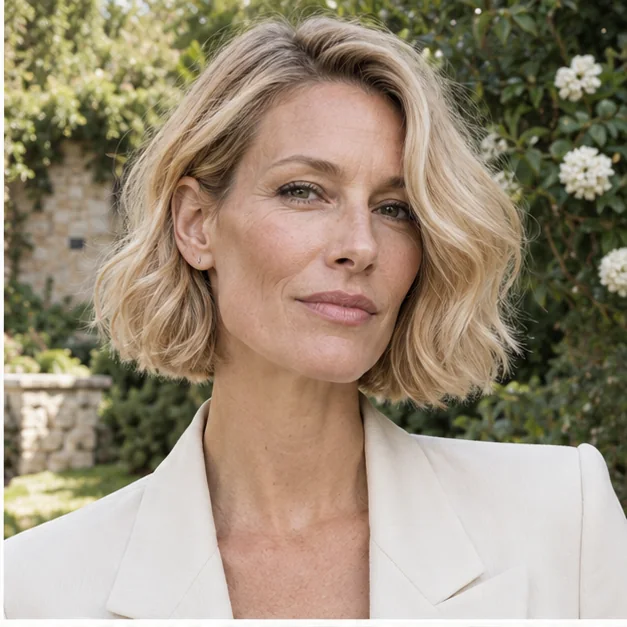
A loose side part sends one section over the forehead, while bends open outward around the cheekbones before the ends reach the chin. That width near the middle of the face makes the outline lively rather than narrow; the movement also keeps the cut from looking too formal. It is a relaxed, confident choice if your hair has a natural wave and you prefer a little imperfection after air-drying. Ask for a chin-length bob with weight preserved at the ends and minimal internal layers through the sides. Scrunch in light mousse, then leave the dry waves alone instead of brushing away their shape.
Ask your stylist for: Leave a weighty chin-length edge and just enough interior movement for cheek-level waves.
3. Rounded Curly Bob With a Soft Fringe

Springy curls form a rounded shape beside the cheeks, with a few shorter coils falling gently onto the forehead. Unlike a triangular curly bob, measured layers distribute fullness around the sides without stripping the lower edge. The face-framing volume can feel buoyant and joyful, and it gives natural texture a starring role instead of demanding a straightened finish. Ask for a curl-by-curl dry check, a chin-level finished perimeter and a fringe that clears your eyes after shrinkage. Apply flexible gel to wet curls and avoid cutting the fringe to its wet length; it may spring considerably higher.
Ask your stylist for: Shape my curls dry to a rounded chin silhouette, keeping side fullness and a soft fringe after shrinkage.
4. Jaw-Length Bob With Curtain Fringe

The bob stays close to the jaw, while a curtain fringe parts softly and sweeps toward the outer cheekbones rather than hanging as two long vertical strips. Its curved opening shows the eyes and brings width around the upper face, giving the shape a friendly, easy elegance. This is useful if you want forehead framing without the daily precision of full bangs, although the fringe still needs a quick reset after washing. Ask for dry jaw-length ends and curtain pieces that open near the brows and blend at the cheekbones. Direct the fringe away from the face with a brush, then let it settle naturally.
Ask your stylist for: Cut a jaw-level bob with curtain fringe opening near my brows and blending at cheekbone height.
Pause and notice: A fringe and a cheek-level wave can both shift the visual balance, but only one needs regular forehead trims. Choose the tradeoff you actually enjoy.
5. Softly Graduated Bob With Side Fullness
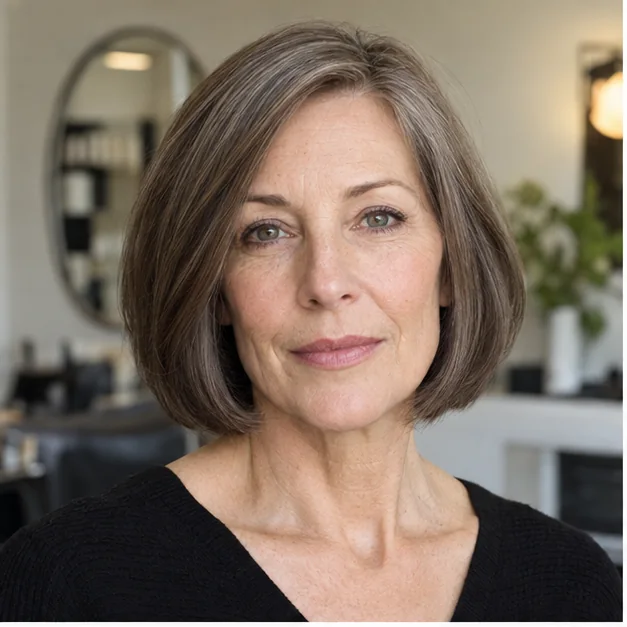
A subtle low graduation cups the back of the head, but the side panels remain full and reach the chin instead of tapering away to thin points. That distribution makes the silhouette look rounded beside the jaw, which can lend a long face warmth without piling all the volume at the crown. The result feels quietly tailored and especially satisfying when a flat back is your usual frustration. Ask for a low, restrained graduation and a substantial side perimeter, showing exactly how much neck you are comfortable exposing. A small round brush can lift the back; schedule trims before the graduated line drops.
Ask your stylist for: Build a low rounded graduation behind the ears while preserving full chin-length side panels.
6. Wavy Chin Bob With Wispy Bangs

Loose waves curve outward at the sides, and see-through bangs graze the forehead without forming a heavy straight block. That combination softens the face and gives the eyes a light frame while retaining the spontaneous movement that makes a wavy bob appealing. It can feel romantic yet entirely wearable on an ordinary day, especially if you dislike the commitment of thick bangs. Ask for a chin-level dry edge, a narrow wispy fringe and layers only where the wave needs release. Let the sides air-dry with mousse, but give the bangs a brief directed blow-dry so they do not split unpredictably.
Ask your stylist for: Keep my wavy bob at the dry chin line, with a narrow airy fringe and minimal wave-releasing layers.
7. Textured Bob With Cheekbone Layers

The outer edge stays at the chin, but short face-framing pieces begin around the cheekbones and flick into the longer bob. Those side pieces interrupt a perfectly vertical curtain of hair, drawing the eye toward the middle of a long face while making thick hair feel lighter. The cut has a playful, modern mood without becoming a full shag, because the back still reads as a bob with a visible perimeter. Ask for cheekbone-level face framing and soft point-cut texture, keeping the back line substantial. A little cream pinched into the front ends makes the layers visible; heavy layering everywhere can leave the base too sparse.
Ask your stylist for: Start soft face-framing layers at my cheekbones but retain a recognizable, full chin-length bob edge.
8. Deep Side-Swept Chin Bob

A deep side part sends a broad, softly curved front panel across the forehead, with the opposite side tucked close to the ear. The diagonal draws attention to the eyes and cheekbone, while the chin-level ends keep the lower face grounded; it feels sophisticated without needing a fringe cut into the hair. It is appealing when you want a change you can reverse simply by moving the part, though very fine hair may need light root support to hold the sweep. Ask for an even chin-length perimeter and enough front length to cross the forehead. Dry the roots against the intended part first, then sweep them back.
Ask your stylist for: Keep both front corners at the chin with enough length to make a deep side sweep; do not cut short bangs.
Pause and notice: A curly cut that looks chin length while wet may sit near the mouth once dry. Agree on the finished shape in its natural state.
9. Full Chin Bob for Fine Straight Hair

Smooth side panels fall to one clean chin-length line, with barely any visible layering and a slight inward bend at the ends. That solid perimeter makes fine hair look denser, while a gentle off-center part prevents the shape from becoming an overly severe vertical frame. It can feel reassuringly neat on busy mornings because the haircut supplies most of the structure, though precision shows quickly as it grows. Ask for a blunt dry chin edge, minimal interior thinning and just enough bevel to follow the jaw. Use light heat protectant and a flat brush rather than heavy oils that collapse fine strands.
Ask your stylist for: Leave my fine hair one length at the dry chin with a full perimeter and no aggressive thinning.
10. Airy Chin Bob for Thick Wavy Hair
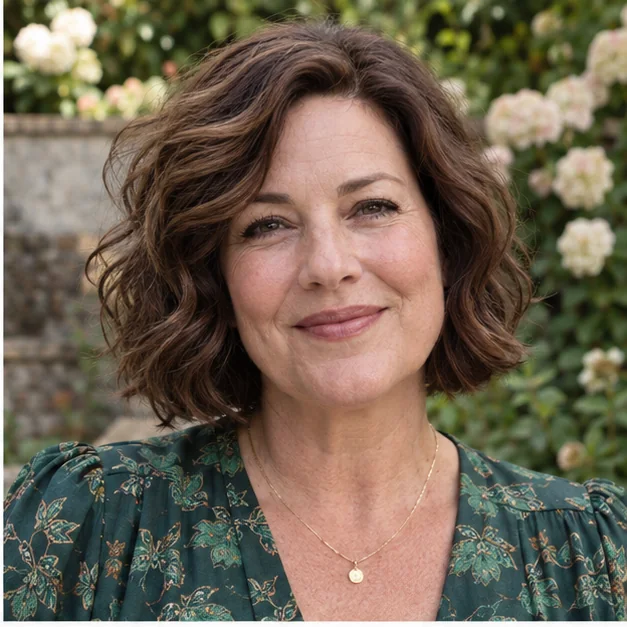
Generous waves sit around the jaw, but hidden weight removal keeps the sides from expanding into a dense triangle. The outline remains unmistakably chin length, with little bends that bring energy across the cheeks and let a long face feel framed rather than buried. This can feel light and free if thick hair usually takes forever to dry, provided the stylist respects your natural wave pattern. Ask for a strong outer edge with selective internal debulking, not a high stack or heavily razored ends. Work mousse through damp hair and diffuse gently; cutting too short while wet can make the finished wave jump above the jaw.
Ask your stylist for: Preserve a chin-length wavy outline, remove hidden weight selectively and check the finished dry width.
11. Rounded Chin Bob With Short Side Bangs

A softly rounded bob hugs the jaw while short side bangs sweep across the upper forehead and finish near the temple. That interruption near the eyes changes the face frame without the strong line of full bangs, and the curved sides make the shape feel gentle rather than boxy. It is a cheerful, approachable option if you enjoy a neat haircut but still want visible softness around your features. Ask for a rounded chin perimeter and a light diagonal fringe that can merge into the side, not a disconnected wedge. Brush the bangs briefly into place; their shortest point will need upkeep as it grows.
Ask your stylist for: Keep the jawline rounded and cut a light short side fringe that blends into the fuller side.
12. Soft Silver Bob With Face-Framing Bend

A silver bob reaches the chin with a loose bend that turns outward near the cheekbones, showing natural color and movement rather than pressing every strand flat. The side fullness can bring a luminous, open frame to a long face, and the simple line feels elegant without pretending silver hair requires a particular age or style. Ask for a soft chin perimeter with restrained layers around the face, keeping enough weight to prevent flyaway ends. A lightweight leave-in and a gentle brush-through can tame dryness without flattening the bend; discuss how the front pieces will sit as the bob grows toward the neck.
Ask your stylist for: Cut a soft chin-length silver bob with cheek-level face framing and enough weight for a loose outward bend.
Pause and notice: Compare the back and side angles, too. A softly graduated nape, a one-sided angle and a rounded base can share a similar front view but grow out differently.
13. Subtle Asymmetric Bob With One Longer Chin Corner
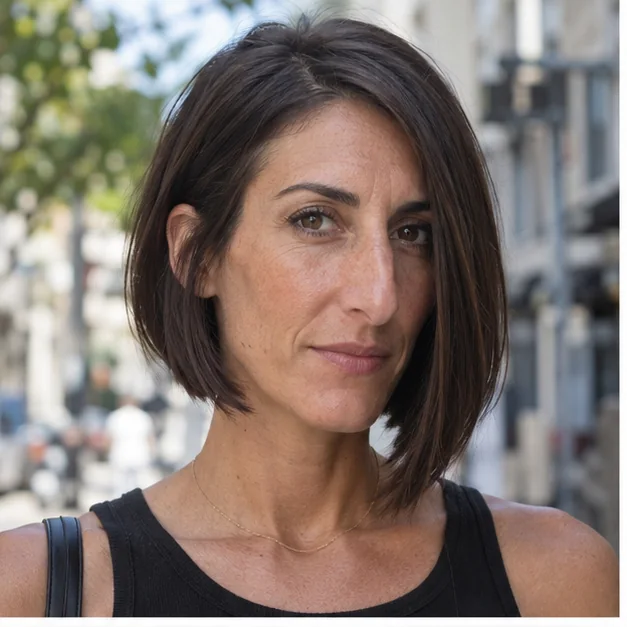
One front corner reaches the chin while the other stops near the jaw hinge, creating a real diagonal in the cut rather than an illusion from a side part. The off-center line pulls attention across the face and can make a long outline feel graphic and modern without a dramatic undercut. It has a quietly daring mood that still works with everyday work clothes. Ask for a small, intentional difference between the two front corners and a smooth connection through the back, checking both sides when dry. Straightening makes the angle crisp; natural waves soften it, but can also hide a very slight difference.
Ask your stylist for: Cut one front corner at my chin and the other at my jaw hinge, joining them with a smooth back line.
14. Chin Bob With a Short Micro Fringe

A compact fringe stops well above the brows, leaving the eyebrows visible above a firm chin-length bob. That pairing creates two unmistakable horizontal lines, but it is bolder than a brow fringe because the forehead stays open between them. The effect can feel artistic and self-possessed, especially on straight hair that displays the clean geometry. Ask for a short but soft-edged micro fringe, a full chin perimeter and a dry-length check before the bangs are shortened further. It takes confidence to wear the growing fringe through its in-between stage; a tiny amount of matte cream helps keep the edge separated.
Ask your stylist for: Keep the bob full at my chin and cut a soft-edged micro fringe above the brows, checking its dry length.
15. Chin Bob With Flipped-Out Ends
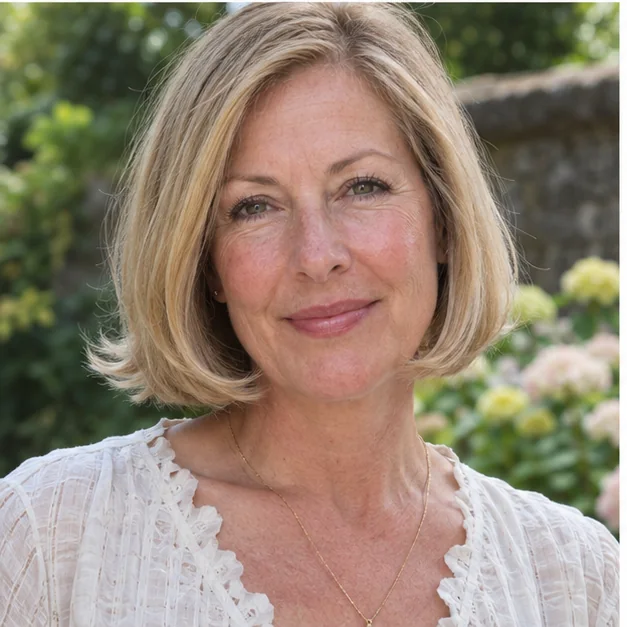
The main body of this bob lies fairly smooth, then the final inch turns outward at the jaw instead of curling under. That outward flick creates width exactly where a long face may benefit from it, and it makes a familiar chin cut feel bright and playful. It suits someone who enjoys a quick finishing step but does not want a full wave set every morning. Ask for a clean chin-length edge with enough weight to support an outward bend, not feathered wisps that disappear. Turn the ends out with a round brush or flat iron and use light hold; humidity may relax the flip.
Ask your stylist for: Leave a clean, weighty chin-length edge that I can flip outward at the jaw.
16. Side-Parted Curly Bob Without Bangs

Defined curls reach the chin in their dry state, but a deep side part lifts one side and leaves the forehead completely free of a fringe. Unlike the rounded curly bob with bangs, this one has an open face and a gentle asymmetry made by curl placement rather than uneven cutting. It can feel spirited and effortless when you like wearing your natural curl pattern but do not want to refresh bangs each morning. Ask for a dry chin-level curly shape with more width beside the cheeks than at the crown, and no short front pieces. Clip the roots on the fuller side while drying, then remove the clips once the curls set.
Ask your stylist for: Shape my curls dry to the chin with a deep side part, open forehead and no short fringe.
Pause and notice: The final choices change the cut's character more decisively. Ask yourself whether you would happily maintain a micro fringe, a curl-specific shape or a shaggy crown.
17. Chin Bob With an Exposed Nape Undercut
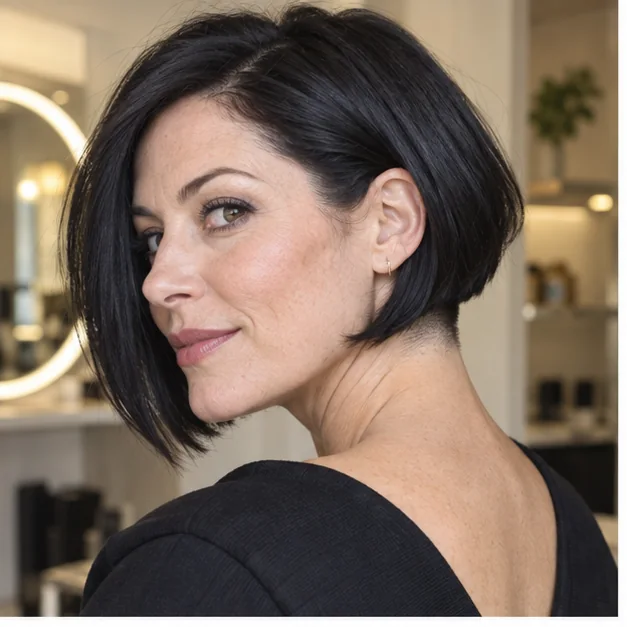
A smooth chin-level top layer falls over a closely cropped lower nape, and a three-quarter angle reveals the undercut beneath the bob's edge. This is a construction change, not simply a styling trick: removing lower bulk can help dense hair sit closer to the head while preserving full side panels around a long face. The hidden-to-revealed detail feels clever and a little adventurous, particularly when you tuck the hair behind an ear. Ask for a narrow low nape undercut with a cover layer long enough to conceal it when desired. Expect frequent undercut maintenance and a thicker band during grow-out.
Ask your stylist for: Keep full chin-length side panels over a narrow, low nape undercut that can be revealed by tucking.
18. Chin-Length Shag Bob With a Piecey Crown
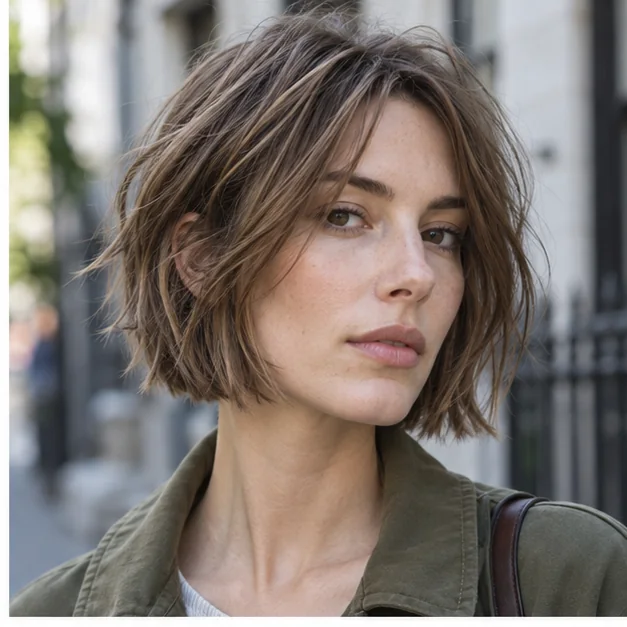
Short, separated crown layers and cheek-grazing pieces fall into a deliberately broken chin-length edge. That makes this a shag-bob rather than the earlier textured bob: movement begins high on the head and continues through the sides instead of sitting only around the face. It can add lift to hair that tends to lie flat, giving a long face a freer, slightly rebellious frame without losing all of the bob length. Ask for connected shag layers with a visible chin-level baseline and no long mullet tail. Scrunch a little foam through damp hair; over-thinning the ends would make the outline look accidental rather than airy.
Ask your stylist for: Build connected piecey crown layers and cheek pieces into a broken but visible chin-length edge, with no tail.
19. Sculpted S-Wave Chin Bob

Glossy, deliberate S-shaped waves travel across the side panels of a chin-length bob, with the strongest bend sitting beside the cheekbones. This is more architectural than the loose side-parted wave: the repeated curve gives the eye a clear horizontal rhythm and makes the cut feel glamorous and composed. It is lovely for an occasion or for someone who enjoys setting their hair, but the finish is not a wash-and-go promise. Ask for a full chin-length bob that can support broad waves without short layers breaking the pattern. Set large sections with a wand or rollers, brush through gently and finish with flexible spray.
Ask your stylist for: Keep a full chin bob with few short layers so broad S-waves can run cleanly through the sides.
20. Chin Bob With Ear-Level Volume and Tapered Ends
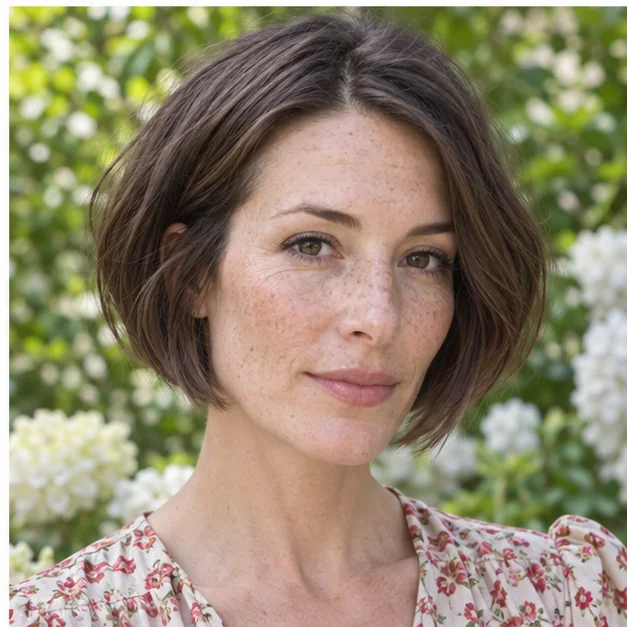
The widest part of this bob sits around the ears, then narrows gently to a light chin-level edge instead of holding a blunt block at the jaw. That top-to-bottom change is different from a rounded bob with short side bangs: the forehead stays open, while the side silhouette supplies the width. It can feel softly retro and flattering when you want airy shape without a fringe or a heavy lower perimeter. Ask for controlled fullness at ear level, subtle taper toward the chin and no added height at the crown. A round brush can lift the sides, but too much product will turn the airy ends stringy.
Ask your stylist for: Build gentle width around my ears, taper lightly to a dry chin edge and leave my forehead open.
Before You Book the Appointment
A successful salon visit begins with the overall shape, construction and upkeep—not only the finished length. Use this quick reality check before choosing your final reference photograph.
- Best for: Someone considering a jaw-skimming cut who wants to compare width, fringe, texture and styling commitment on a longer face.
- Choose by: Dry perimeter, cheek-level fullness, parting, fringe maintenance and natural bend or shrinkage.
- Everyday effort: Soft waves or curls may air-dry well; a precise blunt edge or smooth fringe needs more directed drying.
- Salon rule: Show where dry front corners should land and where you want volume, not simply 'a flattering bob'.
Choose the Width and Fringe You Want
A long or oblong face does not require a corrective haircut, but the placement of volume changes what stands out. Waves or layers near the cheeks draw the eye sideways; a blunt line at the chin emphasizes the jaw; a full fringe makes a stronger forehead frame than a side sweep. Compare your favorite looks from the front and side, then choose the feature you enjoy highlighting. Keep your natural part, cowlicks and hair density in mind: a fringe that fights your growth pattern can turn a simple cut into a daily project.
What to Ask at the Salon
Bring a photograph with a texture and density close to yours, plus a side view if the nape or angle matters. Say where the front corners should fall when dry, whether you want fullness at the cheekbones, ears or jaw, and how much forehead coverage you can comfortably style. For curly hair, agree on the finished length after shrinkage; for thick hair, ask where weight will be removed without hollowing the edge. A precise request is more useful than asking for a haircut that simply 'flatters' a long face.
Style, Maintain and Grow Out a Chin Cut
Fine straight hair may need only a light heat protectant and flat brush, while waves respond to mousse and hands-off drying; define curls wet and judge them after shrinkage. Dry bangs first so they do not settle into an unwanted part. A precise bob edge often needs reshaping around six to eight weeks, but short bangs, a low graduation or an undercut may need attention sooner. During grow-out, let a full fringe soften into curtain pieces and allow the chin edge to become a neck-length bob before trimming it into a longer shape.
The Takeaway
Choose the version whose ordinary Tuesday still appeals to you. If you love a clean line, start with the full bob; if your hair bends or curls naturally, let that texture supply the side shape; if you want a new frame without a permanent fringe, try a deep part first. Save the image that matches your hair and routine, then name the dry length and side fullness at your appointment.