A truly easy hairstyle should still look chosen on the morning when you barely have time to find your keys.
A low-maintenance hairstyle is a cut or wearable shape designed around your natural texture, density and growth pattern, so it looks intentional with limited heat, product and daily manipulation. That does not always mean short or completely wash-and-go: a pixie can need frequent trims, while long one-length hair may take longer to dry but ask little of you between wash days. The best option minimizes the work you personally dislike. Unlike an easy updo, which simplifies one day, a low-maintenance cut builds ease into the shape through a stable perimeter, controlled layering and predictable grow-out.
Find the one that feels like you: Start with the first look and let the photographs lead. Each style explains how the shape affects your features, the mood it creates and the exact words to take to your stylist.
Quick Facts
- Choose for your air-dried texture, not only the salon blowout.
- Daily styling time and salon frequency are separate kinds of maintenance.
- Blunt edges support fine hair; internal weight removal can help thick hair settle.
- Longer fringe and softly connected layers usually grow out more gracefully.
1. Tucked Chin Bob With a Clean Perimeter

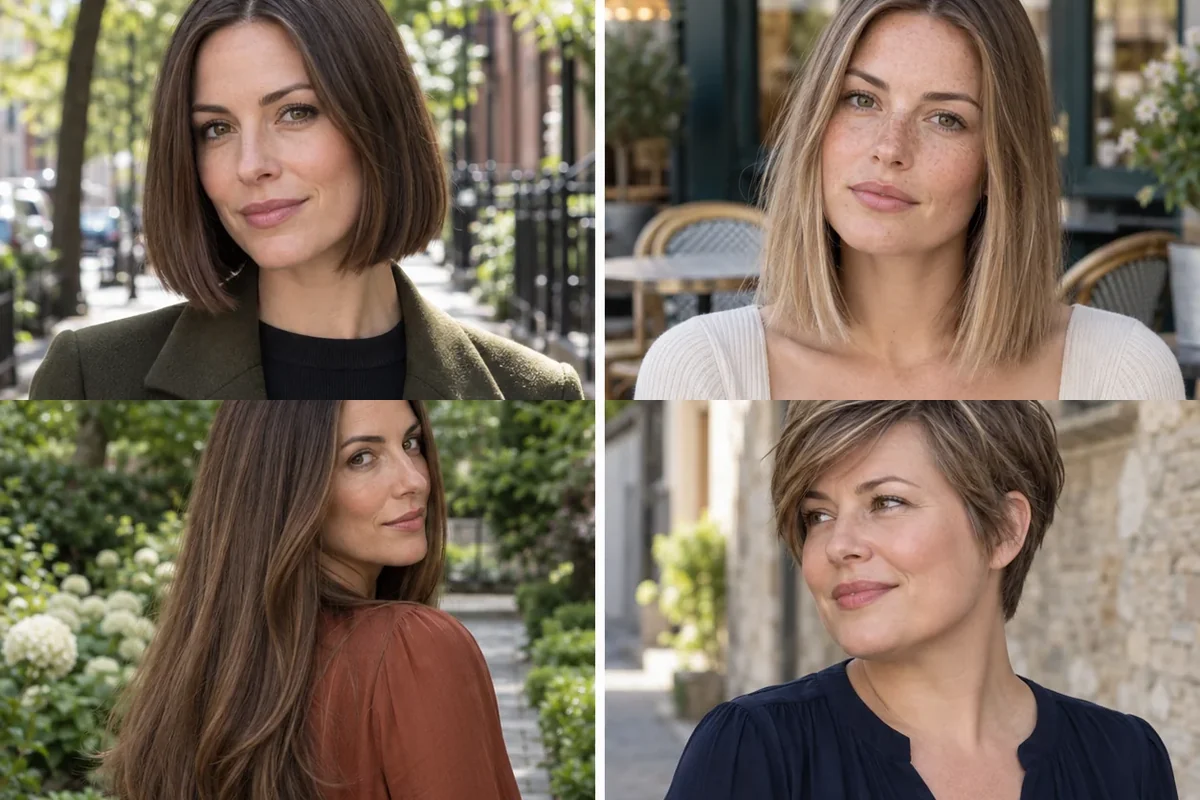
This chin-grazing bob keeps one substantial line through the ends, with just enough bevel to tuck neatly behind the ears. The compact shape makes straight or gently wavy hair look deliberate after a quick air-dry, and the exposed jaw creates a crisp, quietly confident finish without daily curling. It suits fine-to-medium density and anyone happy to trade easy mornings for a trim about every seven weeks. Ask for a chin-length blunt bob, a softly beveled underside and no thinning through the perimeter; smooth one drop of light serum over dry ends and leave the rest alone.
Ask your stylist for: Ask for a chin-length blunt bob with a softly beveled underside, ear-tuck clearance and no perimeter thinning.
2. Blunt Collarbone Lob for Fine Hair
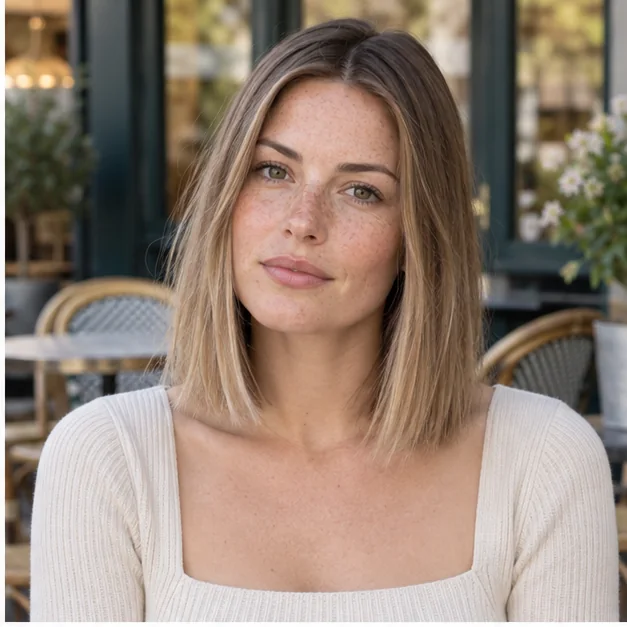
A collarbone lob gives fine hair room to move while keeping every possible strand in the lower edge. Its nearly one-length outline creates the impression of thicker ends, and the longer scale feels polished yet relaxed because it can air-dry straight, bend naturally or disappear into a low ponytail. This is reassuring if short cuts feel too exposed or frequent appointments feel unrealistic. Request a collarbone-length blunt perimeter with only subtle face framing below the mouth and no razoring; refresh the shape every ten to twelve weeks and use dry shampoo only where the roots need it.
Ask your stylist for: Request a collarbone-length blunt perimeter, minimal face framing below the mouth and no razor or thinning shears.
3. Long U-Shaped Cut With Barely-There Layers
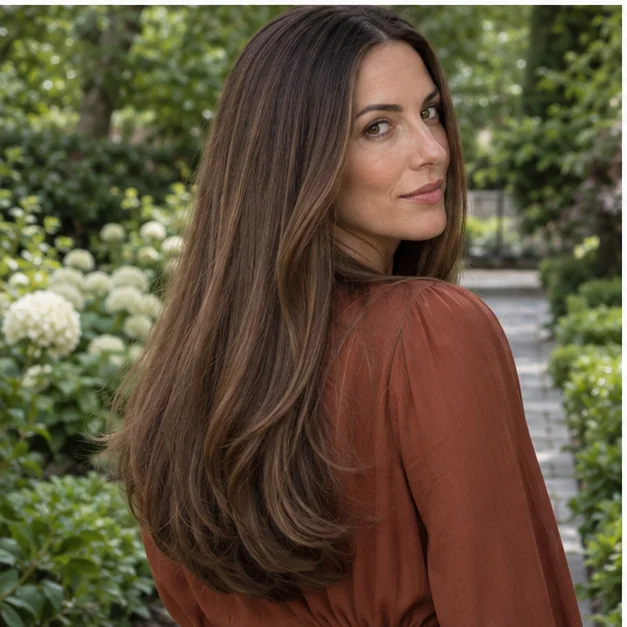
Long hair can be low maintenance when the outline does most of the design work. Here, a gentle U shape rounds the back while a few long layers begin below the shoulders, preventing a heavy curtain effect without creating short pieces that demand styling. The result feels feminine and calm, suits straight-to-wavy medium-density hair, and stretches comfortably between salon visits, although wash and drying time remain the honest cost. Ask for a long U-shaped perimeter, seamless layers only through the bottom quarter and no short crown layers; detangle carefully and air-dry in two loose twists for an easy bend.
Ask your stylist for: Ask for a long U-shaped perimeter with seamless layers confined to the bottom quarter and no short crown layers.
4. Soft Pixie With a Longer Side Sweep
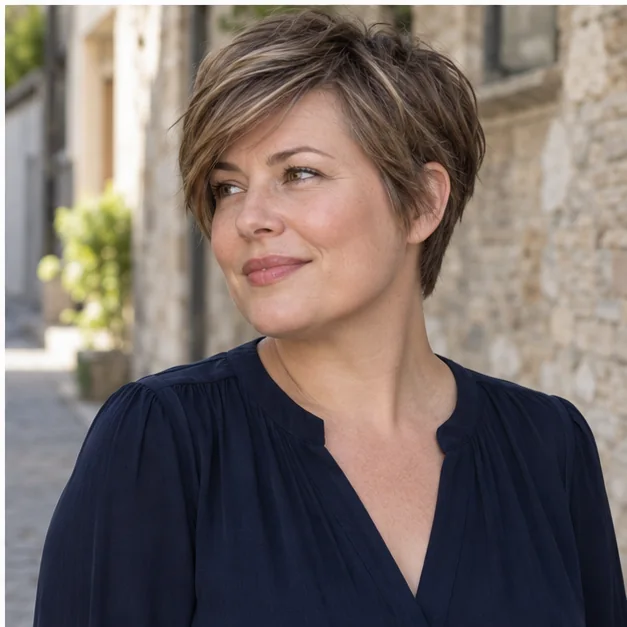
This soft pixie leaves the top and fringe long enough to sweep naturally across the forehead while the ears and nape stay gently tapered. The diagonal movement can lengthen a round face and highlight the eyes, creating a self-possessed look with little more than finger styling and a pea-size dab of paste. It is quick to wash and dry, but its tidy outline needs a salon visit every five to seven weeks. Ask for a scissor-cut pixie with three to four inches on top, a connected side fringe and a softly tapered—not clippered—nape so grow-out stays graceful.
Ask your stylist for: Request a scissor-cut pixie with three to four inches on top, connected side fringe and a softly tapered nape.
5. Rounded Curly Crop With a Natural Halo
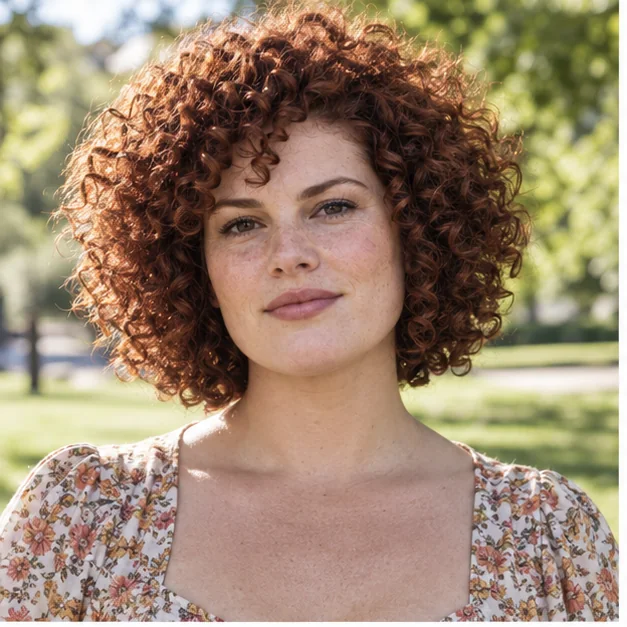
A curl-by-curl crop forms a soft halo, with slightly more height at the crown and enough fullness at the temples to balance the shape. Because the cut follows the spring pattern instead of forcing it smooth, curls can settle with leave-in conditioner, light gel and hands-off drying; the buoyant outline feels playful, open and confidently natural. It works best when your stylist accounts for shrinkage and your tighter and looser sections separately. Ask for a rounded dry curl cut with crown lift, temple fullness and no razor; trim every ten to twelve weeks, reshaping only when the silhouette starts to flatten.
Ask your stylist for: Ask for a rounded dry curl cut with crown lift, temple fullness, shrinkage allowance and no razor.
Pause and notice: A crop may take three minutes each morning and still need a trim every six weeks. Long hair may go months between cuts but take much longer to wash and dry. Decide which clock—daily styling or salon upkeep—you most want to shorten.
6. Air-Dried Wavy Shag With Grown-Out Fringe

A restrained shag can be genuinely easy when the layers follow an existing wave instead of trying to manufacture one. This version keeps airy crown movement, cheekbone pieces and a long split fringe that can fall open without a round brush, giving medium wavy hair a cool, unforced personality. It softens a square jaw and disguises imperfect second-day texture, though very fine ends may prefer a firmer baseline. Request long shag layers with the shortest crown pieces below the ear, a grown-out curtain fringe at the cheekbones and a preserved perimeter; scrunch in mousse and let the wave pattern do the styling.
Ask your stylist for: Request long shag layers, crown pieces no shorter than the ear, cheekbone curtain fringe and a preserved perimeter.
7. One-Length Shoulder Cut for Natural Waves
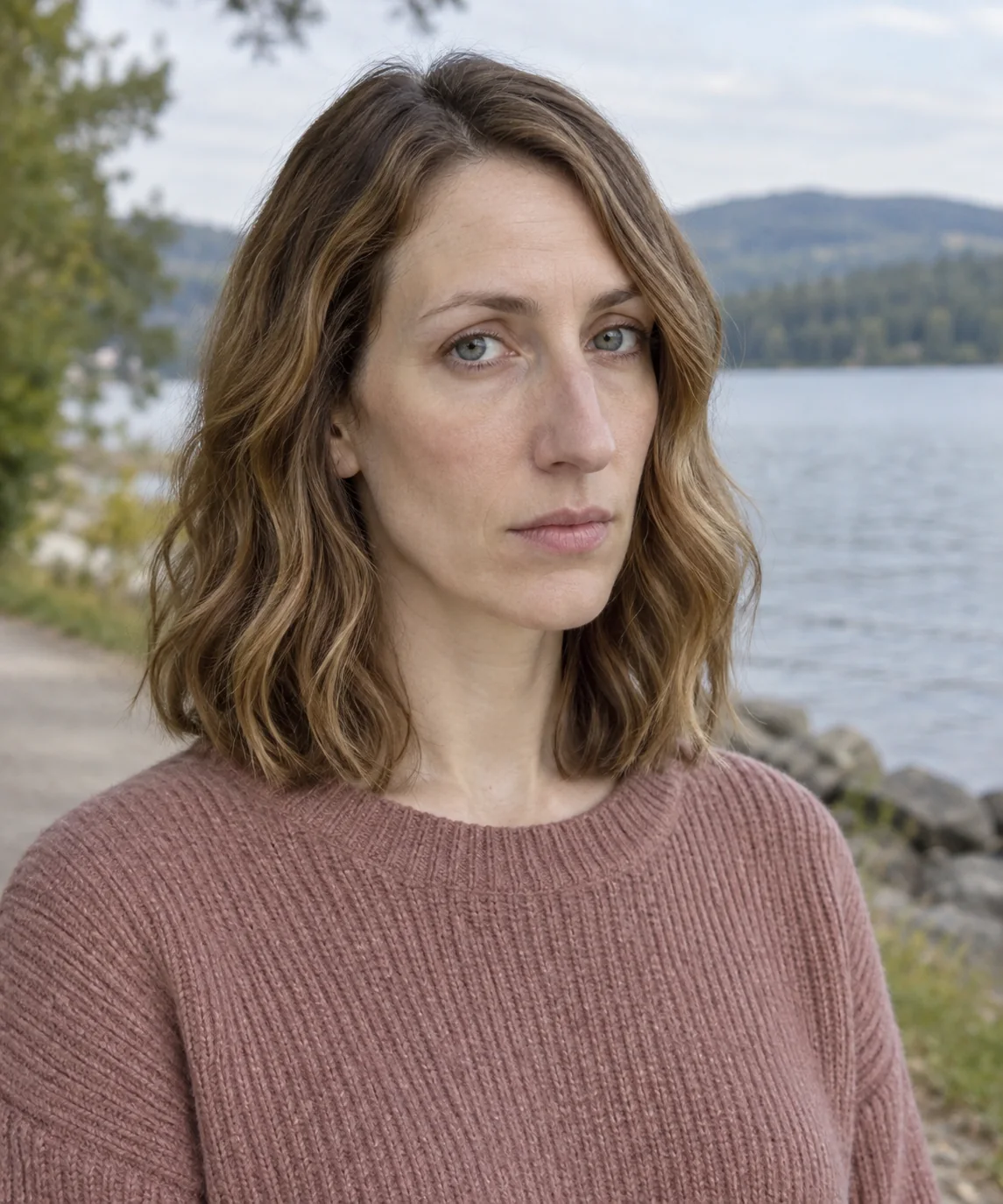
Cutting wavy hair at the shoulders with one softly textured edge allows bends to stack into a broad, modern shape rather than separating into fussy layers. The length is short enough to dry efficiently but long enough to tie back, which can make an active routine feel wonderfully uncomplicated. A subtle off-center part adds lift and keeps the outline from feeling severe on an oval or long face. Ask for a one-length shoulder cut measured in its dry wavy state, with point-cut softness only at the edge and no interior thinning; apply curl cream to soaking-wet hair and avoid touching it until dry.
Ask your stylist for: Ask for a one-length shoulder cut measured dry, with point-cut softness at the edge and no interior thinning.
8. Rounded Bob for Fine Straight Hair

A softly rounded bob uses a discreet bevel underneath to encourage straight hair to curve toward the neck on its own. The controlled shape makes fine hair appear denser and brings gentle width beside a long face, so it feels refined even when styled with nothing more than a paddle brush. Too much graduation would turn this into a stacked bob and increase upkeep, so restraint matters. Ask for a jaw-to-neck bob with a solid outer line, minimal hidden beveling and no visible stacking; dry the roots in alternating directions, then let the ends follow their built-in curve.
Ask your stylist for: Request a jaw-to-neck bob with a solid outer line, minimal hidden beveling and no visible stacked graduation.
9. Long Hair With Layers Only at the Ends
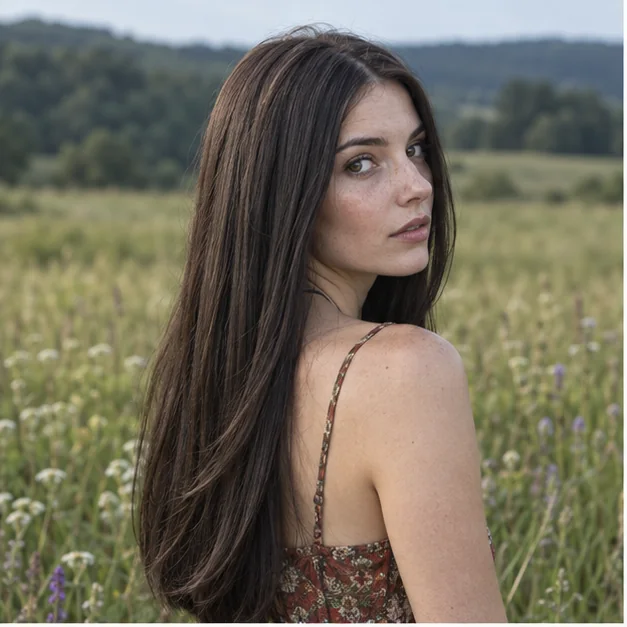
Keeping layers within the last few inches gives long hair a little swing without filling the head with short sections that escape braids and ponytails. The weight stays smooth through the upper length, which can calm slight puffiness and create an elegant, grounded feeling on busy days. This version suits medium-to-thick straight or softly wavy hair, although it will not provide dramatic crown volume. Ask for a blunt long perimeter with invisible layers only in the bottom three to four inches and no face frame shorter than the collarbone; protect the ends overnight and plan trims about every twelve weeks.
Ask your stylist for: Ask for a blunt long perimeter, invisible layers only in the bottom three to four inches and collarbone-or-longer framing.
10. Textured Clavicut With an Off-Center Part

The clavicut lands precisely at the collarbones, where the shoulders naturally kick the ends into a little movement. Soft surface texture and an off-center part keep this medium cut from looking rigid, while its tie-back length makes workdays, workouts and growing-out phases easier. It can add balanced width to a narrow face and gives straight-to-wavy hair a modern, capable mood. Ask for a collarbone perimeter with shallow point cutting, two long front pieces beginning below the chin and no short internal layers; rough-dry or air-dry, then switch the part when you want instant root lift.
Ask your stylist for: Request a collarbone perimeter with shallow point cutting, below-chin front pieces and no short internal layers.
Pause and notice: A salon blowout can make almost any cut look easy for one afternoon. Bring a photo of your ordinary air-dried texture and ask how the proposed shape will sit without a brush, iron or diffuser.
11. Subtle Asymmetric Lob for Straight Hair
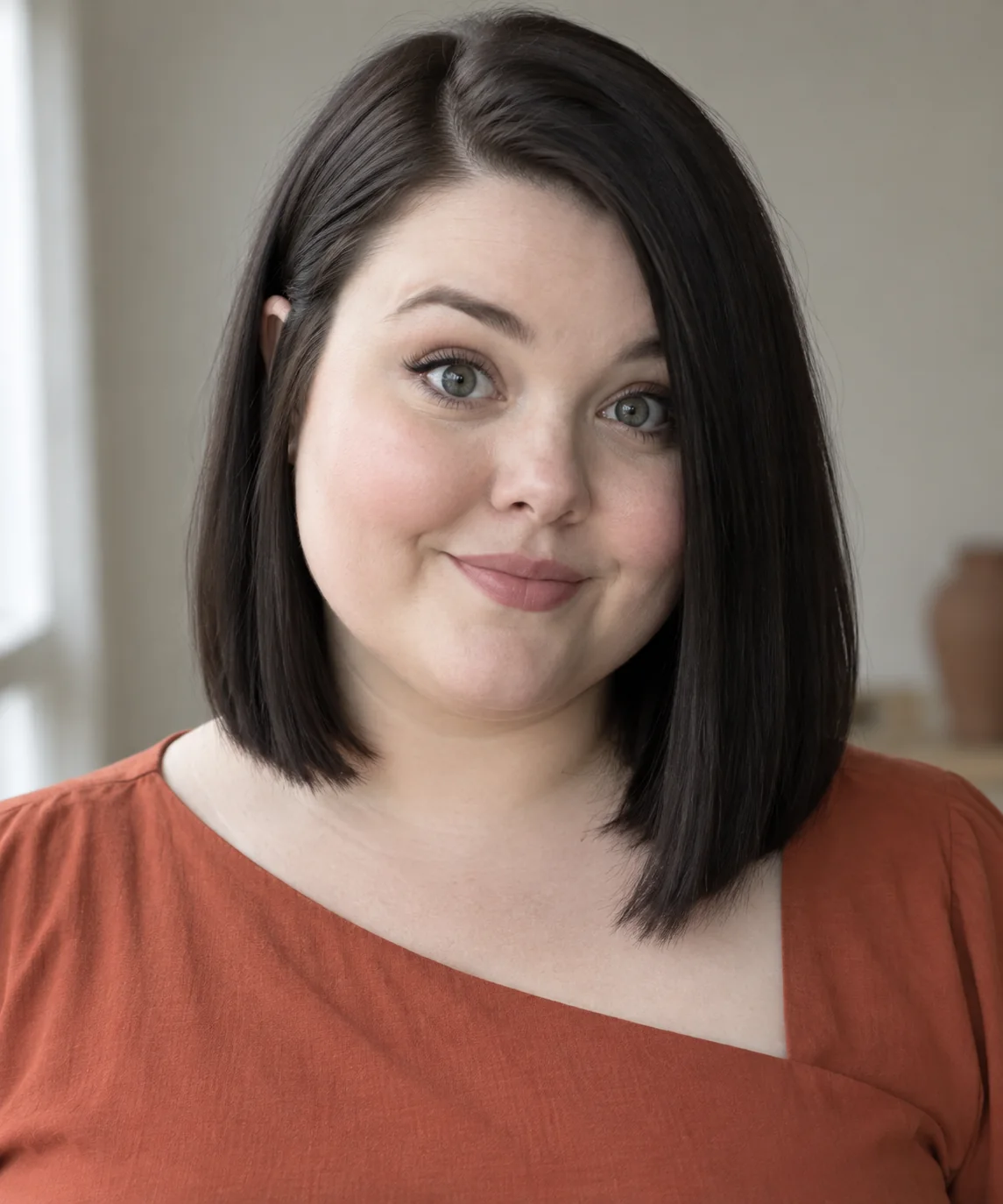
A lob cut about half an inch longer on one side creates visual interest without complicated layering or styling. On naturally straight hair, the clean diagonal catches the eye and can sharpen a soft jawline, giving an otherwise simple cut a quietly creative edge. The difference should be intentional but small enough that the hair still ties back and does not demand flat-ironing. Ask for a blunt lob between the shoulders and collarbones with one front corner half an inch longer, zero graduation and a natural side part; keep the edge healthy with trims every ten weeks and simply follow your normal drying routine.
Ask your stylist for: Ask for a blunt collarbone lob with one front corner half an inch longer, zero graduation and a natural side part.
12. Shoulder-Length Curly Shag With Long Layers
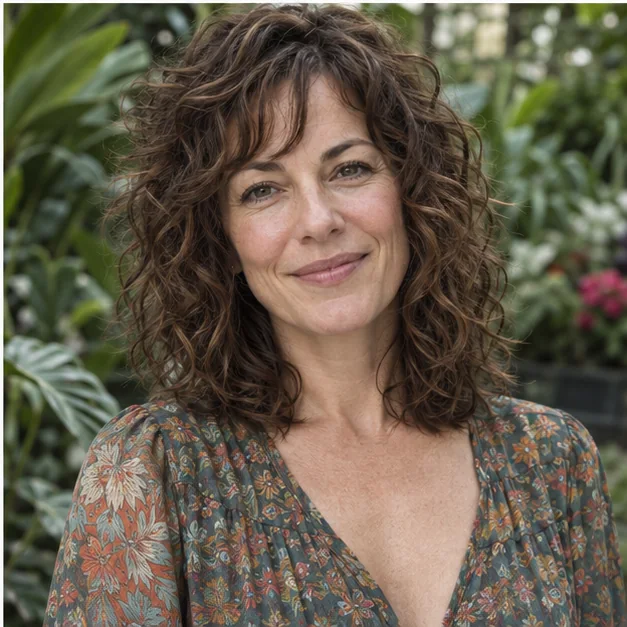
This shoulder-length curly shag uses long, connected layers to release bulk while preserving enough weight for curls to clump. The rounded movement opens the face and brings a lively, expressive feeling without requiring every curl to sit perfectly; a water mist and a little gel can revive the shape on day two. It suits medium-to-thick curls that become triangular at one length, but sparse curls may need fewer layers. Ask for a dry curl cut with long connected layers, cheekbone framing and a full shoulder perimeter, then request that the shortest crown curls remain long enough to control shrinkage.
Ask your stylist for: Request a dry curl cut with long connected layers, cheekbone framing, a full shoulder perimeter and shrinkage-aware crown length.
13. Springy Curl Bob With Balanced Side Volume
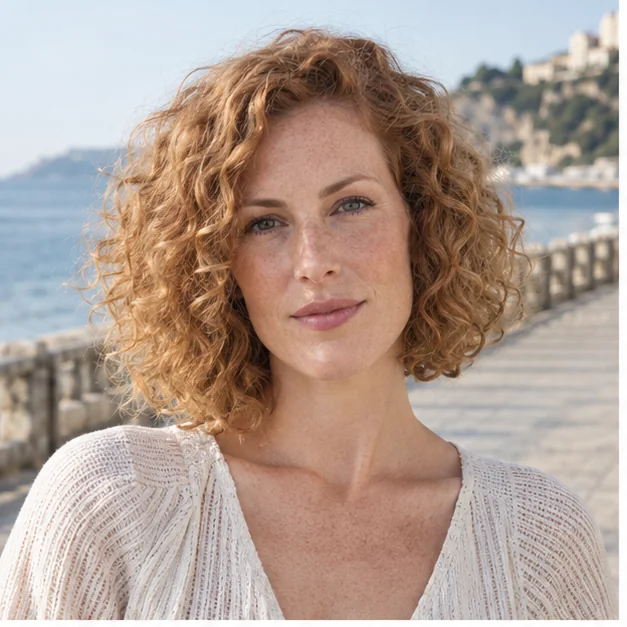
A springy curl bob sits between the jaw and shoulders, with balanced side volume and a slightly lifted crown rather than a sharply layered shag shape. That width can flatter a long face, and the compact outline feels cheerful and put-together after a simple wash, condition, gel and diffuse-or-air-dry routine. The styling steps are few, but detangling and full drying still take time, so low maintenance here means repeatability rather than instant results. Ask for a rounded curl-by-curl bob with jaw-to-shoulder variation, balanced temple fullness and no hollowed interior; book shaping trims every three months.
Ask your stylist for: Ask for a rounded curl-by-curl bob with jaw-to-shoulder variation, balanced temple fullness and no hollowed interior.
14. Collarbone Cut With Long Curtain Pieces
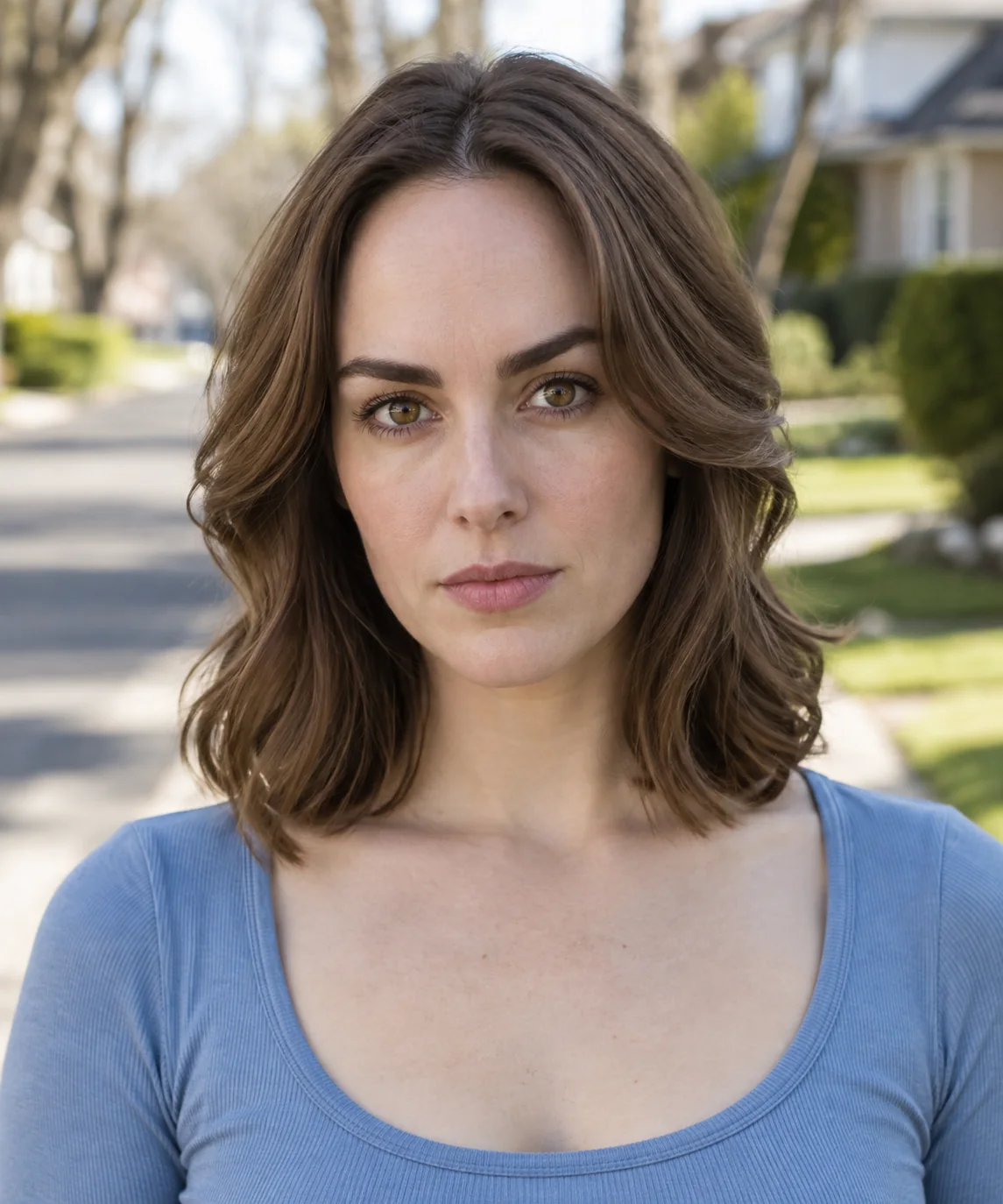
Long curtain pieces that begin around the jaw offer face framing without committing to bangs that need daily resetting. They merge into a collarbone cut, sweep behind the ears when inconvenient and soften a broad forehead or angular jaw with an easy diagonal line. The look feels approachable and polished on straight or wavy hair, especially for someone who likes movement around the face but relies on a ponytail. Ask for jaw-length curtain pieces connected into a solid collarbone perimeter, with no fringe above the cheekbones; bend them away from the face for thirty seconds or let them air-dry naturally.
Ask your stylist for: Request jaw-length curtain pieces connected into a solid collarbone perimeter, with no fringe above the cheekbones.
15. Grown-Out Bixie With Ear-Tucking Layers
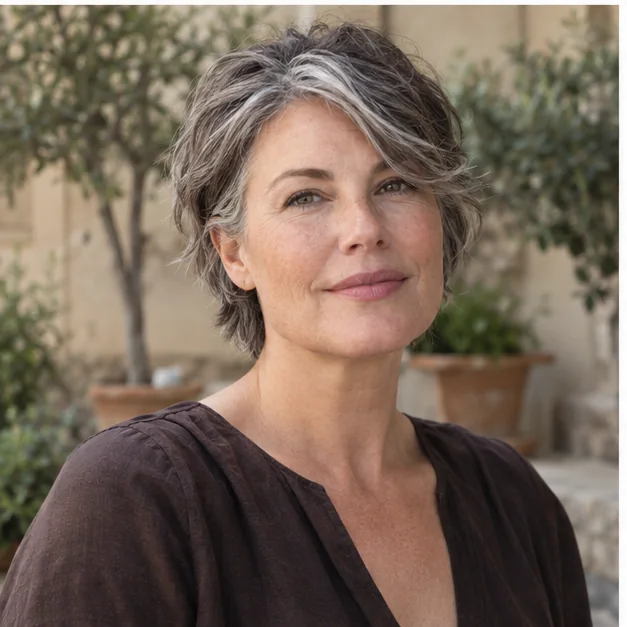
A grown-out bixie sits between a pixie and bob, with ear-tucking side pieces, a softly covered nape and enough top length to fall into place. The irregular, feathered outline makes the in-between stage look intentional and can bring lift to fine hair, creating an energetic, modern feeling without a precise daily blowout. It is forgiving as it grows, although the short back may flip if your neckline has strong cowlicks. Ask for a long scissor-cut bixie with connected ear-length layers, a soft nape and no clipper-tight edges; use flexible cream and trim every eight weeks.
Ask your stylist for: Ask for a long scissor-cut bixie with connected ear-length layers, a soft covered nape and no clipper-tight edges.
Pause and notice: Fine hair may need a stronger edge, thick hair may need hidden weight removal and curls may need thoughtful dry shaping. The lowest-effort solution respects what your hair already wants to do.
16. Midlength Cut With Invisible Weight Removal
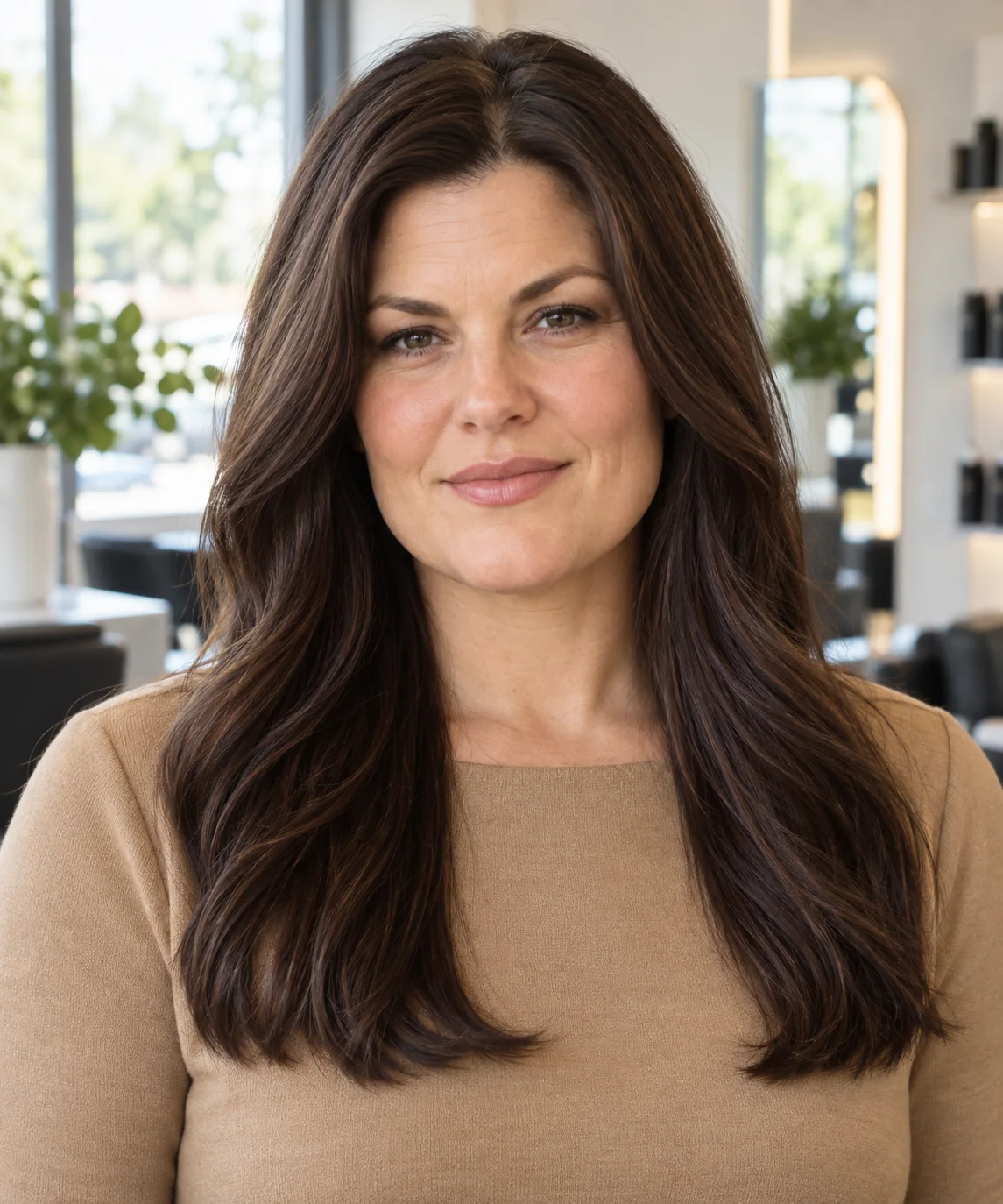
Thick hair often becomes easier when weight is removed inside the shape rather than carved from the visible surface. This midlength cut keeps a clean outer line below the shoulders while hidden internal layers help the hair collapse closer to the head, shortening drying time and reducing the urge to flat-iron. It feels sleek and capable, and the substantial perimeter prevents the ends from becoming fluffy or ragged. Ask for a below-shoulder blunt outline with selective internal weight removal placed according to density, never thinning at the surface or ends; use a wide-tooth comb and allow extra air-drying time at the roots.
Ask your stylist for: Request a below-shoulder blunt outline with selective internal weight removal, keeping the surface and ends untouched.
17. Fine-Hair Blunt Bob With a Deep Side Part
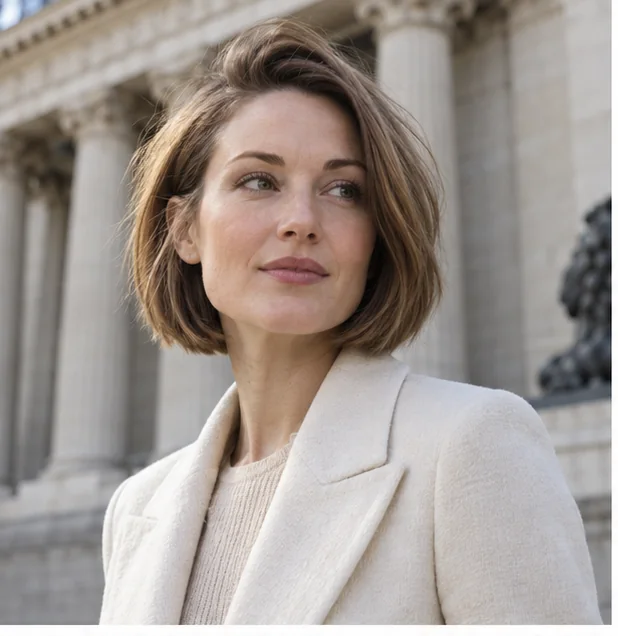
A blunt bob landing just below the jaw concentrates fine hair into a dense edge, while a deep side part shifts more hair across the top for instant-looking lift. The asymmetrical sweep can soften a high forehead and gives the simple outline a glamorous, confident note without actual layers. Naturally straight hair may need only a quick root dry; oily roots, rather than the cut, are likely to be the main maintenance issue. Ask for a one-length jaw-to-neck bob with no graduation, no texturizing and a part placed where the hair naturally holds volume; alternate the part occasionally to avoid flatness.
Ask your stylist for: Ask for a one-length jaw-to-neck bob with no graduation or texturizing and a natural deep side part.
18. Silver Wash-and-Wear Pixie
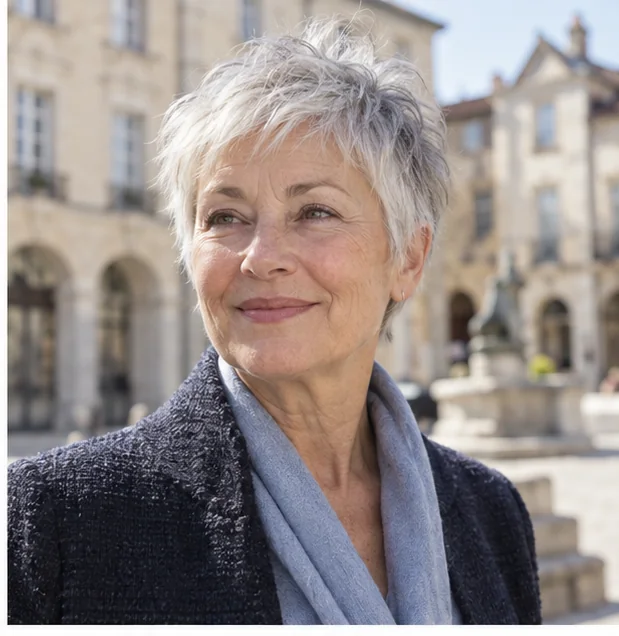
This silver pixie follows the head shape with soft texture on top and neat, finger-combed sides instead of a stiff, heavily styled crown. It makes coarse gray strands feel purposeful, opens the face and creates a fresh, assured impression with fast washing and drying. A touch of moisturizing cream controls wiry flyaways, but the cut should still sit well without a brush. Ask for a scissor-over-comb pixie with soft two-inch texture on top, tapered sides that are not skin-tight and a natural neckline; expect trims every six weeks, since salon frequency is the tradeoff for almost effortless mornings.
Ask your stylist for: Request a scissor-over-comb pixie with soft two-inch top texture, non-skin-tight tapered sides and a natural neckline.
19. Long Wavy Cut With a Soft Rounded Perimeter
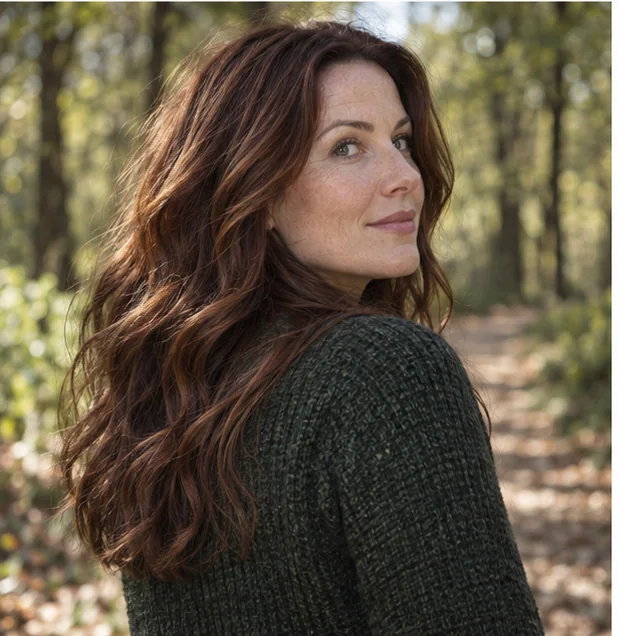
A soft rounded perimeter gives long wavy hair a finished back view while avoiding the dramatic point and uneven grow-out of a sharp V cut. Very long face-framing pieces start near the chest, so the natural wave remains cohesive and the hair can still be braided, clipped or tied without escaping strands. The mood is relaxed and romantic, with fewer salon visits than a heavily layered shape, though washing and drying remain substantial tasks. Ask for a rounded long perimeter, chest-length face framing and no layers above the shoulders; use a light leave-in, plop briefly and allow the bends to form without brushing dry.
Ask your stylist for: Ask for a soft rounded long perimeter, chest-length face framing and no layers above the shoulders.
20. Collarbone Cut With Invisible Face-Framing Layers
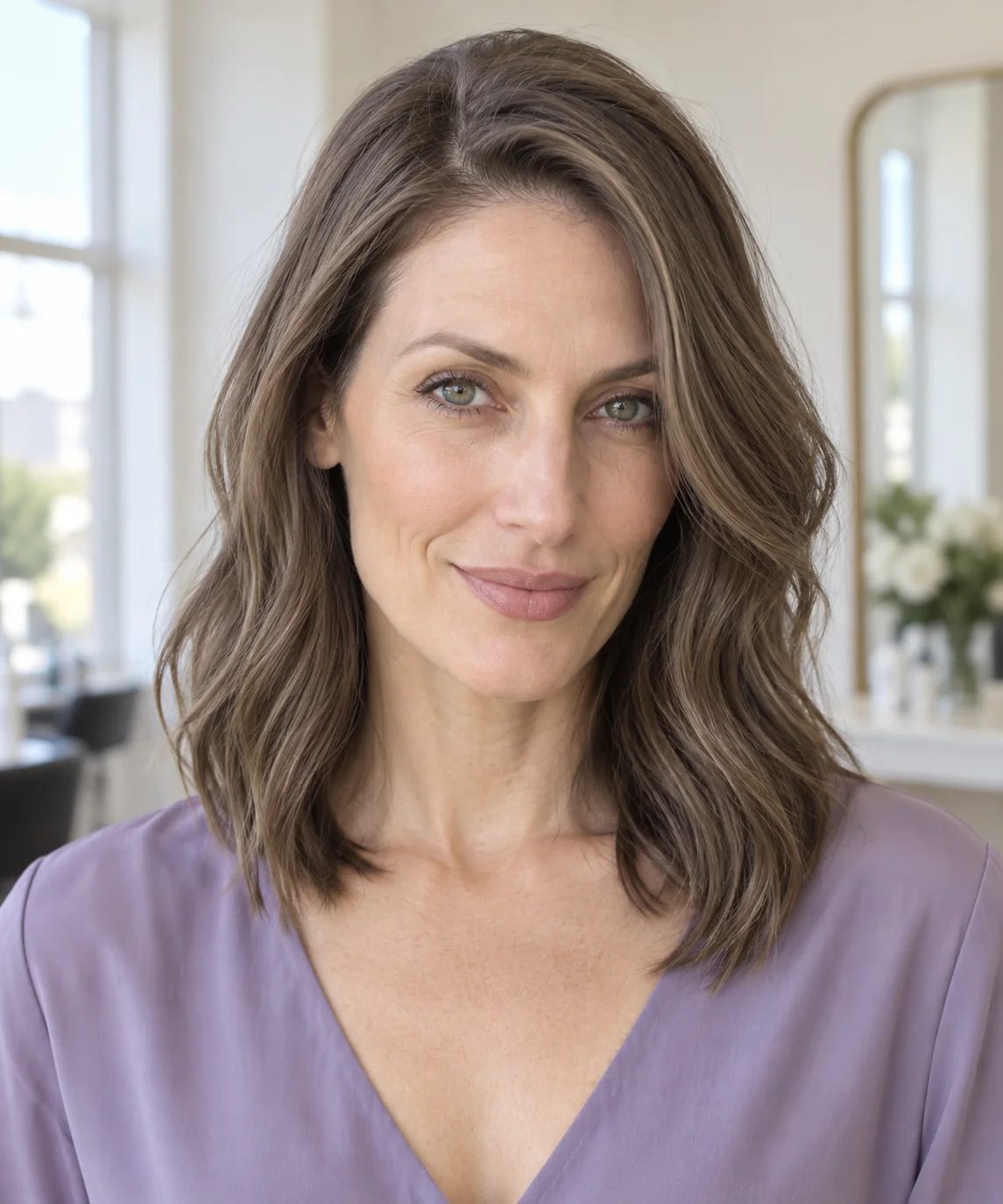
Invisible face-framing layers remove just enough weight around the cheekbones and jaw to create movement while leaving the collarbone perimeter visibly solid. Because the transitions are long and seamless, the cut can be worn straight, softly wavy or pulled back without announcing every stage of grow-out. It offers a polished, quietly modern middle ground for someone who wants more shape than a blunt lob but less work than a butterfly cut. Ask for a collarbone baseline with low-elevation face framing starting below the cheekbones and no short crown layers; air-dry with clips at the roots or rough-dry for five minutes.
Ask your stylist for: Request a solid collarbone baseline with low-elevation face framing below the cheekbones and no short crown layers.
Before You Book the Appointment
A successful salon visit begins with the overall shape, construction and upkeep—not only the finished length. Use this quick reality check before choosing your final reference photograph.
- Best for: Anyone who wants a repeatable shape that works with natural texture, density and ordinary wash habits.
- Choose by: Air-dry pattern, cowlicks, styling tolerance, trim budget and whether you prefer short drying time or fewer salon visits.
- Everyday effort: Most looks here need zero to ten minutes after drying; each section names the honest tradeoff.
- Salon rule: Describe what you actually do at home and ask to see how the cut behaves without a polished blowout.
What Actually Makes a Hairstyle Low Maintenance?
The cut should cooperate with your natural pattern, keep its balance as it grows and need only a small, repeatable set of styling steps. Count washing, drying, detangling, heat use and salon visits separately. A style is not truly easy if it saves five morning minutes but requires a skill or appointment schedule you dislike.
How to Choose by Texture and Density
Straight fine hair often benefits from a blunt perimeter and minimal layering. Thick straight or wavy hair may settle better with selective internal weight removal. Curly hair needs shaping that respects shrinkage and curl families; a dry curl-by-curl approach can make wash days more predictable. Density matters as much as strand texture, so bring realistic references.
What to Ask for at the Salon
Explain your usual wash frequency, whether you air-dry, how many minutes you will style and how often you can return. Ask where the shortest layer will land, whether thinning shears or a razor are planned, and what the unstyled perimeter will look like. Request a demonstration using the fewest products and tools you own.
Styling, Maintenance and Grow-Out
Build a tiny routine around one cleanser, one conditioner and one finish suited to your texture. Protect the shape at night, refresh only the areas that need it and avoid adding layers simply because the ends feel dry. During grow-out, preserve the perimeter and let shorter pieces reconnect before making another structural change.
Choose the Work You Mind Least
If appointments are difficult, favor collarbone and long shapes with seamless layers. If drying time is your frustration, a crop or bob may be worth more frequent trims. If heat styling is the problem, choose a silhouette that looks intentional in your natural pattern. The right low-maintenance hairstyle should make your routine feel lighter, not give you a new standard to chase.