The bob you keep saving has a line you can spot from across the room. Look closer and you’ll see that the ends have weight, even when one side is tucked or the hair has dried with a bend. That balance is what makes a Scandi bob so appealing when you like a clean shape and want room to wear it your own way.
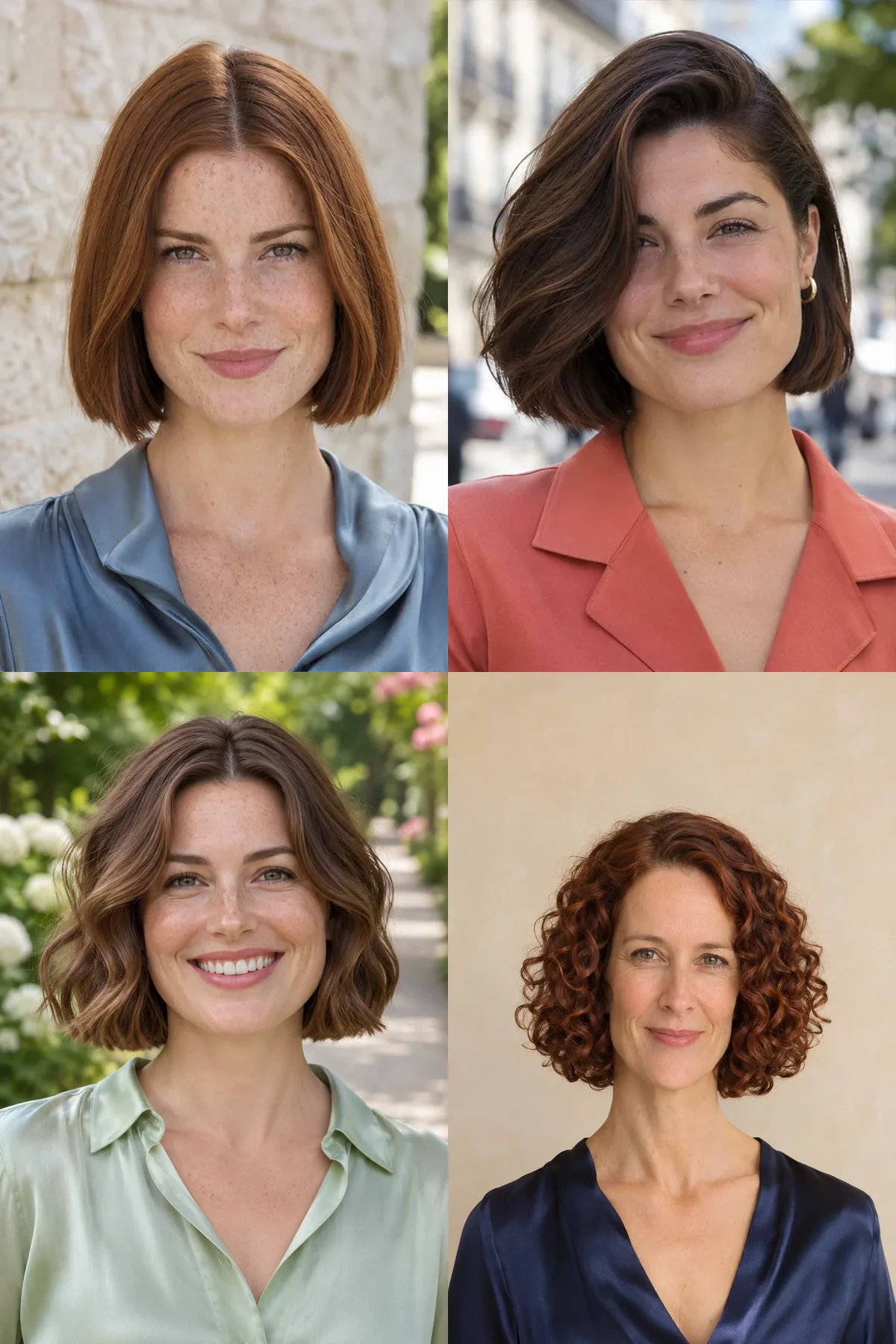
A Scandi bob, also called a Nordic bob, is a jaw- to neck-length bob with a full, nearly level bottom edge and little visible layering. It has enough structure to hold its outline when the hair moves or dries naturally. A classic French bob often sits higher and comes with shorter fringe, while a stacked bob builds its shape with shorter layers at the back. A Scandi bob concentrates the weight at the ends. The deep side flip is one way to wear it, and a soft center part shows off the same line.
Find the one that feels like you: Start with the first look and let the photographs lead. Each style explains how the shape affects your features, the mood it creates and the exact words to take to your stylist.
Quick Facts
- Pick the point where you want the ends to land once your hair is dry.
- Ask to keep weight in the bottom line, even if you need a little bulk removed inside.
- Show your stylist how you usually part your hair, and test an ear tuck in the chair.
1. The Jaw-Length Scandi Bob

The quickest way to recognize this version is to look where the ends meet the corners of the jaw. On fine or straight hair, that uninterrupted edge makes the tips look denser and gives a simple sweater and earrings a crisp, self-assured feel. Because the line sits high, check whether your glasses push the front out before deciding how short to go. Let it dry with the part you normally wear and smooth the tips with your palms. At the salon, ask for a dry check at the jaw corners and a full perimeter with very little layering.
Ask your stylist for: Cut a level line at my jaw corners, leave the ends full, and check it dry with my usual center part.
2. The Below-Jaw Bob You Can Tuck

If a short cut looks good in the chair but keeps slipping out from behind your glasses, the front probably needs more length. This version sits just below the jaw with an intact perimeter and enough hair in front of each ear to fold it back. The tuck opens up the cheekbones and feels neat and unhurried on days when you have a headset or glasses on for hours. Let the roots dry before tucking if damp hair tends to take a crease. Bring your frames to the salon and ask the stylist to test both sides before trimming the temples.
Ask your stylist for: Leave my front sections long enough to tuck behind both ears, and keep the line just below my jaw.
3. The Deep Side Flip

There’s a little drama in the way the heavy side of this bob lifts at the root and arcs past one cheek, while the other side sits behind the ear. It gives straight or slightly wavy hair a sense of movement and can make a weekday outfit feel ready for dinner. If a cowlick already pushes your hair sideways, use that direction and let the longer temple section do the work. Lift the roots with your fingers as they dry, then flip them into place. Ask your stylist to check the edge in your actual side part and keep the long sweep intact.
Ask your stylist for: Check the line with my hair flipped to my usual side, and leave the heavy temple section long enough to sweep back.
4. The Longer Bob That Clears the Shoulders

The hem of this longer Scandi bob stops just before the shoulders, where the ends can still move instead of catching and kicking outward. The extra length softens the jump from long hair and can feel reassuring if this is your first bob or you like a little coverage along your neck. Try your usual jacket at the consultation because a high collar can change where that tipping point is. When drying, smooth the tips loosely with your hands so the line keeps its swing. Ask for a nearly level edge and check the length against your shoulders while standing.
Ask your stylist for: Set the line just above the point where my hair hits my shoulders, and keep the front and back nearly level.
Pause and notice: Try your usual glasses and a favorite jacket when you compare lengths. Where the ends land against a frame or collar can matter more on a Tuesday morning than how the cut sits in a salon photo.
5. The Scandi Bob With a Lighter Nape

Thick straight hair can look deceptively simple from the front while forming a shelf at the nape. Here, a small amount of weight comes out inside the lower back so the bob settles closer to the neck, with its clean below-jaw edge still visible. That narrower profile can feel lighter under a coat and quietly polished without the daily work of flattening the sides. On wash day, dry the dense underside first and check how it settles before adding heat to the top. Ask for selective internal weight removal and keep the outer lengths and bottom line substantial.
Ask your stylist for: Take out a little bulk inside the lower back, keep the surface long, and leave the outer edge full.
6. The Air-Dried Wavy Scandi Bob

Watch where the first bend breaks near the cheek and where the tips come back together at the jaw. Those two lines give this wavy bob some softness around the face while keeping the full lower edge that makes the cut recognizable. It can feel relaxed and put together on the same morning, especially if your waves already fall in broad bends and you’d rather air-dry. Squeeze out water with a soft towel and let the hair settle before touching the ends again. Ask for a dry check so the final length follows your actual wave pattern.
Ask your stylist for: Check my waves dry, use the jaw as the length guide, and keep the ends substantial with minimal layering.
7. The Curl-Shaped Scandi Bob

Springy curls draw the outline of this bob in little arcs instead of one ruler-straight line. A little roundness at the lower sides lets those curl clusters sit together, which makes the shape feel lively and deliberate even on a day when every ringlet dries a little differently. Choose the length by where your hair lands dry, especially if your nape and front shrink by different amounts. Refresh only the flattened clusters with damp fingers between washes. Ask your stylist to map the dry length first and preserve a full lower outline with room for the curls to spring.
Ask your stylist for: Measure where my curls spring up dry, then keep a gently rounded, full line just below my jaw.
8. The Scandi Bob With Long Curtain Bangs

Long curtain pieces bring the focus up to your cheekbones while the rest of this bob keeps a crisp, jaw-length outline. You get a little softness around the eyes and the feeling of a noticeable change without having to wear a full fringe across your forehead. It suits straight or loosely wavy hair if you’re happy to reset the front when your part shifts overnight. Dampen the roots of the curtain pieces and guide them away from your face while they dry. At the salon, point to your cheekbones as the shortest dry length and ask to blend the fringe toward the ears.
Ask your stylist for: Leave the shortest curtain pieces at my cheekbones, blend them toward the ears, and keep the bob’s outer line full.
Before You Book the Appointment
A successful salon visit begins with the overall shape, construction and upkeep—not only the finished length. Use this quick reality check before choosing your final reference photograph.
- Fine or low-density hair: Keep the tips dense and ask how much length you need to tuck them. Start with the jaw-length or below-jaw versions.
- Thick straight hair: Ask the stylist to feel where the lower back gets bulky before suggesting layers.
- Wavy hair: See where the bends fall naturally, then choose the dry length that keeps the bottom line visible.
- Curly hair: Bring a picture of your hair dry on a typical day and talk through shrinkage at the front and nape.
What to Ask For at the Salon
Show one photo for the bottom line and one for the way you like the front to fall. Point to the exact dry length on your face or neck and say you want the ends to stay substantial. If the cut feels too wide, ask where a small amount of hidden weight could come out. Check both sides from the front and ask to see the nape in the mirror before the stylist finishes.
Can You Air-Dry a Scandi Bob?
Often, if you choose the edge around the way your hair already dries. Part it while damp and let the ends settle before deciding where you need extra help. If a front cowlick lifts in the wrong direction, spend your styling time at that root. On waves or curls, try a light product you already know and wait until the hair is dry before loosening the bends.
How to Maintain the Line or Grow It Out
Book a trim when the line starts to blur, the front no longer tucks comfortably, or the ends begin to turn against your collar. If you’re growing it out, tell your stylist you want to keep the length and tidy only the edge. Expect a stage where the ends touch the shoulders and flick. You can make that bend look intentional while the length catches up.
Choose the Detail You Want to Live With
Pick the photo you’d be happy to see after your regular wash routine. If you want fuller-looking ends, start with the jaw-length cut and ask how it would sit with your own density. If curls or collar clearance decide the length for you, circle where the edge should land and take that reference to the salon.
More Hair Inspiration
- Blunt Bob Haircuts — Compare other lengths and fringe options with a full edge.
- Bob Haircuts for Thin Hair — Explore more bob shapes if fullness is your main concern.