You know the haircut you keep saving: a little lift at the crown, pieces that fall around the face, and ends that look better when they move. If you want that shape and still like having enough hair to tie back, start by deciding how much length and fullness you want to keep. The layers above that line can change the whole feel of the cut.
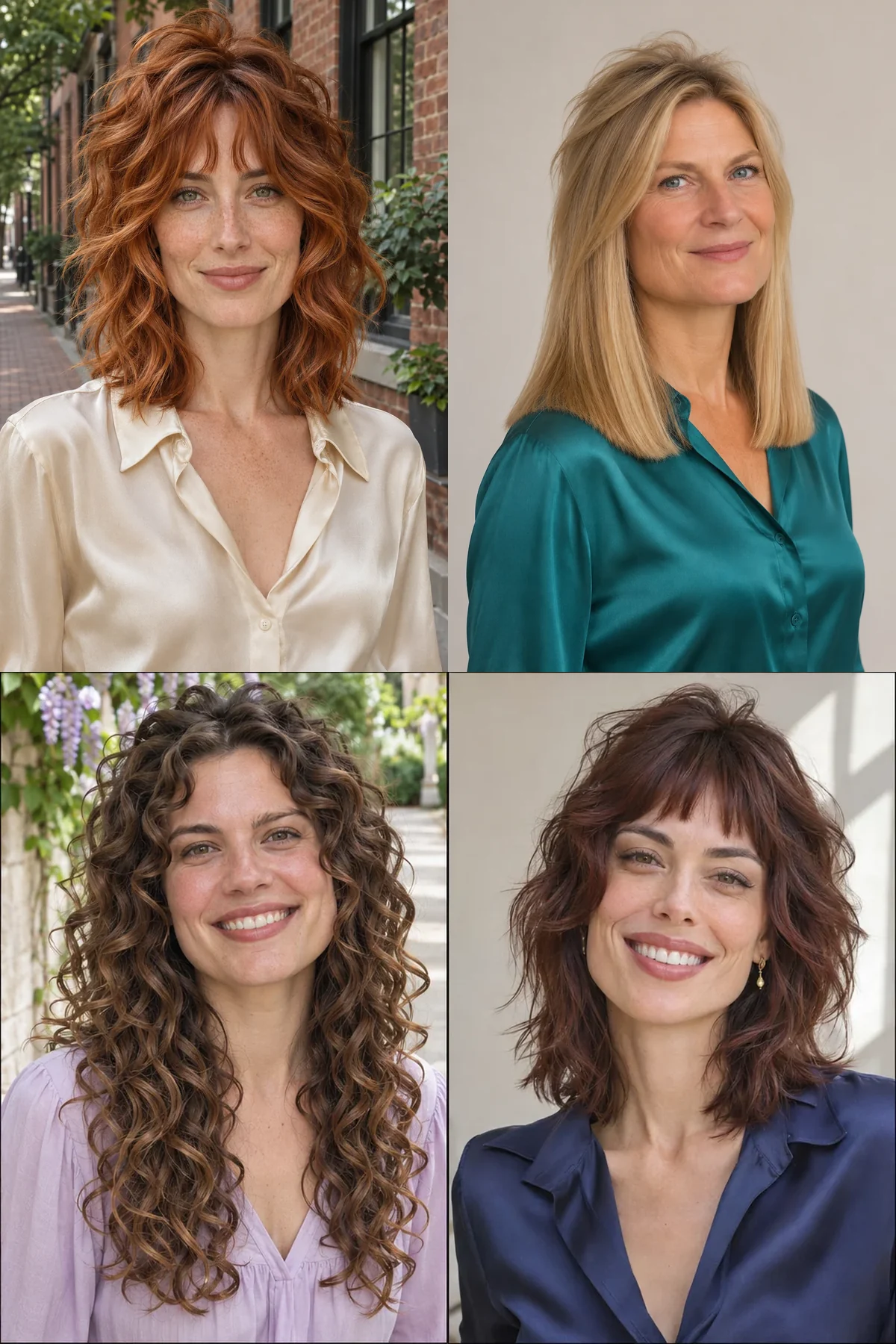
A modern shag is a layered haircut with shorter pieces through the crown and around the face that lead into longer, textured ends. The lift at the top and the way the layers break up the outline are what make it read as a shag. A wolf cut usually has a steeper drop from its crown to the longer back, and a mullet has a clearer short-side, long-back divide. On a shoulder-length or longer shag, the sides can stay connected and the ends can keep some weight. Bangs are optional.
Find the one that feels like you: Start with the first look and let the photographs lead. Each style explains how the shape affects your features, the mood it creates and the exact words to take to your stylist.
Quick Facts
- Choose where the longest hair should sit when dry.
- Decide how short the crown can go before it starts to feel too full or too hard to tie back.
- Pick the shortest front piece by where you want it to land on your face.
1. A Shoulder-Length Shag With Open Curtain Bangs
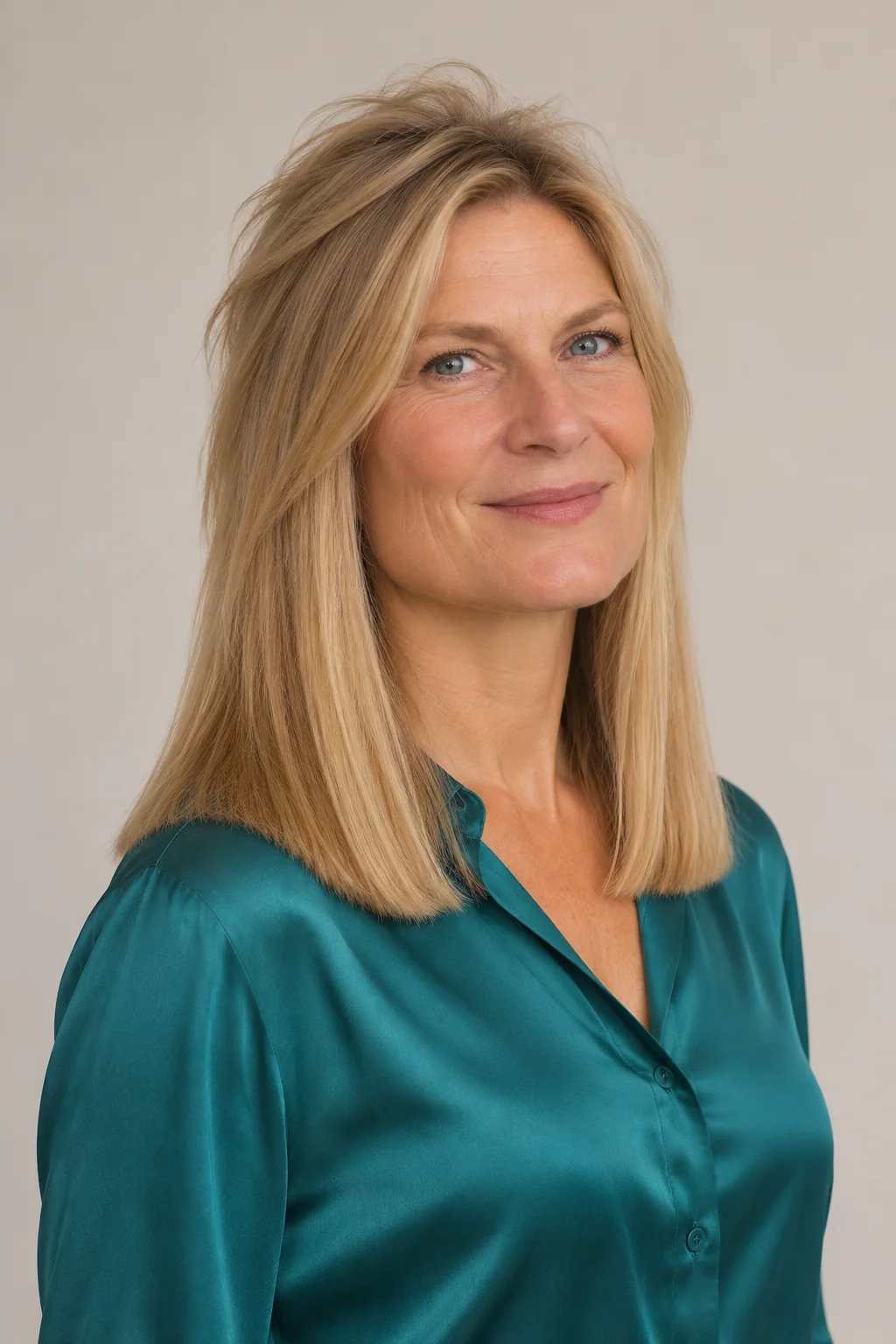
On a shoulder-length shag, curtain bangs can open up the whole front of the cut. Here, the shortest pieces sit near the brows and sweep out to the cheekbones, where they pick up the same bend as the layers around the crown. If your hair waves naturally, that repeated curve can make a quick wash-day style feel deliberate, with just enough movement to soften the line of a jacket. Dry the fringe in its part first so it stays out of your eyes, then scrunch the rest and leave it alone until dry. At the salon, ask for open brow-length curtains that connect to cheekbone layers and a dry hem at the shoulders.
Ask your stylist for: Keep the ends at my shoulders when dry, with a lifted crown and an open fringe that lengthens toward my cheekbones.
2. The Fine-Hair Shag With Full Ends
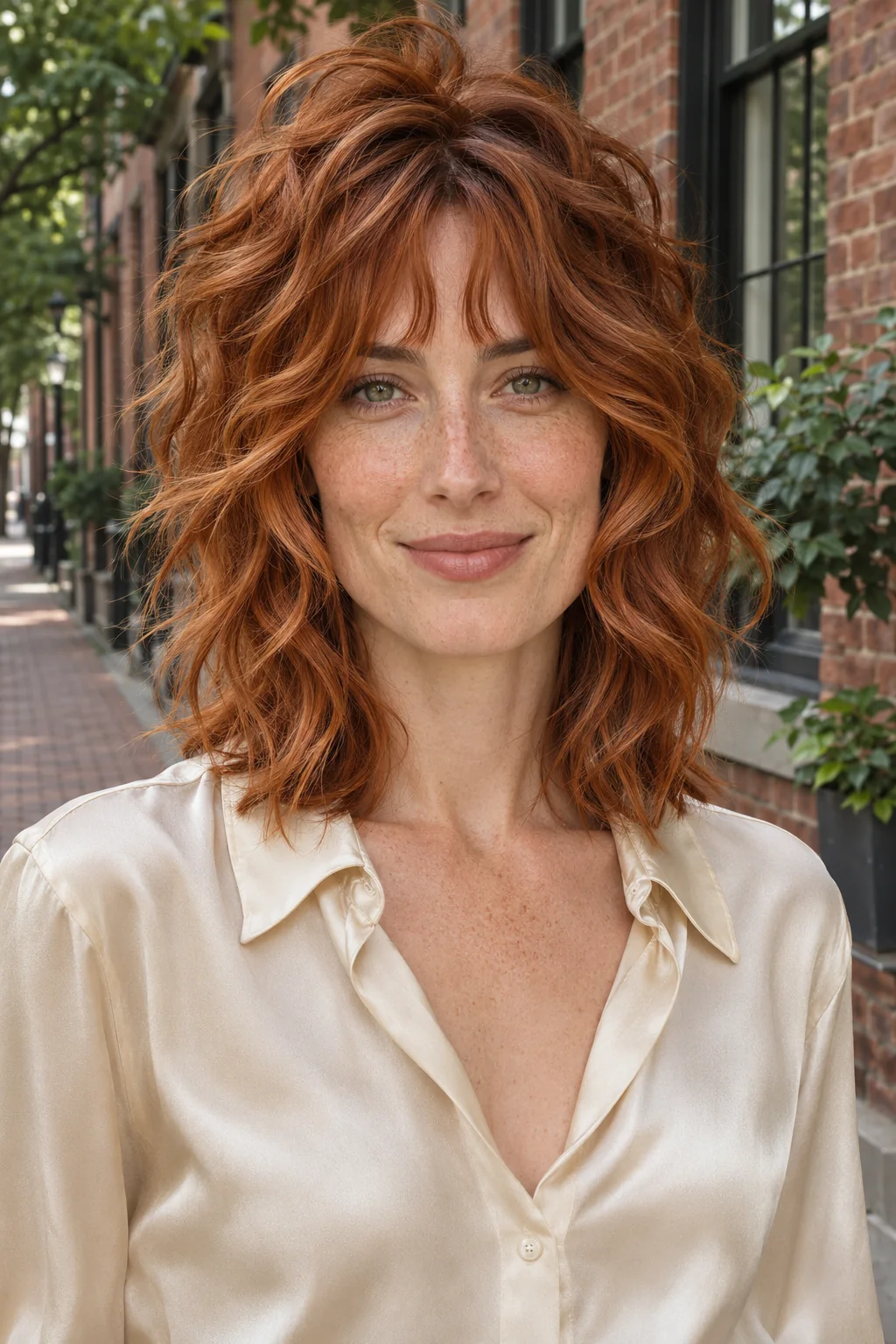
If your ponytail already feels thin at the ends, bring a reference that shows a solid bottom edge. This just-below-the-shoulder shag puts its shortest layers in a small section at the crown, where they can lift the profile without borrowing hair from the sides that make the ends look full. The result feels airy around the head and reassuringly substantial when you gather it at the nape. Use a little light foam at the roots and keep richer conditioner away from the crown. Ask your stylist to preserve the perimeter and show you the section they’ll layer before they start cutting.
Ask your stylist for: Keep my ends full below my shoulders and layer a small section over the crown, leaving the lower sides dense.
3. A Long Straight Shag With Cheekbone Layers
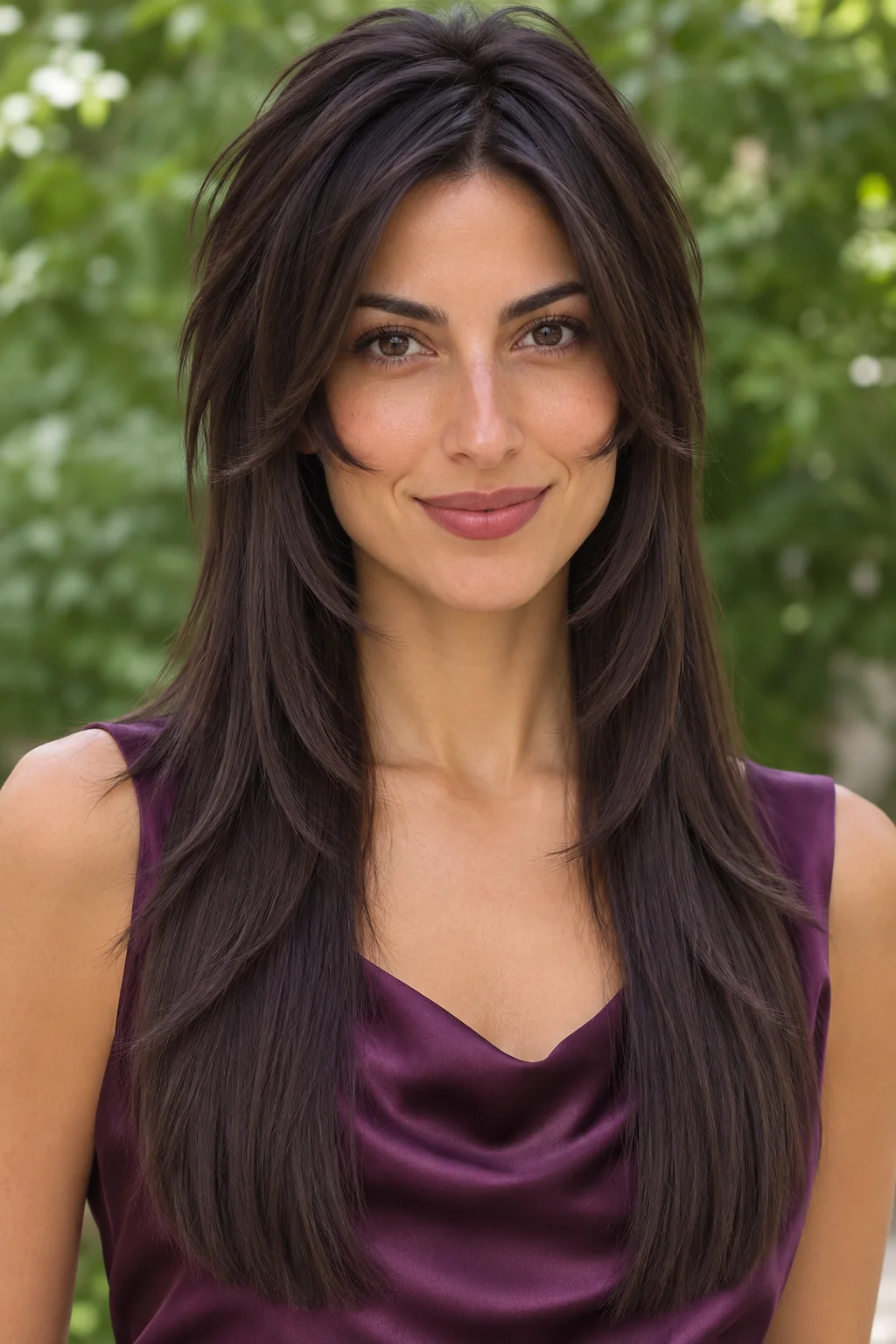
Straight hair makes the first layer easy to spot, which is exactly the appeal of this longer shag. The cheekbone pieces sit well above the mid-chest ends, and shorter crown layers carry the movement over the top, so you can keep your length and still feel like you’ve had a real haircut. On smooth hair the steps show clearly, especially when you tuck just one side behind an ear. Dry the cheekbone pieces away from the face with one pass of a brush and let the ends fall naturally. Ask for visible steps through the sides and keep enough hair at the back to make a substantial ponytail.
Ask your stylist for: Keep the longest hair at mid-chest and cut visible cheekbone pieces that step into the sides and connect to the crown layers.
4. A Fringe-Free Shag With a Jaw-Length Frame
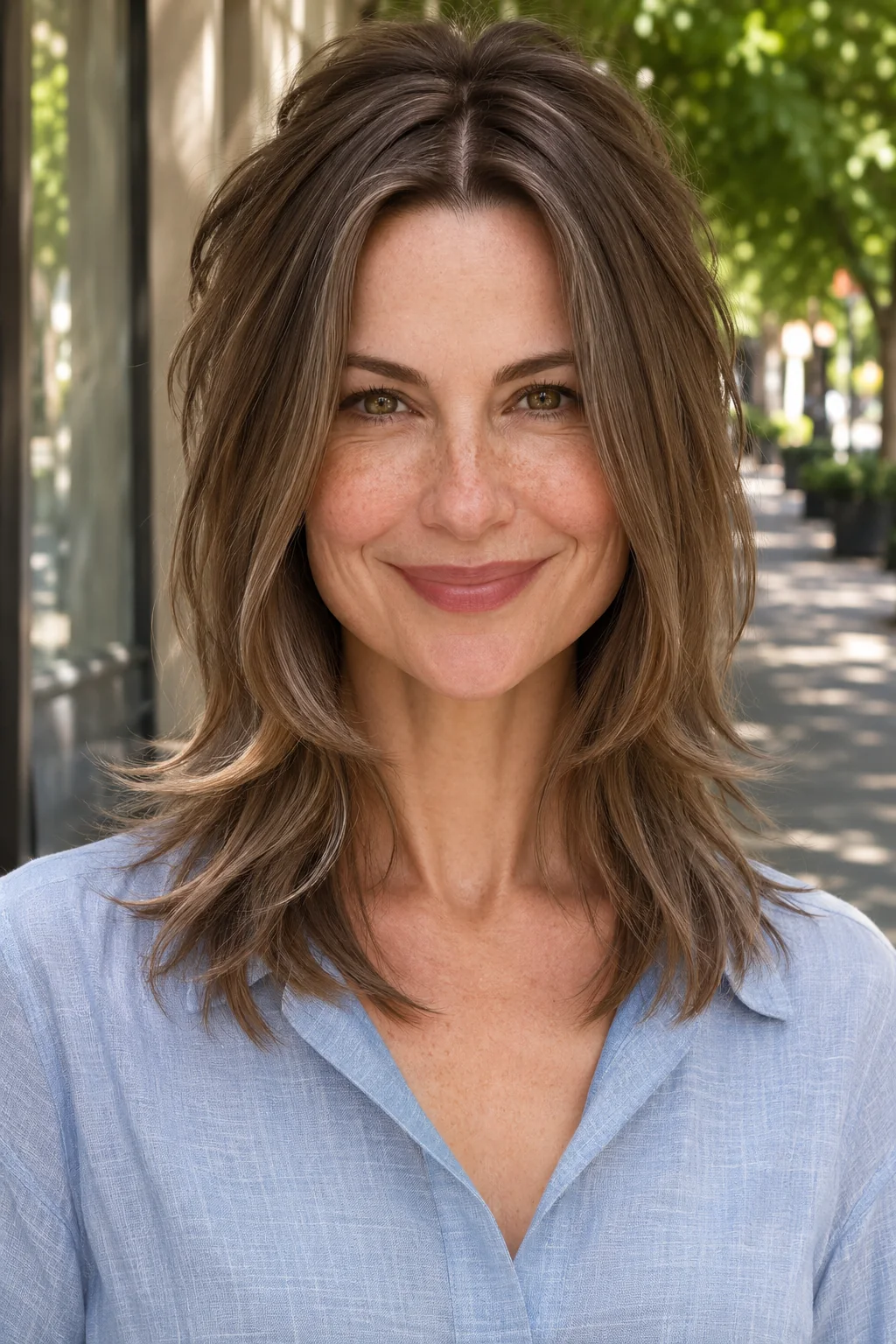
If you like a shag’s loose outline but know you’ll pin bangs back by breakfast, leave the forehead clear. On this collarbone cut the front drops to the jaw before it turns out, so the movement sits around the lower face and most of the front can still go behind your ears. There’s something quietly put-together about being able to sweep it back on a work call and let it fall again when you leave. Clip the front away while it dries if it tends to drift into your eyes. Ask for the shortest front pieces at the jaw, with the crown layered separately.
Ask your stylist for: Leave the forehead clear, start the front at my jaw, and cut the crown separately above a collarbone-length outline.
Pause and notice: Tie your hair back the way you normally wear it. The pieces that already slip free show you where to leave extra length if you want your new cut to stay in the tie.
5. A Shoulder-Length Shag With a Full Brow Fringe

A full brow fringe gives this shoulder-length shag its strongest line, especially when the ends beneath it are loose and piecey. It draws attention to the eyes and can feel pleasantly dramatic even with a plain sweater and no makeup. The tradeoff is a little more upkeep, since a full fringe is usually the first thing you notice growing out. If the front of your hair has a stubborn cowlick, ask the stylist to check its natural fall before taking a deep section. Dry the fringe from side to side, then ask for a brow-skimming center and soft corners that connect into the shag.
Ask your stylist for: Cut a full brow-skimming fringe, soften its corners and keep the shoulder-length ends piecey.
6. The Side-Swept Shag With One Open Temple
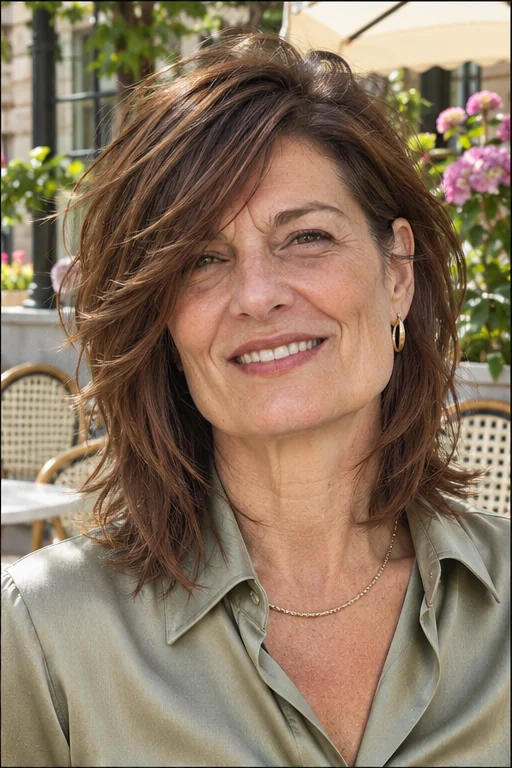
A side part can give the shag an entirely different balance. The fringe runs diagonally from the brow toward one cheek, and the exposed temple on the other side brings an earring or the line of your glasses into view. It can feel smart enough for a meeting while the layered ends still have some swing when you take your coat off. Use your usual part when you arrive at the salon so your stylist can see where the front naturally lifts. Ask for a brow-to-cheek diagonal with a tuckable opposite side, and dry the fringe in the direction you wear it.
Ask your stylist for: Follow my natural side part and cut a diagonal brow-to-cheek fringe, with room to tuck the shorter side.
7. A Thick-Hair Shag With a Longer Crown
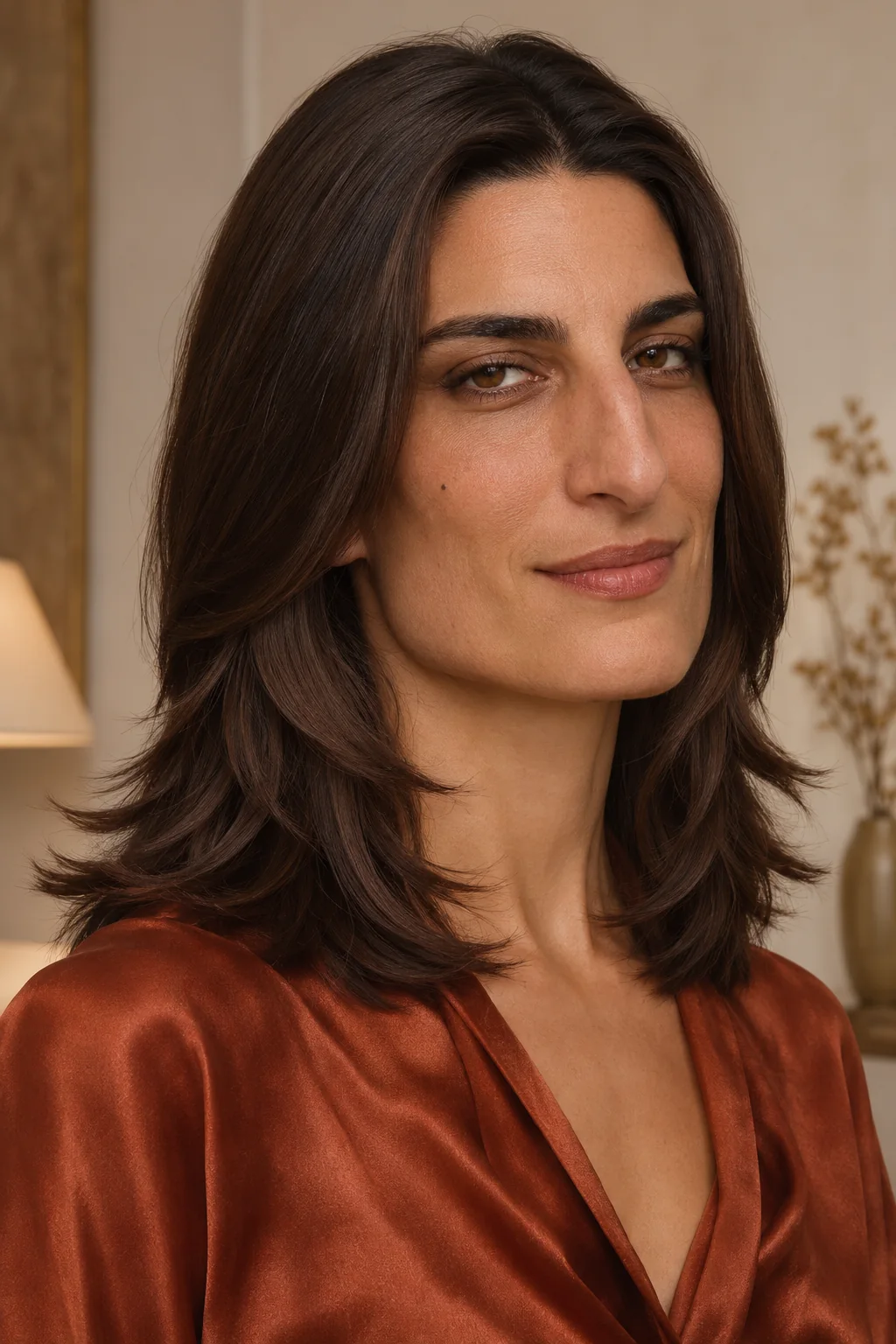
With thick hair, a very short crown layer can stand higher than you expect, especially once the hair dries. This shoulder-length shag keeps the top layers long enough to settle and puts the more noticeable movement below the ears, where dense hair can build up around the neck. The shape still swings, but it can feel calmer when you wear a high collar or scarf. Start drying the dense underneath sections first so you can see how the surface will lie. Ask for controlled weight removal below the ears and keep enough hair at the edge to see the outline.
Ask your stylist for: Leave my crown layers long enough to lie down and release bulk below my ears while keeping the outer ends substantial.
8. A Long Curly Shag With an Open Forehead
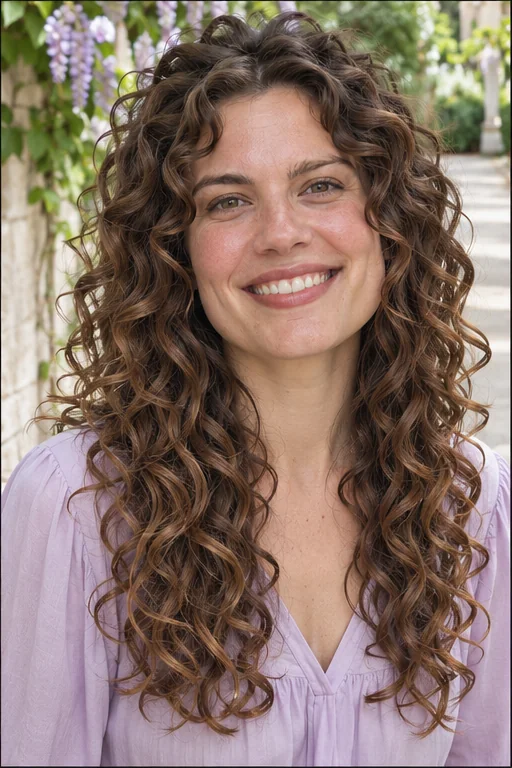
Long curls can pull flat at the top even when the ends have plenty of bounce. This shag gives the crown its own shorter spring while the longest spirals still sit past the shoulders, so the outline has movement without losing the feeling of long hair. The open front keeps curls clear of the eyes and can make the cut feel easy to wear even when you let it dry naturally. Ask to mark the crown and longest curl in their dry positions so shrinkage doesn’t decide the shape for you. Blot with a soft towel and let the curl groups set before lifting the roots.
Ask your stylist for: Check my curls dry, keep the longest spirals past my shoulders and give me shorter crown layers with an open front.
Pause and notice: Compare front and side photos before you choose. The front shows what happens around the eyes and cheeks. The side shows how high the crown sits and how much hair is left at the ends.
9. A High-Crown Shag With Wispy Bangs

Seen from three quarters, this shag rises at the crown and tapers into textured shoulder-length ends. Wispy bangs keep the front light, so most of the drama stays at the top, where a little height can give the whole look a playful edge. It works especially well if your roots take to a quick lift and you like some movement even on days you just put on jeans and go. Dry the crown roots against their fall and let them cool before you shake them loose. Ask for a high crown and connected side lengths, with a sparse brow fringe.
Ask your stylist for: Put the shortest layers high on my crown, keep my side lengths connected and cut a see-through fringe at the brows.
10. A Long Shag With Curtain Bangs That Reach the Jaw
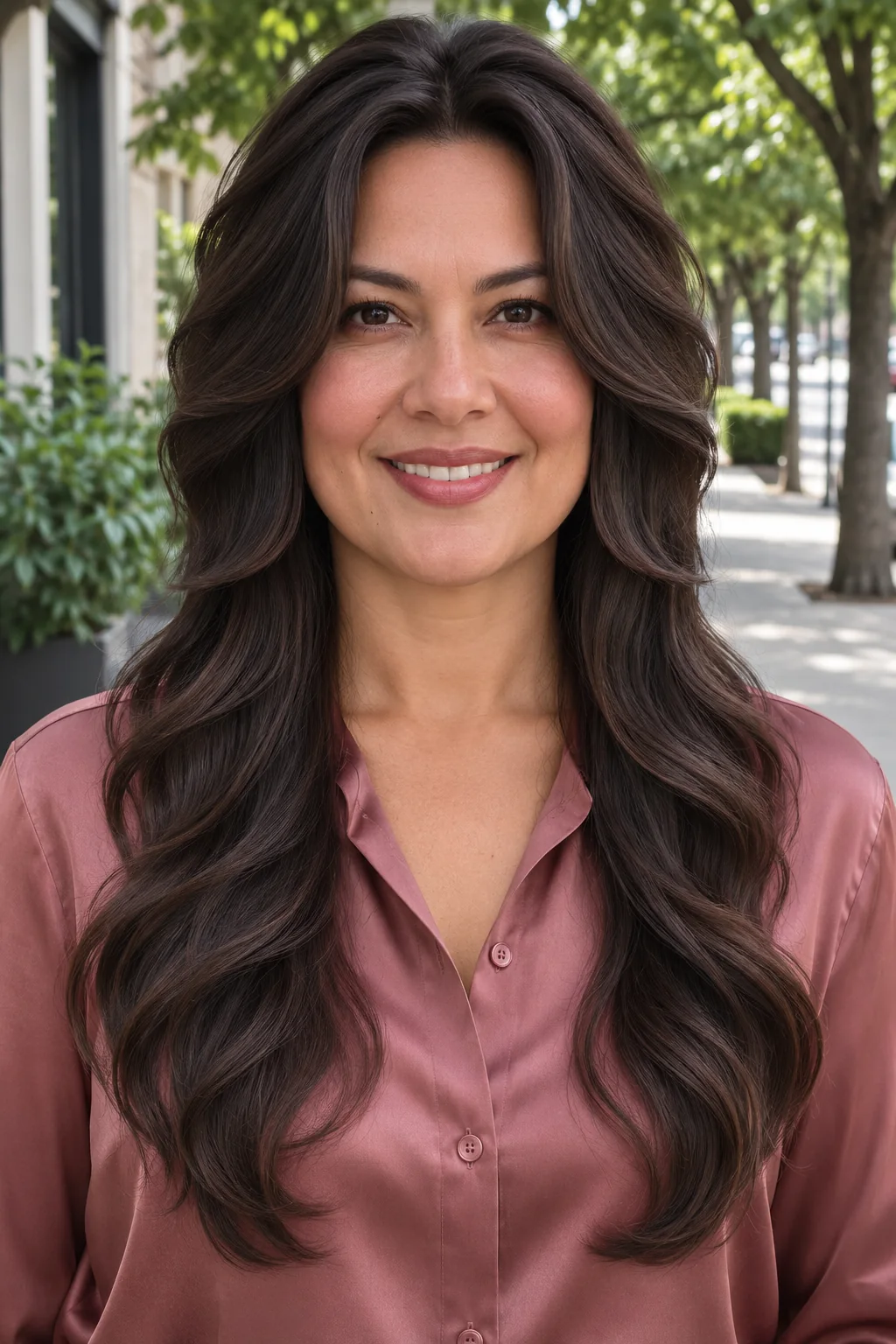
Long curtains are a good place to start if you want the sweep of bangs and still like to pull most of your hair back. The two front sections reach the jaw and bend away, then blend into the side layers, while a raised crown keeps the cut recognizably shaggy all the way down to the chest. You get a soft frame that feels a little dressed up when the hair is loose and still works on a ponytail day. Dry the front backward with a brush and let it cool in the bend. Ask for jaw-length curtains and check that they reach your usual hair tie.
Ask your stylist for: Cut the shortest curtain pieces at my jaw and sweep them into the first long side layer, keeping a shaped crown and chest-length ends.
11. The Shag With a Rounded Back and a Full Hem
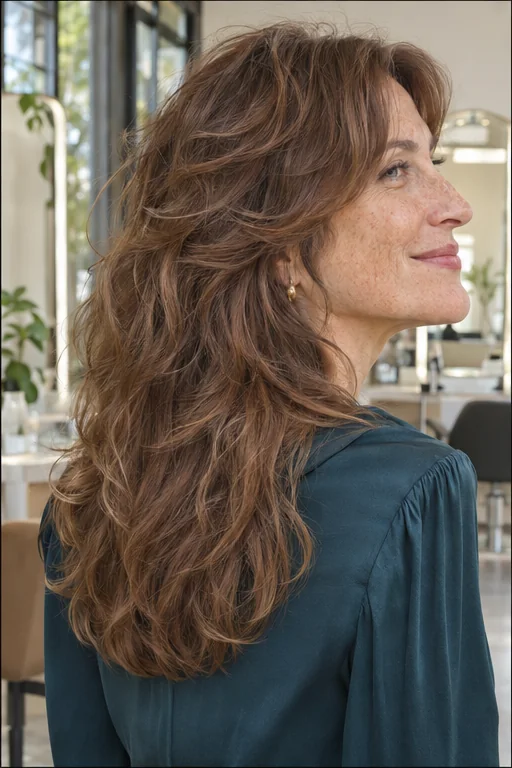
Look at the back before you commit to a longer shag. A broad U-shaped hem keeps width at the sides and curves gently down the middle, while shorter layers above it make space for the waves to move. That fuller outline can feel polished when you wear your hair down at dinner and still leave plenty to gather the next morning. Ask your stylist to show you the back in a mirror before refining the ends, and say you want a shallow U rather than a pointed tail. Refresh a flattened wave by dampening one section at a time instead of resoaking the whole back.
Ask your stylist for: Leave a broad U-shaped hem and build the shag layers above it, keeping width at the sides and through the ends.
12. A Shag With Short Rounded Bangs

The little gap between the fringe and the eyebrows makes this shag read differently from a cut with a brow-skimming bang. The short center opens up the eyes and shows the shape of the brows, while the rounded corners and shoulder-length layers soften the outline enough to keep the haircut feeling playful. It’s a good fit if you enjoy a visible fringe and can give it a few minutes on wash days. Dry it flat before shaping the ends, especially if it tends to spring up. Ask to check the final height dry, with rounded corners that lengthen toward the temples.
Ask your stylist for: Cut a short rounded fringe above my brows when dry and curve the corners toward my temples. Keep the sides at my shoulders.
Before You Book the Appointment
A successful salon visit begins with the overall shape, construction and upkeep—not only the finished length. Use this quick reality check before choosing your final reference photograph.
- Fine or low-density hair: Keep the perimeter dense and confine short layers to a small crown section. Fine strands and low density are separate, so ask your stylist to assess both.
- Dense straight hair: Find where the weight builds up. Longer crown layers can keep the top settled while layers below the ears give the sides room to move.
- Natural waves: Ask where the first bend appears when dry. A layer ending at that bend can give a visible sweep with less brush work.
- Curls or coils: Use dry reference photos with a similar curl pattern and mark the desired dry length. Leave room for different parts of the head to spring up at different rates.
What to Ask For at the Salon
Show a front and a side or back photo with a texture close to yours. Point to where you want the longest ends to land dry, then show the shortest crown length you’re comfortable with. If you want a fringe, bring your glasses and show where the front naturally parts. Ask how much weight will come out of the ends and whether your shortest front pieces will reach your usual ponytail.
Is a Modern Shag the Same as a Mullet or Wolf Cut?
All three can have short top layers and longer ends. A shag typically connects the layers through the sides, while a mullet keeps a clearer difference between short sides and a long back. A wolf cut often combines pronounced crown lift with a narrower, longer tail. A modern shag can have an obvious crown and still keep a broad, connected hem.
Styling a Shag Between Washes
Reset the part that changed overnight. Dampening a fringe is usually enough to redirect it. Straight hair can take a quick pass with a brush where the face frame should turn. For waves or curls, squeeze a little water into the flattened groups, reshape them with your fingers and leave them alone until dry. A light foam can help fine roots keep their lift.
Keeping the Layers or Growing Them Out
The fringe often tells you first when a trim is due. If you want the shape to last, ask for a fringe or crown refresh and keep your dry length. To grow it out, let the shortest layers catch up and tidy the perimeter in small amounts. A long fringe can become a side sweep or a cheekbone frame before it reaches the rest of the cut.
More Hair Inspiration
- Short Shag Haircuts — Compare shags with shorter hems and compact silhouettes.
- Wolf Cut Ideas — See how more contrast between the crown and tail changes the outline.