The right bangs do more than cover part of your forehead—they complete the architecture of a haircut. A haircut with bangs combines a deliberately shaped overall cut with a shorter front fringe that falls, parts or sweeps across the forehead or cheekbones. Bangs begin from a defined front section and create their own edge; face-framing layers start farther back and usually fall below the cheekbones, while curtain bangs sit between the two with a shorter center and longer parted sides. The best choice respects your hairline, density, texture and willingness to style, so compare the whole silhouette rather than choosing a fringe in isolation.
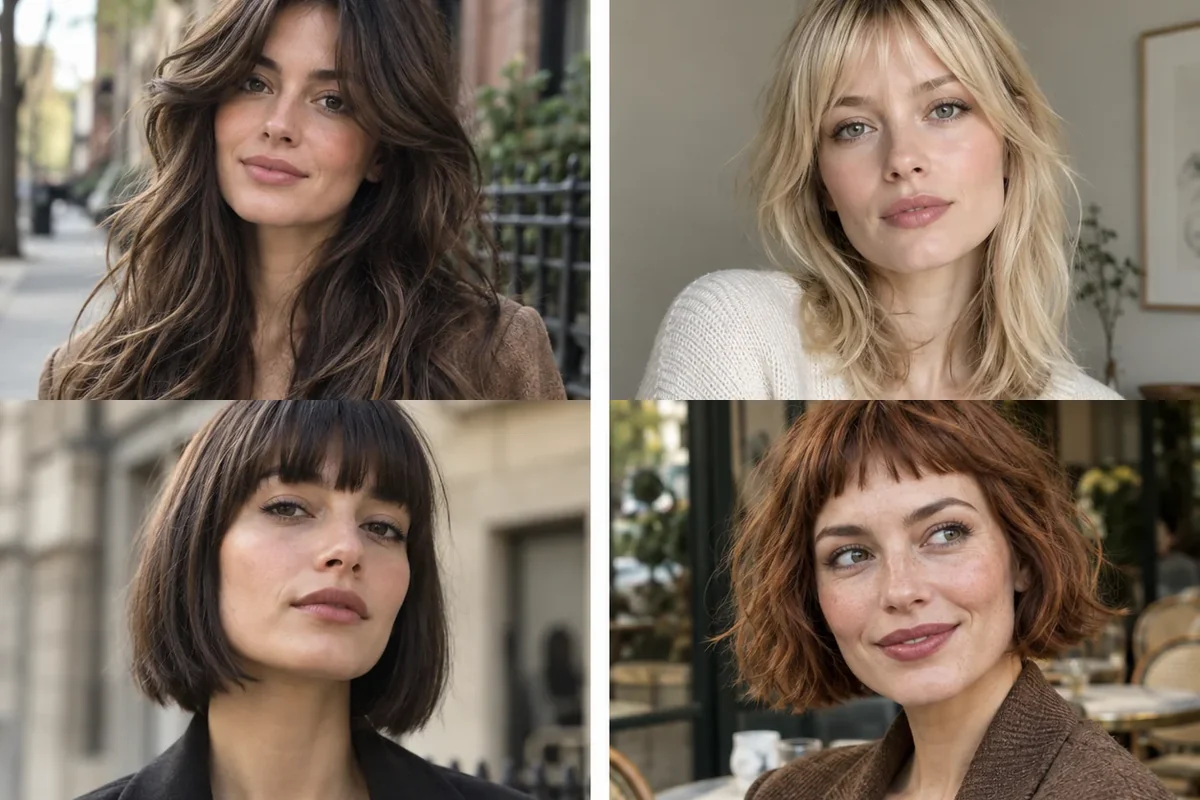
Find the one that feels like you: Start with the first look and let the photographs lead. Each style explains how the shape affects your features, the mood it creates and the exact words to take to your stylist.
1. Long Layers With Soft Curtain Bangs
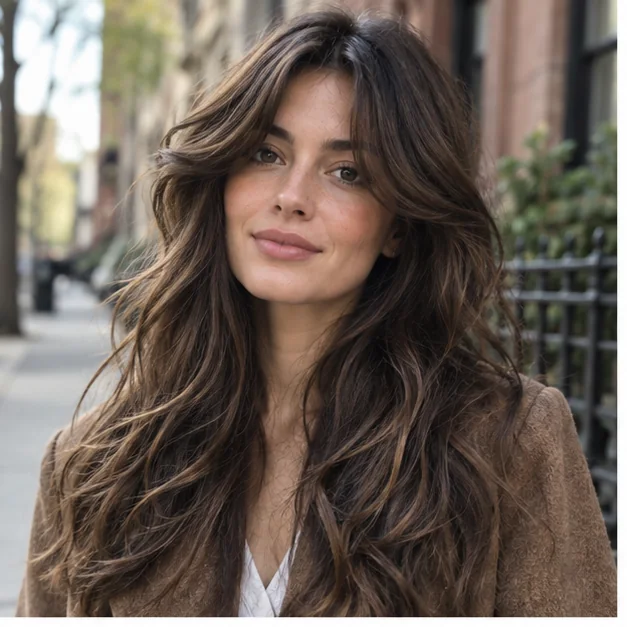
Long, cascading layers begin below the cheekbones while softly graduated curtain bangs open at the center and melt into the sides. The diagonal fringe can widen a narrow face gently and draw attention toward the eyes without taking much density from the lengths. This pairing feels romantic and relaxed, and it suits anyone who wants a noticeable change with a forgiving grow-out. Ask for a center fringe cut around the brow, lengthening to the cheekbones, plus long connected layers; blow-dry the bangs forward first, then split them so the roots do not set flat.
Ask your stylist for: Cut a brow-length center fringe that graduates to the cheekbones and connects into long layers.
2. Medium Layers With Airy Wispy Bangs

A collarbone-length cut carries gentle internal layers, while a narrow triangle of fine bangs sits lightly across the brows. Visible gaps keep the forehead from feeling closed in and can make delicate features look softly defined rather than overwhelmed. It feels fresh, polished and low-pressure, especially for fine or medium hair that cannot spare a heavy front section. Request a low-density fringe with point-cut ends and collarbone layers that preserve the perimeter; use a small round brush and very little product, because oil or cream quickly collapses this airy finish.
Ask your stylist for: Create a narrow low-density brow fringe with point-cut ends and collarbone layers that retain fullness.
3. Blunt Bob With Full Straight Bangs

A one-length bob lands near the jaw, paired with dense bangs cut in a clean line just above the brows. The two horizontal edges create striking structure, emphasize the eyes and can give a long face a more compact visual balance. This is a confident, fashion-conscious choice that looks intentional with simple clothes, but it asks for regular fringe trims and smooth styling. Tell your stylist you want a blunt, minimally graduated bob and a full fringe cut with low tension, softened only at the edge; wrap-dry the bangs side to side to control splits.
Ask your stylist for: Cut a jaw-length blunt bob with minimal graduation and a full low-tension fringe softened at the edge.
4. French Bob With Broken Micro Bangs

This compact bob curves between the cheekbones and jaw, while irregular micro bangs expose the brows and leave tiny spaces across the forehead. The short proportions lift attention toward the eyes and cheekbones, which can make petite features feel especially expressive. It has a playful, creative mood and air-dries beautifully on hair with a slight bend, though the tiny fringe shows growth quickly. Ask for a cheekbone-to-jaw French bob with gentle under-beveling and dry-cut micro bangs clearly above the brows; refine individual pieces instead of cutting a rigid line.
Ask your stylist for: Shape a cheekbone-to-jaw French bob with gentle under-beveling and broken micro bangs above the brows.
5. Lob With Bottleneck Bangs

A shoulder-grazing lob stays substantial at the ends, while bottleneck bangs pinch shorter near the brow and flare longer around the cheekbones. That curved opening highlights the center of the face and can soften a square jaw without hiding the eyes. The result feels sophisticated and a little glamorous, yet the long corners tuck away easily on rushed days. Request an almost one-length lob with subtle front movement and a concave fringe shortest at the center and longest at the cheekbones; style it forward before sweeping the corners outward.
Ask your stylist for: Keep the lob substantial and cut a concave bottleneck fringe from brow length to cheekbone corners.
Pause and notice: Before saving a fringe photo, notice its width, density and shortest point. Those details often change the result more than the style name.
6. Pixie Cut With Long Side-Swept Bangs
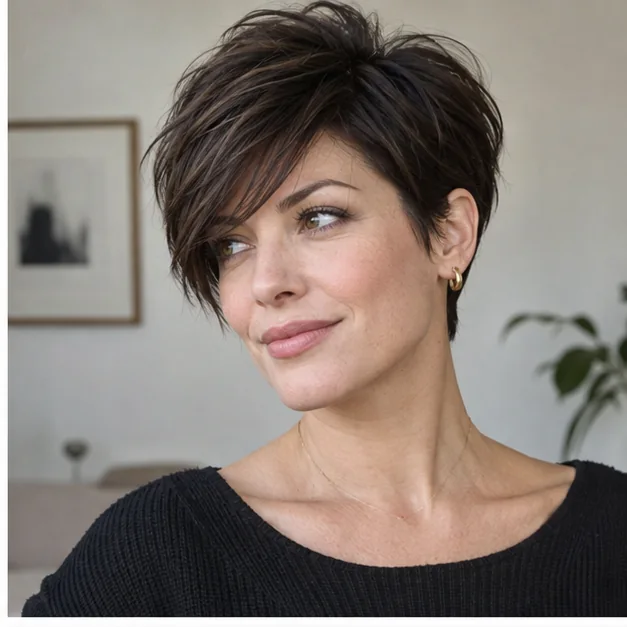
Close, tapered sides and a neat nape support a longer top that travels diagonally across the forehead. The sweep creates an elongating line for a round face, softens a broad forehead and keeps a short cut from feeling too exposed. It feels capable and modern with enough movement to change the part for evening or work. Ask for a softly tapered pixie with three to four inches through the front, connected crown layers and a fringe long enough to clear the eyebrow when swept; use light paste only at the ends so roots stay buoyant.
Ask your stylist for: Create a softly tapered pixie with a connected crown and three to four inches of sweepable front length.
7. Bixie With Piecey Bangs
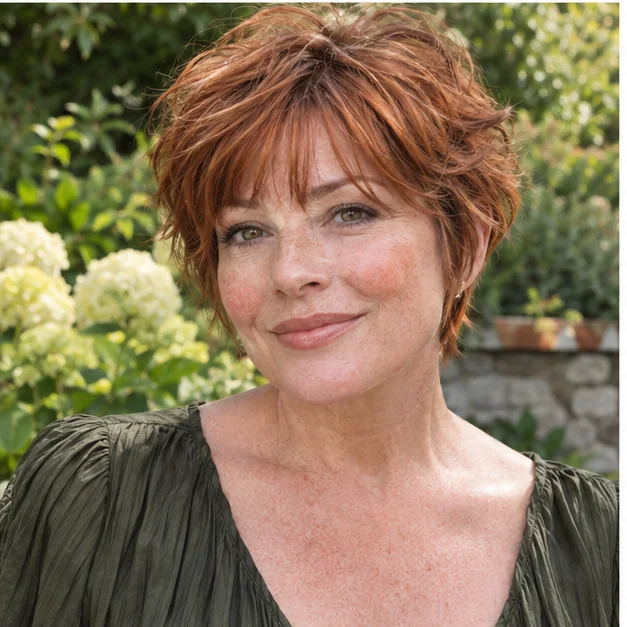
A bixie keeps pixie-like crown layers but leaves bob-like length around the ears and nape, finished with separated brow-skimming bangs. Those broken pieces reveal flashes of forehead, balancing a full short silhouette and drawing focus toward the eyes. The cut feels spirited and easygoing, and its tousled finish is forgiving between washes. Request an ear-skimming bixie with feathered crown elevation, a lightly extended nape and point-cut bangs connected at the temples; pinch a pea-size amount of paste through dry ends rather than coating the entire fringe.
Ask your stylist for: Cut an ear-skimming bixie with feathered crown layers, a soft nape and connected point-cut bangs.
8. Short Shag With Choppy Bangs

Short crown layers flick outward through the sides and nape, while choppy bangs land at slightly different points around the brows. The broken outline adds lift to fine or flat hair and can soften a prominent jaw by keeping the eye moving through the silhouette. It feels rebellious, playful and intentionally imperfect, making natural bends and second-day texture useful rather than troublesome. Ask for a short shag with strong crown elevation, wispy side weight and a broken fringe cut with varied point-cut lengths; refresh with dry texture spray at the roots, not heavy wax across the front.
Ask your stylist for: Build strong crown elevation into a short shag and cut a broken varied-length point-cut fringe.
9. Long Shag With Split Bangs
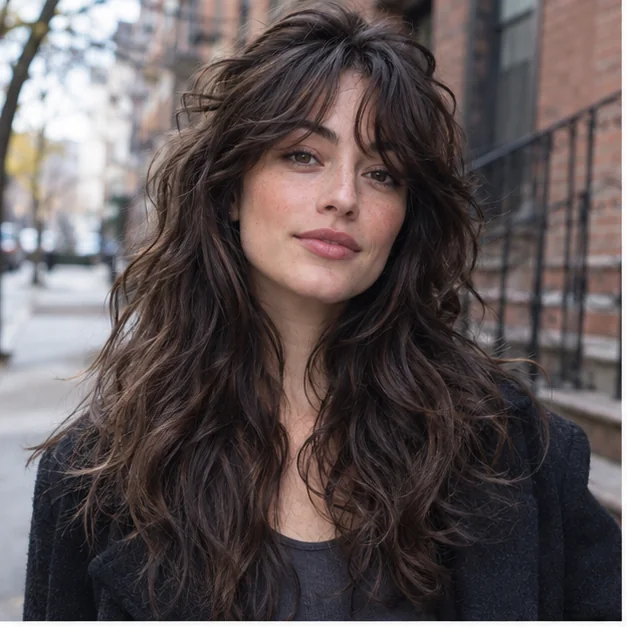
Long shag layers begin high at the crown and ripple toward the chest, with a parted fringe that is short in the middle and feathery at the sides. The upper movement creates fullness without a solid triangular shape, while the split bangs frame the eyes and cheekbones. This combination feels free-spirited and sensual, especially on wavy hair that already wants to separate. Request short crown layers connected through the lengths and a soft split fringe with cheekbone-reaching corners; scrunch in light mousse and diffuse, accepting a little irregularity instead of brushing every section smooth.
Ask your stylist for: Connect short crown layers through long shag lengths and add a split fringe with cheekbone corners.
10. Butterfly Cut With Curved Bangs
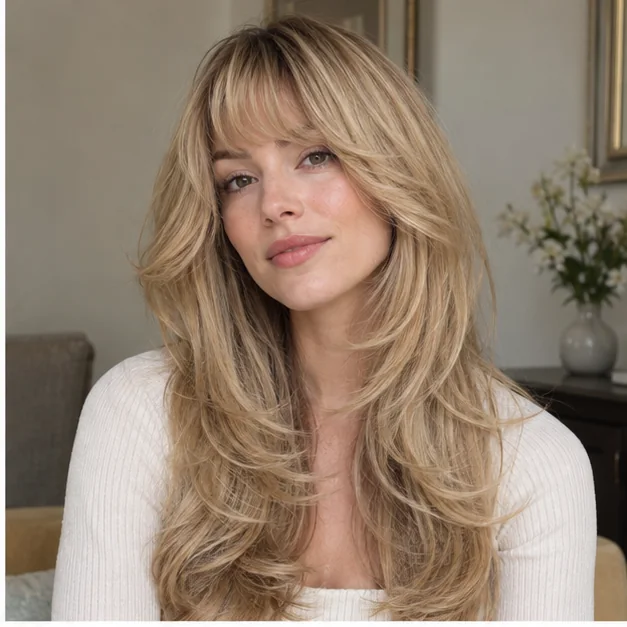
A butterfly cut uses short sweeping face layers over long preserved lengths, paired here with rounded bangs that lift at the roots and bend toward the temples. Upper volume can balance fuller cheeks and makes long hair look buoyant without sacrificing the comforting weight below. It feels glamorous and optimistic, although the polished flip benefits from a blow-dry or large rollers. Ask for blended butterfly layers beginning near the chin and a brow-length fringe with longer curved corners; set the front away from the face while cooling to hold that open shape.
Ask your stylist for: Add sweeping butterfly layers near the chin and a brow fringe with longer curved temple corners.
Pause and notice: Your natural part and hairline deserve a vote. A cowlick is not a ban on bangs, but it may call for extra length, low cutting tension or a side-swept direction.
11. Curly Bob With Curl-by-Curl Bangs
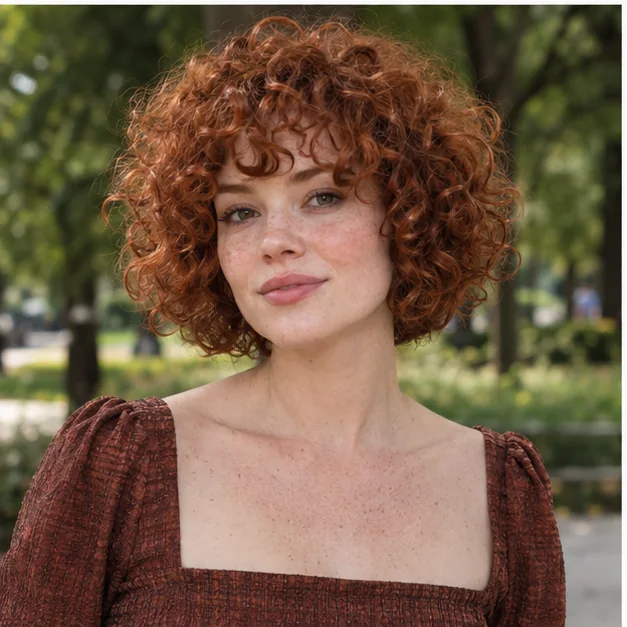
A rounded curly bob sits around the jaw, with individual fringe ringlets cut to finish near the brows after shrinkage. The curved silhouette builds flattering width around a narrow chin, and textured forehead pieces highlight the eyes without forming a heavy solid line. It feels joyful and expressive while allowing natural texture to lead the styling. Ask for a jaw-length rounded bob shaped in its dry curl pattern and curl-by-curl bangs with slightly longer temple pieces; define the fringe first on soaking-wet hair and avoid trimming stretched curls at home.
Ask your stylist for: Shape a jaw-length rounded bob dry and cut complete fringe ringlets to brow level after shrinkage.
12. Wavy Lob With Side Fringe

Loose waves skim the collarbones in a lightly layered lob, while a long side fringe curves across the forehead and joins the front layers. The diagonal movement can soften angular features and gives a center-part routine an instant change without committing to short bangs. This is an elegant, relaxed option that still tucks behind the ear and grows out almost invisibly. Request a collarbone lob with long internal layers and a side fringe beginning between the brow and cheekbone, cut to follow your natural part; twist the fringe away from the face while drying.
Ask your stylist for: Cut a collarbone lob with long internal layers and a brow-to-cheekbone side fringe following the natural part.
13. Shoulder-Length Cut With Arched Bangs
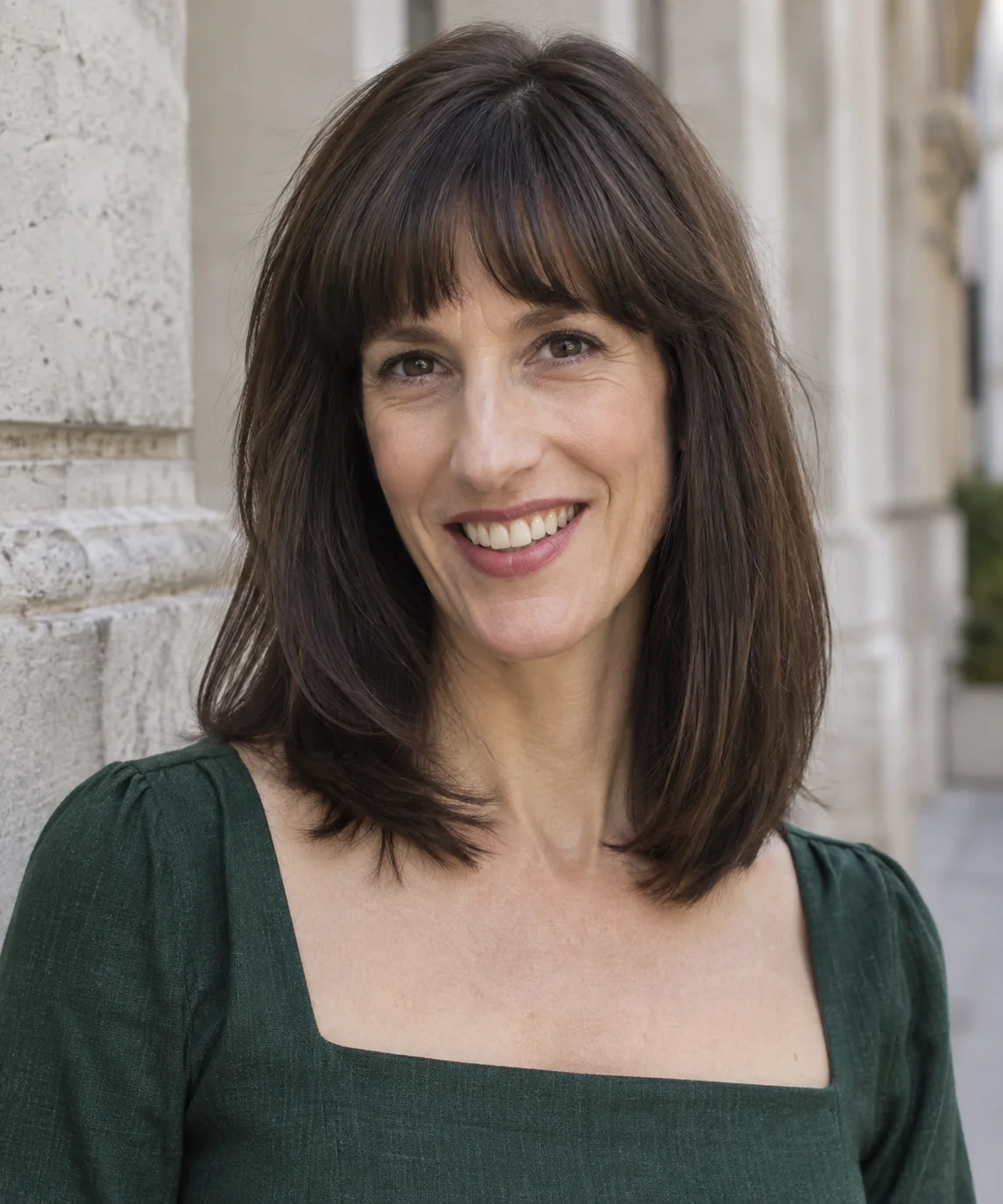
The overall cut falls in a smooth line at the shoulders, while full bangs curve slightly shorter over the center and lengthen near the temples. That shallow arch opens the eye area and avoids the severe effect of a ruler-straight fringe, making it useful for prominent cheekbones or a wider forehead. It feels classic, composed and quietly feminine, especially on straight-to-wavy hair. Ask for a solid shoulder-length perimeter with minimal layering and a low-tension arched fringe that just clears the brows; dry it immediately and alternate brush direction to stop splitting.
Ask your stylist for: Keep a solid shoulder perimeter and cut a low-tension brow fringe with a shallow arch and fuller corners.
14. Fine-Hair Lob With Feathered Bangs
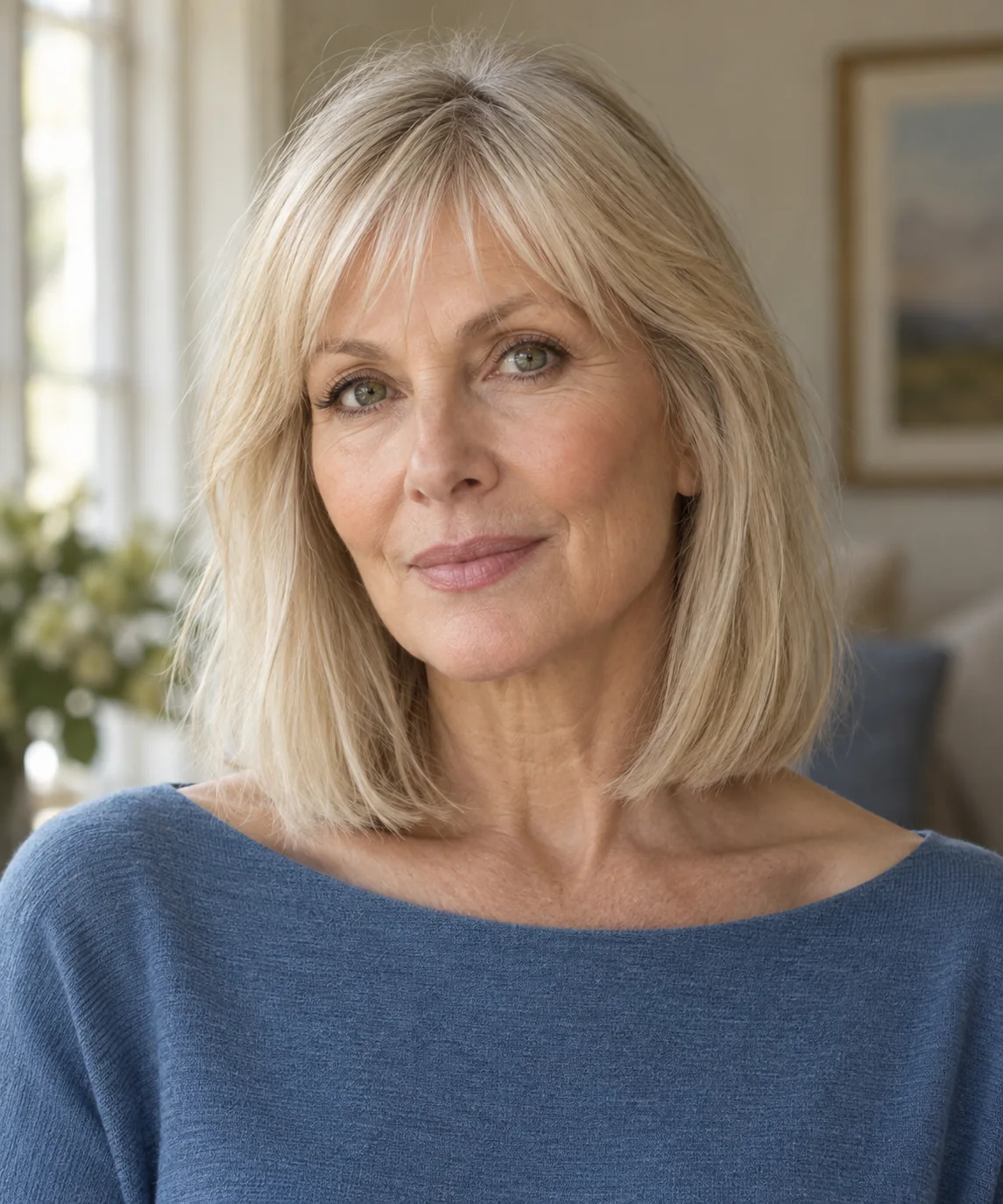
A mostly blunt lob preserves density at the collarbone, balanced by a compact fringe whose ends are delicately feathered rather than deeply thinned. The soft front movement adds interest without sacrificing too much hair from the sides, helping fine lengths appear fuller. It feels light, refined and manageable for someone who wants styling variety without a heavily layered cut. Request a strong lob perimeter, minimal internal layering and a narrow fringe with surface-only feathering and longer corners; use root-lifting spray sparingly and keep conditioner away from the bang roots.
Ask your stylist for: Preserve a strong lob perimeter and add a narrow fringe with surface feathering and longer corners.
15. Long Thick Hair With Swooping Bangs
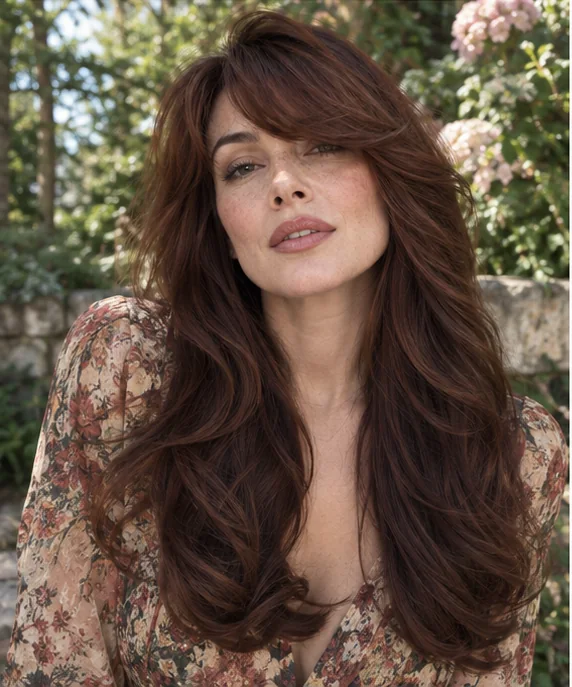
Long dense hair keeps a rounded U-shaped perimeter and subtle internal weight removal, while substantial bangs sweep from a shorter center into long temple pieces. The generous fringe can balance the scale of thick lengths and soften a broad or angular face without looking wispy. It feels luxurious and dramatic, though the front needs enough debulking to move rather than separate into a heavy shelf. Ask for a U-shaped cut, invisible internal layers and a wide swooping fringe with carefully removed interior weight; dry in sections and keep the finish flexible rather than lacquered.
Ask your stylist for: Shape a U perimeter with invisible layers and a wide swooping fringe debulked internally, not at the edge.
Pause and notice: Think about an ordinary morning, not only the salon finish. Airy and side-swept fringes forgive missed styling days; blunt and micro bangs reward quick attention.
16. Silver Bob With Soft Wispy Bangs

A softly graduated bob lifts the back and skims the jaw, with fine wispy bangs that reveal part of the forehead. The light edge brightens the eyes, works comfortably with glasses and avoids too much visual weight across delicate mature features. It feels elegant, modern and confidently natural, while the graduated shape gives silver hair welcome fullness. Ask for gentle stacked graduation below the occipital bone, soft jaw-length sides and a narrow brow fringe with point-cut separation; use a light smoothing cream and avoid excess violet shampoo on porous ends.
Ask your stylist for: Add gentle low graduation to a jaw bob and a narrow point-cut brow fringe with visible softness.
17. Asymmetrical Lob With Diagonal Bangs

One side of this lob falls slightly longer than the other, echoed by a diagonal fringe that sweeps toward the longer corner. The continuous line can visually lengthen a round face and brings strong definition to the cheekbones without the severity of a short geometric cut. It feels assured, artistic and polished, especially when worn smooth enough for the angle to read clearly. Request a connected asymmetrical lob with a modest one-to-two-inch difference and an oblique fringe blending into the long side; maintain the line every six to eight weeks before it looks accidental.
Ask your stylist for: Create a connected lob with modest asymmetry and an oblique fringe flowing into the longer side.
18. Rounded Italian Bob With Eyebrow Bangs
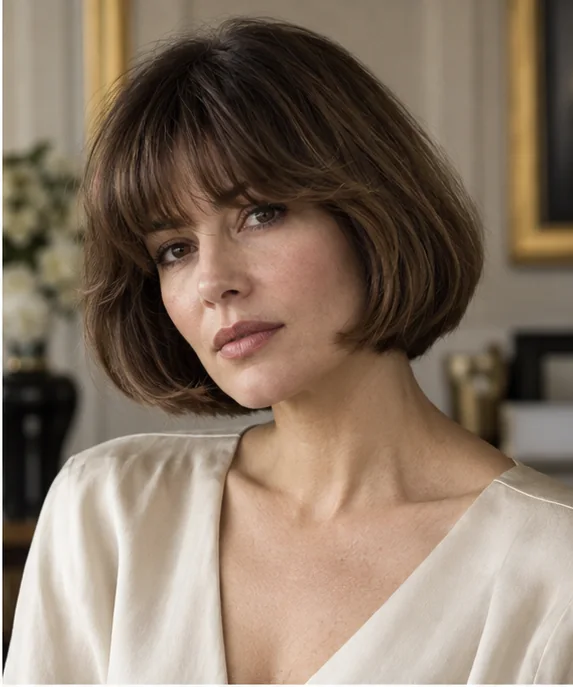
This chin-to-jaw bob keeps a thick rounded perimeter and subtle under-layers, paired with softly full bangs that brush the eyebrows. The curved mass makes fine-to-medium hair look richer and can balance a longer face by adding width around the jaw and forehead. It feels glamorous, confident and beautifully finished without relying on sharp geometry. Ask for a weighty Italian-bob outline with hidden internal movement and a full fringe cut low-tension at eyebrow level, with softly blended corners; blow-dry with a large brush and stop before the shape becomes overly curled under.
Ask your stylist for: Keep a weighty rounded Italian-bob perimeter with hidden movement and a low-tension eyebrow fringe.
19. Wolf Cut With Bottleneck Fringe
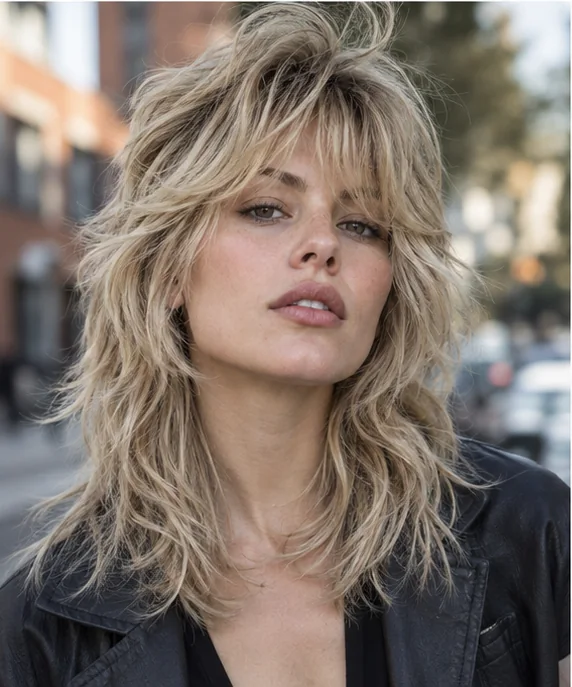
A wolf cut builds dramatic crown lift and shaggy layers that narrow toward the shoulders, framed by bottleneck bangs with a short center and sweeping cheekbone corners. Concentrated height and diagonal front pieces can lengthen a round face while giving thick or wavy hair room to move. It feels fearless and energetic, yet the curved fringe keeps the look softer than a blunt micro bang. Ask for disconnected crown elevation, tapered mid-lengths and a concave fringe mapped to your cheekbones; refresh with mousse and diffuse rather than flattening the layers with heavy oil.
Ask your stylist for: Build disconnected crown elevation and tapered lengths, then map a concave fringe to the cheekbones.
20. Mid-Length Cut With Grown-Out Side Bangs

A softly layered mid-length cut absorbs grown-out bangs that now begin around the cheekbones and sweep into the sides. Connecting the front through the jaw removes the awkward ledge, opens the forehead and makes ponytails or tucked styles look deliberately face-framed. It feels reassuring, versatile and quietly polished—the ideal route when you want freedom from frequent fringe trims. Ask for a grow-out reshape that preserves front length, softens only the old corners and connects them into jaw-to-collarbone layers; switch the part or use a small roller when the front needs lift.
Ask your stylist for: Preserve grown-out fringe length, soften the old corners and connect them into jaw-to-collarbone layers.
Pause and notice: Choose the complete silhouette that fits your real routine. The best bangs should make the haircut feel more like you, not become a separate daily project.
Before You Book the Appointment
A successful salon visit begins with the overall shape, construction and upkeep—not only the finished length. Use this quick reality check before choosing your final reference photograph.
- Best for: Readers seeking a versatile shoulder-length layered haircut.
What Counts as a Haircut With Bangs
Bangs come from a defined front section and create a shorter edge across or beside the forehead. Face-framing layers usually begin at the cheekbones or lower. Curtain bangs overlap both ideas, but their shorter center and parted graduation still create a true fringe.
Choose Construction, Not a Face-Shape Rule
Blunt bangs add a horizontal line; side and curtain shapes create diagonals; wispy fringe preserves visible forehead; micro bangs expose it. Use those effects to emphasize eyes or change proportion, but let personal style lead. Density, hairline and daily effort matter more than a rigid chart.
Texture and Density Change the Result
Fine hair often suits a narrower fringe so side lengths stay full. Thick hair may need internal weight removal without thinning the edge into fuzz. Waves, curls and coils should be assessed at their natural spring point, with extra length allowed for shrinkage.
What to Ask for at the Salon
Describe the overall haircut first, then specify fringe width, shortest point, corner length and density. Ask whether the stylist will cut with low tension, refine the edge dry and adapt for cowlicks or shrinkage. Bring front and profile references and explain your routine.
Styling Bangs Without Fighting Them
Style bangs soon after washing because a partly dried fringe remembers unwanted bends. Wrap-dry blunt or wispy shapes side to side, direct curtain and bottleneck bangs forward before splitting, and define curly bangs in natural groups. Use less product than on the lengths.
Maintenance and Grow-Out
Micro and blunt bangs may need trimming every three to five weeks; longer curtain or side bangs can stretch to six to ten. Never pull wet bangs tight and cut them at home. For grow-out, preserve the center, soften corners and connect the front gradually into longer layers.
How to Choose Your Favorite
First choose the haircut length and outline you already enjoy. Next decide how much forehead coverage and daily styling you want, then pick a fringe whose density your hair supports. Save one image for the silhouette, another for bang construction and a third with similar texture.
More Hair Inspiration
- 20 Curtain Bangs Haircuts That Frame Your Face Beautifully — Explore parted curtain fringe shapes in depth.
- 20 Birkin Bangs Ideas That Feel Soft, French and Effortless — Compare soft irregular Birkin fringe variations.
- 20 Short Shag Haircuts That Add Easy Texture and Movement — See more short layered shapes with expressive fringe.