A cropped curly haircut can make every bend, ringlet and coil feel intentional. Rather than simply cutting curly hair short, a true crop builds a compact silhouette—usually close at the nape and sides, with enough length on top or around the face for the curl pattern to stay visible. It is shorter and more shape-led than a bob, while a curly pixie often has more obvious tapering and piecey pixie detailing; a bixie keeps extra bob-like length, and a tapered afro is shaped specifically around coily natural texture. The best version works with shrinkage, density and your real styling routine, so the consultation matters as much as the inspiration photo.
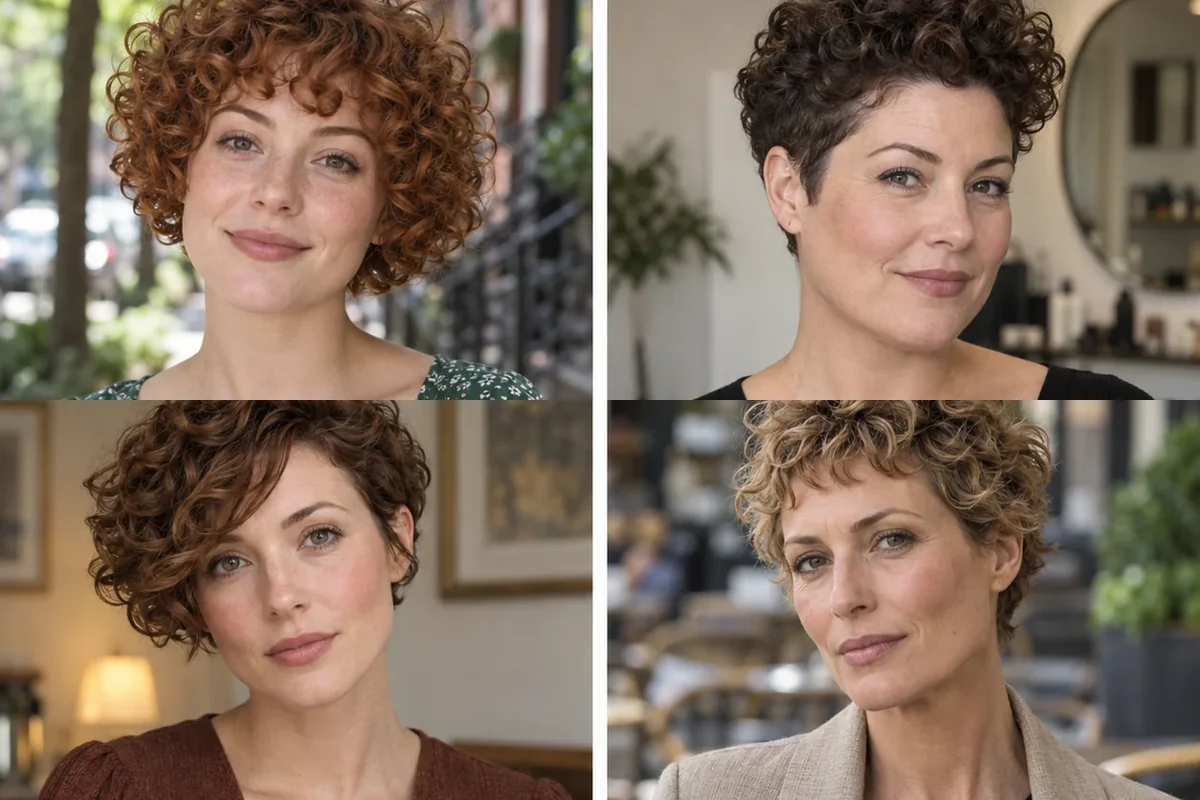
Find the one that feels like you: Start with the first look and let the photographs lead. Each style explains how the shape affects your features, the mood it creates and the exact words to take to your stylist.
1. Soft Rounded Curly Crop
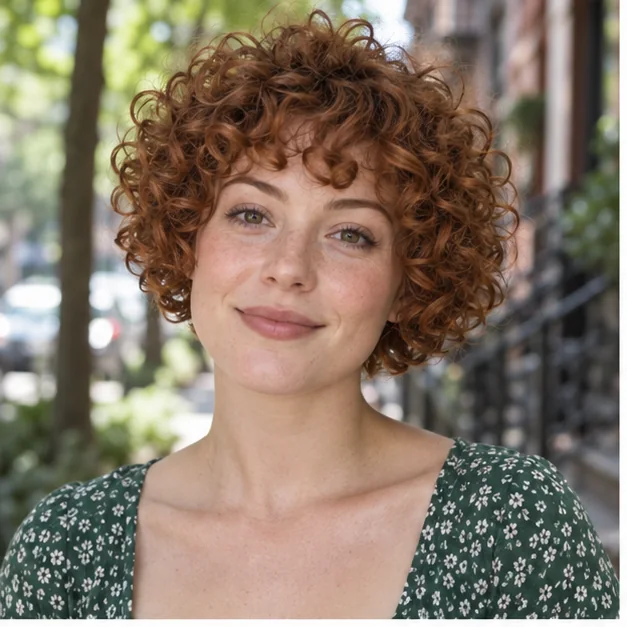
This classic crop follows the curve of the head, leaving enough length through the crown and sides for springy curls to form a soft halo. The even visual weight can balance a longer face and make fine-to-medium density look fuller without a hard, helmet-like edge. It feels approachable and quietly confident, especially if you prefer an easy shape that still looks intentional after air-drying. Ask for a rounded curly crop with internal layers, a softly exposed nape and no aggressive thinning; have your stylist account for shrinkage before setting the final perimeter.
Ask your stylist for: Cut a rounded curly crop with internal layers, soft nape exposure and shrinkage allowance, without aggressive thinning.
2. Tapered Curly Crop With Crown Height
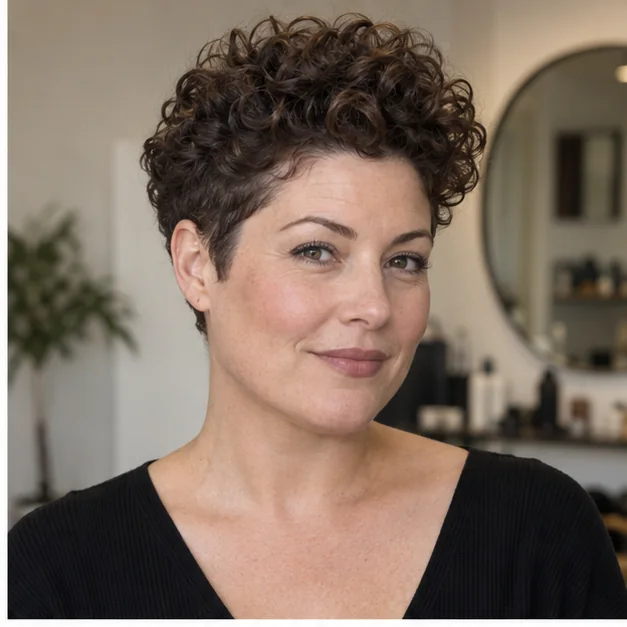
Close, graduated sides rise into longer curls at the crown, creating a clean vertical silhouette without flattening the texture. That lift can visually lengthen a round or wide face and keeps dense hair from feeling bulky around the ears. The shape feels energetic and polished, yet a little water and curl cream can restore it quickly on busy mornings. Request a low taper at the nape and temples, two to three inches of curl-supporting length on top and a blended transition rather than a disconnected undercut; expect the taper to look sharpest with four-to-six-week cleanups.
Ask your stylist for: Create a low blended taper with two to three inches on top for crown height and visible curl formation.
3. Cropped Curls With Side-Swept Fringe
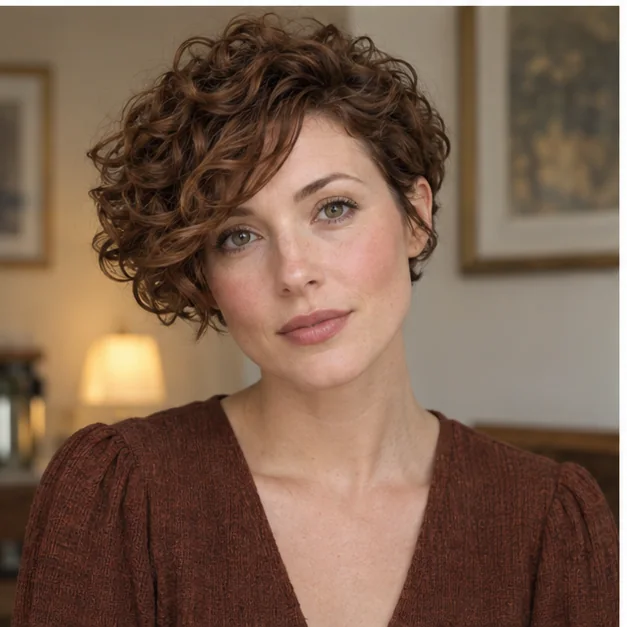
A longer curl section sweeps diagonally across the forehead while the opposite side and nape remain neatly cropped. The asymmetrical line draws attention toward the eyes and can soften a broad forehead or angular jaw without hiding the face. It feels romantic but modern, making it a lovely bridge for someone who wants short hair without losing all face-framing movement. Ask for a side-swept curly fringe cut long enough to complete its curl, graduated sides and a soft nape; style the fringe first with a small amount of gel, then avoid touching it until fully dry.
Ask your stylist for: Leave a curl-completing side fringe, graduate the sides and keep the nape soft and close.
4. French-Inspired Curly Crop
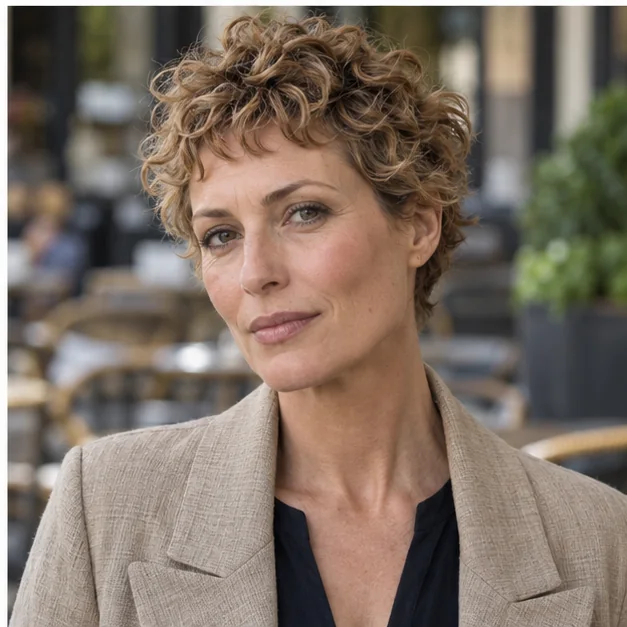
This French-inspired version pairs a compact outline with a short, irregular fringe and softly curved sides. The tiny forehead-skimming curls highlight brows and cheekbones, giving the face definition while preserving a relaxed, undone finish. It feels creative and effortlessly dressed, particularly with simple clothes and minimal styling. Tell your stylist you want an ear-clearing curly crop with a broken micro fringe, gentle graduation at the back and no razor work on frizz-prone ends; refresh individual fringe curls around a finger instead of brushing the whole front forward.
Ask your stylist for: Cut an ear-clearing crop with a broken curly micro fringe, gentle back graduation and no razor on fragile ends.
5. Curly Crop With Tapered Sideburns
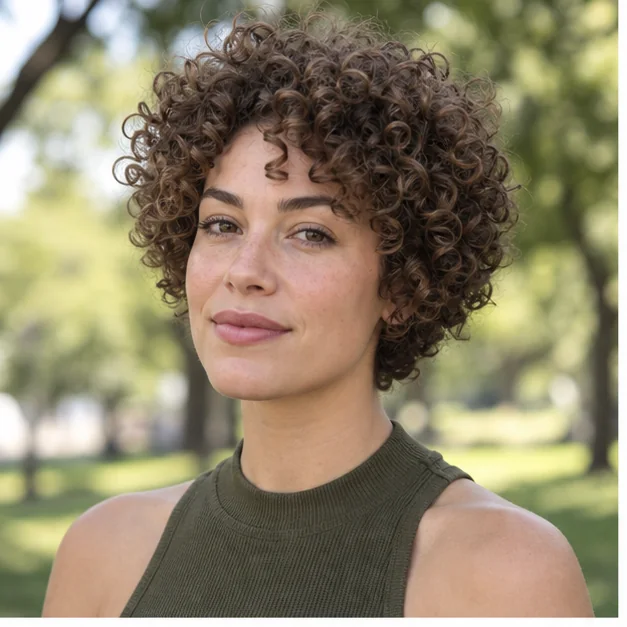
Defined curls stay plush over the crown while slim, sculpted sideburns taper delicately in front of the ears. Those vertical details frame the cheekbones and can make a full crop look more refined instead of uniformly round. The result feels composed and subtly glamorous, with enough softness for everyday wear. Request a rounded top, ear-exposing sides and narrow sideburn points left slightly longer than the surrounding taper; smooth only those points with a dab of flexible gel and protect them from friction when tying on a satin scarf.
Ask your stylist for: Keep a rounded curly top with ear-exposing sides and narrow, softly tapered sideburn points.
Pause and notice: Before choosing a photo, check where your own curls complete a bend. A crop that looks identical when straight may spring to a very different length on waves, ringlets or tight coils.
6. Asymmetrical Cropped Curls
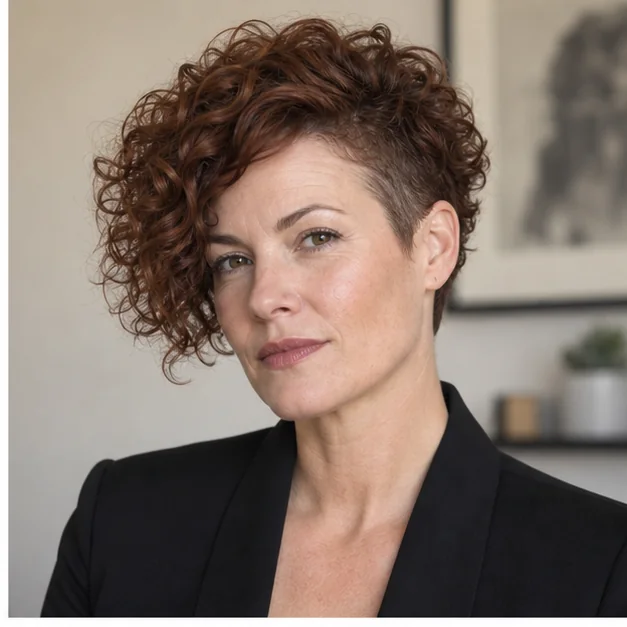
One side is cropped close while the other carries a longer sweep of curls, creating visible movement and deliberate imbalance. The diagonal weight can break up facial roundness and makes strong cheekbones or eyewear part of the composition. It feels bold and self-assured without requiring extreme color or a shaved panel. Ask for a connected asymmetrical curly crop with the long side mapped in its dry state and the short side scissor-tapered; diffuse the longer section away from the part and book trims before the weight line begins to collapse.
Ask your stylist for: Map a connected asymmetrical crop dry, keeping one curl-completing side longer and scissor-tapering the other.
7. Close Curly Crop With Clean Nape
Tiny curls hug the head while the neckline is tapered into a clean, natural finish rather than a blunt shelf. The close scale opens the neck and emphasizes eyes, earrings and bone structure, which can make a minimalist routine feel especially polished. It carries a calm, assured mood and needs very little manipulation once the shape is right. Request a close scissor-over-comb curly crop with a natural tapered neckline and enough top length to show curl texture; sleep on satin and use fingertips, not a brush, to lift flattened areas in the morning.
Ask your stylist for: Use scissor-over-comb for a close curl-preserving crop with a natural tapered neckline and visible top texture.
8. Voluminous Curly Crop for Fine Hair
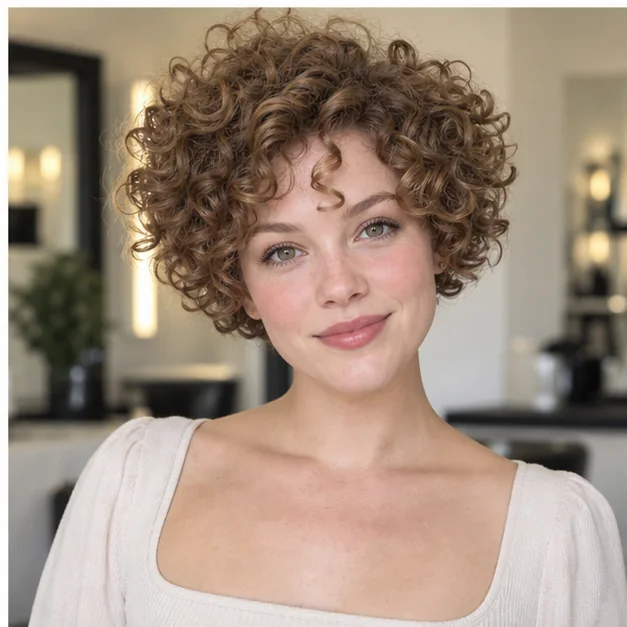
Short graduated layers support the crown while a slightly fuller front keeps fine curls from separating into sparse pieces. Removing excess length can release the curl pattern and create the appearance of greater density, especially around the top and temples. The airy result feels optimistic and fresh, and it can reduce the product and drying time that longer fine curls demand. Ask for minimal perimeter thinning, short crown support and fuller temple corners; use lightweight mousse at the roots and stop before oils or heavy creams pull the new volume down.
Ask your stylist for: Build short crown support, retain fullness at the temples and avoid thinning the fine curly perimeter.
9. Sculpted Crop for Dense Curls
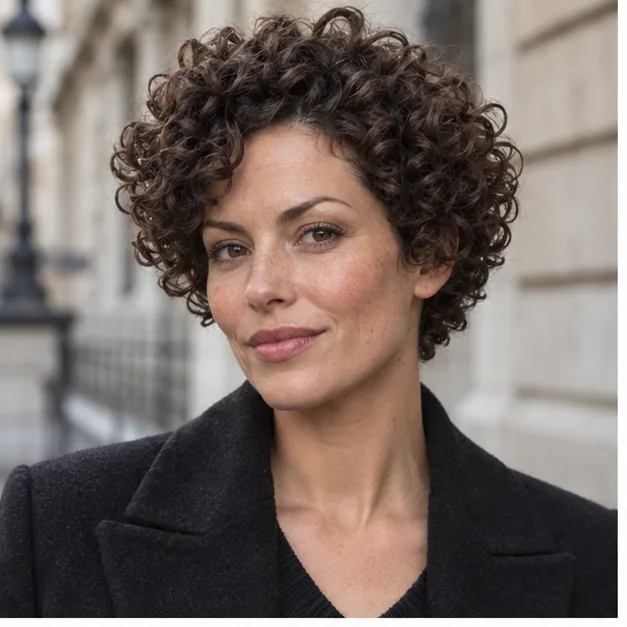
Dense curls are carved into a compact oval, with internal weight removed selectively while the outside remains plush and deliberate. The controlled sides prevent triangular bulk, and the rounded top keeps the cut from looking severe. It feels luxurious and powerful because the density becomes the feature rather than a problem to disguise. Ask for curl-by-curl internal shaping, a preserved outer silhouette and no indiscriminate texturizing shears; section carefully during conditioning and dry without disturbing clumps so the sculpted outline remains visible.
Ask your stylist for: Shape a compact oval curl by curl, remove internal weight selectively and preserve the plush outer perimeter.
10. Cropped Curly Shag
A compact shag uses short crown layers, wispy fringe curls and a lightly extended nape to make the silhouette flick and move. The broken outline can soften strong features and gives looser curls room to look textured rather than overly rounded. It feels playful, expressive and forgiving on days when each curl chooses a different direction. Request a cropped curly shag with short crown elevation, a piecey fringe and only a whisper of length at the nape; refresh with mist and scrunching, remembering that too much cream can merge the airy layers into one heavy shape.
Ask your stylist for: Cut a compact curly shag with short crown elevation, piecey fringe curls and a lightly extended nape.
Pause and notice: Shape and routine belong in the same decision. A soft scissor taper grows out gently; a fade looks wonderfully crisp but asks for quicker cleanups.
11. Curly Crop With Deep Side Part
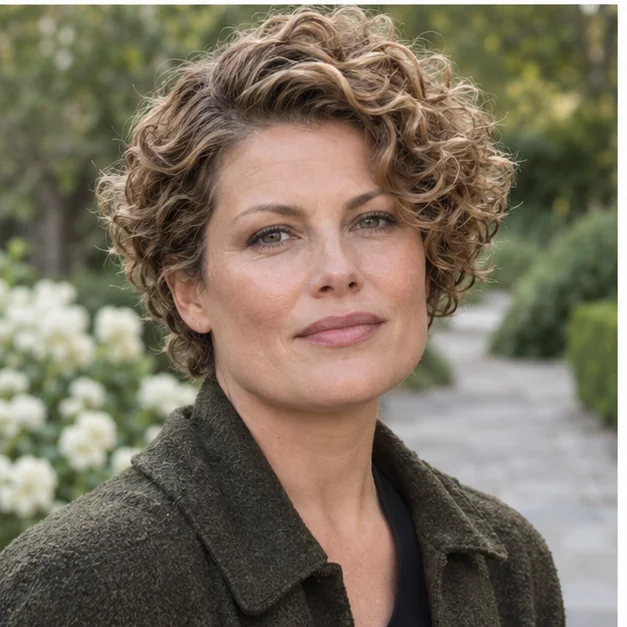
A deep side part stacks curls over one temple, producing height and a smooth sweep while the lower side stays neat. The shifted volume can balance a square jaw or add flattering asymmetry to a symmetrical face, and it makes a familiar crop look more evening-ready. The mood is sophisticated and confident, yet changing the part offers an easy reset without another haircut. Ask for enough top length to move across the part and softly graduated sides with no hard disconnection; clip the roots opposite their fall while drying for lift that lasts.
Ask your stylist for: Leave movable top length for a deep side part and blend it into softly graduated, connected sides.
12. Curly Crop With Micro Bangs
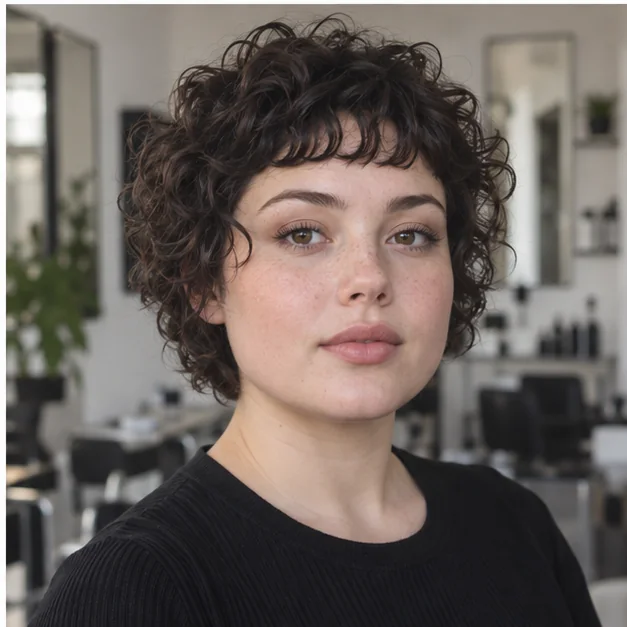
Short curl clusters sit clearly above the brows, giving the crop a graphic front edge while the crown stays softly rounded. The open forehead makes eyes and brows prominent, and the broken texture prevents the line from feeling blunt. It feels fashion-forward and spirited, especially for someone comfortable making the fringe the focal point. Ask for dry-cut micro bangs that sit above the brow after full shrinkage, with slightly longer corner curls to blend into the sides; resist trimming stretched wet pieces at home because they may spring much shorter than expected.
Ask your stylist for: Dry-cut broken micro bangs above the brow after shrinkage, leaving the corners slightly longer for blending.
13. Ear-Skimming Curly Crop
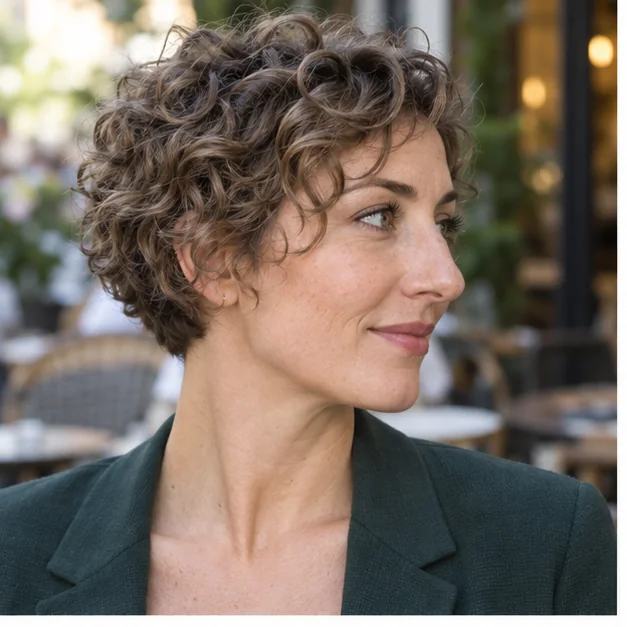
The nape is cropped close, but curls around the sides skim the tops of the ears for a softer, less exposed outline. This little veil of length can balance a narrow jaw and offers a reassuring transition for anyone nervous about going very short. It feels feminine, relaxed and adaptable, with enough side length to tuck back when you want a cleaner profile. Request an ear-skimming curly crop with a short graduated back, connected side weight and ends cut where they naturally spring; define the side curls in small sections so they do not expand into unwanted width.
Ask your stylist for: Keep curl-completing, ear-skimming sides connected to a short graduated back and natural spring point.
14. Low-Fade Curly Crop
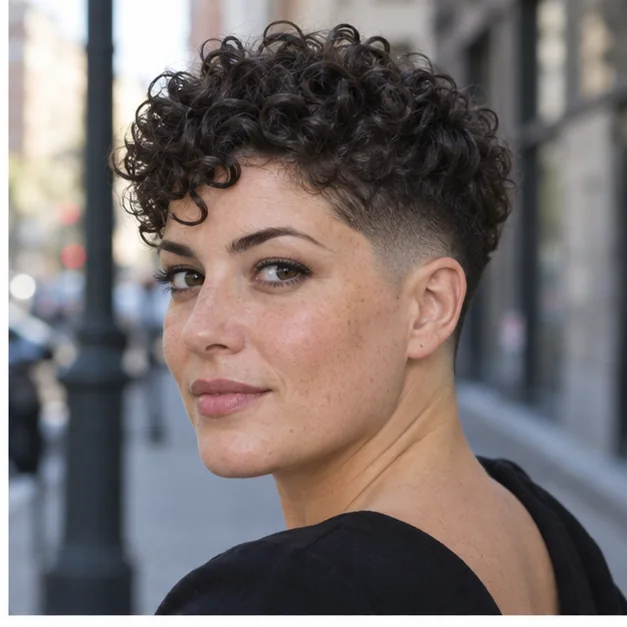
A low fade cleans the lowest inch around the ears and nape, then blends gradually into a soft cap of curls. The contrast sharpens the jawline and reduces side bulk while leaving the overall look wearable rather than dramatically undercut. It feels sporty, cool and meticulously finished, though the crispest version asks for more frequent appointments. Tell your stylist you want a low shadow fade with a seamless blend and two inches of curl-preserving top length; plan edge maintenance every two to four weeks or let it soften naturally between full reshapes.
Ask your stylist for: Create a low shadow fade with a seamless transition into about two inches of curl-preserving top length.
15. Curly Crop With Soft Undercut
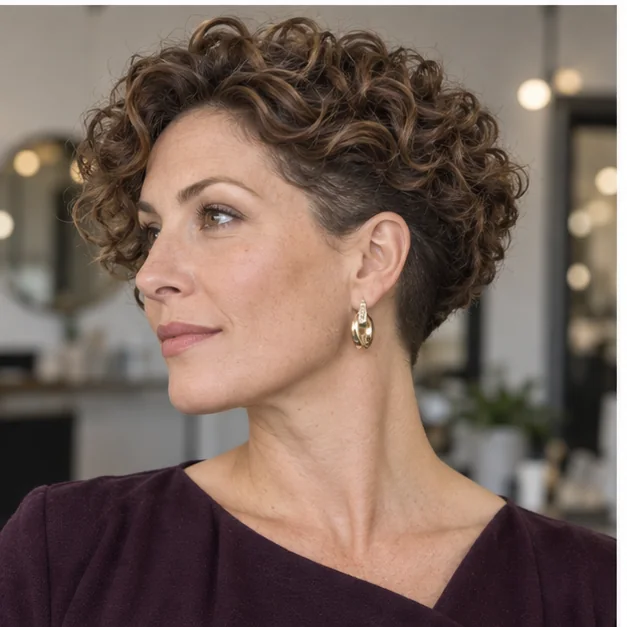
The underneath is clipped or scissor-cut close beneath a connected-looking layer of curls, removing hidden bulk without exposing a dramatic shaved line. Thick hair gains easier drying and less heat around the neck, while the longer surface preserves a rounded, touchable shape. The cut feels quietly daring because the technical contrast appears only when the curls move or lift. Ask for a soft, low undercut confined below the occipital bone, with enough overlying curl length to cover it; discuss grow-out first, since the hidden section may need strategic blending as it lengthens.
Ask your stylist for: Place a soft low undercut below the occipital bone and retain enough connected curl length to conceal it.
Pause and notice: Bring front, side and back references to the salon, then describe the feeling you want—soft, sculpted, bold or low-maintenance. The silhouette matters more than the model's exact curl pattern.
16. Cropped Loose Curls With Airy Layers
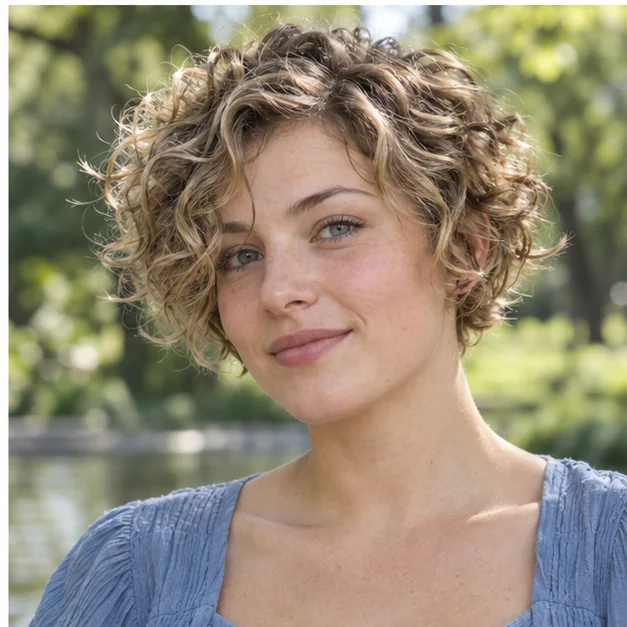
Loose 2C-to-3A curls are kept long enough to form a full bend, then layered lightly so the crown lifts and the sides stay mobile. That curl-completing length avoids the half-wave effect that can happen when looser textures are cut too close, and it brings soft movement around angular features. The finish feels breezy and unfussy rather than tightly sculpted. Ask for an ear-length curly crop cut in its naturally dried pattern, with long internal layers and minimal tension during cutting; use a lightweight gel and diffuse on low airflow to preserve the delicate curl groups.
Ask your stylist for: Cut an ear-length crop in the dry curl pattern with long internal layers and minimal cutting tension.
17. Defined Ringlet Crop
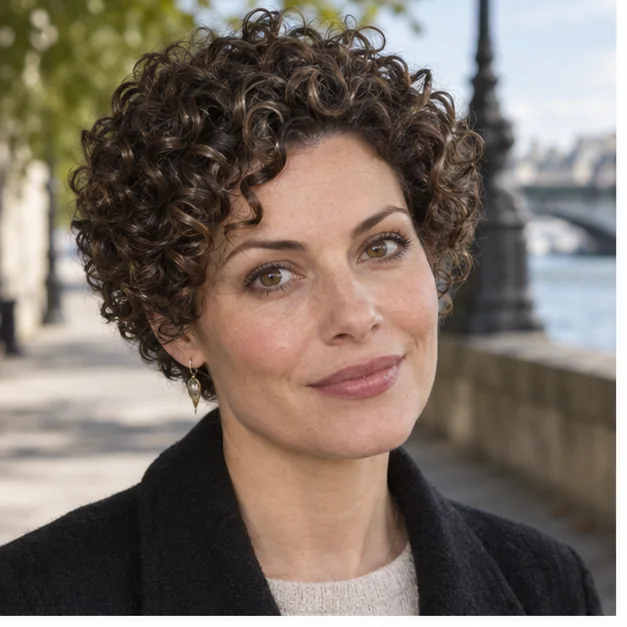
Individual ringlets are shaped into a close, balanced cap with enough length for each spiral to complete rather than fray at the ends. The repeated curl pattern creates visual polish and can make color dimension or natural shine especially noticeable. It feels joyful and put together, although definition depends more on technique than on piling on product. Request a curl-by-curl crop that preserves complete ringlets around the crown and fringe with a softly tapered nape; apply gel to soaking-wet hair in small sections and allow a cast to form before gently scrunching it out.
Ask your stylist for: Shape complete ringlets curl by curl, retaining crown and fringe length and tapering the nape softly.
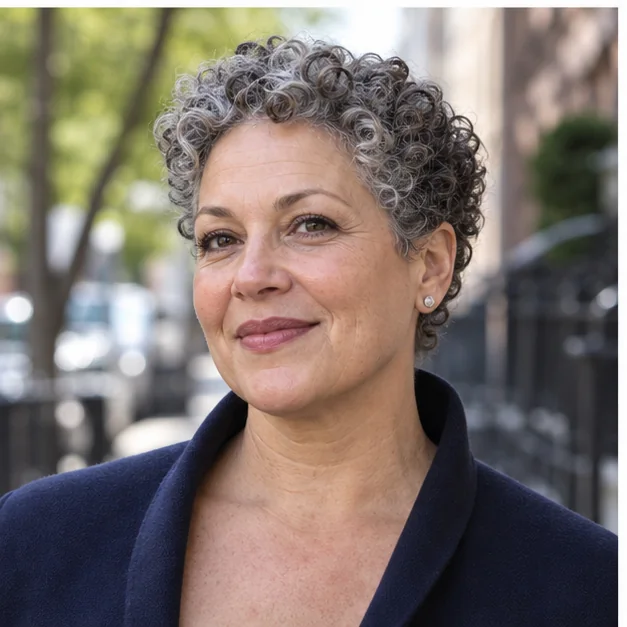
18. Silver Cropped Curls
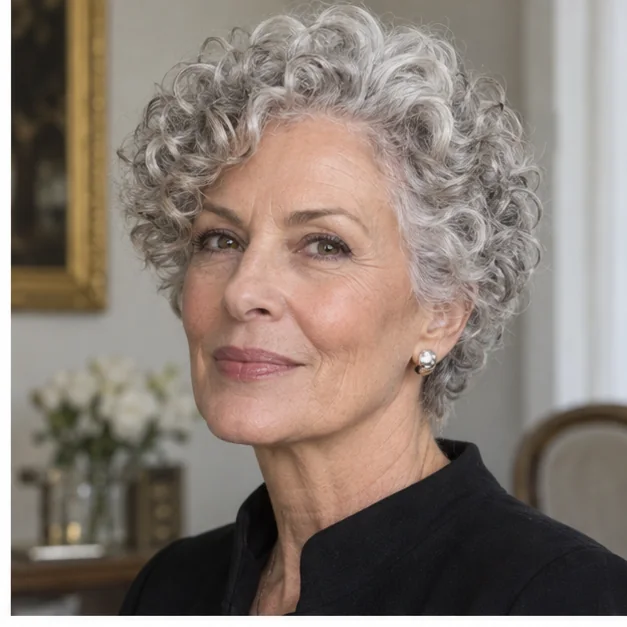
Silver curls are cut into a tidy rounded crop with lift at the top and gentle tapering around the ears. Removing tired length can increase spring and let tonal variation catch the light, while the compact outline opens the face and glasses beautifully. The look feels elegant, current and confidently natural rather than overly set. Ask for crown-supporting layers, soft temple coverage and a neckline that will grow out neatly; use a moisturizing styler for softness and only occasional violet care if yellowing appears, since too much can leave porous silver hair dry.
Ask your stylist for: Build crown lift into a softly rounded silver crop with gentle temple coverage and a neat grow-out neckline.
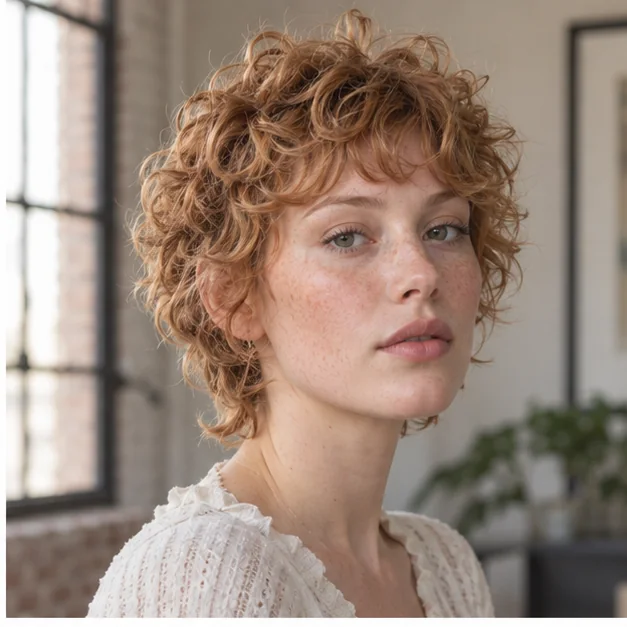
19. Copper Curly Crop With Piecey Texture
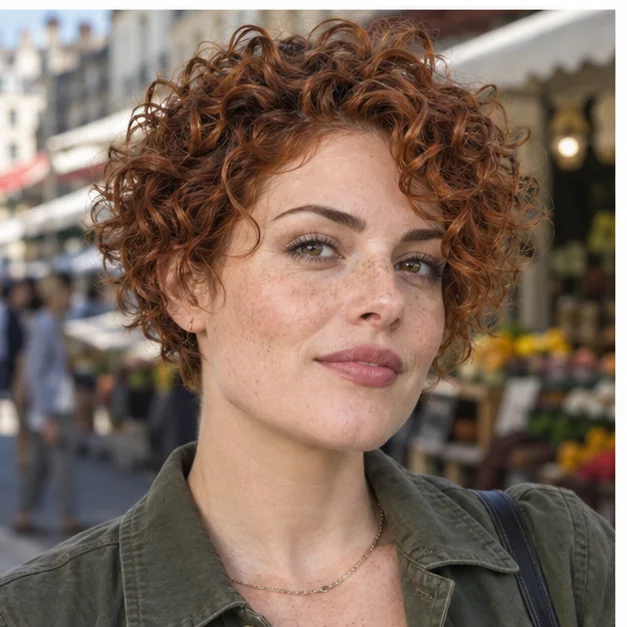
Short, separated curls create a piecey silhouette, while warm copper color exaggerates movement and makes each bend easy to see. The broken texture keeps a dense crop light around the face and can bring warmth to the complexion without relying on extra length. It feels playful and expressive, with a little more styling freedom than a perfectly rounded finish. Ask for point-cut separation only where your curl strength can support it, a soft tapered nape and preserved fullness at the crown; protect the color with gentle cleansing and refresh definition with water before adding more product.
Ask your stylist for: Create supported piecey separation, preserve crown fullness and finish with a soft tapered nape.
20. Grown-Out Curly Crop
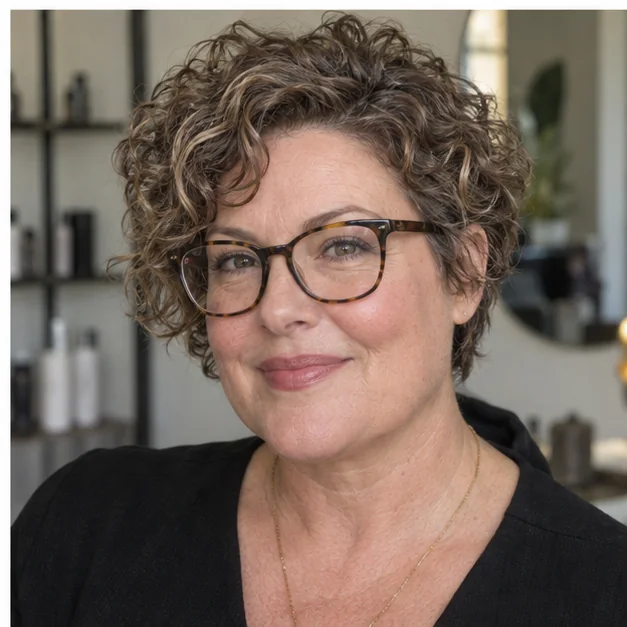
This transitional crop keeps extra length over the ears and at the crown while the nape is lightly reshaped, creating a soft mini-bixie without losing curl definition. Strategic connection prevents the top from becoming a mushroom and makes the awkward middle months feel like a chosen haircut. It feels relaxed and encouraging—proof that growing short curls does not require hiding them. Ask for a maintenance reshape that removes weight rather than overall length, connects the sides and tidies only the nape; stretch trim intervals gradually and use clips or a changed part when the front begins to fall differently.
Ask your stylist for: Reshape without sacrificing overall length, connect the growing sides and tidy only the nape and excess internal weight.
Pause and notice: Choose the crop whose shortest area, styling time and grow-out you can enjoy in ordinary life. The best dramatic change is one that still feels like you on a quiet Tuesday.
Before You Book the Appointment
A successful salon visit begins with the overall shape, construction and upkeep—not only the finished length. Use this quick reality check before choosing your final reference photograph.
- Best for: Readers seeking a versatile shoulder-length layered haircut.
What Makes a Curly Haircut a Crop
A curly crop is deliberately compact, usually close at the nape and sides and no longer than ear-skimming through most of its outline. Enough length remains for texture to show. A pixie often has stronger tapering and piecey sections, a bixie keeps bob-like length, and a short bob carries a heavier perimeter nearer the jaw.
Choose the Shape Before the Length
Rounded crops distribute fullness evenly; tapered and faded shapes pull the eye upward; fringe-led and asymmetrical versions move attention toward the eyes. Consider where you enjoy volume and how exposed you want the ears, neck and forehead to feel. Face shape can guide balance, but it is not a rule that limits your options.
Plan for Curl Pattern, Density and Shrinkage
Loose curls need enough length to complete a bend, while tighter patterns can show texture at a shorter measurement. Dense hair may need selective internal weight removal; fine curls usually benefit from preserving the perimeter. Ask your stylist to evaluate dry spring factor and explain whether the final shape will be cut wet, dry or with a combined method.
What to Ask for at the Salon
Name the silhouette, shortest area, desired crown height, fringe length and how much ear or nape you want exposed. Ask for the perimeter to be checked after shrinkage and say whether you prefer a soft scissor taper, clipper fade or concealed undercut. Bring several views and explain how you normally wash, dry and refresh your curls.
Styling and Refreshing a Curly Crop
Apply product on very wet hair, choosing mousse or light gel for airy movement and a richer cream only when the texture needs it. Define the fringe and crown first, then air-dry or diffuse with low heat and low airflow. On later days, mist flattened sections selectively instead of soaking the whole head, and lift roots gently with fingertips or a pick.
Maintenance and Grow-Out
A soft crop generally needs reshaping every four to eight weeks; a close fade may need attention in two to four. Satin at night reduces friction, and keeping the scalp clean prevents short roots from becoming weighed down. During grow-out, ask for nape cleanup and internal weight balancing rather than repeatedly shortening the top, then transition through an ear-length crop or curly bixie.
How to Choose Your Favorite
First decide how short you are willing to go at the nape and sides. Next choose where the visual focus should sit: crown, fringe, cheekbones or curl definition. Finally compare upkeep honestly—a rounded scissor cut is forgiving, while micro bangs, fades and sharp asymmetry need more regular shaping. Save a silhouette photo and a separate curl-finish photo for your consultation.
More Hair Inspiration
- 20 Curly Hairstyles for Women That Make Every Curl Look Beautiful — Explore curly looks across a wider range of lengths and styling options.
- 20 Soft Pixie Cuts for Round Faces That Feel Fresh and Flattering — Compare softer pixie shapes with face-framing detail.
- 20 Bixie Haircuts That Give You the Best of a Bob and Pixie — See a longer short-cut alternative with extra bob-like movement.