Birkin bangs are a soft, full fringe inspired by Jane Birkin's signature 1960s and 1970s hair. They usually skim the eyebrows, fall mostly forward across the forehead and finish in wispy, slightly uneven pieces. The outer corners are left longer so they blend gently into the rest of the haircut instead of stopping abruptly at the temples.
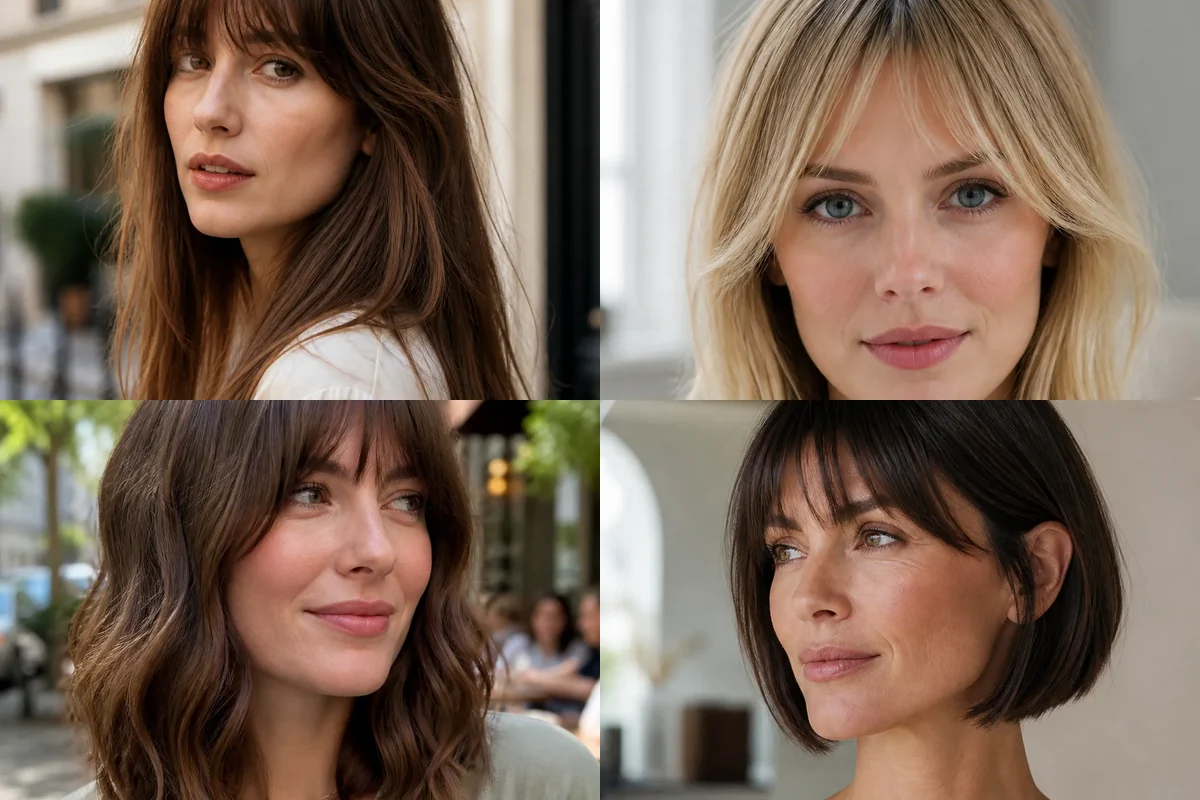
That makes Birkin bangs fuller and more forward-facing than curtain bangs, but lighter and less exact than a blunt fringe. Their appeal is controlled imperfection: they should move, separate and look relaxed rather than rigidly arranged.
Some bangs announce themselves before the rest of the haircut. Birkin bangs do the opposite: they skim the brows, separate into soft pieces and look a little more charming when they are not perfectly arranged. That quiet imperfection is exactly why this Jane Birkin-inspired fringe feels fresh again.
The best version is personal rather than copied. Density, curl pattern, glasses and how often you reach for a blow-dryer all change the ideal length. These 20 ideas show what the fringe can do—and what to ask for before anyone picks up the scissors.
Best for: anyone who likes a soft, eye-framing fringe Styling effort: low to moderate Maintenance: fringe trim every four to six weeks Signature detail: wispy brow length with longer, blended corners
What Exactly Makes a Fringe Birkin?
Three features define the shape. First, it covers most of the forehead instead of opening into a pronounced center part. Second, it has enough density at the roots to look like a real fringe, while the ends are lightly textured so the baseline is not solid. Third, the side pieces extend gradually toward the temples and cheekbones. If the fringe is very long and swept away from the face, it is closer to a curtain bang; if it forms a dense, ruler-straight edge, it is closer to a blunt bang.
The cut can still be adapted. Fine hair may need a narrower starting section, thick hair may need hidden weight removal, and curls must be shaped with shrinkage in mind. Those adjustments do not stop it being a Birkin fringe as long as the soft forward fall, airy edge and longer corners remain visible.
1. Classic Jane Birkin Bangs With Long Hair
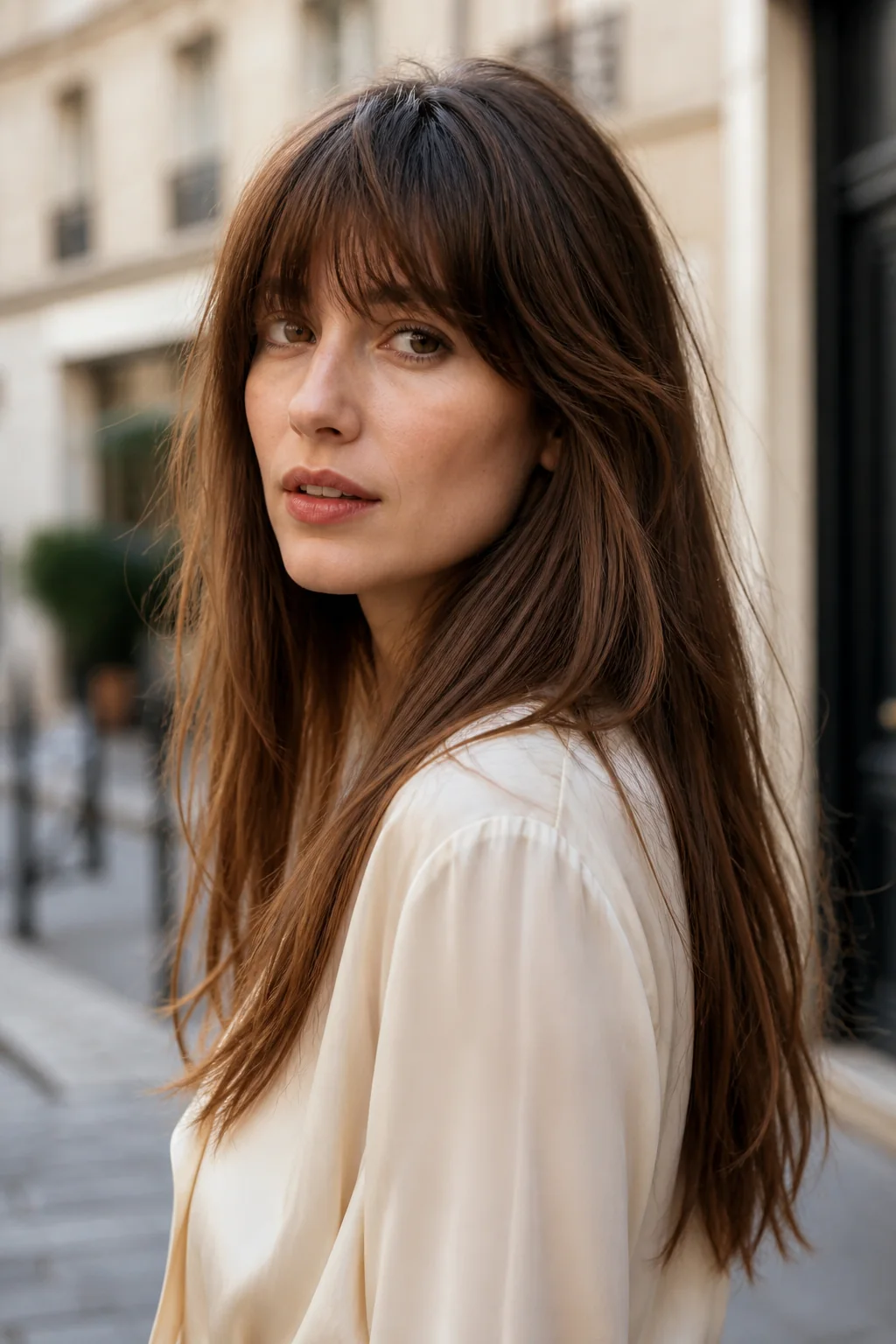
This is the reference point: long brunette hair, a softly irregular fringe at the brows and slightly longer pieces beside the temples. The effect is relaxed rather than overly styled. Ask for enough density to read as a real fringe, then soft texture only through the ends.
2. Wispy Birkin Bangs for Fine Hair
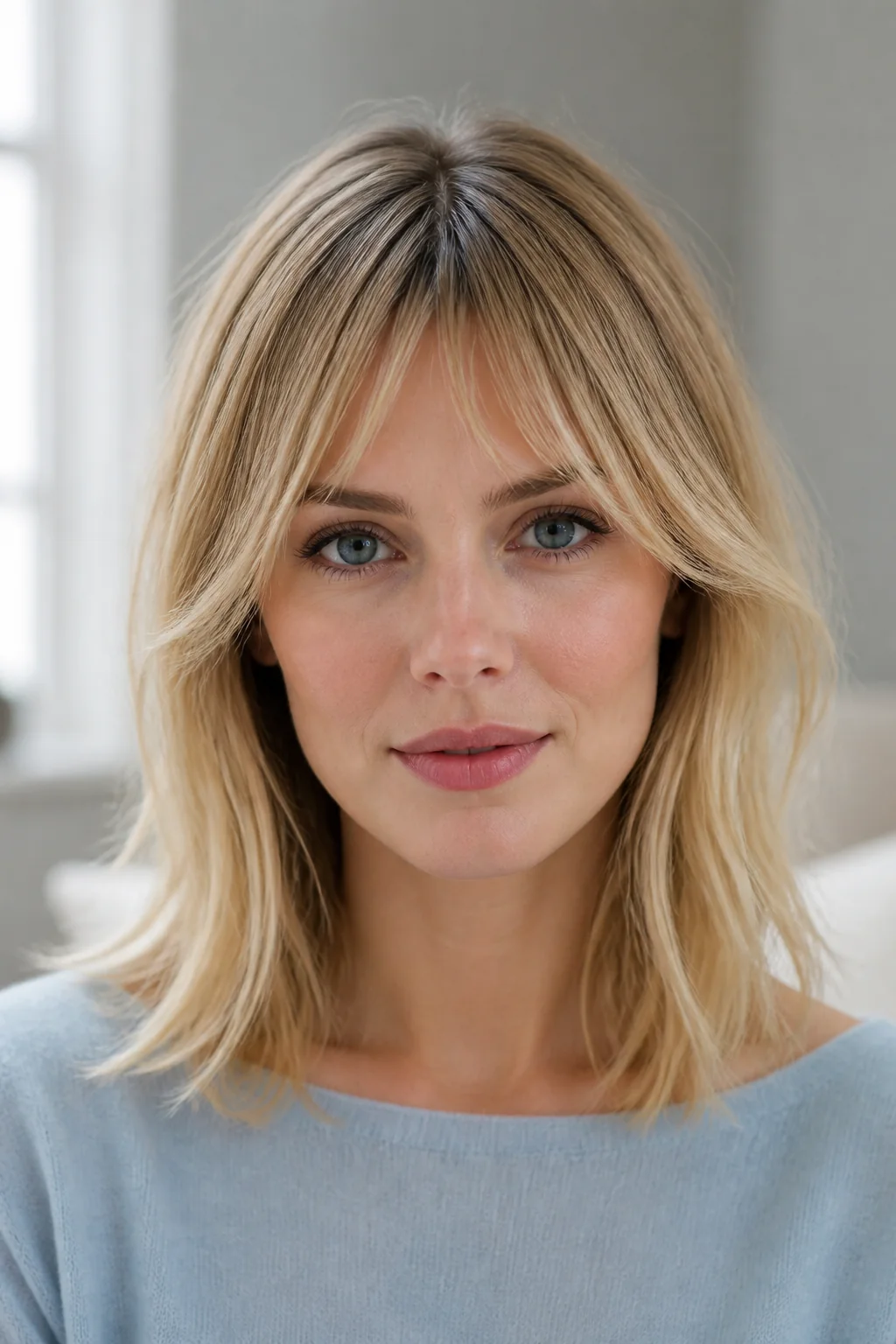
Fine hair benefits from a smaller fringe section that preserves fullness in the lengths. The roots should still look intentional; “wispy” belongs at the ends, not in a sparse base. A quick blow-dry from side to side helps the pieces settle without creating a rounded bubble.
3. Birkin Bangs With a Soft Wavy Lob

A collarbone lob gives the fringe modern movement and an easy everyday scale. Natural waves echo the broken-up ends, so the finish can stay touchable. Keep the bangs a little longer if your hair springs upward as it dries.
4. Birkin Bangs With a Chin-Length Bob
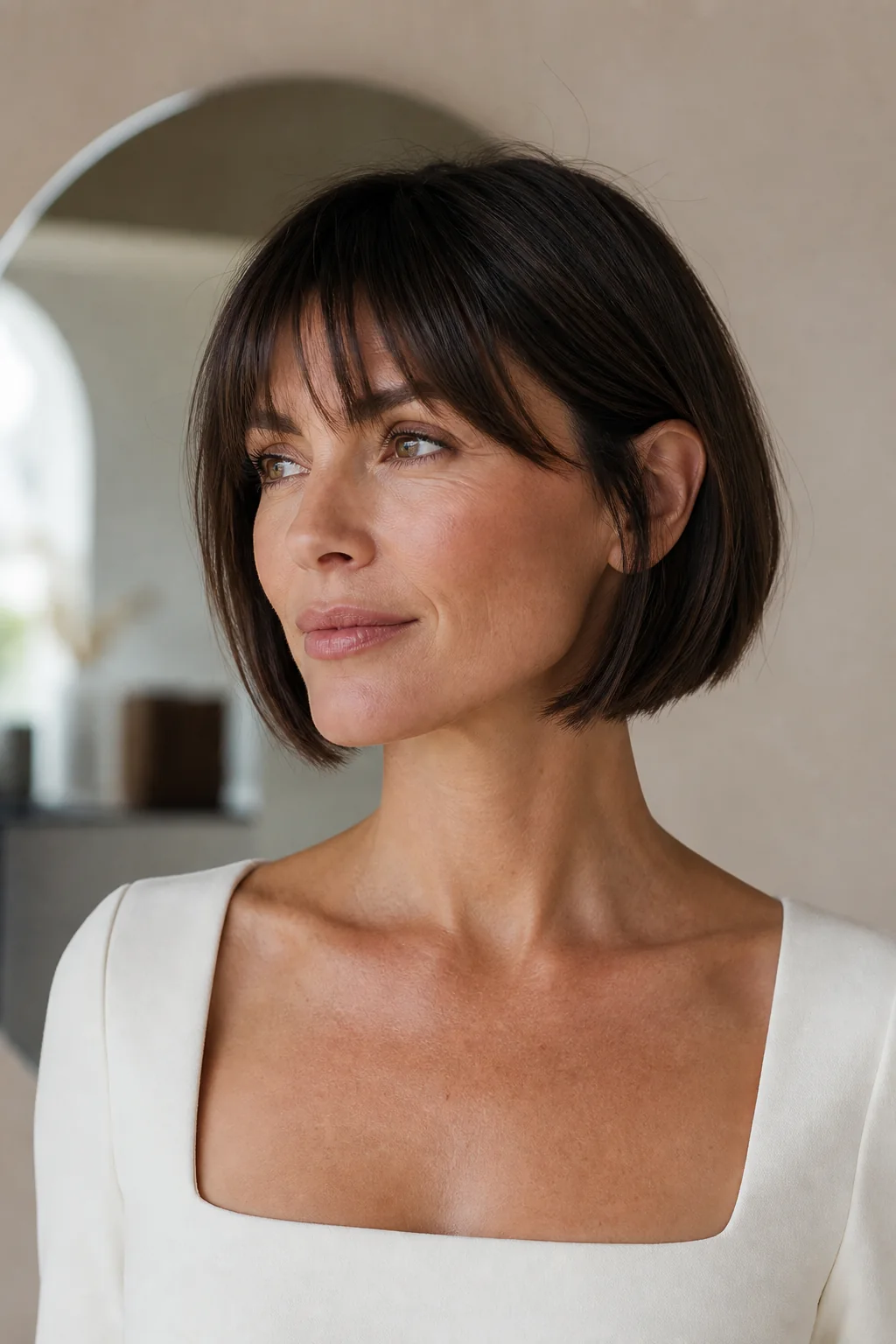
The airy fringe softens the clean outline of a compact bob and keeps the eyes visible. It is an appealing balance of precision and ease: crisp at the perimeter, light around the forehead. Ask for corners that blend rather than stop abruptly at the temples.
5. Curly Birkin Bangs With a Rounded Shape

Curls can carry the spirit of Birkin bangs without being straightened into submission. A curl-aware dry shape lets individual bends land around the brows while the rounded silhouette stays buoyant. Discuss shrinkage before choosing the shortest piece.
A useful distinction: Birkin bangs are fuller and more forward than curtain bangs, but softer and less exact than a blunt fringe. Longer corners are what make the shape feel connected.
6. Birkin Bangs With Long Layers
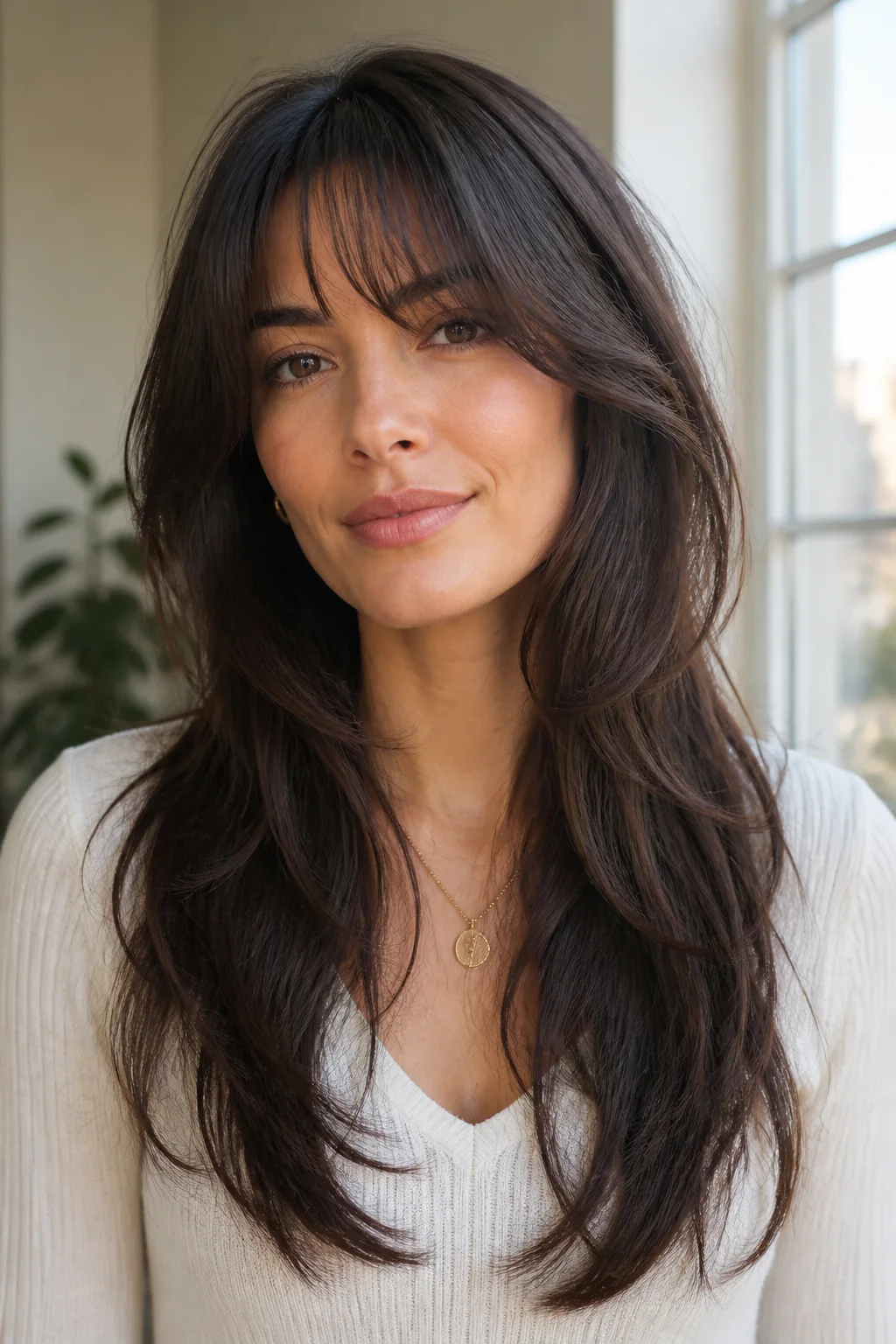
Long face-framing layers give the fringe somewhere graceful to travel as it grows. The shortest pieces draw attention to the eyes, while cheekbone and collarbone layers carry movement through the rest of the cut. This is a reassuring option if grow-out matters to you.
7. Baby Birkin Bangs
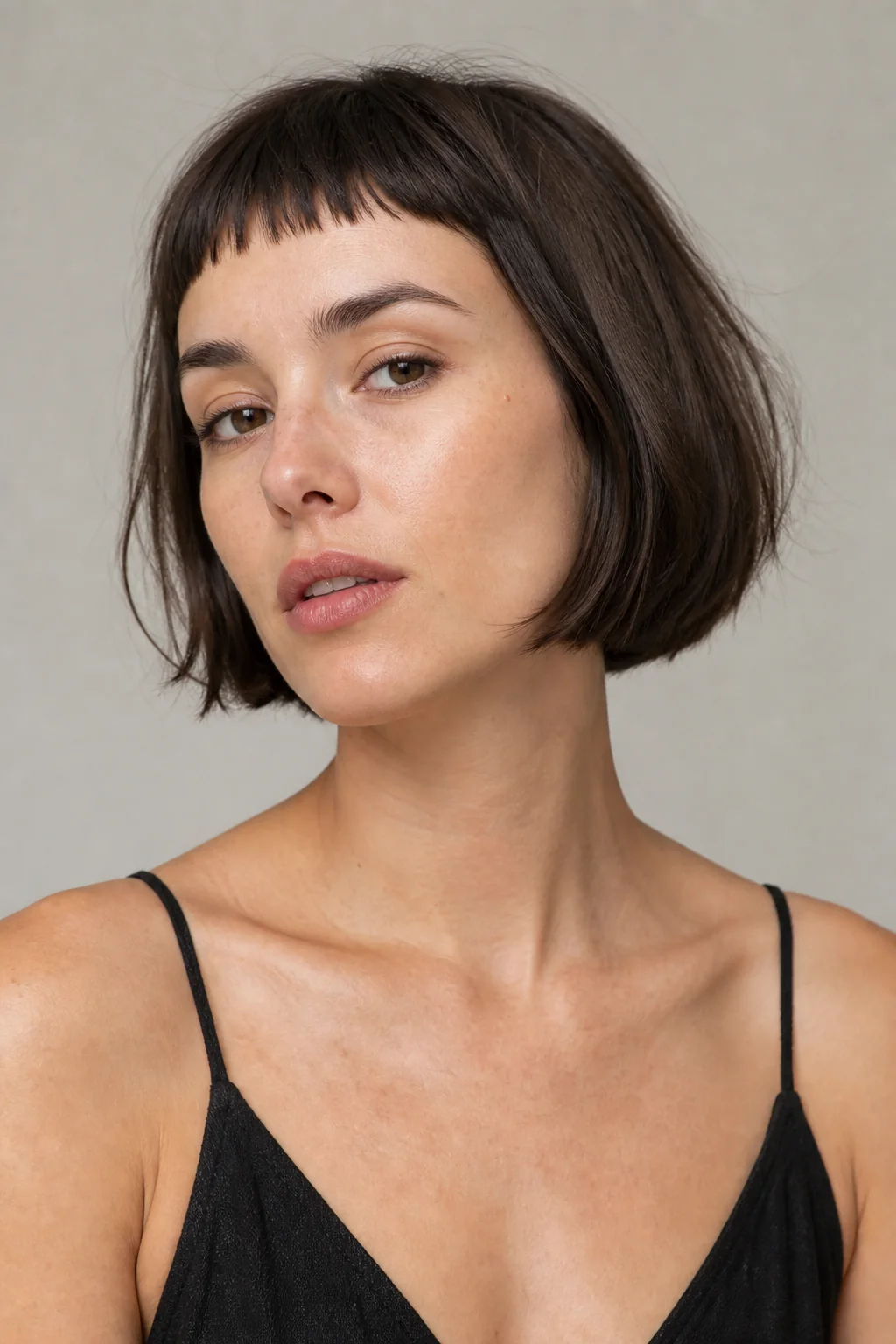
The 2026 update is shorter, but it keeps the classic softness. Feathery ends and gently extended corners prevent the fringe from reading as a rigid micro bang. This version makes a stronger statement and exposes more forehead, so agree on the dry length carefully.
8. 70s Birkin Bangs With Feathered Lengths

Softly feathered bends bring the original decade into focus without turning the haircut into a costume. A slightly fuller fringe works beautifully here because the lengths have plenty of movement. Use a large brush or rollers for lift, then break up the finish with your fingers.
9. Birkin Bangs for a Round Face

An airy center and longer outer pieces create gentle vertical lines beside the cheeks. The goal is not to disguise a round face; it is to decide where the eye travels. Avoid making the fringe unnecessarily wide if you prefer a lengthening effect.
10. Soft Birkin Bangs for a Square Face
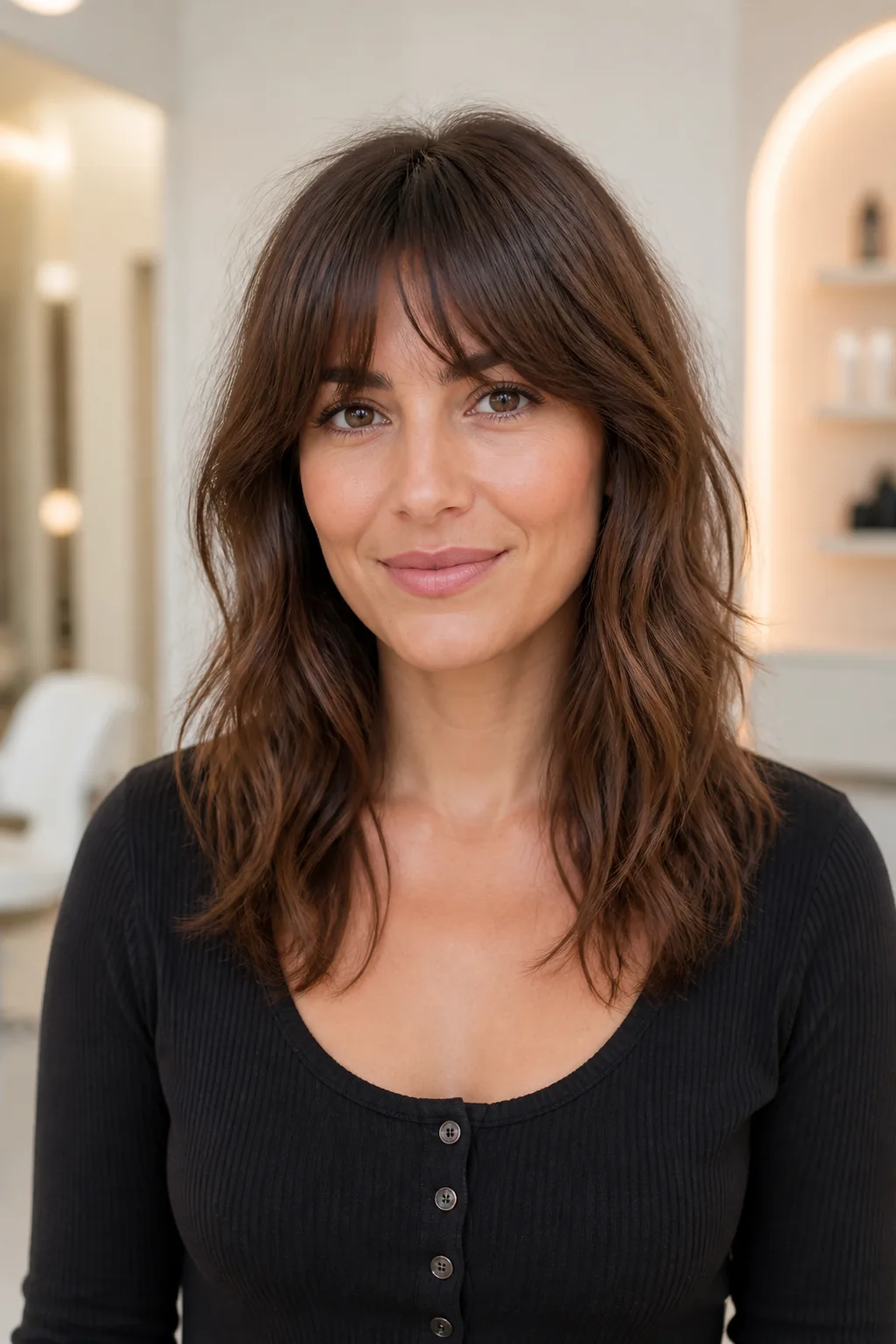
Wispy, irregular ends offer a lovely contrast to a defined jawline. A hard horizontal fringe could emphasize angles, while this broken line keeps the expression gentle. Rounded corners and a little movement at the temples do most of the work.
Before the cut: Wear your usual part and glasses, and show your stylist how your hair dries naturally. Those everyday details matter more than a perfectly styled reference photo.
11. Birkin Bangs for Thick Hair
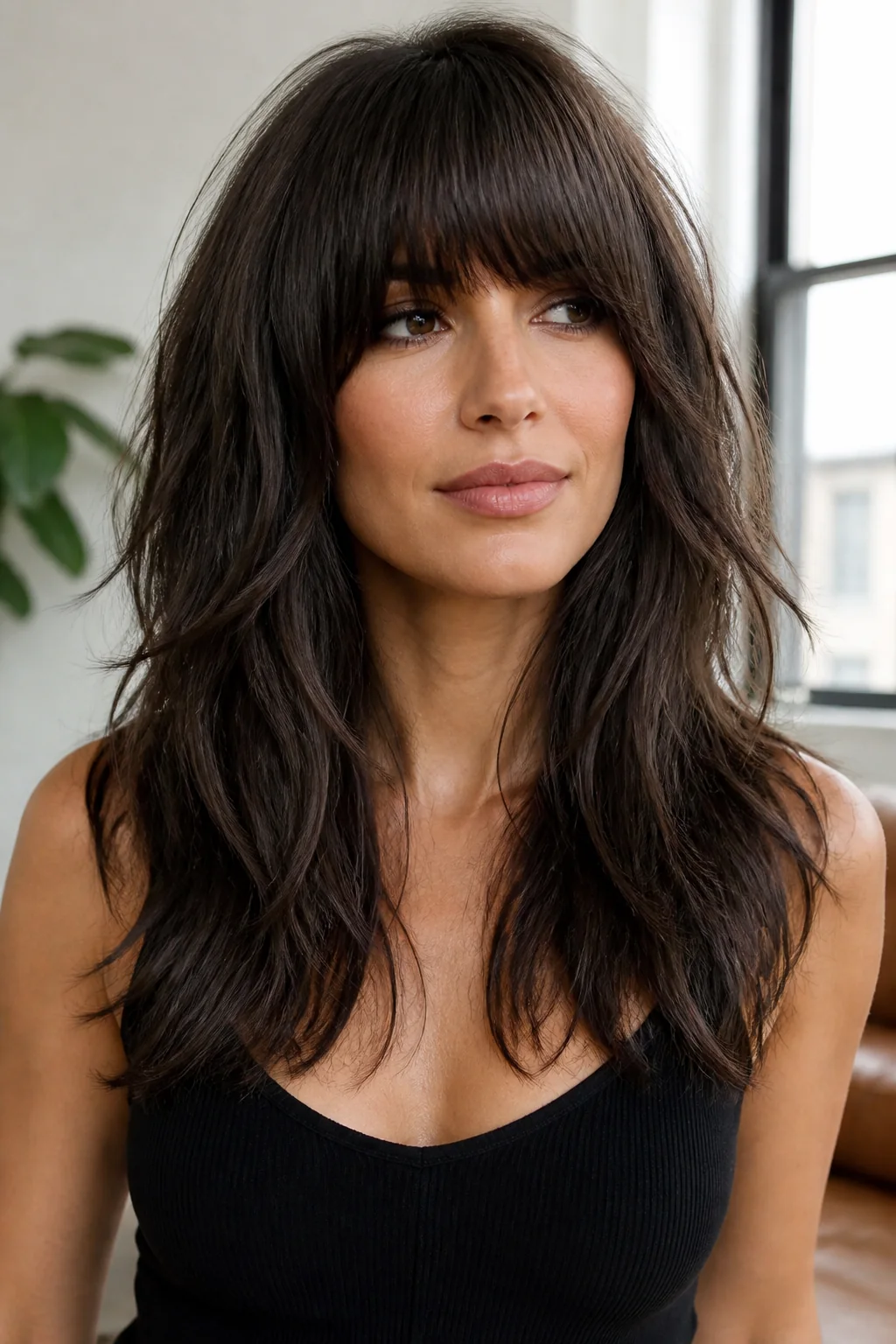
Thick hair can support a luxurious fringe, but internal weight removal keeps it from forming a solid block. The outer surface should still look full; the softness comes from hidden control and textured ends. Start conservatively because removing too much is difficult to reverse.
12. Silver Birkin Bangs for Women Over 50

Silver hair catches light beautifully around the eyes, and a soft fringe gives layered lengths a fresh signature. There is no need to make the style timid or “age appropriate.” Keep it movable, flattering and honest about the amount of daily styling you enjoy.
13. Copper Birkin Bangs With Textured Hair
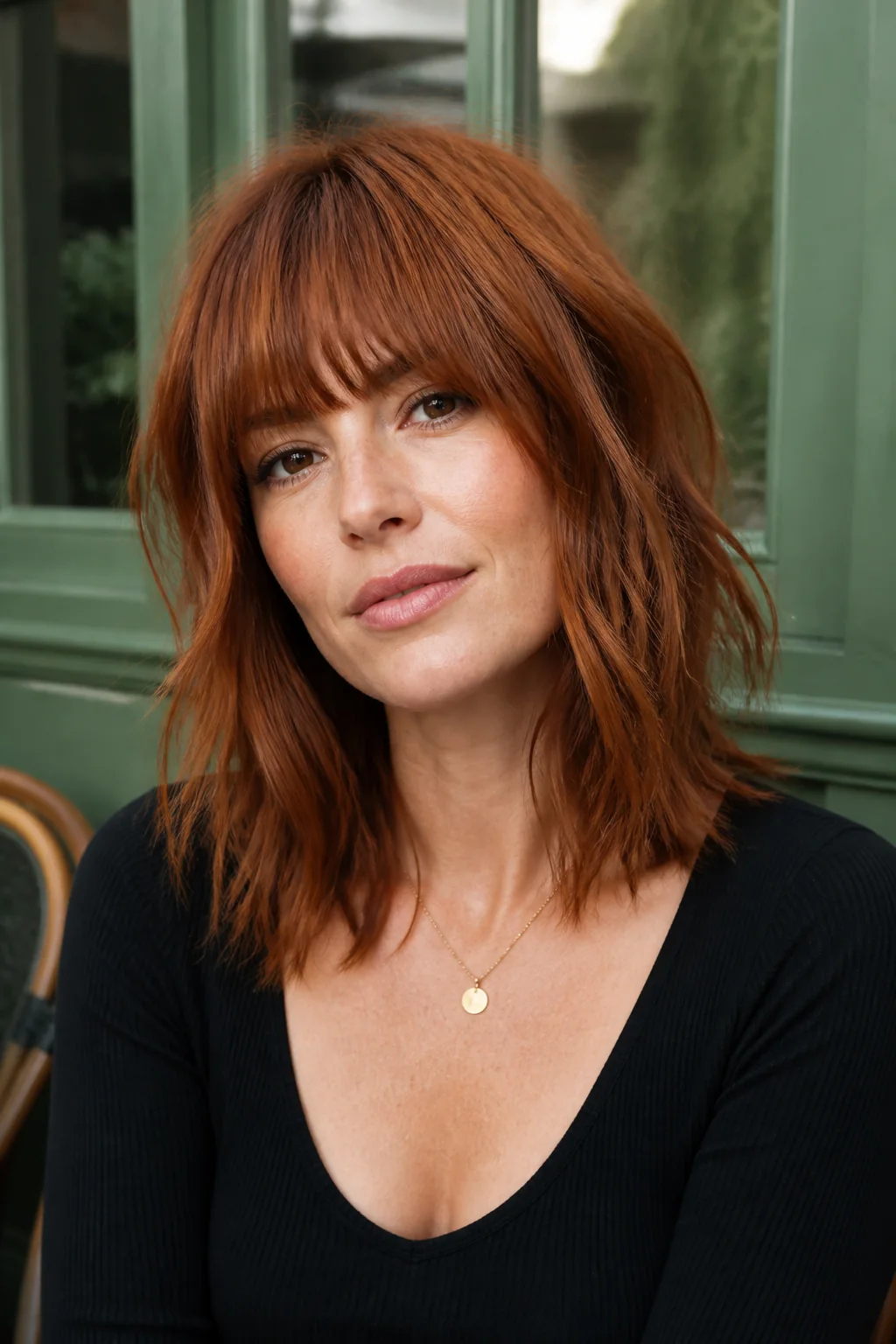
Copper makes each separated piece visible, turning soft texture into warm dimension. The color and cut amplify one another without needing a complicated finish. If the copper is vivid, remember that color maintenance may be more demanding than the fringe itself.
14. Blonde Birkin Bangs With Beachy Waves
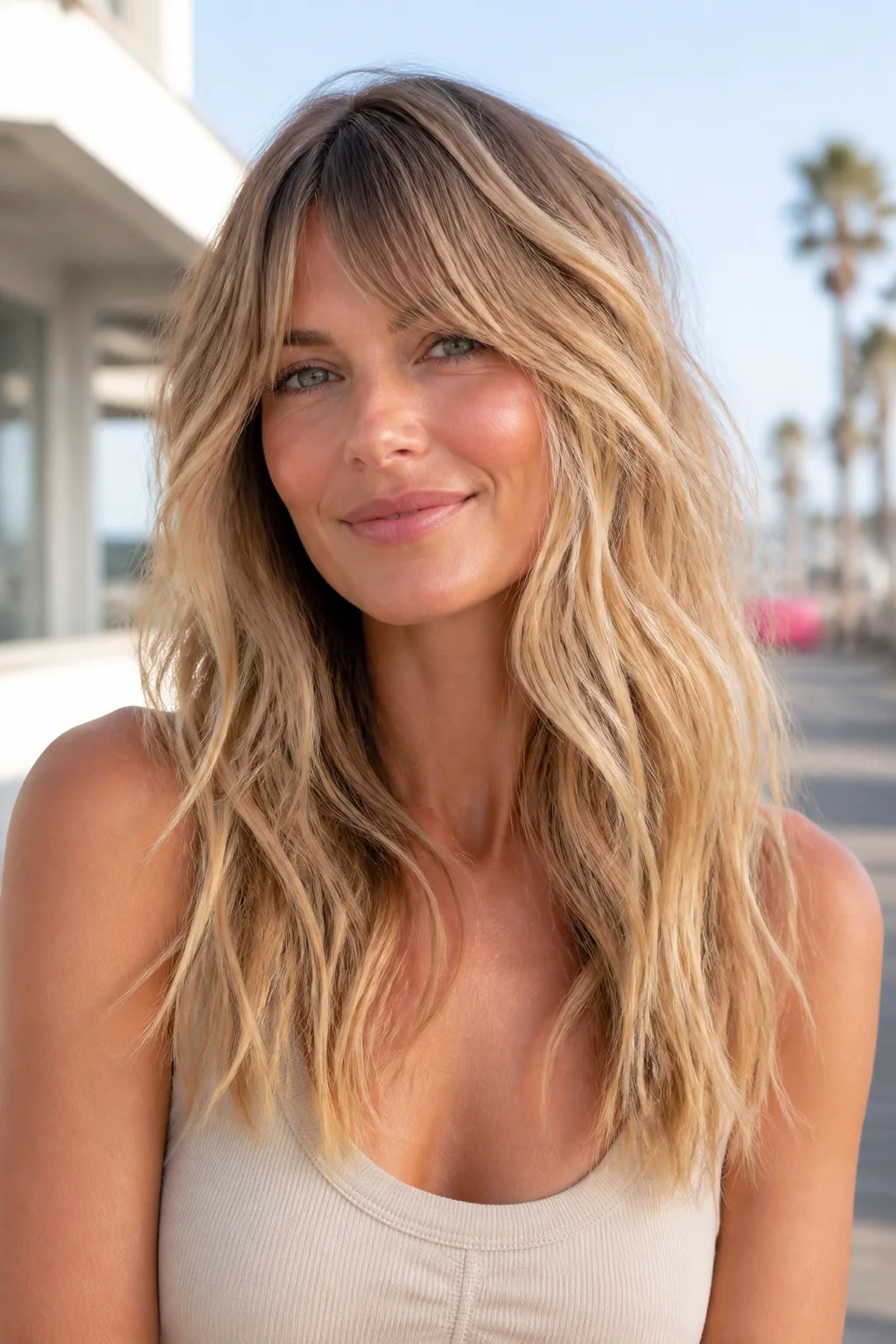
Loose waves share the fringe’s undone energy and keep blonde hair from looking overly polished. A light texturizing spray can encourage separation, but avoid loading the bangs with product. Their best quality is movement.
15. Birkin Bangs With a Medium Shag

A medium shag and Birkin fringe speak the same visual language: connected layers, lightness and purposeful imperfection. This combination offers plenty of personality, especially on naturally wavy hair. Ask the stylist to keep the fringe distinct enough that it does not disappear into the shag.
Styling shortcut: Dry the fringe first, moving it gently from side to side. Once the roots sit naturally, the rest of the haircut can air-dry or be styled as usual.
16. Sleek Birkin Bangs on Straight Hair
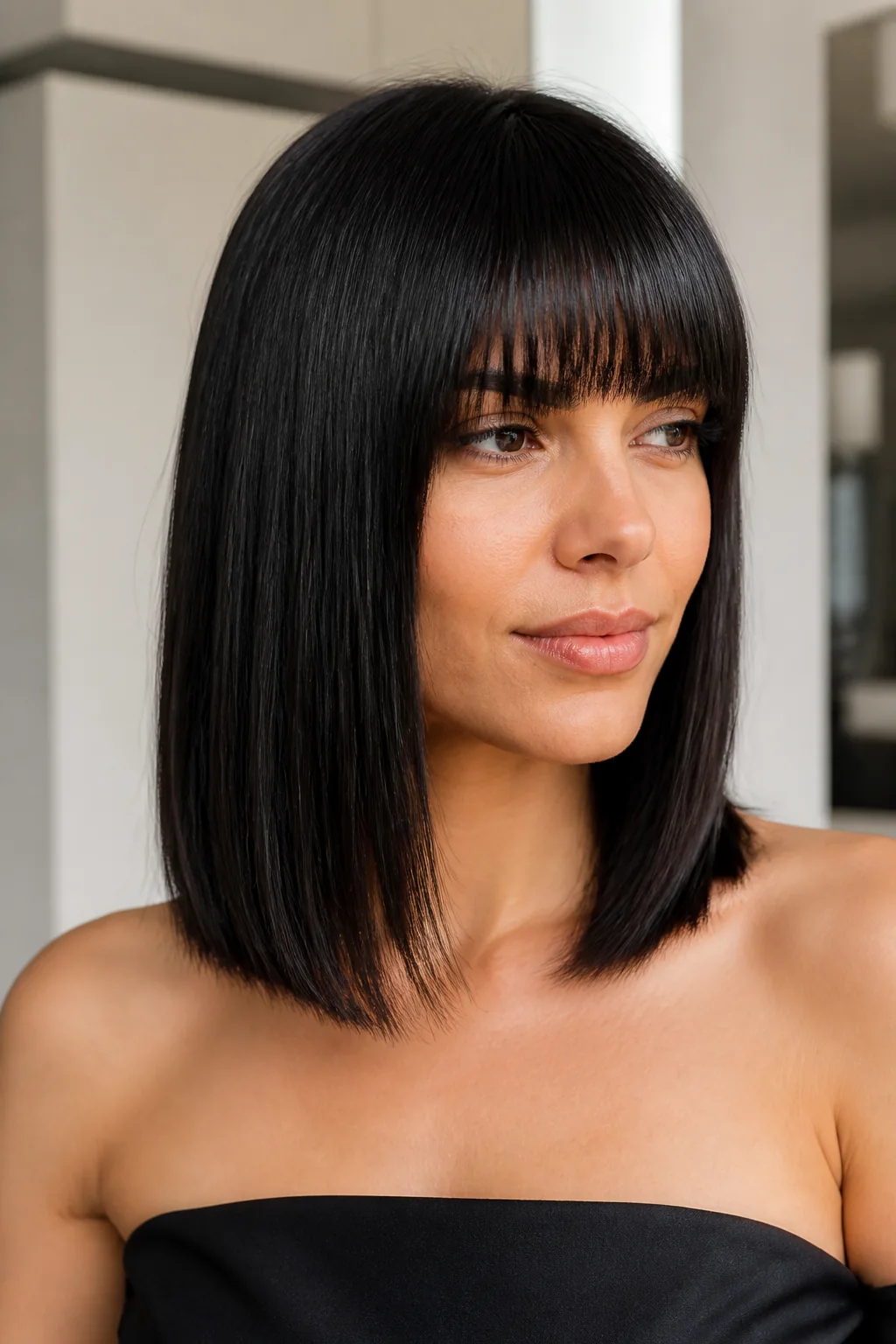
Straight hair shows every design decision, so tiny irregularities matter. The fringe can be sleek without being ruler-straight: a few subtly varied ends preserve softness. Use a small amount of flexible product rather than a heavy shine serum that makes pieces collapse together.
17. Birkin Bangs With Glasses

Glasses and bangs can frame the eyes beautifully when neither crowds the other. Have the fringe shaped while you wear your normal frames so its dry edge sits comfortably above them. Longer temple pieces should flow beside the arms of the glasses, not fight them.
18. Birkin Bangs With a Low Ponytail
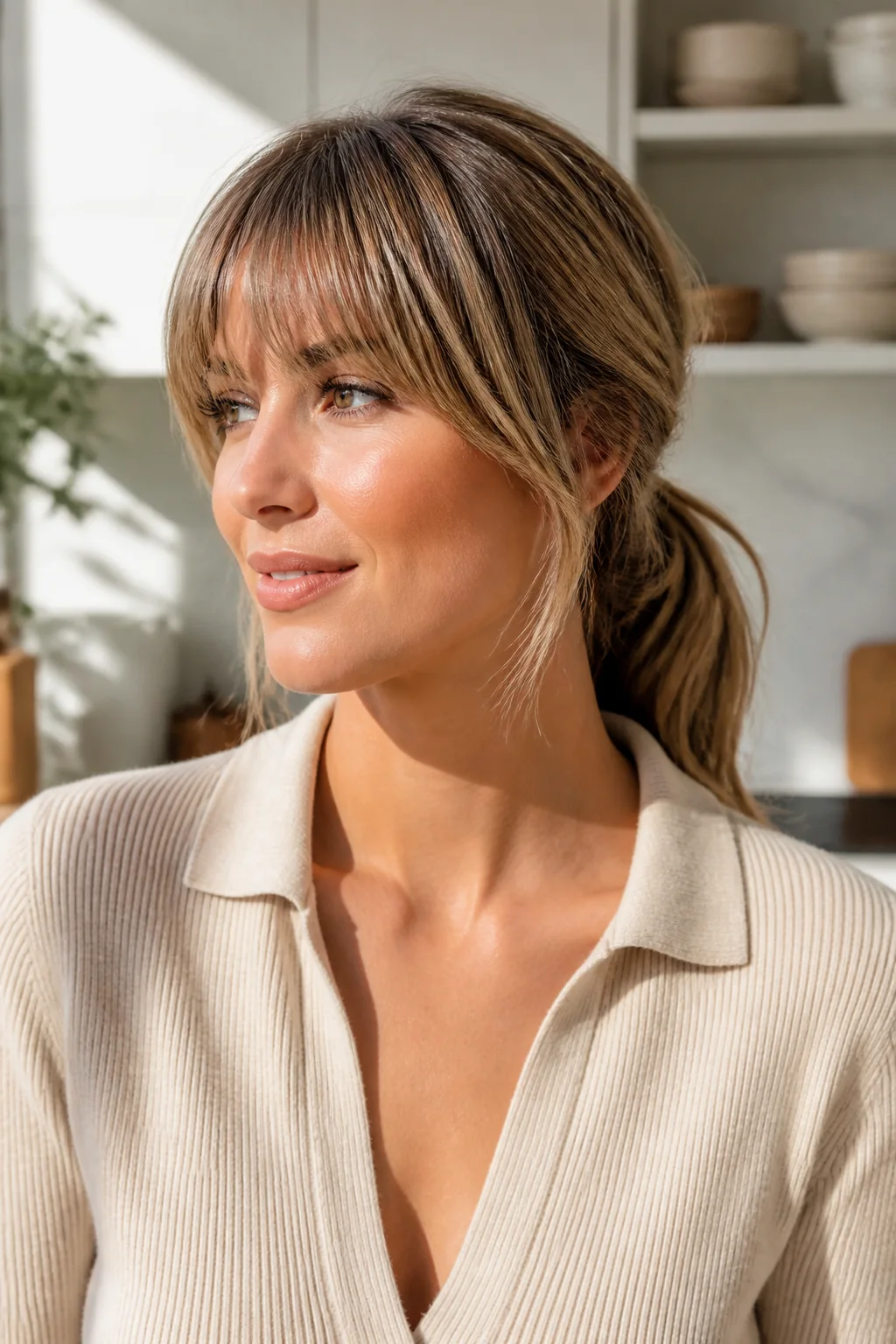
This is where the fringe earns its keep on an ordinary morning. A simple ponytail looks intentional because the brows and temples retain soft framing. Keep the corners long enough to remain loose when the rest of the hair is tied back.
19. Birkin Bangs With a Romantic Updo
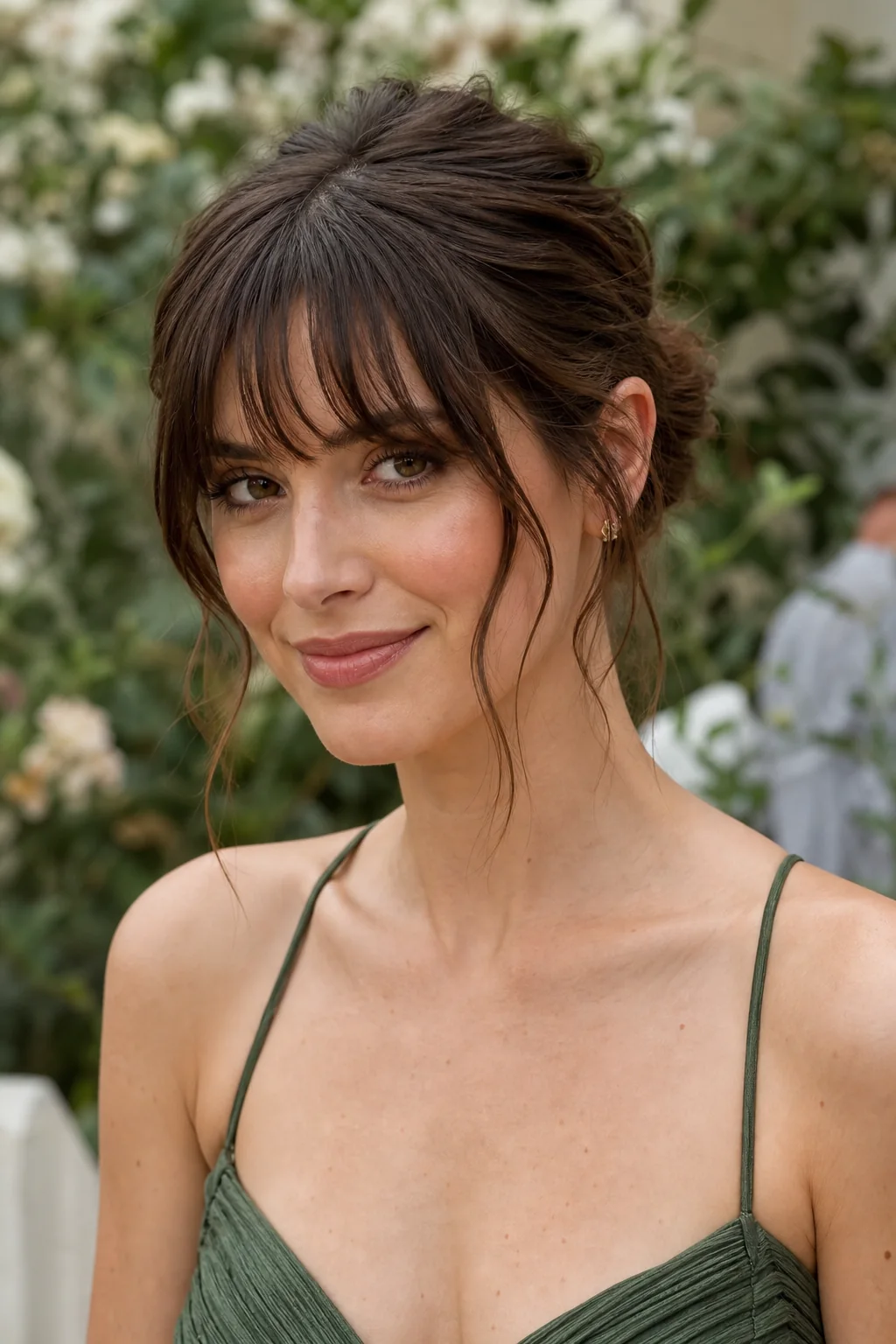
An imperfect fringe keeps a polished updo from feeling stiff. The contrast works for weddings, dinners and any moment when you want elegance without severity. Let a few temple pieces remain soft, but avoid pulling out so many that the frame loses its shape.
20. Grown-Out Birkin Bangs
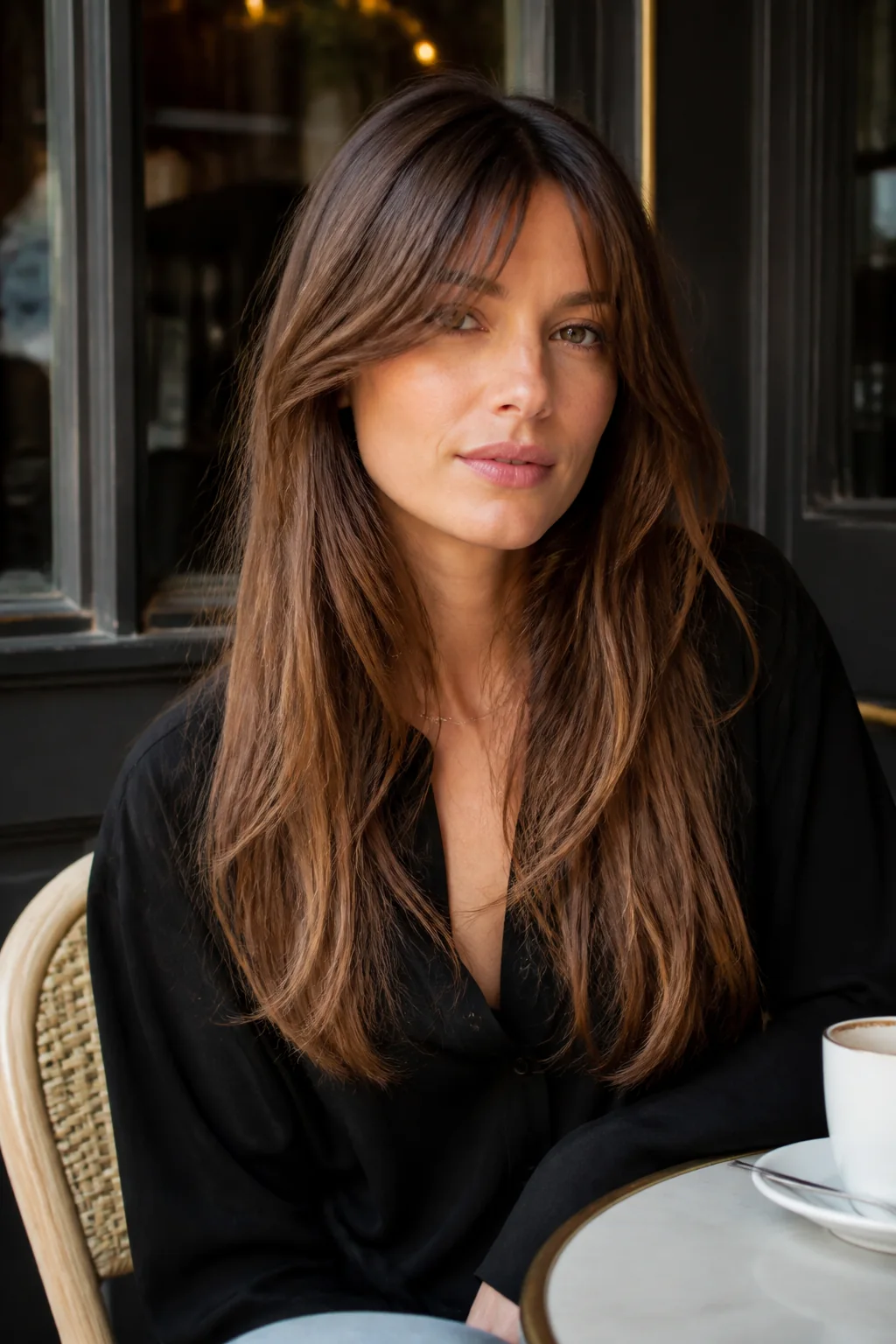
As the fringe reaches the lashes and cheekbones, it begins to open like a soft curtain. This is not a failed stage; it is another wearable haircut. A small reshaping appointment can blend the corners and keep the center light while you decide whether to trim or continue growing.
The best choice: Pick the version that suits your normal Tuesday. A beautiful fringe should work with your texture, routine and willingness to trim—not only with the most dramatic saved photograph.
What to Ask Your Hairdresser For
Bring a clear photo, but describe the construction too: a soft fringe that grazes the brows, looks slightly irregular through the ends and grows longer toward the temples. Agree on the dry length, fringe width and density. If your hair waves or curls, ask how shrinkage will change the result. The KeySearch phrase “how to cut Birkin bangs” is useful salon language—not an invitation to attempt a high-stakes first cut at home.
Birkin Bangs vs. Curtain Bangs
Birkin bangs sit more fully across the forehead and separate into wispy pieces. Curtain bangs usually open more clearly through the center and sweep longer toward the cheekbones. The styles can blend during grow-out, but the starting impression is different: Birkin is a soft fringe; curtain is a parted face frame.
Styling and Maintenance
Reset the fringe after washing or sleeping by lightly dampening the roots and drying from side to side. Finish forward, then separate with fingers. Most versions need a trim every four to six weeks, although baby Birkin bangs may show growth sooner and longer versions can stretch farther. Keep dry shampoo and heavy oils away from overuse at the forehead.
More Bangs Inspiration
If you want a longer, more open shape, explore 20 Curtain Bangs Haircuts. For a layered haircut with sweeping movement, see 20 Butterfly Haircuts.