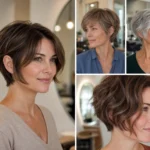
The right short haircut can do far more than remove length. It can uncover your cheekbones, brighten your eyes and give fine hair a shape that feels intentional rather than apologetic. A power pixie keeps the confidence of a close crop while leaving enough length for softness, lift and personality—so it can feel elegant, playful, quietly expensive or completely fearless.
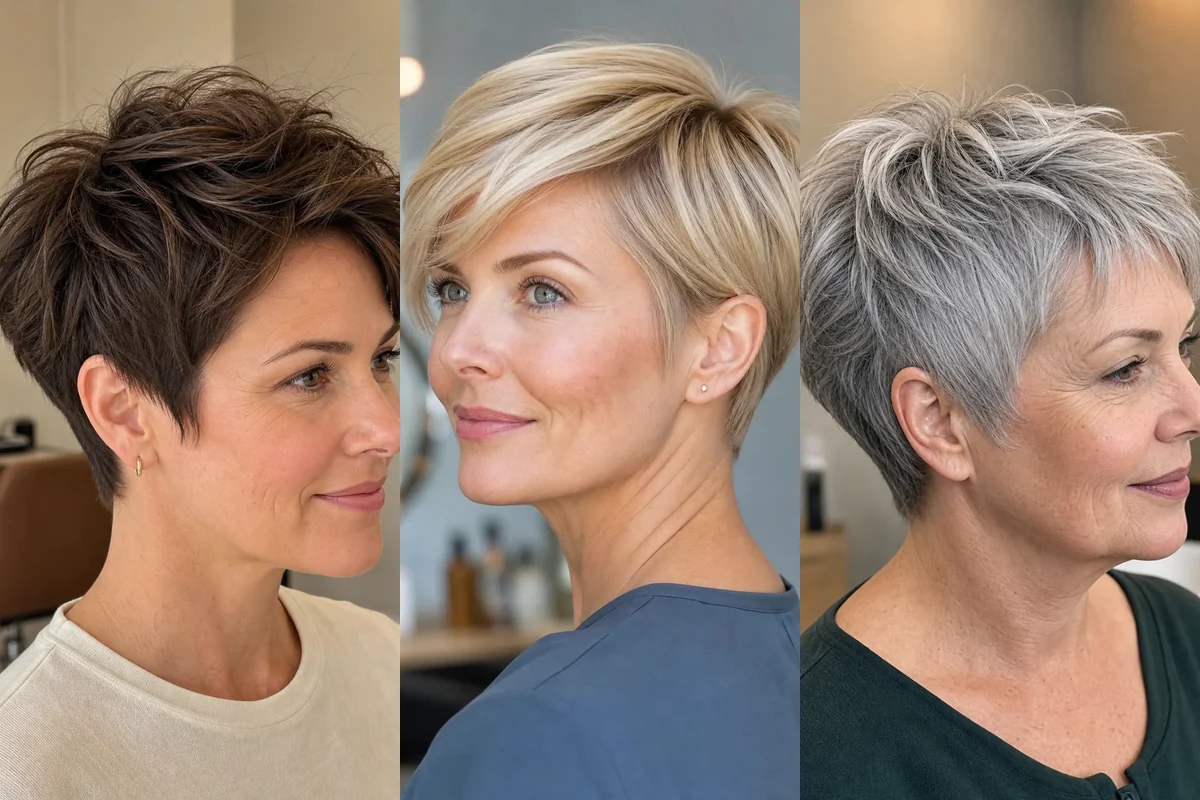
These 20 variations prove there is no single way to wear a power pixie. You will see polished tapers, touchable waves, face-softening fringes and confident sculpted shapes, with practical guidance on what each cut does for your features and exactly what to ask for at the salon. Choose the version that looks like you on your very best day—not simply the shortest cut you think your fine hair will tolerate.
Find the one that feels like you: Start with the first look and let the photographs lead. Each style explains how the shape affects your features, the mood it creates and the exact words to take to your stylist.
1. Tousled Power Pixie With Crown Volume
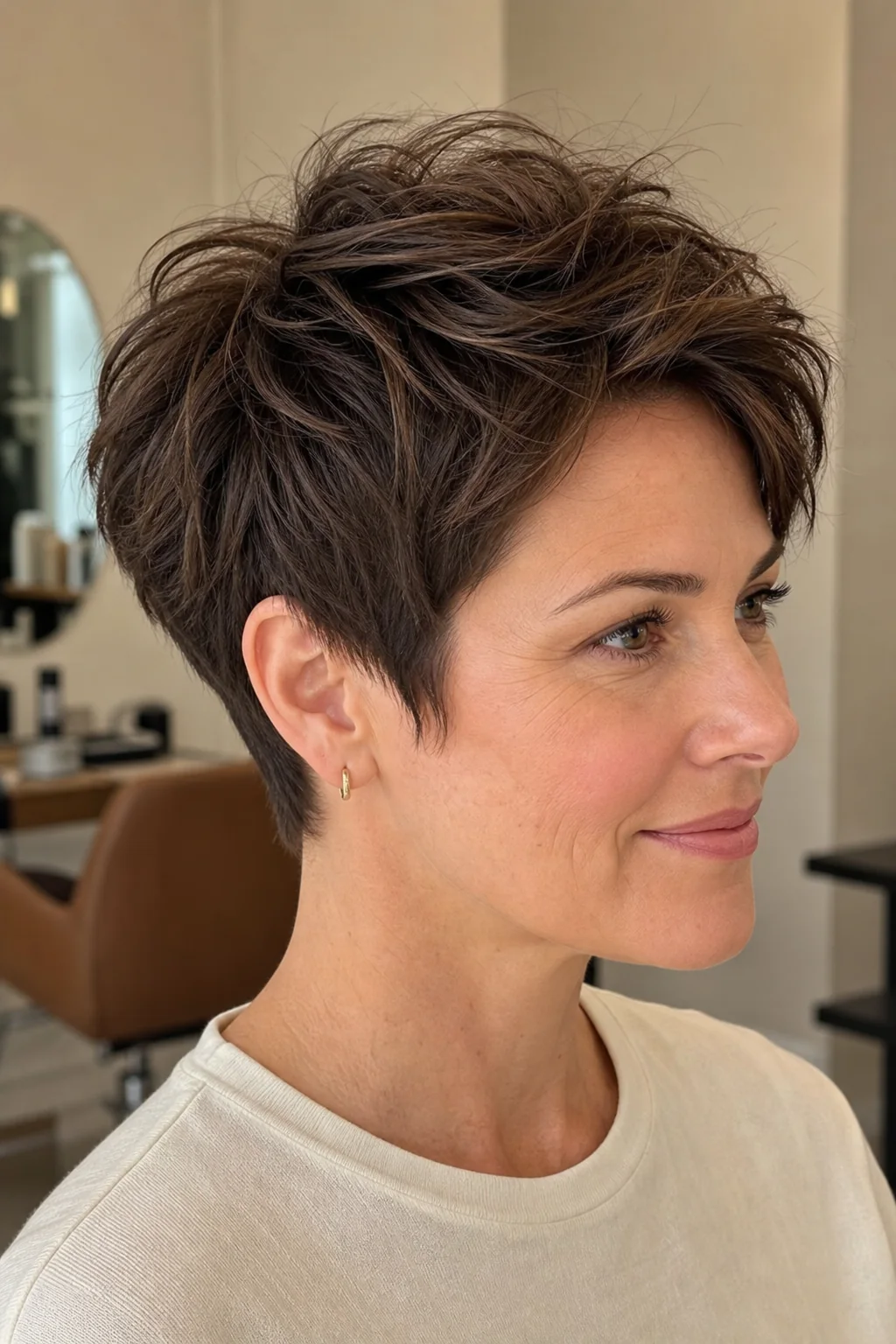
This is the pixie for mornings when you want your hair to look lively before you have even finished your coffee.
Softly tapered sides keep the outline neat while airy crown layers create height where fine hair often falls flat. The broken-up top avoids a solid, helmet-like shape and makes the movement look natural. This version is particularly useful when the hair has reasonable coverage but lacks lift at the crown. Work with the hair’s natural direction rather than forcing every piece upright.
What it does for your features: The extra height draws the eye upward, makes a round face appear slightly longer and puts the focus on the eyes.
Why it works: Fine hair often looks fuller when layers lift as a connected shape. Over-separating every strand creates gaps; airy movement with a strong outline preserves density.
At a glance: Best for: Fine hair that falls flat at the crown · Styling: About 5 minutes · Upkeep: Moderate
Real-life fit: Works beautifully when: You like an energetic everyday style that can move between casual weekends and a polished office. Know before choosing it: The crown is easy to revive, but the short sides usually need reshaping within five to seven weeks.
Ask your stylist for: Soft internal layering through the crown, lightly tapered sides and enough top length to separate with fingertips.
Style it like this: Lift the roots against their natural direction with warm air, let them cool, then pinch only three or four pieces into place.
2. Power Pixie With Long Side-Swept Bangs
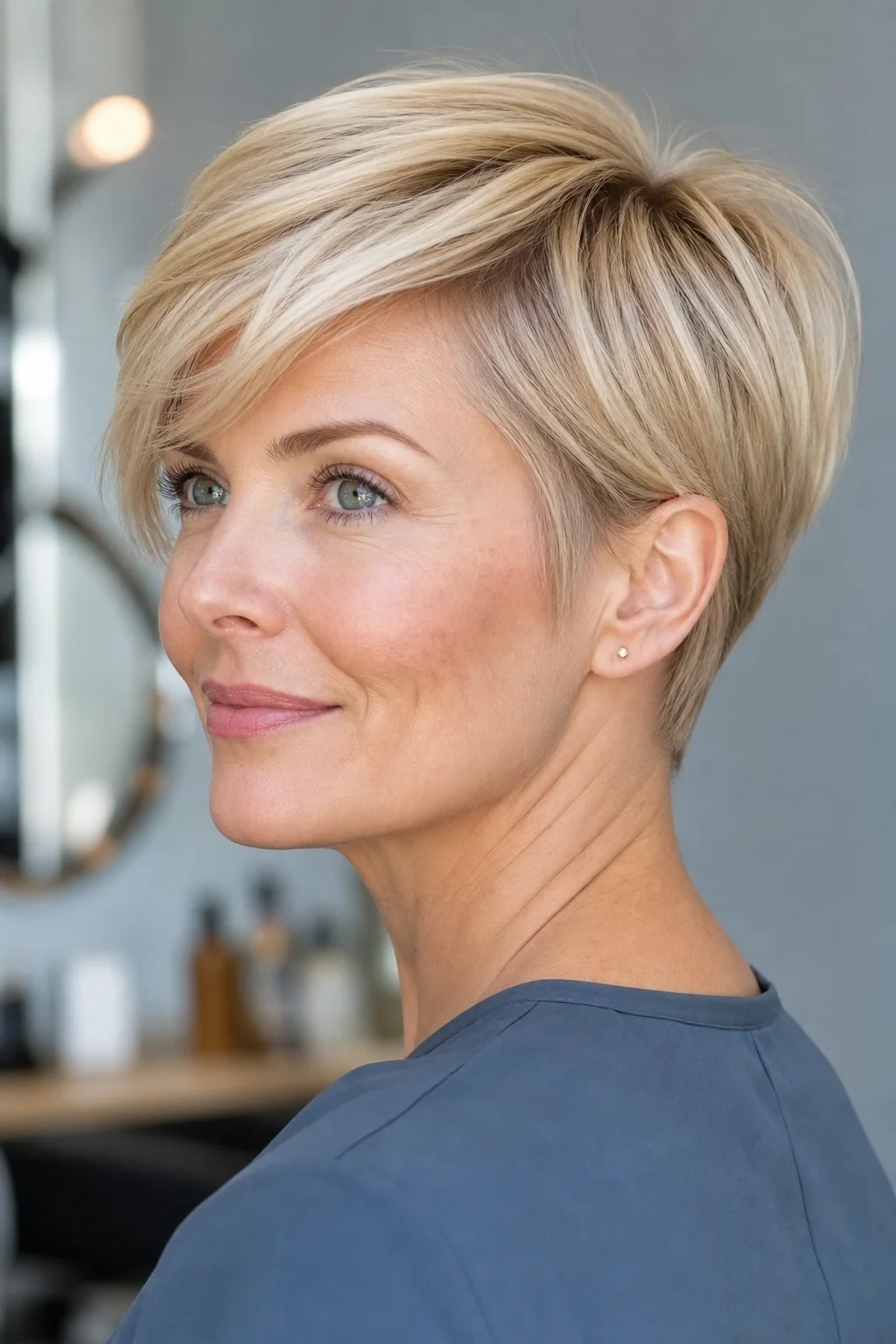
Choose this one when you want the freedom of short hair without giving up a soft, feminine sweep.
A longer diagonal fringe creates movement across the forehead while the short back keeps the cut unmistakably pixie-shaped. It is a softer option for anyone nervous about exposing the whole forehead, and it can visually balance a longer or more angular face. The fringe needs enough weight to sweep cleanly, so avoid aggressive thinning through the front.
What it does for your features: The diagonal fringe softens the forehead, echoes the cheekbone and can gently balance an angular or longer face.
Why it works: A fringe looks denser when the stylist preserves weight at its base. Excessive texturizing can turn a luxurious sweep into thin, separated strands.
At a glance: Best for: Straight or slightly wavy fine hair · Styling: 5–8 minutes · Upkeep: Moderate
Real-life fit: Works beautifully when: You enjoy changing your part, wearing earrings and having a fringe that can look polished or relaxed. Know before choosing it: The fringe needs a few minutes of direction after washing and may require an in-between trim.
Ask your stylist for: A deep side part, long sweeping fringe and graduated short layers through the back.
Style it like this: Dry the fringe briefly in the opposite direction first, then sweep it into place for natural root lift.
3. Textured Silver Power Pixie
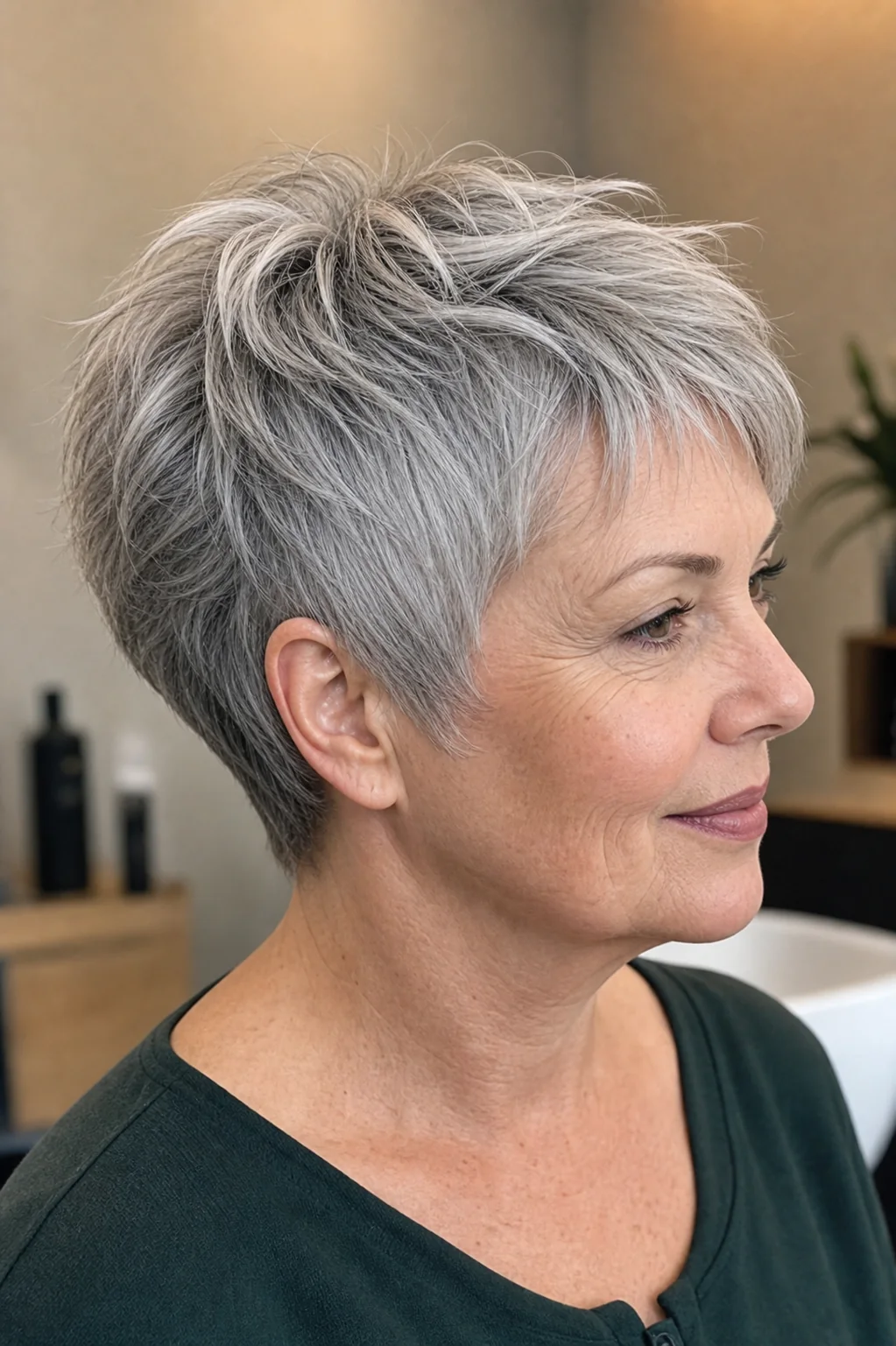
Silver hair deserves a shape that celebrates its light rather than trying to make it disappear.
Piecey texture gives silver fine hair definition while the compact sides keep the overall shape crisp. Natural gray variation makes the separated layers especially visible, so the cut can look dimensional without heavy styling products. A flexible paste works better than a wet gel, which may clump fine strands together and reveal more scalp than intended.
What it does for your features: The bright, textured top reflects light toward the eyes and gives the face a fresher, more animated frame.
Why it works: Natural shifts in silver and gray create visible dimension. Point-cut texture lets those tones define the layers without needing a heavy product.
At a glance: Best for: Natural gray or silver fine hair · Styling: About 5 minutes · Upkeep: Low to moderate
Real-life fit: Works beautifully when: You want your natural silver to feel modern, expressive and deliberately styled. Know before choosing it: Too much wet product can separate pale strands and reveal more scalp, so product restraint matters.
Ask your stylist for: Short tapered sides, a softly textured top and point-cut ends that separate without looking sparse.
Style it like this: Emulsify a pinhead amount of flexible paste between your hands and skim it over the surface rather than pressing it into the roots.
4. Sleek Power Pixie With Tapered Sides
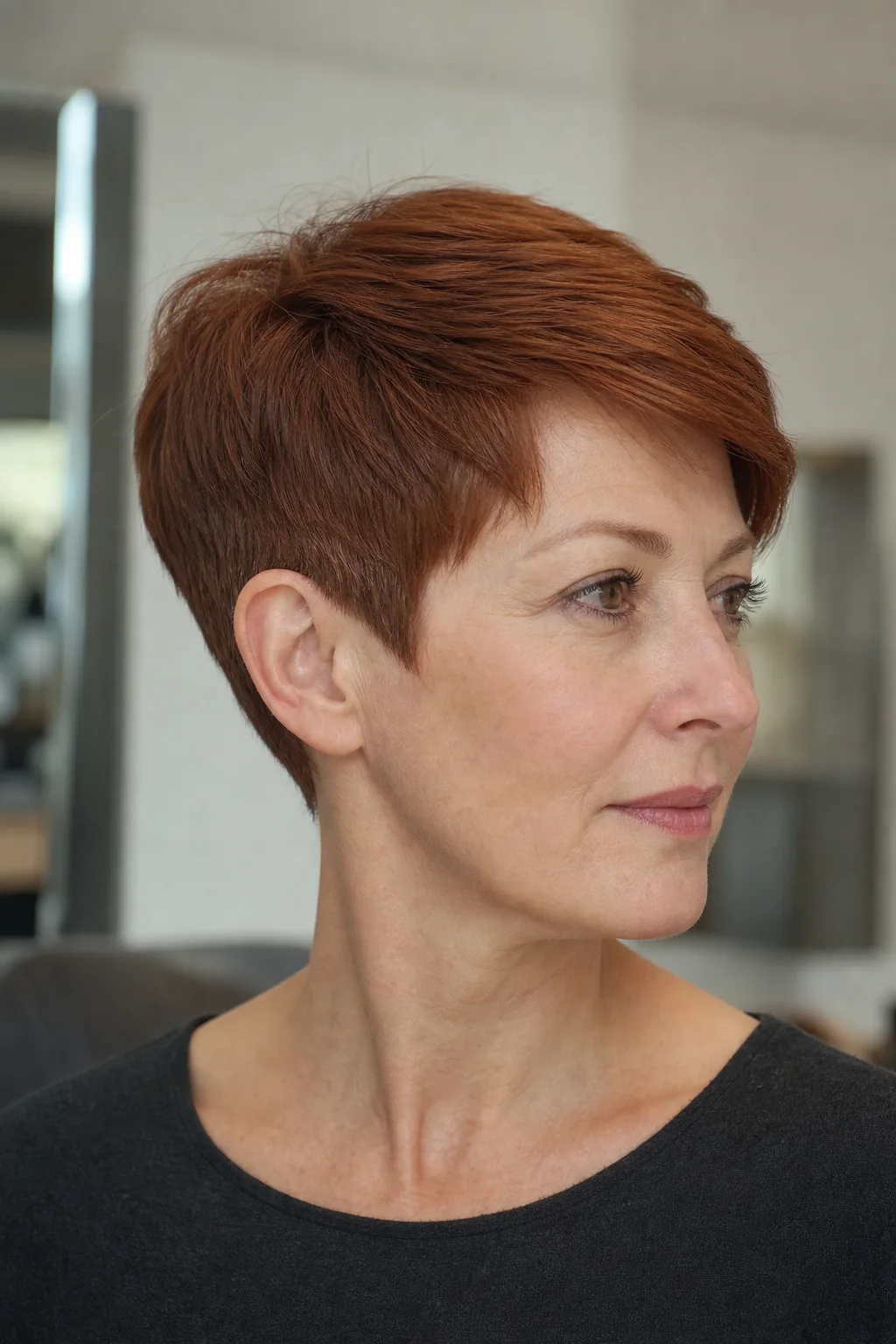
This clean-lined pixie has the same effect as a beautifully tailored jacket: simple, sharp and instantly composed.
A smooth top and close, softly tapered sides create a clean shape without removing too much visual density. This polished version works well for straight fine hair that resists tousled styling. The strength comes from the outline rather than exaggerated volume, making it a practical choice for professional settings or anyone who prefers a controlled finish.
What it does for your features: The clean sides reveal the cheekbones and jawline, while the smooth top keeps the overall effect balanced rather than severe.
Why it works: Fine hair does not always need manufactured volume. A precise perimeter can create the visual strength that soft, over-layered ends often lose.
At a glance: Best for: Straight fine hair and controlled styling · Styling: Under 5 minutes · Upkeep: Moderate
Real-life fit: Works beautifully when: You prefer a dependable professional finish and dislike deliberately messy texture. Know before choosing it: The precision is part of its appeal, so an overgrown neckline becomes noticeable sooner than on softer cuts.
Ask your stylist for: Scissor-cut tapering at the sides, a clean neckline and a smooth top with minimal thinning.
Style it like this: Use a narrow nozzle and direct the top smoothly from the roots, finishing with one drop of lightweight serum on the ends.
5. Feathered Power Pixie With Wispy Bangs
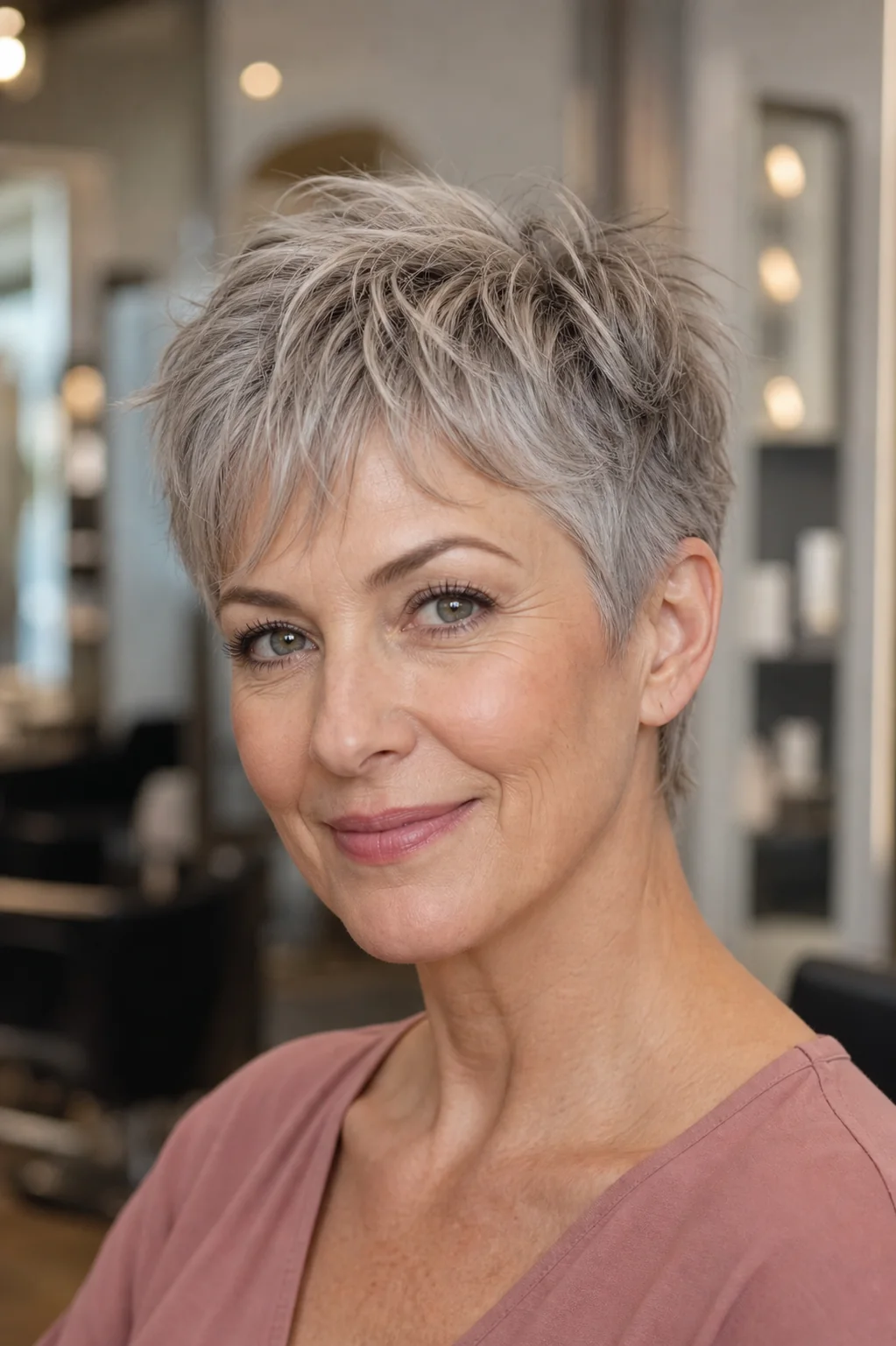
If a close crop feels too exposed, this feathered version brings softness back around the eyes.
Fine feathered pieces keep the fringe light while layered movement prevents the cut from looking flat or rigid. Wispy bangs soften the forehead without creating a heavy horizontal line. Because every short piece is visible, the stylist should feather selectively and preserve enough density behind the fringe to stop it appearing see-through.
What it does for your features: The broken fringe softens the forehead and fine lines while keeping enough openness to let the eyes remain the focal point.
Why it works: Wispy does not mean sparse. The softness should come from the tips while a denser section behind the fringe maintains coverage.
At a glance: Best for: Fine hair that benefits from soft movement · Styling: 5–7 minutes · Upkeep: Moderate
Real-life fit: Works beautifully when: You want short hair to feel gentle, approachable and easy to wear with minimal makeup. Know before choosing it: Wispy bangs must retain density behind them; over-thinning can make the front appear transparent.
Ask your stylist for: A wispy fringe, feathered crown layers and softly blended edges around the ears.
Style it like this: Blow-dry the bangs from side to side with your fingers, then allow them to fall naturally instead of forming a rigid row.
Pause and notice: Which photograph made you stop rather than simply scroll? That instinct often reveals whether you want polish, softness or visible texture more than any face-shape rule can.
6. Wavy Power Pixie With a Deep Side Part
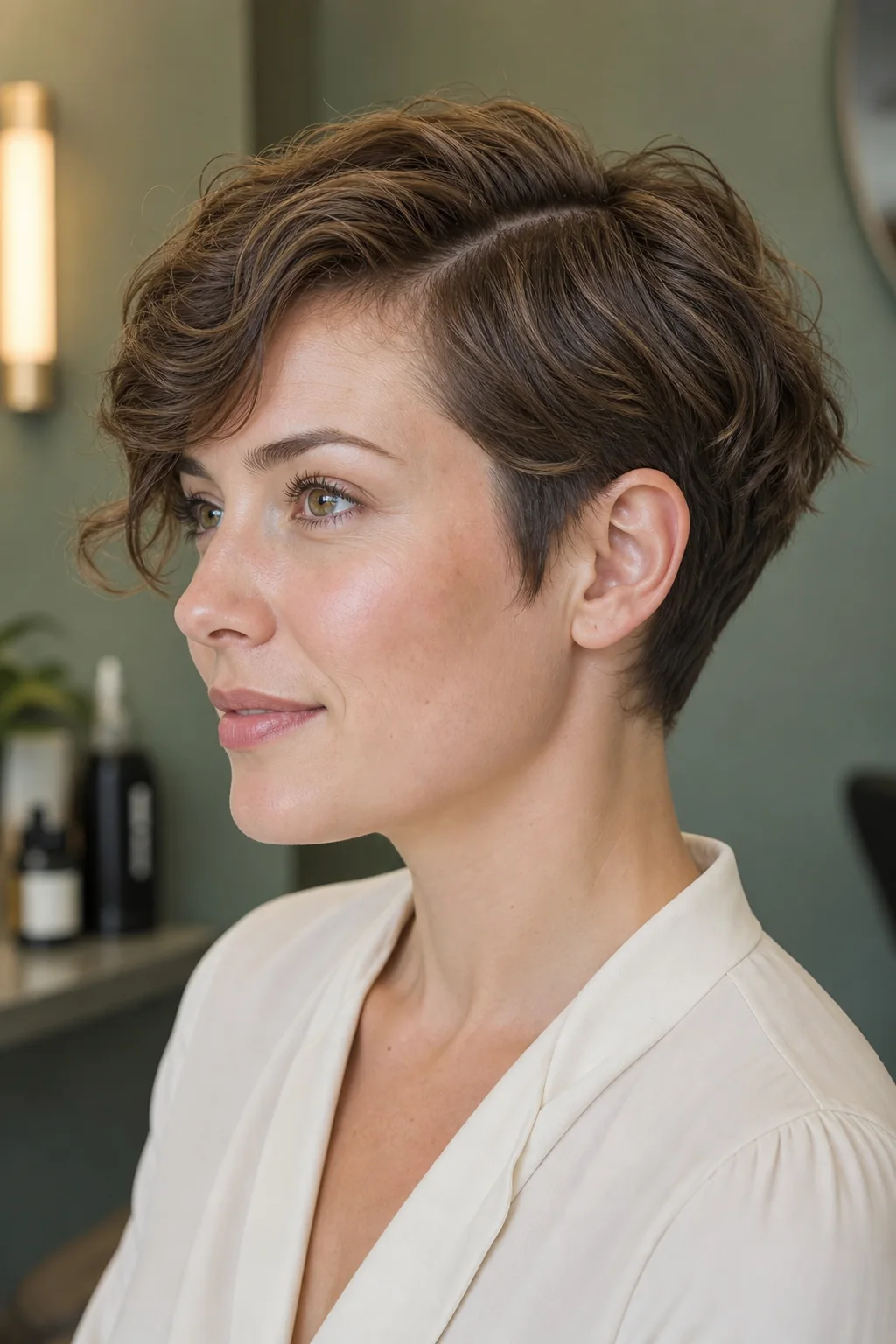
This is proof that a pixie can be romantic, touchable and beautifully imperfect.
Natural bends through the longer top add width and texture, balanced by a defined side part and compact neckline. This is a strong choice for fine hair with a slight natural wave that becomes lost in longer cuts. Diffusing or gently twisting two or three sections while drying can emphasize the bends without turning the style into tight curls.
What it does for your features: Asymmetry adds flattering width through the upper face and the wave brings softness around sharper cheekbones or a strong jaw.
Why it works: Natural bends create their own volume when the cut leaves enough connected length. Too many short layers can break the wave pattern apart.
At a glance: Best for: Fine hair with a natural bend or loose wave · Styling: 7–10 minutes · Upkeep: Low to moderate
Real-life fit: Works beautifully when: You prefer working with your natural texture rather than straightening it into a fixed shape. Know before choosing it: Humidity changes the finish, and the wave can disappear if the crown is cut too short.
Ask your stylist for: Keep natural wave through the top, use a deep side part and taper the nape without clipping it too tightly.
Style it like this: Twist two or three damp top sections away from the face, diffuse gently and separate only after the hair is completely dry.
7. Long Power Pixie That Covers the Ears
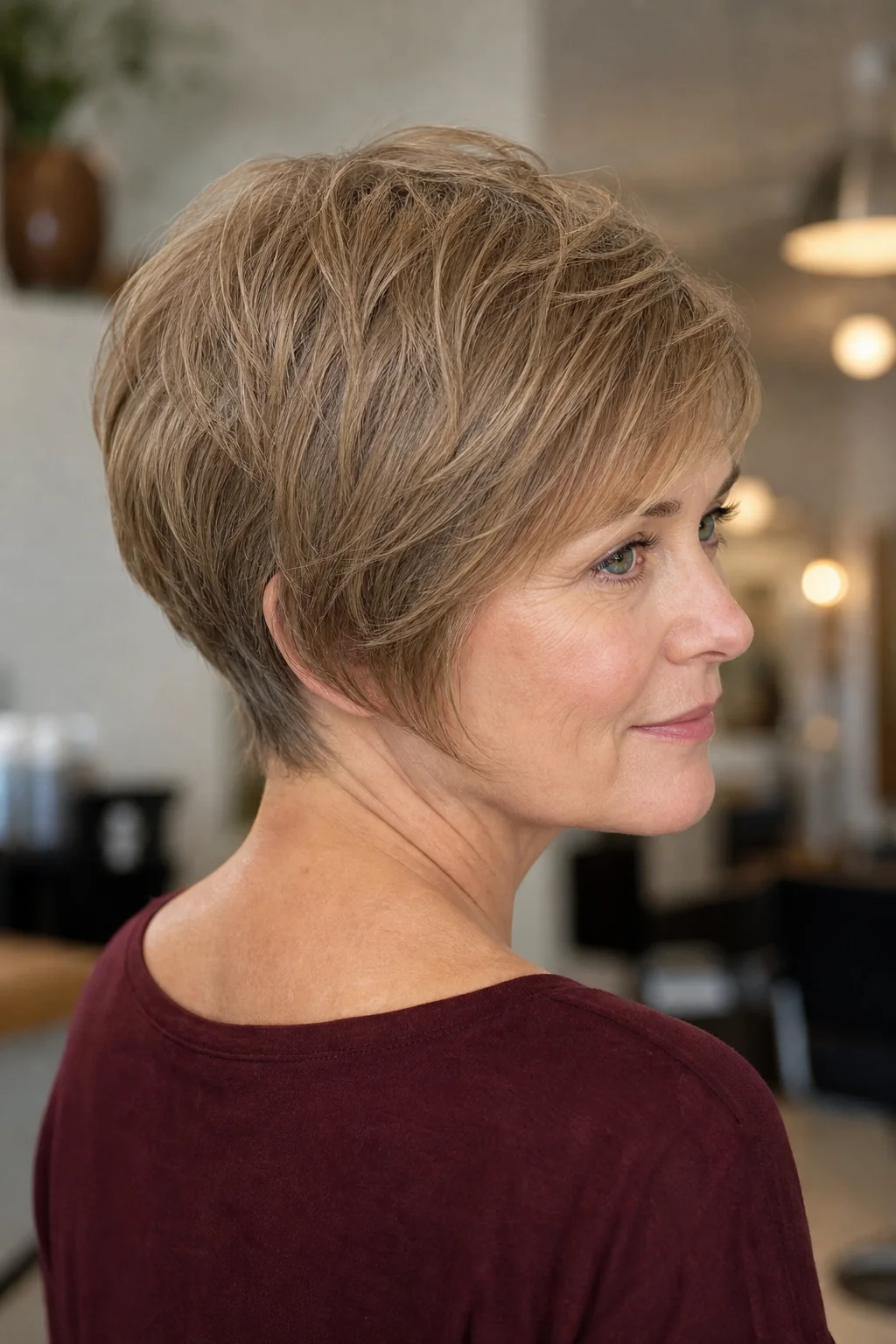
Think of this as the reassuring bridge between a bob and a true pixie.
Longer side pieces provide softness and coverage while the cropped back preserves the lift and ease of a pixie. It offers a gentler transition from a bob and can feel more comfortable for anyone who prefers not to expose the ears completely. The connected layers are important: disconnected long sides can make fine hair look stringy rather than softly shaped.
What it does for your features: The ear-skimming sides frame the cheeks, soften the jawline and make the transition to short hair feel less exposed.
Why it works: Connected layers allow longer side pieces to belong to the haircut. Disconnected wisps can make fine hair look accidental and thinner.
At a glance: Best for: Anyone wanting ear coverage or a softer grow-out · Styling: 5–8 minutes · Upkeep: Low to moderate
Real-life fit: Works beautifully when: You are considering short hair for the first time or want a cut that grows toward a bixie gracefully. Know before choosing it: The longer sides need careful connection; otherwise fine ends may begin to look stringy.
Ask your stylist for: Leave the side sections long enough to skim the ears, with a cropped nape and connected crown layers.
Style it like this: Smooth the sides close to the head and lift only the crown so the silhouette stays refined rather than wide.
8. Asymmetrical Power Pixie With a Long Front
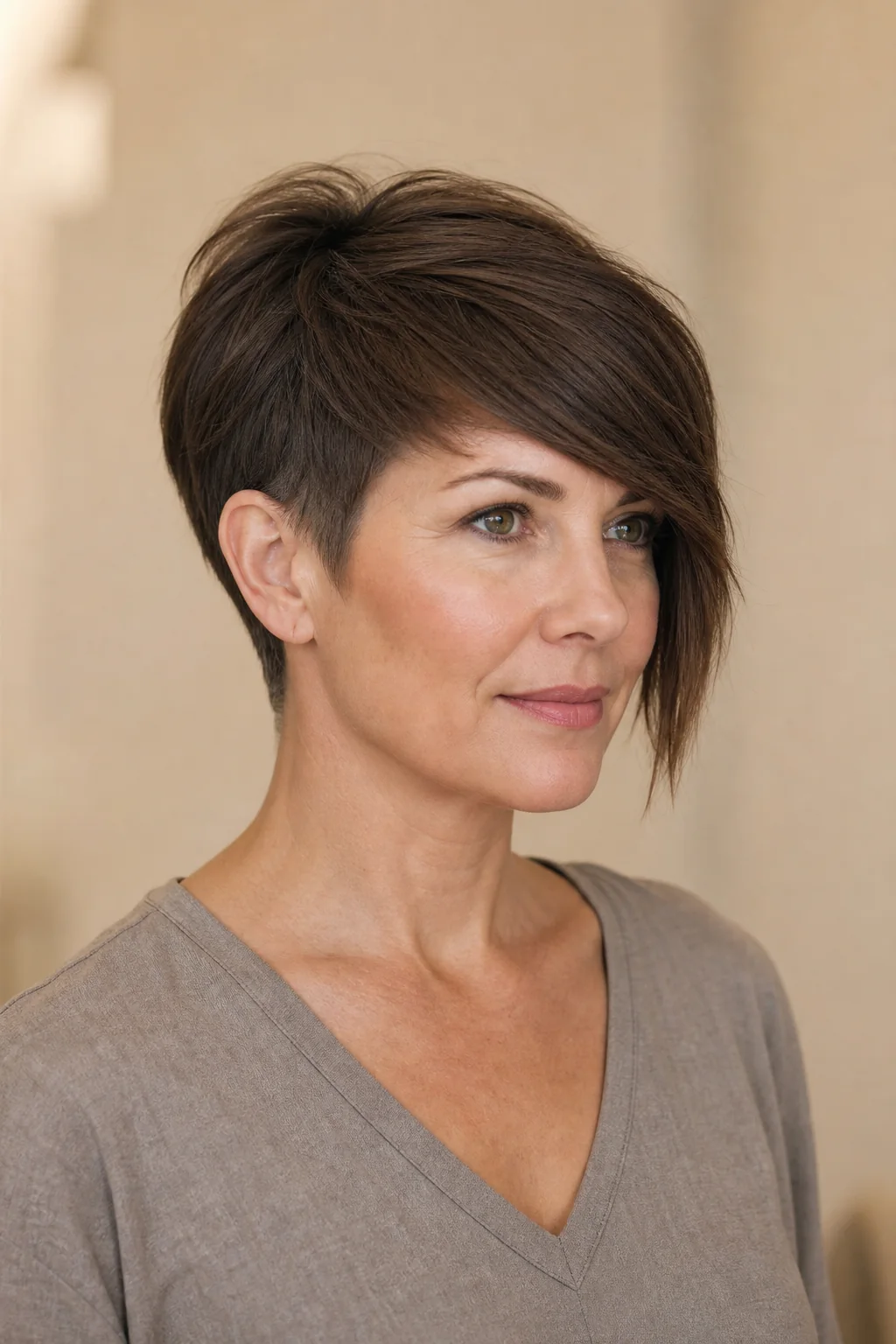
For a real transformation, one confident diagonal can say far more than dozens of tiny layers.
One elongated front section creates a strong diagonal while the opposite side remains neatly cropped. That deliberate imbalance gives fine hair visual movement without relying on excessive layering or artificial height.
What it does for your features: The diagonal line draws attention across the eyes and cheekbones and can visually slim a fuller face.
Why it works: Asymmetry gives the eye a strong shape to follow, allowing fine hair to look designed even when the individual strands are delicate.
At a glance: Best for: Straight fine hair and round or heart-shaped faces · Styling: 5–8 minutes · Upkeep: Moderate
Real-life fit: Works beautifully when: You enjoy an artistic, fashion-aware look and do not mind being noticed. Know before choosing it: The long front needs deliberate styling and can fall into the eyes when it loses its shape.
Ask your stylist for: A long connected front panel, a deep side part and softly cropped sides with no disconnected undercut.
Style it like this: Smooth the long section diagonally across the forehead and tuck the shorter side behind the ear.
9. Rounded Power Pixie With Soft Fullness
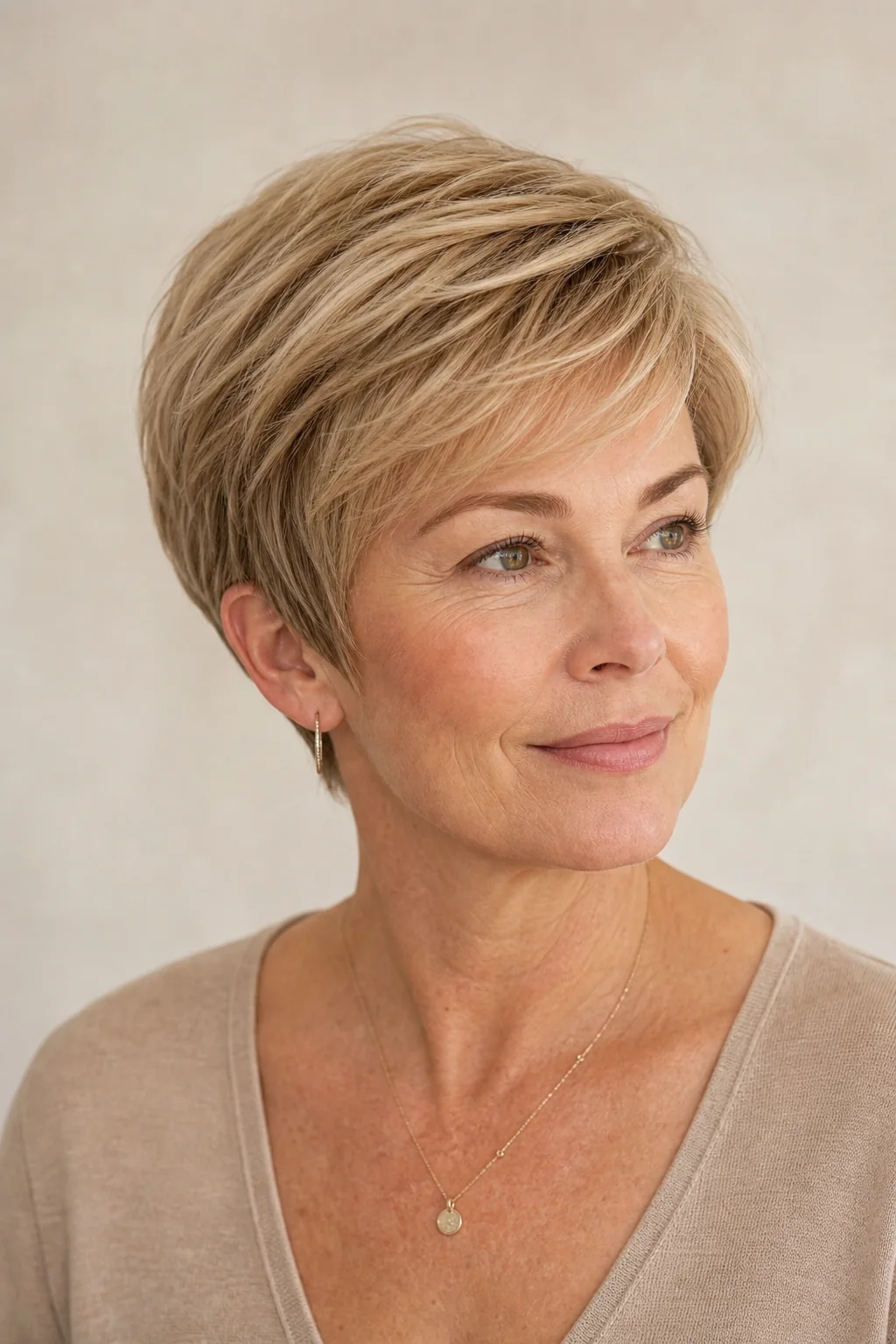
This softly rounded silhouette is the quiet luxury version of a power pixie.
A softly rounded crown and gently curved sides create an elegant, continuous silhouette. The shape feels fuller because the layers sit together instead of being broken into dozens of separated pieces.
What it does for your features: Soft curves balance angular features and bring gentle width to a long or narrow face.
Why it works: Fine hair gains visual substance from connected layers. A rounded outline lets light travel smoothly over the surface, making the shape appear more complete.
At a glance: Best for: Fine straight hair and long or angular faces · Styling: 5–7 minutes · Upkeep: Moderate
Real-life fit: Works beautifully when: You value timeless elegance and want hair that looks finished without appearing over-styled. Know before choosing it: The rounded shape depends on connected layers, so it is less suited to anyone wanting choppy separation.
Ask your stylist for: Connected rounded layers, a soft crown and scissor-shaped sides that follow the head without collapsing flat.
Style it like this: Dry with a small vent brush, following the curve of the head and lifting lightly at the crown.
10. Lifted Power Pixie With a Mini Quiff
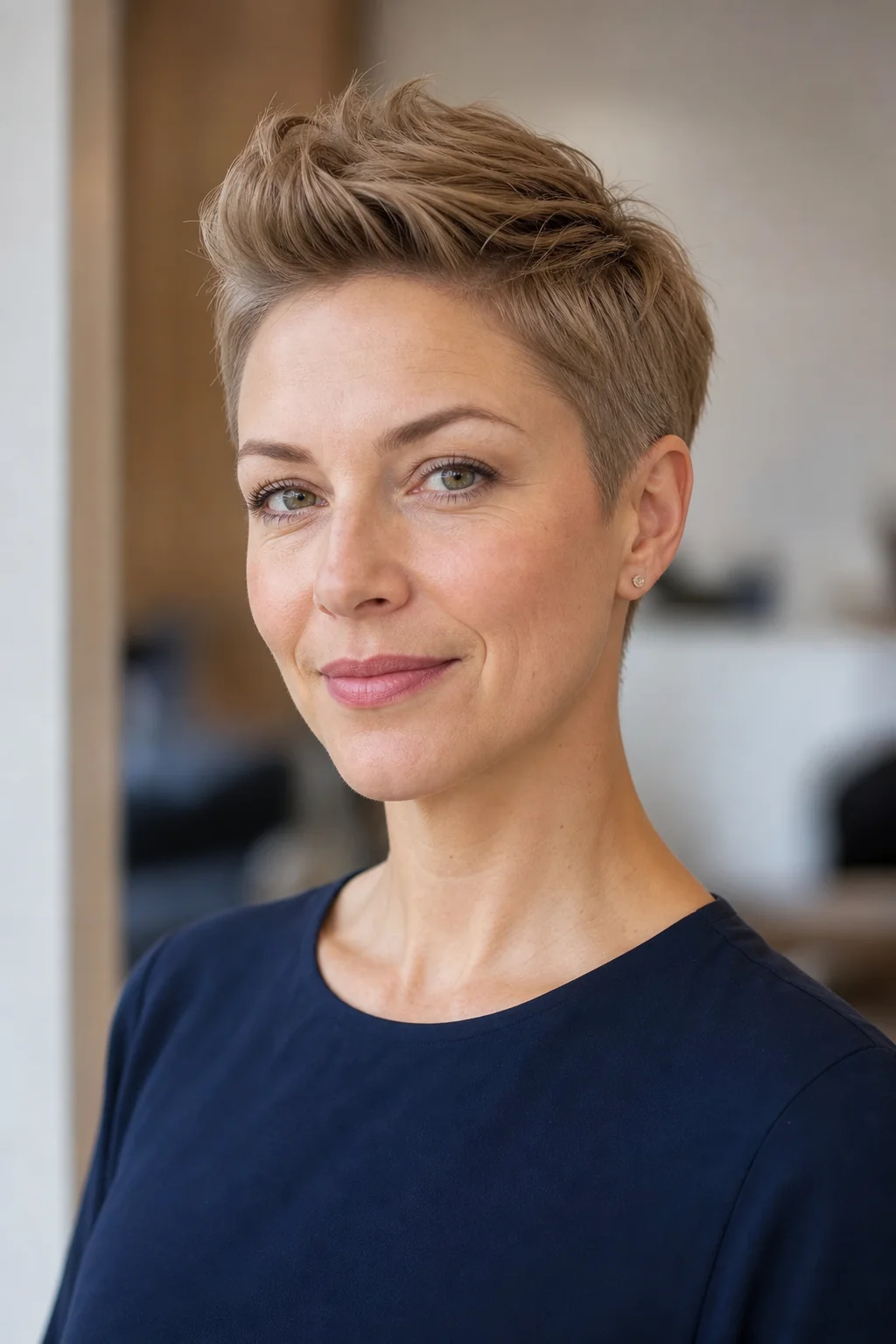
A little lift at the front can change the way you carry the entire haircut—and perhaps yourself.
Extra length through the front lifts into a small, wearable quiff while the sides remain compact. It creates drama in one controlled area, so fine hair can look bold without requiring volume everywhere.
What it does for your features: The upward front opens the face, highlights the brows and creates a longer visual line.
Why it works: Concentrating lift in one zone is more convincing than trying to inflate all of fine hair. Strong direction creates impact with less product.
At a glance: Best for: Fine hair with enough front density for controlled lift · Styling: 7–10 minutes · Upkeep: Moderate
Real-life fit: Works beautifully when: You like an upbeat, confident style for social occasions, work and days when you want extra presence. Know before choosing it: The front requires heat direction and light hold; it will not remain lifted after simply air-drying.
Ask your stylist for: A longer front and top, tapered sides and enough connection behind the quiff to keep it supported.
Style it like this: Dry the front up and back over two fingers, let it cool, then secure with a mist of flexible hairspray.
Pause and notice: Compare your favorite with your real morning routine. A five-minute haircut you enjoy styling will serve you better than a dramatic shape you resent maintaining.
11. Curly Power Pixie With a Tapered Nape
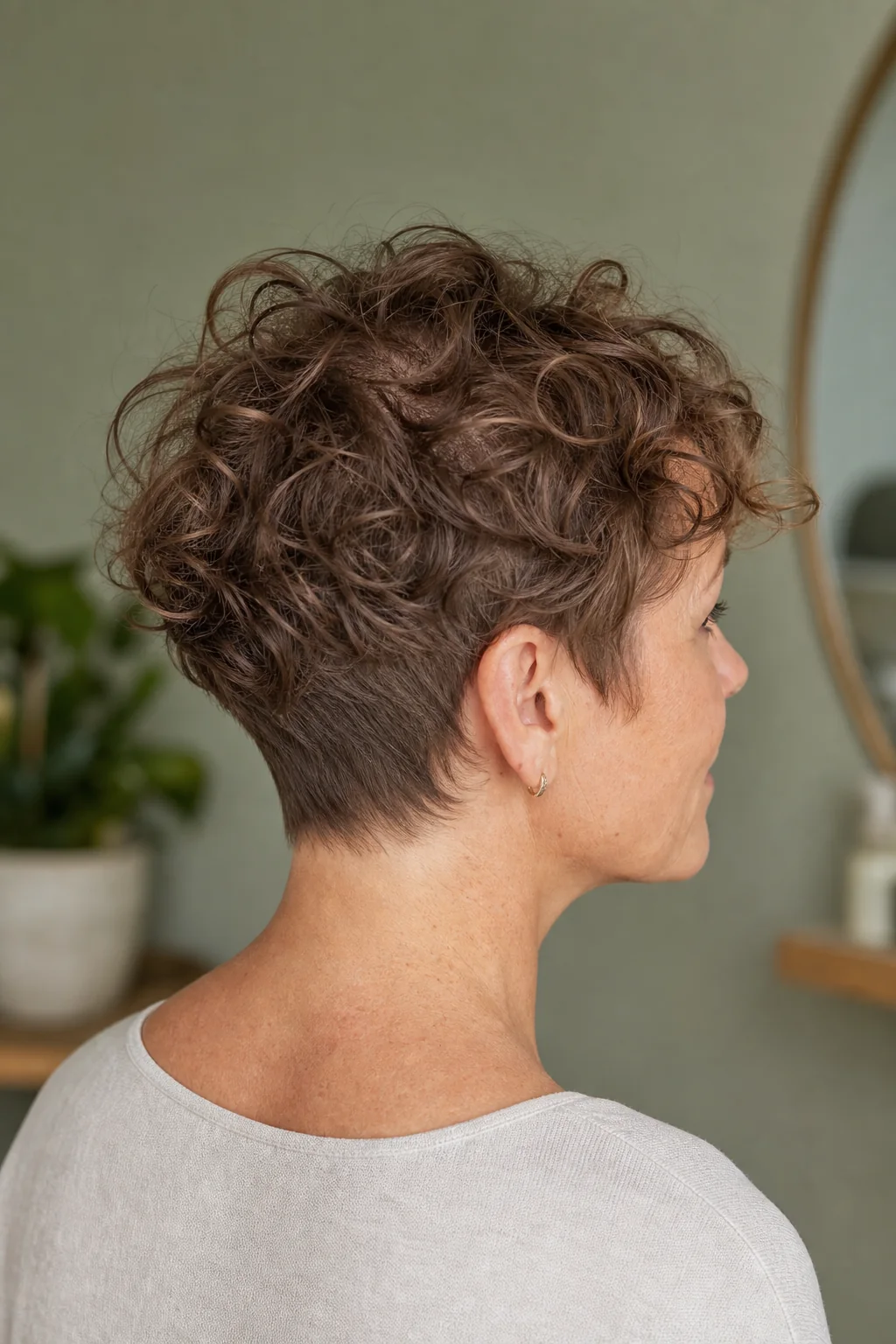
Let the curls provide the personality while the clean neckline keeps everything beautifully intentional.
Soft curls remain long enough to form through the crown while a tapered nape keeps the haircut light and unmistakably short. The contrast makes every curl look purposeful instead of fluffy or undefined.
What it does for your features: Curls soften the forehead and temples while the neat nape reveals the neck and jawline.
Why it works: Fine curls need enough length to complete their pattern. Cutting the crown too short can turn curls into frizz and remove the fullness they naturally create.
At a glance: Best for: Fine naturally curly or strongly wavy hair · Styling: 8–12 minutes · Upkeep: Low to moderate
Real-life fit: Works beautifully when: You want to celebrate your natural curl pattern while keeping the neck and sides easy to manage. Know before choosing it: Curl shrinkage makes length planning important, and an overly short crown may lose its curl definition.
Ask your stylist for: Curl-by-curl shaping through the top, softly tapered sides and a neat nape without thinning shears.
Style it like this: Scrunch in a lightweight foam, diffuse on low and leave the curls untouched until completely dry.
12. Micro-Fringe Power Pixie
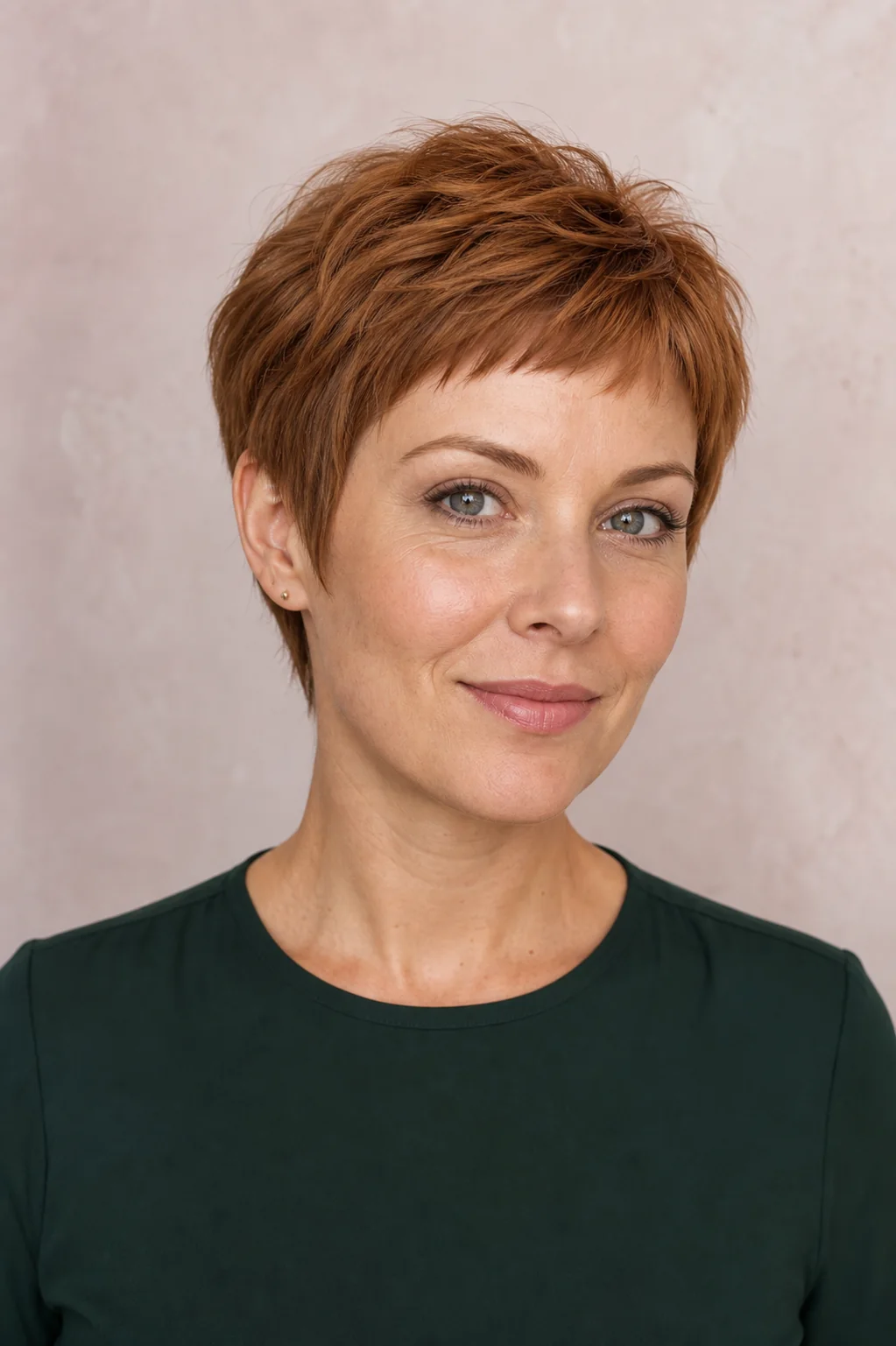
Small fringe, enormous personality: this is the detail that turns a simple crop into a creative statement.
A short, softly textured fringe exposes more of the forehead while creating a crisp focal point above the brows. The crown stays slightly longer so the cut retains softness and does not become severe.
What it does for your features: The open forehead emphasizes the brows, eyes and upper cheekbones and can make a petite face feel more defined.
Why it works: A micro fringe succeeds through shape rather than density. Its edge should be softened deliberately, not thinned until it disappears.
At a glance: Best for: Petite features and straight or slightly wavy fine hair · Styling: Under 5 minutes · Upkeep: High at the fringe
Real-life fit: Works beautifully when: You enjoy modern clothes, expressive accessories and a haircut that feels deliberately unconventional. Know before choosing it: A micro fringe grows out visibly and may need tidying well before the rest of the haircut.
Ask your stylist for: A softly point-cut micro fringe, longer connected crown layers and neat sides with no harsh clipper line.
Style it like this: Press the fringe into place while damp and allow the crown to retain a little natural lift.
13. Bixie-Length Power Pixie With Flipped Ends
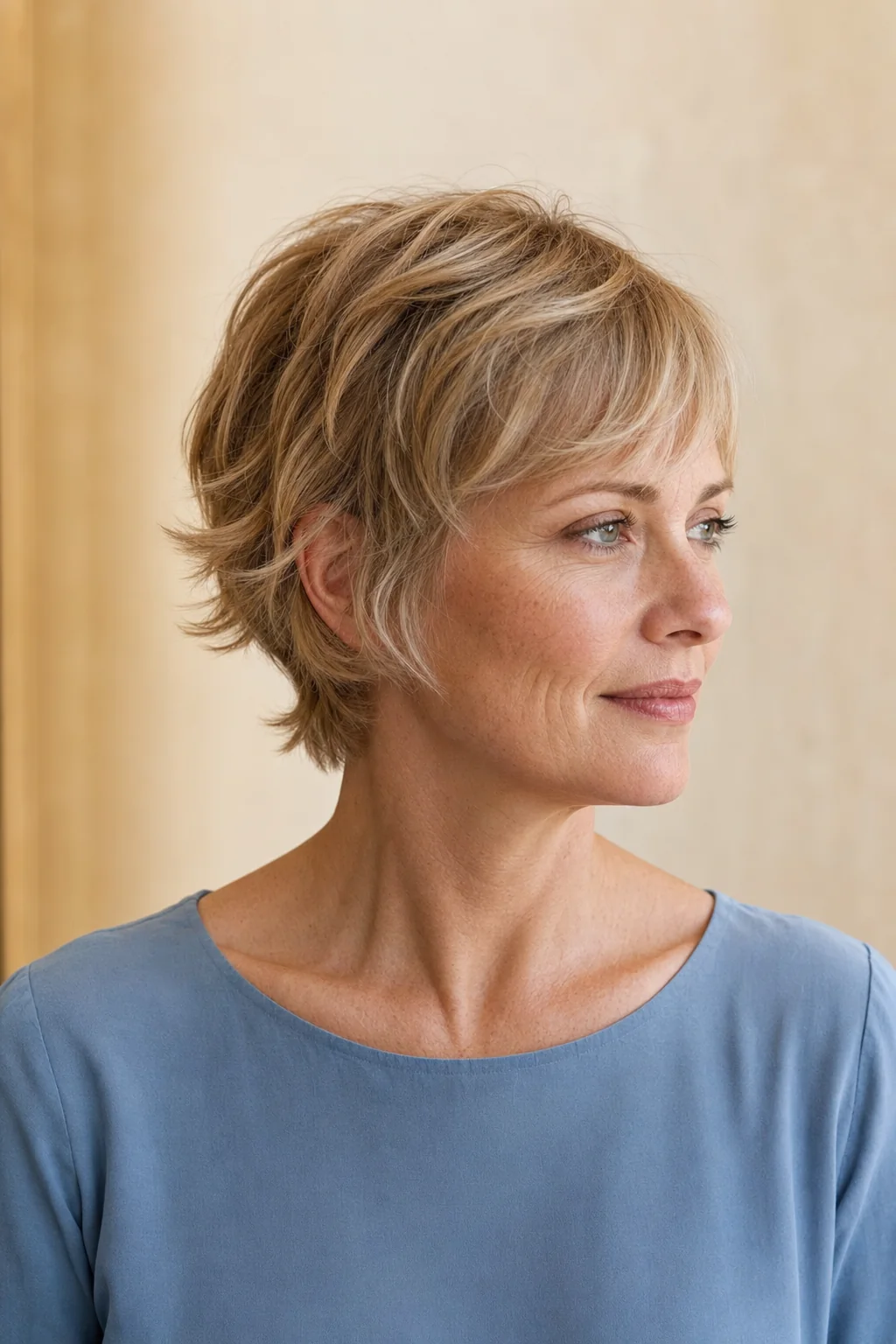
The playful flick at the ends makes this longer pixie feel as though it is always in a good mood.
This longer interpretation sits between a pixie and a bixie, with softly flipped ends around the ears and nape. It keeps the energy of short hair while offering more movement and a forgiving grow-out.
What it does for your features: Outward movement around the cheeks can balance a narrow chin and adds softness around the jaw.
Why it works: A small bend at the perimeter makes fine ends look lively. The effect needs a reasonably solid baseline rather than aggressively feathered tips.
At a glance: Best for: Fine hair during a pixie grow-out · Styling: 8–10 minutes · Upkeep: Low
Real-life fit: Works beautifully when: You want movement, ear coverage and enough length to experiment while growing toward a bob. Know before choosing it: The flipped perimeter needs a quick brush or iron pass and may turn inward on naturally straight growth.
Ask your stylist for: Bixie-length sides, a cropped but not exposed nape and lightly graduated ends that can turn outward.
Style it like this: Use a small round brush to flick only the perimeter outward while keeping the crown smooth.
14. Side-Profile Power Pixie With a Sculpted Nape
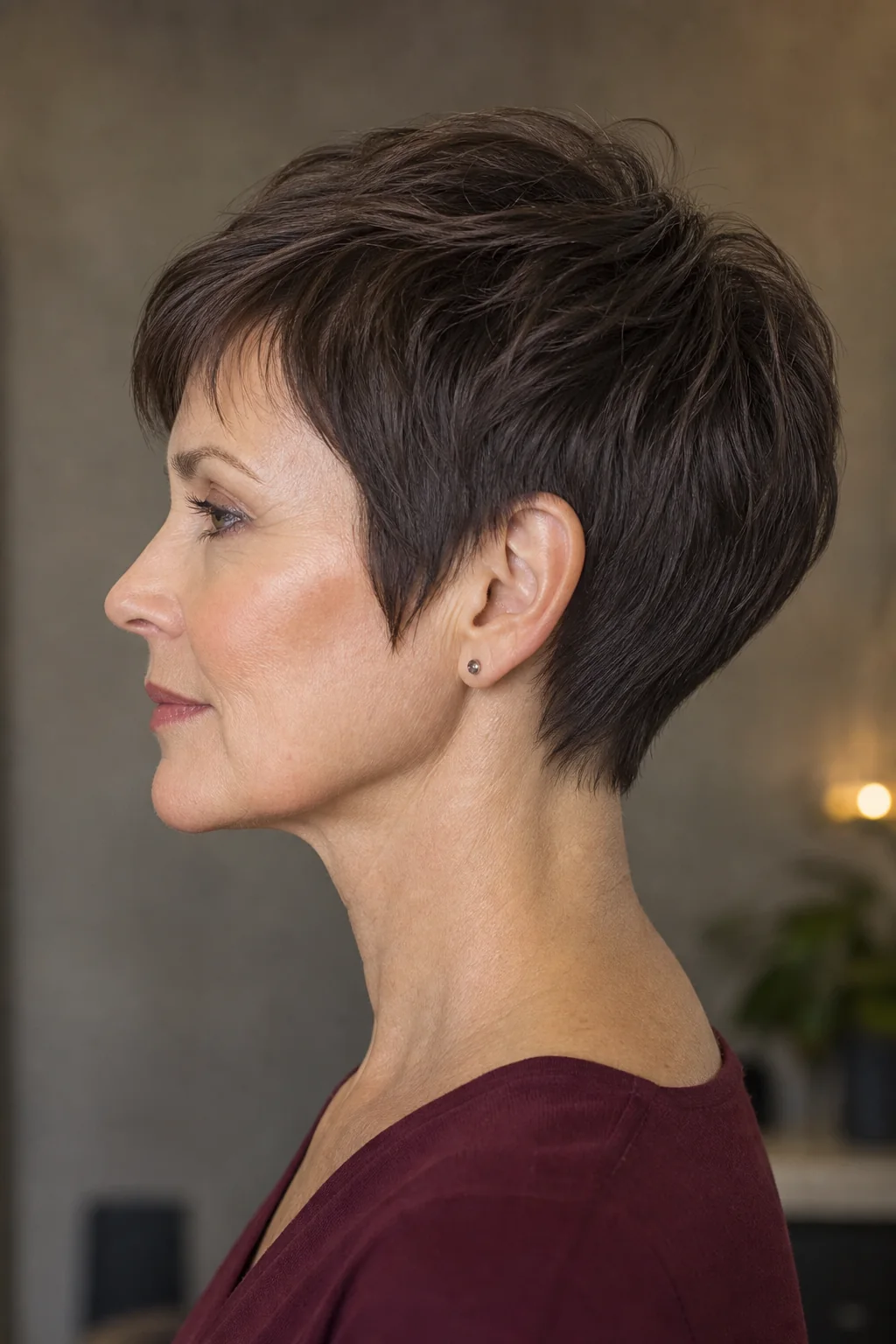
A memorable pixie should look just as considered when you walk away as it does from the front.
Seen from the side, this cut uses a beautifully shaped nape and gradual crown build-up to create a strong silhouette. It demonstrates why the back of a pixie matters just as much as the fringe.
What it does for your features: The clean neckline visually lengthens the neck while the graduated crown balances the head shape.
Why it works: Graduation stacks fine strands over one another, creating controlled fullness at the back without teasing or heavy product.
At a glance: Best for: Fine straight hair that looks flat from the side · Styling: About 5 minutes · Upkeep: Moderate to high
Real-life fit: Works beautifully when: You appreciate precision and want a refined shape that shows off the neck and profile. Know before choosing it: A sculpted nape reveals regrowth quickly and needs consistent salon appointments to remain crisp.
Ask your stylist for: A softly sculpted nape, graduated occipital area and enough crown length to avoid a flat side profile.
Style it like this: Follow the head shape with the dryer, then lift the crown lightly where the graduation begins.
15. Brushed-Forward Power Pixie
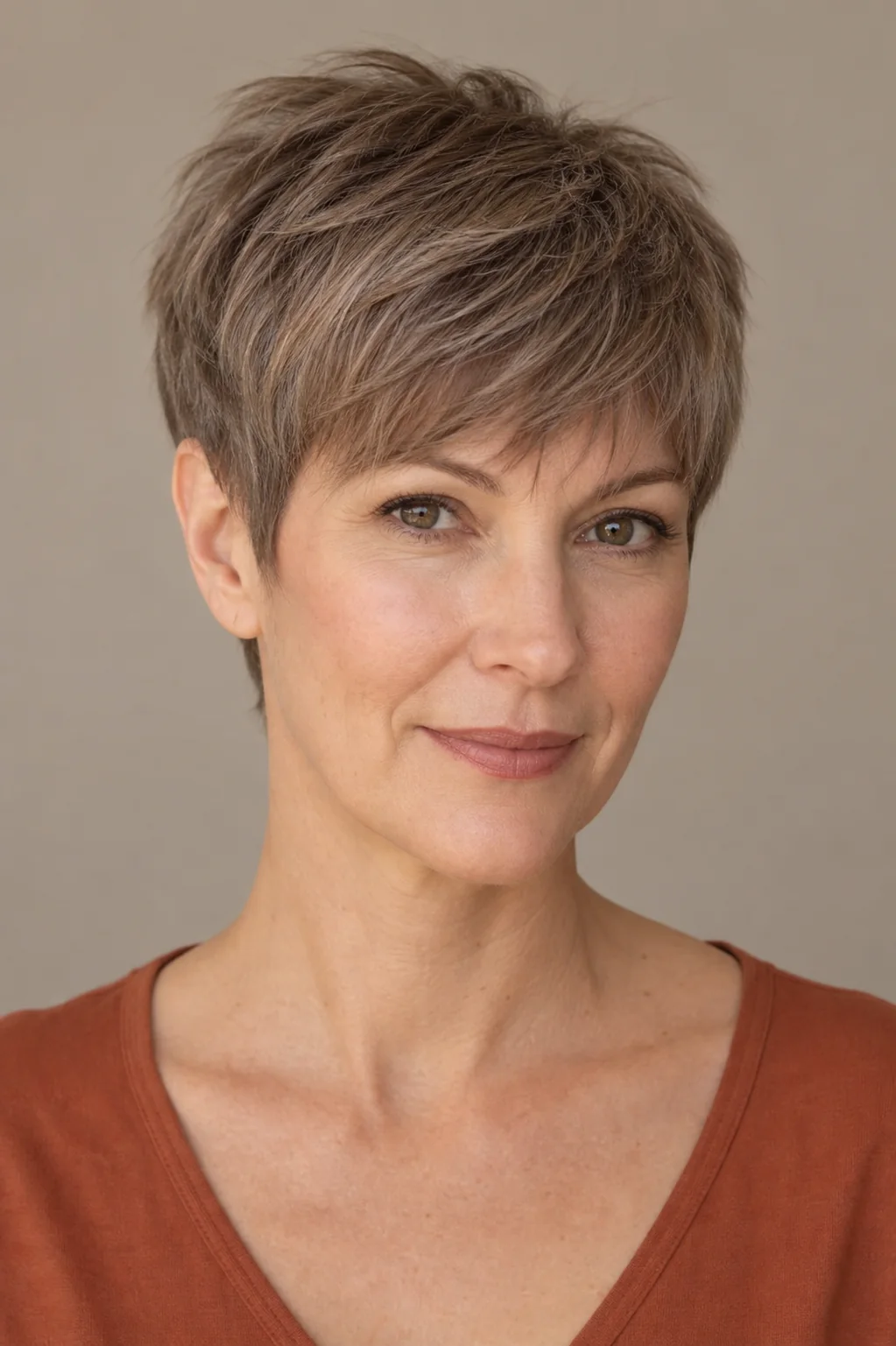
When your hair already wants to move forward, the easiest answer may be to let it.
Crown layers are directed forward into a soft, broken fringe, creating texture and coverage without a conventional side part. This direction can disguise an unsettled growth pattern and makes morning styling refreshingly simple.
What it does for your features: Forward movement softens the hairline and brings attention directly toward the eyes.
Why it works: Working with the natural growth direction reduces the amount of heat and product fine hair needs to hold a shape.
At a glance: Best for: Fine hair with a forward growth pattern or uneven hairline · Styling: Under 5 minutes · Upkeep: Low to moderate
Real-life fit: Works beautifully when: You want an uncomplicated morning routine and a fringe that settles without constant correction. Know before choosing it: Forward styling can feel heavy on a low forehead unless the fringe remains soft and broken.
Ask your stylist for: Forward-directed connected layers, a broken fringe and neat sides that retain softness around the temples.
Style it like this: Dry everything forward with your fingers, then separate the fringe with the smallest touch of texture cream.
Pause and notice: Look beyond the front. The ear area, neckline and side profile determine how a pixie feels between salon visits, so save references showing more than one angle.
16. Power Pixie With Soft Temple Pieces
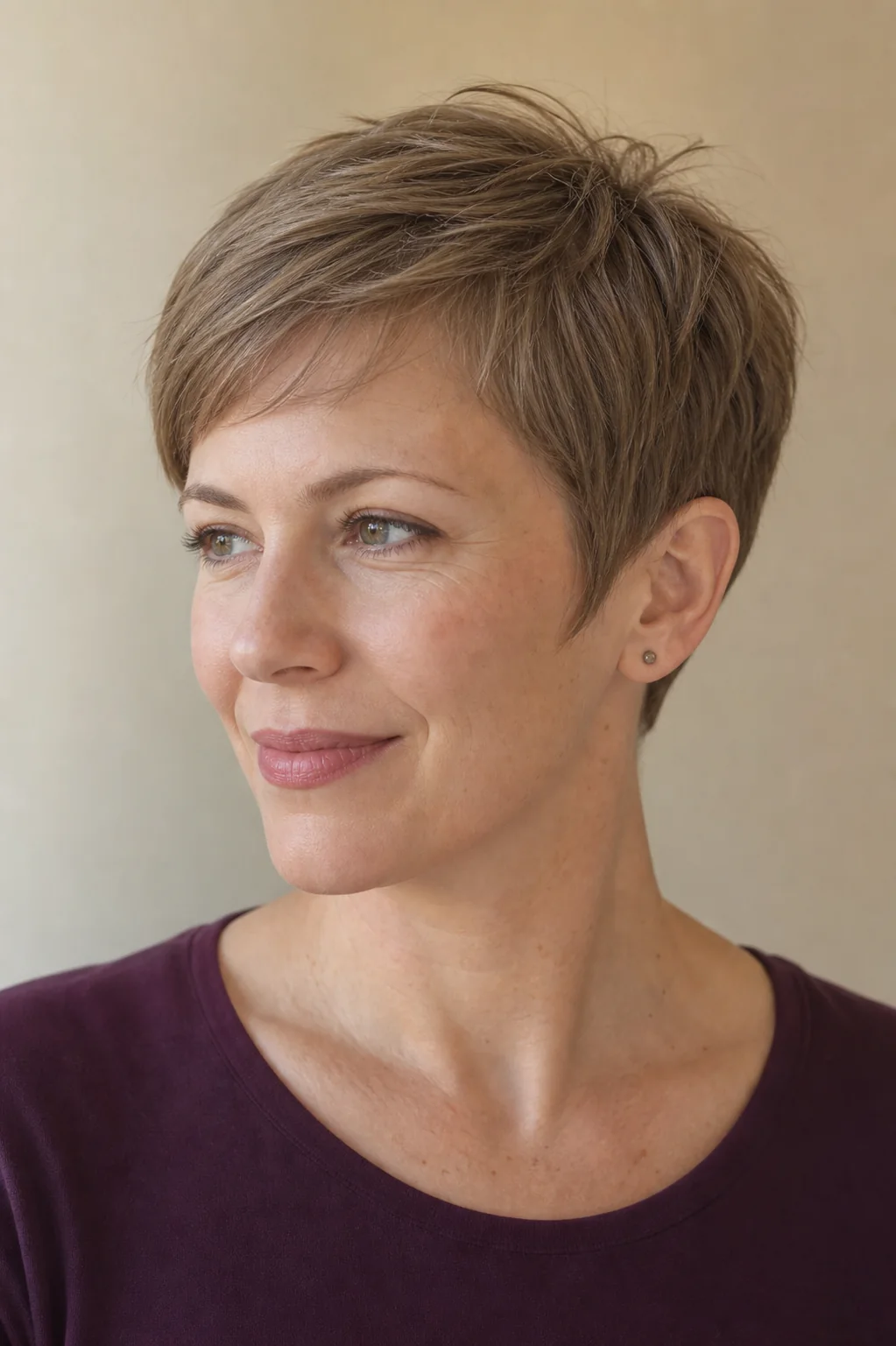
Sometimes the most flattering part of a short haircut is the tiny detail that softens its edges.
Delicate but connected pieces at the temples soften an otherwise compact pixie. They provide a little face framing without sacrificing the clean outline that helps fine hair look stronger.
What it does for your features: Temple pieces soften the outer eye area and create a gentle frame around the upper cheekbones.
Why it works: Face framing works best when it grows from the haircut rather than hanging separately. Connection preserves the illusion of density.
At a glance: Best for: Fine hair and anyone wanting gentle face framing · Styling: About 5 minutes · Upkeep: Moderate
Real-life fit: Works beautifully when: You want the ease of a compact pixie with a little softness for photographs, work and everyday wear. Know before choosing it: Temple pieces become oily quickly if handled often and can look sparse when coated with product.
Ask your stylist for: A compact layered pixie with subtle connected temple pieces and a softly tapered ear area.
Style it like this: Smooth the temple pieces with residual product only; too much will make them appear thin.
17. Deep Brunette Power Pixie With Glossy Definition
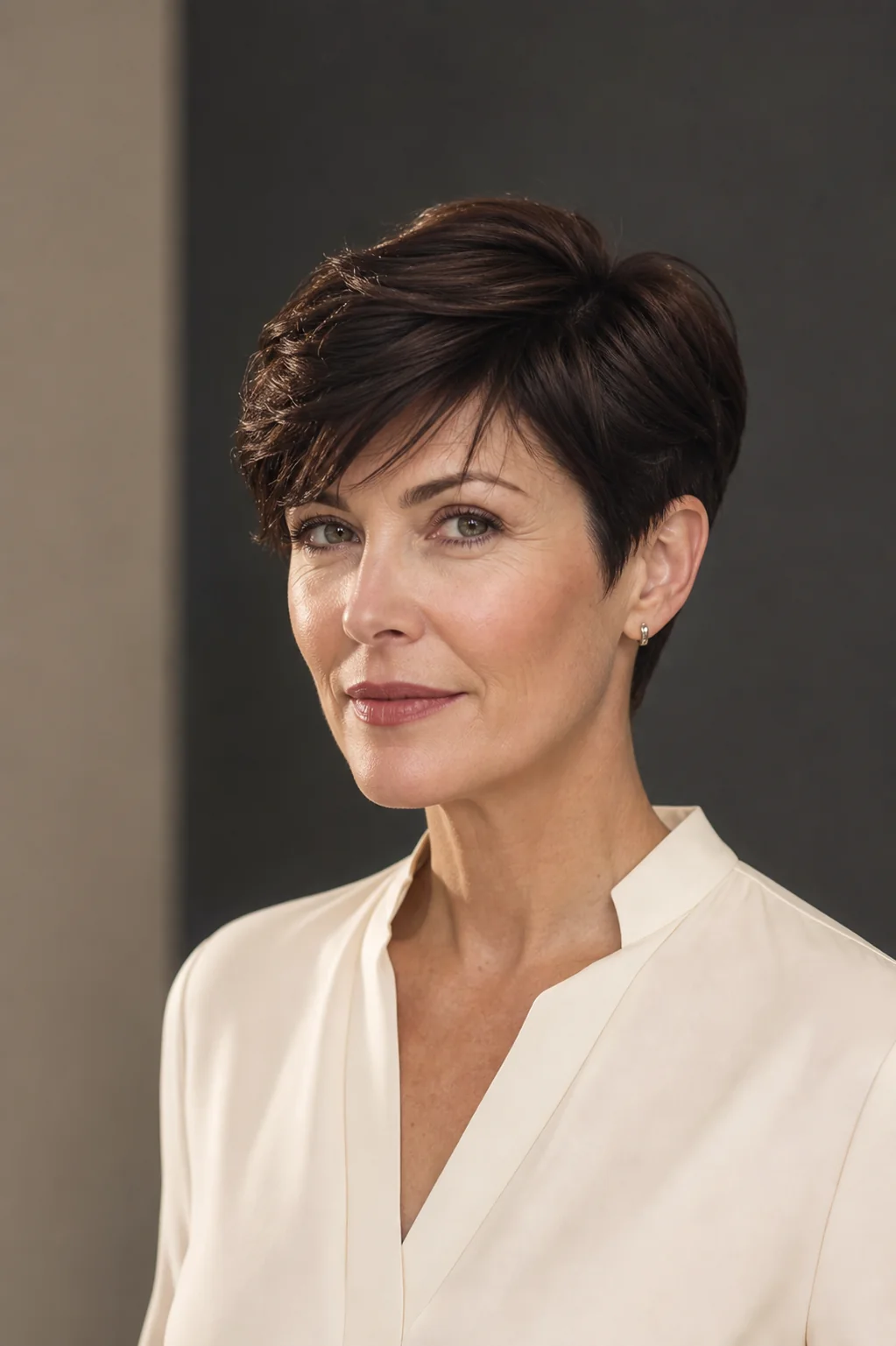
Rich shine and a disciplined shape make this pixie feel ready for dinner before you have chosen the outfit.
A rich brunette finish and restrained separation create definition without making fine hair look piecey. The cut relies on healthy shine, a compact silhouette and a few deliberate bends through the top.
What it does for your features: Glossy depth frames the eyes strongly and makes the skin appear brighter by contrast.
Why it works: Shine can make a strong haircut look denser, but oily roots collapse volume. Keep gloss on the surface and ends rather than the scalp.
At a glance: Best for: Fine brunette hair with a smooth natural texture · Styling: 5–8 minutes · Upkeep: Moderate
Real-life fit: Works beautifully when: You enjoy a sophisticated finish that can move easily from professional days to evening plans. Know before choosing it: Gloss products must stay away from the roots or the polished finish can become flat and oily.
Ask your stylist for: A compact tapered outline with longer top pieces that can form two or three smooth bends.
Style it like this: Apply lightweight shine spray to a brush first, then skim it over the finished shape.
18. Air-Dried Power Pixie With Natural Texture
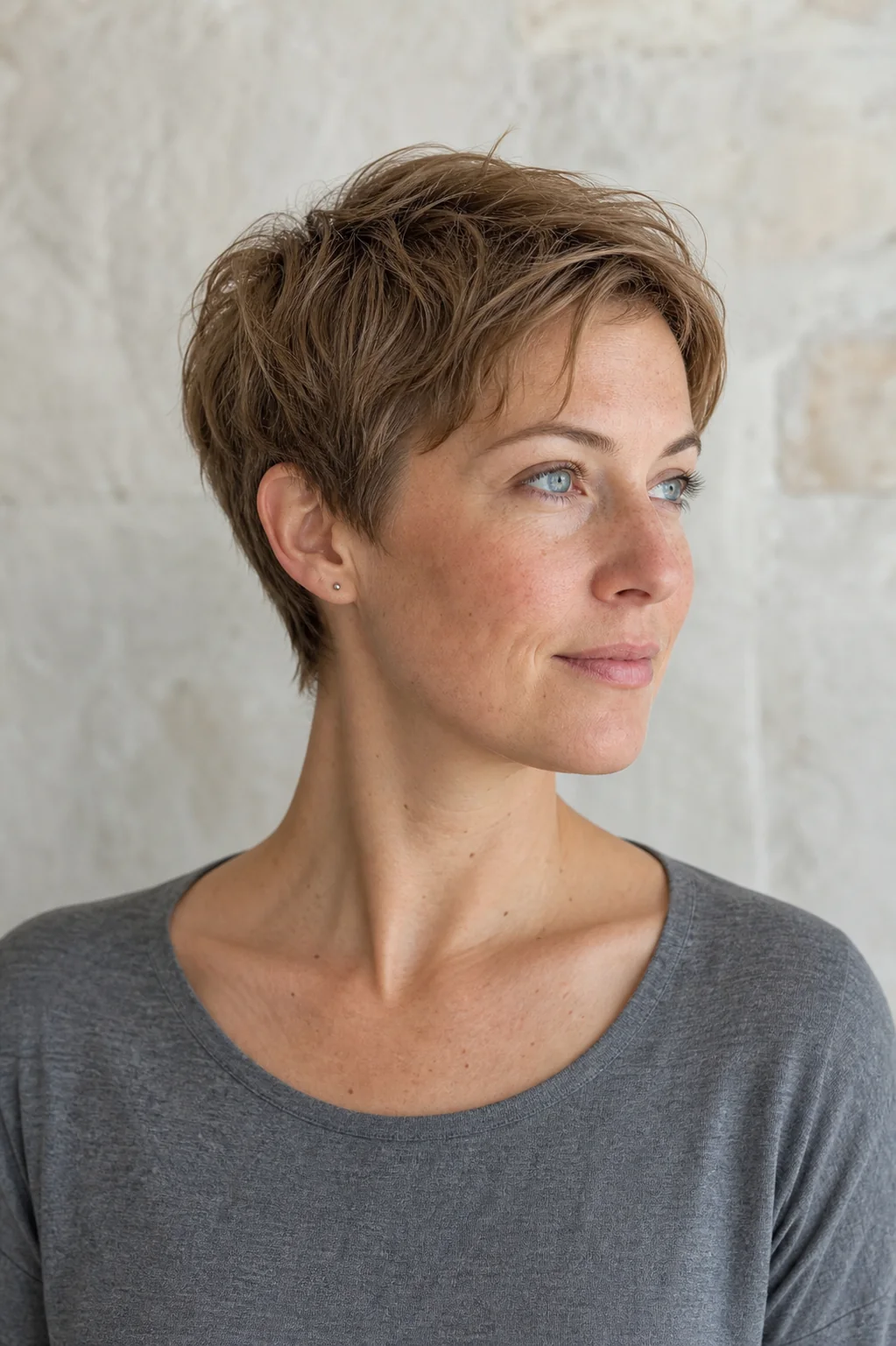
The charm of this pixie is that it looks like you—not like you spent twenty minutes fighting your hair.
This low-fuss version follows the hair's natural bends and cowlicks instead of ironing them into submission. Strategic length through the crown allows the texture to settle into an intentionally relaxed silhouette.
What it does for your features: Natural irregularity softens facial lines and gives the whole face a relaxed, approachable energy.
Why it works: A successful wash-and-wear pixie must be cut for the way the hair dries naturally. The best reference is your own growth pattern, not a perfectly styled photograph.
At a glance: Best for: Fine hair with irregular wave or strong growth patterns · Styling: 2–3 minutes plus air-drying · Upkeep: Low
Real-life fit: Works beautifully when: You prioritize freedom, authenticity and a wash-and-wear routine over a precision finish. Know before choosing it: The final shape changes slightly with weather and wash day, so it suits someone comfortable with variation.
Ask your stylist for: A dry-finish consultation, connected texture through the crown and edges shaped to suit the natural growth.
Style it like this: Scrunch in a light air-dry cream, place the fringe with your fingers and then leave the hair alone.
19. Power Pixie With Glasses-Friendly Sides

When your glasses are part of your identity, the haircut should frame them rather than compete with them.
The sides are shaped neatly around the arms of the glasses while a softly lifted top prevents the frames from dominating the face. It is a small design detail that can make the entire haircut feel more comfortable and intentional.
What it does for your features: A lifted top balances stronger frames and directs attention above them toward the eyes.
Why it works: Glasses change how the side of a haircut sits. Cutting while wearing your everyday frames prevents bulky patches or awkward gaps above the ears.
At a glance: Best for: Fine hair and women who wear glasses every day · Styling: About 5 minutes · Upkeep: Moderate
Real-life fit: Works beautifully when: You wear glasses most days and want the frames and haircut to look intentionally balanced together. Know before choosing it: Changing to substantially different frames may alter how the side length sits and looks.
Ask your stylist for: Bring your glasses and ask for softly tapered sides that sit cleanly around the arms, plus connected lift through the top.
Style it like this: Style the top first, put on your glasses and then settle the side pieces around the frames.
20. Champagne-Blonde Power Pixie With Shadow Roots
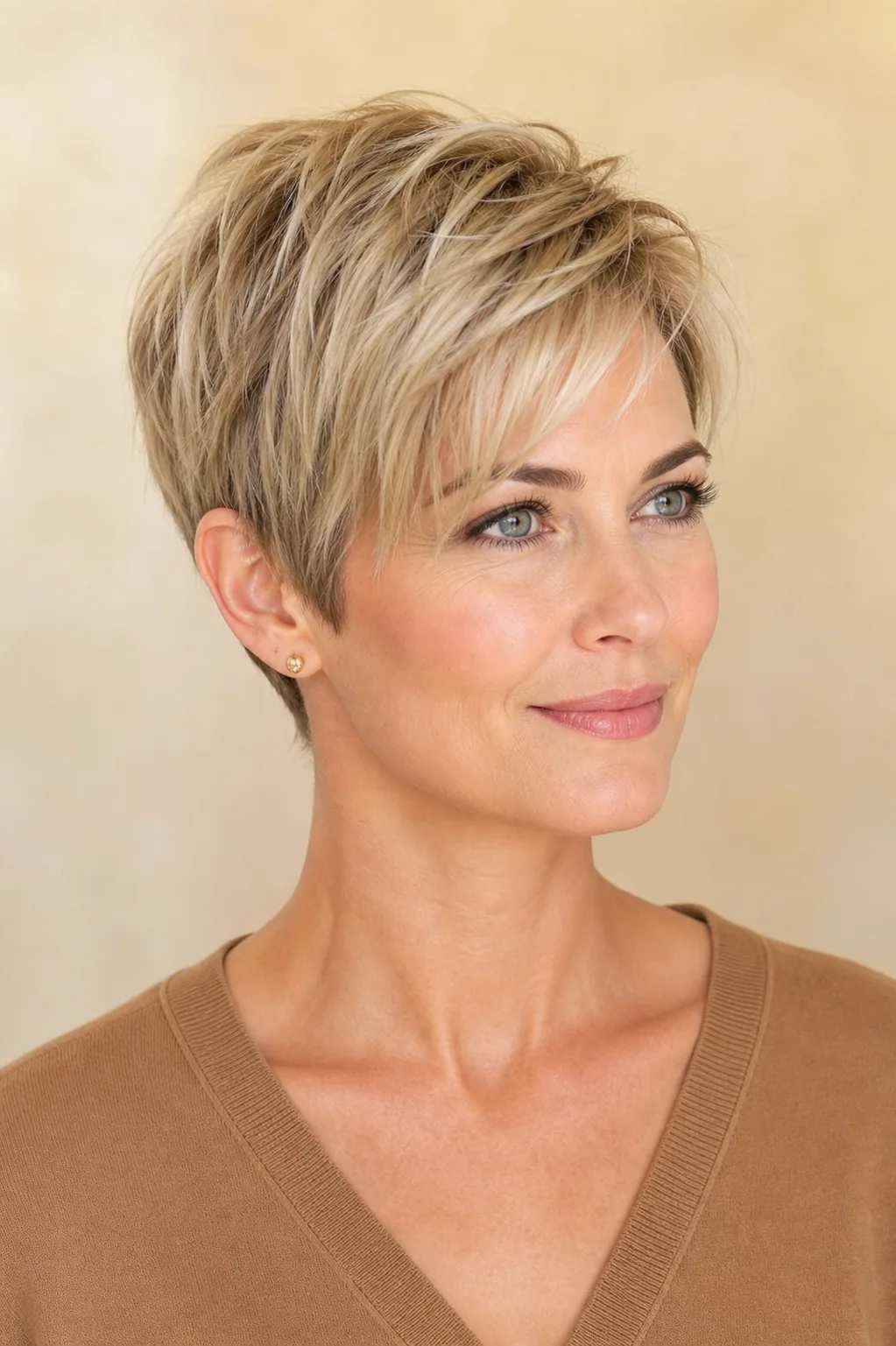
This luminous blonde proves that strategic depth can be every bit as flattering as extra volume.
Champagne-blonde lengths paired with softly deeper roots create dimension that makes the layered shape easier to see. The color supports the haircut rather than replacing it, with enough contrast to suggest depth without harsh regrowth.
What it does for your features: Brightness around the face reflects light toward the skin while the deeper roots give the crown a more dimensional appearance.
Why it works: Subtle tonal contrast can make fine hair look more dimensional because the eye can distinguish overlapping layers. Extreme contrast may expose the scalp instead.
At a glance: Best for: Fine blonde hair that benefits from subtle tonal depth · Styling: 5–8 minutes · Upkeep: Moderate for cut and color
Real-life fit: Works beautifully when: You enjoy bright, glamorous color but want softer regrowth and visible dimension between appointments. Know before choosing it: The cut is quick to style, but maintaining healthy blonde requires more color care than the other looks.
Ask your stylist for: A textured power pixie with preserved crown density, paired with a softly blended shadow root and dimensional blonde.
Style it like this: Use a violet product only as needed and keep volumizing powder away from a dry or sensitive scalp.
Pause and notice: Return to the two looks you remembered without checking their names. Those are usually the strongest candidates for the version that feels most naturally yours.
Before You Book the Appointment
A power pixie is a commitment to shape rather than length. Use this quick reality check before choosing your final reference photograph.
- Best for: Fine to medium-density hair
- Styling effort: Low to moderate
- Typical maintenance: A reshaping trim every five to eight weeks
- Main benefit: Visible crown lift and a stronger silhouette
What to Ask Your Stylist For
Bring front, side and back references. Explain where your hair loses lift and ask the stylist to preserve visual weight while creating movement through the crown.
How to Style a Power Pixie
Start with damp, towel-dried hair and use only a small amount of lightweight root lift. Direct the dryer against the natural fall at the crown, using your fingers rather than a large round brush, then let the hair cool in the lifted position. Separate only selected pieces with a pea-sized amount of flexible paste. Fine hair usually looks fuller when some strands remain soft and connected; coating every end can make the finish look sparse or greasy.
How Often Does a Power Pixie Need Trimming?
Most power pixies benefit from reshaping every five to eight weeks. A very close taper will show growth sooner, while longer, feathered versions can often stretch closer to eight weeks. Ask the stylist to explain which areas will lose their shape first. If you want a softer grow-out, preserve a little length around the ears and avoid taking the nape excessively short at every appointment.
Common Fine-Hair Mistakes to Avoid
Over-thinning is the biggest risk. Fine hair needs movement, but removing too much internal weight can expose the scalp and leave the ends flyaway. Heavy waxes, wet-look gels and too much dry shampoo can also separate the strands into visible gaps. Choose lightweight products, apply them gradually and concentrate texture where the haircut has enough density to support it.
Choose the Version That Feels Like You
The best power pixie is not necessarily the boldest, youngest-looking or most fashionable one. It is the version that respects your natural hair, suits the amount of styling you genuinely enjoy and supports the way you want to feel when you walk into a room. Choose the photograph that makes you recognize yourself—with a little more confidence—then use the practical notes to make that feeling realistic.
More Hair Inspiration
- 50 Curly Bob Hair Styles — Prefer a little more length? Explore curly and cropped bob ideas.
- Gemini Hair: 47 Styles — Looking for color inspiration as well as a new cut? Browse creative Gemini hair ideas.