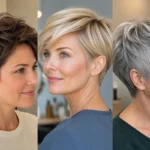
Want shorter hair—but not the exposed feeling of a close pixie? The bixie may be the sweet spot you have been looking for. It keeps some of a bob’s softness and face-framing length, then borrows the movement, lift and easy personality of a pixie. The result can feel elegant, playful, polished or wonderfully undone without asking you to commit to the shortest cut in the salon.
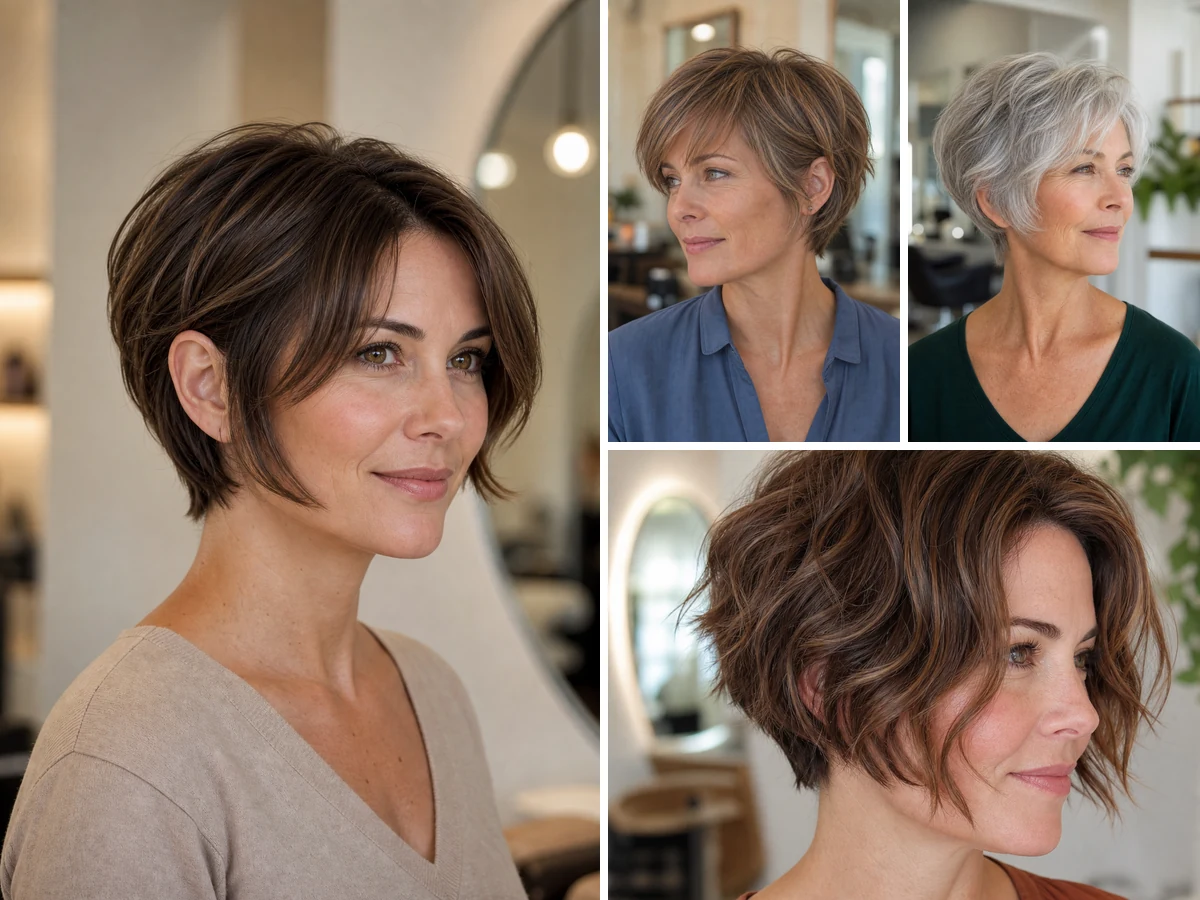
The most flattering version works with your natural texture, frames the features you love and suits the amount of styling you genuinely enjoy. These 20 ideas show how a fringe, part, neckline or extra inch around the ears can transform the result—with useful words to take to your hairdresser.
What Is a Bixie Haircut?
A bixie sits between a bob and a pixie. It usually keeps more softness around the ears and face than a classic pixie, but has a shorter, more layered back and more internal movement than a traditional bob. Think bob-like softness with pixie-like shape.
That balance matters. If every section hangs at one length, the result reads as a bob. If the sides and back are cropped very close, it becomes a pixie. A convincing bixie retains visible length while using layers to create lift, movement and a head-hugging silhouette.
Quick choice guide: Choose a longer, side-swept bixie if coverage and styling flexibility matter most. Choose a softly tousled or feathered version when fine hair needs movement. Thick hair benefits from controlled internal shaping, while waves and curls need enough length for their natural pattern to form.
1. Soft Classic Bixie
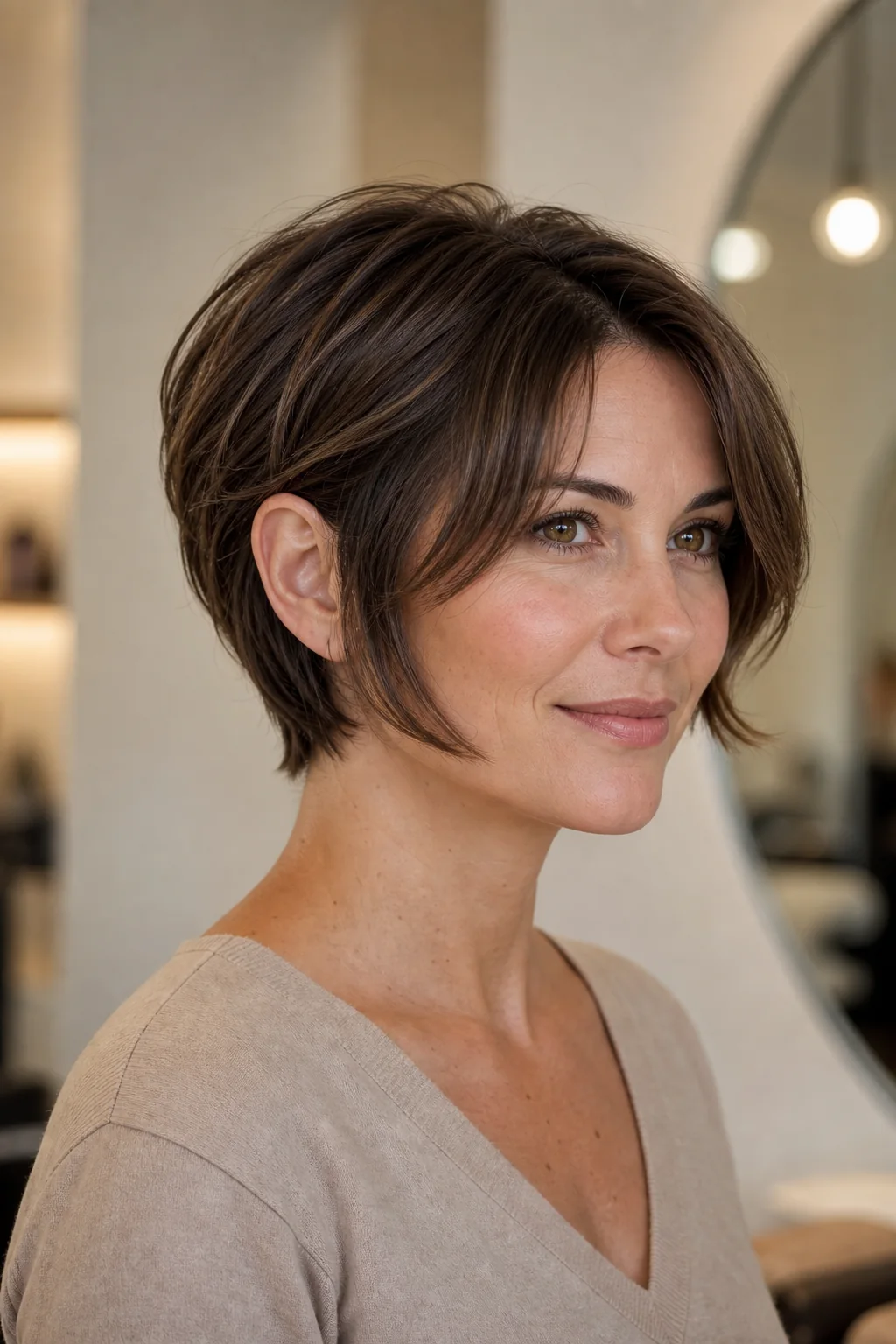
This is the welcoming introduction to the bixie: soft around the face, lightly layered through the top and neat at the neckline without looking clipped. It feels noticeably shorter than a bob but still gives you enough hair around the ears and temples to avoid feeling overexposed.
Those loose side pieces soften the cheek area, while the gently shaped crown makes the whole cut look intentional. The mood is polished and feminine rather than severe. At the salon, describe an ear-grazing perimeter, a softly layered crown and a neat neckline that still retains some softness.
Best for: First-time short-hair clients who want a graceful, versatile change.
2. Long Bixie With Side Bangs
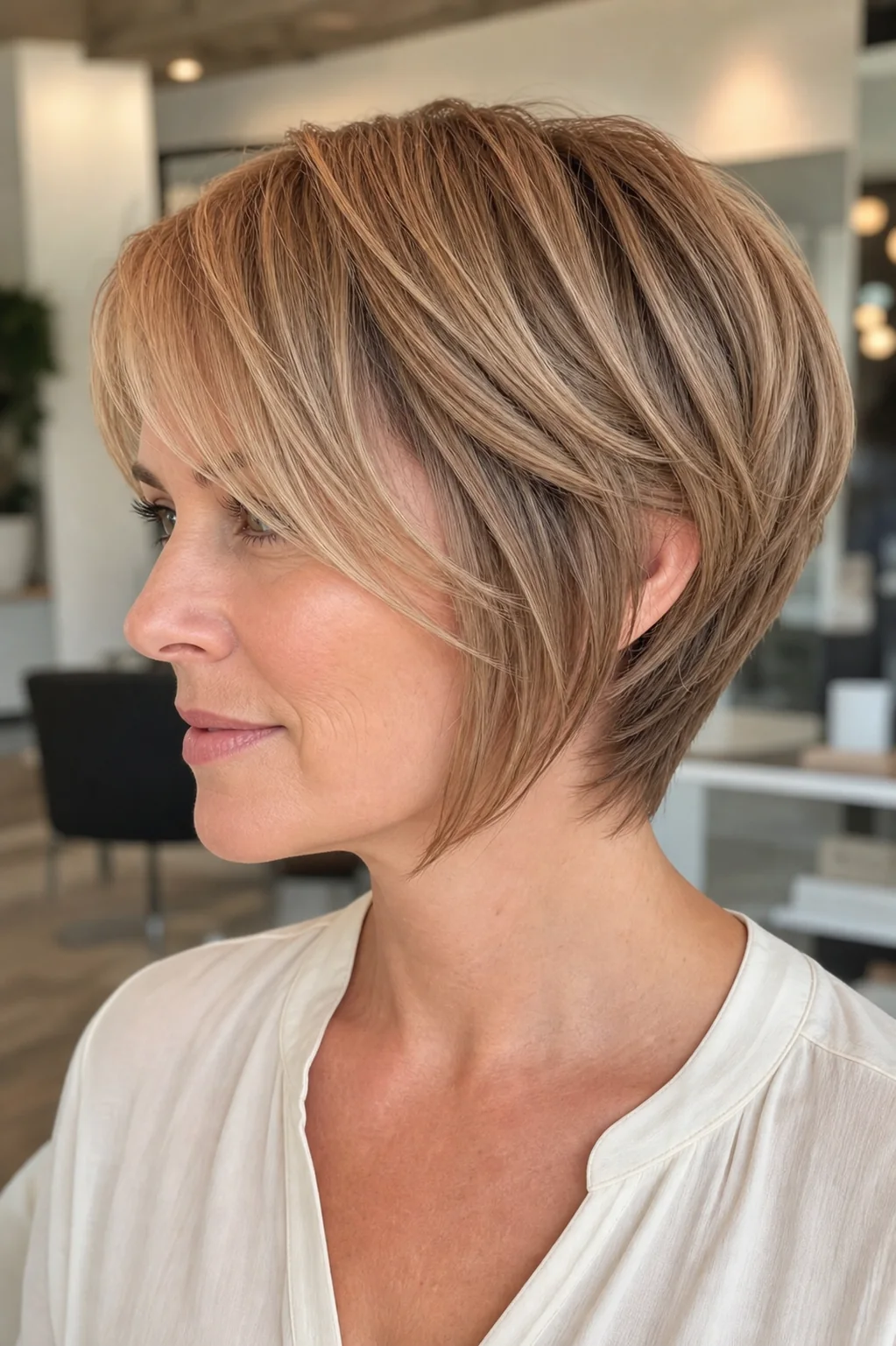
If your first thought is, “I love it, but I am not ready to show my ears,” start here. The longer front gives you reassuring coverage, while a shorter layered back prevents the cut from slipping back into ordinary bob territory.
The diagonal fringe draws the eye across the face and creates a softer, slightly lengthening line. It feels elegant, approachable and easy to live with. Ask your hairdresser to keep the front long enough to sweep, with a rounded layered back and a side part that follows your natural growth.
The trade-off: Longer bangs are wonderfully flexible, but they may need reshaping between full appointments if they begin falling into your eyes.
3. Tousled Bixie for Fine Hair
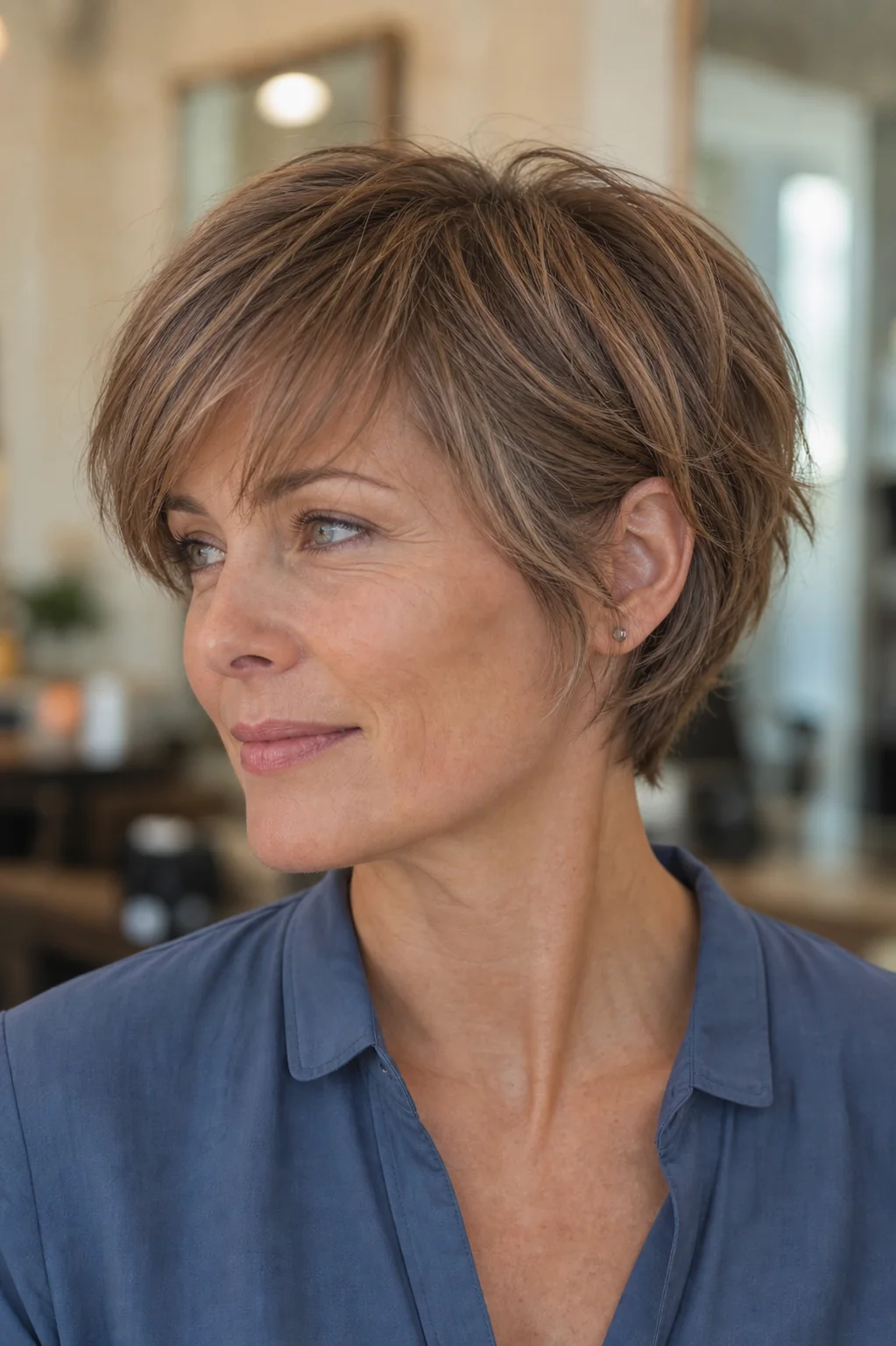
This airy version gives fine hair something it often lacks: visible movement without sacrificing the impression of density. The sides stay light and tidy while separated pieces through the top create a fuller-looking silhouette.
Soft lift above the forehead opens the face and gives the cut a lively, relaxed energy. The secret is not cutting endless tiny layers. Fine hair generally looks stronger when the layers move as a connected shape. The key request is restrained internal layering, a soft side fringe and enough top length to lift with your fingertips.
Style it simply: Direct warm air against the natural fall at the roots, let the hair cool, then separate only a few pieces with lightweight paste.
4. Rounded Bixie With Full Bangs
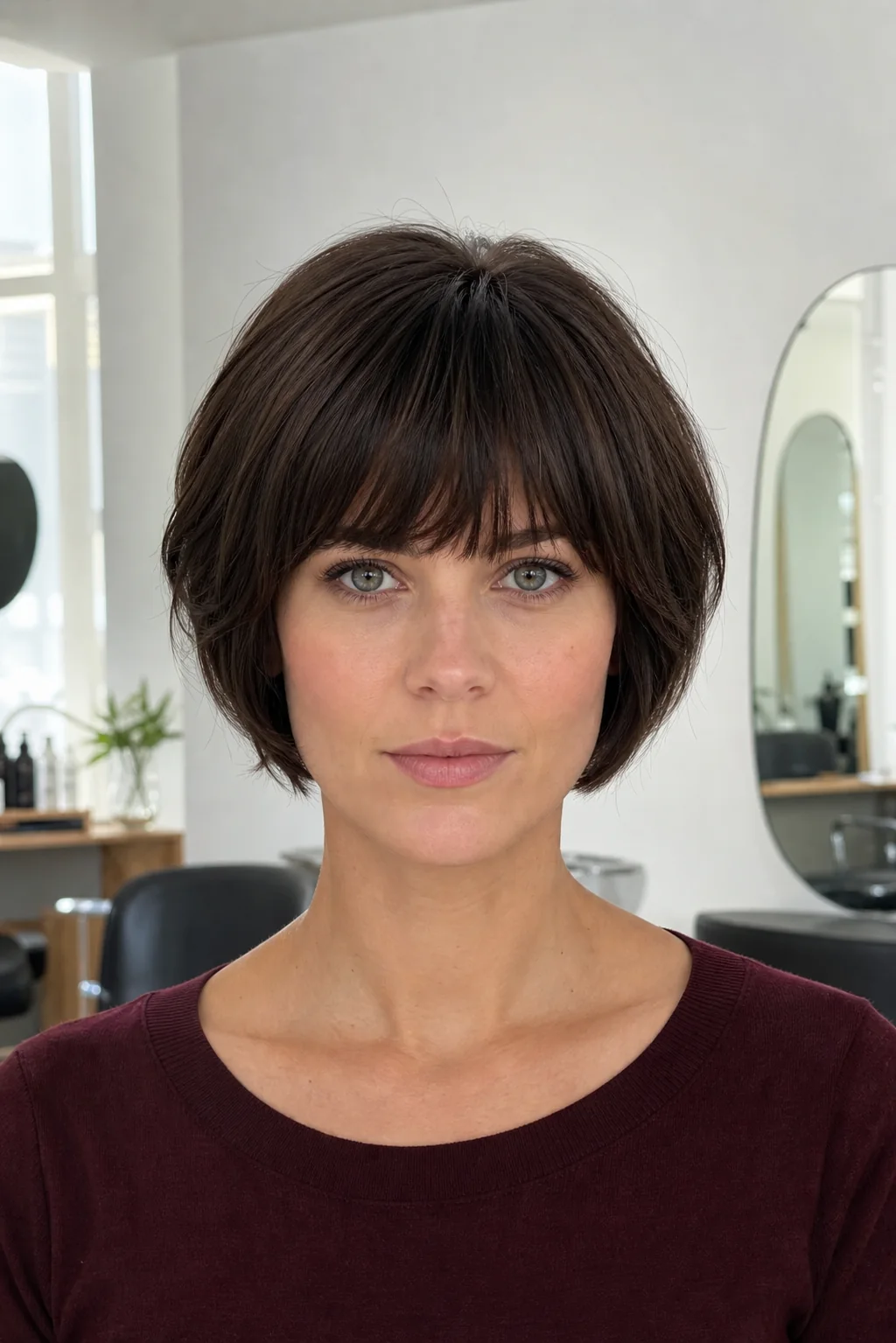
Full bangs turn a bixie into a strong style statement. The rounded outline looks beautifully deliberate on straight hair, while a brow-skimming fringe frames the eyes and can balance a longer forehead.
The effect is chic and fashion-aware, but the shape needs precision. The bangs should connect smoothly into the sides rather than sitting like a separate block. Ask for a rounded bixie with a softly stacked back and full bangs that suit your natural density.
Worth knowing: A heavy fringe borrows hair from the top and sides, so it is usually more convincing on hair with enough density to support it.
5. Wavy Bixie With Natural Movement
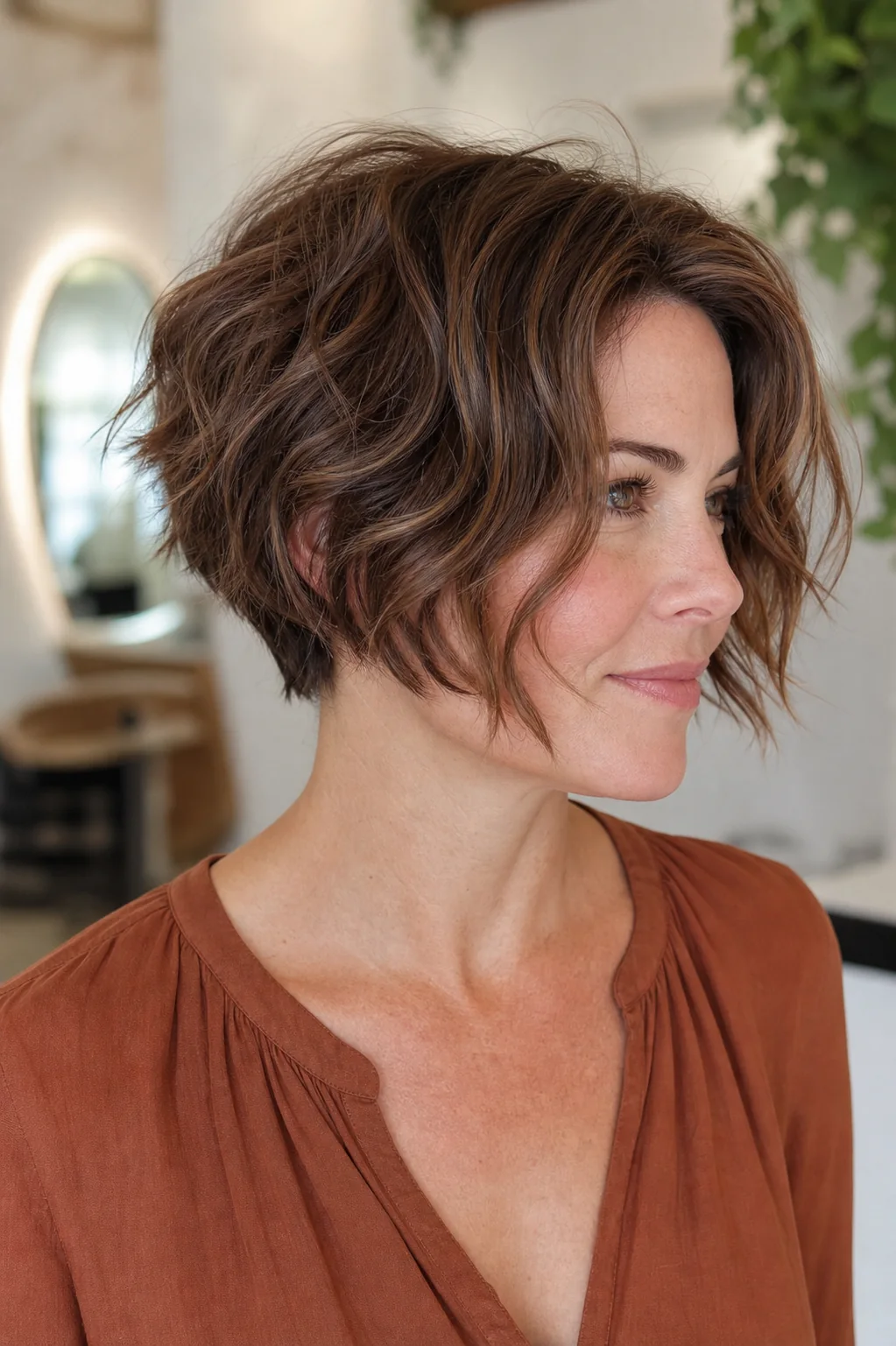
A wavy bixie is at its best when it stops trying to behave like straight hair. Loose bends create softness around the cheekbones and give the cut a romantic, effortless finish that rarely needs to look identical from one day to the next.
Keep enough length through the sides and top for your wave pattern to form, with a shorter layered back preserving the bixie shape. Your hairdresser should assess the cut in its natural fall rather than stretching every wave straight.
Why it works: The movement breaks up a rigid outline, making the face feel softer while allowing natural texture to do most of the styling.
Beauty pause: Notice which image made you stop rather than simply scroll. That instinct often tells you whether you want softness, polish, movement or attitude more clearly than a list of face-shape rules.
The Secret to a Bixie That Flatters
Four small choices can completely change the way a bixie frames you. Height through the top draws the eye upward. Diagonal bangs create a lengthening line. Softness at the ears makes the cut feel gentler, while a compact side shape reveals more of the cheekbones. The neckline controls whether the result feels delicate, precise or edgy.
Do not ask only whether a bixie “suits your face shape.” Decide what you want it to do: open the face, soften the jaw, reveal your cheekbones, balance a forehead or preserve coverage around the ears. That gives your hairdresser a far more useful goal.
6. Sleek Side-Parted Bixie
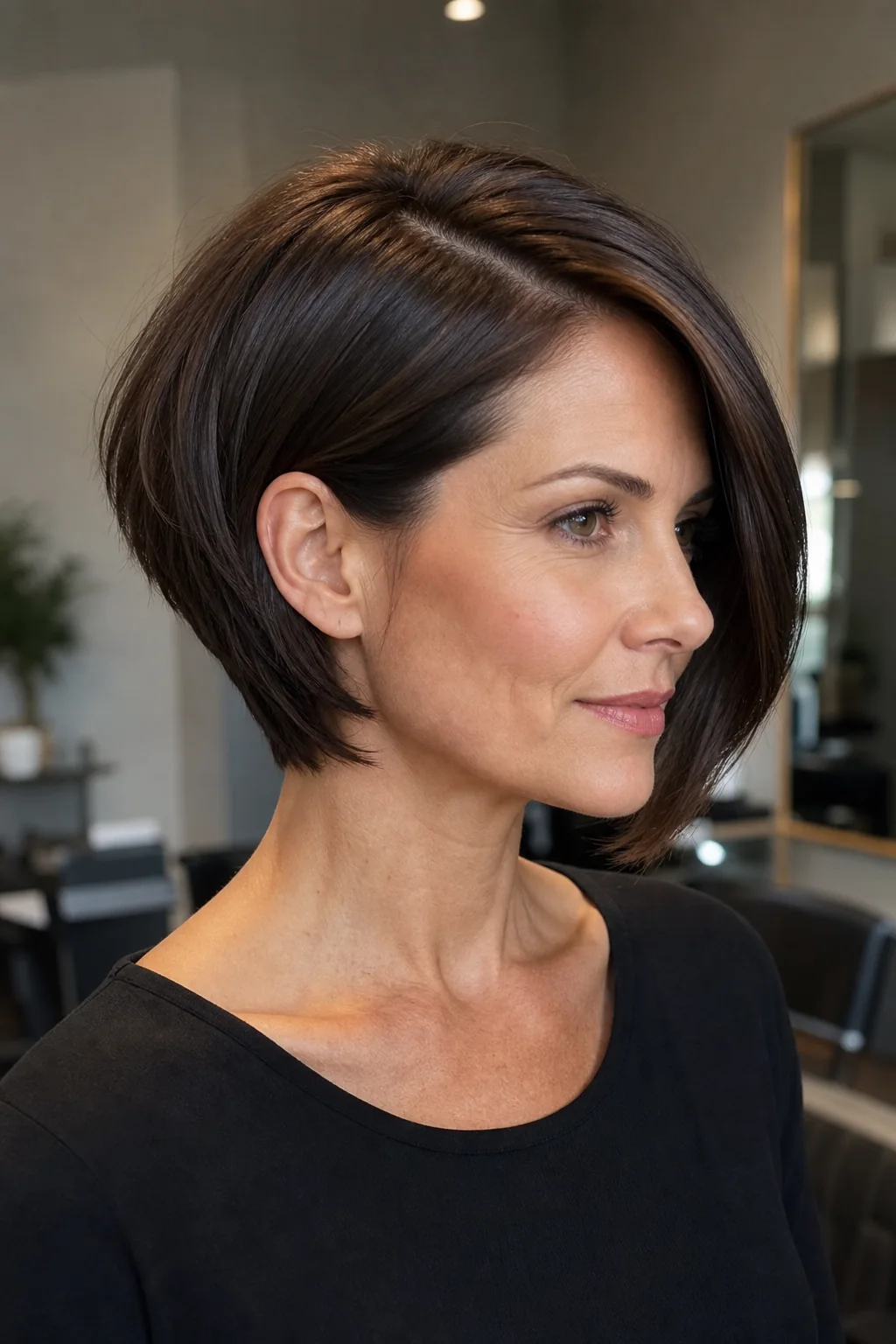
Naturally straight hair makes every line visible, which is exactly why this refined bixie can look so striking. A deep side part, smooth longer front and compact back give flat-prone hair a clean direction rather than asking it to create texture it does not naturally have.
The asymmetry draws attention toward the eyes and cheekbones. Tuck one side behind the ear for a sharper finish or let it fall forward when you want more softness. Show your hairdresser the precise perimeter, sculpted layered back and sweepable front length you want to preserve.
Vibe: Confident, polished and quietly expensive-looking.
7. Feathered Bixie With Wispy Bangs
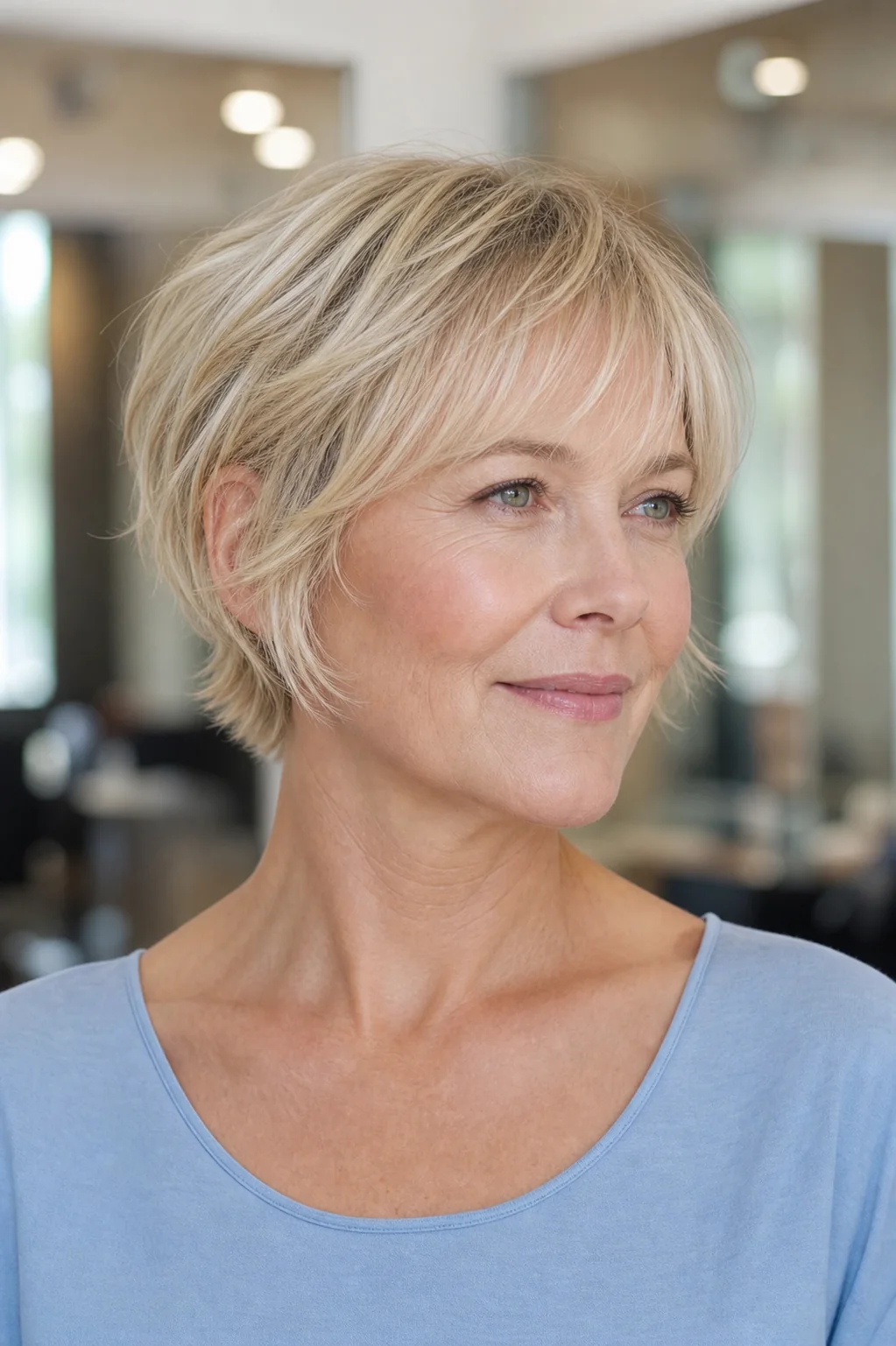
Fine hair does not always have enough density for a heavy fringe, but wispy bangs can deliver the same face-softening effect without taking too much weight from the rest of the cut.
Feathered layers create a light, breezy outline and keep the eyes visible. Ask for airy bangs, soft movement around the ears and a gently tapered neckline. The ends should feel light, not shredded.
Hair lesson: If the stylist removes too much weight, fine hair can look transparent. Preserve strength through the main silhouette and use feathering only where it creates useful movement.
8. Textured Bixie for Thick Hair
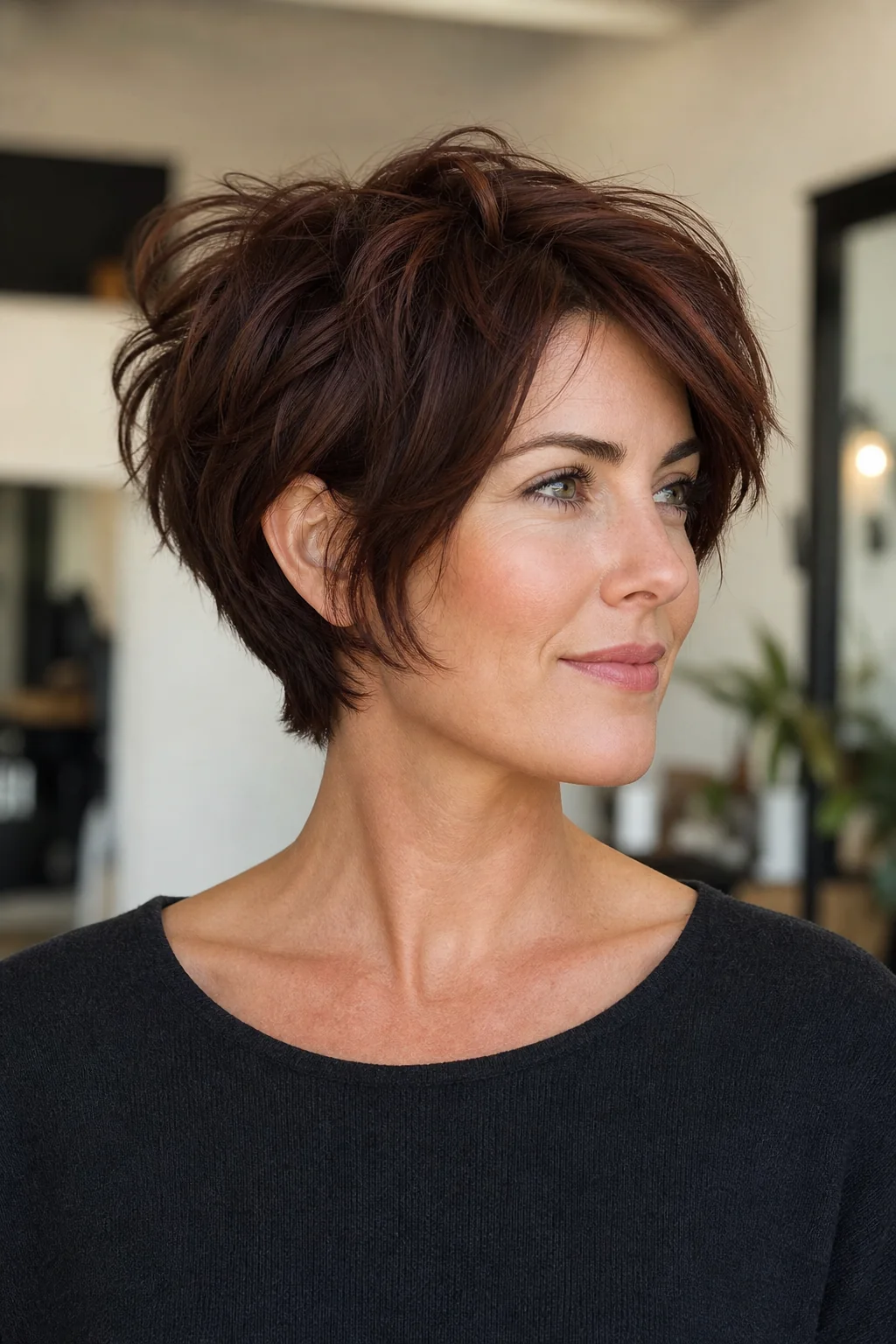
Thick hair can make a short cut balloon outward if its weight is not managed thoughtfully. This version uses hidden internal shaping to reduce bulk while keeping the outside strong, touchable and controlled.
Slight height through the top and slimmer sides create a balanced outline instead of maximum width around the cheeks. The result feels bold and energetic without becoming unruly. Discuss internal weight removal, a longer textured top and controlled sides—not indiscriminate thinning through every end.
The trade-off: This shape can be wonderfully easy between washes, but it needs an experienced cutter who understands how your density expands when dry.
9. Curly Bixie With Soft Fringe

This playful bixie lets curls build the shape. A soft curly fringe highlights the eyes, while shorter sides and a rounded back prevent the silhouette from becoming a generic curly bob.
The most important salon conversation is shrinkage. Decide where you want the fringe and sides to finish when dry, not while the curls are stretched. Ask for curl-by-curl consideration around the face and enough length through the top for the pattern to spring into place.
Vibe: Expressive, confident and full of personality—especially when the curls are allowed to look touchable rather than perfectly uniform.
10. Silver Bixie With Lift
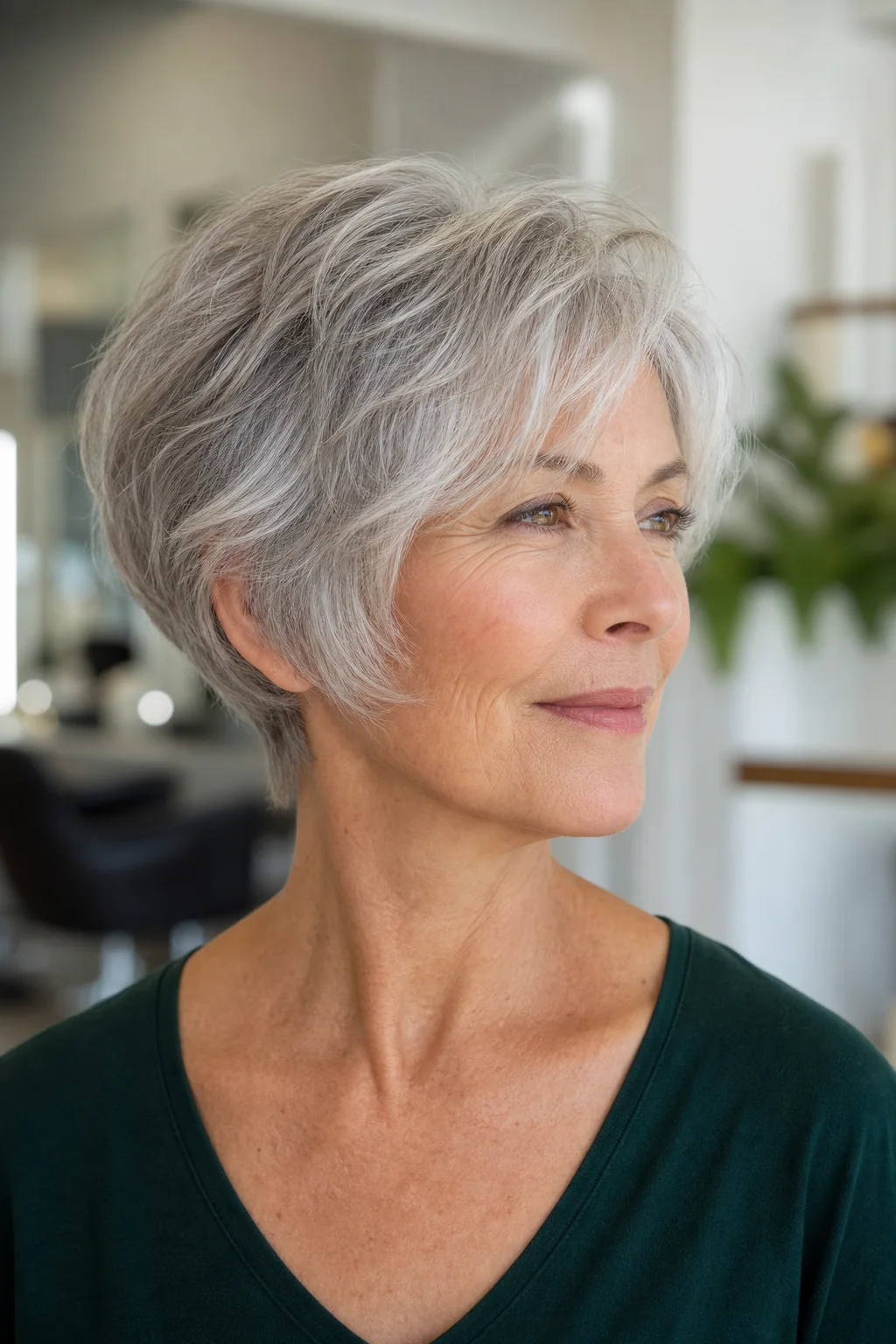
Natural silver hair looks especially luminous when the cut gives it movement and intention. Gentle height brings the eye upward, while soft sides keep the outline modern without becoming harsh.
This is not an “age-appropriate” haircut; it is a beautifully shaped haircut that happens to celebrate gray texture. The salon blueprint is a lifted layered crown, a soft side fringe and a tapered neckline that is neat without being severe.
Hair lesson: Gray hair may be fine and silky, coarse and wiry, or a mixture of both. Product and layer placement should respond to its real texture rather than assumptions about age.
Reality check: Compare your favorite with your true morning routine. A cut you enjoy styling for five minutes will serve you better than a dramatic shape you resent maintaining.
Choose Your Bixie by Hair Type
For fine hair, preserve visible weight and use selective layers for lift. For thick hair, remove bulk internally while protecting the outside shape. Straight hair rewards precise lines and intentional parting. Wavy hair needs space for bends to develop, and curly hair requires careful allowance for shrinkage.
Texture matters, but so do density, growth patterns and how often you use heat. Two women with “fine hair” may need entirely different cuts if one has a great deal of it and the other has low density. Bring photographs, but let your hairdresser adapt the architecture to the hair actually on your head.
11. Face-Framing Bixie for a Round Face
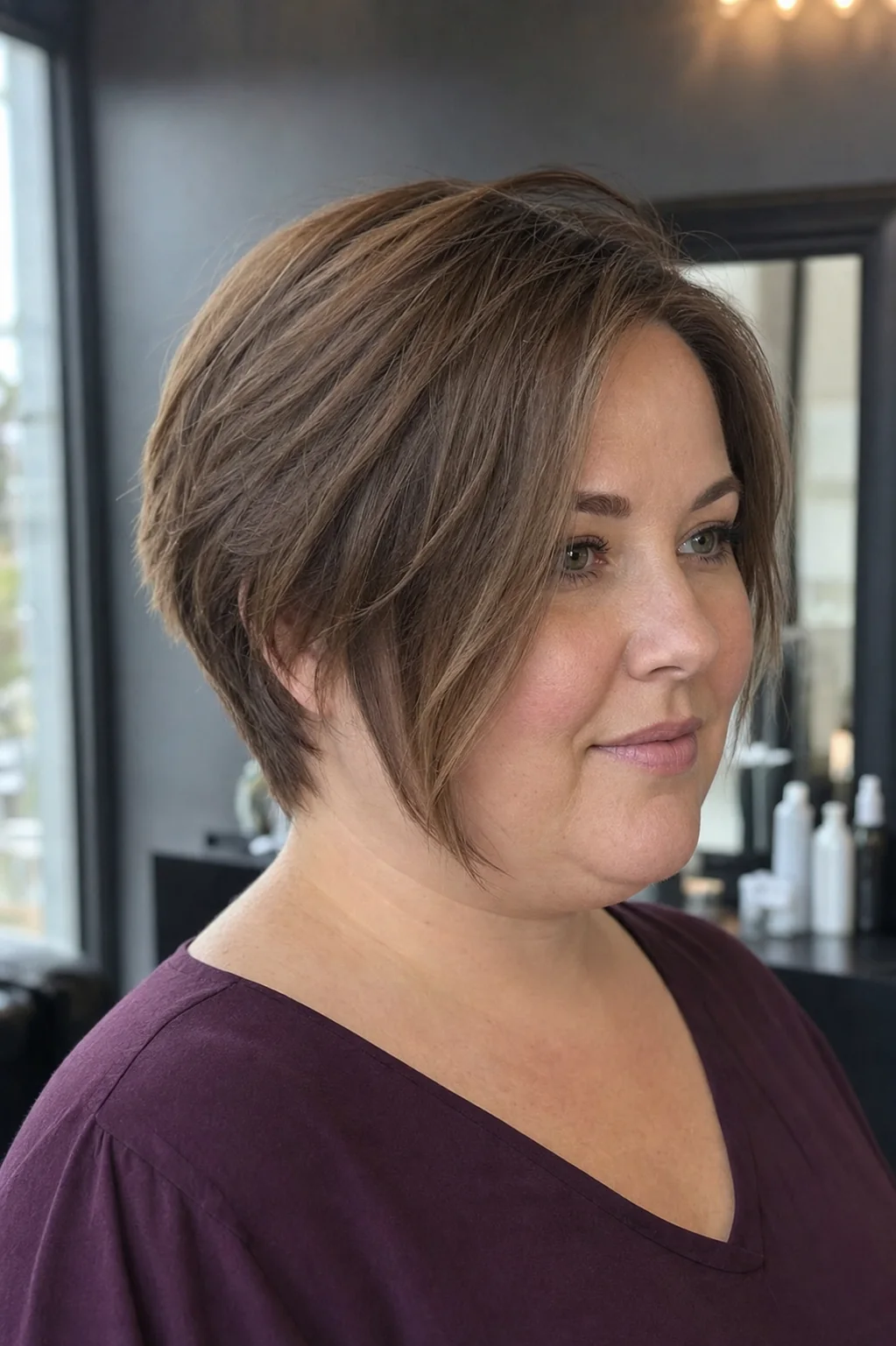
This version uses direction rather than trying to disguise the face. A little height, an offset part and diagonal front pieces create longer visual lines while keeping excess width away from the fullest part of the cheeks.
The result feels balanced and quietly confident. Request controlled sides, subtle lift through the top and front pieces that travel diagonally rather than forming a wide horizontal shelf.
A better rule: Face shape is a guide, not a restriction. Place volume and lines according to the feature you want to emphasize, then preserve the personality that made you like the cut in the first place.
12. Bixie With Curtain Bangs
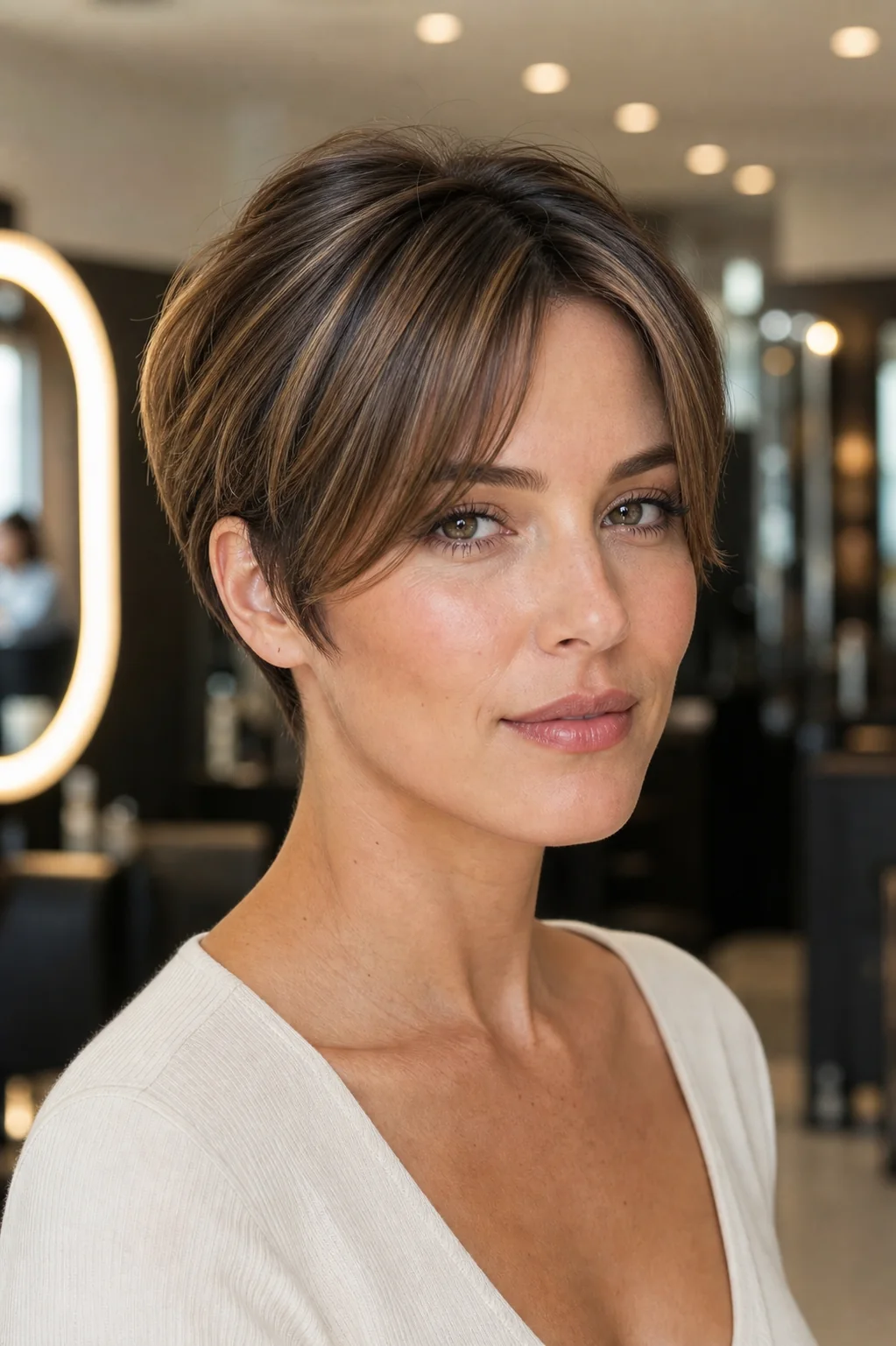
Curtain bangs give a bixie softness without completely covering the forehead. The parted fringe creates two gentle lines toward the cheekbones, making the eyes the natural focus.
This variation feels current and softly glamorous, particularly when the front blends seamlessly into longer sides. Ask for enough center length to part the fringe, a gradual connection into the temples and a shorter layered back that keeps the overall cut unmistakably bixie.
Styling note: Dry the fringe first, directing it from side to side before encouraging the center split. Once bangs dry in the wrong direction, correcting them takes twice as long.
13. Low-Maintenance Air-Dried Bixie
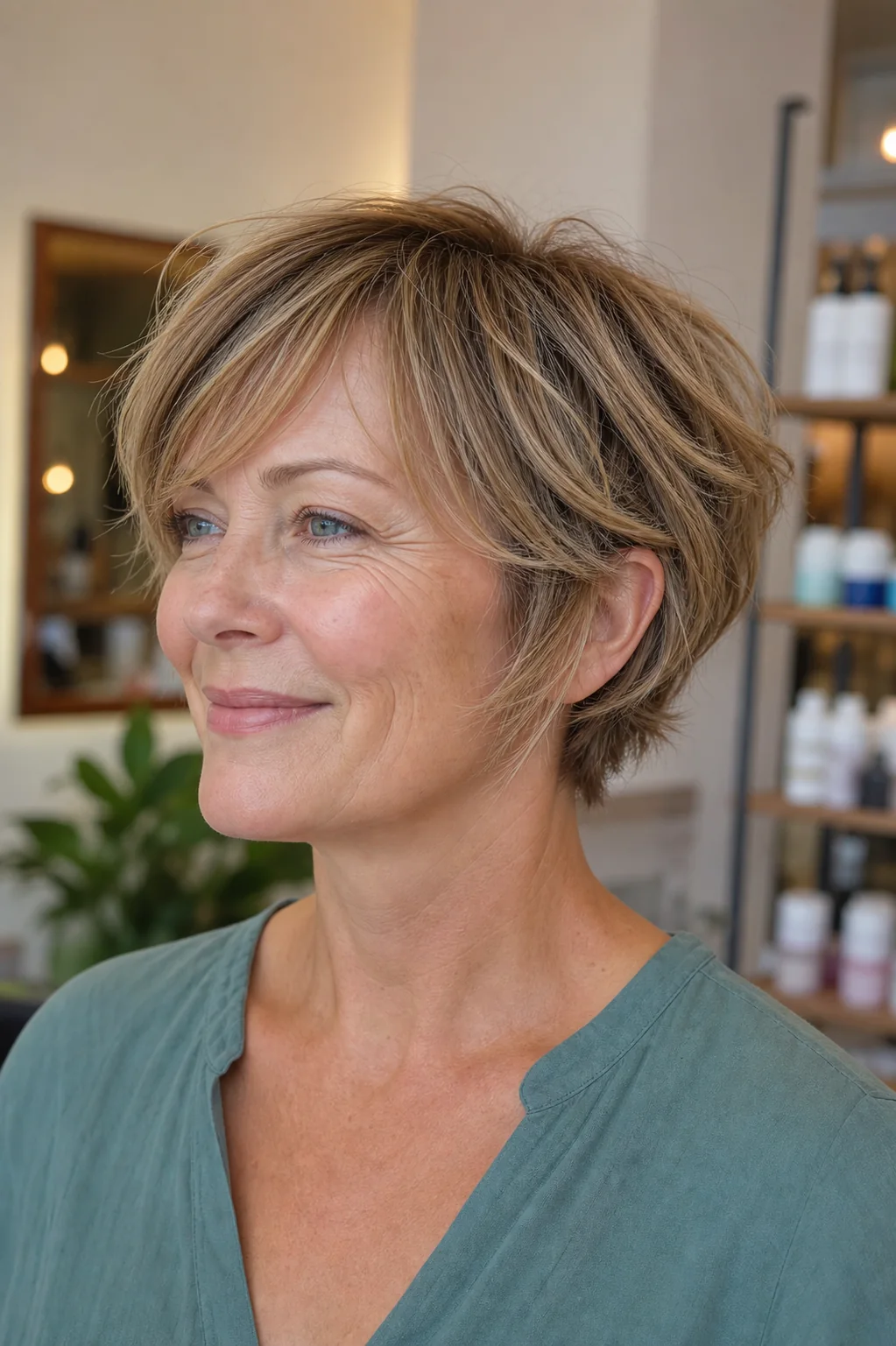
Low maintenance does not mean “cut it short and hope.” It means creating a shape that respects how your hair naturally dries. This relaxed bixie works with slight bends, irregular movement and your natural part instead of depending on a polished blowout.
The soft outline feels forgiving around the face and naturally pretty rather than overly arranged. Ask your hairdresser to study your growth patterns, leave useful length where the hair tends to kick out and create a shape that still reads clearly when air-dried.
Be realistic: You may still need a touch of product and a quick fringe adjustment. The goal is easy, not magically effort-free.
14. Polished Bixie With a Tucked Side
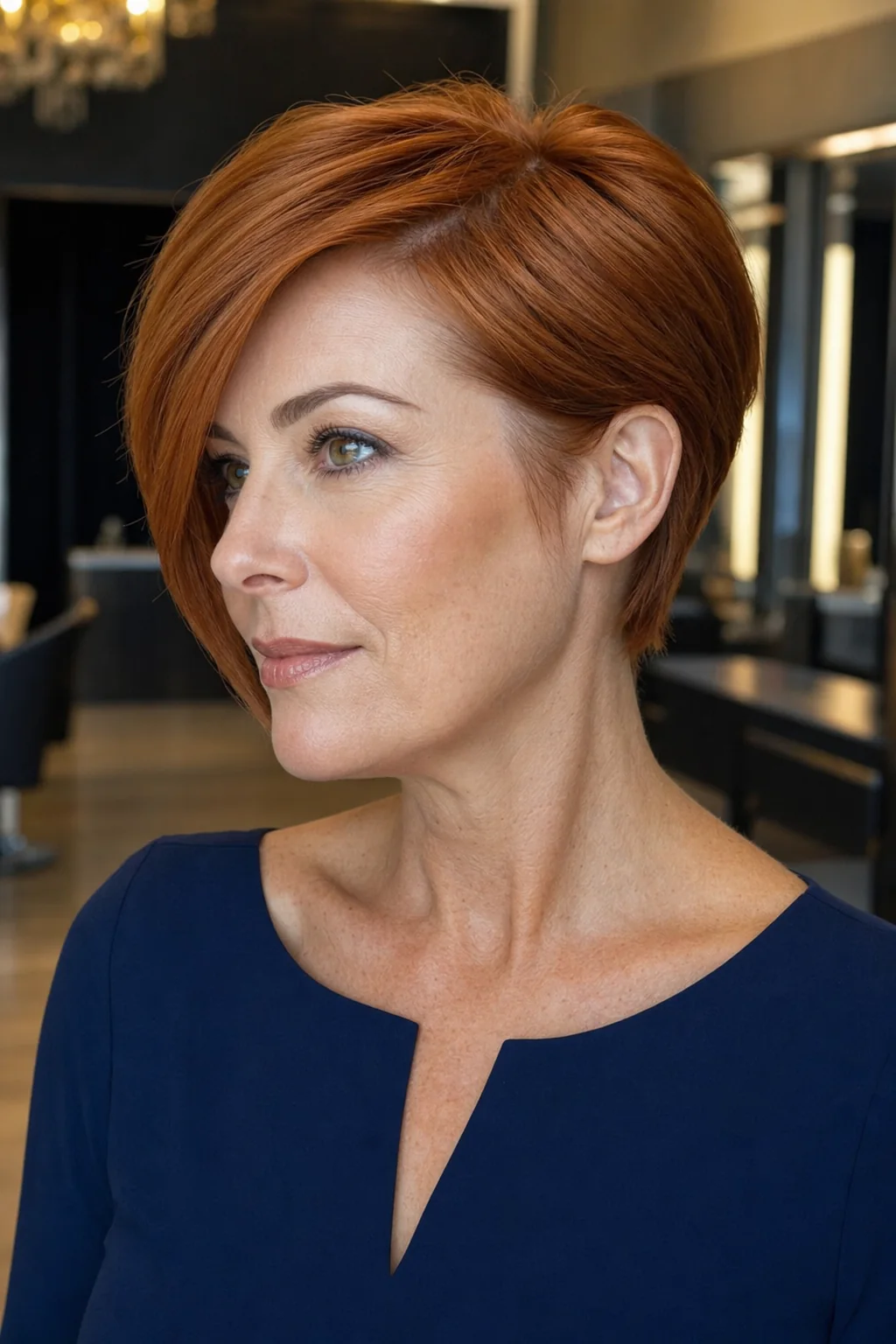
One simple tuck can completely alter the personality of a bixie. Opening one side reveals the cheekbone, earrings or glasses, while the longer opposite side retains softness and movement.
The asymmetry feels elegant and occasion-ready without requiring a complicated updo. Ask for a slightly longer front, a smooth layered back and enough room around the ear for the hair to sit comfortably when tucked.
Why it earns its place: This is not a different haircut every morning—it is a versatile foundation that can move from relaxed to polished with one small styling decision.
15. Choppy Bixie With Piecey Ends
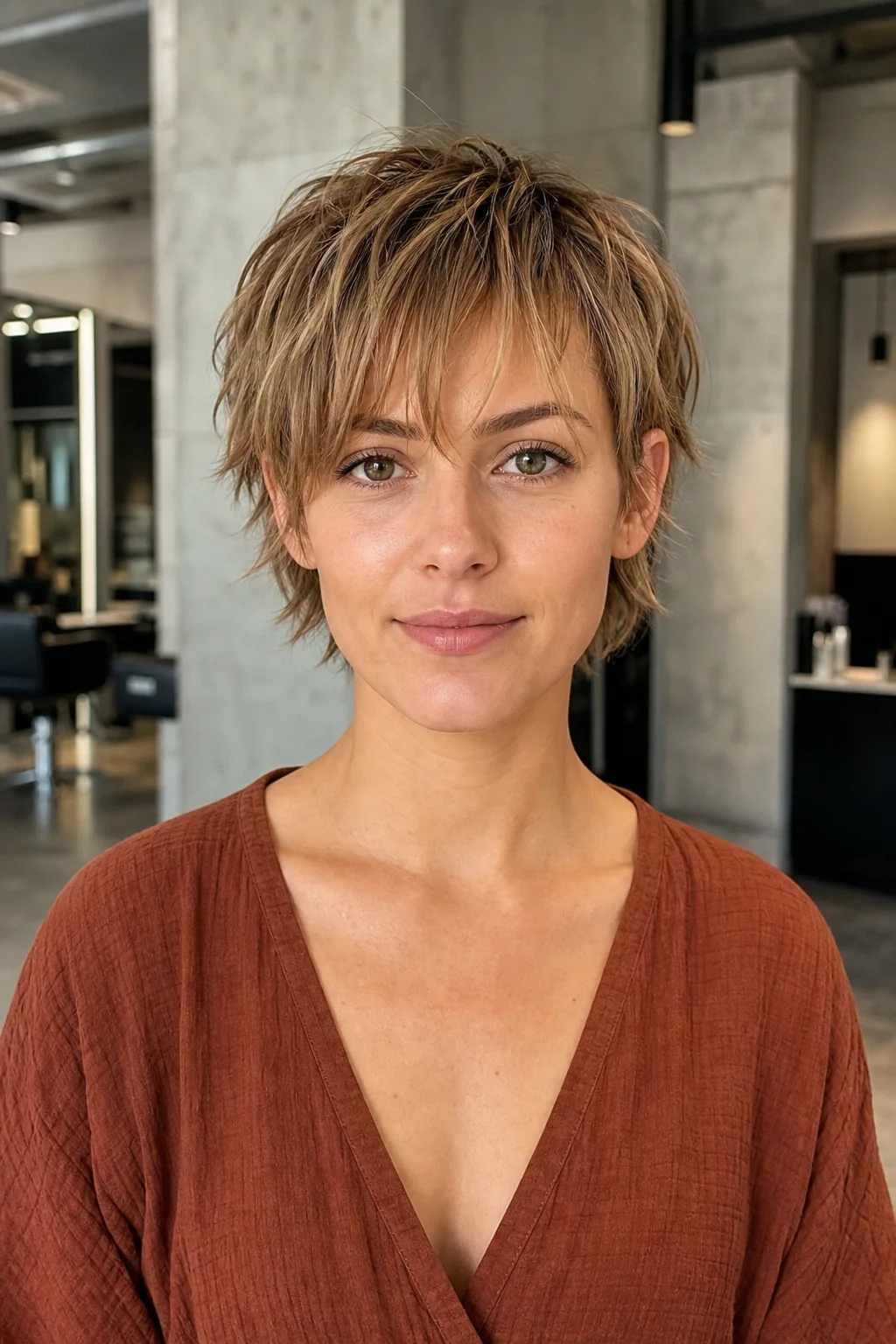
For readers who want more attitude, broken-up ends give a bixie definition and visible energy. The irregular edge keeps the outline light and draws attention toward the eyes rather than forming a heavy line around the jaw.
Choppy should still look designed. Point out the deliberately placed pieces, short layered back and longer broken fringe you like, while preserving enough density in the main outline to prevent sparse-looking ends.
Vibe: Edgy and playful—but still wearable. If the back becomes elongated or the top excessively disconnected, the cut starts drifting toward a shag or mullet.
Salon reminder: Save more than the prettiest front view. The ear area, side profile and neckline determine how a short cut feels between appointments, so bring references that show the complete shape.
What to Ask Your Hairdresser For
Start with the plain-language goal: “I want a cut between a bob and a pixie. I would like softness and some length around my face, but a shorter layered back and more movement than a bob.”
Then make it personal:
- Show where you want the front to finish when dry.
- Say whether you want to expose or cover your ears.
- Explain how much time you will genuinely style it.
- Point out cowlicks, areas that collapse and places where thick hair expands.
- Discuss whether you want a neat neckline or a softer grow-out.
- Bring front, side and back photographs—but expect the shape to be adapted to your density and texture.
16. Bixie With Glasses and Side Bangs
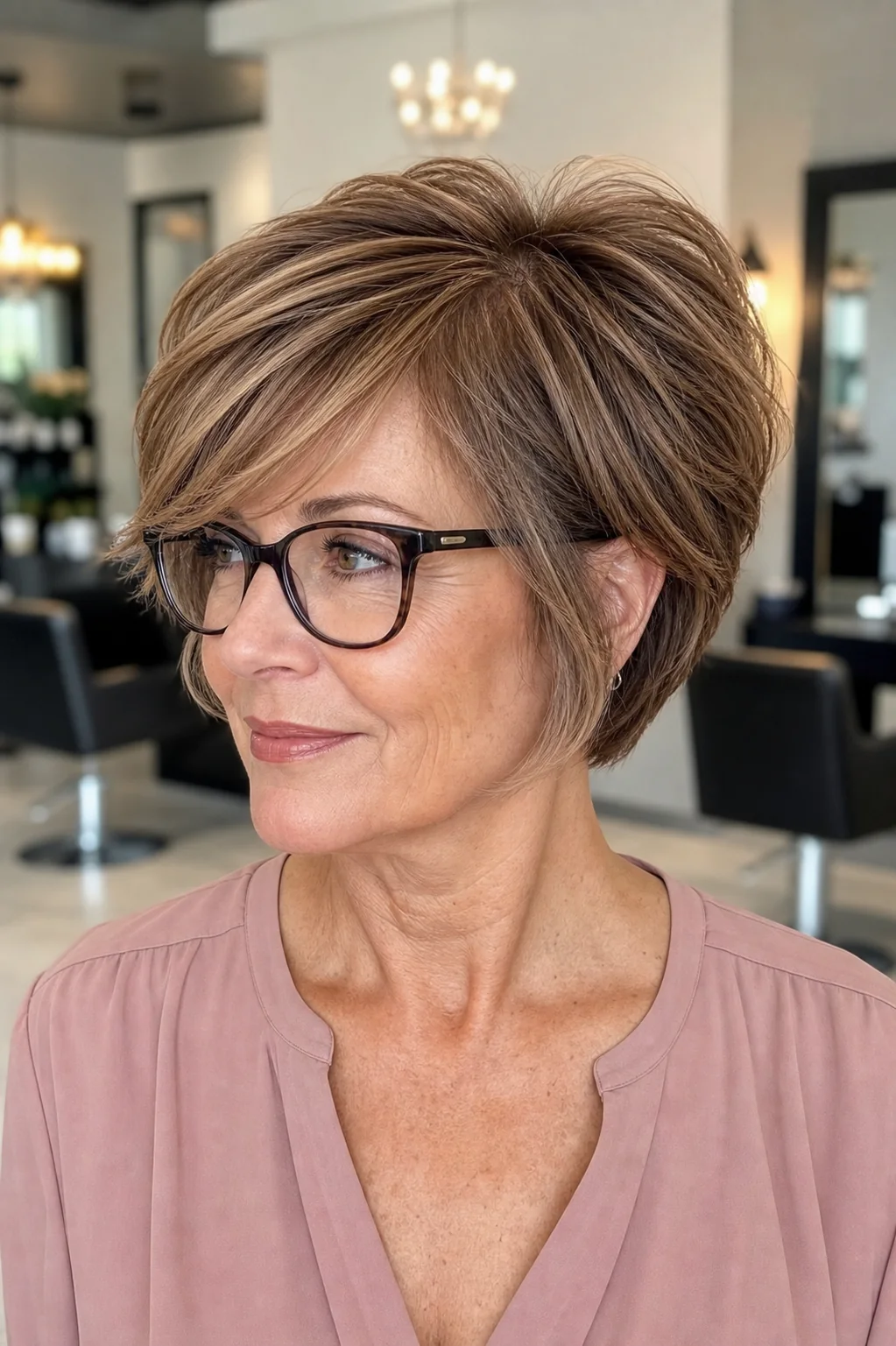
Glasses introduce strong lines around the eyes, so the haircut should cooperate with them. A diagonal fringe balances the frames, while carefully shaped sides stop hair from kicking awkwardly over the arms.
The overall impression is smart, creative and put-together. Wear your everyday glasses to the appointment and ask your hairdresser to check the shape with them on. Keep the ear area open enough for comfort while preserving softness above and in front of the frames.
Small detail, big difference: Hair repeatedly trapped under the arms will never sit the way it did in the salon chair.
17. Blonde Bixie With Darker Roots
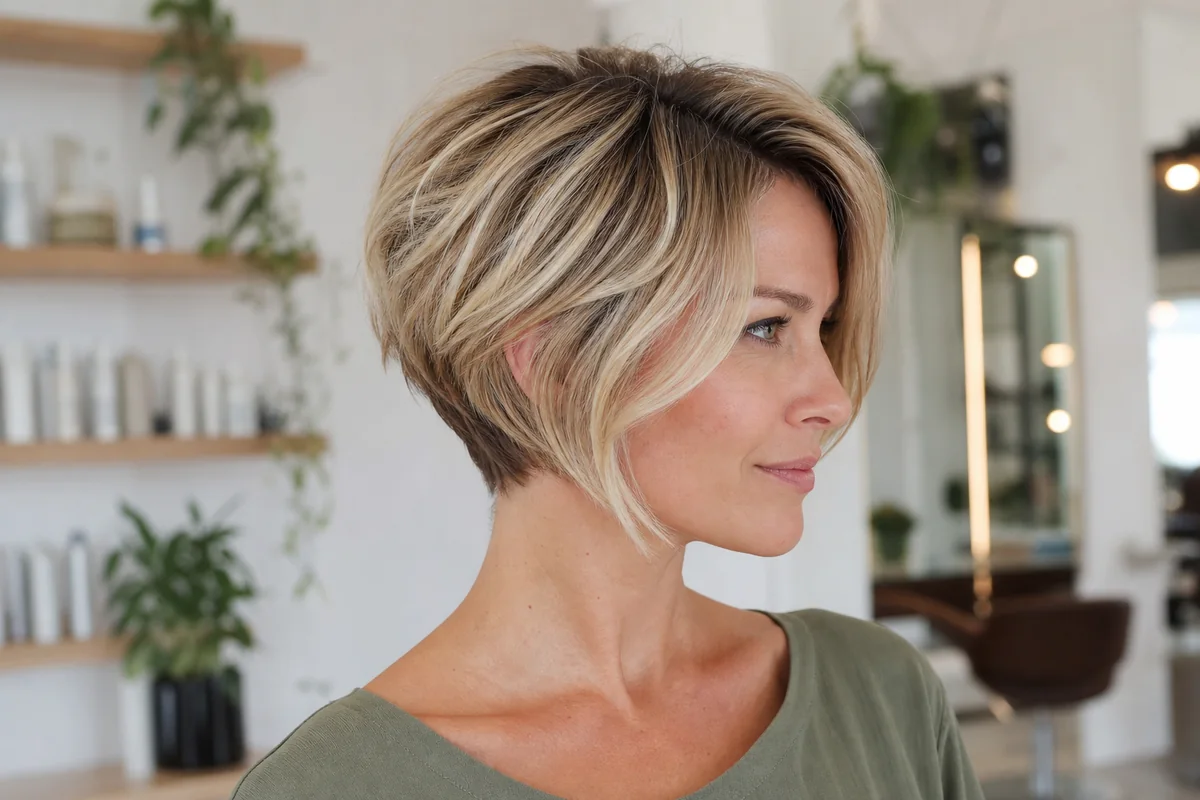
Dimensional color makes the architecture of this cut easier to see. Lighter pieces catch the movement, while natural root depth gives the top visual dimension and stops the shape looking flat.
Brightness around the face brings the focus forward, creating a modern, salon-polished mood. The haircut must still do the real work: ask for a sweeping longer front, a visibly layered crown and a compact back.
Hair lesson: Color can reveal good layers, but it cannot rescue a weak silhouette. Choose the cut first, then use tonal contrast to emphasize its movement.
18. Bixie With a Sculpted Back
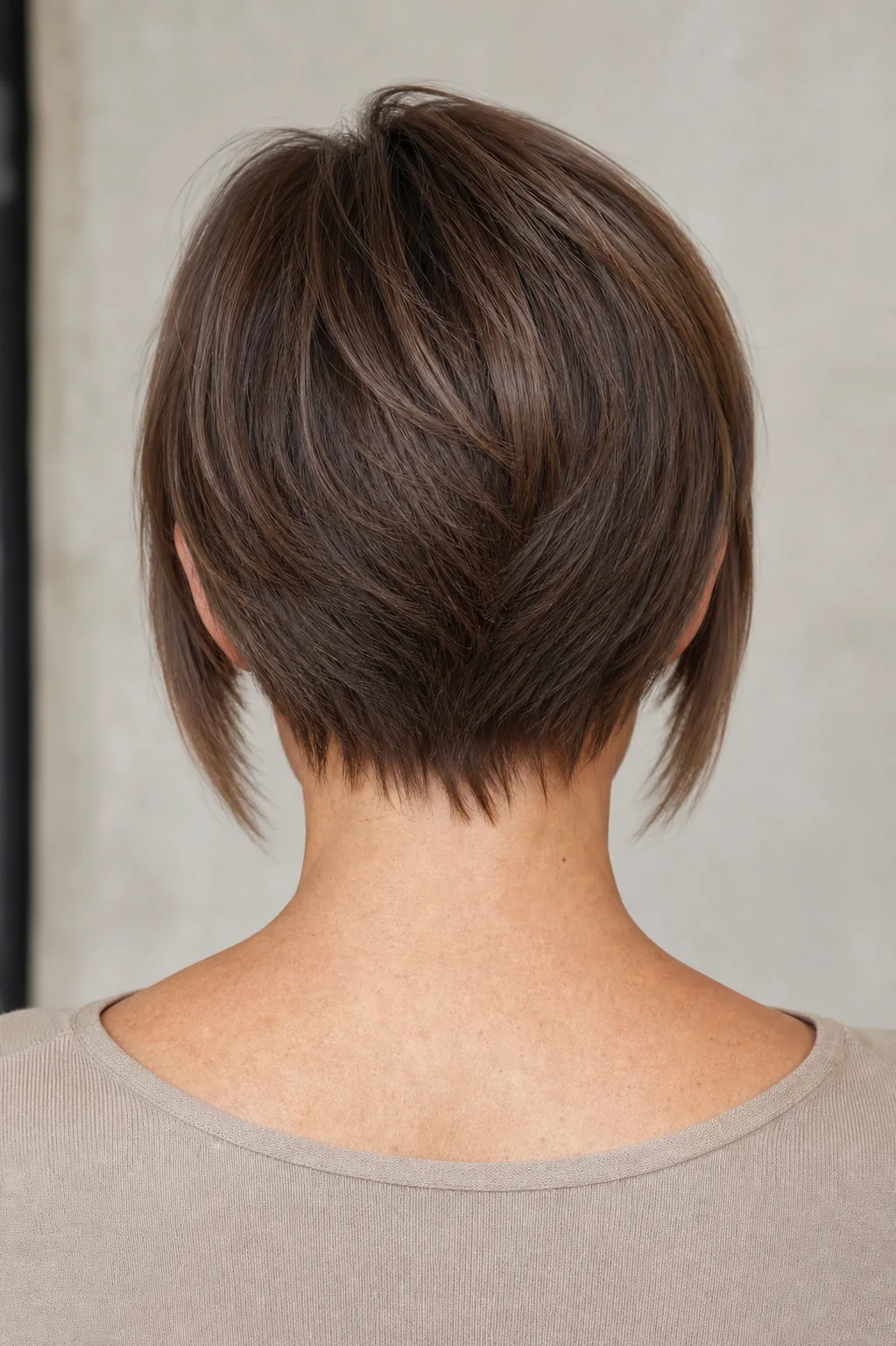
The back view may not be the glamorous photograph you save first, but it is the one your hairdresser needs. A softly graduated shape hugs the head, avoids bulky weight at the nape and gives the longer sides a clear reason to exist.
Describe a neat, softly sculpted neckline—not a clipped pixie taper and not the heavy stacked wedge of a classic graduated bob. The transition from the crown into the nape should look smooth from the side.
Why it matters: The back often decides whether a bixie grows out gracefully or feels bulky after only a few weeks.
19. Growing-Out Pixie Bixie
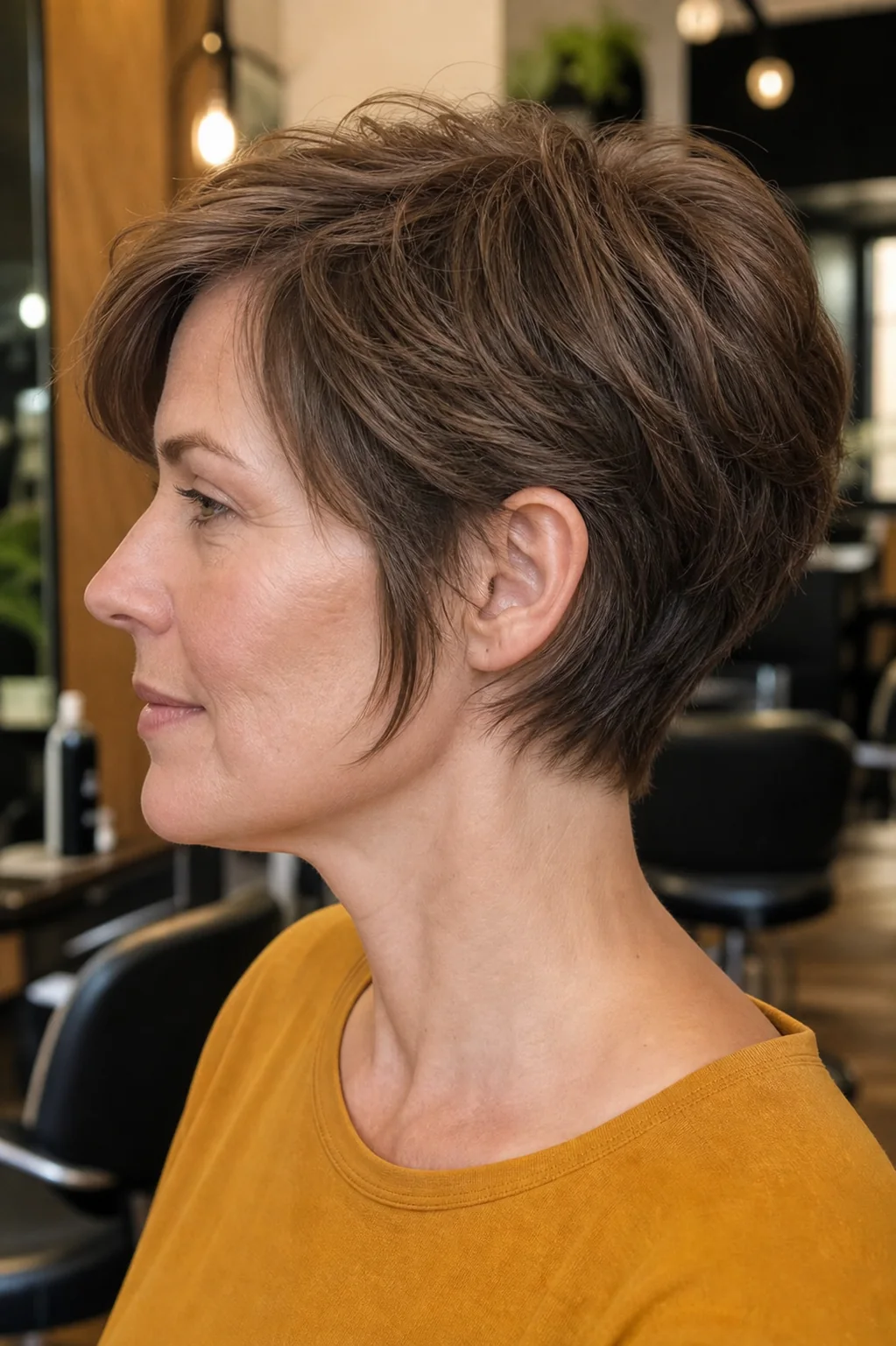
The awkward stage between pixie and bob can become a real hairstyle rather than something to endure. A reshaping trim keeps the precious new length around the front and ears while redistributing weight through the crown and tidying the nape.
Those longer side pieces restore softness around the face, while the reorganized top prevents an overgrown, top-heavy silhouette. Tell your hairdresser that growth is the goal and ask them to remove bulk without repeatedly cutting away the progress.
Vibe: Adaptable and intentionally relaxed—the haircut equivalent of making the transition look like it was your plan all along.
20. Glamorous Bixie With Swept-Back Volume
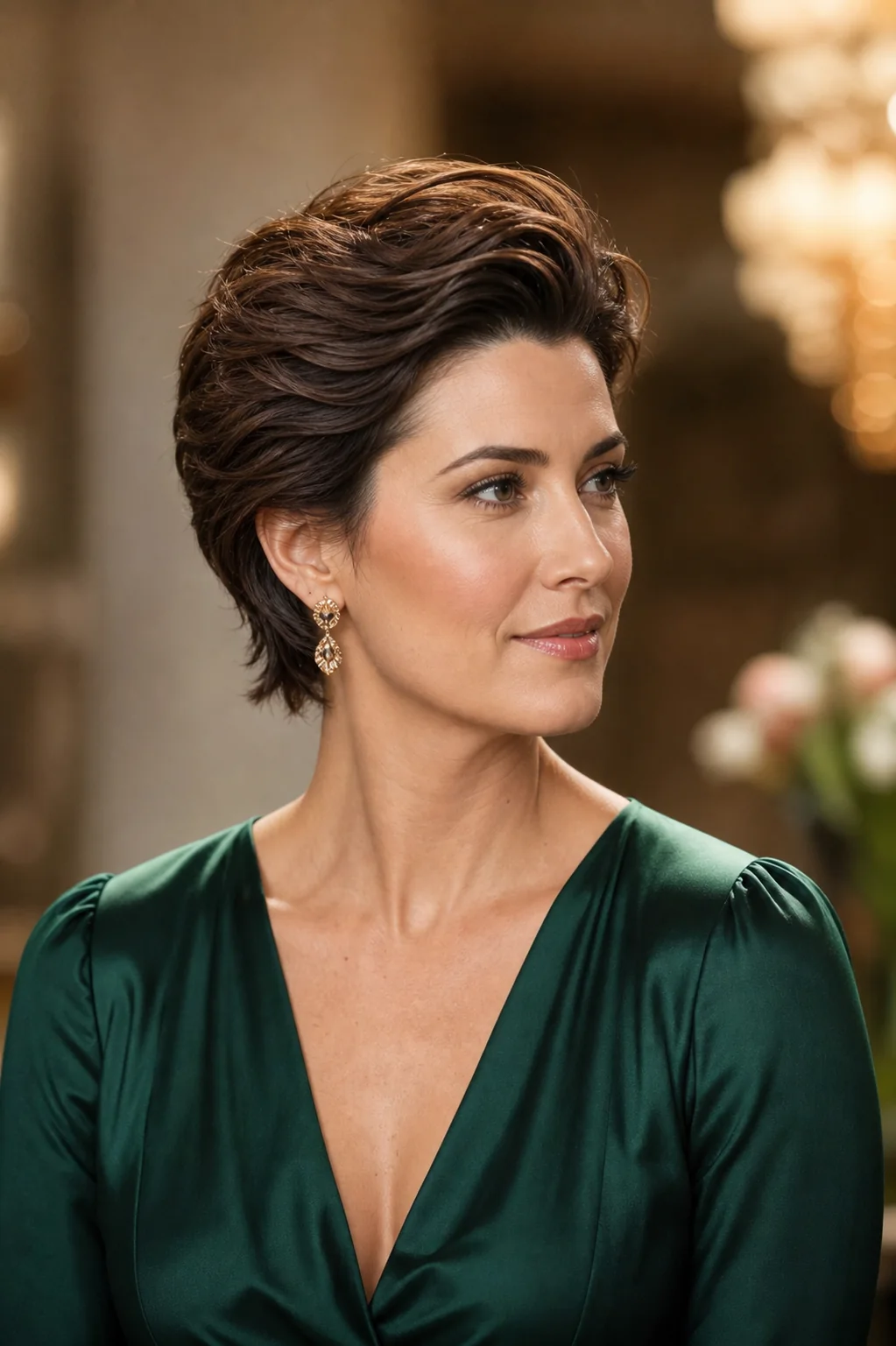
A bixie does not have to be sensible every day. Sweeping the front back opens the face, emphasizes the cheekbones and turns a practical short cut into something confident and evening-ready.
Keep enough length through the sides so the style still reads as a bixie, then create lift with root direction rather than coating the whole head in stiff product. Ask for a layered front that can move back without standing upright like a quiff.
Style it: Direct the roots away from the face, let them cool in position and finish with flexible hold so the hair retains movement.
Final choice: Return to the two looks you remembered without checking their names. Those are often better candidates than the style you think you should choose.
How to Style a Bixie
Begin with damp, towel-dried hair and choose one goal: smooth direction, natural texture or visible lift. Use a lightweight product suited to your density. Fine hair usually needs root support without oily separation; thick hair often benefits from smoothing and controlled definition; waves and curls need moisture and gentle hold.
Dry the fringe and roots first because they establish the shape. Use your fingers for movement, a small brush for polish or a diffuser for natural texture. Add finishing product gradually. A bixie looks modern when some strands remain soft and connected—not when every piece is stiffly separated.
How Often Does a Bixie Need Trimming?
Most bixies benefit from reshaping every six to eight weeks. A precise neckline or heavy fringe may show growth sooner, while longer, air-dried versions can be more forgiving. Ask which area will lose its shape first and whether a fringe or neckline tidy can extend the full appointment.
If a graceful grow-out matters, avoid taking the nape excessively short every time. Preserve intentional length around the ears and let the stylist redistribute bulk instead of restarting the haircut at each visit.
Is a Bixie Right for You?
A bixie is a strong choice if you want more movement than a bob, more softness than a classic pixie and enough flexibility to change the part, tuck a side or play with texture. It may be less satisfying if tying your hair back is essential or you strongly dislike regular reshaping trims.
Choose the version that supports the way you want to feel. Soft bangs can feel romantic; a sleek side part looks refined; visible texture gives energy; a sculpted back feels precise. Hair is deeply personal. The most successful cut does not turn you into someone else—it makes the version of you in the mirror feel more intentional.
Prefer Something Shorter and Bolder?
If the bixie still feels longer or softer than the change you have in mind, explore our 20 Power Pixie Haircuts That Make Fine Hair Look Fuller. A power pixie removes more length at the sides and back while preserving enough shape on top for personality and movement.