Few styles make natural texture look quite as intentional as a fresh set of finger coils. Every spiral catches the light, yet the finished mood can shift from soft and romantic to sculpted, bold or quietly professional.
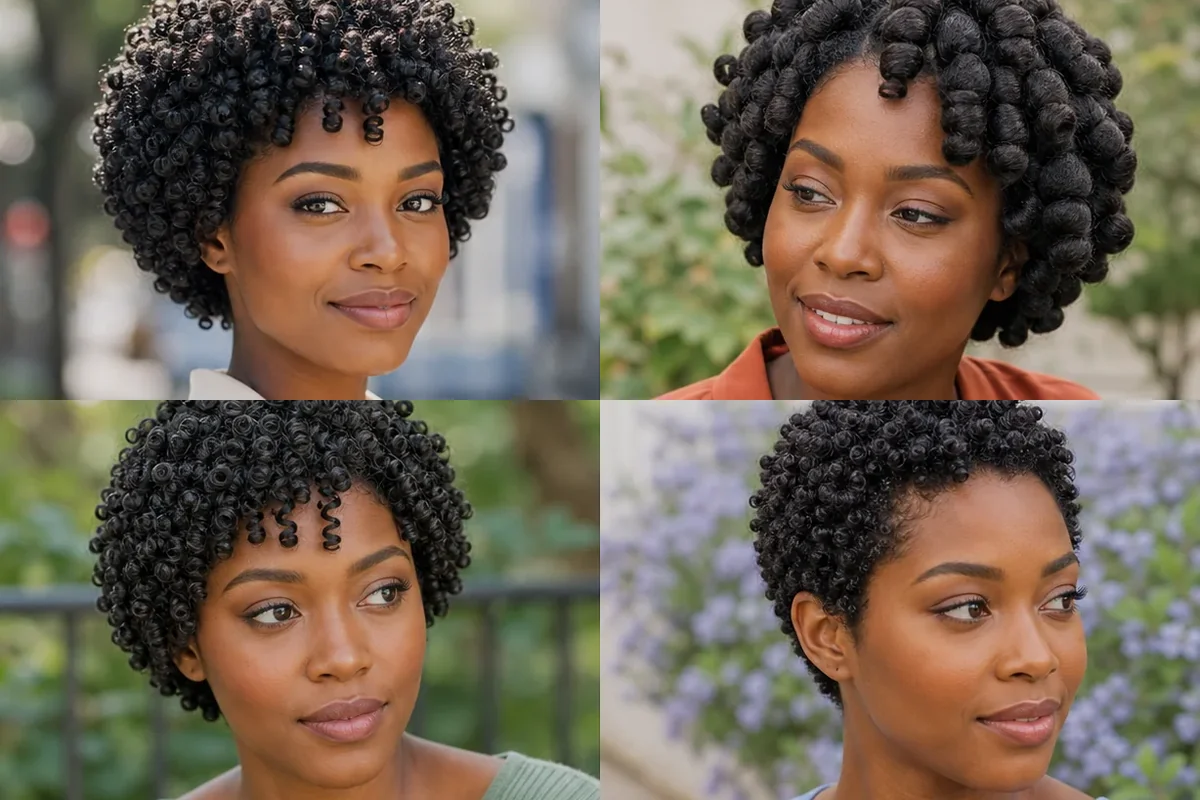
Finger coils are made by smoothing small sections of damp, product-coated hair and twirling each one around a finger from root to tip. Unlike comb coils, they do not rely on a comb to create a tight cylindrical base; unlike a coil-out, the spirals remain intact instead of being separated for volume. The size of each section, the haircut underneath and the way the roots are directed determine whether the result looks compact, airy, rounded or elongated.
1. Classic Glossy Finger Coils
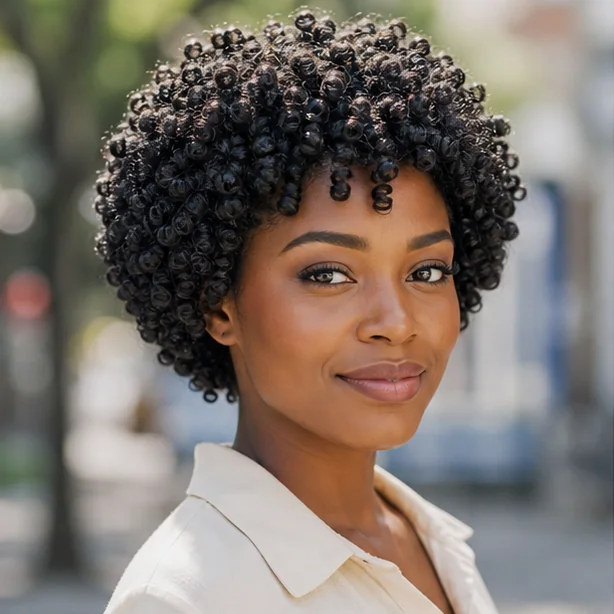
Small, evenly sized spirals sit in a softly rounded shape, with enough gel cast to make each curve catch the light without looking rigid. This balanced set gives natural hair a neat, intentional finish that can frame almost any face and make an everyday routine feel polished for several days at a time. Uniform sections take patience, and touching before the hair is fully dry invites frizz; ask for classic finger coils on soaking-wet hair, consistent small sections, smooth roots and a flexible glossy hold rather than a hard shell.
2. Chunky Soft Finger Coils
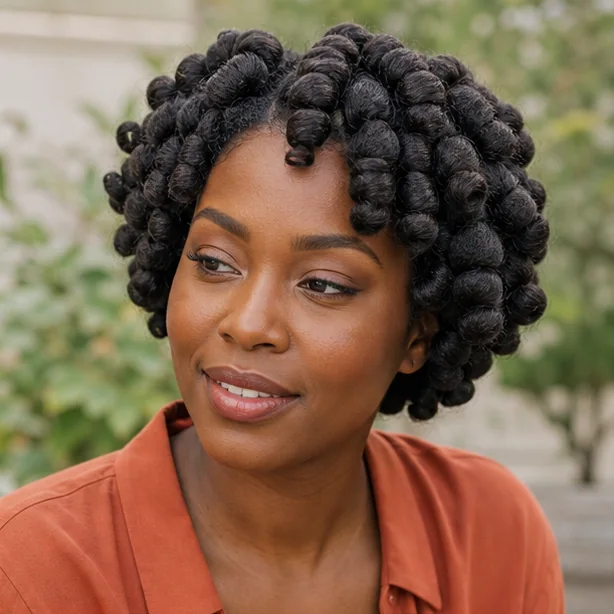
Larger sections create broad spirals with a plush, touchable surface and more visible space between each curl. The extra scale makes dense hair look buoyant rather than compact, softens strong cheekbones and gives the wearer a relaxed, playful confidence that suits casual weeks. Chunky coils can unravel sooner on very short or loosely holding areas, so a cream layered beneath medium-hold gel is often more forgiving; request large finger coils with clean but not severe parting and enough root lift to avoid a flat crown.
3. Tiny Defined Finger Coils
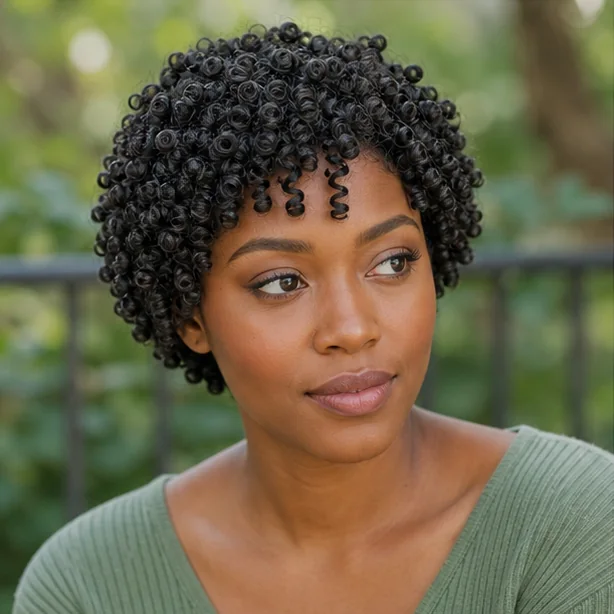
Very small sections form a dense field of delicate spirals that reads almost like sculpted texture from a distance and reveals intricate detail up close. The fine pattern can make low-density areas appear more evenly covered and brings a precise, sophisticated mood to short or medium natural hair. Installation and takedown demand considerably more time, so this version suits someone happy to protect the set carefully at night; ask for tiny finger coils with lightweight product, protected edges and section sizes matched to the hair's real density.
4. TWA Finger Coils
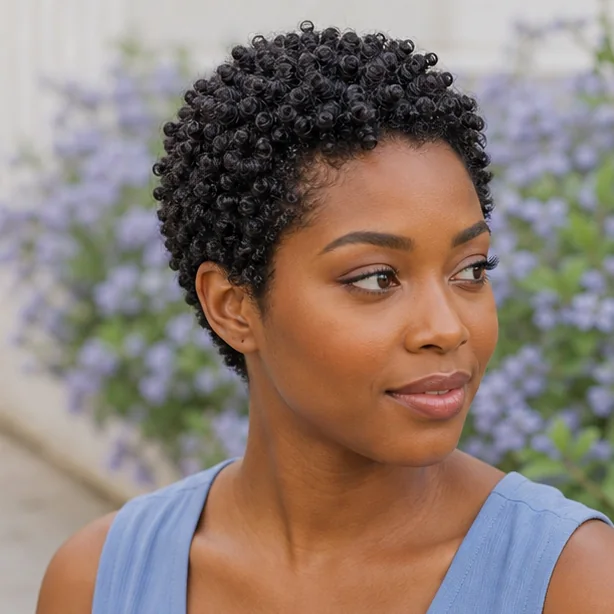
Close-cropped hair is shaped into neat little spirals that follow the head while preserving the clean outline of a TWA. The compact finish draws attention to the eyes, earrings and cheekbones, helping a very short cut feel feminine, fresh and fully intentional during a big-chop or grow-out stage. Short strands dry quickly but need enough length to wrap around a fingertip, and a heavy gel can leave visible flakes; request fingertip-size coils, soft hairline detail and a balanced silhouette rather than forced uniformity at every edge.
5. Tapered Finger Coil Cut
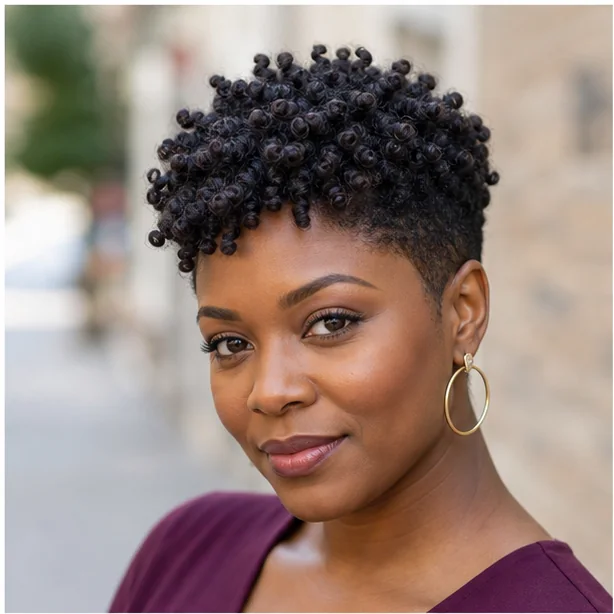
Springy coils build height through the crown while closely shaped sides and a neat nape keep the silhouette crisp. That vertical line can lengthen a round face, spotlight the cheekbones and make the wearer feel modern and confidently put together without needing to manipulate the whole head each morning. The taper needs periodic shaping even when the coils still look good, so budget for edge and nape maintenance; ask for a soft low taper with several inches left on top for medium finger coils and no harsh recession at the temples.
6. Deep Side-Part Finger Coils
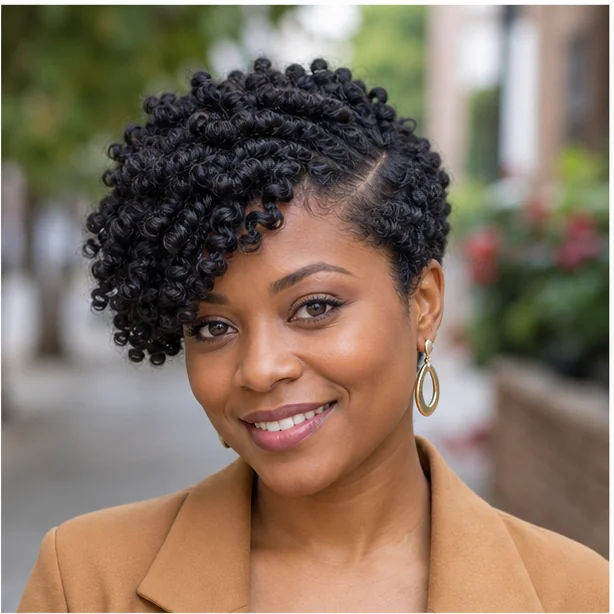
A clean part above one brow sends the coils diagonally across the forehead while the lighter side stays open around the face. This asymmetry creates gentle crown lift, softens a long or angular face and gives the set an elegant, slightly dramatic mood that can move easily from work to dinner. The part must be established before coiling because forcing dry spirals sideways creates frizz and strain; ask for a curved deep side part, forward-directed front coils and comfortable spacing along the exposed line.
7. Center-Part Finger Coils
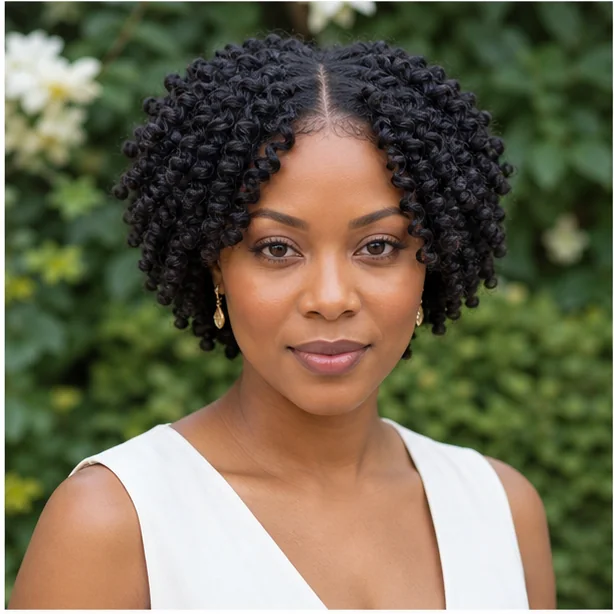
Defined spirals fall evenly from a straight center part, creating two balanced panels that frame the cheeks and jaw. The symmetry can add width beside a longer face and makes the wearer feel calm, polished and deliberately styled, especially when the front coils are long enough to move. A perfectly straight line can expose sparse areas that a softer part would disguise, so placement should follow natural density; request a centered but natural-looking part, mirrored front direction and slightly smaller coils near the face.
8. Side-Swept Finger Coil Fringe

Longer front coils sweep across the forehead like a textured fringe while the crown stays softly rounded. The diagonal movement can shorten a high forehead, bring attention toward the eyes and create a romantic, expressive feeling without committing to permanently cut bangs. Coils near the face absorb skin products and lose shape faster, so keep oils light and refresh only those pieces with water and gel; ask for forward-directed front sections, cheekbone-skimming tips and enough root lift to prevent the fringe from collapsing.
9. Rounded Afro Finger Coils
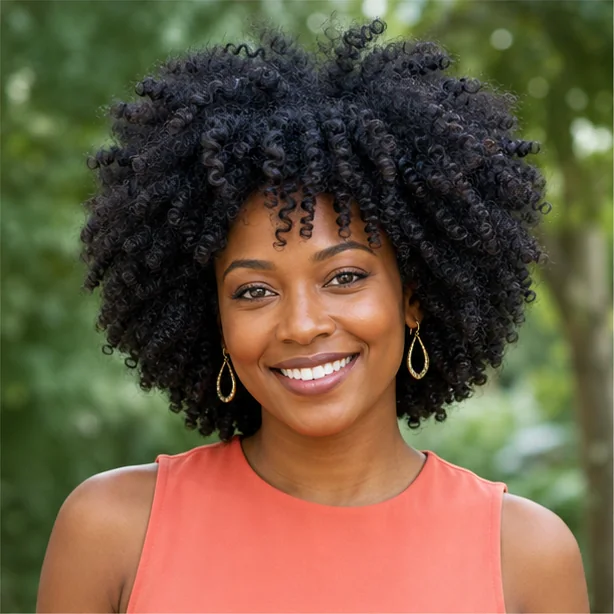
Finger coils remain defined through the lengths while gently lifted roots expand into a generous rounded afro silhouette. The combination preserves visible spiral detail without sacrificing fullness, balancing a narrow face and giving the wearer a joyful, abundant feeling that still looks carefully shaped. Picking too far into the coil can unravel the set and create uneven fuzz, so lift only at the roots after complete drying; ask for medium coils, a round perimeter and controlled root separation that leaves every end intact.
10. Elongated Finger Coils

Medium-length spirals are gently stretched at the roots so they fall downward instead of shrinking into a compact halo. The added length creates graceful movement, visually narrows a round face and can make the wearer feel sleek and sophisticated while still celebrating natural texture. Stretching before the set is fully dry can cause frizz, and too much heat defeats the low-manipulation appeal; request medium finger coils dried completely, then lightly banded or tension-stretched at the roots with the spiral pattern preserved.
Choose coil size according to your real time budget as well as the finished look. Smaller sections can last beautifully, but they also take longer to install, dry and unravel safely.
11. Long Finger Coils
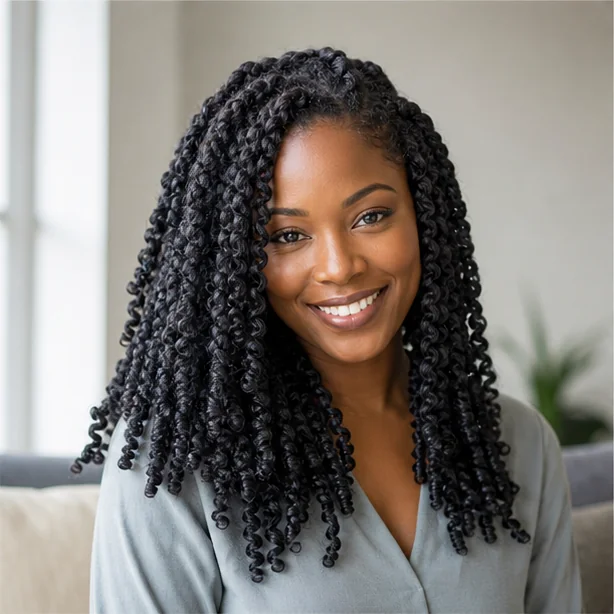
Long natural hair is divided into controlled sections and wound into glossy spirals that hang beyond the shoulders with visible rope-like definition. The length makes every coil movement dramatic, gives the wearer a luxurious, self-assured feeling and offers a heat-free way to show stretch without hiding texture. This set can take hours and wet hair must be dried thoroughly at the roots, making smaller sections impractical for some routines; ask for medium-to-large coils, light product layering and a drying plan that protects both definition and scalp comfort.
12. 4C Finger Coils With Fullness

Small, moisture-rich sections encourage tightly coiled 4C hair into springy spirals while a softly lifted crown keeps the natural density visible. The result celebrates shrinkage instead of treating it as a problem, creates even definition and can help the wearer feel assured that a polished set does not require loosening the hair's character. Product must provide slip without leaving a chalky film, and some strands may form zigzags rather than perfect rings; ask for density-matched sections, saturated moisture and flexible hold with no forced tension.
13. Fluffy Root-Lifted Finger Coils
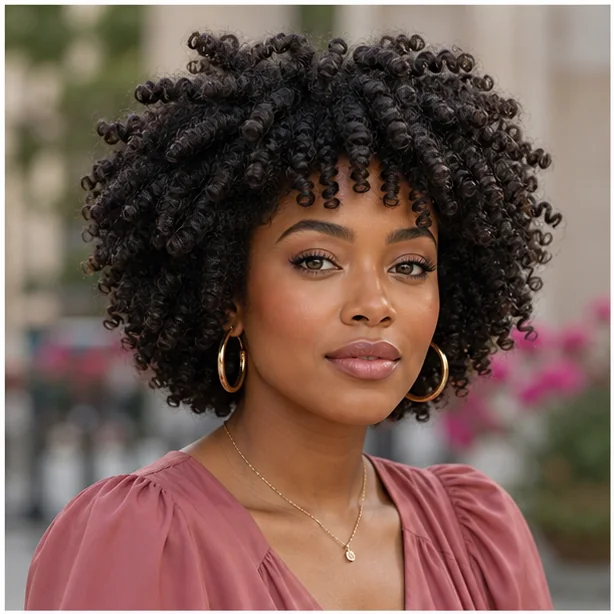
The ends retain their spiral pattern while a pick loosens only the root area, creating an airy cloud beneath the definition. That softness adds height to a flatter crown, makes fine or medium-density hair appear fuller and gives the wearer an effortless, lively mood rather than a freshly set finish. Root lifting shortens longevity and should wait until the hair is bone dry, so begin conservatively and add volume over several days; request medium coils with minimal product at the roots and a rounded shape designed to expand gracefully.
14. Sculpted Finger Coil Pixie
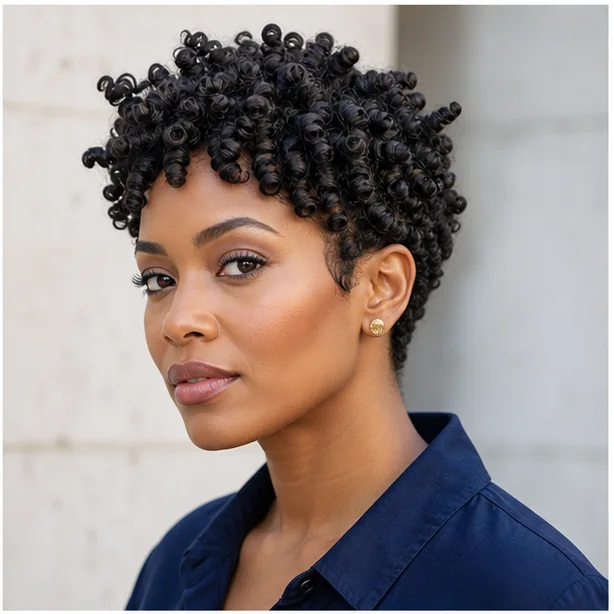
Pixie-length coils are directed forward and slightly upward, creating a sculpted crown with clean ears and a neat nape. The architecture lifts the face, highlights strong brows and can make the wearer feel sharp, creative and professionally polished while keeping natural texture at the center. This silhouette depends on the haircut underneath and grows softer quickly at the sides, so regular shaping matters more than adding stronger gel; ask for a feminine tapered pixie with finger-coil length on top and softly scissored edges.
15. Copper-Tipped Finger Coils
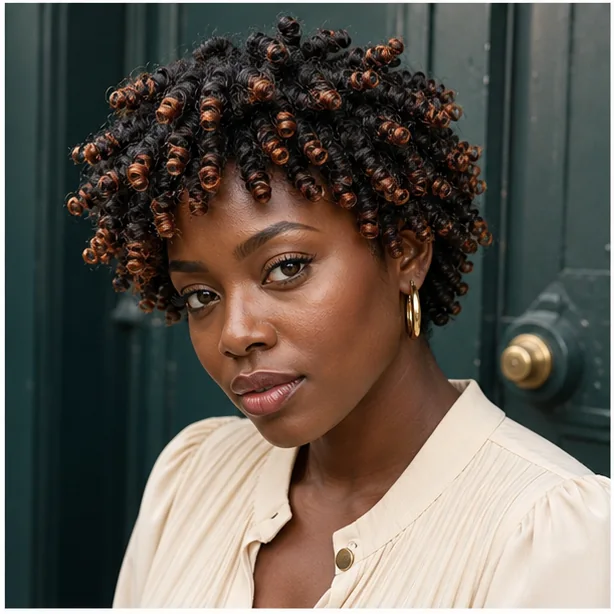
Warm copper appears through the ends of dark finger coils, tracing each spiral and making the texture visible from across the room. Concentrating color away from the roots brightens the face and gives the wearer a bold, artistic lift without turning the whole set into one solid shade. Lightened tips are the oldest and most vulnerable part of the hair, so moisture, gentle detangling and timely trims are essential; ask for a dark-rooted copper melt on healthy ends with medium coils that display the transition clearly.
16. Honey-Highlighted Finger Coils
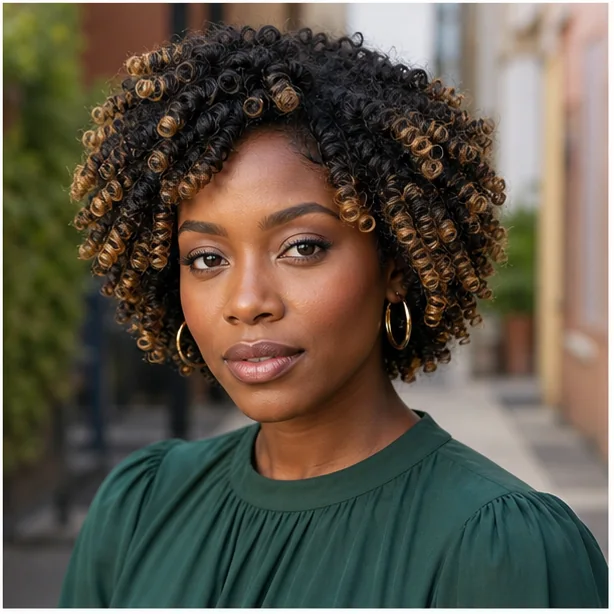
Fine honey ribbons weave through a dark base, catching different curves so the coil set looks dimensional rather than striped. Strategic brightness near the face can warm the complexion, illuminate the eyes and make the wearer feel sunny and refreshed while maintaining plenty of natural depth. Highlights make dryness easier to see, and every lightened piece needs conditioning before strong-hold styling; ask for narrow brown-based honey accents around the face and crown, followed by flexible medium finger coils.
17. Silver Finger Coils

Natural silver and charcoal strands twist together through defined coils, creating luminous contrast without disguising the hair's real color story. The reflective pattern brightens the face, makes texture wonderfully visible and can help the wearer feel elegant, current and completely herself. Gray hair can be more porous or wiry in some areas, so one product weight may not suit the whole head; ask for moisture-balanced finger coils, slightly varied section sizes and a soft rounded outline that follows density.
18. Pinned-Side Finger Coils
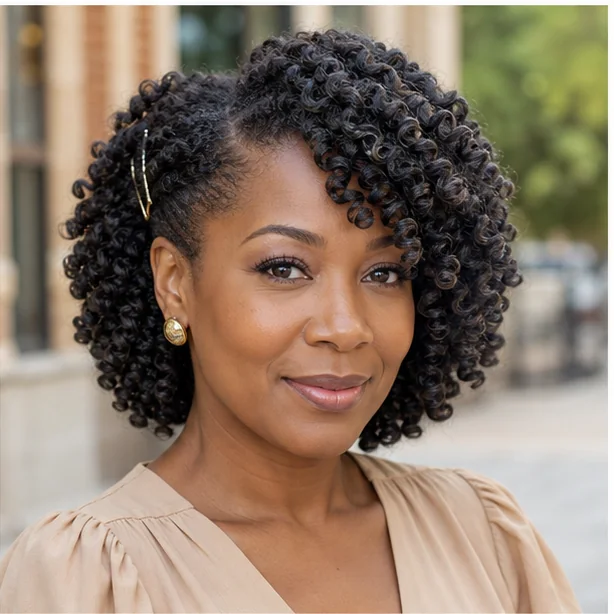
One side is swept back with discreet pins while the opposite coils remain full, creating an easy asymmetrical profile. The open side shows the cheekbone and neckline, adds occasion-ready polish and can make the wearer feel dressed up without rebuilding the set or stressing it into a tight ponytail. Pins should slide beneath the coils rather than pierce or crush them, and repeated placement can flatten one area; ask for flexible temple direction and a fuller opposite side that holds the silhouette.
19. Half-Up Finger Coils
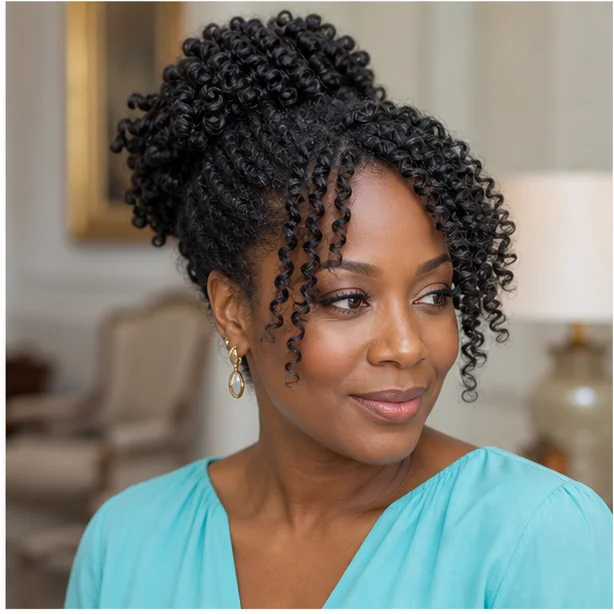
The upper coils gather loosely at the crown while the lower half remains springy around the shoulders or nape. This simple lift opens the face, adds cheerful height and lets the wearer feel pulled together on a later-set day without sacrificing the texture that took time to create. Tight elastics can bend the spirals and load delicate roots, so use a broad satin tie and vary the placement; ask for medium coils with flexible crown roots and a few face-framing pieces left free.
20. Soft Finger Coil-Out
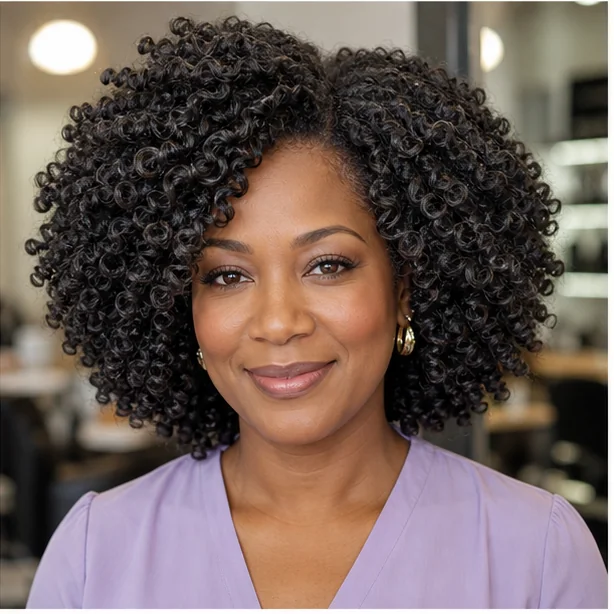
An established finger-coil set is carefully separated into smaller curls, trading the original rope-like spirals for a fuller, softer halo. This second style extends the life of the work, disguises minor frizz and can make the wearer feel carefree and voluminous when a precise set no longer suits the mood. Separation works best with a little oil on the fingertips and only after the coils are completely dry; ask for a coil set planned to unravel cleanly, with medium sections and a shaped perimeter underneath.
A successful set does not require every strand to form an identical spiral. The most flattering result follows your density, curl behavior and haircut while keeping the scalp comfortable.
What Finger Coils Are—and What They Are Not
Finger coils are individual spirals formed by smoothing damp, conditioned hair and winding each section around a finger from root to tip. Comb coils use a fine-tooth or rat-tail comb to create tighter cylindrical coils, often with a more defined scalp pattern. A coil-out begins with finger coils but separates them after drying to make a fuller finish. Finger coils are a styling method, not permanent locs, although leaving any small coils unseparated for too long can encourage tangling and matting.
Choosing Coil Size for Your Texture and Routine
Small sections create intricate definition and usually resist unraveling longer, but they increase styling, drying and takedown time. Chunky coils look plush and install faster, yet may loosen sooner when the hair is short or the curl pattern does not naturally hold a broad spiral. Density matters as much as curl type: copying a tiny section size onto very dense hair can turn a manageable set into an all-day project. Test a few sections at the nape before committing to the whole head.
How to Ask for Finger Coils at a Salon
Bring references that show both the coil size and overall silhouette you want. Name your preferred part, crown height, taper or perimeter shape, level of root neatness and whether you hope to wear a later coil-out. Ask which cream-and-gel combination suits your porosity and whether the set will air-dry or sit under a hooded dryer. The roots should feel controlled but comfortable; finger coils do not need painful pulling to look polished.
Drying, Night Care and Takedown
Let the set dry completely before separating, covering or pressing it against a pillow, because damp centers create frizz and flattened sides. At night, use a roomy satin bonnet or loosely anchor longer coils so they are not crushed. In the morning, mist only the pieces that need reshaping rather than soaking the whole head. On wash day, saturate with water and conditioner, unwind tangles patiently and remove shed hair section by section so the spirals do not begin matting together.