Bangs can change the mood of your hair without asking you to give up your favorite length. Bottleneck bangs have a short, relatively narrow center that widens into longer, curved sides, echoing the outline of a bottle; on a round face, the useful choice is where that curve opens and where its corners meet your cheeks.

The shape matters more than the label. Wispy describes light density, so a bottleneck fringe can also be wispy; curtain bangs usually have a longer, more widely opened center. A true bottleneck reference should still show its shorter middle and a connected widening curve. These eight versions help you compare forehead coverage, side placement and texture without treating a round face as something that needs correcting.
Find the one that feels like you: Start with the first look and let the photographs lead. Each style explains how the shape affects your features, the mood it creates and the exact words to take to your stylist.
1. The Classic Brow-to-Cheekbone Curve

A small center and a smooth widening curve are the starting point for this shape. Here, brow-length pieces connect to longer corners near the cheekbones, letting your eyes stay prominent while the sides give a round face a soft frame that feels polished without looking severe. It suits someone who wants a recognizable fringe and enjoys a quick morning reset, rather than a cut that can always be left untouched. Ask for a narrow brow-length middle that widens continuously to the cheekbones, and dry the center forward before gently encouraging the corners away from your eyes.
Ask your stylist for: Keep a narrow brow-length center and a connected curve widening to my cheekbones; check the corner placement on my dry hair.
2. An Airy Center That Leaves Skin Showing

If you like the idea of bangs but worry about covering your forehead, start with the amount of hair entering the fringe. A shallow section creates a translucent middle, while connected, longer corners preserve the bottleneck outline; on a round face, those gaps keep the frame feeling open and quietly delicate. This can suit fine strands or someone who dislikes a heavy fringe, although taking too much hair from the sides may leave them looking sparse. Tell your stylist you want a shallow, see-through center with a visible curved transition, and keep rich conditioner or heavy finishing cream away from the roots.
Ask your stylist for: Use a shallow section for a see-through brow center, retaining a connected widening curve and enough hair at the temples.
3. A Fuller Middle With Softly Tapered Sides
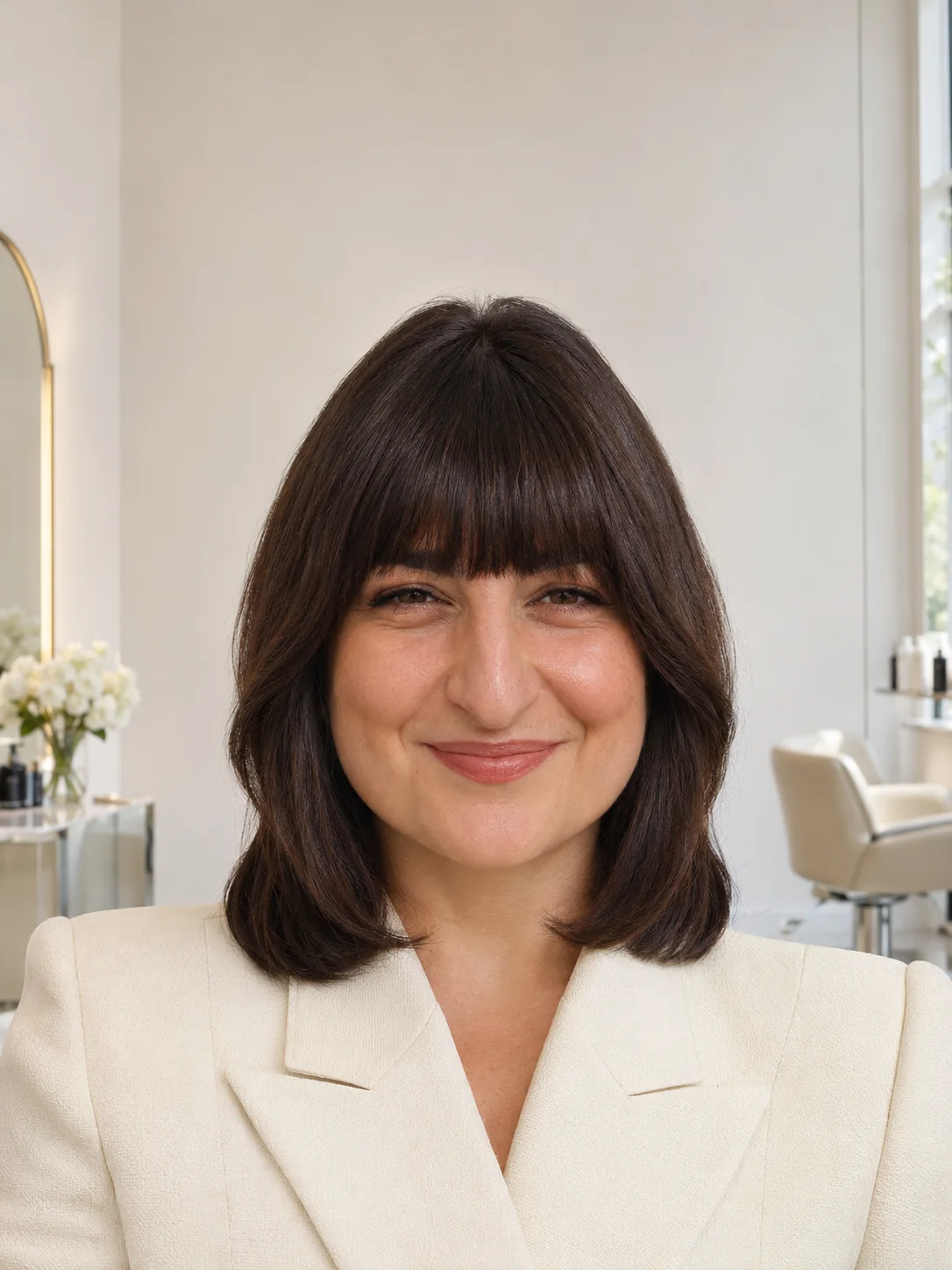
A fuller middle makes the fringe feel more deliberate, bringing a clear focal point to the eyes. The important detail is the gradual taper into longer side pieces: it gives a round face a curved frame instead of an abrupt rectangular block, creating a composed, slightly dramatic mood for someone who likes visible forehead coverage. It works best when your density can support that section without borrowing too much from the sides, and it may need more careful drying after washing. Ask for a fuller brow-length center with soft tips and connected cheekbone corners, then check that the dry fringe stays comfortably out of your eyes.
Ask your stylist for: Give me a fuller brow-length middle with soft tips, tapering continuously into cheekbone corners rather than a blunt rectangular fringe.
4. A Tiny Center Opening for an Open Expression

You do not have to choose between a completely closed fringe and long curtain wings. A tiny opening separates the short central pieces just enough to reveal a sliver of forehead, while their curved connection to the cheeks keeps the bottleneck identity; the result can make a round face feel brightly framed and casually put together. This is worth considering if your hair naturally parts near the middle, provided the short pieces still settle where you want them. Ask for a small opening within a brow-length center, and test the direction on dry hair before assuming a round brush will hold it there all day.
Ask your stylist for: Keep short brow-level central pieces with only a small middle opening, widening in a connected curve to my cheekbones; follow my natural growth.
Pause and notice: Before saving another photo, name the detail you want: less forehead coverage, a more natural opening or a lower side frame. That one decision makes your salon conversation much clearer.
5. An Off-Center Opening That Follows Your Part

A slight shift in the opening can make a fringe feel more natural when your hair resists a perfect middle part. Short central pieces remain visible on both sides of that opening, then widen into connected cheek-framing curves, adding gentle asymmetry to a round face for an easy, quietly individual mood. It suits someone whose usual part sits a little off center, but a strong cowlick still needs a dry consultation because it may lift the shortest pieces. Ask for an off-center opening within a true bottleneck fringe, and reset only the roots with a little water when they settle awkwardly after sleep.
Ask your stylist for: Place a small opening slightly off center while keeping a short central fringe on both sides and a connected widening curve; do not turn it into a long side sweep.
6. Long Corners That Continue Below the Cheekbones

Look closely at where the longest fringe pieces stop, rather than judging only the shortest part. In this version, the brow-length middle widens through a continuous curve into corners below the cheekbones, giving a round face a longer side frame and a soft, dressed-up feeling that can work with loose hair or an updo. It suits someone who likes pieces beside the face, although the corners may fall forward when you lean over or wear glasses. Ask your stylist to show the dry stopping point below your cheekbones, and use a gentle bend that follows the curve instead of flipping the ends outward at your widest cheek area.
Ask your stylist for: Keep the short brow center and continuous bottle curve, but extend slender corners below my cheekbones toward the jaw; show the dry landing point.
7. A Bottleneck Curve That Moves With Natural Waves

Natural waves bring a looser rhythm to a bottleneck fringe, so the edge will not look perfectly even every day. Short central S-bends widen into longer, curved sides, giving a round face a lively frame that can feel relaxed and expressive when you enjoy your own texture. This is a useful reference if you would rather encourage your waves than straighten your bangs each morning, but humidity and drying habits will influence where the shortest pieces land. Ask for the bottle outline to be checked in your natural dry pattern, and use a small amount of your usual lightweight hold without pulling the fringe straight.
Ask your stylist for: Shape a short-center, longer-corner bottleneck fringe for my natural S-waves, allow for spring, and check the connected outline dry.
8. Loose Curl Groups With a Soft Bottle Outline

With curls, the bottle shape comes from the resting lengths of curl groups rather than a brushed, continuous line. A few shorter central curls sit around the brows and widen into longer side curls, framing a round face with buoyant movement that can feel playful and confidently natural. Choose a reference with a curl pattern close to yours, because shrinkage and density determine how much hair belongs in the fringe and how it settles after washing. Ask for the short-center-to-longer-side outline to be assessed dry, preserve the curl groups during cutting, and refresh them gently instead of repeatedly combing them into separate strands.
Ask your stylist for: Assess my curls dry and create shorter central groups widening into longer cheek-framing curls, allowing for shrinkage and preserving the curl pattern.
Before You Book the Appointment
A successful salon visit begins with the overall shape, construction and upkeep—not only the finished length. Use this quick reality check before choosing your final reference photograph.
- Shape: Choose your short-center width, opening and corner landing points for the amount of forehead and cheek framing you enjoy.
- Texture: Use references close to your natural straight, wavy or curly pattern; assess shrinkage and cowlicks dry.
- Density: Section depth should preserve enough hair at the temples, especially with fine or low-density hair.
- Routine: Expect occasional fringe trims and a possible morning root reset; discuss your realistic styling habits.
Can a Round Face Wear Bottleneck Bangs?
Yes. You can enjoy a round frame, reveal more forehead or emphasize a longer side line; none is a compulsory correction. Compare the width of the short center and the point where the curve widens against your own forehead height and cheekbones. A photo with a similar hairline and natural texture is usually more useful than one chosen only for face shape.
What Should You Ask Your Stylist For?
Point out three places on your reference: the shortest center, the widening curve and the longest corner. Describe how much forehead you want showing, bring your usual part and explain your ordinary styling routine. Ask the stylist to assess density at the temples before choosing section depth, and to check the dry landing points. A short middle with disconnected long strands is a different construction from the connected curve shown here.
How Do You Style the Curve at Home?
For a smooth finish, gently reset damp roots first, guide the short middle forward, then encourage the longer corners outward without making a large flip beside the cheeks. Use heat protection and follow your tool's instructions if you use heat. For waves and curls, begin with your usual texture routine, allow the pattern to settle, and judge the shape dry. Product amount and drying direction matter more than buying a particular brush.
What If You Wear Glasses or Have a Cowlick?
Wear your everyday glasses to the appointment so the stylist can check the curve against the frames. Show cowlicks before the hair is wet: a natural opening may work beautifully, while a strong upward growth pattern may make a short center difficult to keep down. A small forehead also leaves less space for the transition, so discuss the dry center length before committing to the cut.
How Much Maintenance Should You Expect?
Arrange fringe trims according to your growth and how soon the short pieces reach your eyes. A fuller, precise center usually reveals changes sooner than a soft, separated one, and even a light fringe may need a morning reset. Take a photo after your first home wash so the next trim can address the shape you actually live with.
How Do Bottleneck Bangs Grow Out?
Tell your stylist you are growing the fringe so they preserve the central length instead of restoring the original short edge at every appointment. As it lengthens, the opening can gradually widen and the corners can blend into a longer face frame. Small clips or a gentle change of direction may help during the eye-skimming stage. Your growth pattern will decide whether that transition is easy or needs occasional reshaping.
The Takeaway
Save the version whose center, opening and corner length suit the way you want your hair to feel each morning. Then bring those three details to your stylist: a clear reference and an honest routine are a better starting point than a promise that one fringe works for every round face.
More Hair Inspiration
- More Bottleneck Bangs Ideas — Compare the wider range of bottle-shaped fringe constructions.
- Wispy Bangs for Round Faces — Explore light fringe density, including shapes beyond bottleneck bangs.