A bob can look almost one-length from the front, then reveal a lovely curve when you turn your head. If that supported shape at the back is what keeps catching your eye, a graduated bob is worth a closer look.
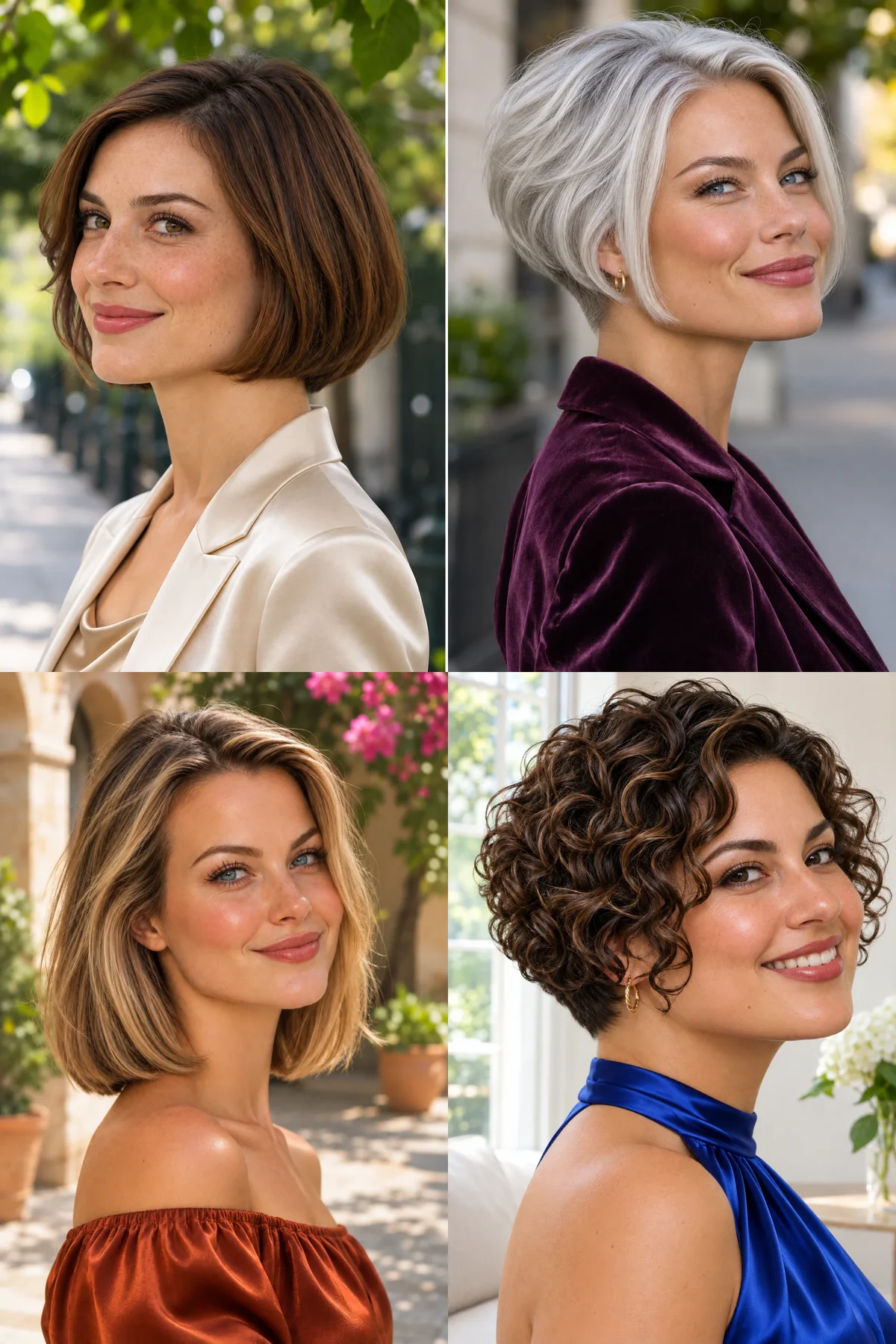
A graduated bob haircut uses shorter hair underneath and progressively longer hair above it to build weight and a rounded shape, usually through the back. The graduation can sit quietly near the nape or climb higher for a more noticeable curve. A blunt bob keeps a more uniform perimeter without that deliberate buildup, while a layered bob can remove weight throughout. An angled bob describes a different decision: a line that gets longer toward the front. You can combine the two, but a graduated bob does not need dramatic long front corners.
Find the one that feels like you: Start with the first look and let the photographs lead. Each style explains how the shape affects your features, the mood it creates and the exact words to take to your stylist.
Quick Facts
- Graduation builds a supported curve; it does not have to create a steep forward angle.
- Fine hair needs enough weight left at the sides and bottom edge.
- Bring a side or back reference as well as a front photo.
- Agree on the dry silhouette and how much brushwork you want to do.
1. The Barely Graduated Chin Bob
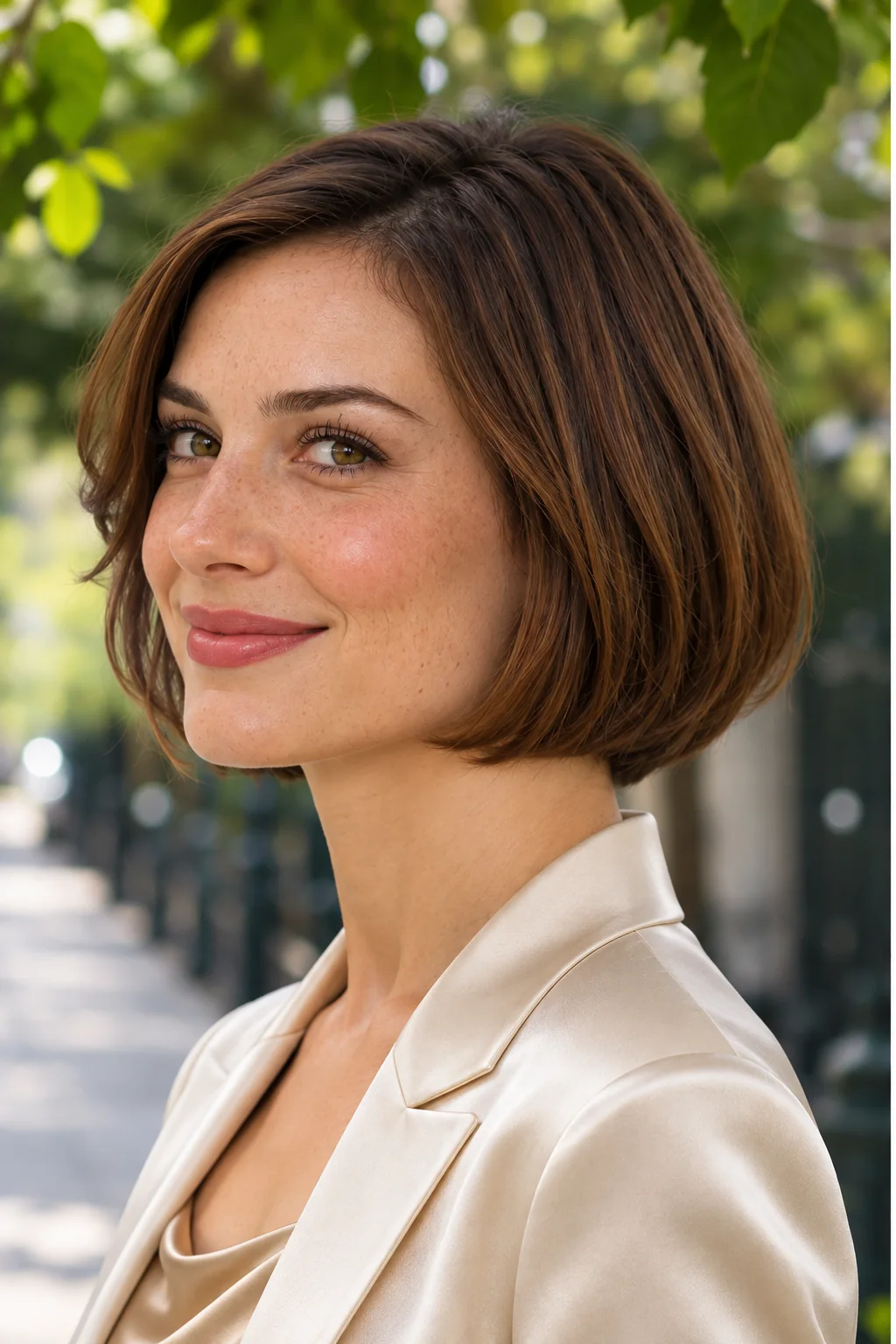
You notice the clean chin-length line first; the small curve above the nape is the quieter detail that makes this bob sit so neatly. Keeping the graduation low leaves the sides substantial, a useful starting point for fine straight hair when you want a defined edge without a high stack. That tidy outline can feel reassuringly polished on mornings when you have little time, although a cowlick at the nape may still need a quick brush and dryer.
Ask your stylist for: Keep the front at my chin with a nearly level perimeter, and graduate only the lowest back section into a soft curve.
2. The Jaw-Hugging Rounded Bob
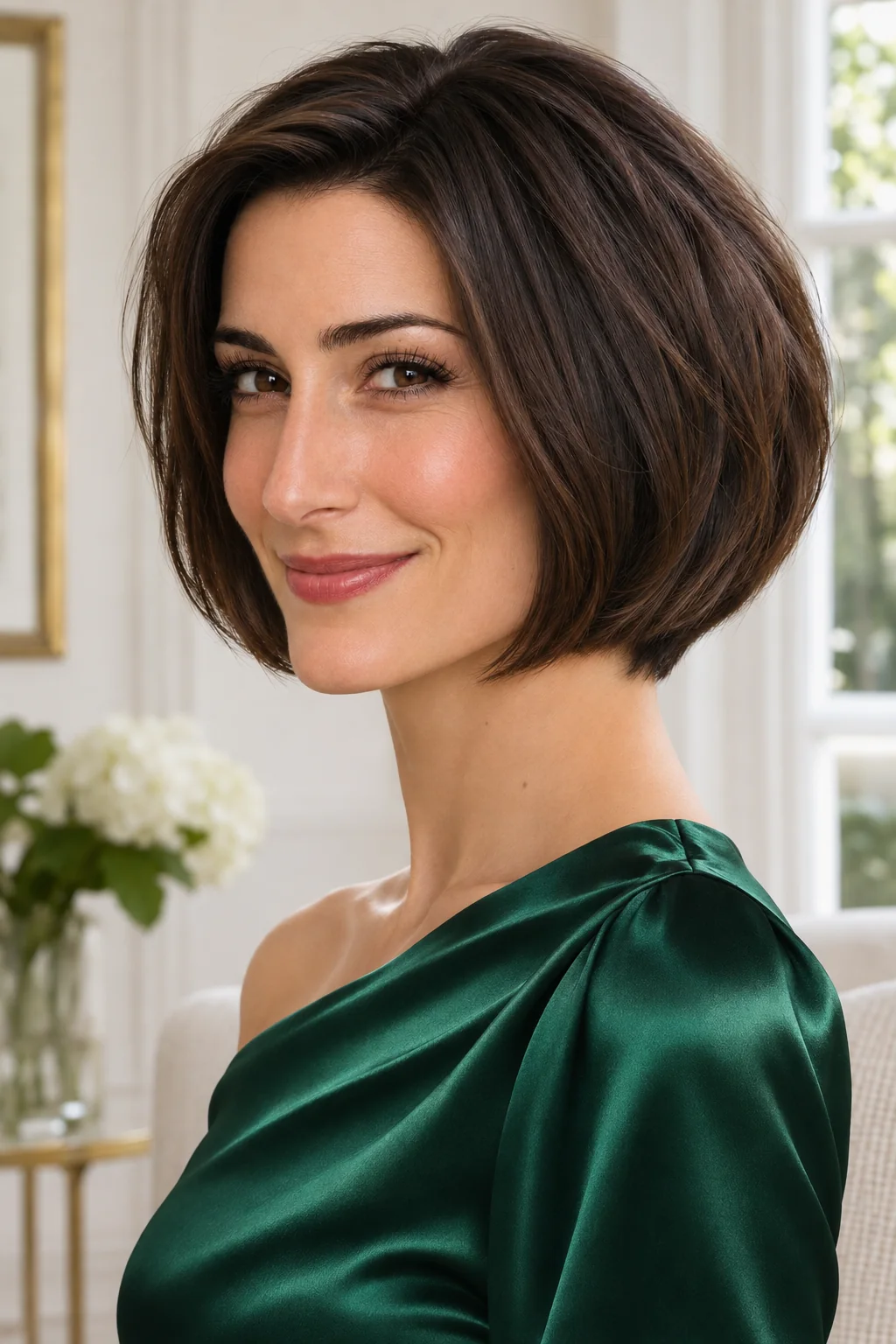
Full sides cup the jaw here, meeting a rounded back rather than running forward into sharp points. If your face is narrow, that width can bring a welcome sense of balance, and the tucked-under edge gives the cut a composed, almost sculptural mood. It suits someone who enjoys a smooth finish, because a small round brush helps guide the ends inward; hair that naturally kicks out may need more attention than the photograph suggests.
Ask your stylist for: Build a rounded back and keep enough side weight to cup the jaw, with a soft edge and no pronounced forward slope.
3. The Higher Stack With a Clear Nape
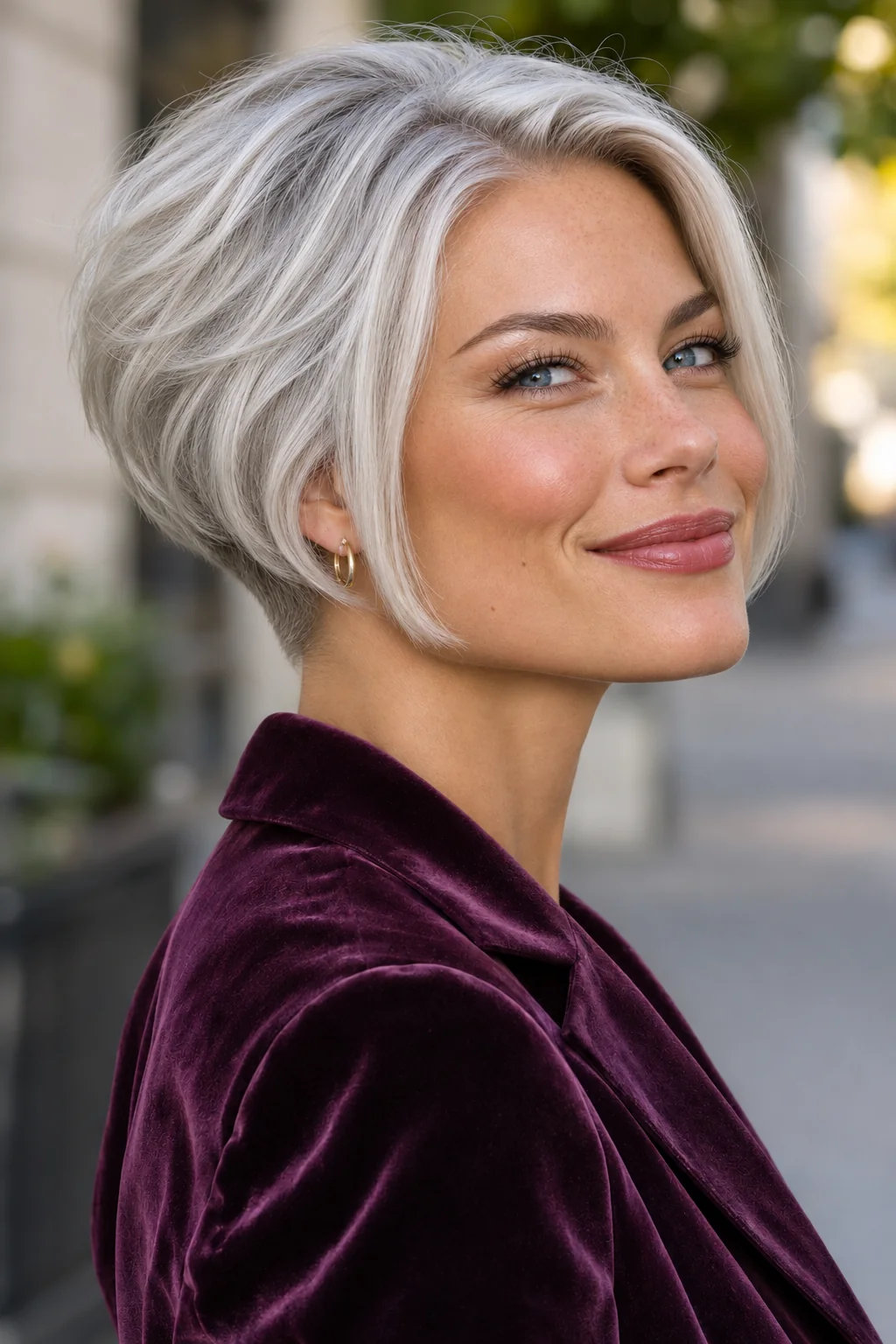
Here the rounded fullness sits higher at the back, leaving a clear stretch of nape beneath it. The shorter underside takes hair off your collar and gives the profile a brisk, confident character, while the solid side panel keeps it recognizably a bob. This is a stronger choice for someone comfortable with regular reshaping: as the nape grows, the contrast between the fitted underside and fuller back becomes less crisp.
Ask your stylist for: Place the graduated fullness higher at the back, expose the lower nape and keep a solid jaw-length side panel.
4. The Longer Bob With a Low Nape Curve
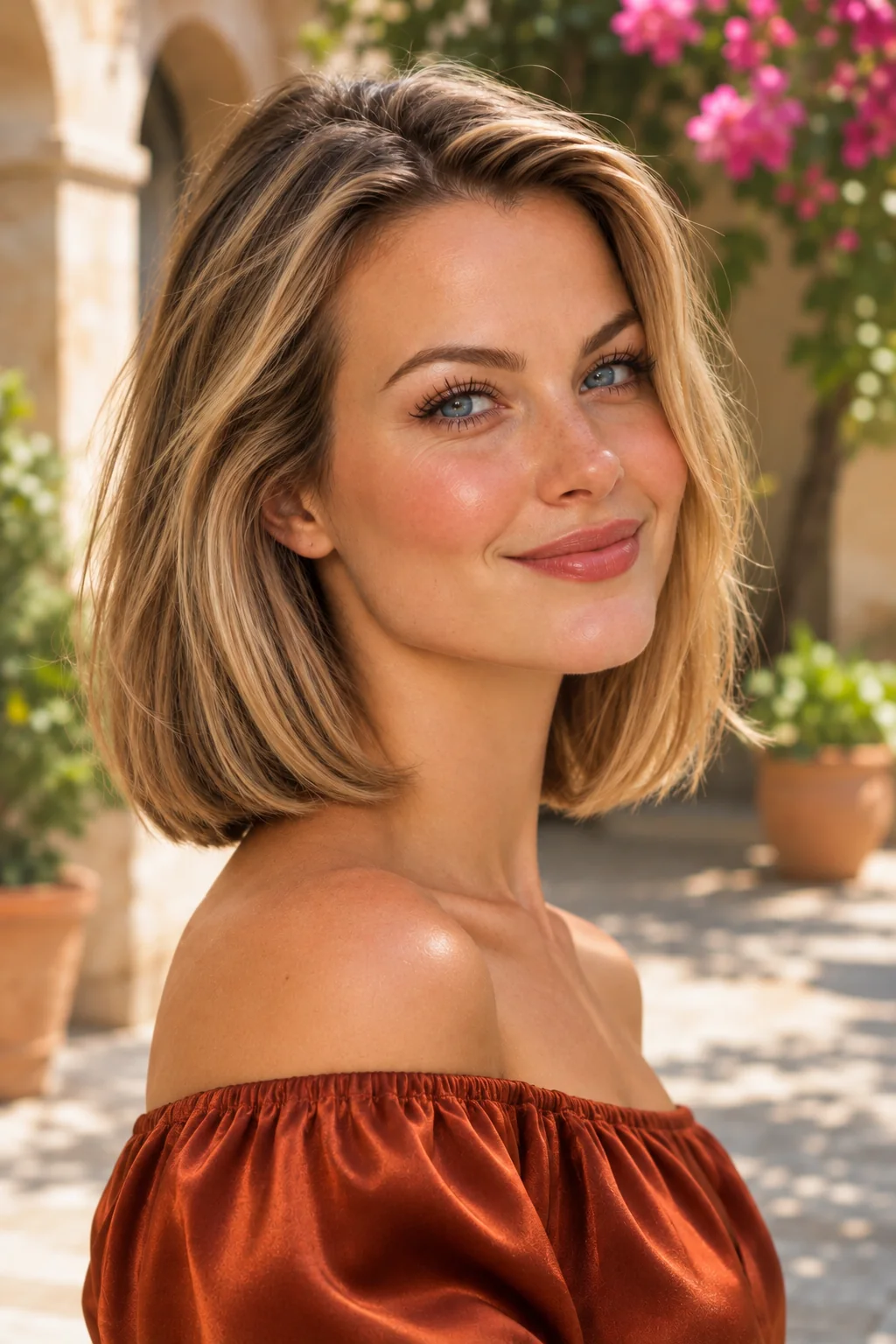
If a short nape feels like too big a leap, this longer bob keeps its edge near the base of the neck and builds just a little support above it. The extra coverage can make the change feel comfortable, and it leaves more hair to tuck behind your ears while still giving the back a deliberate shape. Check the length against your favorite jacket: ends that land on a collar may flip, so a sleek finish can take a few minutes with a brush.
Ask your stylist for: Leave the edge at the base of my neck and build a small graduated curve low at the back, without steeply lengthening the front.
Pause and notice: Cover the face in each photo for a moment and compare the backs. Where does the fullness sit, and how much nape shows beneath it? Those two details often explain why one graduated bob feels right and another feels too short.
5. The Full-Edge Bob for Fine Hair
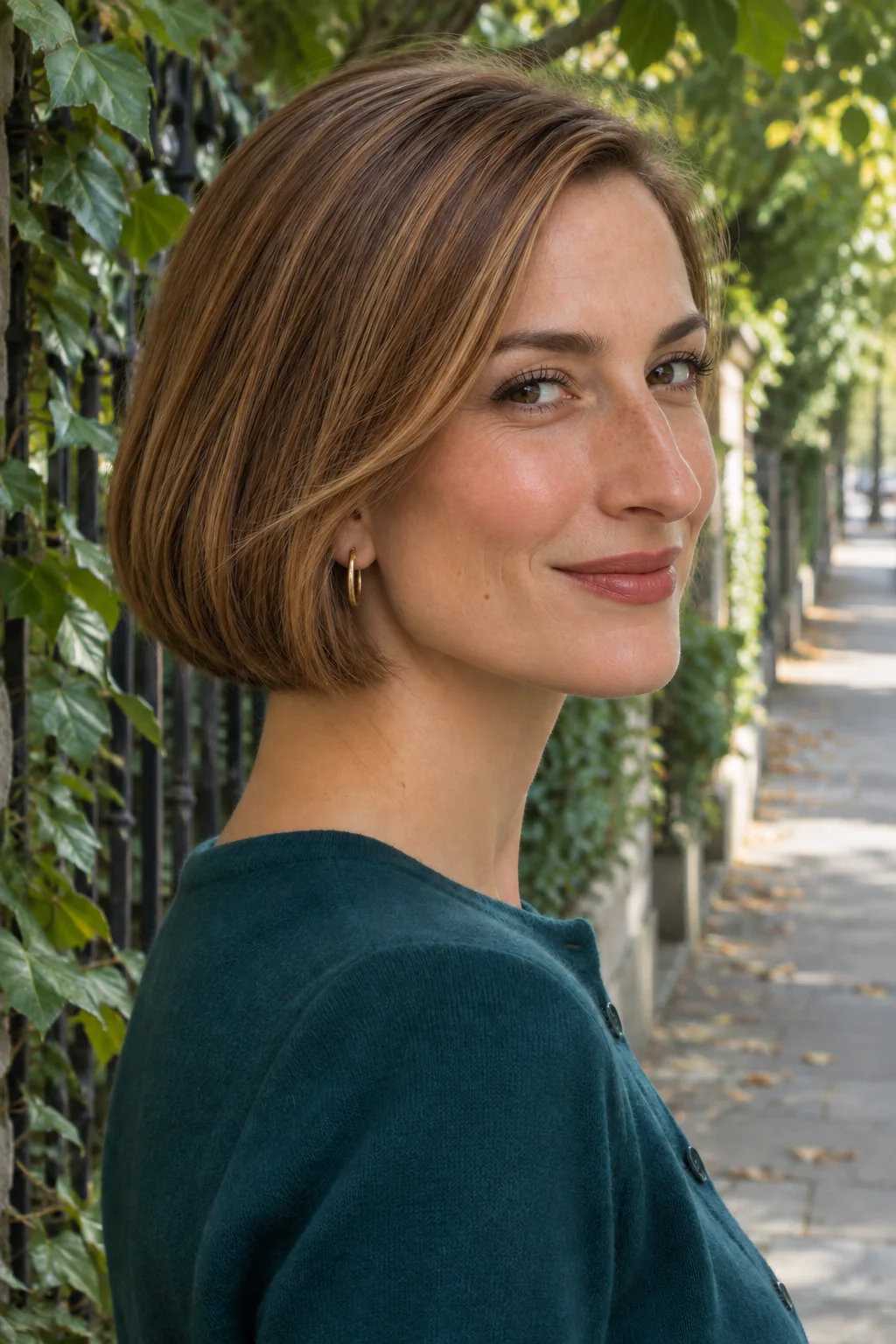
The important detail in this fine-haired bob is what has been left in: a solid line at the sides and bottom, with restrained graduation doing the shaping behind it. That fuller-looking edge can make the cut feel more substantial without asking you to build a towering crown every day. A small amount of lightweight styling product may help the roots hold their direction, but too much can separate the ends and undo the effect you liked.
Ask your stylist for: Protect the side and perimeter density, use restrained low graduation at the back and avoid thinning the ends.
6. The Graduated Bob With a Full Fringe
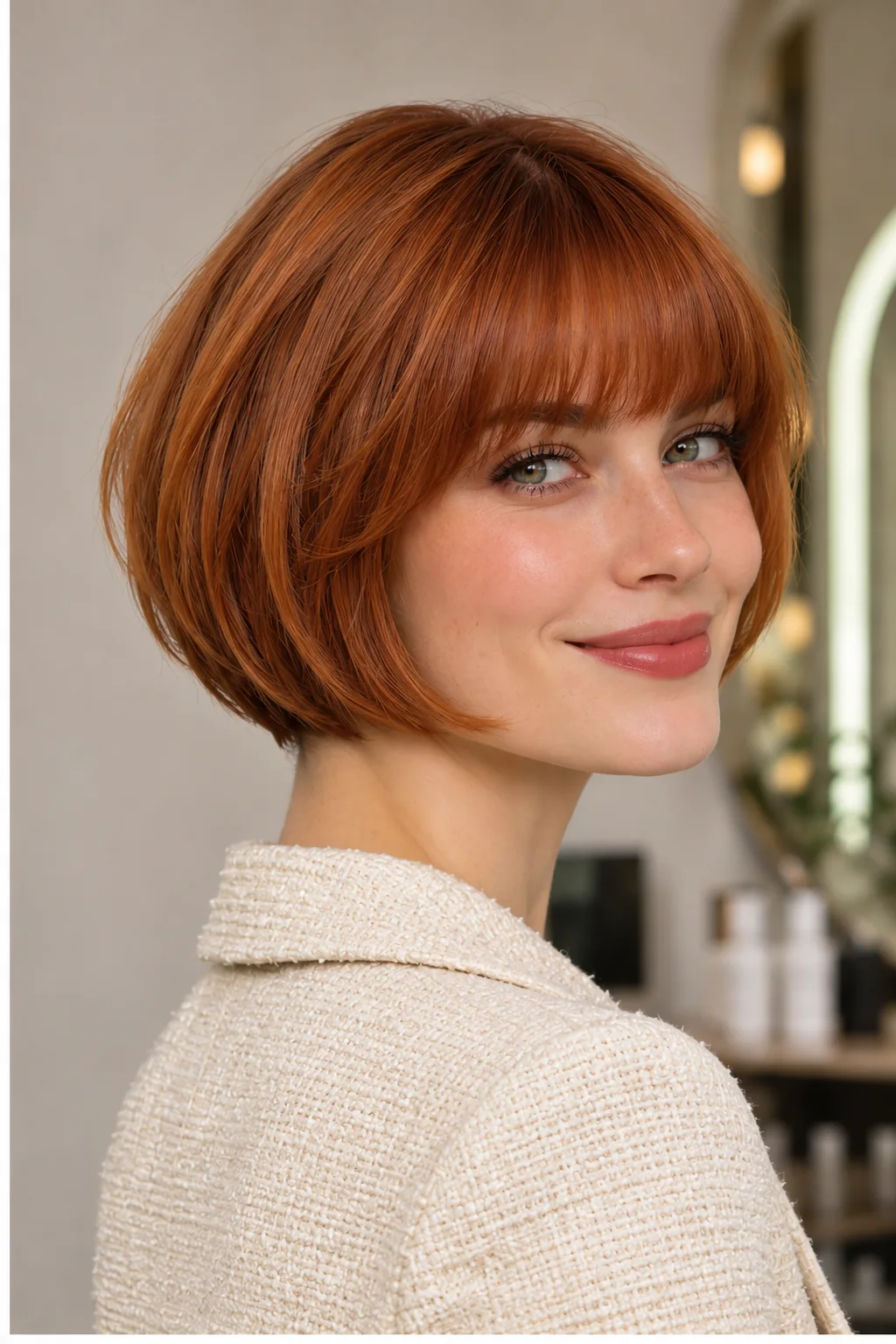
A full brow-skimming fringe gives this rounded jaw bob a clear frame around the eyes. It can shorten the impression of a long forehead, while the supported back stops the silhouette from feeling flat in profile; together they create a self-possessed, slightly playful mood. The tradeoff is that the fringe becomes part of your morning routine, especially if the front hairline has a strong growth pattern or gets oily quickly.
Ask your stylist for: Keep a full brow-skimming fringe with softened corners and a graduated rounded back, leaving the jaw-length sides substantial.
7. The Soft Side-Fringe Bob
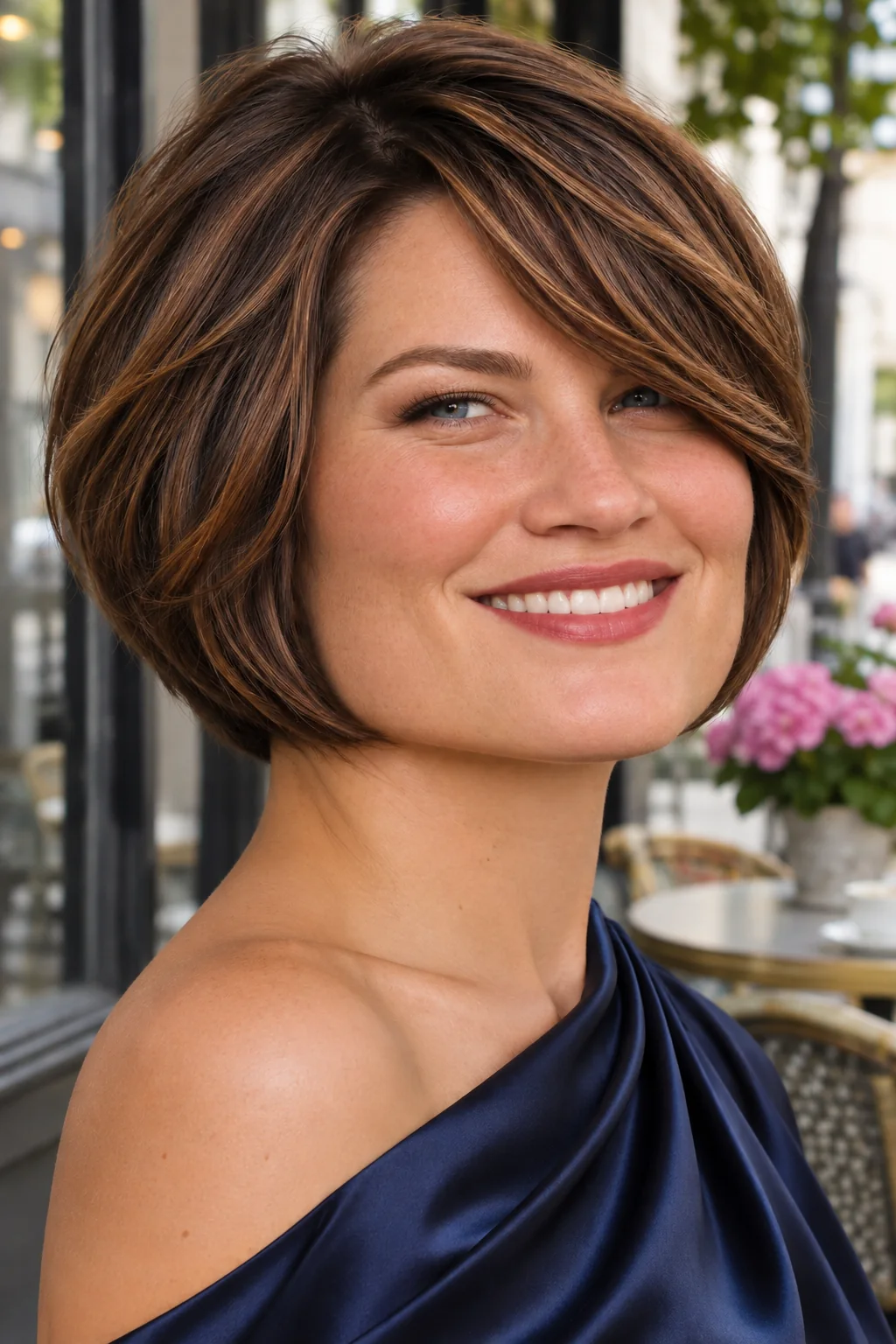
Instead of a solid horizontal fringe, a long diagonal section crosses one brow and blends toward the cheek. That broken line can soften the impression of an angular forehead, and the compact graduated back keeps the whole cut feeling light enough for an easy, quietly elegant finish. It is a useful compromise if you like coverage but dislike a fringe that needs trimming every time it reaches your eyebrows, though the longer piece may still fall across your eye.
Ask your stylist for: Create a long diagonal fringe that blends into one cheek-length side, with a compact graduated back and no steep front points.
8. The Dense Bob With a Close Undernape
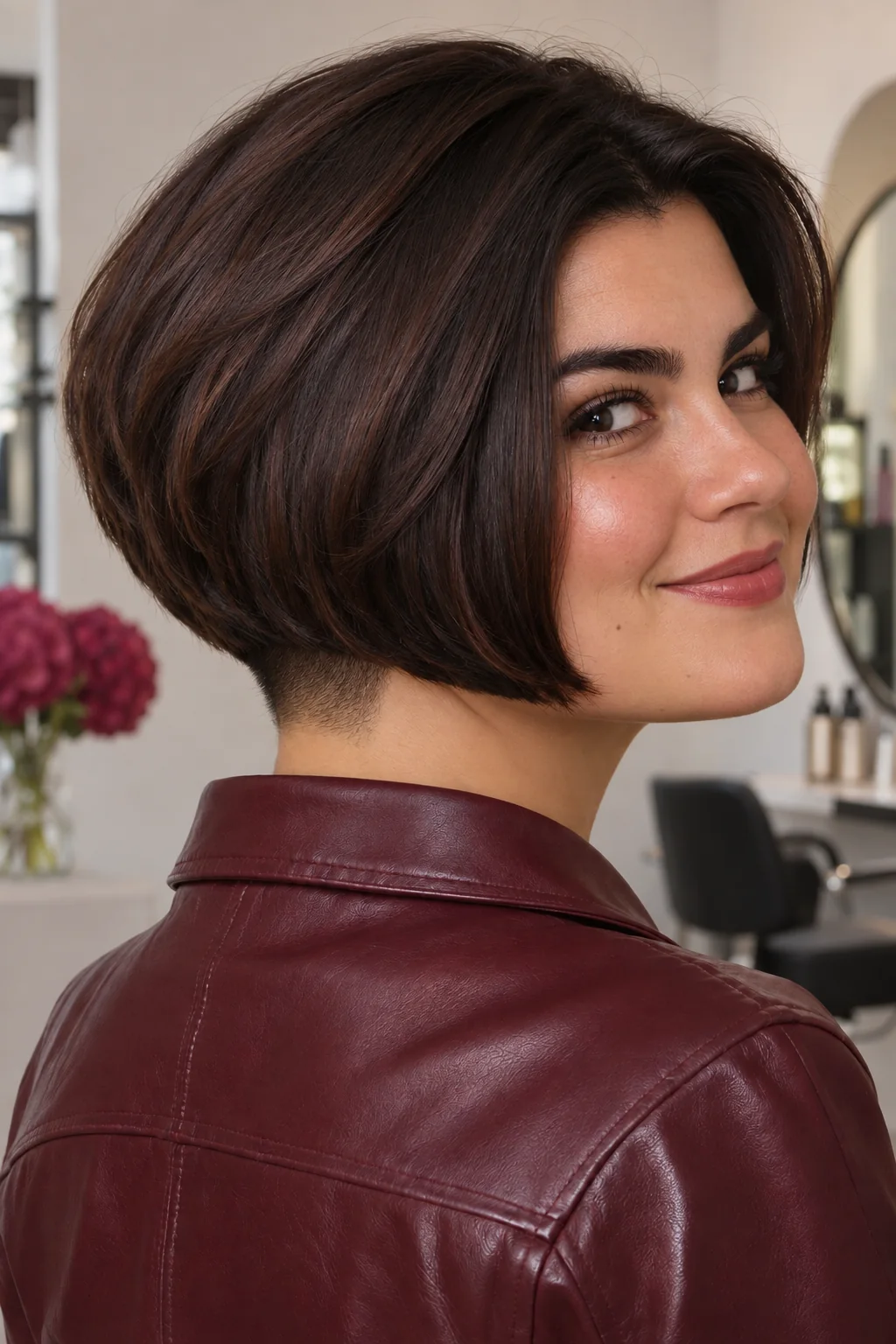
A narrow, closely clipped undernape gives dense hair some breathing room beneath this full rounded bob. The contrast can feel pleasantly bold without taking away the generous side coverage, and less hair against the neck may be welcome if that is where your cut usually feels bulky. It is a commitment you will notice as it grows: the short underside can need separate tidying, and it may show more when you tuck or lift the top.
Ask your stylist for: Keep the graduated bob shell full and remove a narrow strip of bulk at the undernape, checking how much will show when I move.
Pause and notice: A smooth finish makes every line easier to see, but your everyday texture matters more than the blowout. Bring a photo of your hair on an ordinary day so your stylist can judge which shape will work between appointments.
9. The Wavy Bob With a Rounded Back
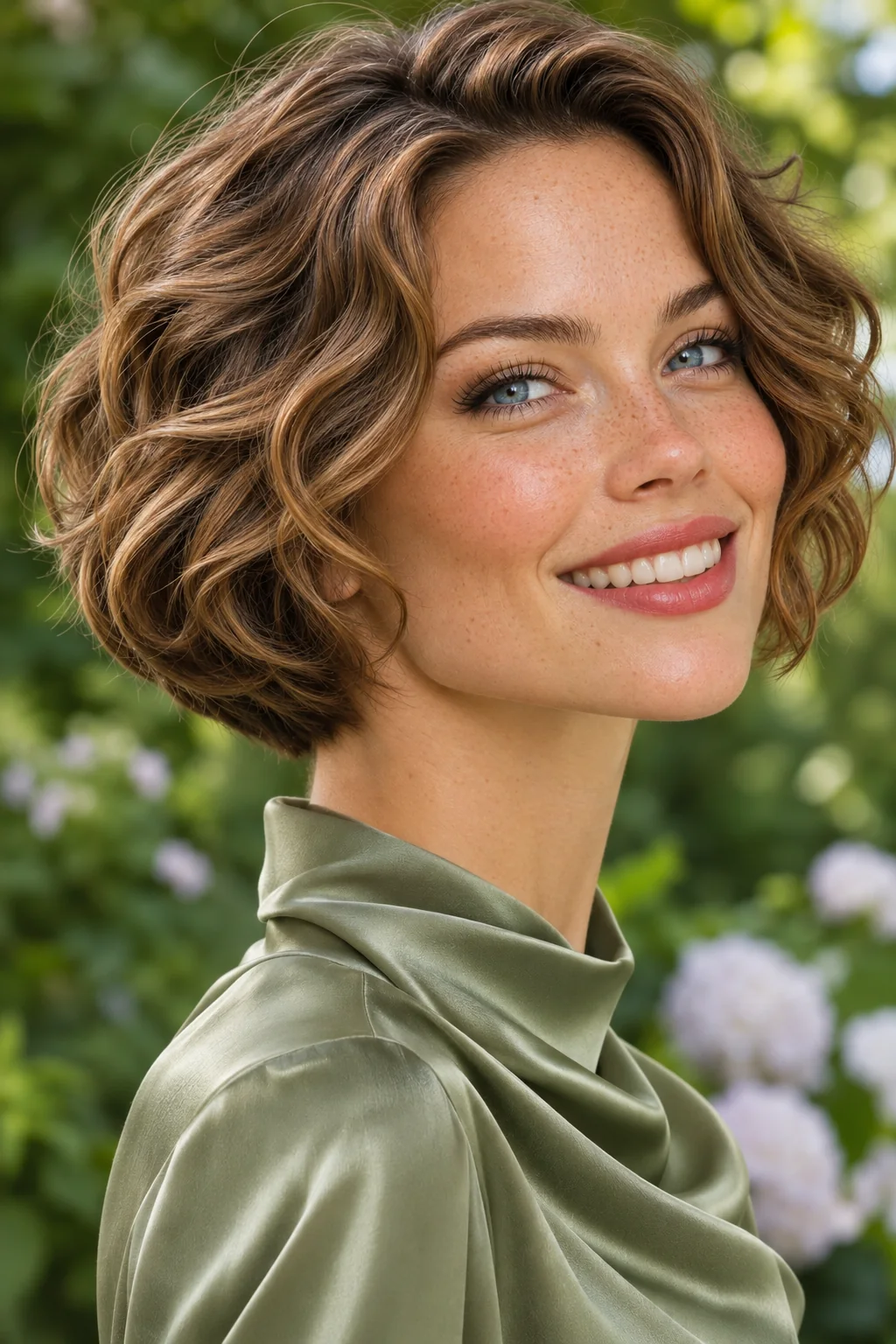
Loose natural bends make the rounded back feel softer and less architectural, with little waves opening around the jaw. If your hair already moves this way, working with the pattern can give you a relaxed, put-together mood without chasing a perfectly smooth surface. Leave enough length for each bend to form, then try scrunching a light hold product into damp hair and letting it settle; the outline will look different from a salon blowout.
Ask your stylist for: Shape the graduated back around my natural wave and check the dry jaw length, keeping enough weight for the bends to join.
10. The Curl-Shaped Graduated Bob
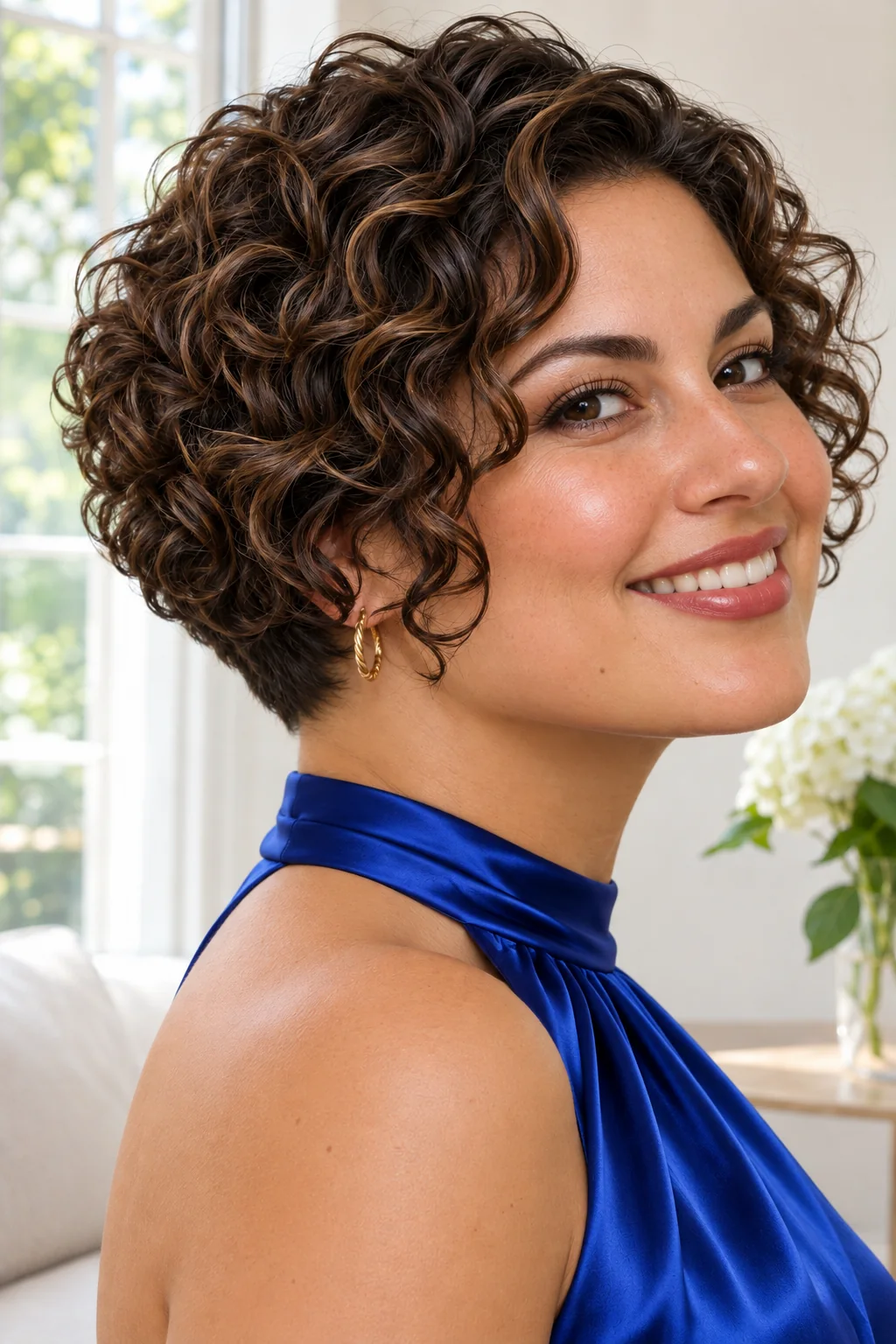
Defined ringlets give this bob a buoyant outline, with longer curls around the jaw and a shorter, fitted nape underneath. That clear lower shape can stop a curly bob from feeling bottom-heavy, while the lively side volume brings a cheerful, expressive quality to the cut. The result depends on your own shrinkage and curl pattern, so this is a photograph to discuss rather than a length to copy strand for strand.
Ask your stylist for: Keep longer curls around my jaw and a shorter fitted nape, checking the dry spring and back width before removing more length.
11. The Graduated Bob With One Shorter Side
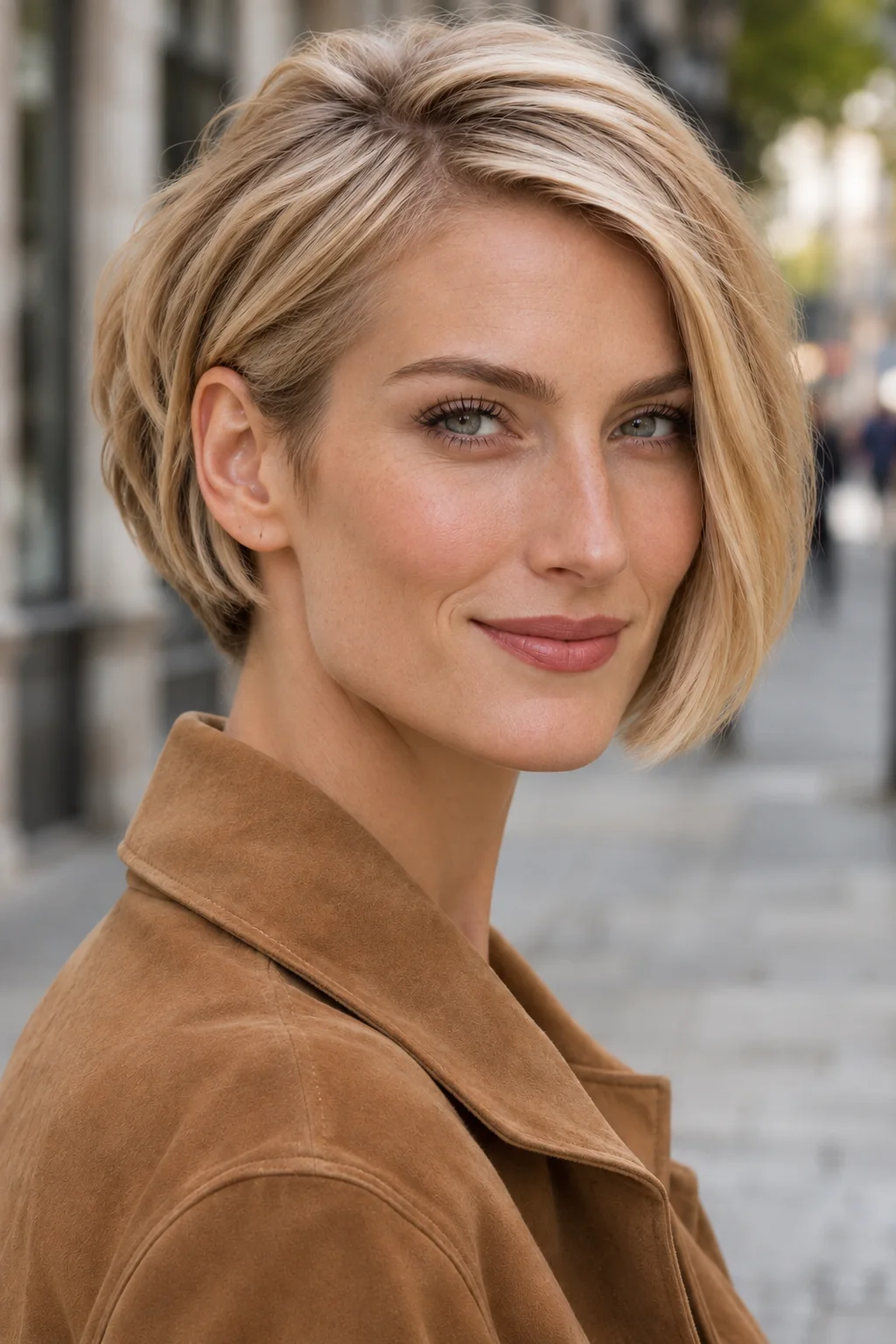
One side finishes near the cheekbone while the opposite side reaches the jaw, so the asymmetry is built into the cut rather than borrowed from a dramatic forward slope. The open shorter side draws attention to that cheek and earring, giving a familiar bob a bolder, more individual feeling. Choose the exposed side with your usual part and glasses in mind, because changing the part later can disturb the intended balance.
Ask your stylist for: Cut one side to my cheekbone and the other to my jaw, joining both into a rounded graduated back rather than an all-over forward angle.
12. The Graduated Bob With a Soft Layered Top
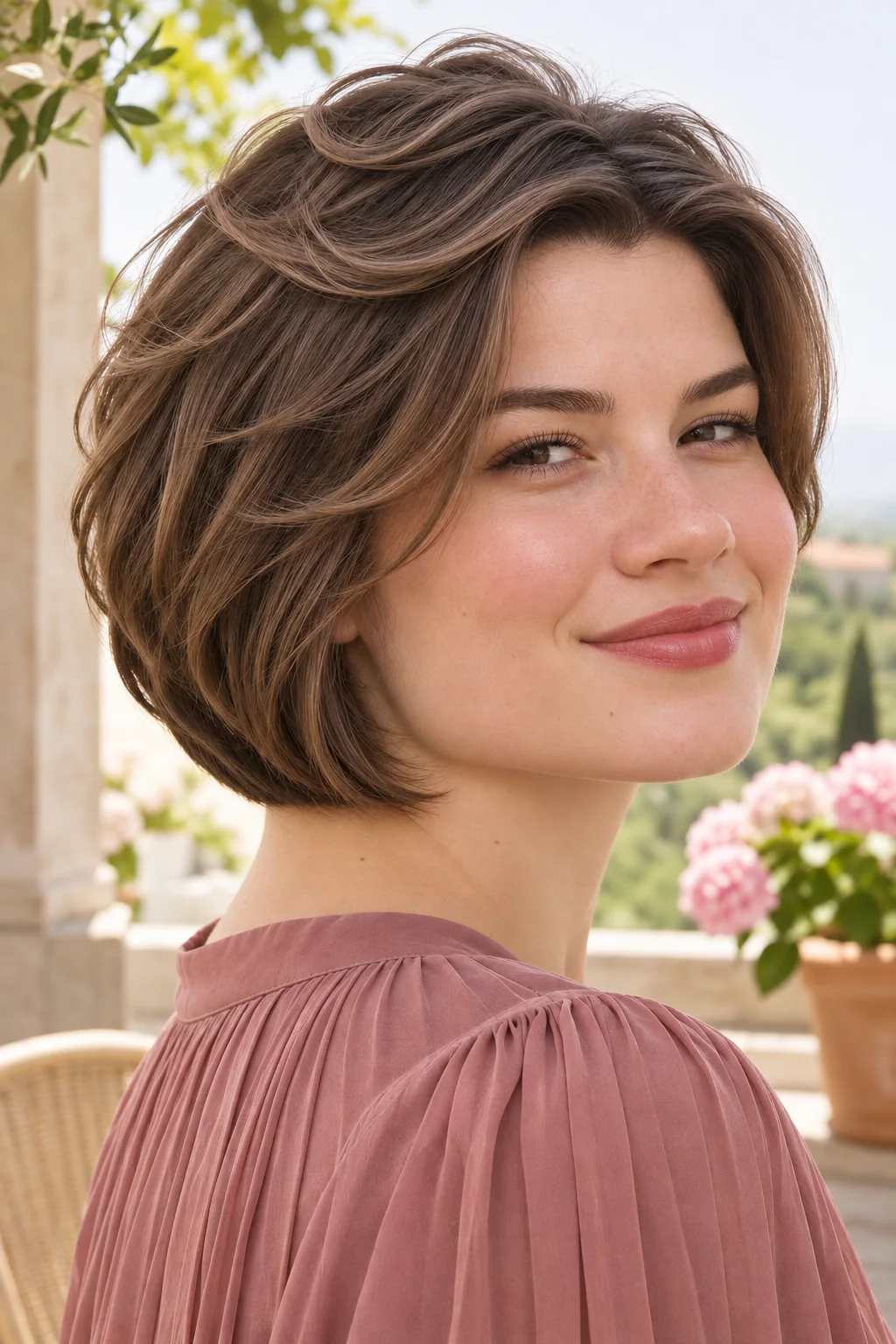
Soft connected layers through the top let the surface move, while the graduated lower back and solid neck-length edge keep the bob's structure visible. For hair with enough density, that combination can make a rounded shape feel less rigid and give you a breezy, approachable finish when you run your fingers through it. It is less useful if your main concern is see-through ends, so ask how much density the layering would remove before committing.
Ask your stylist for: Keep the neck-length perimeter solid and the lower back graduated, adding only connected top layers for movement without a shaggy outline.
Before You Book the Appointment
A successful salon visit begins with the overall shape, construction and upkeep—not only the finished length. Use this quick reality check before choosing your final reference photograph.
- Fine or lower-density hair: Start by protecting a solid perimeter. Low graduation can add shape, but a high stack can expose a sparse nape or leave the front looking thin.
- Dense straight hair: A graduated back can control the outline. Ask where weight will be removed and where it will remain so the shape does not become wider than you want.
- Waves and curls: Choose the dry length and the amount of width first. The same graduation behaves differently when curls spring up or waves bend at the neckline.
- Face and feature balance: A fuller jaw-length side can add width to a narrow face; a longer open front can leave more vertical space around the cheeks. Use these as options to try, rather than rules you have to follow.
Is a Graduated Bob the Same as a Stacked or Inverted Bob?
The names overlap in salons. Graduation describes the buildup of weight from shorter underneath to longer above; stacked usually emphasizes the visible rounded layers at the back. Inverted often means a shorter back and longer front, though stylists use it differently. Instead of relying on the label, show the back curve, the side length and the amount of forward angle you want. You can ask for graduation with an almost level perimeter.
What Should I Show My Stylist?
Take a front reference and a side or rear reference. Point to the shortest nape length, where the rounded fullness sits, where the front lands and how much ear you want covered. Mention your natural part, nape cowlicks, glasses and usual styling tools. Ask what the cut will look like with your own texture and how it will change if you skip the round brush.
How Do You Style the Back Without Making It Too Big?
Start with the finish you want. For a smooth shape, guide the nape close to the head as you dry, then curve the fuller section above it with a brush rather than lifting every root. Use heat protection when using hot tools and follow the product instructions. For waves and curls, apply a suitable hold product to damp hair, arrange the pattern gently and let it dry before separating only the sections that need it.
How Often Will It Need Reshaping?
Ask your stylist to suggest a trim interval based on the nape, fringe and how crisp you like the outline. A higher stack, clipped undernape or full fringe generally shows growth sooner than a longer, low-graduated shape. If the back starts to feel bulky before the sides need shortening, ask whether a small nape tidy would help without resetting the whole cut.
Can You Grow Out a Graduated Bob?
Yes, but the shorter underside has catching up to do. As it grows, the back may feel heavier and the original curve may sit lower. Tell your stylist whether the goal is a more one-length bob or extra length overall; keeping the longer sections while gradually softening the graduation can make that transition feel more intentional. Avoid automatically rebuilding a high stack at every appointment if your aim is to grow it out.
The Takeaway
Save the photo with the back shape you love, then find the front length that fits your own routine. Being able to say “this much curve, this much nape and no longer at the front” is more useful than finding the perfect salon label.
More Hair Inspiration
- Stacked Angled Bob Haircuts — Compare the more directional option with longer front corners.
- Bob Haircuts That Make Thin Hair Look Thicker — Explore more ways to keep a bob's sides and ends looking substantial.