A short haircut can look perfect in a face-on photo, then surprise you when you see the back. These short hairstyles front and back view ideas show both sides of each shape so you can judge the fringe, cheek framing, crown, graduation and nape as one haircut. This is a viewing guide rather than a single named cut: a pixie sits close through the sides and back, a bob keeps a stronger outer line, and a bixie borrows the softness of both. Compare each pair before saving a salon reference, especially if you care about how the neckline grows out or how much styling the crown needs.
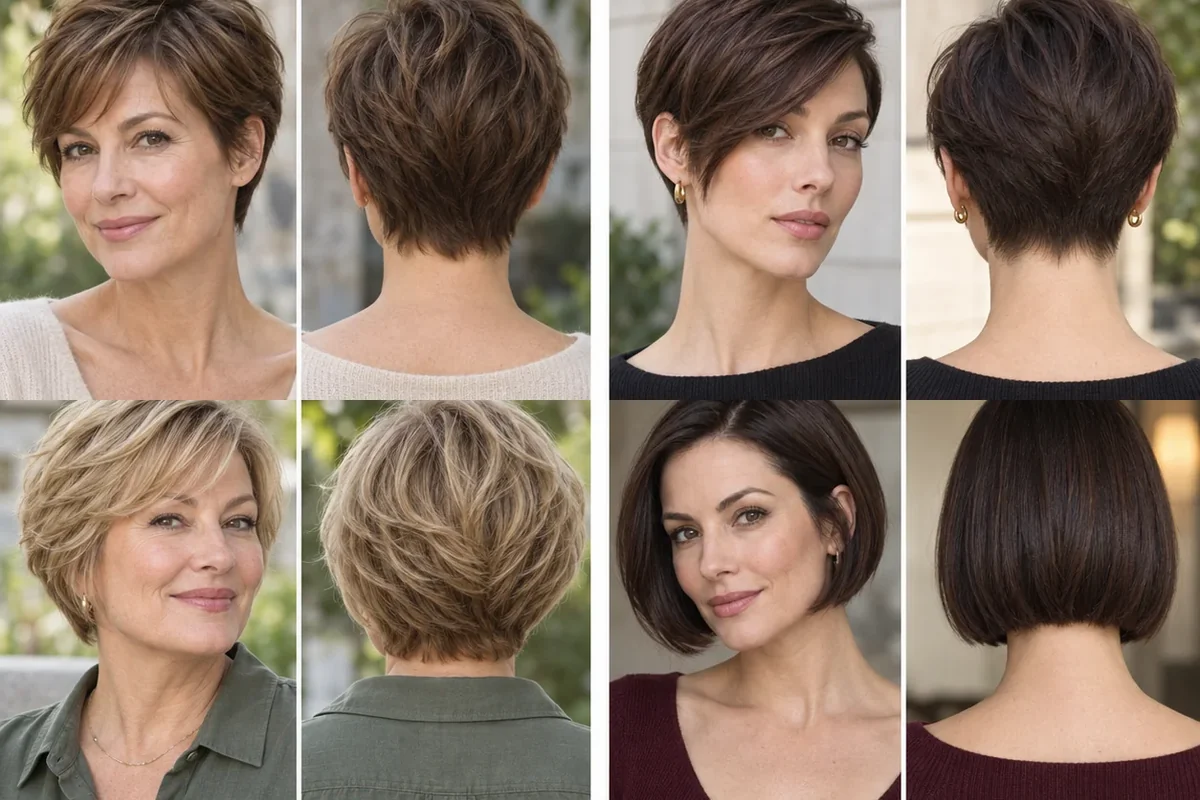
Find the one that feels like you: Start with the first look and let the photographs lead. Each style explains how the shape affects your features, the mood it creates and the exact words to take to your stylist.
Quick Facts
- Save both views of the same cut; a similar front can conceal a very different nape.
- Ask where the shortest back section will sit when the hair is dry and moving naturally.
- Fine hair often needs a firmer perimeter; dense hair may need internal weight removed rather than a higher stack.
- A cropped neckline usually needs more frequent trims than a soft bob that reaches the jaw.
1. Soft Tapered Pixie
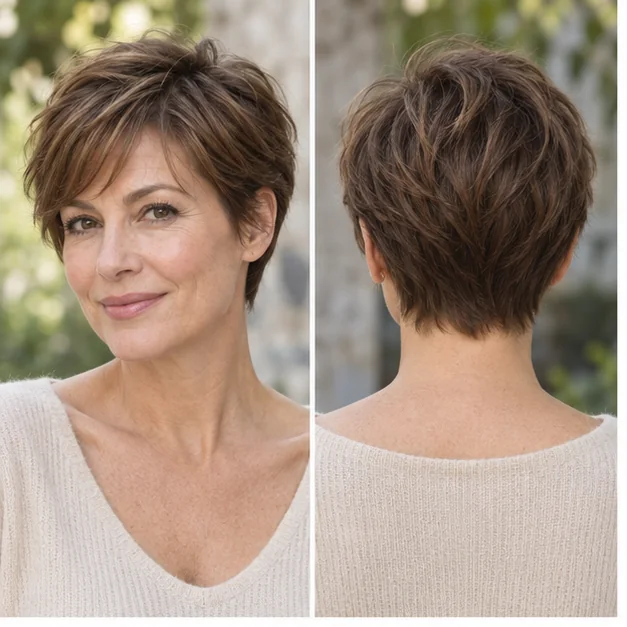
From the front, a soft tapered pixie has a loose, eyebrow-skimming fringe and enough temple coverage to keep the face open without making the cut severe. Turn around and the hair gradually narrows toward a neat, feathered nape rather than ending in a hard clipper line. That taper gives the crown a little lift, which can make fine hair look fuller and leave you feeling quietly polished on mornings when styling time is short. Ask for a scissor-soft taper with movable top layers and a natural neckline; work a pea-size amount of cream through dry hair, and expect the back to need tidying before the fringe does.
Ask your stylist for: Keep a movable eyebrow-length fringe, soft temple coverage and a scissor-tapered nape with no hard line.
2. Long-Fringe Pixie With a Close Nape
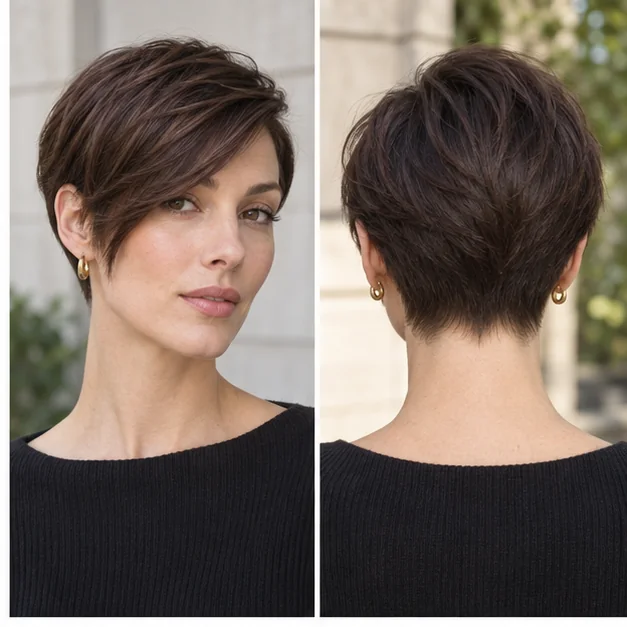
The long side-swept fringe is the star from the front, crossing the forehead and drawing attention to the eyes while the ear stays partly exposed. At the back, a close nape removes weight and makes the generous front length feel deliberate rather than grown out. It is a striking choice if you want the confidence of a cropped haircut with a little softness to tuck or sweep across your face. Ask for a long diagonal fringe and a blended short nape, specifying whether you want clippers or scissors; blow-dry the fringe in its opposite direction first, then sweep it back, and budget for frequent nape cleanups.
Ask your stylist for: Leave a long diagonal fringe with partial ear coverage, blending the crown into a close but soft nape.
3. Rounded Bixie With Feathered Back Layers
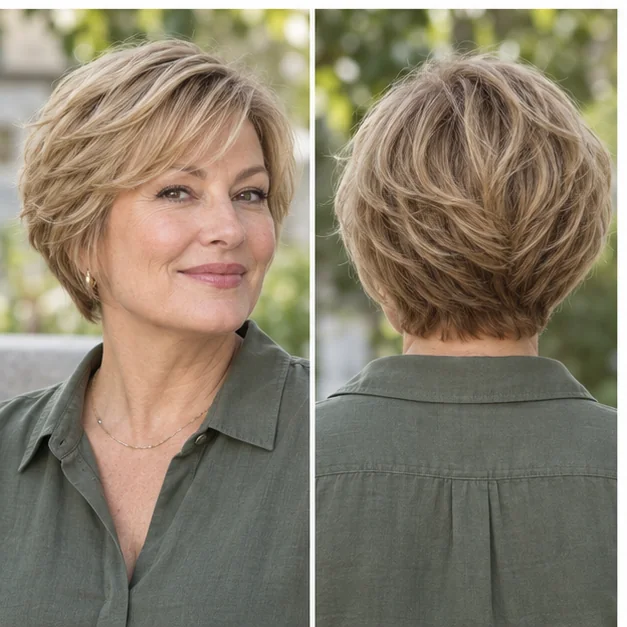
A rounded bixie falls between a bob and pixie: the front has cheek-grazing pieces and airy fringe, but the perimeter breaks into small layers instead of one solid bob line. The rear view reveals feathered layers that hug the occipital bone and finish softly at the neck. That extra movement can flatter a strong jaw and make the cut feel playful without requiring the commitment of a close crop. Ask your stylist for a rounded bixie with visible, blended back layers and enough length behind the ears to tuck; use lightweight foam to lift the crown, then let the edges fall naturally as it grows.
Ask your stylist for: Create a rounded bixie with cheek-grazing front pieces, blended feathered back layers and a soft neck finish.
4. Classic Chin-Length Bob
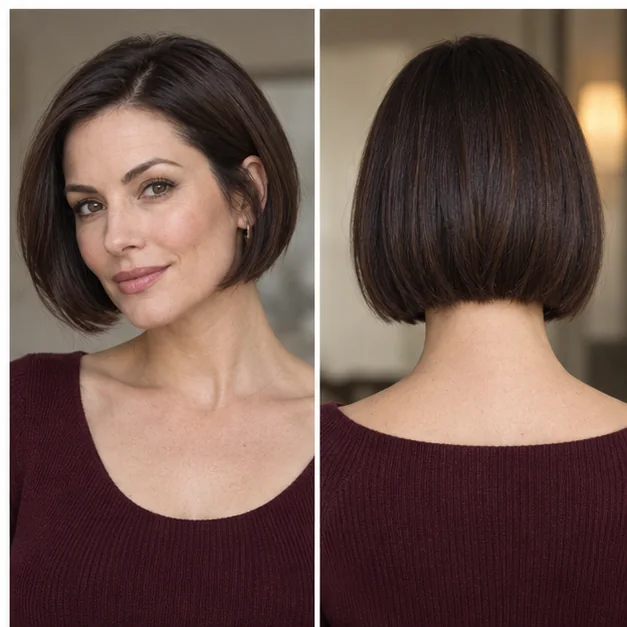
The classic chin bob draws a clean line beside the cheeks and jaw, with only a slight bend at the ends. Its back view matters just as much: the perimeter stays level and full across the nape rather than stacking upward, so the shape looks calm from every angle. That solid edge can make finer hair appear denser and give you an assured, pulled-together look with very little daily effort. Ask for a chin-length bob with a strong even perimeter and minimal internal layering, then check the dry length against your jaw; a smooth brush finish is lovely, but an air-dried bend can keep it relaxed.
Ask your stylist for: Cut a chin-length bob with a level, full rear perimeter and only enough internal removal for natural movement.
Pause and notice: Notice the back before choosing the front. A pixie, bixie and blunt bob can all frame the same cheekbones, but their napes grow out on very different schedules.
5. A-Line Bob With Longer Front Corners
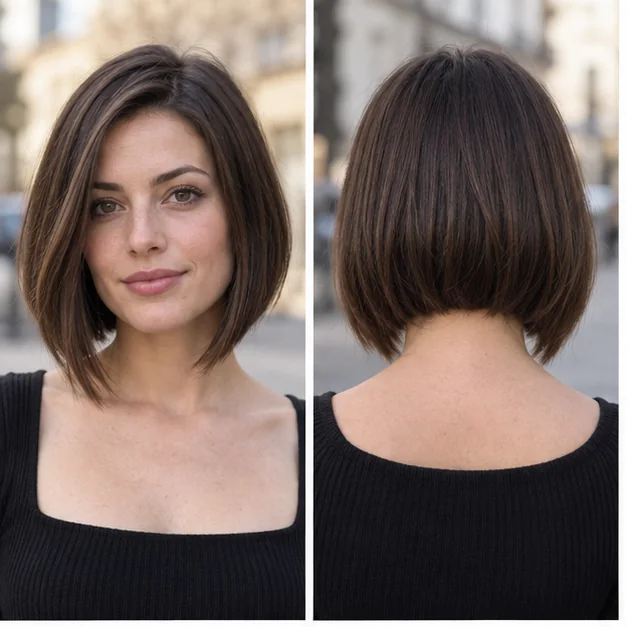
An A-line bob reaches farther down at the front corners, making two clean diagonals that frame the jaw and open the neck. Seen from behind, the line rises gently toward the center of the nape without the rounded mound of a heavily stacked bob. Those longer face pieces can feel reassuring if you are nervous about going short, while the lighter back makes the whole cut look sharper and easier to wear with a collar. Ask for a subtle A-line rather than an extreme angle, naming the shortest acceptable back length; smooth the corners downward when drying, and trim the diagonal before it becomes uneven.
Ask your stylist for: Keep the front corners below my jaw and angle to a gently shorter back without a bulky stack.
6. Graduated Bob With a Low Stack
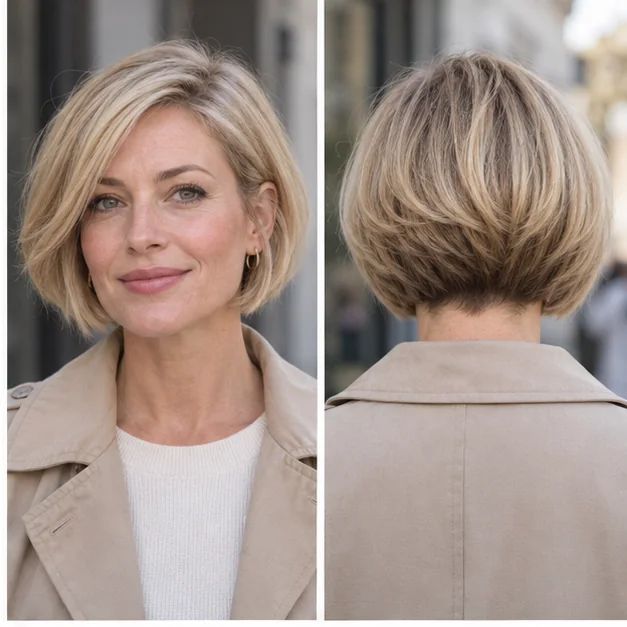
From the front, this graduated bob can look almost like a neat jaw-length classic, with soft side coverage and a tidy part. The back tells the real story: short layers build a low cushion of volume above the nape while the neckline remains close and controlled. The lift can make a flatter crown look buoyant and give you that freshly styled feeling, although it needs more precise cutting than a one-length bob. Request a low, subtle stack that preserves weight through the sides, not a high shelf; dry with a small round brush at the crown and plan regular trims to keep the graduation from dropping.
Ask your stylist for: Build a low rounded stack above the nape while keeping the front near jaw length and the side perimeter full.
7. Textured French Bob With a Soft Nape
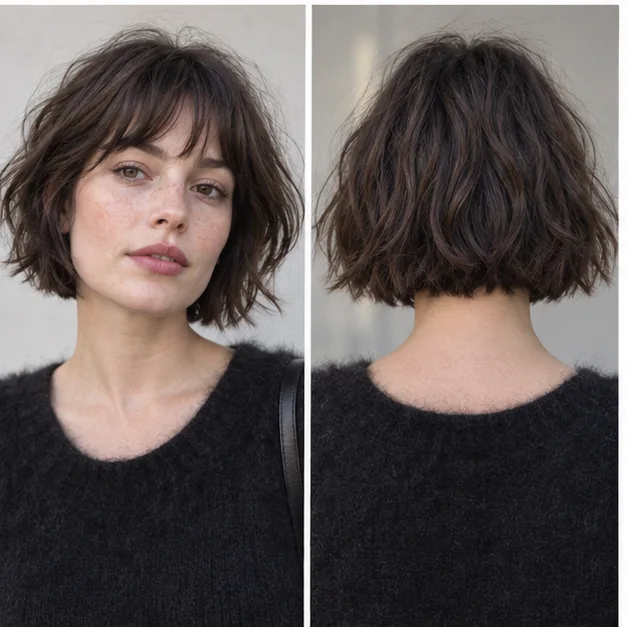
A textured French bob sits around the mouth or jaw with a loose fringe and imperfect, piecey ends that make the front look expressive rather than rigid. At the back, the hair gathers into a soft short perimeter that follows the neck instead of a stacked wedge. The lively edge can bring focus to the eyes and make a simple outfit feel instantly considered, especially if your hair carries a natural bend. Ask for a short bob with a soft fringe, point-cut ends and a clean but unstacked nape; scrunch in a little texture cream and let slight asymmetry in the waves do the work.
Ask your stylist for: Cut a mouth-to-jaw French bob with airy fringe, point-cut texture and a softly blunt unstacked back.
8. Curly Bob With a Rounded Back
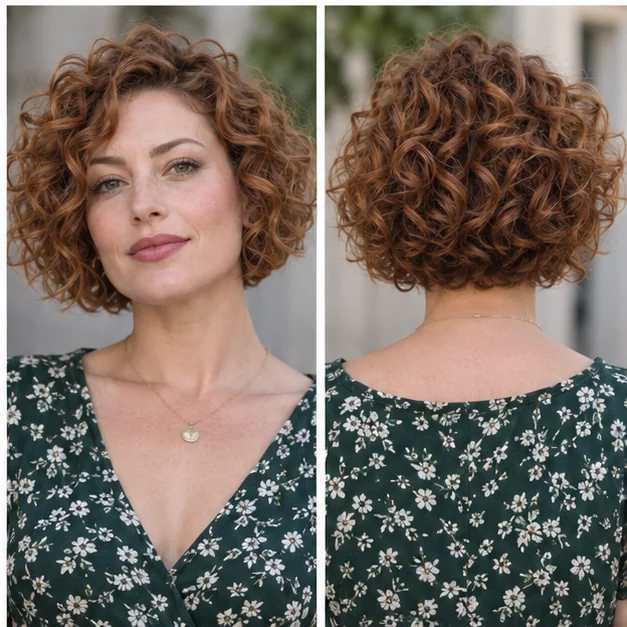
Defined curls spring around the cheeks in front, leaving the forehead open and giving the face a bright, lively frame. The back is rounded with enough layering to prevent a triangular shelf while still showing a full lower edge. That balanced shape can help dense curls feel light and intentional, and it may make you feel confident wearing your natural texture without constant heat styling. Ask for the bob to be shaped in its dry or naturally shrunken state, with curl-by-curl checks at the crown and nape; use a flexible gel on wet hair and dry completely before loosening any curl clumps.
Ask your stylist for: Shape a jaw-level curly bob in its natural shrinkage, rounding the back without thinning the lower edge.
Pause and notice: If two bobs look similar face-on, compare the rear perimeter: a level line keeps weight, an A-line rises toward the neck, and a low stack adds roundness above it.
9. Wavy Jaw Bob With an Airy Back
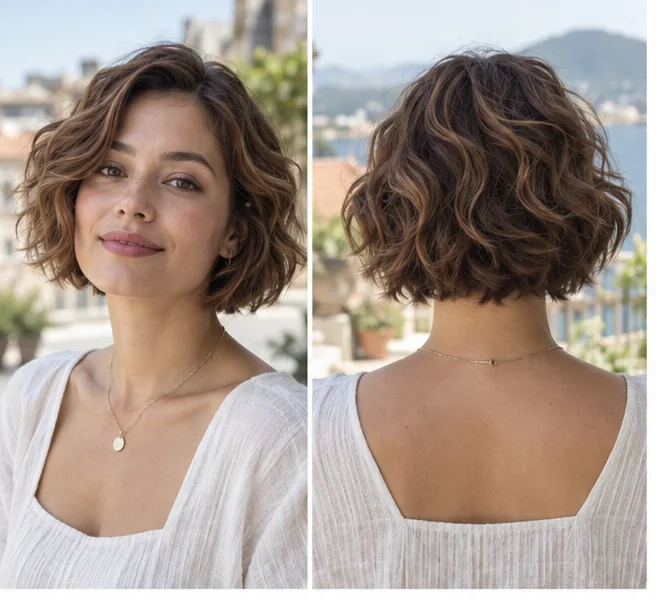
A wavy jaw bob bends away from the cheeks in front, giving the face an easy, open expression instead of a heavy curtain. Behind, subtle internal layers release weight so the waves stack loosely rather than forming one dense block at the neck. It suits someone who wants a short cut to feel relaxed and feminine through an ordinary workweek, especially when a long styling routine is unrealistic. Ask to keep a strong jaw-length outline while removing only the weight that stops your wave from forming; scrunch with light mousse and avoid brushing once the hair is dry.
Ask your stylist for: Keep a jaw-length wavy perimeter and remove hidden back weight only where it blocks natural movement.
10. Short Shag With a Wispy Neckline
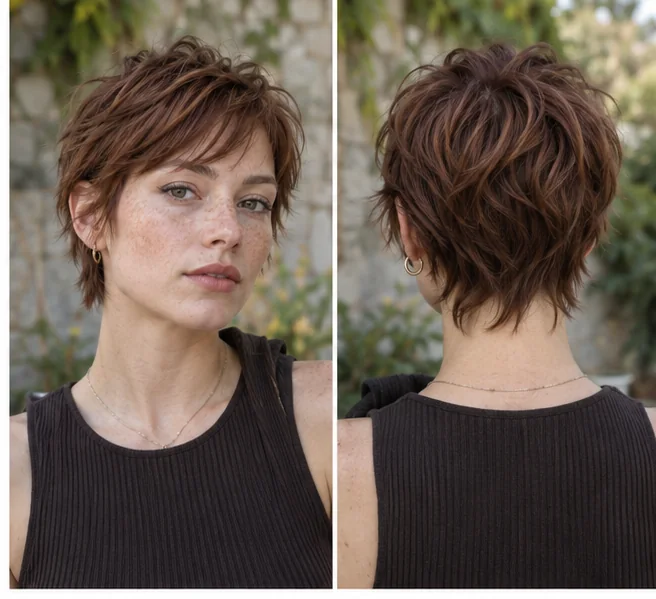
The short shag opens with separated fringe and cheekbone-length pieces, so the front looks undone in a flattering, purposeful way. From behind, short crown layers spill into a few longer, wispy pieces at the neckline rather than stopping in a straight bob edge. That shifting outline can soften angular features and give you a creative, easygoing mood without needing every strand in place. Ask for a compact shag with visible crown movement and a light, controlled nape tail; work a small amount of mousse through damp hair and check that the neckline still looks intentional between trims.
Ask your stylist for: Build a compact shag with separated fringe, crown lift and a few soft neckline pieces, avoiding a heavy mullet tail.
11. Side-Parted Asymmetric Bob
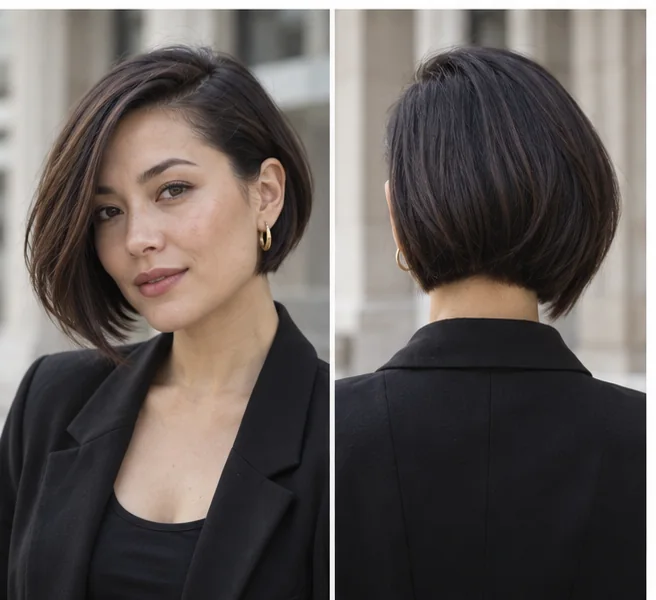
A deep side part lets one front panel sweep below the cheek while the opposite side sits closer to the jaw. From behind, the two lengths connect through a smooth, controlled line rather than looking like unrelated haircuts. The off-center frame can add definition around a rounder face and create a bold, sophisticated impression that still works in an office. Ask for a modest one-sided length difference and a continuous rear perimeter, showing exactly where each front corner should land; use a flat brush for the clean line and be prepared to reset the deep part after washing.
Ask your stylist for: Create a subtle asymmetric bob with one longer cheek-to-jaw front panel and a smoothly connected back line.
12. Blunt Micro Bob With a Clean Neckline
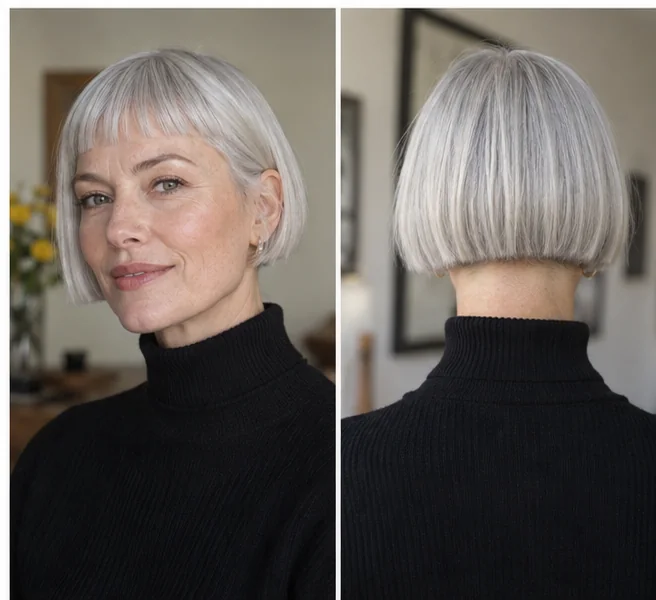
The micro bob ends above the jaw, putting the mouth and cheekbones in focus with a crisp, nearly horizontal front edge. Its back line sits high enough to expose the neck but stays straight and weighty rather than graduating into a pixie. That simple geometry can feel modern and self-assured, particularly on straight or gently wavy hair that holds a clean edge. Ask your stylist to agree on the dry length before cutting, because a centimeter changes the mood of this style; use a smoothing cream sparingly and book perimeter trims when the line begins to skim the jaw.
Ask your stylist for: Cut a blunt micro bob above the jaw with a level, clean rear edge and no stacked layers.
Pause and notice: Texture changes the outline. Save a reference with a wave or curl pattern close to yours and ask how the back will sit after a normal air-dry, not only a salon blowout.
13. Tapered Curly Crop
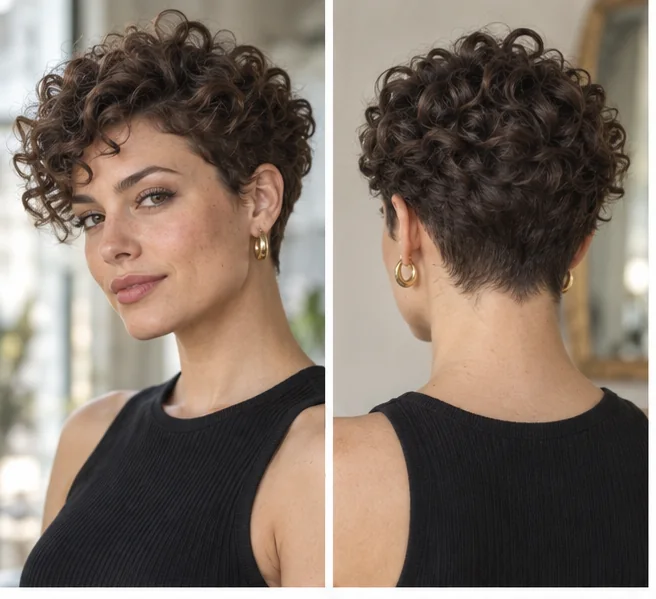
A tapered curly crop leaves springy texture above the forehead and temples while the sides stay close enough to show the face. The back narrows gradually to a short nape, which keeps the silhouette lifted instead of round all over. This can be liberating if you love your curls but want less drying time, and the open neckline gives the cut a fresh, athletic confidence. Ask for a curl-aware taper with generous top length and no tight hairline; define the top with light gel, leave the sides soft, and schedule shape maintenance before the back grows into a heavy shelf.
Ask your stylist for: Keep defined curls long on top, softly taper the sides and nape, and leave my hairline natural.
14. Ear-Length Layered Crop
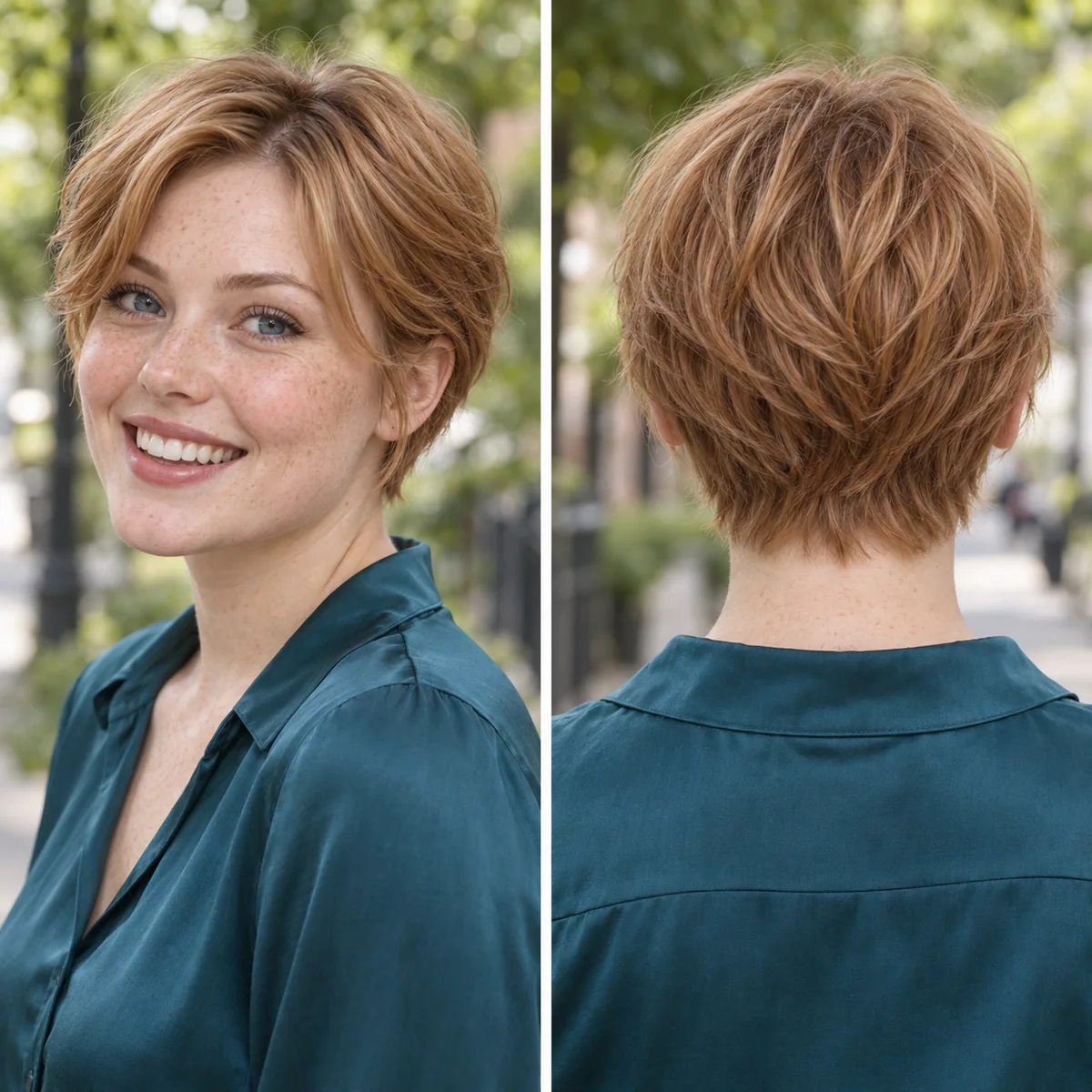
An ear-length layered crop keeps a little softness around the ears and brows, with small pieces that can be tucked or pushed forward. Turn to the back and the layers follow the head shape, ending in a lightly textured edge above the collar. That middle ground can make a first short haircut feel approachable while adding movement to thick hair that would otherwise sit like a cap. Ask for scissor-cut layers with no disconnect between crown and nape, and keep enough weight near the temples for your preferred coverage; a little paste at the ends is usually enough for everyday shape.
Ask your stylist for: Leave ear-skimming side pieces and connected scissor layers that taper to a lightly textured neck edge.
15. Sleek Short Bob With an Undercut Nape
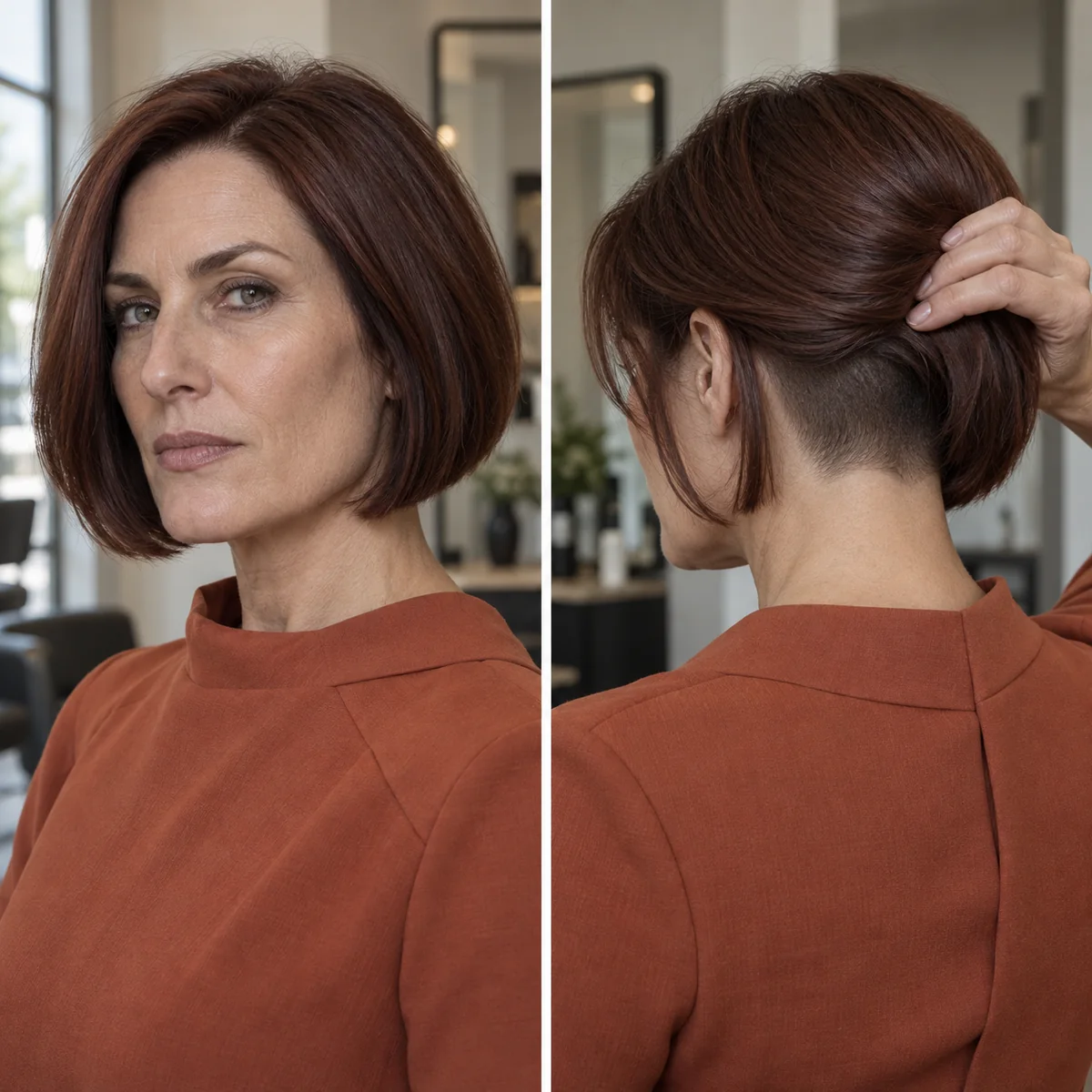
From the front, this looks like a sleek jaw-level bob with a firm edge and polished side panels. Lift the back and a concealed undercut removes bulk at the lower nape, helping dense hair lie closer to the neck without changing the visible outer line. The hidden detail can feel pleasantly clever and make blow-drying easier if your hair tends to flare outward. Ask for a narrow, low undercut beneath a full cover layer and agree on how much will show when you tie or tuck the hair; the shaved section needs more frequent upkeep, and its grow-out can create a temporary thick band.
Ask your stylist for: Keep the outer bob full and jaw length, with only a narrow concealed undercut low at the nape.
16. Soft Silver Pixie Bob
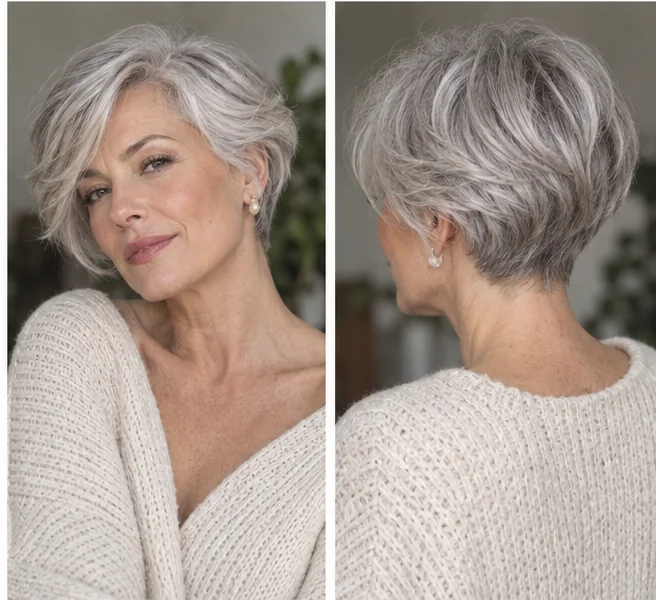
A silver pixie bob keeps sweeping, face-softening pieces through the front and a little volume above the ears, so it does not read as a severe crop. The back rounds gently over the crown before tapering to a soft nape, revealing enough structure to keep the whole shape light. That balance can feel elegant and current while making natural silver texture the feature; it also offers more growing-out room than a very short pixie. Ask for a connected pixie bob with a softly rounded back and longer front pieces, then use flexible hold rather than stiff spray to preserve the hair's movement.
Ask your stylist for: Cut a connected silver pixie bob with sweeping front pieces, gentle crown roundness and a soft tapered nape.
Before You Book the Appointment
A successful salon visit begins with the overall shape, construction and upkeep—not only the finished length. Use this quick reality check before choosing your final reference photograph.
- Best for: Anyone deciding on a short cut who wants to understand face framing and the back silhouette before committing.
- Choose by: Front length, crown height, side coverage, nape exposure, natural texture and how often you can trim.
- Everyday effort: A soft bob may air-dry with minimal help; a close pixie or sculpted stack often needs quick daily shaping and regular neckline care.
- Salon rule: Bring a front and rear reference and agree on the dry neckline, not just the face-on fringe.
What the Front and Back Views Tell You
A front view shows where the fringe, side pieces and outer edge meet your face. The back shows the hidden construction: a level bob perimeter, a graduated stack, a tapered crop or a layered shag. Two cuts with similar cheek framing can need very different salon upkeep once you see their necklines. Save a paired reference of the same haircut rather than mixing an appealing front from one cut with an unrelated back from another.
Match the Shape to Your Hair
Fine hair often looks fuller with a stronger outer edge and restrained layers. Dense hair may sit better with hidden weight removal, while natural curls need to be judged at their actual shrinkage and spring. Your growth pattern at the crown and nape matters too: a cowlick can push a close back outward, and a low hairline can change where a crisp edge lands. Ask your stylist to check the finished shape on dry hair from all angles.
What to Ask at the Salon
Show the stylist both views and describe the front length you need for tucking, the amount of ear coverage you prefer and how exposed you want your neck. Ask whether the back will be blunt, stacked, layered, tapered or undercut, and how that choice will look after six weeks. Agree on the shortest dry nape length before cutting. A reference picture is a starting point; your density, curl pattern, head shape and hairline determine the final version.
Style, Maintain and Grow Out a Short Cut
Keep daily styling proportional to the cut: a level bob may need only a brush or air-dry cream, while a graduated back benefits from a quick root lift. Use light products first, since wax and heavy oil can flatten short layers. A close nape loses its outline sooner than a soft jaw bob, so ask your stylist for a realistic trim interval. If you are growing out a pixie, maintain the neckline while the front catches up; if you are growing out a stack, soften the graduation gradually rather than cutting away all the length at once.
The Takeaway
Choose the front you love, then look closely at the back you are willing to maintain. A full bob line, a low stack and a close pixie nape can all frame the face beautifully, but they grow out and style differently. Save both angles of your favorite cut, tell your stylist which details matter most, and ask to see the finished neckline in a mirror before you leave. That two-view conversation makes a short haircut much easier to enjoy after salon day.