Thick hair gives a short bob enviable body, but the wrong shape can turn that fullness into a stubborn triangle. The right cut keeps the richness and loses the drag.
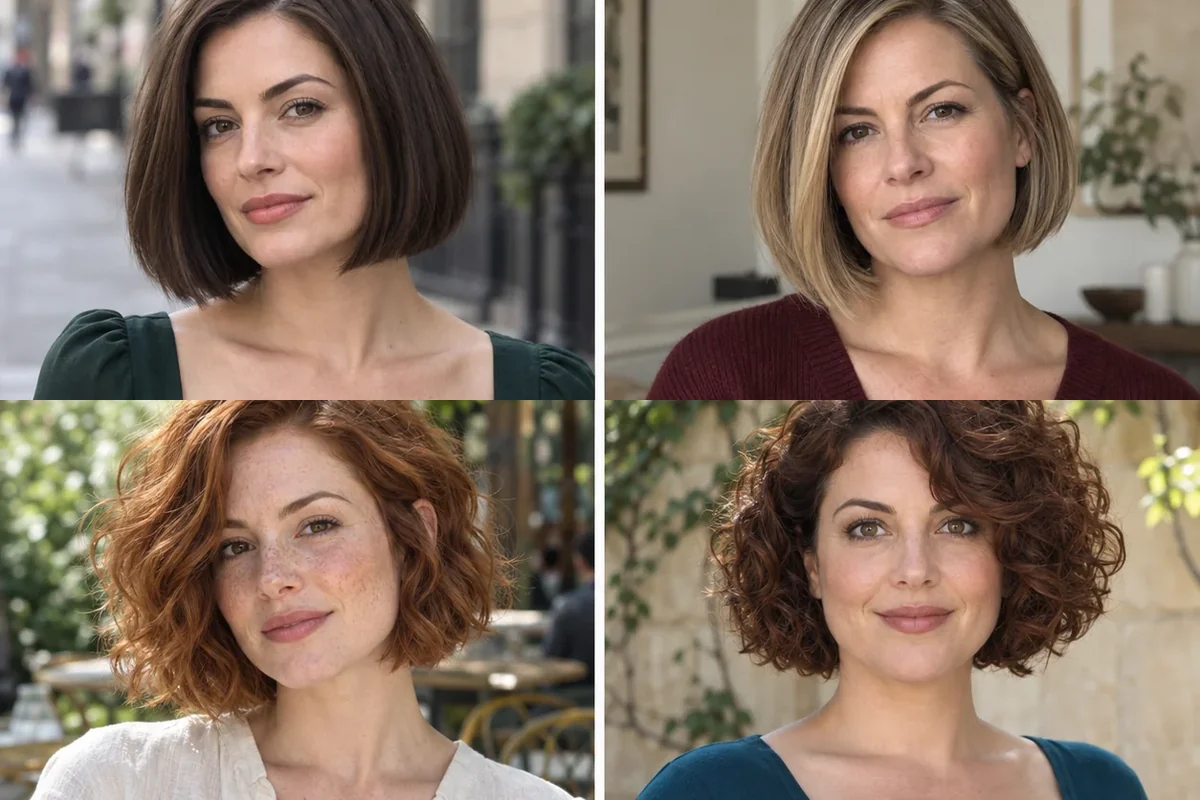
A short bob for thick hair ends between the ear and chin or just below it, with its perimeter, graduation and internal weight deliberately balanced for dense strands. It is shorter than a lob and more structured than a pixie or bixie. Hidden internal layers, a soft undercut, selective beveling or curl-by-curl shaping can create movement while the outside still looks substantial. Choose according to texture, growth pattern and how you actually style your hair, then use the salon wording under each idea with front, side and back reference photos.
Find the one that feels like you: Start with the first look and let the photographs lead. Each style explains how the shape affects your features, the mood it creates and the exact words to take to your stylist.
Quick Facts
- Ask where weight will be removed, not simply whether the bob will be thinned.
- Dense straight hair often benefits from hidden layers; waves and curls need pattern-aware shaping.
- A strong perimeter can stay polished when bulk is removed underneath it.
- Plan trims every six to eight weeks to preserve balance.
1. Chin-Length Bob With Hidden Layers
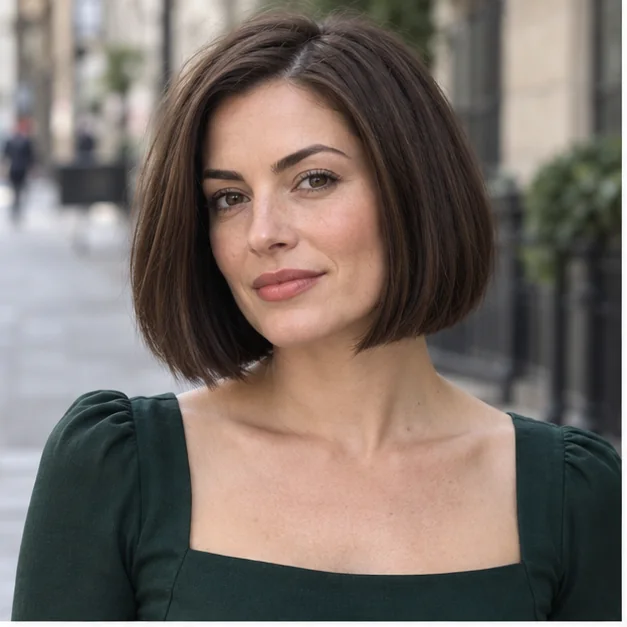
A clean chin-level outline stays visually blunt while invisible layers underneath release the dense interior. This works beautifully for straight or softly wavy thick hair because it preserves a glossy, expensive-looking edge without letting the sides balloon. The controlled silhouette can make you feel polished and confident, yet it remains flexible enough for a soft bend or tucked side. Ask for a solid exterior line with internal weight removal that never breaks through the surface; smooth it with a paddle brush and keep heavy oils away from the roots.
Ask your stylist for: Keep the outside chin-length and blunt, then remove weight through hidden internal layers without thinning the perimeter.
2. Softly Beveled Bob

The perimeter curves gently under the jaw, with narrow beveled graduation that keeps thick ends from kicking outward. It suits dense straight hair that wants structure without the obvious stacked shape of a classic graduated bob. The soft curve brings focus to the jaw and can feel neat, composed and reliably office-ready. Ask for a jaw-length bob with low blended graduation and carefully debulked ends, not a high stack; dry the roots flat first, then turn only the final inch under with a medium round brush.
Ask your stylist for: Cut a jaw-length bob with low blended graduation and a soft bevel, keeping the crown smooth rather than stacked.
3. Textured Wavy Bob

Loose bends sit in a chin-grazing shape with piecey ends and selective internal layers that separate thick waves. The broken outline prevents a triangular finish while letting natural texture provide the volume, so it works especially well for hair that air-dries with a loose S pattern. It feels relaxed, lively and forgiving on mornings when perfect styling is unrealistic. Ask for dry refinement around the widest wave areas, soft internal channels and textured—not shredded—ends; scrunch in lightweight foam and diffuse without repeatedly touching the shape.
Ask your stylist for: Shape my chin-grazing waves dry, release bulky interior areas and texture the ends without making them wispy.
4. Rounded Curly Bob
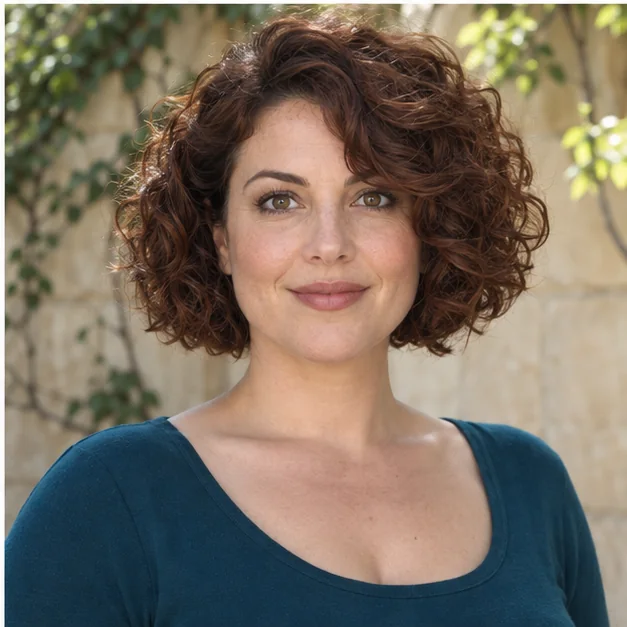
A curl-by-curl shape builds a rounded outline above the shoulders, with shorter pieces at the crown and controlled fullness beside the cheeks. Rather than thinning dense curls randomly, the cut follows their spring so each section supports the next and the base avoids a heavy shelf. The buoyant silhouette can make you feel expressive and beautifully put together without straightening your texture. Ask for a dry curly bob with crown lift, balanced side volume and enough weight left at the perimeter to prevent frizz; refresh with water and gel, then diffuse on low.
Ask your stylist for: Cut my curls dry into a rounded short bob, lifting the crown while preserving enough perimeter weight for definition.
5. Angled Bob With a Tapered Nape
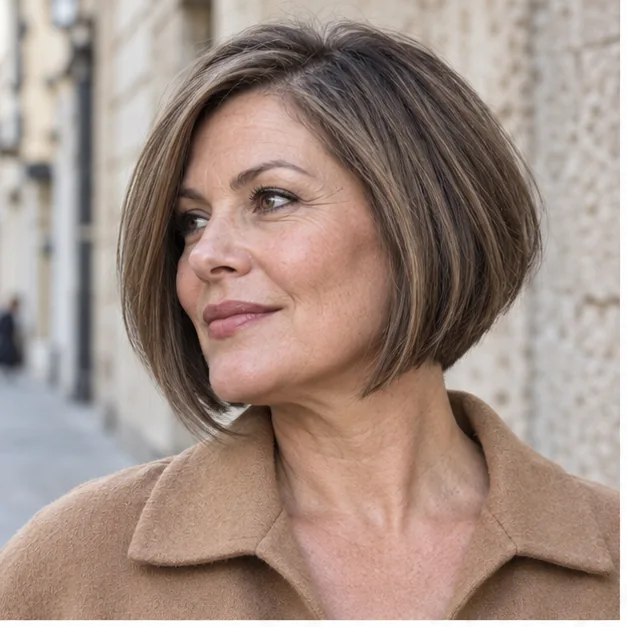
A neatly tapered nape rises into longer jaw-skimming front pieces, creating a clean diagonal line through dense hair. Removing bulk at the back makes the cut feel lighter against the neck, while the length near the face keeps the shape elegant rather than severe. It can visually lengthen a rounder face and feels sharp, modern and pleasantly unfussy. Ask for a softly graduated nape, an angle that stays below the jaw in front and no bulky shelf at the occipital bone; direct the back downward while drying and polish the front with a flat brush.
Ask your stylist for: Taper and softly graduate the nape, leaving the front below the jaw with a visible but wearable angle.
Pause and notice: A thick-hair bob does not automatically need visible layers. Hidden layers, low graduation or a conservative undercut can reduce weight underneath while protecting the shape you see.
6. Blunt Bob With a Soft Undercut
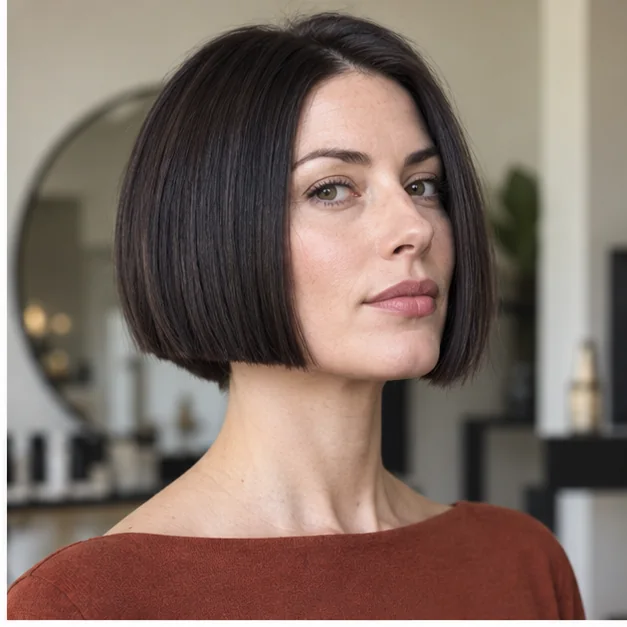
This glossy bob looks boldly one length from the outside, but a discreet undercut removes density along the lower nape. It is ideal for very thick straight hair that pushes outward underneath, because the hidden shorter section lets the top layer fall closer to the head. The result feels sleek, decisive and surprisingly cool around the neck, although the undercut needs its own grow-out plan. Ask for a conservative, fully concealed nape undercut beneath a strong jaw-length perimeter; confirm how high it will sit and whether you can still tuck the sides.
Ask your stylist for: Keep a strong jaw-length blunt line over a low, fully hidden nape undercut that reduces bulk without showing.
7. French-Inspired Bob With Airy Bangs

A cheek-to-jaw bob pairs a softly irregular edge with a narrow, airy fringe instead of adding a dense wall of bangs to already-full hair. The lighter fringe opens the eyes while internal shaping keeps the sides compact, making this useful for thick straight or slightly wavy texture. It feels charming, confident and a little undone rather than precious. Ask for a jaw-skimming French-inspired bob, a shallow fringe section with longer corners and subtle interior weight removal; reset only the bangs in the morning and let the lengths retain their natural bend.
Ask your stylist for: Cut a jaw-skimming softly textured bob with a shallow airy fringe and longer temple corners.
8. Graduated Bob With Subtle Stacking
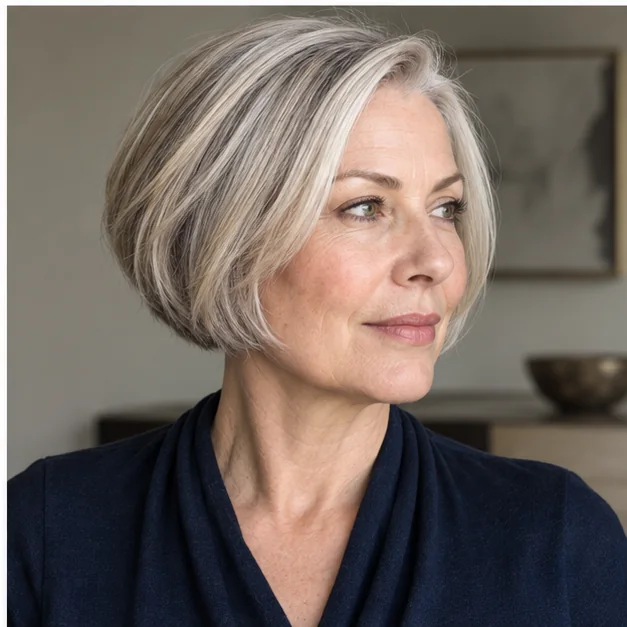
Low graduation builds a smooth curve through the back while the sides stay close to chin length. On thick hair, the key is a restrained stack: too much elevation can create a mushroom shape, but a shallow angle removes weight and gives the crown natural lift. This version feels tailored and dependable, particularly if you like a round-brushed finish that holds its form. Ask for low graduation below the occipital bone, a compact nape and minimal stacking through the crown; schedule trims around six weeks before the back loses its clean contour.
Ask your stylist for: Use low graduation below the occipital bone with a compact nape and only subtle stacking through the back.
9. Choppy Layered Bob

Visible choppy layers break up a jaw-length bob, with shorter surface pieces creating lift and jagged ends keeping dense hair mobile. This construction helps when thick straight or wavy strands feel flat at the crown but bulky below, because the volume is redistributed rather than simply removed. The lively outline feels youthful, playful and easy to rough up with your hands. Ask for connected choppy layers that remain substantial at the ends, with extra release behind the ears; work in a pea-size matte cream and pinch only selected pieces for definition.
Ask your stylist for: Add connected choppy layers through my jaw-length bob, lifting the crown while keeping the ends substantial.
10. Sleek Asymmetrical Bob
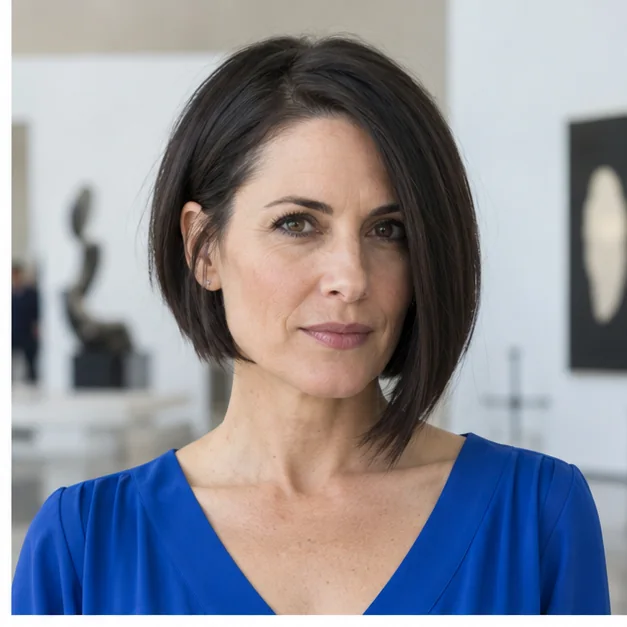
One side finishes near the jaw while the other extends a little lower, creating a controlled diagonal across a sleek, dense bob. The asymmetry gives thick straight hair a graphic focal point and shifts attention toward the longer cheekbone line without needing high layers. It feels sophisticated and quietly bold, yet a difference of only an inch keeps it wearable. Ask for a precise asymmetrical perimeter, hidden debulking beneath the heavier side and a clean nape; use heat protectant and pass the flat iron once rather than repeatedly compressing the ends.
Ask your stylist for: Create a precise one-inch asymmetry with a clean nape and concealed weight removal under the longer side.
Pause and notice: The back and side determine whether a dense bob feels balanced. Save references showing the nape, crown and perimeter, and choose examples with a texture close to your own.
11. Shaggy Bob With Crown Lift

Shorter crown layers spill into a tousled jaw-length perimeter, giving this bob shaggy lift without turning it into a full shag haircut. It works beautifully when thick wavy hair collapses on top and expands at the sides, since strategic layering reverses that weight pattern. The airy movement feels spirited, casual and full of personality, especially for an air-dry routine. Ask for rounded crown layers, released bulk through the mid-sides and a baseline that still reads clearly as a bob; apply foam at the roots and diffuse upright.
Ask your stylist for: Build rounded crown lift into a jaw-length bob and release the mid-sides without erasing the bob perimeter.
12. Side-Parted Bob With Sliced Layers
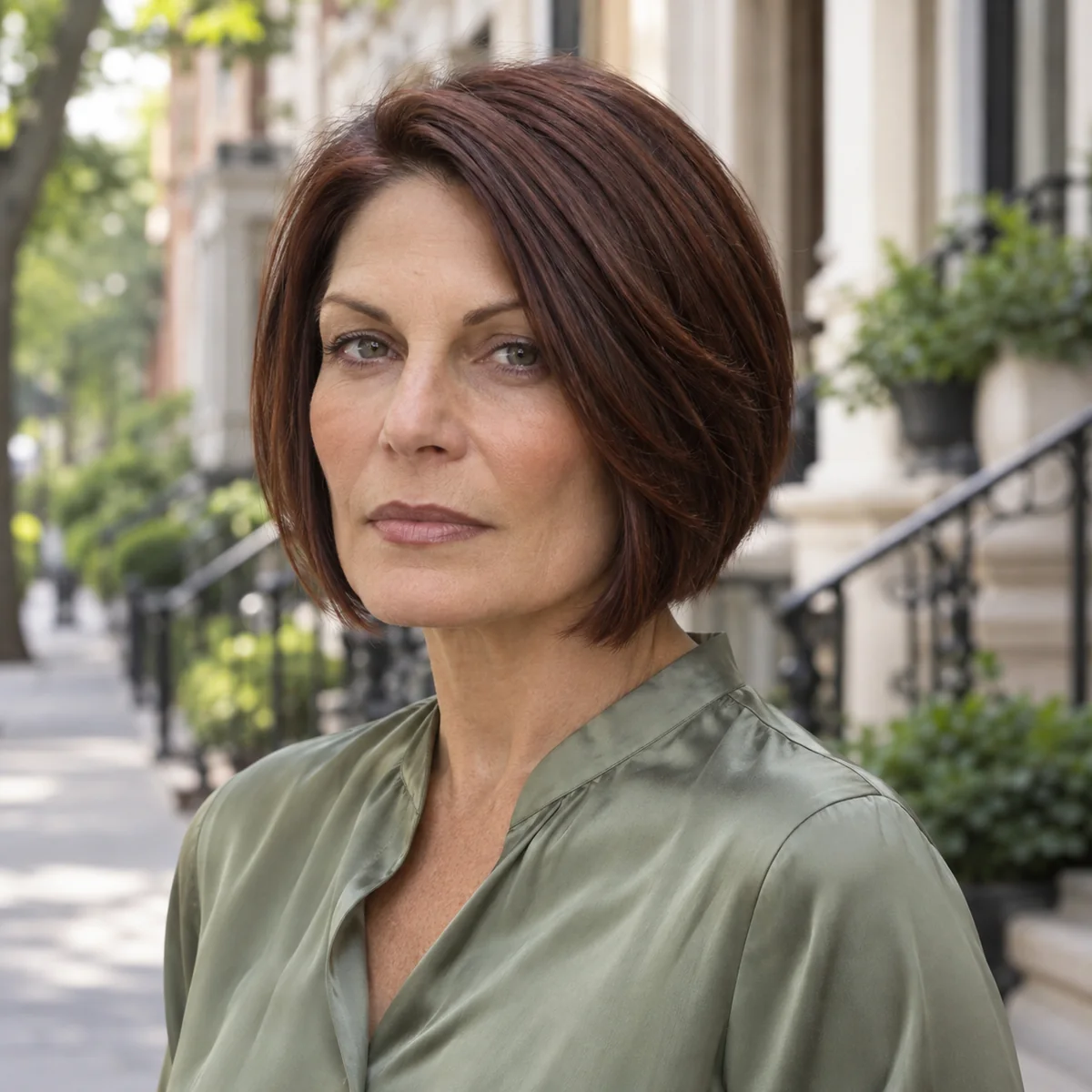
A deep side part sweeps across a chin-length bob while long sliced layers let the heavier side fall in sleek ribbons. The diagonal movement softens a square jaw and prevents dense straight hair from forming one solid curtain around the face. It feels elegant and adaptable because the front can be tucked away or worn as a sweeping frame. Ask for long, shallow sliced layers starting below the cheekbone, with internal bulk removed rather than aggressively razor-thinned ends; blow-dry across the part first to give the front controlled lift.
Ask your stylist for: Keep the chin-length outline strong and add long sliced layers below the cheekbone with a deep side part.
13. Inverted Bob With a Long Front
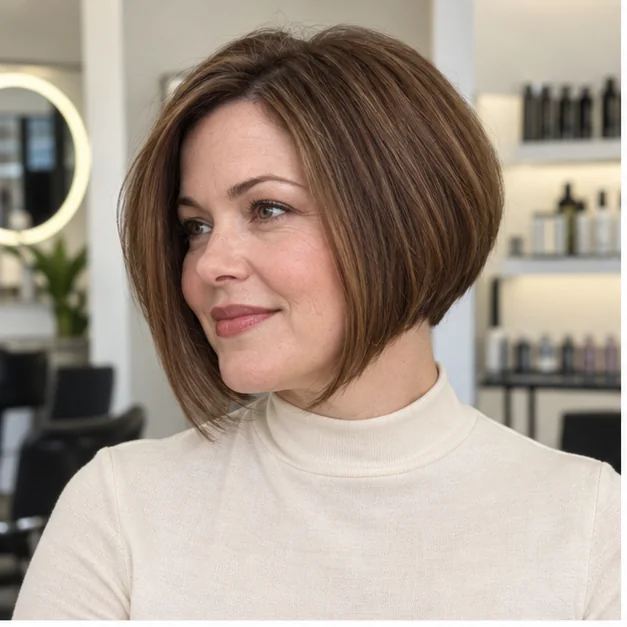
A short, fitted back flows into distinctly longer front panels, creating an inverted bob without an exaggerated stacked crown. Dense hair gives the line presence, while careful interior removal keeps the front from feeling like two heavy wedges. The descending angle can lengthen a round face and feels dramatic, capable and beautifully intentional. Ask for a nape-hugging back, front corners reaching just below the chin and soft internal release behind the ears; have the stylist check the line with your normal part before the final refinement.
Ask your stylist for: Fit the back close to the nape, extend the front below the chin and remove hidden weight behind the ears.
14. Curly Bob With a Side Fringe
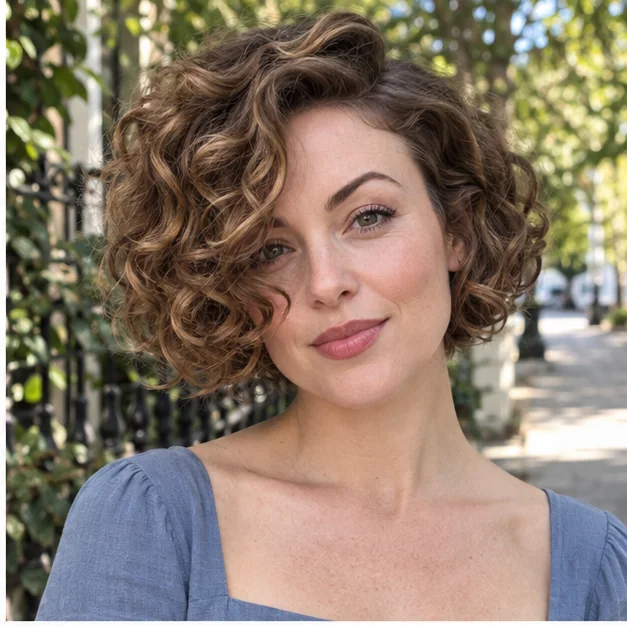
Defined curls form a compact jaw-length bob, and a longer curly fringe sweeps diagonally across the forehead into one side. The fringe breaks up a rounded outline and draws attention toward the eyes while remaining long enough to blend back on humid days. This expressive shape can feel romantic and confident without demanding that thick curls behave like straight hair. Ask for a dry curl-by-curl bob, a side fringe judged at full shrinkage and discreet weight removal only where curls crowd; finger-coil the fringe with gel and leave the rest less manipulated.
Ask your stylist for: Shape my bob curl by curl when dry and cut a long side fringe that accounts fully for shrinkage.
15. Ear-Length Sculpted Bob
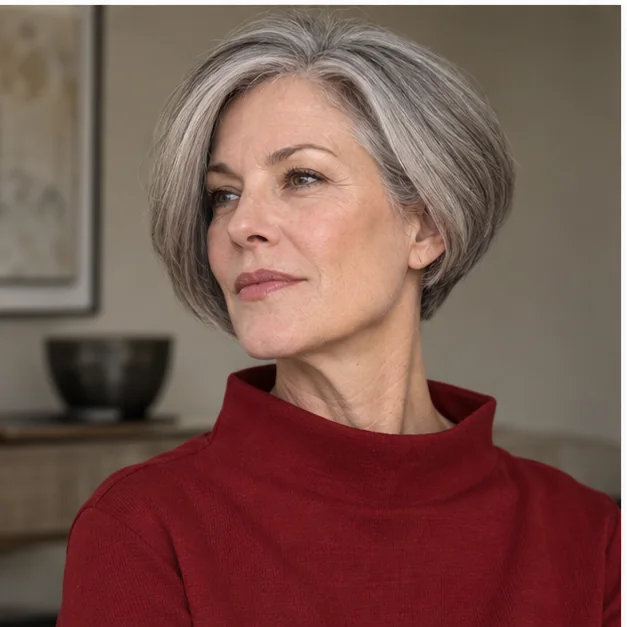
An ear-length perimeter follows the head closely, with sculpted graduation at the nape and enough top length to keep the style recognizably bob-shaped. This is the boldest way to make very thick straight hair feel physically light, and it highlights cheekbones, earrings and a graceful neck. The compact silhouette feels fashion-forward and self-assured, though it needs regular trims to stay intentional. Ask for an ear-length bob with close nape graduation, a smooth crown and soft edges around the ears; confirm cowlicks before committing to the shortest point.
Ask your stylist for: Cut an ear-length sculpted bob with close nape graduation, smooth crown weight and soft ear edges.
Pause and notice: Over-thinning can make thick hair frizz, collapse or grow out unevenly. Ask your stylist to identify congested zones and preserve the surface and perimeter weight your texture needs.
16. Razor-Soft Bob for Coarse Hair
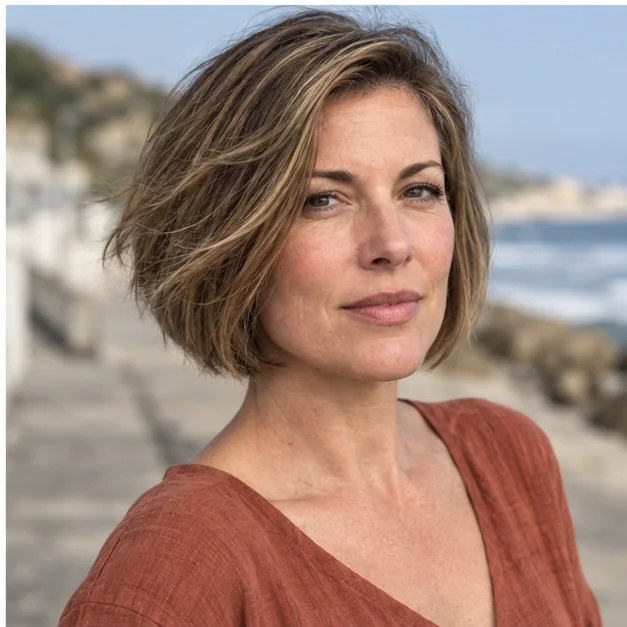
A jaw-length bob has softly feathered edges and fluid internal movement, created only where coarse strands can tolerate controlled razor work. The result is less rigid than a scissor-blunt cut and helps thick, straight-to-wavy hair settle around the face rather than jut outward. It feels touchable, relaxed and modern, but a razor is unsuitable if it makes your texture frizz. Ask for a soft razor finish on healthy, cooperative sections with scissor control at the perimeter; request a test section first and use smoothing cream on damp ends.
Ask your stylist for: Keep a controlled jaw-length perimeter and use a razor selectively for soft movement only after testing my texture.
17. Short Bob With Curtain Bangs

A chin-length bob meets center-parted curtain bangs that open from the brows and blend into cheekbone pieces. On thick hair, a carefully limited fringe section matters: it frames the face without stealing so much density that the sides become difficult to balance. The open shape softens the forehead and feels friendly, current and easy to grow out. Ask for curtain bangs cut from a shallow triangle, longer corners connected into the bob and hidden weight removal through the lower sides; direct the fringe away from the face while drying, then let it cool.
Ask your stylist for: Take a shallow section for brow-to-cheek curtain bangs and blend it into a chin bob with hidden lower-side debulking.
18. Air-Dried Wavy Bob

Natural waves fall into a softly uneven jaw-length bob designed around their air-dried pattern, with bulk removed from the interior rather than the fluffy outer surface. This keeps thick hair from forming a triangle and allows individual bends to settle with believable imperfection. The result feels easygoing, confident and realistic for anyone who does not want a daily blowout. Ask your stylist to assess the hair fully dry, preserve surface weight and carve space only through congested zones; blot rather than rub, apply light curl cream and leave the waves alone while drying.
Ask your stylist for: Design the bob around my air-dried waves, preserving surface weight and releasing only crowded interior areas.
19. Polished Bob With Face-Framing Pieces

A smooth chin-to-jaw bob keeps a strong baseline while subtle cheekbone pieces create movement at the front. That small interruption stops thick straight hair from closing around the face, and it can highlight the eyes without committing to bangs. The refined shape feels sophisticated and calm, making it useful for professional routines and easy tucking. Ask for a solid polished perimeter, two connected face-framing pieces beginning at the cheekbones and discreet internal debulking; use a flat brush for tension and bend only the front pieces away from the face.
Ask your stylist for: Keep a strong chin-to-jaw baseline, add connected cheekbone framing and remove bulk invisibly beneath the surface.
20. Tousled Bob With Flipped Ends

A buoyant short bob uses light internal layers and deliberately flipped ends to turn thick hair's natural energy outward. The kicks break up a dense perimeter and give straight-to-wavy texture a playful finish without removing the fullness that makes the style work. It can feel upbeat, glamorous and refreshingly less serious than a glassy bob. Ask for a jaw-length outline with light internal layers and ends strong enough to flip rather than fray; rotate random sections outward with a round brush or iron, then separate them with flexible spray instead of stiff lacquer.
Ask your stylist for: Cut a jaw-length bob with light internal layers and substantial ends that can be styled into varied outward flips.
Before You Book the Appointment
A successful salon visit begins with the overall shape, construction and upkeep—not only the finished length. Use this quick reality check before choosing your final reference photograph.
- Best for: Dense straight, wavy, curly or coarse hair that needs a deliberate short shape.
- Choose by: Texture, density distribution, growth patterns and air-dry versus heat-styling routine.
- Everyday effort: Textured bobs can air-dry well; sharper beveled and graduated versions need directed drying.
- Salon rule: Agree on dry length, visible outline and the exact weight-removal method before cutting.
How to Choose a Short Bob for Thick Hair
Begin with behavior, not only face shape. Straight density may need hidden layers or low graduation; waves benefit from interior release; curls need dry, pattern-aware shaping; coarse hair may require more perimeter weight than expected. Decide whether your priority is a sleek outline, air-dried movement, a lighter nape or easier daily styling.
What to Ask for at the Salon
State the finished dry length and show front, side and back views. Ask whether weight will be removed through internal layering, graduation, point cutting, slicing, razor work or an undercut. Mention cowlicks, shrinkage, your normal part and whether you air-dry. Avoid the vague request to thin it out.
Styling and Maintenance
Direct roots before polishing ends, use lightweight products and protect hair from heat. Most short bobs need trims every six to eight weeks; compact napes may need them sooner. During grow-out, preserve the front and soften the back into a longer bob rather than repeatedly thinning every area.
Choose the Shape You Will Actually Wear
Compare how much polish, air-drying, neck exposure and face framing you enjoy, then choose the construction that supports that routine. Two realistic reference photos and one clear priority are more useful than a folder of unrelated bobs.