Two bobs can end at your chin and feel entirely different. One puts your cheekbones on display, while another lets a long sweep of hair lead the eye toward your jaw. Start with what you’d like to show off, then choose a line that suits how your hair falls on a regular morning.
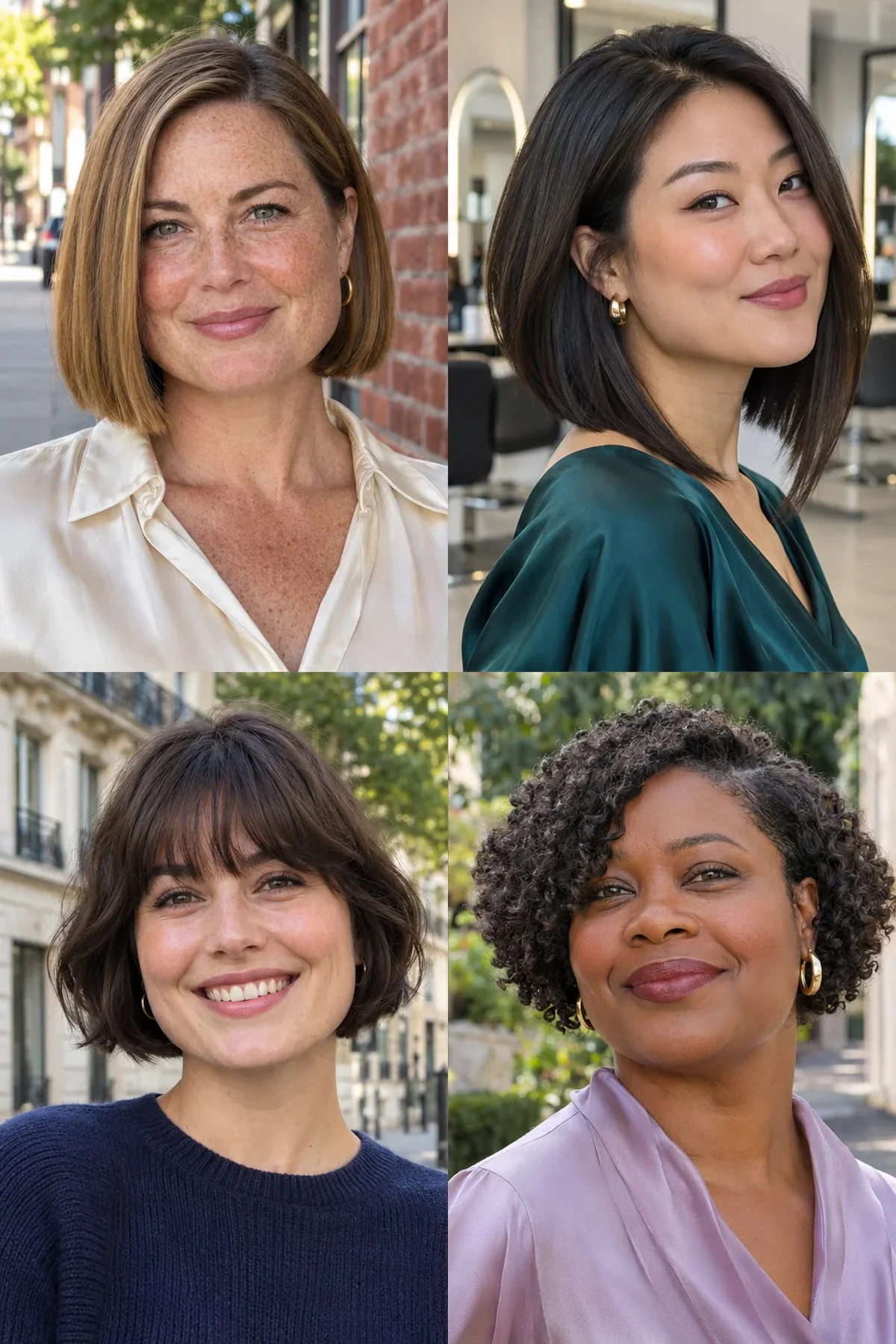
A bob is a short to mid-length haircut with a recognizable bottom edge, usually between the ears and shoulders. On a round face, where the cheeks tend to be the fullest point and the jaw curves gently, that edge can sit above, at or below the jaw for different effects. A cropped French bob leaves more of the neck and cheeks visible. A lob is the longer end of the bob family and can reach the collarbones. A pixie typically has much shorter hair around the ears and nape. Within the bob family, the fringe, part and spot where the hair is fullest can change the shape as much as length does.
Find the one that feels like you: Start with the first look and let the photographs lead. Each style explains how the shape affects your features, the mood it creates and the exact words to take to your stylist.
Quick Facts
- Mark where you want the ends to land when your hair is dry.
- Use a side view to compare how far forward the corners sit.
- Decide whether you want the cheeks open, framed or partly covered by a sweep of hair.
- Choose layers by density and texture as well as the silhouette you like.
1. The Blunt Bob That Ends Below the Jaw

A blunt bob can feel like a bold change even when it takes very little effort to style. On this cut, the line sits just below the jaw, so the eye follows the sides past the cheeks before it meets the full edge. Fine, straight hair gets a more substantial-looking finish, and a slightly off-center part keeps the shape from feeling too formal with your everyday clothes. Smooth the front with a paddle brush and leave the rest to settle naturally. Ask for a level line below the jaw and keep thinning shears away from the perimeter.
Ask your stylist for: Keep a level line just below my jaw, with no thinning through the ends.
2. The Forward-Angled Collarbone Bob
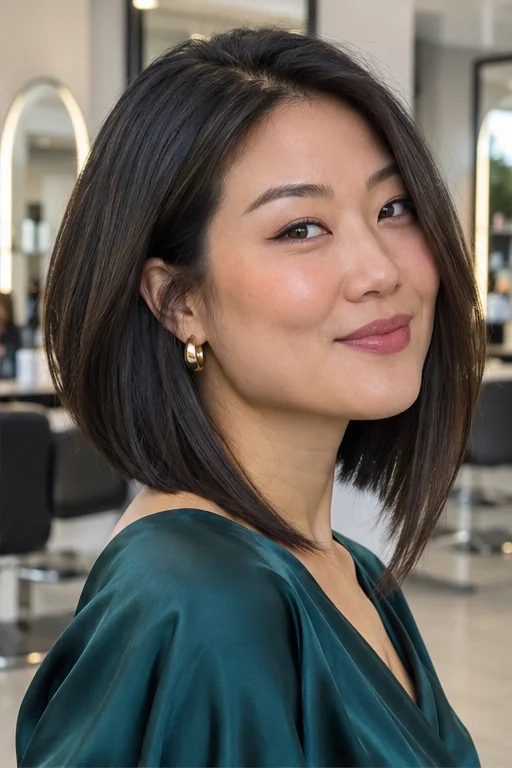
Start here if you like the idea of a bob but still reach for a hair tie after work. The front corners of this lob skim the collarbones, while the back rises just enough to make a clean diagonal visible from the side. That forward line brings the eye toward the neckline, and the extra length can make the change feel manageable if you’re coming from long hair. Bring your usual hair tie and check which pieces reach it before the cut. Ask for a gentle forward angle with substantial corners and no high stack at the nape.
Ask your stylist for: Keep my front corners at my collarbones with a subtle rise at the back.
3. The Short French Bob With a Brow Fringe

A short French bob puts the cheeks in full view, which is part of its appeal if you like how your face looks when you smile. The hem lands above the jaw and the soft brow fringe brings attention up to the eyes, leaving plenty of open space at the neck. It feels playful with a plain shirt and works best if you enjoy having bangs even on wash days. If your fringe springs upward, have its final length checked dry. Ask for an above-jaw edge with soft corners and a brow-level fringe with a little separation.
Ask your stylist for: Cut the ends just above my jaw and leave the fringe softly broken at brow level.
4. The Asymmetrical Bob With One Longer Corner
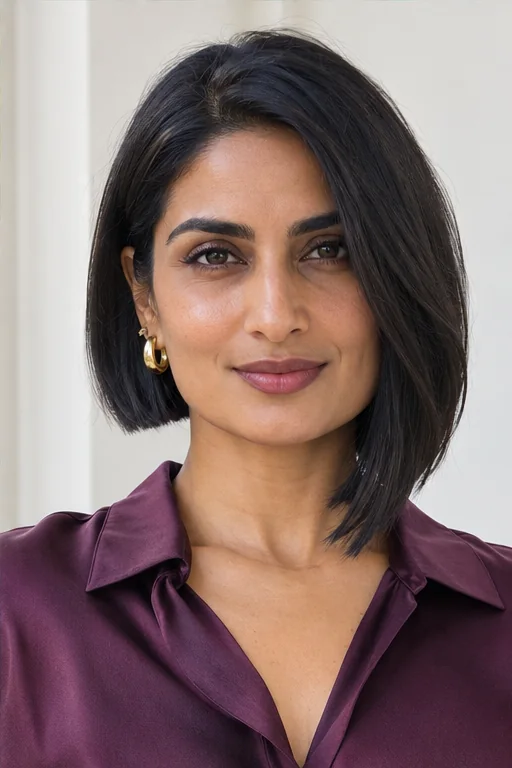
One longer corner gives a straight bob movement before you pick up a brush. The shorter side sits at the jaw and leaves one cheek more open, while the longer side falls below it and makes a strong diagonal across the front. It can feel sharp and intentional if you usually wear your hair smooth and want the cut to do the styling for you. Keep your usual part when you dry it so the two sides fall where they were cut. Ask for a clear but modest length difference and a full edge on both sides.
Ask your stylist for: Leave one corner below my jaw and the other at the jaw, with both ends full.
Pause and notice: Hold the ends of your hair at three heights in a mirror: above the jaw, at the chin and just below it. Notice where your eye goes first at each height. Take a quick picture if the difference surprises you.
5. The Low-Graduated Bob for Thick Hair
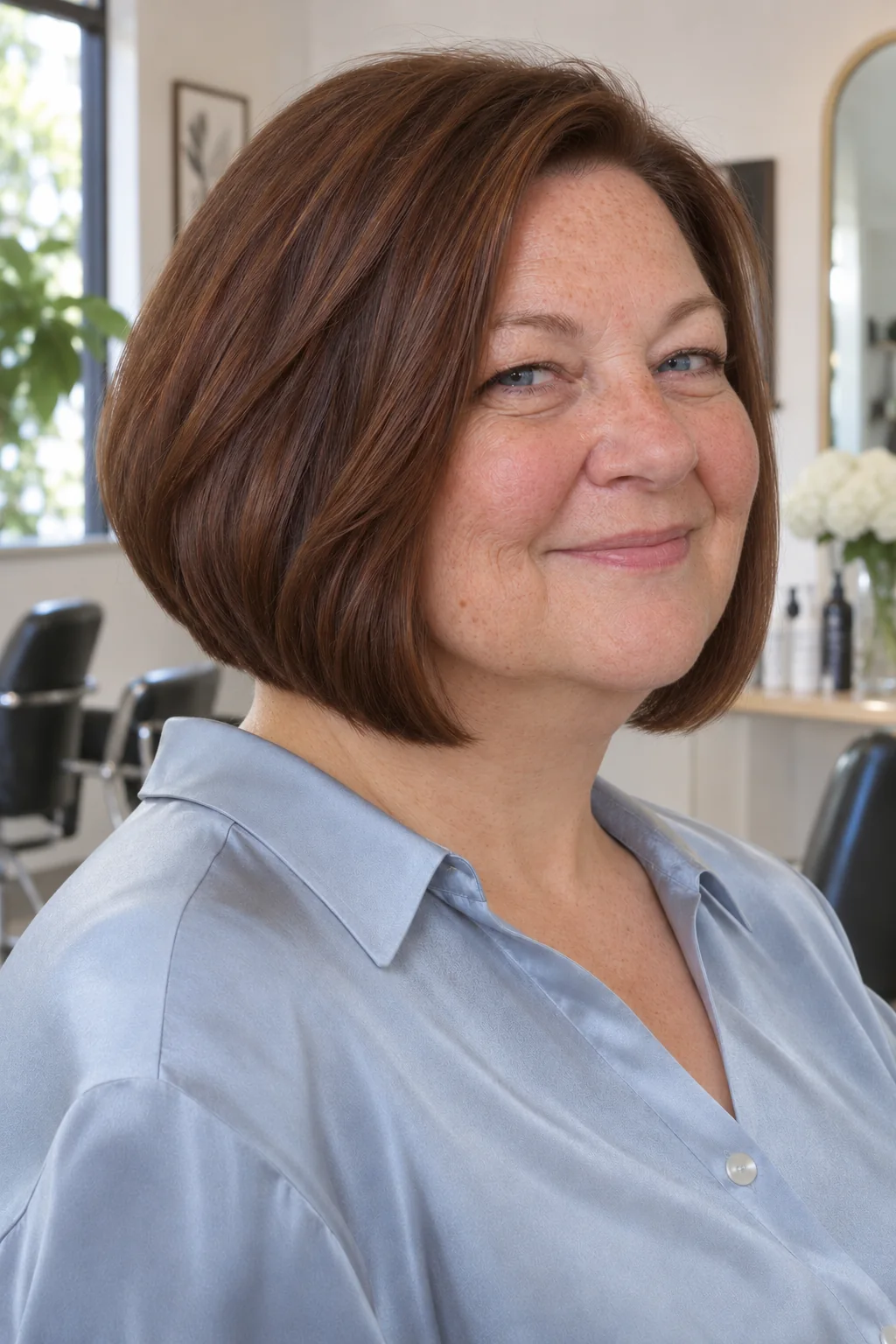
Dense hair can pile up at the nape even when the front looks exactly right. Low graduation builds a curve close to the neckline, giving the back a rounded shape while the full front corners keep the outline visible below the jaw. It feels neat at the collar without needing the dramatic height of a stacked bob, especially if your straight hair holds its shape easily. Dry the underneath first so it doesn’t stay damp and push the surface out. Ask for low graduation at the nape with full front corners, then check the side profile before adding more layers.
Ask your stylist for: Build a low curve at the nape and keep the front corners full and just below my jaw.
6. The Wavy Bob With Layers Starting Below the Cheeks
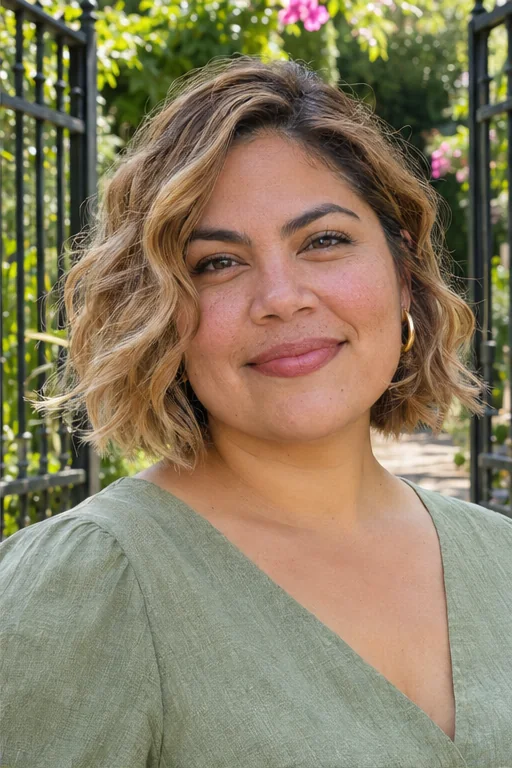
Let your natural wave tell you where this bob should move. Here the first visible layers sit below the cheeks, and the ends turn at the neck, so the widest part of the cut sits lower than the fullest part of the face. The loose shape can make an air-dried morning feel quietly polished, especially if your hair already bends once it’s off your shoulders. Scrunch the wet lengths and let them dry before you decide whether they need more product. Ask for layers starting below the cheeks on dry hair and leave the top long enough to follow its own wave.
Ask your stylist for: Leave the front long and begin the light layers below my cheeks when dry.
7. The Curly Bob With Lift at the Crown
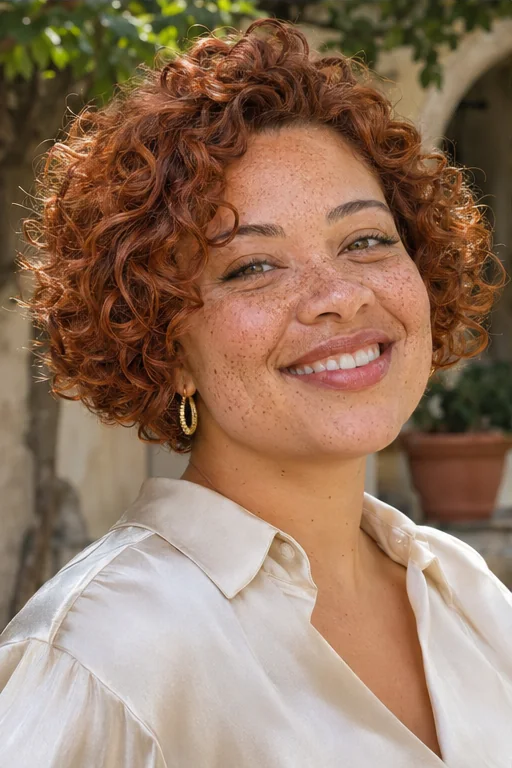
A little height can change the balance of a curly bob more than taking another inch off the sides. The upper ringlets spring up at the crown, then the outline tapers gently toward a dry jaw-length hem, keeping the focus near the eyes. It has a buoyant, dressed-up feeling even with your curls left in their usual groups, which is handy if you prefer to style on wash day and leave it alone. Diffuse the roots first and resist separating every ringlet. Ask your stylist to map the crown and jaw on dry curls so each section can shrink at its own rate.
Ask your stylist for: Keep the curls at my jaw dry, lift the crown, and let the sides taper toward the ends.
8. The Coily Bob With a Diagonal Front
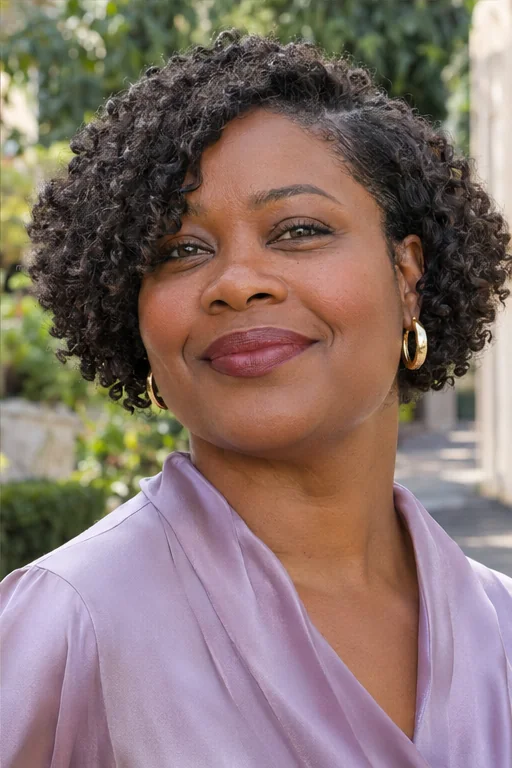
If you love the fullness of coils around your face, keep it and decide where you want a little open space. In this bob, an off-center part exposes one temple while the opposite front slopes diagonally to the jaw, giving the shape room to move without making the cheeks disappear. The contrast can feel expressive and easygoing, particularly if you usually wear your coils in their natural fall. Refresh compressed sections with damp fingers and let them spring back before rearranging the part. Ask for the diagonal to be checked dry, with the longest coils at the jaw and enough room for uneven shrinkage.
Ask your stylist for: Check my coils dry, leave one temple open, and shape the opposite front down to my jaw.
Pause and notice: Check the haircut photo against your own wash-day hair. If you would need to stretch or curl your hair every morning to reach that outline, save a second photo showing the cut on texture closer to yours.
9. The Shaggy Bob With a Broken Edge

If a tidy bottom line always makes you reach for texture spray, a shaggy bob builds some of that separation into the cut. Shorter crown pieces lift the top and a broken jaw-length edge gives the sides an easy, slightly rebellious swing, especially on medium-density hair with a bit of wave. It’s a nice way to feel dressed down in a good way when your clothes are crisp. Work a tiny amount of styling cream into the tips and leave the crown light. Ask for short, visible crown layers within a jaw-length outline and keep enough hair at the sides to avoid gaps.
Ask your stylist for: Keep a jaw-length bob outline and give me piecey crown layers with a broken edge.
10. The Neck-Length Bob With Long Curtain Bangs

The best part of a long curtain fringe is how easily you can change your mind about it halfway through the day. These pieces open at the center and taper toward the jaw over a neck-length bob, so you get a soft frame near the eyes and can still push most of it back when you put on glasses. It can make a plain bob feel a little more romantic, especially if the front naturally bends away from your face. Dry the two sides back before they set. Ask for a narrow center opening and long corners that blend into the jaw.
Ask your stylist for: Open the fringe at the center and taper it down toward my jaw over a neck-length bob.
11. The Jaw Bob With a Deep Side-Swept Fringe

A deep side fringe gives the front of a bob direction even when the ends are the same length on both sides. The sweep crosses the forehead and lands at the cheekbone, leaving the other side open so your eyes or earrings catch the light. It can feel pulled together in a hurry if your hair already prefers a side part, but a strong cowlick may need a quick reset. Dry the roots across the forehead before letting the ends settle. Ask for a long diagonal fringe from your natural part and keep the bob’s jaw-level outline even.
Ask your stylist for: Follow my natural side part and cut a long diagonal fringe that reaches my cheekbone.
12. The Rounded Bob With a Soft Under-Bevel
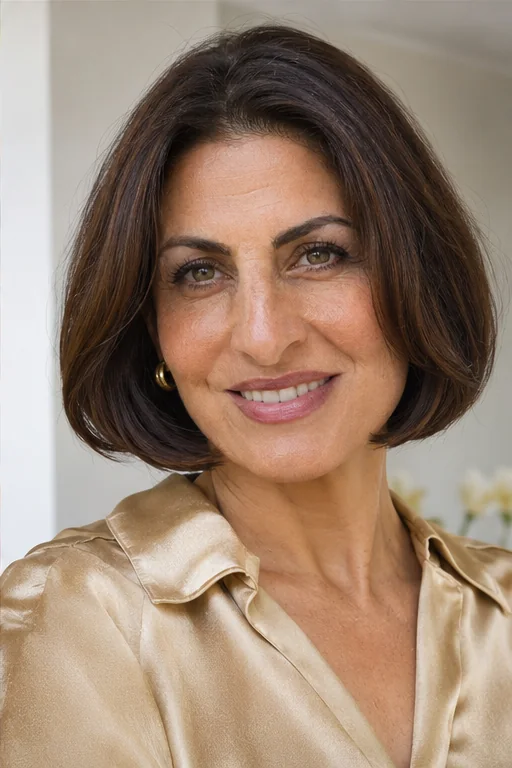
A rounded bob can echo the curves of a round face in a way that feels deliberate and polished. This chin-length version uses a small under-bevel to turn the ends in, bringing the curve down toward the jaw rather than building height above it. It suits smooth hair that takes a gentle bend and can feel especially smart with a simple neckline, though very straight hair may need a brush to keep the shape. Turn just the last inch under while drying. Ask for a solid chin-length perimeter with subtle shaping underneath and leave the surface smooth.
Ask your stylist for: Keep a chin-length edge and bevel just underneath so the ends can turn inward.
Before You Book the Appointment
A successful salon visit begins with the overall shape, construction and upkeep—not only the finished length. Use this quick reality check before choosing your final reference photograph.
- Fine or low-density hair: Look for a full perimeter and keep layers limited. Fine strands and low density are different, so show your stylist where your ends look most sparse.
- Thick straight hair: Ask where weight builds up. Low graduation or measured internal weight removal can give the nape room to sit neatly without reducing the front corners.
- Natural waves: Watch where your first bend lands when dry. Keeping that bend intact gives the wave somewhere to turn without a daily hot tool.
- Curls and coils: Use a dry reference with a curl pattern close to yours. Ask the stylist to allow for differences in shrinkage from crown to nape and check the shape dry.
What to Ask For at the Salon
Bring a front and a side photo, ideally of similar hair texture. Point to where you want the dry ends and the shortest front piece to fall. If the photo shows a diagonal, say whether you want it cut into the edge or created by the part and fringe. Mention glasses, cowlicks and whether you usually tuck one side. Ask what the shape will look like after you wash and dry it at home.
Should a Bob End Above or Below the Chin?
Both lengths can work. A line above the jaw puts the cheeks and neck on display. A lower edge carries the eye past the cheeks and can leave more hair to tuck or tie. A collarbone bob can be a comfortable transition from longer hair, but try your usual hair tie at the salon if being able to gather it matters to you.
What Changes When You Add Bangs?
A full fringe puts a clear line across the forehead and can make the eyes the first thing you notice. Curtain bangs open the center while still framing the sides. A long side fringe gives the front a diagonal and grows into a side sweep. Check where your hair parts naturally before deciding which shape you want to reset after sleeping.
Keeping the Shape or Growing It Out
A crisp edge or short fringe often shows the first signs of grow-out. Book the next trim when that line or fringe starts to fall somewhere you dislike. If you’re growing out an angled bob, ask to take a little off the longest front corners while you let the back catch up. For a layered bob, preserve the outer length and ask to tidy the edge while the layers grow down.
The Takeaway
Save one photo for the hem and one for the way the front falls. Before anyone picks up the scissors, show your stylist where you want both lines to land when dry. You’ll have a clearer plan than a single inspiration picture can give you.
More Hair Inspiration
- Hairstyles for Round Faces and Thin Hair — Compare other cuts if keeping the ends full is your first priority.
- French Bob Haircuts — Explore shorter shapes if you like an open neckline.