The French bob has a rare kind of beauty: it looks considered without looking overworked. Cut around the jaw or cheekbones, it brings the face into focus, makes the neck look longer and turns everyday texture into part of the style. It can feel playful, artistic, polished or quietly romantic—but never anonymous.
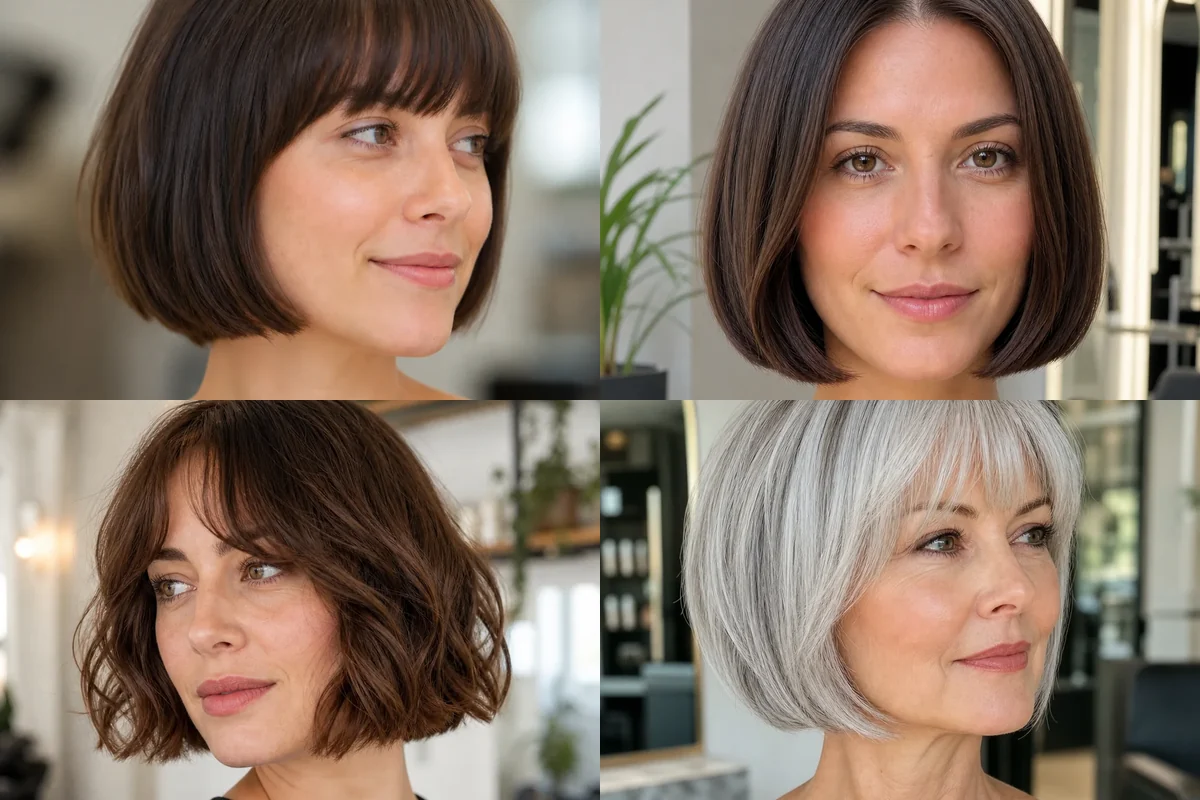
These 20 versions show that a French bob is not one rigid haircut. You will find full bangs, open foreheads, soft waves, curls, fine-hair movement and strong blunt shapes, with straightforward advice about what each cut does for your features and what to say in the salon.
The quick definition: A French bob is usually shorter than a classic bob, sitting between the cheekbones and jaw. Its personality comes from a compact outline, face-framing length and an easy finish—often with bangs, but not always.
1. Classic French Bob With Full Bangs
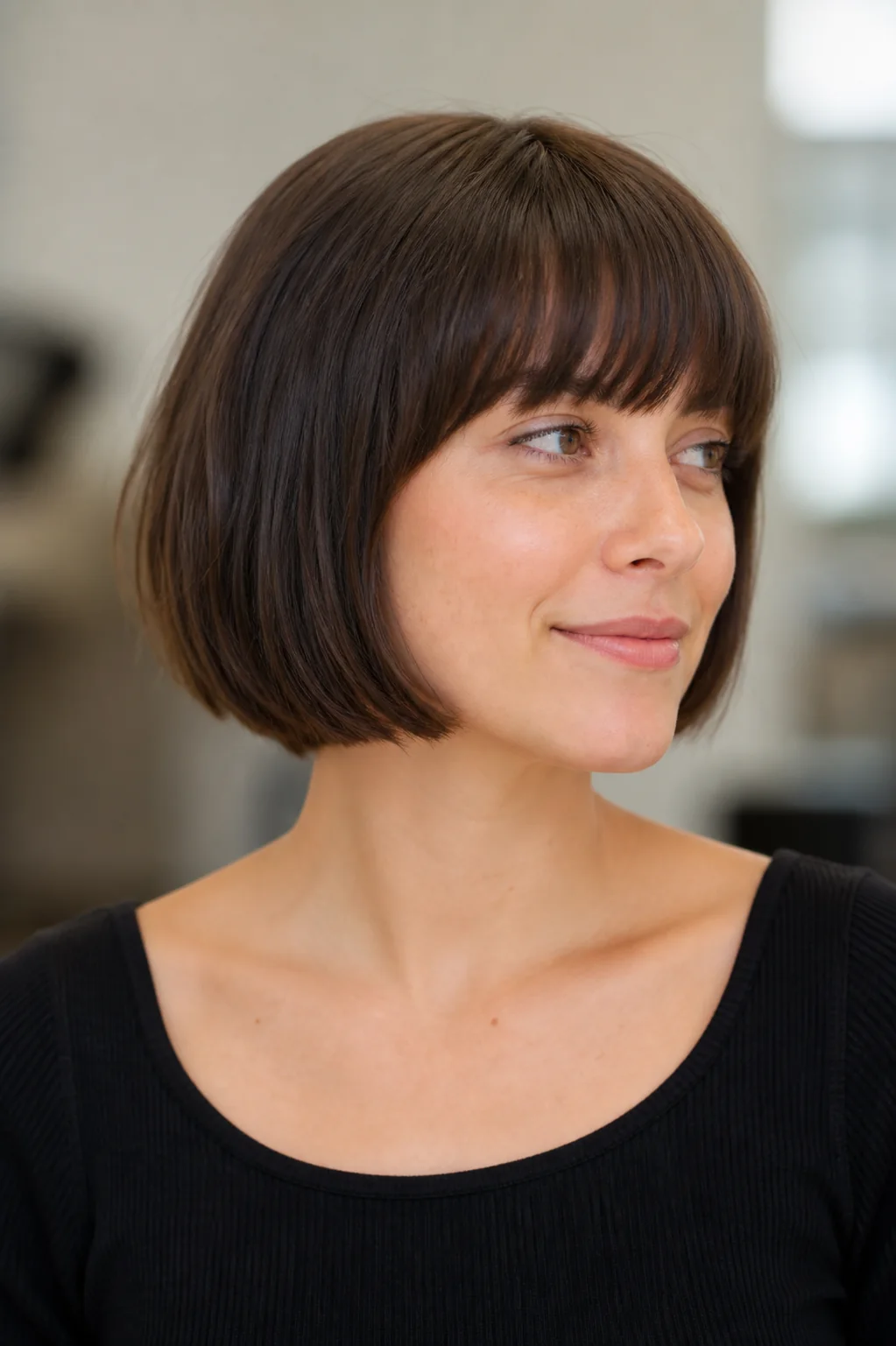
This is the version people picture first: a jaw-length brunette bob, full brow-skimming bangs and a softly rounded outline. It frames the eyes like punctuation and makes the cheekbones and lips feel more noticeable without needing elaborate styling.
The mood is confident, clever and unmistakably chic. Ask for a compact jaw-length bob with a solid perimeter, gentle beveling at the ends and bangs that connect naturally into the sides. Keep enough weight through the edge so it looks intentional rather than wispy.
Best for: Straight to softly wavy medium-density hair. Real-life fit: Beautiful when you enjoy a recognizable haircut and do not mind maintaining the fringe. Style it: Blow-dry the bangs first, then turn the ends under lightly rather than creating a stiff round shape.
2. Soft French Bob With Wispy Bangs
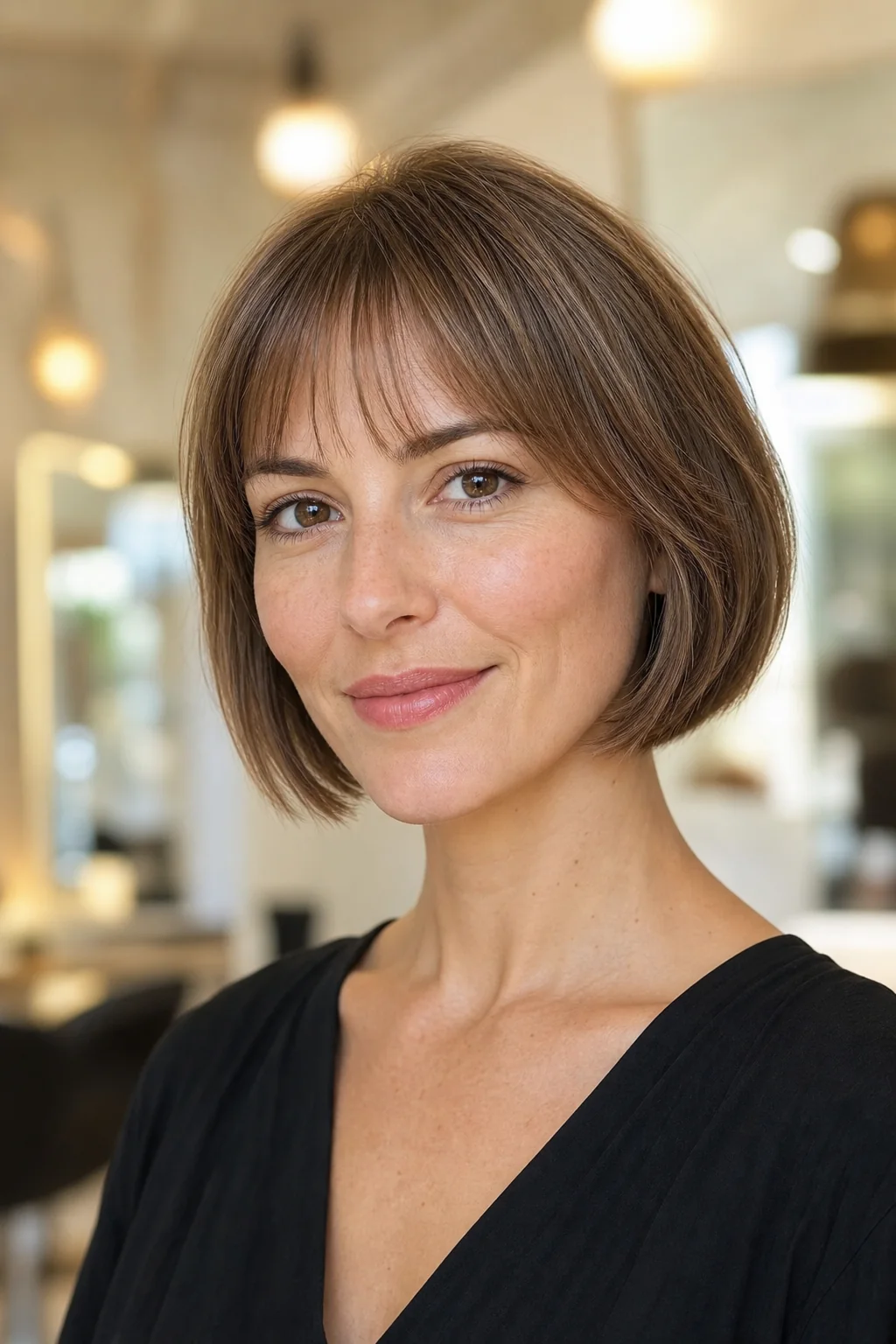
Wispy bangs give the eyes attention while leaving glimpses of forehead, which makes a short bob feel gentler and less enclosed. The lighter fringe also softens strong brows or an angular jaw without removing the French bob’s personality.
This version feels feminine, approachable and easy to wear. Ask for a jaw-skimming outline with a light, separated fringe and minimal layering through the perimeter. Fine hair needs restraint here: too much thinning can make both the bangs and ends disappear.
Best for: Fine to medium hair and anyone nervous about a heavy fringe. Know before choosing it: Wispy bangs can separate on oily or humid days. Style it: Use a small brush or fingers, then add only a trace of dry texture at the roots.
3. French Bob Without Bangs
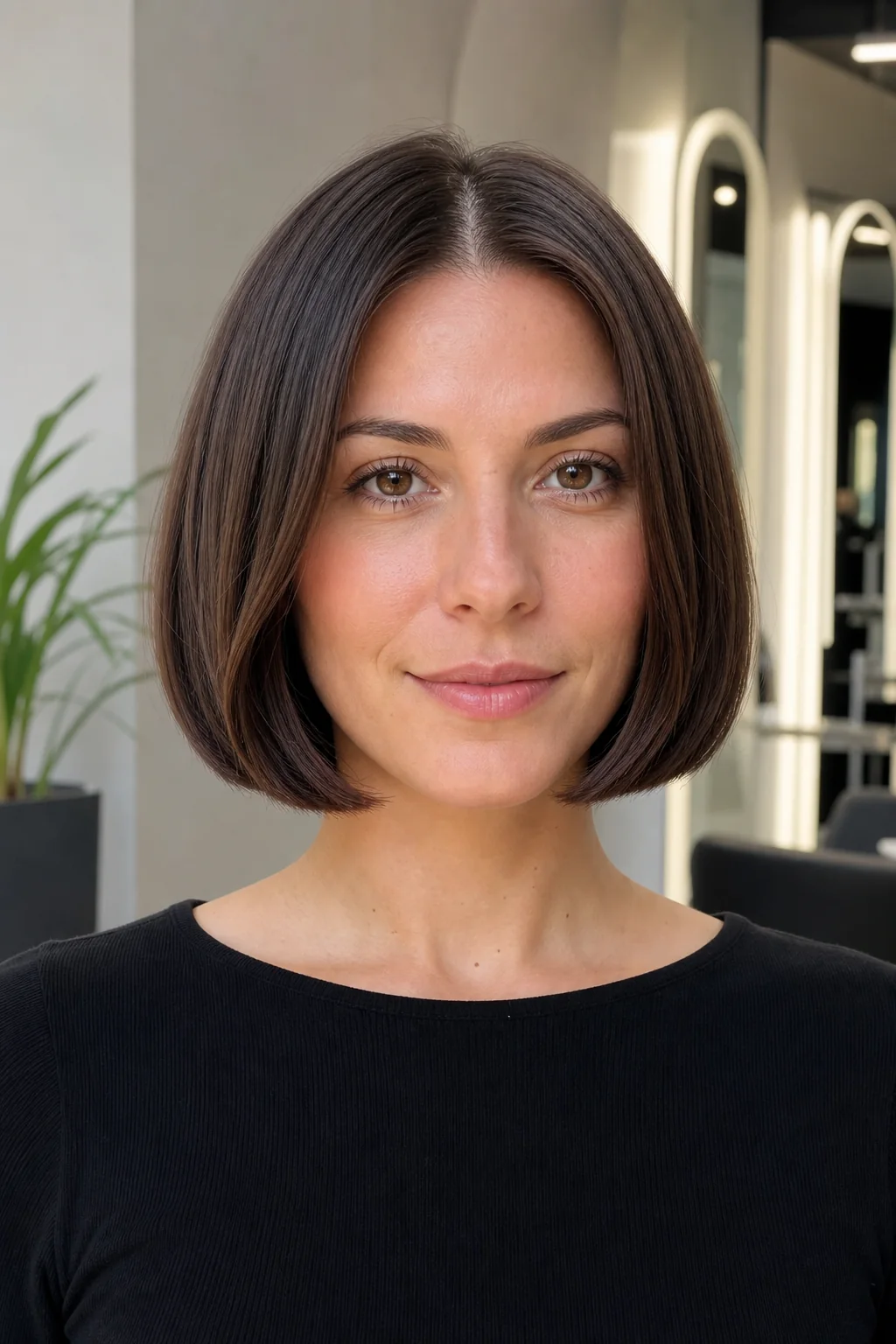
A French bob does not need bangs to look French. A clean center part opens the forehead, reveals the brows and creates two strong vertical lines that can make the face appear slightly longer. The compact length still keeps the result distinctive.
The feeling is minimalist and quietly expensive. Ask for a blunt cheekbone-to-jaw-length bob with a center or natural part, a clean neckline and only enough internal shaping to prevent bulk. The front should remain strong rather than heavily feathered.
Best for: Straight or gently wavy hair and people who prefer an open face. Real-life fit: Easier than bangs if you exercise often or dislike fringe trims. Style it: Smooth the roots and let a slight natural bend remain through the ends.
4. Wavy French Bob With Curtain Bangs
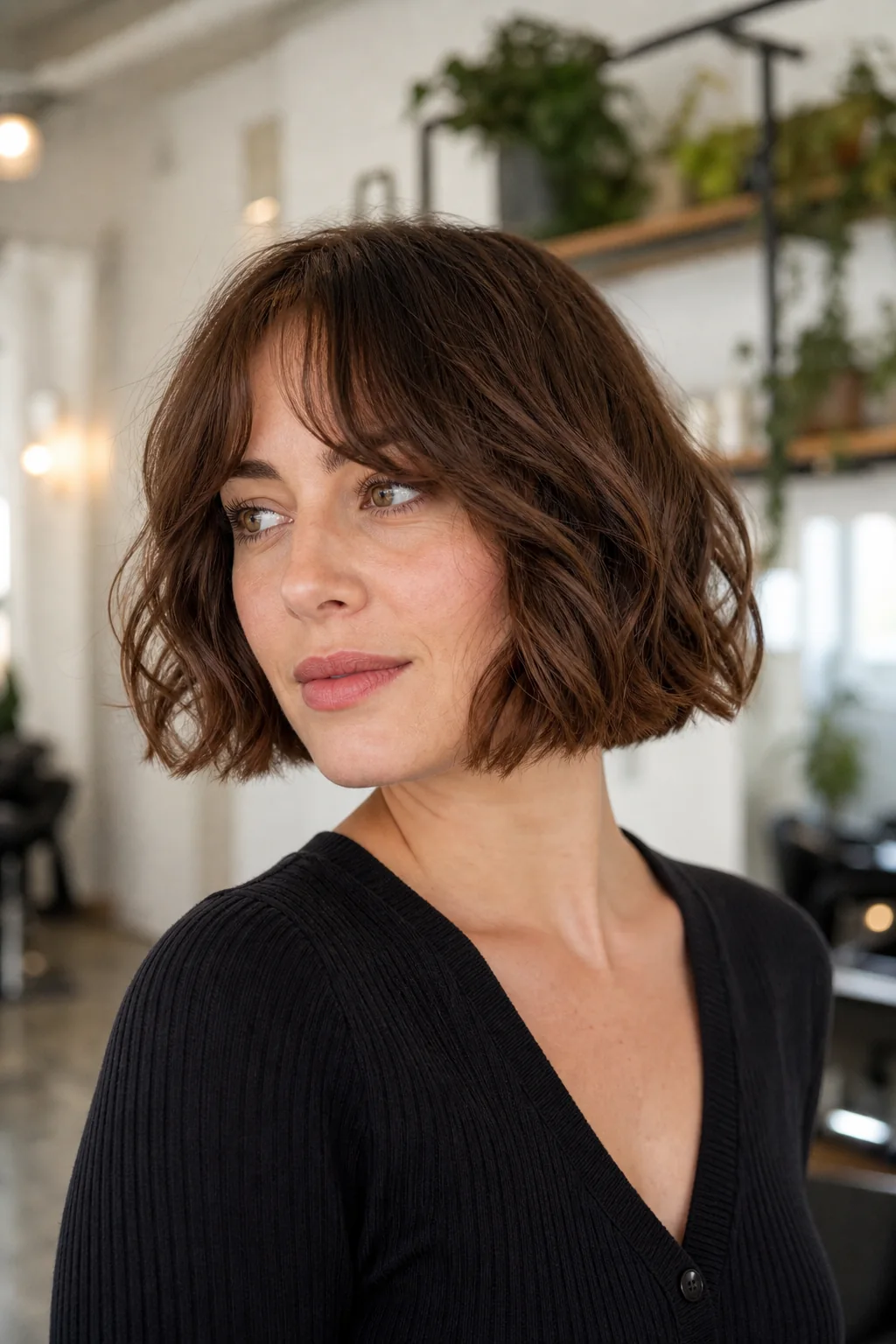
Loose waves soften the jaw-length outline while curtain bangs open around the eyes and sweep toward the cheekbones. That movement makes the face feel animated and can balance a broad forehead without hiding it completely.
This is romantic, modern and wonderfully touchable. Ask for a French bob that preserves enough length for your wave pattern, with center-parted bangs blending into the sides. Over-layering can break the waves apart, so the shape should come mainly from the perimeter.
Best for: Naturally wavy hair. Know before choosing it: The finished length will rise when waves dry. Style it: Scrunch in a light cream and diffuse gently, stopping before every wave becomes overly perfect.
5. Tousled French Bob for Fine Hair
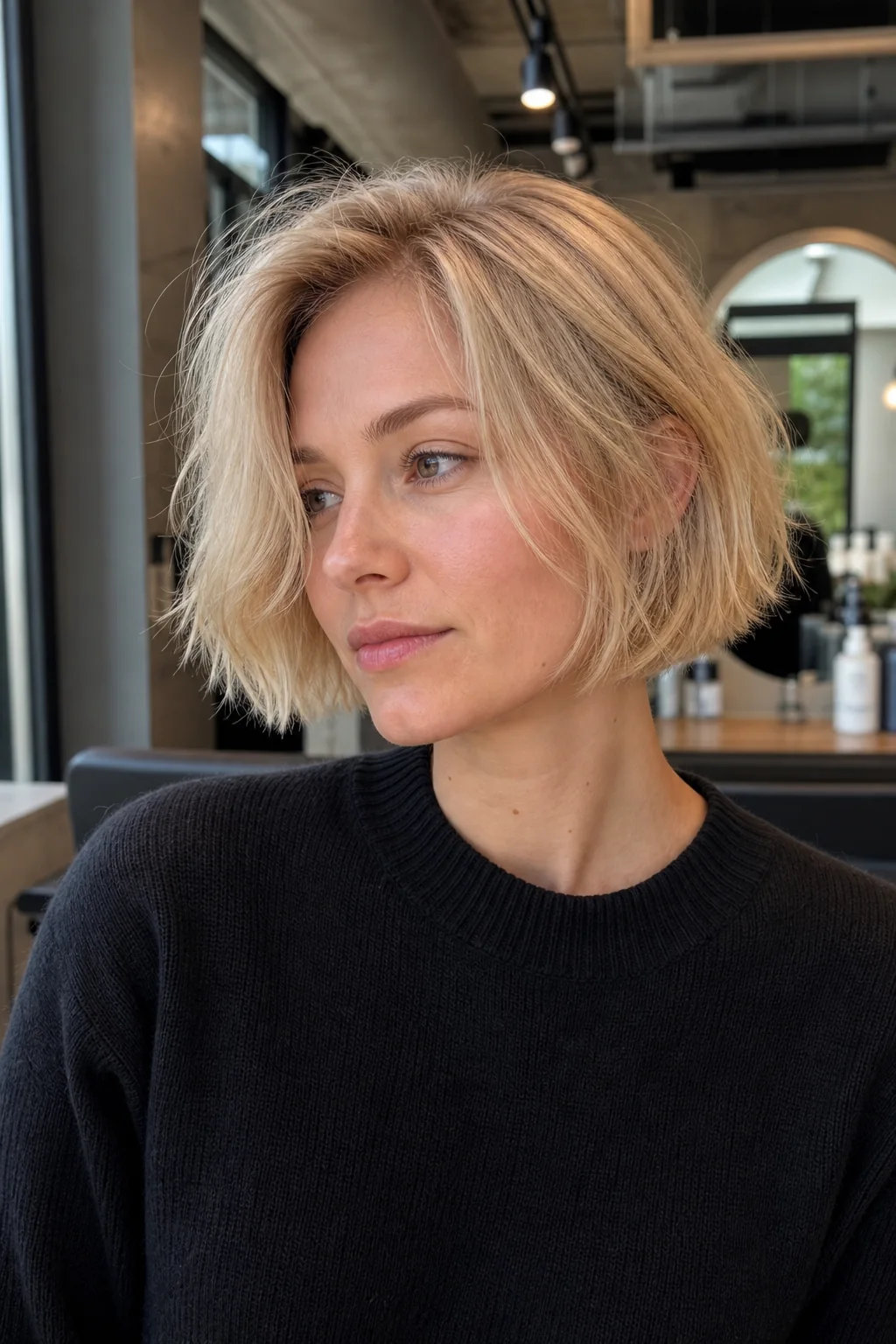
Fine hair can look fuller when a strong short outline is paired with airy bends rather than dozens of tiny layers. The slight irregularity creates shadow and movement, while the jaw-length edge preserves visible density.
The vibe is lively, youthful and effortless. Ask for a mostly blunt French bob with subtle internal movement and no aggressive thinning. A soft side or off-center part can expose more root lift than a fixed center part.
Best for: Fine straight-to-wavy hair that tends to sit flat. Real-life fit: A good choice when you want volume without a heavily styled blowout. Style it: Add bends in alternating directions, then loosen them with your fingers and a lightweight texture mist.
Pause and notice: The French bobs that look fullest are not always the most layered. A clear perimeter creates visual density; movement should support that edge, not dissolve it.
6. Sleek Blunt French Bob for Straight Hair
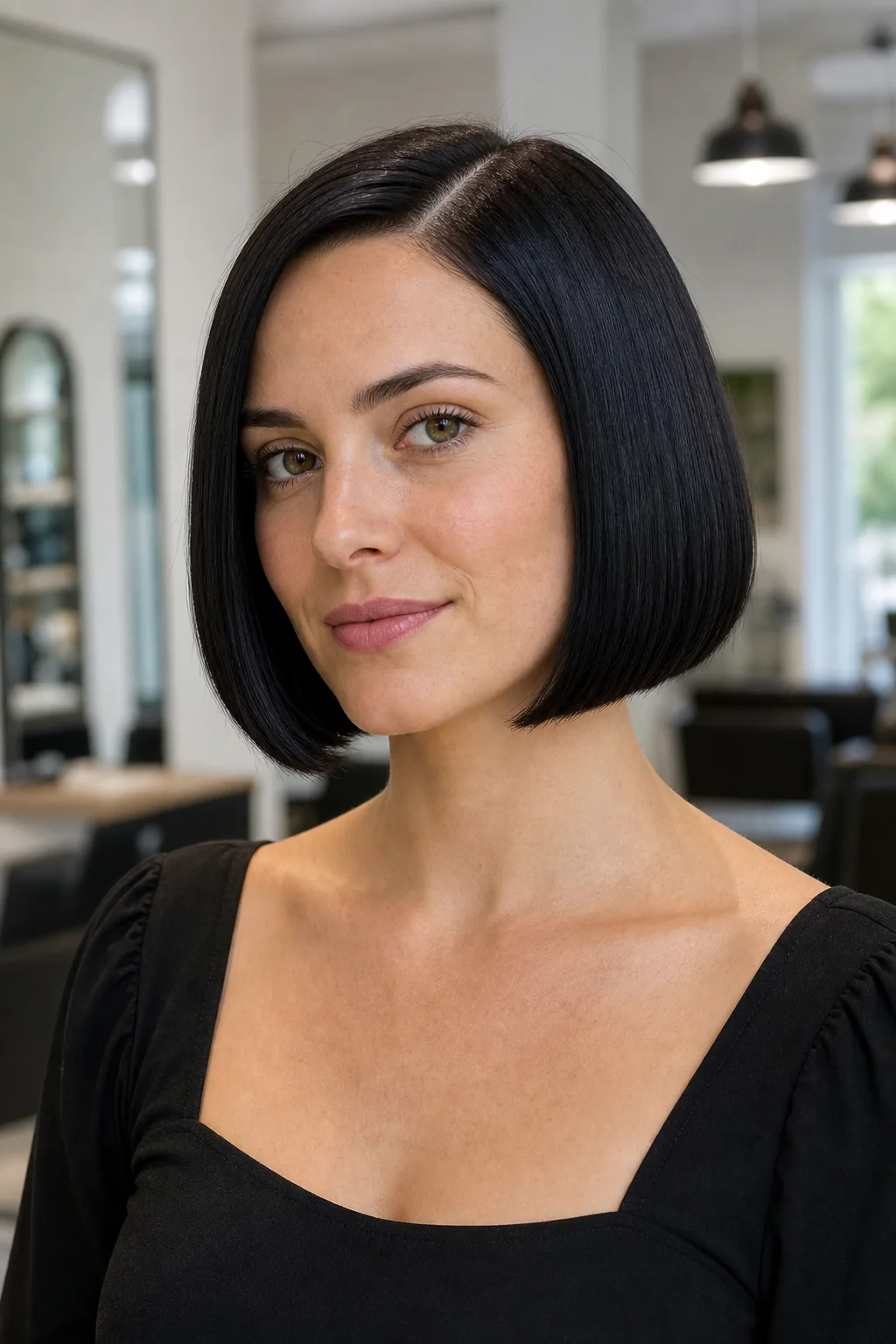
Straight hair makes every line visible, which turns a precise French bob into a striking graphic frame. The blunt edge draws attention toward the jaw, while a glossy surface makes the entire look feel polished and deliberate.
This version is sharp, elegant and fashion-aware. Ask for a one-length jaw-skimming bob with exact balance from side to side and minimal graduation. The final length should be agreed when dry because even a small difference is obvious on straight hair.
Best for: Naturally straight hair with medium density. Know before choosing it: Precision outlines show growth and uneven ends sooner. Style it: Use heat protection and a smooth blow-dry, then curve only the last half-inch inward.
7. Curly French Bob With a Soft Fringe
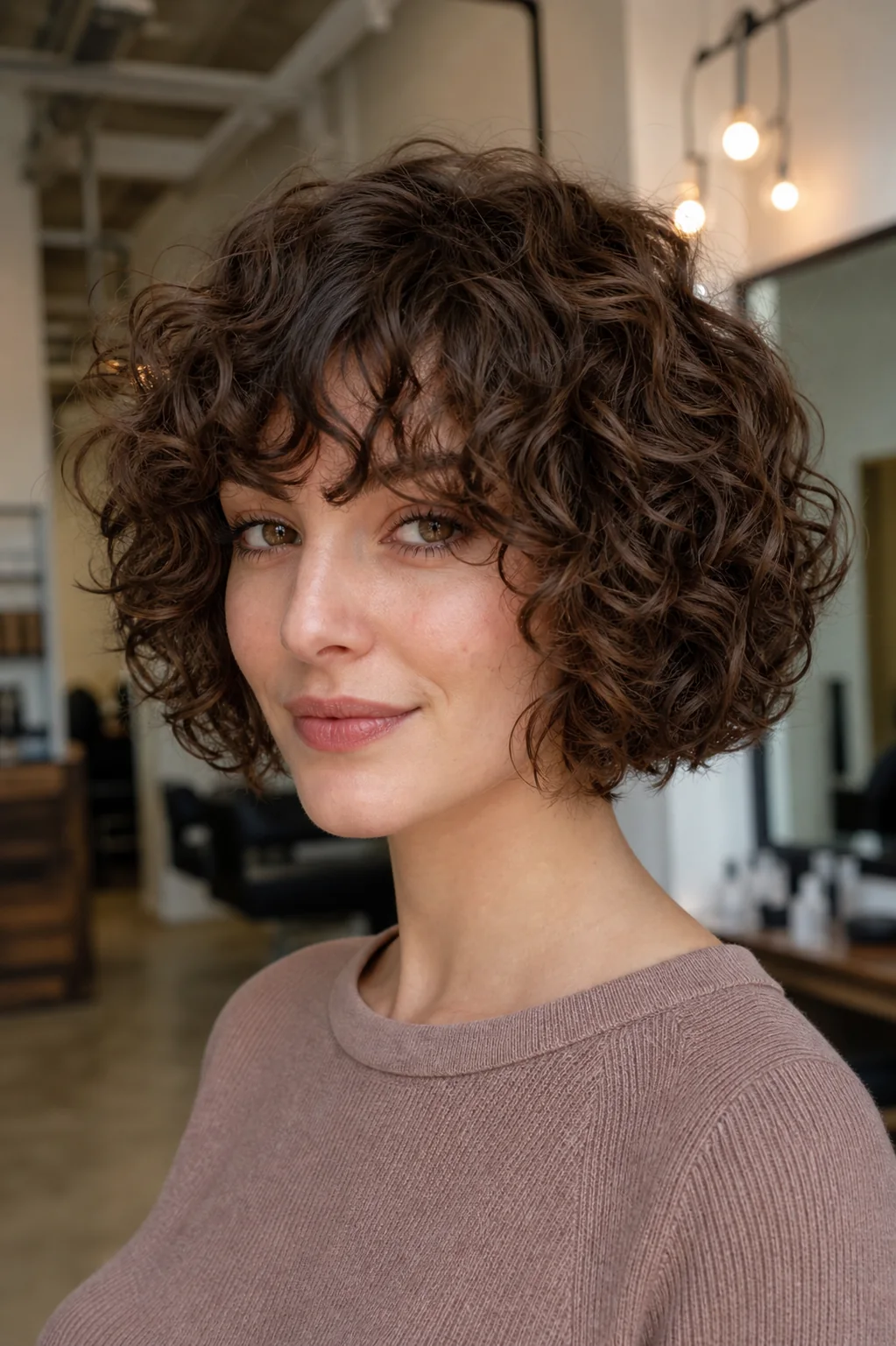
Curls turn the French bob into a soft halo around the eyes and cheekbones. A curly fringe gives the face personality, while the short rounded outline prevents the shape from becoming a generic shoulder-length curl cut.
The mood is joyful, artistic and individual. Ask for a curl-by-curl jaw-length shape with enough length for shrinkage and a soft fringe cut in its natural state. Avoid thinning shears that can disturb the curl pattern and create fuzzy ends.
Best for: Loose to medium curls. Real-life fit: Ideal when you want your natural texture to lead the style. Style it: Apply curl cream to very wet hair, encourage a few fringe curls into place and diffuse with minimal touching.
8. Choppy Textured French Bob
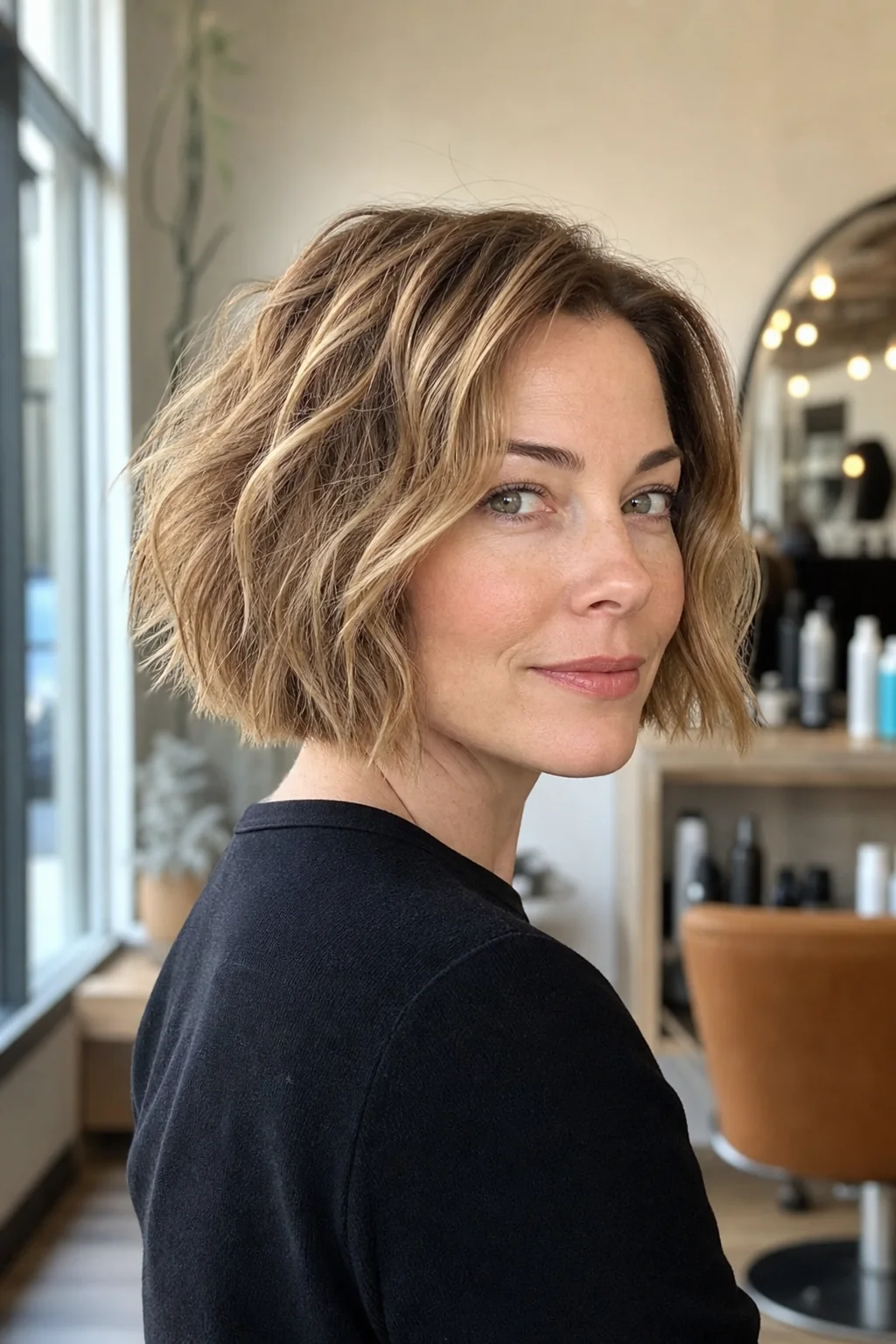
Broken-up ends remove the formality from a short bob and give the outline visible energy. The texture directs attention toward the eyes and mouth while making slight day-to-day imperfections look intentional.
This one feels playful, creative and a little rebellious. Ask for a French bob with a strong underlying perimeter and carefully placed surface texture—not a heavily shredded edge. The cut still needs enough structure to read as a bob.
Best for: Medium-density straight or wavy hair. Know before choosing it: Too much product can turn airy pieces into stiff spikes. Style it: Twist a few ends with a pea-sized amount of paste, leaving most of the hair soft.
9. French Bob With Side-Swept Bangs
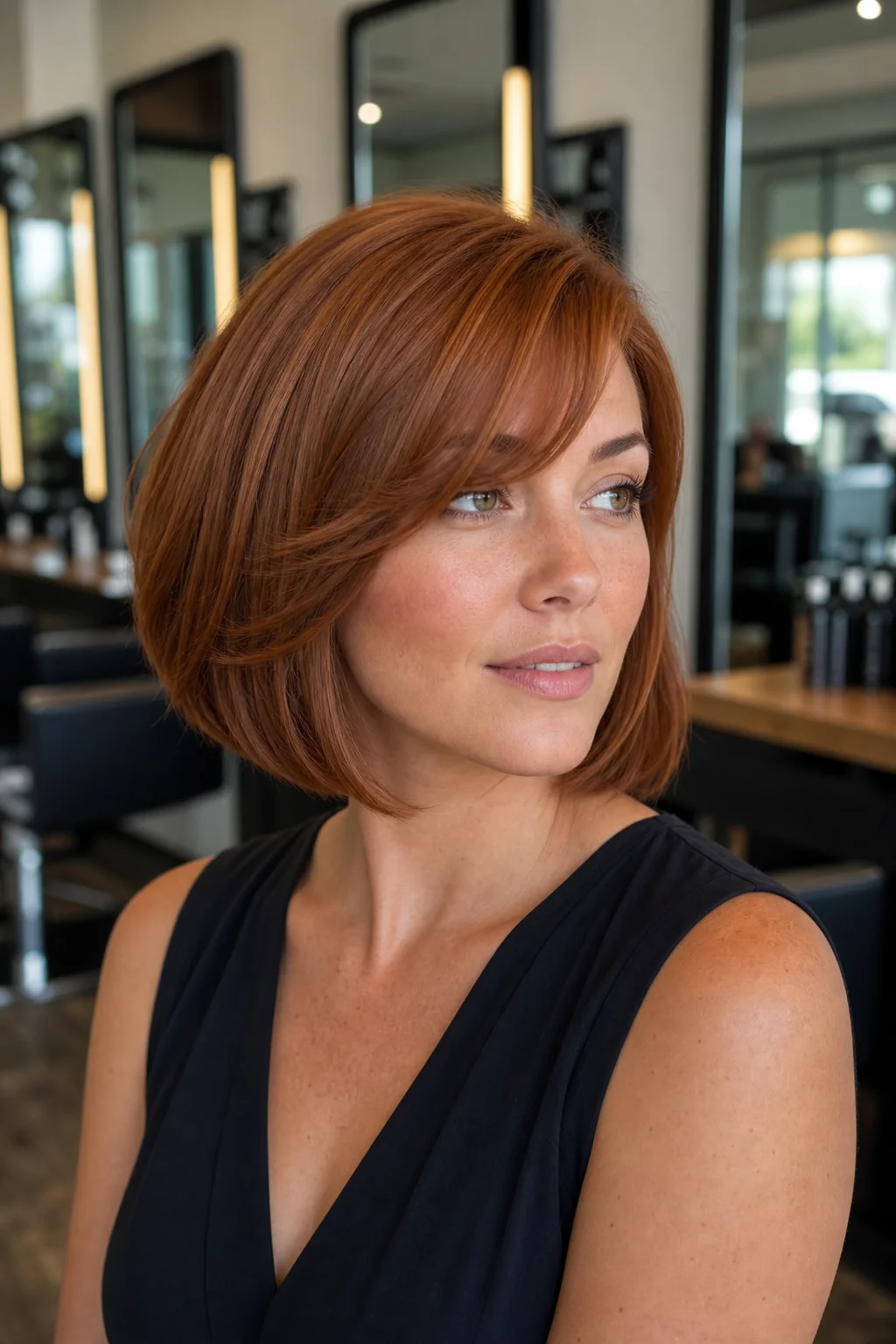
A diagonal fringe creates direction across the face, softens the forehead and can visually lengthen rounder features. The opposite side opens the cheekbone, giving this bob a flattering sense of asymmetry without making the cut itself uneven.
The feeling is polished, graceful and easy to understand in the mirror. Ask for a jaw-length French bob with long side-swept bangs connected into the front corner. Keep enough weight in the fringe for a clean sweep.
Best for: Straight to softly wavy hair and side-part wearers. Real-life fit: More forgiving than full bangs as they grow. Style it: Direct the fringe across the forehead while damp, then tuck or lift the open side.
10. Silver French Bob for Women Over 50
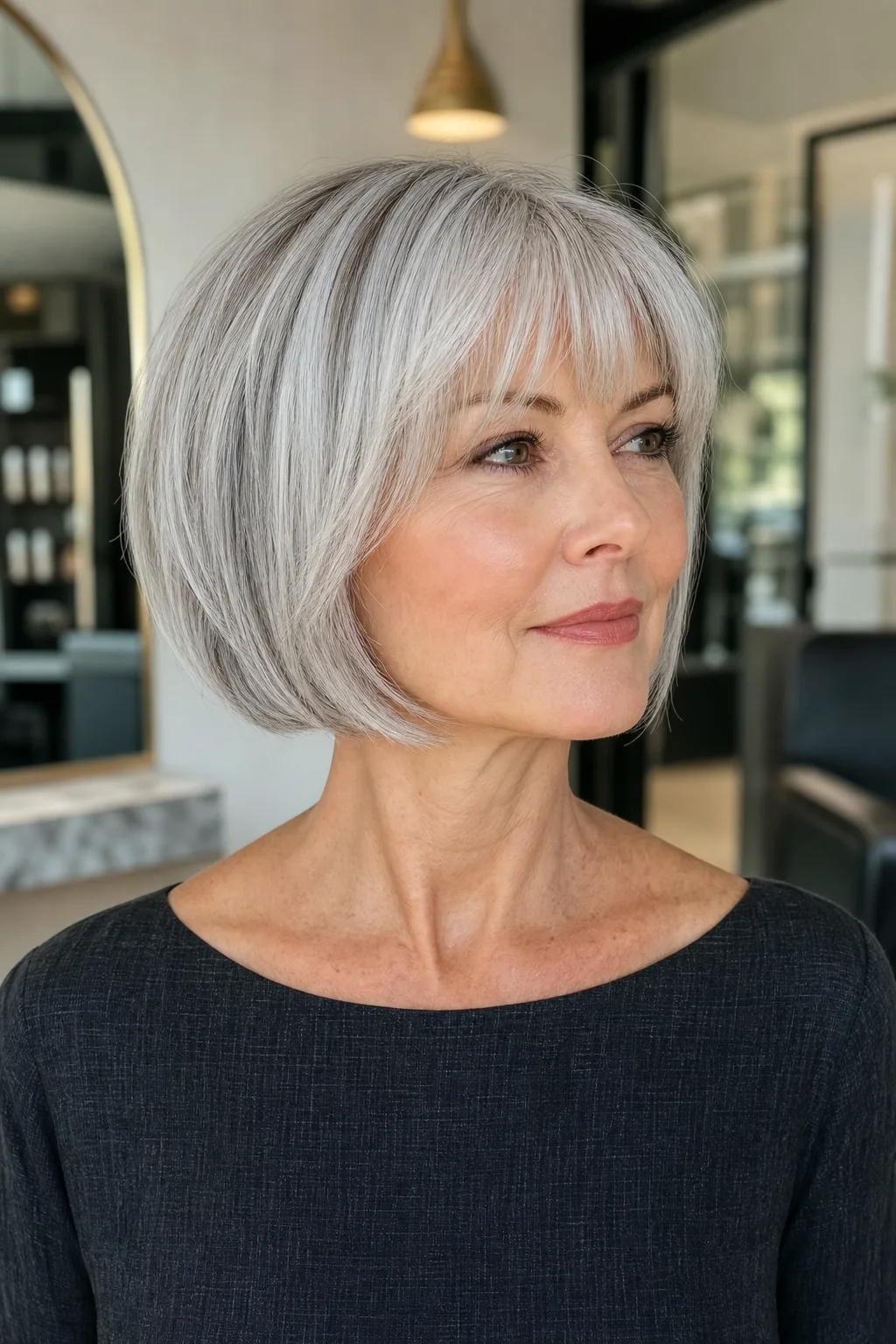
Silver hair reflects light beautifully, and a clean French-bob outline turns that luminosity into a modern statement. Softness around the temples can flatter the face, while gentle lift prevents the short shape from feeling severe.
This cut feels assured, contemporary and elegant—not as though it is trying to imitate younger hair. Ask for a softly beveled jaw-length bob with light movement, a flattering fringe and enough perimeter weight to showcase the silver color.
Best for: Silver or gray fine-to-medium hair. Know before choosing it: Very blunt bangs can feel stronger than expected; soften them if that is not your style. Style it: Use a lightweight root lift and a shine-enhancing finish rather than heavy wax.
Pause and notice: A flattering haircut is not about hiding age. It is about choosing where the eye lands—toward bright eyes, strong cheekbones, beautiful silver color or an elegant neckline.
11. Rounded French Bob for Thick Hair
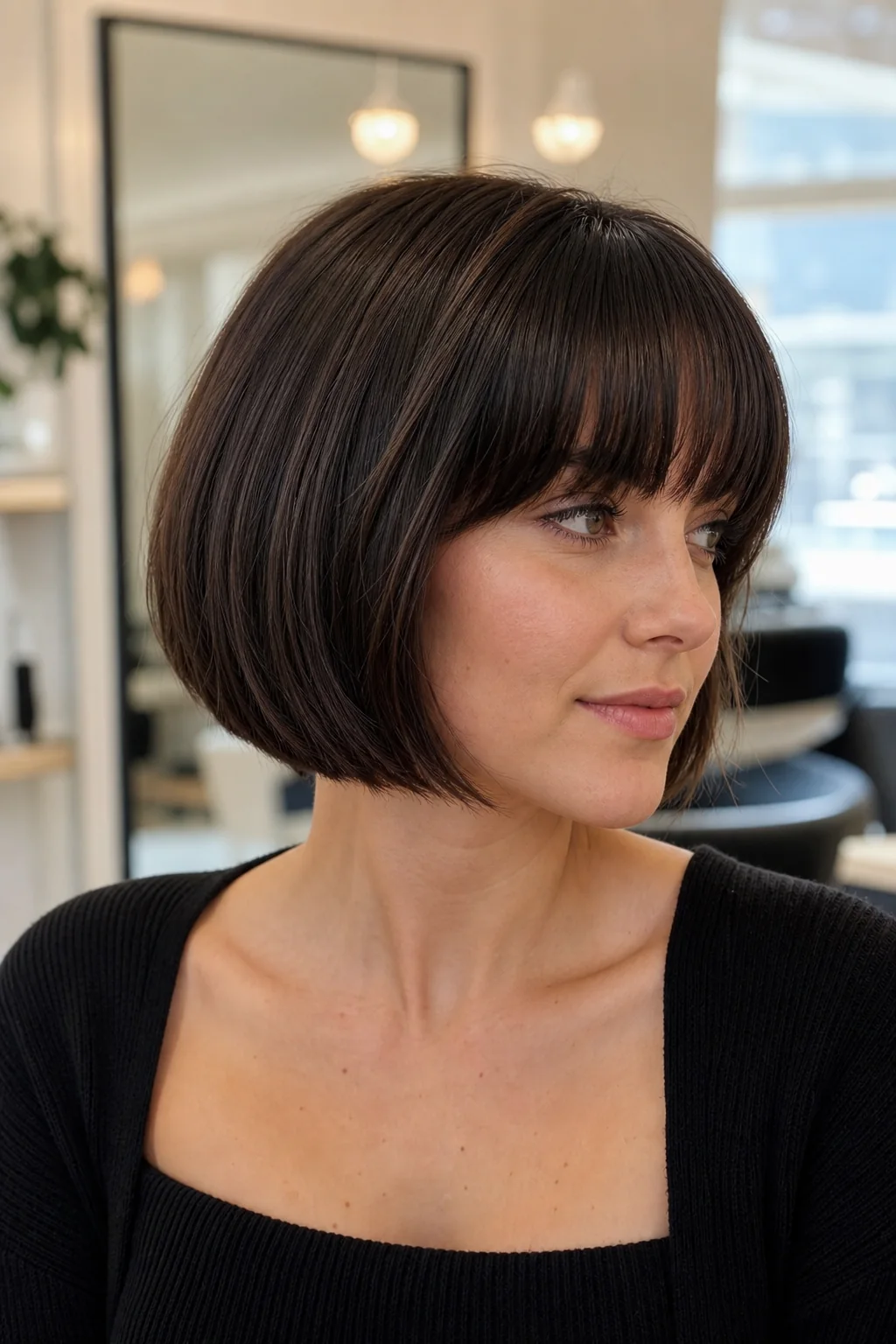
Thick hair gives a French bob wonderful presence, but hidden bulk can push the shape outward into a triangle. Controlled internal shaping lets the hair curve around the head while preserving a rich, substantial perimeter.
The mood is luxurious, sculpted and composed. Ask for a rounded jaw-length bob with weight removed internally—not hacked from the visible edge—and subtle under-beveling at the nape. The sides should hug rather than balloon.
Best for: Thick straight or softly wavy hair. Real-life fit: Excellent when you want short hair that still looks abundant. Style it: Dry in sections with the airflow pointing downward, then let the natural density provide the finish.
12. Face-Framing French Bob for a Round Face
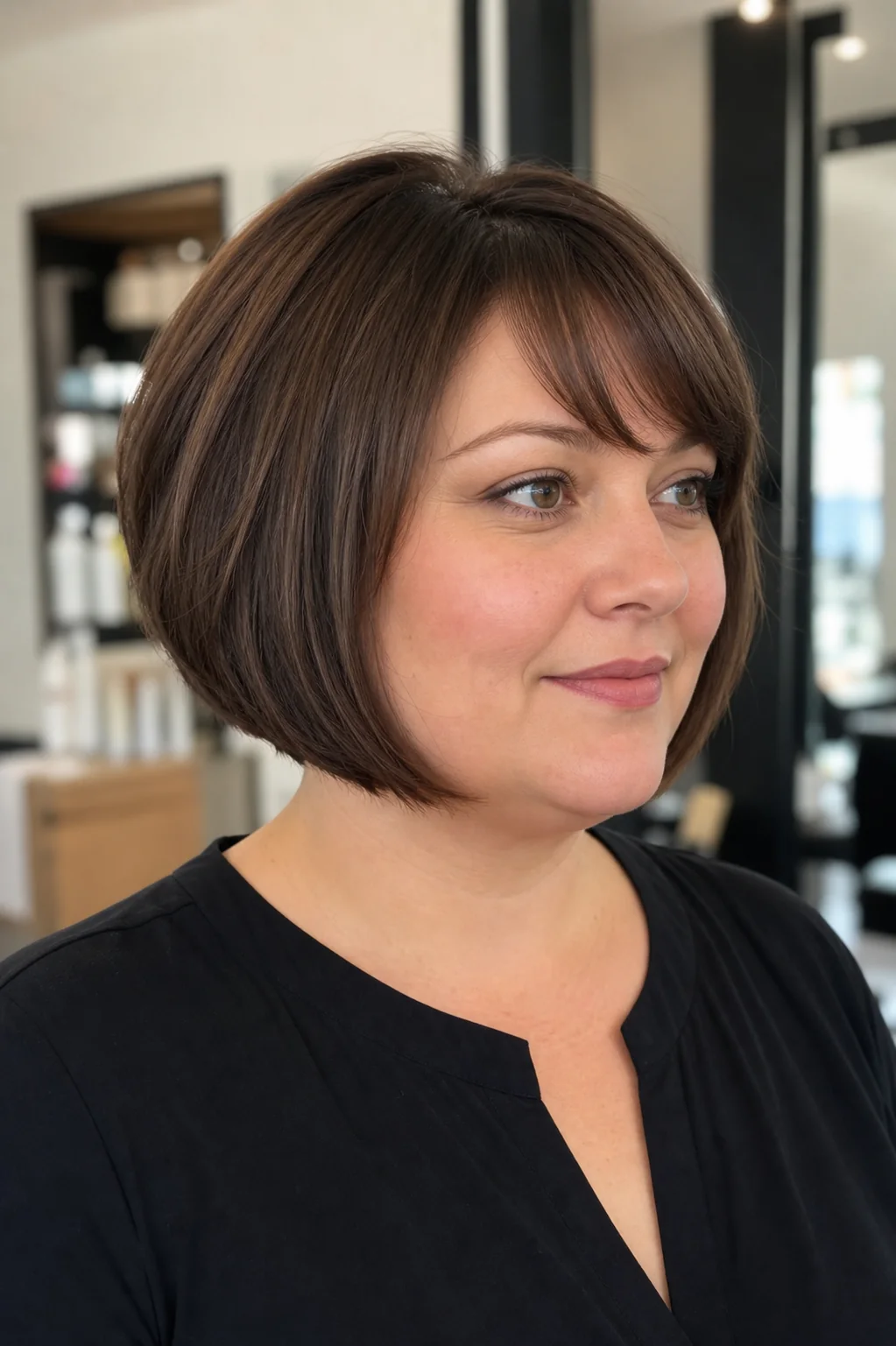
A slightly longer front, diagonal fringe and controlled height create lines that guide the eye up and down rather than only across. The result does not “change” a round face; it gives the features more directional framing.
This version feels balanced, soft and confidently tailored. Ask for a compact back, front corners grazing below the fullest part of the cheek and a side fringe that blends into them. Avoid maximum width directly beside the cheeks if lengthening is your goal.
Best for: Round or softly curved face shapes. Know before choosing it: Face shape is guidance, not permission; choose the proportions you actually enjoy. Style it: Lift the top gently and keep the sides close without flattening them.
13. Blonde French Bob With Darker Roots
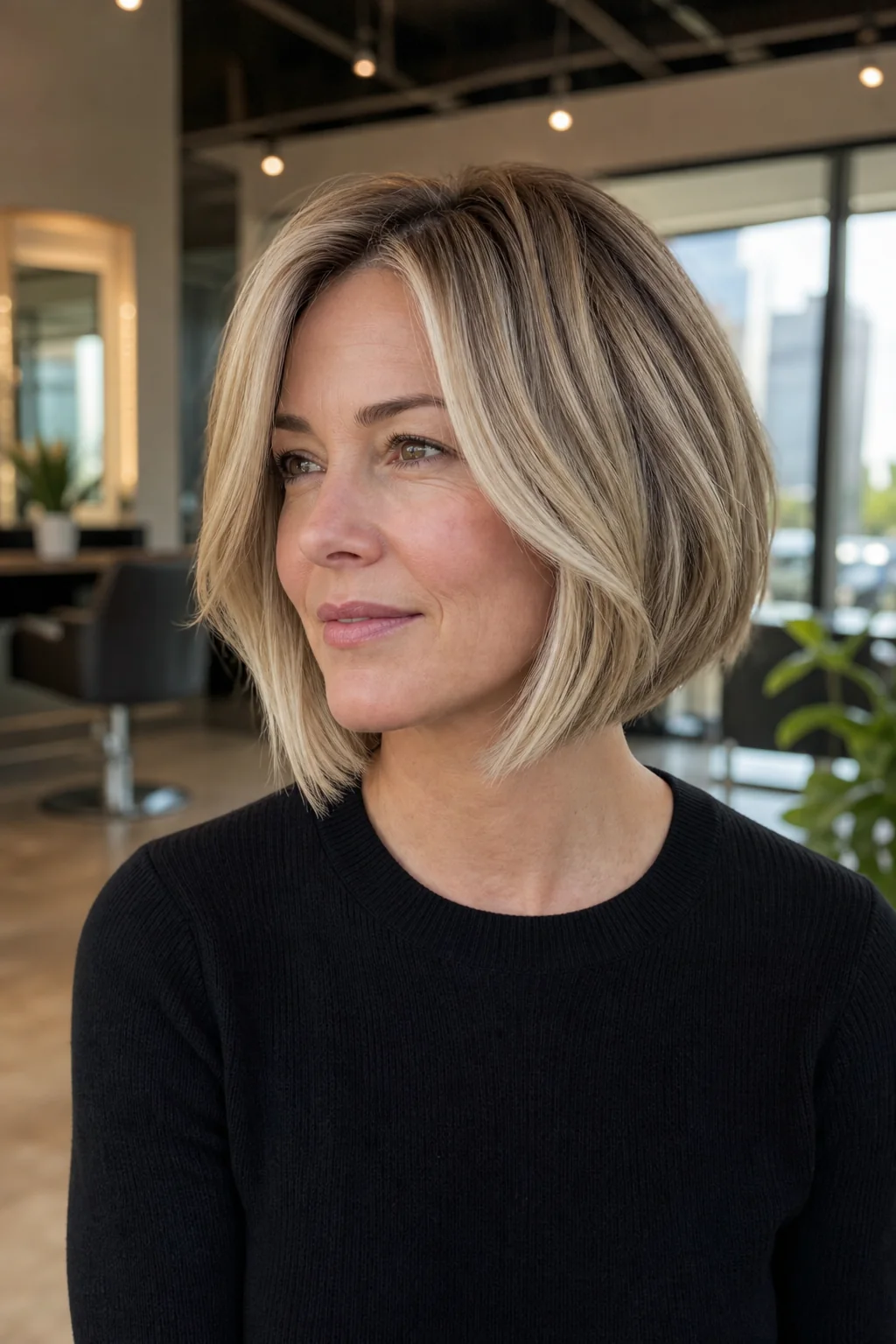
Darker roots create depth beneath blonde lengths, making every bend and layer easier to see. Brightness around the face draws attention to the eyes and skin, while the root contrast keeps the look relaxed rather than overly pristine.
The vibe is sunny, modern and slightly undone. Ask for a jaw-length French bob with soft texture and color placement that follows the haircut. A subtle shadow root usually grows more gracefully than a hard line.
Best for: Blonde or highlighted hair needing visible dimension. Real-life fit: Useful if frequent all-over color appointments are unrealistic. Style it: Use a dry texture spray sparingly so the blonde remains luminous rather than powdery.
14. Low-Maintenance Air-Dried French Bob
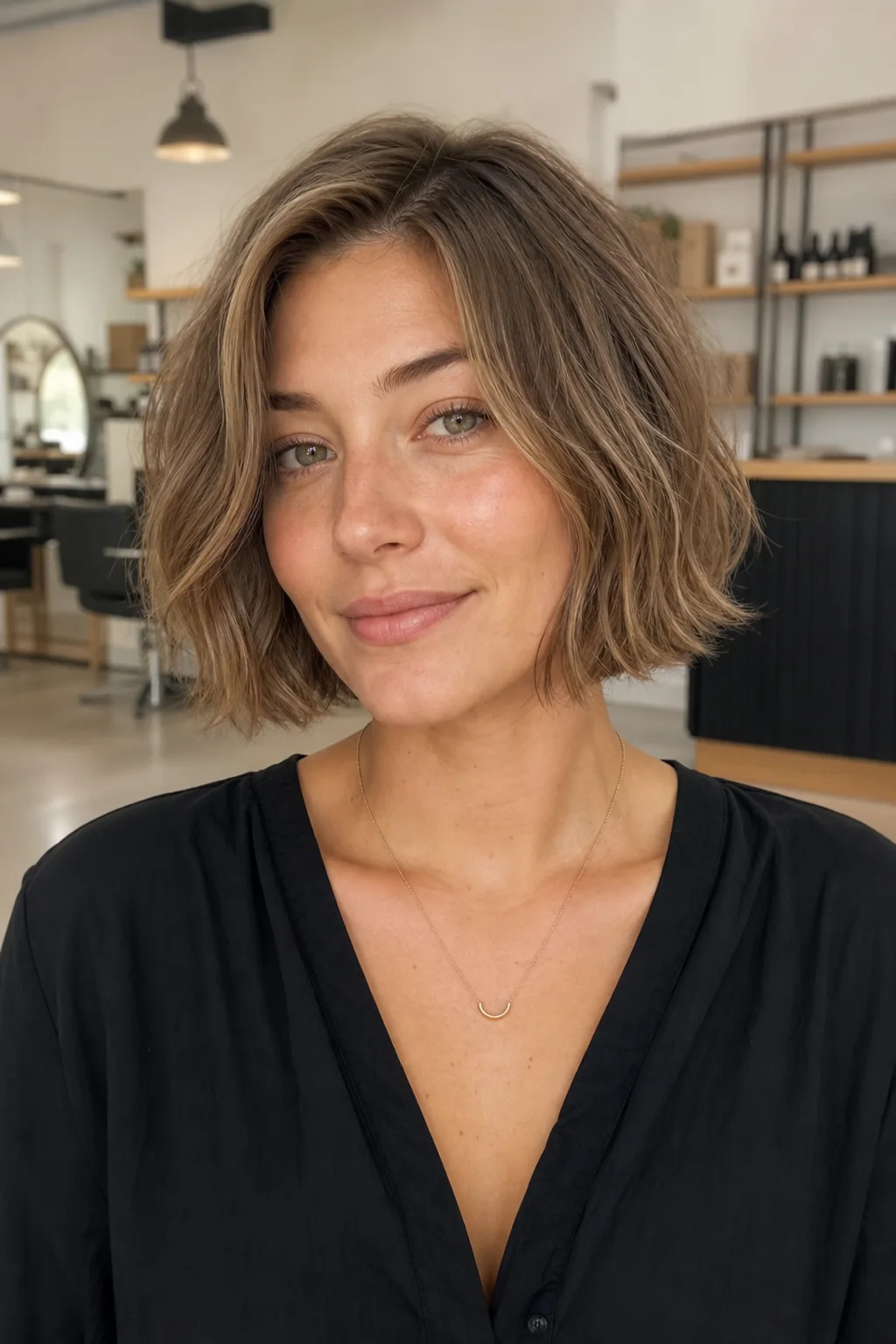
Low maintenance begins with respecting the way hair actually dries. Natural bends and an imperfect part give this bob charm, while a carefully chosen perimeter ensures the shape still looks intentional without a blow-dryer.
This is easygoing, authentic and quietly stylish. Ask for a French bob cut in your natural fall, with enough internal release to prevent bulky areas and no details that require daily straightening.
Best for: Hair with natural bends or irregular waves. Know before choosing it: Air-dried does not mean no maintenance; the outline still needs reshaping. Style it: Apply a light leave-in product, arrange the front and let the rest dry with minimal interference.
15. Short Micro French Bob With Baby Bangs
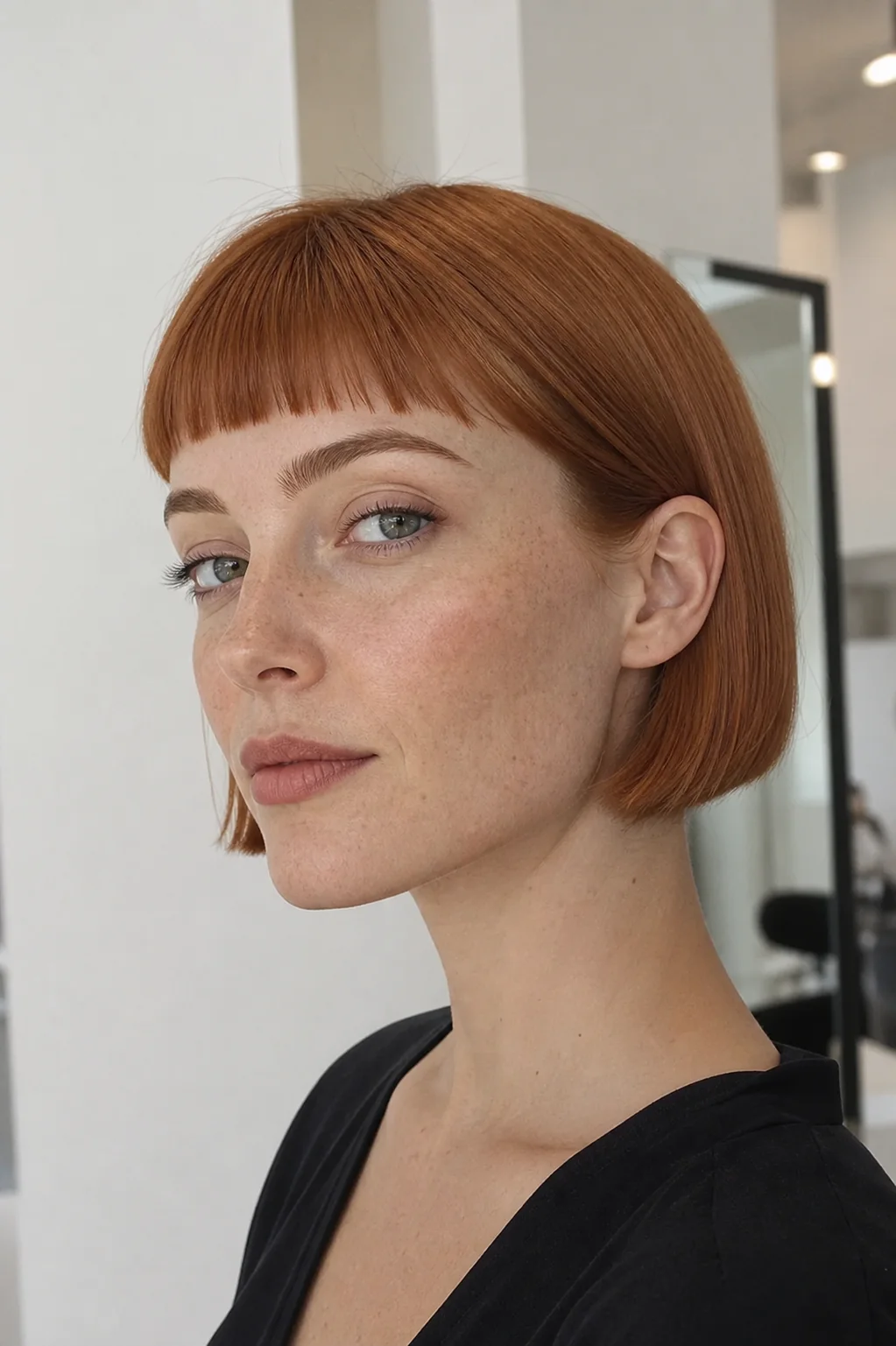
Cut above the jaw with a tiny fringe, this is the boldest interpretation in the gallery. It exposes the brows, cheekbones, ears and neck, so the face—not the hair—becomes the main event.
The mood is artistic, fearless and memorable. Ask for a cheekbone-to-ear-length micro bob with a precise short fringe and a softly finished nape. Agree on the dry length carefully because there is little room for hesitation once cut.
Best for: Straight to slightly wavy hair and confident short-hair lovers. Real-life fit: Best when regular trims and visible facial features feel exciting rather than uncomfortable. Style it: Keep the finish simple; the proportions already provide the drama.
Pause and notice: Shorter does not automatically mean harsher. Soft texture, fringe weight and the exact point where the perimeter meets the face decide whether a crop feels delicate, graphic or bold.
16. Ear-Length French Bob That Shows the Cheekbones
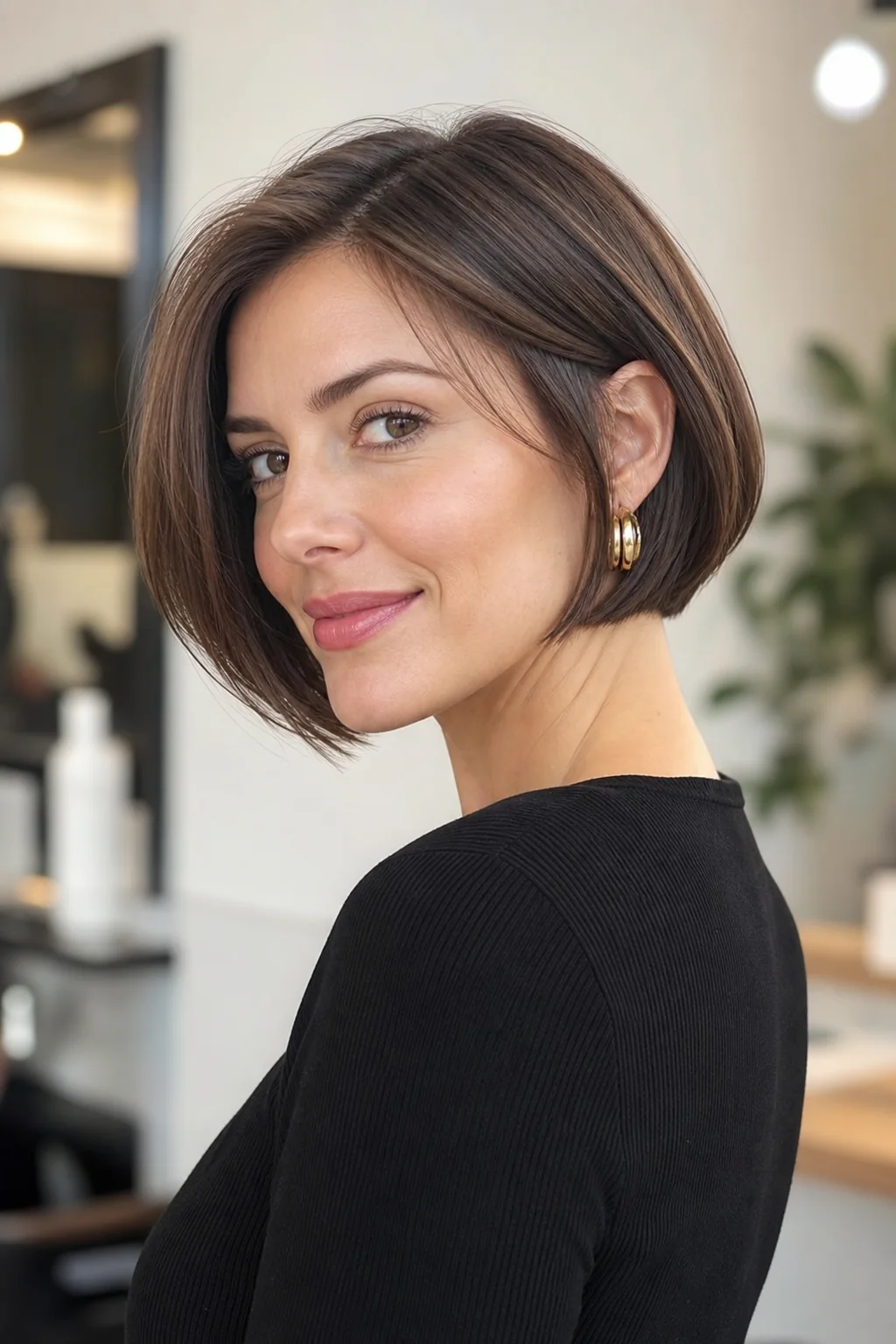
An ear-length bob opens the sides of the face and makes cheekbones, earrings and the neck more visible. A little softness through the front prevents the cut from looking helmet-like while preserving its crisp short silhouette.
This style feels spirited, feminine and distinctly Parisian-inspired. Ask for an ear-grazing outline, soft graduation at the nape and enough movement near the temples to tuck naturally.
Best for: Petite features and anyone who loves statement earrings. Know before choosing it: The ears remain visible most of the time. Style it: Create slight bends rather than a uniform curl, then tuck one side for asymmetry.
17. French Bob With Glasses and Soft Bangs
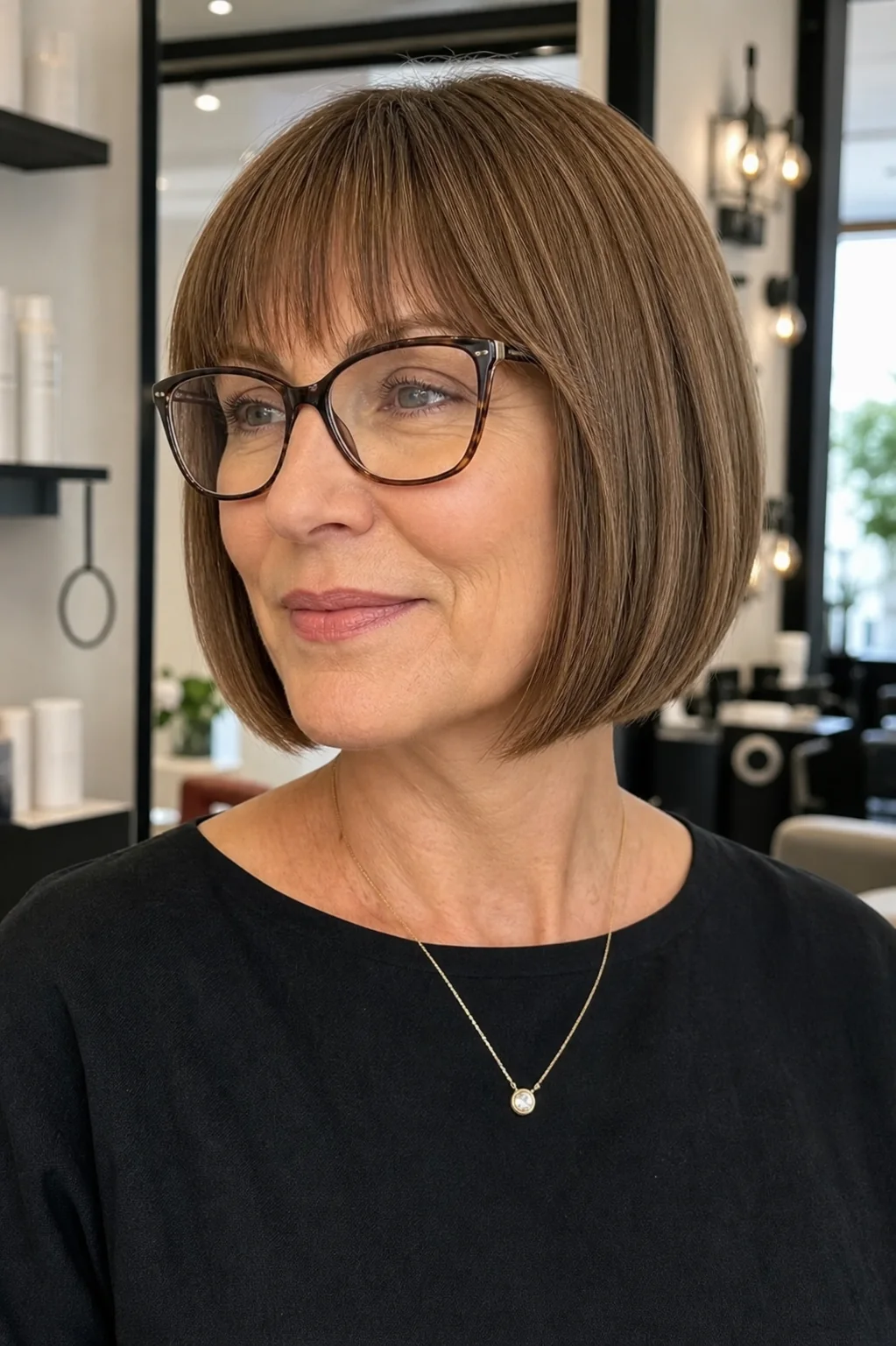
Glasses and bangs both frame the eyes, so they need to cooperate rather than compete. A soft fringe ending above the frames keeps the expression open, while tidy sides prevent the temples from becoming crowded.
The result is intelligent, warm and polished. Ask for bangs shaped while wearing your usual glasses and sides that sit cleanly around the arms. Bring the frames you wear most often to the appointment.
Best for: Glasses wearers with straight or softly wavy hair. Real-life fit: Particularly useful if long sides often catch beneath frames. Style it: Dry the fringe forward first, then separate it lightly so the brow line remains visible.
18. French Bob With a Sculpted Back
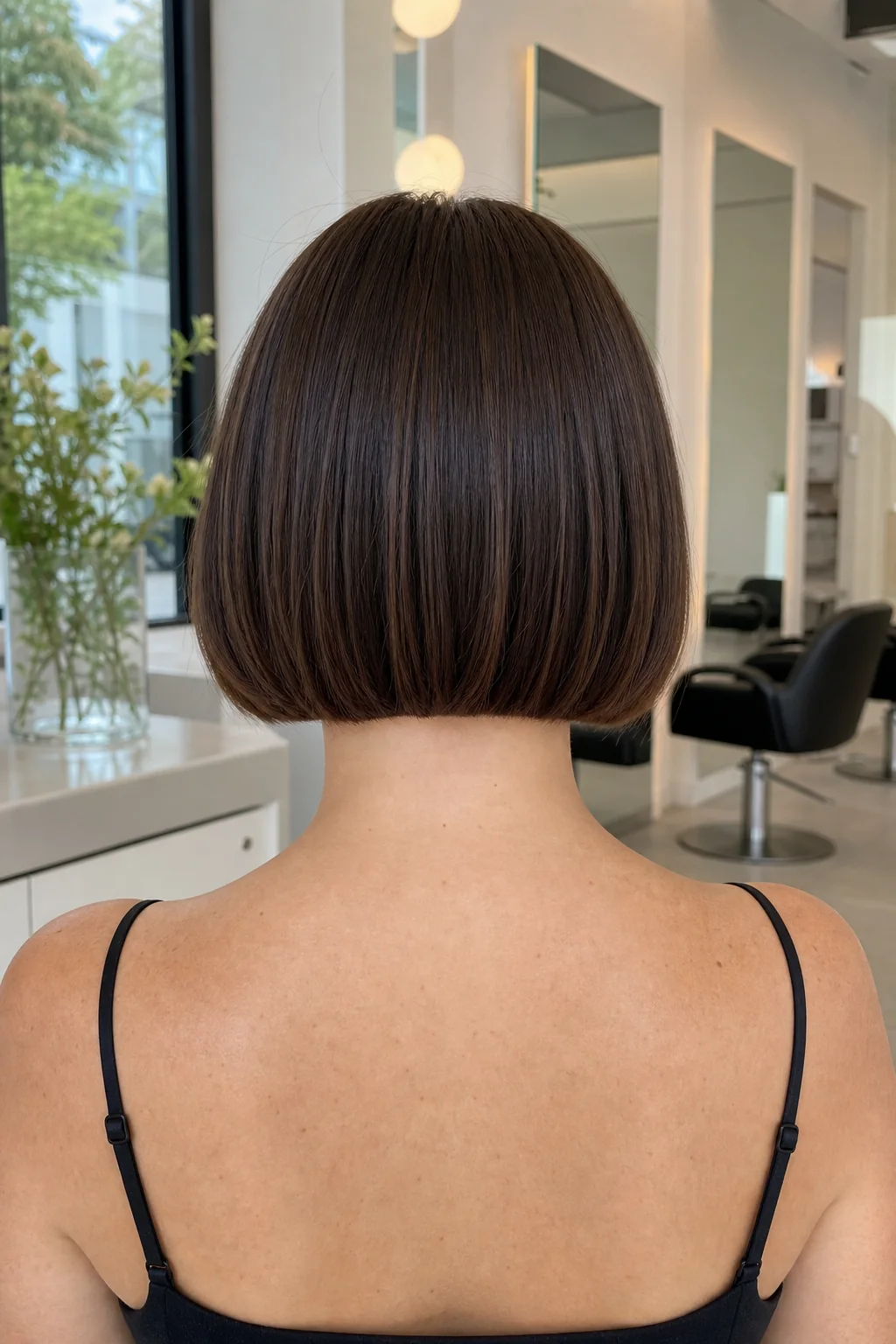
The back decides whether a short bob looks beautifully finished when you walk away. A softly beveled nape follows the head without becoming a steep stacked wedge, keeping the silhouette compact and elegant from every angle.
This detail feels precise, refined and salon-fresh. Ask for a clean French-bob perimeter with subtle under-graduation and a neckline that suits your natural growth pattern. Avoid excessive stacking if you want the classic French shape.
Best for: Straight to softly wavy hair. Know before choosing it: Strong necklines reveal growth sooner. Style it: Direct the roots downward at the back and check the silhouette with a hand mirror rather than focusing only on the front.
19. Longer French Bob That Grows Out Gracefully
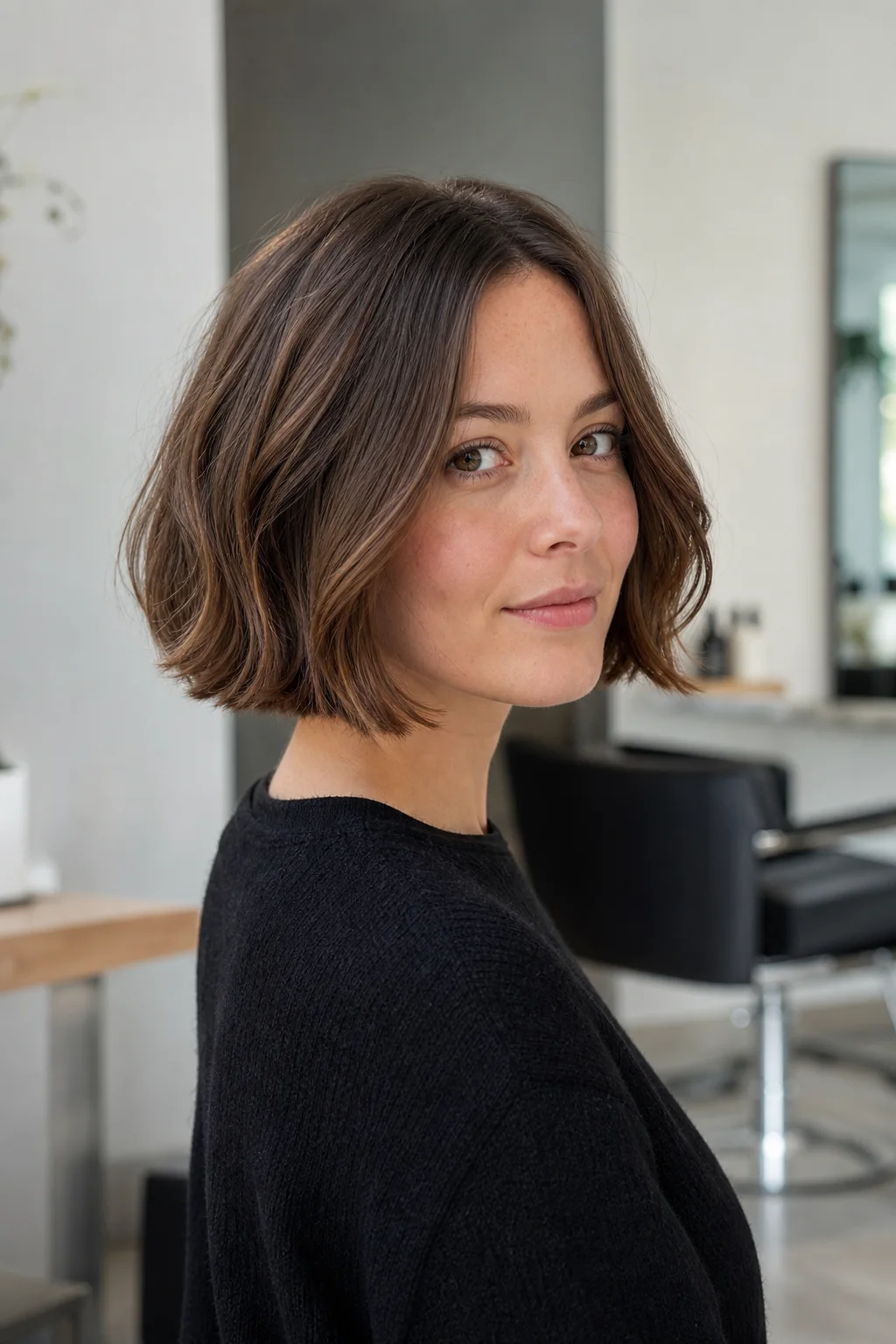
Sitting just below the jaw, this variation keeps the compact personality of a French bob while offering more movement and an easier path toward a classic bob. The extra length also gives waves more room to form.
The mood is relaxed, versatile and reassuring for a first short haircut. Ask for a chin-plus outline, soft connected movement and a nape that will not become bulky as it grows.
Best for: Wavy hair, cautious first-time bob wearers and anyone planning a graceful grow-out. Real-life fit: Offers more styling flexibility, though it will lose the strongest French-bob proportions sooner. Style it: Alternate loose bends and leave the ends touchable.
20. Glamorous Swept-Back French Bob
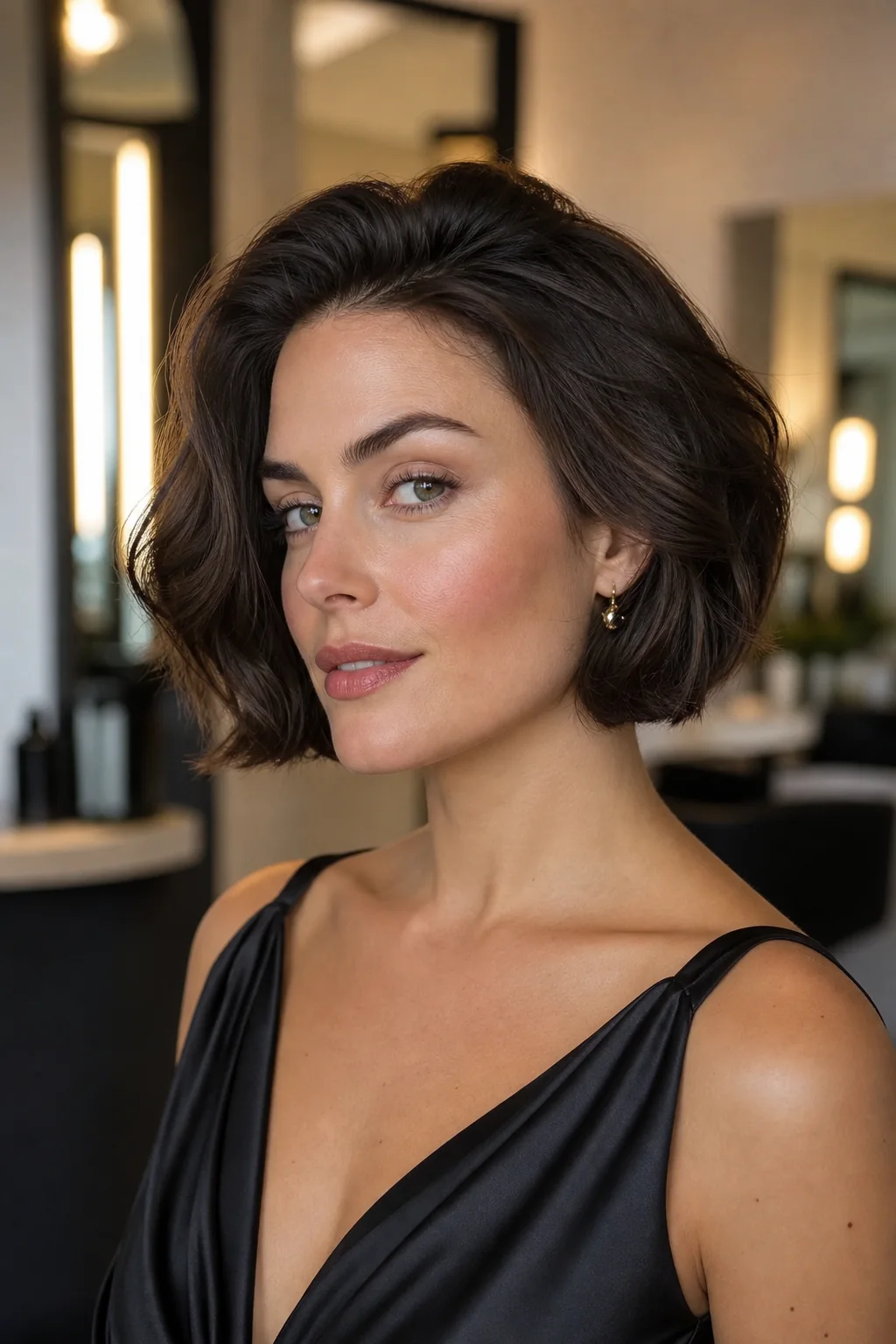
Sweeping the front away from the face reveals the brows and cheekbones and turns a practical short bob into an evening look. The outline remains neat while root direction provides the drama.
This is confident, luminous and celebration-ready. Ask for enough front length to move backward and soft internal layers that will not collapse into a rigid block. The hair should still fall naturally when worn down.
Best for: Medium-density straight or wavy hair. Know before choosing it: The style needs lift, not a coating of stiff product. Style it: Direct damp roots backward, build gentle height and finish with flexible hold.
Final pause: Do not choose only the photograph you admire most. Choose the version whose length, fringe and daily routine still sound like you on an ordinary Tuesday.
What to Ask Your Hairdresser For
Start with the plain-language goal: “I want a short bob that sits around my jaw and feels compact, soft and easy—not a long bob and not a heavily stacked bob.” Then agree on four decisions: the dry perimeter length, whether the front is blunt or slightly longer, the fringe shape and how much internal weight should be removed.
Bring two photographs: one showing the front you love and another showing the back and neckline. Explain which feature you want the cut to emphasize—your eyes, cheekbones, jaw or neck—and how often you genuinely style your hair.
How to Know Whether a French Bob Will Suit You
A French bob can be adapted to most face shapes because length, fringe and volume placement do the real work. Full bangs focus attention on the eyes. An open forehead and center part lengthen the visual frame. Side-swept bangs create diagonal direction, while a slightly longer front softens a fuller cheek area.
The more useful question is not “Am I allowed to wear this?” It is “What do I want this haircut to reveal, soften or emphasize?” That gives your hairdresser a practical design goal.
Styling and Maintenance
Most French bobs benefit from reshaping every six to eight weeks. A micro bob, full fringe or precise blunt edge may need attention sooner, while wavy and air-dried versions can be more forgiving. Dry the fringe and front first because they establish the character of the cut, then use either fingers for texture or a small brush for polish.
Avoid drowning a short bob in product. Start with less than you think you need, concentrate it where the shape needs help and leave some natural movement. The appeal is the balance between a deliberate outline and hair that still feels alive.
Is a French Bob Right for Your Life?
Choose it if you enjoy a visible haircut, like framing your eyes or cheekbones and are comfortable showing more of your neck. Think carefully if tying your hair back is essential, your natural shrinkage makes the target length unpredictable or regular trims are difficult to schedule.
A successful French bob should make getting ready feel more like yourself—not turn every morning into a fight with a reference photograph.
More Short-Hair Inspiration
If you want more softness around the ears and a layered back, explore our 20 Bixie Haircuts That Give You the Best of a Bob and Pixie.
If you are ready to go shorter and want more lift through fine hair, see 20 Power Pixie Haircuts That Make Fine Hair Look Fuller.