A light fringe can change the whole mood of your haircut while letting your face stay beautifully visible. If you have a round face, the interesting choice is how much forehead to show and where the longer pieces land.
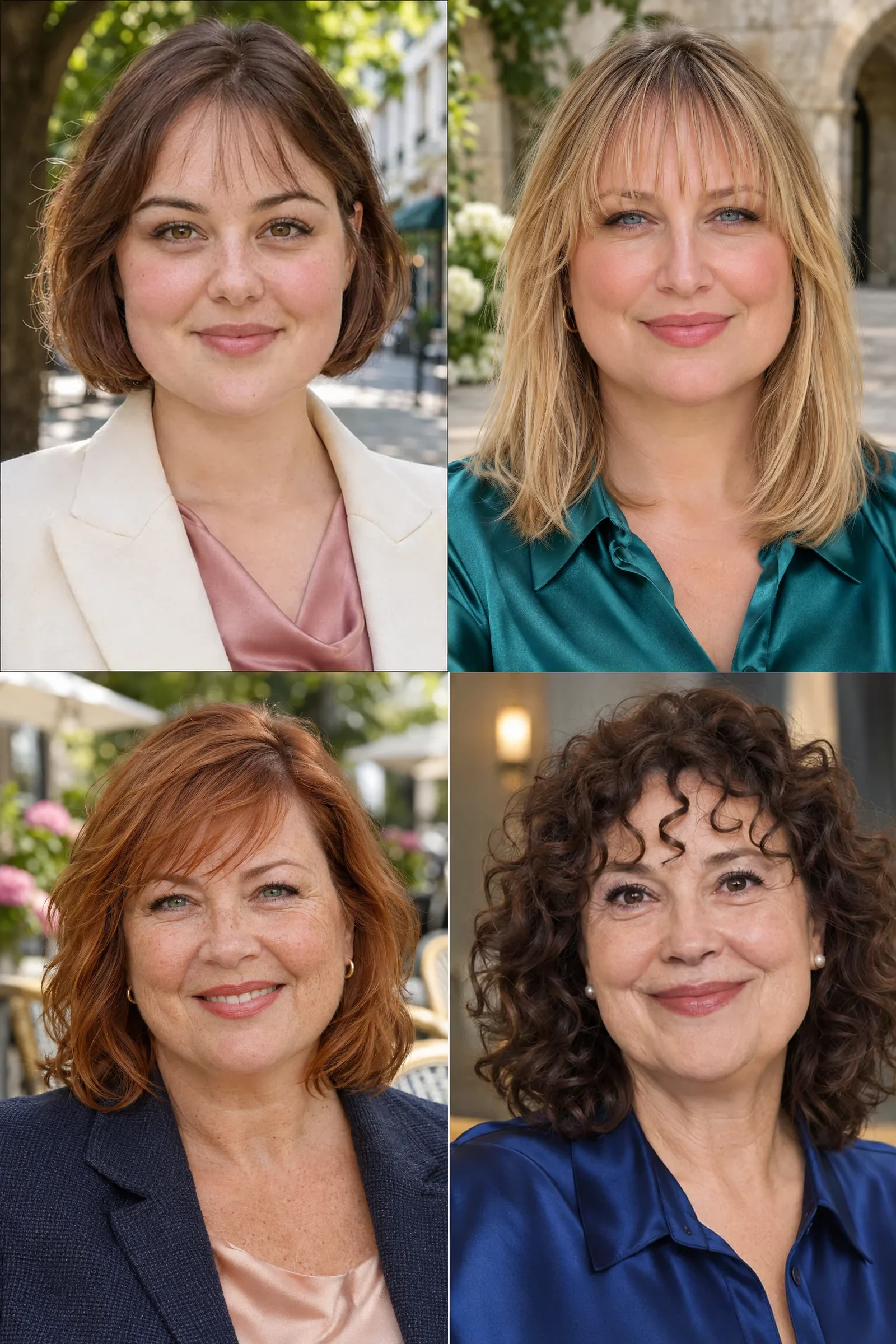
Wispy bangs are a lightly separated fringe with visible spaces between strands, rather than a dense, solid curtain of hair. On a round face, you can use their width, opening and direction to emphasize your eyes, introduce a diagonal line or keep the cheeks open; you do not need to hide your face shape. Curtain bangs usually part into longer sweeps, while a blunt fringe forms a more continuous edge, although a wispy fringe can borrow either outline. These eight options focus on different fringe constructions and natural textures, so you can compare a real salon choice instead of choosing by hair color alone.
Find the one that feels like you: Start with the first look and let the photographs lead. Each style explains how the shape affects your features, the mood it creates and the exact words to take to your stylist.
1. The Narrow, See-Through Brow Fringe

Start small if you like the idea of bangs but still want plenty of your forehead to show: this narrow section falls in fine, separated pieces around the brows, leaving the temples open. Against a round face, that little central detail brings attention to the eyes without drawing a heavy horizontal band across the whole forehead, giving a bob a quietly fresh, approachable mood. It can suit a cautious first fringe, although a sparse section may split around a cowlick and need a quick damp reset before you leave the house. Keep styling cream away from the roots so the wisps stay light.
Ask your stylist for: Start with a narrow, shallow brow-length section and leave visible gaps between the strands; check my hairline before widening it.
2. The Wider, Airy Fringe With a Soft Arch
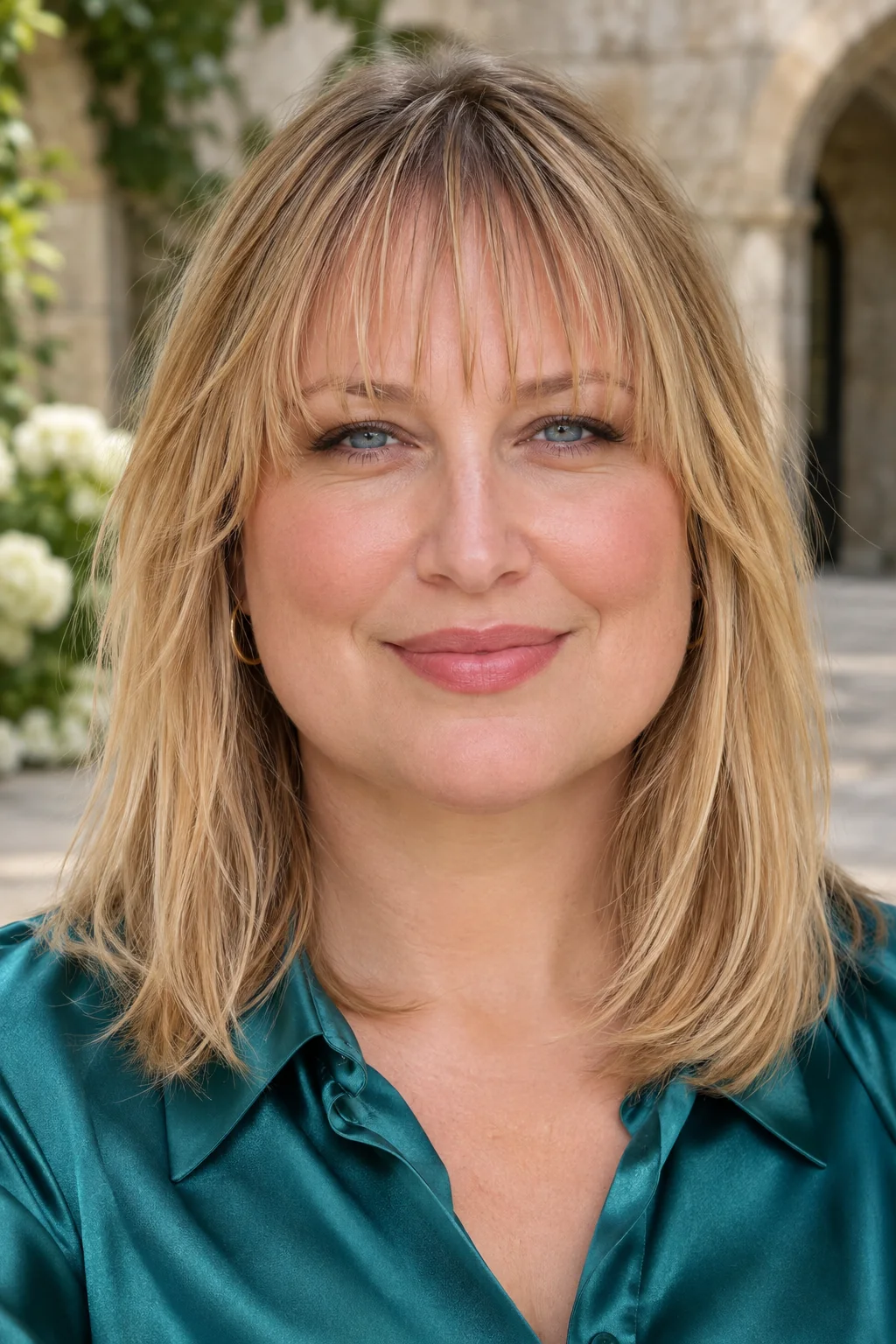
A wider fringe can look lovely on a round face when you want a soft frame rather than maximum forehead exposure. Here, the lightly separated edge is a little shorter at the center and gradually longer toward the temples, echoing the face's curves while keeping the eyes visible for a composed, romantic feel. Choose it if you enjoy wearing your hair down and want a more noticeable fringe; the wider section takes more hair from the front, which matters if your temples already feel sparse. Dry the roots gently from side to side before shaping the ends, rather than curling every piece into a rigid roll.
Ask your stylist for: Give me a wide but airy fringe with a shallow arch, slightly shorter centrally and longer at the temples, without a dense solid edge.
3. Eye-Skimming Wisps With an Off-Center Opening
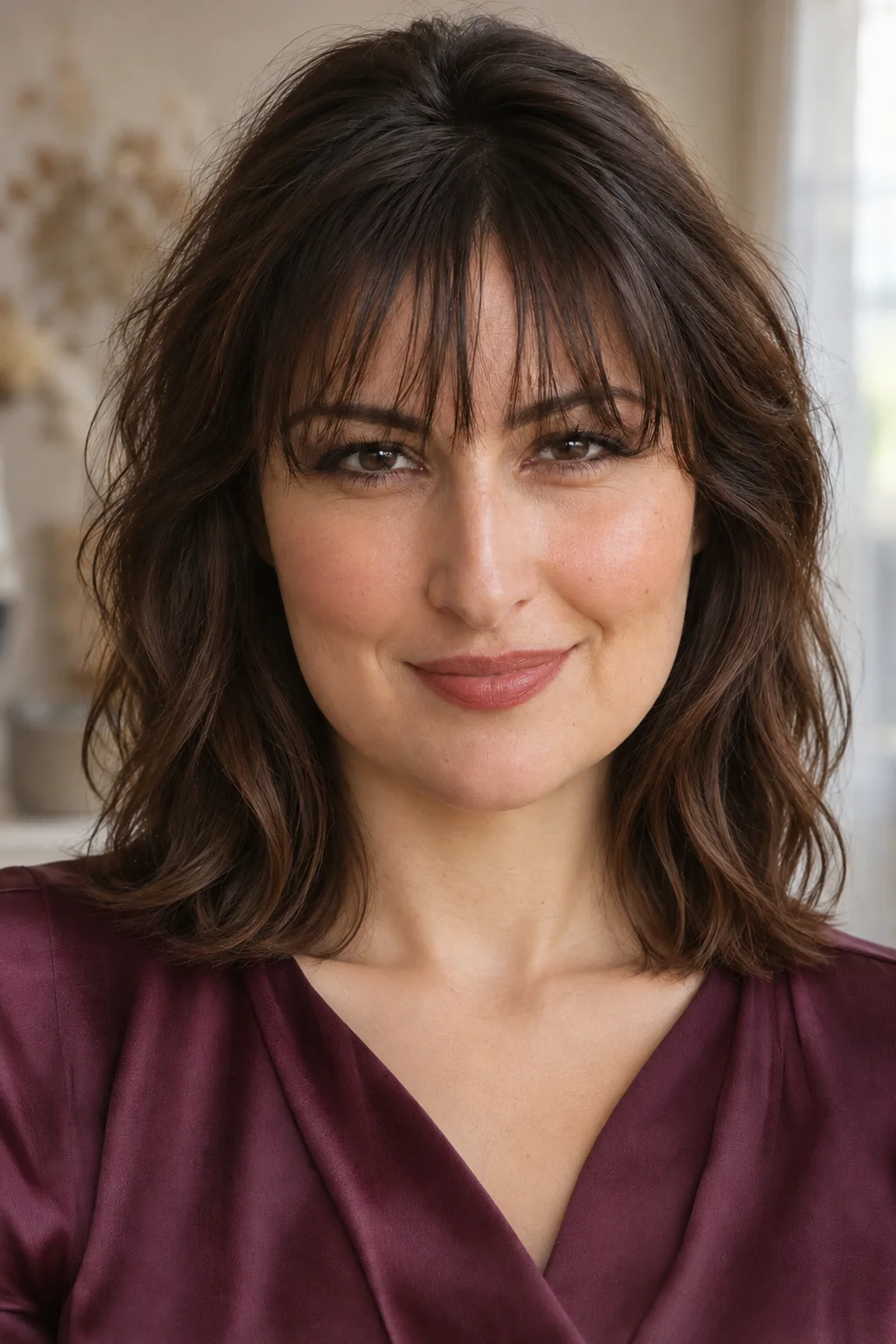
That small off-center gap is the point of this fringe: longer wisps rest near the lashes on either side, while a glimpse of forehead breaks up the front outline. It gives a round face a gentle sense of direction and a slightly undone, confident mood, especially if a perfectly centered part never feels like you. The longer pieces offer some flexibility for brushing aside, but they can fall into your eyes and may need more frequent tidying than their relaxed appearance suggests. Set the opening while the roots are damp and avoid choosing its position against a stubborn natural growth pattern.
Ask your stylist for: Keep fine eye-skimming pieces with a small opening just off my natural center, checking the dry length so the tips do not obstruct my eyes.
4. The Light Diagonal Side Sweep
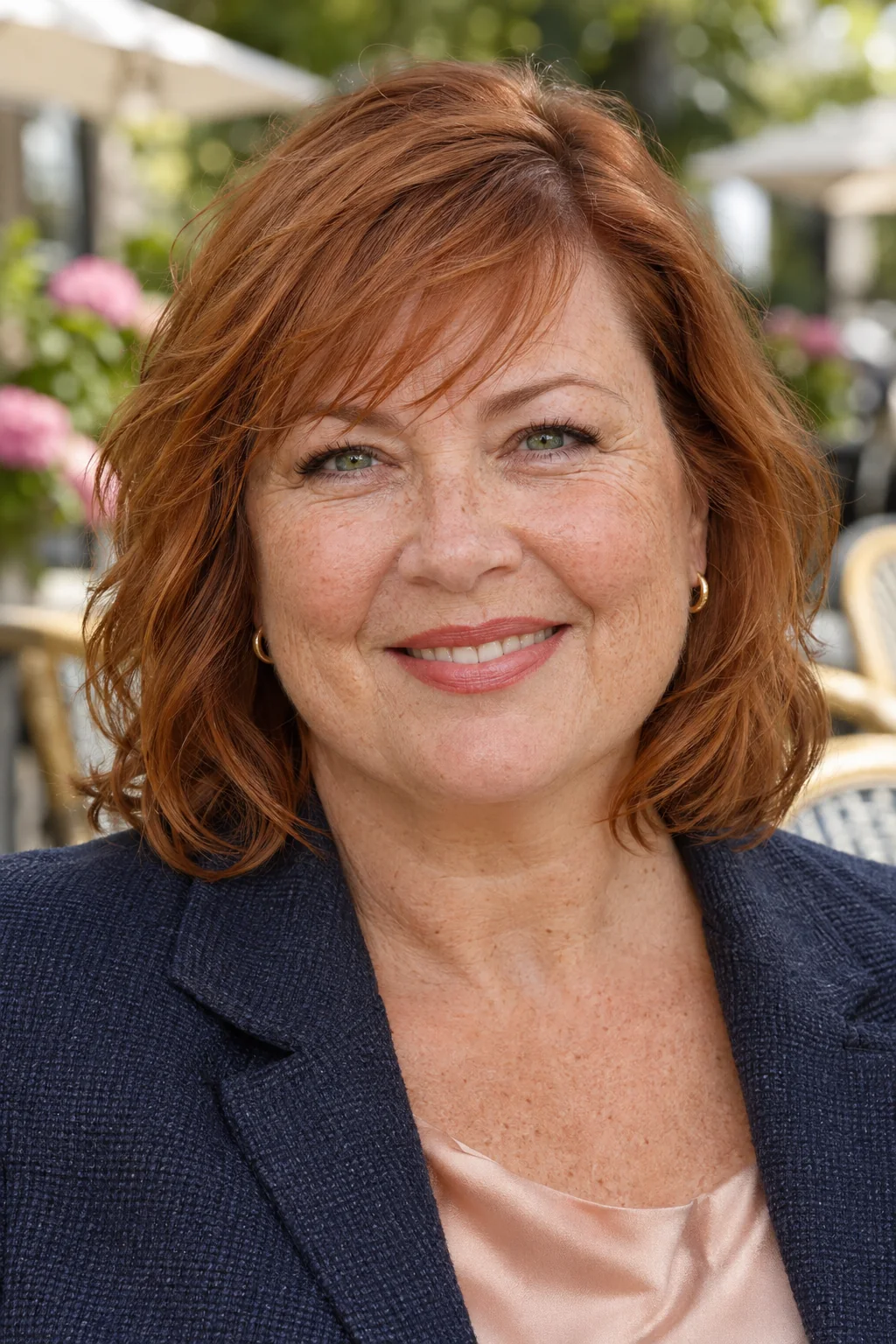
If you prefer a little movement across the forehead, a light side sweep gives you a clear diagonal rather than an even fringe line. The separated copper pieces travel from a side part toward the opposite brow, bringing a round face an asymmetric focal point that can feel polished enough for work yet pleasantly soft around the eyes. This is a good conversation to have if you already wear a side part; forcing a new one can turn a simple-looking style into daily root training. Blow-dry in the intended direction, then let the ends fall freely instead of fixing them into one solid slab.
Ask your stylist for: Cut a light, connected diagonal fringe from my usual side part toward the opposite brow, with separated tips and no heavy block of hair.
Pause and notice: Which detail do you actually want to change: forehead coverage, the direction of the fringe or the way it meets your cheeks? Choose that first, then compare photos with a hairline and texture close to yours.
5. Brow Wisps Joined to Long, Tapered Corners

Long corner pieces change how the fringe meets the rest of your hair, continuing the frame below the brows. With a round face, those slender sides can draw the eye downward beside the cheeks while the short central wisps keep the expression open, creating a soft, dressed-up feeling without a dense fringe. It suits someone who likes wearing long hair loose or loosely tied back, provided the face frame feels comfortable falling forward during the day. Ask the stylist to show where the corners land with your hair dry, and use a light brush bend rather than flipping them outward at the widest part of your cheeks.
Ask your stylist for: Keep separated central brow wisps and connect them gradually into slender corners below my cheekbones, avoiding a thick shelf at cheek level.
6. The Short, Piecey Fringe Above the Brows
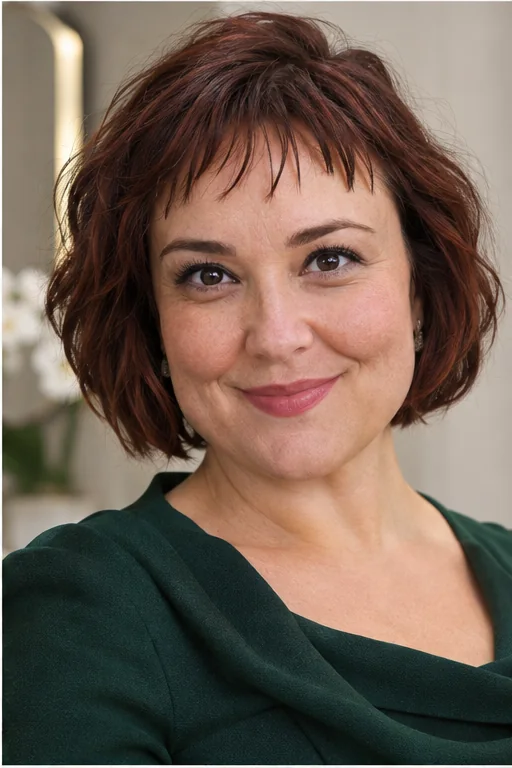
Short wisps leave a visible strip of forehead above the eyebrows, so the effect feels deliberate and playful rather than barely there. On a round face, the open brow area lets your expression lead while small uneven separations keep a compact bob from looking too rigid; choose it because you enjoy that bolder outline, rather than expecting it to change your proportions automatically. It works best when you are comfortable showing your brows and checking the fringe's shape regularly, since a short edge makes growth and cowlicks easier to notice. Keep the tips soft with minimal product, and agree on the dry stopping point before cutting.
Ask your stylist for: Cut a light piecey fringe ending clearly above my brows, with soft separated tips; show me the intended dry length first.
7. Soft Wispy Bangs That Follow Natural Waves
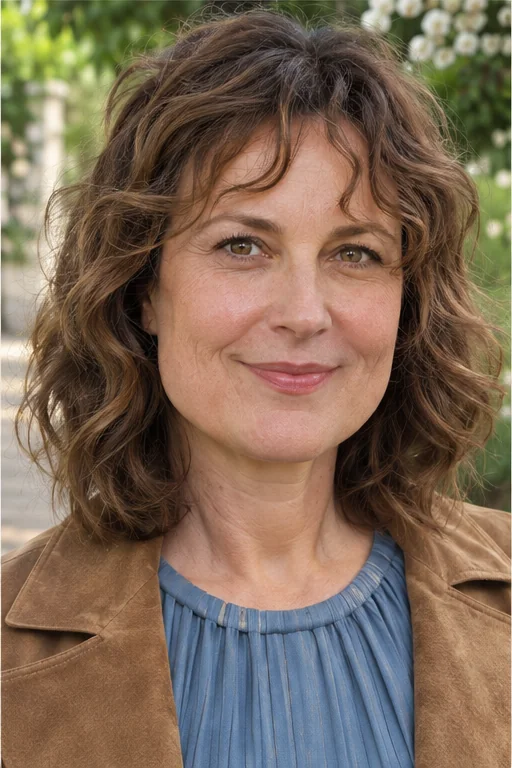
When your hair already bends, letting the fringe share that movement can make the whole haircut feel more at ease. These loose S-shaped pieces settle at slightly different points around the brows, breaking the edge into a soft rhythm that suits a round face without demanding a perfectly straight line, and the result can feel relaxed and quietly expressive. It is a useful option if you like your natural waves, although humidity and drying method may change the resting length from day to day. Encourage the damp pattern with a little lightweight hold, then let it settle before deciding which pieces need help.
Ask your stylist for: Cut a light fringe for my natural S-waves, allow for spring as it dries, and check the final brow length without stretching it straight.
8. A Light Fringe of Separated Natural Curls

A curly wispy fringe is light because of the space between curl groups, rather than because every individual hair has been thinned. Here, a few loose curls rest around the brows with forehead showing between them, adding a buoyant, joyful frame to a round face while keeping the eyes visible. It can suit someone who enjoys wearing natural curls, but the useful reference is a curl pattern close to your own: spring, density and shrinkage affect how much hair is needed and where it lands. Refresh the curl groups gently with your usual method, and avoid pulling them straight to judge the length.
Ask your stylist for: Shape a light fringe in separated natural curl groups, assess the resting length dry, and preserve the curl pattern rather than thinning it into frizz.
Before You Book the Appointment
A successful salon visit begins with the overall shape, construction and upkeep—not only the finished length. Use this quick reality check before choosing your final reference photograph.
- Start with: Your usual part, hairline growth and how the fringe rests when dry.
- Round-face options: Keep the cheeks open, add a diagonal line or enjoy a soft rounded frame; choose the emphasis you like.
- Fine or thin hair: Ask for a conservative section so the rest of the haircut retains its density.
- Daily care: Light bangs can still need a damp reset, careful drying and regular fringe trims.
Can a Round Face Wear Wispy Bangs?
Yes. A round face can look beautiful with a narrow fringe, a wider arch or a side sweep; there is no single compulsory shape. If you want more forehead showing, consider a shallow section or an opening. If you enjoy a rounded frame, keep it. Face shape is only one part of the choice: forehead height, hairline growth, density and your preferred daily routine often matter more.
What Should You Tell Your Stylist?
Bring a front reference and point to the shortest piece, the section width and the landing point of the corners. Explain your ordinary part and show any cowlick before the hair is wet. Ask how much hair the fringe will take from the sides, particularly if your hair is fine or low density. Agree on the dry length and whether the fringe should separate naturally or need deliberate styling.
How Do You Keep Wispy Bangs Light?
Begin with clean roots and a small amount of product. A quick damp reset can help a straight fringe that has slept in the wrong direction; dry it gently across the roots before arranging the ends. Follow heat-protection and tool instructions if using heat. For waves or curls, work with your usual pattern and avoid repeatedly brushing the fringe straight unless that is the finish you want.
What About Glasses, Small Foreheads and Cowlicks?
Wear your actual glasses at the appointment so the stylist can check the tips against the frames. A shorter forehead may leave less space between hairline and brows, so a shallow section and a carefully chosen stopping point are worth discussing. A strong cowlick can pull a fringe apart or upward; use a dry consultation to decide whether that movement can become part of the design.
How Often Will You Need a Trim?
Set a fringe-trim interval with your stylist based on growth and how close the tips sit to your eyes. Short, precise edges reveal growth quickly; longer corners may be easier to brush aside. Take a photo after your own first wash so the next appointment can address what really happens at home. Light density does not automatically mean low maintenance.
Can You Grow Wispy Bangs Out Gracefully?
As the short pieces lengthen, you can gradually brush them aside and blend them into a longer face frame. Tell your stylist you are growing them so they preserve useful length instead of recutting the original edge every visit. A small clip or a gentle change of direction can help during the awkward stage, provided you work with your hairline rather than repeatedly fighting it.
The Takeaway
Save the fringe whose width, shortest piece and side corners match the feeling you want, then ask how it will behave with your own hairline. A reference becomes much more useful when you can explain what you love about it—and what you want getting ready to feel like.
More Hair Inspiration
- More Wispy Bangs Ideas — Explore the wider range of light fringe constructions.
- Bob Haircuts for Round Faces — Compare the surrounding haircut as well as the fringe.