French curl braids give you the satisfying neatness of individual braids and the swish of glossy curls in one beautifully balanced style. They can look romantic, playful or quietly polished depending on where the braid releases and how much curl you choose.
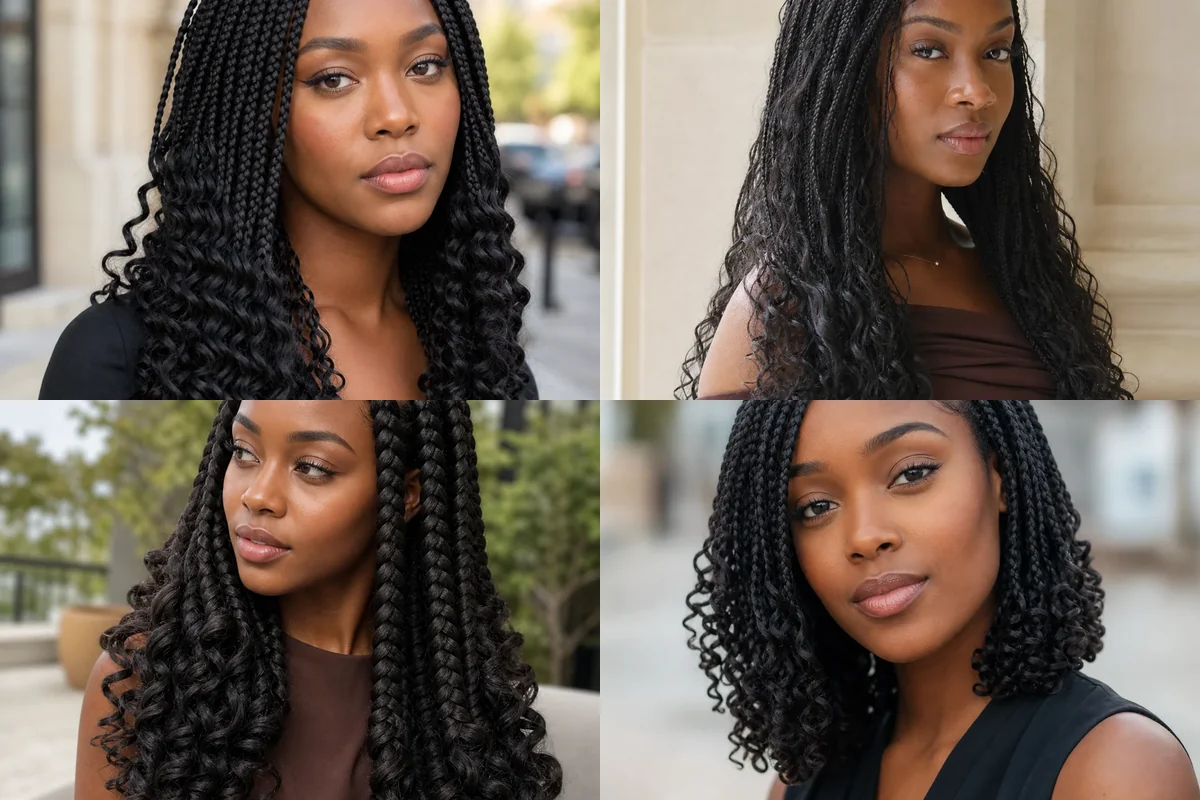
French curl braids are individual extension braids that transition into loose spiral curls before the ends, usually using pre-curled braiding hair and often a knotless base. Unlike standard box braids, they are not braided to the tip; unlike boho braids, their main curl concentration sits through the lower lengths rather than appearing as scattered loose pieces from root to end. They are also unrelated to the scalp-attached technique called a French braid.
Find the one that feels like you: Start with the first look and let the photographs lead. Each style explains how the shape affects your features, the mood it creates and the exact words to take to your stylist.
1. Classic Medium French Curl Braids
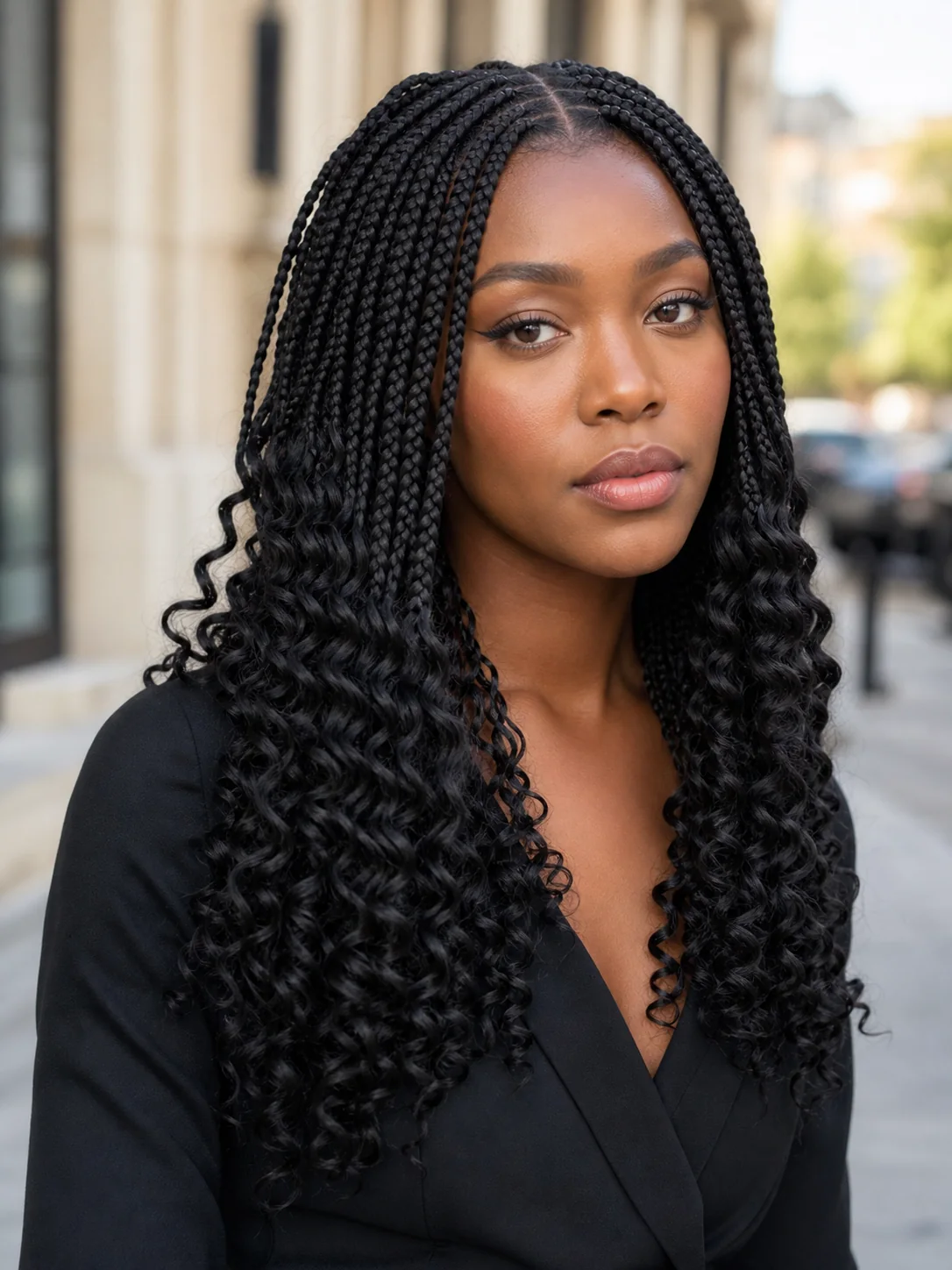
Medium individual braids fall past the shoulders before opening into glossy, evenly sized spirals, creating the clearest version of the French curl silhouette. The neat upper lengths keep the face framed and the generous curl section adds soft width through the chest, so the wearer gets structure without losing movement. This balanced scale feels polished and romantic for everyday life, although the loose ends need more protection from friction than fully braided tips. Ask for medium knotless braids with consistent release points, lightweight extension hair and defined spirals that begin below the shoulders.
Ask your stylist for: Medium knotless French curl braids, light at the roots, with even release points below the shoulders and full spiral ends.
2. Small French Curl Braids With Airy Volume
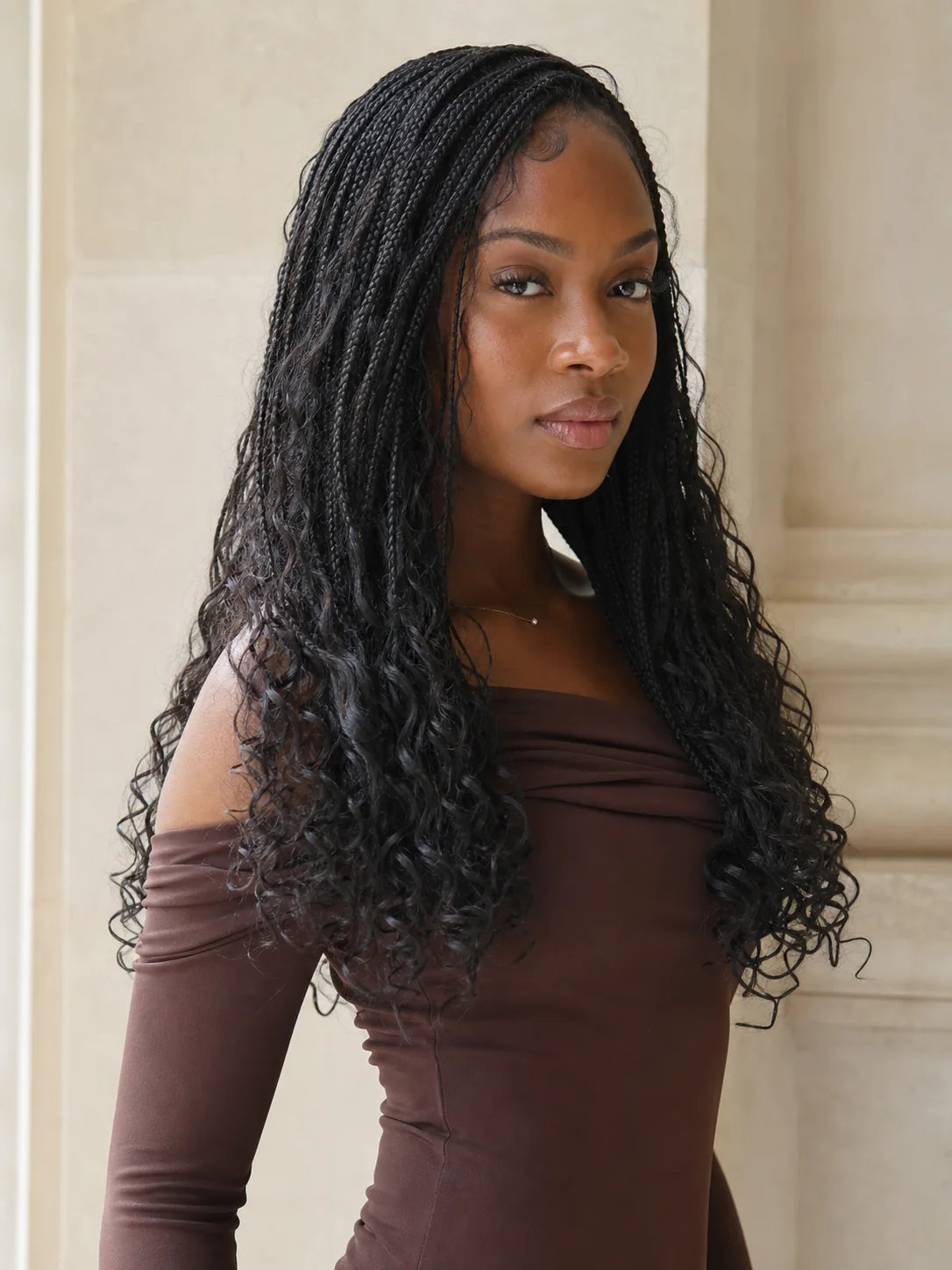
Slim braids create fine vertical lines before dissolving into a light cloud of curls, giving this version an airy, flexible finish. The smaller sections distribute fullness more delicately around the face and make half-up styling easy, which can help the wearer feel refined and effortlessly put together. Installation takes longer, and small must never mean micro sections carrying too much extension weight; comfort at the temples matters more than density. Request small, not micro, knotless bases with visible breathing room, staggered curl release points and a conservative amount of pre-curled hair.
Ask your stylist for: Small but not micro knotless bases, comfortable edge spacing, staggered release points and lightweight pre-curled hair.
3. Jumbo French Curl Braids
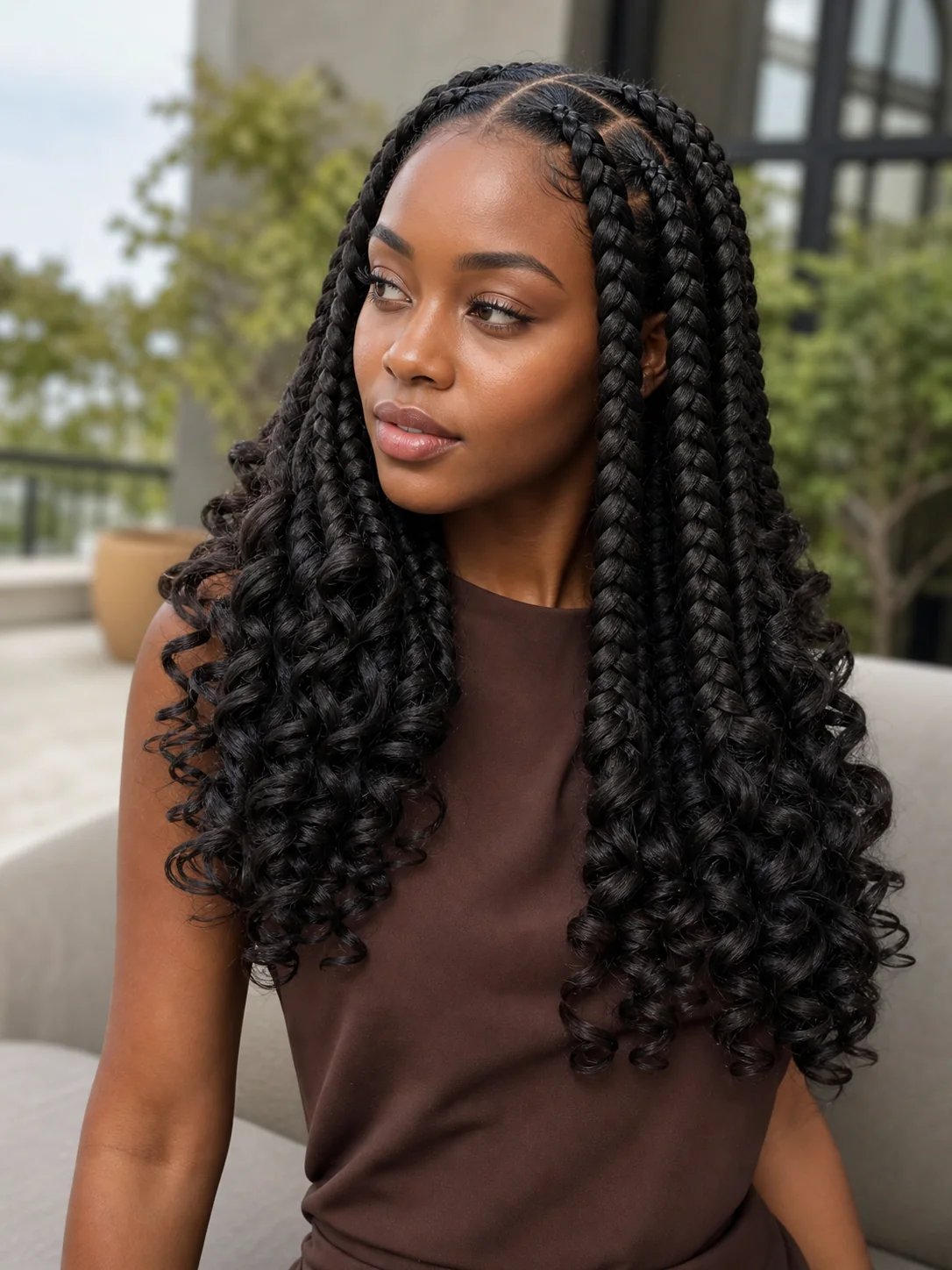
Broad, cleanly parted braids transition into oversized spirals, making every line and curl easy to appreciate. The larger scale brings boldness around the face and delivers impact with fewer braids, so it can feel confident and fashion-forward without relying on accessories. Jumbo extensions can become heavy when the braider overfills small natural sections, and the curl-to-braid transition must be secured neatly to avoid unraveling. Ask for large lightweight braids matched honestly to your density, broad parts, smooth feed-ins and substantial curls beginning at a consistent mid-length point.
Ask your stylist for: Large lightweight sections proportionate to the natural hair, broad parts and oversized curls beginning at mid-length.
4. Shoulder-Length French Curl Braids
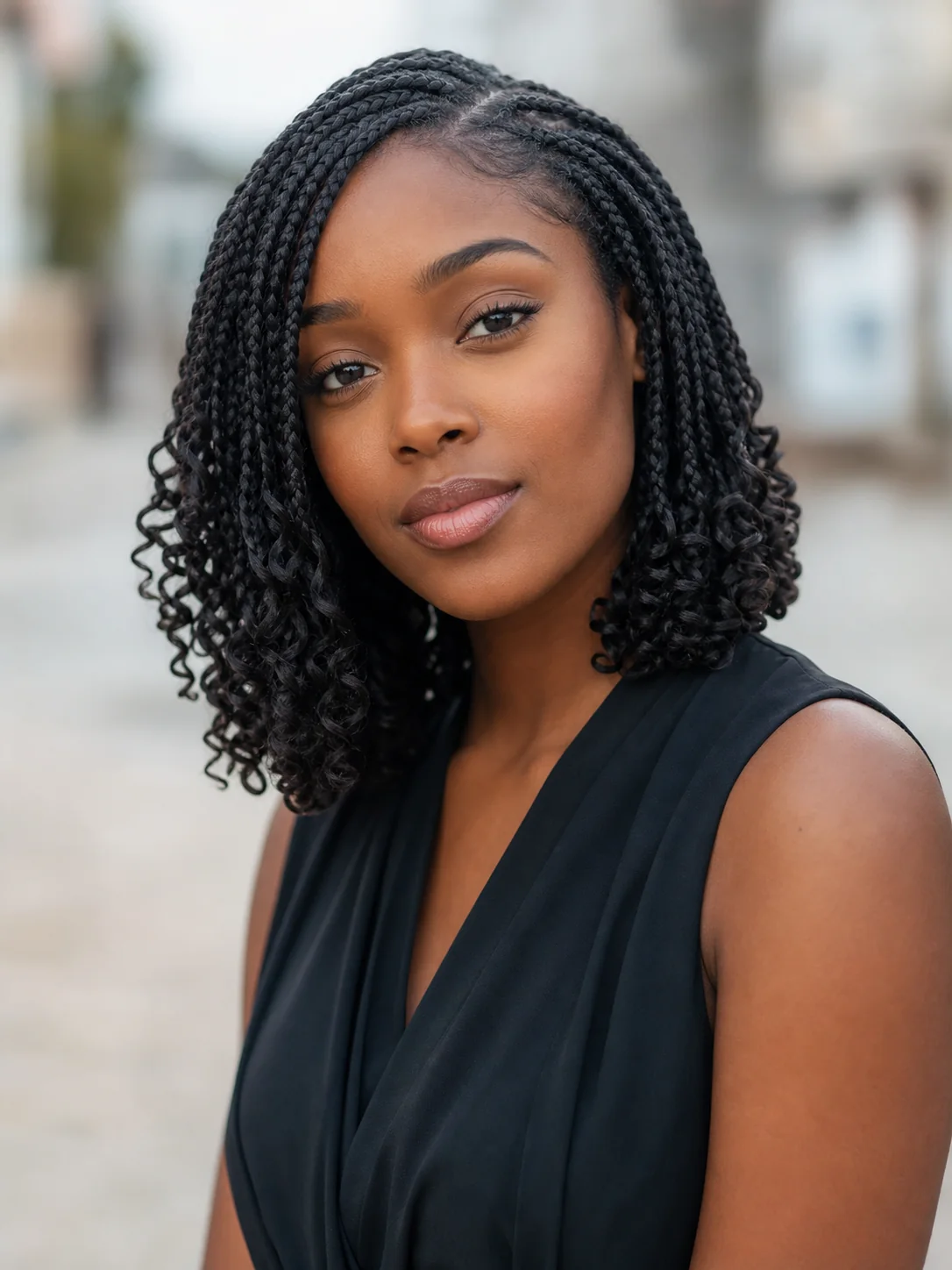
These braids finish around the shoulders, with compact spirals forming a soft, buoyant perimeter instead of trailing down the back. The shorter length opens the neckline, reduces drying time and keeps loose fiber away from bags and coat collars, helping the wearer feel fresh and unencumbered. Because curl spring can make the finished length rise, the cut point should be agreed after the curl pattern is visible rather than guessed while stretched. Request shoulder-grazing French curls after shrinkage, tapered braid ends, balanced fullness and enough length to gather loosely at night.
Ask your stylist for: A true shoulder-grazing finish after curl spring, with tapered braids, balanced volume and lightweight ends.
5. Bob-Length French Curl Braids
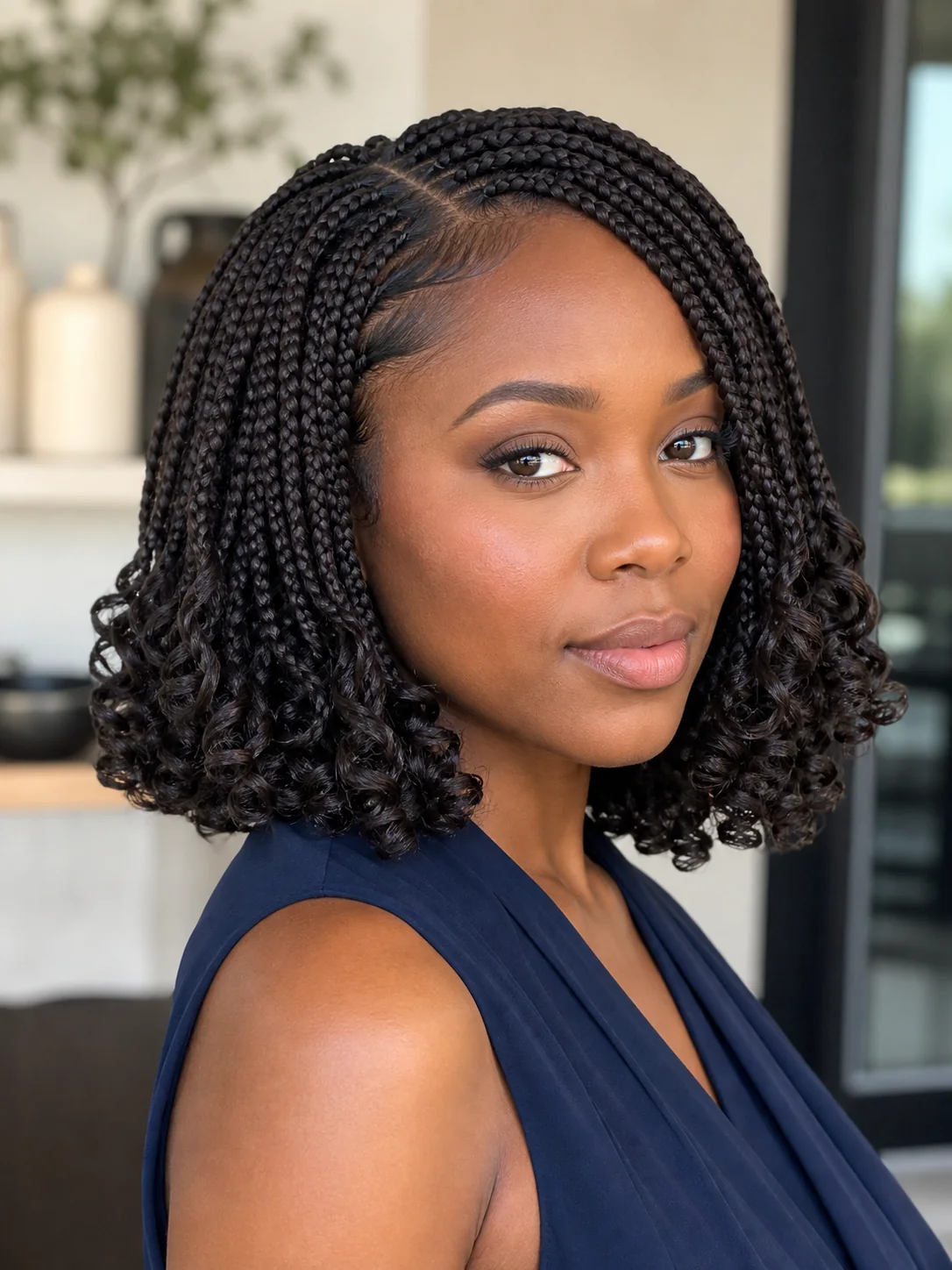
A chin-to-jaw perimeter turns French curl braids into a buoyant bob, with compact spirals clustering close to the cheeks. That concentrated curve can soften an angular jaw, show off the neck and make the whole style feel playful, modern and noticeably lighter than long extensions. The silhouette depends on controlled density; too many curls can widen into a triangle, while too few look sparse. Ask for a rounded braided bob with slightly shorter face-framing pieces, staggered release points and a measured curl count that follows your desired width.
Ask your stylist for: A rounded chin-to-jaw braided bob with staggered curl release points and controlled fullness around the cheeks.
6. Layered French Curl Braids
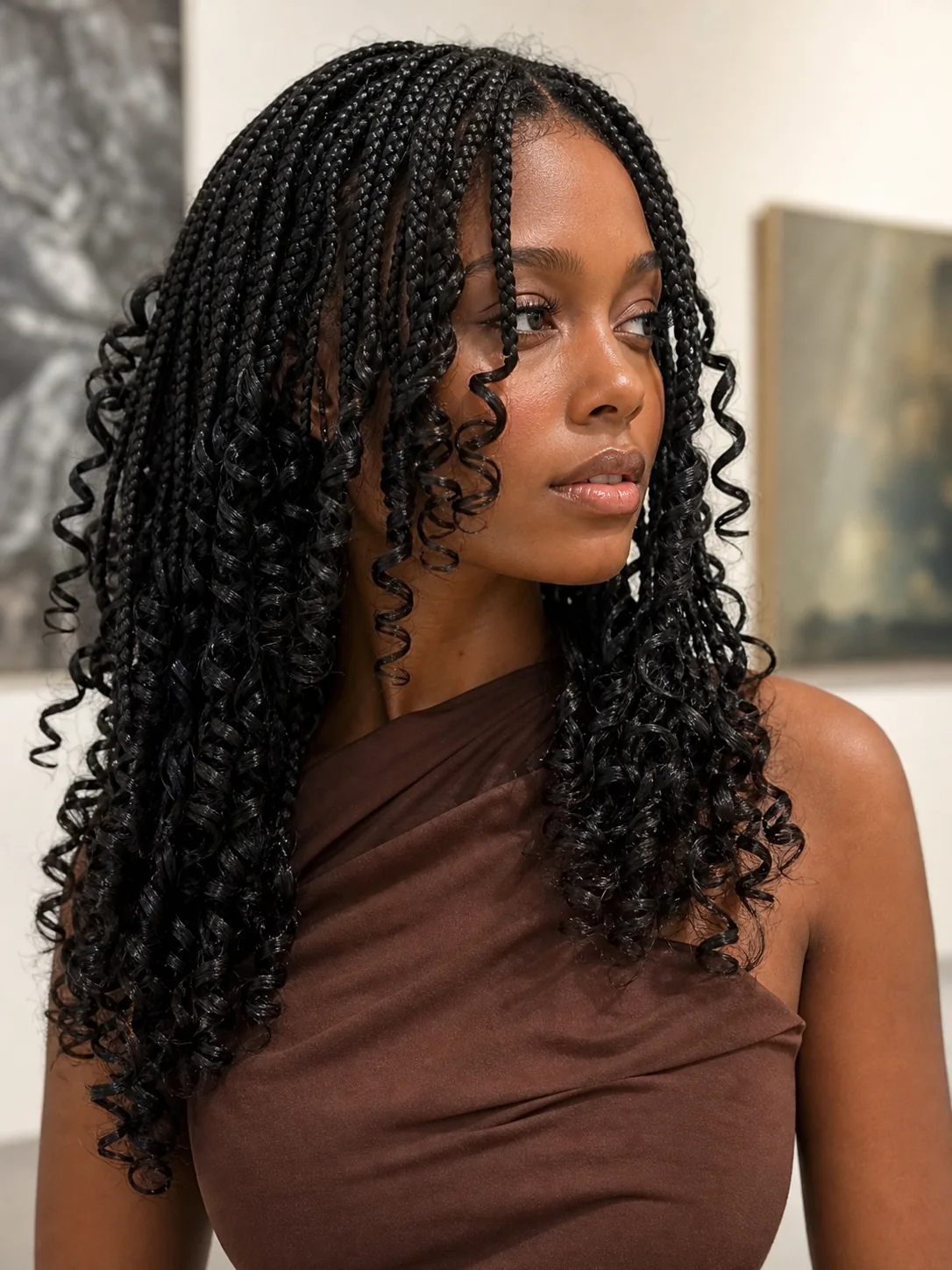
Braids release at several planned lengths so the spirals cascade rather than collecting in one heavy band. Shorter curls lift the cheek area while longer pieces preserve drama through the back, giving the face dimension and the wearer a glamorous, softly styled feeling even when the hair is simply down. Random cutting can create frizz and imbalance, so the layers should be mapped before sealing and kept long enough to gather safely. Request graduated release points around the face and crown, a blended back perimeter and curls with consistent diameter.
Ask your stylist for: Graduated release points around the face and crown, blended long lengths and one consistent spiral diameter.
7. Waist-Length French Curl Braids
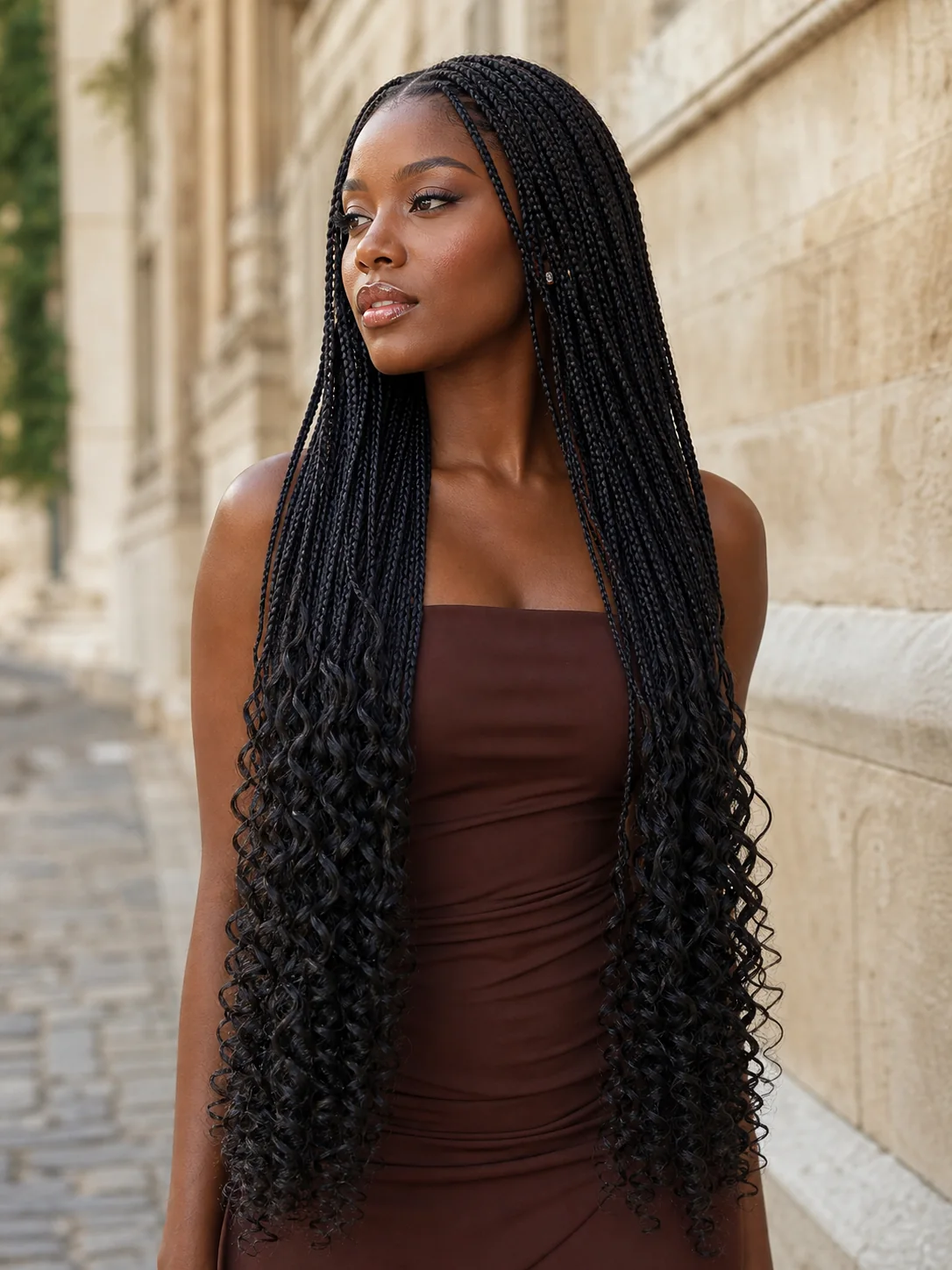
Long braided lengths travel toward the waist before opening into fluid spirals, creating a sweeping silhouette with unmistakable drama. The vertical line elongates the body while the curled perimeter prevents the style from looking severe, making the wearer feel regal and beautifully noticed. Length increases extension weight, washing time and friction, so lightweight fiber and a conservative braid count are essential rather than optional. Ask for waist length when curled, tapered braid transitions, minimal added hair at each root and fully separated spirals that can be gathered loosely for sleep.
Ask your stylist for: Lightweight waist-length braids after curl spring, minimal root weight, tapered transitions and separated spiral ends.
8. Knotless French Curl Braids
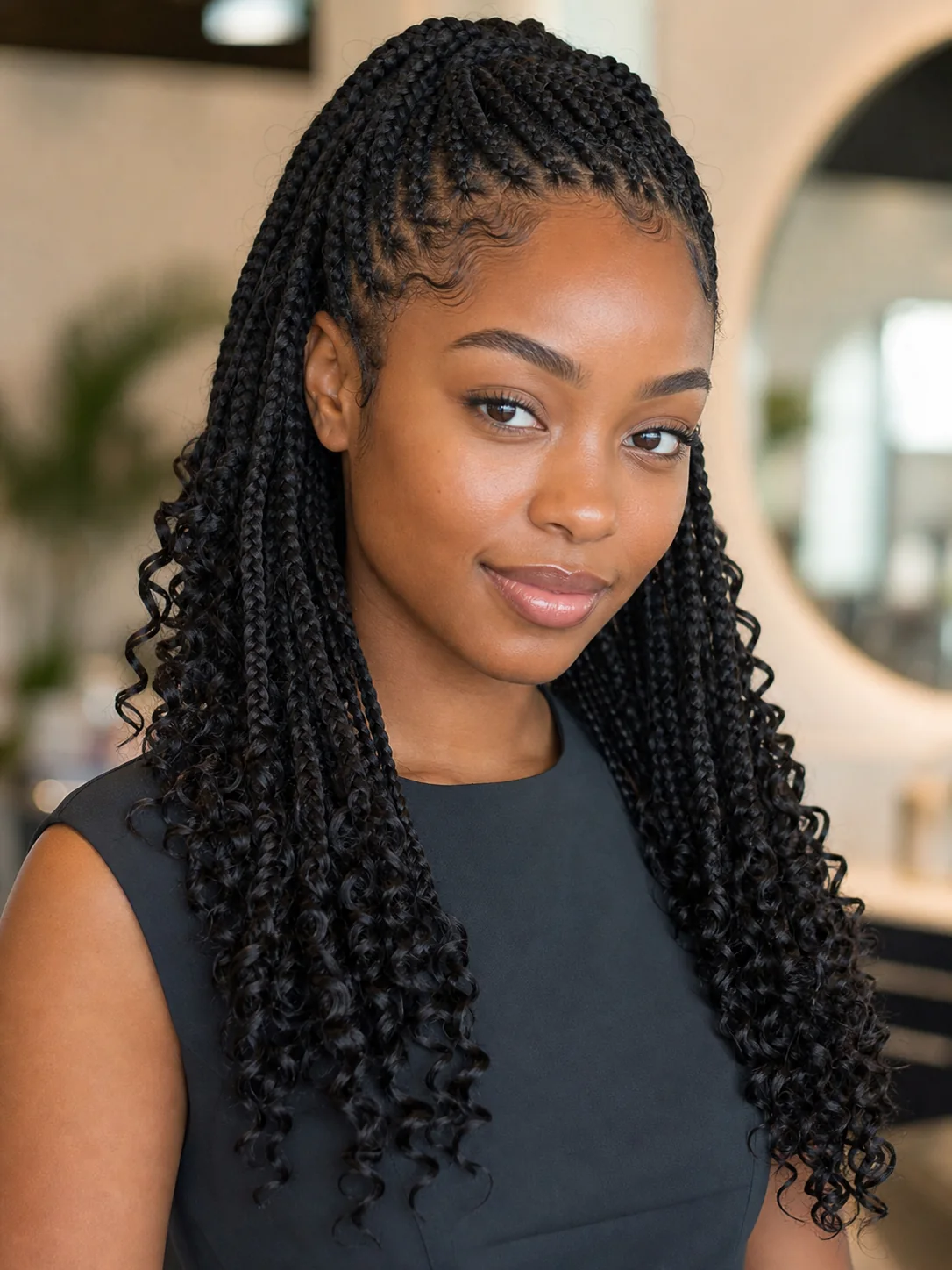
Gradual feed-in creates flat, flexible roots before each braid runs into a curled end, keeping the installation close to the scalp without a visible starting knot. The smoother base makes ponytails and side parts less bulky and can help the wearer feel comfortably polished from the first day. Knotless technique is not automatically tension-free, and excessive added hair can still strain a small section, so tenderness is a reason to stop and adjust. Request low-tension feed-ins, natural-looking root scale, edge spacing and curl weight matched to every base section.
Ask your stylist for: Low-tension knotless feed-ins with natural root scale, protected edges and curl weight matched to each section.
9. Middle-Part French Curl Braids
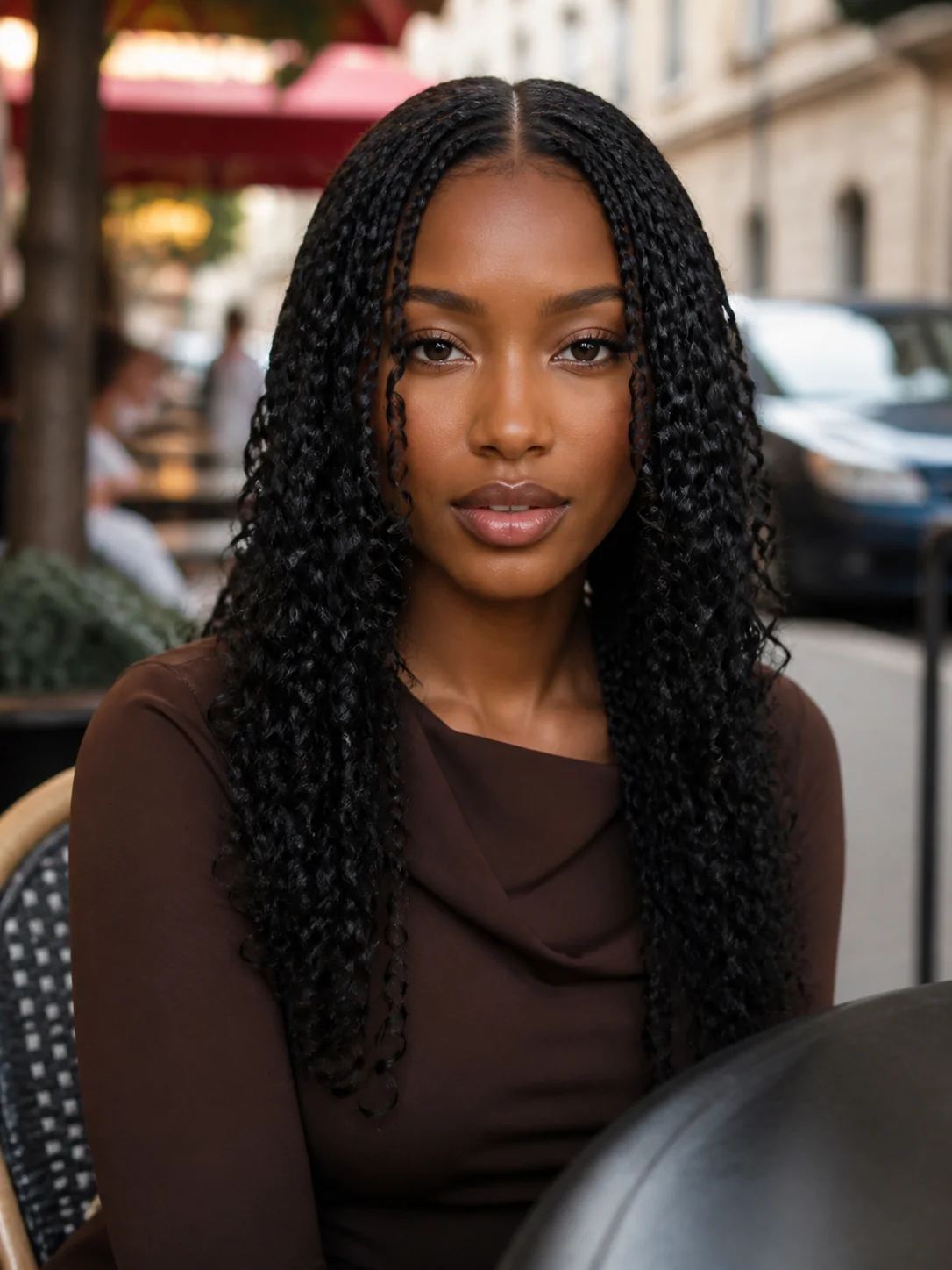
A crisp center divide gives the neat braids calm symmetry while curls fall evenly on both sides of the face. The balanced frame draws attention toward the eyes and cheekbones, creating a composed, elegant mood that photographs beautifully and works with simple daily dressing. A fixed center part can feel limiting if you often flip your hair, so confirm whether neighboring braids will move comfortably before installation. Ask for a straight, density-balanced middle part, soft face-framing release points and flexible crown sections that do not expose overly wide scalp lines.
Ask your stylist for: A straight density-balanced center part, flexible neighboring sections and soft face-framing curl release points.
10. Deep Side-Part French Curl Braids
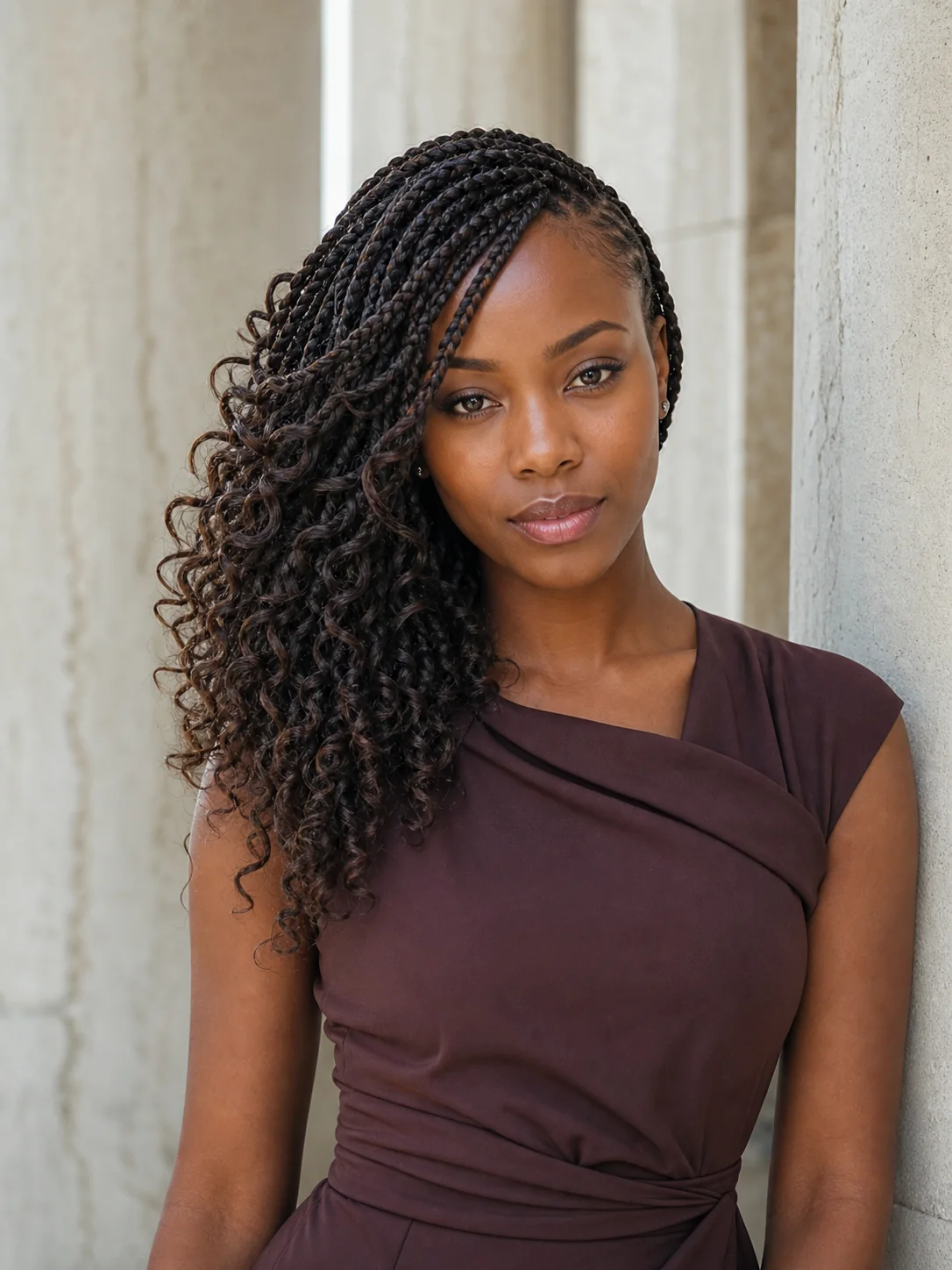
A deep part sends more braids and curls across one side, creating lift at the crown and a soft sweep beside the cheek. The asymmetry can balance a long or angular face and gives the wearer a sophisticated, slightly cinematic feeling without needing an updo. Repeatedly piling long braids onto one temple increases friction, so alternate the loose placement and keep the part-side roots comfortable. Request a curved side part aligned with your preferred brow, lighter density at the exposed temple and graduated curls that merge smoothly into the fuller side.
Ask your stylist for: A curved deep side part, lighter temple density and graduated curls that blend into the fuller side.
Pause and notice: Choose braid size and total length for comfort first, then choose where the curls begin. Higher release points create more romance and volume; lower ones simplify sleep, detangling and daily styling.
11. Half-Up French Curl Braids
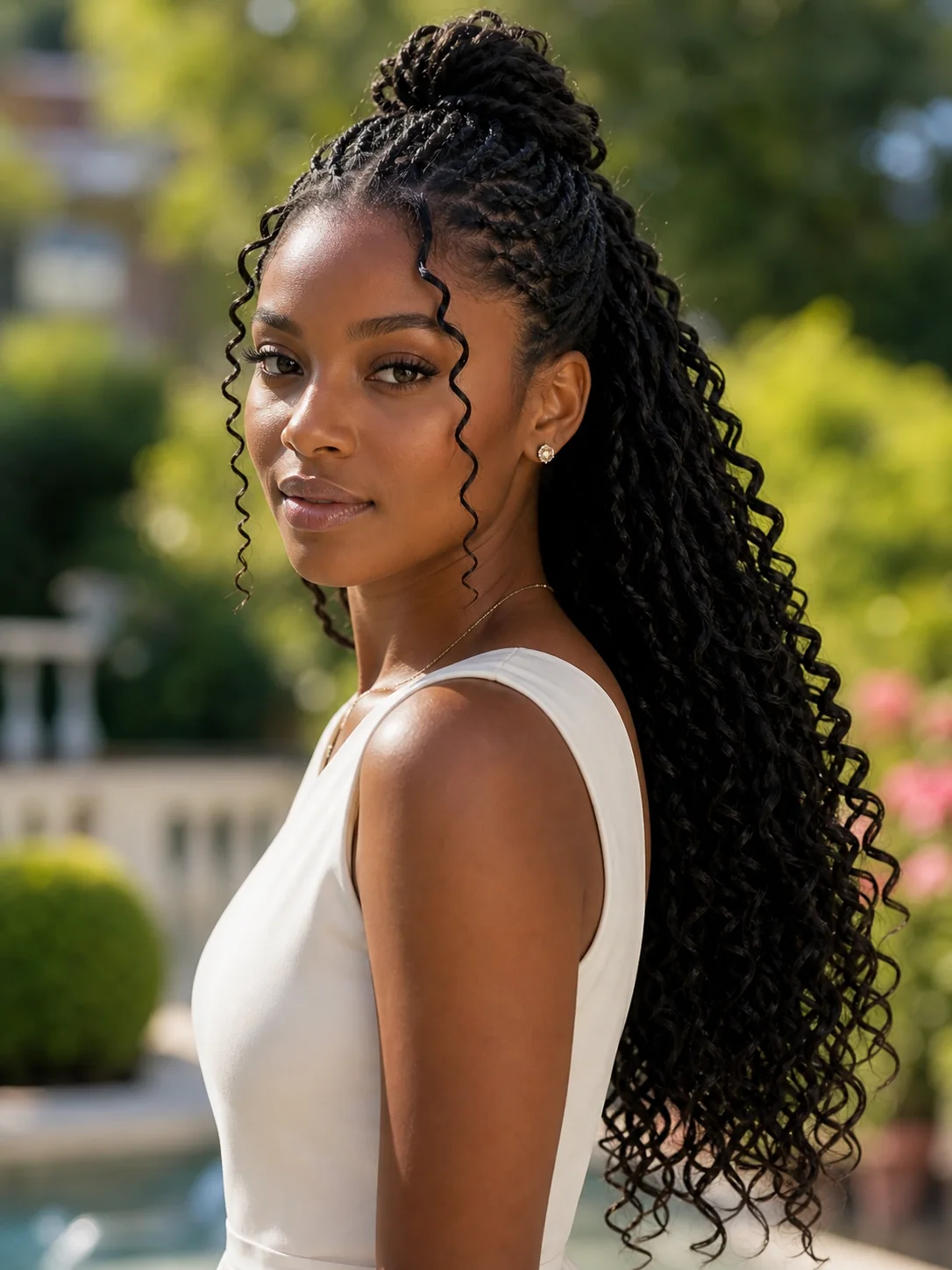
The upper braids gather at the crown while the remaining spirals stay loose, combining a clean face frame with generous movement through the back. That lift brightens the face, adds height and keeps hair out of the way during busy days, helping the wearer feel instantly pulled together. Secure the braid lengths rather than crushing loose curls into the tie, and vary placement so the same roots are not loaded repeatedly. Ask for a ponytail-friendly crown layout, comfortable upward movement and face-framing curls left free without tight temple pieces.
Ask your stylist for: A ponytail-friendly crown pattern with comfortable upward movement and a few soft face-framing curls left free.
12. High-Ponytail French Curl Braids
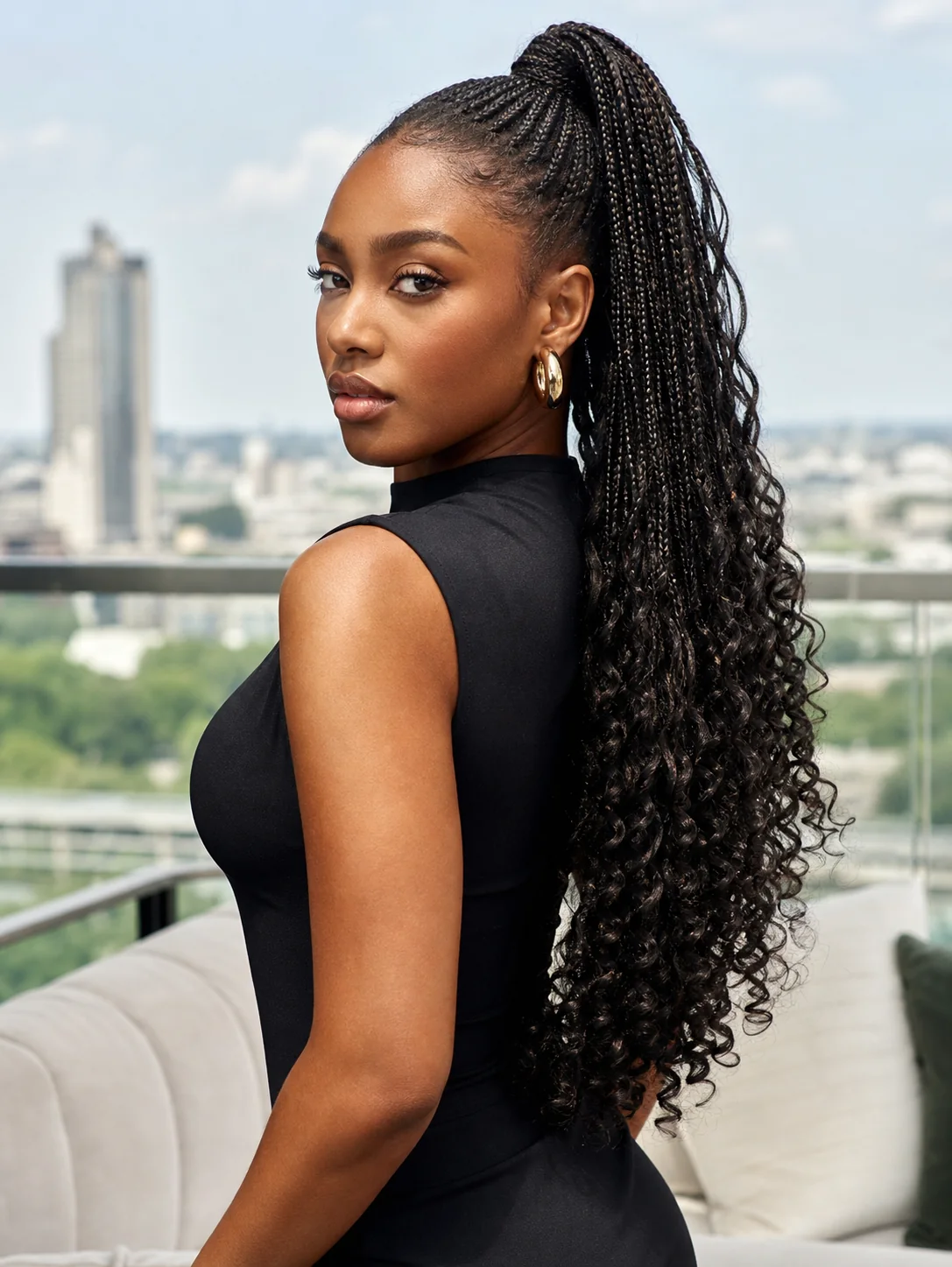
Gathered high, the braided lengths support a waterfall of spirals that bounce behind the crown and expose the full face. The upward direction creates energetic glamour and makes the curl volume look even more dramatic, so the wearer can feel celebratory with very little extra styling. Long or dense installations may be too heavy for all-day wear; a mid-high position gives a similar effect with less pull. Request low-tension roots designed to travel upward, restrained extension weight and enough braided length before each curl to secure the ponytail safely.
Ask your stylist for: Low-tension, upward-moving roots with restrained extension weight and enough braid length to secure above the curls.
13. French Curl Braids With a Low Bun
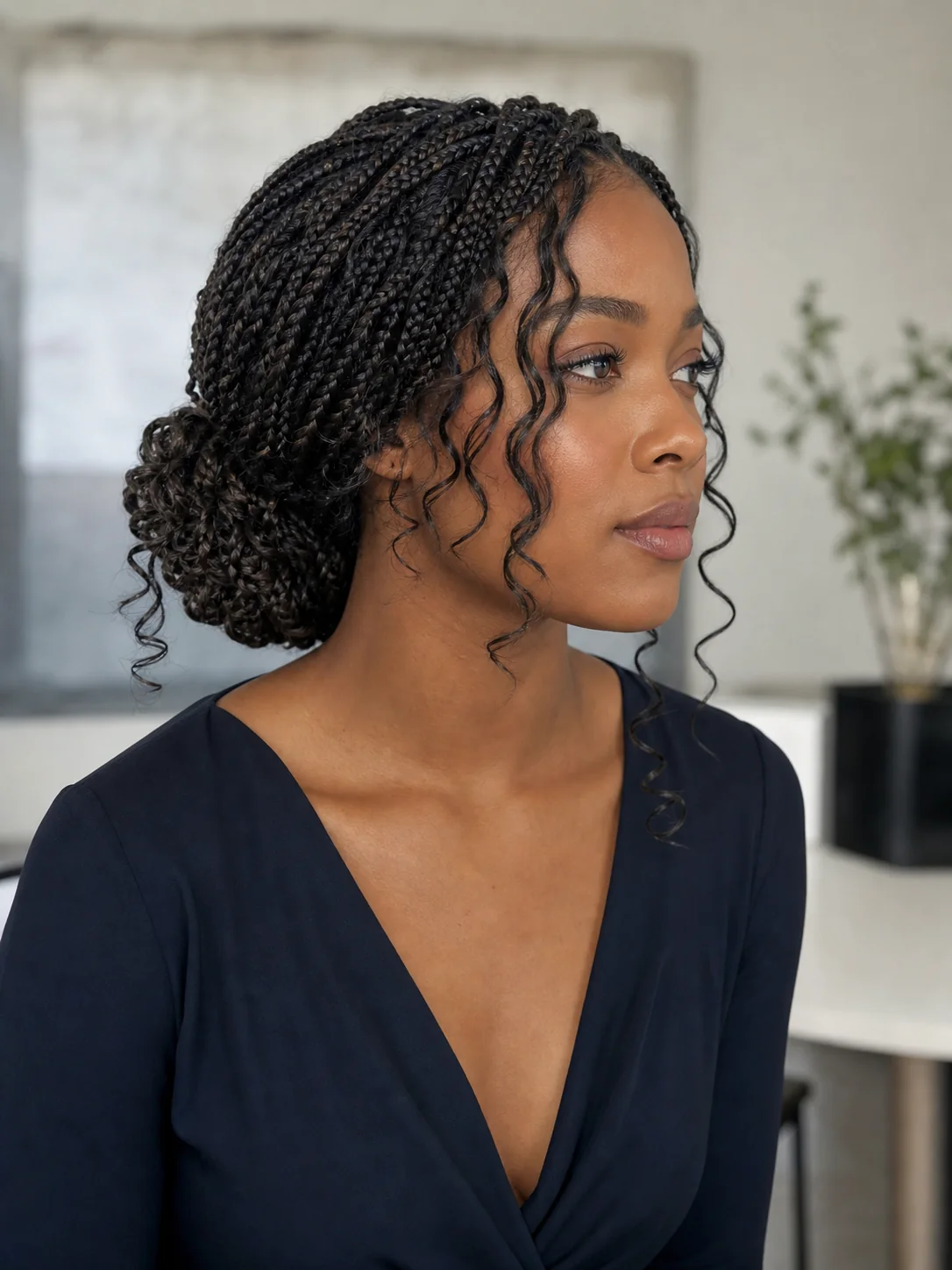
Most braid lengths coil into a low bun while selected spirals remain free near the face and nape. The compact shape protects loose ends from rubbing, reveals the neckline and creates a graceful finish that can make the wearer feel calm and occasion-ready. The curls should be laid around the bun rather than twisted tightly inside it, and a very long installation may produce more bulk than comfort. Ask for medium length and density, flexible nape sections and several deliberately placed curls that can remain loose without exposing unfinished transitions.
Ask your stylist for: Medium-density braids that coil comfortably low, with flexible nape roots and deliberately placed loose spirals.
14. Honey-Blonde French Curl Braids
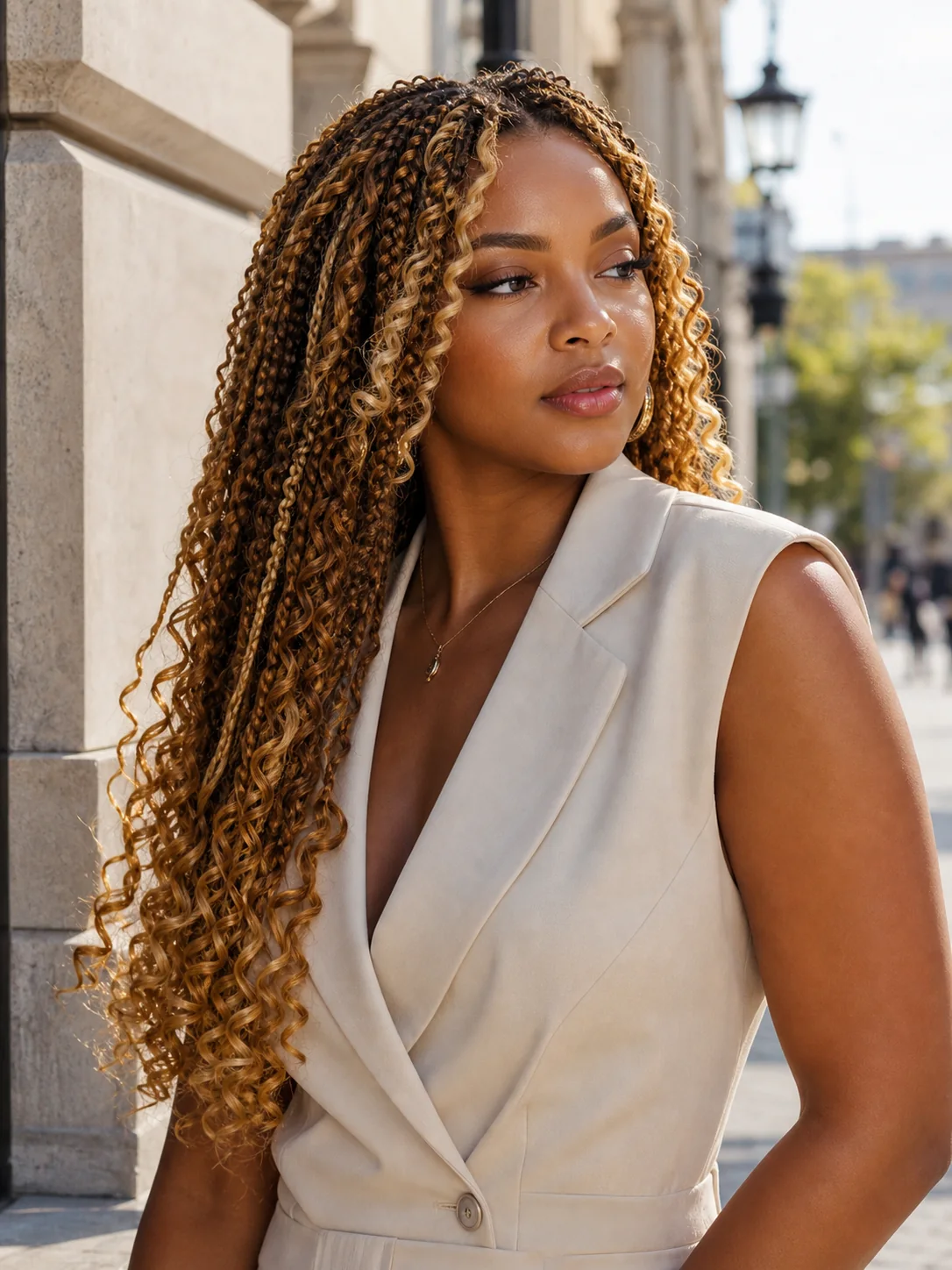
A blend of caramel, honey and deeper brown extension hair gives every braid and spiral visible dimension. Lighter curls brighten the area around the face and keep long lengths from reading as one dark block, offering a sunny, confident change without bleaching natural hair. Color can look very different under salon lights, and one flat blonde may feel synthetic, so compare the fiber beside the skin in daylight first. Request two or three brown-based honey shades, darker feed-in roots and an intentional distribution of lighter curls around the face.
Ask your stylist for: Two or three brown-based honey shades, darker feed-in roots and brighter curls placed deliberately near the face.
15. Rich Auburn French Curl Braids
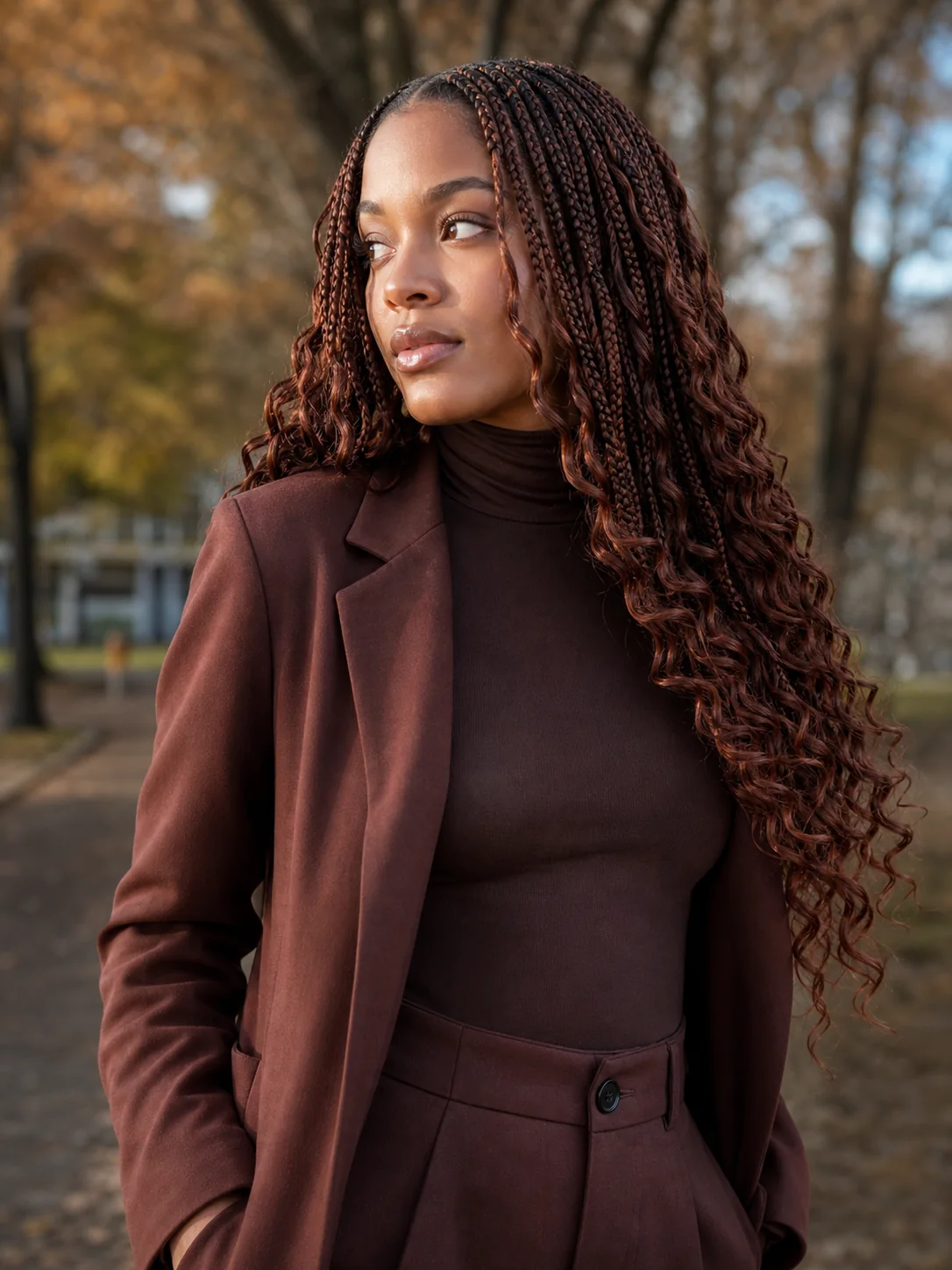
Deep auburn fiber warms the entire style while the curled ends catch enough light to reveal red-brown dimension. The shade enriches darker roots and brings a sophisticated glow near the complexion, helping the wearer feel bold without choosing a neon-bright color. Reds can shift orange in strong sun, so a brown-based swatch and a darker root blend keep the result refined. Ask for a deep auburn mix with subtle tonal variation, natural dark feed-ins and glossy spirals whose color remains consistent from transition to tip.
Ask your stylist for: A brown-based deep auburn blend, natural dark feed-ins and glossy spirals with consistent color through the ends.
16. Black and Burgundy French Curl Braids
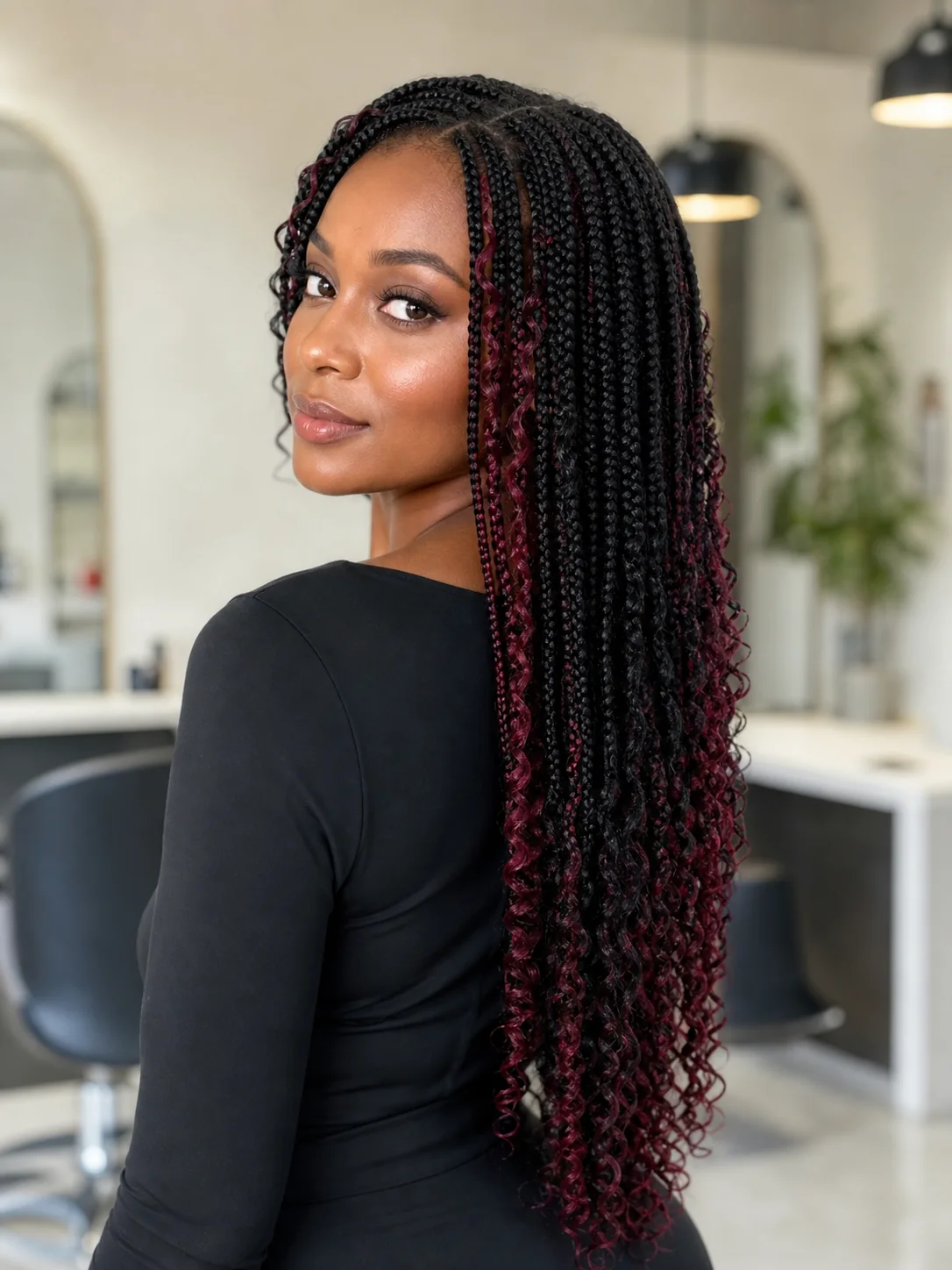
Selective burgundy braids run through a black base, allowing flashes of wine-red curl to appear as the hair moves. The placement adds depth and personality without turning every strand bright, so the wearer gets an expressive, grown-up mood that remains easy to coordinate with daily clothes. Random streaks can look patchy; a planned face-frame and balanced back distribution create intention. Request mostly natural black with a measured number of deep burgundy pieces, seamless feed-ins and color repeated at both sides and through the lower back.
Ask your stylist for: Mostly natural black with balanced deep-burgundy accents, seamless feed-ins and mirrored face-framing placement.
17. French Curl Braids With Extra-Full Ends
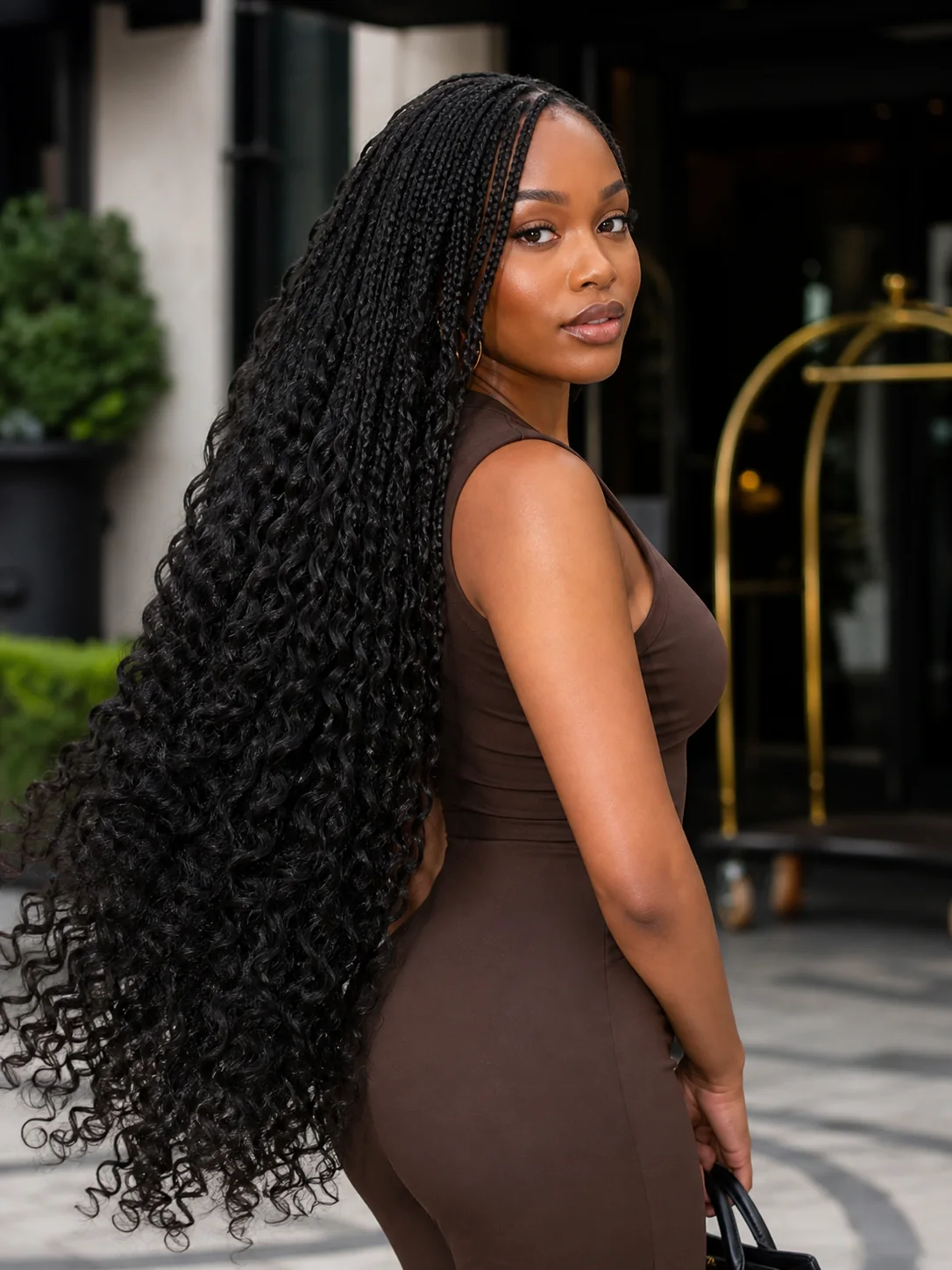
The braids release higher than usual into a generous mass of spirals, concentrating softness and body through the lower half of the style. This added width can balance narrow shoulders and gives the wearer a lush, glamorous feeling whenever the curls move. More loose fiber also means more tangling, product buildup and nighttime friction, so this is best for someone willing to separate curls gently and contain them for sleep. Ask for higher staggered release points, lightweight curl fiber, controlled density near the face and enough braid length to keep every transition secure.
Ask your stylist for: Higher staggered release points, lightweight curl fiber, controlled face density and securely finished transitions.
18. French Curl Braids With Soft Face-Framing Pieces
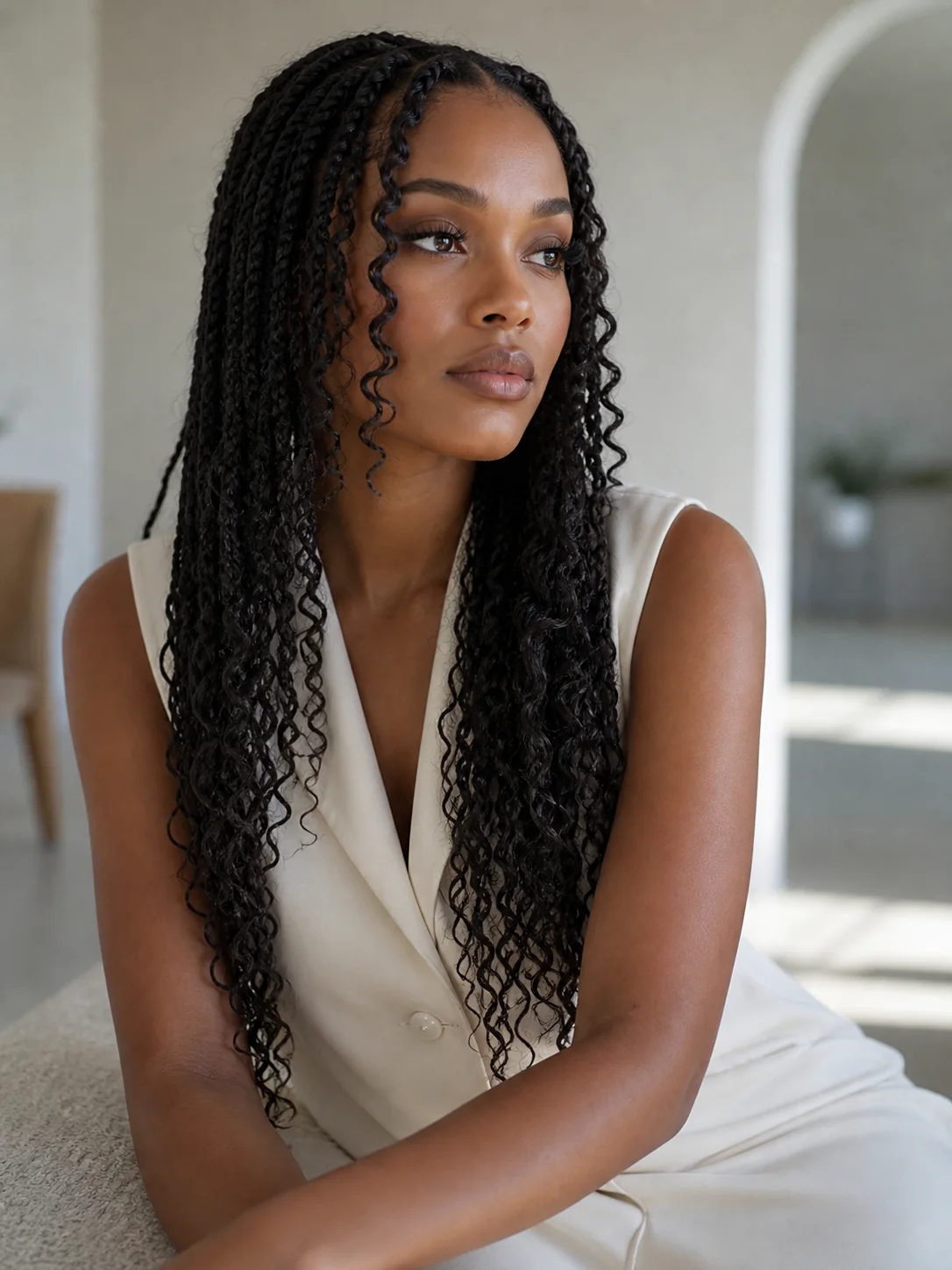
A few front braids open into shorter spirals around the cheekbones while the rest remain long, giving the style a softly layered face frame. These curved pieces break up a heavy front curtain, draw attention toward the eyes and can make the wearer feel romantic without committing to an allover layered shape. Too many short curls may constantly touch the face, so agree on their number and shortest point before cutting. Request two or three graduated pieces on each side, a smooth blend into the long curls and no exposed knots at the transition.
Ask your stylist for: Two or three graduated face-framing curls per side, blended into long lengths with invisible secure transitions.
19. Minimal-Curl French Curl Braids
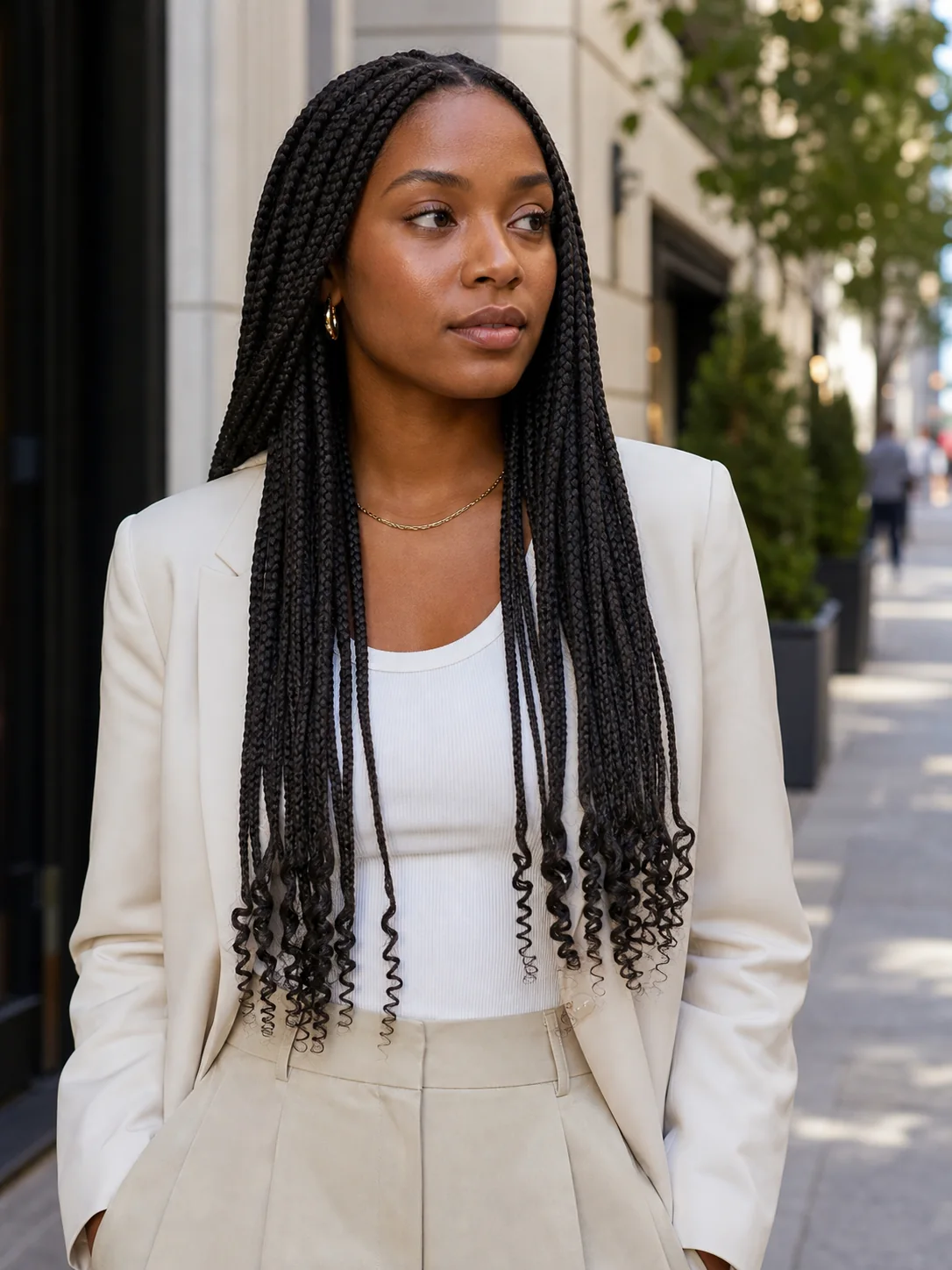
Most of each strand stays braided, with only the final section opening into a tidy spiral. The restrained curl area preserves the recognizable French curl finish while reducing tangling and friction, making the style feel polished and practical for work, travel or a busy routine. It will not deliver the same cloudlike fullness as a high-release version, but that lighter maintenance is exactly the appeal. Ask for long tapered braids, short uniform curl sections, clean secured transitions and a curl diameter that remains visible without becoming bulky.
Ask your stylist for: Long tapered braids with short uniform curl sections, clean transitions and a defined but restrained spiral diameter.
20. Mixed-Size French Curl Braids
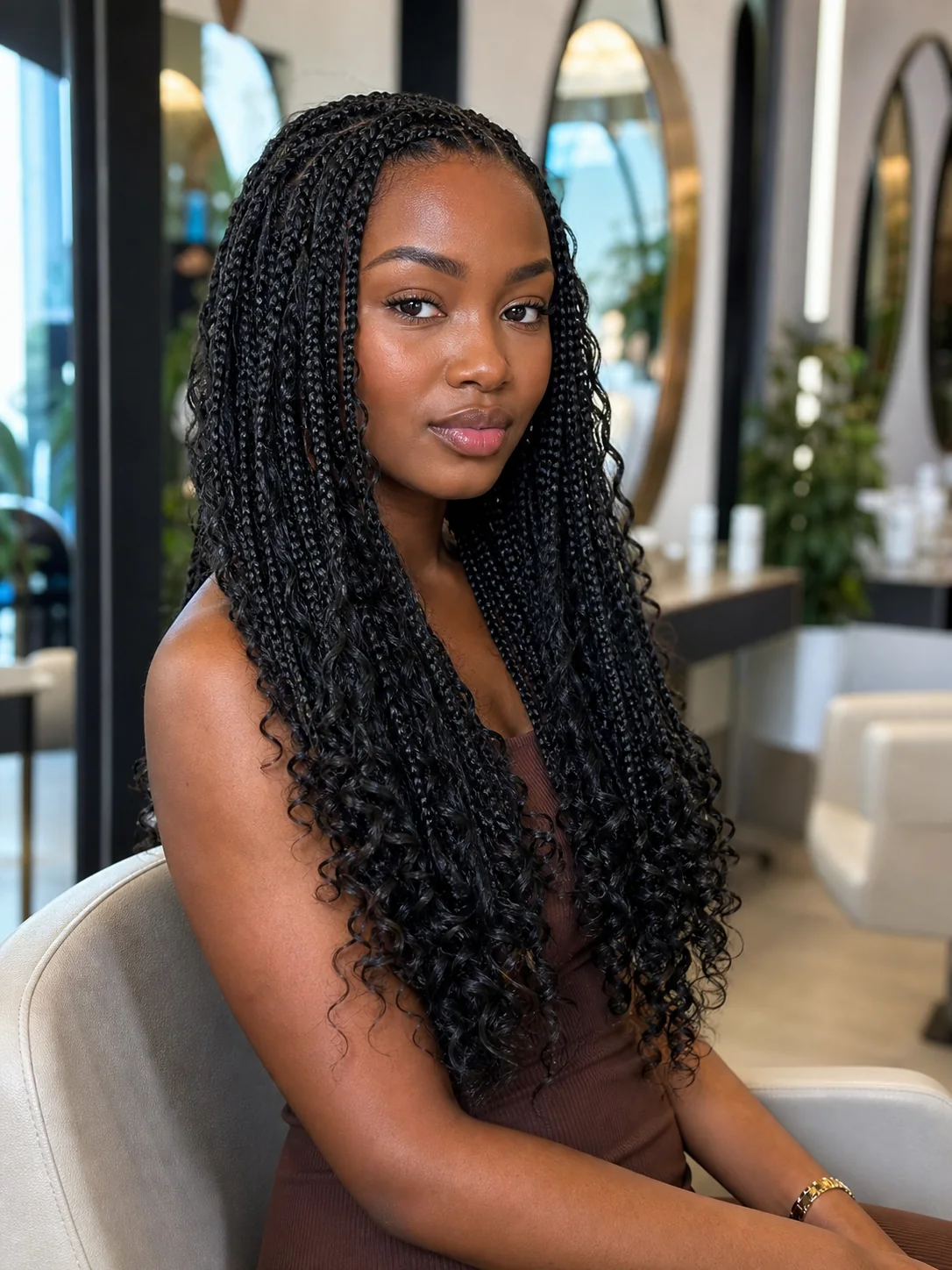
Slim and medium braids alternate in a planned rhythm before meeting similarly defined spiral ends. The variation prevents the upper section from looking too uniform and builds natural-looking dimension, helping the wearer feel creative and individual while keeping one cohesive curl story. Mixed size should never mean tiny roots carrying medium-braid weight; every section still needs a proportionate amount of extension hair. Ask for a mapped combination of small and medium knotless braids, balanced placement on both sides and one consistent curl family to unite the finished shape.
Ask your stylist for: A mapped small-and-medium knotless mix, proportionate extension weight and one consistent curl family throughout.
Pause and notice: Bring one reference for the root and braid scale and a second for curl placement, length and color. That split brief is much clearer than asking a braider to copy one photo in every detail.
Before You Book the Appointment
A successful haircut is a commitment to its overall shape as much as its length. Use this quick reality check before choosing your final reference photograph.
- Best for: Anyone who wants neat individual braids with softer movement and a romantic curled finish.
- Comfort: Knotless or traditional bases should feel calm; pain, bumps or strained edges are not normal neatness.
- Planning: Decide braid size, finished length, curl release point, curl density and part flexibility separately.
- Maintenance: Contain curls at night, separate with fingers, use light mousse sparingly and dry the roots fully.
Who French Curl Braids Suit Best
French curl braids work especially well when you like the structure of protective braids but want more softness and movement than fully braided ends provide. A bob or shoulder-length version can open the neckline and keep the style light, face-framing curls can soften an angular jaw or prominent cheekbones, and a lifted crown or side part can visually lengthen a round face. Oval faces can carry nearly every length and parting, while controlled side volume can add balance to longer face shapes. Scalp condition still comes first: postpone installation when edges are fragile, the scalp is irritated or hair is actively shedding.
What to Ask Your Braider
Name the base technique, braid size, part preference, finished curled length, point where the braid should release, curl diameter, density and color blend. Bring separate root and end references, ask what pre-curled fiber will be used, and say clearly that low tension and proportionate extension weight are non-negotiable.
Styling, Maintenance and Grow-Out
Loosely divide the hair into sections and contain the curls with satin at night rather than crushing them into one tight bundle. Separate tangles with fingers, use a small amount of light mousse when needed, cleanse the scalp gently and dry the roots completely. As the style grows out, avoid repeated tightening at the perimeter and remove it when matting, slipping, itching or tension outweighs the benefit.
More Hair Inspiration
- 20 Fulani Braids With Beautiful Patterns, Curls and Beads — Compare a pattern-led braid style with cornrows through the front and crown.