Fine hair can be wonderfully silky, quick to dry and naturally light—but it also has a habit of showing every overly enthusiastic layer. The most flattering styles do not try to disguise your texture. They use clean edges, thoughtful weight placement and just enough movement to make each strand count.
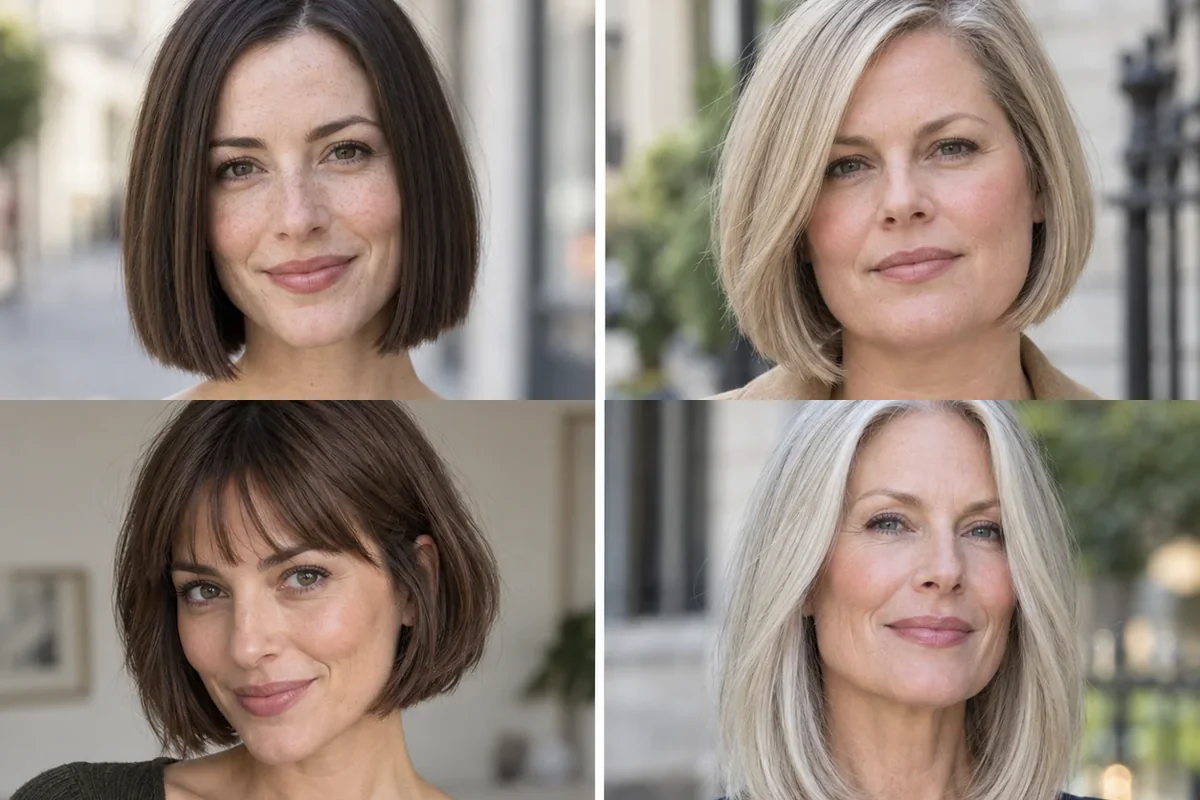
Hairstyles for fine hair are cuts and finishes designed around a small individual strand diameter. Fine is not the same as thin: you can have many fine strands and plenty of overall density, while thinning describes fewer hairs or increased scalp visibility. The signature of a fine-hair-friendly shape is controlled weight—often a substantial perimeter, restrained or hidden layers and lift created without heavy product. That makes this guide different from a generic thin-hair roundup or a one-length-is-best rule.
Find the one that feels like you: Start with the first look and let the photographs lead. Each style explains how the shape affects your features, the mood it creates and the exact words to take to your stylist.
1. Chin-Length Blunt Bob

This chin-length bob keeps almost every strand at the same level, creating a compact edge that reads as thicker than feathery ends. The horizontal line brings width toward a long or narrow face and makes naturally straight fine hair look sleek with very little persuasion. It feels decisive and polished, though the outline will show growth sooner than a layered cut. Ask for a blunt line at the chin with no graduation and only the lightest point cutting at the surface; dry downward with a paddle brush and stop before the ends become overly rounded.
Ask your stylist for: Cut a one-length chin bob with no graduation, a dense perimeter and only minimal surface point cutting.
2. Softly Graduated Bob
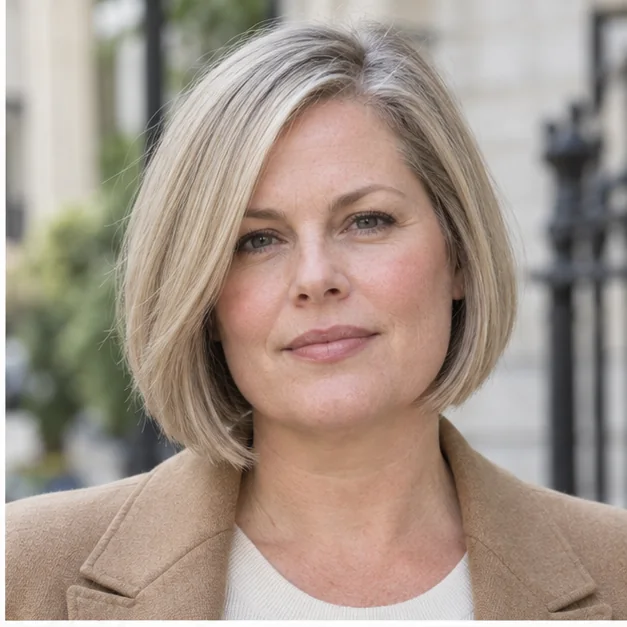
A softly graduated bob is fractionally shorter at the nape, with quiet internal elevation that supports the longer surface. That hidden structure can give a flat crown more curve while keeping the front edge substantial, especially on straight or slightly wavy fine hair. The silhouette feels tailored and capable rather than sharply stacked, and it grows out more gracefully when the angle stays subtle. Request low graduation below the occipital bone, a chin-to-jaw front and no aggressive thinning; a small round brush at the roots is enough to reveal the shape.
Ask your stylist for: Add low, subtle graduation below the occipital bone while preserving a solid chin-to-jaw front edge.
3. French-Inspired Bob With Airy Fringe

This cheek-to-jaw bob pairs a clean baseline with a narrow, see-through fringe instead of borrowing too much hair for heavy bangs. The fringe highlights the eyes and can soften a high forehead, while the compact length keeps fine ends from looking transparent. It feels charming and a little playful, but the bangs need more frequent trims and may separate on oily days. Ask for a jaw-skimming French-inspired bob with a small triangular fringe section and soft brow-length ends; refresh the fringe alone with a quick wash and blow-dry it from side to side.
Ask your stylist for: Keep the jaw-length baseline dense and cut an airy brow fringe from a small, shallow section.
4. Collarbone Lob With Full Ends

A collarbone lob gives fine hair enough length to swing and tie back while concentrating weight in a strong, nearly one-length perimeter. The line widens the area around the shoulders, which can balance a heart-shaped face, and the restrained construction helps the ends look healthy after a blowout or air-dry. It feels versatile and quietly modern rather than precious. Ask for a collarbone-skimming clavicut with minimal internal layering and no razor work through the bottom two inches; use lightweight mousse at the roots and leave the ends softly straight.
Ask your stylist for: Create a collarbone clavicut with a strong perimeter, minimal internal layering and no razored ends.
5. Angled Lob With a Deep Side Part
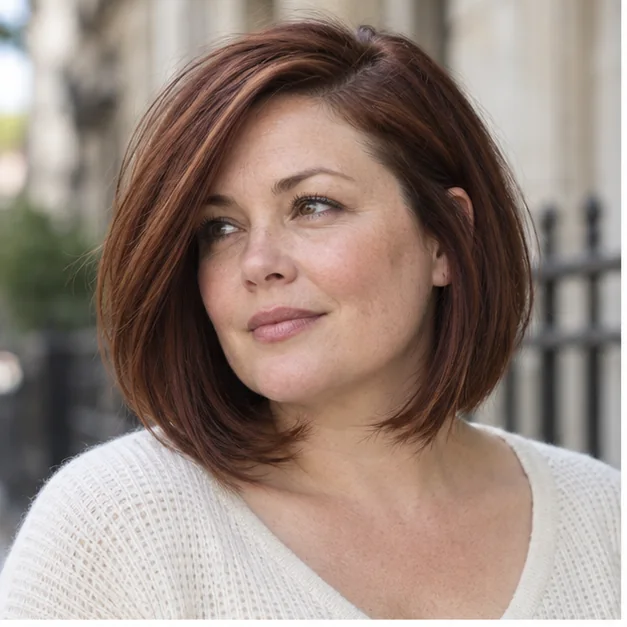
This lob sits slightly shorter behind and lengthens toward the collarbones, while a deep side part sends more hair across the top for instant-looking lift. The diagonal front can visually lengthen a round face and gives straight fine hair movement without relying on exposed layers. Its crisp geometry feels confident and professional, although the part may need retraining if your hair has a strong natural split. Request a subtle forward angle with no stacked back and a full front perimeter; switch the part while blow-drying, then settle it into place once the roots cool.
Ask your stylist for: Cut a subtly angled collarbone lob with no stacked back and preserve maximum weight through the front.
Pause and notice: Fine describes the width of each strand; density describes how many strands you have. Ask your stylist to assess both before deciding how much layering your hair can support.
6. Bixie With a Full Crown
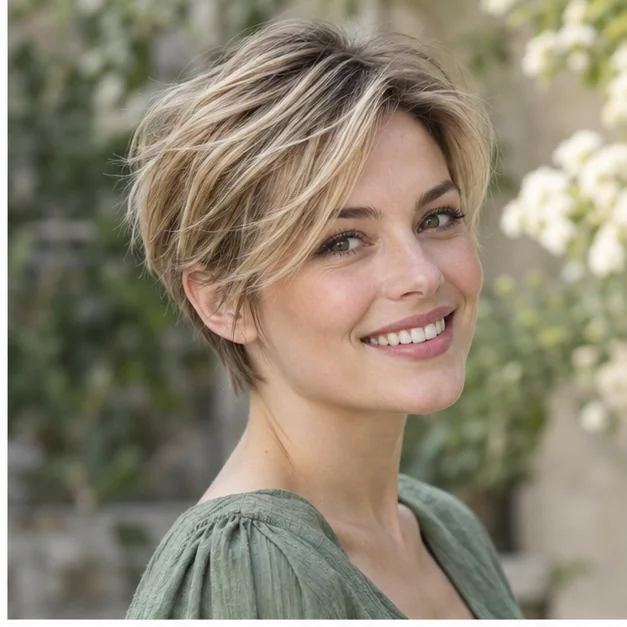
The bixie combines a cropped nape and neat sides with longer, connected layers over the crown and ears. Removing excess length lets fine hair lift more readily, while the generous top can soften angular features and avoid the sparse effect of overly chopped texture. It feels spirited and fresh, with enough length to tuck behind an ear, but it needs shaping every six to eight weeks. Ask for a bob-pixie hybrid with a softly tapered nape, weight through the crown and scissor-cut ends; work a pea-size airy cream through dry roots with your fingertips.
Ask your stylist for: Blend a softly tapered nape into a full, scissor-cut crown with tuckable length around the ears.
7. Long Pixie With Side-Swept Bangs
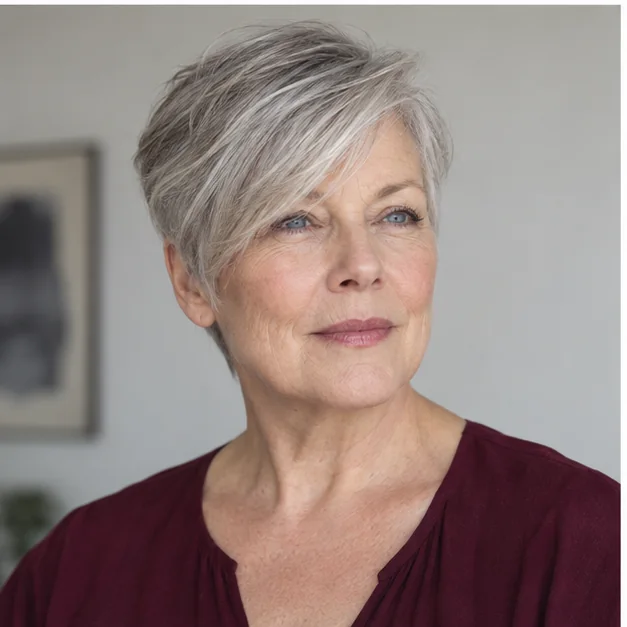
A long pixie keeps the sides close but leaves a substantial sweep from the crown toward one cheekbone. That diagonal creates height and can lengthen a round face, while the short base prevents fine strands from collapsing under their own weight. The result feels chic and self-assured, yet the longer fringe still offers reassuring softness around the forehead. Tell your stylist to keep the top connected and weighty, taper with scissors rather than thinning shears and leave the fringe long enough to move across the brow; style it with a vent brush and flexible spray.
Ask your stylist for: Taper the sides with scissors, keep connected weight on top and leave a cheekbone-directed side fringe.
8. Rounded Crop With Micro Texture
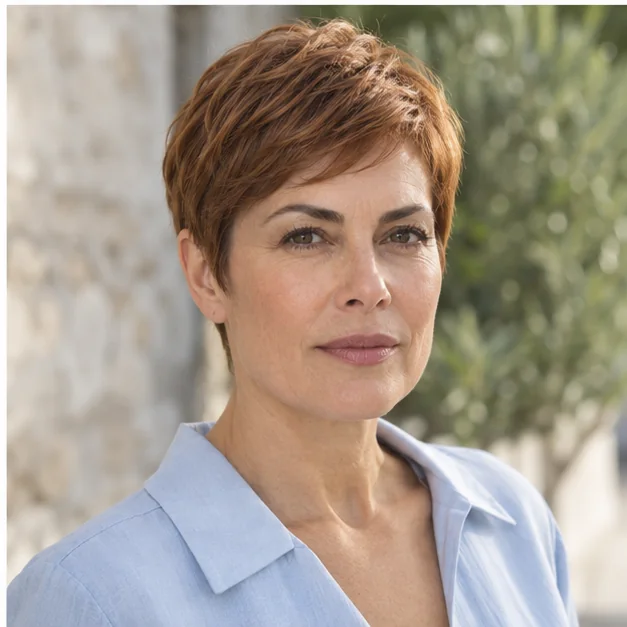
This close rounded crop follows the head shape with a softly full crown and tiny separation only at the surface. It makes the most of fine hair's lightness, lifting easily and drawing attention to the eyes, cheekbones and neckline without needing a large amount of density. The effect feels bright, modern and liberating for someone ready to show more face. Ask for a scissor-over-comb crop with a rounded silhouette, a softly broken hairline and no deep razor channels; rub a pinhead of matte paste between your hands before touching only the tips.
Ask your stylist for: Shape a rounded scissor crop with a full crown, softly broken edges and no deep razor texturizing.
9. Shoulder Cut With Hidden Layers

A shoulder-length cut with hidden layers keeps the outside looking almost one length while shorter interior sections encourage lift and bend. It is a useful compromise for fine hair that feels flat but becomes see-through when visibly layered, and the soft movement can balance square or oval faces without changing the clean outline. The finish feels natural and polished rather than heavily styled. Ask for invisible internal layers beginning well below the crown, with an untouched surface and blunt shoulder perimeter; apply a light root foam and direct alternating sections forward and back as you dry.
Ask your stylist for: Add invisible internal layers below the crown while leaving the surface and shoulder-length perimeter visually solid.
10. Soft Shag With a Weighty Baseline
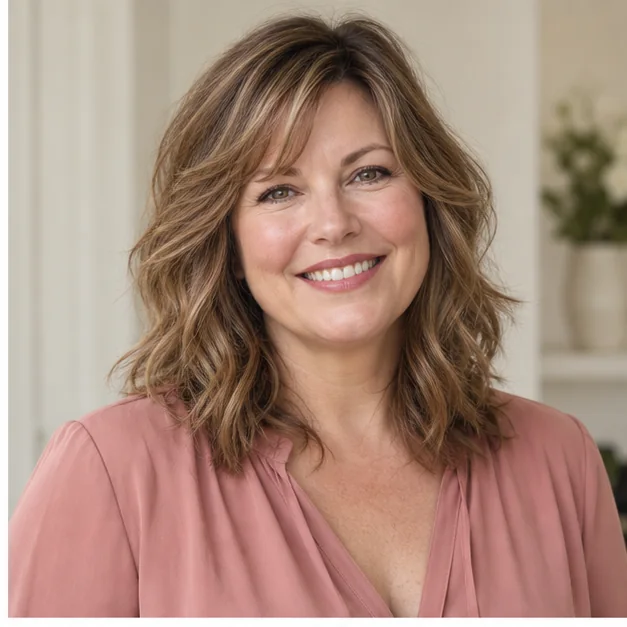
This fine-hair shag uses a light halo of crown layers and cheekbone pieces over a perimeter that still looks full at the shoulders. The lifted top can add height to a round face and help natural waves form, but the softer transition avoids the skinny tail created by an extreme shag. It feels relaxed, creative and forgiving on air-dry days. Request moderate crown elevation, connected face framing and a substantial bottom line with no aggressive thinning; scrunch foam into soaking-wet hair, diffuse the roots and leave the ends in larger clumps.
Ask your stylist for: Cut moderate, connected crown layers over a substantial shoulder baseline and avoid thinning the lower lengths.
Pause and notice: A photo shows the goal, but a back and side view reveal where the fullness actually comes from. Bring references with a texture and density reasonably close to your own.
11. Long Hair With a U-Shaped Perimeter
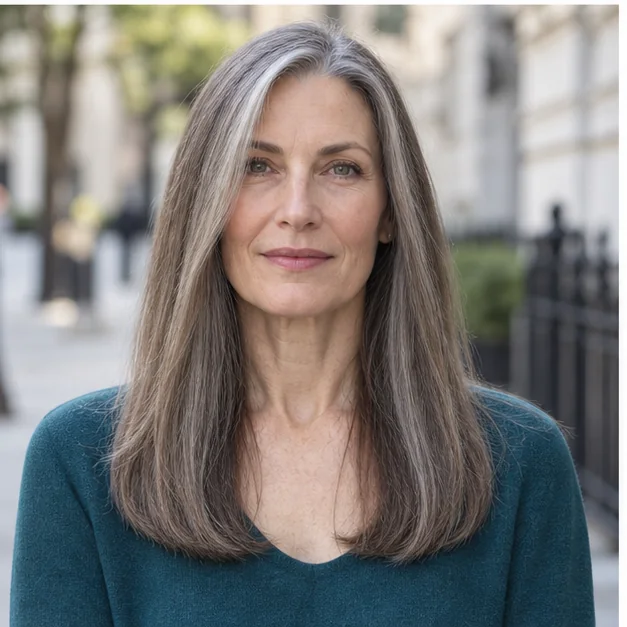
Long fine hair can look substantial when the back follows a shallow U rather than tapering into a narrow V. The curved hem preserves visual density through the center and corners, while a few long front pieces keep the shape from feeling severe and can soften a strong jaw. It feels feminine and serene, with the practical advantage of still fitting easily into braids and ponytails. Ask for a shallow U-shaped perimeter, no short layers and face framing no higher than the collarbone; protect the ends with leave-in conditioner and trim before splitting makes the baseline transparent.
Ask your stylist for: Keep a shallow U-shaped long perimeter with no short layers and collarbone-starting face framing only.
12. Long Hair With Restrained Face Framing
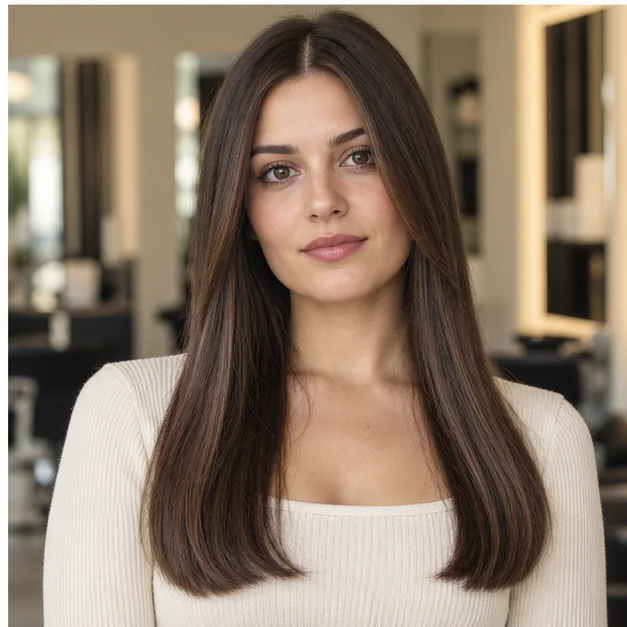
This long shape stays blunt through the back and introduces only a narrow set of pieces from the cheekbones to the collarbones. The framing opens movement around the face and can soften a square jaw, yet most strands still reach the bottom line, so fine hair retains its strongest possible edge. The look feels graceful and versatile rather than flat or overly layered. Tell your stylist to isolate a small front section, connect it gently into a one-length back and avoid removing weight behind the ears; bend just the front pieces with a large iron and leave the lengths smooth.
Ask your stylist for: Preserve a one-length back and add a narrow face frame from cheekbone to collarbone without layering behind the ears.
13. Air-Dried Fine Waves

Fine waves look fullest when they form soft, touchable S shapes over ends that have not been overlayered. A collarbone baseline gives the pattern room to bend, while sparse long layers stop the outline from becoming triangular and can soften angular features. The result feels carefree and natural, and it avoids the repeated heat that can make delicate strands brittle. Ask for a dry-aware collarbone cut with a full edge and only enough long layering to release the wave; apply foam to soaking-wet hair, scrunch once and keep your hands away until it is fully dry.
Ask your stylist for: Build a full collarbone perimeter with sparse long layers placed according to the natural wave pattern.
14. Soft Roller-Set Curls
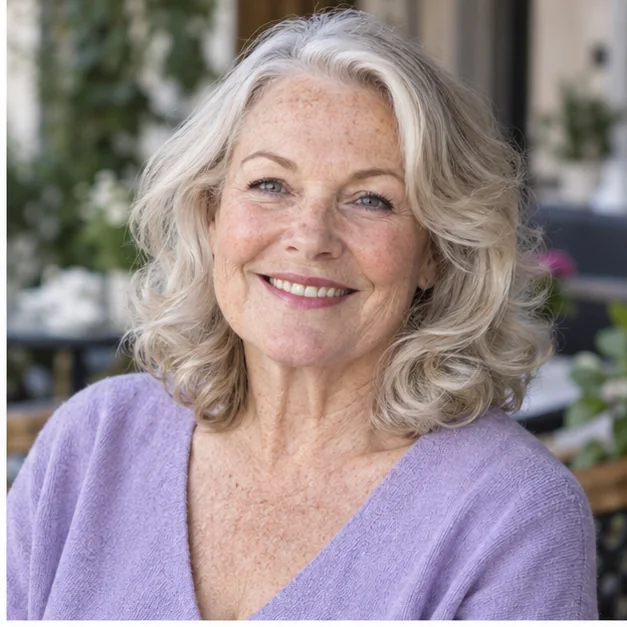
Large rollers turn shoulder-length fine hair into broad, brushed curves rather than tight ringlets, creating volume through shape instead of product buildup. The outward movement can balance a long face and gives an otherwise simple blunt cut a softer occasion-ready personality. It feels glamorous but approachable, especially when the finish is allowed to move. Keep the underlying haircut blunt with minimal layers, then ask for large rollers set vertically around the sides and on base at the crown; let the hair cool completely before brushing with a wide paddle brush and finishing with light spray.
Ask your stylist for: Maintain a blunt shoulder base with minimal layers so large roller-set curls finish with substantial ends.
15. Root-Lift Blowout With C-Shaped Ends
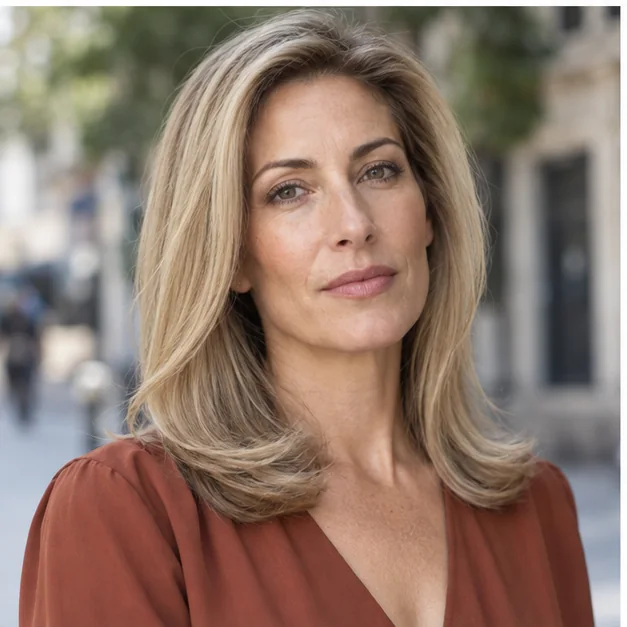
This blowout concentrates volume at the roots and midlengths, then turns the full ends into one loose C curve. The controlled bend reflects light and gives fine straight hair a plush appearance without separating it into many wispy pieces; height at the crown can also lengthen a round face. It feels polished and energetic for work or an evening out, though humidity may shorten its lifespan. Ask for a solid shoulder cut with subtle crown support, then blow-dry the roots against their natural direction and use one large brush rotation through the ends.
Ask your stylist for: Keep a solid shoulder perimeter and add only subtle internal crown support for a root-lift blowout.
Pause and notice: More product does not automatically mean more volume. Fine hair often responds best to a small amount at the roots and clean, movable lengths.
16. Half-Up Twist With Crown Lift
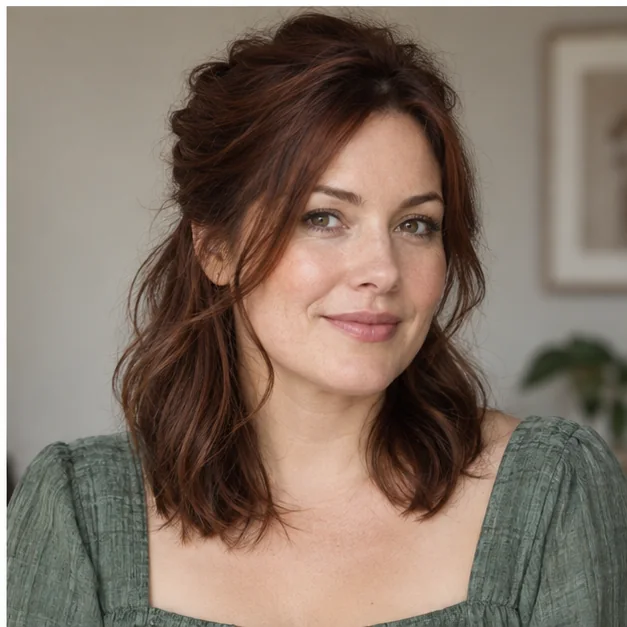
A half-up twist gathers only the upper side sections and secures them loosely behind a gently lifted crown. Leaving the lower hair free preserves width around the shoulders, while the soft height can elongate a round face and make second-day roots look intentional rather than flat. It feels romantic and put together without the formality of a full updo. Keep face framing long enough to merge with the style, mist dry shampoo beneath the crown rather than over the surface and secure the twist with crossed pins; avoid pulling the sides tight, which can reveal more scalp.
Ask your stylist for: Keep long, blendable face framing and enough crown length for a softly lifted half-up twist.
17. Low Ponytail With a Soft Side Part
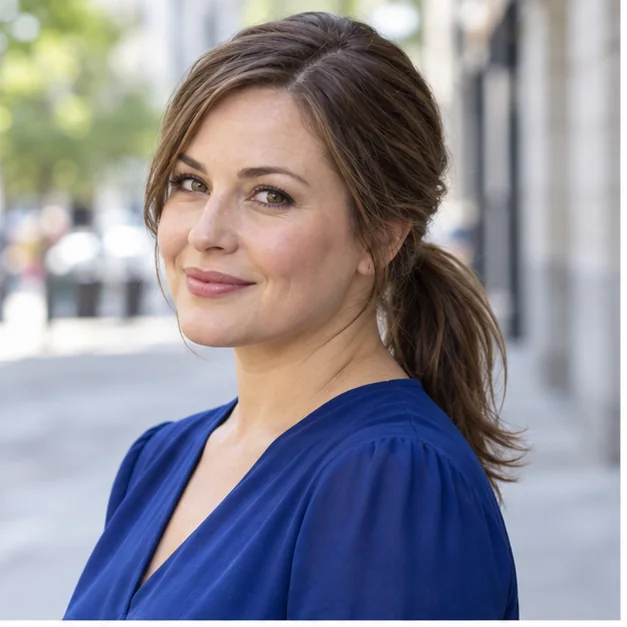
This low ponytail follows a soft side part and keeps a little natural looseness above the ears instead of being scraped flat. The diagonal part adds movement at the front, while a wrapped base and lightly bent tail make fine hair look finished without requiring a very thick ponytail. It feels elegant, calm and practical for work or dinner. Ask your stylist to preserve a blunt, tie-back-friendly perimeter and long front pieces; at home, use a snag-free elastic, loosen the crown by millimeters and wrap one narrow strand around the base rather than backcombing fragile roots.
Ask your stylist for: Maintain a blunt tie-back length with long front pieces and no short nape layers that escape a low ponytail.
18. Loose Low Chignon
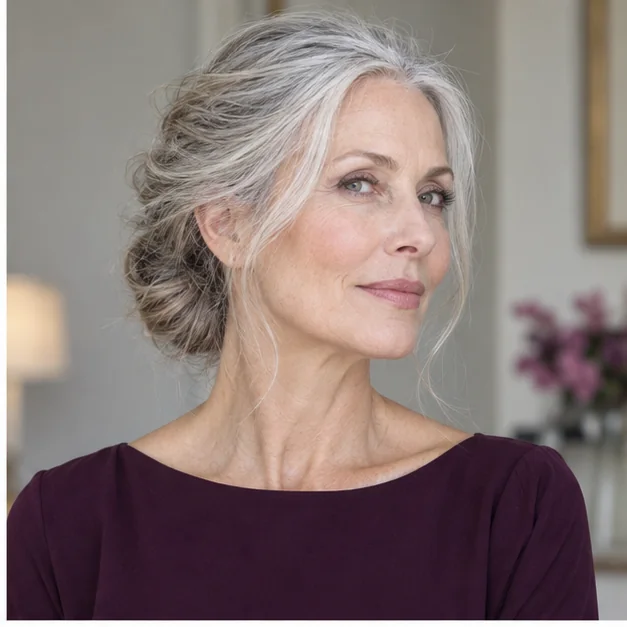
A loose low chignon folds the lengths over themselves at the nape, creating a wider shape than a tightly wound bun. Gentle crown lift and two deliberate face pieces soften the profile, flatter prominent cheekbones and make medium or long fine hair feel occasion-ready without pretending it is denser than it is. The mood is graceful and confident, with a little forgiving softness. Preserve enough blunt length for pinning, prep with a light texture mist and spread the folded loop before anchoring it; skip heavy backcombing, which can roughen fine cuticles and complicate takedown.
Ask your stylist for: Keep a pin-friendly blunt perimeter and long face framing that can be released from a low chignon.
19. Relaxed Side Braid
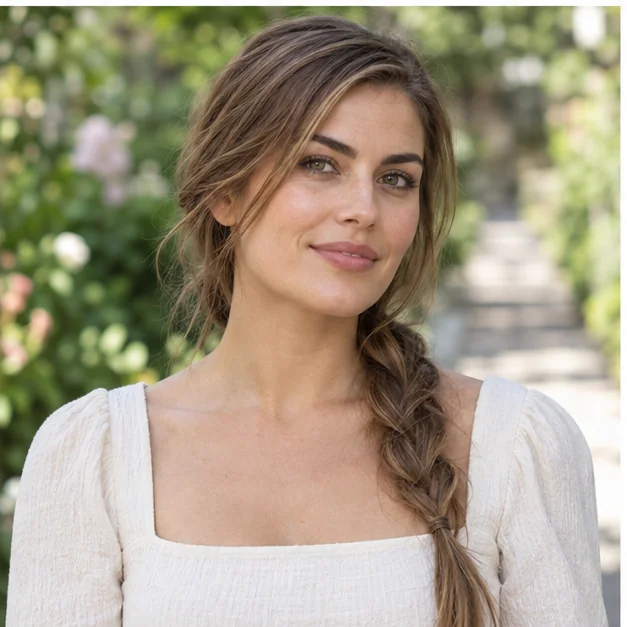
A low side braid brings fine lengths forward, where its pattern is visible, and gently widened loops create dimension without extensions. The asymmetry can soften a square face and gives long hair a practical answer for wind, travel or a day between washes. It feels easygoing and feminine, but the braid should be loosened carefully so fragile ends are not snapped. Ask for a long blunt or shallow U-shaped cut with no short layers through the back; add dry texture spray to the mids, braid with low tension and expand each loop from the outside edge only.
Ask your stylist for: Preserve a blunt or shallow U perimeter with long back layers so fine hair stays contained in a side braid.
20. French Twist With Airy Face Framing
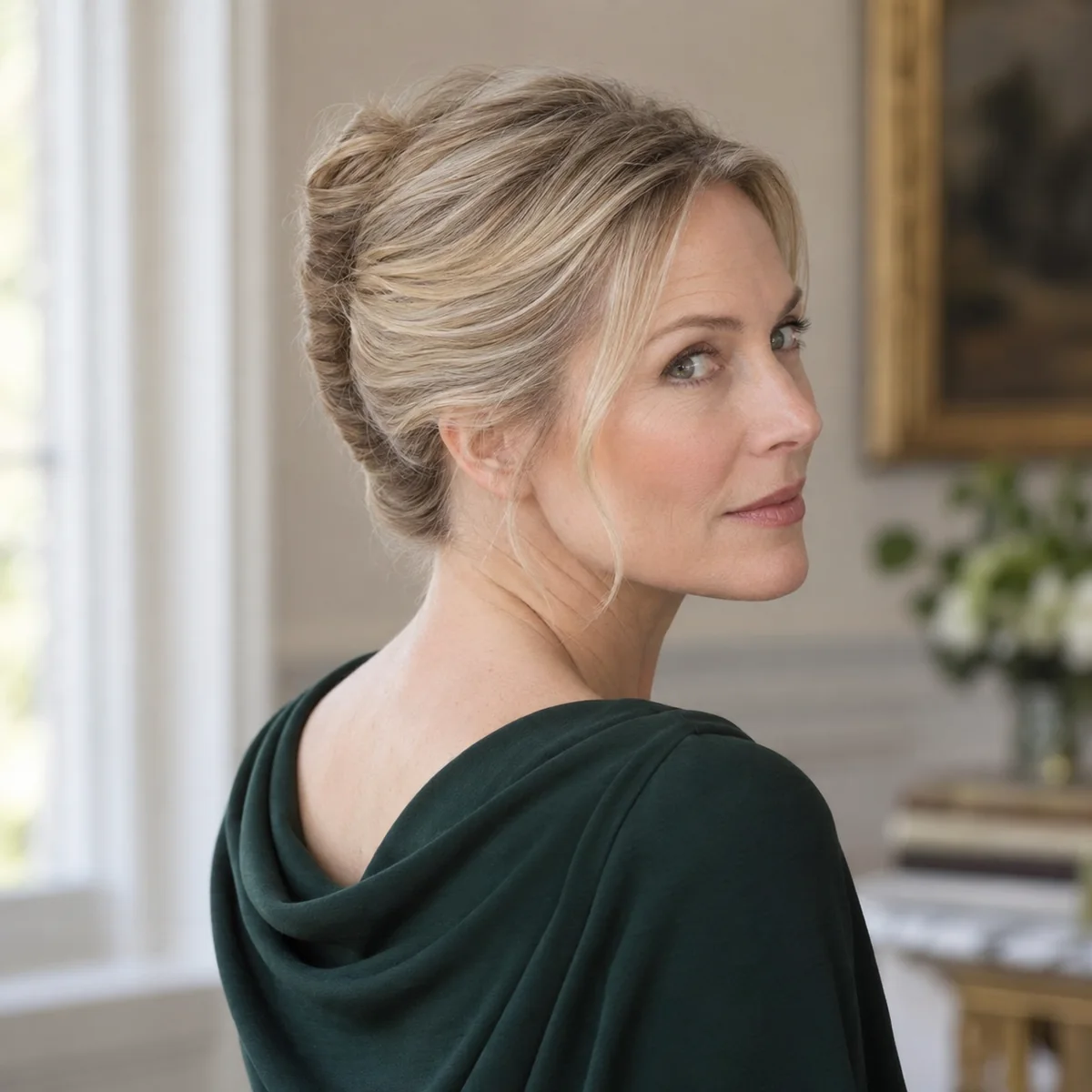
A French twist uses vertical structure rather than a large bun, making it especially elegant on medium-density fine hair. The upward line lengthens the profile, while a few airy pieces at the temples keep the finish soft around a long or angular face. It feels sophisticated and composed, yet the slightly relaxed surface prevents it from looking severe. Tell your stylist you need connected shoulder-or-longer layers that can tuck securely into an updo; prep with powder spray, roll the hair inward over crossed pins and release only two or three fine pieces instead of pulling out whole sections.
Ask your stylist for: Keep connected, updo-friendly layers at shoulder length or longer with a small amount of long face framing.
Pause and notice: Choose the shape that still works on an ordinary morning. A beautiful perimeter and realistic routine will serve you longer than one perfect salon blowout.
Before You Book the Appointment
A successful salon visit begins with the overall shape, construction and upkeep—not only the finished length. Use this quick reality check before choosing your final reference photograph.
- Best for: Fine strands at any overall density, from abundant-but-silky hair to lower-density hair that benefits from careful weight placement.
- Signature construction: A visible perimeter, deliberate rather than indiscriminate layering and lightweight lift that keeps the hair moving.
- Closest alternatives: Thin or thinning hair describes reduced density or hair loss, while fine hair describes strand diameter. The two can occur together, but they are not interchangeable.
- Maintenance: Most cuts benefit from trims every 6–12 weeks depending on length and precision; bangs, crops and blunt bobs show growth sooner than lobs or long U-shaped shapes.
Fine Hair Is Not Automatically Thin Hair
One fine strand has a small diameter, but you may still have a high number of strands. Density is the amount of hair across the scalp; thinning is a change or reduction in that amount. A haircut can improve shape and the appearance of fullness, but sudden shedding, a widening part or scalp symptoms deserve advice from a qualified medical professional rather than a styling workaround.
How to Choose Layers Without Losing Fullness
Blunt perimeters concentrate fine ends into a strong line. Hidden layers can create movement inside that line, while a few long face-framing pieces add softness without removing weight everywhere. Ask where the shortest layer will sit, whether the surface stays intact and how the cut will look air-dried before agreeing to heavy graduation, razoring or thinning shears.
What to Ask For at the Salon
Describe your strand diameter, overall density, natural part, usual drying method and the amount of time you will genuinely style. Name the dry finishing length, perimeter shape, shortest layer and fringe point. If your ends often look sparse, say explicitly that preserving visible density matters more than creating maximum texture.
Styling, Maintenance and Grow-Out
Start with less product than you think you need and keep conditioners away from the roots unless your scalp needs them. Directing roots against their fall, using large rollers or cooling a blowout in shape can create volume without stiff buildup. Protect delicate ends from repeated high heat and tight elastics; as a cut grows, reassess when the perimeter turns transparent or the crown stops responding to simple styling.
More Hair Inspiration
- 20 Long Bob Haircuts That Look Polished, Modern and Easy to Wear — Compare collarbone-length bob shapes in more detail.
- 20 Soft Pixie Cuts for Round Faces That Feel Fresh and Flattering — Explore cropped shapes designed to add softness and height.
- 20 Haircuts With Bangs That Frame Your Face Beautifully — See more fringe shapes and face-framing options.