Knotless braids have an easy elegance: they lie flat at the scalp, move naturally and can feel lighter than a traditional knotted set. Each braid begins with your own hair before small amounts of extension hair are gradually fed in, so there is no firm starter knot at the root. That construction distinguishes them from traditional box braids, while their free-hanging shape separates them from feed-in cornrows attached to the scalp. The technique does not guarantee a tension-free appointment, but the right size, weight and installation can create a comfortable, polished style that works beautifully for weeks.
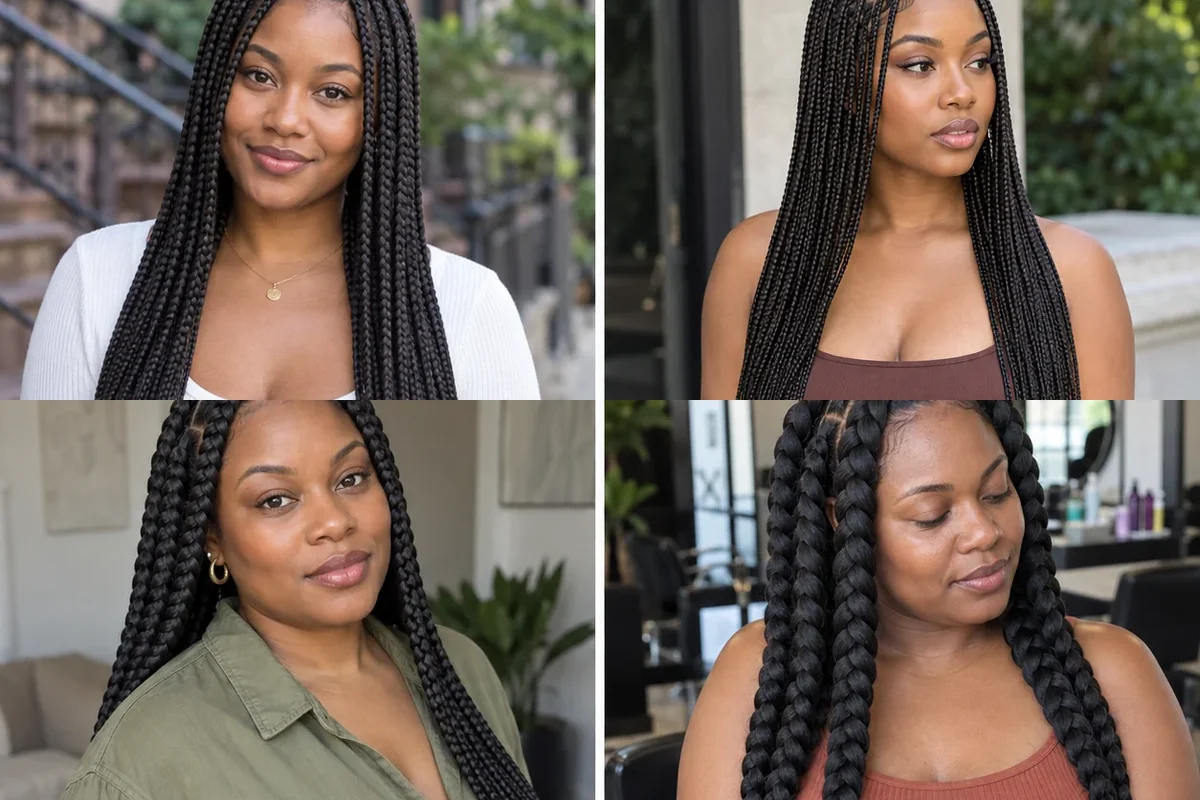
Find the one that feels like you: Start with the first look and let the photographs lead. Each style explains how the shape affects your features, the mood it creates and the exact words to take to your stylist.
1. Classic Medium Knotless Braids
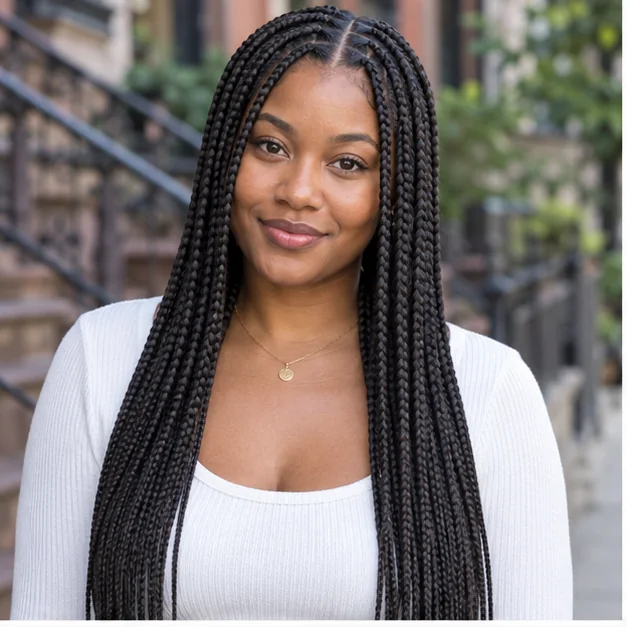
Clean medium squares and evenly fed braids create the balanced version most people picture when they hear knotless braids. The scale gives enough scalp definition to look polished without making the parting dominate, and the fluid mid-back length frames many face shapes with calm vertical lines. It feels confidently put together yet versatile enough for work, weekends and simple ponytails. Ask for medium knotless box braids, natural density, a center part and mid-back length; confirm that the first feeds are small and the hairline sections carry less extension hair.
Ask your stylist for: Create medium knotless braids with gradual feed-in, natural density, a center part and lighter hairline sections.
2. Small Knotless Braids With Fluid Movement
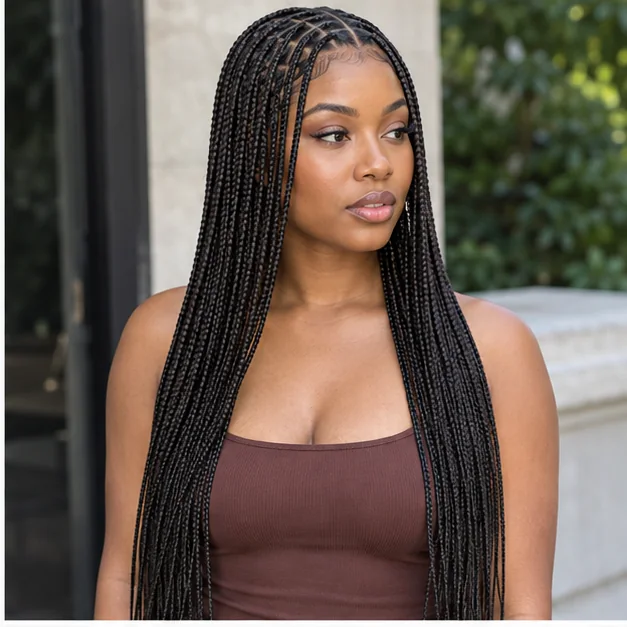
Narrow sections and fine braids fall almost like loose strands, giving this set exceptional swing and styling freedom. The delicate scale flatters smaller features and lets updos sit smoothly, creating an elegant, quietly luxurious feeling. Small braids require a longer appointment and careful extension control because too much added hair on tiny natural sections becomes heavy. Request small—not micro—knotless braids with brick-layered parts, lightweight feeds and tapered ends, then inspect one completed perimeter braid before continuing to confirm the root feels secure but comfortable.
Ask your stylist for: Use small brick-layered sections, lightweight gradual feeds and tapered ends, avoiding micro-sized hairline parts.
3. Large Knotless Braids With Clean Parts
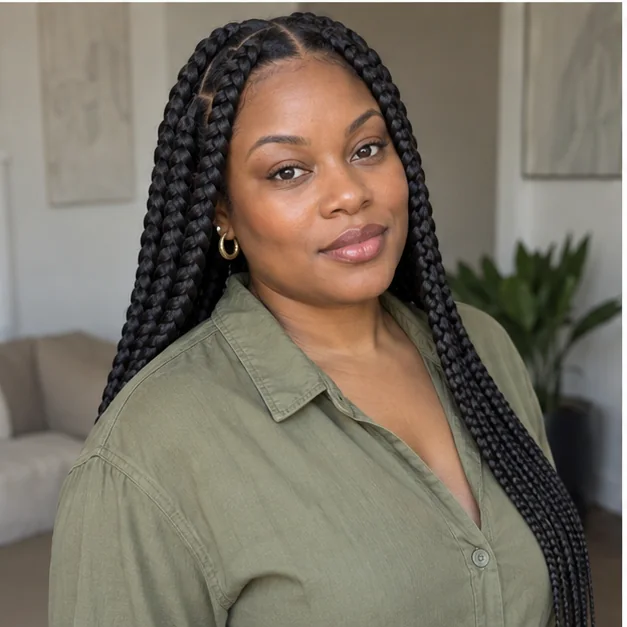
Large square sections and substantial braids create an open graphic pattern where the scalp design is as visible as the lengths. The bold scale balances strong facial features and feels fresh and decisive while shortening chair time compared with a small set. Because fewer natural-hair sections support larger pieces of extension hair, restraint matters: oversized does not need to mean heavy. Ask for large knotless braids with moderate-density feed-in, comfortable square parts and shoulder-blade length, preserving smaller, lighter sections around the temples.
Ask your stylist for: Make large knotless braids with moderate feed-in weight, comfortable square parts and lighter temple sections.
4. Jumbo Knotless Braids
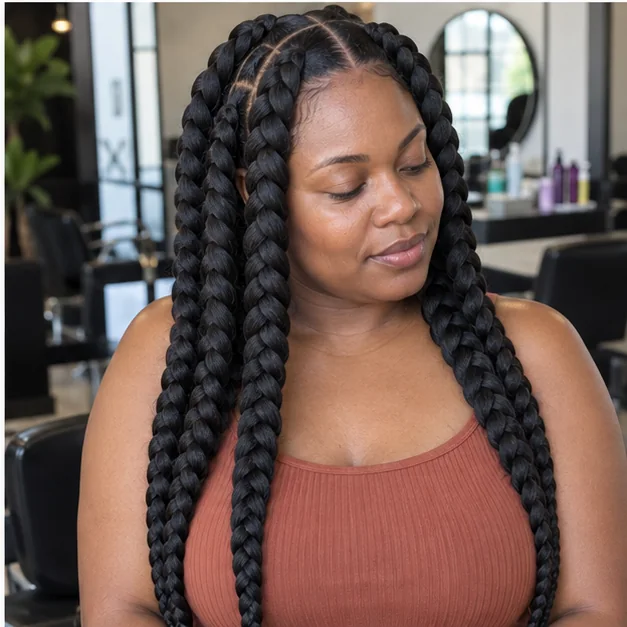
A handful of extra-large sections feed into thick sculptural plaits that make an immediate statement. Their broad lines visually lengthen a round face and feel bold and fashion-forward, while the low braid count makes this one of the quickest versions to install. Jumbo sets expose more scalp and loosen sooner, so they suit someone happy with a shorter wear period. Request jumbo knotless braids with gradual buildup at the roots, no more extension weight than each section can support and tapered ends; speak up immediately if a section pinches.
Ask your stylist for: Build jumbo braids gradually from comfortable roots, limiting extension weight while keeping the parting graphic.
5. Shoulder-Length Knotless Braids
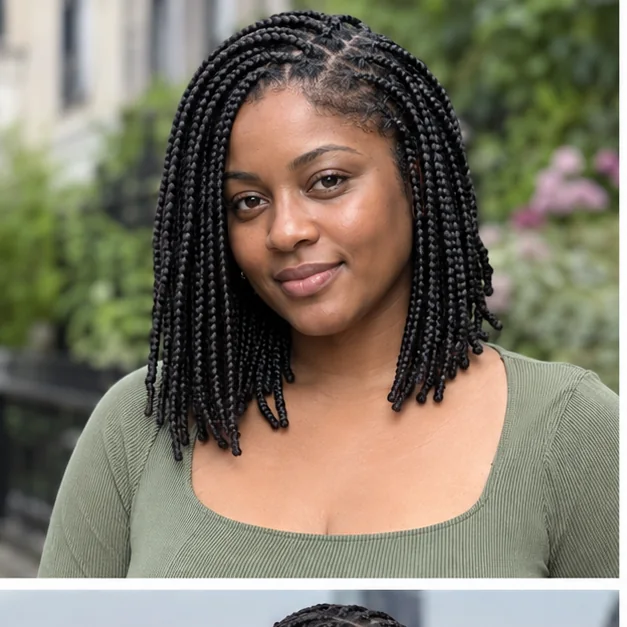
These medium braids stop at the shoulders, creating a buoyant outline that feels lighter than a mid-back silhouette. The shorter finish opens the neckline, brings attention toward the jaw and feels playful, modern and manageable for exercise, travel or warm weather. Ends at this length need deliberate sealing so they do not unravel or flick awkwardly against clothing. Ask for medium knotless braids finishing precisely at the shoulder, with even tension, a softly staggered outline and securely dipped or wrapped ends.
Ask your stylist for: Cut medium knotless braids to a softly staggered shoulder length with secure ends and light overall weight.
Pause and notice: Size changes more than the photograph. Smaller braids take longer and offer flexibility; larger braids install faster but place more hair on fewer sections.
6. Knotless Braided Bob
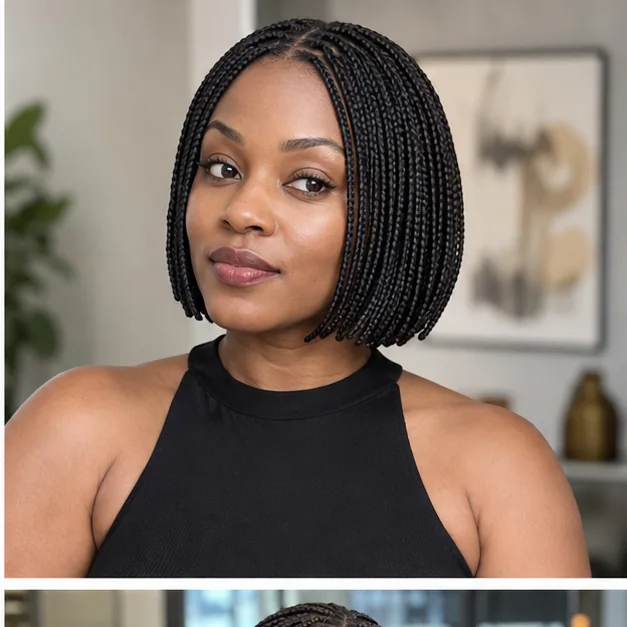
A precise chin-to-jaw perimeter turns slim knotless braids into a compact bob with clear architectural shape. It draws attention to the mouth and jaw, feels chic and self-possessed, and removes the neck weight that can make longer sets tiring. Stiff or uneven ends interrupt the clean outline, while slight staggering helps the braids settle naturally. Request small-to-medium knotless braids, a jaw-skimming perimeter, minimal extension density and neatly sealed ends, and bring side-view references for the exact front-to-back angle.
Ask your stylist for: Create small-to-medium knotless braids in a jaw-skimming bob with minimal weight and a settled perimeter.
7. Mid-Back Knotless Braids
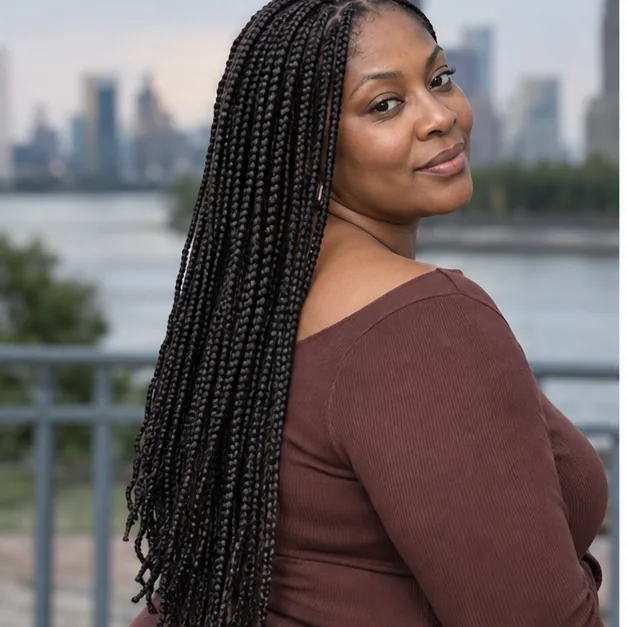
Medium braids finish between the shoulder blades and waist, giving plenty of movement without becoming an all-day handling project. That vertical sweep elongates a round or square face and creates a graceful, polished presence that still fits into a bun or ponytail. It is a practical first long set because washing, drying and sleep remain more manageable than with hip-length braids. Ask for natural-density medium knotless braids at true mid-back length and agree on the finished point while standing.
Ask your stylist for: Finish natural-density medium knotless braids at true mid-back length with tapered ends and light perimeter sections.
8. Waist-Length Knotless Braids
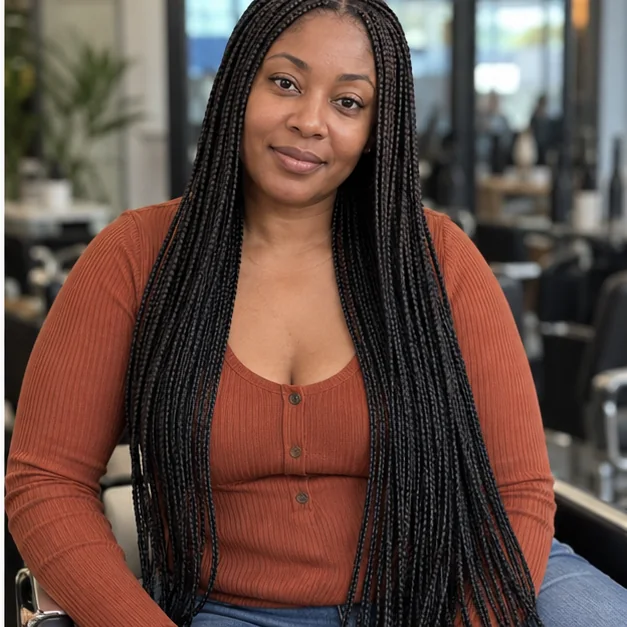
Long slim braids travel to the waist in an uninterrupted curtain, making the knotless root look especially seamless and fluid. The length creates statuesque vertical balance and feels glamorous and commanding, yet it also adds drying time, sleep management and cumulative weight. Choose it only when your natural sections are healthy and you can gather the braids gently rather than pulling them high. Request lightweight pre-stretched hair, reduced feeds near the edges, tapered ends and controlled total extension quantity instead of maximum fullness.
Ask your stylist for: Use lightweight hair for waist-length medium-small braids, reducing feed-in weight around the edges.
9. Side-Part Knotless Braids
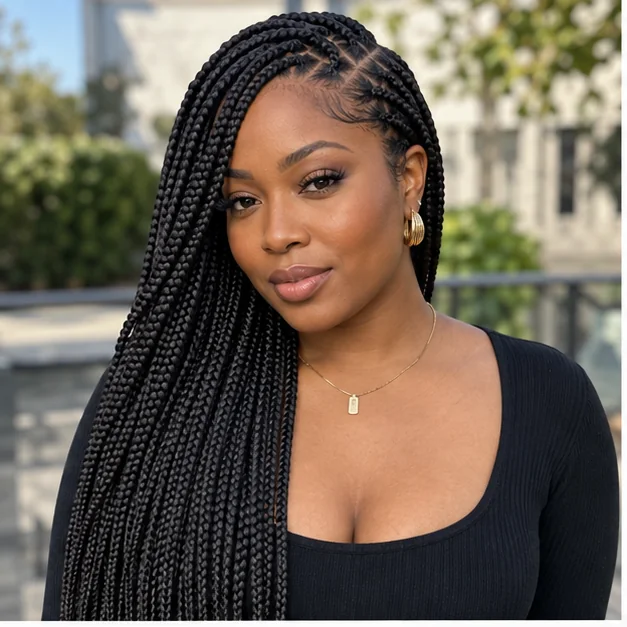
A deliberately mapped deep side part sends more braids across one side of the face and creates an elegant diagonal sweep. The asymmetry softens a square jaw, adds width around a long face and feels glamorous even when worn down. Unlike flipping a center-parted set, planned side sections settle cleanly without forcing roots against their direction. Ask your braider to establish the part before the brick pattern, keep both sides moderate in density and angle front braids to fall comfortably; wrap them loosely at night.
Ask your stylist for: Map a deep side part first, then angle medium knotless braids to fall naturally without overloading either temple.
10. Triangle-Part Knotless Braids
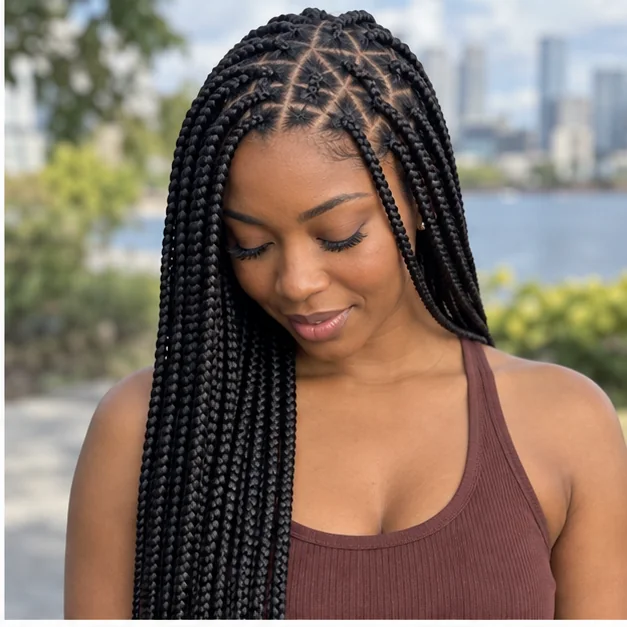
Triangular sections replace usual squares, forming a crisp pattern that appears whenever the braids move or lift. The angles add visual interest near the scalp without changing the wearable flow of the lengths, so the result feels creative and precise. This pattern is striking in medium braids and half-up styles, although detailed parting extends the appointment. Request evenly sized triangles with clean shared lines, medium feeds and moderate scalp visibility, keeping hairline sections organic rather than forcing perfect geometry on delicate areas.
Ask your stylist for: Use even triangle parts through the interior, medium knotless feeds and gentler organic hairline sections.
Pause and notice: A knotless start can reduce the root bump, but comfort still depends on section size, weight and technique. Pain, bumps or headache are warning signs.
11. Brick-Layered Knotless Braids
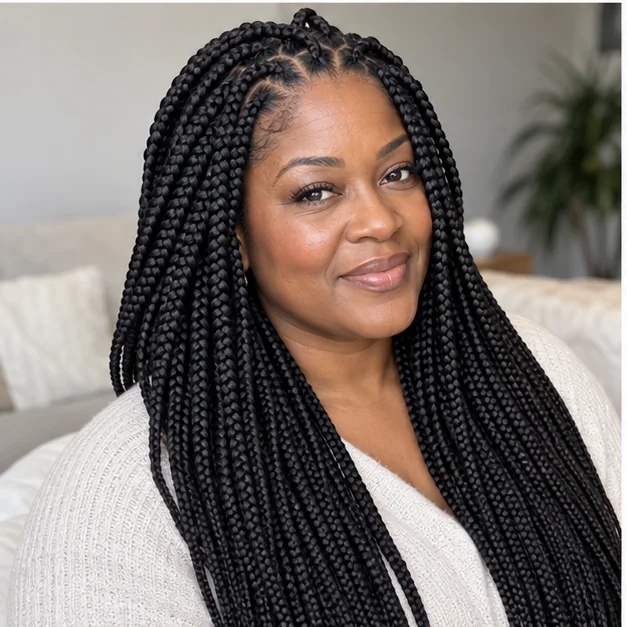
Offset rectangular parts place each braid over the line below it, much like bricks in a wall. The arrangement reduces obvious scalp channels and makes a moderate-density set look fuller, which is reassuring if you prefer coverage without extra extension weight. Worn down, the braids distribute evenly; lifted, the orderly pattern still looks intentional. Ask for brick-layered medium knotless braids with staggered rows, natural density and no filler pieces purely for volume, then lay them gently after sleep instead of tightening roots daily.
Ask your stylist for: Stagger medium sections in a brick pattern for coverage, using natural density rather than added weight.
12. Knotless Braids With Curly Ends
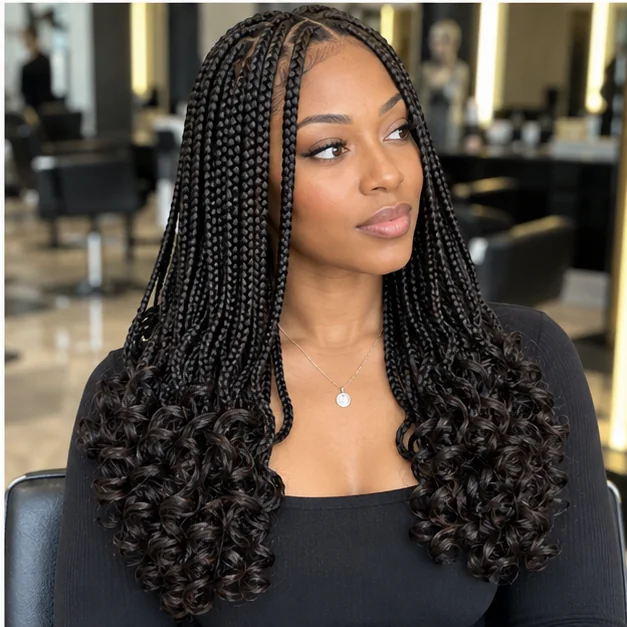
Neat braids transition into defined curls only through the final inches, adding bounce without loose pieces throughout the set. The soft finish balances angular features and feels romantic and celebratory while remaining easier to detangle than full boho braids. Separate curls with fingers, use a little mousse and protect them from friction at night. Request medium knotless braids with curls beginning consistently below the shoulders and light ends; specify curly ends only so the result does not drift into goddess or boho construction.
Ask your stylist for: Keep lengths fully braided and add uniform lightweight curls only at the ends below the shoulders.
13. Knotless Braids With Beads
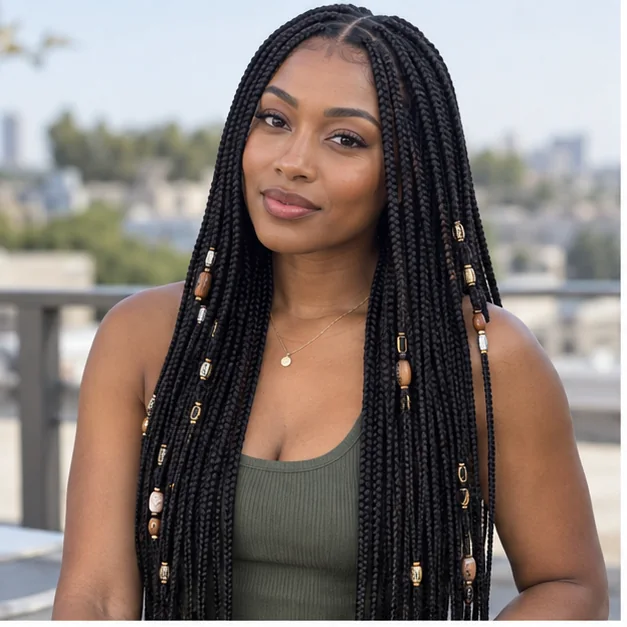
Warm wooden and metallic beads punctuate selected medium braids rather than weighing down every end. Their irregular placement brings attention to the cheekbones and lets the wearer feel expressive and connected to a long tradition of decorated braiding. Beads add impact and sound but also weight, so fewer well-placed pieces are kinder to roots and more comfortable for sleep. Ask for mid-back braids with secure beads on selected lengths, no heavy stacks at the hairline and smooth fastenings that cannot snag clothing.
Ask your stylist for: Add lightweight beads to selected mid-back braids, keeping the hairline unweighted and fastenings smooth.
14. Honey-Blonde Knotless Braids
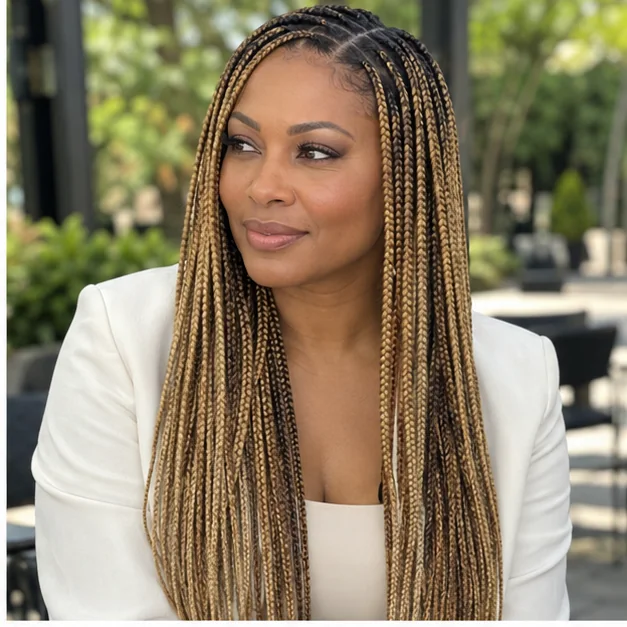
Honey-blonde lengths emerge from deeper brown roots, creating a dimensional transition instead of a hard bright line at the scalp. Warm ribbons illuminate golden undertones, reveal the braid pattern and give the wearer an upbeat, sunlit confidence. Tucking dark natural hair into lighter extensions takes skill, and careless feeds can cause overhandling. Request a dark-rooted 1B-to-27 blend, medium braids and varied honey placement rather than one flat shade, keeping brighter face-framing braids light around the temples.
Ask your stylist for: Blend 1B and honey 27 through medium knotless braids with gentle tucking and light face-framing feeds.
15. Burgundy Knotless Braids
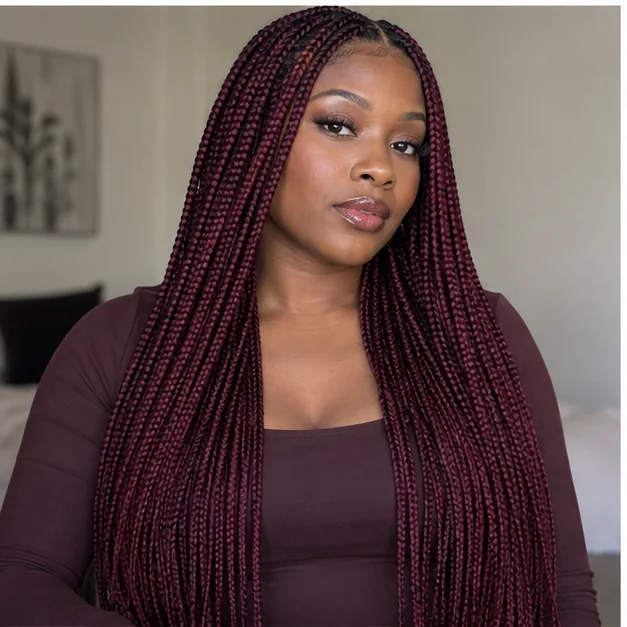
A rich wine-red tone runs through the set, reading nearly brunette in shade and glowing burgundy in natural light. The depth flatters many complexions, brings warmth around the face and feels daring without the brightness of primary red. A single-color set makes every part and feed-in transition visible, so clean technique matters more than decoration. Ask for natural-density mid-back knotless braids in deep 99J, with a root shade chosen to integrate your hair; test the extension beside your face outdoors first.
Ask your stylist for: Use a deep 99J blend for natural-density mid-back knotless braids with seamless root integration.
Pause and notice: Color and decoration work best when the underlying set is light enough to move. Add impact selectively instead of loading delicate edges.
16. Peekaboo Color Knotless Braids
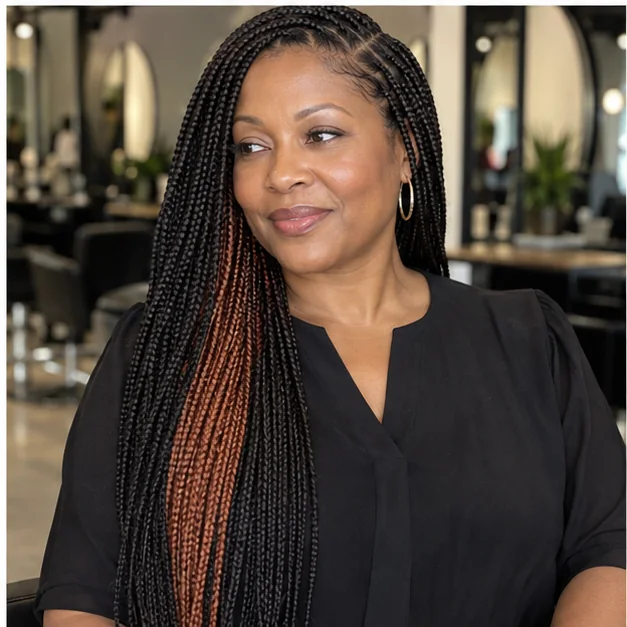
Most braids remain deep brown or black, while a concentrated copper panel hides beneath one side and flashes with movement. The placement feels polished for everyday wear, then reveals a playful surprise in half-up styles or a side sweep. It suits anyone wanting color near the face without committing to a uniformly bright set. Ask for medium braids with one clearly mapped peekaboo panel, no random scattering and a complementary shade; photograph the planned section before braiding so the placement remains precise.
Ask your stylist for: Map one hidden copper panel beneath a dark medium-knotless set, keeping the surface cohesive.
17. Ombre Knotless Braids
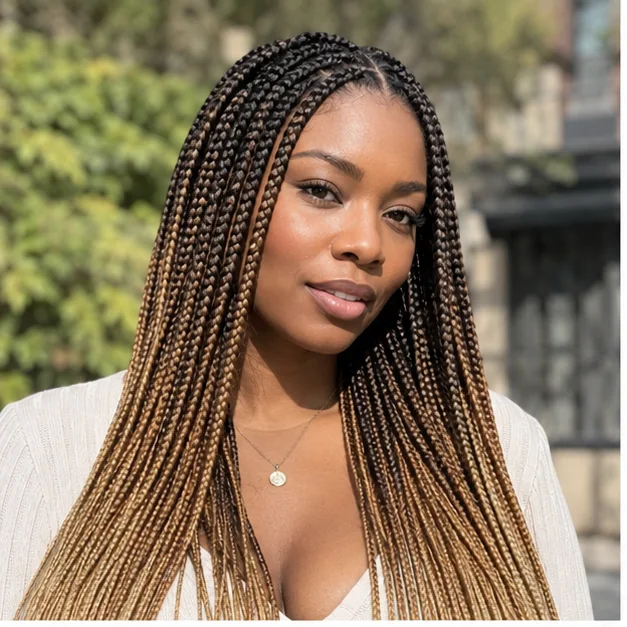
Deep roots melt through warm brown into caramel ends, allowing the knotless base to look natural while lower lengths catch light. The gradient stretches the silhouette, softens very long braids and creates a sophisticated dimensional mood. A convincing ombre needs staggered transitions; one abrupt change makes every braid look banded. Request medium-small braids with 1B roots, chestnut mids and caramel ends blended at varied heights, plus controlled extension weight; use mousse sparingly so residue does not dull lighter fibers.
Ask your stylist for: Blend 1B through chestnut to caramel at staggered heights in lightweight medium-small braids.
18. Half-Up Knotless Braids
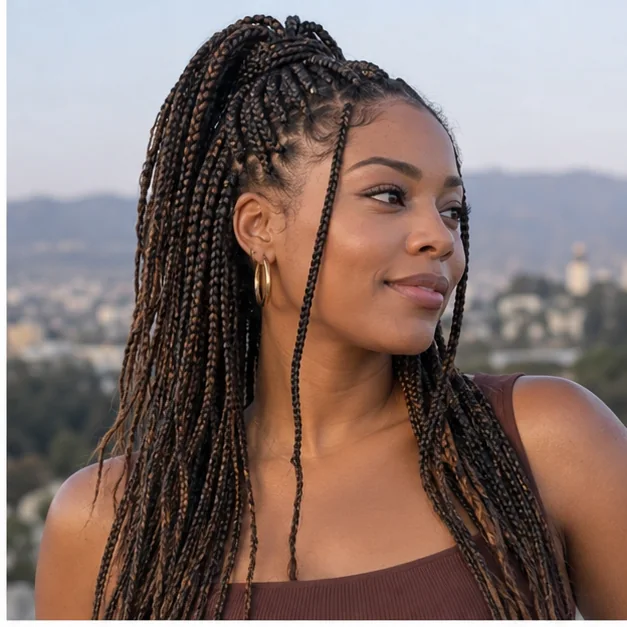
The upper third of a medium set gathers into a relaxed ponytail while remaining braids flow down the back. Lifting the crown opens the eyes, adds height to a round face and feels energetic and polished without the weight of a full high ponytail. Original parting and density determine whether it sits comfortably. Ask for brick-layered braids with flexible front sections and reduced hairline feeds, then use a wide covered elastic; loosen any pulling braid and vary placement instead of repeating it daily.
Ask your stylist for: Install flexible medium braids with lighter front feeds and brick-layered coverage for loose half-up styling.
19. Low Knotless Braided Bun
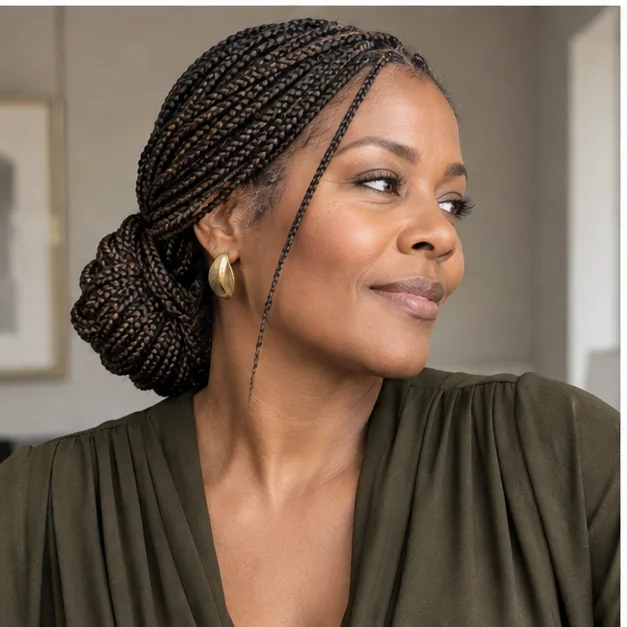
Mid-back braids sweep into a broad low bun at the nape, with roots allowed to lie in their natural direction. The shape adds gentle width below the ears, balances a longer face and creates an elegant, grounded feeling suited to work or an event. A low position is often kinder than stacking the full set overhead, although pins should never bite into roots. Request moderate-density tapered braids that coil smoothly, then build the bun loosely with a large elastic and U-pins.
Ask your stylist for: Create moderate-density tapered knotless braids that coil into a low bun without excessive bulk.
20. Refreshed Knotless Braids With Soft New Growth
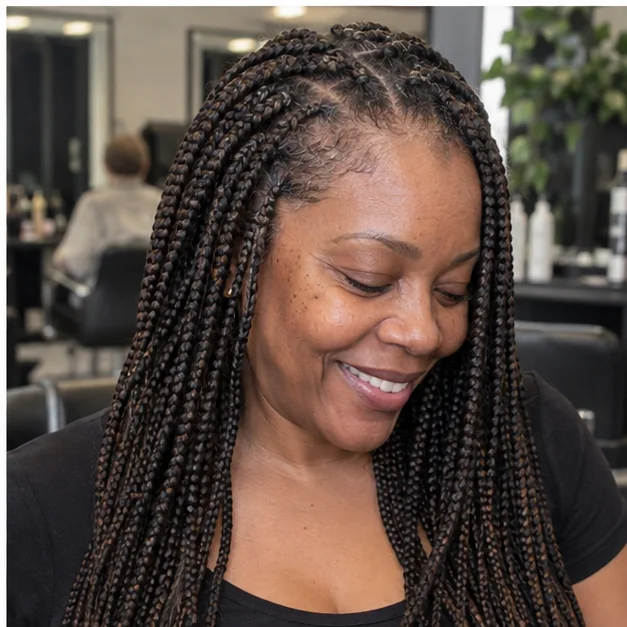
A few weeks of soft new growth gives the roots a lived-in halo while clean lengths and lightly reset front braids keep the set intentional. The relaxed finish feels authentic and avoids treating every trace of texture as something to pull tight again. Clean the scalp in sections, dry roots completely and smooth only with lightweight mousse. Ask for a perimeter refresh only when hair and scalp are healthy, with front braids removed and reinstalled gently rather than twisted at grown-out roots; take everything down if matting begins.
Ask your stylist for: Refresh healthy perimeter sections by removing and reinstalling them gently; never retwist grown-out roots.
Pause and notice: Choose the version whose appointment, daily weight and maintenance fit your real routine. Beauty and scalp comfort should work together.
Before You Book the Appointment
A successful salon visit begins with the overall shape, construction and upkeep—not only the finished length. Use this quick reality check before choosing your final reference photograph.
- Best for: Anyone wanting free-hanging extension braids with flat natural-looking roots, provided the hair and scalp can support the chosen size and weight.
- Signature construction: Each braid starts with natural hair and gradually receives extension hair, avoiding the starter knot of traditional box braids.
- Closest alternatives: Traditional box braids have a knotted base; feed-in cornrows stay attached to the scalp; boho braids add loose curls through the lengths; French curl braids feature prominent curled ends.
- Maintenance: Protect at night, cleanse and dry gently, avoid tight updos and usually remove around four to six weeks or earlier if matting, irritation or edge stress appears.
What Knotless Braids Are
Knotless braids begin with your own hair, then receive small extension pieces as the braid develops. The gradual feed creates thickness and a flatter root. They are often called knotless box braids because square parts are common, although many patterns work. Knotless describes technique, not a guarantee that every set is lightweight or tension-free.
Knotless vs. Traditional Box Braids
Traditional box braids anchor extension hair with a root knot, which creates immediate fullness and may keep a crisp base longer. Knotless braids lie flatter and move freely from day one. Either method can cause damage when sections are too small, extensions too heavy or installation too tight.
Choose Size, Length and Weight Together
Small braids offer fluid styling but require many sections and a long appointment. Large braids install faster, yet each section may carry more extension hair and loosen sooner. Extra length adds cumulative weight. Decide whether movement, speed, longevity or lightness matters most and ask how much hair the finished set will use.
What to Ask Your Braider
Name size, finished length, part pattern, density and end treatment, then mention scalp sensitivity and fragile areas. Ask for gradual feeds, less hair at the temples and permission to check the first braid. Bring front, side and back references. If you feel pinching or burning, ask for that section to be redone immediately.
Care, Styling and Tension
Wrap braids with satin at night and gather long lengths loosely. Clean the scalp with diluted shampoo, rinse carefully and dry roots completely. Use lightweight moisture and avoid layers of heavy oil or gel. Rotate ponytails and buns, keep them loose and give the hairline rest days.
Refresh and Takedown
A little frizz and new growth are normal. Mousse and a scarf can neaten the surface, while a perimeter reinstall helps only when roots remain healthy. Remove the style when buildup, matting, slipping or discomfort appears. Cut extensions below your natural length, unravel patiently and detangle shed hair before shampooing.
How to Choose Your Favorite
Start with comfort and routine, then choose visual details. A shoulder-length medium set is easier to wash and sleep in; a small or extra-long set offers drama but asks for more time. Save one picture for size, one for length and one for finish, then explain which detail takes priority.
More Hair Inspiration
- 20 Box Braids Hairstyles That Feel Polished, Versatile and Beautiful — Compare traditional and styled box braids.
- 20 Boho Braids That Look Soft, Romantic and Beautiful — Explore braids with loose curls.
- 20 French Curl Braids With Soft, Bouncy Ends — See braids with prominent curled ends.