A butterfly bob is a chin-to-shoulder bob with short, sweeping face-framing layers that open away from the face like wings. It keeps a recognizable bob perimeter underneath, but the cheekbone-to-jaw layers add lift, curve and movement above it. That substantial lower edge separates it from a shag, while its compact length distinguishes it from the classic butterfly haircut, which usually preserves medium or long hair.
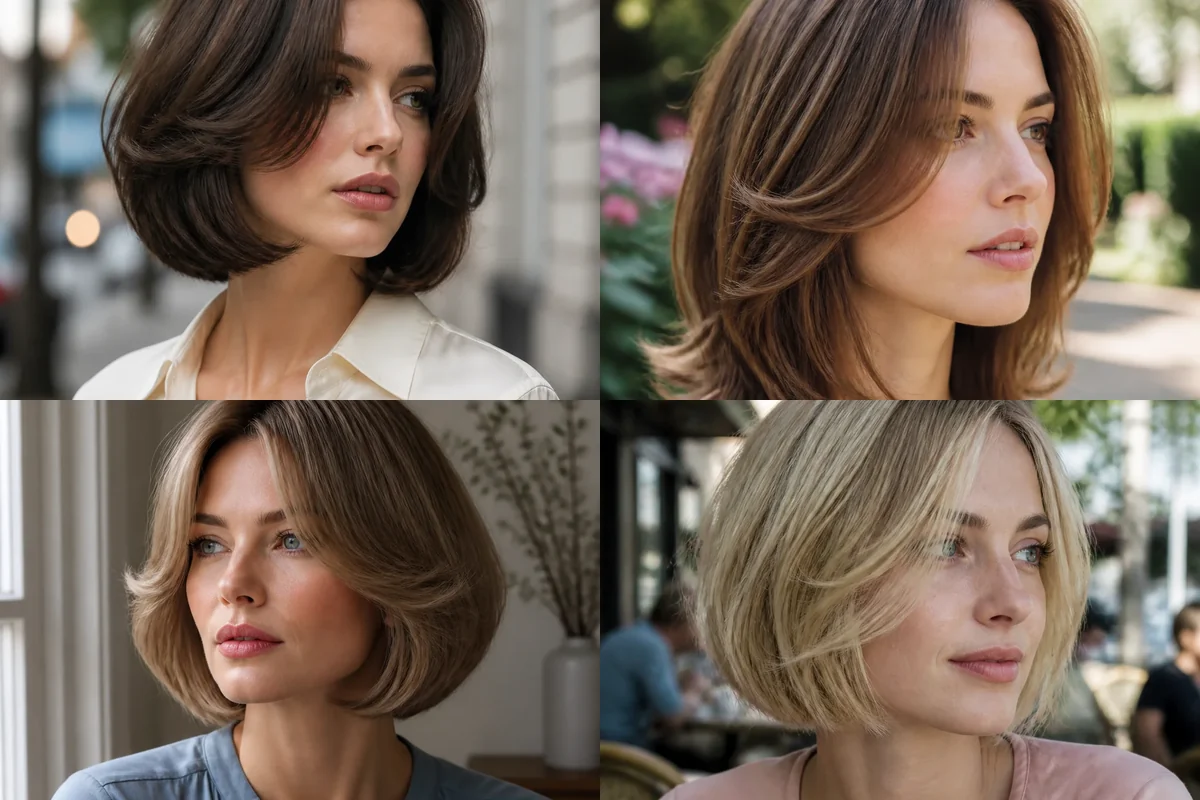
The best version is not simply a bob with as many layers as possible. Density, natural texture and how often you style determine how short the wings should be and how much weight the perimeter needs. These 20 ideas show the useful differences, including the exact language that turns a saved photograph into a workable salon plan.
Best for: straight, wavy and selected curly textures Styling effort: low to moderate Maintenance: reshape every six to ten weeks Signature detail: a full bob base beneath airy, outward-sweeping facial layers
1. Classic Chin-Length Butterfly Bob
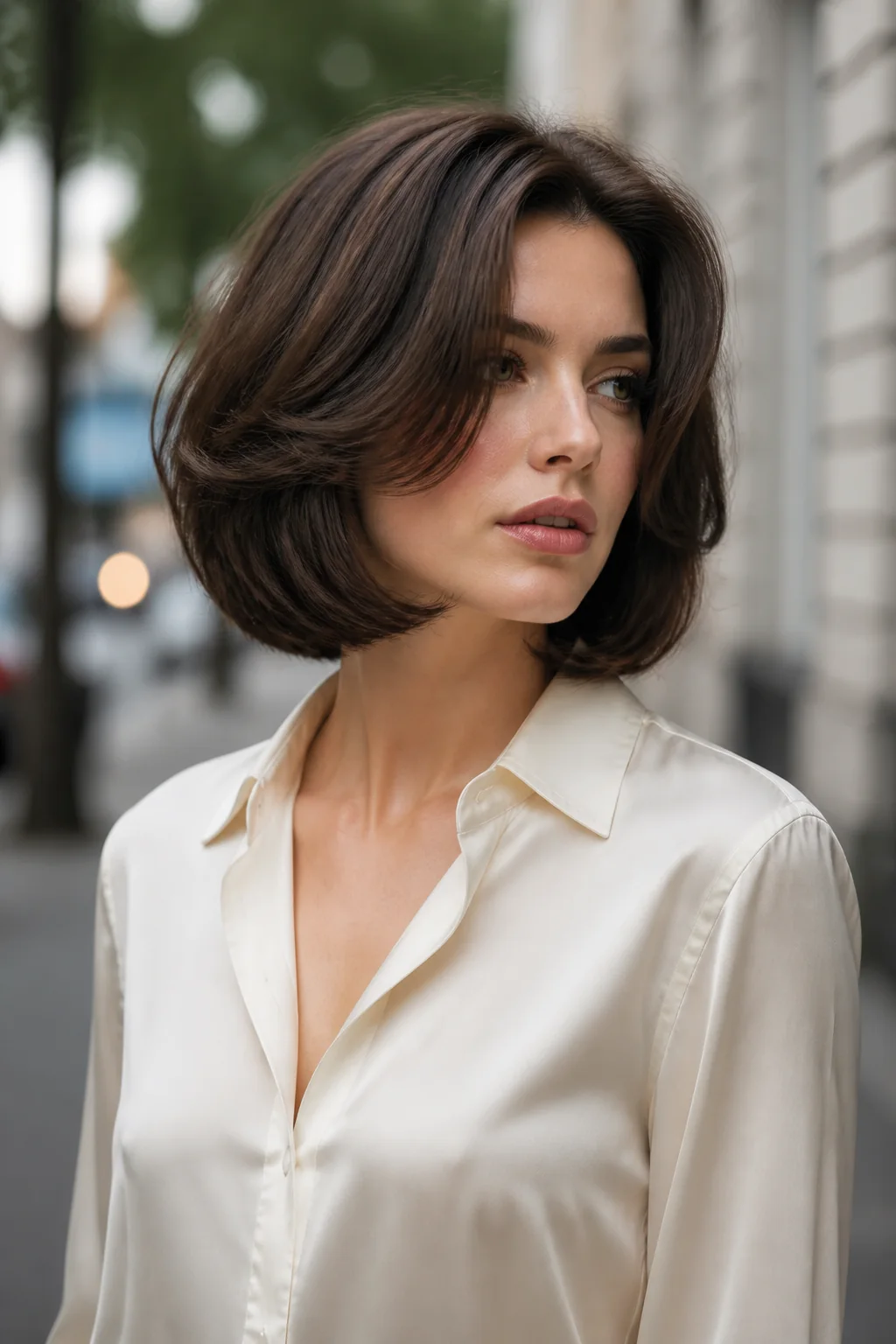
The classic version ends near the chin, with cheekbone layers sweeping outward above a clean but softly beveled baseline. That contrast makes the face frame look buoyant without sacrificing the visual thickness that gives a bob its polish. It suits medium-density straight or wavy hair and someone willing to use a round brush for five minutes. Ask for a chin-length bob, connected cheekbone-to-jaw layers and no short pieces behind the crown. Direct the front sections away from the face as they cool, and reshape around six to eight weeks before the wings lose their curve.
2. Collarbone Butterfly Bob
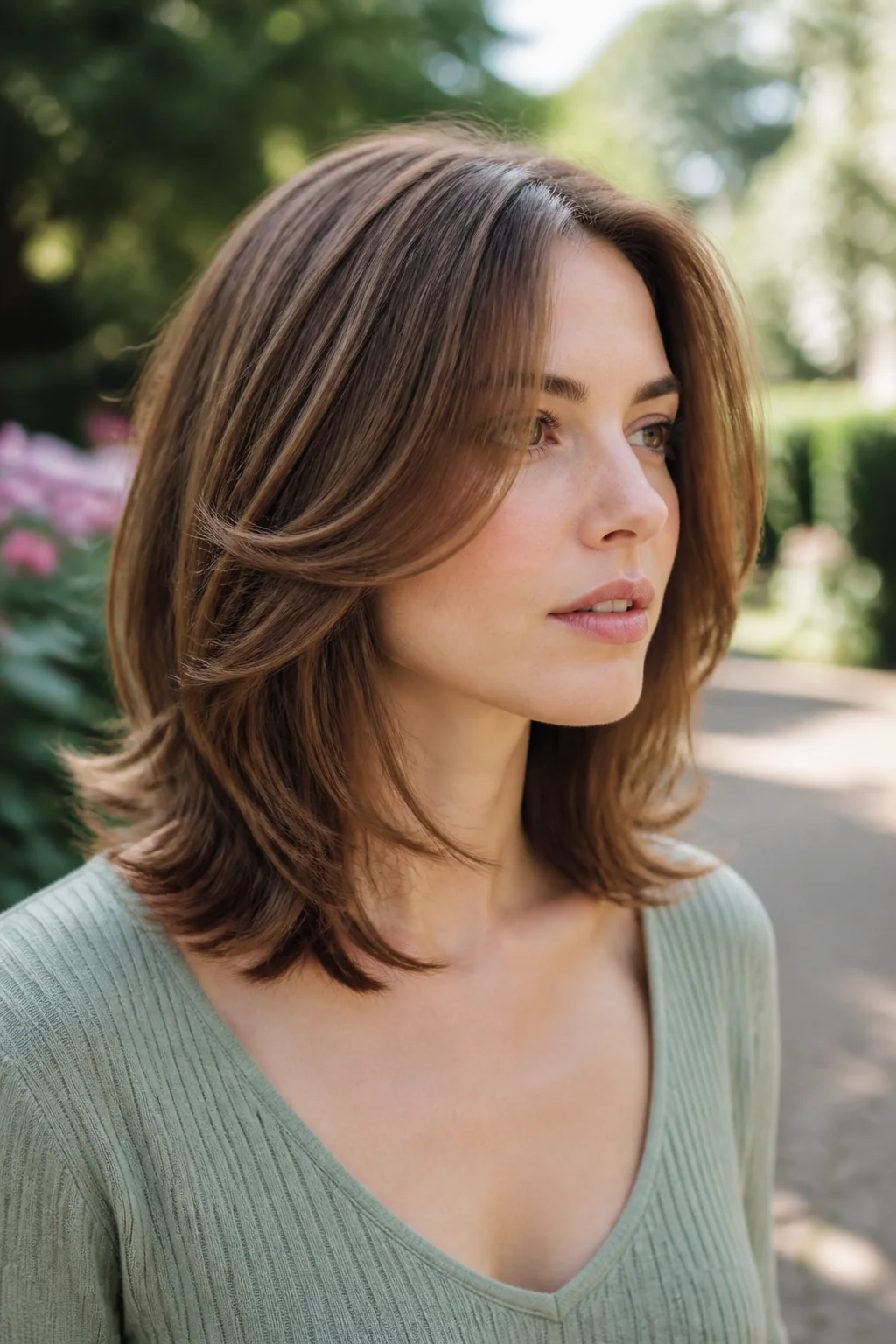
This longer butterfly bob brushes the collarbones, leaving enough weight for a ponytail while the shorter facial layers create the cut's fluttering movement. The extra length makes it a forgiving first step for someone growing out a shorter bob or nervous about a dramatic chop. Ask for a collarbone perimeter, cheekbone wings and long internal layers that connect without thinning the bottom. A large round brush or rollers will emphasize the shape, although natural waves can supply an easy air-dried version. Trims can often stretch toward ten weeks because the perimeter has room to grow.
3. Butterfly Bob With Curtain Bangs
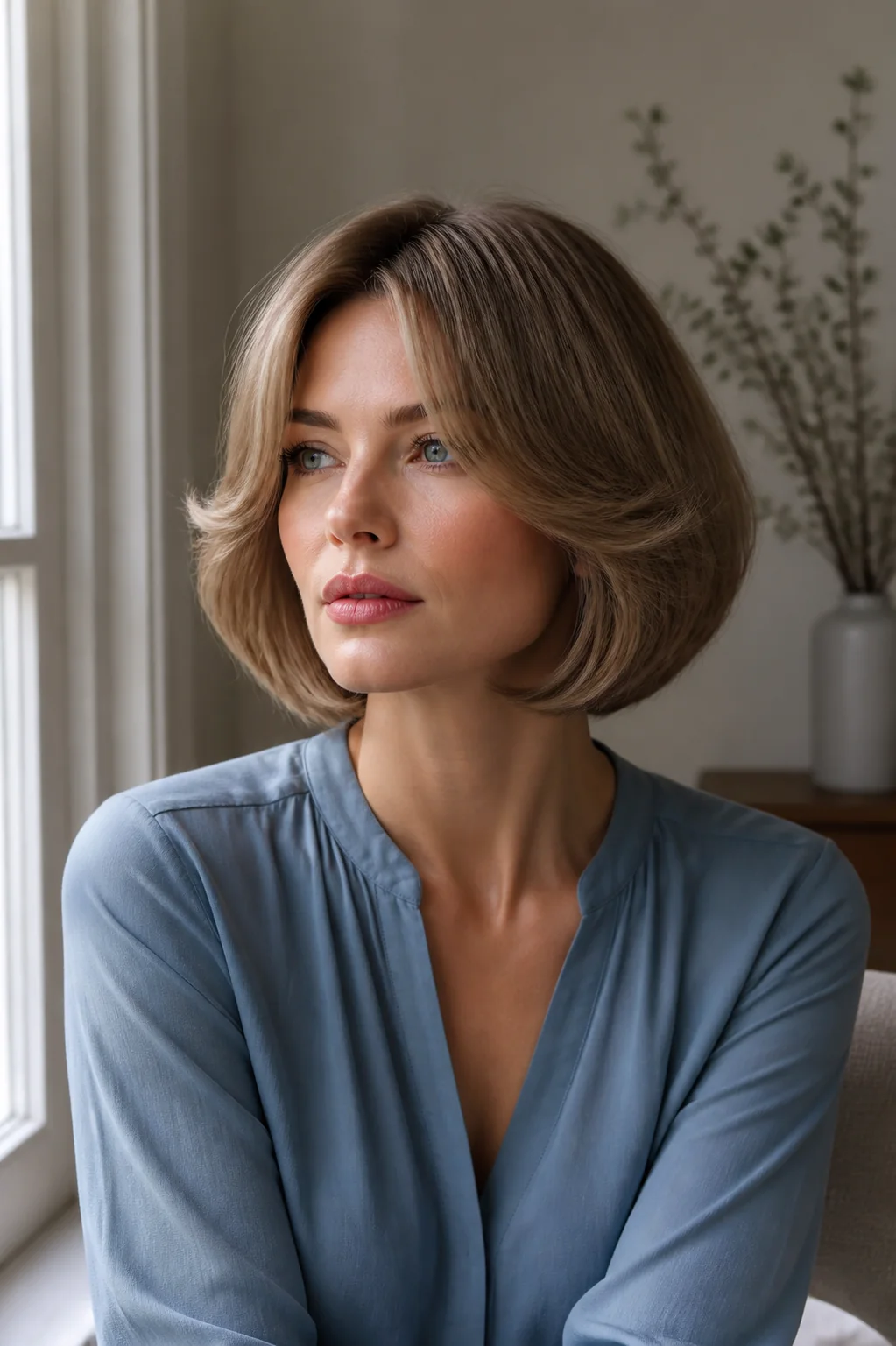
Curtain bangs extend the upper wing of this haircut, opening at the center and blending through the cheekbones into jaw-length layers. The result highlights the eyes and creates a continuous outward sweep rather than a separate fringe sitting above a bob. It works beautifully on straight-to-wavy hair and for anyone comfortable drying the bangs first after washing. Ask for center-parted curtain bangs with brow-to-cheekbone graduation and a full bob edge beneath them. Blow the fringe gently from side to side at the roots, then turn only its ends away from the face so it stays modern rather than overly rounded.
4. Butterfly Bob for Fine Hair

Fine hair needs restraint: a selective cheekbone frame creates visible lift, while a nearly solid lower edge protects the impression of density. The butterfly effect comes from contrast between those few airy pieces and the fuller bob, not from removing hair everywhere. Ask for a blunt-to-soft perimeter, minimal internal layering and a narrow face-frame section that begins no higher than the cheekbones. Root spray and a lightweight blow-dry cream are usually enough; heavy texture products can collapse the shape. Keep appointments around eight weeks, since transparent ends are a sign the layers have taken too much weight.
5. Voluminous Butterfly Bob for Thick Hair
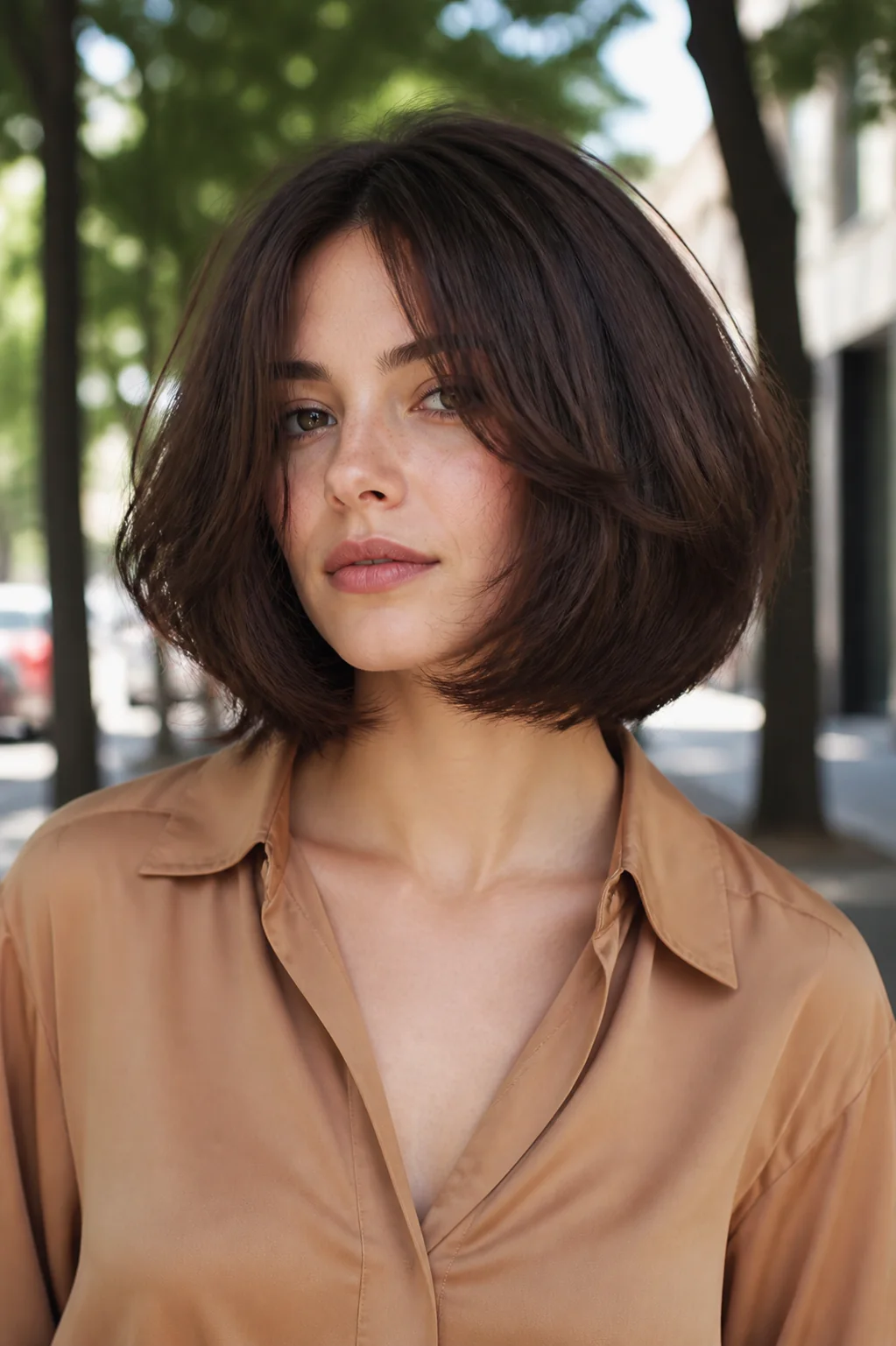
Thick hair gives a butterfly bob generous movement when bulk is released inside the shape while the outer perimeter remains plush. Shorter cheek and jaw pieces lift away from the face, and hidden internal shaping prevents the sides from forming a heavy triangle. Ask for a full bob baseline, broad butterfly framing and strategic internal weight removal rather than thinning every end. This version suits someone who wants abundance with control and does not mind a moderate blow-dry. Work smoothing cream through damp hair, lift the roots with a brush and leave enough natural fullness that the cut still feels luxurious.
Pause and compare: Fine hair usually needs fewer wings and a firmer base; thick hair can support broader framing and hidden weight removal. The photograph matters less than matching its density to yours.
6. Wavy Butterfly Bob
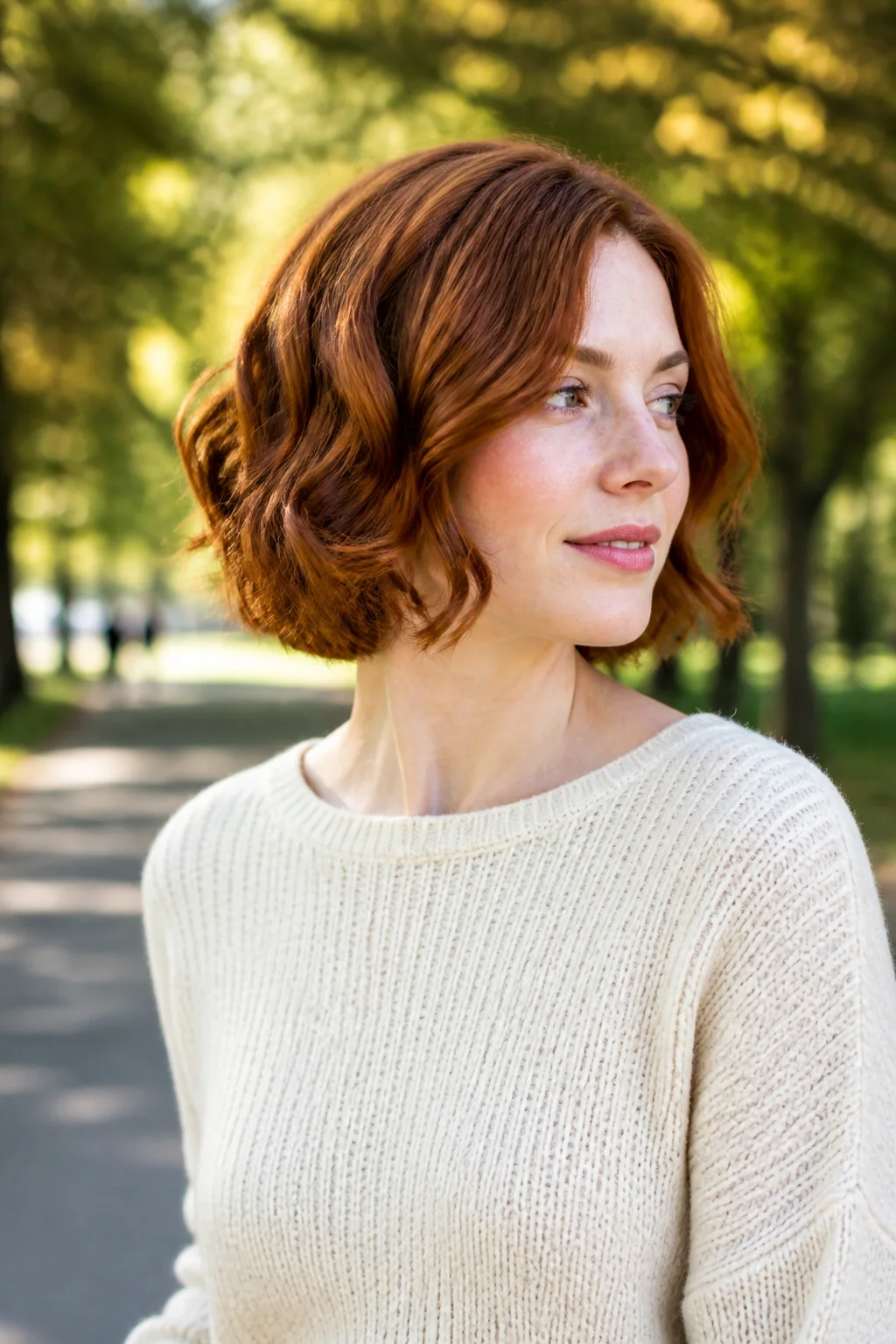
Natural waves make the short wings bend at different heights, giving this bob movement even without a polished blowout. A collarbone or jaw-length perimeter anchors the texture so the result stays recognizably bob-shaped rather than becoming a short shag. Ask for layers mapped to your dry wave pattern, with the shortest pieces positioned where the bend will open around your cheekbones. Scrunch in light mousse, diffuse the roots and stop before every wave becomes overly defined. The forgiving finish is ideal for a flexible routine, though occasional dry shaping keeps one side from springing much shorter than the other.
7. Curly Butterfly Bob
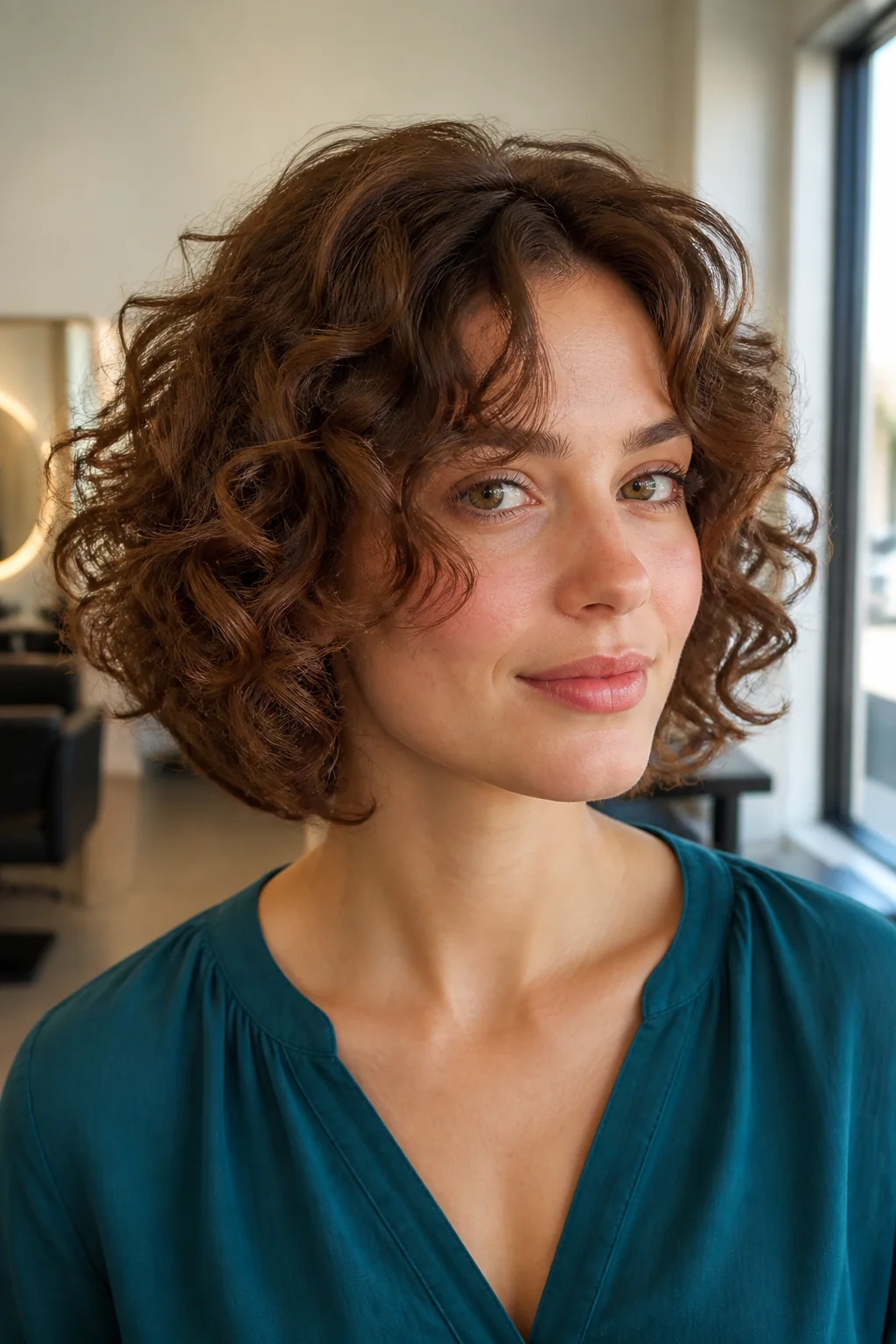
On curls, the butterfly idea becomes a compact cascade: shorter curls lift around the eyes and cheeks while a fuller lower tier preserves the bob outline. The difference from a round curly bob is the deliberate two-level frame, which sends selected curls outward rather than keeping every piece at one curved length. Ask for curl-aware cutting, a dry-length plan for the shortest wing and a dense perimeter with no indiscriminate thinning. Define the facial curls individually, then let the lower section stay softer for contrast. This is especially useful for loose-to-medium curls that enjoy volume and can tolerate eight-to-ten-week reshaping.
8. Sleek Butterfly Bob for Straight Hair
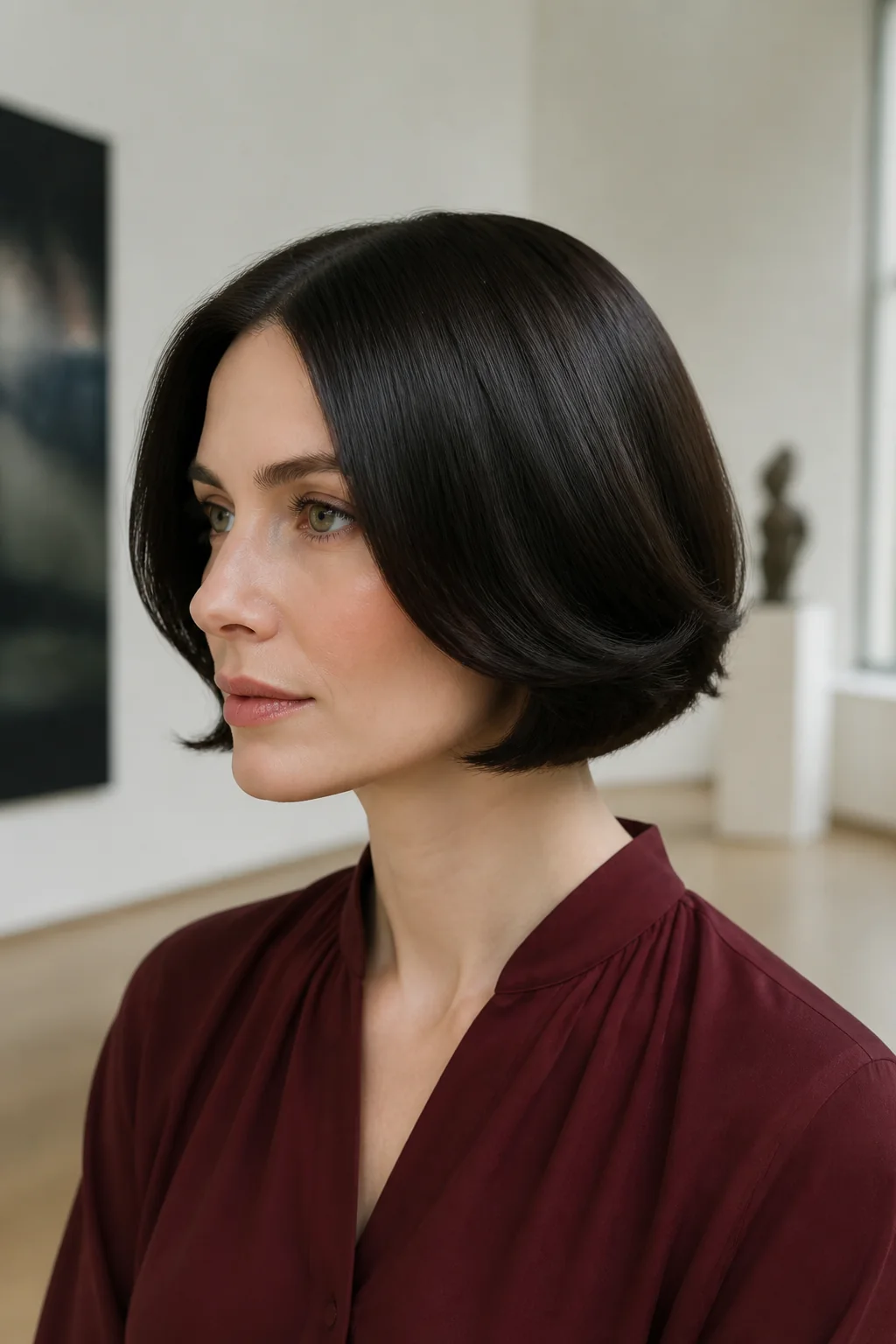
Straight hair reveals the architecture clearly: a smooth bob base sits beneath clean cheekbone and jaw layers that turn away in controlled arcs. The finish feels polished rather than fluffy, making it a good option for someone who likes visible structure and a quick flat-brush routine. Ask for seamlessly connected front layers, minimal crown layering and a substantial perimeter that can be worn straight. Use heat protectant, smooth the body downward and curve only the facial pieces away from the face. Regular trims matter because even small uneven areas show on a sleek outline, but the shape should never require excessive daily ironing.
9. Air-Dried Butterfly Lob

An air-dried butterfly lob uses longer, restrained wings and the hair's own bends instead of relying on a dramatic salon blowout. The collarbone base keeps the shape relaxed, while jaw-length framing prevents it from looking like a one-length grow-out. Ask for long connected layers designed around your natural dried pattern, a strong perimeter and no short crown pieces. Apply leave-in conditioner or light curl cream, tuck the front while it partly dries, then release it for a gentle outward curve. This version suits a low-fuss routine and grows gracefully, although very straight hair may need a quick brush bend to reveal the intended wings.
10. Rounded Butterfly Bob
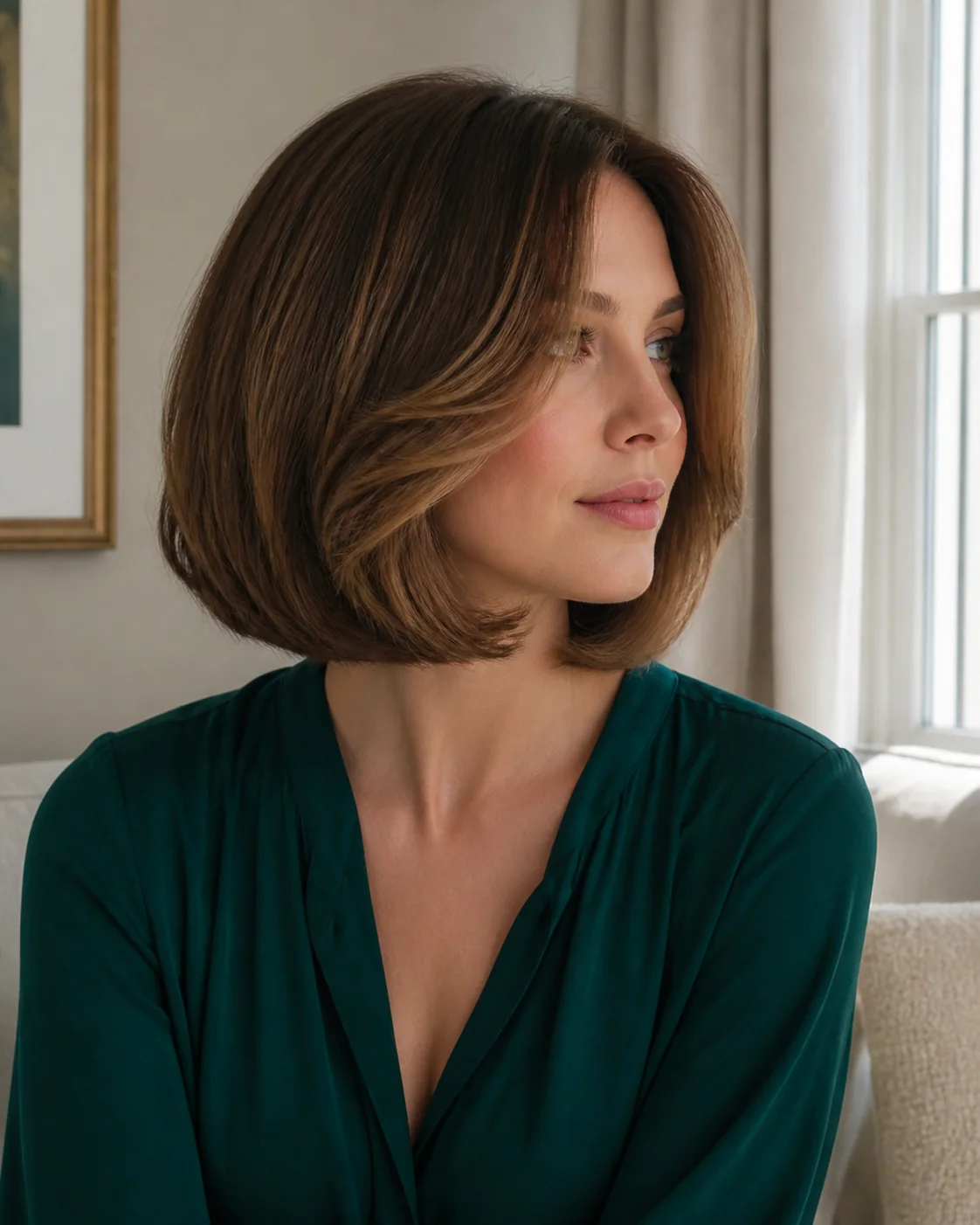
A softly rounded perimeter gives the butterfly bob a plush, cloud-like silhouette, while the facial layers keep that fullness from enclosing the face. The ends curve inward but the cheekbone pieces move outward, creating a flattering push-pull effect that feels polished and lively. Ask for a rounded jaw-length bob with connected outward face framing and no stacked graduation at the back. Medium-to-thick straight or wavy hair carries the shape particularly well. Blow-dry the base under with a broad brush, switch direction for the front pieces and finish with flexible hold so the two curves remain touchable.
The construction test: If the lower edge disappears into wispy layers, the cut is drifting toward a shag. A butterfly bob needs enough perimeter weight to look like a bob even when it is not styled.
11. Butterfly Bob With Wispy Bangs
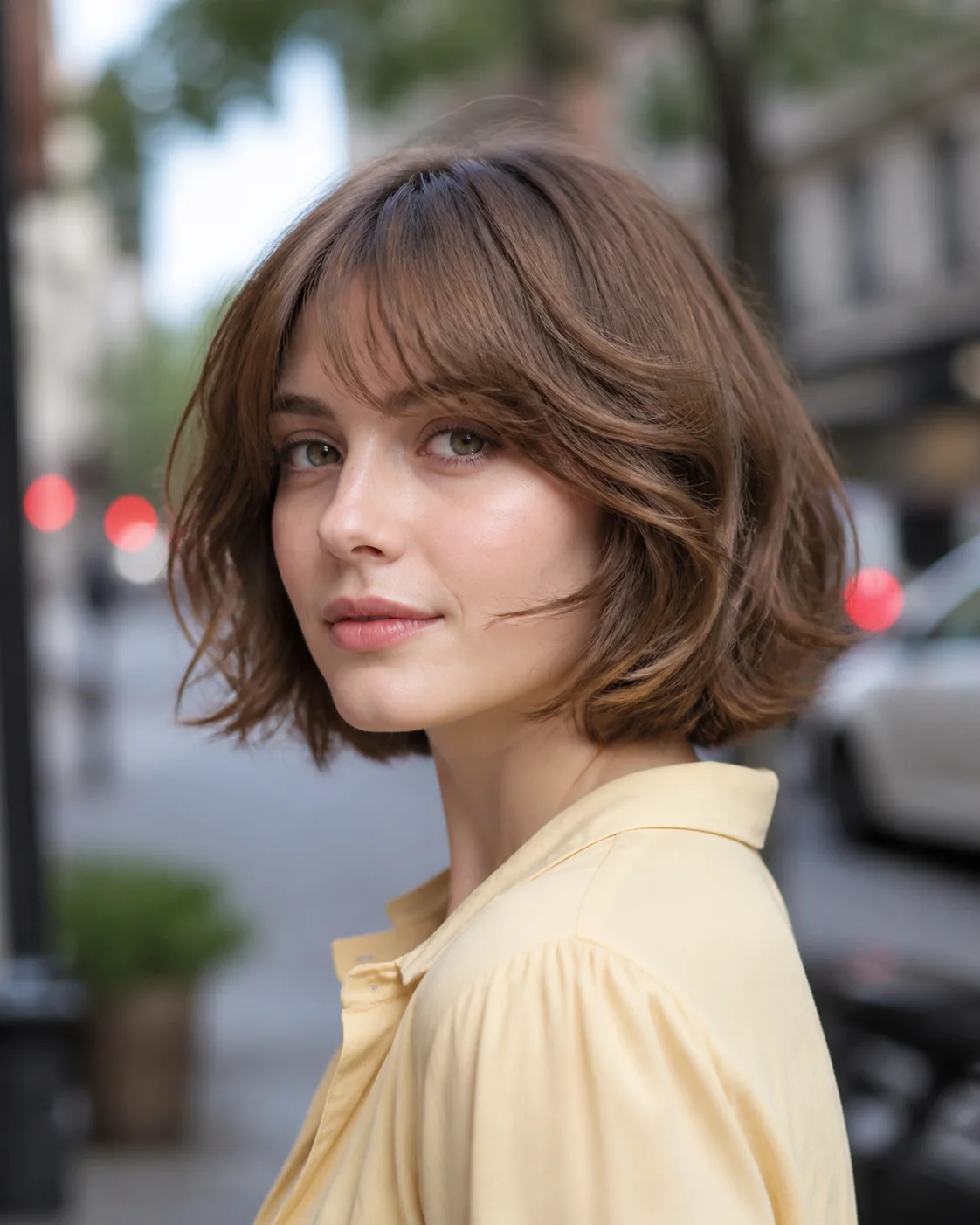
Wispy bangs add a light veil across the forehead while longer corners merge into the butterfly wings at the cheekbones. The layered connection keeps the fringe from looking pasted onto the bob and draws attention toward the eyes. Ask for a narrow, airy fringe with density at the roots, separated ends and temple pieces that flow into the face frame. It suits fine-to-medium hair and someone willing to reset bangs quickly each morning. Dry the fringe first from side to side, avoid oily products near the forehead and book small fringe trims between full haircut appointments if the brow length matters.
12. Side-Parted Butterfly Bob
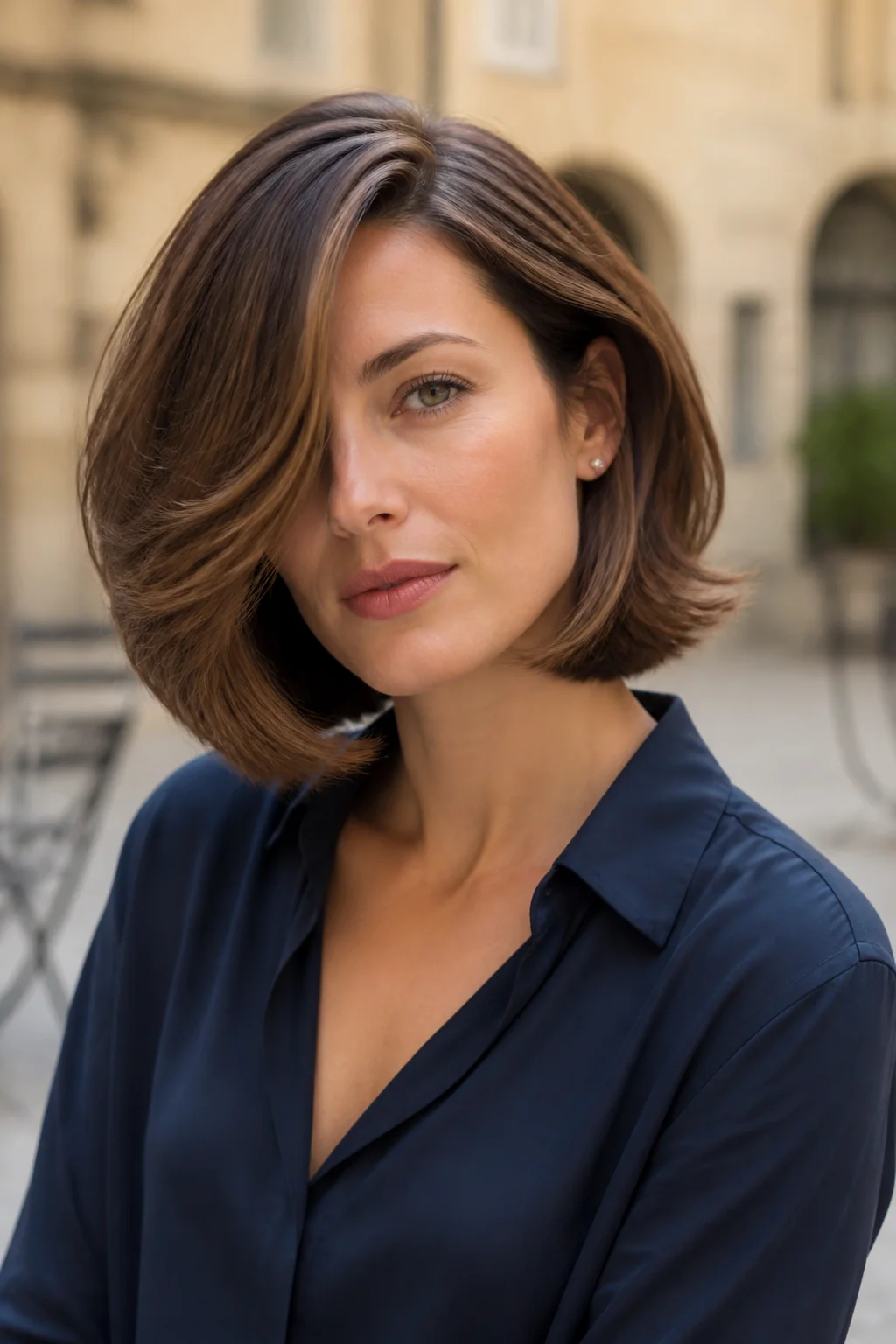
A deep side part makes one butterfly wing sweep dramatically across the forehead while the opposite side tucks into a compact bob outline. The asymmetry creates elegant direction and can add lift where hair naturally falls flat. Ask for a movable side part, a longer front sweep and connected jaw layers rather than a fixed heavy bang. This version works well for straight or wavy medium-density hair and can be changed back toward center as it grows. Dry the front against its usual direction first, flip it into place and use flexible spray at the root instead of coating the ends.
13. Butterfly Bob for a Round Face
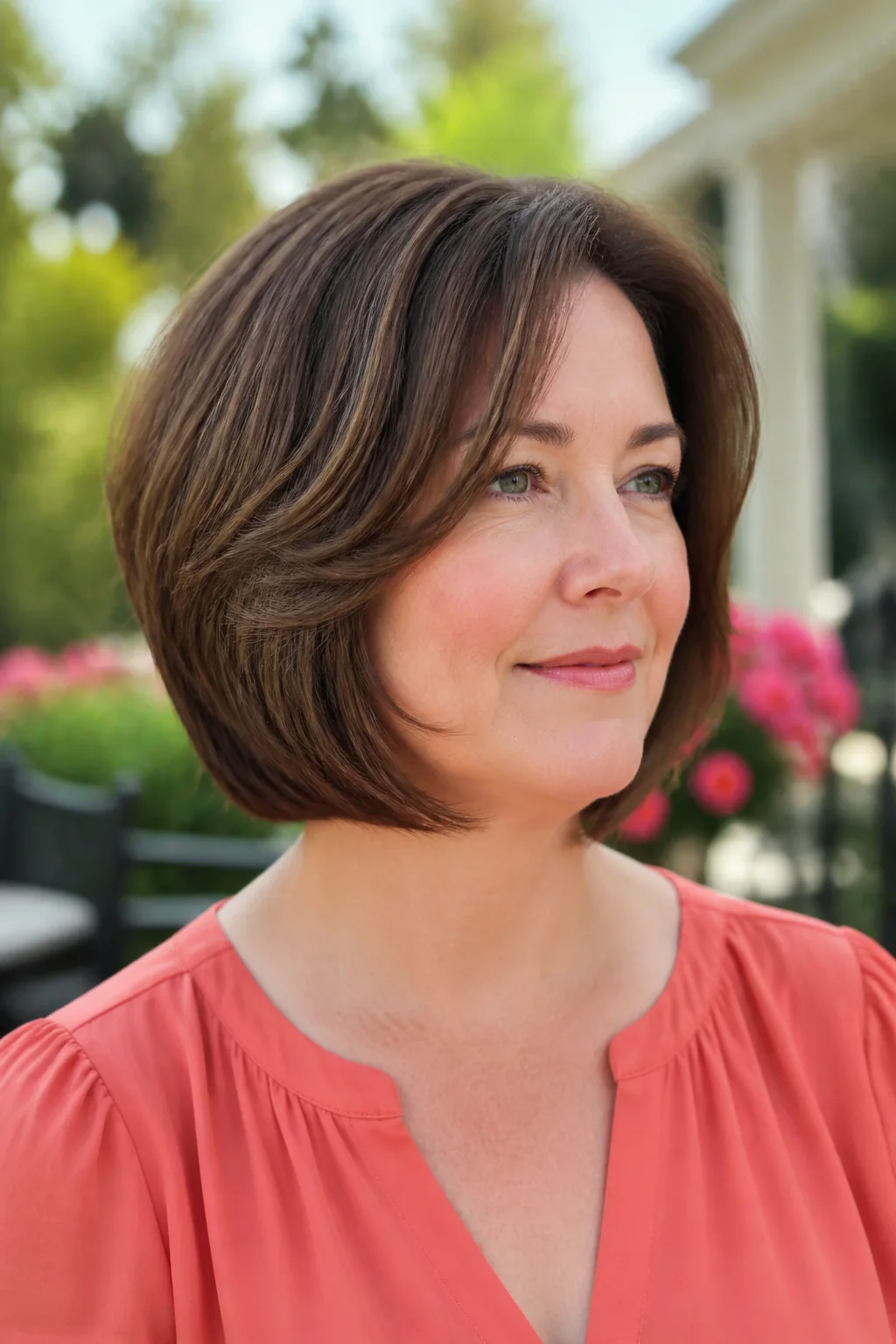
Longer cheek-to-jaw wings create gentle diagonal lines while a little crown lift keeps this bob buoyant above the fullest part of the cheeks. The goal is not to hide a round face; it is to choose where the silhouette expands and where the eye travels. Ask for a bob that lands below the chin, framing that begins beneath the cheekbones and controlled rather than bulky sides. A side or soft center part can both work when the front pieces move vertically before turning outward. Style with root lift at the top and avoid building the widest curve directly beside the cheeks if lengthening is your preference.
14. Butterfly Bob for a Long Face
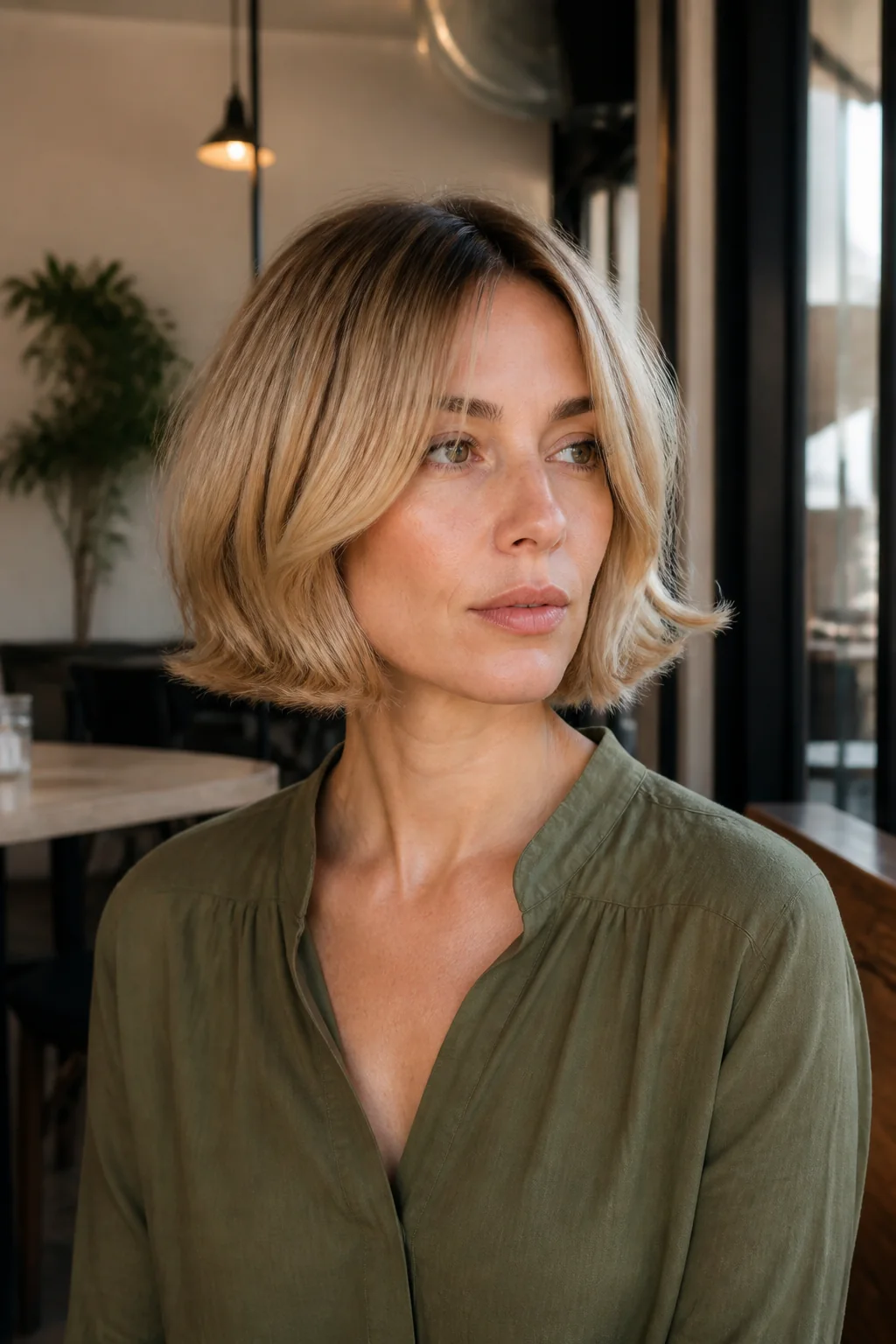
This version places its wing movement around the cheeks and keeps the bob near the jaw, adding soft horizontal fullness through the middle of the face. A curtain fringe can reduce uninterrupted forehead length while connecting naturally into the side layers. Ask for cheek-level framing, a jaw-length base and volume through the sides rather than exaggerated height at the crown. It suits straight, wavy or loose-curly textures that can hold a broad bend. Use a medium brush to direct the front outward and the base softly under, creating balanced width without turning the haircut into a rigid bubble.
15. Silver Butterfly Bob Over 50
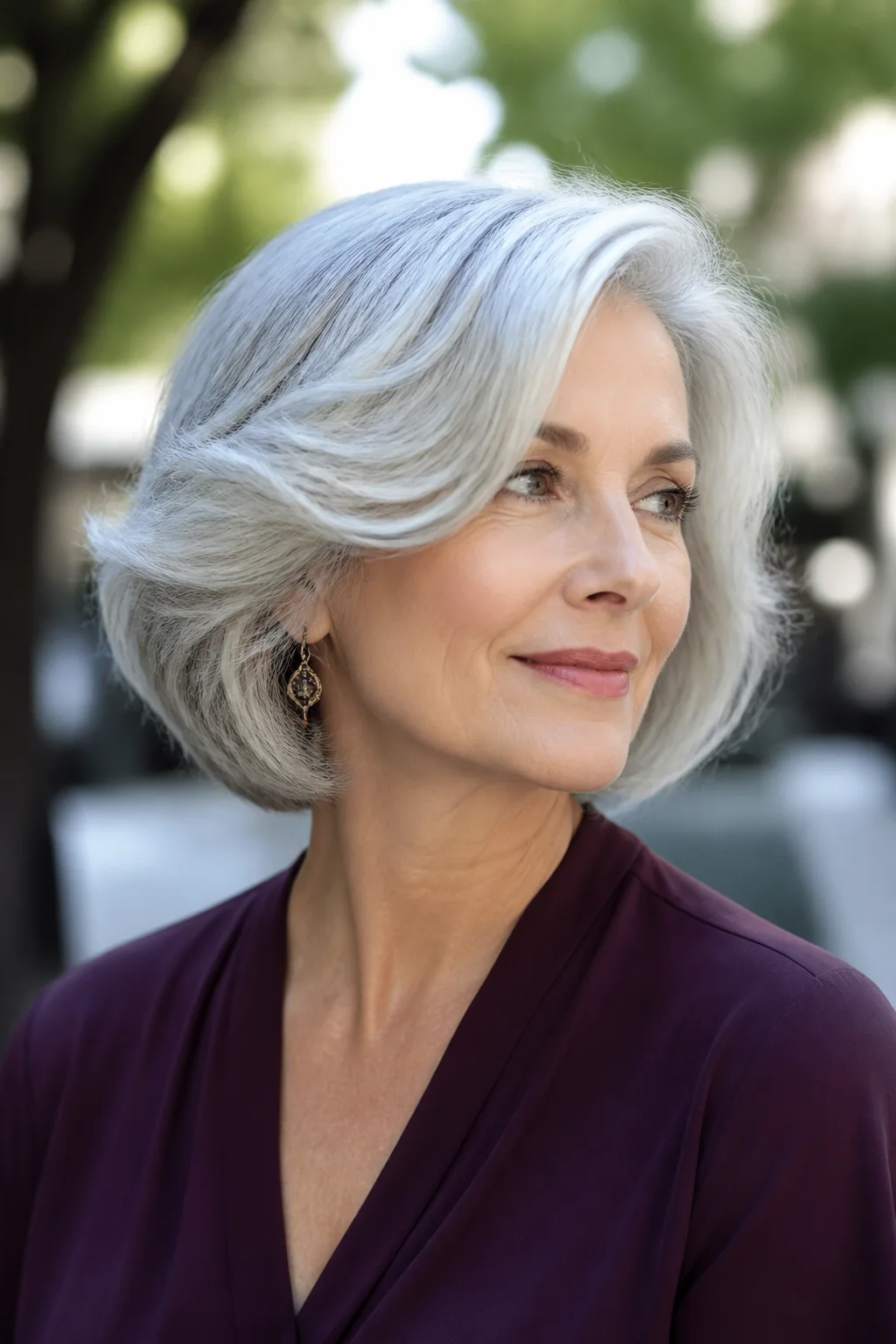
Silver hair catches light along every lifted layer, making the butterfly construction look especially dimensional around the eyes and cheekbones. A softly full bob perimeter keeps the finish healthy and modern, while the moving frame avoids the feeling that short hair must be merely practical. Ask for an open cheekbone frame, polished jaw-to-neck length and layer placement adjusted for any wiry or finer areas. A conditioning mist preserves suppleness, and violet products should be used only as needed to avoid dullness. Choose the amount of blowout lift you genuinely enjoy; a subtler wing remains beautiful when air-dried.
Real-life check: Choose the version that still makes sense without a professional blowout. Longer wings, natural-wave mapping and a stronger perimeter usually make everyday styling more forgiving.
16. Butterfly Bob With a 90s Blowout
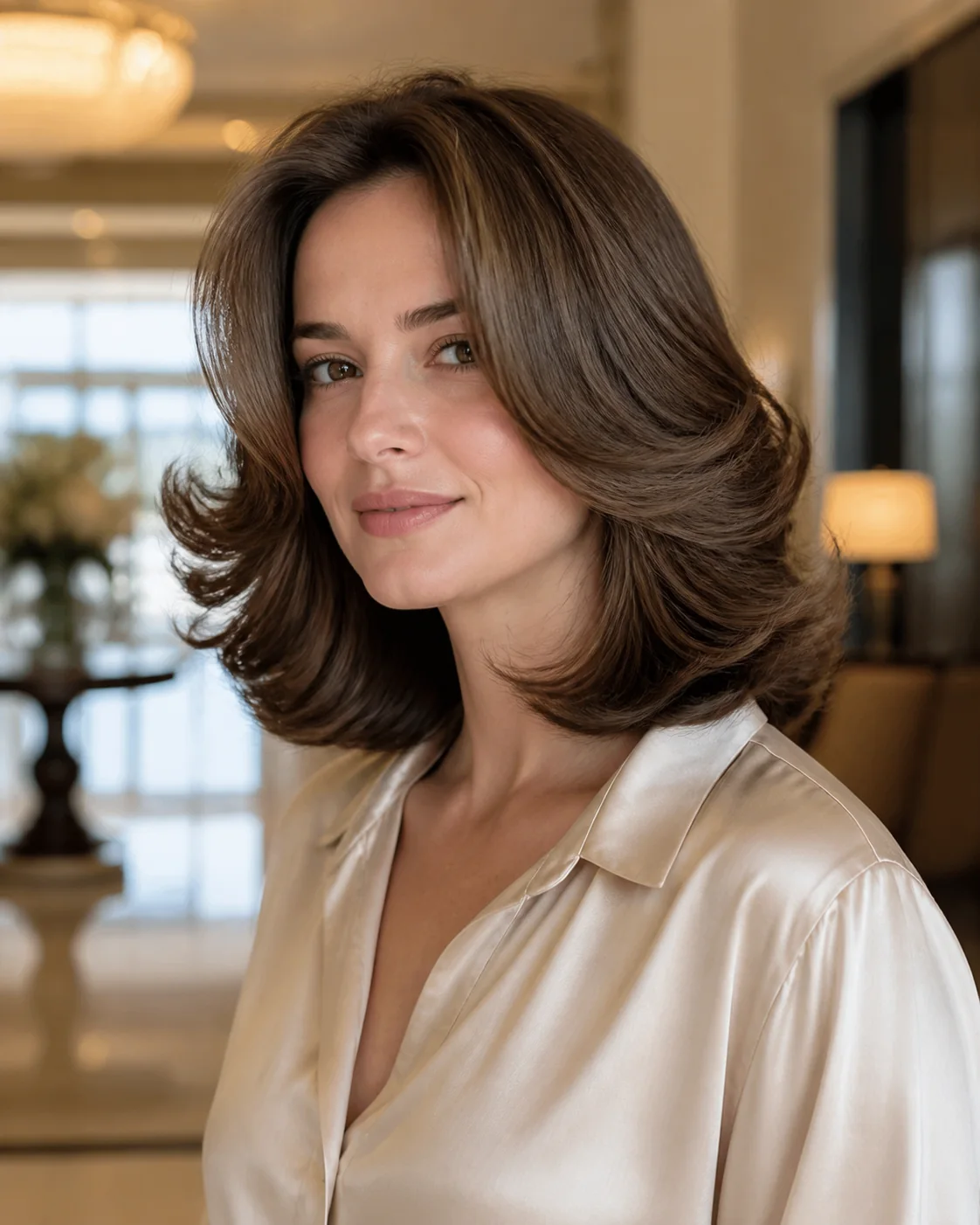
Large, outward bends turn the butterfly bob into a compact 1990s supermodel blowout, with cheekbone wings floating above a glossy rounded base. The haircut needs top layers long enough to wrap around a large roller; layers that are too short will spike instead of sweep. Ask for connected face framing, preserved crown length and a full collarbone or jaw perimeter. Apply volumizing mousse, dry with tension, set the front away from the face and let it cool completely before brushing. It is a higher-effort styling option, but the same cut can relax into a softer everyday bob between occasions.
17. Shaggy Butterfly Bob
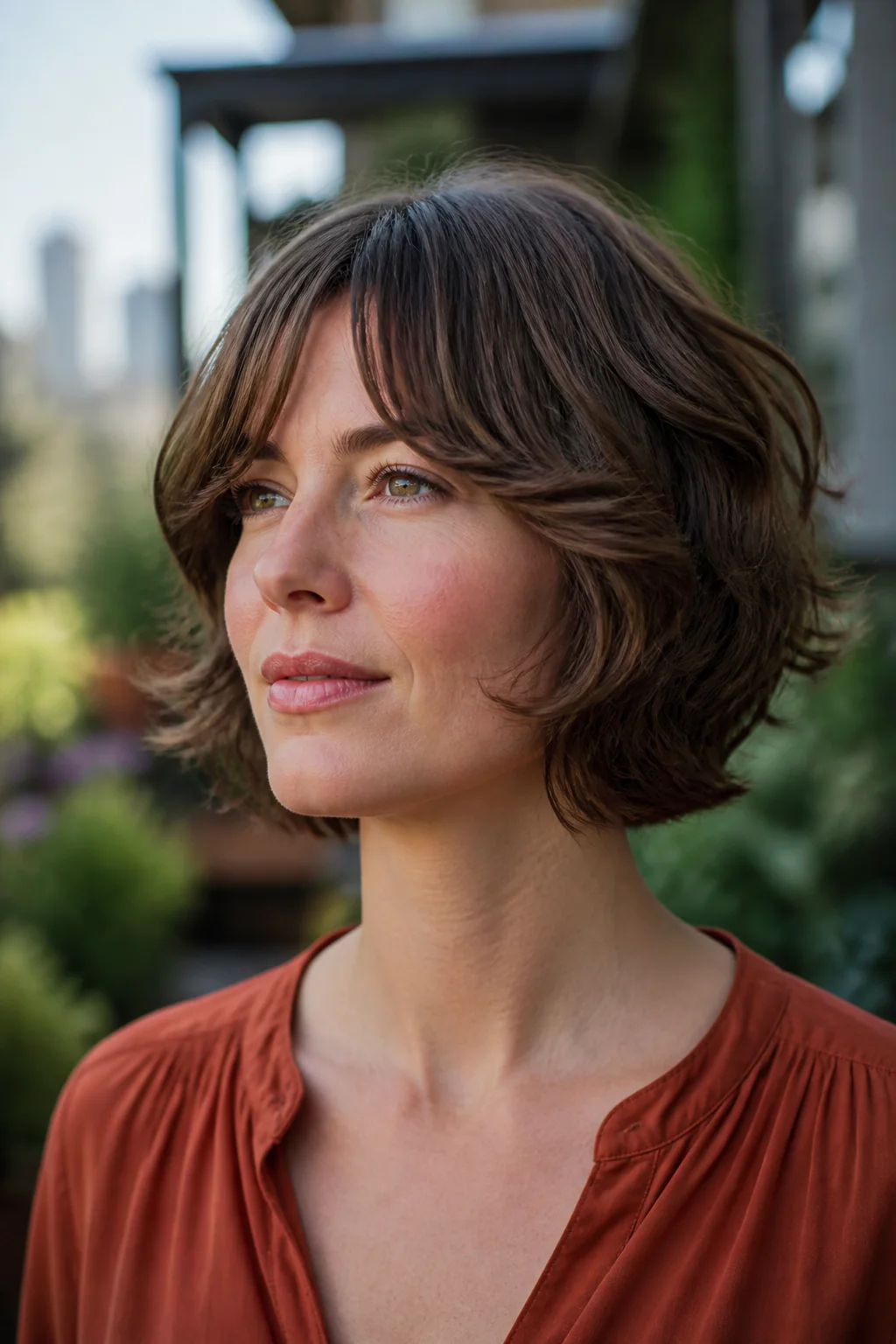
The shaggy interpretation adds more separation through the crown and ends, but it retains enough lower-edge weight to remain a butterfly bob rather than becoming a true short shag. The wings look piecey and wind-tossed, giving the polished hybrid a more casual personality. Ask for a textured bob perimeter, connected crown movement and cheekbone framing without a thin, shredded nape. Wavy medium-to-thick hair wears this especially naturally. Scrunch with mousse or texture cream, define only a few front pieces and accept that six-to-eight-week trims are needed to keep deliberate separation from turning into general fuzziness.
18. Butterfly Bob Back View
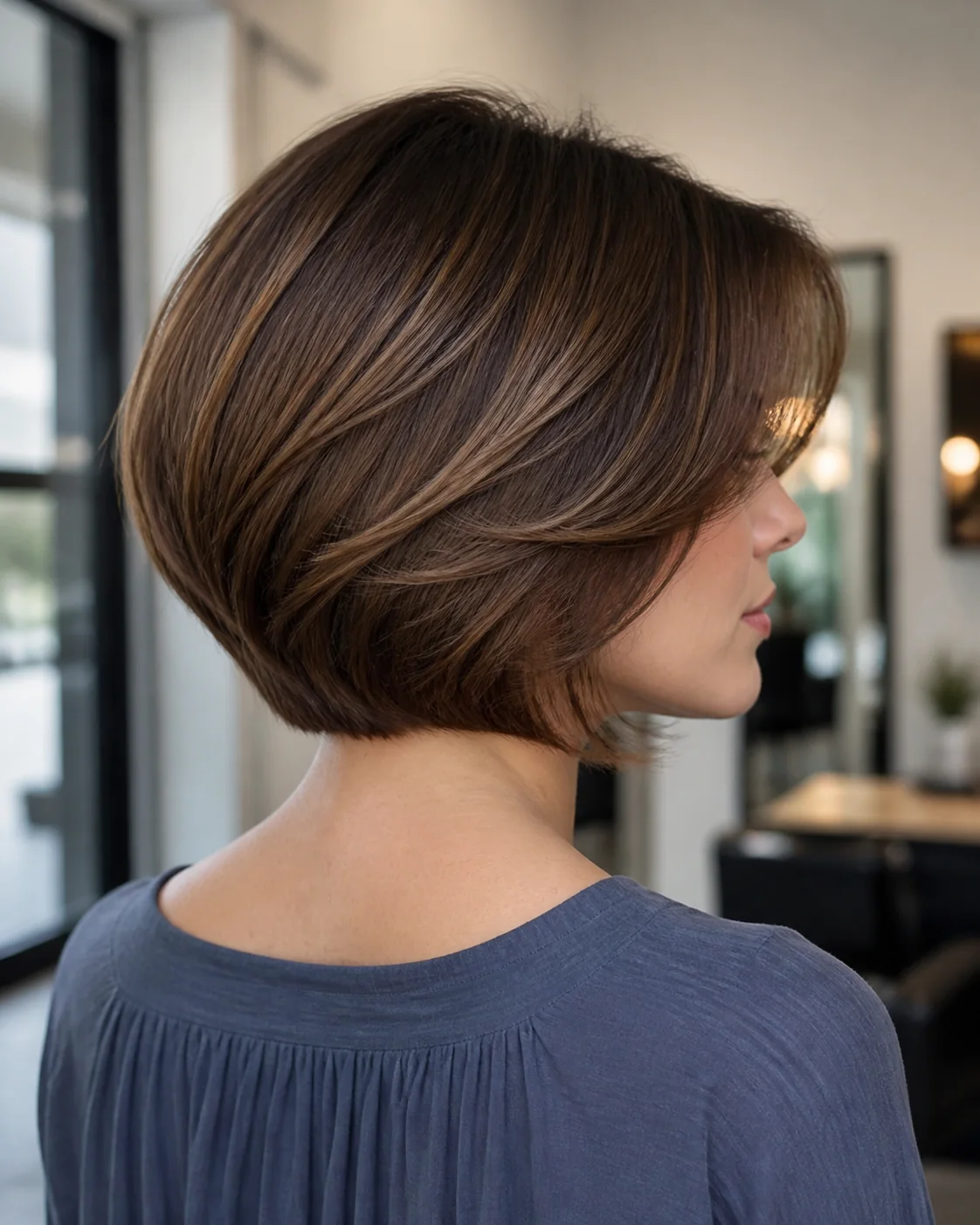
The back view reveals whether the haircut truly has a bob foundation: the perimeter should read as a coherent line while upper layers settle smoothly into it. A softly curved or blunt back provides stability, and the dramatic wing movement remains concentrated toward the front rather than creating a hollow crown. Ask your stylist to show a mirror view and preserve density through the rear baseline, using only long connected layers behind the ears. This is useful salon language for anyone worried about over-layering. Smooth the back downward as it dries and direct the front outward separately so both parts of the design remain clear.
19. Grown-Out Butterfly Bob
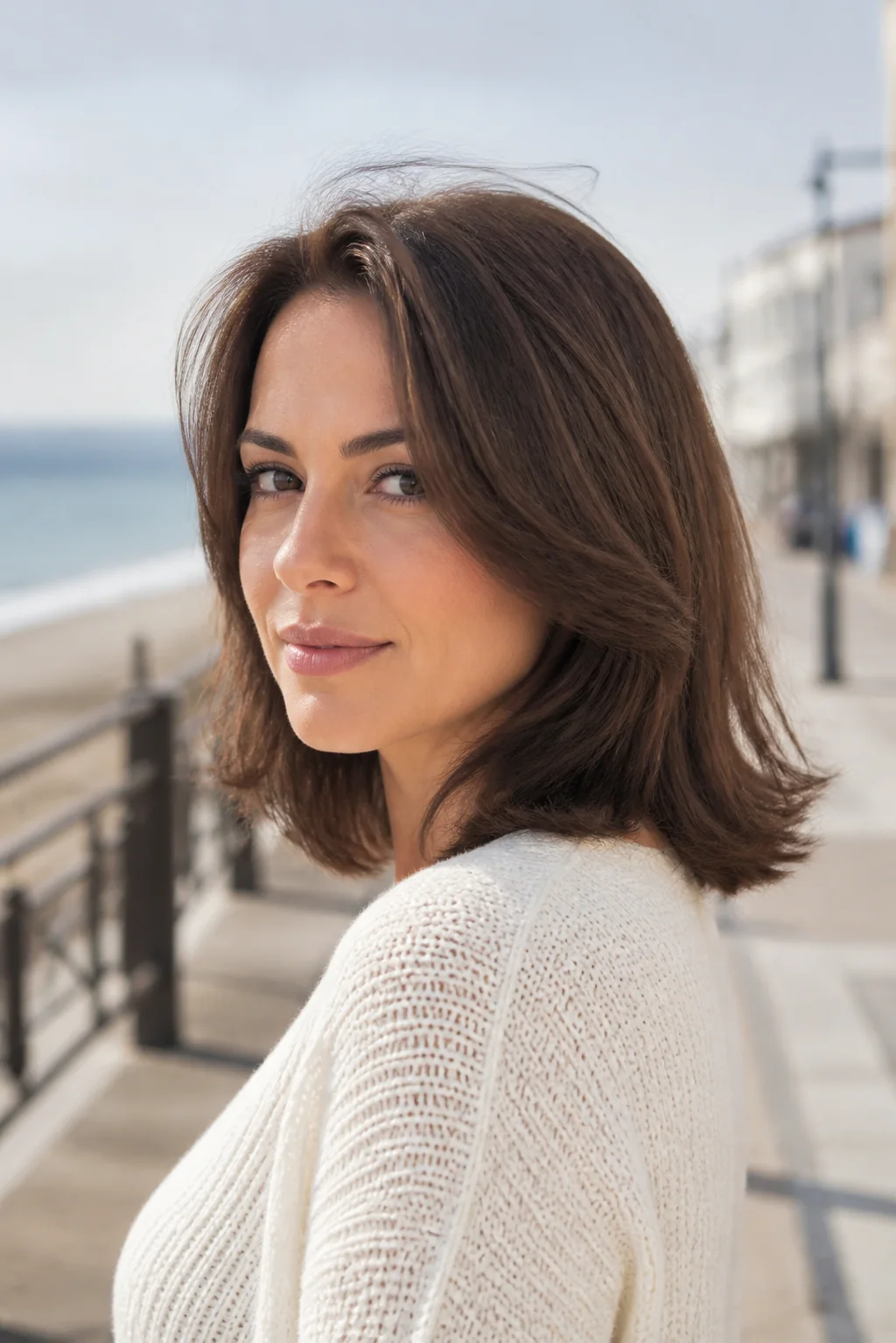
As a butterfly bob grows toward the shoulders, the original cheekbone wings soften into jaw layers and the perimeter begins to behave like a lob. This can be an attractive transition rather than an awkward stage when the front remains connected and the lower edge stays healthy. Ask for a conservation trim that dusts the base, blends only obvious corners and avoids recutting the shortest layers if length is your goal. Tuck or pin the sides when they become difficult, and use a brush bend to reunite the layers. Eight-to-twelve-week appointments can guide the shape without repeatedly losing progress.
20. Glamorous Soft-Wave Butterfly Bob
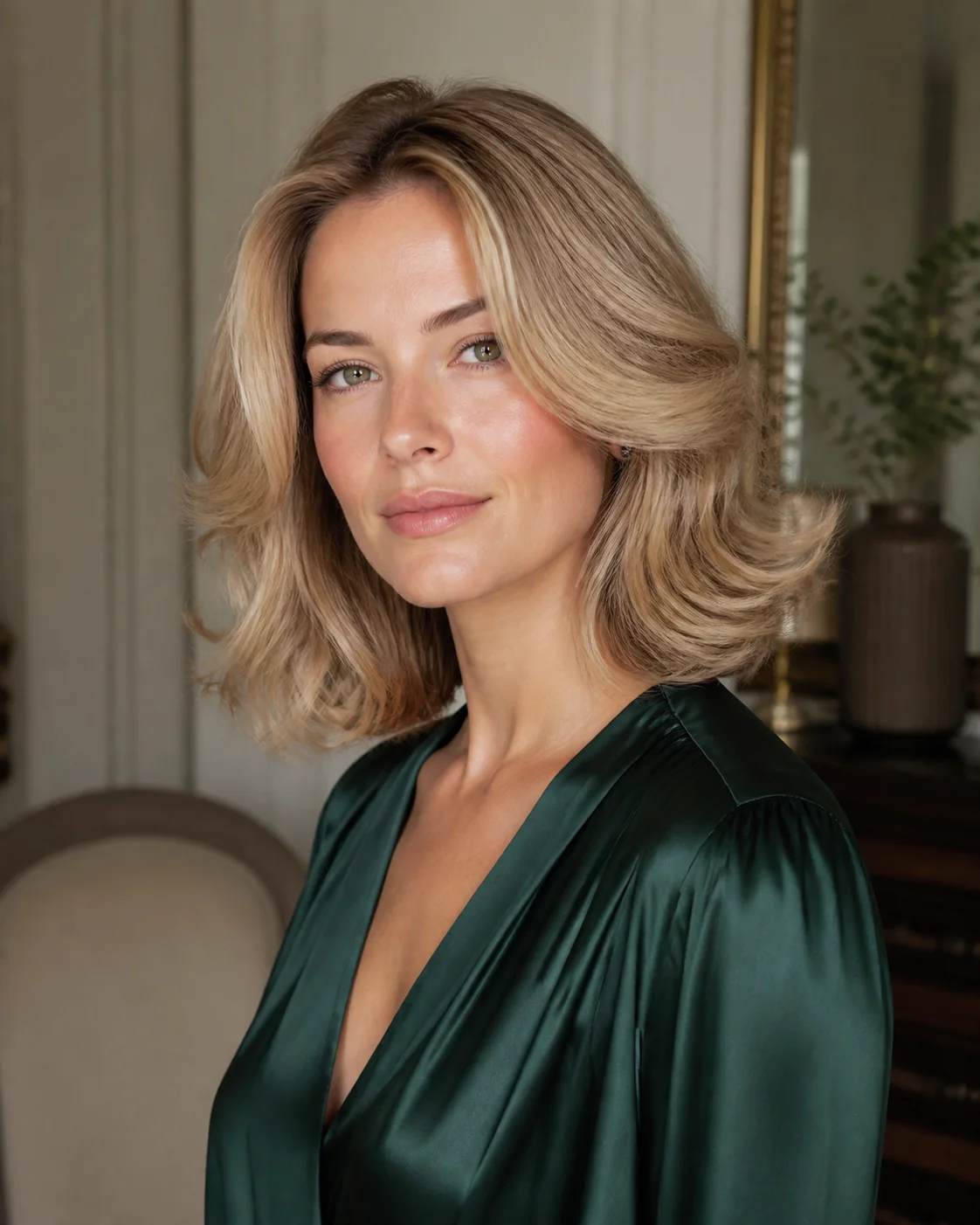
Brushed-out waves give the butterfly bob an evening finish, turning the outward facial layers into a soft frame above a full, luminous perimeter. The curves are larger and more polished than beach waves, but flexible movement keeps the result from feeling stiff. Ask for jaw-to-collarbone length, long top layers suitable for a small iron or rollers and enough density for a smooth lower outline. Set sections away from the face, cool them, then brush rather than separating each curl with fingers. Flexible spray and a drop of serum on the ends create longevity without flattening the airy wings.
Your best reference: Save one photograph with a density and texture close to yours, then identify its shortest face layer and lower perimeter. Those two details matter more than the trend name alone.
What to Ask Your Hairdresser For
Describe the two-part construction: a chin-to-shoulder bob with a substantial perimeter, plus shorter connected layers that sweep away from the cheekbones or jaw. Agree on the dry length of the shortest wing, how much density must remain at the bottom and whether the back should stay mostly solid. Ask to see how the cut will sit without a blowout, since dramatic reference photographs often rely on rollers or a round brush.
Butterfly Bob vs. Butterfly Haircut
Both styles use short facial layers connected to longer ones. The butterfly bob ends between the chin and shoulders and preserves a recognizable bob baseline; the classic butterfly haircut normally retains medium or long length, with a greater distance between its short face frame and long foundation. A butterfly bob also needs more restraint with layering because there is less lower length available to protect fullness.
Styling, Maintenance and Grow-Out
Dry the front first and direct it away from the face, then choose whether the base should curve under, wave naturally or stay sleek. Lightweight mousse, root lift or blow-dry cream usually supports the shape better than heavy wax. Reshape most versions every six to ten weeks, with fine or chin-length cuts at the shorter end. During grow-out, preserve the front connection and ask for conservation trims rather than repeatedly shortening the wings.
More Layered Hair Inspiration
For longer cascading layers, explore 20 Butterfly Haircuts. If you prefer a softer one-length shape, see 20 Italian Bob Haircuts.