Fulani braids have a way of making every angle feel intentional. The cornrow pattern gives the style its graphic beauty, while loose individual braids, beads or curls add movement you can personalize. The most successful version is not simply the most intricate one; it is the pattern that feels comfortable at your hairline and still fits your everyday routine.
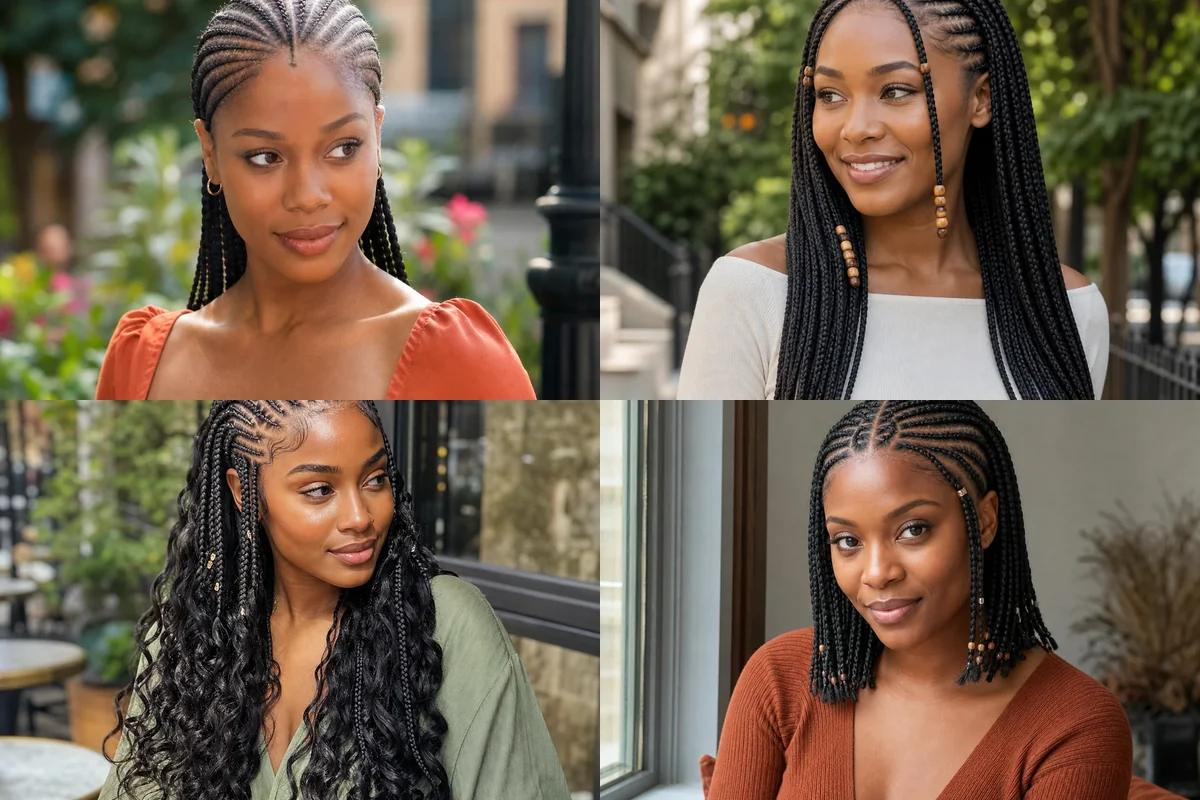
Named for the Fulani, or Fula, people of West Africa and the Sahel, Fulani braids traditionally use distinctive scalp braiding and decorative details such as beads. Modern salon versions commonly combine cornrows at the front or crown with individual braids through the back, often including a center braid, temple braids or face-framing pieces. That construction distinguishes them from standard knotless box braids, which do not have the same cornrow-led front pattern, and from lemonade braids, which usually sweep consistently to one side.
- Best for: readers who enjoy a patterned protective style with many styling options
- Installation: usually several hours, depending on braid size, length and added curls
- Maintenance: wrap nightly, cleanse the scalp gently and avoid heavy product buildup
- Comfort rule: a crisp pattern should never require painful tension or strained edges
1. Classic Center-Braid Fulani Pattern
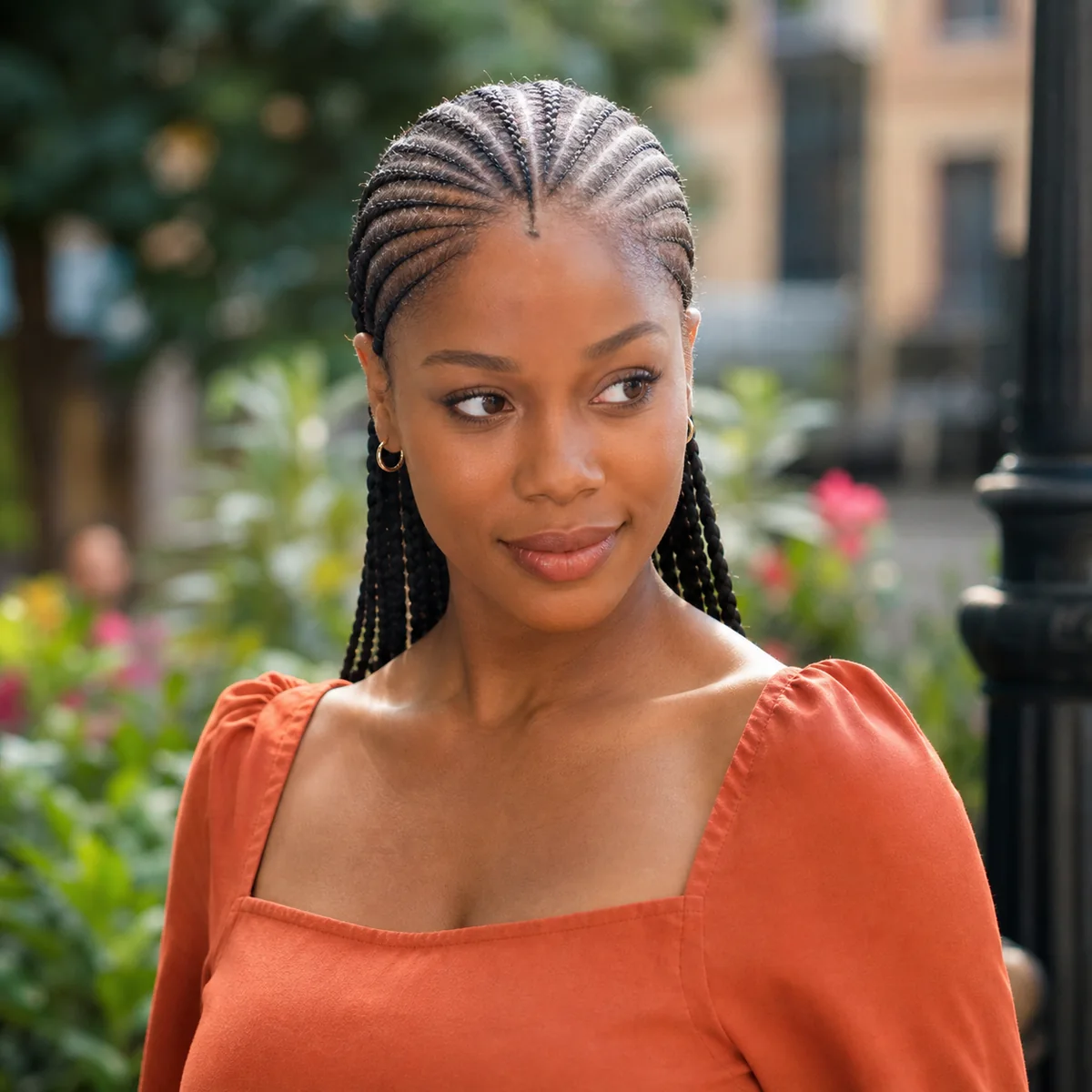
The classic arrangement uses a slim braid running along the center, balanced cornrows moving toward the sides and free-hanging braids behind. That symmetry draws the eye upward and brings calm structure to the face, so it can make even a simple outfit feel beautifully considered. It suits someone who wants a recognizable Fulani silhouette without relying on color or elaborate accessories, and the orderly pattern often feels quietly confident rather than overly formal. Ask your braider for a centered anchor braid, even side sections and light tension at the temples; at home, smooth a little mousse over flyaways instead of repeatedly pulling the front rows tight.
2. Fulani Braids With Warm Wooden Beads
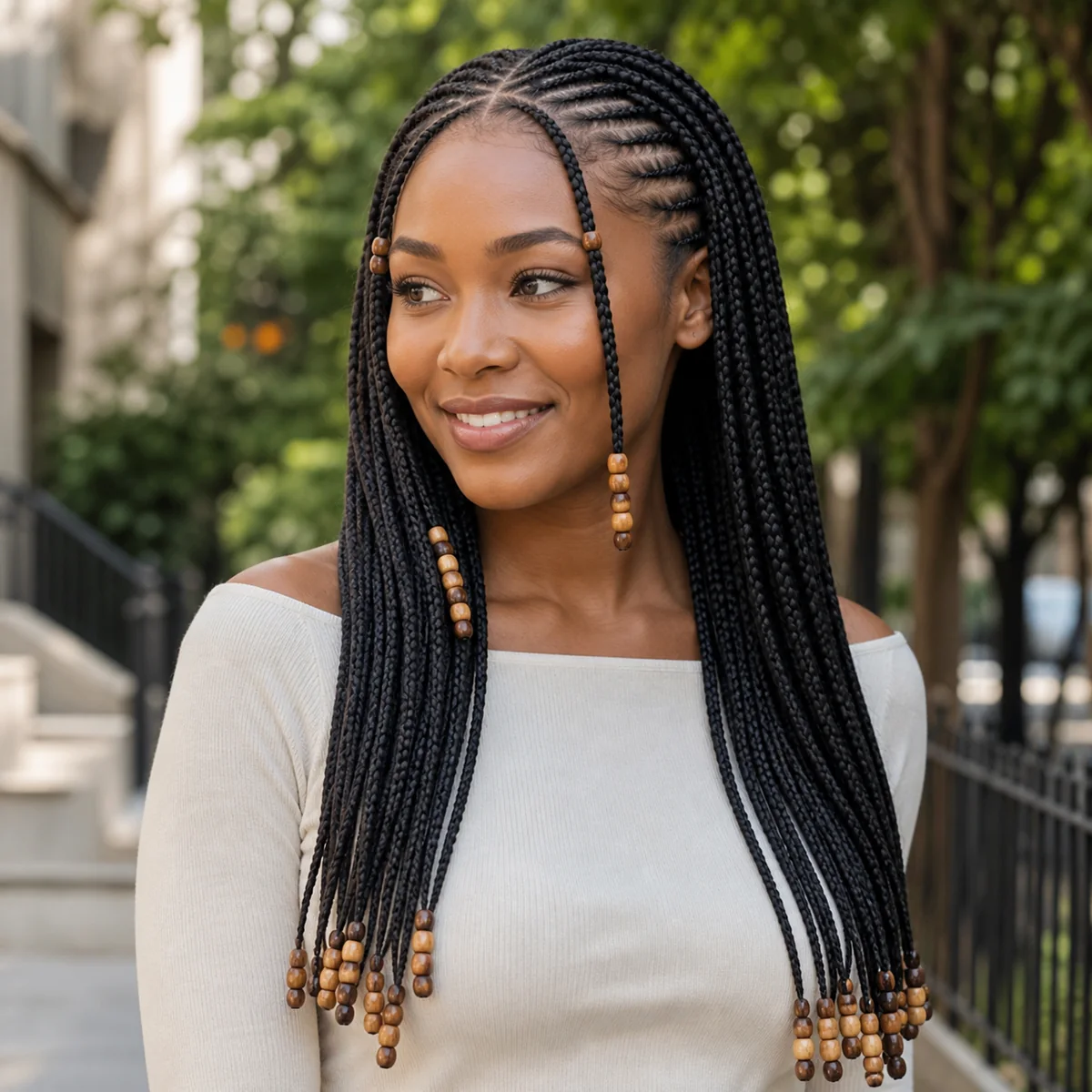
Wooden beads give the ends a soft rhythm and echo the decorative character long associated with Fulani styling. Placed selectively rather than on every braid, they frame the face and make the length look more animated without adding overwhelming weight. This version feels expressive, grounded and joyful, especially for someone who loves jewelry-like detail but wants to keep the braid color natural. Tell your stylist how many beaded braids you want and where you want them to fall, then check that every bead is secured without sharp elastics; sleeping with the lengths gathered loosely prevents the beads from knocking or snagging.
3. Boho Fulani Braids With Soft Curls
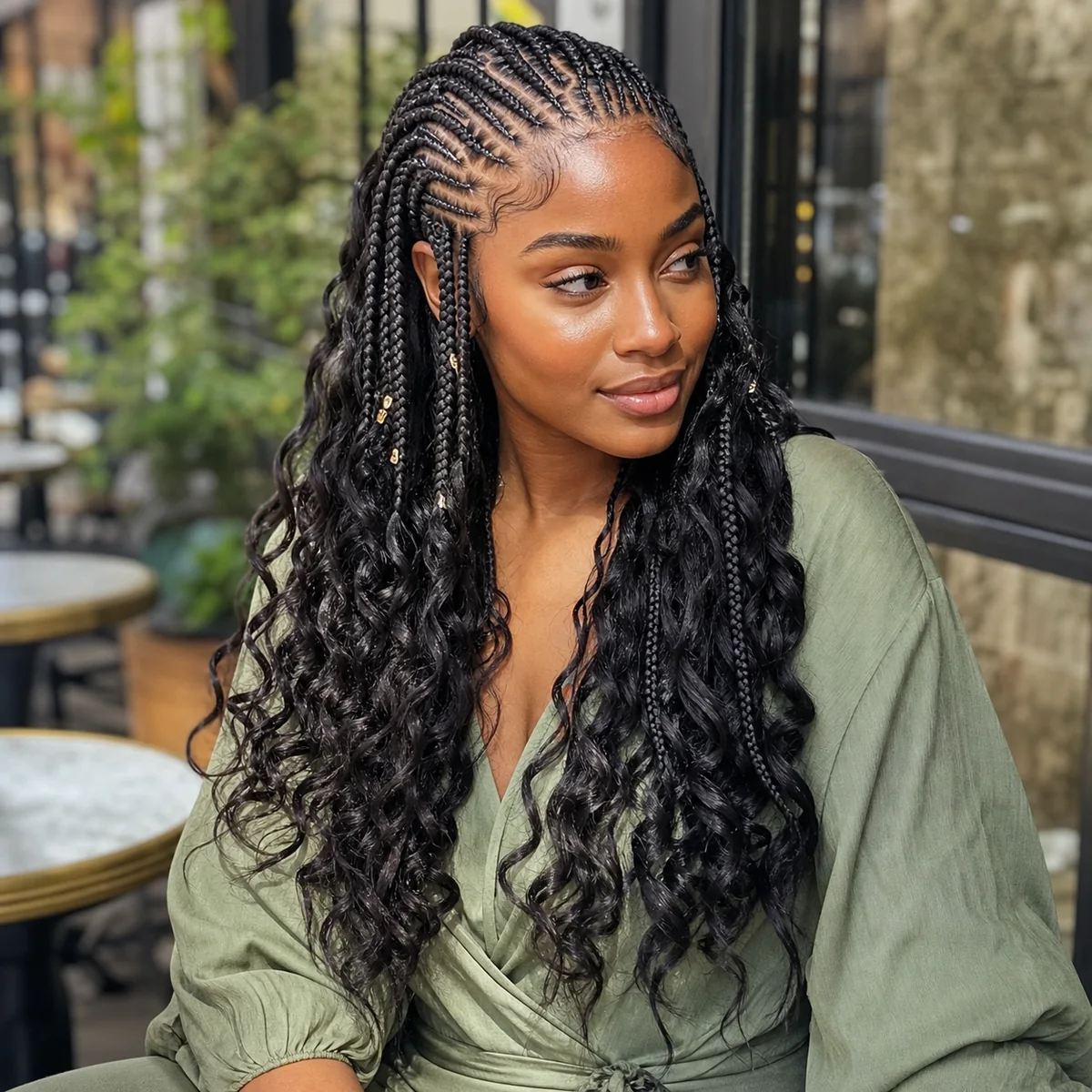
Here, precise front cornrows melt into individual braids scattered with loose, glossy curls. The contrast softens the graphic scalp pattern and builds airy fullness around the shoulders, which can make the style feel romantic and relaxed while still looking polished. It is a lovely choice if you enjoy movement and do not mind giving the curly pieces a little more attention than fully braided lengths require. Ask for boho Fulani braids with strategically placed human-hair or high-quality curly pieces and a clearly defined front pattern; separate the curls gently with your fingers and use a light leave-in rather than heavy oils that encourage tangling.
4. Short Shoulder-Length Fulani Braids
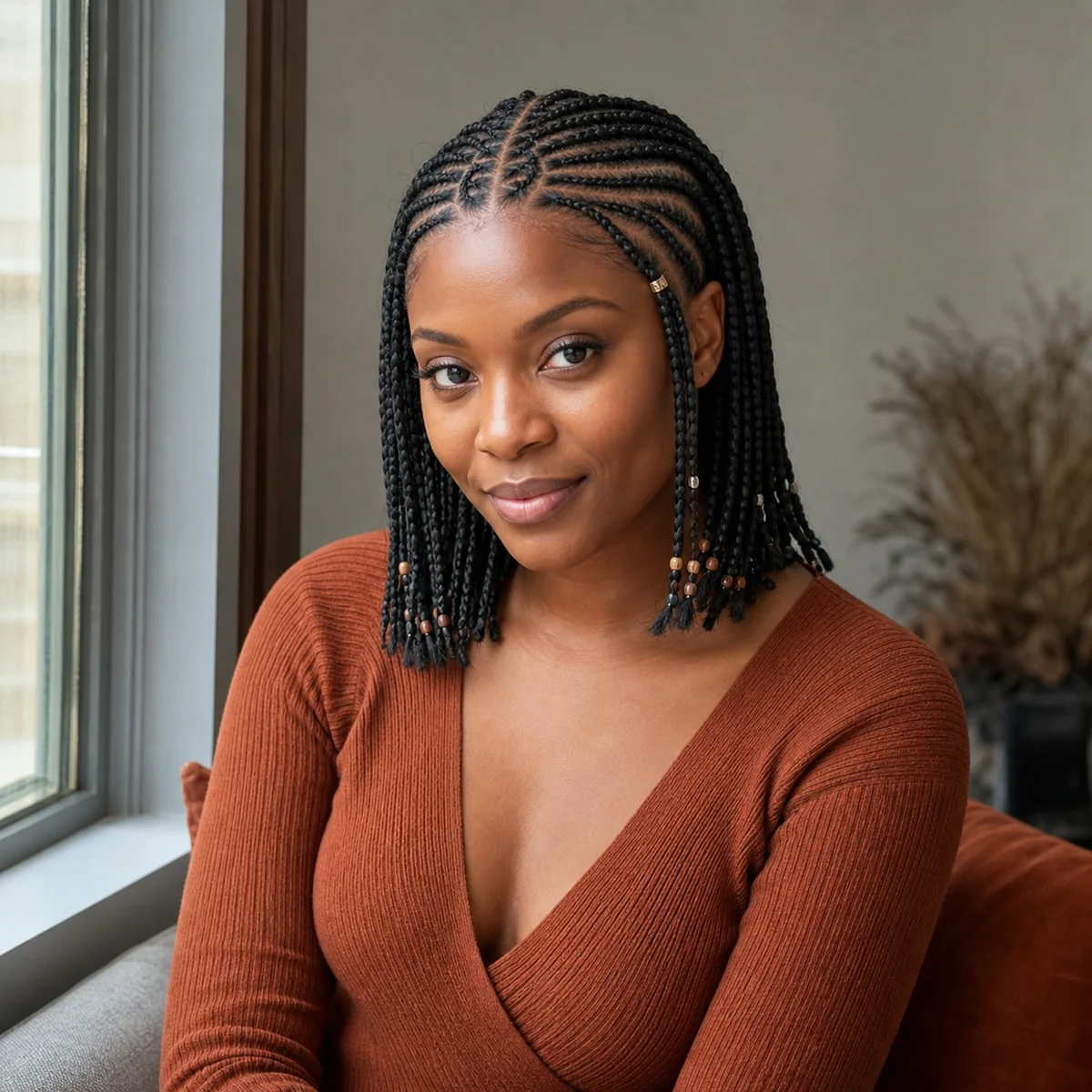
Shoulder-length braids keep the signature cornrow detail but remove much of the weight and swing of a long installation. The shorter perimeter opens the neckline, makes beads especially visible and can simplify workouts, travel and warm-weather dressing. This neat scale feels fresh and energetic, and it suits anyone who wants a protective style that does not dominate their routine. Ask your braider for a true shoulder-grazing finish after shrinkage and dipping, with sealed ends and no bulky concentration of extension hair at the back; protect the ends at night so friction does not make the compact shape look fuzzy too soon.
5. Side-Part Fulani Braids
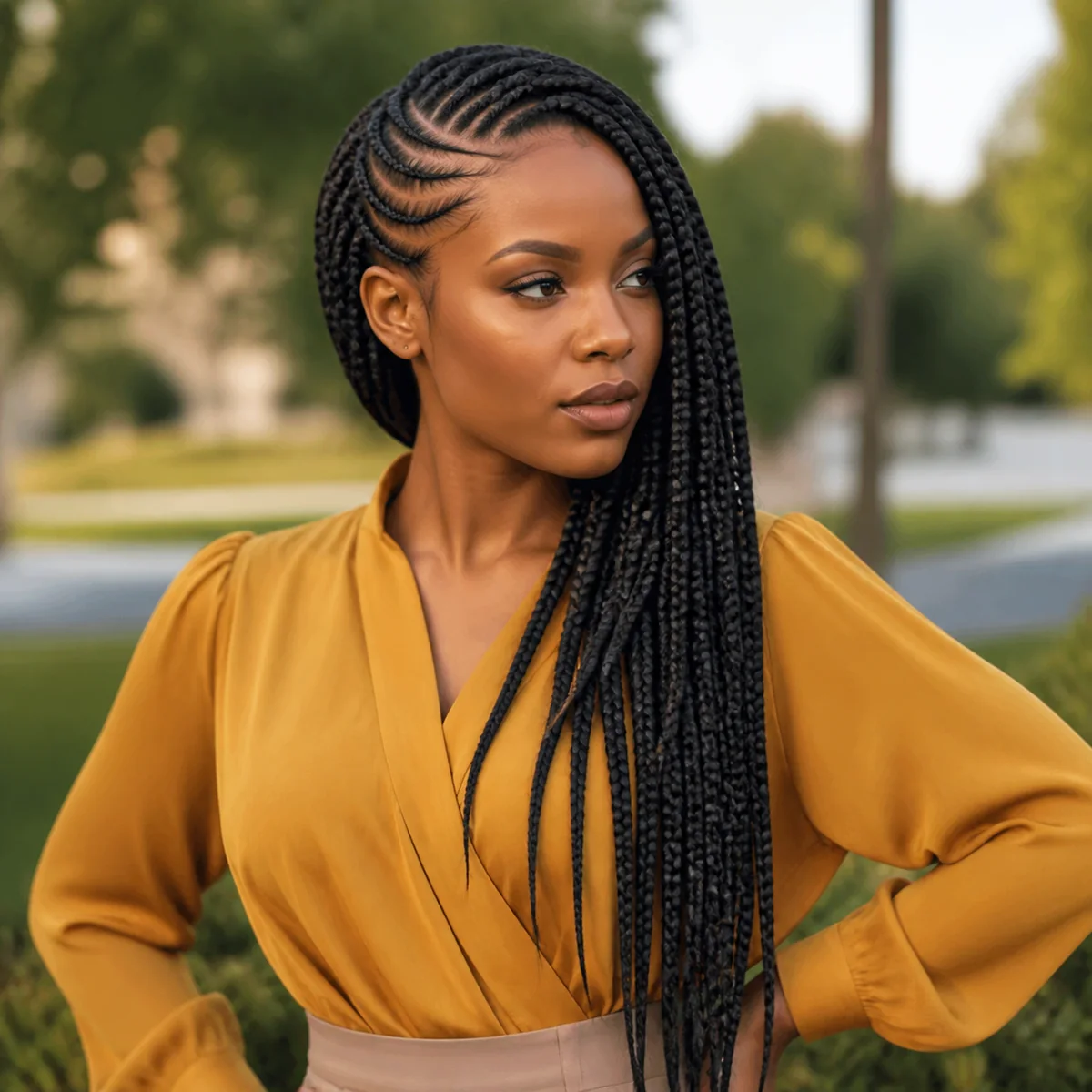
A deep braided side part shifts the pattern off center and lets several rows sweep diagonally across the head. That asymmetry can bring flattering lift to one side of the face and gives the finished style a sophisticated, slightly dramatic direction. It is especially useful if you naturally prefer wearing hair over one shoulder, and the off-center design can make you feel polished without needing an updo. Show your braider which side you habitually part on and request curved feed-in rows that follow it without pulling the opposite temple; alternate where the lengths rest to avoid constant friction on one edge.
6. Flip-Over Fulani Braids
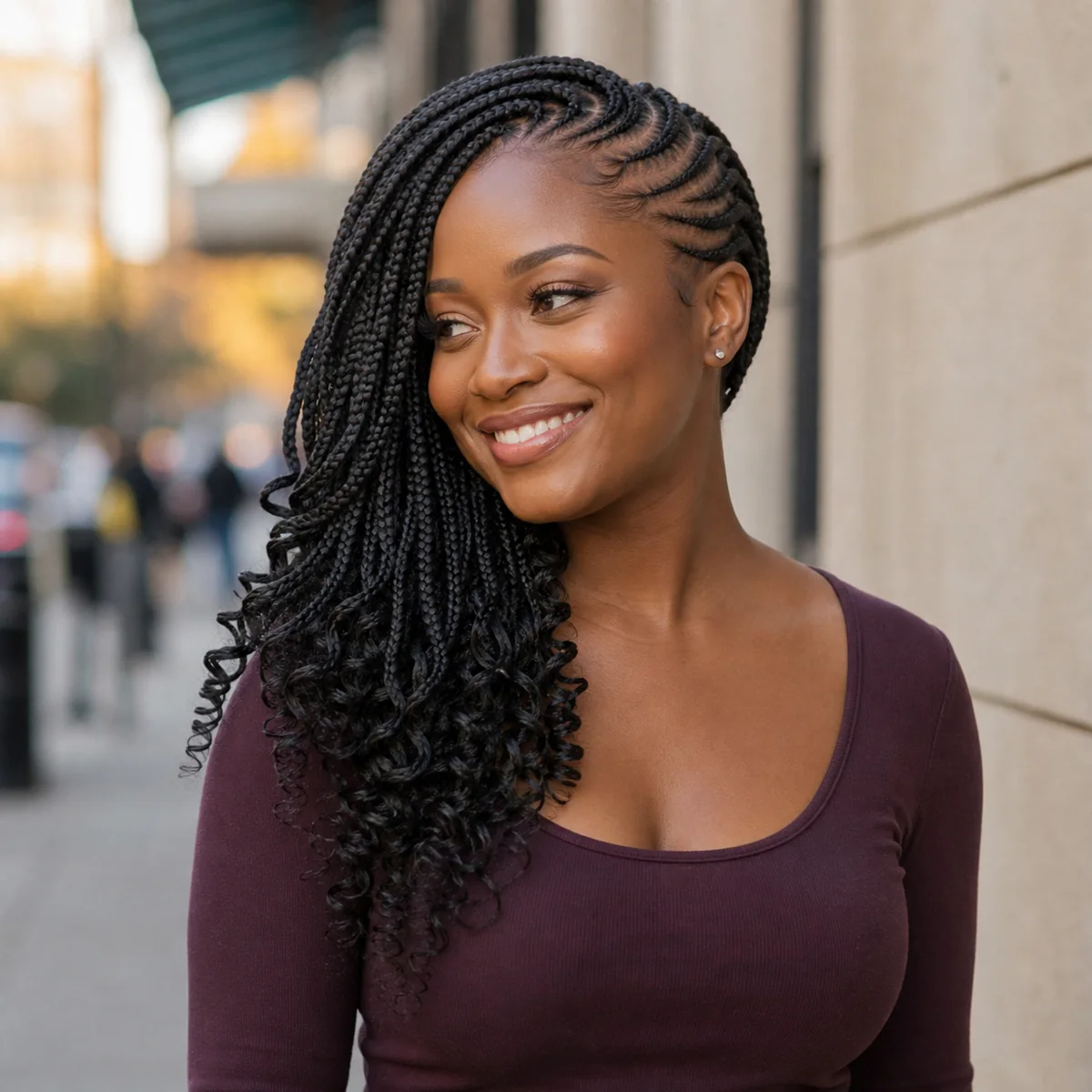
Flip-over Fulani braids are designed with enough flexibility near the crown to move the lengths from one side to the other. The changing part creates instant volume and makes the front pattern look less fixed, giving you several moods from one installation. This is a playful, adaptable option for someone who gets bored with a single part, though the roots must remain comfortable enough to move without tugging. Ask for a flip-over section with individually placed braids behind the cornrows and no rigid central divide; when restyling, lift and place the braids rather than yanking them across the scalp.
7. Lemonade-Inspired Fulani Braids
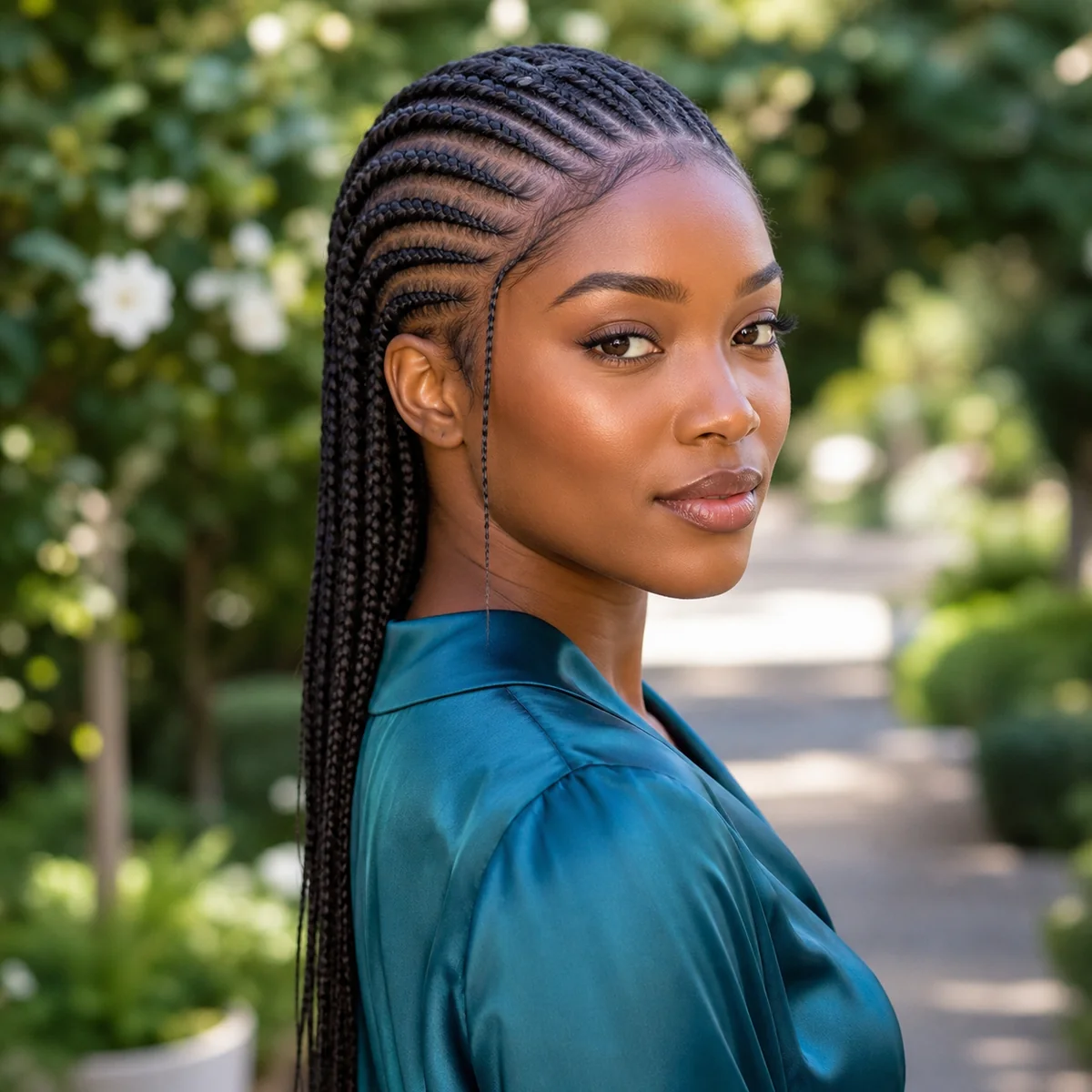
This hybrid takes the recognizable center and temple detailing of Fulani braids and sends more of the front rows in a sweeping, lemonade-style direction. The diagonal lines visually lengthen the profile and create a strong focal side, so the style feels sleek, assured and ready for photographs. It works beautifully when you love asymmetry but still want loose braids at the back instead of a fully side-swept cornrow set. Ask for Fulani construction with lemonade-inspired side direction, clarifying that the back should remain individually braided; keep the swept side from feeling overloaded by requesting small feed-in sections and comfortable edge spacing.
8. Heart-Pattern Fulani Braids
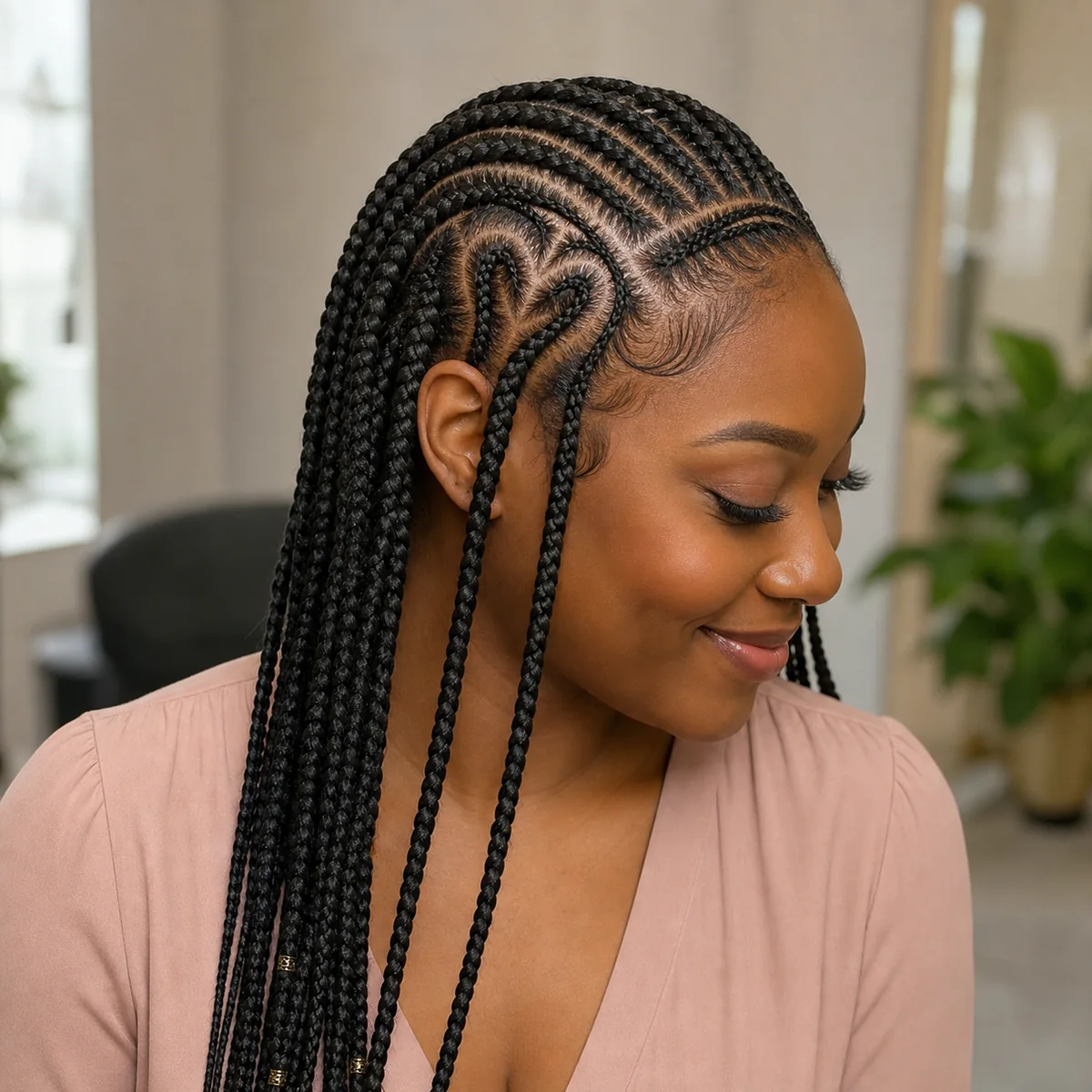
A small heart-shaped part near the temple turns the cornrow map into a deliberate piece of design. Because the rest of the pattern stays clean, the heart reads as a charming accent rather than visual clutter and brings attention to the cheekbone area. It can make the style feel playful and personal, perfect for a celebration or simply for someone who enjoys a detail that rewards a closer look. Bring a clear placement reference and ask for one defined heart integrated into the Fulani rows, not added through excessive tiny sections; protect the curved part with a scarf so fuzz does not blur its outline.
9. Fulani Braids With Curly Ends
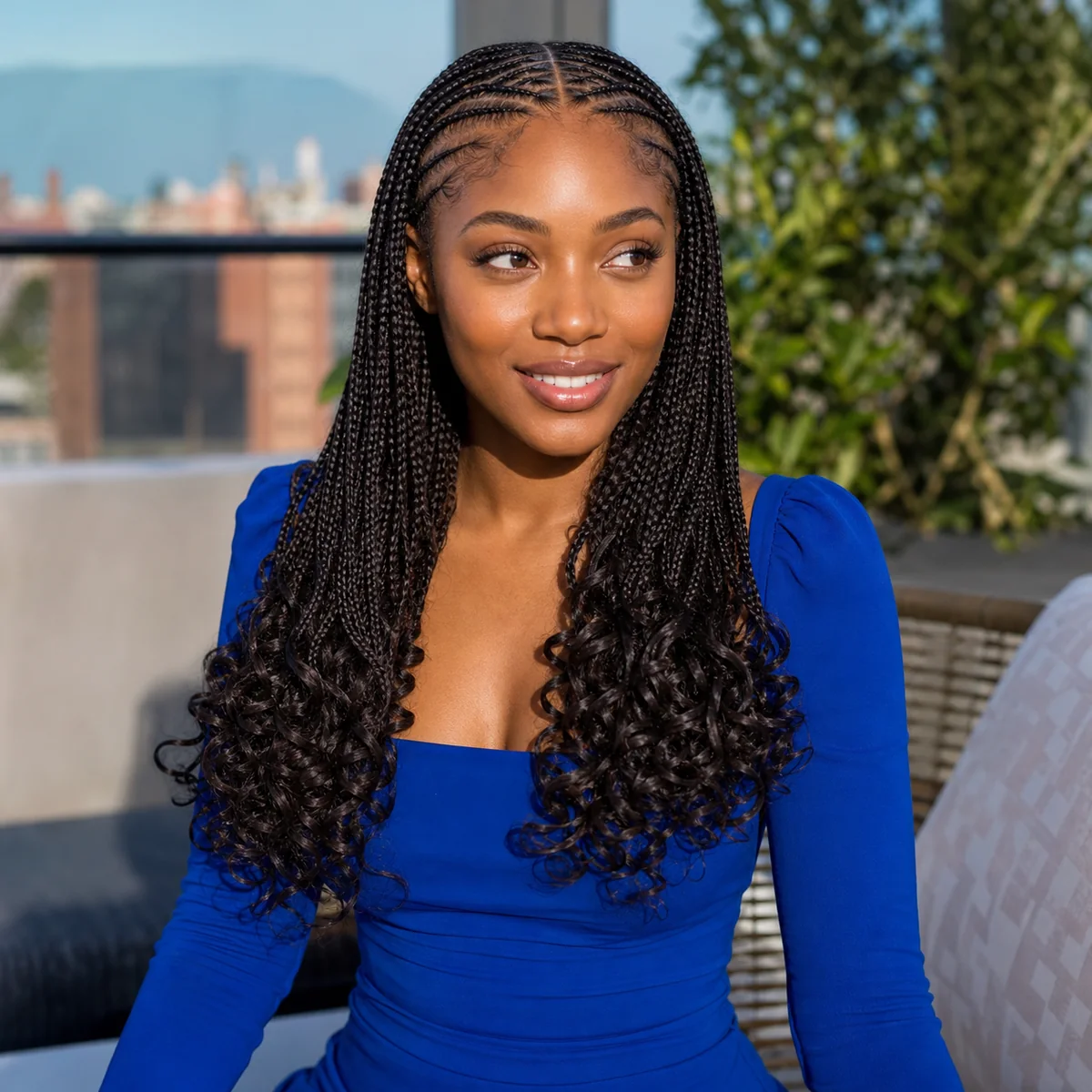
Leaving the lower portion of selected braids curly creates bounce at the perimeter while keeping the scalp and midlengths neat. Those soft ends break up a heavy block of length, add fullness near the chest and give the style a more buoyant, feminine finish. This variation feels glamorous without requiring loose curls throughout, so it is easier to manage than a densely bohemian set. Ask for Fulani braids with sealed curly ends and agree on where the curl should begin; refresh the spirals with water and a small amount of lightweight conditioner, then finger-coil only the pieces that lose shape.
10. Half-Up Fulani Braids
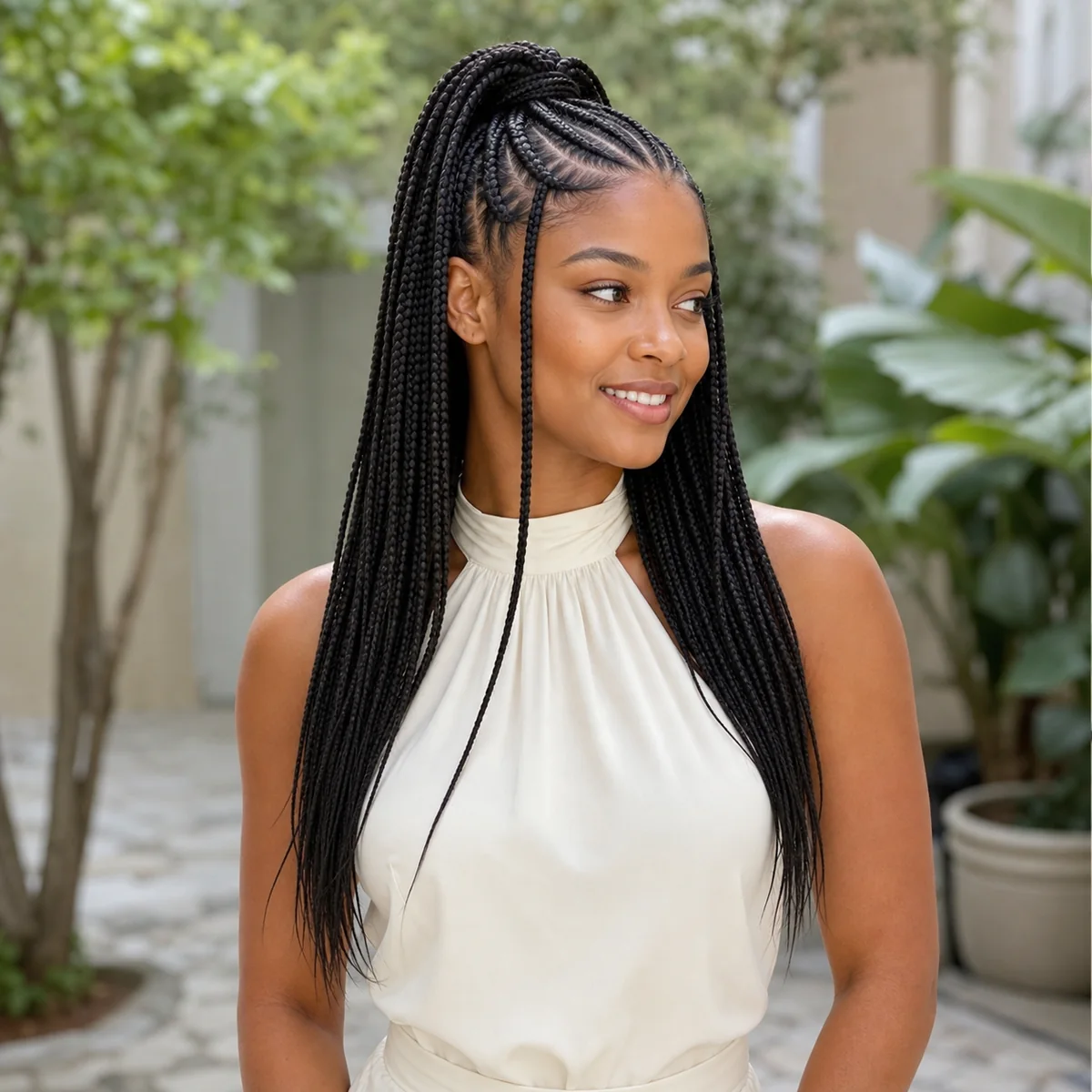
Gathering the crown braids into a high half-up section reveals the front cornrow design while leaving plenty of length loose. The lifted top adds height and keeps braids away from the face, which is practical on busy days and can make the wearer feel instantly more pulled together. It suits medium and long installations with a flexible crown, although a very tight elastic can concentrate too much pressure in one place. Ask your braider to position the crown rows so they can travel upward comfortably; use a large fabric-covered band and vary the placement rather than repeating the same high ponytail daily.
Pause and compare: Choose a fixed center or side pattern when you love a dependable silhouette. Choose flip-over or half-up construction when styling flexibility matters more than perfect symmetry.
11. High-Ponytail Fulani Braids
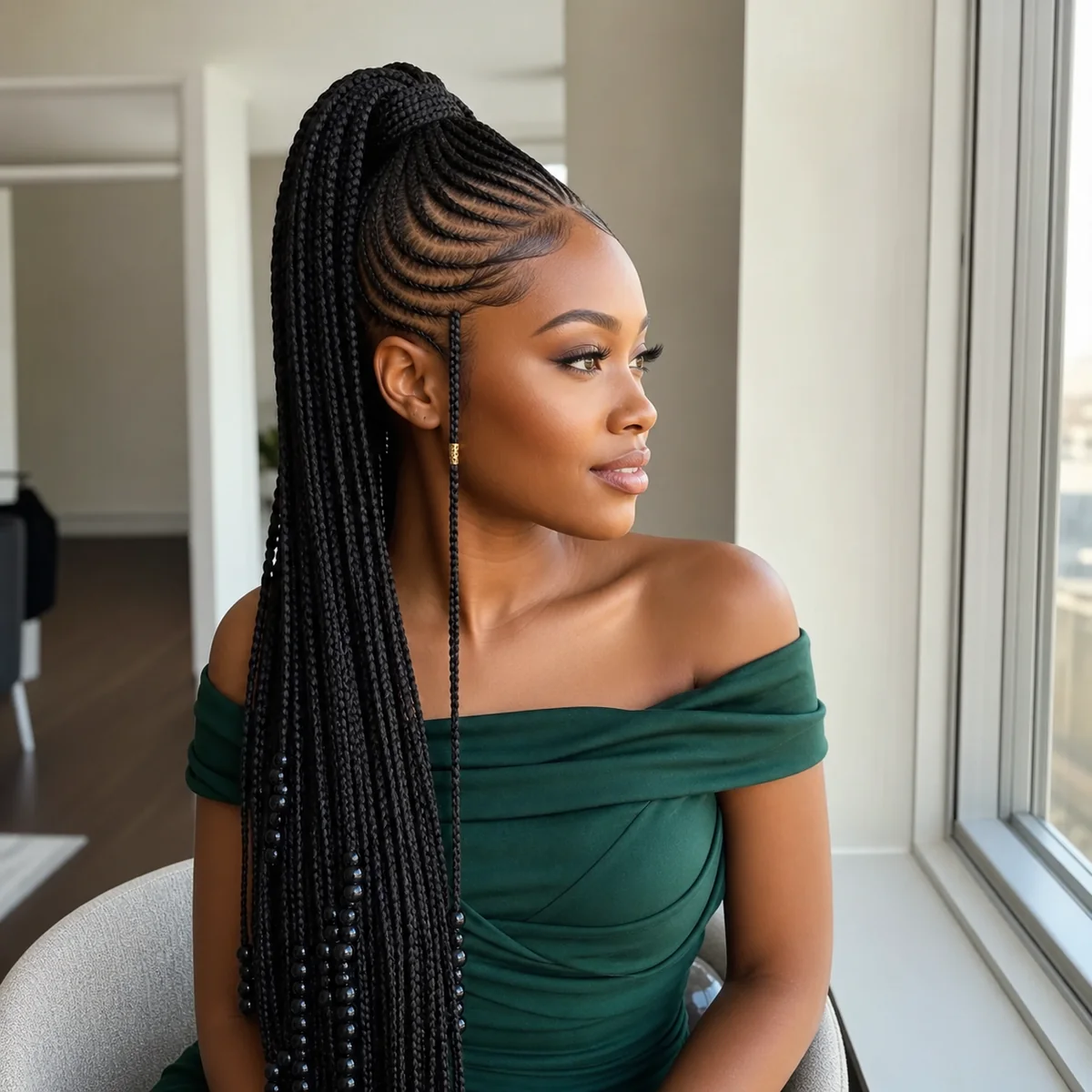
A high ponytail turns the hanging braids into a dramatic cascade and puts every front row on display. The upward direction brightens the face and gives the style an athletic, celebratory energy that works for evenings as easily as casual days. It feels confident and glamorous, but it is best worn intermittently because the combined weight of long braids can pull at the crown. Request a ponytail-friendly pattern with secure but low-tension feed-ins and avoid adding more extension hair than your roots can comfortably support; use a soft, wide tie and lower the ponytail at the first sign of tenderness.
12. Low-Bun Fulani Braids
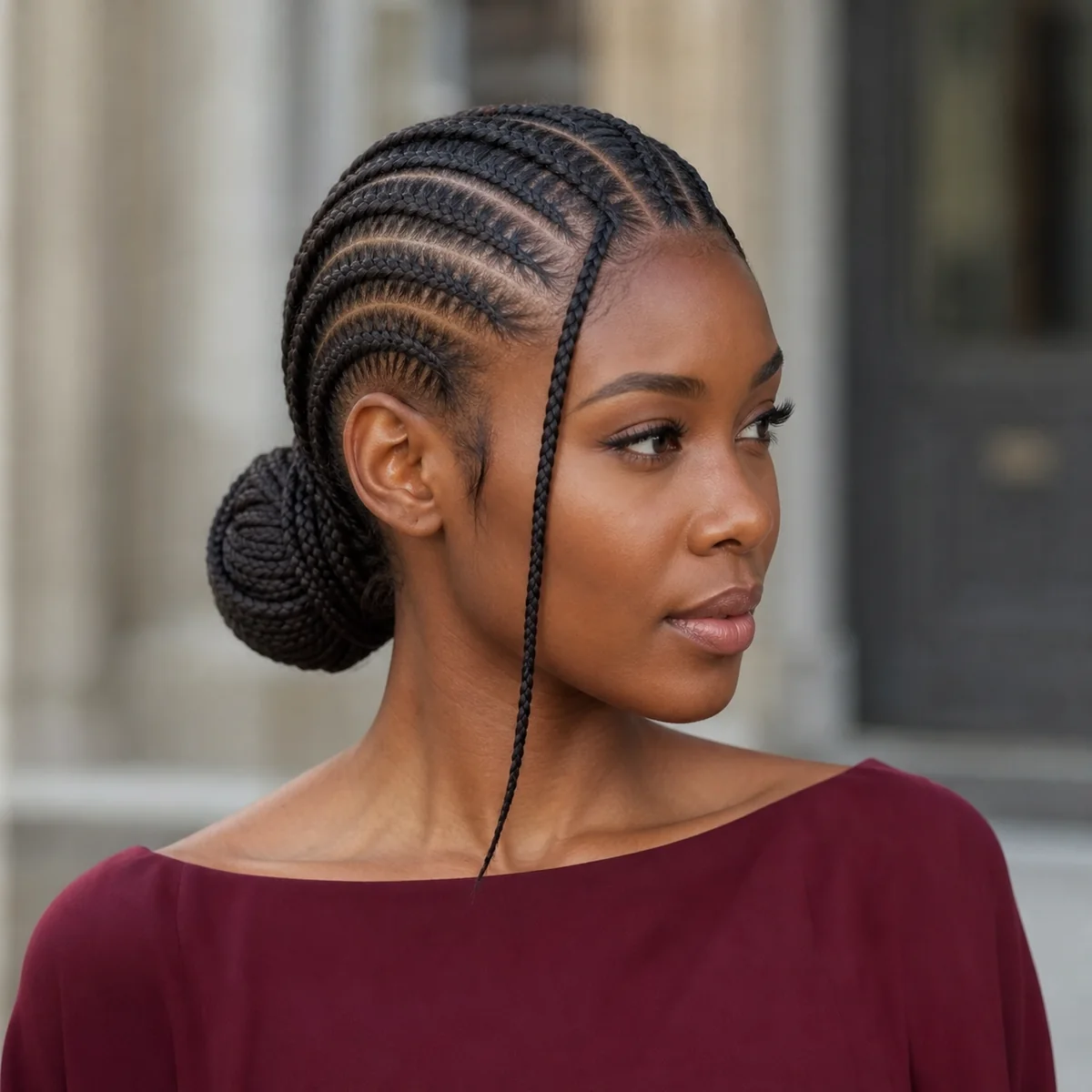
Coiling the lengths into a low bun changes detailed Fulani braids into an elegant, compact shape. The bun exposes the cornrow pattern, keeps the ends protected from friction and creates a graceful line at the nape that looks particularly refined with an open neckline. This option can feel calm and sophisticated for work or an occasion, provided the installation is not so long or dense that the bun becomes heavy. Ask for medium-length, medium-size braids that can fold comfortably, then secure the bun with large pins placed through the braided mass rather than against the scalp.
13. Fulani Braids With Blonde Accents
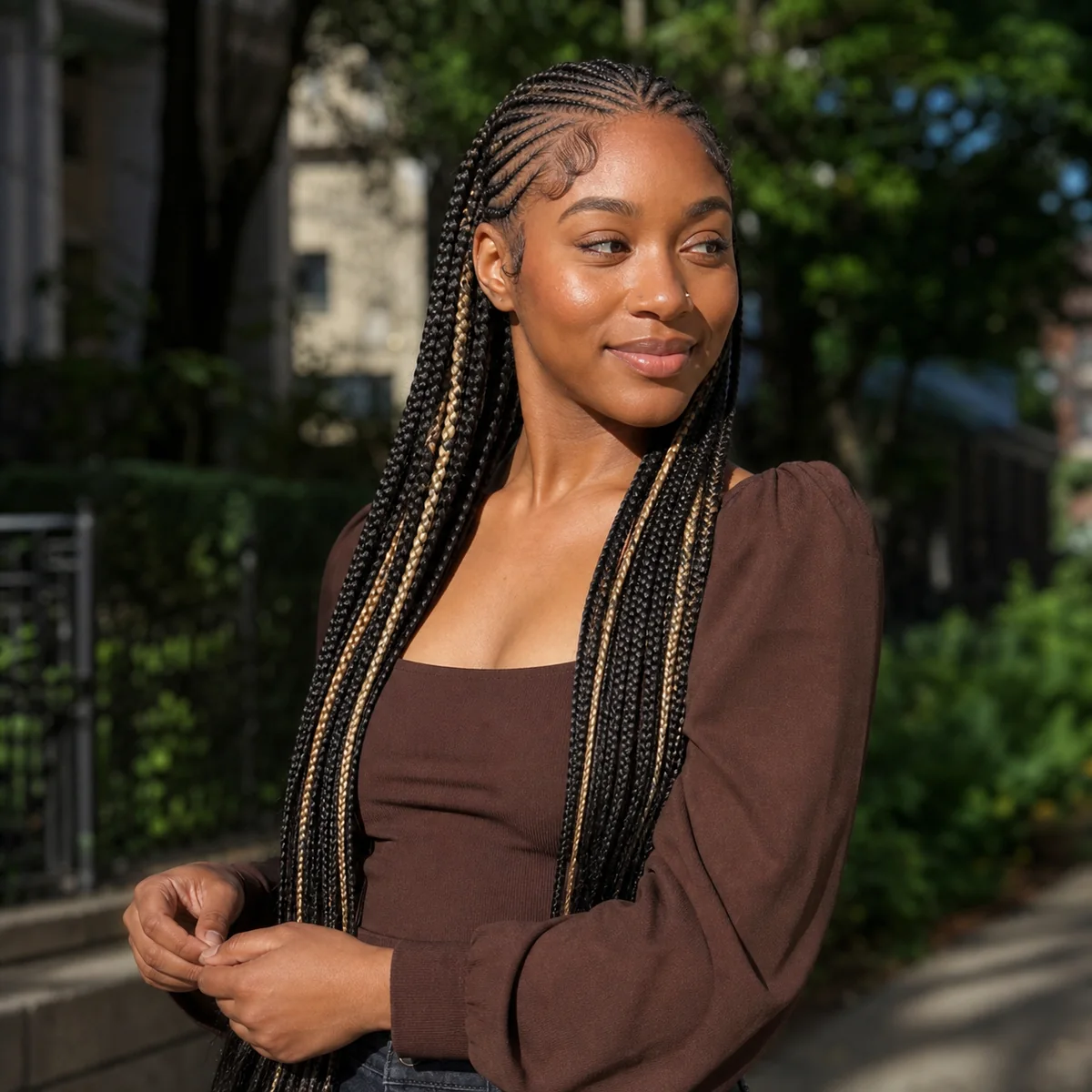
A few honey-blonde braids threaded through a dark base illuminate the pattern without turning the entire installation bright. Strategic color near the face makes the cornrow direction easier to see and can warm the complexion, creating a sunny, adventurous mood. It is an easy way to experiment with blonde while leaving natural hair untouched, especially if you prefer dimensional color to a uniform blend. Ask for two or three complementary extension shades distributed deliberately through the front and lengths; confirm the sample blend in daylight, because very pale fibers can look harsher once installed.
14. Rich Auburn Fulani Braids
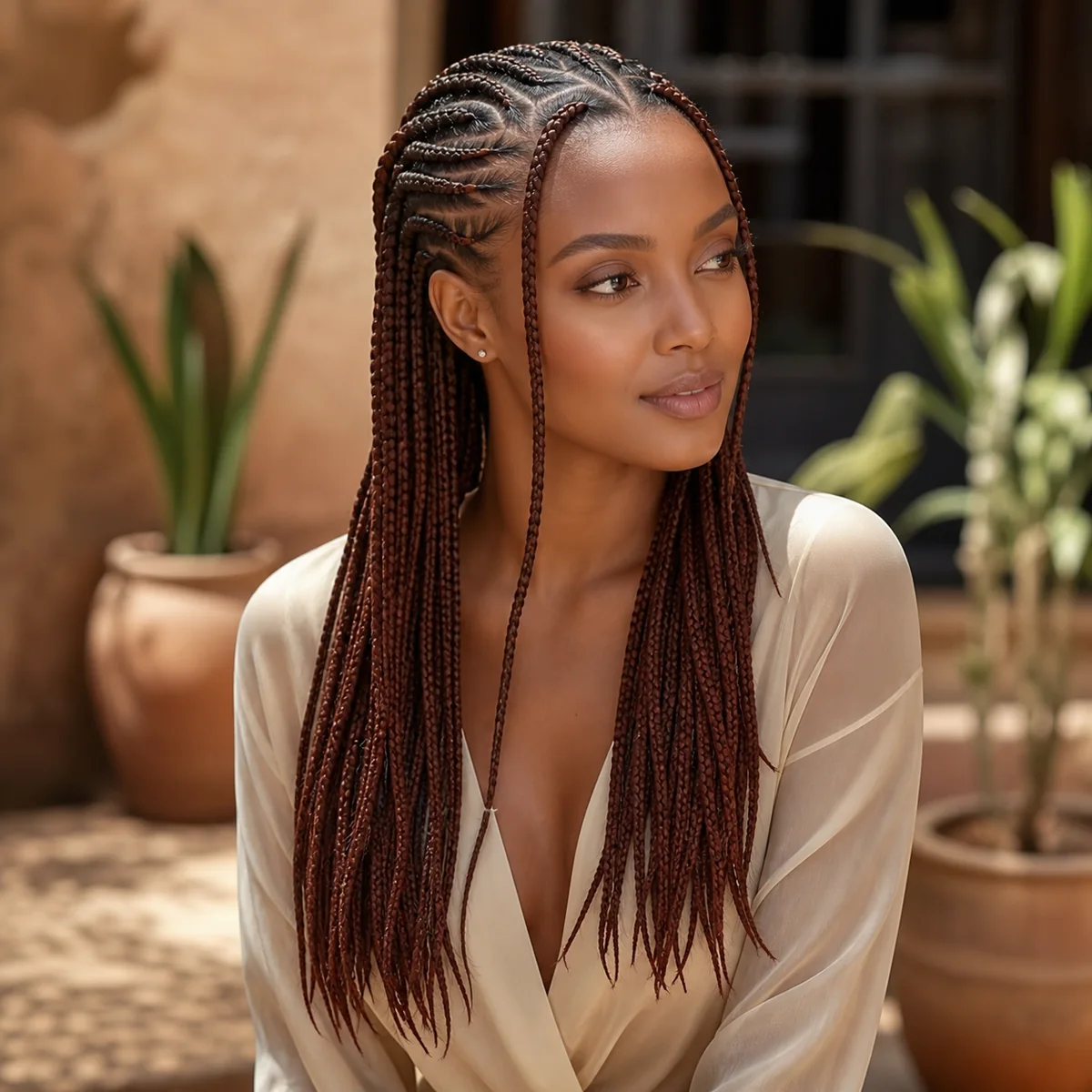
Deep auburn gives the entire style a warm, polished glow while preserving the clarity of the braid pattern. On dark roots, the tonal shift looks dimensional rather than flat and can make beads, cuffs and curled ends appear even richer. This shade feels bold but wearable, ideal for someone who wants a noticeable seasonal change without bleaching their own hair. Ask your braider to blend a dark auburn with a deeper brown at the feed-in point so the transition looks seamless; use dark towels at first and follow the extension-hair care advice if the color is prone to transfer.
15. Small, Intricate Fulani Braids
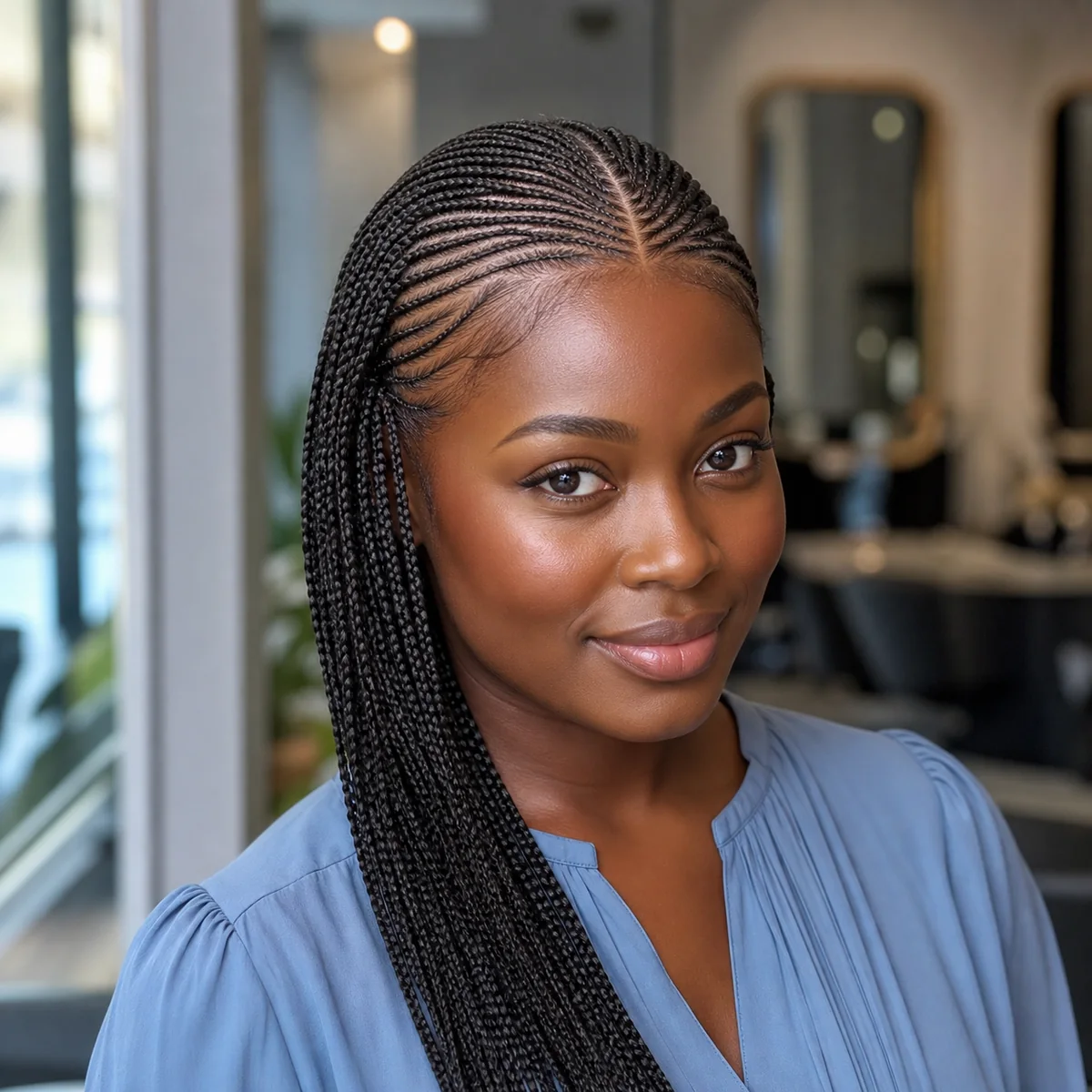
Fine cornrows allow the stylist to build a beautifully detailed map of curves, center lines and delicate temple braids. The smaller scale gives a light, refined finish and creates more styling flexibility through the loose lengths, helping the wearer feel exquisitely put together. It suits someone prepared for a longer appointment and careful takedown, not anyone seeking the quickest possible installation. Ask for small rather than micro sections, visible breathing room at the hairline and a clear estimate of added-hair weight; cleanse between rows with a narrow applicator bottle and never keep the style beyond the point where buildup or new growth compromises comfort.
16. Jumbo Fulani Braids
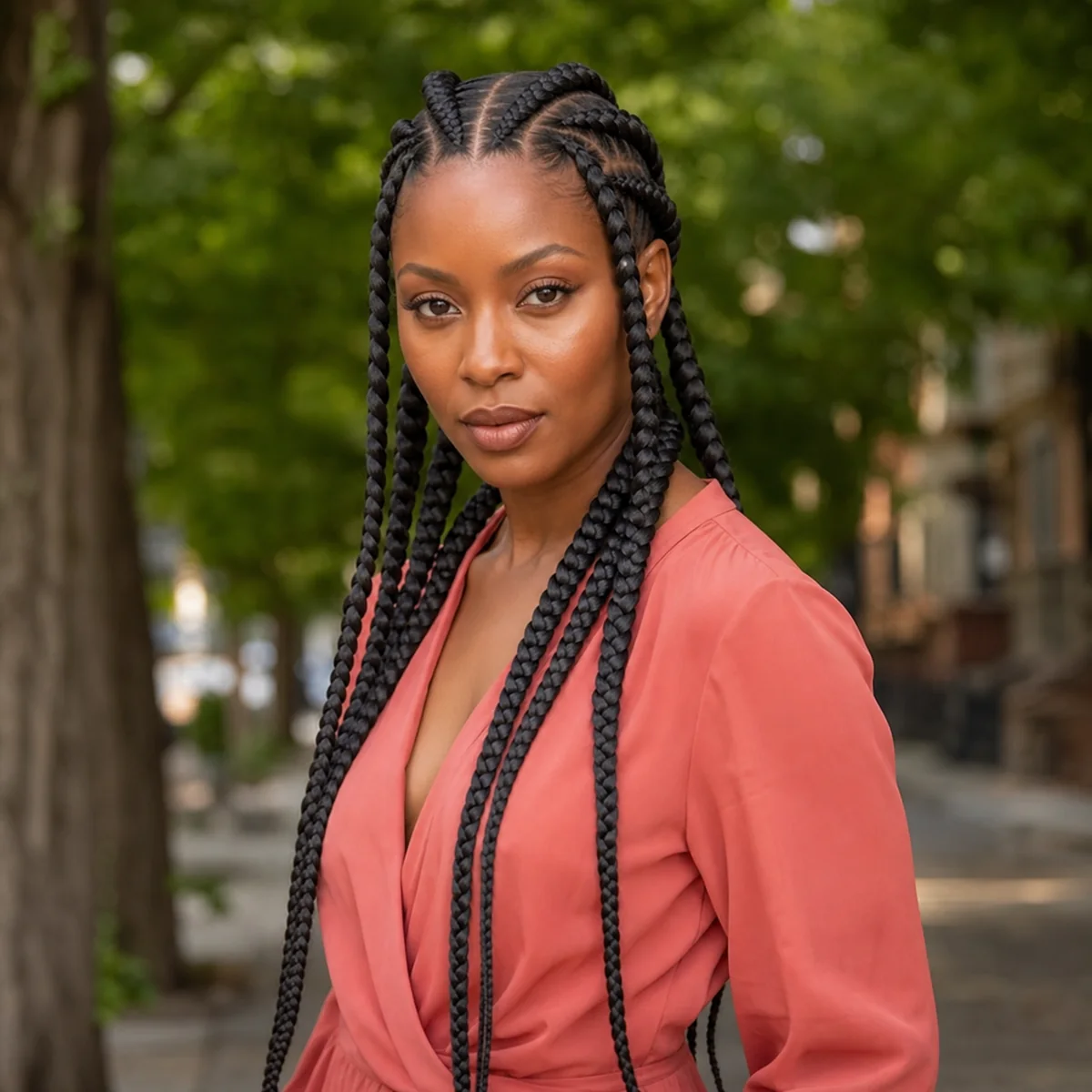
Jumbo Fulani braids reduce the number of sections and turn each cornrow and hanging braid into a strong graphic element. The larger scale gives the style presence, makes the scalp pattern easy to appreciate and can shorten installation time, producing a bold and self-assured effect. It works best when the sections are sized honestly for the wearer's density, because oversized added hair on a small base can create stress. Ask for broad, clean parts with lightweight extension fiber and proportionate knots or feed-ins; expect earlier fuzzing than with tiny braids and plan a shorter, healthier wear period.
17. Zigzag-Part Fulani Braids
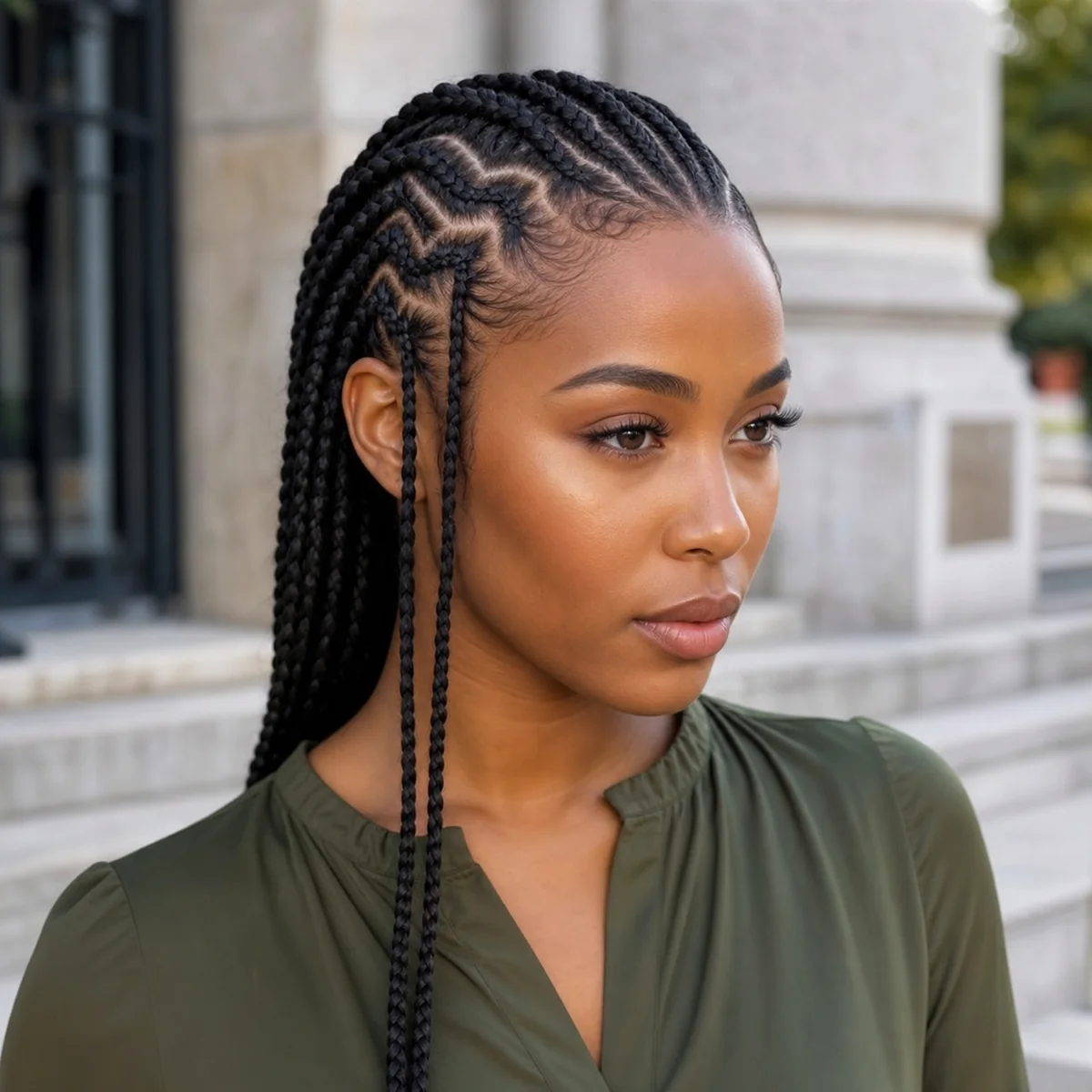
Zigzag parting introduces crisp angles between otherwise smooth cornrow rows, making the scalp design the central accessory. The repeated geometry adds visual energy without changing the basic protective construction, so the finished look feels modern, artistic and a little unexpected. It is ideal if you love intricate photographs and are willing to preserve a precise parting pattern at night. Ask for one or two intentional zigzag paths integrated with classic Fulani temple braids rather than a crowded allover design; a pointed applicator with soothing scalp serum can reach the angles without coating the braids.
18. Fulani Braids With a Knotless Back
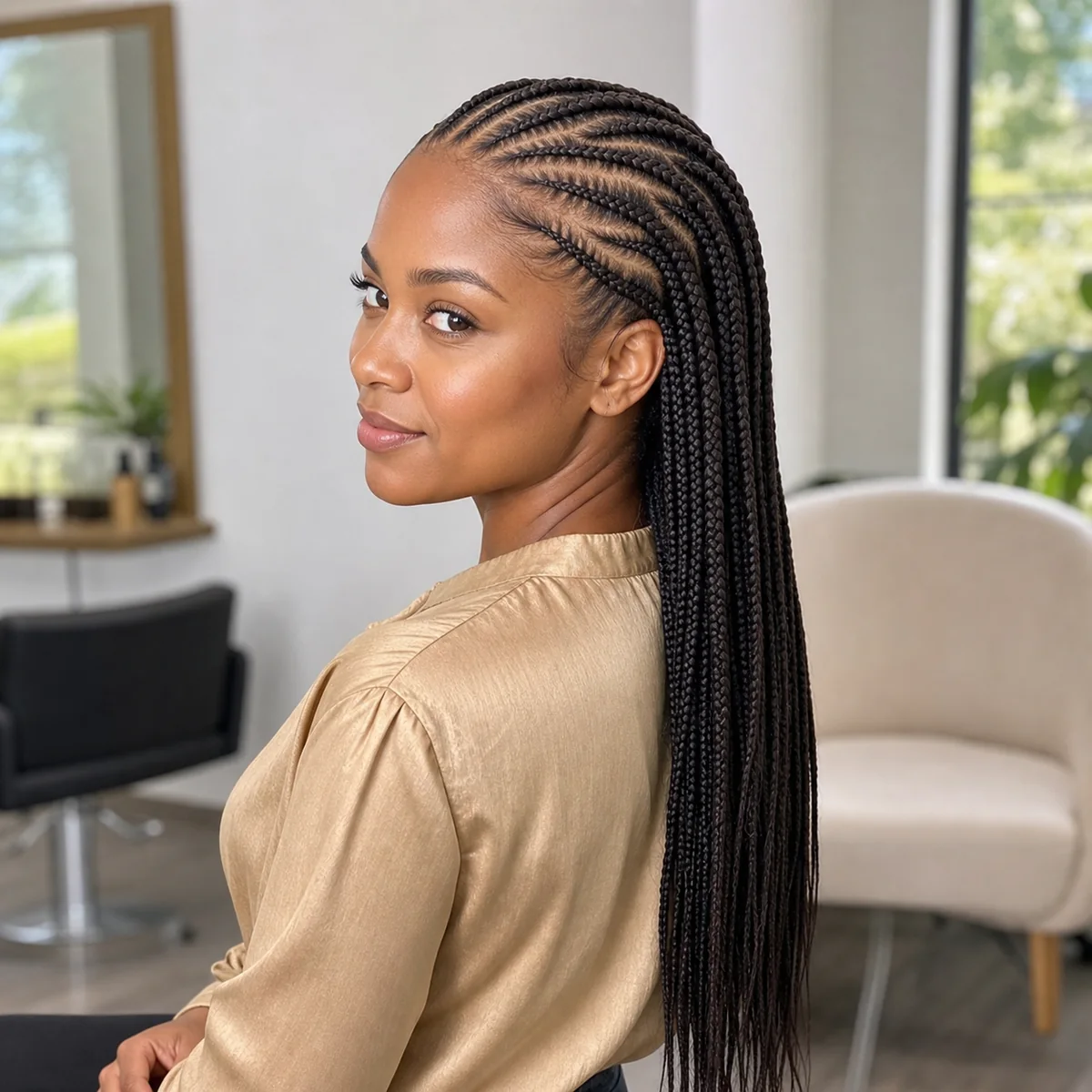
Combining feed-in cornrows at the front with knotless individual braids behind creates a smooth transition and lighter-looking movement. The knotless back lies flatter at the roots, making ponytails and half-up styles feel less bulky while the Fulani pattern still delivers definition around the face. This balanced construction can feel comfortable and versatile, though "knotless" does not automatically mean tension-free. Ask specifically for low-tension Fulani cornrows flowing into medium knotless braids, with the extension amount matched to each base section; check the nape and temples before leaving the chair.
19. Fulani Braids With Natural Texture Left Out
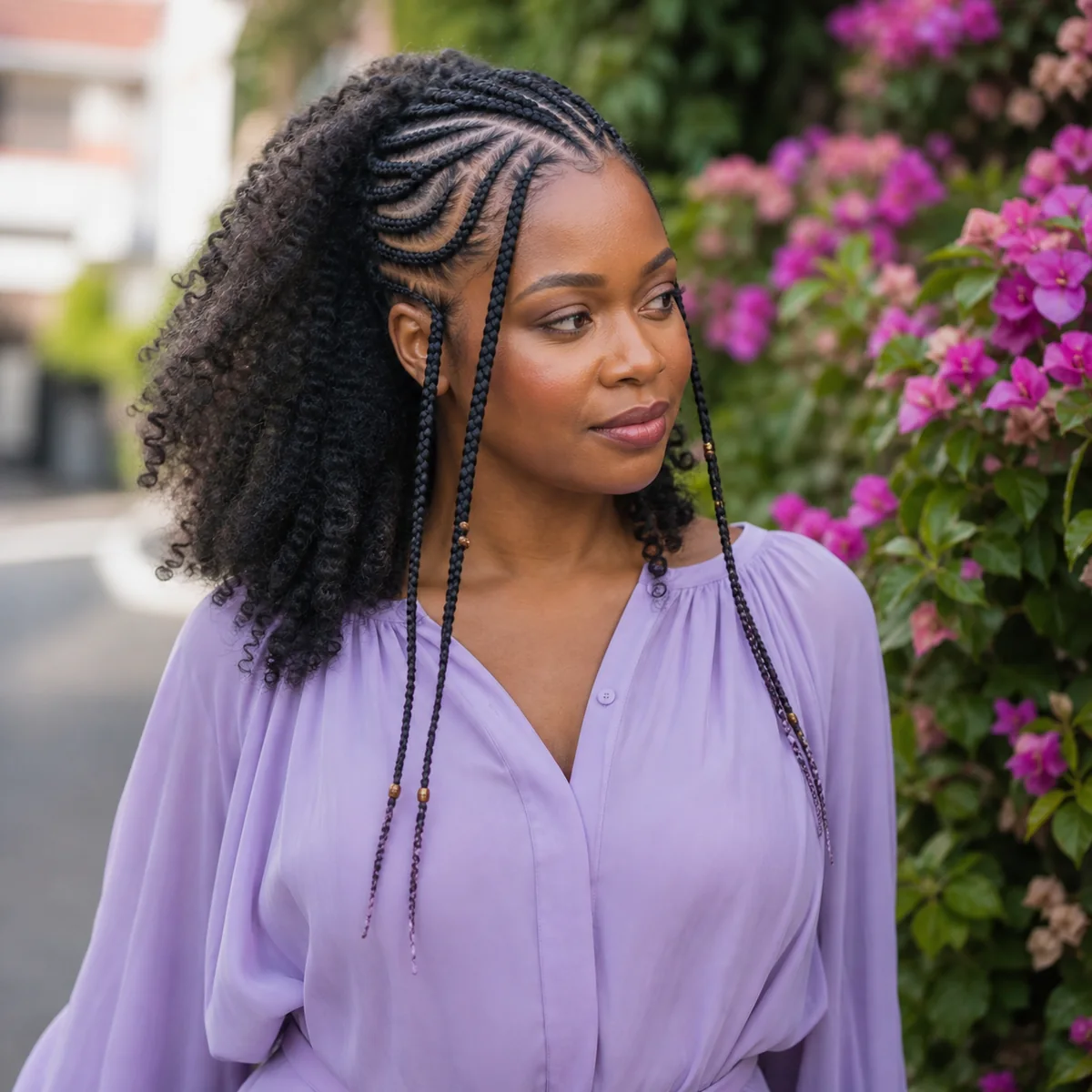
This version pairs a braided front with a controlled section of natural curls or coils left visible through the back. The texture contrast creates softness and volume while celebrating the wearer's own pattern, so the style can feel especially individual and effortlessly expressive. It works best when the leave-out can be maintained without constant heat and when humid weather will not make the two textures difficult to balance. Ask your stylist exactly how much hair will remain loose and whether the braided base allows easy cleansing; choose a curl routine that matches your real hair rather than forcing it to mimic extension curls.
20. Waist-Length Fulani Braids
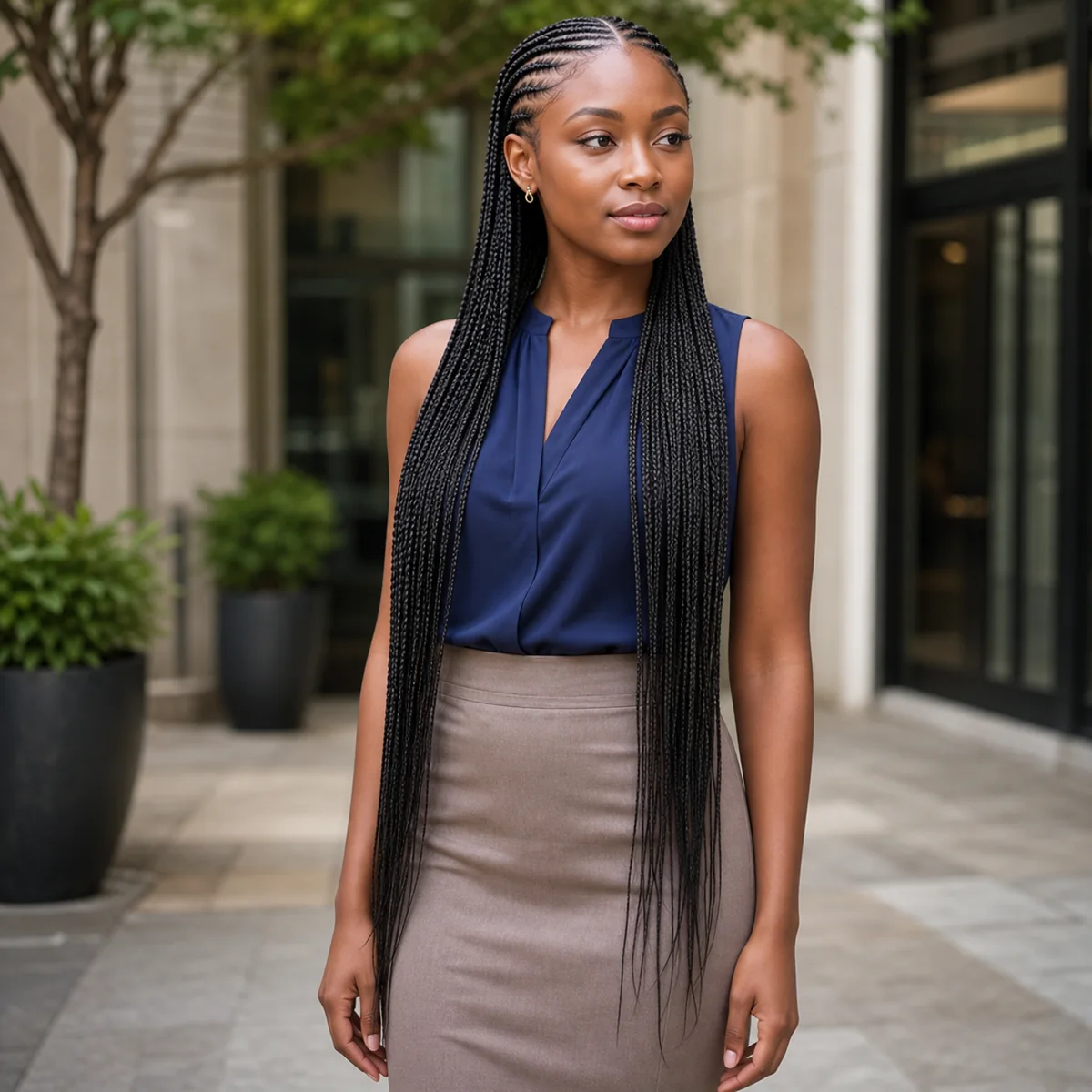
Waist-length braids give the front pattern a long, fluid finish and make even simple movement feel dramatic. The uninterrupted vertical line can visually elongate the silhouette and brings a regal, high-impact mood that many wearers find wonderfully confident. This length suits someone comfortable managing extra drying time and weight, and it deserves a frank conversation about how much extension hair the scalp can support. Ask for lightweight waist-length Fulani braids with tapered ends and a conservative number of packs; divide the hair into loose sections for sleep and lift it fully when washing so damp braids do not rest heavily against the back.
Final pause: Save one reference for the front pattern and another for the length, curls or accessories. That gives your braider a precise brief without expecting one photograph to solve every decision.
Who Fulani Braids Suit Best
Fulani braids can be adapted to many face shapes because the part direction, braid scale, height and loose lengths are all adjustable. Centered rows create balance, side-swept patterns add direction and curls soften the perimeter. Hair and scalp condition matter more than face shape: if your edges are fragile, your scalp is irritated or your hair is actively shedding, postpone the installation and ask a qualified professional about gentler options.
What to Ask Your Braider
Bring clear front, side and back references, then name the construction rather than relying on the label alone: the cornrow direction, center or side part, braid size, back technique, finished length, curl type and accessories. Say explicitly that low tension and protected edges are non-negotiable. Ask how much extension hair will be used, how long the appointment should take and whether your chosen pattern can move into the updos you plan to wear.
Styling, Maintenance and Grow-Out
Wrap the front rows with satin at night and gather the lengths loosely so they do not rub or pull. Clean the scalp gently with diluted shampoo or a targeted cleanser, rinse carefully and dry the roots fully; layering grease and fragrance over buildup will not replace washing. As new growth appears, resist repeatedly slicking or tightening the perimeter. Most importantly, remove the style when matting, persistent itching, slipping or tension says it is time, then detangle patiently and give the hair a comfortable break.
More Natural-Hair Inspiration
For unextended texture and shorter shapes, explore 20 Short Natural Hairstyles. If you are still comparing protective-style families, save the pattern, length and maintenance details you like most before choosing your next salon appointment.