Short locs have a sculptural beauty of their own: each compact rope, coil or budding strand contributes texture without needing long lengths to create a strong silhouette. A short loc hairstyle changes how established or starter locs are arranged—loose, curled, twisted, pinned or accessorized—rather than describing faux loc extensions or loose two-strand twists meant to unravel. The ideas below respect different loc stages and show how to create flattering shape without forcing short, stiff or newly forming locs into styles they are not ready to hold.
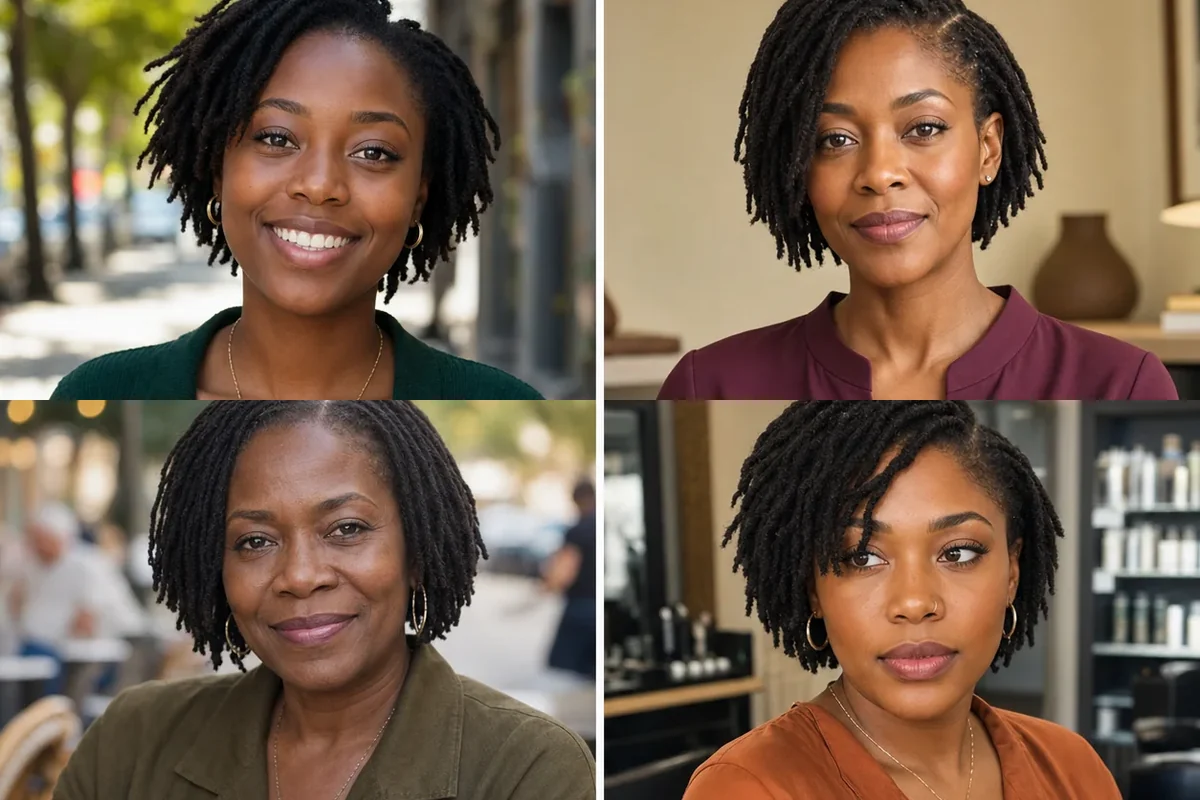
Find the one that feels like you: Start with the first look and let the photographs lead. Each style explains how the shape affects your features, the mood it creates and the exact words to take to your stylist.
1. Free Short Locs With a Rounded Shape
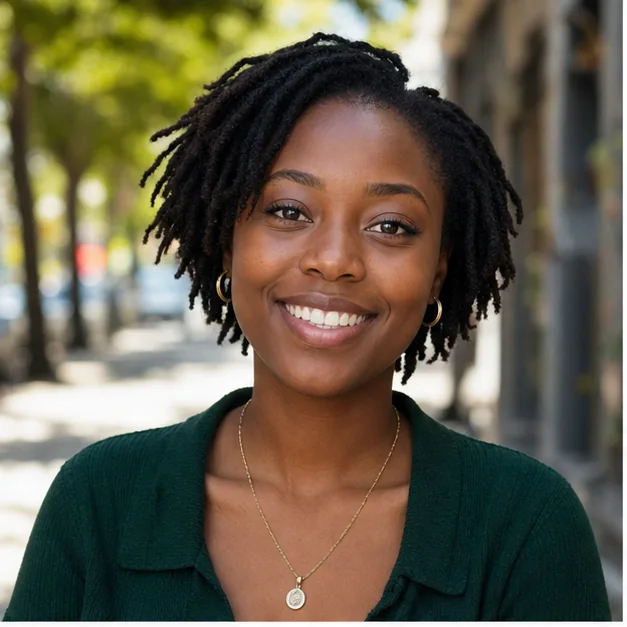
Free short locs form a softly rounded silhouette, with the sides grazing the ears and the crown carrying enough height to keep the shape buoyant. Wearing every loc loose shows natural variation, makes sparse areas less obvious and frames the eyes without daily manipulation, which can feel wonderfully self-assured. This is especially kind to starter or budding locs that are still stiff and learning to fall. Ask for a tidy perimeter, comfortable separation and a light palm-roll only where needed; shape at home with clean fingertips instead of repeatedly twisting the roots.
Ask your stylist for: A softly rounded free-loc silhouette with a tidy perimeter, comfortable separation and minimal root manipulation.
2. Deep Side-Part Short Locs
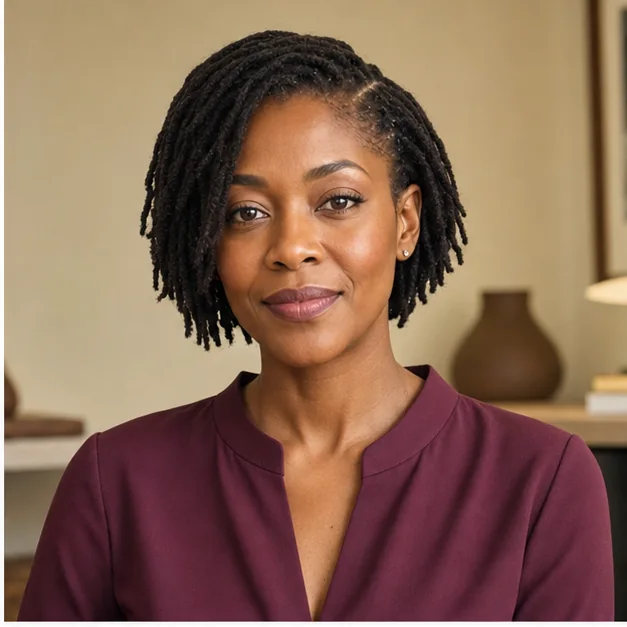
A deep side part shifts most of the locs across one temple while the lighter side reveals the cheekbone. The diagonal sweep adds height, can soften a square jaw and gives compact locs elegant movement even before they fully drop, helping you feel polished with almost no extra styling. It works best when roots change direction without resistance; very new starter locs may prefer a gentler offset. Ask for a flexible side part and graduated face pieces, then alternate the part occasionally so the same hairline sections are not repeatedly pulled.
Ask your stylist for: A flexible deep side part with graduated face pieces and no forced direction at the hairline.
3. Center-Part Loc Bob
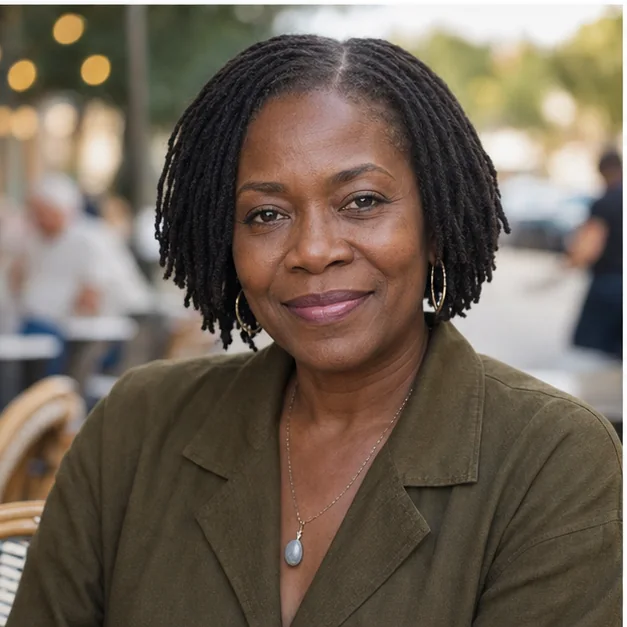
This compact loc bob falls near the jaw with a narrow center part and an even curtain of mature locs on both sides. Its symmetry brings attention to the eyes, makes the jawline look crisp and feels quietly sophisticated for work or evenings without sacrificing natural texture. The shape is easiest when locs have softened enough to hang; budding locs may spring outward, which is not a flaw. Ask for balanced density and a perimeter that follows natural lengths rather than cutting healthy locs merely to create ruler-straight ends.
Ask your stylist for: A narrow center part, balanced density and a jaw-skimming perimeter that preserves healthy natural loc lengths.
4. Short Locs With a Face-Framing Swoop
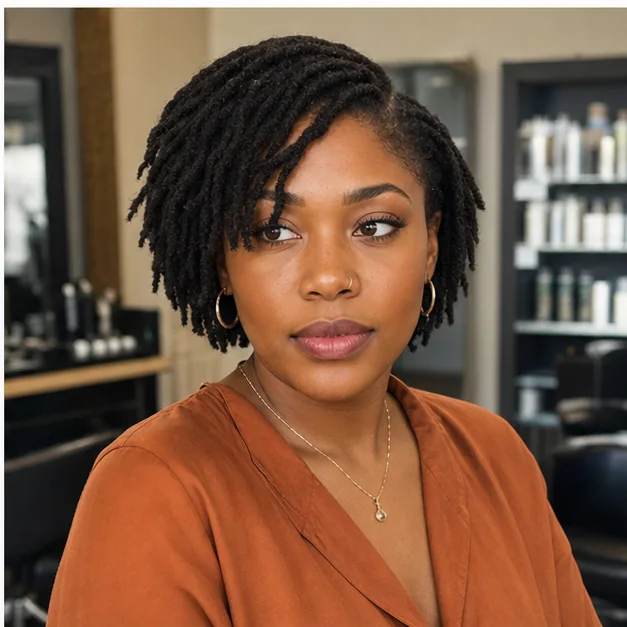
Several longer front locs sweep loosely across the forehead and settle above one eyebrow while the remaining shape stays free and rounded. That curved line softens a tall forehead, directs attention toward the eyes and creates a romantic mood without cutting permanent bangs or adding hair. The front bundle must remain light, because a heavy pinned swoop can strain delicate temple roots and feel uncomfortable by midday. Ask for a loose diagonal arrangement using naturally cooperative locs, secured with one smooth concealed pin rather than tight bands or lacquered edges.
Ask your stylist for: A light diagonal front swoop using naturally flexible locs and one concealed smooth pin without hairline tension.
5. Half-Up Short Locs
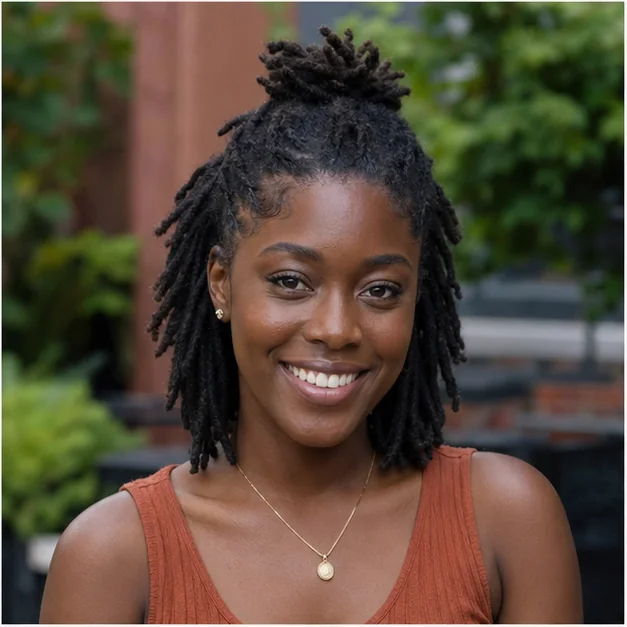
The top third of the locs gathers into a small crown section while short lengths remain loose around the ears and nape. This lift opens the face, gives a round silhouette more height and keeps hair out of the eyes, creating an upbeat, put-together feeling on busy days. It is practical once the crown locs meet comfortably, but forcing very short strands into a band can cause soreness or unraveling. Ask for a loose high placement with a broad snag-free tie, leave the shortest temple locs free and release the style at the first hint of tension.
Ask your stylist for: A small loose crown section secured with a broad snag-free tie, leaving short temple locs free.
6. Short Loc Pineapple Puff
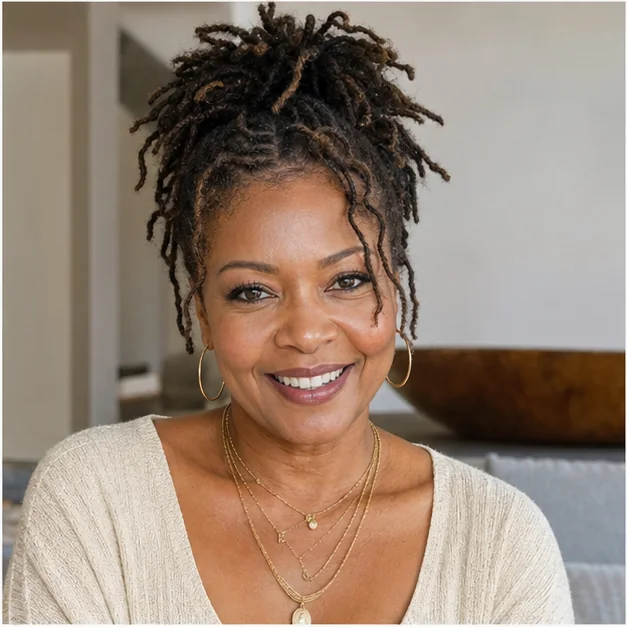
Short mature locs gather high at the crown and fan outward into a compact pineapple rather than a long ponytail. The elevated volume lengthens the neck, highlights cheekbones and feels playful and energetic for a casual day or workout, while irregular ends make the shape interesting. This style needs enough pliability to bend comfortably and should never be pulled from the perimeter. Ask for a soft central gathering with the hairline left relaxed, use a wide fabric band and remove it overnight to prevent repeated root stress.
Ask your stylist for: A loose central pineapple with relaxed edges, even weight distribution and no tightly captured perimeter locs.
Pause and notice: Short does not automatically mean ready to pin up. Starter locs may be stiff, delicate or prone to unraveling, so follow their current direction instead of forcing every strand into a band.
7. Two-Strand Twisted Short Locs
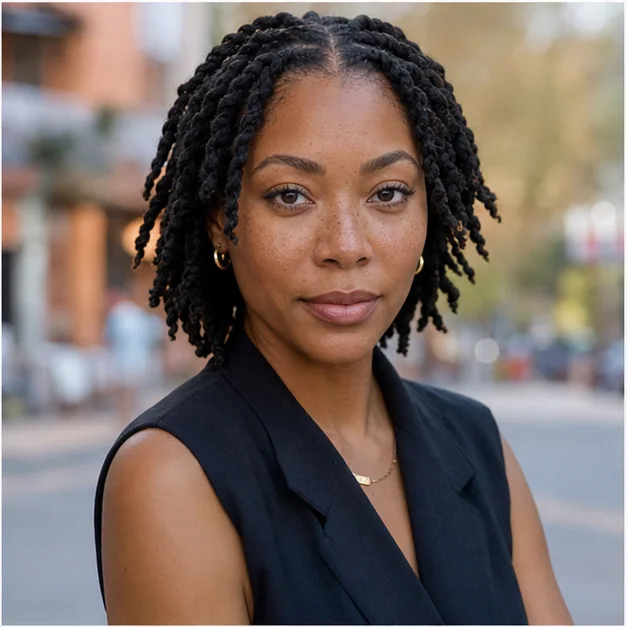
Pairs of mature short locs twist together into thicker ropes that stand or curve around the head with a clean dimensional finish. The larger texture makes fine locs appear fuller, keeps loose lengths controlled and can help you feel intentionally styled between free-loc days. It is not the same as starting loose hair with two-strand twists, and immature locs may unravel or bunch when overworked. Ask for loose pairings based on equal root strength, minimal added product and secured ends only where necessary; keep the set brief if the roots feel compressed.
Ask your stylist for: Loose equal-strength loc pairings with minimal product, comfortable roots and no forced twisting of immature locs.
8. Short Barrel-Twist Rows
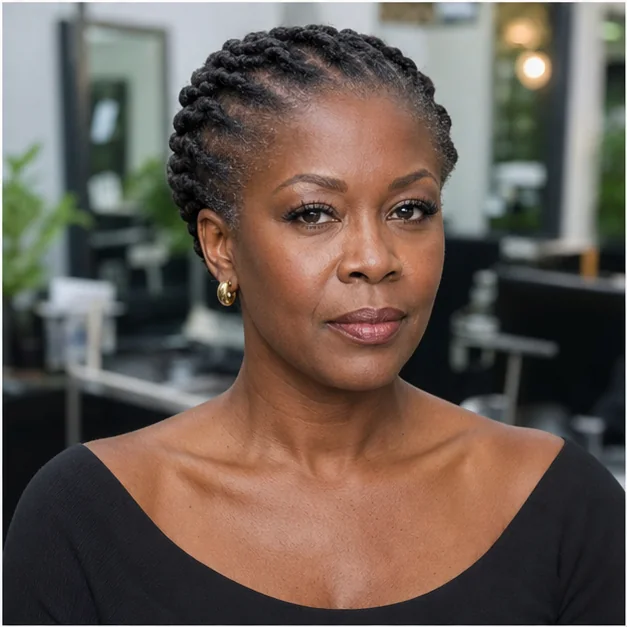
Several broad barrel-twist rows travel from the hairline toward the crown, using short mature locs to form raised sculptural ridges. The directional pattern shows clean sections, emphasizes the head shape and can feel bold and beautifully finished for an event or fresh retwist. Because barrels concentrate multiple locs, they can become too tight or itchy quickly, particularly on starter locs and sensitive edges. Ask for wide parts, low-profile barrels, conservative grouping and a pain-free finish; take the style down early rather than treating scalp tenderness as normal.
Ask your stylist for: Wide low-profile barrel rows with conservative grouping, protected edges and a completely pain-free finish.
9. Flat-Twisted Sides With Free Locs
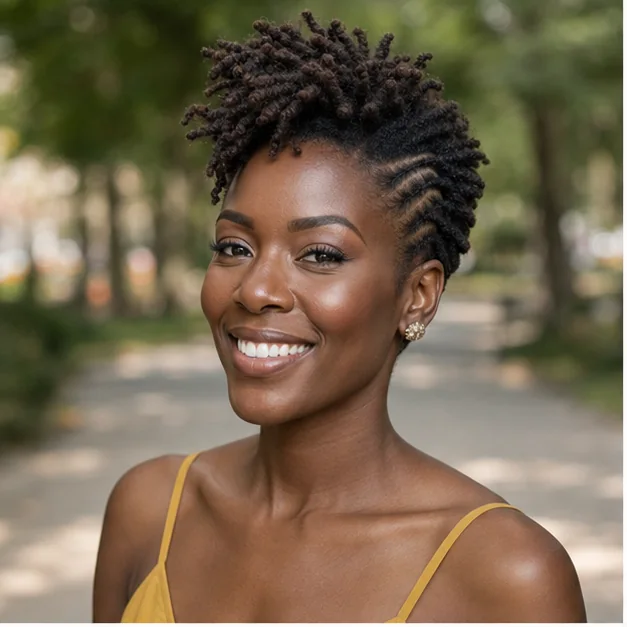
The side locs sweep into two low gently anchored rows while the center and crown remain free, creating a compact fauxhawk effect. Removing width at the temples adds height, can visually lengthen a round face and gives short locs a confident modern profile without shaving. This works only when the locs bend easily and anchor points share pressure across several roots. Ask for broad low-tension side rolls, a soft central ridge and no aggressive edge control; smooth pins should sit beneath the locs rather than pierce them.
Ask your stylist for: Broad low-tension side rolls with a soft free crown, concealed smooth pins and untouched fragile edges.
10. Curled Short Loc Set
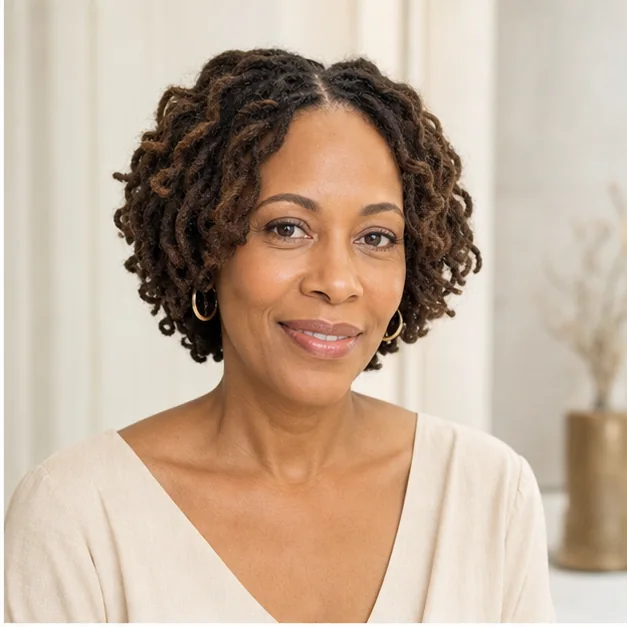
Mature short locs curve into springy loops from a roller or flexi-rod set, building rounded volume around the cheeks and crown. The curls soften angular features, make compact lengths look abundant and bring a buoyant celebratory feeling for brunch or a formal occasion. Wet locs must dry completely inside the set to avoid trapped dampness, odor or a curl that collapses immediately. Ask for medium rods, light water-based setting product and hooded drying until every loc is dry through the center; separate curls gently instead of combing them apart.
Ask your stylist for: A medium-rod set with lightweight product, full internal drying and gentle curl separation.
11. Loc Petal Knots
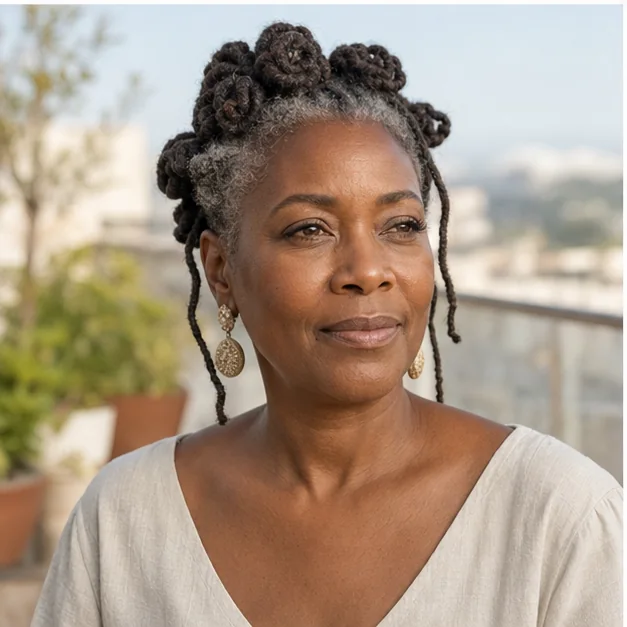
Small groups of pliable locs fold into rounded petal knots across the crown while a few short pieces remain free near the face. The repeated loops create ornate texture, add height without extensions and can make you feel artfully dressed for weddings or celebrations. This is an occasional style for mature flexible locs; tight bands or repeated folding can weaken bends and overload individual roots. Ask for broad groupings, soft loops and long smooth pins distributed across the base, with the hairline and any stiff or fragile locs excluded.
Ask your stylist for: Soft broad petal loops on mature flexible locs with distributed pinning and the hairline left free.
12. Low Tucked Short-Loc Updo
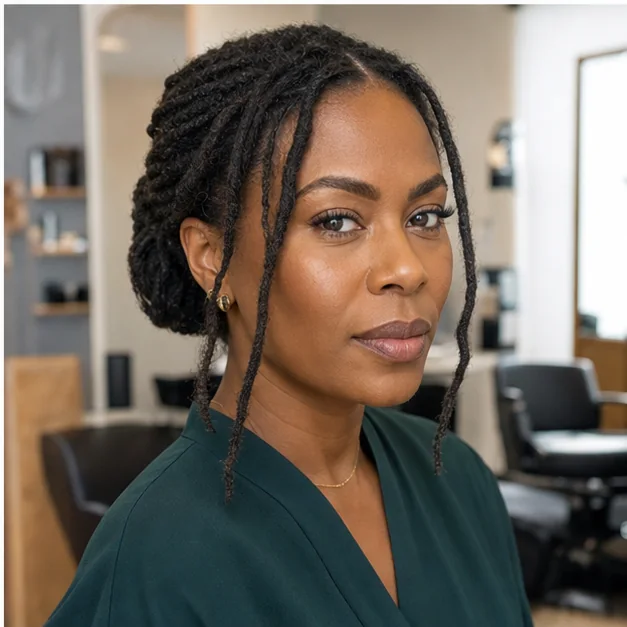
Short locs sweep gently toward the nape and tuck into a low wide roll, with two face-framing locs left loose. Keeping the shape close feels graceful and professional, opens the neckline and provides an elegant option when locs are not long enough for a traditional bun. The secret is overlapping several small sections rather than pulling everything toward one tight center. Ask for a broad nape tuck, distributed smooth pins and a soft front; make sure the locs are completely dry before pinning them into a compact shape.
Ask your stylist for: A broad low nape tuck with overlapping sections, distributed smooth pins and soft face-framing locs.
13. Asymmetrical Pinned Short Locs
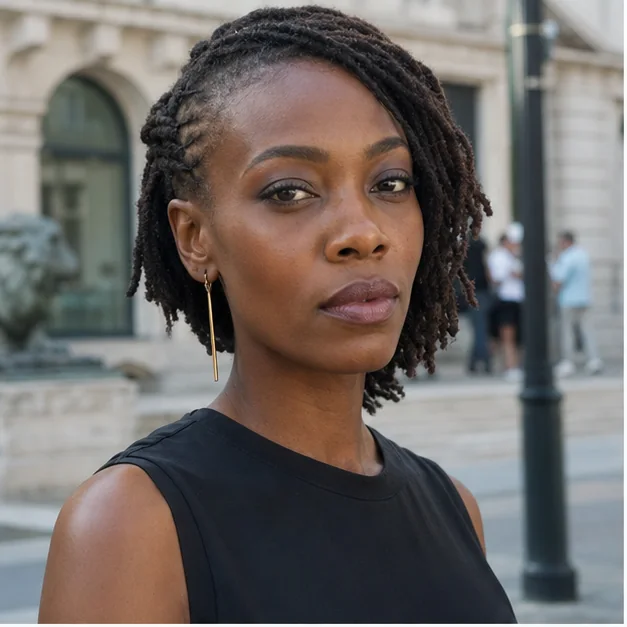
One side pins neatly above the ear while the opposite side remains full and slightly forward, creating a clear asymmetrical silhouette. The contrast reveals one cheekbone, balances a broad forehead and makes a simple free-loc shape feel editorial and assured in less than five minutes. It suits mature or flexible budding locs, but the pinned side should use several roots rather than one overworked bundle. Ask for a smooth low-tension sweep secured beneath the section with two crossed hairpins, leaving the front edge soft and free of heavy gel.
Ask your stylist for: A low-tension one-sided sweep using a broad section, concealed crossed pins and a soft ungelled hairline.
Pause and notice: A fresh retwist should look neat without feeling sore. Pain, bumps, a shiny pulled scalp or a headache are signs to loosen the style—not proof that it will last longer.
14. Short Locs With Gold Cuffs
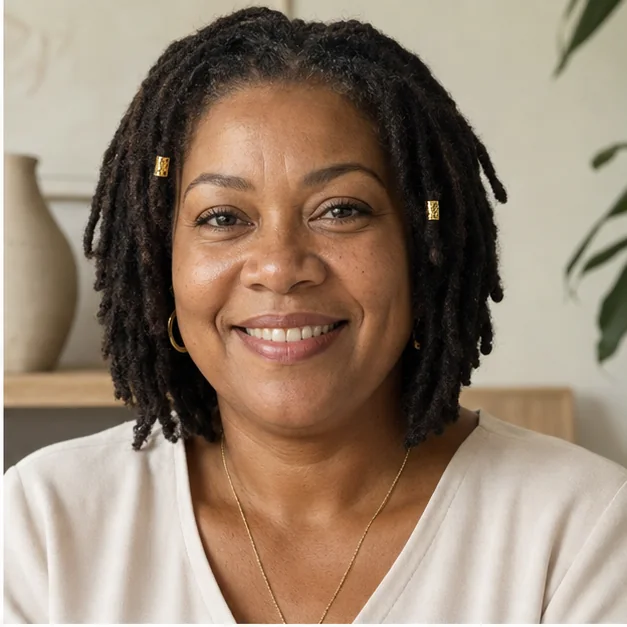
A restrained scattering of smooth gold cuffs catches the light across free short locs, concentrating detail near the temples and crown. The warm accents make each rope more visible, brighten the face and can give an everyday shape a confident jewelry-like finish without a complicated updo. Hardware should never squeeze a loc, snag neighboring hair or add weight to thin sections, and it should come off before sleep. Ask for cuffs placed only on sturdy mature locs with enough diameter to slide comfortably, keeping metal away from fragile edges and budding areas.
Ask your stylist for: A few lightweight smooth cuffs fitted loosely on sturdy mature locs away from edges and budding sections.
15. Short Locs With Wooden Beads
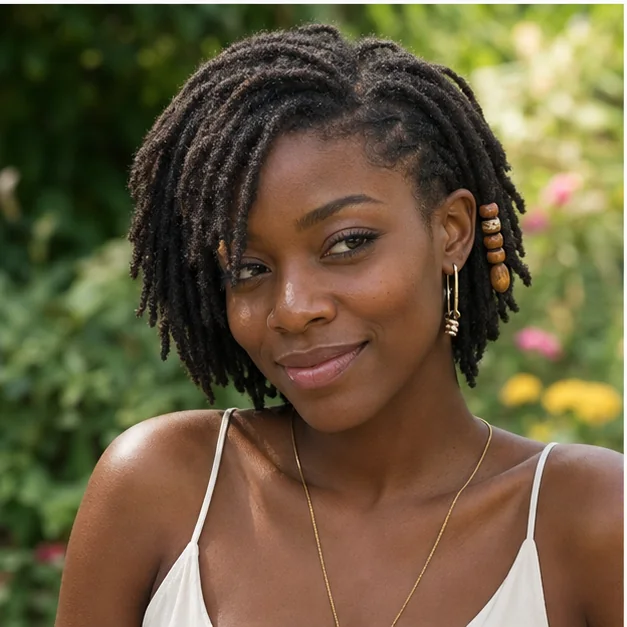
Light wooden beads finish selected locs around the lower perimeter, adding warm color and gentle rhythm when the head turns. Their natural texture complements matte locs, makes a rounded shape feel personal and can create an expressive grounded mood without covering the hairstyle. Beads need smooth openings and very little weight; large pieces can knock against the face, pull at the ends or become uncomfortable during sleep. Ask for an asymmetrical arrangement on strong established locs, secure each bead without tight elastics and remove accessories before bed or vigorous exercise.
Ask your stylist for: An asymmetrical set of lightweight smooth wooden beads on strong established perimeter locs, removed for sleep.
16. Scarf-Wrapped Short Locs
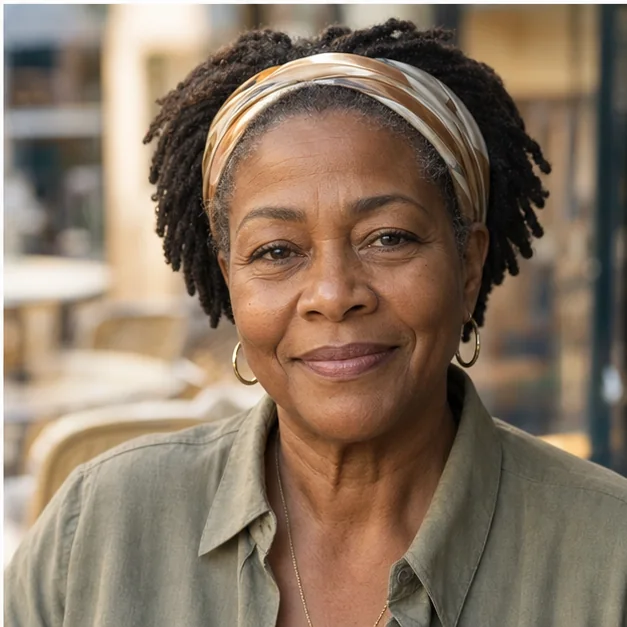
A slim satin scarf wraps behind the hairline and ties low, guiding short locs away from the face while most texture remains visible. The open forehead looks bright, disguises an uneven grow-out day and can feel relaxed yet beautifully intentional for errands or travel. A scarf should not compress damp locs, hide persistent scalp problems or rub the edges with a tight knot. Ask your loctician to leave the front flexible, then choose smooth breathable fabric and tie it securely enough to stay—not tightly enough to leave pressure marks.
Ask your stylist for: Flexible front locs and a softly shaped hairline suitable for a smooth, nonbinding satin scarf.
17. Claw-Clip Short Loc Twist
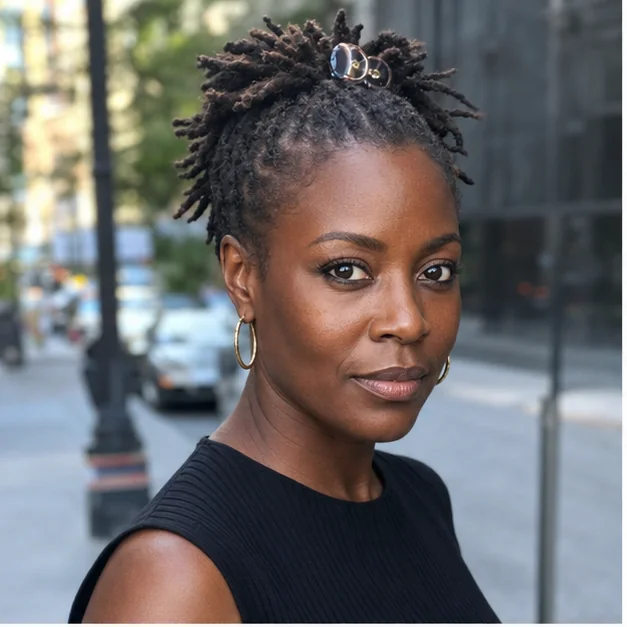
The back locs twist upward into a compact vertical shape held by a small curved claw clip, while short ends fan freely at the crown. This quick arrangement opens the neck, gives the profile height and can make you feel instantly organized when a full ponytail is impossible. Choose a clip with polished seams and enough room to close without crushing the locs; sharp teeth and tiny hinges can cause snags. Ask for flexible root direction at maintenance, then gather gently and leave any loc that does not reach without stretching it.
Ask your stylist for: Flexible multidirectional roots for a loose upward gather, using a smooth clip that closes without crushing locs.
18. Elegant Short-Loc Wedding Sweep
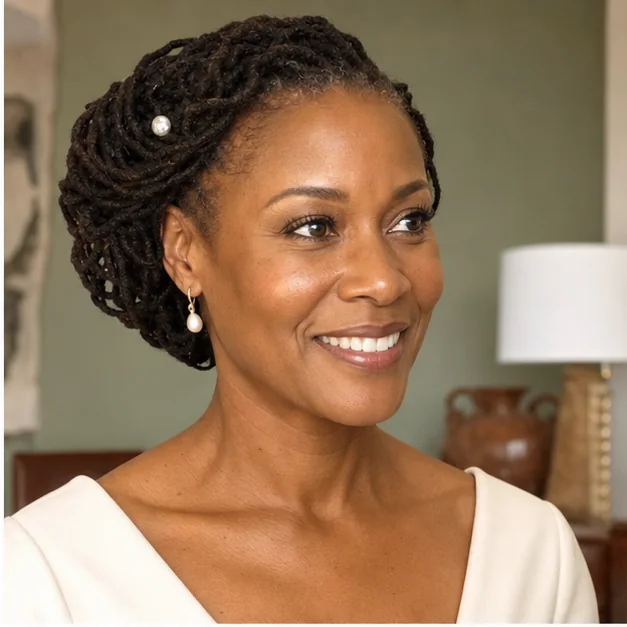
Softly curled short locs sweep toward one side and pin into a low sculptural cluster, leaving the opposite temple open and luminous. The diagonal arrangement photographs beautifully, highlights earrings and cheekbones and can feel romantic and ceremonial without adding long extensions. A trial matters because rod size, loc stiffness and humidity change how much movement the style can hold. Ask for fully dried soft curls, a broad low-tension side sweep, hidden pins and one understated accessory placed on strong locs rather than at the hairline.
Ask your stylist for: Fully dried soft curls in a broad low-tension side sweep with hidden pins and one lightweight accent.
19. Soft Freeform Short Locs
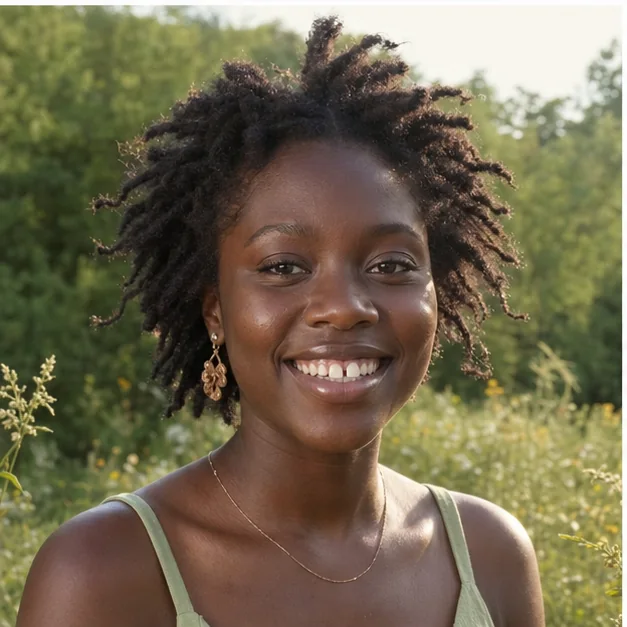
Soft freeform locs rise and curve in organic sections, creating an airy silhouette without a visible grid or freshly retwisted roots. The irregular spacing celebrates natural density, reduces routine manipulation and can feel liberating and distinctly personal while still looking intentional when the outline is balanced. Freeform does not mean neglected: the scalp still needs thorough cleansing, complete drying and gentle separation according to the chosen method. Ask for a shape consultation rather than a uniform retwist, preserving healthy conjoining while tidying only unwanted lint, weak ends or perimeter imbalance.
Ask your stylist for: A shape-focused freeform consultation that preserves organic sections while tidying only genuine weakness or imbalance.
20. Silver-Tipped Short Locs
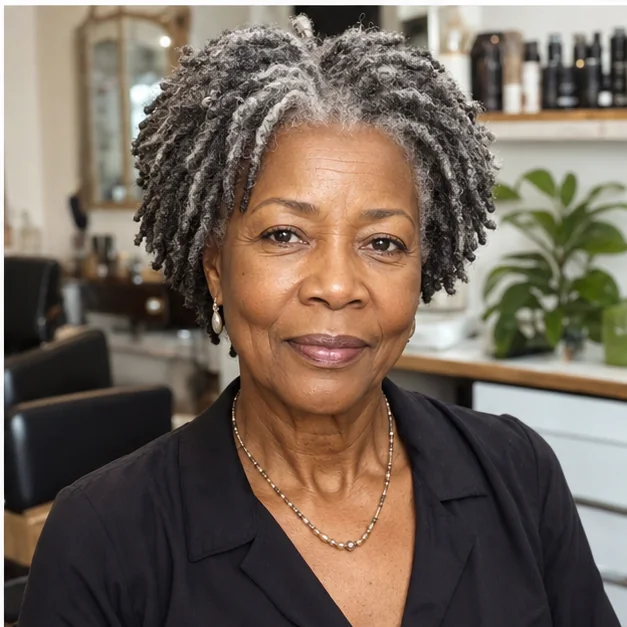
Dark roots flow into naturally silver and salt-and-pepper tips, making each short loc stand out clearly within a softly rounded shape. The tonal contrast brightens the face, adds depth without dye and can feel sophisticated, modern and comfortable in natural color. Gray strands may be wirier or drier than pigmented hair, so heavy retwisting and waxy products can make the finish stiff or dull. Ask for density-based sections, gentle handling through silver areas and a lightweight hydrating finish, allowing varied natural lengths to create movement instead of trimming every tip into uniformity.
Ask your stylist for: Density-based maintenance with gentle silver-strand handling, lightweight hydration and a softly varied perimeter.
Pause and notice: Loc health is easier to judge when styled days alternate with free wear. Regular cleansing, complete drying and low manipulation matter more than keeping every root perfectly controlled.
Before You Book the Appointment
A successful salon visit begins with the overall shape, construction and upkeep—not only the finished length. Use this quick reality check before choosing your final reference photograph.
- Best for: Starter, budding and mature locs from cropped to jaw length; the safest style depends on pliability, root strength, density and formation stage.
- Signature finish: Compact individual locs arranged into a visible silhouette—free, swept, curled, twisted, pinned or accessorized—without relying on long extensions.
- Closest alternatives: Faux locs wrap extension hair around a temporary base; loose two-strand twists are designed to unravel; microlocs describe a small loc system rather than one hairstyle.
- Maintenance: Clean the scalp, dry locs completely, moisturize lightly, avoid waxy buildup, protect at night and release any style that causes pain or prolonged tension.
What Counts as a Short Loc Hairstyle?
Short loc hairstyles arrange established or forming locs that generally sit above the shoulders, from cropped starter locs to a jaw-length loc bob. Their signature comes from compact rope-like strands and the way those strands shape the head. They differ from faux locs, which use wrapped extension hair, and from loose two-strand twists, which are intended to unravel. Starter, budding and mature locs behave differently, so a responsible style follows the current stage rather than forcing every reference onto every head.
Choose a Style for Your Loc Stage
Starter locs can be soft, stiff or prone to unraveling; free shapes, scarves and loose pin-backs usually disturb them least. Budding locs may swell unevenly and resist smooth curves, so celebrate volume instead of flattening every strand. Mature locs generally bend and hold curls, barrels or updos more readily, but root strength still matters. A loctician should check for thinning, weak joins, scalp sensitivity and length. If a section cannot reach comfortably, leave it free rather than stretching it into place.
How to Ask a Loctician for Short-Loc Styling
Bring photos matching both your length and loc stage, then describe the silhouette: rounded, lifted, side-swept, curled or tucked. Mention scalp sensitivity, exercise, hats and wear time. Ask for low tension, protected edges, smooth tools, lightweight product and complete drying. Clarify whether the appointment includes a retwist, interlocking or styling only; changing the root method without discussing the existing routine can alter loc structure. Pain, bumps or a shiny stretched hairline are reasons to loosen the style immediately.
Maintenance and Growing Short Locs Out
Protect short locs with satin at night, but never compress damp hair beneath a bonnet or scarf. Separate roots only according to the chosen loc method, moisturize lightly and learn what normal budding or frizz looks like before smoothing it away. As locs gain length, half-up styles, low tucks and clips become easier, while curls and accessories hang differently. If a loc becomes unusually narrow, heavy or painful at the root, consult an experienced loctician before adding tension.
More Hair Inspiration
- 20 Short Natural Hairstyles That Celebrate Your Texture — Compare locs with other compact natural-hair shapes.
- 20 Mini Twists Hairstyles That Look Beautiful and Feel Easy to Wear — See removable two-strand twists when you are not ready to loc your hair.
- 20 Finger Coils That Make Natural Hair Look Beautifully Defined — Explore coil definition for short loose natural hair.