Goddess braids combine a structured braided base with intentionally loose curls woven through the lengths or released at the ends. Those soft tendrils are the signature, creating more movement than fully braided box styles. The name may describe individual knotless braids or larger cornrow designs, so a clear salon request should specify the base, braid size, curl placement, length and extension hair. These ideas show how those choices change the look, comfort and daily routine.
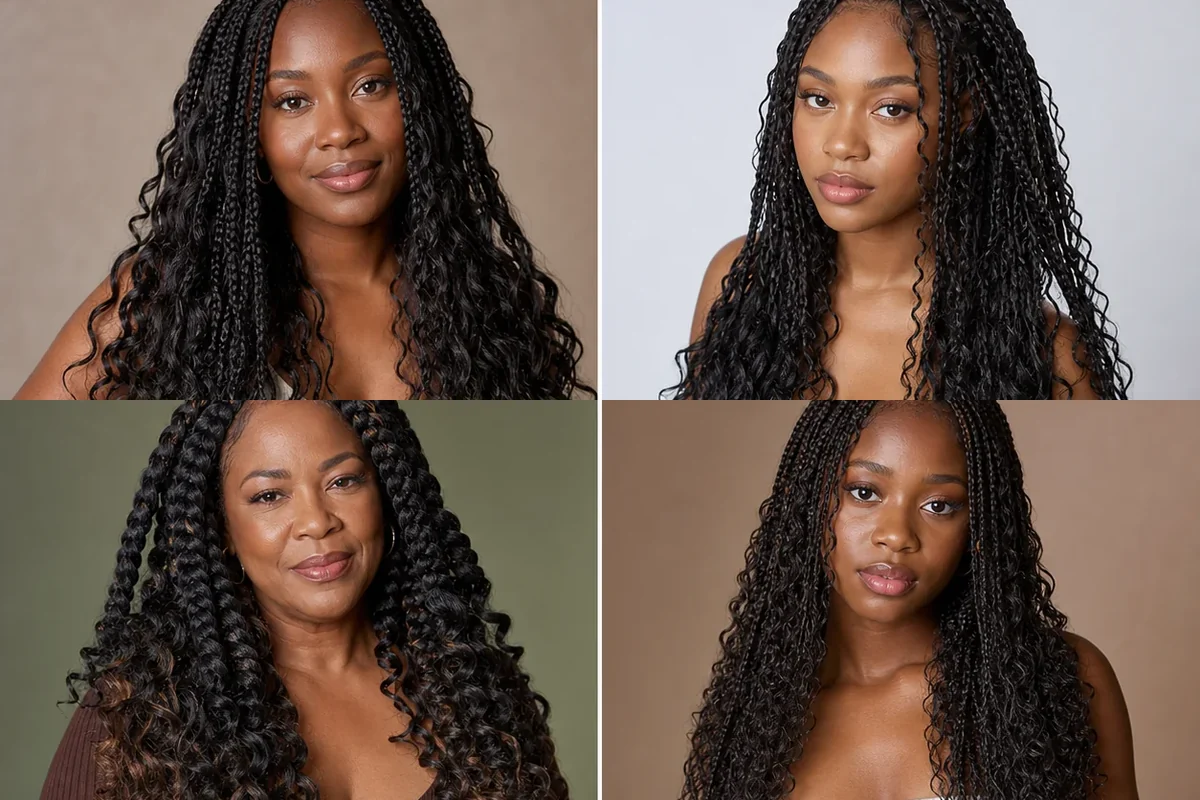
Find the one that feels like you: Start with the first look and let the photographs lead. Each style explains how the shape affects your features, the mood it creates and the exact words to take to your stylist.
1. Classic Long Goddess Braids
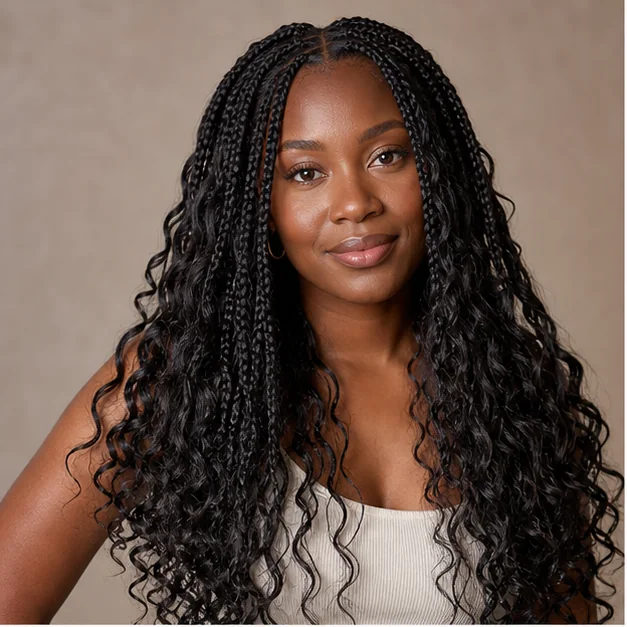
Classic long goddess braids fall below the chest in neat medium plaits, with loose spirals appearing from mid-length to the ends. The mix creates length without looking visually heavy, frames the face softly and makes an everyday outfit feel instantly polished and feminine. Ask for medium knotless or box-parted braids, evenly distributed curly pieces and tapered ends, while agreeing on human or synthetic curl hair before installation. Separate the loose strands gently and sleep in a bonnet large enough to prevent matting.
Ask your stylist for: Medium long braids with evenly spaced loose curls, tapered ends and a lightweight hairline.
2. Knotless Goddess Braids
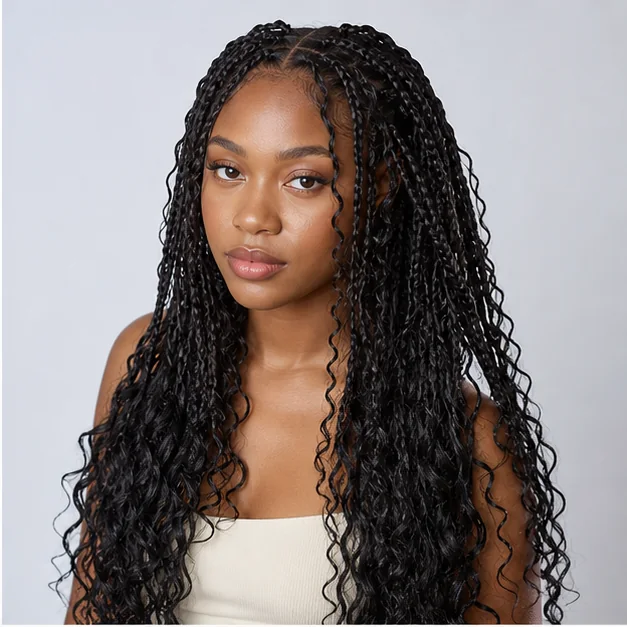
Knotless goddess braids begin with natural hair and add extension hair gradually, producing flat flexible roots and soft curls through the lengths. The low-profile start makes ponytails more comfortable, keeps the hairline natural and gives an effortless confidence from day one. Ask for small-to-medium sections, conservative edge tension and curls added at varied heights so the finish never looks striped. Protect the roots from heavy buildup and detangle the loose hair gently because those curls need more care than the braided sections.
Ask your stylist for: Small-to-medium knotless roots with low edge tension and staggered loose curls.
3. Jumbo Goddess Braids
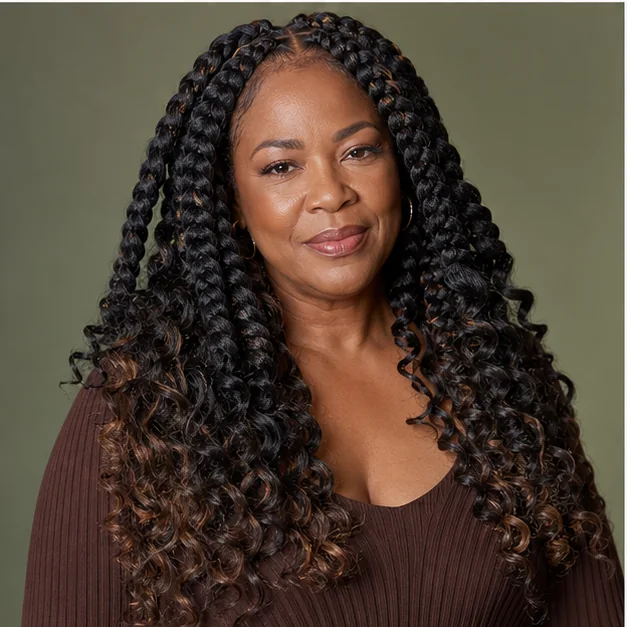
Jumbo goddess braids use fewer, thicker plaits balanced by large glossy curls that break up the bold scale. The oversized pattern makes strong features look beautifully intentional, shortens installation time and creates a confident statement without intricate accessories. Ask for large clean sections, a weight check before the braider continues and substantial curls placed where they stay visible. Bigger parts expose more scalp and may loosen sooner, so cleanse carefully, avoid very tight updos and address any pulling immediately.
Ask your stylist for: Large lightweight braids with generous curls, clean parts and controlled root tension.
4. Small Goddess Box Braids
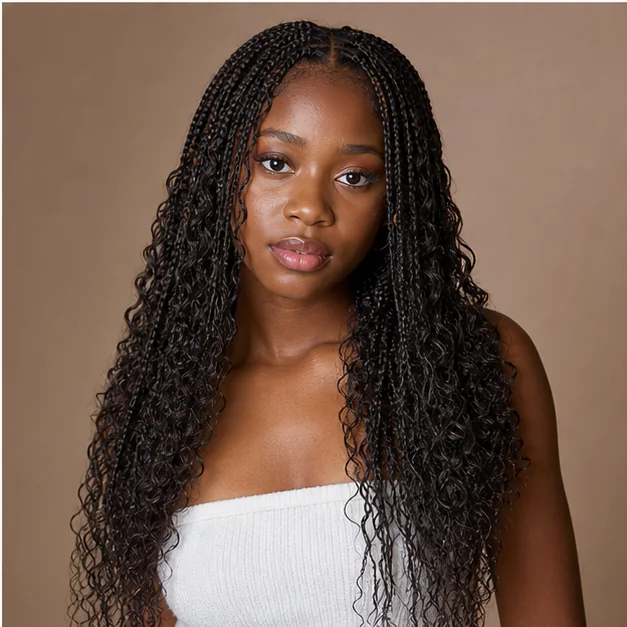
Small goddess box braids create a dense curtain of fine plaits with delicate curls peeking through at different levels. The finer scale moves freely, offers excellent styling versatility and brings refined softness around the cheeks without one heavy braid dominating the face. Ask for small but not micro sections, realistic density and narrow curly pieces proportional to the braids. Installation and takedown take longer, so protect enough time, keep the roots accessible for cleansing and never accept excessive weight simply for fullness.
Ask your stylist for: Small lightweight box-parted braids with fine staggered curls and manageable density.
5. Shoulder-Length Goddess Braids
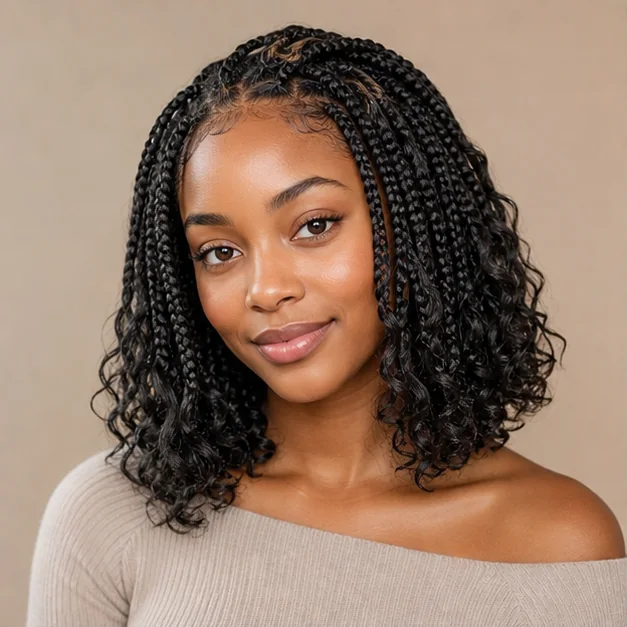
Shoulder-length goddess braids stop near the collarbone, where softly curled ends give the silhouette bounce instead of a blunt braided edge. The shorter length feels lighter on the scalp, clears the neck and makes daily detangling faster, leaving the wearer fresh and unencumbered. Ask for a collarbone finish, sealed tapered braids and curls cut into a cohesive outline rather than random long pieces. Because loose ends rub clothing, favor smooth collars and refresh frizzy curls selectively instead of coating the whole style.
Ask your stylist for: Collarbone braids with tapered curled ends and a softly balanced perimeter.
6. Goddess Braided Bob
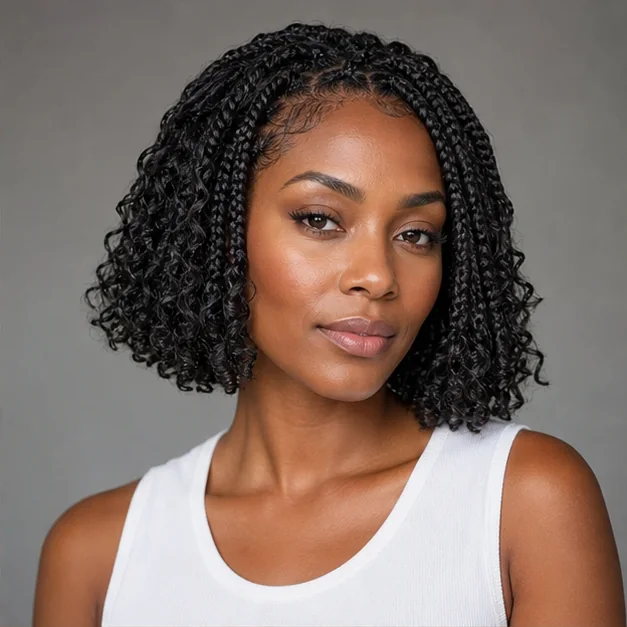
A goddess braided bob sits between the jaw and shoulders, combining a defined short outline with loose curls concentrated near the ends. The compact shape highlights the jawline, feels playful and modern and sleeps more easily than waist-length braids, suiting an active routine. Ask for a bob length chosen around curl spring, secure ends and enough variation to keep the perimeter soft rather than bulky. Keep scarves and collars from snagging the curls, and learn how to refresh the chosen extension fiber without unraveling the short braids.
Ask your stylist for: A jaw-to-shoulder braided bob with secure tapered ends and springy face-framing curls.
7. Center-Part Goddess Braids
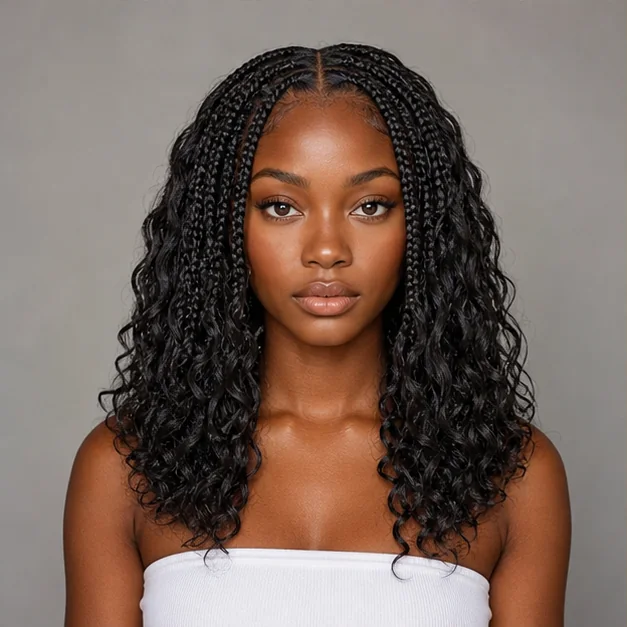
A clean center part divides goddess braids into two even curtains, while curls soften the straight line and frame both sides of the face. The symmetry emphasizes the eyes, balances an oval or heart-shaped face and feels composed enough for work or formal clothes. Ask for the part aligned to your features, flat roots and first curls below cheek level if you want less width near the face. Alternate sleeping sides and avoid pulling both front sections back tightly, which stresses the same hairline points repeatedly.
Ask your stylist for: A feature-aligned center part with flat roots and curls beginning below the cheekbones.
8. Deep Side-Part Goddess Braids
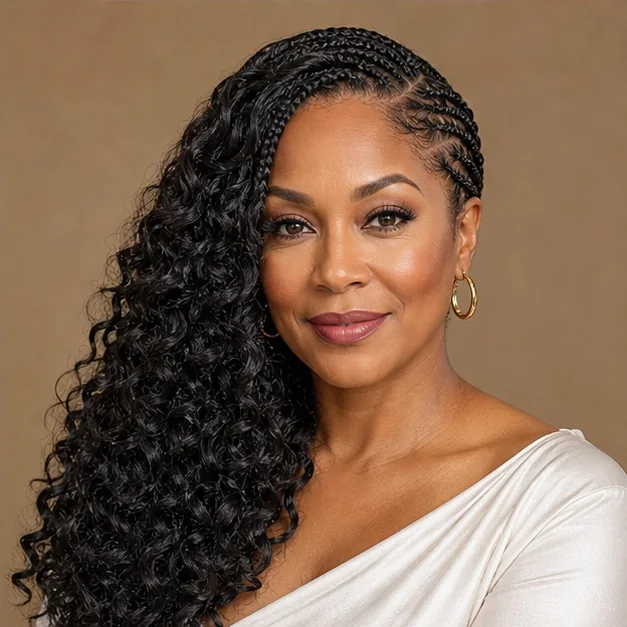
Deep side-part goddess braids sweep the fuller section across the forehead before falling into long curls and plaits. That diagonal movement visually lengthens a round face, adds volume without teasing and creates immediate glamorous confidence. Ask for a low side part, flexible front braids and curl placement that keeps the lighter side from looking sparse; show exactly how far the sweep should travel. Support the heavy side at night and change styling direction when possible so constant weight does not tug at one temple.
Ask your stylist for: A low deep side part with a flexible sweep and balanced curl density.
9. Half-Up Goddess Braids
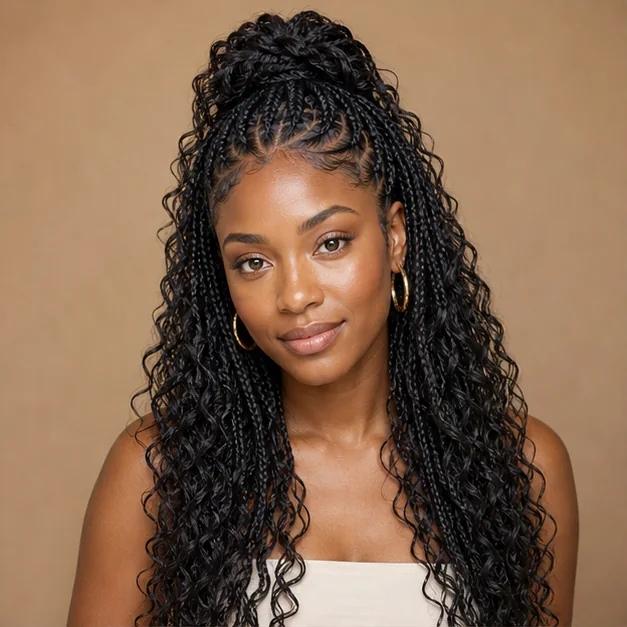
Half-up goddess braids gather the crown into a loose ponytail while the lower braids and curls remain free. The lifted shape opens the face, adds flattering height and keeps hair away from the eyes without losing romantic movement. Ask for front sections strong enough to style upward, a soft crown base and curls distributed above and below the tie so the finish stays full. Use a large snag-free elastic, rotate the gathered sections and never tighten the ponytail daily at the same roots.
Ask your stylist for: Flexible crown sections for a loose half-up ponytail with curls balanced throughout.
10. High Goddess-Braid Bun
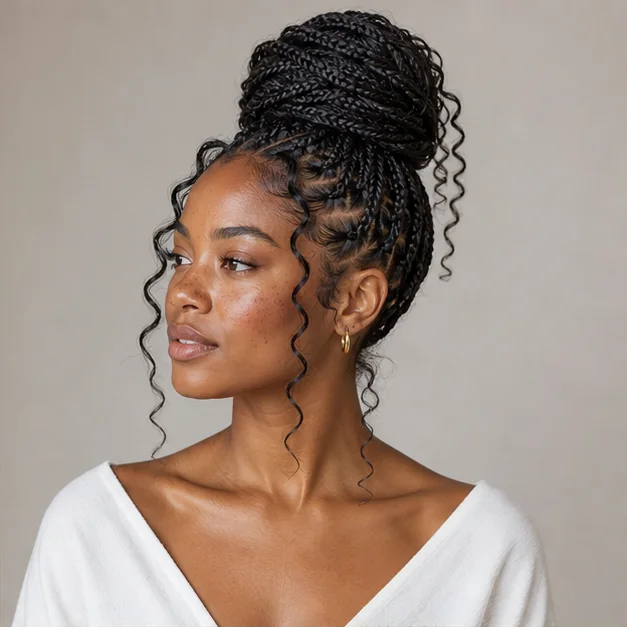
A high goddess-braid bun coils the plaits at the crown and leaves deliberate curls loose around the face and nape. The vertical shape lengthens the silhouette, showcases cheekbones and feels regal for a wedding, dinner or busy workday. Ask for braids light and flexible enough to wrap, plus designated tendrils that release without pulling edge hair. Build the bun loosely with long pins or a soft tie, and take it down before sleep to prevent root tension and bent curls.
Ask your stylist for: Light flexible braids for a loose high bun with intentional face and nape tendrils.
11. Low Goddess-Braid Bun
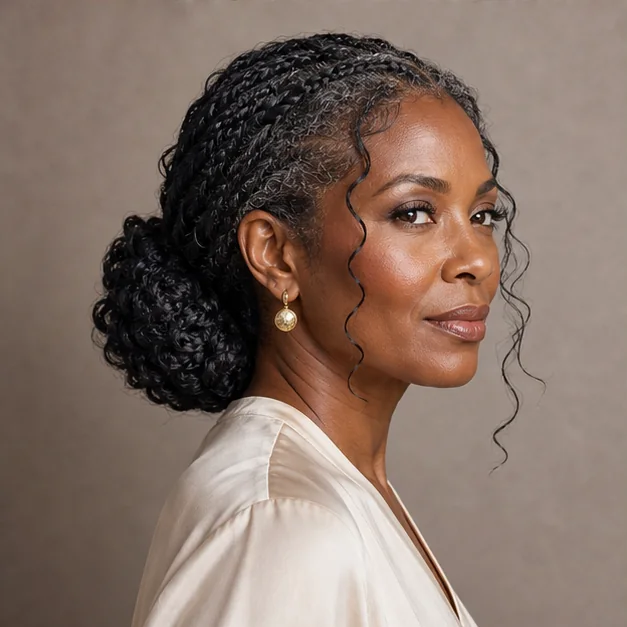
A low goddess-braid bun rests near the nape, with braids folded softly and a few curls tracing the cheeks. Its lower placement feels sophisticated, works beneath many hats and keeps visual weight away from the crown, making long days more comfortable. Ask for a flexible part, smooth roots and enough tapered length to tuck without a bulky knot. Secure the bun without pinning into the scalp, release it at home and check that loose curls are not trapped where they can mat.
Ask your stylist for: Tapered flexible braids for a soft low bun with two light face-framing curls.
12. Goddess-Braid Ponytail
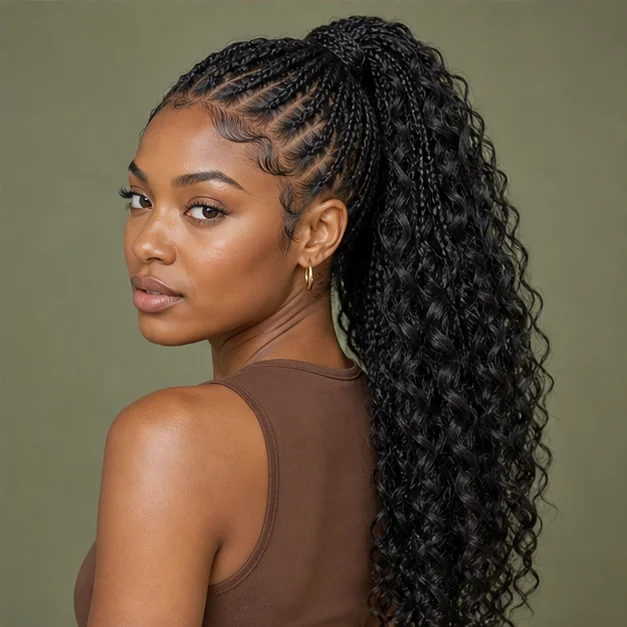
A goddess-braid ponytail lifts the roots into a high or mid-level base, letting long braids and loose spirals swing together. The movement feels energetic and confident, highlights the neck and controls the hair for events or warm weather without hiding texture. Ask whether the braids will be installed into a ponytail or styled from individual sections, since root direction and versatility differ. Keep the base comfortable, use a wide soft band and alternate with down styles so the hairline does not carry the same load daily.
Ask your stylist for: A comfortable ponytail direction with light braids, secure curls and no tight edges.
13. Two Cornrow Goddess Braids
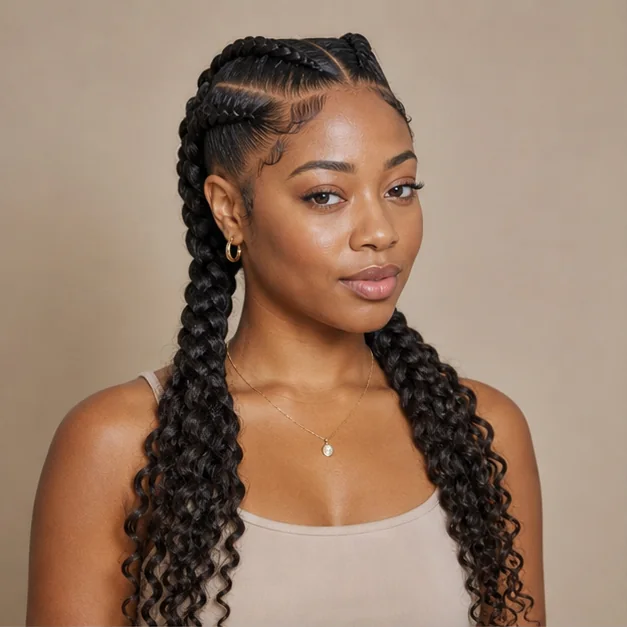
Two large goddess cornrows travel from the hairline to the nape, with curls woven along the braids or released into the tails. Strong parallel lines frame the face, create a clean athletic silhouette and feel bold while taking less time than many individual braids. Ask for feed-in construction, even size, protected edges and curls secured well enough not to slip from the large plaits. Wrap the surface to limit fuzz, keep the scalp clean and remove the style if the front feels tight.
Ask your stylist for: Two even feed-in goddess cornrows with gentle edges and secure curls.
14. Cornrow Crown Goddess Braids
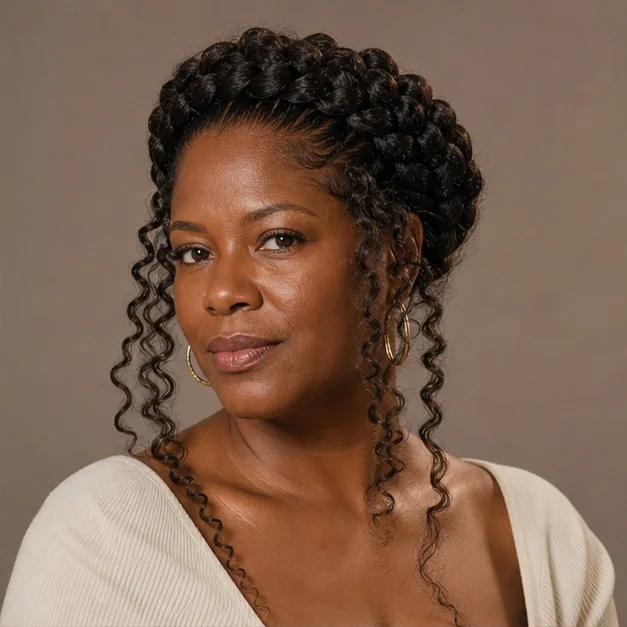
Cornrow crown goddess braids curve around the head in a halo, with loose curls tucked through the design and softened near the temples. The circular placement highlights the face, feels ceremonial and elegant and contains most length for a practical occasion style. Ask for a crown scaled to your head, visible curved parting and lightweight curls that do not hide the braid pattern. Pin only where necessary, protect the halo with a roomy scarf and keep accessories light so they never drag one section.
Ask your stylist for: A curved halo of goddess cornrows with visible parting and light curls.
15. Honey-Blonde Goddess Braids
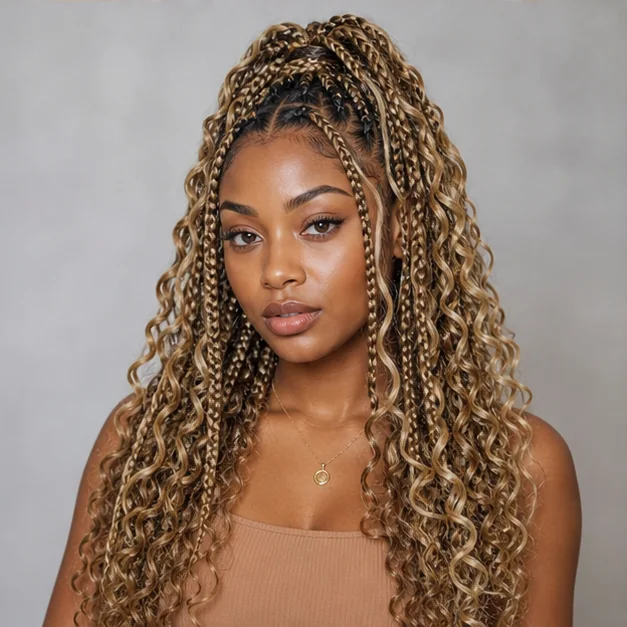
Honey-blonde goddess braids blend warm golden extensions with deeper roots and loose caramel curls. The tonal contrast brightens the complexion, makes each spiral visible and offers a joyful color change without lightening all the natural hair. Ask for a rooted blend using two or three related tones rather than one flat blonde, and check the shades in daylight. Follow care advice for the chosen fiber and keep heavy oils away from pale strands, where buildup becomes visible quickly.
Ask your stylist for: A rooted honey-blonde blend with several warm tones and coordinated curls.
16. Burgundy Goddess Braids
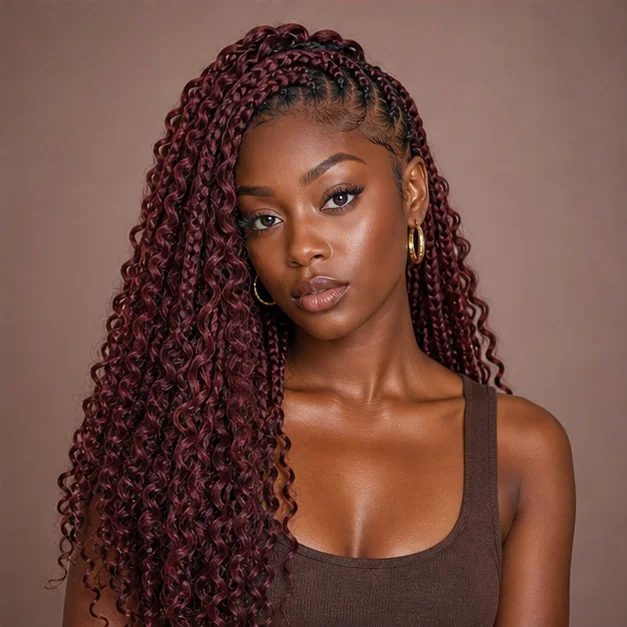
Burgundy goddess braids pair wine-red plaits with dark roots and glossy curls that flash warmer in the light. The rich shade complements many deep complexions and feels creative and luxurious without the brightness of vivid red. Ask to compare swatches against your skin and wardrobe, then choose either subtle blending or a clear statement before braiding begins. Protect pale clothing from initial transfer, avoid products that leave gray residue and refresh curls sparingly so the red remains luminous.
Ask your stylist for: Deep rooted burgundy braids with glossy curls and a rich non-neon finish.
17. Peekaboo-Color Goddess Braids
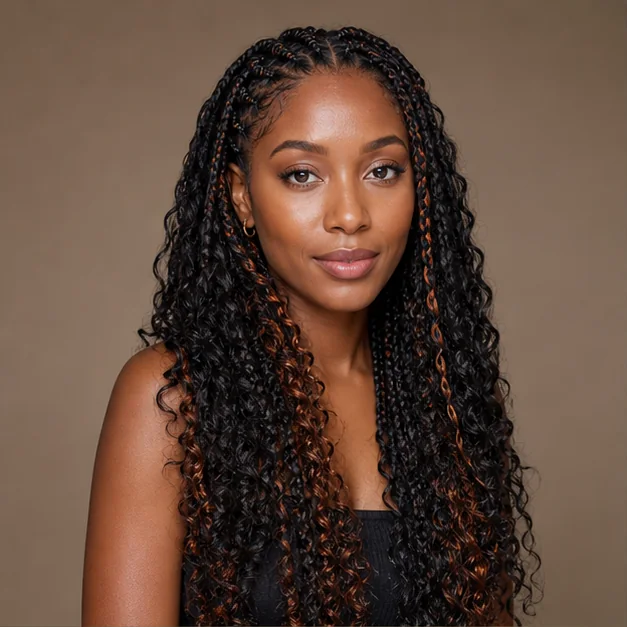
Peekaboo goddess braids keep the top layers dark while copper, blonde or auburn braids appear underneath and between curls. Concealed placement adds dimension in motion, permits experimentation without making color the first impression and brings playful discovery to updos. Ask for the accent percentage, exact placement and whether loose curls should match or contrast with the hidden braids. Photograph the parting map for future visits, detangle colors together gently and avoid excessive separation that makes accent sections look disconnected.
Ask your stylist for: Mostly dark braids with a controlled hidden accent layer and unifying curls.
18. Goddess Braids With Curly Ends
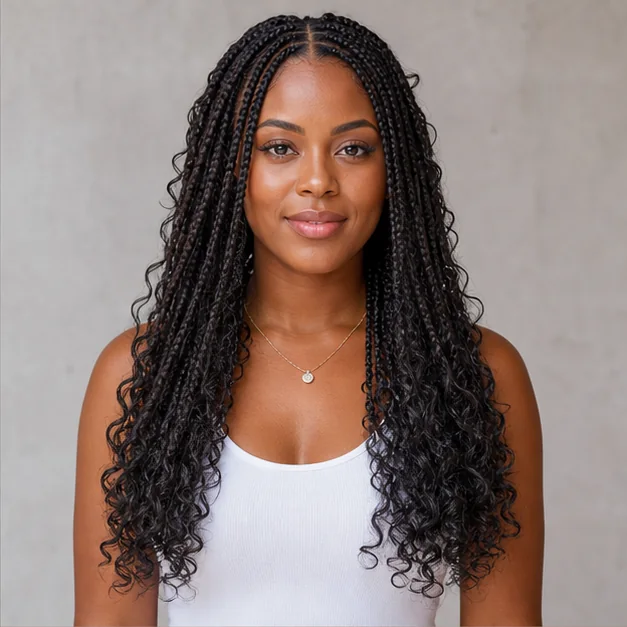
This version keeps upper lengths mostly braided and releases each plait into a full curl near the ends. Concentrating texture below the shoulders leaves roots neat, reduces tangling around the face and creates romantic movement without looking busy. Ask for consistent release points, secure transitions and a curl pattern suited to the length; explain that you want curly ends rather than loose strands throughout. Separate the ends carefully, trim only genuine tangles and gather them loosely at night so curls do not knot together.
Ask your stylist for: Neat braids released at consistent lower points into coordinated full curls.
19. Natural-Texture Goddess Braids
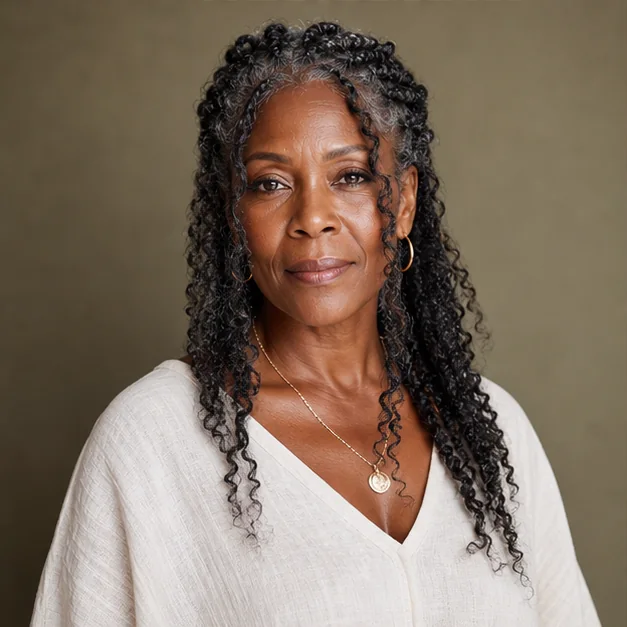
Natural-texture goddess braids use coily or kinky-curly loose pieces instead of silky spirals, allowing free hair to echo tightly curled textures. The fuller surface blends with natural roots, creates an organic silhouette and can make the finished texture feel connected rather than sharply contrasted. Ask for a curl pattern, density and shrinkage level close to your reference, plus extension hair suited to the maintenance plan. Moisturize lightly, finger-detangle in small groups and accept gentle expansion over time rather than forcing perfect separation.
Ask your stylist for: Medium braids with coily loose pieces matching natural texture and shrinkage.
20. Extra-Long Goddess Braids
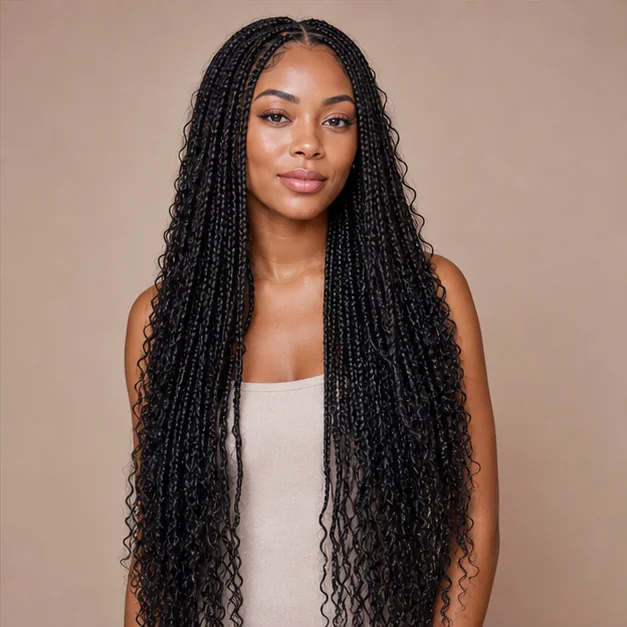
Extra-long goddess braids extend toward the waist or hips, with loose curls creating dramatic movement through the lower half. The sweeping length feels glamorous and expressive, elongates the silhouette and makes simple clothes feel dressed up. Ask for the lightest suitable extension hair, a test braid for weight and curls placed where they remain visible; length must never require painful roots. Support the braids while sleeping or exercising, and favor loose styles so the hairline does not carry all that leverage.
Ask your stylist for: Waist-to-hip braids using lightweight hair, tested tension and visible lower curls.
Before You Book the Appointment
A successful salon visit begins with the overall shape, construction and upkeep—not only the finished length. Use this quick reality check before choosing your final reference photograph.
- Best for: Anyone wanting structured braids with visible softness; adapt installation to density, hairline strength, scalp sensitivity and maintenance time.
- Signature finish: Individual braids or cornrows combined with loose curls woven through the length or released at the ends.
- Closest alternatives: Boho often suggests more abundant undone loose hair; French-curl braids release curled ends; box braids may contain no loose hair; Fulani is defined by culturally rooted front cornrow patterns.
- Maintenance: Bonnet nightly, cleanse gently, dry roots fully, detangle curls carefully and remove any braid causing persistent pain, bumps or pulling.
What Are Goddess Braids?
Modern goddess braids combine a structured braided base with intentionally loose curly strands. Those curls may be woven through individual knotless or box-parted braids, added along large cornrows or concentrated at the ends. Because salons use the name differently, identify the base construction as well as braid size, curl pattern, curl density and finished length when booking.
Goddess Braids vs. Boho, Box and French-Curl Braids
Goddess and boho overlap in salon language, though boho often suggests more abundant, deliberately undone loose hair. Standard box braids may have no loose curls. French-curl braids usually open into curled ends, while goddess curls can appear throughout. Fulani and feed-in describe parting or braiding constructions that can receive a goddess finish without becoming synonyms.
How to Ask for Goddess Braids
Bring references with similar length, braid size and curl density. Specify knotless, box-parted or cornrow roots; the number or size of braids; human or synthetic curl hair; where curls begin; and whether you need ponytail flexibility. Ask for a test braid to check weight and tension, especially when your stylist uses goddess and boho interchangeably.
Maintenance and Comfortable Wear
Loose hair needs more attention than braided sections, so separate tangles with fingers, use compatible lightweight moisture and protect the full length nightly. Clean the scalp gently and dry it completely. Wear time varies with braid size, curl fiber, friction and scalp condition; persistent pain, bumps, matting or thinning edges are reasons to loosen or remove the style promptly.