Sometimes the change you want is right around your eyes: a little softness, a little movement, and a fringe that feels lovely with your hair down or swept up. Butterfly bangs offer that feather-light frame, provided you choose a version that works with your natural fall and your morning routine.
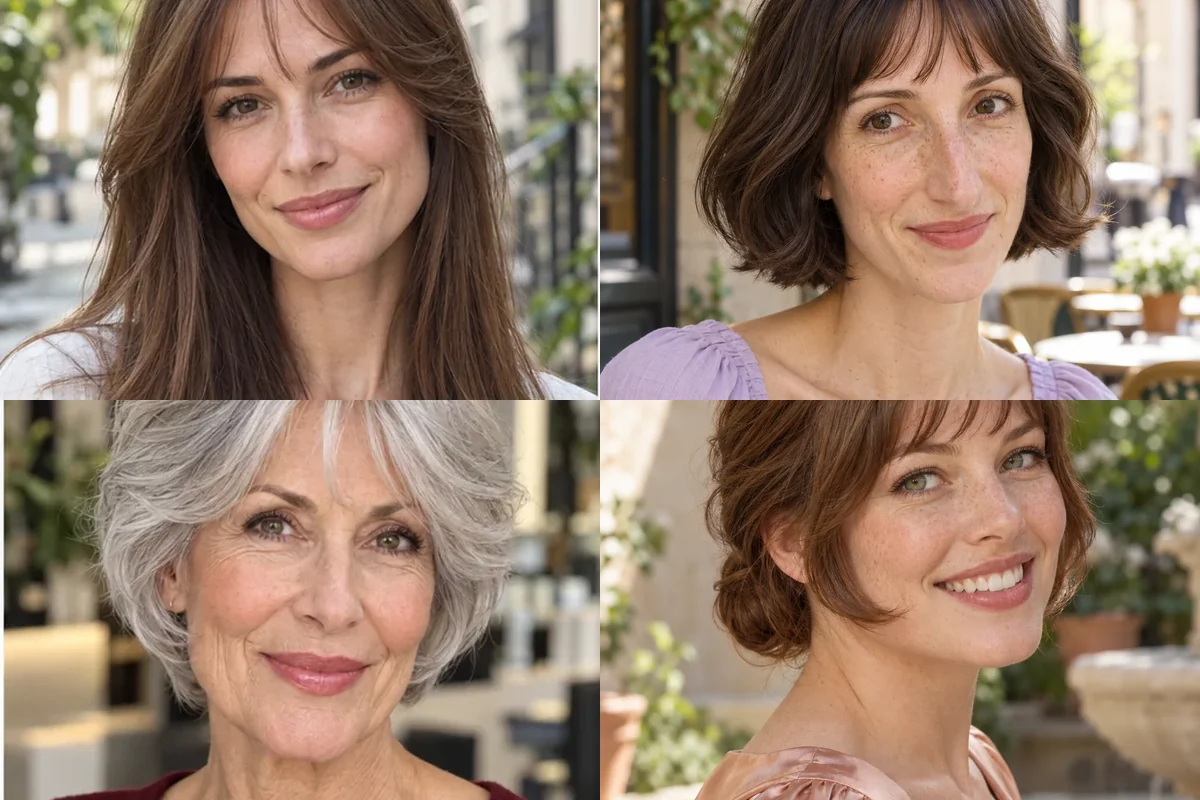
Here, butterfly bangs means the airy fringe interpretation recently associated with hairstylist Chris Appleton: shorter, lightly separated pieces through the center, blending into longer sides that sweep toward the cheekbones. The silhouette resembles two soft wings around a lighter middle. It overlaps curtain bangs, but usually keeps more short fringe across the forehead instead of beginning with a long, open center. A butterfly haircut describes layers through the rest of the hair; you can wear this fringe without that whole-head cut. Salon names vary, so the center length, side connection and reference photo matter more than the label alone.
Find the one that feels like you: Start with the first look and let the photographs lead. Each style explains how the shape affects your features, the mood it creates and the exact words to take to your stylist.
Quick Facts
- Keep airy central pieces and longer side wings visible in your reference photo.
- Check the fringe dry, especially if it has a wave or cowlick.
- A light fringe still needs regular attention.
- Decide whether you prefer brow, eyelash or cheekbone contact before cutting.
1. Classic Brow-Skimming Butterfly Bangs
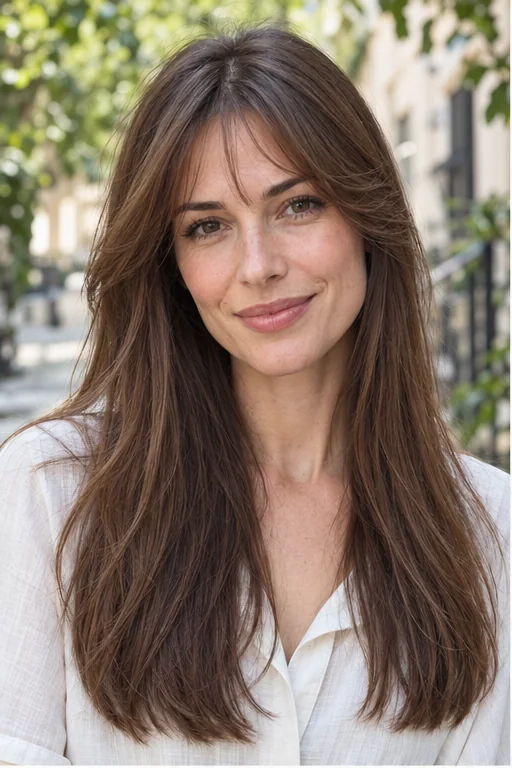
Light pieces skim the brows before becoming longer wings beside the cheekbones, giving long straight hair a soft frame without hiding the whole forehead. That gradual connection draws attention toward the eyes and makes familiar loose lengths feel quietly romantic, rather than requiring a dramatic change everywhere else. It suits a routine with a few minutes for fringe drying: guide the roots gently from side to side, then turn the longer ends away with a small brush. Ask for a lightly separated brow-length center with connected cheekbone sides, keeping the edge soft and checking that the short pieces settle comfortably when dry.
Ask your stylist for: A lightly separated brow-skimming center with connected cheekbone sides and no blunt horizontal edge.
2. A Shallow, Airy Fringe for Fine Hair

A shallow triangular section creates a see-through middle, with slim longer pieces opening softly beside the cheeks on collarbone hair. Leaving more hair behind the fringe helps the overall cut retain its fullness, while the delicate frame can make a simple weekday style feel fresh and gently expressive. This is a useful starting point for fine strands if the hairline has enough coverage, though too much product can make the little sections clump. Request a shallow section, a light brow-length middle and connected cheekbone wings; dry the roots first and use only a trace of lightweight hold on the ends.
Ask your stylist for: A shallow fringe section, see-through brow-length middle and delicate cheekbone wings.
3. A Fuller Center With Soft Side Wings

A fuller middle gives thick shoulder-length hair a more definite fringe, but small separations and longer feathered sides stop it from becoming a solid straight curtain. The stronger frame brings focus to the eyes and can feel confidently dressed even when the rest of the hair is simply brushed through. It suits someone who likes visible bangs and accepts more regular fringe attention; removing too much internal weight can create flyaway gaps instead of softness. Ask for a fuller brow-level center with gentle separation and connected side wings, then have the stylist assess bulk dry before choosing any selective texturizing.
Ask your stylist for: A fuller brow fringe with small separations and connected feathered side wings, without blanket thinning.
4. Butterfly Bangs That Follow Loose Waves
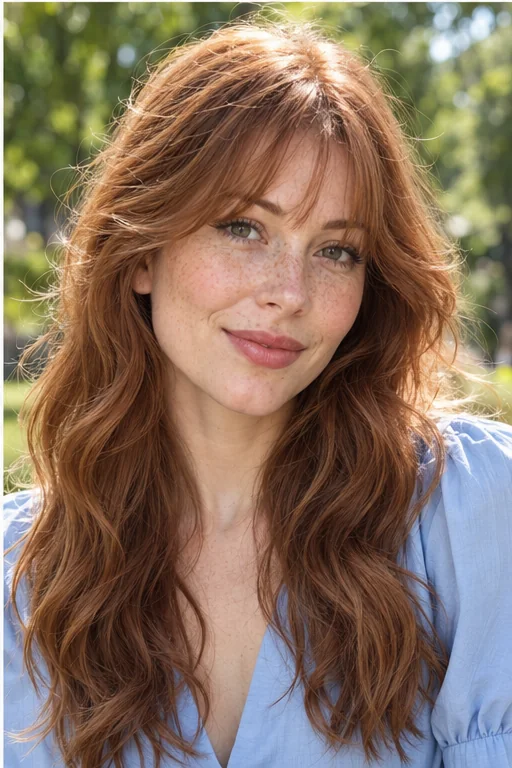
Loose waves carry the airy middle into softly curved side wings, so the fringe belongs to the same movement as the long lengths. That connection softens the outline around the cheeks and gives the whole style an easy, relaxed mood instead of a polished fringe sitting apart from textured hair. It works best when the front already has a cooperative bend; a stubborn upward wave may need a longer center than the reference suggests. Ask for the center to be measured dry at its natural wave length, with connected cheekbone wings, and encourage the bend with a light styling cream rather than repeated brushing.
Ask your stylist for: An airy center measured at its dry wave length and connected cheekbone wings following the natural bend.
Pause and notice: Compare the center before the color. A reference with only long curtains and no shorter airy forehead pieces shows a neighboring style.
5. A Soft S-Bend on a Jaw-Length Bob
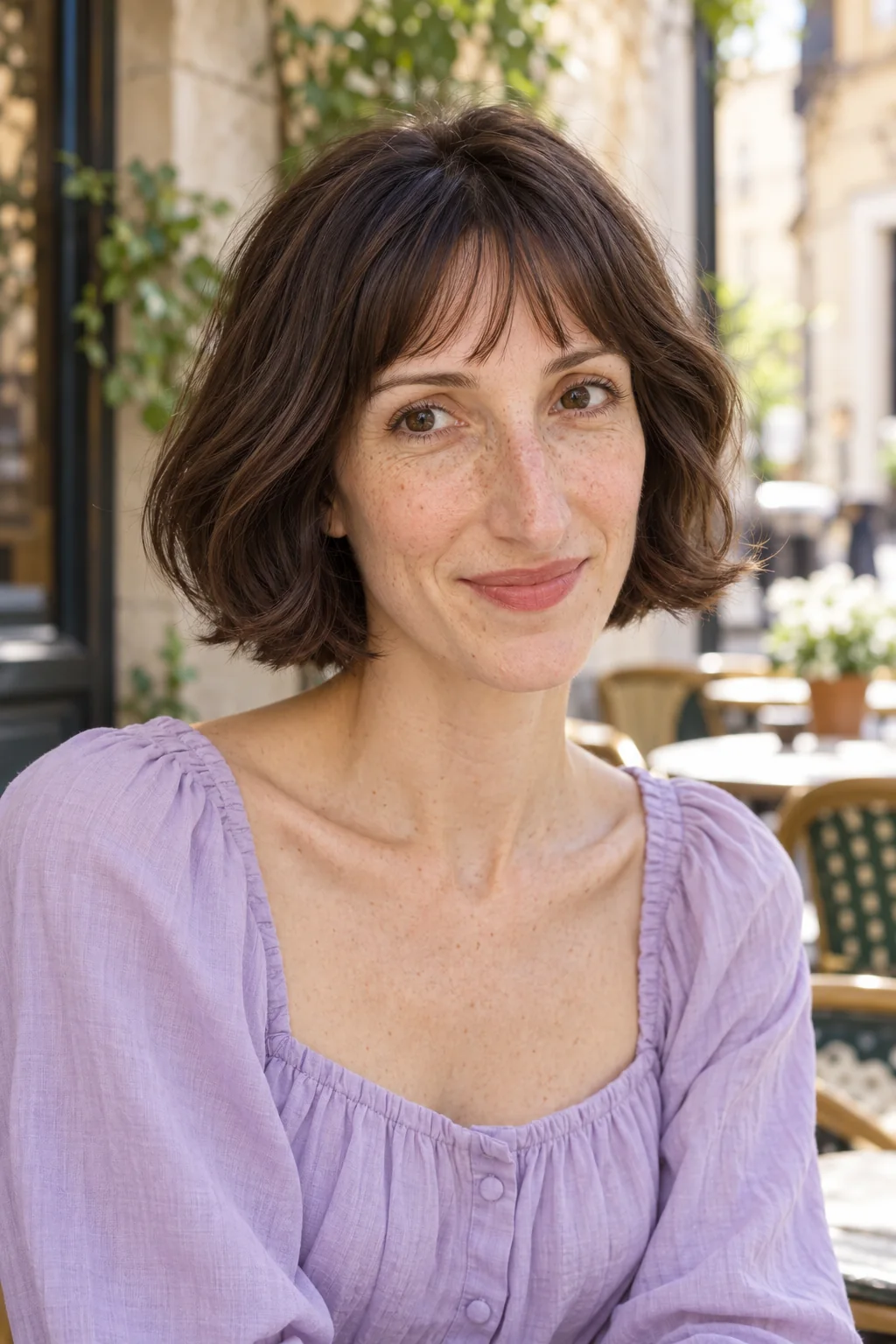
On a jaw-length bob, short airy forehead pieces lead into longer sides with a modest S-bend, creating movement above the compact lower outline. The contrast keeps the bob from feeling rigid and can make the short cut feel playful and approachable without turning it into a shag. Choose this if your front sections hold a bend and you enjoy a small finishing step; forcing a large curl into short side pieces can look bulky. Request an airy brow center, connected cheekbone wings and a restrained S-shape, keeping the bob perimeter clear and using low heat only if your natural bend needs help.
Ask your stylist for: A jaw-length bob with an airy brow fringe and cheekbone wings shaped into a modest S-bend.
6. Rounded Butterfly Bangs With a Bouncy Blowout

A softly rounded central fringe sits above outward-lifted wings, echoing the bounce of a medium-length blowout without replacing the airy forehead pieces with long curtains. The lifted sides open the face and lend an occasion-ready, glamorous feeling that can make a dinner or celebration feel a little more special. This version suits someone willing to style the fringe, since the lift tends to relax between washes and may need a quick reset. Ask for a rounded brow-length center and longer wings connected into the sides, then use a small brush or roller and let each section cool before releasing it.
Ask your stylist for: A softly rounded brow-length center and longer lifted wings blending into a medium blowout.
7. An Open Center With Diagonal Cheekbone Wings

A small opening divides the shorter central pieces, while the sides travel diagonally toward the cheekbones on a smooth lob. The diagonal line gives a rounder face an impression of length and keeps the eyes visible, making a neatly styled cut feel airy rather than enclosed. It suits a hairline that naturally parts near the middle; a strong off-center cowlick may keep moving the opening and turn this into a daily negotiation. Ask for short airy brow pieces with a modest central gap and connected diagonal wings, and dry the roots in their cooperative direction before shaping just the longer ends.
Ask your stylist for: Short airy brow pieces with a small center opening and diagonally lengthening cheekbone wings.
8. A Narrow Split on a Soft Silver Crop

A soft ear-covering crop keeps light central pieces over the brows and longer temple sections curving toward the upper cheeks. The narrow split gives the silver hair an open, lively frame while preserving more coverage than a completely swept-back crop, which can feel reassuring if you enjoy having hair around your face. This needs enough side length to form real wings; a closely cropped temple cannot reproduce the same outline. Request a light brow-level center, a narrow natural split and connected longer temple pieces, then smooth only the fringe with your fingers so the rounded crop does not lose its gentle texture.
Ask your stylist for: An ear-covering crop with light brow central pieces, a narrow split and longer connected temple wings.
Pause and notice: The side wings do not have to point outward all day. A natural fall with a small bend can still give the shape its softness.
9. Butterfly Bangs With a Flat Half-Up Gather
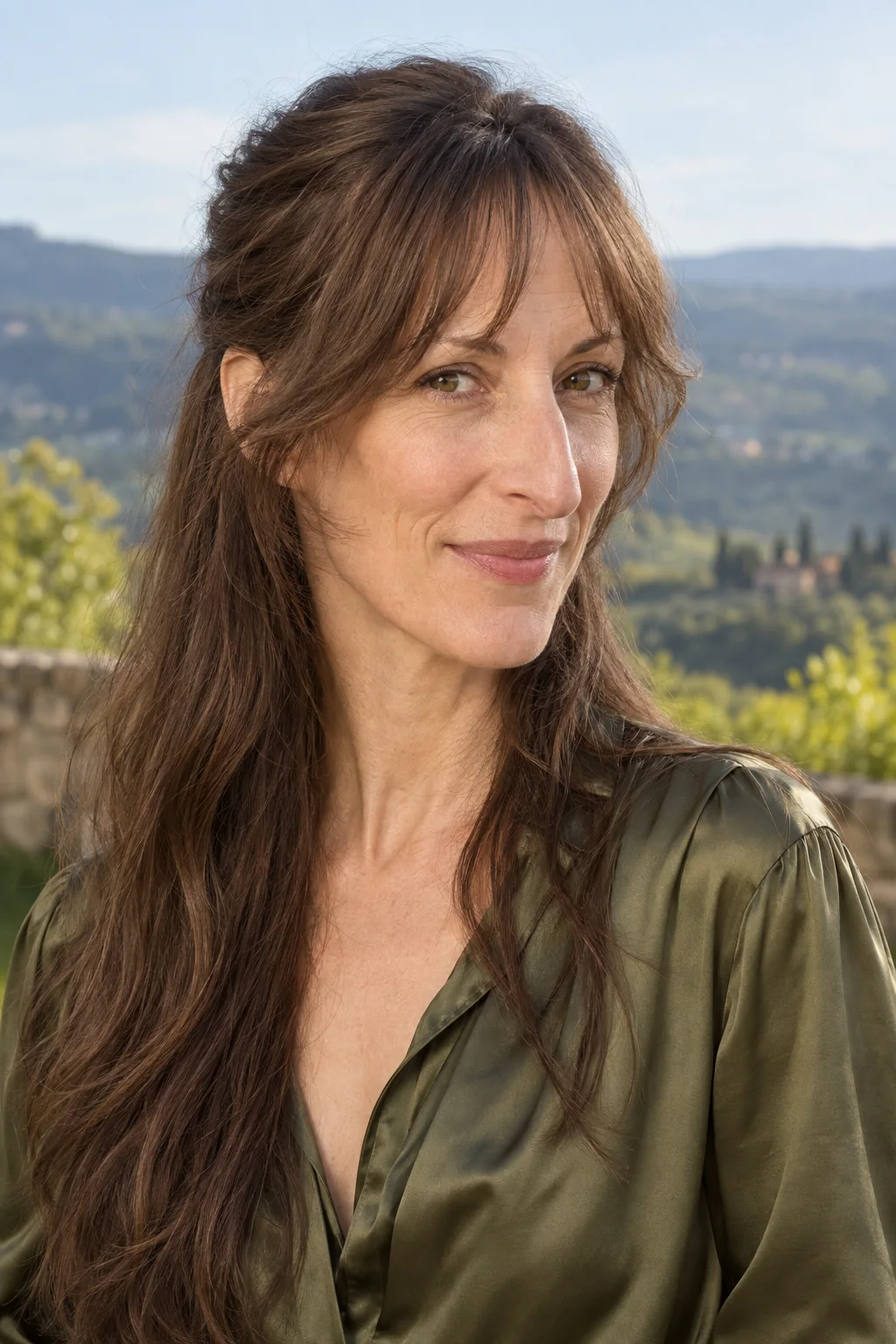
A flat half-up gather takes the upper lengths back while leaving the airy center and both cheekbone wings completely free. The contrast makes the fringe easy to see and clears the side lengths from your shoulders, creating a quietly polished mood for work or an afternoon out. It suits longer hair with a little reachable side length, but the wings should stay outside the gather rather than being pulled tight into the fastening. Ask for a flat half-up shape behind the crown with the entire fringe connection left loose, and smooth the side wings separately so their outward bend remains soft rather than stiff.
Ask your stylist for: A flat half-up gather behind the crown, leaving the airy central fringe and cheekbone wings loose.
10. A Low Ponytail With Light Butterfly Bangs
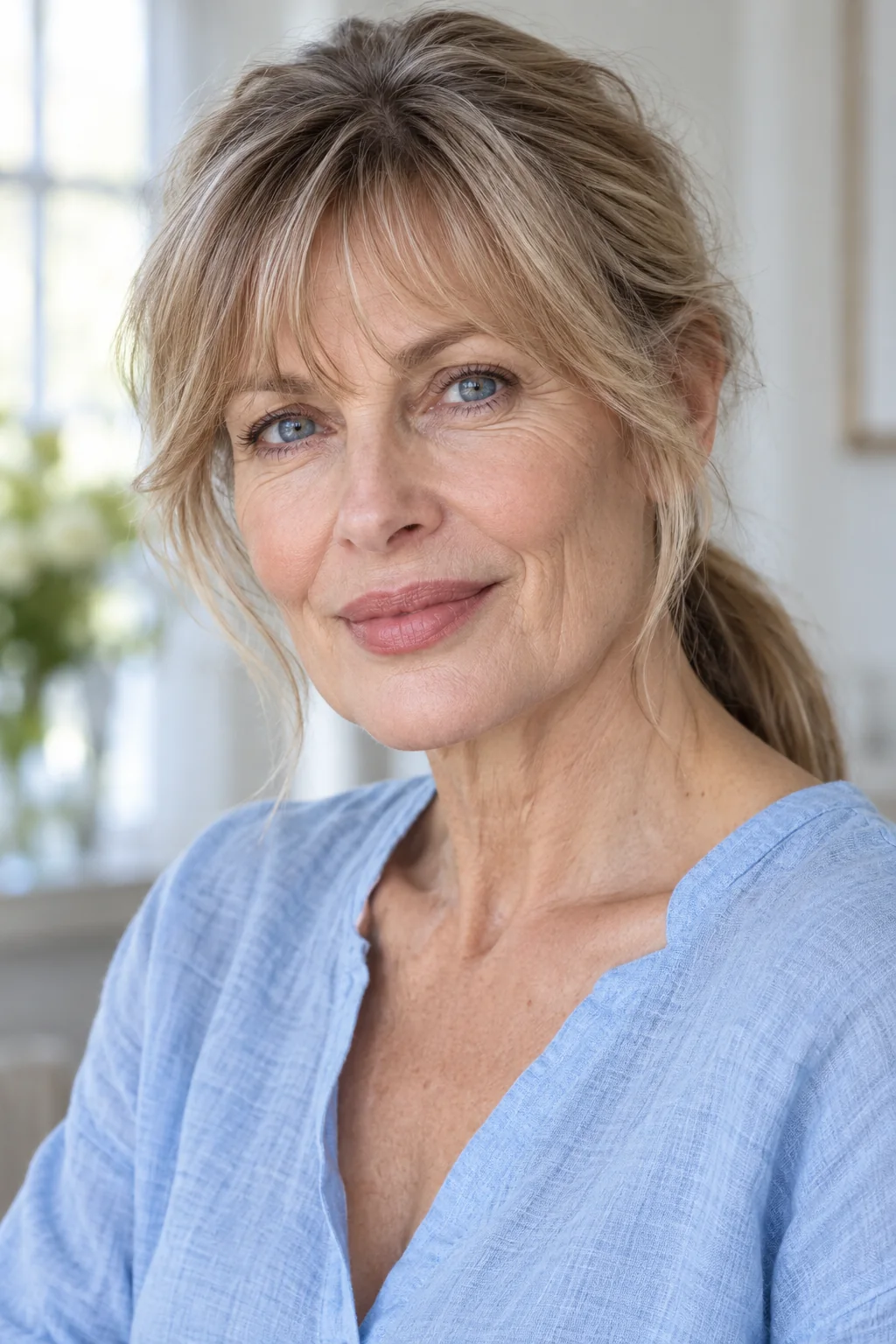
A low ponytail clears the neck while separated brow-skimming pieces and longer loose wings keep the front soft. The mix of a tidy back and light face frame can make a practical weekday arrangement feel considered, especially if fully swept-back hair feels too exposed for your taste. It works with enough length to reach the nape comfortably and needs a fringe that stays out of your eyes; do not pull on short sections to force them into the tail. Request a comfortable low gathering with the whole butterfly fringe left loose, then reset its roots with a little water before drying into their natural fall.
Ask your stylist for: A comfortable low ponytail with separated brow central bangs and longer side wings loose.
11. A Low Chignon With Longer Side Wings
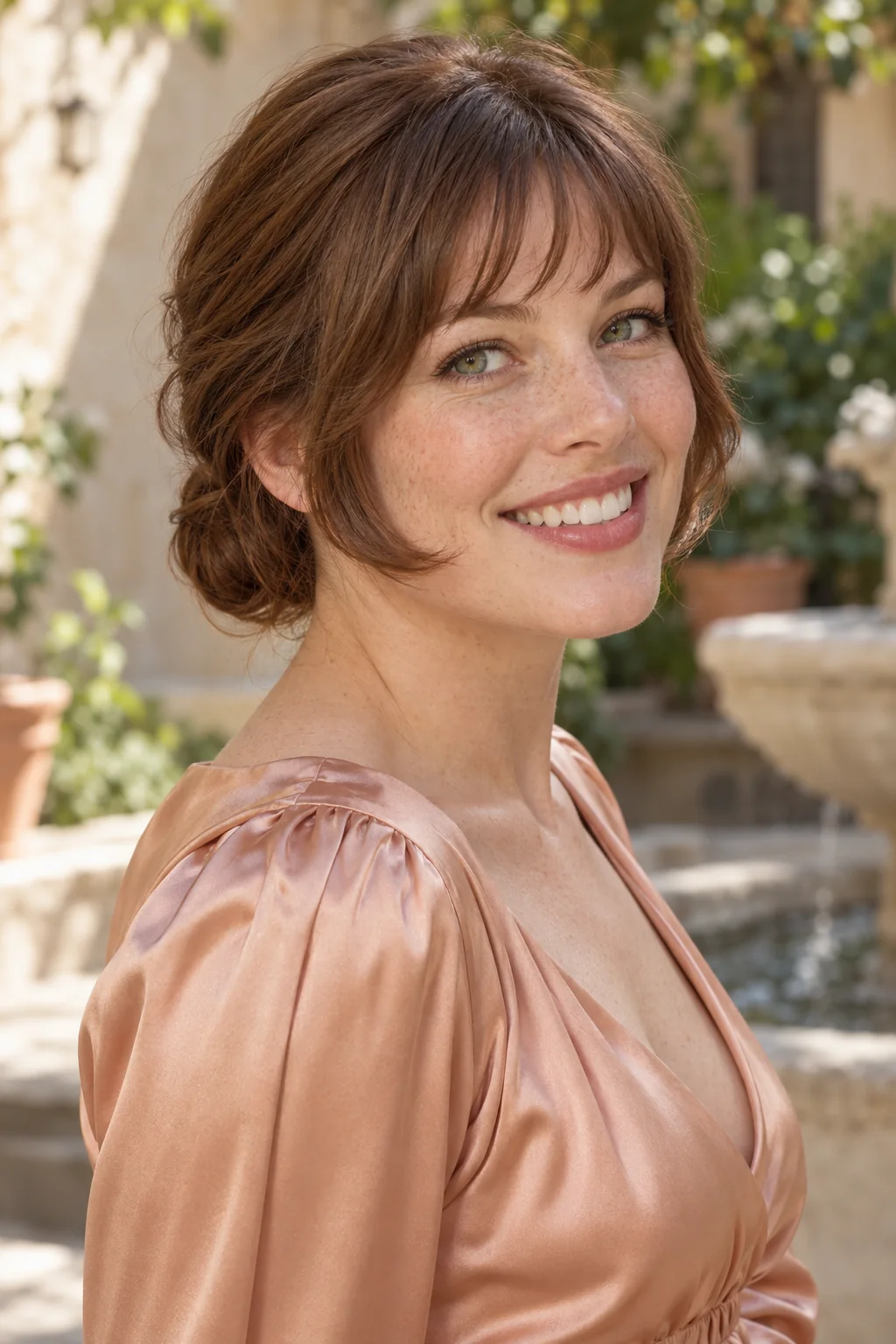
An airy brow fringe blends into wings that reach toward the upper jaw, balancing the neatness of a compact low chignon. The slightly longer front line softens an angular jaw and gives the updo a romantic, comfortable feeling, so an occasion style can still feel like you rather than a completely new face. This suits hair long enough for a small pinned bun, though the loose wings may need gentle reshaping during a long event. Ask for a light central fringe and connected upper-jaw wings around a low chignon, avoiding unrelated long tendrils; choose flexible hold so the frame can move naturally.
Ask your stylist for: A compact low chignon with a light brow center and connected wings extending toward the upper jaw.
12. An Eyelash-Length Grow-Out Version

As the center reaches eyelash length, airy separation and longer jaw-level sides let the butterfly fringe relax toward a curtain-bang shape. That gradual transition gives you room to change your mind without an abrupt stage, and the softer movement can feel reassuringly flexible if you are still learning how much fringe you enjoy. It suits someone comfortable sweeping the middle aside when it touches the eyes; a heavy unbroken edge will not behave the same way. Ask your stylist to preserve the light center while connecting the longer sides, and trim only what is necessary for comfort rather than repeatedly resetting the whole fringe.
Ask your stylist for: Preserve an airy eyelash-length center and connect it to longer jaw-length sides during grow-out.
Before You Book the Appointment
A successful salon visit begins with the overall shape, construction and upkeep—not only the finished length. Use this quick reality check before choosing your final reference photograph.
- Fine hair: Start with a shallow section so the longer hair behind it keeps its fullness.
- Thick hair: Ask for controlled density rather than aggressive thinning.
- Waves: Choose center length around the dry bend.
- Curls: Shrinkage and curl direction need an individual assessment.
- Cowlicks: A strong hairline lift may make a symmetrical center unreliable; ask for a dry consultation.
Butterfly bangs, curtain bangs or a butterfly haircut?
Names overlap in salons and online. For this guide, butterfly bangs keeps shorter airy pieces through the middle, with longer sides winging out toward the cheeks. Curtain bangs usually opens into longer center-parted sections, although shorter versions can look very similar. A butterfly haircut concerns the layers behind the fringe and can be worn with several bang shapes. Bring a front photograph and describe the center length and side connection; do not rely on the name to communicate every detail.
Choose the section before choosing the finish
Fine hair often benefits from a shallow section so the sides retain fullness. Thick hair may need controlled weight, but removing density everywhere can leave gaps that are difficult to style. With waves or curls, assess the front dry: shrinkage and bend can change where the shortest piece lands. A pronounced cowlick may favor an off-center opening or a longer fringe. If the hairline will not settle into the reference shape, choose an adapted cut rather than promising a daily battle with it.
What to say at the salon
Ask for airy central bangs at your chosen dry length, blending continuously into longer cheekbone or upper-jaw sides. Point out how much forehead you want visible and whether you want the side wings to lift outward or fall naturally. Request a dry check before the shortest pieces are finalized, and explain how much styling you will actually do. A reference without extensions, heavy retouching or hidden fringe roots gives a more useful starting point.
A small styling routine that earns its place
Start with damp fringe roots and direct them gently from side to side, then settle them into the part they naturally accept. Shape the longer wings with a small brush, a roller or your fingers according to texture. If using heat, follow the tool and product directions and choose the lowest setting that gives the needed bend. Let sections cool before touching them. On non-wash days, resetting just the fringe may be enough; more product is rarely a substitute for a fresh root direction.
Trims, forehead contact and growing the fringe out
Brow-level pieces can quickly feel longer, so agree a trim interval around your growth rate and tolerance for hair near the eyes rather than a fixed promise. Clean the fringe as needed when it picks up forehead oil, and keep heavy skincare or styling product away from its roots. During grow-out, leave the center longer and blend only abrupt steps into the sides. Small clips or a gentle side sweep can help the transition; cutting the middle short again will restart the same stage.
Can butterfly bangs work with curls?
They can be adapted if the dry curl pattern supplies a lighter center and longer outward-opening sides. They will not reproduce a smooth blown-out photograph without a different routine. Ask a stylist experienced with your texture to judge each front curl in its dry fall and discuss shrinkage before cutting. This gallery concentrates on straight and loose-wave interpretations, rather than presenting ordinary curly fringe as the same precise shape.
The Takeaway
Choose the photograph whose center length, side sweep and styling effort feel closest to your everyday life. The lovely part of butterfly bangs is the small change in the frame around your face; a clear conversation about those details will do more for the result than chasing the name alone.
More Hair Inspiration
- Curtain Bangs Haircuts — Compare a longer, more open fringe frame.
- Butterfly Haircuts — Explore the layers behind the fringe.