Love the softness of a bob but wish your hair had a little more shape at the crown? A carefully cut bixie can give fine hair a lovely outline without asking fragile-looking ends to carry all the style.
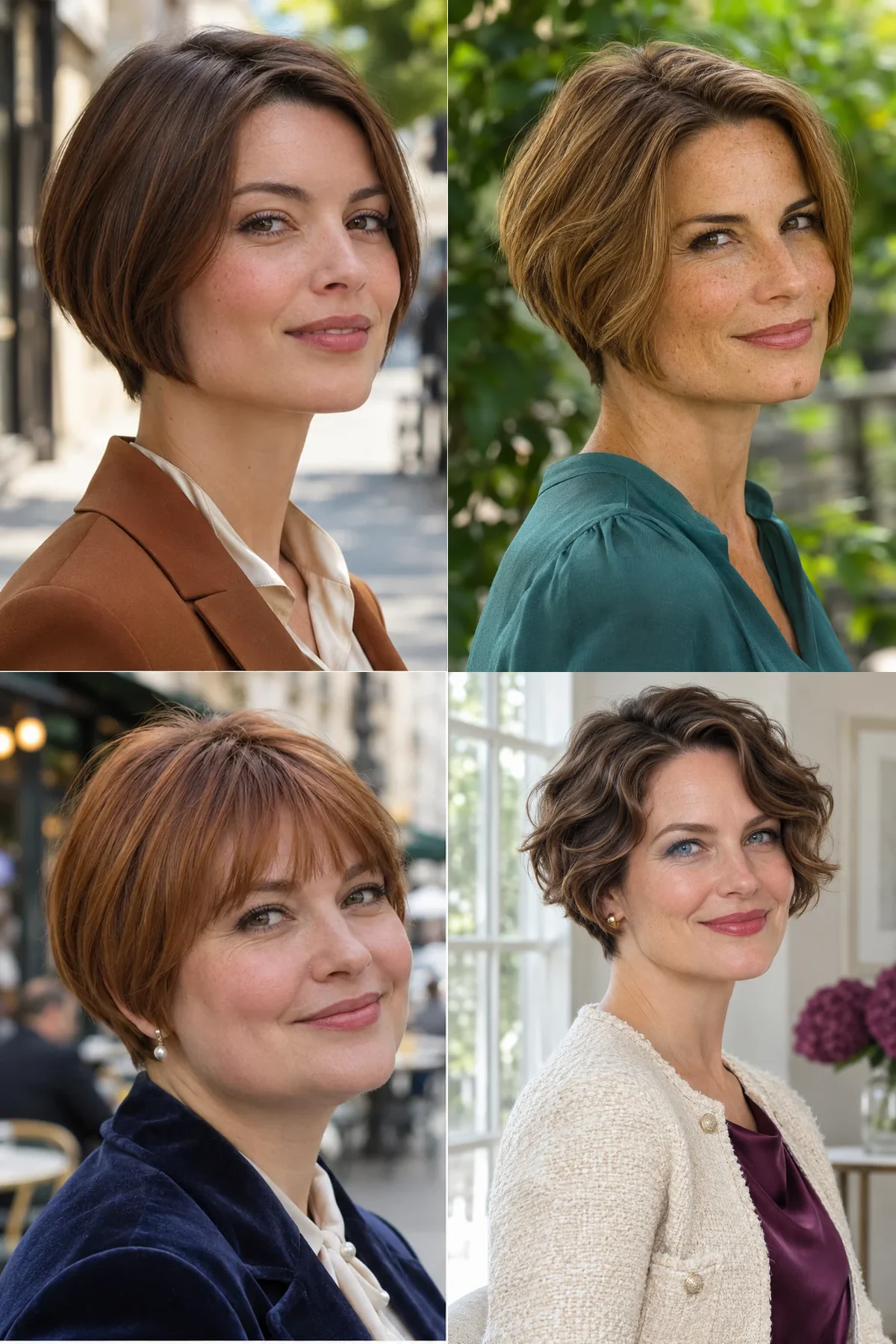
A bixie combines the shorter, shaped nape and layering of a pixie with longer, bob-like hair around the sides or fringe. For fine, thin hair, the useful detail is where the stylist keeps weight: enough through the sides and ends to look substantial, with only the layering needed to create the shape. A classic bob usually keeps more length around the nape, while a close pixie exposes more of the ears and sides. Fine describes the diameter of each strand; thin describes lower density. You can have one without the other, so bring a photo of your ordinary, unstyled hair as well as your favorite reference.
Find the one that feels like you: Start with the first look and let the photographs lead. Each style explains how the shape affects your features, the mood it creates and the exact words to take to your stylist.
Quick Facts
- Keep enough side and perimeter weight for the density you actually have.
- Ask for controlled shaping rather than automatic thinning or all-over short layers.
- A fringe uses hair from the front, so its depth matters as much as its length.
- These are shape ideas to adapt with a stylist; a haircut changes the outline, not the number of hairs.
1. The Rounded Bixie With Full, Covered Sides
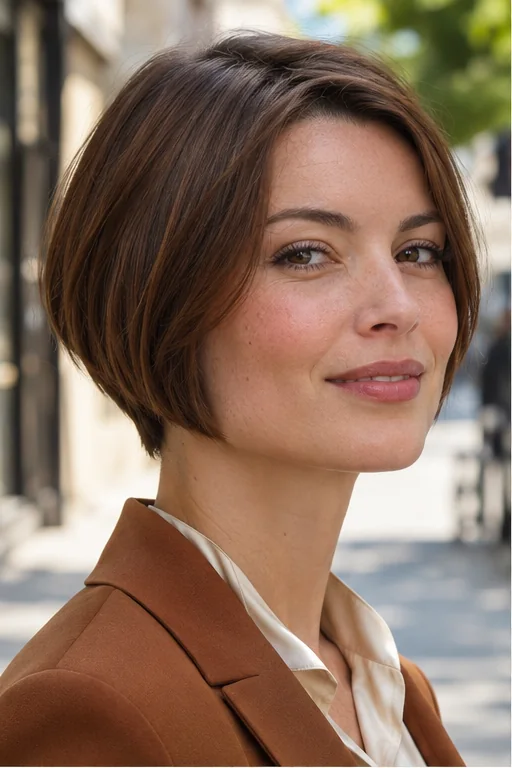
A rounded cap of hair skims the ears, then narrows into a neat nape, giving this bixie a softly supported shape rather than a scattering of wispy ends. Keeping the lower sides connected can make fine hair look more substantial around the cheeks, with a composed, quietly confident feeling that works beautifully with tailoring. It suits someone who likes a tidy outline and a brief brush-through, although a strong crown cowlick may need a little directed drying. Smooth the surface gently instead of lifting every section, and leave the ends free of heavy wax.
Ask your stylist for: Keep my ears covered with a solid side edge, a fitted short nape and restrained crown layers; avoid thinning the perimeter.
2. The Longer Bixie With Jaw-Framing Corners
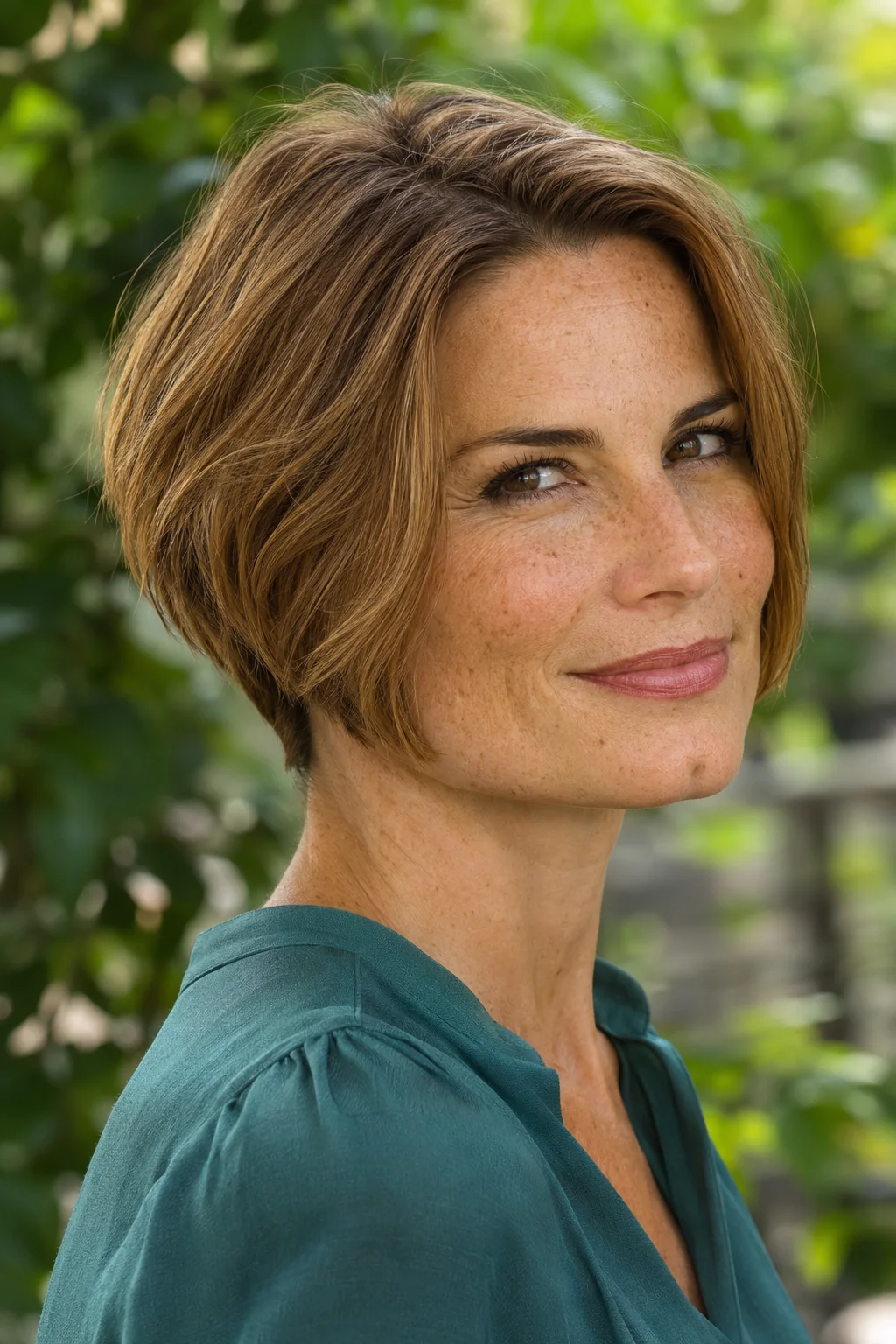
Those longer front corners are the reassuring part: they reach the upper jaw while the back is noticeably shorter and shaped into the neck. The extra side length offers soft framing and something to tuck, making a first move away from a bob feel less abrupt and more relaxed. For fine hair with reasonable side density, a relatively solid edge can look fuller than heavily razored points, but sparse temples may need a shorter adaptation. Dry the front in the direction you normally wear it; repeatedly flipping the part can expose gaps the cut was designed to work around.
Ask your stylist for: Leave full upper-jaw corners around my face, shape a distinctly shorter nape and keep the sides connected without razored tails.
3. The Ear-Revealing Bixie With a Longer Top

Here the ears are visible beneath short, scissor-shaped sides, while a longer top keeps the silhouette softer than a close-cropped pixie. That contrast puts attention on the eyes and cheekbones and can make getting dressed feel a little sharper, especially if you enjoy earrings or bold glasses. It is a useful option when limp side lengths bother you, provided you are comfortable showing the hairline rather than trying to cover it. Guide the roots across first, then into place as you dry; the exposed outline will need tidying sooner than a longer, ear-covering bixie.
Ask your stylist for: Reveal my ears with soft scissor-cut sides, keep a longer connected top and a compact nape, and leave the hairline natural.
4. The Bixie With a Long, Diagonal Fringe
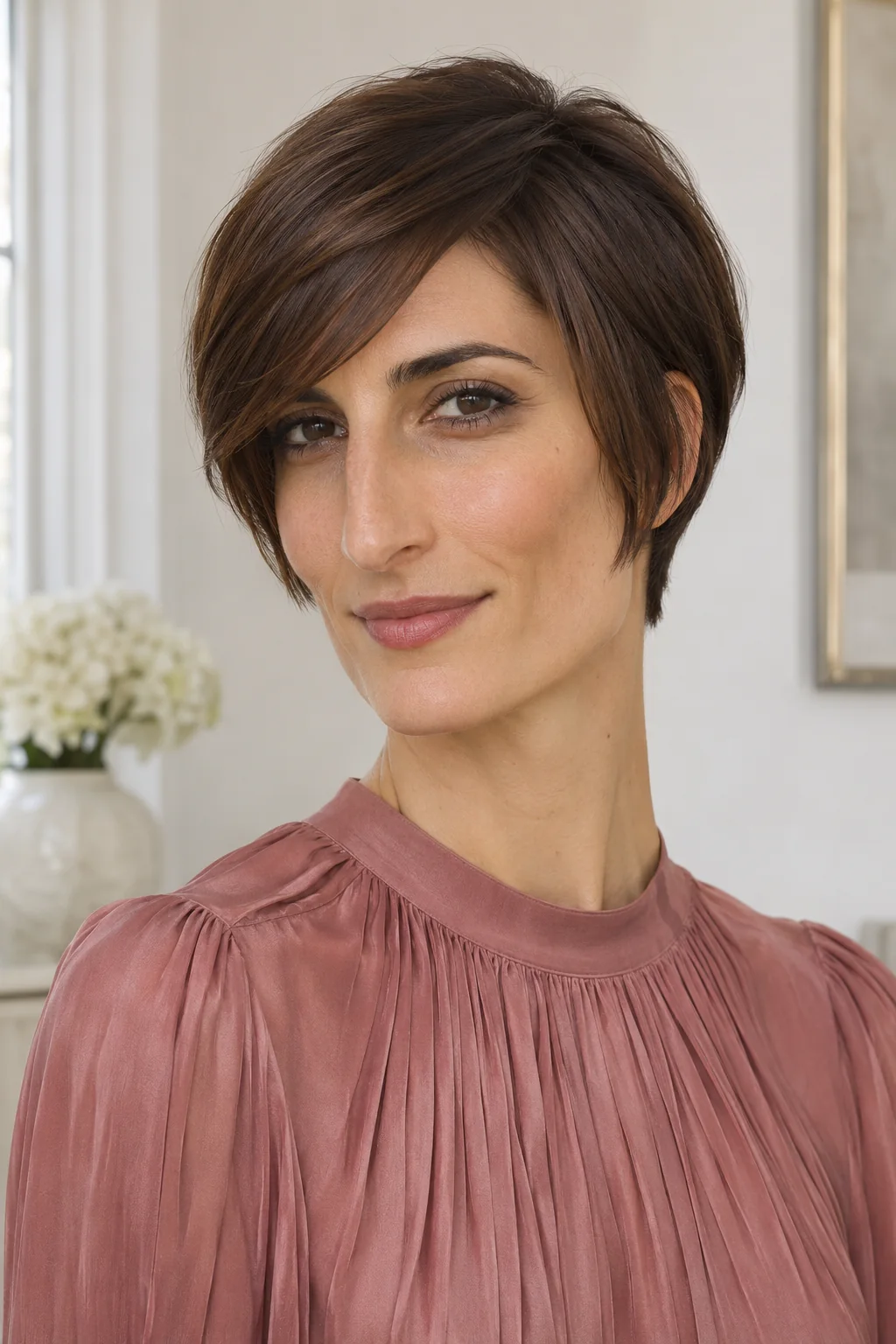
A long fringe travels diagonally over one brow and blends into ear-skimming sides, creating a continuous sweep instead of several disconnected front pieces. That sloping line can soften a strong forehead or angular features, while the tucked-in back keeps the overall impression polished and purposeful. If your natural part already falls this way, the shape can feel reassuringly familiar; fighting a stubborn front cowlick every morning is a less comfortable match. Dry the fringe from its root with gentle directional control, and use a light touch with finishing cream so the sweep does not separate into oily-looking strands.
Ask your stylist for: Blend a long diagonal fringe across one brow into full ear-skimming sides, with a short nape and minimal thinning at the front.
Pause and notice: Look at the ends as well as the height. Which photo keeps the amount of side coverage you want? A little less crown lift can be a good trade if it leaves your perimeter looking more substantial.
5. The Bixie With a Shallow, Brow-Length Fringe

A small, shallow section forms a brow-length fringe, giving the face a clear frame without borrowing a deep wedge of hair from the crown. The soft horizontal line draws attention to the eyes and gives this compact bixie a playful, slightly retro mood, while substantial sides keep the outline grounded. It is worth considering when your front hairline has enough coverage, although a sparse fringe area may look more separated than this reference. Dry the fringe first with gentle side-to-side movement, and ask how often its length will need trimming before choosing an eye-skimming finish.
Ask your stylist for: Use a shallow section for a soft brow-length fringe, preserve the side density and connect it to a compact bixie nape.
6. The Bixie With Cheekbone-Length Curtain Pieces
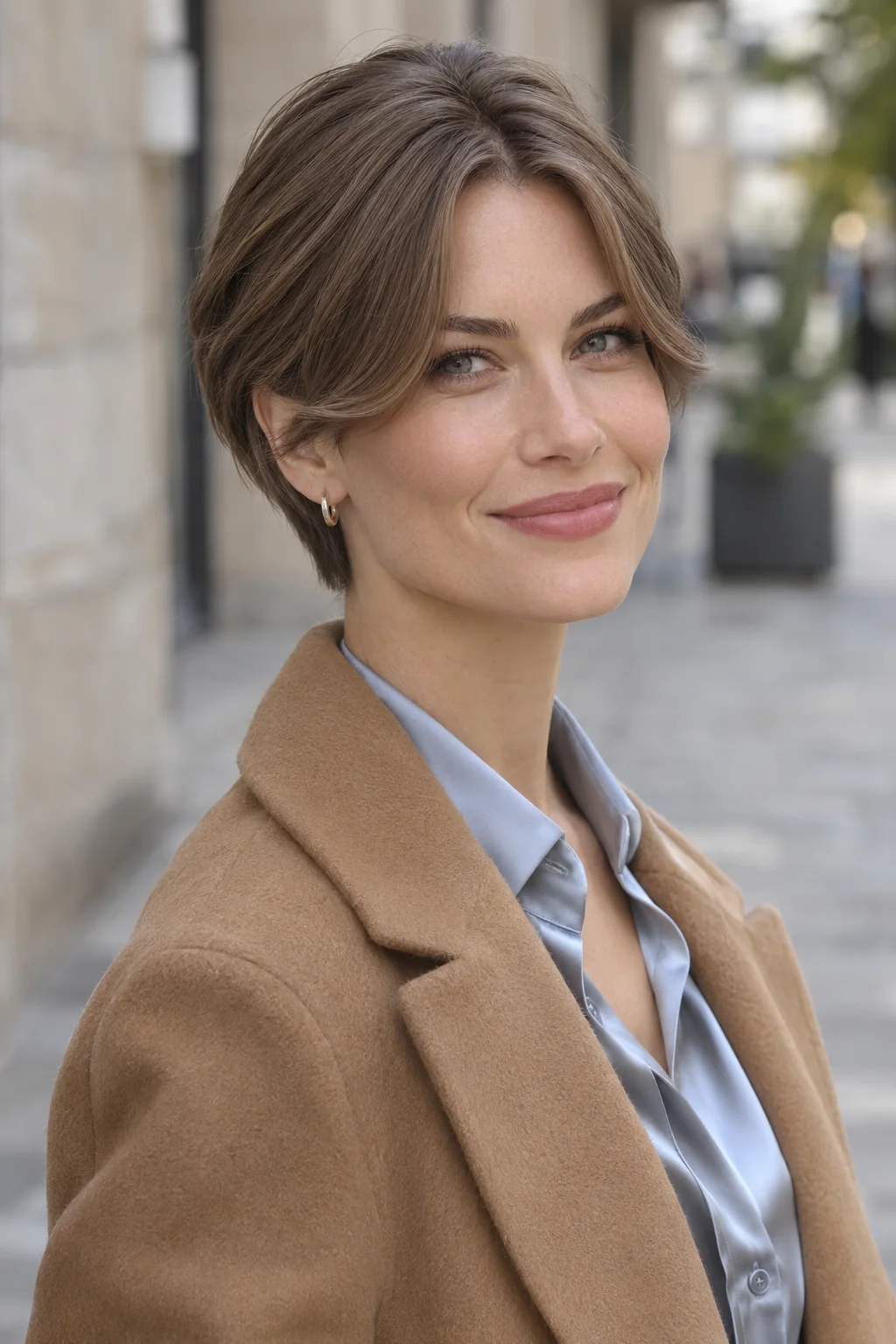
Parted front pieces open away from the forehead and finish near the cheekbones, with enough length at the sides to keep the result recognizably bob-meets-pixie. That little opening can brighten the face and make a short haircut feel airy and approachable without relying on lots of short, flyaway layers. It suits a natural middle or near-middle part better than a determined side part, and very sparse temples may need a narrower opening. A small brush can guide the ends away from the eyes; avoid forcing a dramatic curtain swoop if your hair prefers a gentler bend.
Ask your stylist for: Keep long, shallow curtain pieces to my cheekbones, connected side weight and a compact nape; work with my natural part.
7. The Asymmetric Bixie With One Shorter Side
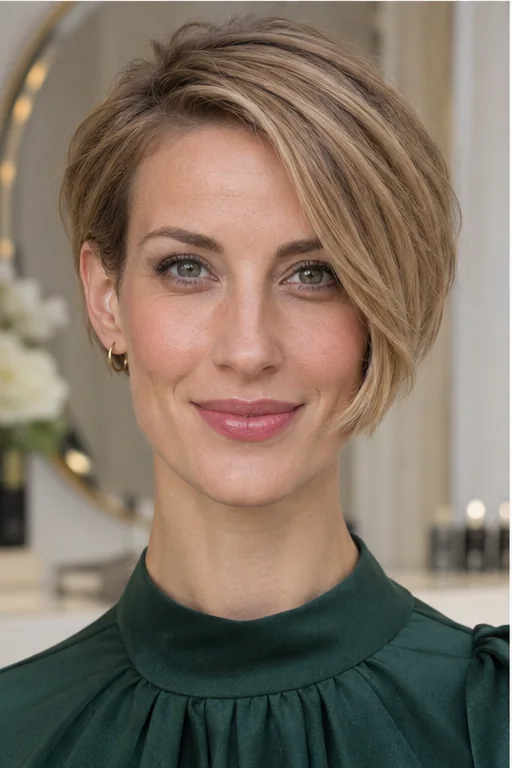
One side is cut short enough to reveal the ear, while the opposite side carries a fuller panel down toward the upper jaw. Because the interest comes from unequal lengths, the cut can feel expressive and bold without needing aggressive thinning through fine ends. The longer side creates a strong face-framing line, so choose its position with your usual part and preferred exposed cheek in mind. This is less flexible if you like switching your part every day; keep the longer panel smooth with a light brush and have your stylist check how both sides sit with glasses.
Ask your stylist for: Cut one side above the ear and keep the opposite side at my upper jaw, joining both into a compact bixie back.
8. The Fine, Wavy Bixie With a Compact Nape

Loose S-shaped bends give this bixie a soft surface, with longer hair around the ears and a compact nape keeping the lower outline from spreading. For fine hair that already has a wave, that texture can make the shape look lively and feel pleasantly relaxed, with less pressure to produce a smooth salon finish every day. The important limit is your own pattern: straight hair will need styling to imitate it, and waves may spring shorter as they dry. Try a small amount of lightweight hold on damp hair, then let the pattern settle before separating only the pieces that need attention.
Ask your stylist for: Shape my natural waves into longer ear-level sides and a fitted nape, checking the dry length before adding more layers.
Before You Book the Appointment
A successful salon visit begins with the overall shape, construction and upkeep—not only the finished length. Use this quick reality check before choosing your final reference photograph.
- Hair density: Ask your stylist to check the temples, part and crown separately; the same layering will not suit every area.
- Natural texture: Choose a finish your hair can support on an ordinary day, and judge waves at their dry length.
- Routine: Bring your usual part, glasses and styling habits into the consultation before deciding the shortest pieces.
- Maintenance: A compact nape and short fringe show growth sooner; agree on a realistic reshaping interval.
Will a Bixie Make Fine, Thin Hair Look Thicker?
It can make the outline look fuller by removing length that hangs limply and keeping weight where you want coverage. It cannot increase density. Fine strands with plenty of hair may tolerate more shaping than fine strands with low density, especially at the temples or crown. Ask your stylist to assess those areas individually and explain what will still be visible when the hair is unstyled.
What Should You Ask Your Stylist to Keep?
Bring a front photograph and a side or back reference, then point to the side edge, shortest nape and fringe depth you like. Say where your hair feels sparse, where it lies flat and how you normally part it. Ask whether the intended shape can be cut with restrained connected layers, and discuss any thinning, razor work or undercut before it happens. A technique should solve a specific problem rather than be an automatic part of the cut.
How Can You Style It Without Weighing It Down?
Start with a small amount of a lightweight product suited to your hair and add more only if needed. Direct the roots where the cut is meant to sit, then shape the ends gently; lifting every section can make a compact bixie look wider than intended. Follow heat-protection and tool instructions when blow-drying. If your hair separates easily, keep rich creams and heavy oils away from the roots and fringe.
How Often Does a Fine-Hair Bixie Need Reshaping?
Agree on a trim interval with your stylist based on your growth and the sharpness you like. Exposed ears, a short fringe and a compact nape usually make growth more noticeable than longer, covered sides. If only the nape feels untidy, ask whether a small tidy can preserve the longer top. Take a photograph after your own first wash so you can discuss what works between appointments.
Can You Grow a Bixie Back Into a Bob?
Yes, though the short nape and any cropped side need time to catch up. Tell your stylist that you are growing toward a bob so they can keep useful side length while gradually softening the difference at the back. Avoid automatically recutting the shortest layers at every visit. A longer fringe or a temporary tuck can help the transition feel intentional while the perimeter fills in.
The Takeaway
Choose the photograph whose side coverage and shortest pieces feel comfortable, then ask how that shape will behave with your actual density. The most useful bixie reference is one that still makes sense on an ordinary morning, after you have washed and styled it yourself.
More Hair Inspiration
- More Bixie Haircuts — Compare the wider family of bob-meets-pixie shapes.
- Power Pixie Haircuts for Fine Hair — Consider a shorter option if you prefer less bob-like side length.