A short shag for fine hair is an ear- to neck-length cut with graduated crown layers, face-framing pieces and a deliberately textured outline. Unlike a blunt bob, it creates visible movement; unlike a bixie, it keeps more swing around the ears and nape; and unlike a wolf cut or mullet, it does not need dramatic contrast with a long tail. Fine describes strand diameter, while thin describes overall density, so the smartest version lifts the surface while preserving enough perimeter weight to keep the ends looking full.
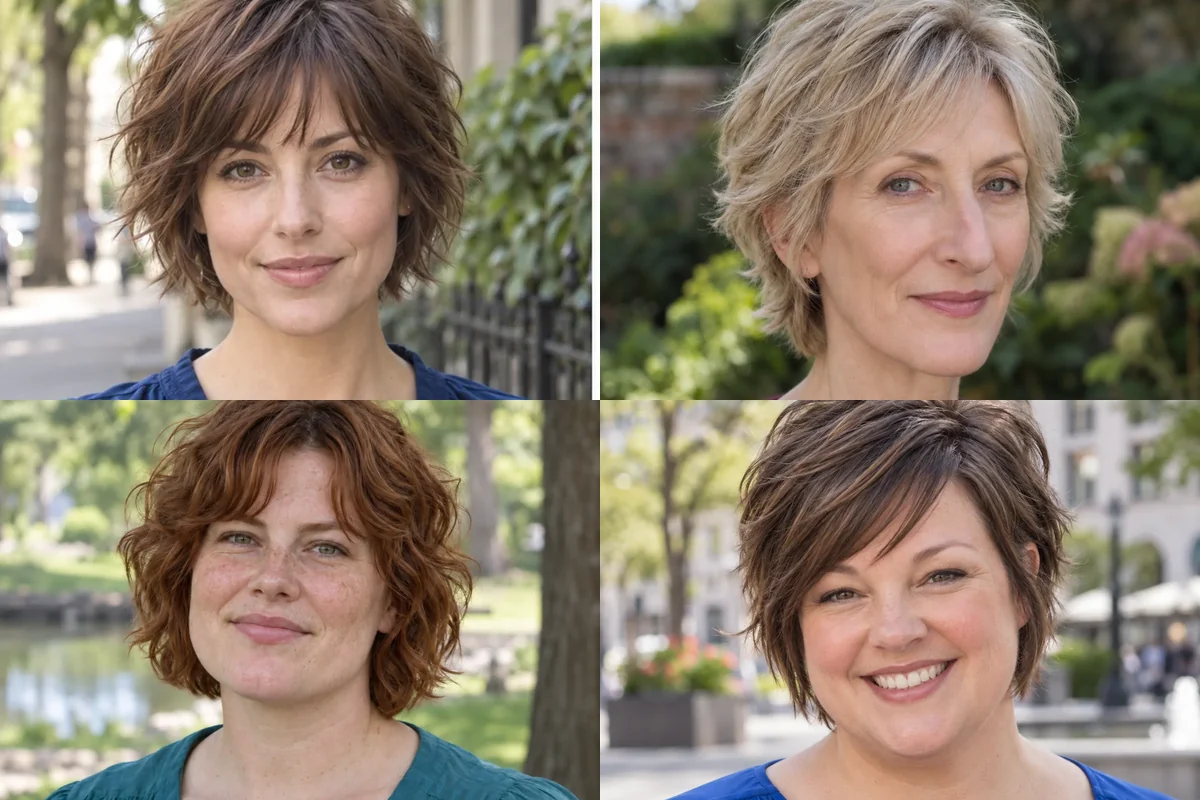
A short shag is not one strict haircut. It is the delightful meeting point of a shorter silhouette, visible layers and a little imperfect movement—the sort of shape that can make fine hair feel lively without looking sparse. The key is choosing where you want lift and softness, then refusing unnecessary thinning below that point.
These 20 short shag haircuts make that choice easier. Keep the photo you love, but also notice the practical detail: the fringe, the shortest crown layer, the strength of the perimeter and the amount of styling it asks of ordinary life.
Best for: fine straight, wavy or curly textures with enough density to support visible layering Styling effort: low to moderate Maintenance: reshape every six to eight weeks Main benefit: airy movement and crown lift without sacrificing full-looking ends
1. Soft Wispy Short Shag With Bangs
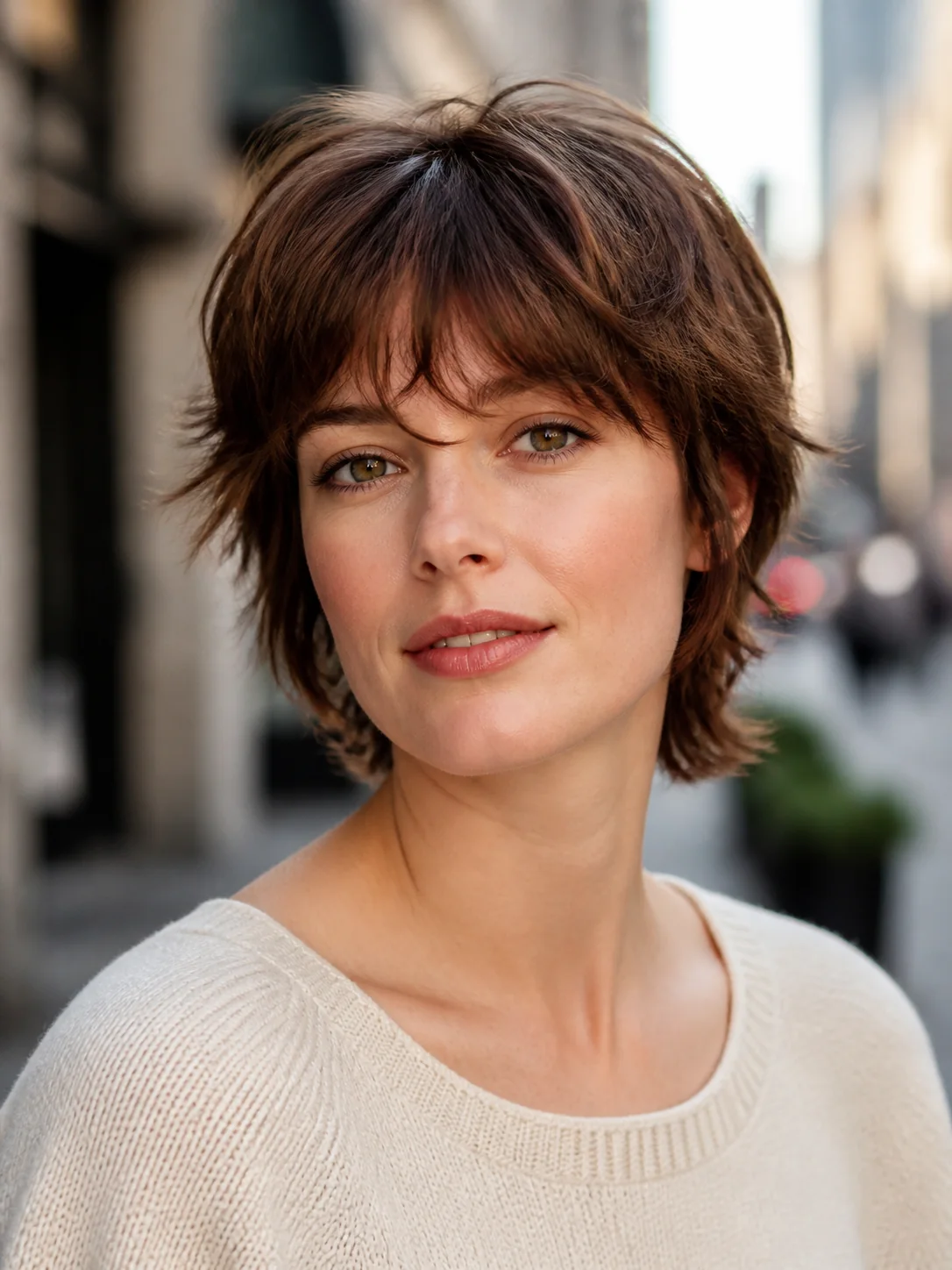
Feathery bangs and light cheekbone layers make a short shag feel gentle rather than wild. Ask for a soft, connected fringe with enough density to look intentional; the wispy part should be in the ends. It is a lovely choice when you want your eyes to be the first thing people notice. This version suits straight or lightly wavy hair that can hold airy separation without much persuasion. Dry the bangs first with a small brush, then pinch a trace of light cream through the face frame; request cheekbone layers, a connected fringe and a softly broken perimeter, and plan on a fringe tidy between full six-to-eight-week reshapes.
2. Airy-Crown Short Shag for Fine Hair

Fine hair often looks its fullest when the layers create lift without stripping away every bit of weight. Keep the crown lightly textured and the perimeter soft but substantial. A quick root spray and finger-dry will do more here than heavy paste ever could. Ask for shallow, connected layers, minimal thinning and a softly shattered edge instead of aggressive razor work. Lift the roots against their natural fall as you dry, then let the ends land naturally; this is an easy everyday option, but the crown will need reshaping when it starts collapsing into the longer base.
3. Short Wavy Shag With Curtain Bangs

Curtain bangs let natural waves open around the face instead of sitting in one solid line. Ask for a short, layered shape cut to your natural bend, with the center fringe long enough to separate softly. It feels relaxed, feminine and very forgiving day to day. It is especially useful if you like to air-dry and want the haircut to work with an existing bend rather than require a manufactured wave. Request cheekbone-length outer fringe pieces and layers cut to the dry spring of your texture, then scrunch in light mousse or curl cream and diffuse only until the roots are set.
4. Side-Fringe Short Shag for a Round Face

A diagonal fringe creates direction across the forehead, while controlled height at the crown keeps the shape buoyant. This does not hide a round face; it gives the eye a graceful line to follow. Keep the sides soft rather than overly wide if lengthening is your goal. Ask for an off-center fringe that blends at cheekbone level, soft sides and crown layers that can lift without standing upright. Blow-dry the fringe across the forehead, then loosen it with your fingers rather than setting a stiff swoop; keep the widest point above or below the fullest part of the cheeks if a longer visual line is your preference.
5. Short Shaggy Bob With a Dense Perimeter
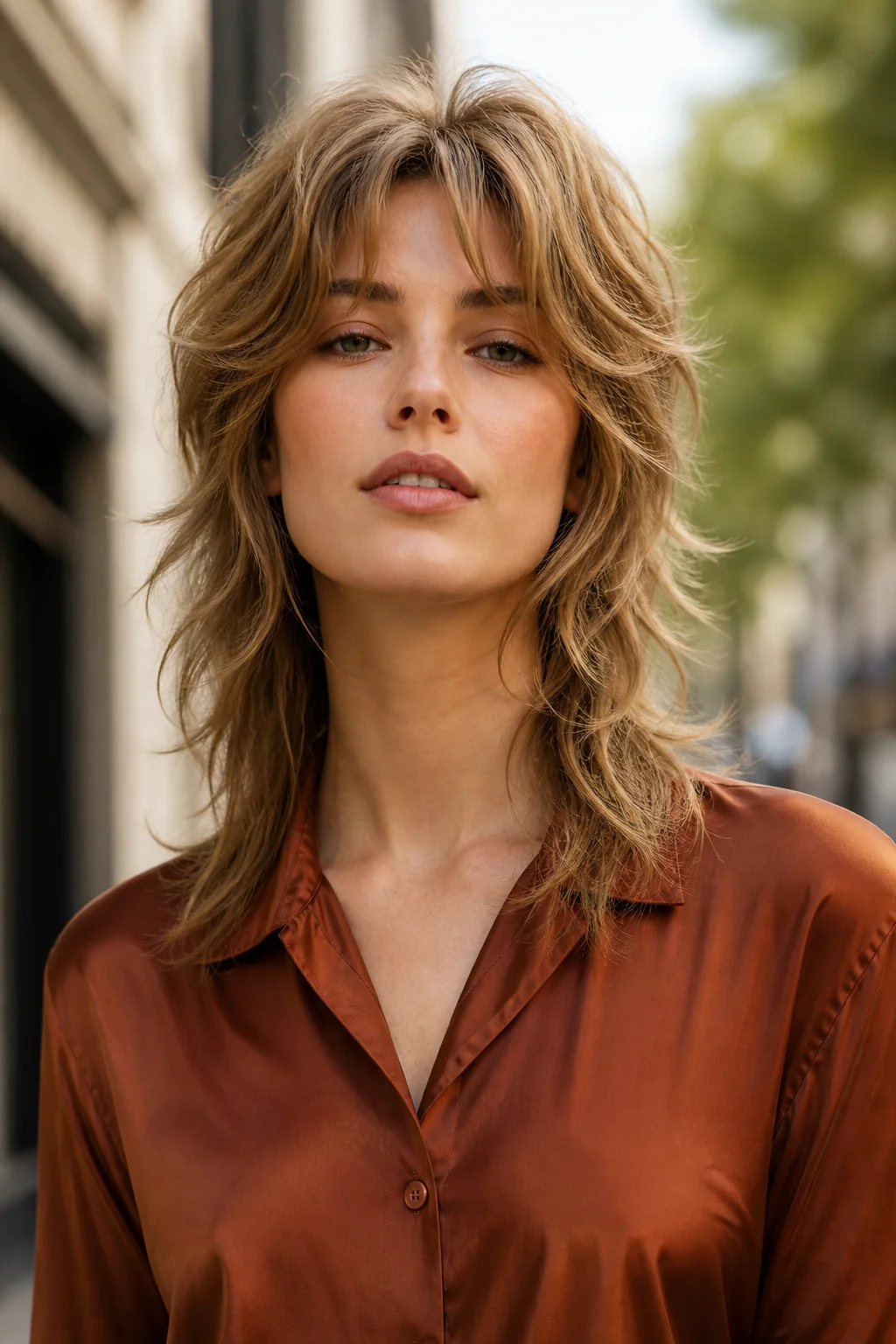
This bob-shag hybrid keeps a clear jaw-length baseline, then adds restrained movement through the crown and front. The strong perimeter makes fine ends look thicker, while the upper texture prevents the cut from feeling rigid or triangular. It reads smart, modern and office-ready, especially if you want shag energy without a deliberately wispy outline. Ask for a one-length bob foundation with shallow internal and face-framing layers, not a fully razored shag; smooth the ends with a paddle brush, then lift only the crown with a vent brush and flexible spray.
6. Shaggy Pixie With Long Side Bangs
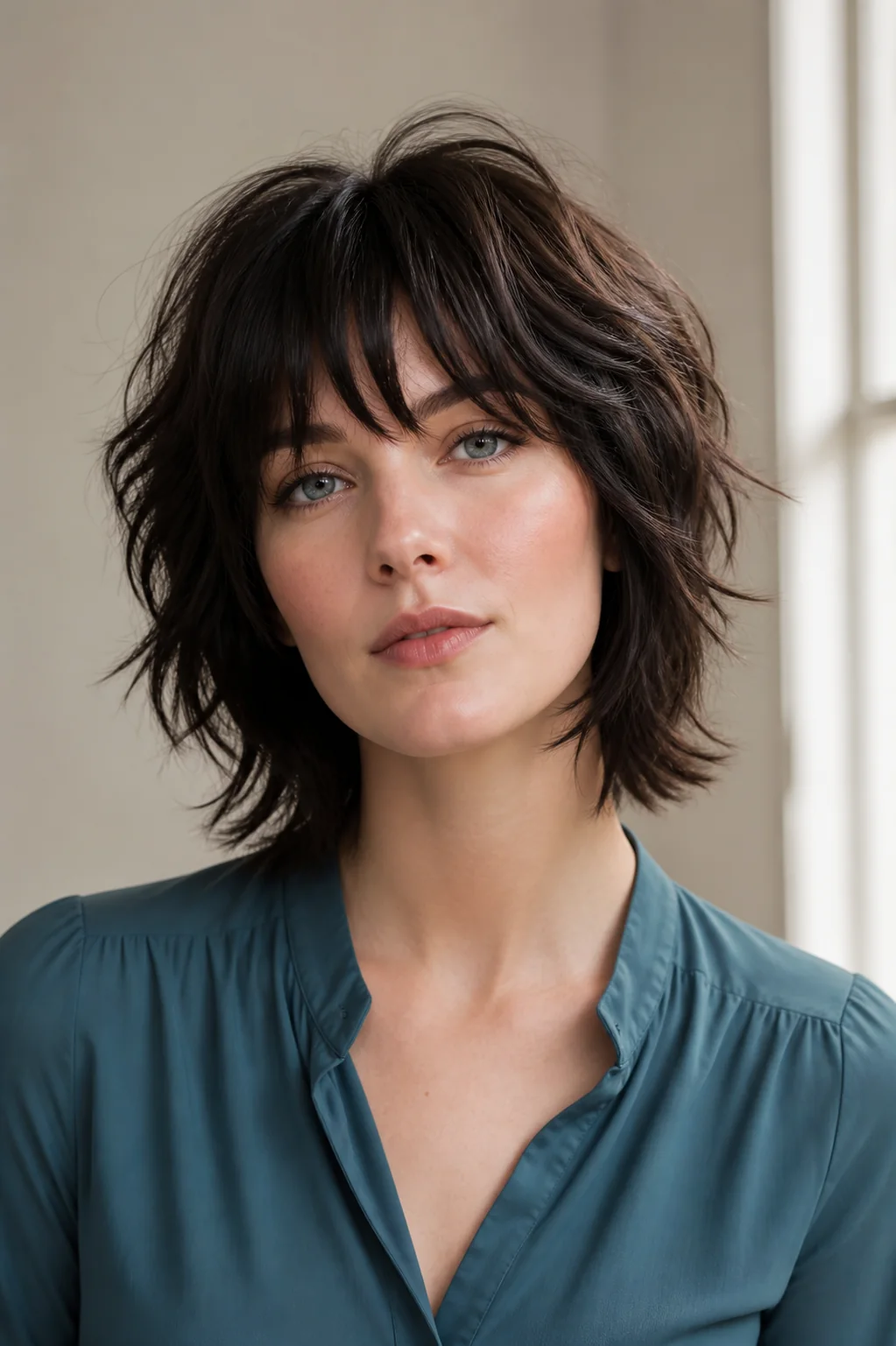
A cropped nape and ears keep this firmly in pixie territory, while a shaggy crown spills into long diagonal bangs. Height at the top can lengthen a round face and makes fine hair look energetic, yet the broad side fringe stays substantial enough to avoid a sparse finish. It feels bold, light and wonderfully quick on busy mornings. Ask for a tapered pixie base, connected three-inch crown layers and side bangs that finish near the cheekbone; dry against the natural part for lift, then sweep the front with a trace of flexible paste.
7. Curly Short Shag With a Soft Fringe
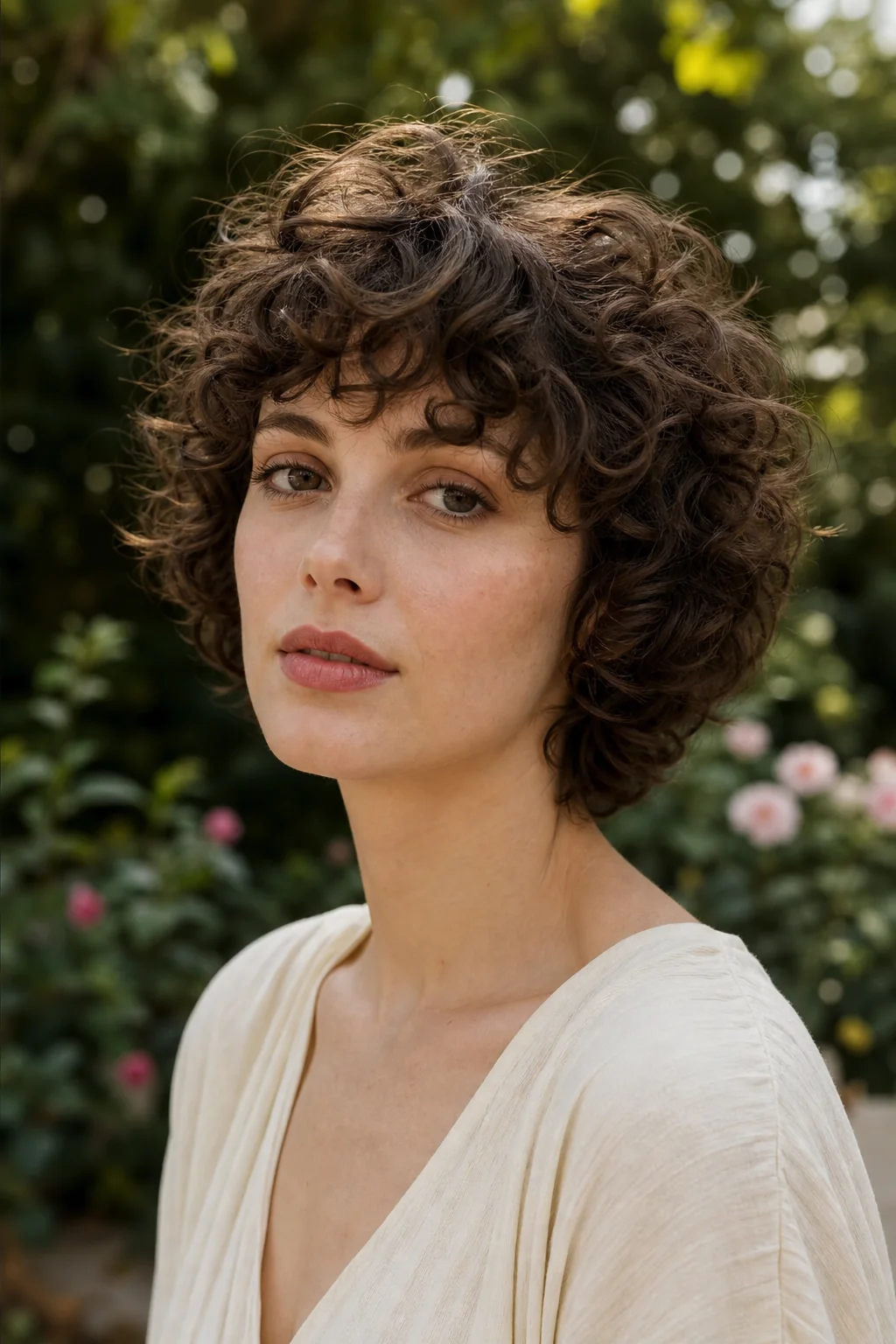
Curls give a shag its own built-in softness. A curl-forward fringe and rounded crown create an expressive, touchable halo without forcing the curls into a generic round cut. Let your stylist account for shrinkage and avoid over-thinning the ends. Ask for a curl-aware shape, a fringe planned at its fully dry length and connected layers that release bounce without hollowing the perimeter. This is ideal if you prefer definition with volume instead of a tightly controlled outline; apply curl cream in sections, diffuse with minimal touching and reshape when the crown begins to hang rather than spring.
8. Silver Short Shag for Women Over 50

Silver hair reflects light so beautifully that a few purposeful layers can look instantly dimensional. Keep the outline softly tailored and the fringe open enough to show the eyes. This version is modern and bright, with none of the feeling that short hair has to be merely practical. Ask for crown lift, neat but not clipped sides and an open fringe that can sweep or separate, and mention any wiry areas so the layer length can be adjusted. A violet cleanser used sparingly can control warmth while a conditioning mist keeps silver strands supple; the tailored outline generally looks freshest with six-to-eight-week reshapes.
9. Choppy-Crown Short Shag

Small, broken-up pieces at the crown make a short shag lively when your hair tends to fall flat. The trick is restraint: texture should create movement, not stiff spikes. Use a pea-sized amount of flexible cream only through the ends. Ask for short point-cut crown layers that connect into the sides, with enough untouched weight around the ears to balance them. This works best on straight to wavy hair and for someone comfortable using a little product most mornings; once the crown grows an inch and the pieces stop lifting, schedule a shape-up rather than adding stronger product.
10. Short Shag Bixie Shape
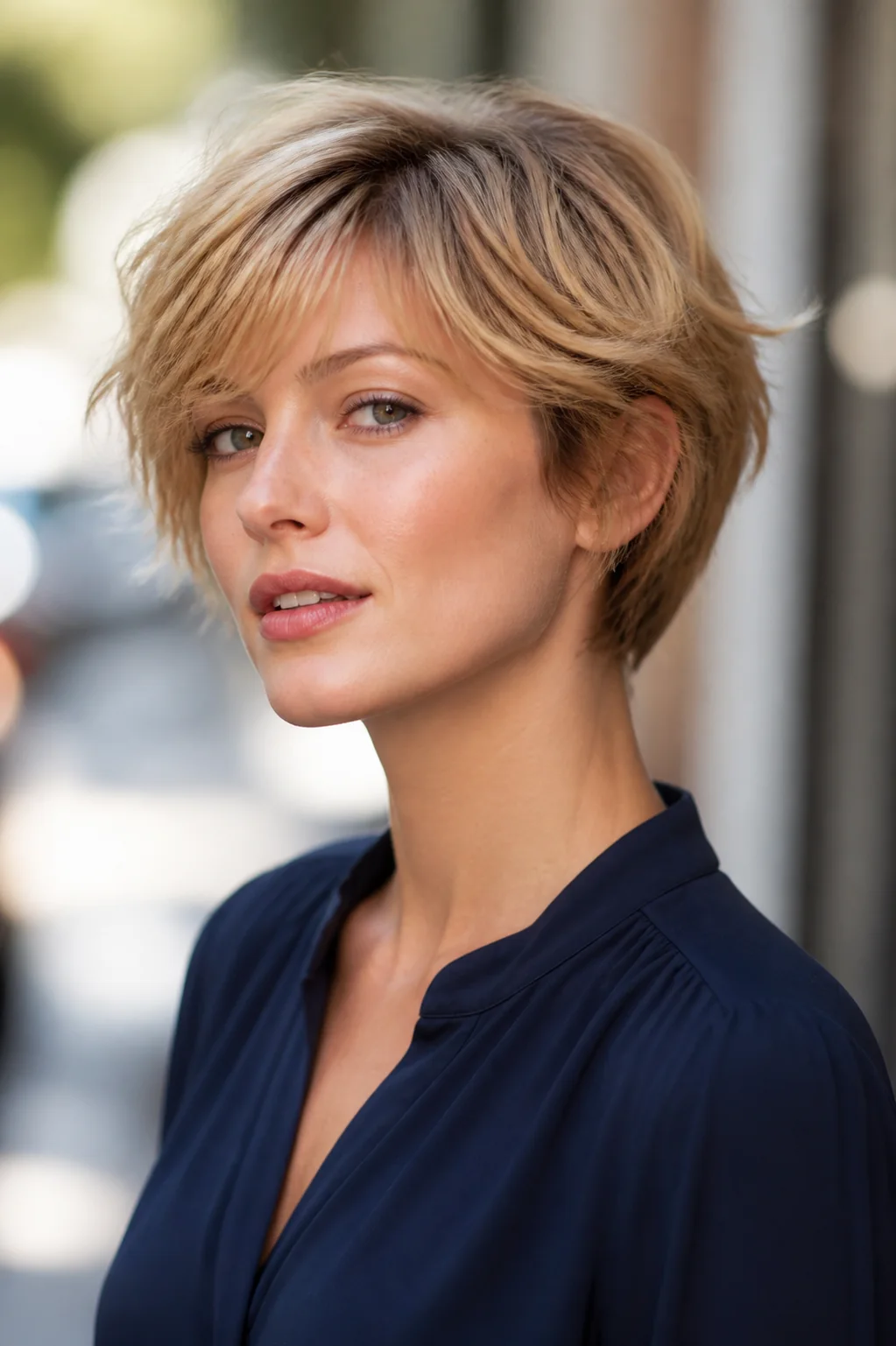
Part pixie, part bob, this shaggy bixie keeps a little ear-skimming length while the crown stays lifted. It is an excellent bridge if you want shorter hair but still like something to tuck behind an ear. Ask for a connected shape, not an abrupt undercut. Describe an ear-skimming bixie outline with a textured crown, soft side pieces and enough nape length to keep the silhouette mobile. Air-dry with mousse for looseness, or smooth the sides and lift the top with a small brush for a tidier finish; the shape is practical for someone curious about shorter hair but wary of losing styling options.
Pause and notice: The most flattering short shag is rarely about copying one face. It is about deciding whether you want softness at the forehead, lift at the crown or movement beside the cheekbones.
11. Short Shag With Long Side Bangs
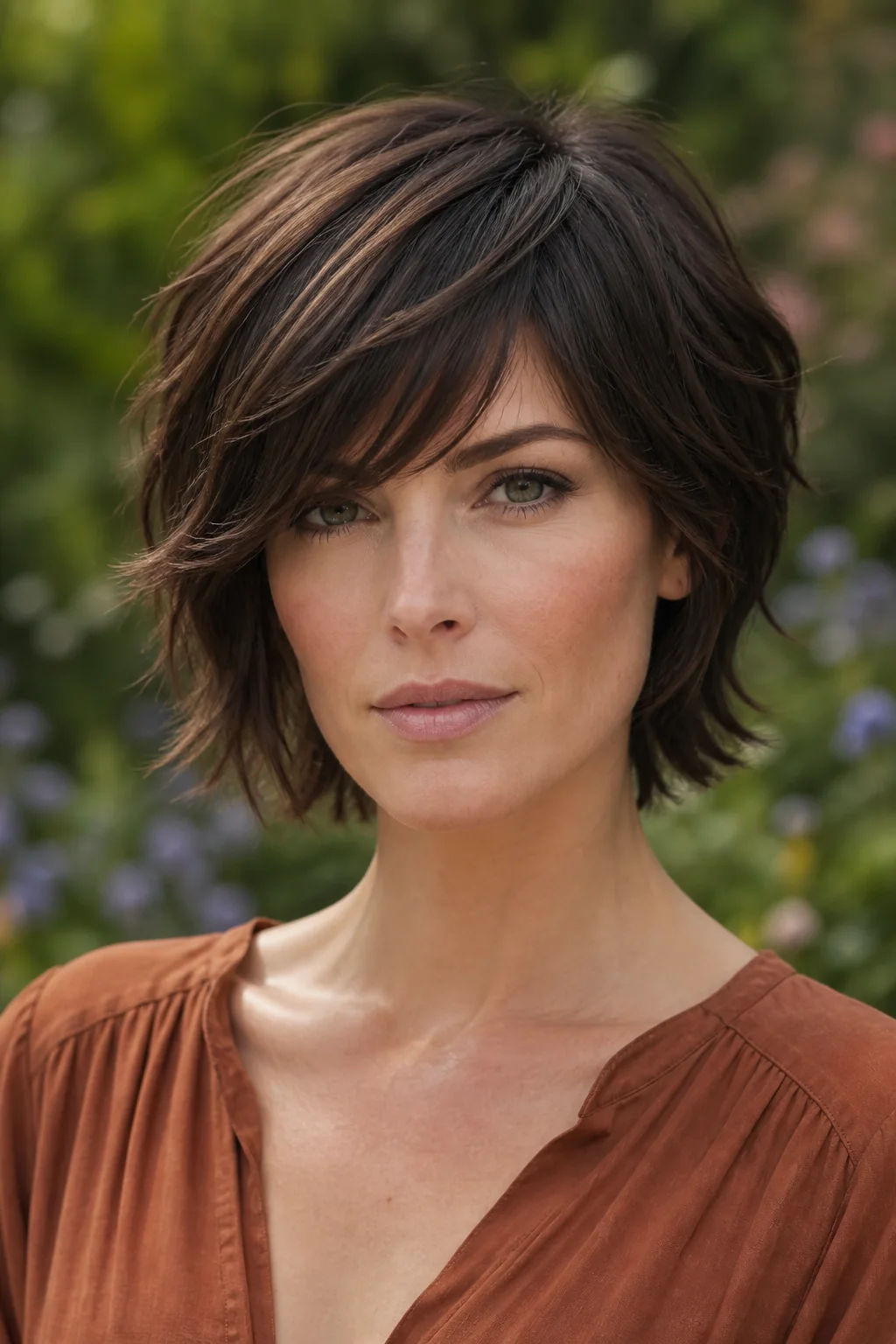
Long side bangs are a reassuring way to try a short shag. They create an elegant diagonal and grow out more gently than a compact full fringe. Keep enough weight at the front to make the sweep feel polished, even when the rest of the cut is tousled. Ask for a side section that lands between cheekbone and jaw when dry, with its outer edge blended into the temple layers. This works well with glasses and for anyone who changes their part; dry the fringe in the opposite direction first, flip it back into place and use flexible spray only if it tends to fall forward.
12. Choppy Short Shag With Broad Piecey Bangs
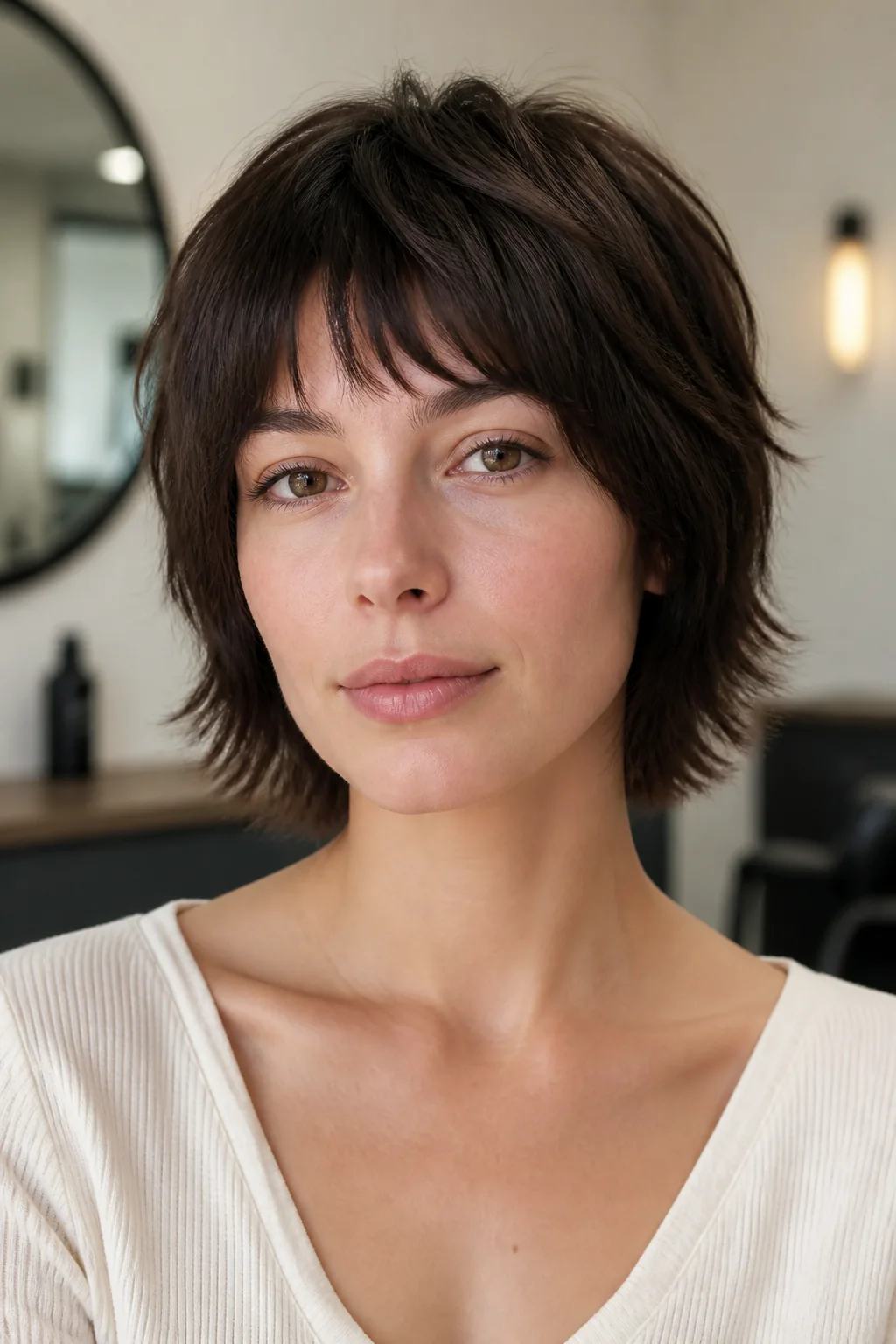
Chunky, uneven sections create a deliberate rhythm through the crown and fringe, but the pieces stay broad enough to keep fine hair looking substantial. The broken bangs spotlight the eyes and make a conventional short cut feel more expressive. It has a playful, slightly rebellious mood that works with an uncomplicated routine. Ask for point-cut panels rather than wholesale thinning, with weight retained behind the ears and at the nape; rub matte paste between your palms, press it into three or four sections and stop before every strand separates.
13. Soft Mullet-Inspired Short Shag
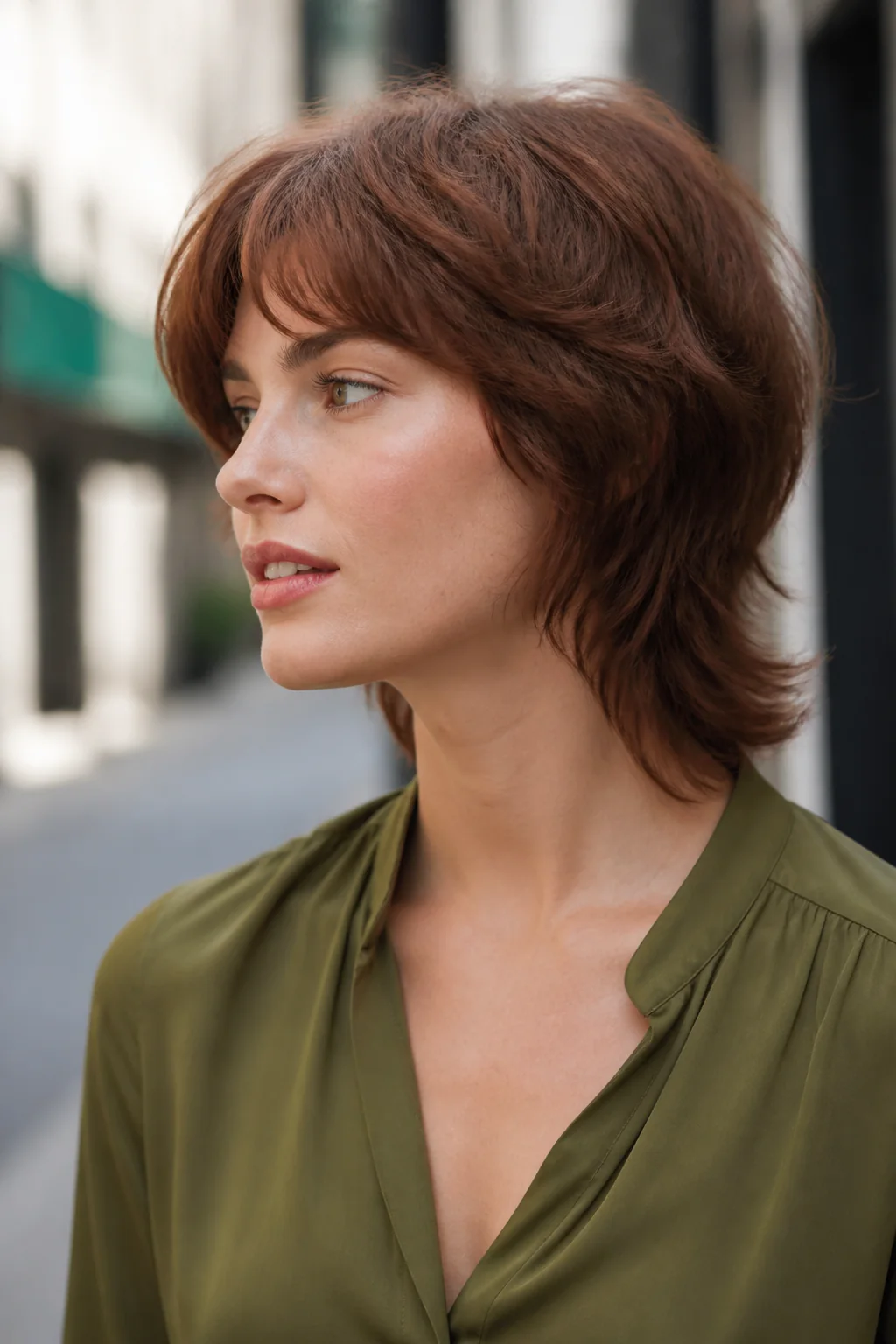
A little length at the nape gives this shag a subtly rebellious spirit while the face stays soft and wearable. The most flattering versions have a rounded crown and connected sides. It is ideal for someone who wants edge but not a severe, high-contrast cut. Ask for a soft mullet-inspired shag with fullness above the ears, cheekbone pieces and a nape only slightly longer than the sides. Scrunch the back downward while lifting the crown as it dries, and remember that the nape may need tidying before the top feels overgrown; keeping the sections connected is what makes the grow-out manageable.
14. Piecey Short Shag for Straight Hair
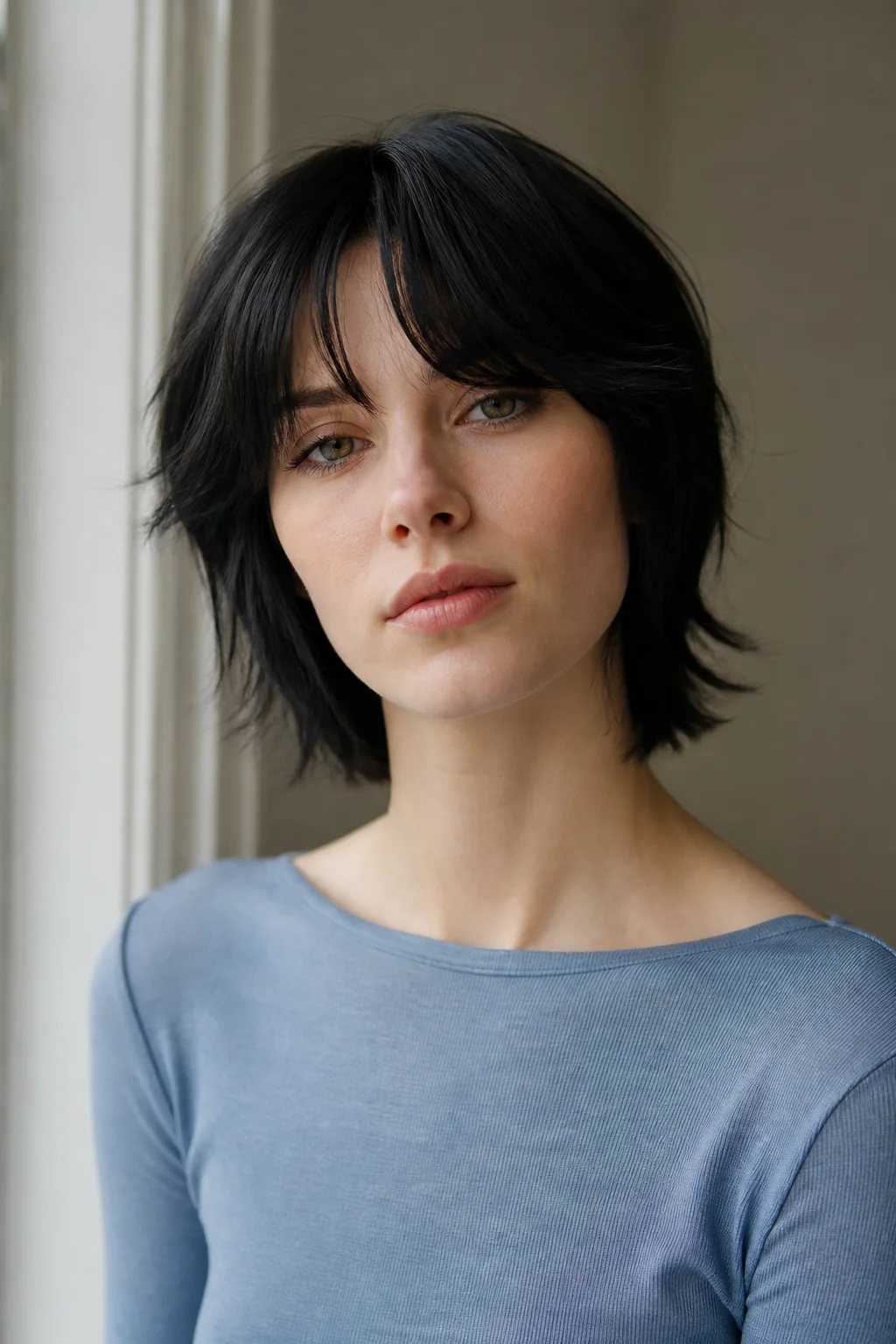
Straight hair shows every layer, so this shape needs a clean underlying design before the pieces are added. A gently broken fringe and light movement through the top stop the silhouette feeling flat. Keep styling simple: bend a few pieces, then leave the rest touchable. Ask for visible but blended layers, point-cut separation and enough density at the perimeter to keep the hair looking healthy. This is practical when straight hair will not hold a full wave but responds to a quick hot-tool bend; style only five or six sections in alternating directions, because too much curling erases the modern contrast.
15. Copper Short Shag With Bangs

Warm copper makes the separate layers of a shag especially easy to see. Pair it with a soft brow-skimming fringe and a slightly tousled finish for a look that feels sunny and expressive. Agree on maintenance honestly—vivid warmth may need color care as well as trims. Ask for soft crown layers, a movable brow-skimming fringe and a copper tone chosen for your undertone and starting color; cut and color should be planned together so lightened ends remain strong. Use color-safe shampoo, lower heat and a gloss when the warmth fades, since vivid copper may need refreshing more often than the six-to-eight-week haircut.
16. Short Shag With Bottleneck Bangs
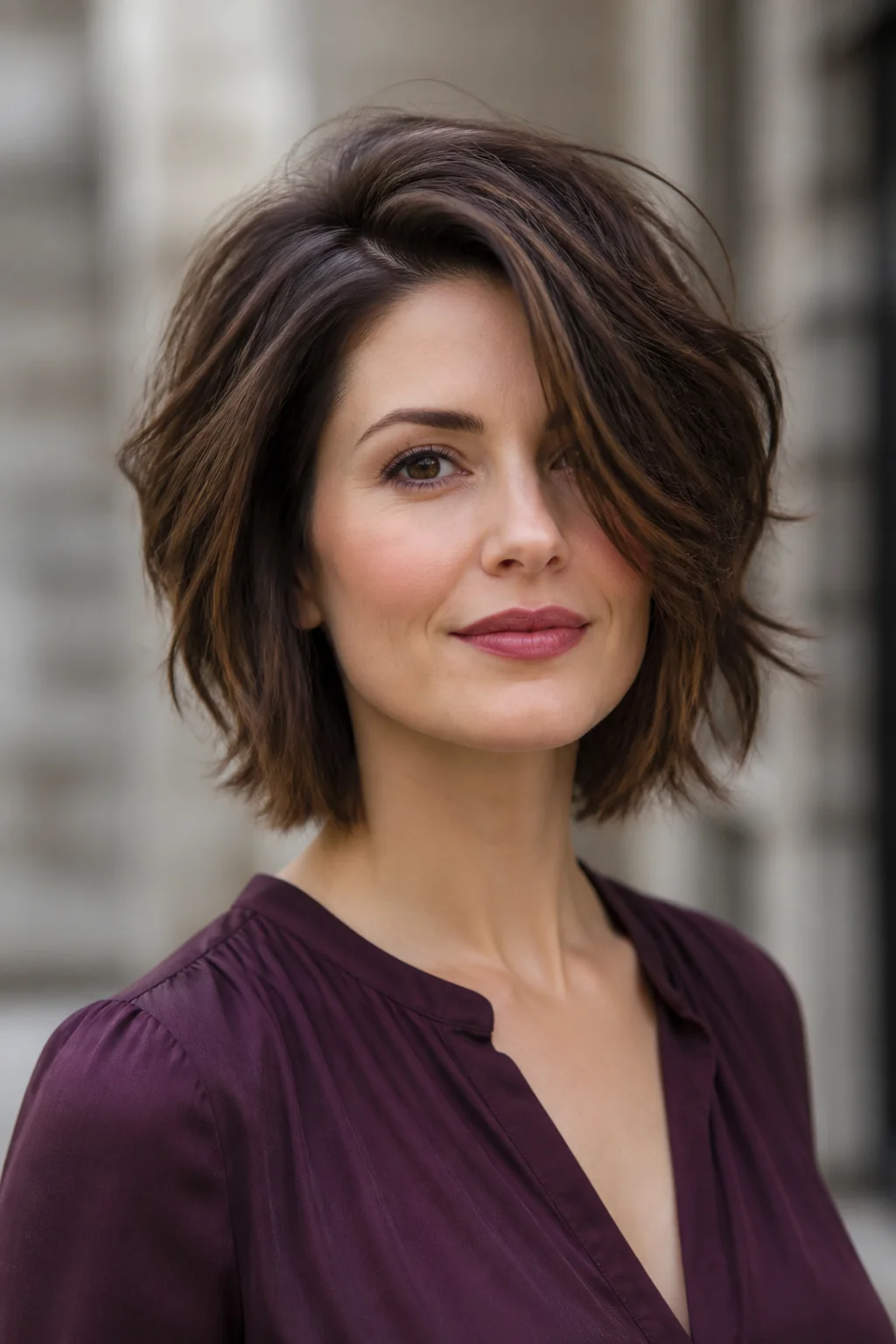
Bottleneck bangs sit shorter and lighter at the center, then widen into longer temple pieces that merge with the shag. The open middle brightens the eyes, while the outer curves soften a broad forehead without removing too much hair from the main silhouette. It feels flattering and gently stylish, with a more graceful grow-out than a solid fringe. Request bangs that graduate from mid-brow to cheekbone, a softly lifted crown and protected density behind the fringe; dry the center forward and roll the side pieces away from the face.
17. Feathered-Fringe Short Shag With Glasses
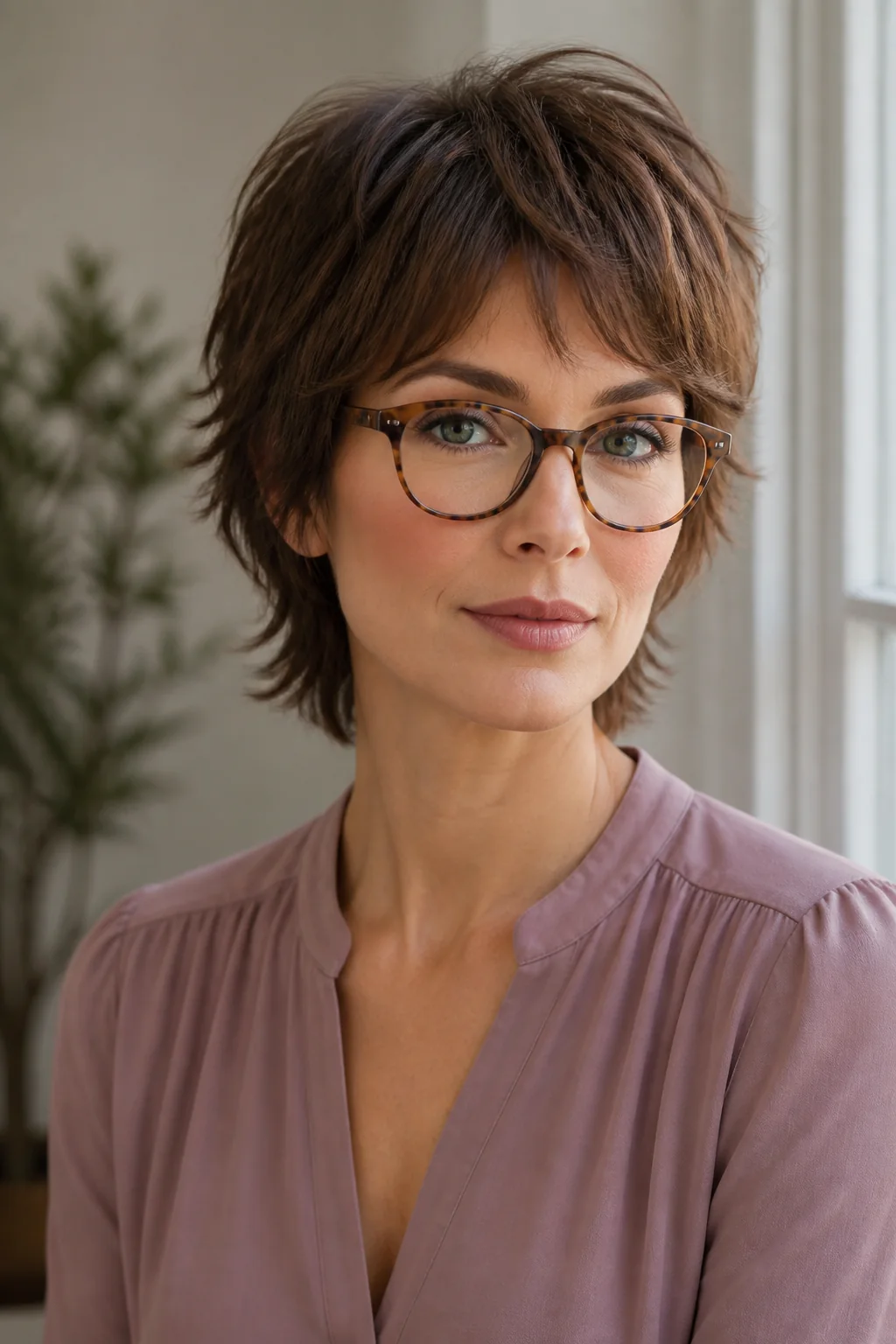
Glasses and fringe can frame the eyes beautifully when neither crowds the other. Have your stylist shape the bangs while you wear your usual frames, keeping the ends airy and the temple area neat. The result feels intelligent, warm and effortless. Ask your stylist to check the dry fringe length, width and sideburn area with the frames in place. A slim flat brush can reset the roots in under a minute, while a trace of dry shampoo prevents separation at the forehead; keep the temple area neat as it grows so the frames never feel crowded.
18. Tapered-Nape Short Shag
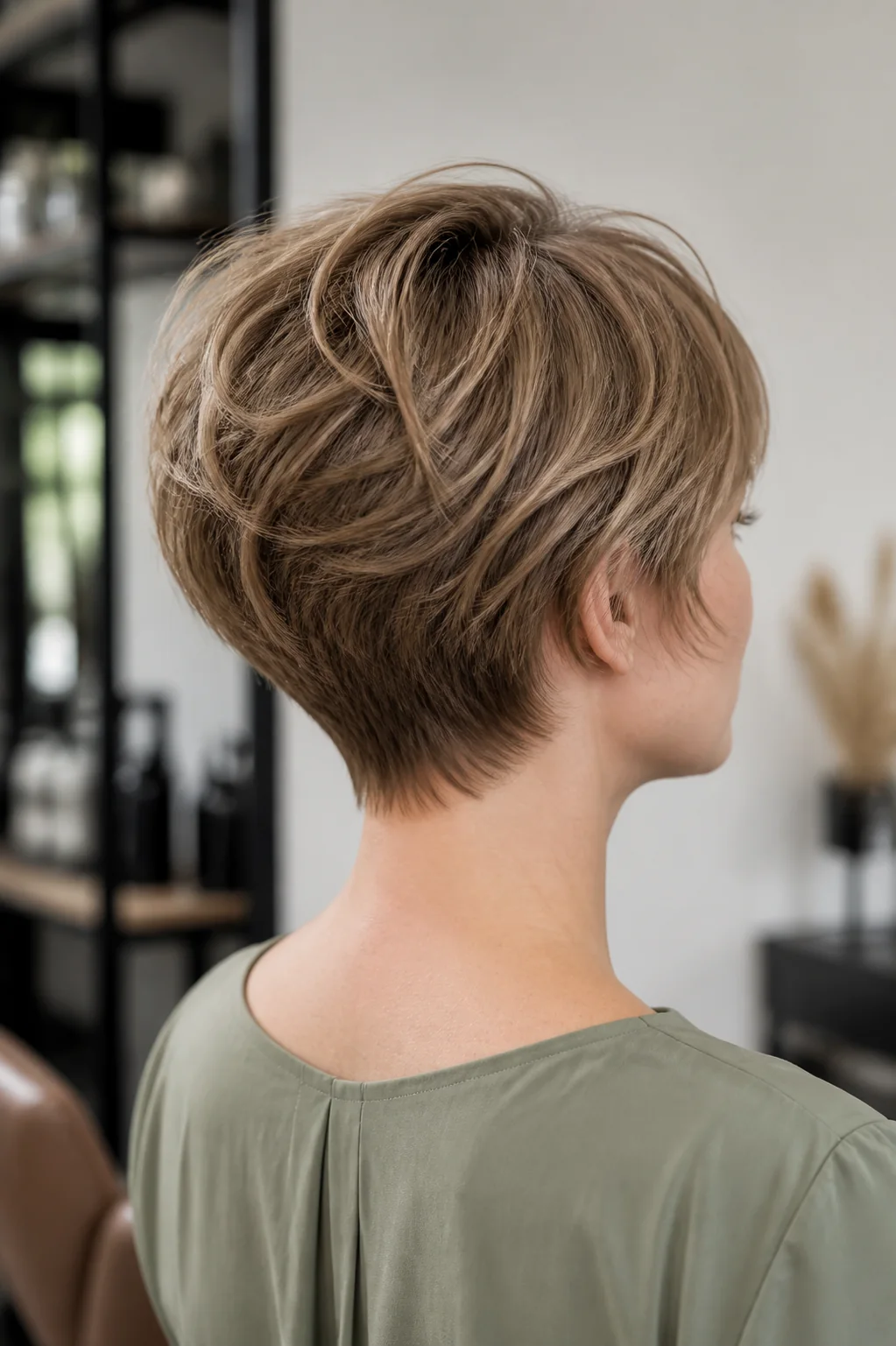
A gentle taper at the nape keeps a layered short cut looking finished from behind while the crown remains soft. It is a wonderful detail if you dislike bulk at the neckline. Ask for a soft taper, not a sharply clipped one, so the overall mood stays shaggy. Use the phrase "scissor-soft taper" and ask for the neckline to blend into longer, textured crown layers rather than resemble a fade. This version is useful for dense hair, warm weather or anyone who dislikes bulk against collars; the back may need a clean-up around four to six weeks even if the top can wait longer.
19. Grown-Out Short Shag

A slightly longer shag offers movement and a more relaxed path between appointments. Keep the fringe and face frame connected as it grows, and the cut will look intentionally undone rather than simply overdue. This is a kind option for anyone easing into shorter hair. Ask for a conservation trim: dust the ends, rebalance the fringe and remove only the bulk that interrupts the emerging shape. Use clips or a tuck on the sides as they grow, and resist recutting the crown too short if length is the goal; preserving connection turns an awkward stage into a relaxed crop-to-bob transition.
20. Glamorous Short Shag With Soft Waves
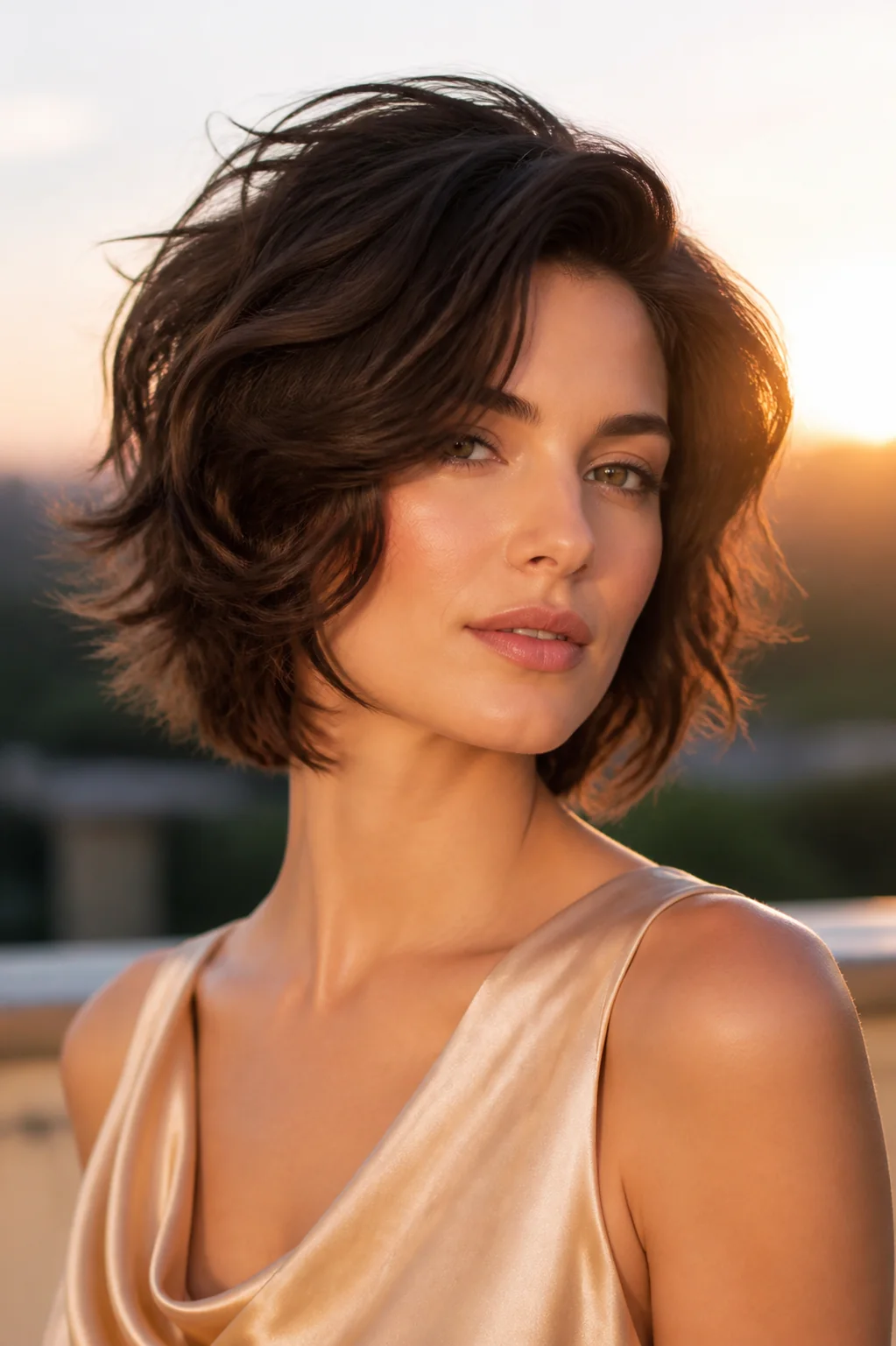
Soft, brushed-out waves turn a short shag into an evening-ready shape without losing its easy character. Ask for longer top layers that can bend away from the face, then use flexible hold rather than hard spray. It proves that texture can look elegant as well as casual. Request enough length through the top and fringe to take a small iron or roller, with connected layers that still look attractive when worn naturally. Set small sections away from the face, let them cool, brush gently and finish with flexible spray; this is a versatile choice if you want one short haircut to move between casual days and polished occasions.
Final pause: Choose the version whose maintenance and movement sound like you on a normal Tuesday—not only the one that looks most dramatic in a saved photograph.
What to Ask Your Hairdresser For
Say what you want the cut to do: add lift, soften your forehead, reduce bulk, celebrate curls or keep the grow-out easy. Bring a front and back reference, then agree on the dry length, the fringe, the crown height and how much texture you will actually style. “Shaggy” means different things to different people; those four details make it useful.
Will a Short Shag Suit Your Hair?
Almost any texture can wear a short shag when the layer placement respects its natural behavior. Fine hair needs enough perimeter weight. Thick hair benefits from internal release. Curls need room for shrinkage. If you prefer the least daily styling, choose a version that resembles your hair on its best air-dried day.
Styling and Maintenance
Start with less product than you think. A root lift, light mousse or curl cream can help, but the haircut should carry most of the movement. Reshape every six to eight weeks; a compact fringe or very textured crown may need attention sooner. Dry the fringe first, then use fingers to encourage—not erase—your natural texture.
More Short-Hair Inspiration
For a softer pixie direction, explore 20 Soft Pixie Cuts for Round Faces. For a bob-pixie middle ground, see 20 Bixie Haircuts.