Love the softness of a bob but wish the back felt a little lighter? A bixie lets you keep that lovely frame around your face while making the neckline easier to manage.
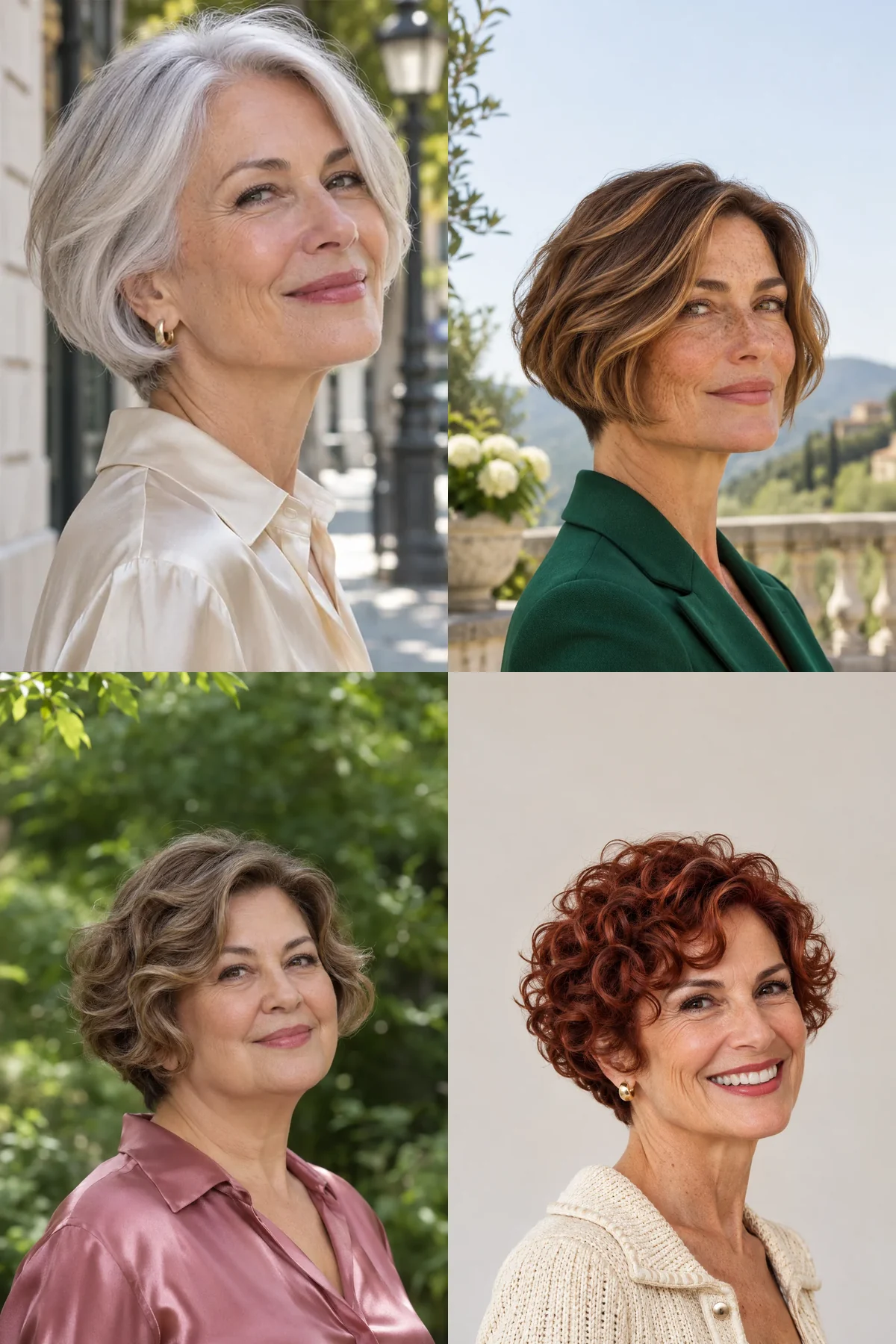
A bixie is a short haircut that combines a pixie's shaped nape and layers with a bob's longer, softer sides or fringe. Unlike a classic bob, the back is distinctly shorter; unlike a close pixie, visible length remains around the ears, cheeks or front. For women over 50, the choice is not about looking younger: it is about choosing a shape that works with your natural texture, density, glasses and daily routine.
Find the one that feels like you: Start with the first look and let the photographs lead. Each style explains how the shape affects your features, the mood it creates and the exact words to take to your stylist.
Quick Facts
- Signature shape: a short fitted nape with longer bob-like sides or fringe.
- Bring your usual glasses to check the temple and fringe.
- Ask your stylist to assess dry texture and density before removing weight.
- A longer front can help the transition from a bob or pixie.
1. Rounded Bixie With a Tucked-In Nape

A gently rounded silhouette sits just below the ears and curves inward at the nape, keeping the softness of a bob without the weight of a longer back. The shape makes the jawline feel delicately framed and gives a blouse or jacket collar a clean, elegant finish, especially if your hair naturally lies smooth. It is a lovely first short cut when you want to feel polished without exposing the entire ear, but a strong nape cowlick may need extra attention. Blow-dry the sides inward with a small brush and let the crown settle rather than teasing it.
Ask your stylist for: Keep a rounded weight line below my ears, shorten the nape with scissors and blend the crown into the sides.
2. Long Bixie With Sweeping Jaw Corners
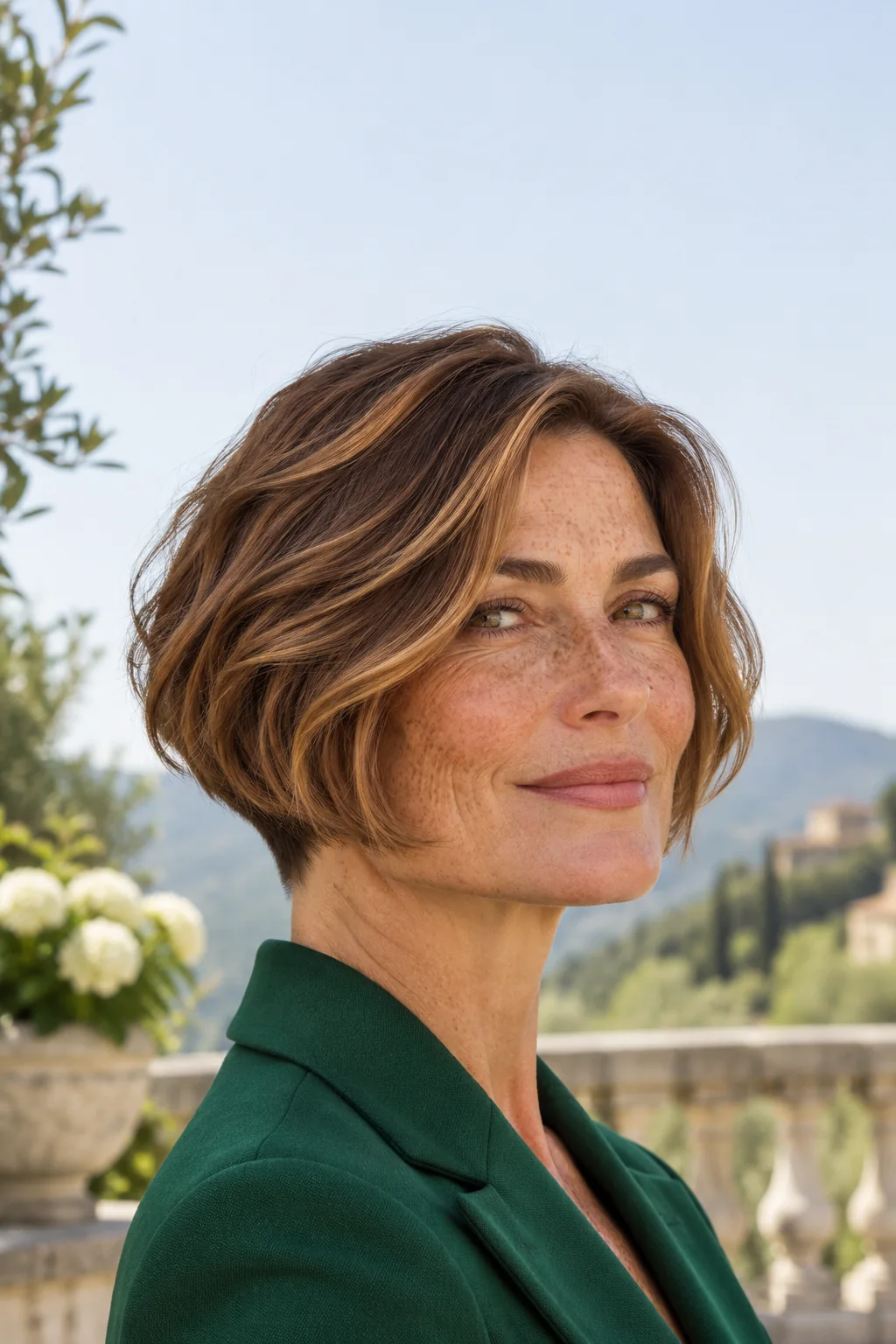
Longer front corners reach the upper jaw while a fitted back opens the neckline, creating a distinctive silhouette that still has the swing of a bob. If you are ready for shorter hair but love having something to tuck behind your ear, this can make the change feel wonderfully unhurried rather than drastic. It suits straight or lightly wavy hair with enough side density to hold the corners, although a fine sparse temple may need a shorter edge. Dry the front forward first and tuck only when cool to preserve its gentle movement.
Ask your stylist for: Leave connected upper-jaw corners and shorten the nape, keeping enough weight for an easy tuck.
3. Bixie With a Side Sweep for Glasses

A sweeping fringe travels diagonally above one frame and blends into the longer side, while the nape remains closely shaped. That clean direction keeps attention on your eyes and can make your favorite glasses feel like a deliberate part of the outfit instead of something you constantly push hair away from. This is particularly useful if your natural part already favors one side, but bring your everyday frames because a thick temple arm can lift the hair. Direct the fringe toward its intended side while damp and keep product light near the lenses.
Ask your stylist for: Cut a softly diagonal fringe that clears my frames and connects into ear-skimming sides with a fitted nape.
4. Choppy Bixie With a Defined Crown
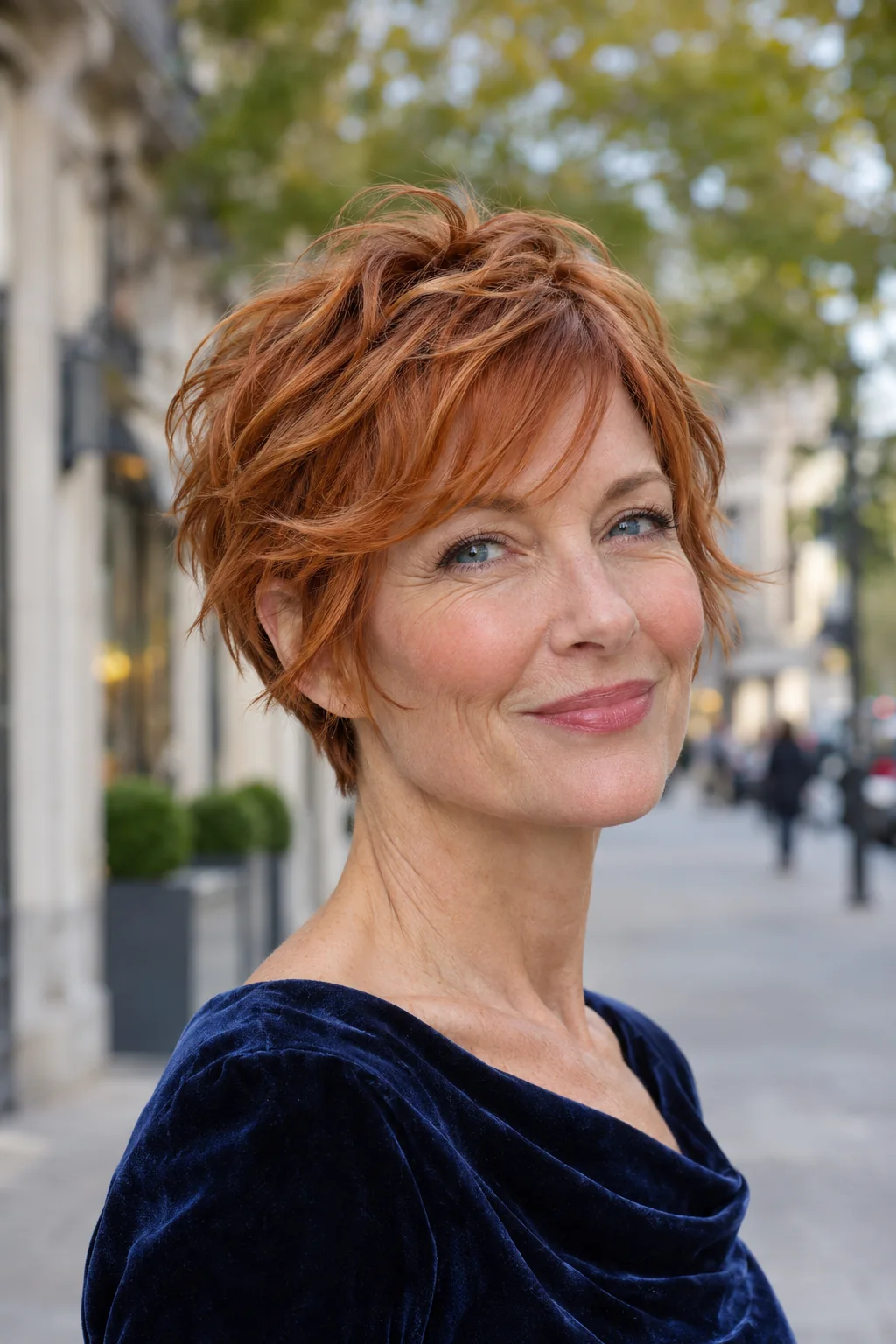
Short, separated crown layers sit over a longer fringe and feathered ear-level sides, giving this version a more animated outline than a smooth rounded bixie. The playful texture can make a simple sweater feel a little more intentional, especially when you want an expressive cut without a long styling routine. It works best when the hair has enough density to support visible pieces; removing too much from already sparse areas can leave gaps. Use a pea-sized amount of light texture cream through the ends and keep the roots free of heavy wax.
Ask your stylist for: Create short piecey crown layers over connected longer sides and fringe, retaining enough perimeter weight.
5. Wavy Bixie With Soft Volume at the Sides

Loose waves form a soft S-shaped outline around the cheekbones, with a short nape keeping the fullness from pooling against the neck. That buoyant movement can soften angular features and give your hair a romantic, relaxed feel even on days when you wear little makeup. If thick wavy hair tends to expand after washing, ask for internal shaping rather than removing the entire edge; the wave needs enough length to bend. Scrunch a lightweight mousse into damp hair and let the waves settle without brushing them dry.
Ask your stylist for: Keep longer wavy sections at ear and cheek level, remove excess internal bulk and shape a short nape.
6. Curly Bixie With Rounded Ringlets
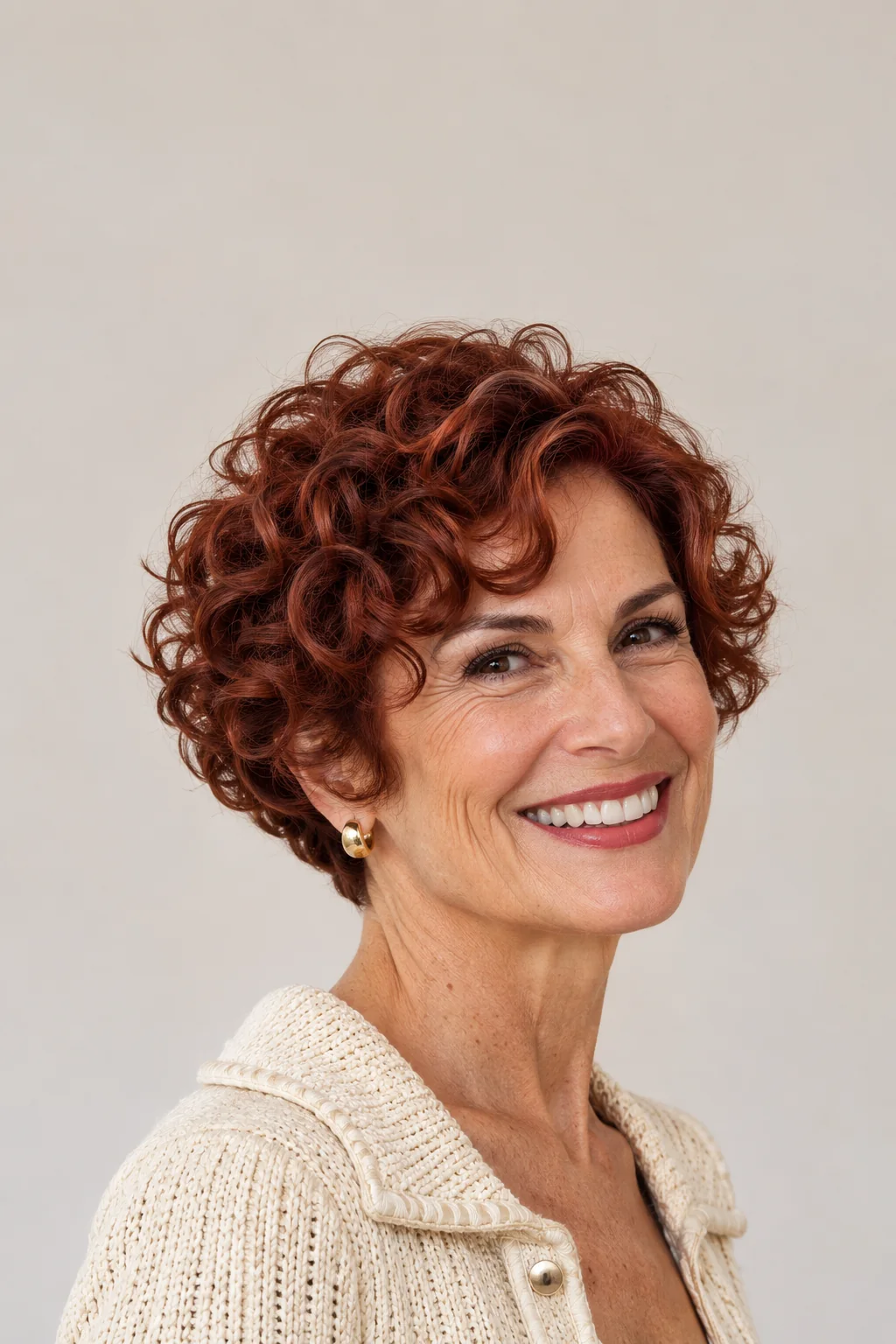
Defined ringlets gather into a rounded cap with longer springy curls beside the ears and a compact nape that keeps the neck open. The shape celebrates your natural pattern instead of making you stretch it flat, giving a joyful, put-together feeling with very little need for a brush. If your curls shrink sharply, the difference between wet and dry length is crucial; check the sides after drying before finalizing the cut. Smooth a small amount of curl gel through damp sections, then allow the curl pattern to set before separating it.
Ask your stylist for: Shape my curls at their natural dry length, retain bob-like side ringlets and graduate the nape without exposing too much scalp.
7. Asymmetric Bixie With One Tucked Side

One side sits neatly above the ear while the other sweeps down toward the cheek, balancing a short nape with a deliberately off-center line. The contrast highlights earrings and cheekbones and can feel quietly daring without requiring an undercut or an aggressive finish. It is a particularly satisfying option if you already wear a deep side part and enjoy asymmetrical accessories, though it will need occasional reshaping to keep the difference clear. Dry the longer side with a little tension and smooth the exposed temple gently with your fingertips.
Ask your stylist for: Keep one soft ear-revealing side, a longer opposite cheek-skimming section and a short scissor-shaped nape.
8. Soft Bixie With Open Curtain Pieces

A longer center-parted fringe opens around the eyes and curves into softly layered sides, with the back cropped close enough to show the neckline. The open shape lets your features feel visible and bright while keeping enough front length for a gentle face frame, a lovely balance if you are growing out shorter bangs or a pixie. It suits hair that naturally divides near the center, although a persistent cowlick may call for an off-center adaptation. Dry the front away from the face with a small brush and let the pieces fall naturally.
Ask your stylist for: Keep cheekbone-length parted fringe pieces, connected ear-level sides and a compact blended nape.
Before You Book the Appointment
A successful salon visit begins with the overall shape, construction and upkeep—not only the finished length. Use this quick reality check before choosing your final reference photograph.
- Fine strands: Keep connected side weight rather than thinning already sparse areas.
- Thick or wavy hair: Ask for carefully placed internal shaping that preserves enough length for the wave.
- Glasses and curls: Bring your usual frames and check curly side lengths after drying.
Choosing the Right Bixie for Your Hair
Fine strands may look more substantial when the side weight stays connected; thick hair may benefit from carefully placed internal layers. Test the shape with your natural part and your glasses, and check curls at their dry length. Gray hair can have any texture, so let its actual behavior rather than color dictate the cut.
How to Discuss a Bixie at the Salon
Bring a front and side reference and point to the longest side piece, the shortest part of the nape and the amount of ear you want visible. Ask how the cut will grow out, whether thinning is necessary and how it will sit after your first wash at home.
Styling and Maintaining Your Bixie
Work with the natural direction of your roots. A light cream or mousse can support texture without weighing down the fringe. Short napes and exposed ears show growth sooner, so agree on a practical trim schedule. Use heat protection if you blow-dry or use hot tools.
Can You Grow a Bixie Into a Bob?
Yes. Preserve the longer side sections, allow the nape and shorter crown layers to catch up and ask for small perimeter tidies rather than recutting the original pixie-shaped back. The transition can be easier if you begin with a longer bixie.
Is a Bixie Suitable for Women Over 60?
Absolutely. Hair texture, preferred coverage, routine and the shape you enjoy matter more than age. Choose a rounded or longer option for soft coverage, or a sculpted nape with a sweeping fringe if you prefer a more defined silhouette.
The Takeaway
Choose the outline and fringe that you can imagine wearing on an ordinary morning. Take your favorite reference and show your stylist where you want your hair to sit around your ears and nape.
More Hair Inspiration
- More Bixie Haircuts — Explore the wider family of pixie-bob shapes.
- Bixie Haircuts for Fine, Thin Hair — Compare density-conscious cutting choices.